
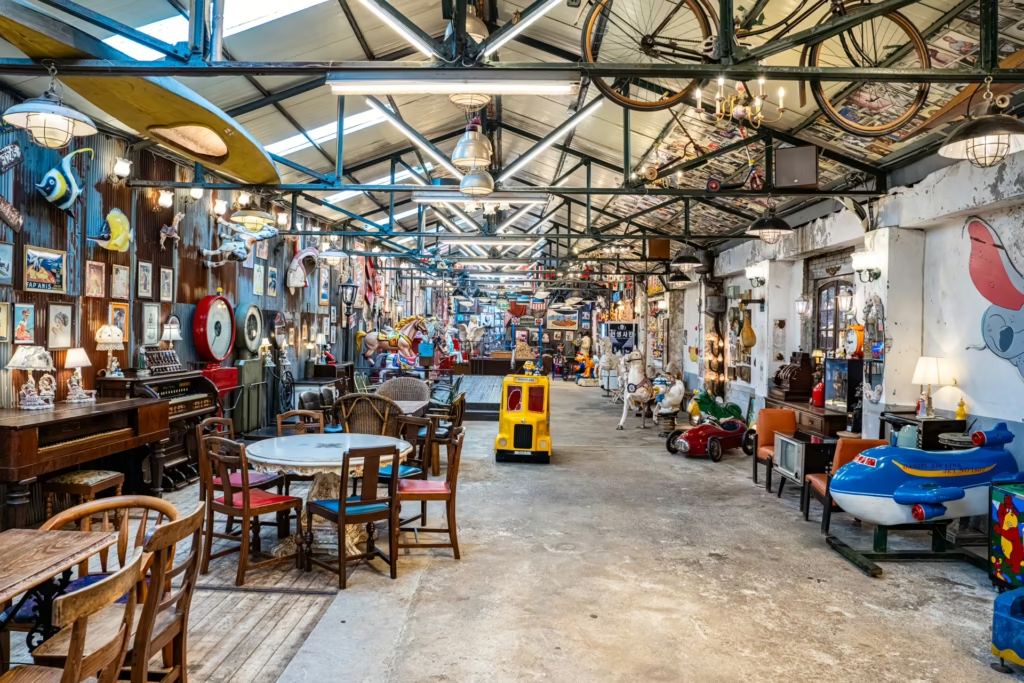
Ganghwa Island: The Day Trip Seoul Keeps Forgetting About
Ganghwa is the fourth-largest island in South Korea, it is joined to the mainland by two bridges, and you can be standing on it ninety minutes after leaving central Seoul. Almost nobody outside Korea puts it on an itinerary.
That is a mistake with a specific cause. Ganghwa has no single headline attraction — no Gyeongbokgung, no Haeundae, nothing that fits in a caption. What it has instead is an unusual amount of history stacked into a small space: Bronze Age dolmens on farmland, a temple founded in the fourth century, the fortress line where Korea fought off two Western fleets in five years, the ruins of a textile industry that once employed thousands, and a recent wave of people converting all of it into places to drink coffee.
Eight stops, then. Between them they cover about three thousand years, three of them are free, and the dearest ticket on the list is ₩20,000.
Orientation: Getting to Ganghwa Island
By bus: route 3000 runs from Sinchon in western Seoul to Ganghwa bus terminal, about ₩3,000 on a transit card, every fifteen to thirty minutes, taking roughly two hours twenty on a weekday. All seats, no standing. The route was restructured in 2024 and the Ganghwa half lost much of its fleet, so services fill up — particularly on the way back on a Sunday evening.
By car: ninety minutes or so from central Seoul via the Gimpo riverside road. Two bridges land you on the island — the northern one for Ganghwa town and the museums, the southern Chojidaegyo for the temple and the southern coast.
The honest advice: two of these eight stops are properly walkable from the bus terminal and the rest are scattered across farmland. If you’re carless, do the town cluster and one taxi ride. If you have a car, you can fit five or six into a day without rushing.
1. The Bugeun-ri Dolmen and Two Museums — the orientation stop
Start here, because everything else makes more sense afterwards.
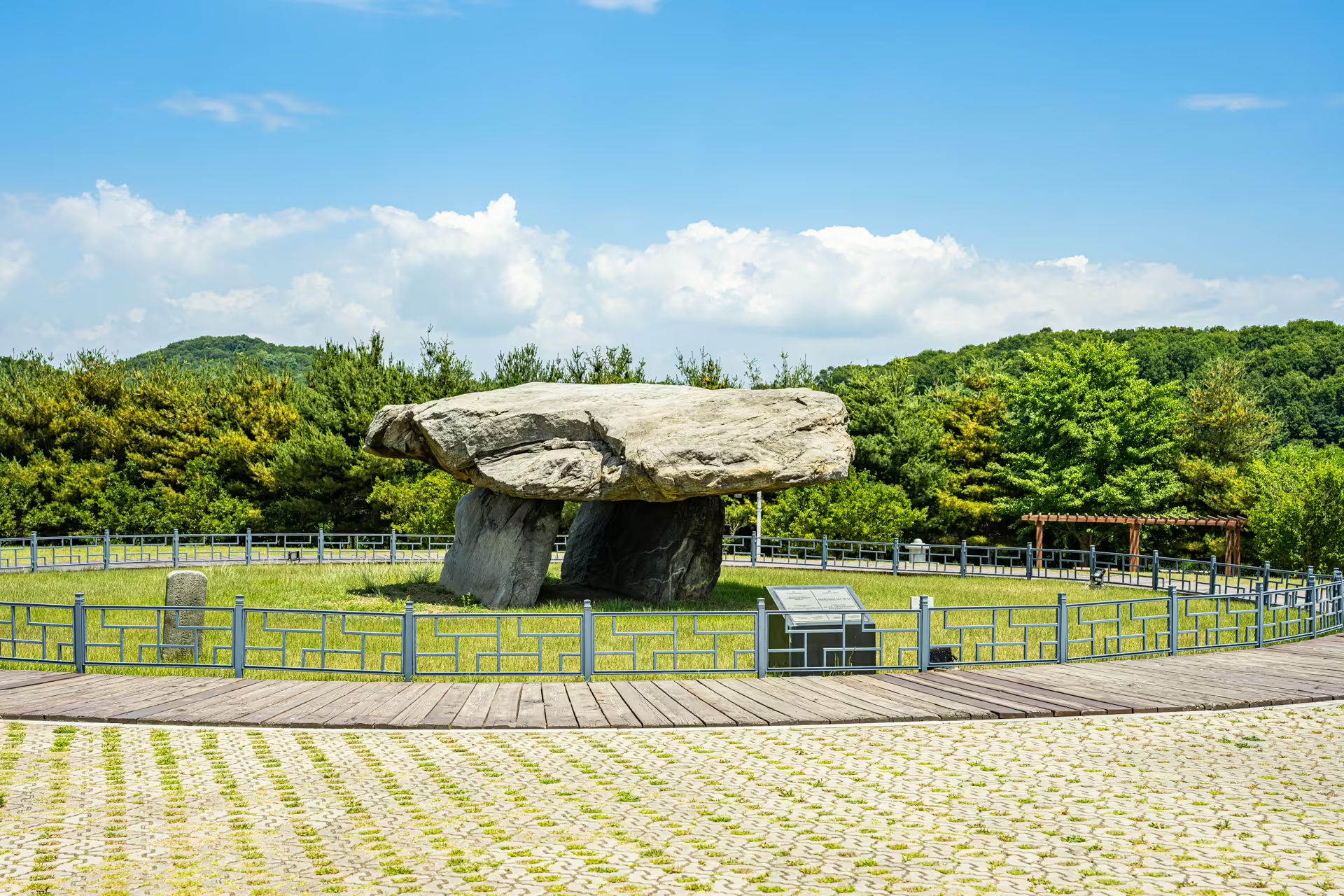
On a lawn in Hajeom-myeon stands a granite capstone 6.5 meters long and about 53 tonnes, propped on two uprights, put there roughly three thousand years ago. It is part of the UNESCO-listed Gochang, Hwasun and Ganghwa Dolmen Sites, inscribed in 2000. There is no fence and no charge.
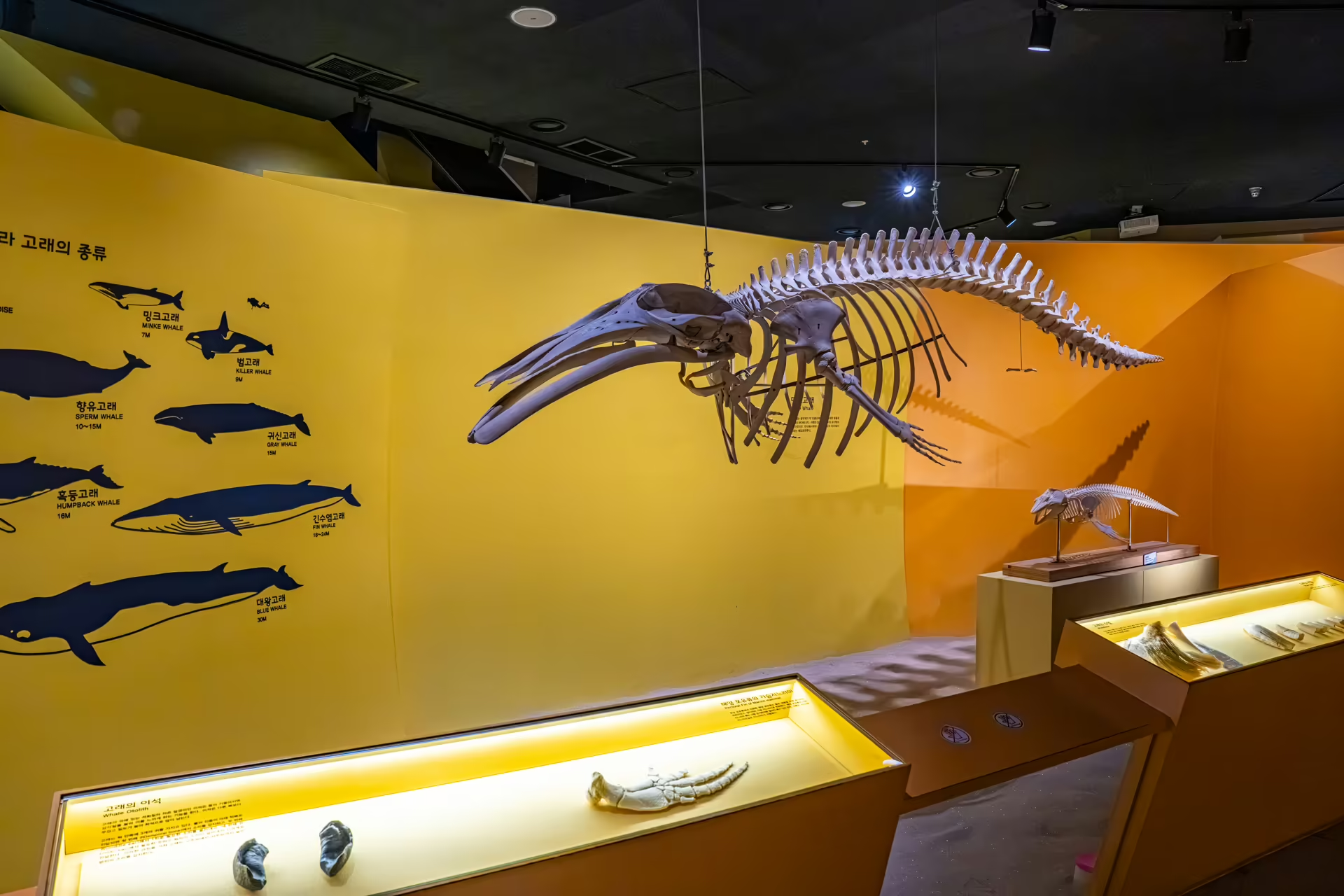
Behind it, two county museums share a parking lot and a ₩3,000 combined ticket: one for the island’s history, one for natural history, the latter with a 14.5-meter sperm whale skeleton hanging in the lobby. Both close on Mondays. Allow two hours for the lot.
Free (dolmen) / ₩3,000 (museums) · closed Mondays — full guide to the museums and the dolmen
2. Jeondeungsa — a temple from 381 CE, and it’s free
Korea’s oldest continuously operating temple, by its own account founded in 381 CE, which makes it older than almost any building you can walk into anywhere. It sits inside the walls of a mountain fortress, which is unusual enough on its own, and it charges nothing to enter, having dropped its heritage fee along with sixty-four other Korean temples in 2023.
Underneath one of its halls is a contemporary art gallery, which is not a sentence you write about many fourth-century temples.
Free · open daily — full guide to Jeondeungsa
3. Joyang Bangjik — the mill that became the island’s most photographed room
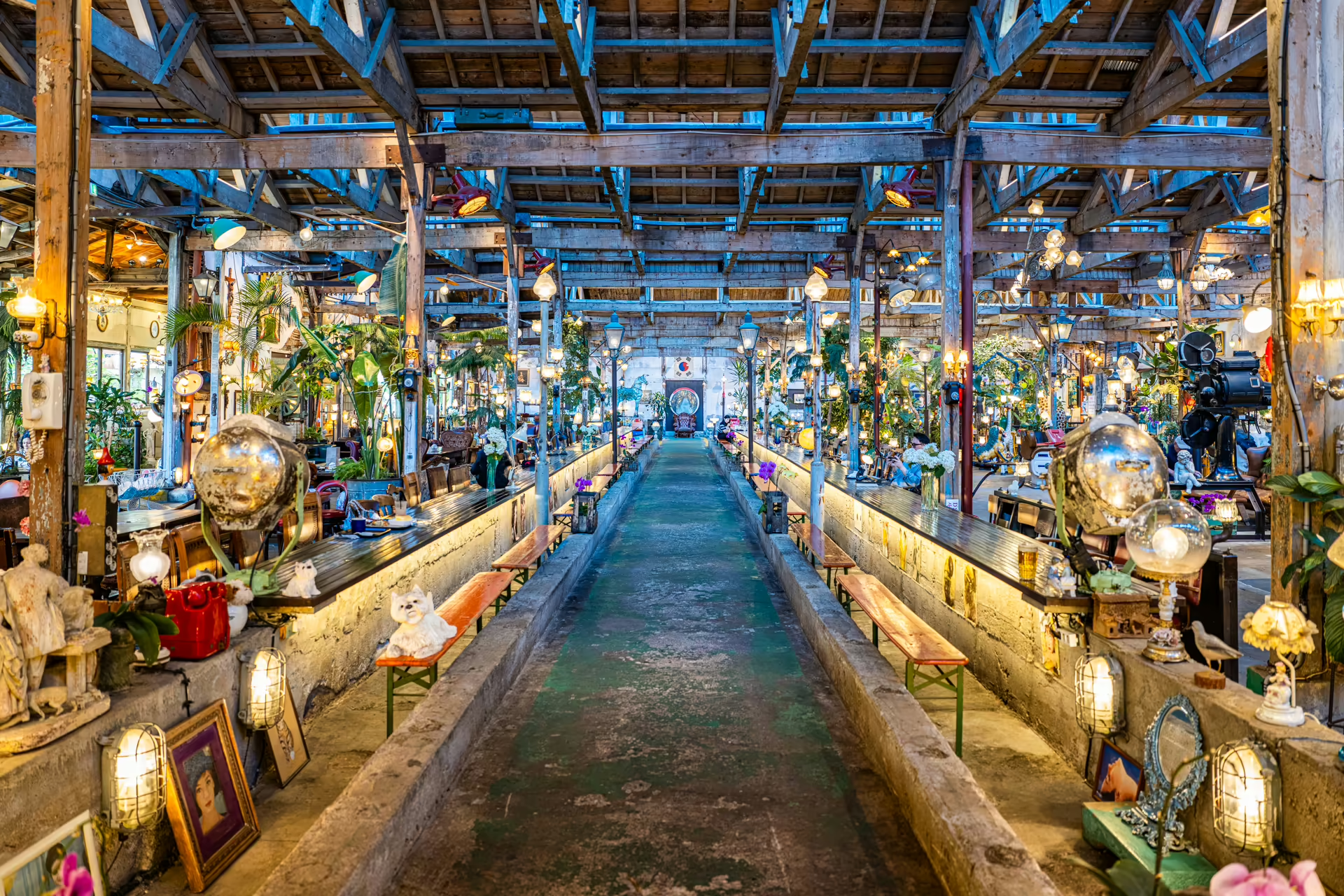
A weaving mill founded in 1933, built out in 1937 with fifty looms, closed in 1958, then a pickle factory, then a seafood works, then a ruin. Bought in 2017 and reopened in 2018 as a cafe the size of a warehouse, with the original trusses overhead and a channel of running water down the line the looms used to occupy.
An Americano is ₩7,000 and there’s a one-drink minimum. It is 1.5 kilometers from the bus terminal, which makes it the easiest stop on this list to reach without a car.
Worth knowing what it represents: by the 1970s Ganghwa had around sixty textile factories and over four thousand mill workers in the town alone, before production consolidated around Daegu and the whole industry left. Joyang was the first mill and the first to close.
About ₩16,000 a head · open daily — full guide to Joyang Bangjik
4. Geumpung Brewery — 1931, and still making the stuff
While Joyang Bangjik is a mill that stopped, Geumpung is a brewery that didn’t. Founded in 1931 in a wooden building it still occupies, it runs tours and tastings of its makgeolli — Korean unfiltered rice wine — and a workshop where you brew your own.
The building alone justifies the stop: a century-old timber brewery is a rare survival anywhere, and this one is still doing the job it was built for rather than serving flat whites under its beams.
Tour and tasting · book ahead — full guide to Geumpung Brewery
5. Art Factory Charmgiroom — a sesame oil mill, now 120 meters of projection
The island’s newest attraction, opened May 2024 in a former sesame oil factory in the south. The name is the old product; everything else is projectors. A brick shed 120 meters long and eight meters high, with folklore and fine-art programs thrown across every surface, plus a restaurant, a shop and a roller rink.
₩17,000 for adults, and two things to know: online tickets must be bought at least a day ahead, and it opens seven days a week until 20:00 — which makes it the island’s answer to a Monday, when both museums are shut. The cafe and restaurant need no ticket at all.
₩17,000 / free for the cafe · open daily to 20:00 — full guide to Art Factory Charmgiroom

6. The Haeden Museum — Chagall and Hockney, buried in a hillside
An award-winning concrete museum dug into a Ganghwa hillside, with wall labels carrying names — Chagall, Hockney, Miró, Hirst — that you do not expect to read forty minutes from the North Korean border. Three gardens outside, one of them clad entirely in mirror.
At ₩20,000 it is the dearest ticket on the island, and the only one a serious gallery-goer will thank you for. It’s also the counterweight to the projection halls down the road.
₩20,000 — full guide to the Haeden Museum
7. Dolmen Bakery — a vegan bakery with no sign, facing the strait
On the coast road, a fully plant-based bakery with no shop sign at all — you navigate by a dolmen sculpture out front — and windows looking straight across the water that saw off the French squadron in 1866 and the American one in 1871.
It closes on Fridays, which is the sort of detail that ruins an afternoon if you don’t know it.
Cafe prices · closed Fridays — full guide to the bakery
8. Gukjawajugeok — a bookshop you can sleep in
Down a farm lane between two mountains, an old Korean country house holds an independent bookshop and a bookstay: you can browse, and you can stay the night among the shelves.
One honest caveat, which the full guide goes into: booking is difficult if you don’t read Korean. Worth the effort if you do.
Bookshop free / bookstay ticketed — full guide to Gukjawajugeok
Which Ones to Pick
You will not do eight in a day, and you shouldn’t try. Three shortlists, depending on what you’re after.
If you have one day and want the island’s actual story: the dolmen and museums, then Joyang Bangjik, then Jeondeungsa. Stone age, industrial age, and a temple older than both, in that order. Two of the three are free.
If you’re bringing children: the whale skeleton in the natural history museum, then Art Factory Charmgiroom for the projections and the roller rink. Both are indoors, which matters on this island more than you’d think.
If you’re here to eat, drink and look: Joyang Bangjik, the brewery, and the coast road to the bakery. No tickets at all beyond what you consume.
The closing days are the thing to plan around rather than the distances — see the table below, and note that Monday shuts both museums and the free textile center in town. Everything else on this list stays open, so a Monday still works: the dolmen, Jeondeungsa, Joyang Bangjik and the art hall, two of them free.
If you’d rather be handed a finished plan than assemble one, I’ve written the day out hour by hour — two versions, one with a car and one without.
Practical Manual
| Stop | Cost | Closed |
|---|---|---|
| Bugeun-ri dolmen | Free | Never — open ground |
| Ganghwa History + Natural History Museums | ₩3,000 combined | Mondays |
| Jeondeungsa Temple | Free | Open daily |
| Joyang Bangjik | ~₩16,000 a head; one drink minimum | Open daily |
| Geumpung Brewery | Tour and tasting, book ahead | Check before traveling |
| Art Factory Charmgiroom | ₩17,000 adults; cafe free | Open daily, 09:30–20:00 |
| Haeden Museum | ₩20,000 — the island’s dearest ticket | Check before traveling |
| Dolmen vegan bakery | Cafe prices | Fridays |
| Gukjawajugeok bookshop and stay | Free to browse; stay ticketed | Check before traveling |
| Getting there | Bus 3000 from Sinchon, Seoul to Ganghwa terminal — about ₩3,000, every 15–30 min, roughly 2 hr 20 min. By car about 90 minutes from central Seoul | |
Prices, hours and closing days are as published at the time of reporting. Ganghwa’s small businesses change their rest days more often than its museums do — check the individual guides linked above, which carry the detail.
Navigation Tip: Use Naver Map for all of these — Google Maps can’t route Korean roads properly — and keep Papago handy, because English signage across the island is thin outside the temple.