
A Museum That Hides Itself in a Ganghwa Hillside
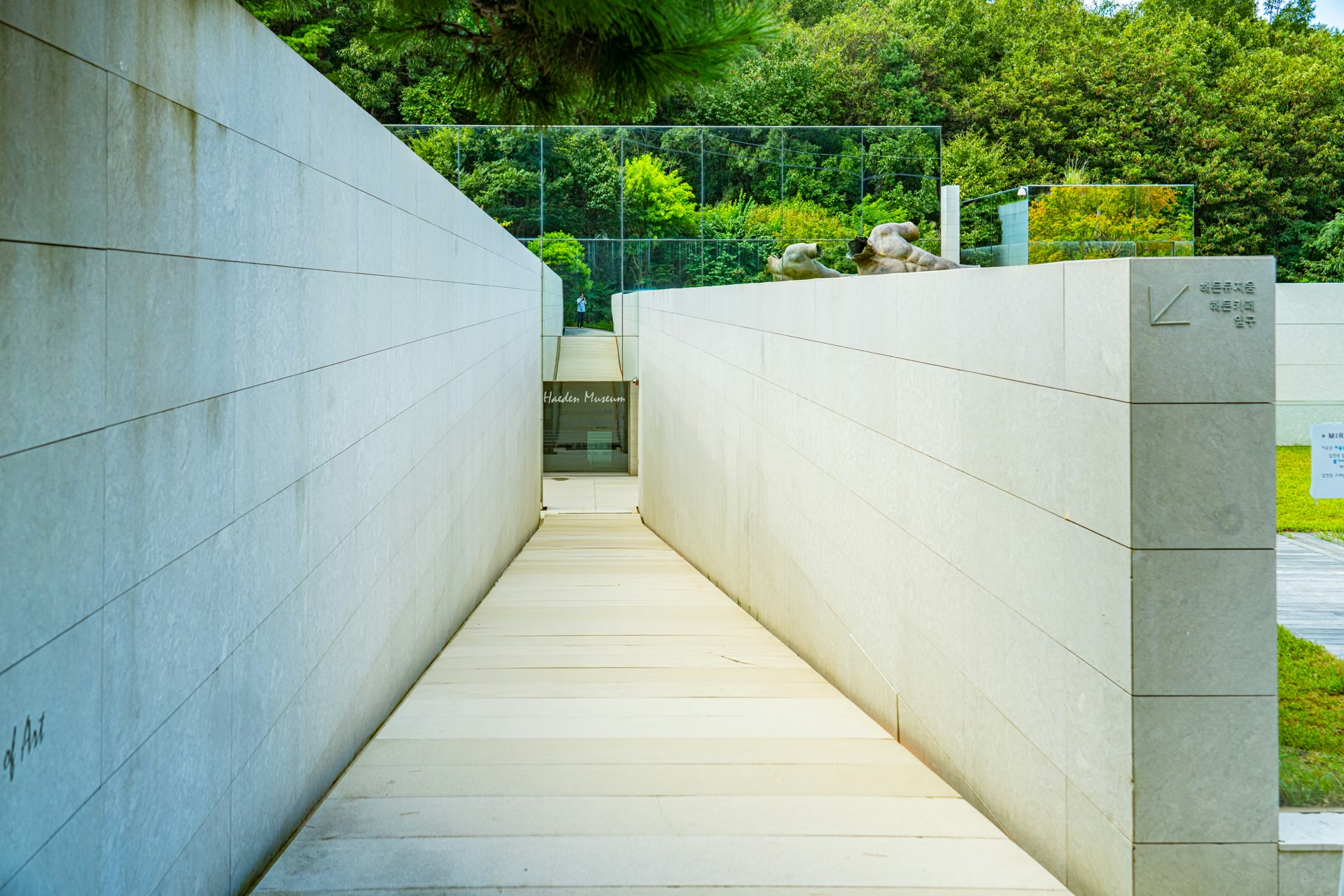
The first thing Haeden Museum does is disappear. You arrive on a hillside in Gilsang-myeon, look for a building, and find a concrete ramp cutting downward into the ground. There is no facade to photograph, no atrium to be impressed by. The architecture asks you to descend before it shows you anything, and by the time you reach the door you have already given up a little of your bearings. That is deliberate, and it works.
I want to be straight about the ticket price before anything else, because it is the number that decides whether this post is useful to you. General admission is ₩20,000 for an adult, which includes a drink. That is more than most municipal museums in Korea and roughly what you would pay for a major special exhibition in Seoul. Whether it is worth it depends entirely on what you want from an afternoon — and I will get to that.
Getting to Haeden Museum from Seoul
Ganghwa Island is bridge-connected, so there is no ferry and no timetable anxiety. From central Seoul the drive runs about 90 minutes; cross at Choji Bridge in the south and the museum is a short run inland in Gilsang-myeon. Without a car, take bus 3000 from Sinchon Station to Ganghwa Bus Terminal and pick up a local county bus, but budget generously — the Sinchon leg is quoted at around an hour and regularly takes far longer on weekends, and rural bus frequencies on the island are thin.
The practical answer is a car. The museum sits within a few minutes of two other things worth your time — Jeondeungsa, the oldest surviving temple in Korea, and a makgeolli brewery running since 1931 — and all three sit in the same township. That cluster is the actual case for the day trip. The museum alone probably is not.
The Building Is the First Exhibit
Haeden opened in May 2013 and was named to the Korean Institute of Architects’ Best 7 Buildings of the Year in the same year — the country’s most senior architecture award, given to seven completed buildings annually. Winning it on opening is unusual.
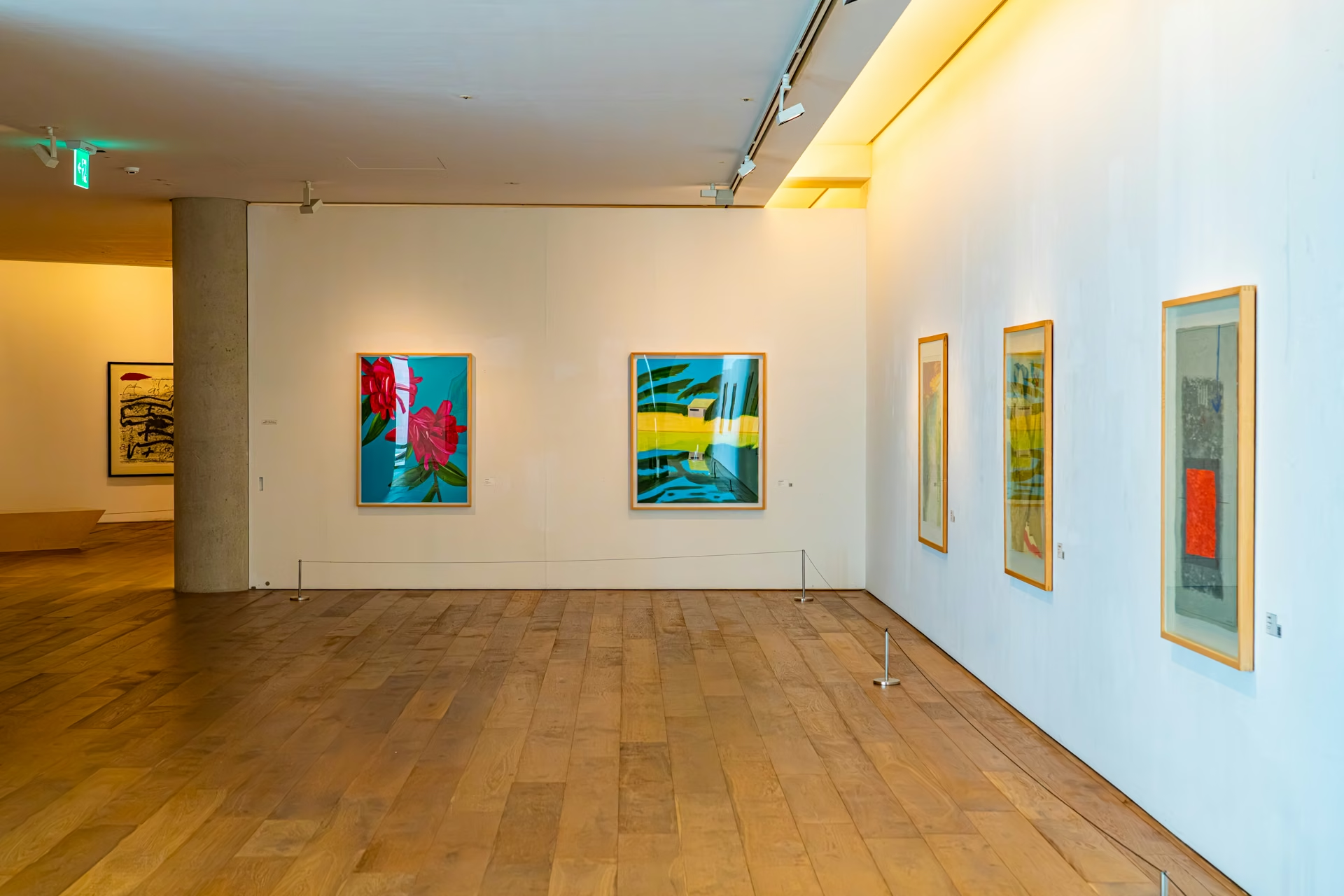
The architect was Bae Dae-yong, working to a brief from the founder that reads more like a constraint than a commission: build something that does not damage the landscape. His answer was to put the mass underground and let the slope carry the roofline, so the museum reads as topography rather than object. The material is exposed concrete throughout, which sounds cold and is not, because the building is engineered around daylight. Galleries take light from above and from the side, and the works are lit substantially by the sky rather than by track fixtures. On a bright afternoon the colour of a canvas here is a different colour than it would be under gallery lighting in Seoul.
An education wing was added in 2017, including a 144-seat auditorium with a sliding partition, sound insulation, projection and screen — the museum runs lectures, performances and creative programmes out of it, and has been certified by the Ministry of Education as a career-experience institution since 2019.
What Is Actually on the Walls
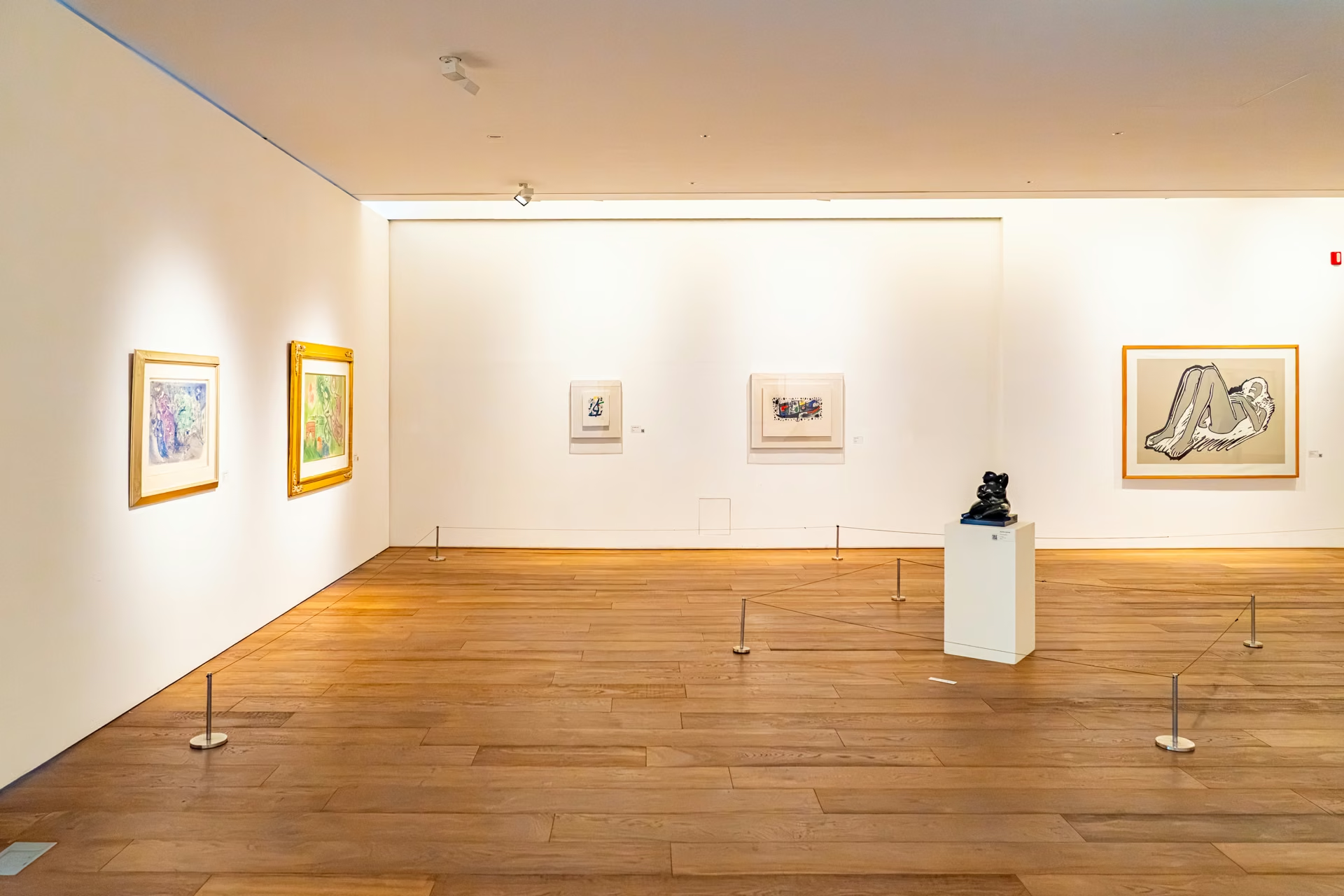
Haeden’s programming runs on two tracks, and understanding the difference will save you disappointment.
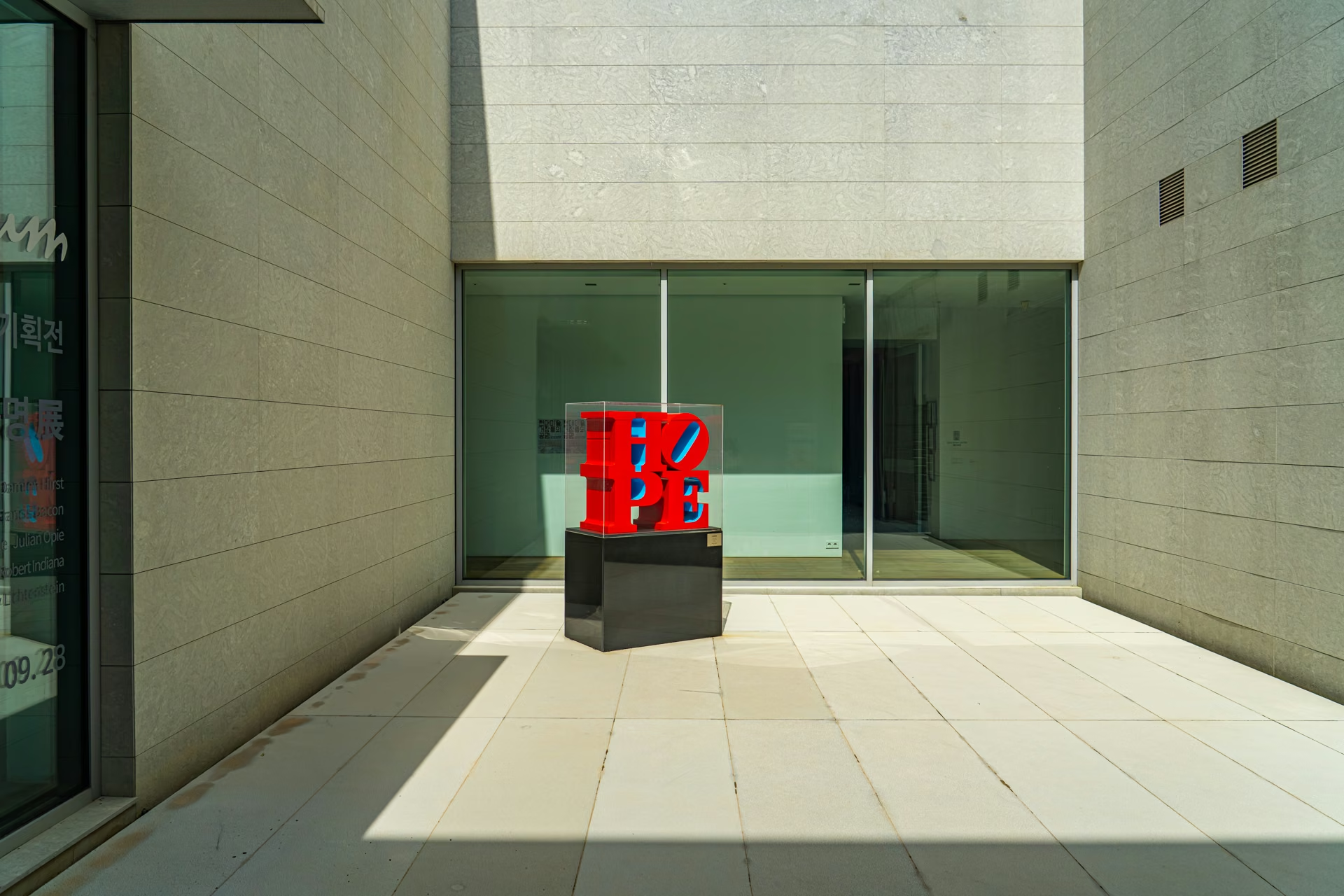
The first is its own collection and the survey exhibitions built from it. The names the museum has shown are genuinely heavyweight: Marc Chagall, Francis Bacon, Joan Miró, Fernando Botero, Frank Stella, Roy Lichtenstein, Damien Hirst, Jeff Koons, David Hockney, Yoshitomo Nara. Seeing that roster listed on a wall label on a farming island an hour from Seoul is disorienting in the best way. Robert Indiana’s HOPE greets you near the entrance and effectively sets the register for everything after it.
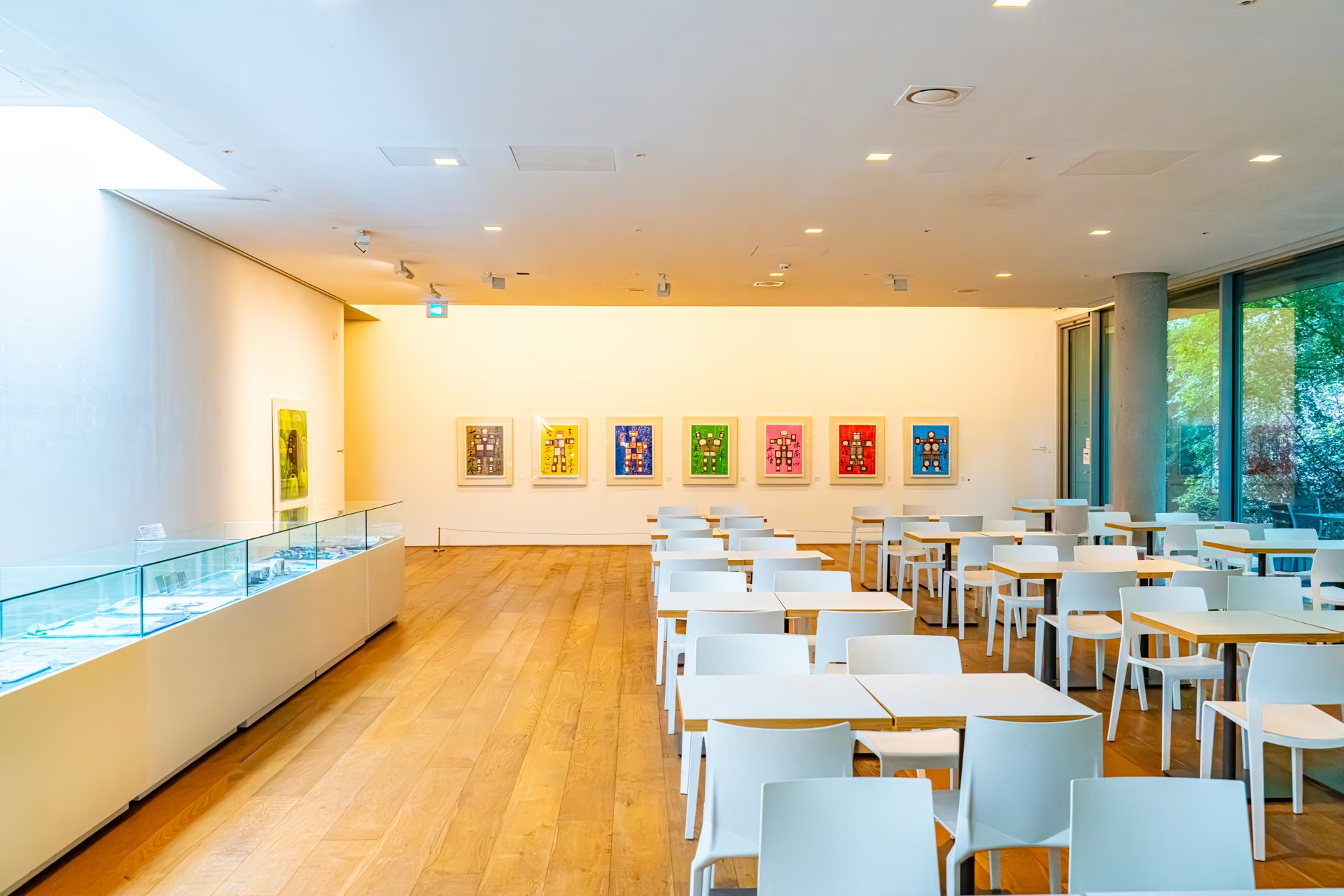
The second track is the rotating special exhibition, and this is where you need to check before you drive. Haeden mounts several a year, and the range is wide — international modern and contemporary survey shows, but also regional touring exhibitions that bring the craft traditions of a particular Korean province into a contemporary frame. Gallery 8 is usually where these land. They are seriously curated, and they are frequently not what you would be picturing if you came for the modern masters.
So: look at the museum’s exhibition page before setting out. If the headline show is the one you want, the ₩20,000 makes obvious sense. If it is not, you are paying to see the collection and the architecture, which is still a defensible afternoon but a different one.
Anyone building a Korea itinerary around art should also know that this is not an isolated case — a digital art museum in Gangneung and the vault galleries in Busan’s old Bank of Korea building both show the same pattern of ambitious exhibition-making well outside the capital.
The Mirror Garden and the Two Others
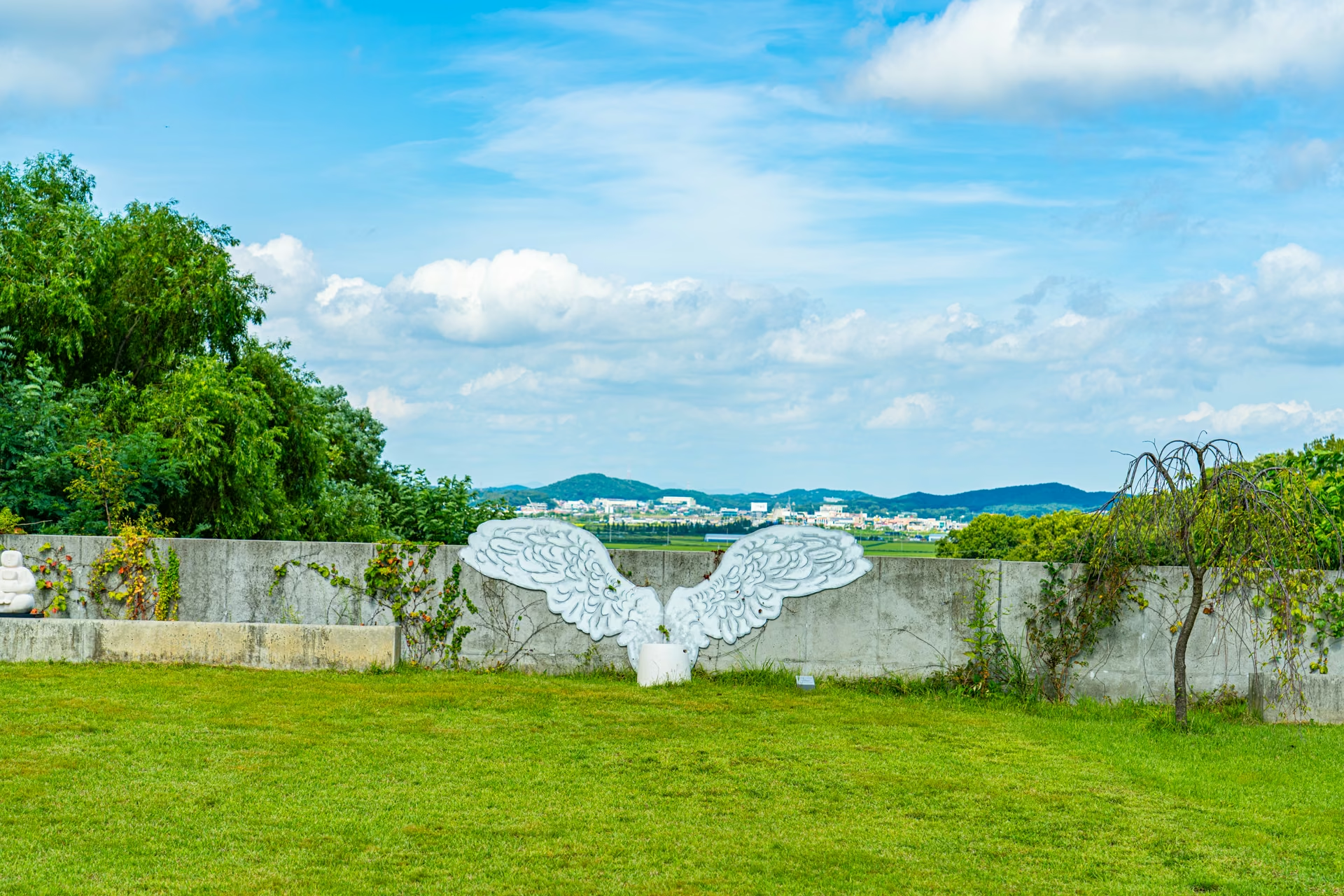
The outdoor spaces here are as designed as the indoor ones, which is unusual for a museum this size and is the strongest argument for not treating Haeden as an hour-long stop. Do not walk out through the galleries and back to the car park. The gardens are the second half of the building.
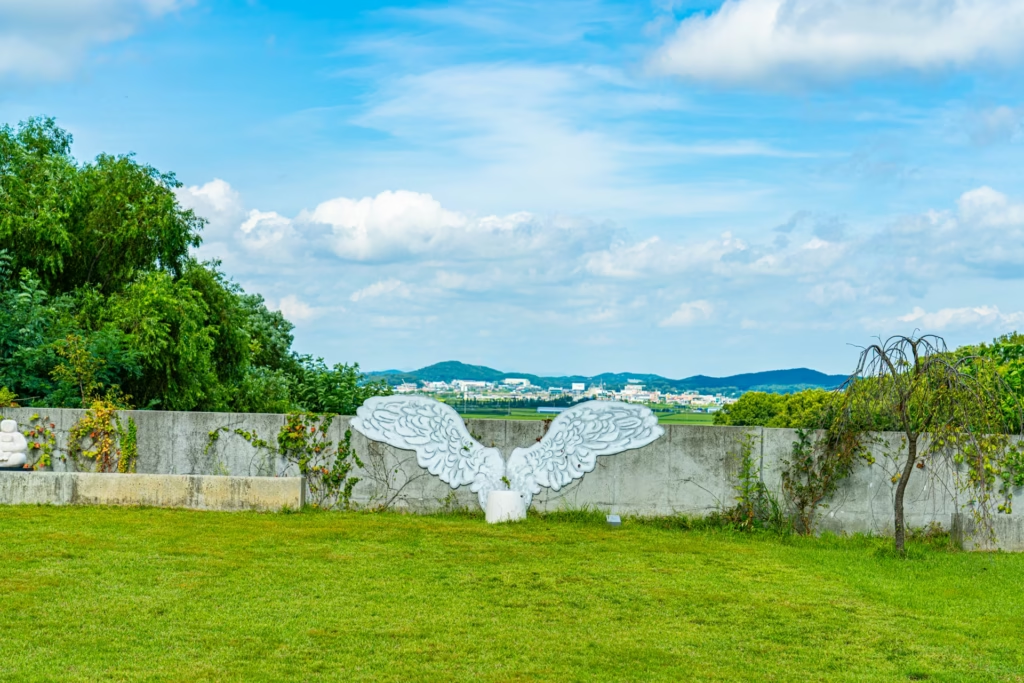
There are three gardens, each on its own theme. The Mirror Garden clads exterior walls in mirror, so sky, ground, forest and sculpture collapse into a single reflective plane and the building appears to dissolve. Igor Mitoraj’s Torso of Icarus anchors it. The Secret Garden and the Healing Garden take quieter approaches, built around meditation and the meeting of artwork with landscape.
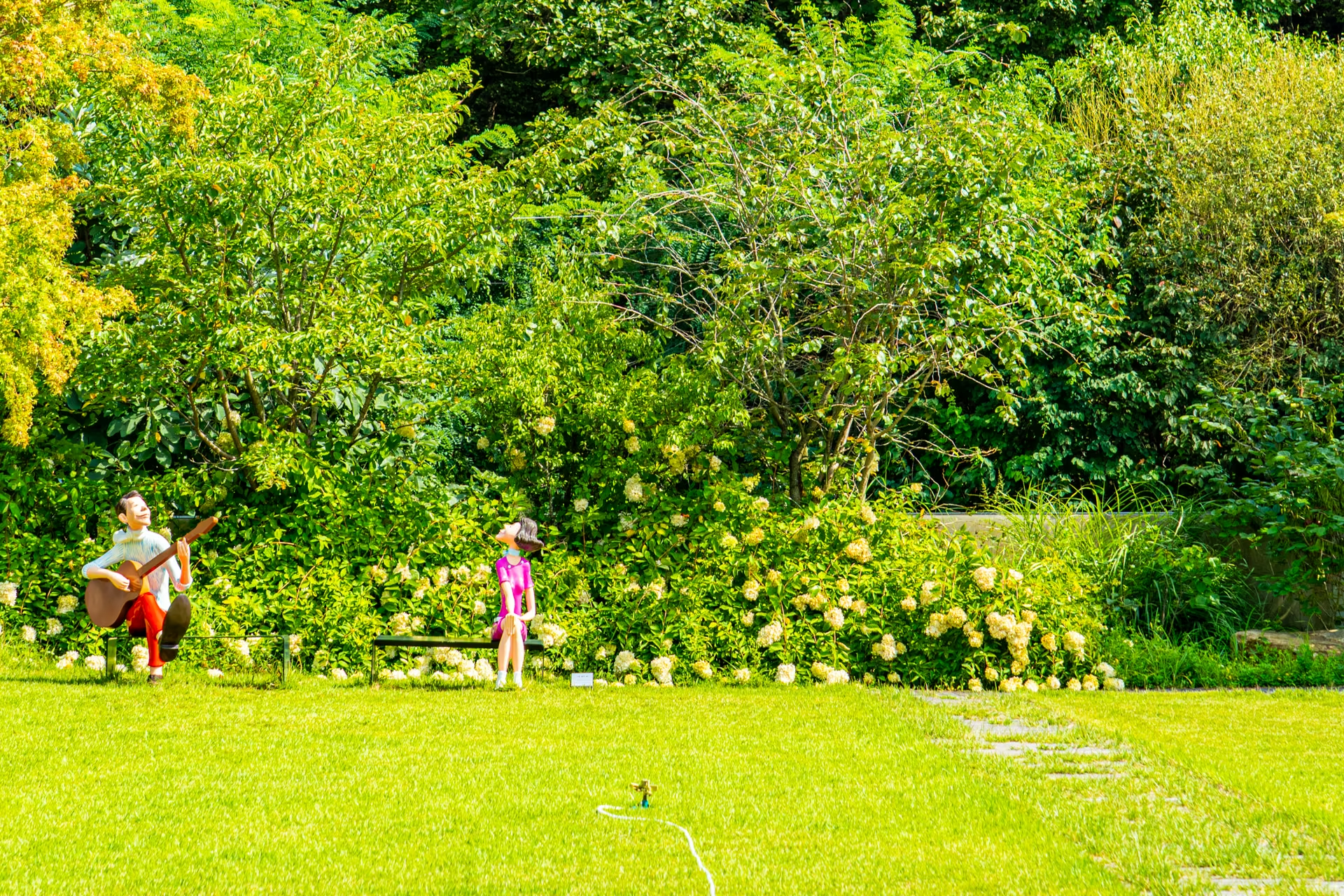
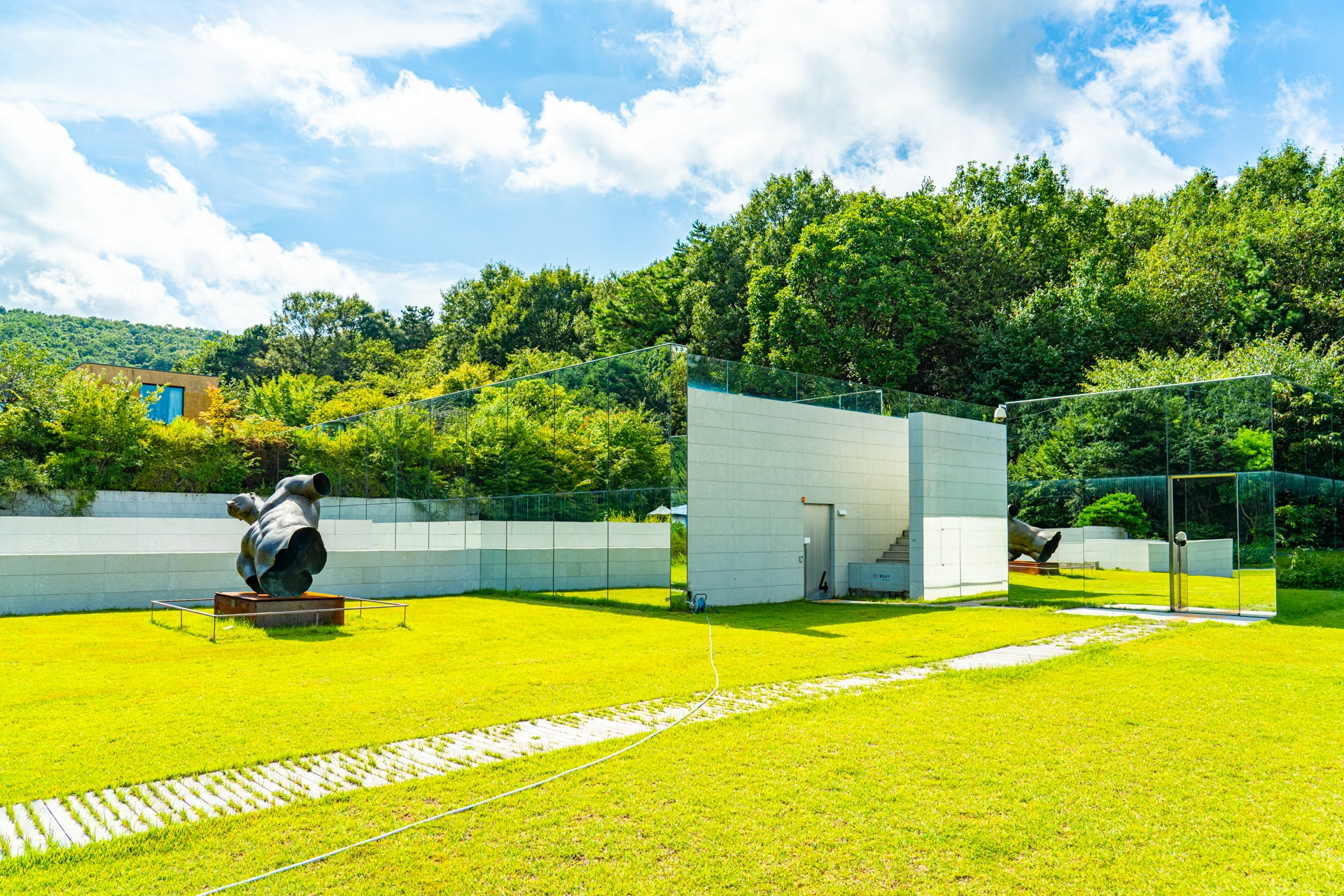
Late afternoon is when the Mirror Garden earns its reputation. Low sun means the mirrored surfaces pick up warm light and the reflections gain depth. Since last admission is 17:30 and closing is 18:00, the practical move is to see the galleries first and leave the last half-hour for outside.
One note before you raise a camera anywhere on the site: photography policies at Haeden vary by exhibition, and some shows restrict or prohibit shooting in the galleries under the lending terms for the works. Ask at the desk when you buy your ticket rather than assuming either way. Nobody minds you asking; they do mind a shutter going off in front of a loaned Hockney.
Who Runs It, and Why That Matters
Haeden was founded by Park Chun-soon, who holds a doctorate in East Asian aesthetics and built the museum in what she has described as a cultural desert — Ganghwa is a depopulating rural county, not an obvious place for a premium art institution. The recognition has followed: a 2014 national management award, a 2015 alumni honour from Sungkyunkwan University, a 2022 Museum Professional of the Year award from the Korean Museum Association, the presidency of the Korea Private Art Museum Association from 2023 to 2025, and a Presidential Commendation in 2025 for contributions to museum development.
I mention this because it explains the museum’s character. Everything here — the underground siting, the daylight galleries, the free-entry-for-preschoolers policy, the school programmes, the wellness tourism tie-ins with Incheon Tourism Organization — comes from a single sustained argument that a serious museum belongs in a place like this. The ticket price is part of that argument too: the institution is privately funded and has to hold itself up.
Tickets, Discounts and the Docent Tour
Adult admission is ₩20,000 and includes a drink. Students from elementary through high school pay ₩10,000, without the drink. An elementary-age child accompanied by a parent gets 30 per cent off; a preschool-age child accompanied by a parent is free.
Groups of 30 or more get 20 per cent off the adult rate and 30 per cent off the student rate. Kindergarten groups are ₩5,000 a head. Military and disabled groups of 30 or more have their own discount — call for terms.
Docent commentary is available for groups of 10 or more with advance reservation and runs 20 to 30 minutes. It is not offered to walk-in individuals, and it is in Korean.
How Long to Allow
Two hours is the honest number. The galleries themselves are not vast — this is eight exhibition rooms, not a national museum, and a brisk visitor could walk the route in forty minutes. What extends the visit is the pacing the building imposes: the descent, the way each room opens rather than repeats, the drink included in your ticket, and then the gardens.
Budget it as roughly an hour inside, twenty minutes with the drink, and forty minutes outside among the three gardens. If you arrive after 16:00 you will feel rushed, because last admission is 17:30 and the doors close at 18:00. If you arrive at opening on a weekday you may have entire rooms to yourself, which on a hillside in rural Incheon is a genuinely uncommon way to look at a Hockney.
One more scheduling note that catches people out: the museum closes every Monday, plus New Year’s Day, the Lunar New Year holidays and Chuseok day. Ganghwa is a popular Monday-holiday destination for Seoul residents, so this closure bites more often than you would expect.
Who This Is Actually For
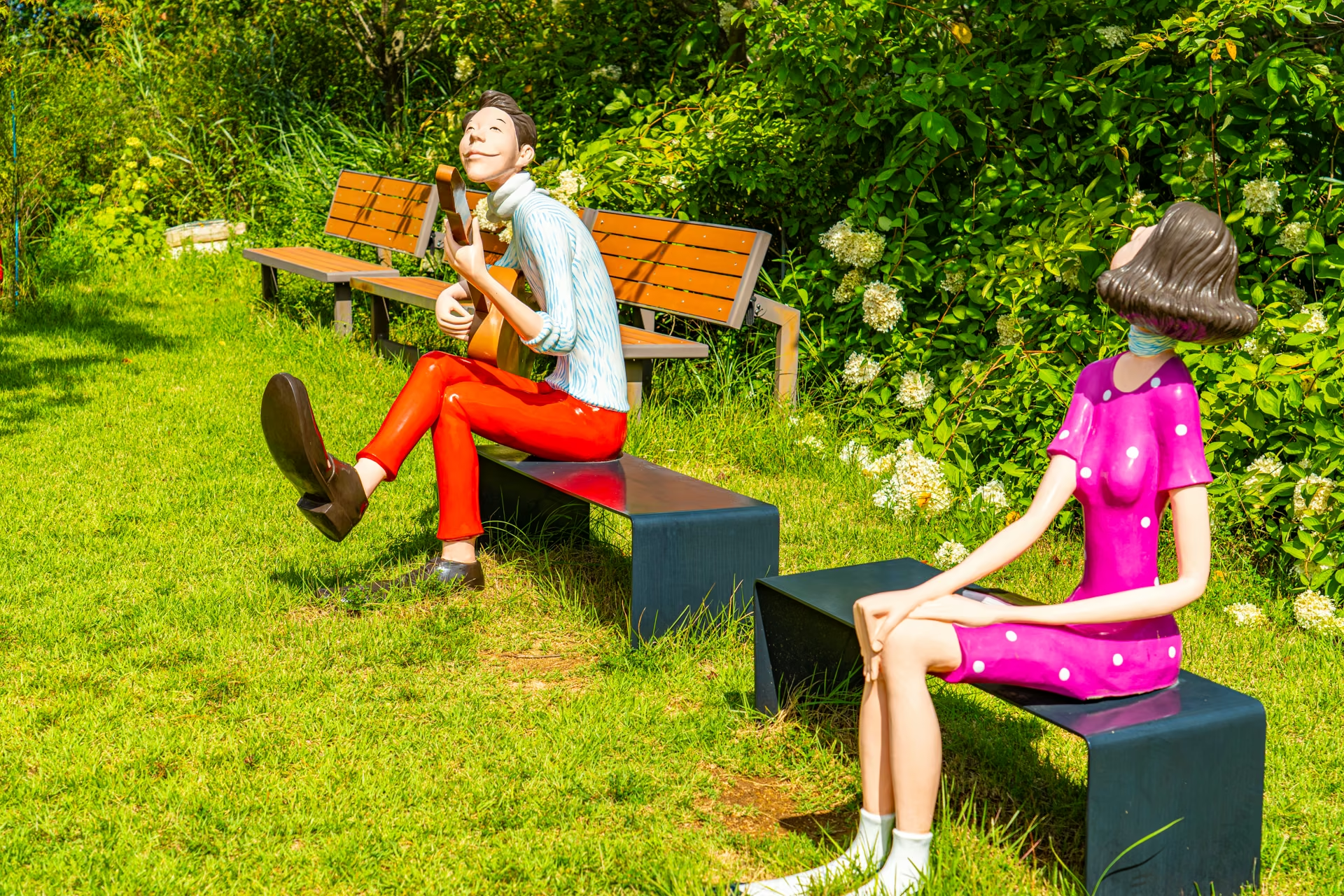
This is for people who like architecture as much as art — if a building descending into a hillside and lit by the sky sounds like a good reason to spend an afternoon, you will get your money back on the entrance ramp alone. It is for couples and solo travellers who want a slow, quiet two hours rather than a checklist stop. It is for anyone already driving to Jeondeungsa or the brewery, because the marginal cost of adding it is fifteen minutes of driving.
It is a poor fit for families with small, loud children — the galleries are hushed and the no-touching rule is enforced. It is a poor fit if you are counting won, because ₩20,000 each adds up fast for a group. And it is a poor fit on a Monday, when the doors do not open at all.
What stayed with me was not a painting. It was walking back up the ramp at the end, coming out at ground level into ordinary Ganghwa farmland with the sea somewhere off to the side, and the mirrored wall behind me holding a copy of all of it.
Practical Manual: Haeden Museum
| Address (EN) | 44 Jangheung-ro 101beon-gil, Gilsang-myeon, Ganghwa-gun, Incheon |
| Address (KR) | 인천광역시 강화군 길상면 장흥로101번길 44 |
| Phone | 032-937-6911 |
| Hours | 10:00–18:00 (last admission 17:30) |
| Closed | Mondays, New Year’s Day, Lunar New Year holidays, Chuseok day |
| Admission | Adult ₩20,000 (drink included) · Student ₩10,000 · Preschooler with parent free · Elementary with parent 30% off |
| Groups (30+) | Adult 20% off · Student 30% off · Kindergarten ₩5,000 pp |
| Docent | Groups of 10+, advance booking required, 20–30 min, Korean language |
| Rules | No food · no pets · no smoking anywhere including outdoors · do not touch works · check current photography policy at the desk |
| From Seoul | ~90 min by car via Choji Bridge · or bus 3000 Sinchon → Ganghwa Terminal, then local bus |
| Navigation Tip | Google Maps does not give driving directions in Korea. Use Naver Map and search 해든뮤지움. Run the Korean address through Papago to show a taxi driver. |
Prices and hours were verified against the museum’s own listings at the time of writing. Special exhibitions rotate — check the museum’s exhibition page before making the drive.