
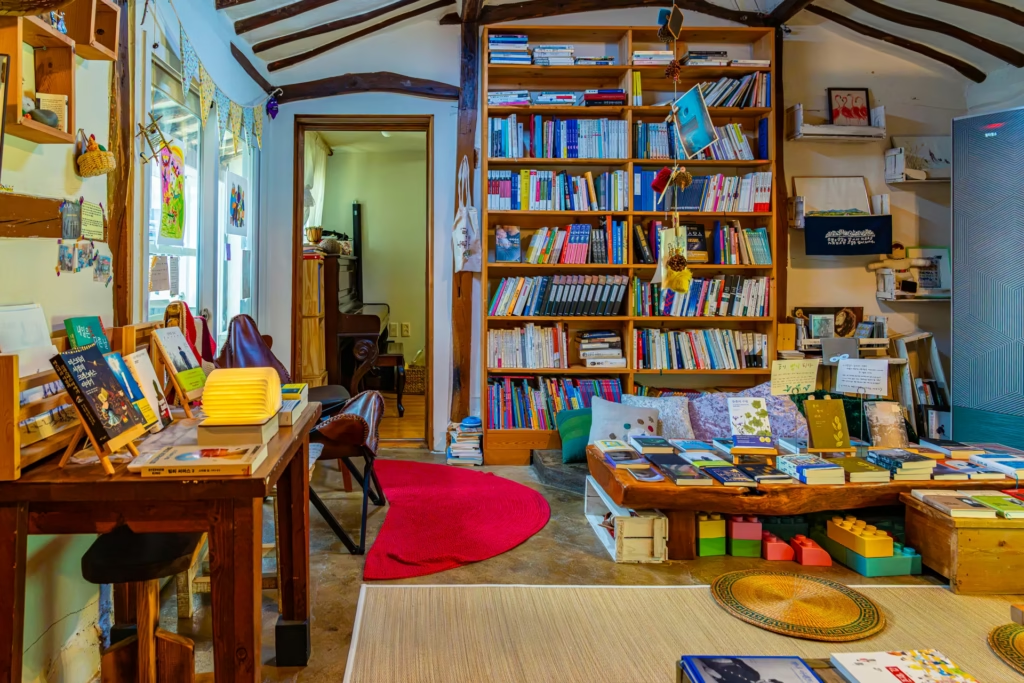
The Ganghwa Bookstore You Have to Look For
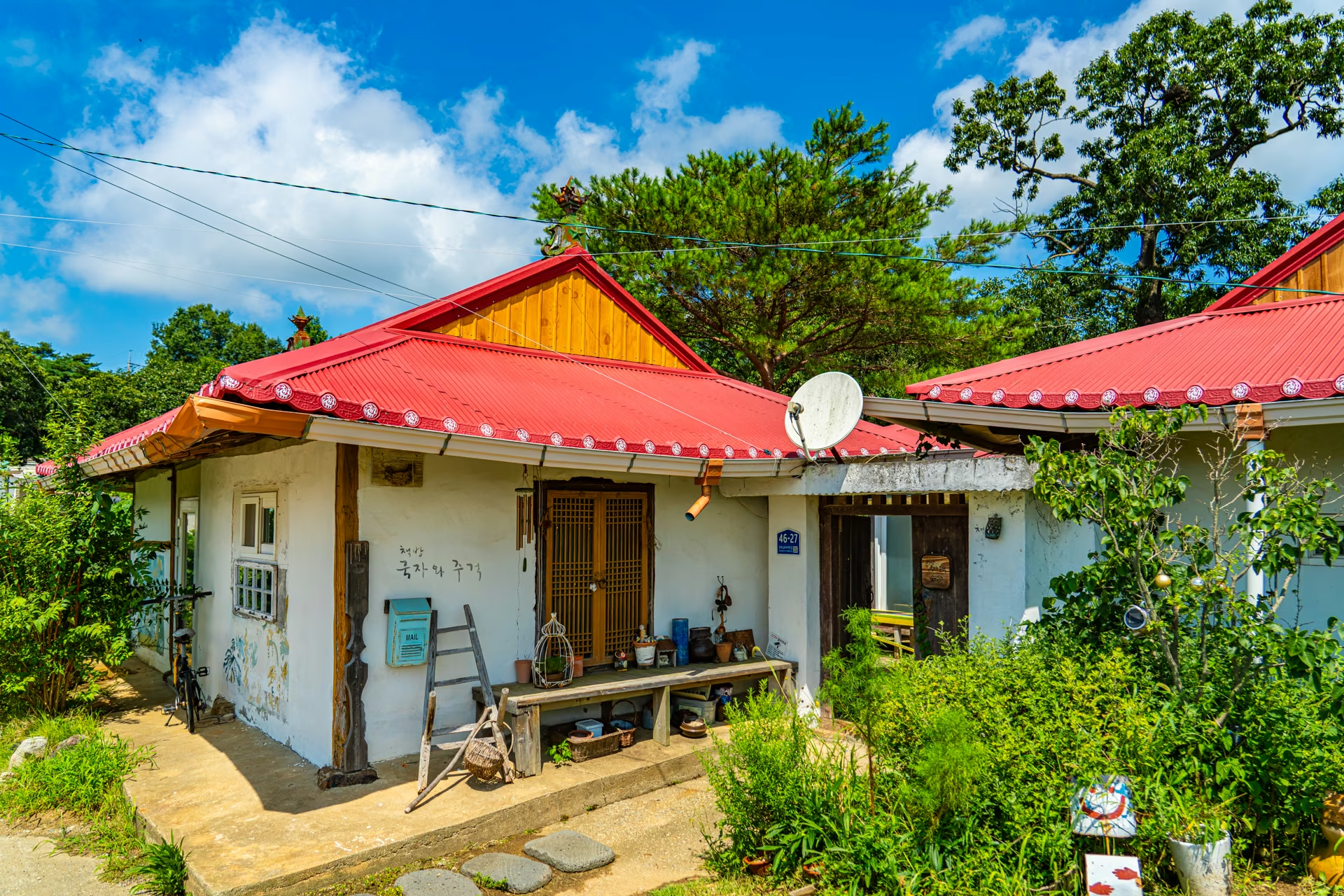
Most independent bookshops want to be found. This one does not appear to care either way. Gukjawajugeok sits at the end of a farm lane in Yangdo-myeon, on Ganghwa Island, in a stretch of open field between Jingangsan and Manisan. The lane is barely one car wide. There is no sign of the kind you could read from the road. You do not so much arrive as confirm, twice, that you have not made a wrong turn.
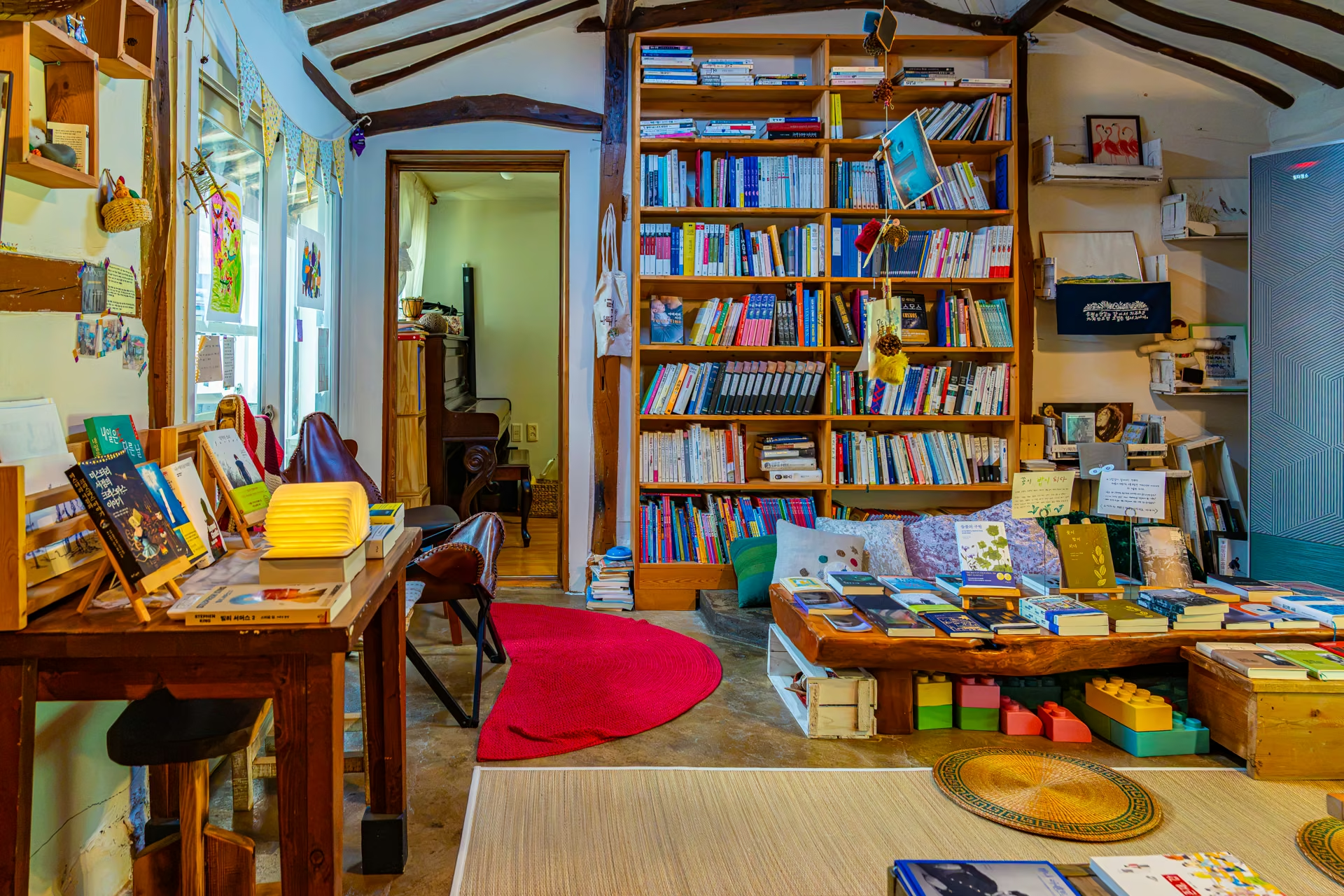
What you find at the end is an old Korean country house, kept as a house. The inner quarters — the anchae — were converted into a bookstore and a bookstay, and almost nothing else was changed. Books are shelved along the maru, the wooden floor room that runs the length of the house. Anyone can sit and read them. The rest of the building is where you sleep, if you have booked.
Getting There from Seoul
Ganghwa is bridge-connected, so there is no ferry to catch. From central Seoul the drive is about 90 minutes. Cross at Choji Bridge in the south, and from there it is roughly five minutes past Jeondeungsa Temple into Yangdo-myeon.
I will be blunt about transit: this is not a bus destination. You can reach Ganghwa Bus Terminal on bus 3000 from Sinchon Station, but the last leg through farmland requires a county bus with thin frequency or a taxi, and there is no reliable way to summon a taxi back out again in the evening. If you are staying the night this matters less, because you are not going anywhere. If you are visiting the shop for an hour, drive.
Do not attempt to navigate here by eye. Put the address into Naver Map and follow the pin down the lane.
Where the Name Comes From
Gukja wa jugeok means “a ladle and a rice paddle,” and the reasoning behind it is the best thing about this place.
At a Korean table, a spoon and a pair of chopsticks belong to one person. You eat with yours; I eat with mine. A ladle and a rice paddle are different in kind — they exist only to move food from a shared pot into other people’s bowls. They are serving tools. They have no private use at all.
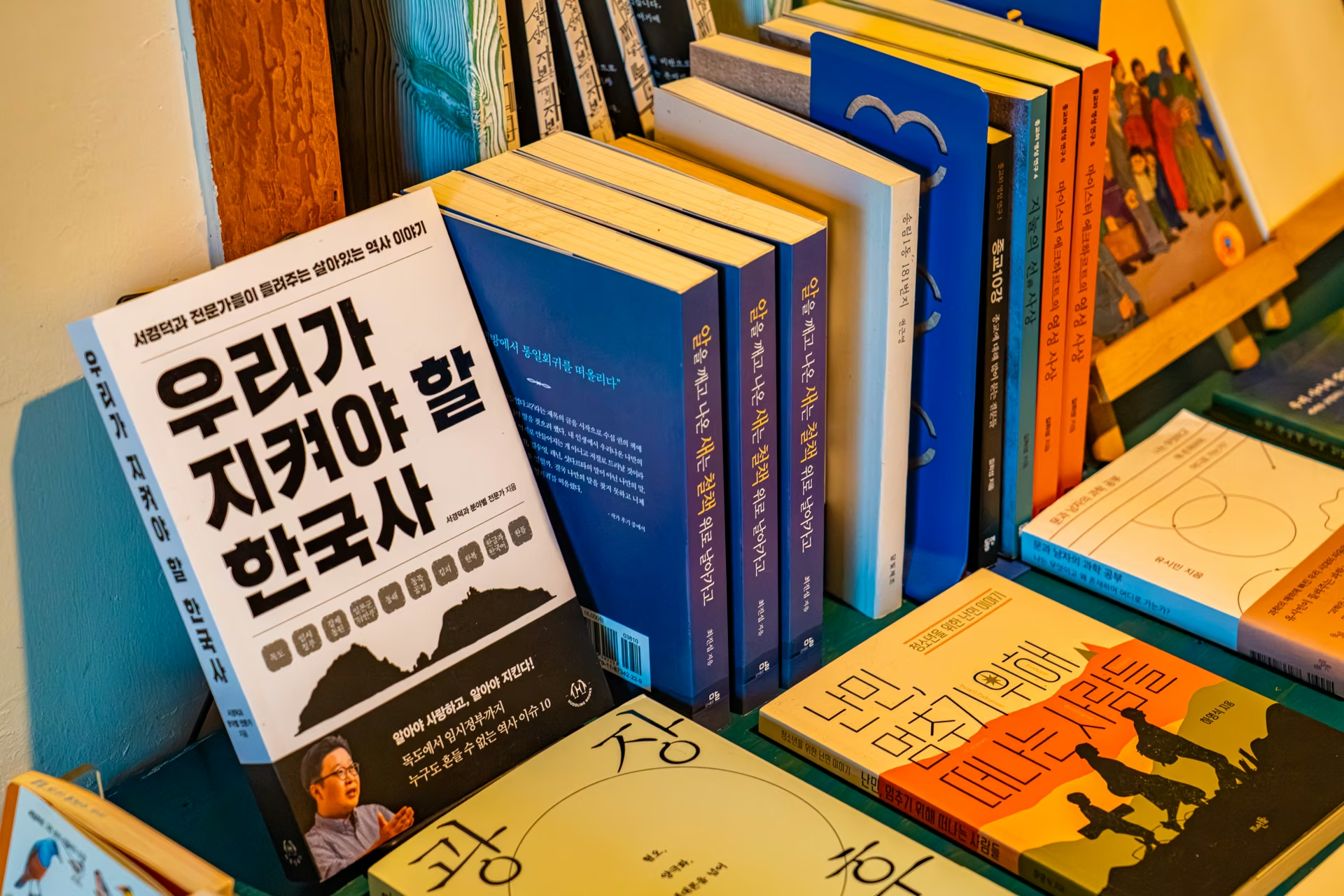
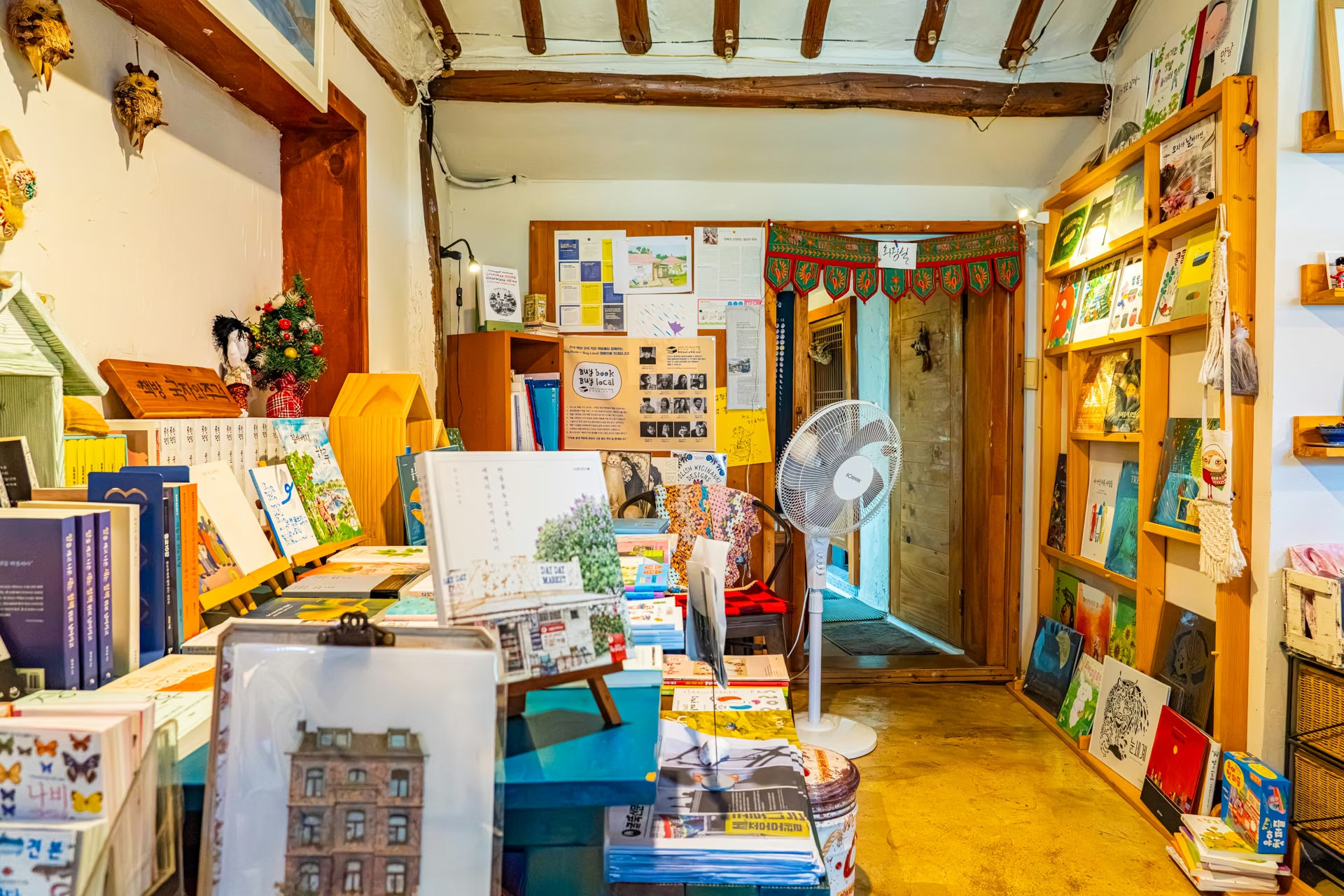
The name was given by the poet Ham Min-bok, a neighbour on the island, and the argument embedded in it is that a book works the same way. It is not a thing you own so much as a thing you pass along — thought, experience, a way of seeing, moved from one bowl to another. That premise shows up on the shelves. Independent bookshops in Korea usually run tight on a single owner’s taste, and this one deliberately does not: social issues, philosophy, new writers, across genres, with no obvious editorial spine. The owner has also been known to stock titles that local residents ask for, which is a small thing that tells you what the shop is for.
The Woman Who Runs It
Kim Hyun-sook came to Ganghwa in 2007 after a long stretch of city living, and she is refreshingly unsentimental about why. Houses here were cheap. The city was a fine place to be if you had money, and she did not. So she moved.
She had no plan to open a bookstore. What she had was a lot of books that came out on the moving truck, and a friend who pointed out that a person who lives with that many books might as well sell some. The shop opened in 2016. She had shelves built into that narrow maru, had no idea where to source stock, and had no capital — and then, by her account, books started arriving unprompted from people who had heard, and once the shelves filled, customers started arriving too. A visiting poet named it. A visiting customer brushed the name onto the white wall in calligraphy. Both of those happened before the shop had properly decided it was a shop.
A decade on, she talks about customers and the bookstore ageing together — children who came in with their parents now arriving on their own. She remembers what her regulars read and picks things out for them, and has been known to deliver a book someone needed rather than wait for them to come and get it. She describes the place as something between a home and a grandparent’s house, and that is roughly how it feels to sit in.
Asked once how long she would keep it going, she declined to answer on the grounds that plans do not survive contact with life. She will stop when she does not feel like it any more. That seems like the correct policy.
The Bookstay: What a Night Actually Involves
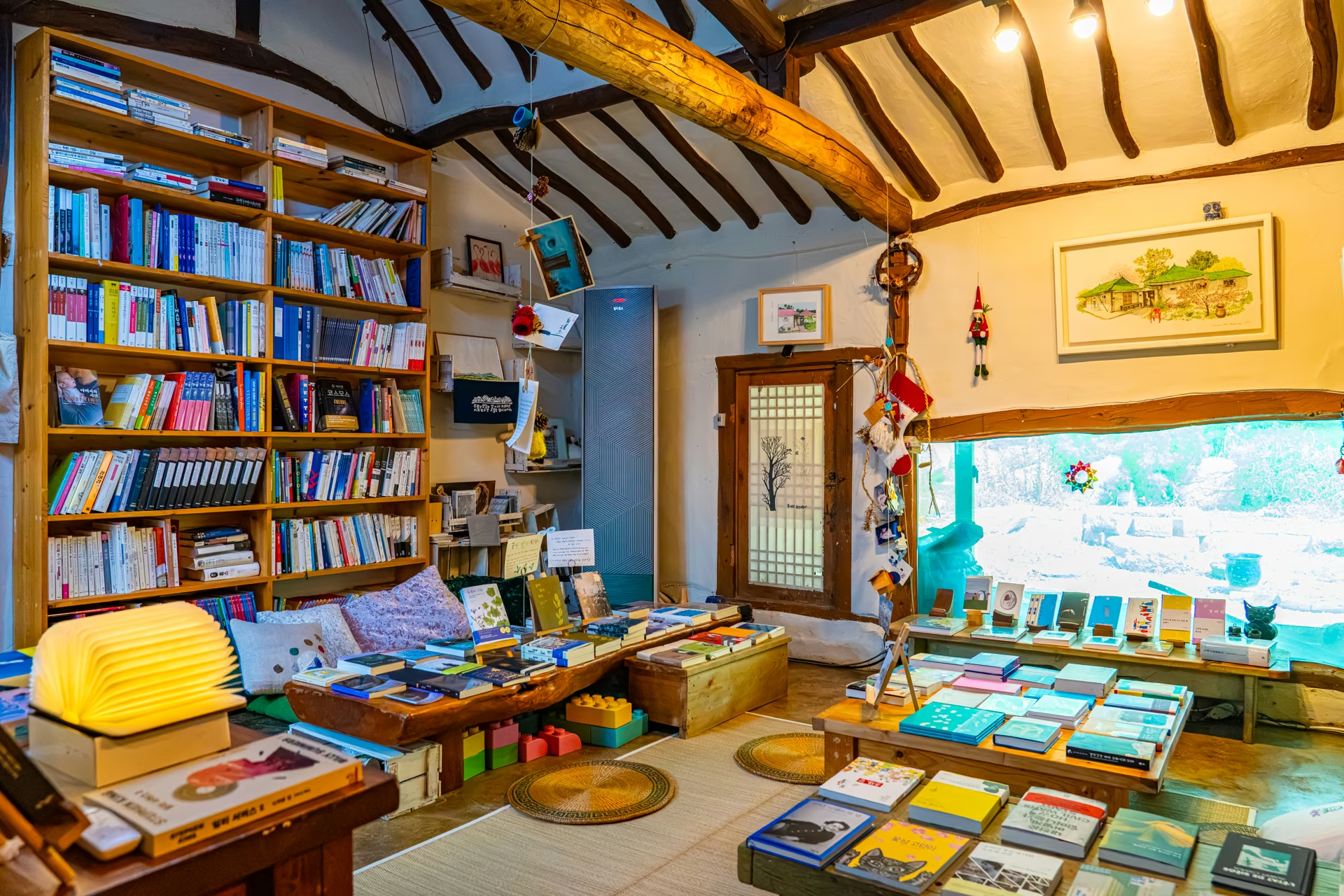
A bookstay is exactly what the compound suggests: you sleep in a bookshop. Spare rooms in the house were converted for guests, and the proposition is a night with the shelves, in a farmhouse, in a field, with nothing scheduled and nowhere to walk to.
At the time of reporting the rate was ₩100,000 per person per night, or ₩300,000 for exclusive use of the house. Booking is by phone, on 010-2598-3947.
Set your expectations accurately. This is an old rural Korean house, not a boutique hanok stay. The owner has said plainly that she wants guests who like the inconvenience — people who will rest properly with a good book and treat the care that went into the space with some respect. She would also like you to buy a book while you are there. That seems like a fair trade for the rate.
Events run intermittently — author talks, occasional small concerts, usually in the back yard. There is no fixed schedule; announcements go up on the shop’s Instagram. If you read Korean at all, it is worth checking before you set a date, because catching a book talk here would be a very different evening from a quiet one.
The Honest Problem: Booking in Korean
Here is the barrier, stated plainly. Reservations are made by phone, in Korean, to a mobile number answered by a bookseller in her sixties who is not running an international hospitality operation. There is no booking platform, no English page, no email form.
Realistic workarounds, in order of how well they tend to go:
- Ask your Korean accommodation to call. Front desk staff at a Seoul hotel or guesthouse will usually make a two-minute call for a guest. This is the highest-success route by a distance.
- Have a Korean-speaking friend or colleague call. Same effect, more social capital spent.
- Send a Korean text message rather than calling. A short KakaoTalk or SMS composed in Papago, giving dates, number of people and your name, is easier for both sides than a voice call in a language neither party shares.
- Visit the shop first, book in person. If you are already spending a day on Ganghwa, stop in during opening hours and arrange a future night face to face.
This is a recurring pattern with the best small places in rural Korea — the same wall comes up at a reservation-only forest cafe in Hongcheon. It is not gatekeeping. It is just what a two-person operation can manage.
Opening Hours: Call First
Published hours for the shop disagree with each other. Some listings show 10:00 to 18:00; more recent ones show midday to 18:00. Given that this is a house as much as a business, treat the afternoon as the reliable window and phone ahead the same morning if you are driving out specially. Turning up unannounced at 10 a.m. on a weekday is how people end up photographing a closed door in a field.
Who This Is Actually For
This is for readers — people whose idea of a good night away involves a lamp and a book and no wifi-driven obligations. It is for travellers who want a version of rural Korea that is not a folk village or a restored heritage property, but an ordinary house someone actually lives in. It is for anyone building a slow Ganghwa itinerary, because it pairs naturally with a temple, a museum in a hillside and a vegan bakery on the coast road, all within twenty minutes. And it is for anyone who collects independent bookshops the way other travellers collect cafes — the travel bookshop in Mukho harbour and the yellow bookstore that turns up in Goblin’s Incheon filming locations belong on the same list.
It is a poor fit if you need hotel-grade comfort, if you cannot arrange a Korean-language phone call, or if the books being almost entirely in Korean is a dealbreaker. Be honest with yourself about that last one — the point of the visit is the house, the shelves and the person behind them, not a reading list you can take home.
What I keep coming back to is the naming. Somebody looked at a room full of second-hand books in a farmhouse and reached for the two kitchen tools that have no private use — the ones that only work when you are serving somebody else. Almost nobody outside Ganghwa will ever hear the explanation. The shop kept the name anyway.
Practical Manual: Gukjawajugeok
| Address (EN) | 46-27 Ganghwanam-ro 428beon-gil, Yangdo-myeon, Ganghwa-gun, Incheon |
| Address (KR) | 인천광역시 강화군 양도면 강화남로428번길 46-27 |
| Phone / bookings | 010-2598-3947 (Korean language, mobile) |
| Shop hours | Afternoons, roughly midday to 18:00 — listings vary, call the same morning |
| Bookstay rate | ₩100,000 per person per night · ₩300,000 whole-house exclusive use (at time of reporting) |
| Opened | 2016, by Kim Hyun-sook |
| Events | Occasional book talks and concerts in the back yard; announced on Instagram |
| Language | Korean only, stock almost entirely Korean-language |
| From Seoul | ~90 min by car via Choji Bridge, then ~5 min past Jeondeungsa. Transit is impractical without a taxi. |
| Navigation Tip | Google Maps does not give driving directions in Korea. Use Naver Map and search 국자와주걱. Compose your booking message in Papago and send it as a text. |
Rates and hours reflect the time of reporting. This is a small owner-run house, and both are subject to change without notice — phoning ahead is not optional here.