
Ganghwa History Museum: The Cheapest Three Thousand Years in Korea
The best thing here is outside, it is free, and most visitors photograph it in ninety seconds before going indoors.
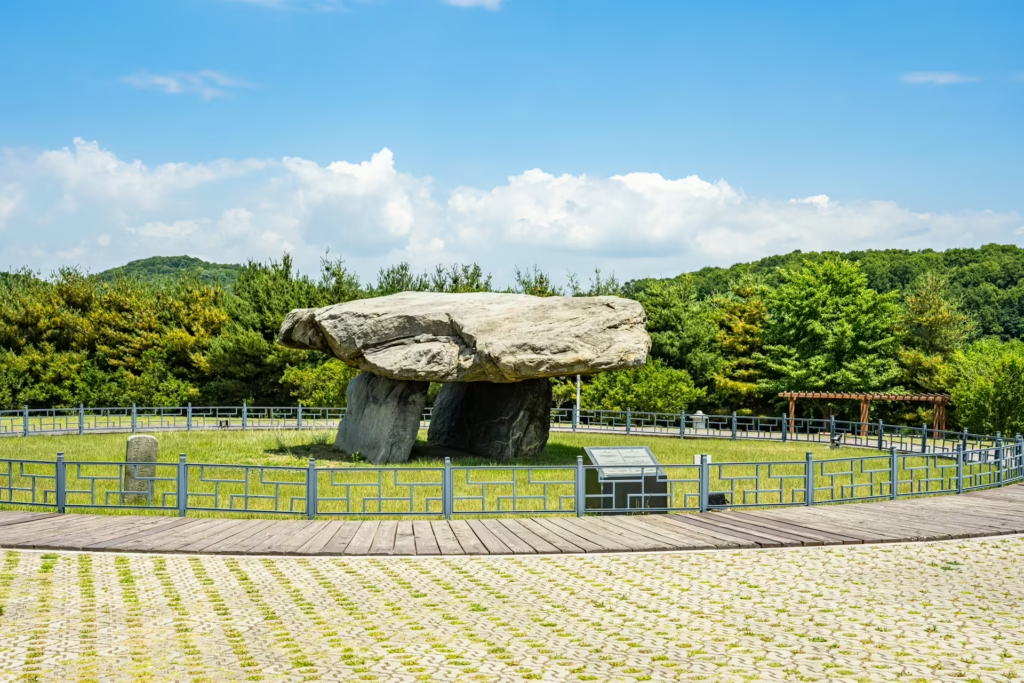
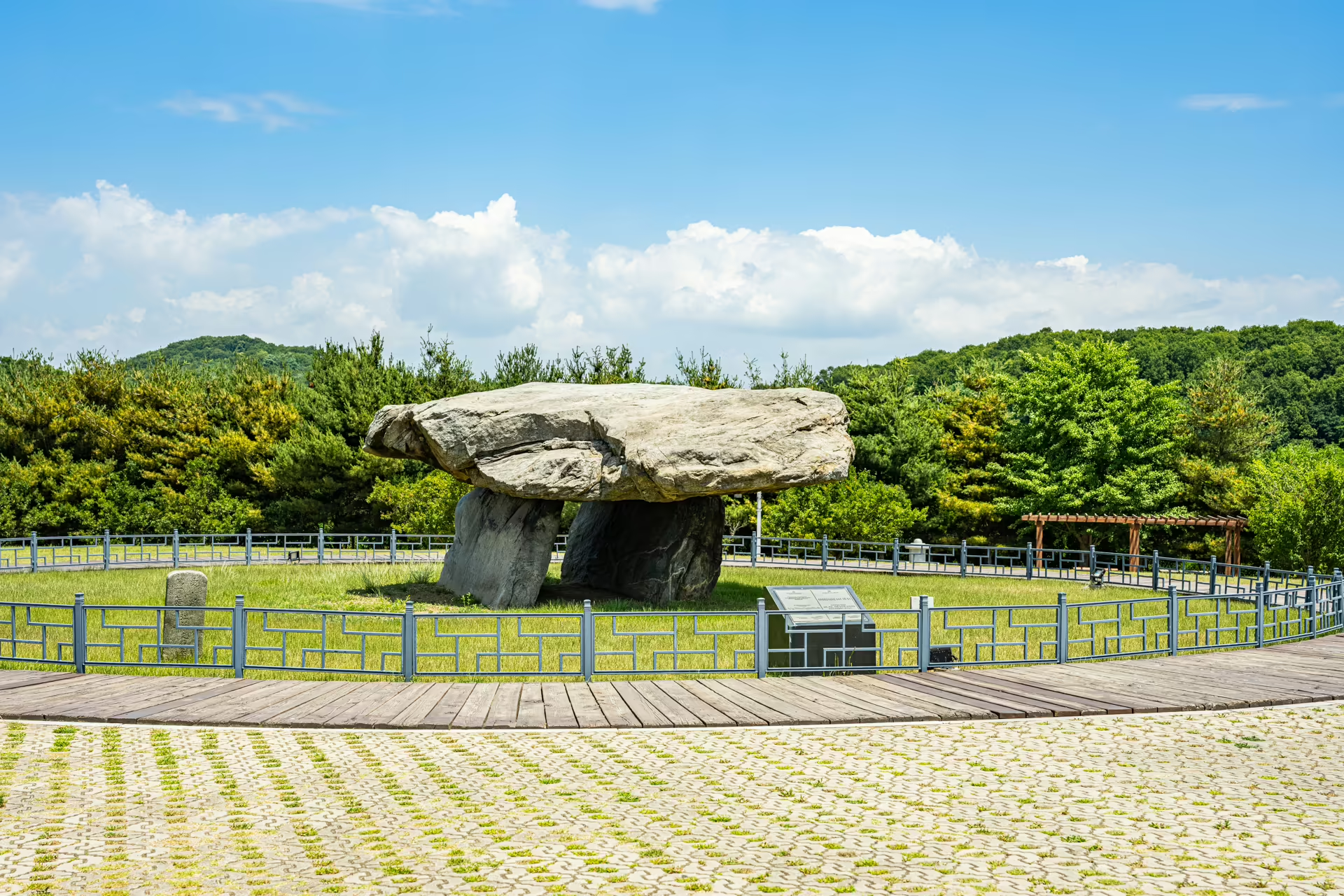
On a mown lawn in front of the Ganghwa History Museum stands a single slab of granite, 6.5 meters long and weighing about 53 tonnes, propped on two upright stones like a table built for something much larger than a person. It has stood there for roughly three thousand years. It’s part of a UNESCO World Heritage site, it has been nationally designated since 1964, and there is no fence, no ticket and no attendant. You can walk up and put your hand on it.
Behind it sit two county museums that share a parking lot and a ticket. Together they cost 3,000 won. I have paid more than that for a coffee on this island, and I did so later the same afternoon.
Orientation: Getting to the Ganghwa History Museum
Ganghwa is an island off Korea’s west coast, joined to the mainland by two bridges, and close enough to Seoul that it has become the capital’s default day trip for anyone who wants countryside without committing to a train. The museums sit in Hajeom-myeon, in the island’s northwest, about twenty minutes by road from the bus terminal in Ganghwa town.
Without a car, the useful number is bus 3000, which runs from Sinchon in western Seoul all the way to Ganghwa terminal for about ₩3,000 on a transit card. It leaves every fifteen to thirty minutes and takes roughly two hours twenty on a weekday — occasionally rather more, because a single road carries everyone onto the island. Note that the route was split in 2024 and the Ganghwa half lost a good deal of its fleet, so it fills up, and it’s seated-only: standing passengers aren’t allowed. From the terminal, several local buses run out to the stop signed for the dolmen park.
By car it’s the Olympic Expressway and the Gimpo riverside road to the Ganghwa bridge, and there is a large free parking lot at the museums.
1. Start Outside: The Dolmen Nobody Charges For
Go to the stone first. The museums make far more sense afterwards.
Korea has something like thirty-five thousand dolmens — roughly forty percent of all the dolmens in the world — and in 2000 UNESCO inscribed three concentrations of them as the Gochang, Hwasun and Ganghwa Dolmen Sites. This one is the northern-type, or table-type: two uprights carrying a capstone clear of the ground, the form you get in the north of the peninsula rather than the south.
The capstone measures 6.5 by 5.2 meters and 1.2 thick, and stands 2.6 meters tall overall. It is the largest on the island and the one that appears on every poster. What the numbers don’t convey is how it sits: alone in the open, on grass, with farmland behind and the museum’s low roof off to one side. Bronze Age communities put it there without wheels or draft animals, and the only reasonable response is to stand under it and think about the logistics.
Practical warning: there is no shade at all on that lawn. In July and August, bring a hat and water, look properly for ten minutes, then go and stand inside the air conditioning like everyone else.
2. The History Museum: An Island That Kept Getting Invaded
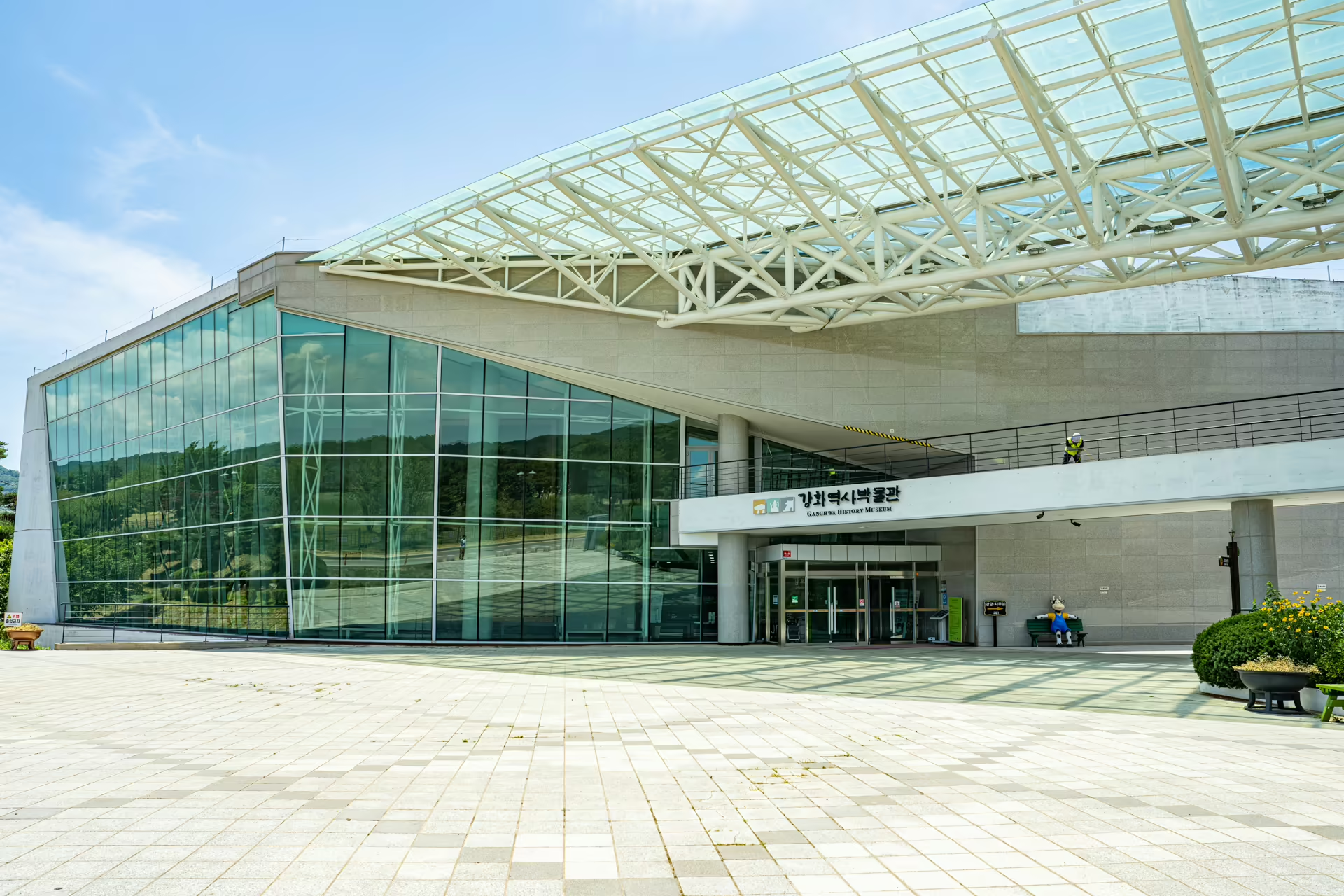
The building opened in 2010, replacing an older museum that stood at a fort on the eastern shore, and it runs top-down: start on the second floor and work back to the ground.
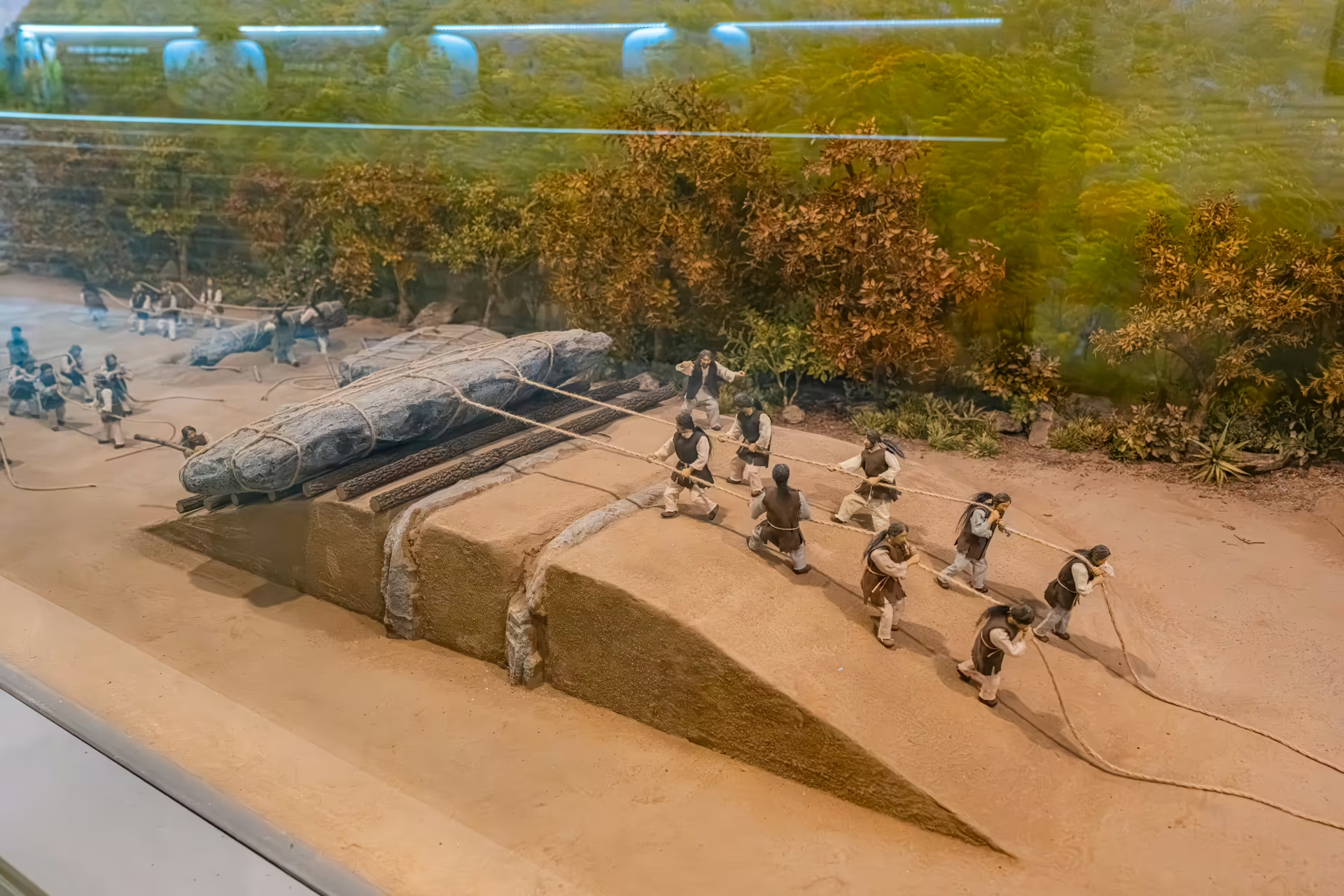
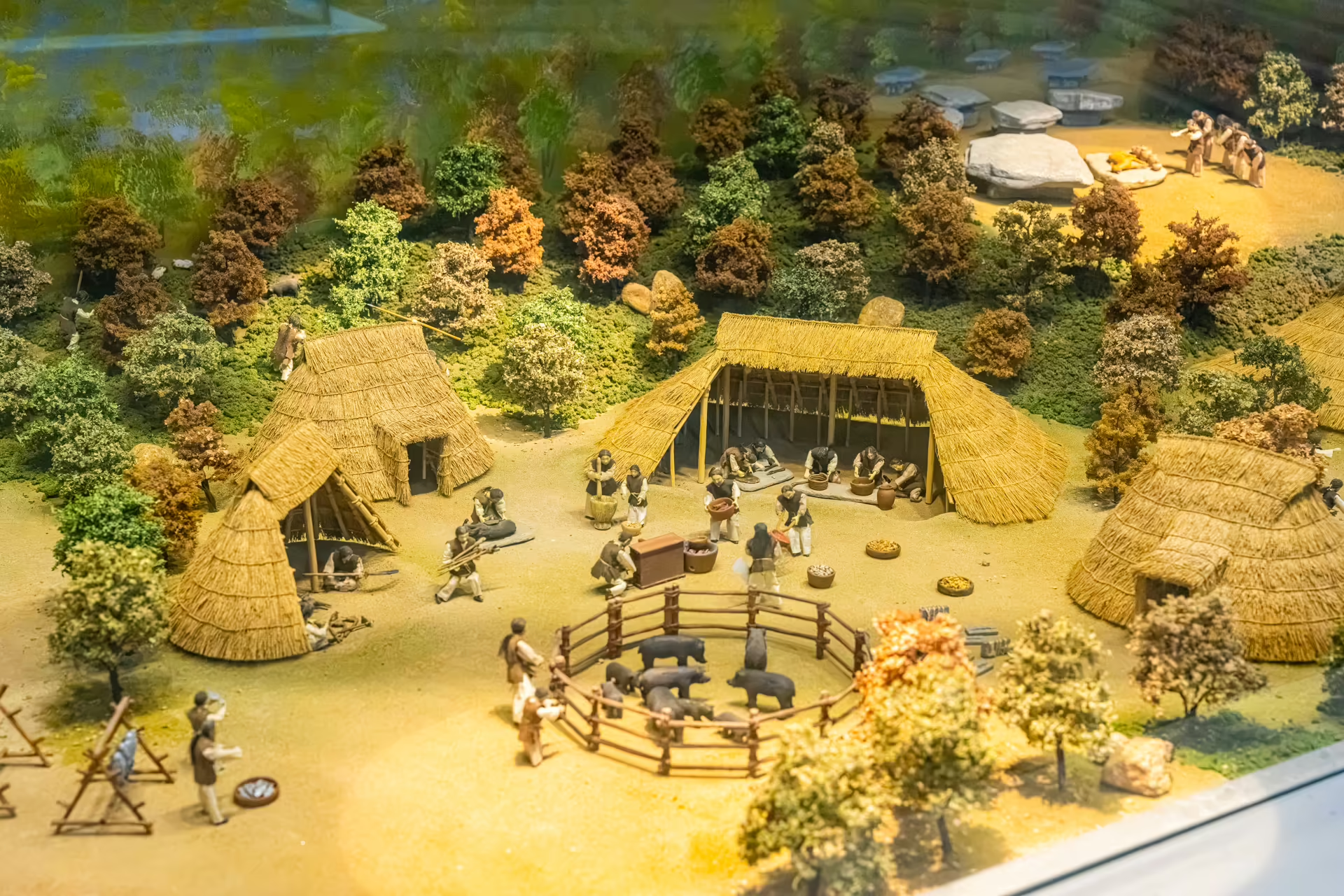
Upstairs is prehistory — the dolmen builders, their villages, and the tools they left. The dioramas are the old-fashioned kind, hand-modeled and lit from above, and they do the one job that matters for a foreign visitor: they show you what the field outside looked like when the stone went up.
Downstairs the island’s real subject begins, and it is this: Ganghwa is where Korea retreated to, and where Korea got hit first. Sitting in the mouth of the Han River, it guards the water approach to Seoul, which made it both the kingdom’s bolt-hole and its front door.
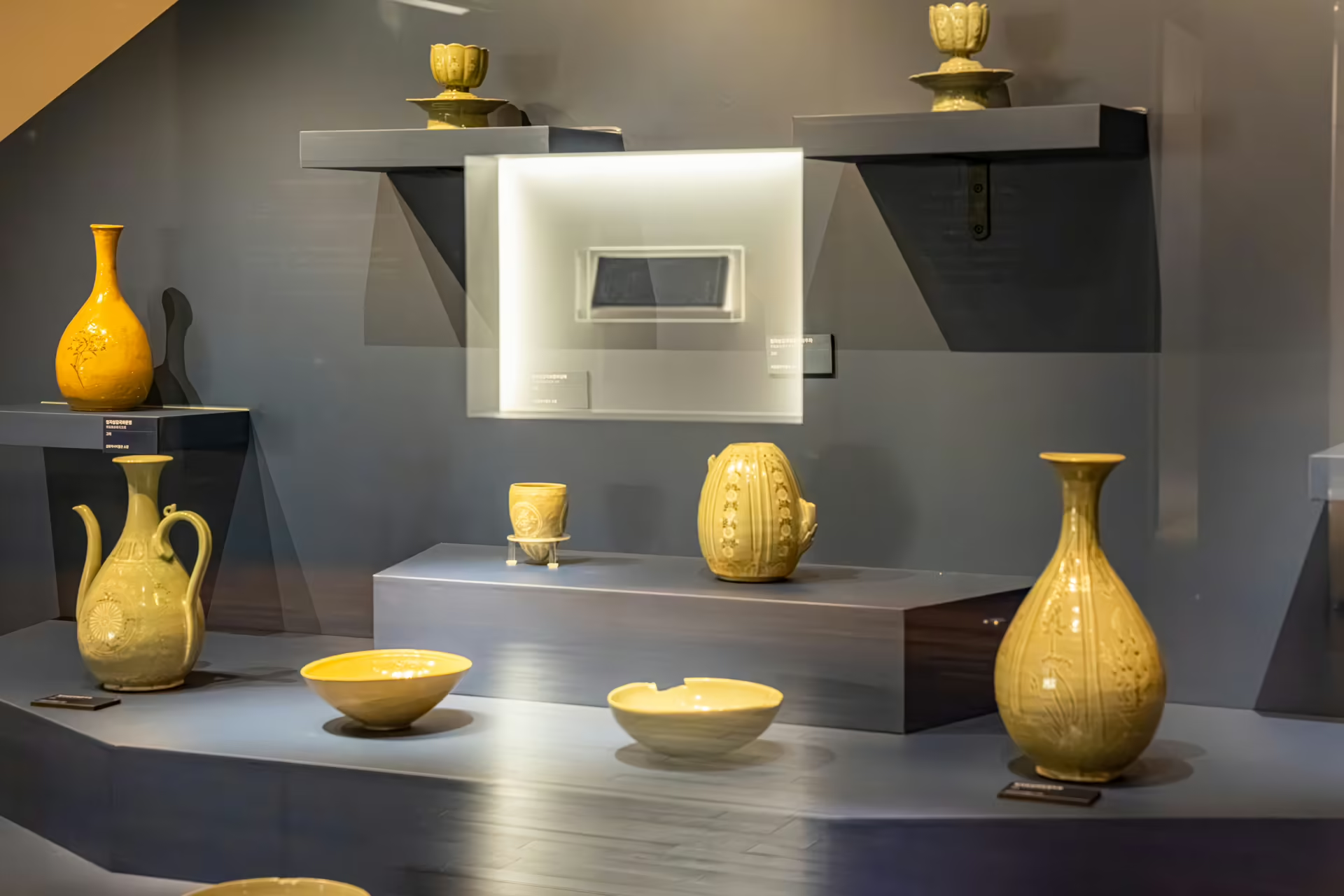
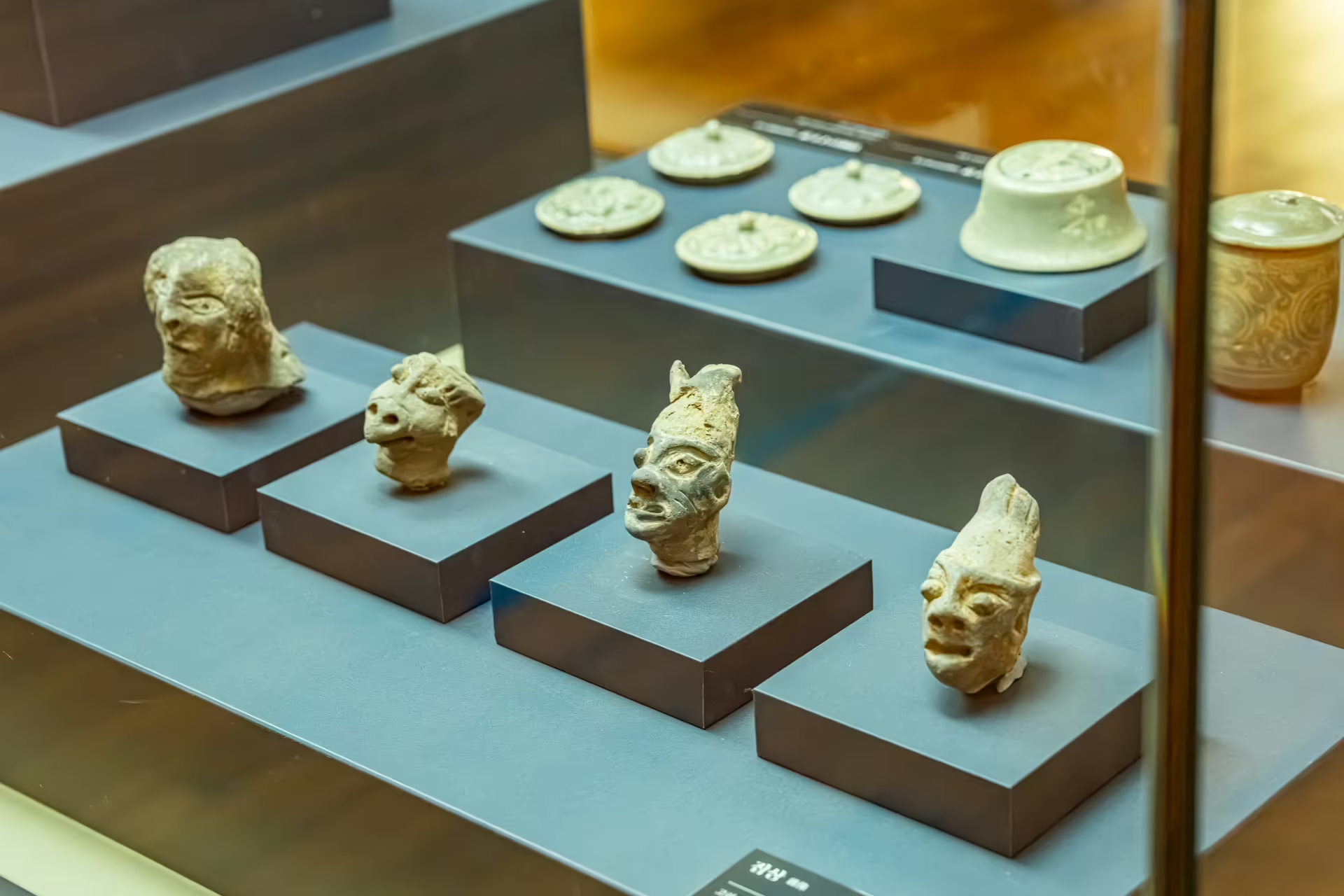
The Goryeo court moved here in the thirteenth century to hold out against the Mongols, and stayed for decades. The celadon and the carved roof-tile ends in the cases upstairs are what a royal capital leaves behind when it relocates to an island. The Joseon dynasty stored its dynastic archives here for the same reason.
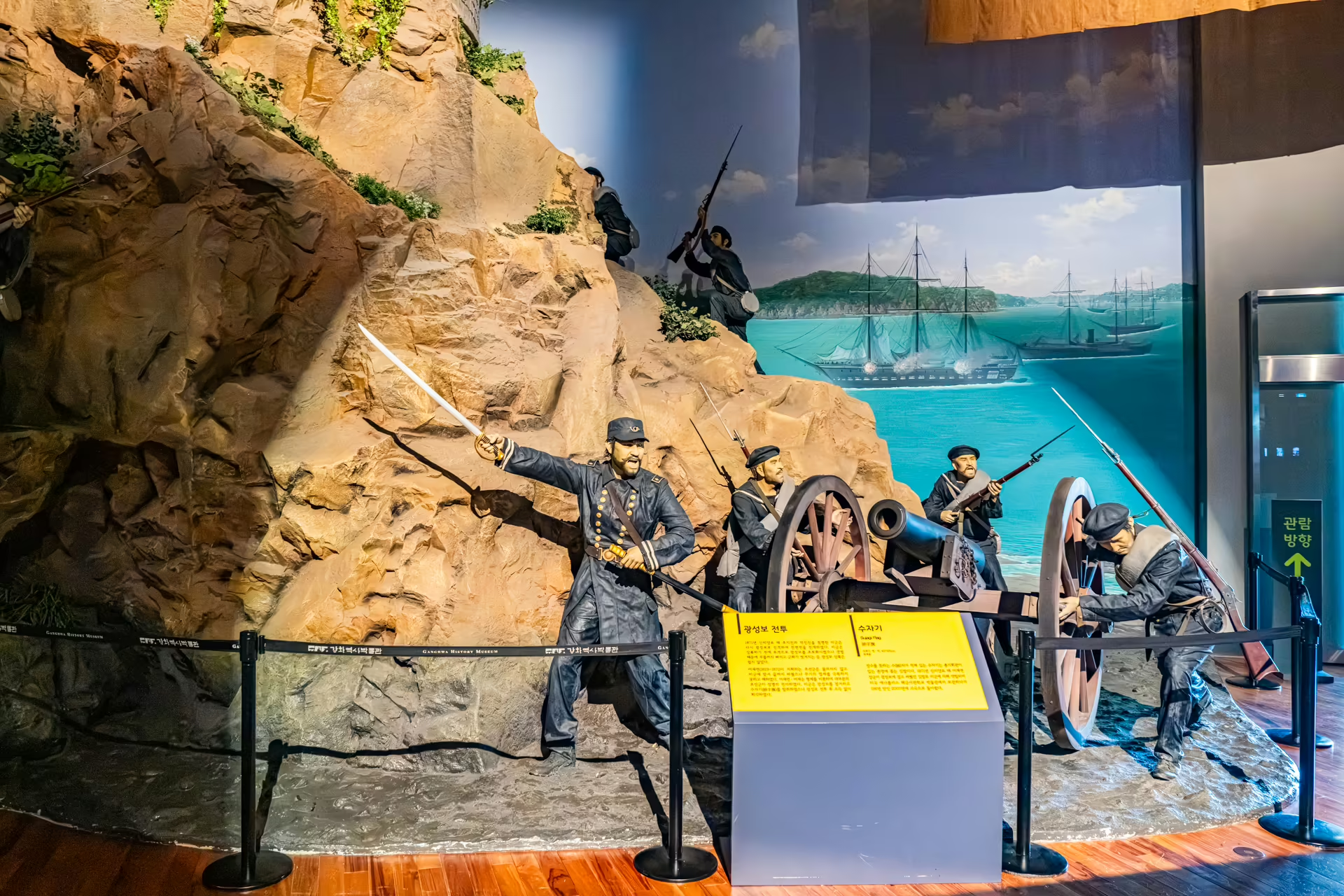
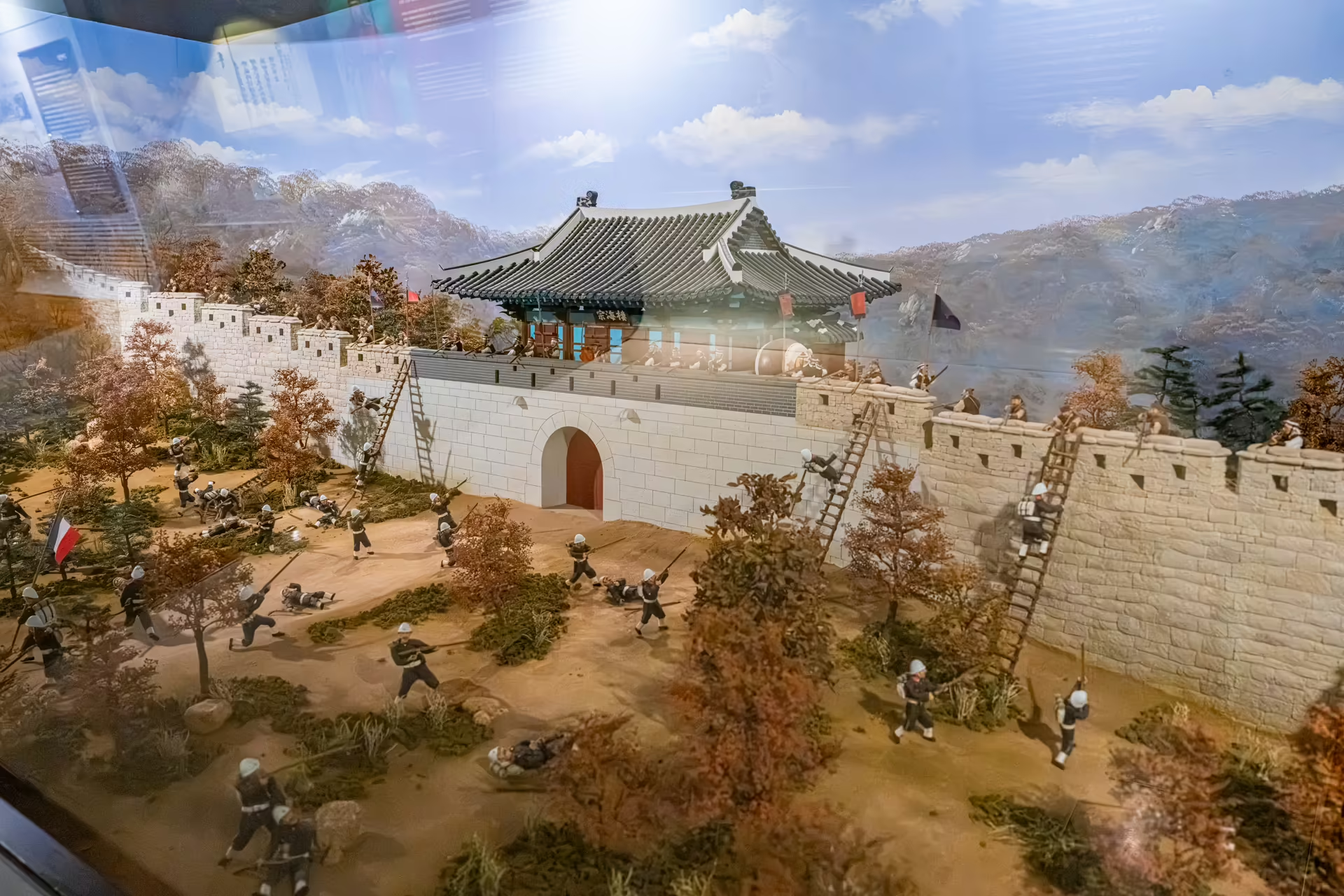
Then the nineteenth century, which is where the museum stops being pleasant. In 1866 a French squadron came up the channel; in 1871 an American one followed. The second is the one the displays dwell on. At the forts on the eastern shore, a Korean garrison under the commander Eo Jae-yeon fought a landing force to the end rather than withdraw. The diorama of the shore battery — gunners at an embrasure, ships offshore — is not subtle, and it doesn’t need to be.
If you have already walked the forts at Gwangseongbo or Chojijin, this room is where they acquire names and numbers. If you haven’t, go afterwards. And if you want the other half of the island’s nineteenth century — the mills that arrived once the fighting stopped — the 1933 weaving mill in Ganghwa town is twenty minutes south.
3. The Natural History Museum: Go for the Whale
Thirty seconds’ walk away, the natural history museum opened in 2015 and is covered by the same ticket. It is a general natural-history collection — origins of the earth, the Cambrian explosion, food chains, camouflage, migration — competently done and pitched squarely at primary-school children.
Two things lift it above that.
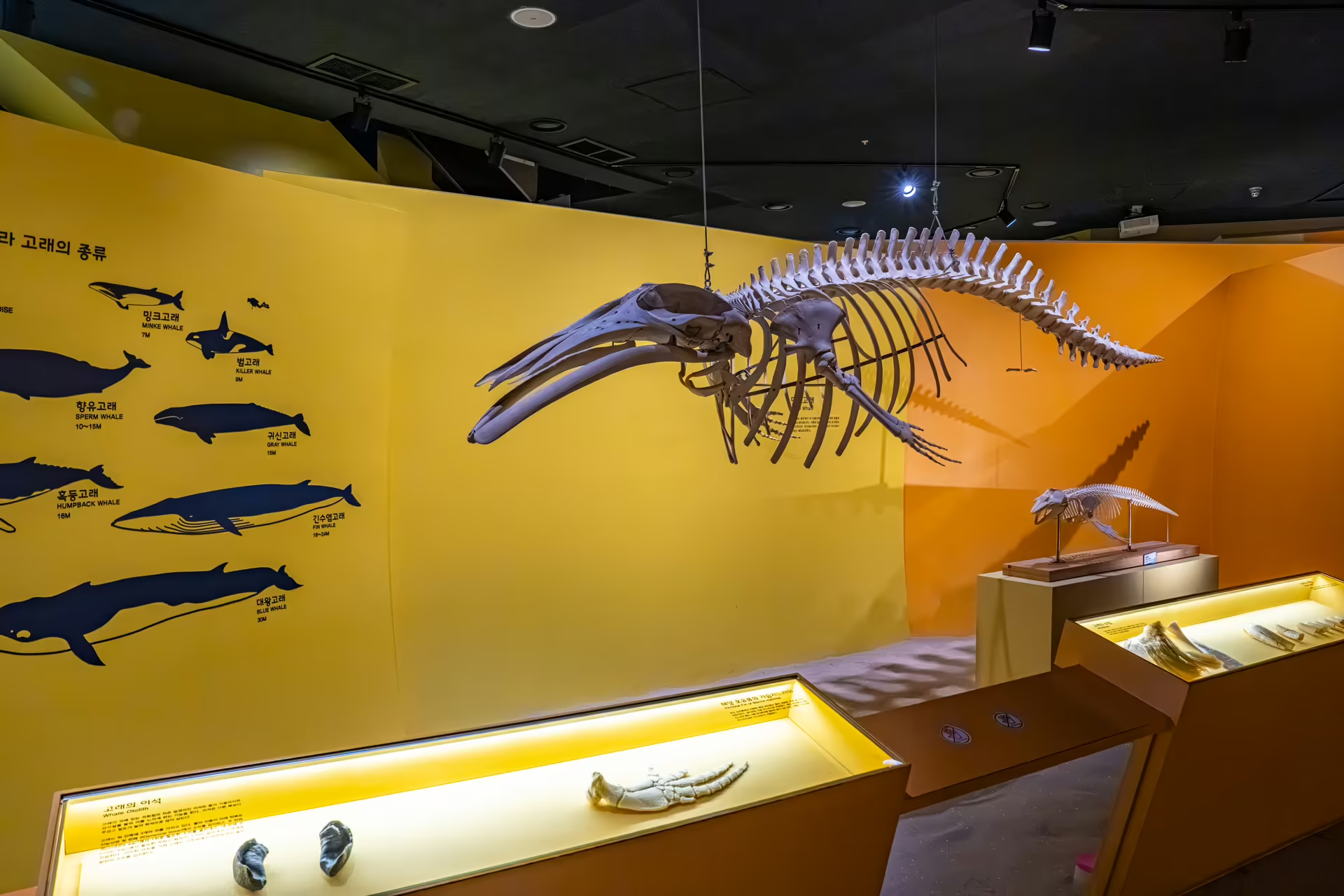
The first is in the lobby, and you see it before you have finished getting your ticket out: the skeleton of a sperm whale, 14.5 meters long and about 20 tonnes in life, which stranded off Bolumdo — a small island in Ganghwa’s western waters — in 2009. It hangs in full, jaw to fluke, and it recalibrates the room. A whale is one of those animals whose size you think you understand until the bones are over your head.
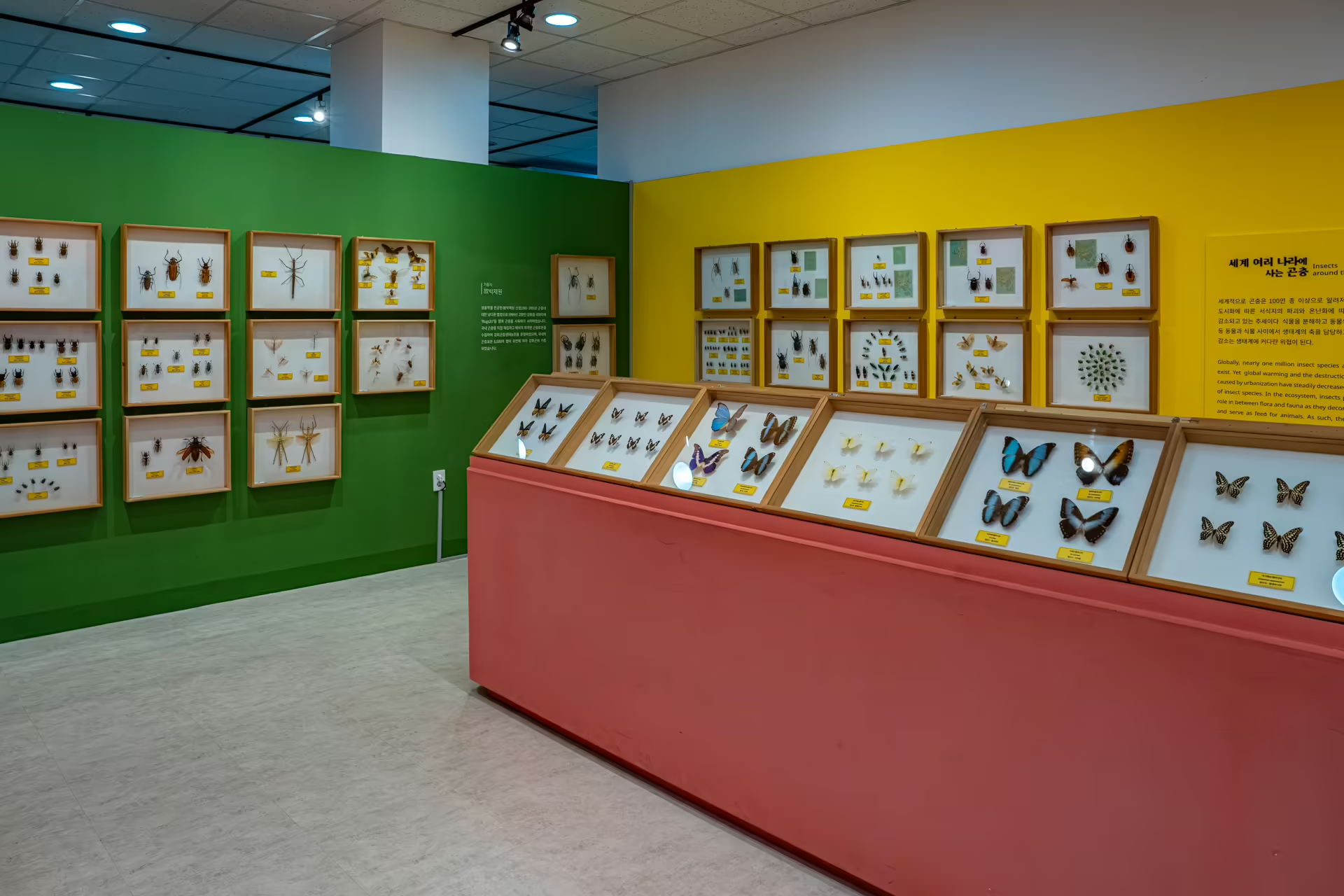
The second is the insect collection — roughly twenty thousand specimens donated by a single private collector, laid out in case after case. Bequests like this are how small regional museums end up with holdings they could never have bought, and the cases are worth a slow walk even if you can’t read the labels, because the sheer repetition tells you what one person gave several decades of their life to.
4. How Long, and In What Order
Allow two hours for both museums plus the dolmen, and rather more if you have children who like the natural history side.
The order I’d give anyone: dolmen first, history museum second, natural history third. The stone raises the question, the first museum answers it and then carries the island’s story forward three thousand years, and the second is the reward — which is the right way round if the small members of your party are running out of patience.
One caution about the tickets. The two museums are a combined admission, so don’t let anyone sell you two. Adults ₩3,000, children and teenagers ₩2,000, under-sevens and over-sixty-fives free, and the county also sells a 15 percent discount pass if you’re pairing these with other paid sites on the island. Both close on Mondays, and a great many people find that out in the parking lot.
The history museum runs a special exhibition gallery on the ground floor with a rotating program, usually drawn from the island’s own temples and archives. Worth ten minutes on your way out; check what’s on before you go rather than planning around it.
Who This Is Actually For
Anyone spending a day on Ganghwa: this is the orientation stop. Do it early and everything else on the island — the forts, the temple, the old mill town — has a frame to hang on. Jeondeungsa, the temple inside a fortress wall, makes the obvious second stop and is also free.
Families: two museums, a whale, a lawn with a giant rock on it, free parking, and ₩3,000 a head. There is very little in the Seoul commuter belt that competes on that arithmetic.
Anyone interested in prehistory: come for the dolmen, and don’t skip the hauling diorama inside — it’s the clearest visual answer I’ve seen to the question everyone asks in front of these stones.
People who want a polished museum experience: lower your sights. These are county museums with county budgets. The dioramas are dated, the English labeling is patchy, and the building is functional rather than architectural. Neither is trying to be a national institution and neither charges like one.
Anyone arriving on a Monday: the dolmen is still there and still free. The doors are not open.
On the way out I stopped at the field again. A granite slab the size of a small van, standing on two legs in cut grass, with a family eating ice creams in its shadow because it was the only shade for a hundred meters. Three thousand years, and it has ended up as a parasol. I don’t think the people who put it there would mind.
Practical Manual
| Item | Detail |
|---|---|
| Names | Ganghwa History Museum (강화역사박물관) and Ganghwa Natural History Museum (강화자연사박물관) |
| Address (English) | 994-19 Ganghwa-daero, Hajeom-myeon, Ganghwa-gun, Incheon (natural history museum at 994-33) |
| Address (Korean) | 인천광역시 강화군 하점면 강화대로 994-19 / 자연사박물관 994-33 |
| Hours | 09:00–18:00, last tickets 17:30 |
| Closed | Mondays, 1 January, and the days of Lunar New Year and Chuseok |
| Admission | Combined ticket for both museums: adults ₩3,000, children and teenagers ₩2,000, under-7s and over-65s free. Groups of 20+ ₩2,500 / ₩1,500. A 15% discount pass covers three or four paid island sites |
| Dolmen | Bugeun-ri dolmen, on the lawn in front of the history museum. Free, open ground, no shade. Capstone 6.5 × 5.2 × 1.2 m, about 53 tonnes; 2.6 m tall. Nationally designated 1964; part of the UNESCO listing of 2000 |
| Sperm whale | 14.5 m skeleton, stranded off Bolumdo in 2009, in the natural history museum lobby |
| Parking | Free |
| Time needed | About two hours for both museums and the dolmen |
| Getting there | Bus 3000 from Sinchon in Seoul to Ganghwa terminal, roughly ₩3,000 and about 2 hr 20 min, every 15–30 min; then a local bus to the dolmen park stop, about 20 minutes. By car, roughly 1 hr 30 min from central Seoul |
| Inquiries | History museum 032-934-7887 / natural history museum 032-930-7090 |
Prices and hours are as published at the time of reporting. Bus 3000’s timetable thinned noticeably after the route was restructured in 2024, so check departures before relying on it for a return trip.
Navigation Tip: Use Naver Map with the Korean address above — Google Maps can’t route Korean roads properly — and keep Papago handy, because English labeling inside both museums is partial.