
Unjusa: A Valley Full of Buddhas, and Nobody Knows Who Put Them There
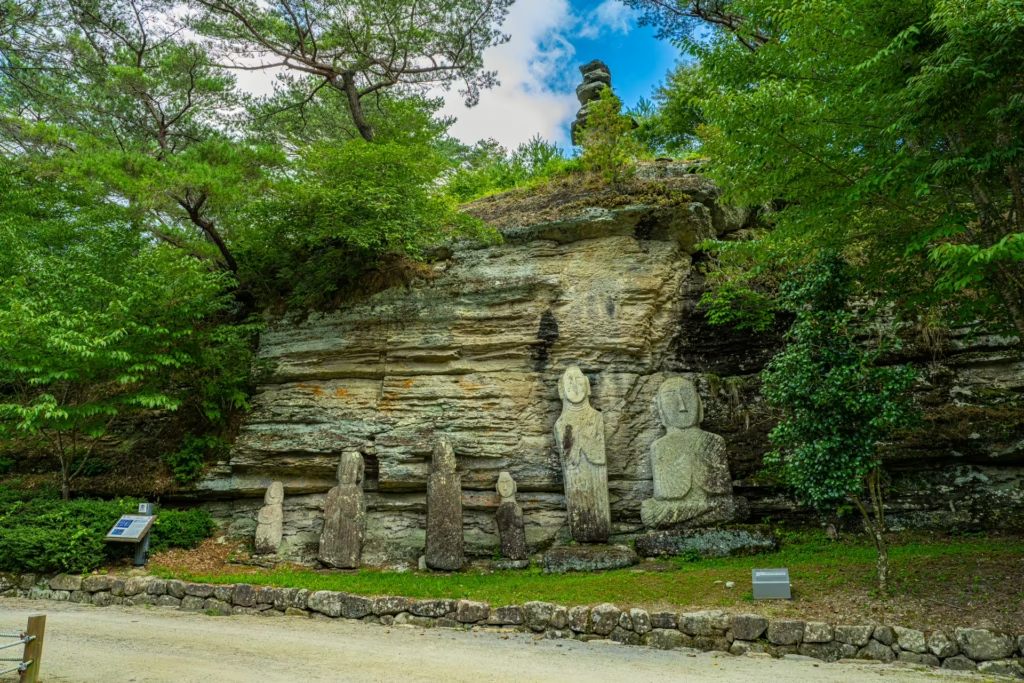
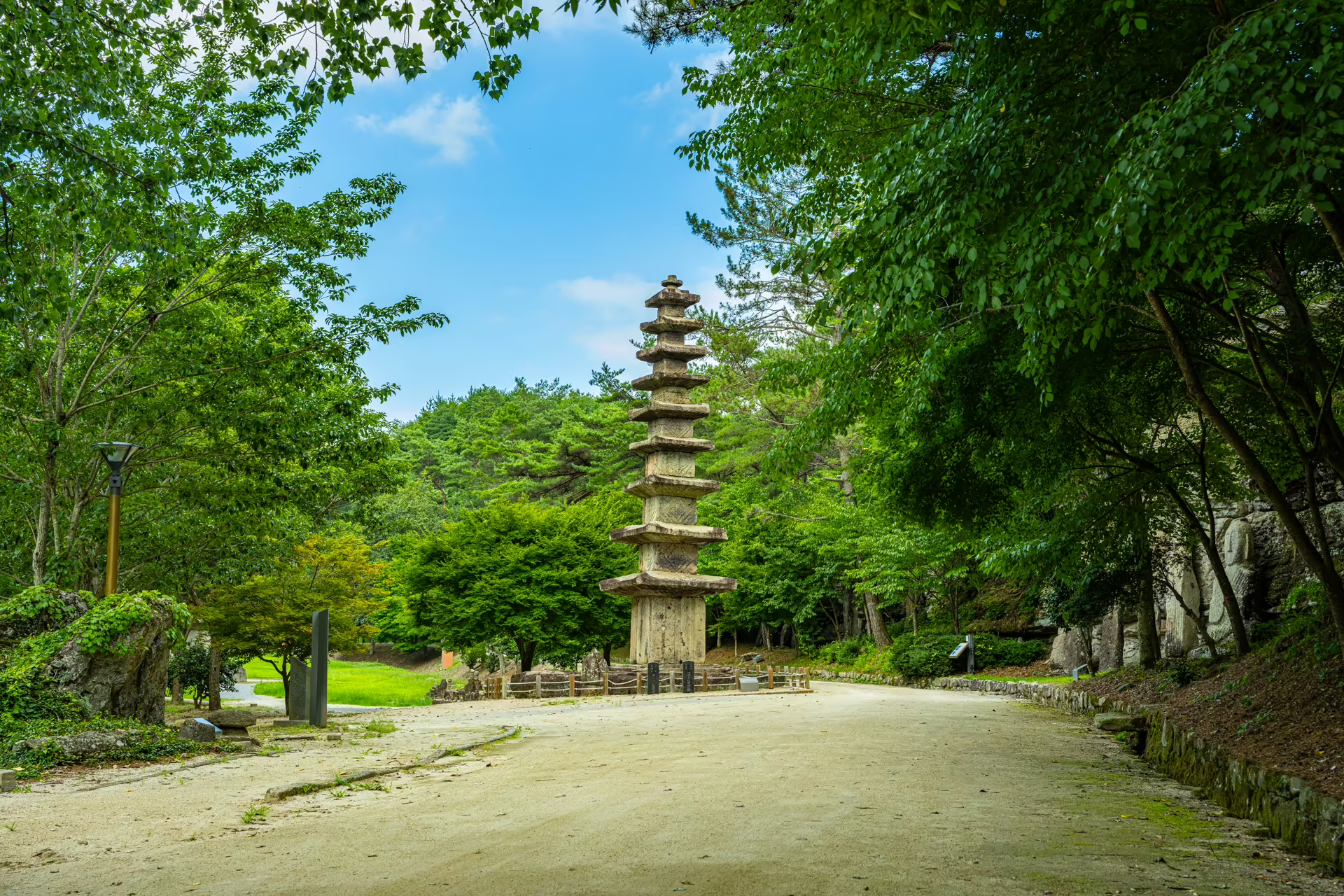
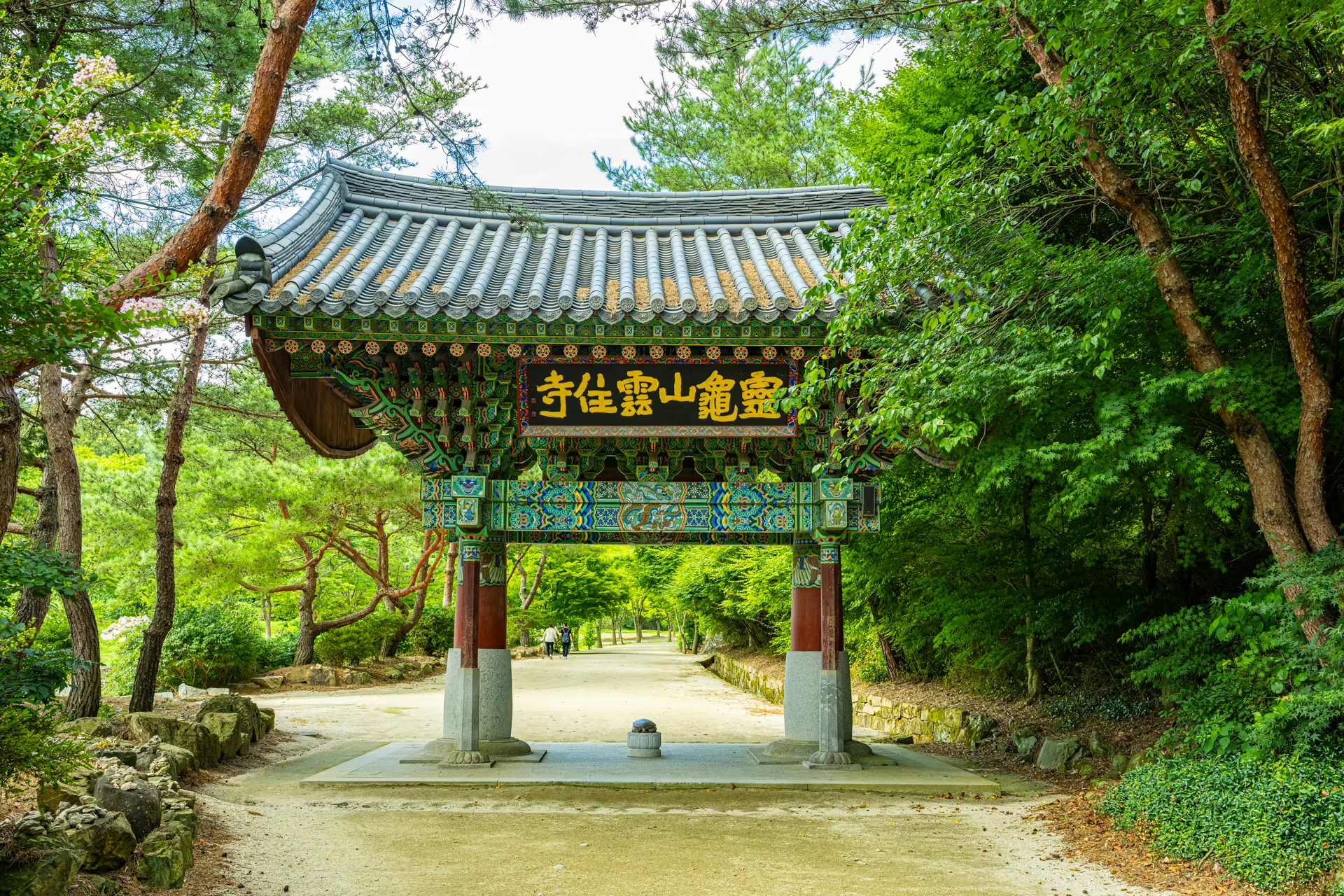
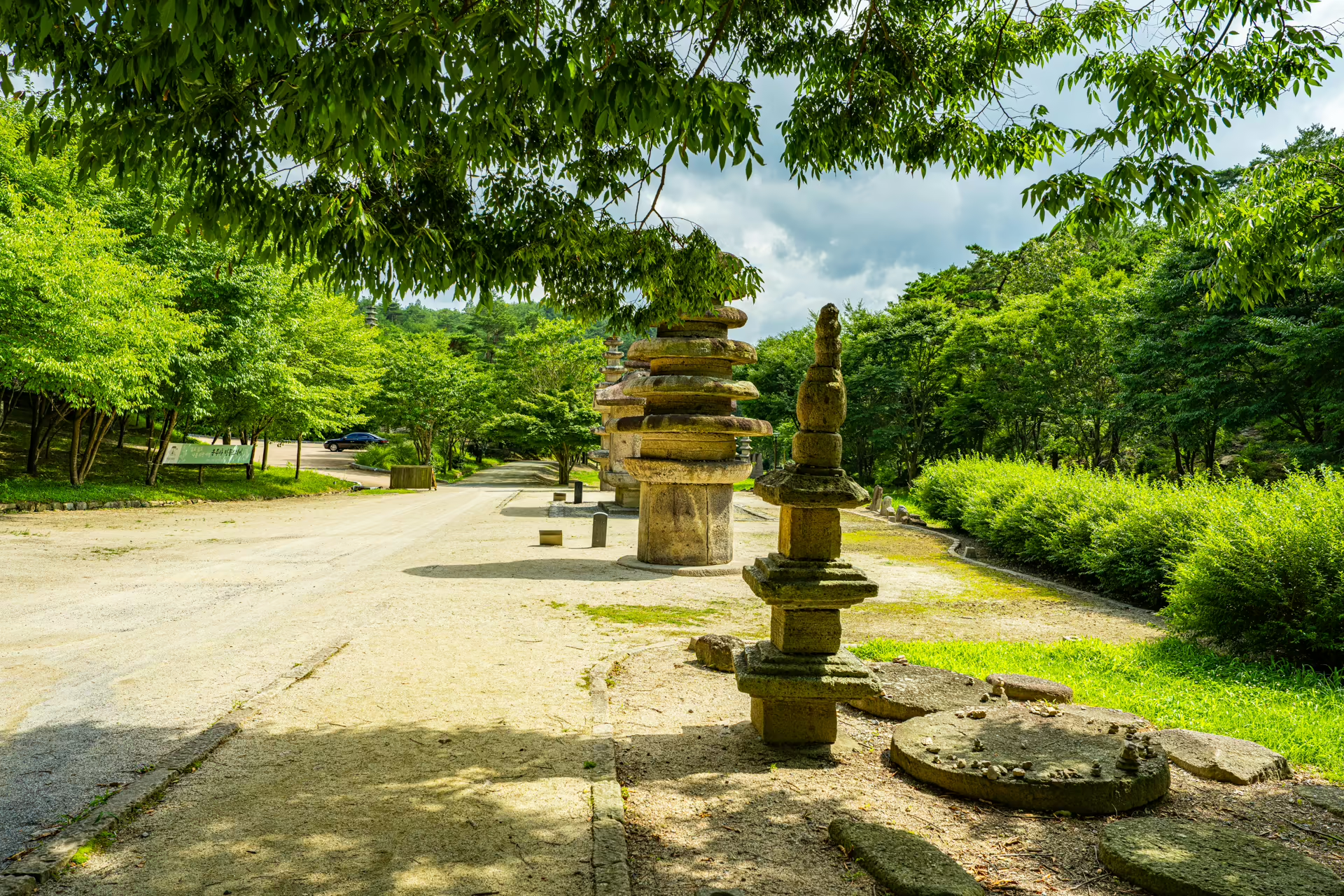
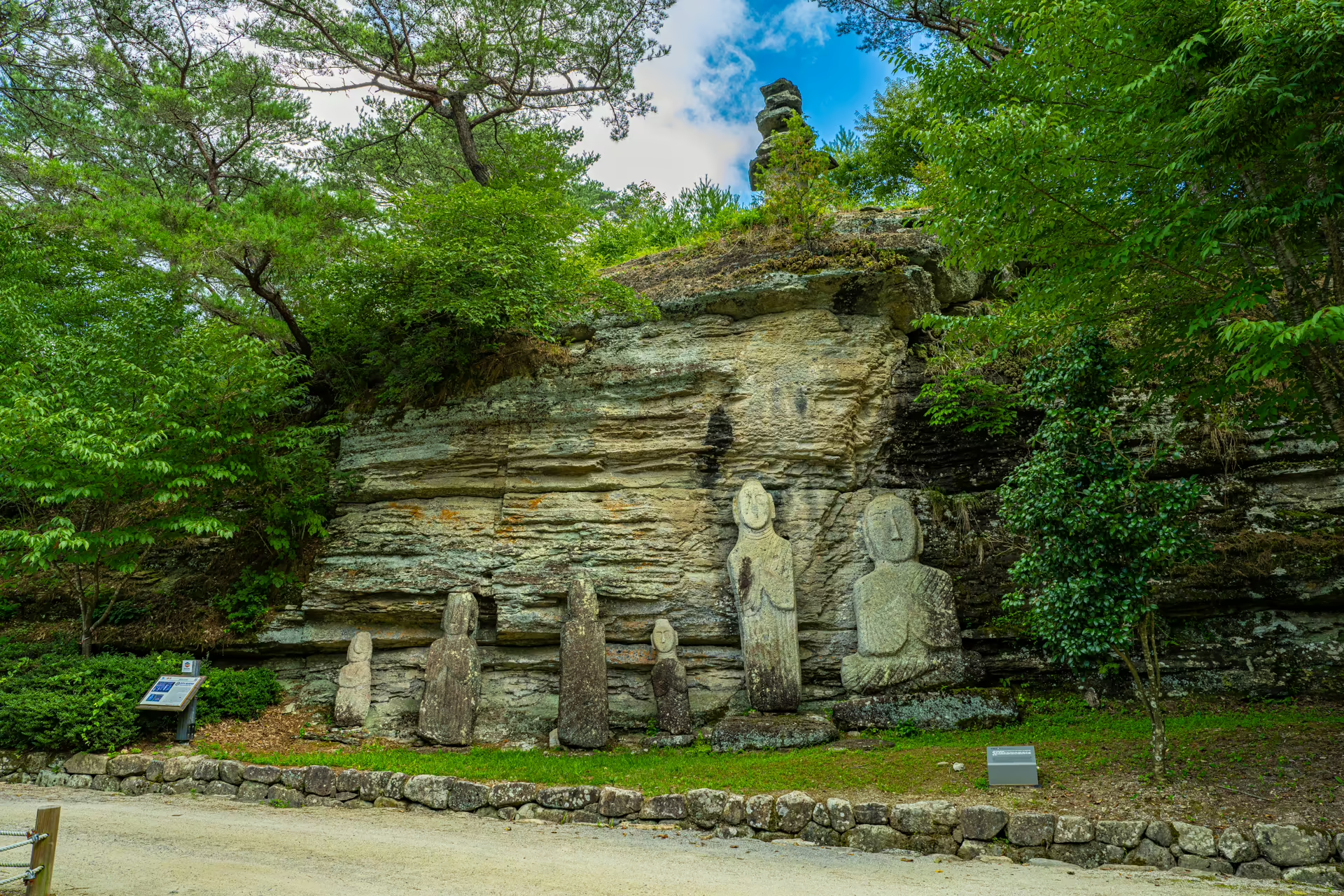
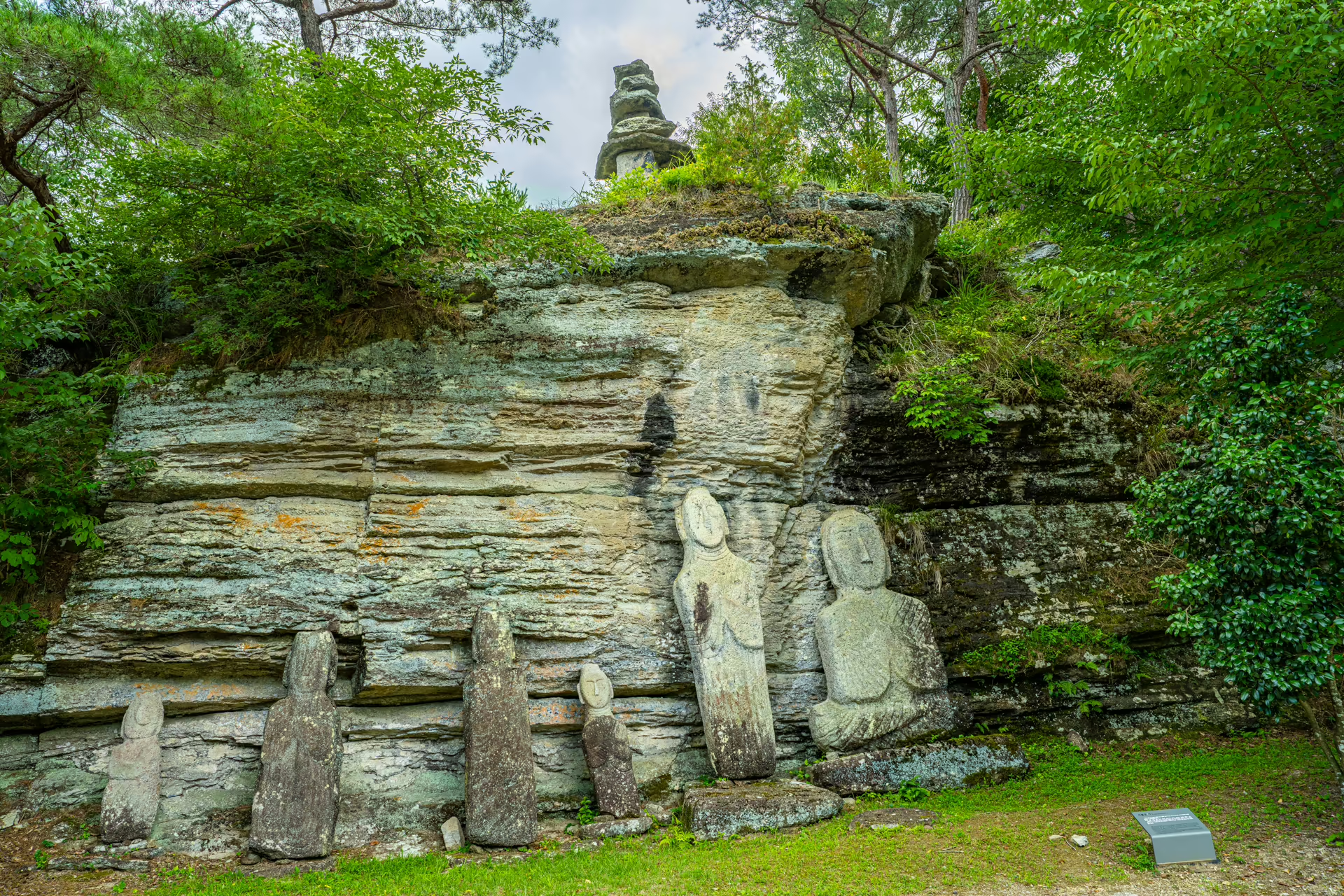
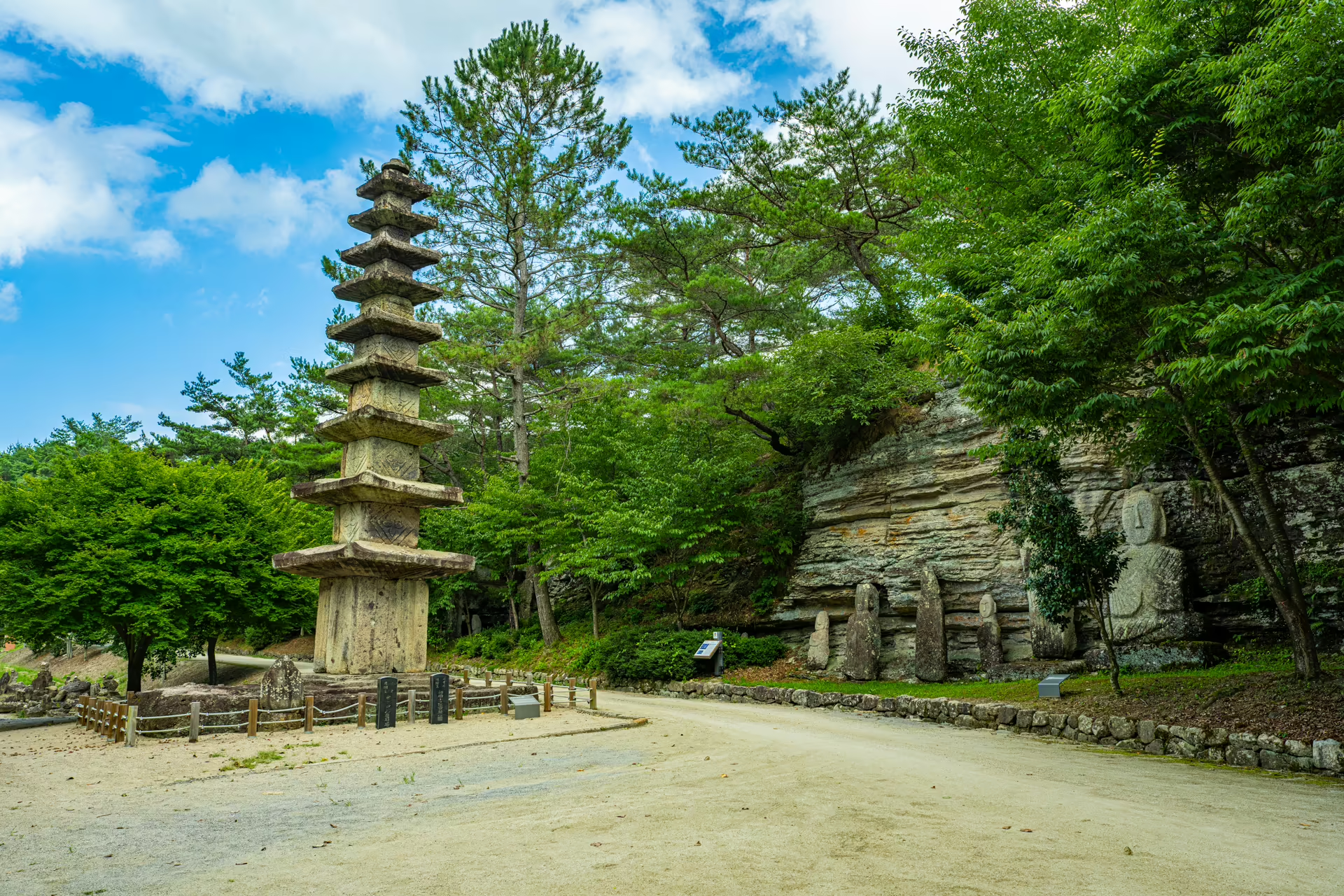
You walk in through a painted gate, past a nine-story pagoda, and then the valley opens up and you start counting. Buddhas leaning against a rock face. A pagoda standing alone in the grass. More Buddhas lined along the foot of a cliff, shoulder to shoulder like a queue. Another pagoda. And another.
There are, depending on who is counting, somewhere between seventy and a hundred stone Buddhas and between eighteen and twenty-two stone pagodas in this one narrow valley in Hwasun, in Korea’s southwest. No other Buddhist site in the country looks remotely like it. The state has excavated here four times since the mid-1980s, and the honest summary on the sign at the entrance is that nobody has established when it was built, who built it, or why.
That is not a marketing line. It’s the actual finding. And unlike almost every other major temple in Korea, it costs nothing to walk in and see for yourself — Unjusa was one of 65 temples that stopped charging heritage-viewing fees in May 2023.
Orientation: Getting to Hwasun
Unjusa sits in Doam-myeon, about 26 kilometers southwest of Hwasun town and roughly 40 south of Gwangju — both now inside the Jeonnam-Gwangju Special Metropolitan City, created in July 2026 when Jeollanam-do and Gwangju merged. The valley is on a hill called Cheonbulsan — Thousand Buddha Mountain, which tells you the name predates any modern tourism office.
Hwasun’s public transport runs almost entirely through Gwangju, and it does actually reach the temple. From U-Square terminal in Gwangju, bus 218 stops at a halt called Unjusa — the county timetable prints the route’s own destination board as “Unjusa, Jungjangteo, Uchi-ri, Haengsan” — for ₩2,450 on a transit card. If you’re already in Hwasun town the same bus costs ₩900 by card, because that’s an intra-county fare. Better still, route 318-1 terminates at the temple itself — but only twice a day, leaving Gwangju at 10:00 and 13:25 and coming back at 11:15 and 14:40, about an hour and a quarter each way. Miss those and you’re on the 218 with a walk.
By car it’s 26 kilometers and about 39 minutes from the Hyodeok junction on Gwangju’s southern edge, through the Chilgujae tunnel. From Seoul, take KTX to Gwangju Songjeong and pick up wheels there — which is what I’d do, because the two stops that make this a proper day out are both off the bus route.
1. Four Excavations, No Answer
Here’s what we can actually say.
Legend credits the temple to Doseon, the ninth-century monk-geomancer, who is said to have looked at the Korean peninsula, decided it was shaped like a boat, worried that the southwest was too light on mountains and would capsize, and raised a thousand Buddhas and a thousand pagodas here in a single night to weight it — the tall square pagodas as masts, the round ones and the Buddhas as crew. There is no documentary basis for this. It is a very good story, and it’s the reason the temple is sometimes written with characters meaning “moving the boat” rather than the official “where clouds dwell.”
Scholarship puts construction in the early Goryeo period, around the late tenth to early eleventh century, with a flourishing in the twelfth. Four excavation campaigns by Chonnam National University, beginning in 1984, turned up a gilt-bronze standing Buddha, celadon, inlaid celadon and buncheong sherds, and roof tiles — including one inscribed with a date corresponding to 1495, which proves the temple was still functioning well into the Joseon dynasty.
Circumstantial evidence, and here I’m quoting the case Korea itself submitted to UNESCO, points at a monk named Hyemyeong, recorded in a seventeenth-century geography as having built a thousand Buddhas and pagodas here with a thousand followers — and possibly the same Hyemyeong who began the colossal Buddha at Gwanchoksa in 968.
Beyond that: nothing. Not the patron, not the workshop, not the doctrinal program. Four digs, and the mystery held.
2. The Count, and the 1530 Problem
The temple’s nickname is cheonbul cheontap — a thousand Buddhas, a thousand pagodas — and it isn’t a modern flourish. A national geography compiled in 1530 records that at Cheonbulsan “there are a thousand stone Buddhas and a thousand stone pagodas on the ridges to left and right, and in a stone chamber two stone Buddhas seated back to back.”
Which means that in the early sixteenth century there was still enough here for a state surveyor to describe it in those terms. What survives is a fraction.
How large a fraction is genuinely disputed, and the split runs along institutional lines. The national heritage service counts 70 Buddhas and 18 pagodas. The temple and the tourism board count 93 Buddhas and 21 pagodas, of which about fifty of the Buddhas are intact. Korea’s UNESCO submission goes higher again, at 101 Buddhas and 22 standing pagodas from an estimated original 30. So if you see a confident single number anywhere, it has been picked rather than established — and the gap between the heritage count and the temple’s own is a reasonable proxy for how much of this valley is a complete object and how much is fragments.
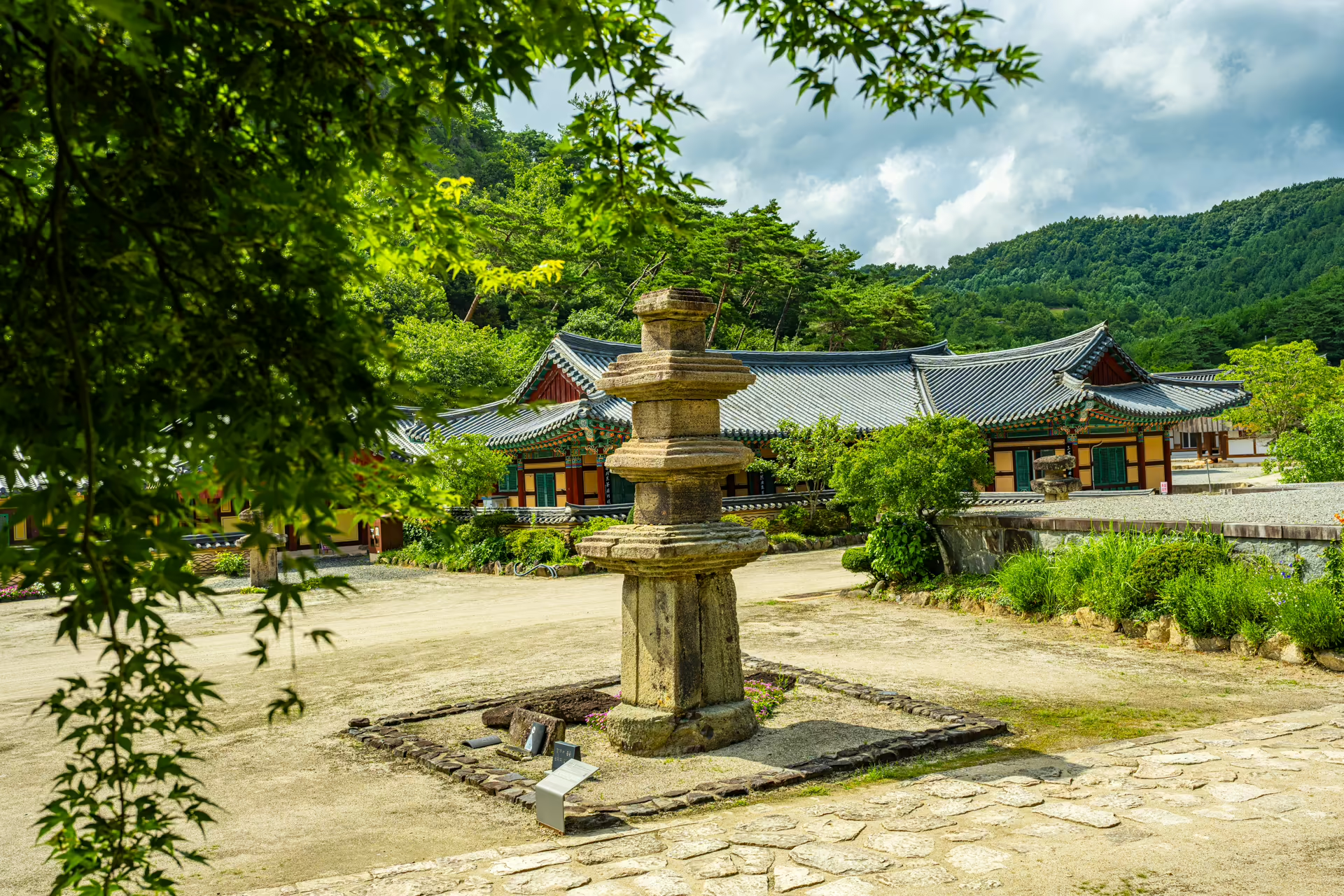
The temple was destroyed in 1597, during the second Japanese invasion, and lay ruined for two centuries until a monk called Seoldam Jau raised what he could around 1800. Some of the gap between 1530 and now is that. The rest is four hundred years of weather on soft rock.
3. They Made It Where They Stood
Of everything at Unjusa, the fact that reframed the place for me is the least photogenic: there are around ten quarry sites inside the temple grounds, with the drag marks of moved blocks still readable on the rock.
That changes what you’re looking at. This isn’t a collection assembled from elsewhere and installed. The stone came out of these hillsides, was worked on the spot, and was set up a short distance from where it was cut. The valley is not a display. It is the workshop, still holding its output.
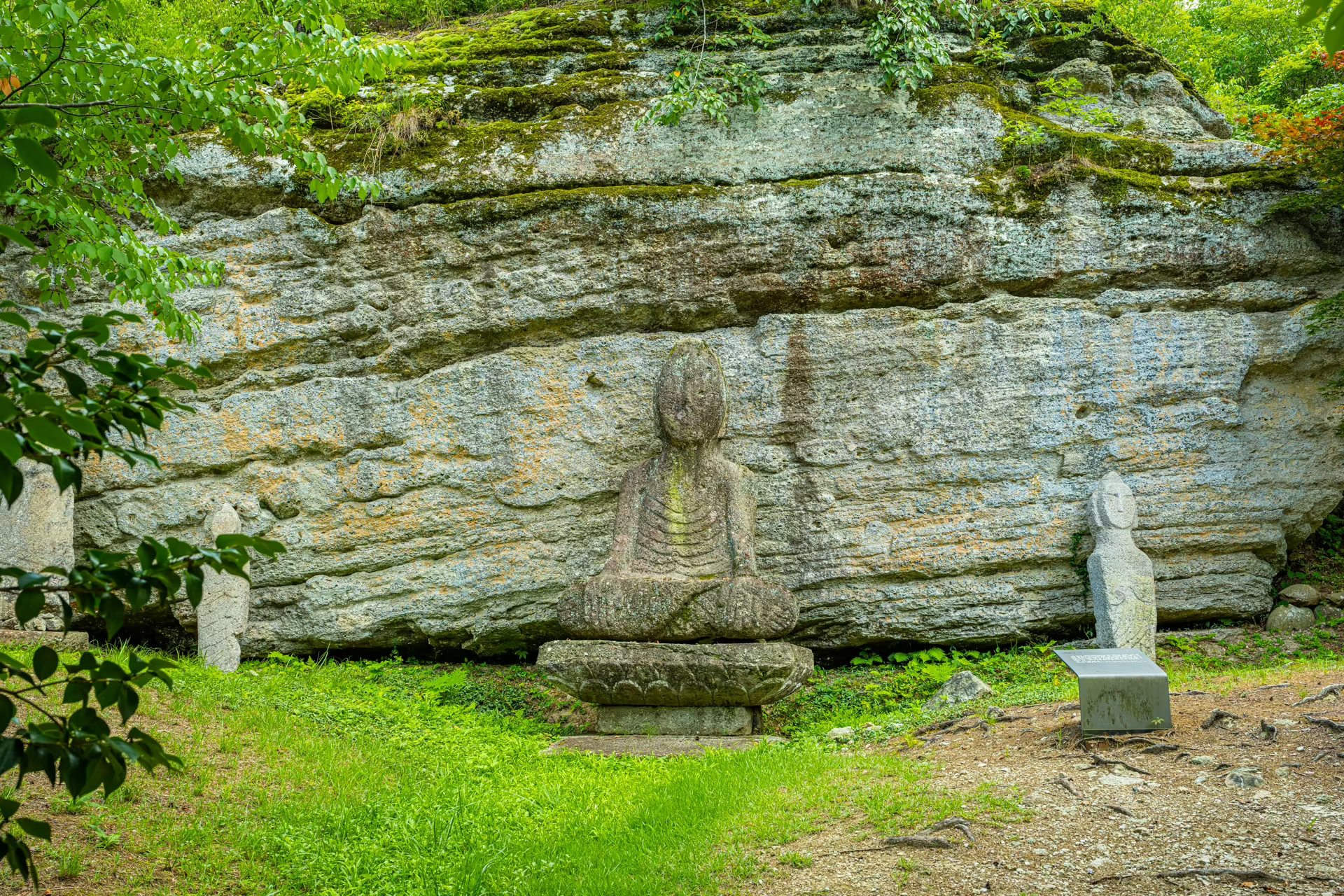
It also explains the style. The carving here is blunt, frontal, sometimes barely proportioned — flat faces, shoulders narrower than they should be, robes reduced to a few incised lines. Judged against the exquisite ninth-century stonework at Ssangbongsa twenty minutes away, it looks crude. Judged as the product of a very large number of hands working local rock over a long period, it looks like something else entirely: a folk practice at industrial scale.
4. The Stone Shrine: Two Buddhas, Back to Back
The single most unusual object here — and the one the 1530 surveyor singled out — is the Seokjo Bulgam, a stone shrine that has been a national Treasure since 1984.
It is five meters tall and three and a half wide, cut to imitate a wooden building with a heavy hip-and-gable roof and a thick ridge beam. Inside, a single stone slab divides the chamber in two, and a seated Buddha faces out of each side, back to back with the other, each with flame patterns carved beside it to serve as a mandorla. One is thought from its hand position to be Vairocana; another reading makes the pair Shakyamuni and Prabhutaratna, the two Buddhas who share a seat in the Lotus Sutra.
Korea’s heritage service is blunt about it: nothing else of this size and form exists in the country. Korea’s UNESCO submission goes further and calls it one of the very few enshrined back-to-back Buddha images in the world. And there’s a small design grace note worth crouching to see — the side walls are set so that air moves east to west through the chamber.
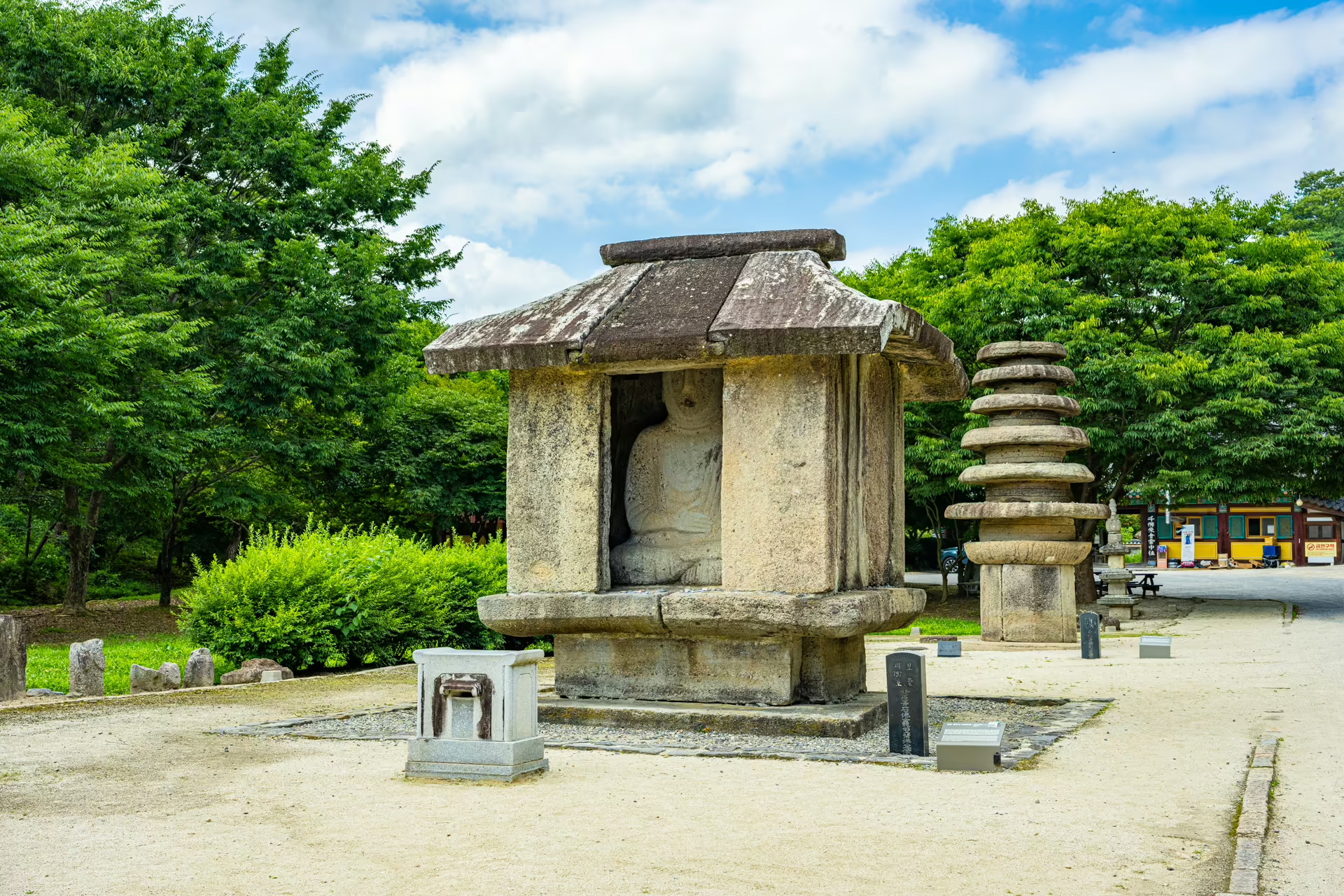
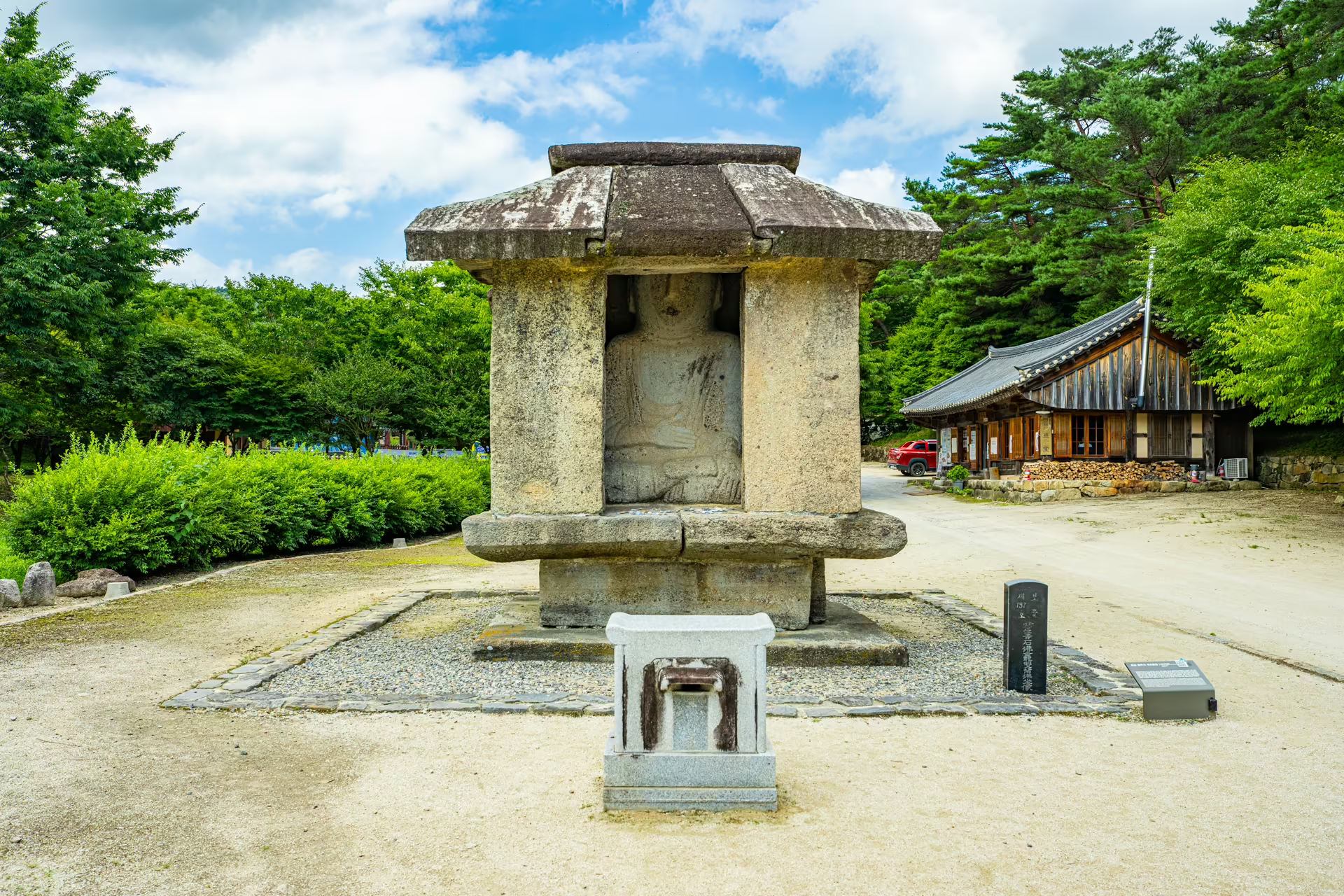
Standing next to it is the cylindrical multi-story pagoda, the third of the temple’s three Treasures, with a ten-sided base and round stacked stories instead of the square tiers every other Korean pagoda uses. Two of the strangest stone objects in the country, three meters apart.
5. The Patterns, and the Stars on the Ground
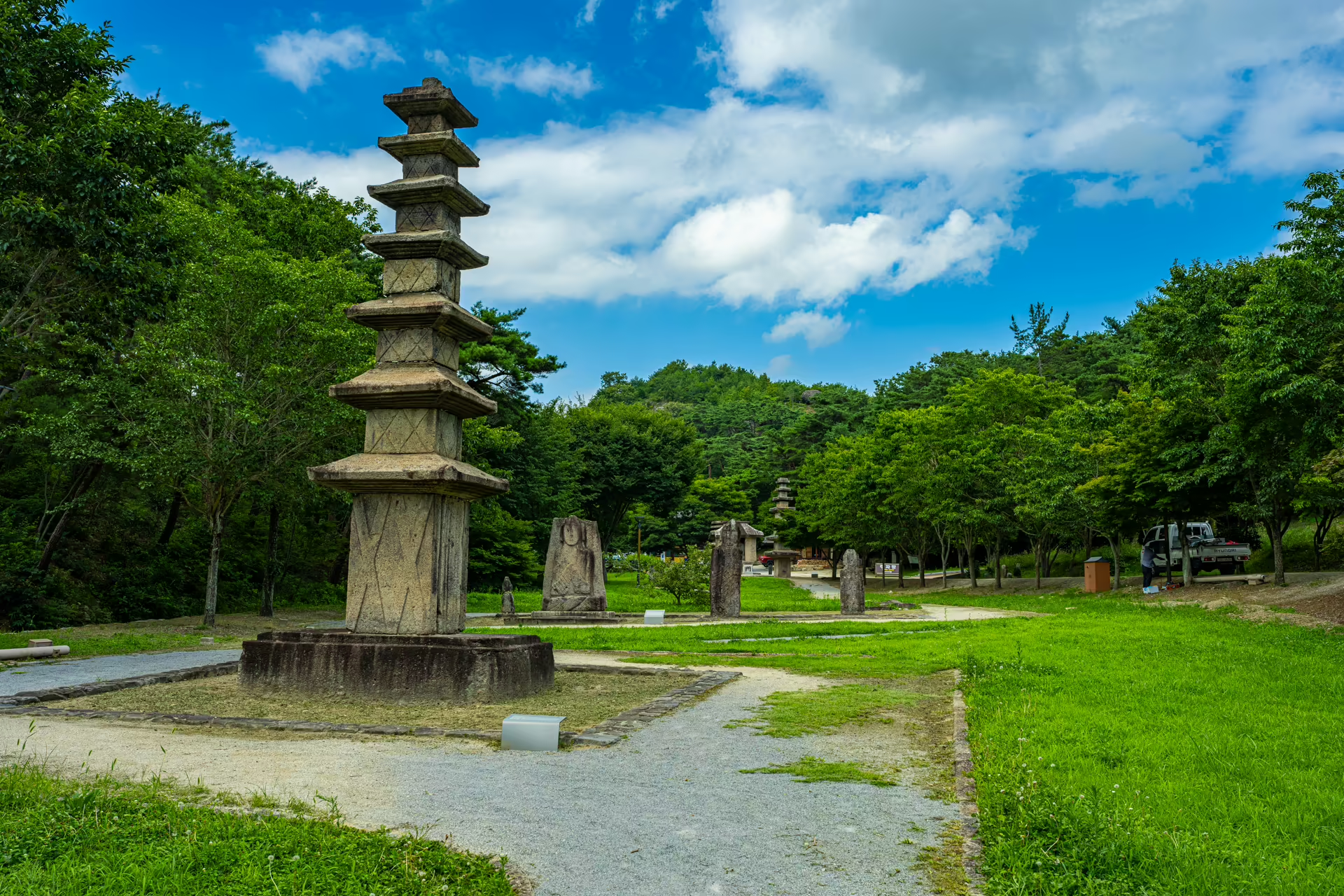
Look at the pagoda surfaces. Many are cut with geometric figures — diamonds, crosses, parallel strokes, chevrons — that don’t appear on Korean pagodas anywhere else. The diamond is the commonest, and it’s usually read as a reference to the Diamond Sutra; some scholars argue for Mongol influence in the vocabulary. Nobody has a settled explanation, which by now you’ll recognize as the house style.
Then there is Chilseongam, and if you only chase one obscure thing here, chase this. Seven flat circular discs of stone, two to four meters across, lie on the ground in the arrangement of the Big Dipper — and their thicknesses vary according to the brightness of the stars they represent. Korea’s UNESCO dossier claims it as the oldest surviving record of stellar magnitude classes anywhere in the world.
Whatever the truth of that superlative, it points at what makes Unjusa strange. This is a Buddhist temple that has esoteric practice, Daoist star worship and naked-eye astronomy embedded in the same valley. It has been on the UNESCO World Heritage tentative list since 2017, nominated under three criteria, and the case rests substantially on exactly that mixture. The push is live rather than dormant: when the World Heritage Committee met in Busan in July 2026 — the first time Korea had hosted it in the thirty-eight years since ratifying the convention — Hwasun County took a stand there to make the case for these stones alongside its dolmens.
6. The Sleeping Buddhas
Up the western slope above the valley lie the two figures everyone comes for. They are usually called the Wabul, the reclining Buddhas, which is a slight misnomer: they aren’t reclining Buddhas in the Southeast Asian sense. They are a seated Buddha and a standing Buddha carved into a rock that is lying flat, and they were never detached from the bedrock. The larger measures 12.73 meters, the smaller 10.3. They have been provincially designated since 2005.
The legend does the rest. On the night Doseon raised the thousand Buddhas, these two were to be lifted upright last. A novice monk, sick of the work, imitated a cockcrow. The heavenly stonemasons took it for dawn and left. The Buddhas stayed down.
And the belief attached to it, which the government translated for its own UNESCO file and which I’ll quote as they wrote it: “There is a legend that when the Buddhas wake up, a new era will begin.”
That sentiment did a lot of work in the Korean southwest over the centuries — an unfinished Buddha waiting to stand up is a useful idea in a region with a long history of being on the losing side. You can feel it up there, lying in the grass with two enormous faces looking straight at the sky.
It also produced the best-known piece of writing about this place. Hwang Sok-yong closed Jang Gil-san — the ten-volume epic about a seventeenth-century bandit leader that he serialized in a daily newspaper from 1974 to 1984 — with the legend of Unjusa’s thousand Buddhas and thousand pagodas. His publisher describes the novel as running between a prologue about a dying hawk and an epilogue about this valley, and Hwang himself has said the book holds “the face each of us has drawn of our own life within our times, like the faces of the Buddhas in that legend.” If you want one reason why these two figures matter to Korean readers rather than just to archaeologists, that’s it.
The reclining Buddhas have had a television afterlife too. KBS filmed part of Chuno here in 2010, staging the scene where its fugitive hero bows beside the Buddha that never stood up — a drama about a world that failed to arrive, borrowed from a legend about the same thing.
7. What Else Is Close: Dolmens, a Reservoir, and a Free Museum
Don’t drive home after the temple. In the next township, at Hyosan-ri and Daesin-ri, sits the Hwasun Dolmen Site — one of the three components of the Gochang, Hwasun and Ganghwa Dolmen Sites, inscribed on the UNESCO World Heritage list in 2000.
There are 596 dolmens here, strung along the valleys on both sides of a low pass, and the largest capstone measures 7.3 by 5 by 4 meters and weighs somewhere near 280 tonnes — the biggest in the country. Crucially, the rock faces around them still carry the marks where the capstones were split off.
That is the same fact as at Unjusa, three thousand years earlier. Bronze Age people quarrying stone on the spot and moving it a short distance; Goryeo people quarrying stone on the spot and moving it a short distance. One county, two answers to the same question about what you do with the rock you happen to be standing on — one of them already on the World Heritage list, the other still queuing for it. That’s the day out here, and I’ve not seen it packaged that way anywhere.
For a third stop, Ssangbongsa in Iyang-myeon holds the stupa of the monk Cheolgam — National Treasure No. 57, an octagonal ninth-century tomb monument whose carving is about as refined as Korean stonework ever got. Set it beside Unjusa’s blunt folk figures and you have the full range of what this material can be made to do.
And if you’re here in the first half of April, put Seryangji on the list — a farm reservoir dug in 1969 about half an hour’s drive back toward Gwangju, which CNN included in its round-up of fifty beautiful places to visit in South Korea. What people come for is a narrow window at dawn: mountain cherry blossom on the far bank, doubled in mist on still water, before the sun clears the ridge. There’s no gate and no fee.
One more, if your dates fall between May and the end of August: the county runs a booked minibus tour out to the Hwasun Jeokbyeok, a seven-kilometer run of red cliffs above a reservoir that was closed to the public for thirty years as a protected watershed. It’s ₩5,000 for an hour and three-quarters, Wednesday to Sunday, and there is no walk-up option — you book online, between two weeks and two days out.
Right next to the temple, at Cheontae-ro 91-20, the county also runs the free Unjusa Culture Center — still signed in places under its old name, the Thousand Buddhas and Pagodas Photography Museum — with an exhibition hall, a screening room and rubbing and stamp activities for children. Open 10:00 to 18:00 from March to October, an hour earlier in winter, closed Mondays. It’s the obvious wet-weather answer in a place that is otherwise entirely outdoors.
Who This Is Actually For
Anyone interested in how things get made: this is the best argument in Korea for looking at quarry marks. Unjusa plus the dolmens is a genuinely unusual pairing and neither costs much to see.
Photographers: low sun, either end of the day. The carving is shallow and flat light kills it; raking light brings the faces back.
Buddhist-art travelers: the back-to-back shrine and the cylindrical pagoda are objects with no Korean parallel. Come here after Tongdosa or Cheoneunsa over in Gurye and the contrast does the teaching for you.
People who want a tidy narrative: reconsider. Every second fact here has a competing version, and the site’s own signage says so.
Anyone without a car: workable, but there’s exactly one good combination — 318-1 out of Gwangju at 10:00, back from the temple at 14:40, which gives you a little over three hours on the ground and no need to walk anywhere. The 11:15 return would leave you nothing. What you won’t reach either way is Seryangji or the dolmens.
One practical warning before you go. The temple’s old web address has lapsed to a property advertisement, so ignore whatever a search engine offers you as an official site — Unjusa doesn’t currently run one, and its templestay page is the nearest thing to an official channel. Call the number below instead.
Practical Manual
| Item | Detail |
|---|---|
| Name | Unjusa Temple (운주사), on Cheonbulsan |
| Address (English) | 91-44 Cheontae-ro, Doam-myeon, Hwasun-gun, Jeonnam-Gwangju Special Metropolitan City |
| Address (Korean) | 전남광주통합특별시 화순군 도암면 천태로 91-44 |
| Designation | National Historic Site as the Unjusa Temple Site, Hwasun — designated 15 April 1985, 497,090 m². On Korea’s UNESCO World Heritage tentative list since 2017 |
| Treasures | Three national Treasures, all designated on 30 November 1984: the nine-story stone pagoda, the stone shrine, and the cylindrical multi-story pagoda. The sleeping Buddhas are provincially designated (2005) |
| Admission | Free. Unjusa was one of 65 Jogye Order temples that stopped charging heritage-viewing fees on 4 May 2023 |
| Hours | Daily, 07:00–19:00 in summer and 07:00–18:00 in winter, no closing days, per the tourism board’s Korean listing. Its English page says “open 24 hours” — treat the Korean version as the reliable one |
| Parking | Parking lot on site, no charge listed |
| Culture Center | Unjusa Culture Center, 91-20 Cheontae-ro, next to the temple. Free. 10:00–18:00 Mar–Oct, 10:00–17:00 Nov–Feb. Closed Mondays, 1 January, and over Lunar New Year and Chuseok. 0507-1301-5894 |
| Inquiries | 061-374-0660. Do not use the old unjusa.kr address — the domain has lapsed to an advertising site |
| Temple stay | Year-round rest-type stay, “Cheonbul-cheontap, an Unfinished Dream”: ₩60,000 a night for adults, ₩50,000 for students. Book at least three days ahead through templestay.com. Dawn chanting and the guided thousand-Buddha walk are both optional |
| Getting there | Bus 218 from Gwangju U-Square to the Unjusa stop, ₩2,450 by card (₩900 within Hwasun county). Route 318-1 terminates at the temple twice daily — out 10:00 and 13:25, back 11:15 and 14:40. By car, 26 km and about 39 minutes from Gwangju’s Hyodeok junction |
| Nearby | Hwasun Dolmen Site (UNESCO, 596 dolmens, free); Ssangbongsa and the Cheolgam stupa (National Treasure No. 57); Seryangji reservoir, about 30 min, free, best in the first half of April |
| Hwasun Jeokbyeok | 2026 season 2 May – 30 Aug, Wednesday to Sunday. ₩5,000, 1 hr 45 min, departing Iseo Community Center at 10:00 and 14:00 (four departures in May). Online booking only, from two weeks to two days before, at tour.hwasun.go.kr |
| Best months | Spring and autumn for the walking. The valley is low and open, so summer is hot and winter ice is a real consideration on the slope to the sleeping Buddhas |
Figures for the number of Buddhas and pagodas differ between the heritage service, the temple and Korea’s UNESCO submission; the ranges above reflect that. Prices, hours and bus times are as published at the time of reporting — the Jeokbyeok tour in particular resets each season.
Navigation Tip: Use Naver Map with the Korean address above — Google Maps can’t route Korean roads properly — and keep Papago handy for the interpretive panels, most of which are Korean-only.