
Cheoneunsa: The Temple That Charged You for Driving Past, and Then Stopped
There is nothing at all to see at the spot on provincial road 861 where the toll booth used to be, which is exactly why I want to start there.
For thirty-two years, anyone driving up this valley toward Nogodan — the main western approach to Jirisan National Park, and for most of that time the only road — had to stop and pay Cheoneunsa Temple a cultural property admission fee. Not to visit the temple. To pass the temple. The booth stood roughly a kilometer from the gate, and the money was collected per head, including everyone sitting in the car. It became the most notorious ticket in Korean tourism, and it took eight institutions and three decades to make it go away.
The fee ended on 29 April 2019. What replaced it is one of the better outcomes I’ve seen from a Korean heritage dispute, and it’s the reason this temple is worth a morning even if you weren’t otherwise going to Jirisan.
Orientation: Getting to Gurye
Gurye is a small county on the southern flank of Jirisan, on the Seomjin River. Administratively it now sits inside the Jeonnam-Gwangju Special Metropolitan City, created in July 2026 when Jeollanam-do and Gwangju merged — so maps, signage and booking sites will show you both the old province name and the new one for a while yet. From Yongsan Station in Seoul, KTX runs to Guryegu Station in around two hours twenty-five, roughly thirteen services a day at about ₩41,500. There are also eight buses a day from Seoul Nambu Terminal, taking a little over three hours.
Local trivia that catches everyone out: Guryegu Station isn’t in Gurye. It sits across the Seomjin River in Suncheon, which is why the taxi meter starts running before you’ve technically arrived anywhere.
From the station it’s about twenty minutes and ₩18,600 by taxi to the temple; from Gurye’s own bus terminal, around fourteen minutes and ₩15,100. There are rural buses — route 6-1 runs six times a day, first at 08:10 and last at 17:10, for ₩1,000, with a ten-minute walk at the end — but six departures and a 17:10 finish make them a plan for the very patient. Rent a car, or budget for taxis. Route 10-1 is worth knowing separately: it’s the only public transport up to Seongsamjae, the trailhead for Nogodan.
1. The Fee: What Actually Happened
Charging began in 1987. When Korea abolished national park entrance fees in 2007, most temples inside parks lost their collection point; Cheoneunsa kept its booth by re-basing the charge on a different clause, and the price settled at ₩1,600 a person.
The lawsuits came and the temple lost them. Accounts differ on the details — the years given are variously 2000, 2010 and 2013, and the plaintiff counts run from 74 to 105 depending on which paper you read — but every version agrees on the outcome and on why it didn’t fix anything: the courts ordered refunds, and the rulings bound only the people who had sued. Everyone else kept paying.
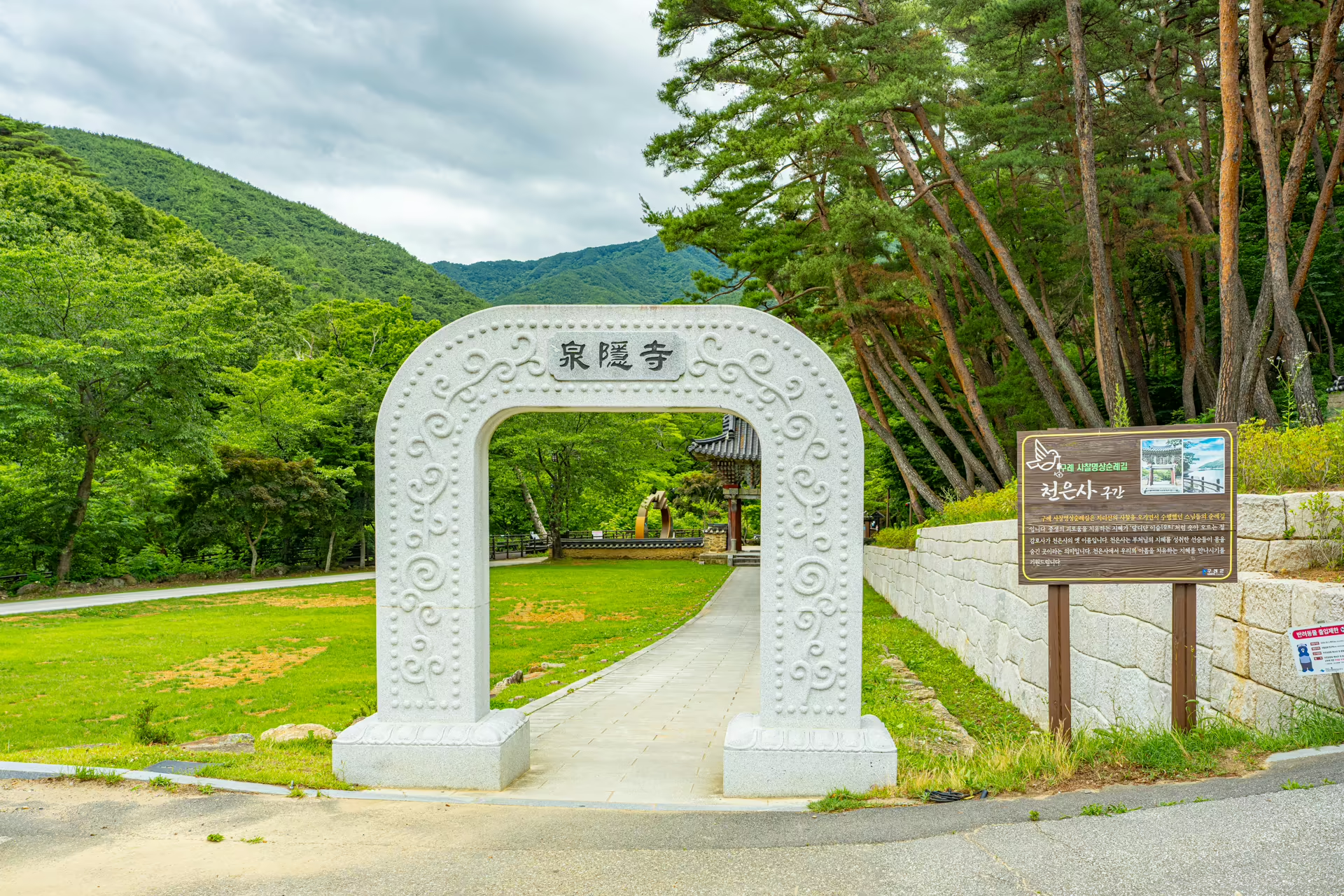
The settlement, when it came, was a genuine negotiation rather than a court order. Eight parties signed at the temple on 29 April 2019: the environment ministry, the heritage agency, the province, Gurye County, the national park service, the rural community corporation, and both Cheoneunsa and Hwaeomsa. The temple dropped the fee. In exchange, the province bought the roadside land, the heritage agency funded repairs to the temple’s buildings, and the state paid for a new walking trail on temple ground. That last item is the reason to come.
One correction, because it’s made constantly. In May 2023 the Jogye Order waived admission at 65 temples nationwide under a change to the heritage law, and Cheoneunsa appears on that list — but it had already been free for four years by then. If you read that Cheoneunsa became free in 2023, that’s wrong.
The affair also seeded a plotline in Extraordinary Attorney Woo in 2022, where a young lawyer takes on a temple charging tolls on a public road. The drama used a fictional temple on a fictional road on Jeju, and shot at a different temple entirely — but the argument it stages is the argument that played out here.
2. The Path of Coexistence — What the Settlement Built
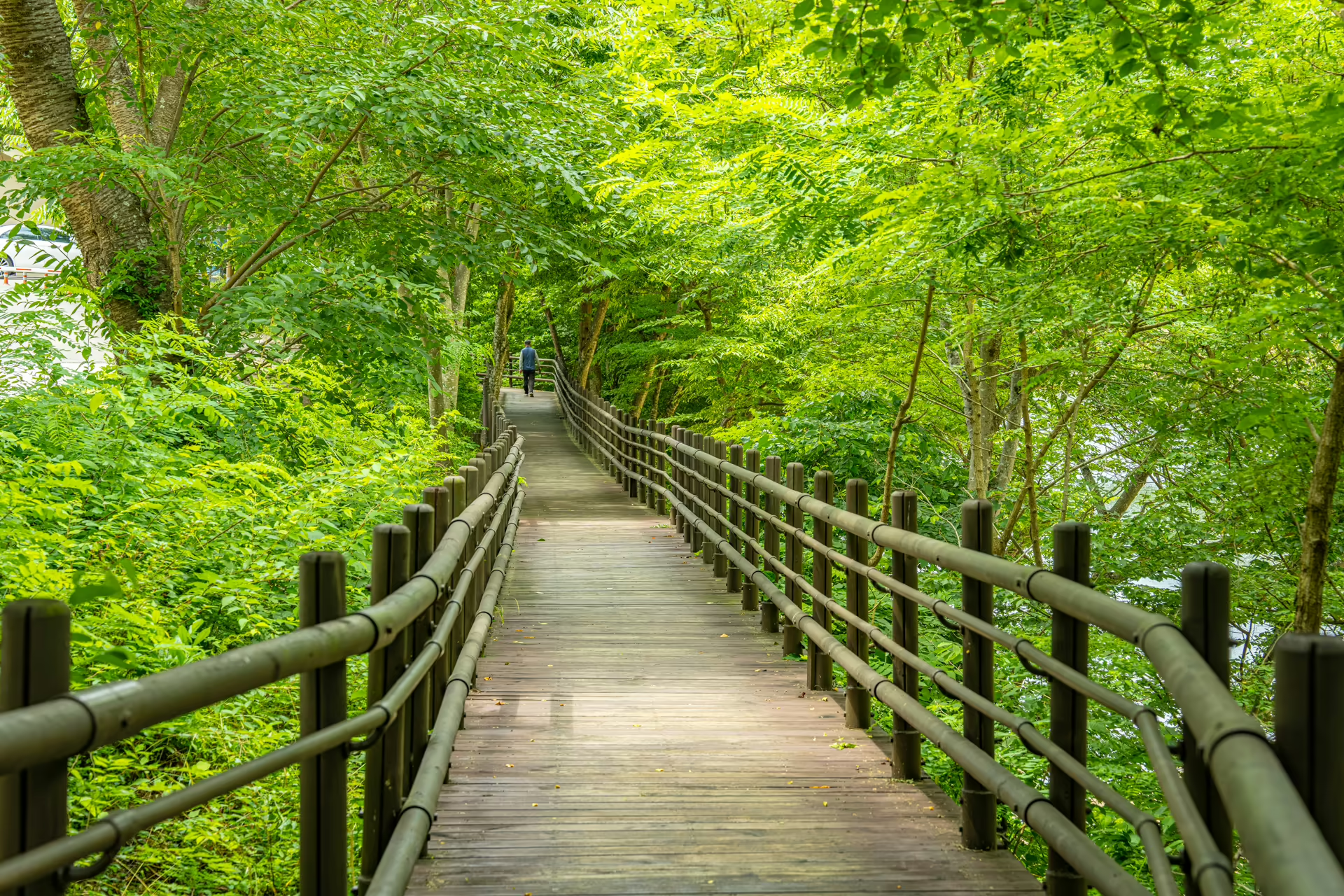
The trail is called Sangsaeng-ui-gil, the Path of Coexistence, and the name is doing some work. It was funded as part of the 2019 agreement, and its first phase — 2.9 kilometers, with seven viewpoints and 700 meters of barrier-free surface — opened on 8 June 2020. A second phase across the reservoir embankment closed it into a 3.3-kilometer loop, split into three named sections. Reckon on about an hour and a half at a walking pace.
It runs through pine woods around Cheoneunje reservoir, with otters and mandarin ducks in the water and a stand of three-hundred-year-old pines behind the temple. If flat, forested walking is what you’re after in this region, the tea hills and hermitages around Gangjin work on the same principle an hour and a half south. It is free, always open, and it was named to Korea’s Tourism 100 list for the 2023–24 round. For a piece of infrastructure that exists because a thirty-year argument was settled, it is remarkably serene.
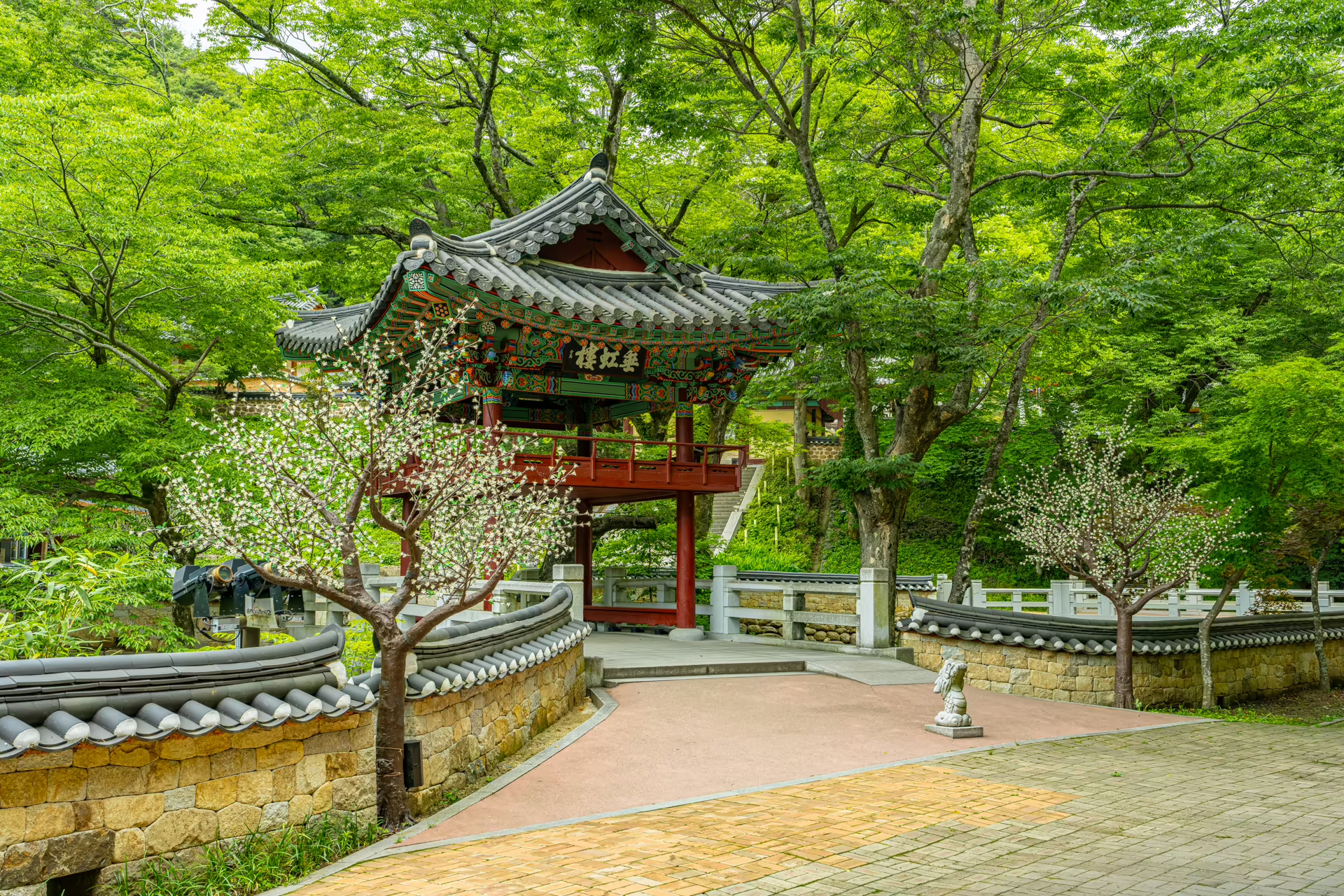
3. Suhongnu: A Pavilion on a Stone Arch
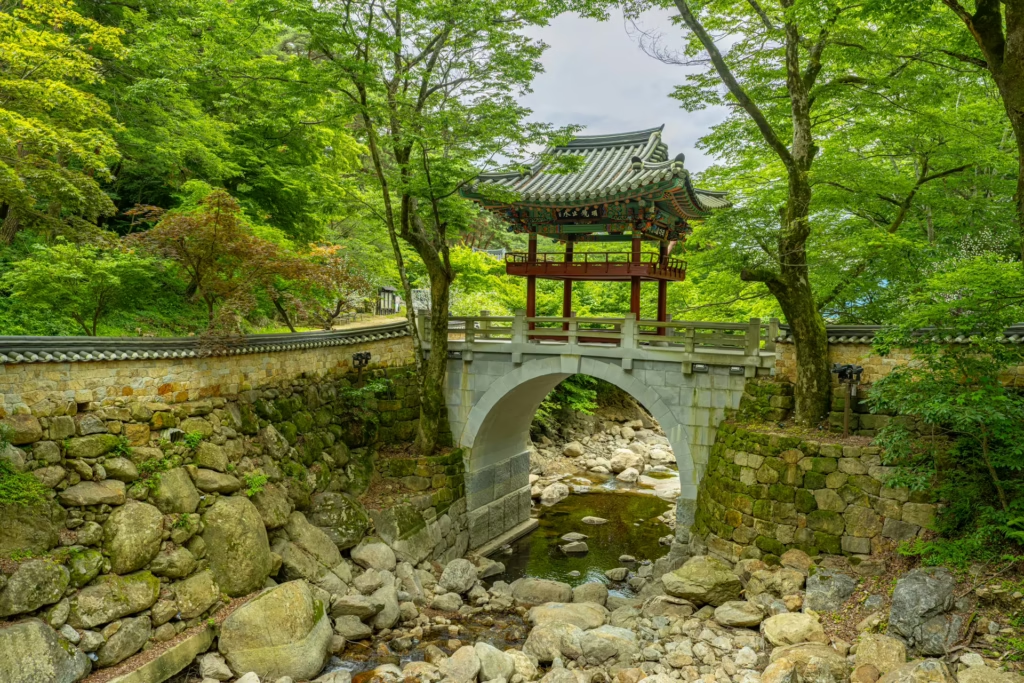
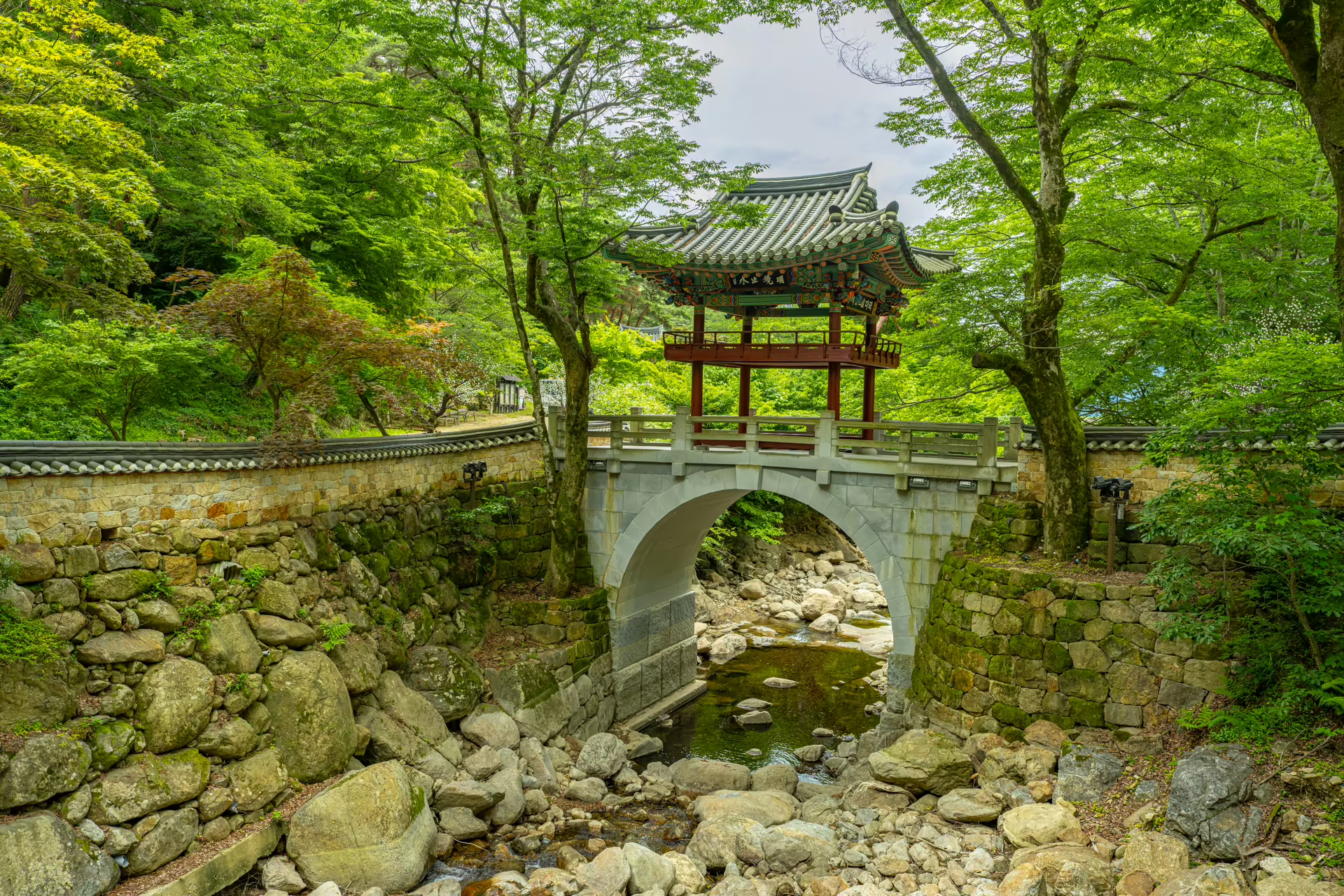
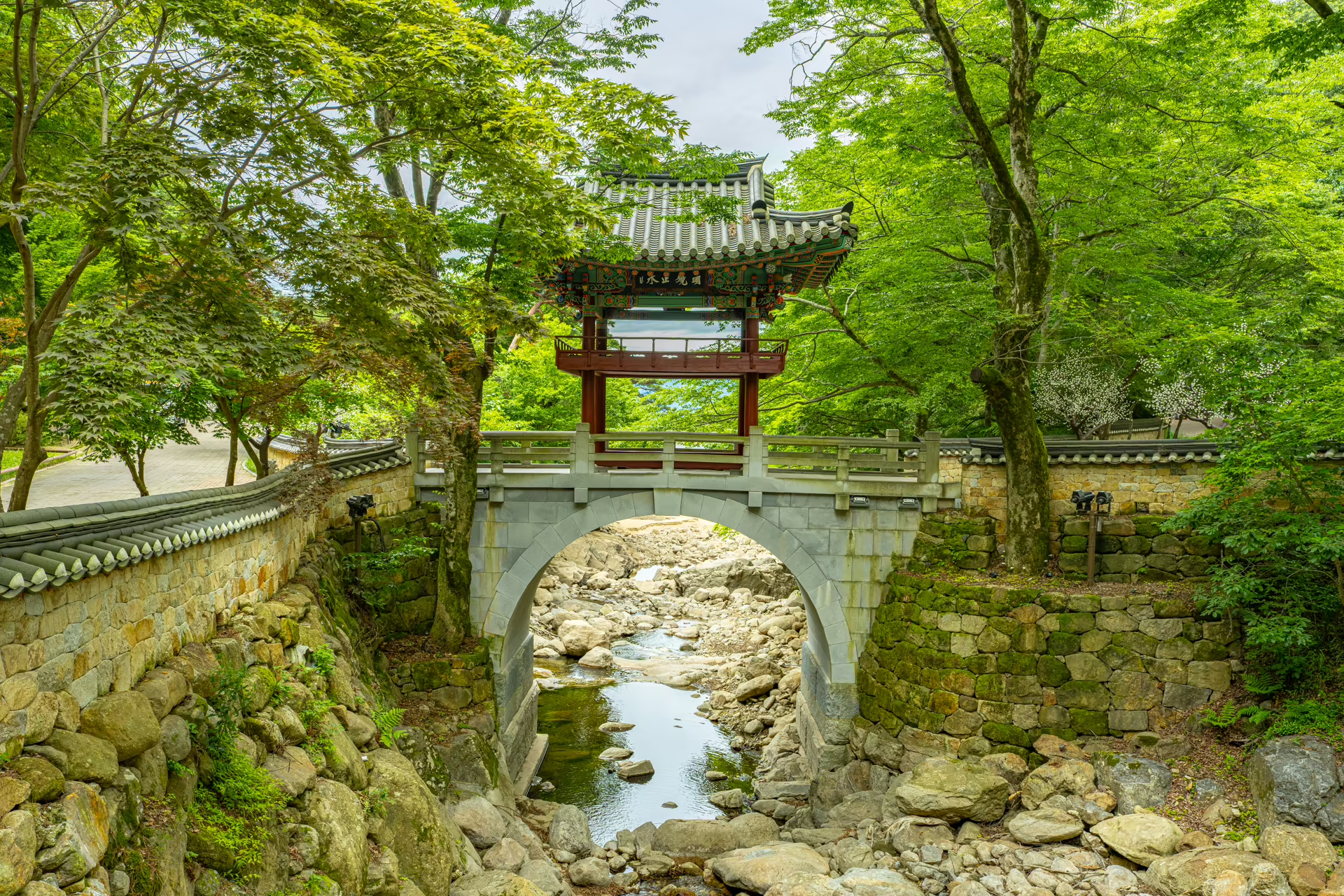
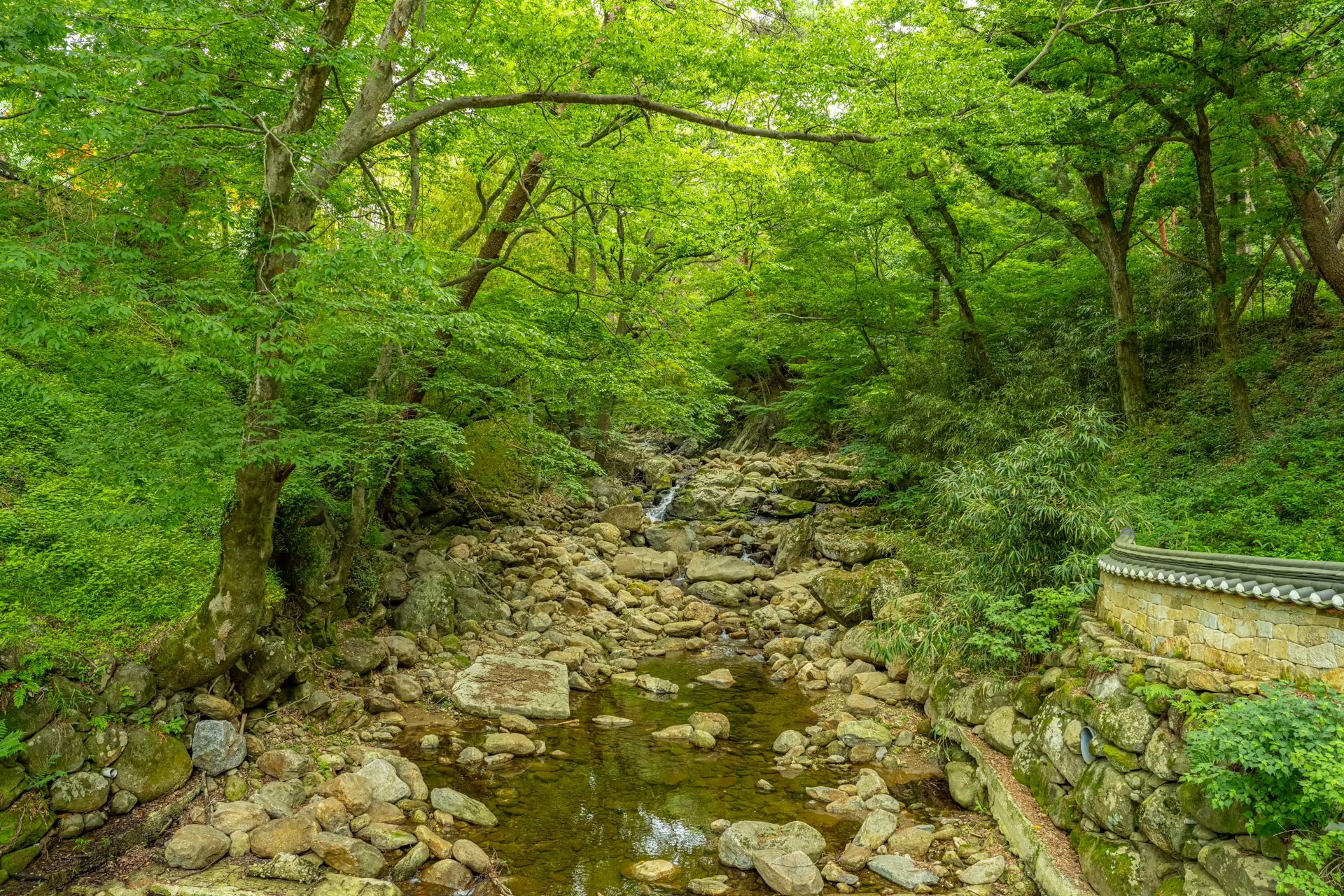
The photograph everyone comes back with is of Suhongnu — a single-bay, two-story pavilion built on top of the stone arch bridge that carries you over the stream into the temple. The name means something like “hanging rainbow,” which reads as a description of the arch until you see what the water does in low light.
It’s late Joseon; some sources place it among the buildings raised in the 1770s reconstruction and call it Suhongmun rather than Suhongnu. It isn’t separately designated — the temple precinct as a whole has carried provincial heritage status since 1984 — but it is the single most photogenic structure in a temple that has several.
It was fenced for repair work for a while — if you’ve seen a recent photo of scaffolding, that work has since finished and the bridge is open again.
4. The Gate, and the Calligraphy That Puts Out Fires
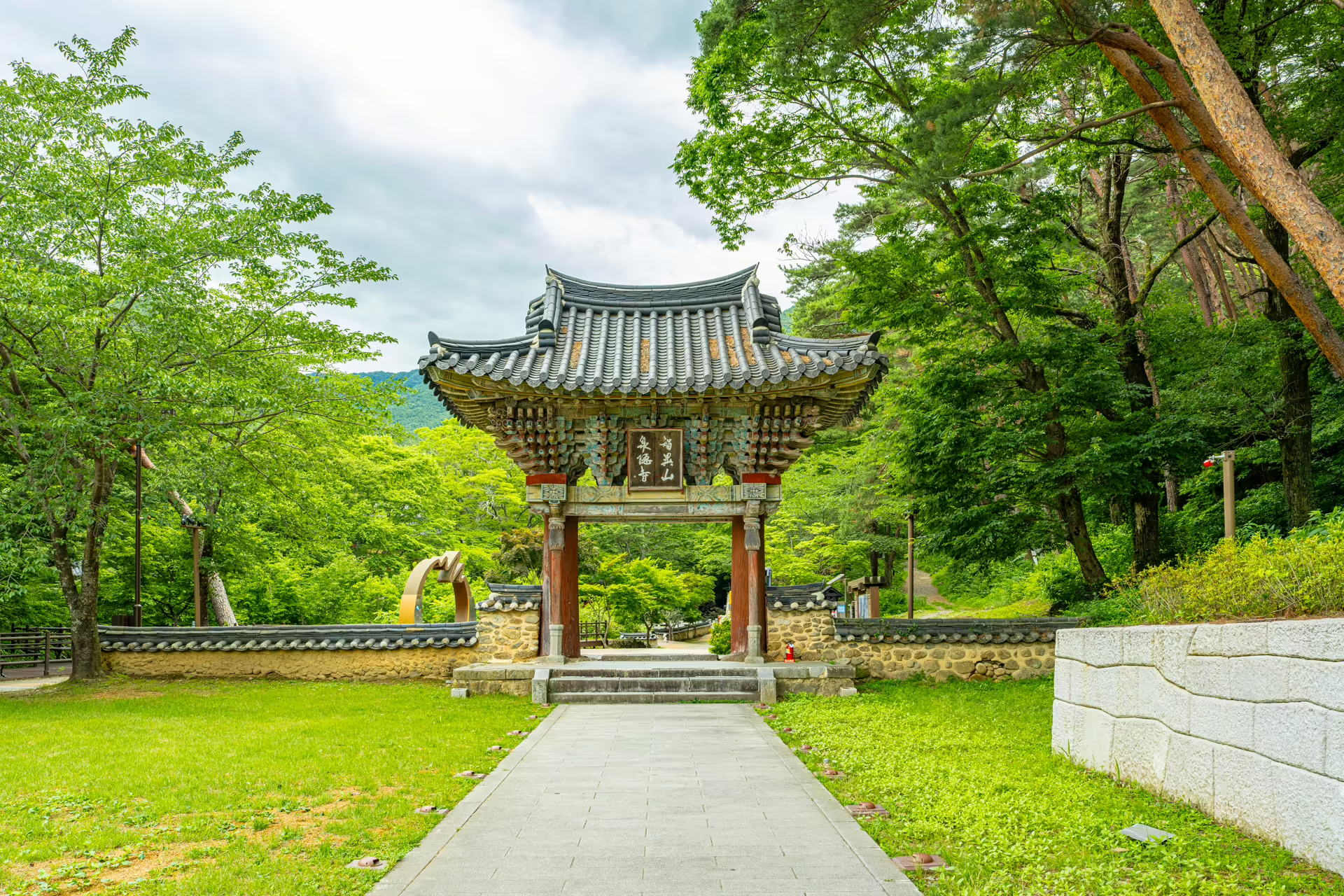
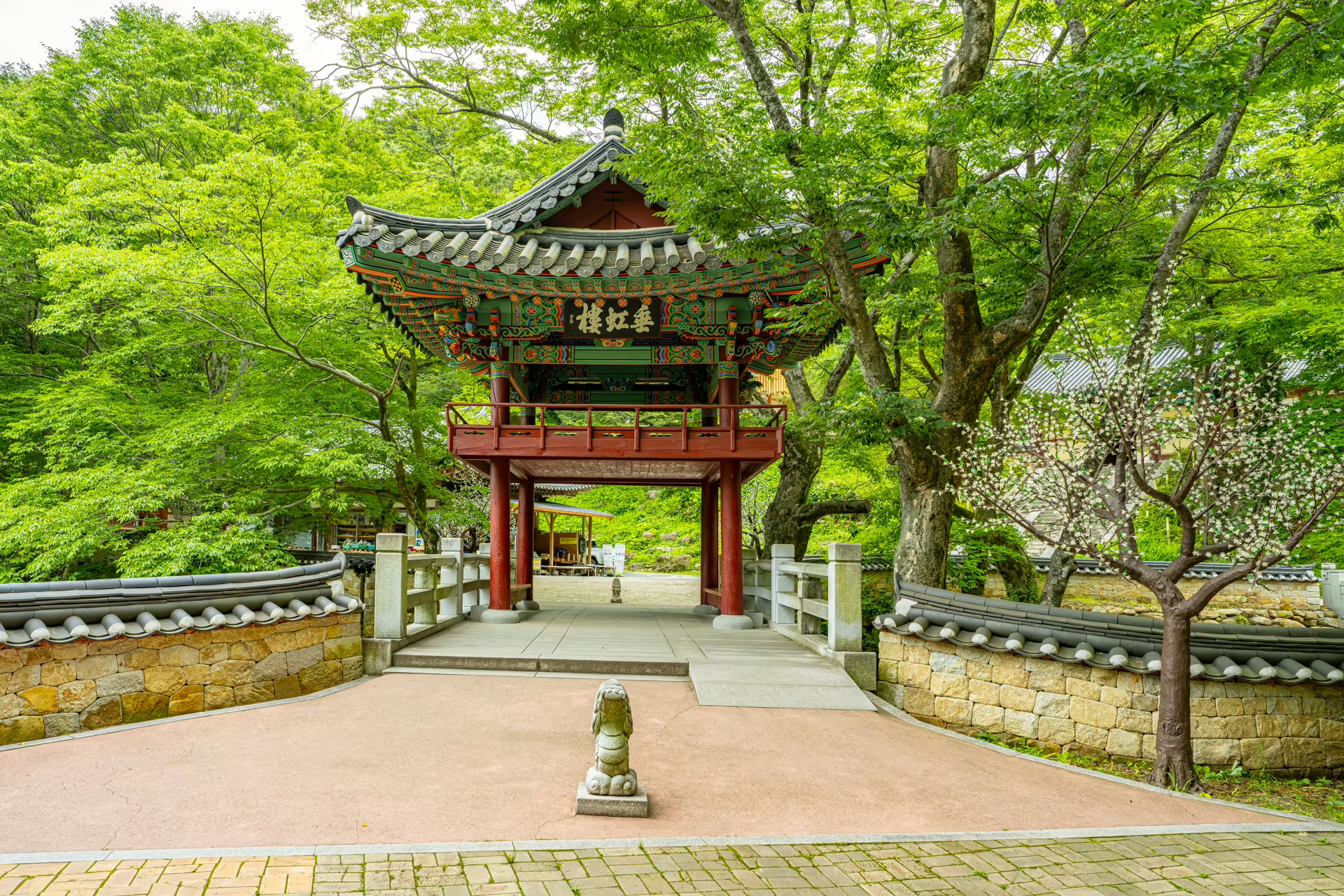
The Iljumun — the single-pillar gate that marks the boundary of the sacred precinct — became a national Treasure in December 2022. Temple records date the structure to 1723, and its designation cites a detail found nowhere else in Korea: a stone threshold laid between the main pillars.
The plaque above it is the interesting part. The characters reading 智異山 泉隱寺 — Jirisan Cheoneunsa — were written by Yi Gwang-sa, pen name Wongyo, an eighteenth-century calligrapher usually counted among the finest of the Joseon period, who spent the last two decades of his life in exile on an island off the south coast. He left plaques at Daeheungsa, Baengnyeonsa, Naesosa and Seonunsa as well; this is one of his best-known.
Then the story, which the heritage service itself relays as a story rather than a fact. The temple was originally called Gamnosa — “sweet dew” — for a spring in the grounds whose water was said to cure illness. A monk killed a large snake that had appeared beside it, and the spring stopped flowing. The temple was renamed Cheoneunsa, “the hidden spring.” Fires followed, repeatedly. Yi Gwang-sa was asked to write the plaque, and wrote it in a deliberately flowing, water-like hand to put the missing water back into the place. The fires stopped. People will tell you that at dawn, if you stand at the gate and listen, you can hear water running in the strokes.
You can’t. Stand there at dawn anyway.
If the courtyard looks oddly familiar, that may be Mr. Sunshine. The 2018 drama shot here, and the temple turns up in some of its heavier scenes — a memorial rite, a parting. It’s one of the quieter filming locations on the Korean drama trail, which is to say you can stand in the frame without queuing for it.
5. Geungnakbojeon, and the Rest of the Complex
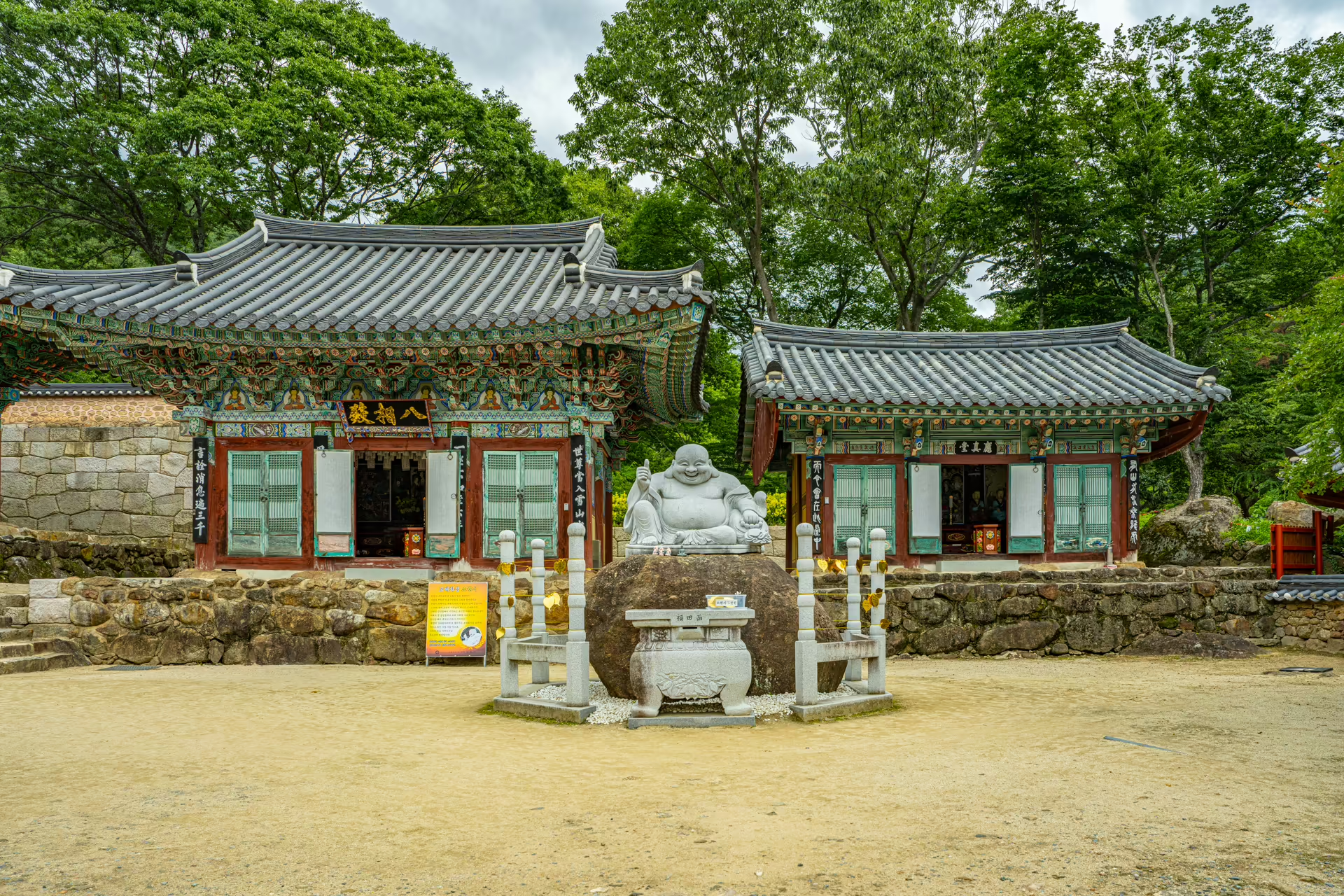
Cheoneunsa was founded in 828, in the reign of King Heungdeok of Silla, by an Indian monk recorded as Deogun. It burned in the Japanese invasions of the 1590s, was rebuilt in 1610, restored in 1679 — which is when the name changed — and burned again in 1773. Almost everything you see went up in the reconstruction of 1774 to 1776, paid for with help from the magistrate of Namwon.
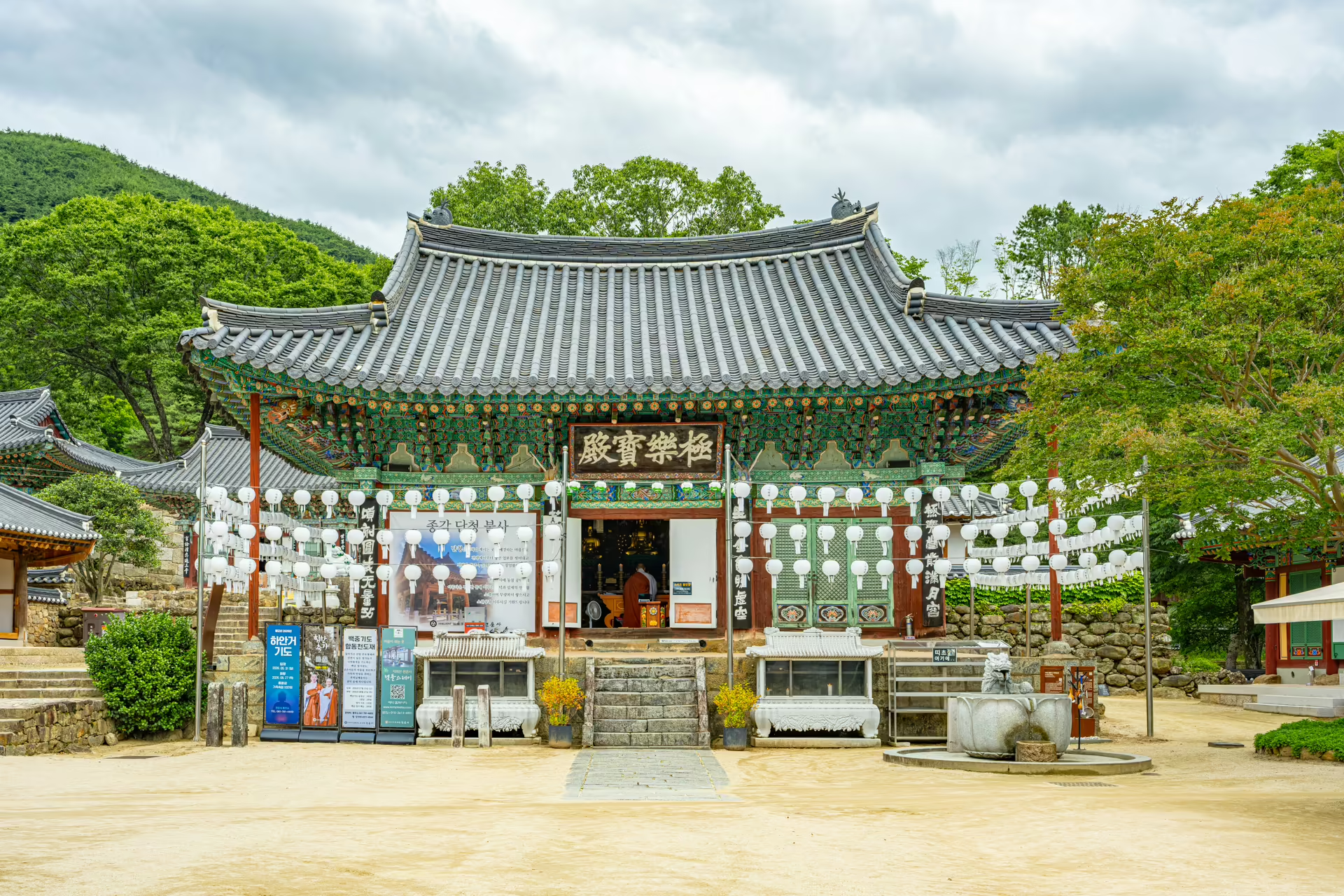
The main hall from that campaign, Geungnakbojeon, was promoted from provincial status to national Treasure in 2019. It’s a modest three-by-three-bay building with a hip-and-gable roof, and the citation is all about the details: floral and phoenix-head carving in the brackets, dragon-head struts, a coffered ceiling and canopy, and interior polychrome painting that has survived from before the nineteenth century in unusually good condition. Inside hangs an Amitabha altar painting, itself a Treasure since 1987, made in 1776 by a team of thirteen monk-painters.
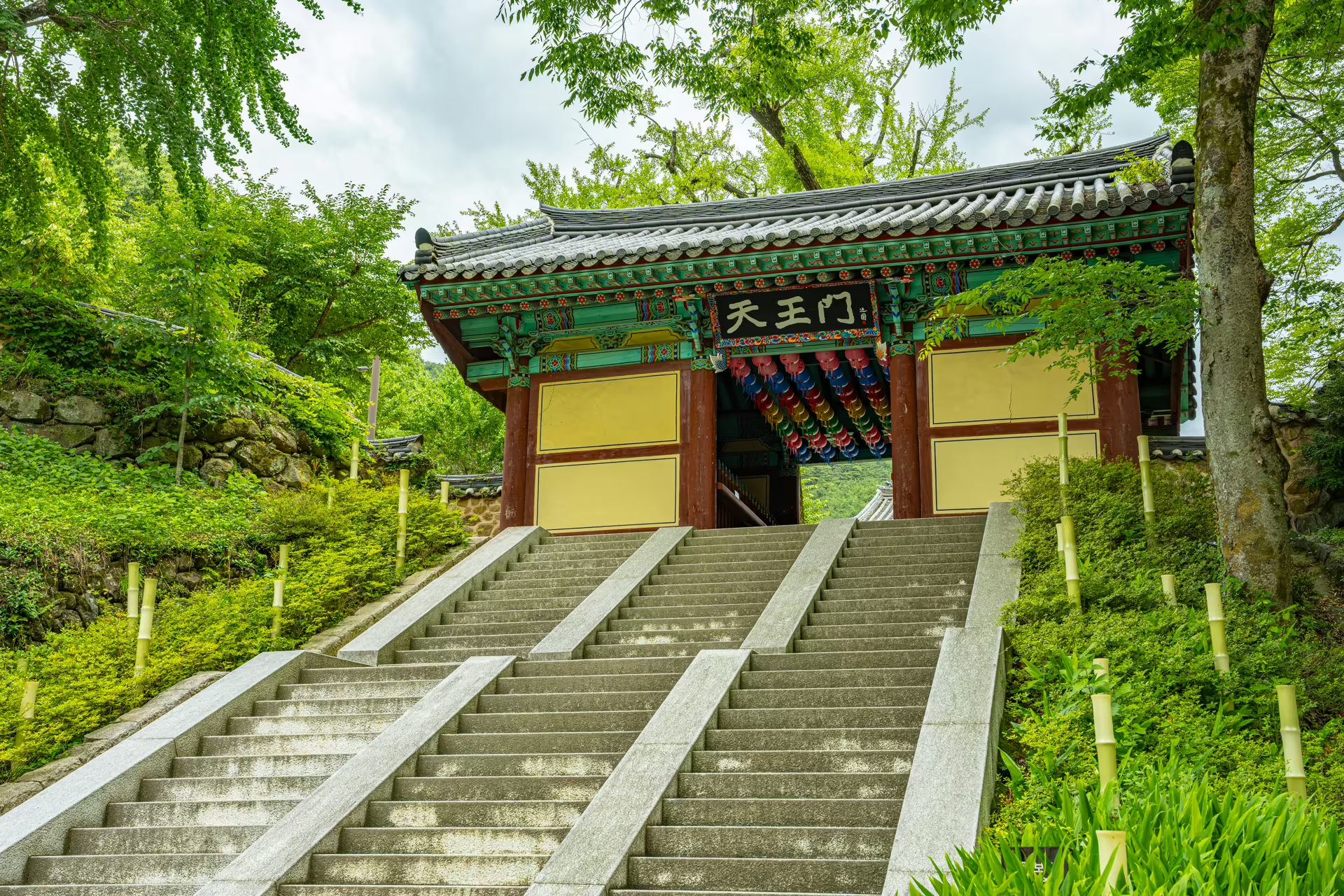
The temple belongs to the Jogye Order as a branch of nearby Hwaeomsa, and the heritage service’s own English text names it, with Hwaeomsa and Ssanggyesa, as one of the three major temples of Jirisan. Climb the stone steps to the Cheonwangmun, then into the upper courtyard, and in the weeks around the Buddha’s birthday the whole thing is roofed over with lotus lanterns.
6. Staying the Night, and Going Up Nogodan
Cheoneunsa runs a full temple stay program, and it’s cheap by the standards of Korean overnight experiences: around ₩100,000 for a single room, ₩80,000 a head for two or more, with a structured version including forest meditation, bell striking and the pre-dawn service at ₩100,000. Booking is online only — the temple doesn’t take reservations by phone or at the desk.
The program worth flagging is “Nogodan in Your Arms” at around ₩120,000, which includes a lift up to Seongsamjae and a pickup on the way down. Read the small print: the temple drives you, but you have to reserve the Nogodan trail permit yourself. The summit section is on a quota system — around 1,870 people a day, 05:00 to 17:00 with last entry at 16:00 — and in winter the road above Siamjae closes to traffic on weekdays. Neither of those is the temple’s problem to solve for you.
Who This Is Actually For
Anyone driving to Nogodan: you’re passing the gate anyway, and it no longer costs you anything to stop. Give it ninety minutes.
Walkers who don’t want a mountain: the Path of Coexistence is the reason to come. Three and a bit kilometers, largely flat, part of it wheelchair-accessible, around a reservoir in a pine forest. There is nothing else like it attached to a Korean temple.
People who came for Hwaeomsa: Cheoneunsa is fourteen minutes away by car and about a tenth as busy. If you have a full day in Gurye, do both, and put the Ssangsanjae hanok garden between them — and if you’re building a wider temple route through the south, Tongdosa makes the natural third stop.
Photographers: Suhongnu, early, with water in the stream. Come in the fortnight before the Buddha’s birthday and you get the lanterns as well.
Anyone without a car: feasible by KTX plus taxi, awkward by bus. Budget ₩40,000 for the round trip in cabs and stop worrying about it.
The thing I keep coming back to about this place isn’t the Treasure or the calligraphy. It’s that the argument here ran for a generation, ended in a negotiation rather than a verdict, and produced a path through the woods that anybody can walk for nothing. That’s a better ending than most disputes get.
Practical Manual
| Item | Detail |
|---|---|
| Name | Cheoneunsa Temple (천은사), founded 828 |
| Address (English) | 209 Nogodan-ro, Gwangui-myeon, Gurye-gun, Jeonnam-Gwangju Special Metropolitan City |
| Address (Korean) | 전남광주통합특별시 구례군 광의면 노고단로 209 |
| Admission | Free since 29 April 2019. Open year-round; no gate hours published, so plan for daylight |
| Parking | On site. No fee is published either way — carry cash just in case |
| Walking trail | Sangsaeng-ui-gil (Path of Coexistence), 3.3 km loop, free, always open, ~90 min. 700 m barrier-free |
| Treasures | Geungnakbojeon Hall (2019), Iljumun gate (2022), Amitabha altar painting (1987), plus further designated paintings and statues |
| Temple stay | From ₩80,000 per person sharing; ₩100,000 single. Online booking only. Check-in 15:00, out 11:00 |
| Nogodan | Summit section requires an advance permit. 05:00–17:00, last entry 16:00, daily quota ~1,870. Winter road closures above Siamjae |
| Getting there | KTX Yongsan to Guryegu, ~2 hr 25 min, ~₩41,500. Then 20 min by taxi (~₩18,600). Rural bus 6-1 runs six times a day, ₩1,000, plus a 10 min walk |
| Nearby by car | Hwaeomsa 14 min, Seongsamjae 18 min, Ssangsanjae 17 min, Saseongam 26 min, Sansuyu village 27 min |
| Inquiries | Temple office 061-781-4800 / temple stay 010-3613-4801 |
| Note | No pets. Filming location for the 2018 drama Mr. Sunshine |
Prices and hours are as published at the time of reporting. The temple publishes no gate times, so treat daylight as the operating window.
Navigation Tip: Use Naver Map with the Korean address above — Google Maps can’t route Korean roads properly — and keep Papago handy for the interpretive panels.