
Suseungdae: A Rock, a Poem, and Four Hundred Years of Arguing
Most Korean scenic sites ask you to imagine what happened there. Suseungdae doesn’t. The argument is carved into the stone, in characters a foot high, and both sides are still legible.
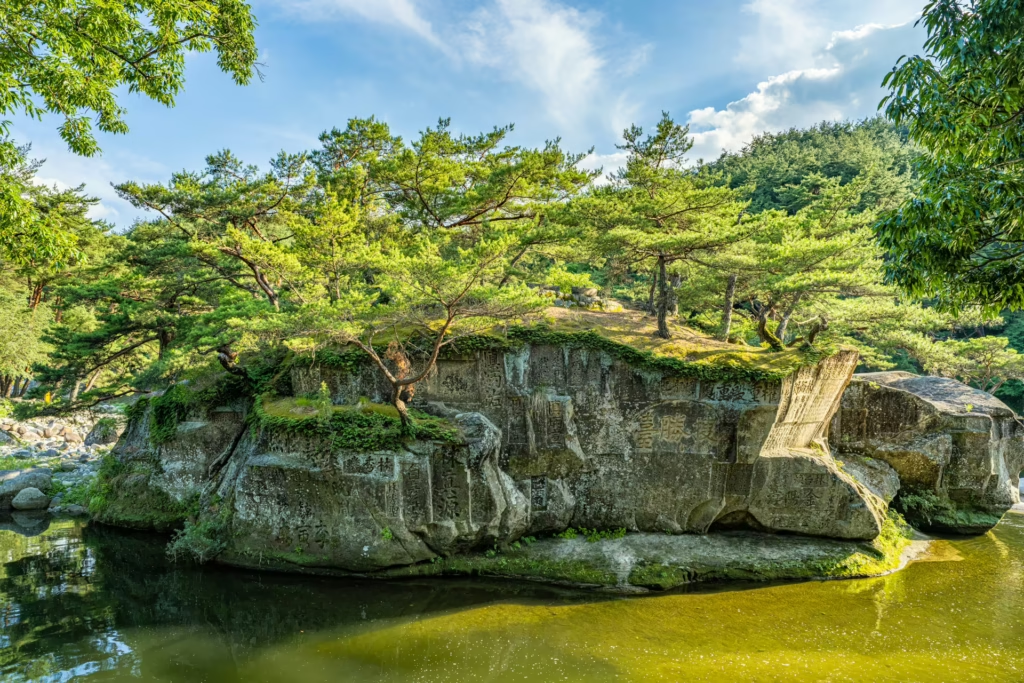
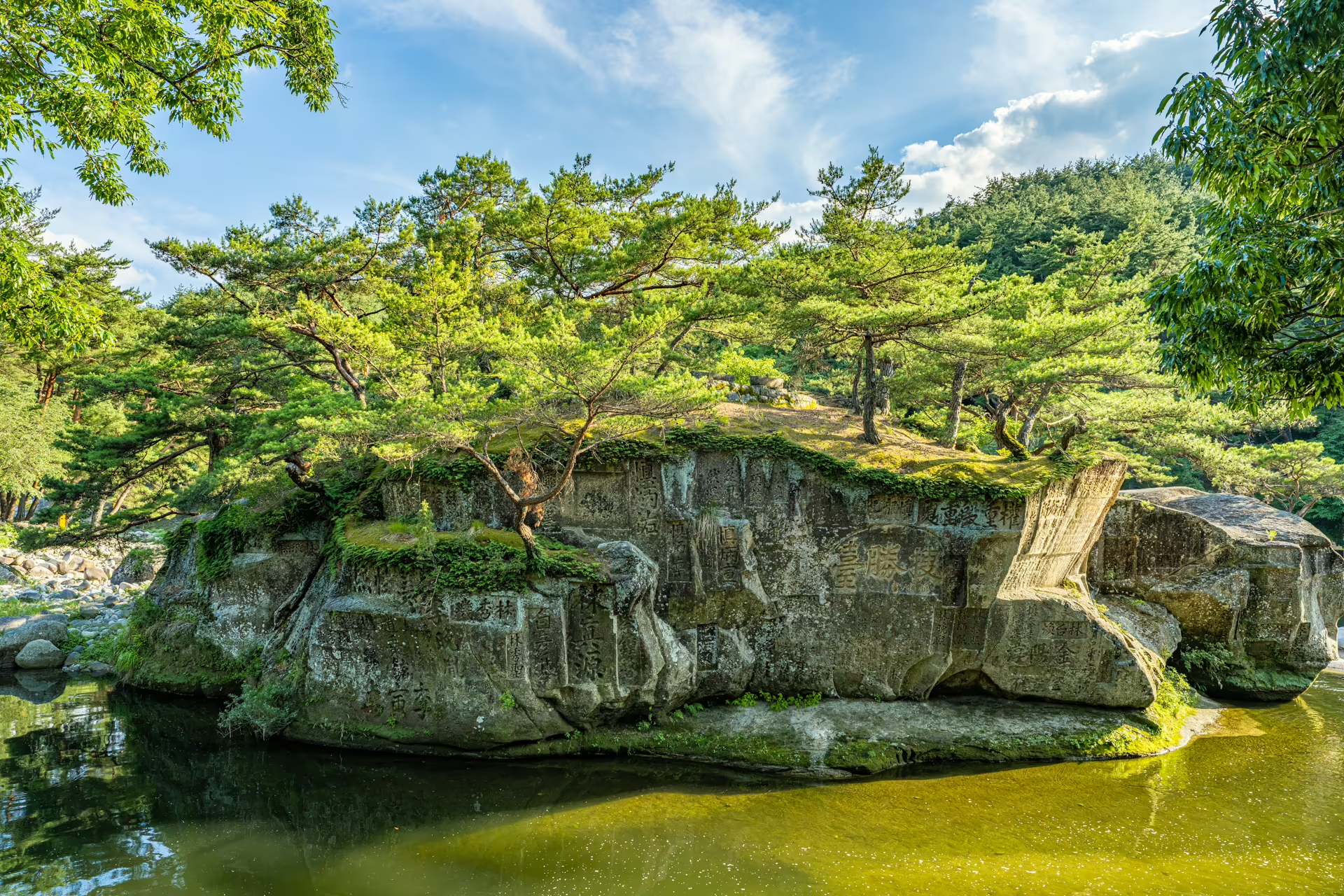
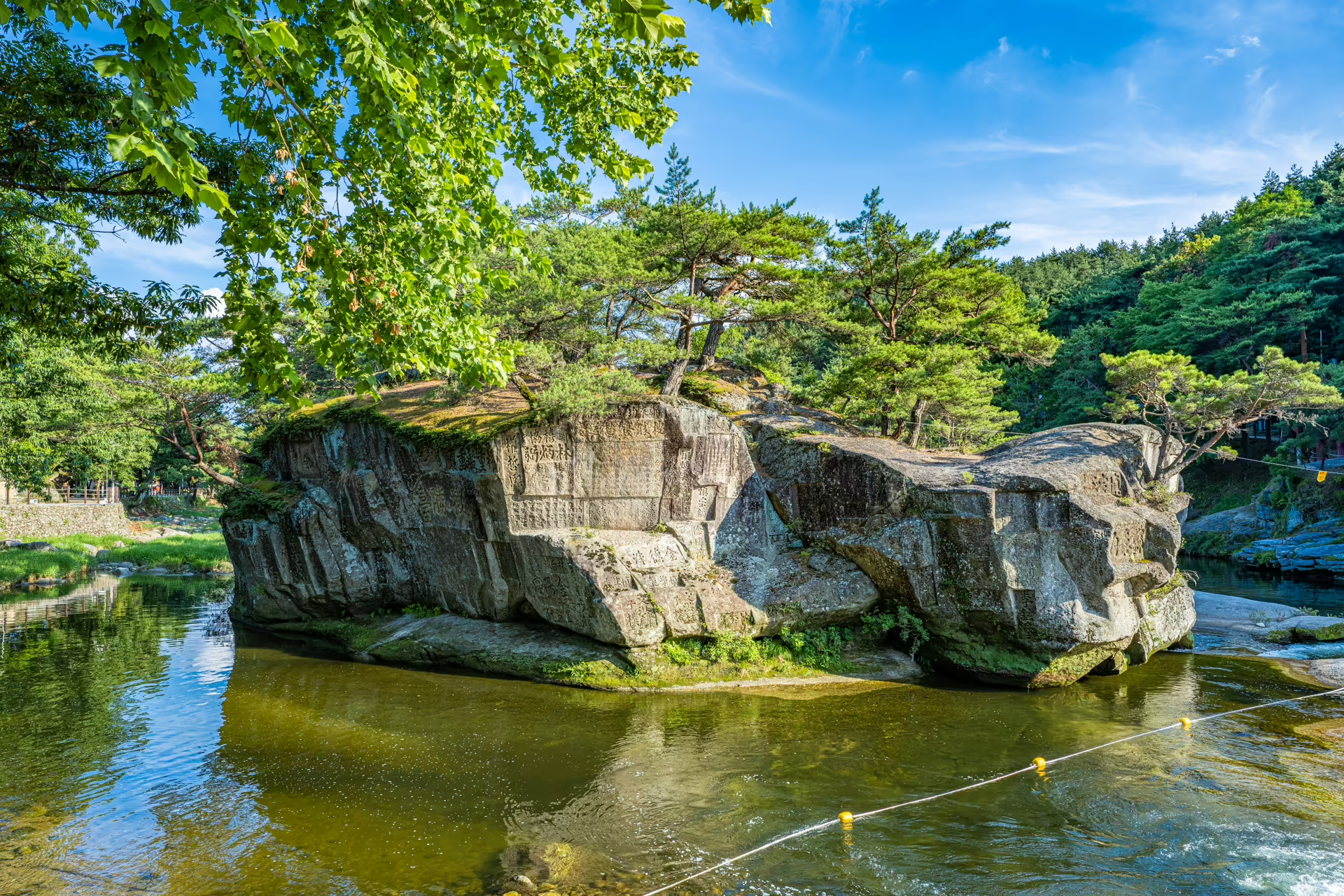
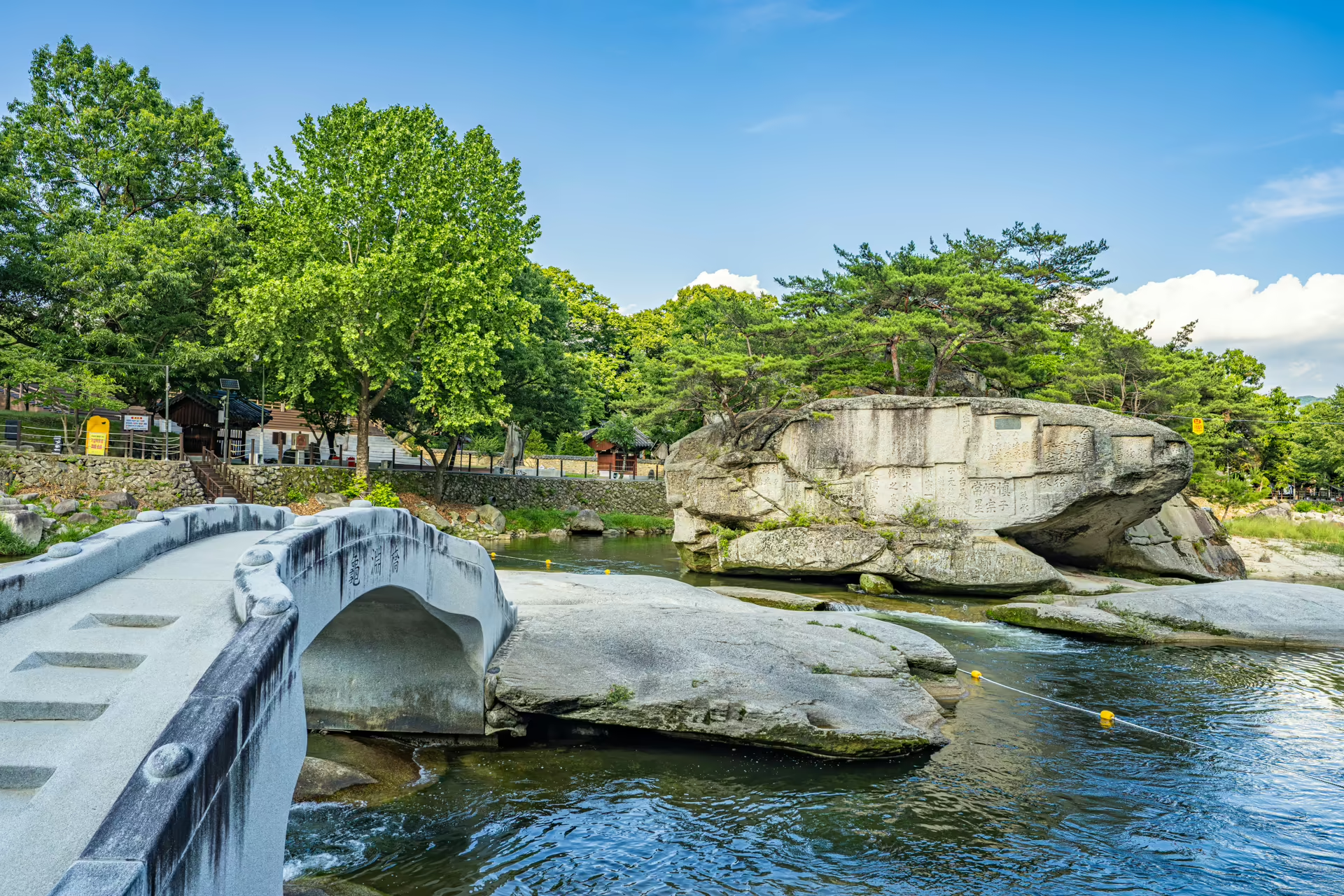
The rock sits in a shallow stream in Uicheon-myeon, a farming township in the western corner of Geochang, South Gyeongsang Province. It’s called Turtle Rock — under ten meters tall and under twenty meters long, with pines growing out of the top of it and clear water running round three sides. In summer, children stand in that water up to their knees. On the rock face above them, sixteenth-century scholars left their names, their poems, and their claims of ownership, and two clans spent the better part of three hundred years disputing which of them the place belonged to.
Korea has grander landscapes. It has very few that are this specifically, legibly human.
Orientation: Getting to Geochang
Geochang sits in the mountains where South Gyeongsang meets North Jeolla, which is a polite way of saying it is not on the way to anywhere. From Seoul Nambu Terminal there are around ten buses a day to Geochang, taking about three and a quarter hours, with a deluxe seat running roughly ₩31,300. By car it’s the Daejeon–Tongyeong Expressway to Geochang IC.
From Geochang’s bus terminal, the Uicheon-line rural bus runs out to Suseungdae about twenty times a day, first departure 06:50 and last 18:50, at roughly forty-minute intervals, for ₩1,000 in cash or ₩900 by card. Geochang’s rural buses are signed by destination rather than route number, so tell the driver “Suseungdae.”
That’s genuinely workable — but a day trip from Seoul is tight, and if you want to pair Suseungdae with Geumwonsan or the Y-shaped bridge at Udusan you need a car. One exception: during the summer theater festival the county runs a free shuttle from the town center out to the site, which makes those ten days by far the easiest time to arrive without one.
1. The Naming Argument, 1543
Start with what the place is called, because the name is the story.
The old name was Susongdae, written with the character for sorrow. A nineteenth-century essay on the site offers two explanations and refuses to choose between them: that envoys of Silla and Baekje parted here when this was borderland, and that the name simply means “sending sorrow away.”
In 1543, Yi Hwang — Toegye, the most influential Confucian thinker in Korean history, whose face is on the thousand-won note — was staying at his wife’s family home nearby. A local scholar named Sin Gwon invited him to visit. Toegye was recalled to the capital before he could come, and sent a poem instead. Its opening line proposes a new name: Suseungdae, roughly “the terrace where one seeks out beauty.” Same sound, different characters, and the sorrow taken out.
Not everyone accepted it. Im Hun — Galcheon, another scholar of the same valley — wrote back a poem of his own that kept both of the original characters and closed with a line about sorrow at parting. It’s a courteous refusal, and it’s the reason both names survived side by side for centuries.
The postscript is recent and worth knowing. In 2021 the national heritage authority, having established that Joseon-era sources used both forms, announced it would formally rename the site Susongdae. Local objection was immediate, and the change was never implemented. The official designation is still Suseungdae. Four hundred and eighty years on, the argument has not fully closed.
2. Turtle Rock: Four Centuries of Graffiti You Can Legally Touch
Walk up to the rock and look at the surface. It is covered — genuinely covered — in carved characters. The site’s own guidance puts the number of individuals commemorated in the hundreds, and Korean travel writing usually settles on “around 250 scholars.”
The big ones are legible even if you don’t read Chinese characters. 搜勝臺 — the new name itself. Toegye’s poem. 退溪命名之臺, “the terrace named by Toegye.” There are working details too: a cleft called the wine store, a flat slab identified as the place they ground ink, another spot for washing brushes. This was not a viewpoint. It was an outdoor study that people used for generations, and they carved the furniture labels into it.
Then there are the two that matter. 樂水藏修之臺 — the terrace where Yosu cultivated himself — was cut by the Sin clan of Geochang, Yosu being Sin Gwon’s pen name. 葛川杖屨之所 — the place of Galcheon’s staff and sandals — was cut by the Im clan of Eunjin, for Im Hun. Two families, two founders, one rock, and each inscription is a flag planted in stone.
The dispute ran for centuries. The nineteenth-century essayist who visited put it best, and the heritage service quotes him still: he was delighted by the beauty of the place, and embarrassed by the pettiness of the two households.
3. Yosujeong: Sin Gwon’s Pavilion
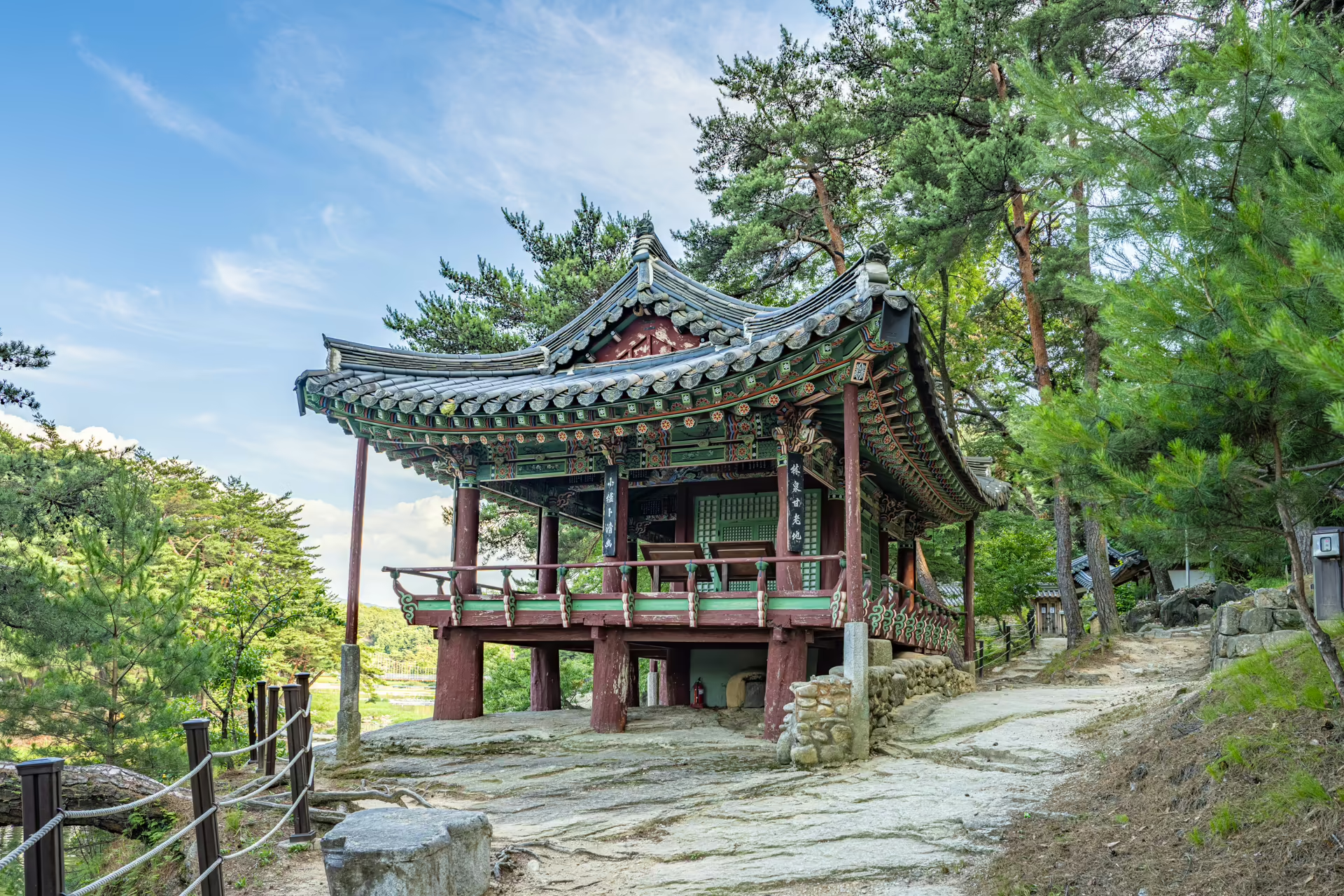
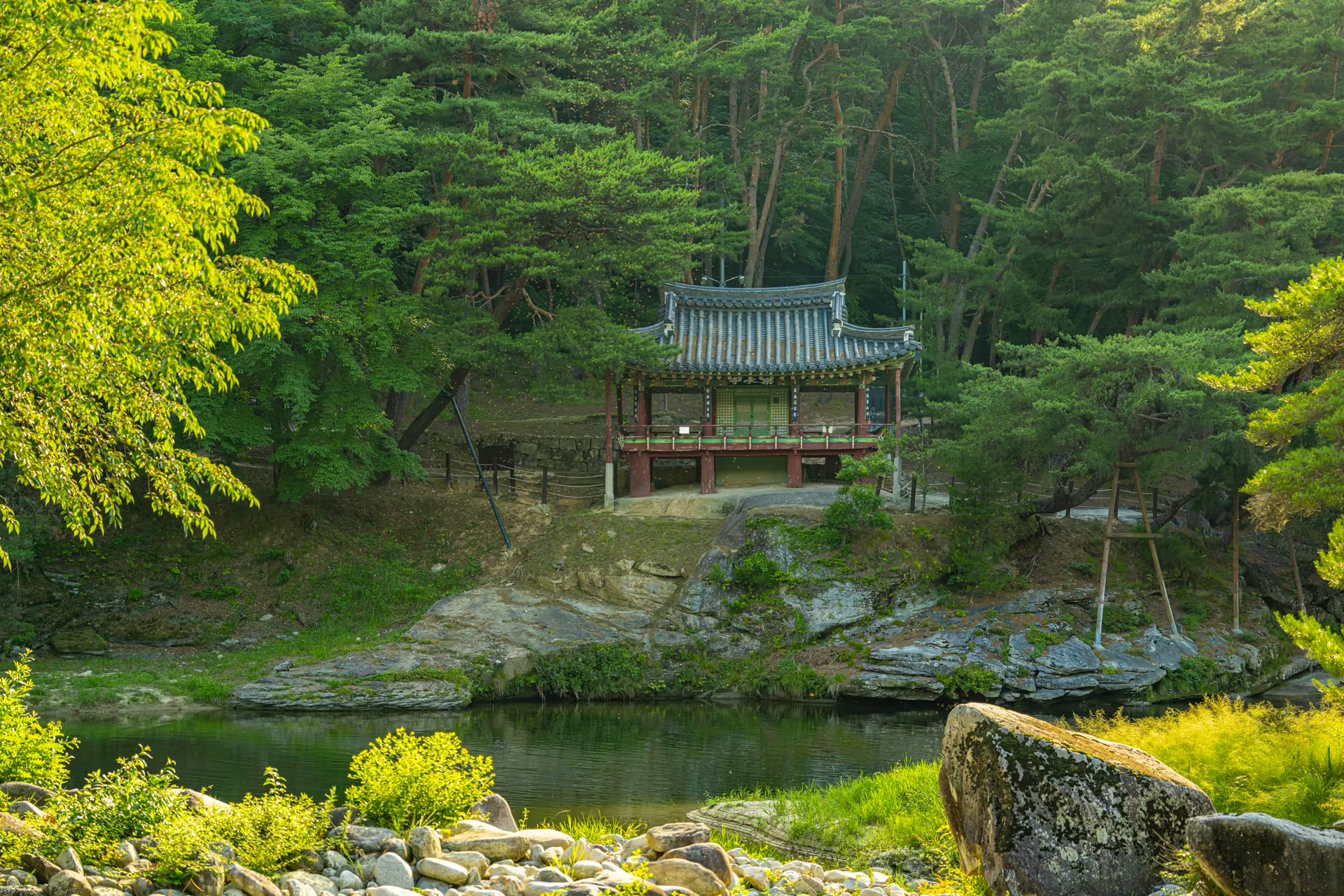
Across the water, on the wooded bank, stands Yosujeong — the pavilion Sin Gwon built as a place to teach his students and enjoy the stream. It’s designated provincial cultural heritage, with its origin given as 1542, though at least one local source argues for 1529. Either way it predates the naming argument by a year or more.
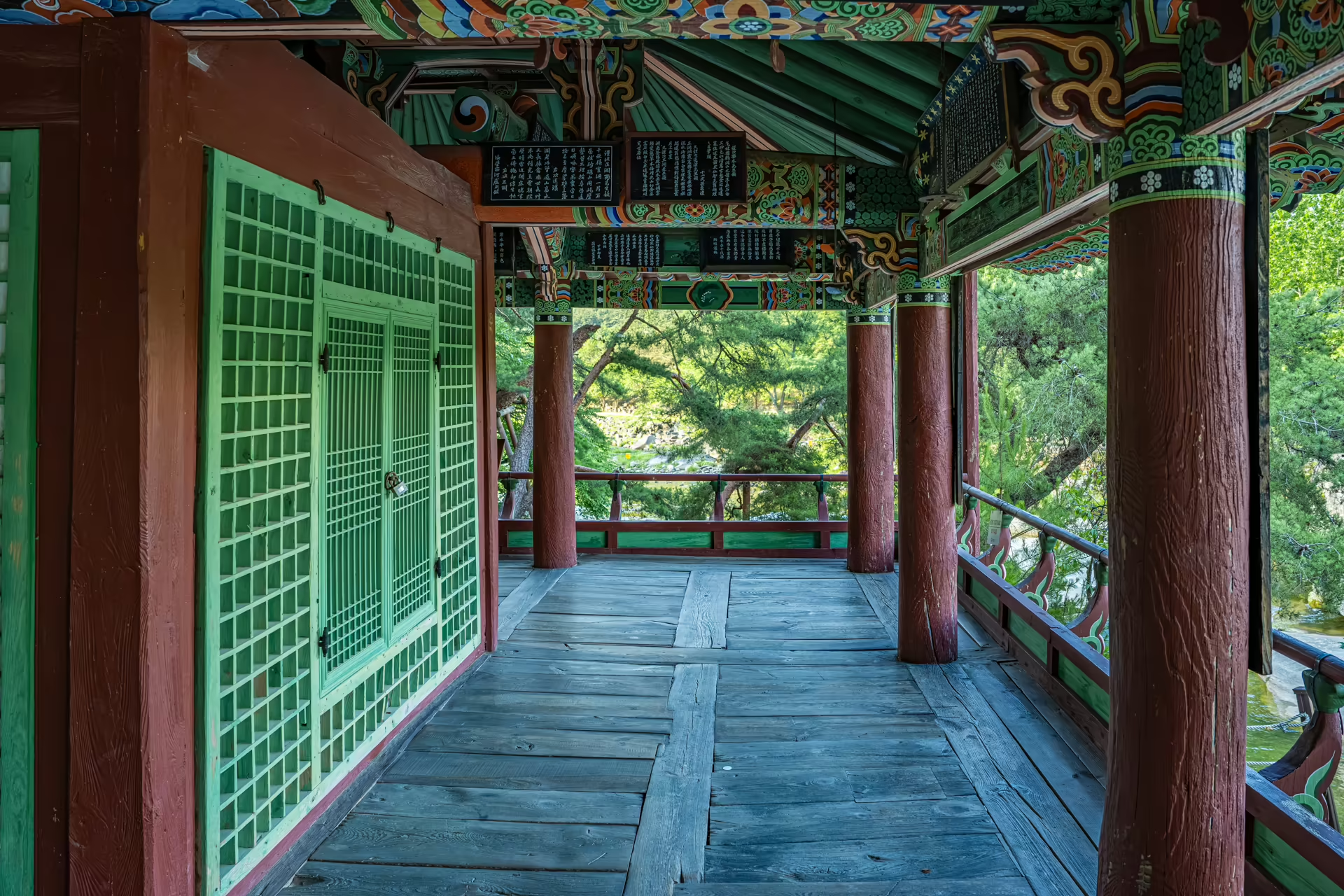
It has had a rough four centuries: burned in the Japanese invasions of the 1590s, rebuilt, brought down by a flood, and finally moved to its present site opposite Turtle Rock in 1805 by Sin’s descendants. Three bays by two, with a raised floor and a slatted balustrade, and — the detail worth crouching for — it uses the bare bedrock as its foundation stone rather than cut plinths. The building was set onto the rock as the rock happened to be.
Inside, the floor is worn smooth, the doors are green lattice, and the beams are painted in the standard Joseon palette. Take your shoes off and sit for ten minutes. That is what it was built for.
4. Gwansuru: The Gate Built on Crooked Wood
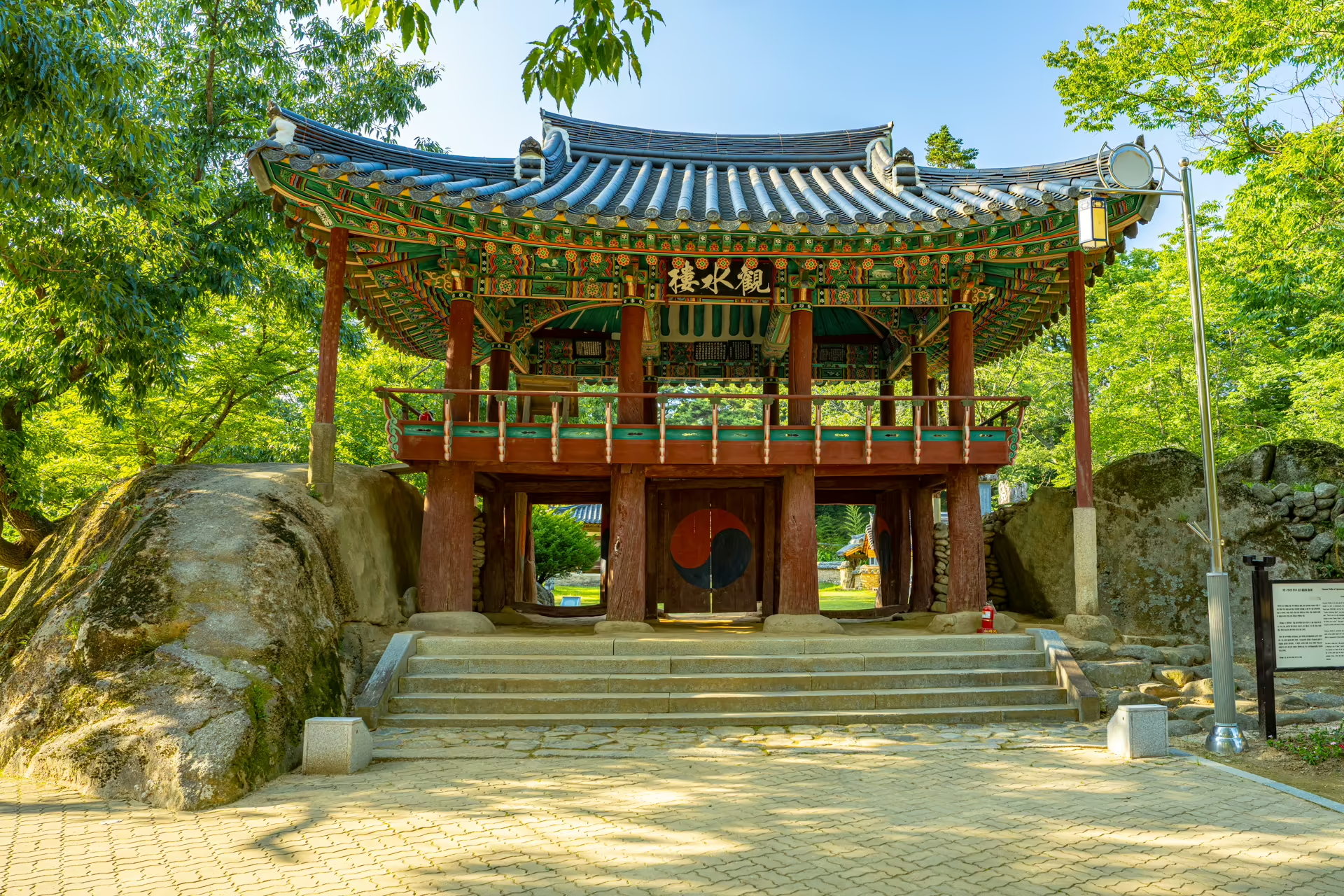
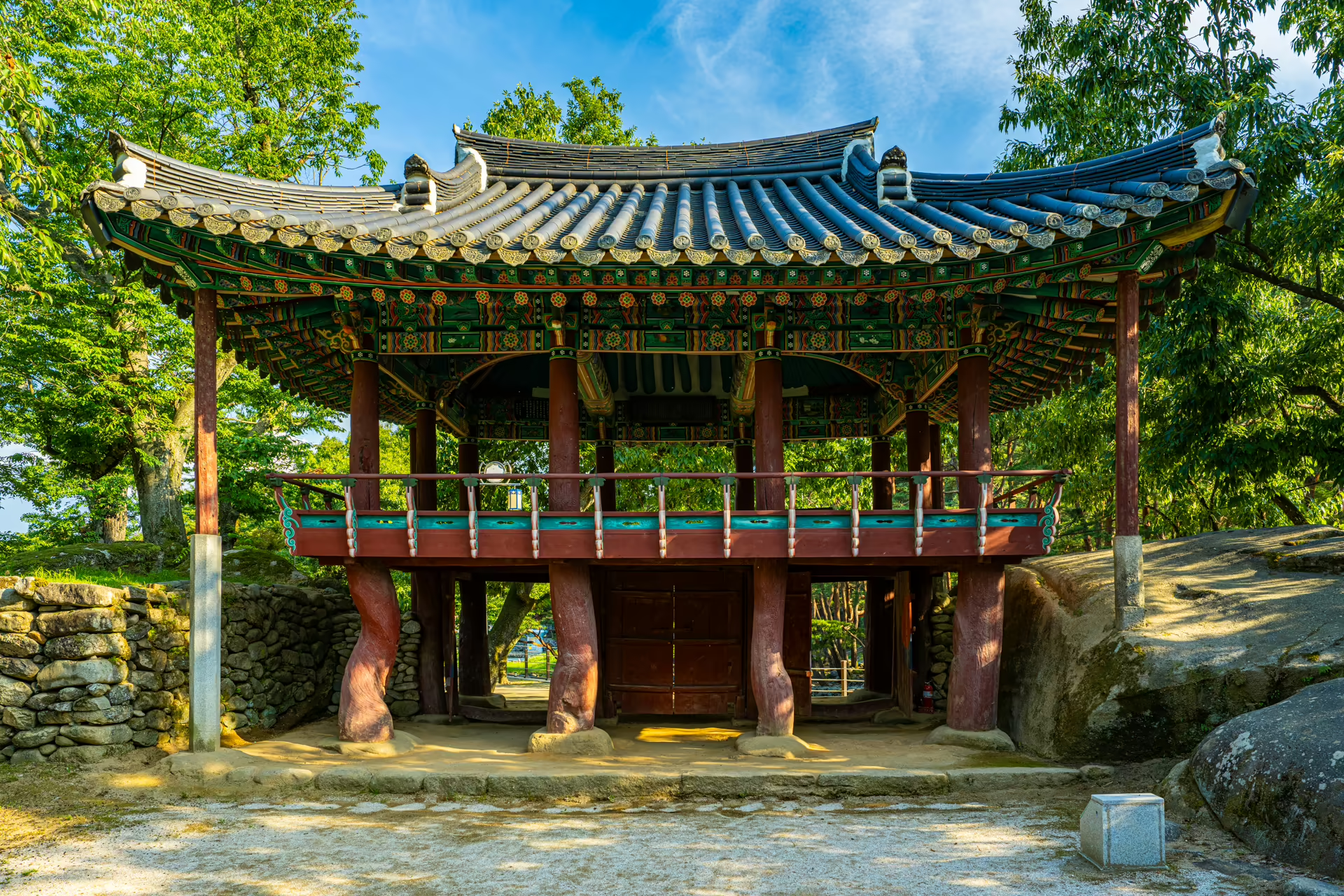
The most architecturally interesting building here is the one most visitors walk straight through. Gwansuru is the gate pavilion of Guyeon Seowon, the Confucian academy on the site, and it was built in 1740 by Jo Yeong-seok — a magistrate of the neighboring county who was also a well-regarded literati painter.
Two things make it unusual. It sits directly on natural bedrock, with no leveling course. And its lower pillars are untrimmed timber, left crooked: rather than square the posts, the builder used the trees as they grew and let the geometry sort itself out above. It’s an aesthetic choice that a European mason of the same century would have found incomprehensible, and it holds up a two-story gate perfectly well.
The name comes from Mencius — “there is a method to observing water” — which is either a lesson about looking properly or a joke about where the building stands, depending on how generous you’re feeling.
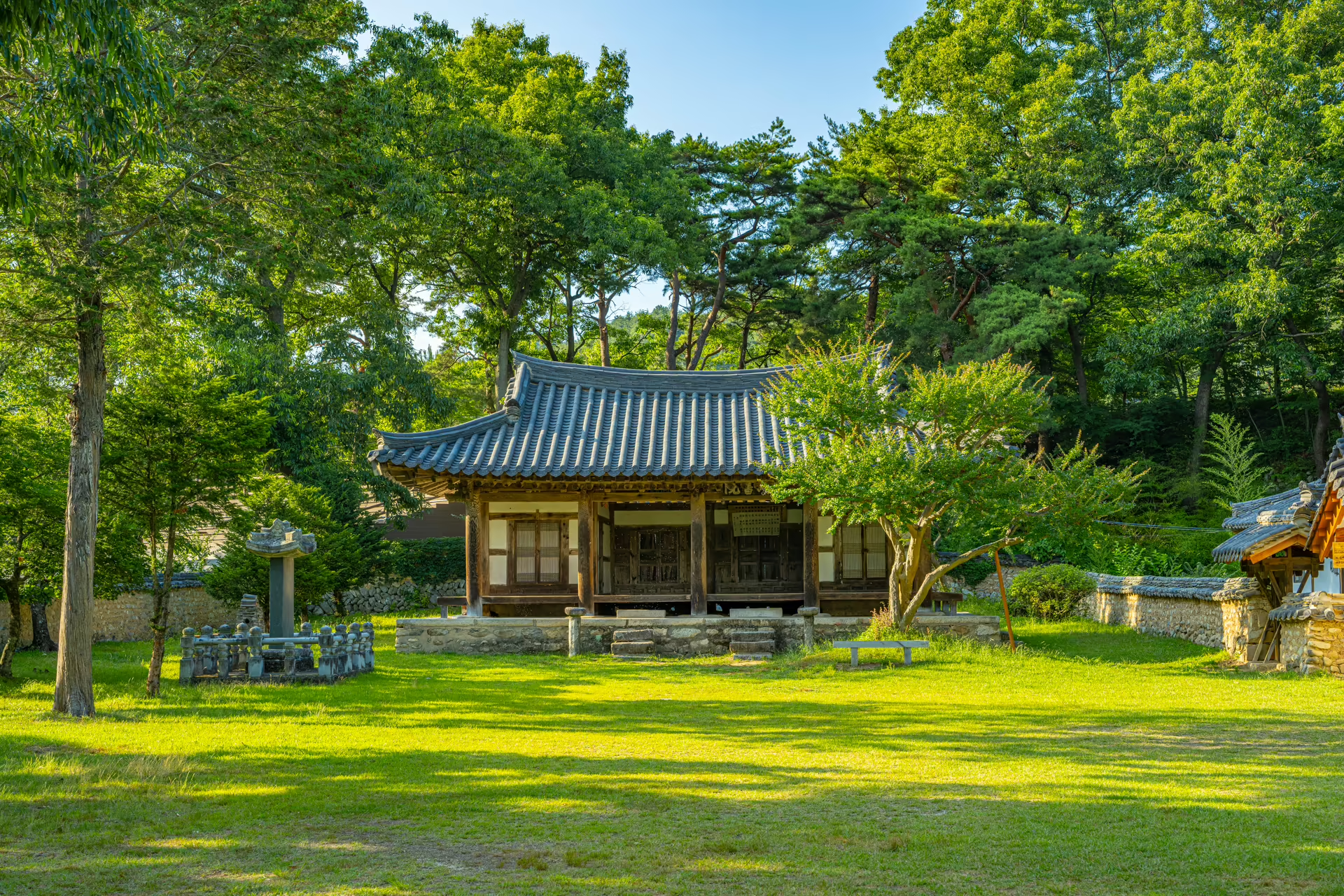
The academy behind it was founded in 1694 on the site of Sin Gwon’s old study hall and shut down in the 1868 purge of private academies. Sources disagree on how much has since been restored; the gate is the designated piece, and the gate is the reason to look.
5. The Bridge, the Swimming, and the Summer Theater
None of this would keep Korean families coming back, so the county has added three things that do.
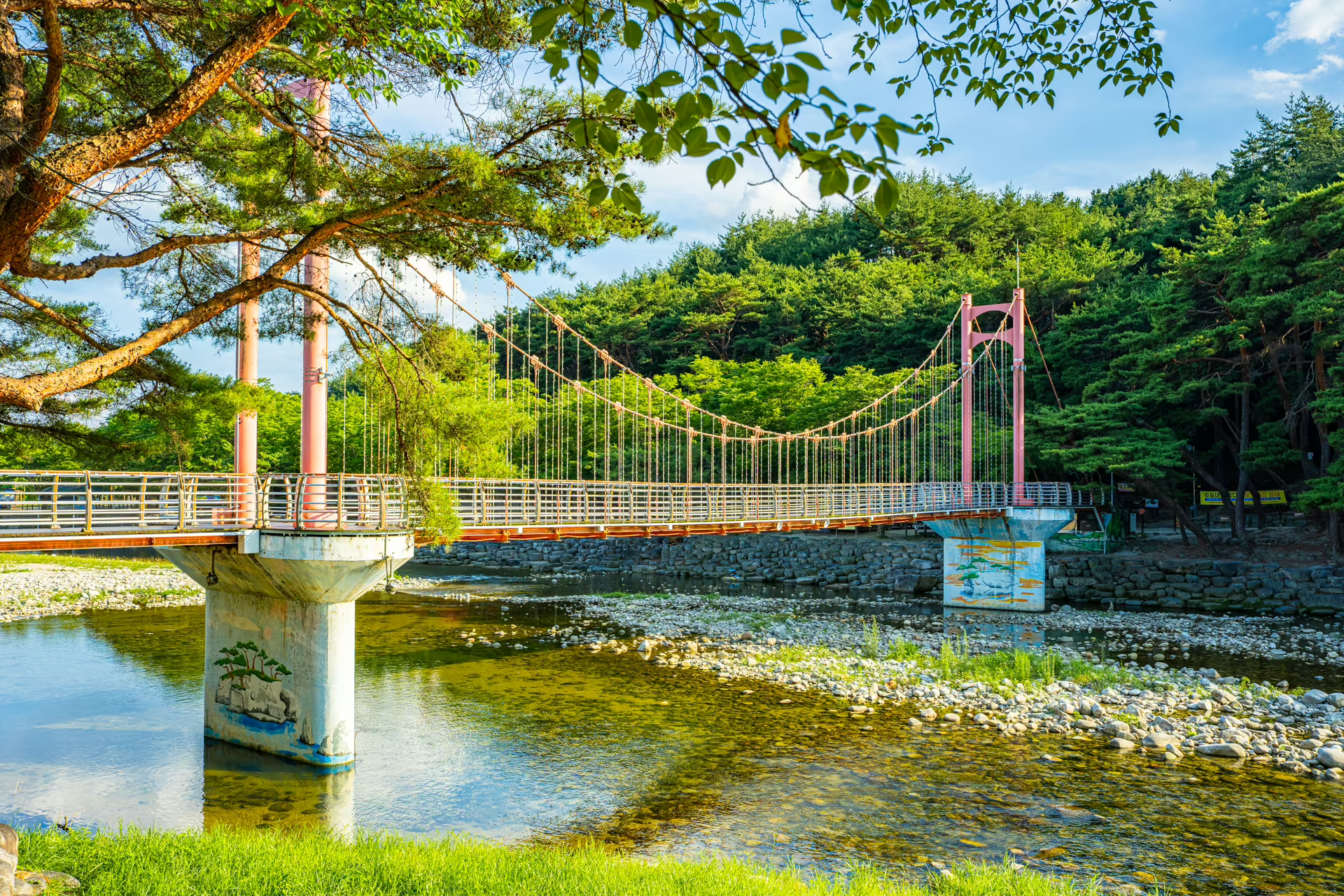
The suspension bridge opened in November 2022: 240 meters long, a meter and a half wide, 50 meters above the valley, and built as a towerless curve rather than the usual straight span. It’s free, it connects to a longevity-themed walking loop, and it has its own parking lot. It moves noticeably when a group crosses together, which for most visitors is the entire point.
The water play area is a straightforward dam across a shallow arm of the stream, and it is free. In 2026 it ran from 11 July to 23 August, daily 09:00 to 19:00, with closures for rain and high water. Given that a Korean water park will take ₩50,000 off you for the same afternoon, this is one of the better-value hours in the country. In winter the same ground becomes a sledding hill.
And then there’s the festival. The Geochang International Festival of Theater has run since 1989 and takes over the outdoor stages around Suseungdae every summer — a ten-day program of Korean and international companies performing against the rock and the pines, with tickets that top out at a few thousand won. Dates shift year to year, so check before you plan around it, but “swim in the afternoon, watch theater after dark, in a valley with a 1740 gate in it” is a proposition very few places anywhere can make.
Who This Is Actually For
Anyone who likes their history physical: you can put your hand on the argument. Very little Korean heritage is this direct, and almost none of it is left this open — no ticket, no barrier, no glass.
Families in July and August: free swimming, free bridge, cheap camping on site, and a theater festival thrown in. It is one of the best-value family weeks in the country.
Architecture people: come for Gwansuru’s crooked posts and Yosujeong’s bedrock footing. Both are textbook examples of Korean builders working with a site rather than against it.
Day-trippers from Seoul: possible but tight at three and a quarter hours each way. Make it an overnight and add Geumwonsan or the Y-shaped bridge at Udusan. If you’re assembling a wider South Gyeongsang route, the free lotus park at Haman works well in July and the cherry tunnel at Hadong in early April.
People who need certainty about opening times: be warned. The valley and its buildings are effectively open ground, but the suspension bridge has posted hours that differ between the county’s tourism page, the sign at the site and the department that runs it. Assume daylight, and don’t arrive at four in the afternoon in December expecting to cross.
I finished the afternoon on the arched bridge, looking at the rock: pines on top of it, two kids below arguing about who was going in first, and four hundred years of other people’s arguments cut into the stone above their heads. Nobody down there was reading them. That felt like the correct outcome.
Practical Manual
| Item | Detail |
|---|---|
| Name | Suseungdae, Geochang (거창 수승대) — official English: Suseungdae Rock, Geochang |
| Address (English) | Hwangsan-ri, Uicheon-myeon, Geochang-gun, Gyeongsangnam-do |
| Address (Korean) | 경상남도 거창군 위천면 황산리 890 |
| Designation | National Scenic Site, designated December 2008. Area 34,982 m² |
| Admission | Free — no entry fee is listed on the county’s charges page |
| Parking | 260 spaces. Free up to 3 hours; ₩2,000 for 3–7 hours, ₩5,000 all day (small vehicles) |
| Suspension bridge | 240 m long, 50 m high, opened November 2022, free. Posted hours vary between sources — check on site |
| Water play area | Free. 2026 season ran 11 July – 23 August, 09:00–19:00. Closes for rain and high water |
| Camping | 86 tent decks ₩30,000; auto camping ₩50,000. Online booking only, no phone reservations, no pets |
| Theater festival | Geochang International Festival of Theater, every summer since 1989, staged around the site. Free shuttle from town during the festival |
| Getting there | Seoul Nambu Terminal to Geochang, ~10 buses a day, 3 hr 15 min, about ₩31,300 deluxe. Then the Uicheon-line rural bus, ~20 a day from 06:50 to 18:50, ₩900–1,000 |
| Nearby | Geumwonsan Recreational Forest (same township), Galgyesup grove, Udusan Y-shaped suspension bridge, Geochang Changpowon garden (₩3,000, closed Wednesdays) |
| Inquiries | Geochang County tourism division 055-940-8530 |
Prices and dates are as published at the time of reporting. The water play area and the theater festival both shift by a week or two each year — confirm before building a trip around either.
Navigation Tip: Use Naver Map with the Korean address above — Google Maps can’t route Korean roads properly — and keep Papago handy for the interpretive signs, which are mostly Korean-only.