
Sihwa Tidal Power Park: The Lake Korea Killed and Then Brought Back
I drove out here expecting a power station and found a beach promenade. That mismatch is the whole point of Sihwa, and it took thirty years and a national embarrassment to produce.
The short version: in January 1994 Korea closed the last gap in a seawall across Sihwa Bay, southwest of Seoul — the main span runs about 11 kilometers, and something over 12 with its side sections — intending to turn the water behind it into a freshwater reservoir for farmland. Within three years the lake was effectively dead. Chemical oxygen demand averaged 17.4 parts per million against an agricultural standard of 8, and at some points it ran past 50. A 1996 government audit found nearly 7,000 badly built sewage connections upstream and roughly 7,000 tonnes a day of untreated discharge going straight in. Fourteen officials were disciplined. The Korean press called it the dead lake, and the name stuck for a decade.
What happened next is the part worth driving out for.
Orientation: Where Sihwa Sits, and How You Get There
The seawall runs from Oido on the Siheung side across to Daebudo, an island large enough to have its own farmland and beaches. Sihwa Narae Tidal Power Park sits at the midpoint, on a spur of made ground with the lake on one side and the Yellow Sea on the other. From central Seoul it’s about 55 kilometers and roughly an hour by car, via the Third Gyeongin Expressway to Jeongwang IC, or the Second Gyeongin to Sincheon IC.
Unusually for a Korean coastal site, public transport works properly here. Ansan city bus 123 stops at a stand called Sihwaho Tidal Power Plant, three minutes’ walk from the park, and its route threads through Oido, Ansan, Choji and Jungang stations — so whichever Line 4 or Suin-Bundang station you’re nearest, you can reach it without a transfer. It runs from 04:10 to 22:00, every twenty minutes on weekdays and thirty at weekends. That last-bus time matters if you’re staying for the sunset.
Parking, if you drive, is free — 637 spaces plus eight EV bays, which is generous by any standard and still fills up on a summer Saturday.
1. The Comeback: How a Dead Lake Was Reopened
By the second half of the 1990s the freshwater plan was untenable, and the authorities began letting seawater back in — first on a trial basis, then through the western sluices in earnest. In December 2000 the government abandoned the freshwater scheme outright, and the following year Sihwa was formally reclassified as a seawater lake. That reversal — a national project publicly conceding it had been wrong — is unusual enough to be worth stating plainly.
The engineering answer arrived later. Construction on a tidal power station began in December 2004 and finished in August 2011. The logic is elegantly simple: the lake needs enormous volumes of seawater moved in and out of it anyway, so you may as well generate electricity while doing it.
The numbers are the reason this place has a claim on your attention. Installed capacity is 254 megawatts across ten turbines and eight sluice gates, which makes it the largest tidal power station in the world — ahead of France’s Rance, which held the title from 1966 at 240 megawatts. Annual output runs around 552 gigawatt-hours, roughly one and a half times the Soyanggang Dam and enough for a city of half a million people.
It runs on single-effect flood generation: water is drawn in through the turbines on the rising tide and released through the sluices on the falling one. That sounds wasteful until you learn why — the seabed slope in Gyeonggi Bay is so gentle that on the ebb the water spreads too widely inside the wall to build a usable head. Maximum head on the flood is about 5.6 meters, against a tidal range of eight to ten meters outside the wall.
The turbines themselves are 7.5-meter Kaplan units weighing 800 tonnes apiece, and they were specified with the lake’s recovery in mind: blade count reduced to three to cut damage to marine life, closed-loop cooling, biodegradable lubricants. The whole scheme is registered under the UN’s Clean Development Mechanism.
And it worked. Seawater exchange went from about 30 million tonnes to 160 million. Chemical oxygen demand — 2 to 3 parts per million before the seawall, 17 at the worst of it — has come back to around 2. The intertidal flats grew from 5.3 to 20.3 square kilometers. A 2016 study in the Korean Journal of Environment and Ecology recorded significant increases across six groups of waterbirds. Egrets, swans, geese, ducks and shorebirds are all back on a lake that a generation of Koreans remembers as a byword for environmental failure.
2. The Moon Observatory, and Its One Timing Problem
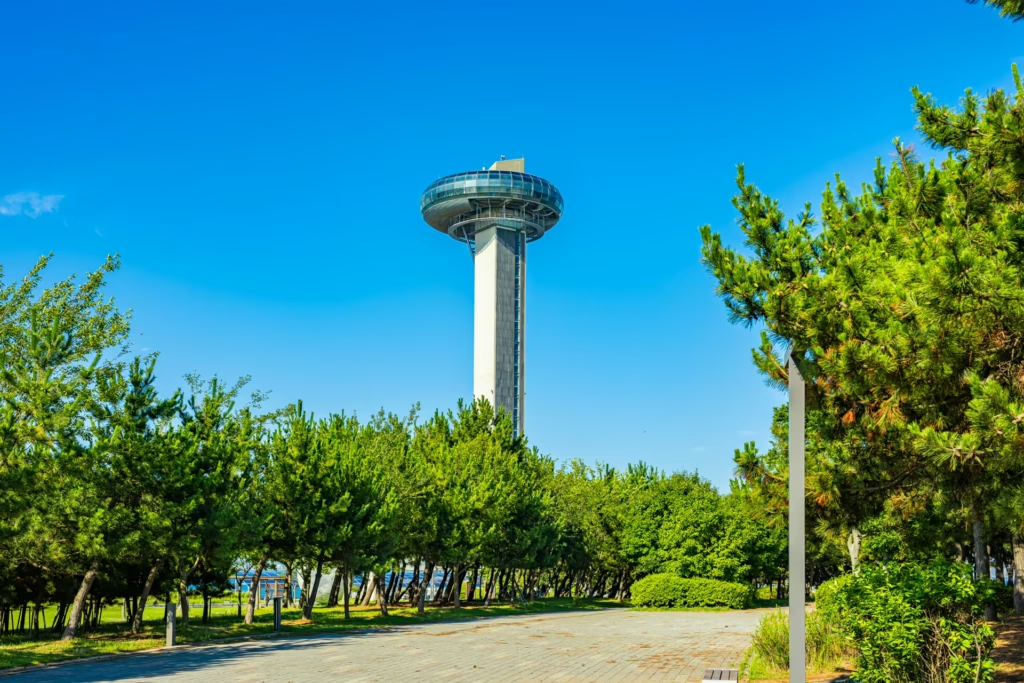
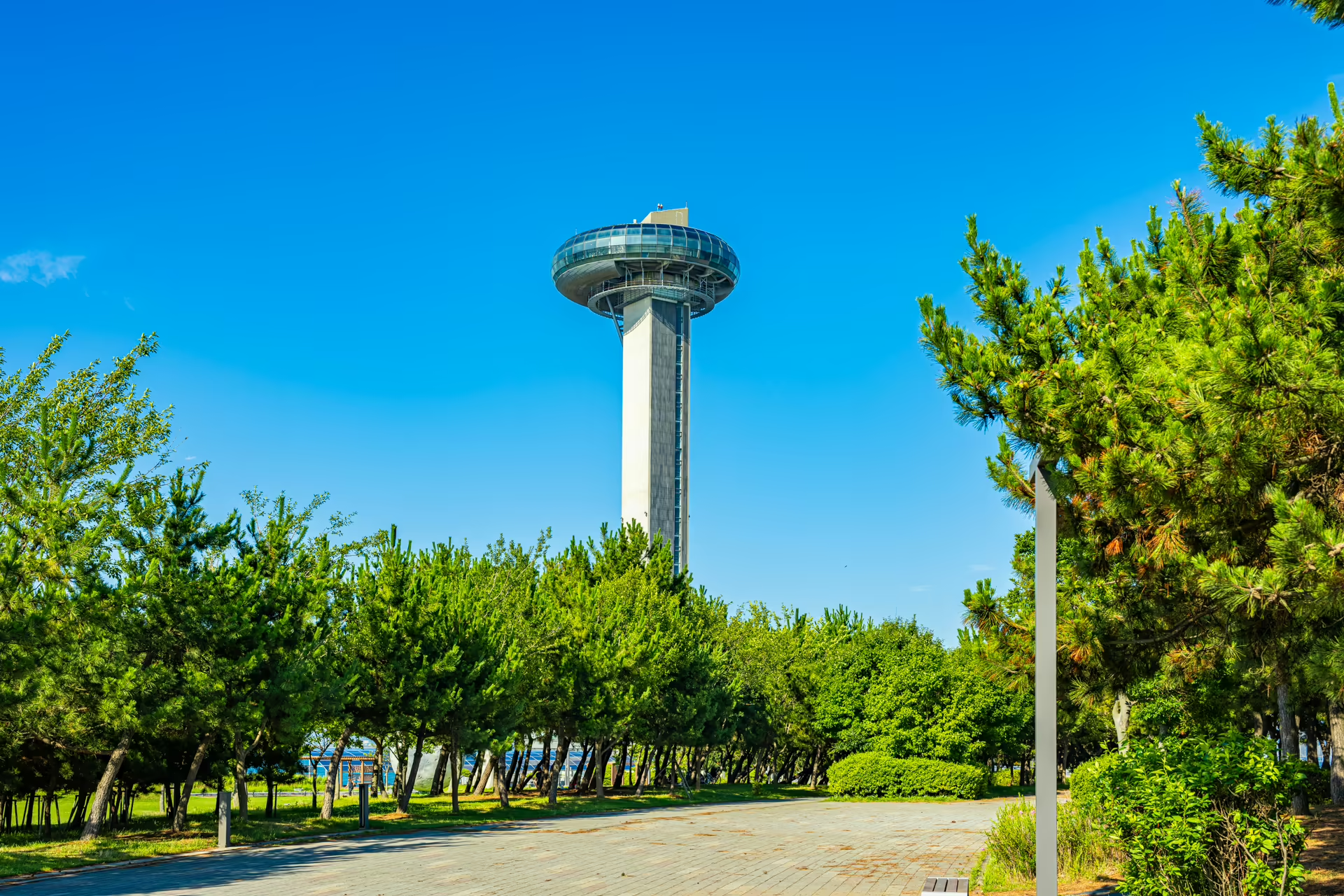
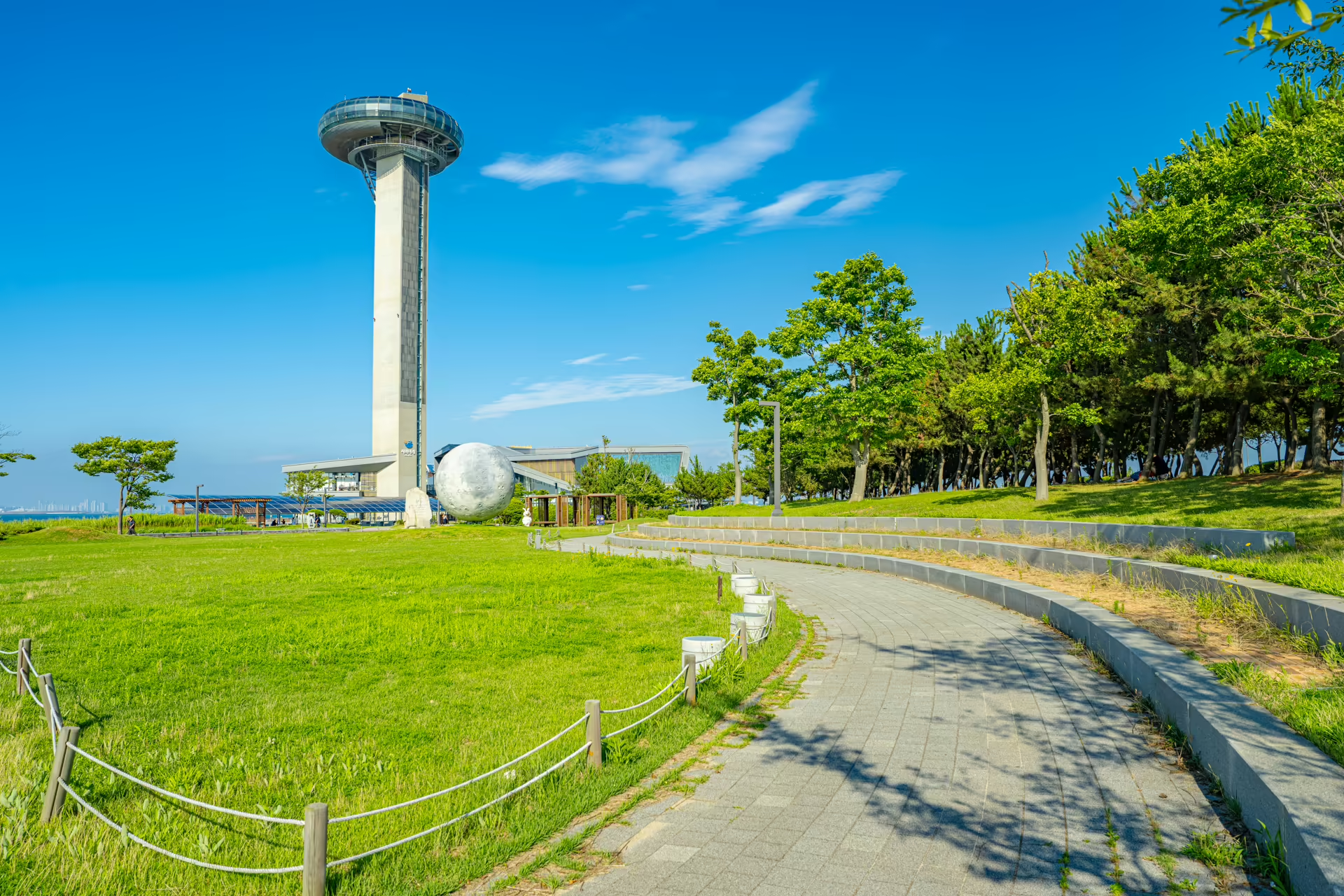
The landmark here is a 75-meter tower — about twenty-five stories — topped with a disc that reads as either a full moon or a small flying saucer depending on your mood. It opened in June 2014, sits above the culture pavilion, and gives you a 360-degree view with glass floor panels in places: the lake and the seawall inland, the open Yellow Sea and the container cranes of Incheon New Port to the west.
Opening hours are 10:00 to 20:00, last entry 19:30, with no closing day published. A café operates on the viewing deck for the same hours. The operator’s page lists no admission charge — the only fee line on it says parking is free — but I’d treat “free entry” as very likely rather than confirmed and be ready with a card at the desk.
Here’s the timing trap. In midsummer the sun sets around 19:40 — ten minutes after the last entry. You can technically make it — turn up at 19:25 and you’ll be on the deck as the sun goes — but you’ll have no margin at all. For a sunset you can actually stand around for, come between autumn and spring, when the sun goes down between five and six. In July and August, watch it from the ground instead — the promenade, the plaza, the café at the rest area — and then wait for the tower’s exterior LED façade, which runs until about eleven at night.
3. The Culture Pavilion — Check the Day Before You Drive
Underneath the tower is the Sihwa Narae Tidal Culture Pavilion, which reopened on 7 May 2025 after a complete redisplay for its tenth anniversary. Admission is free, the circuit takes about forty minutes, and the new content is media-led rather than diagram-led: a symbolic media wall and circular screening room on the first floor, laser art and an immersive photo zone on the second, a waterfall projection and interactive models of a sustainable waterfront city above that. A fourth room covering the history of the Sihwa district was still listed as opening later when I checked.
Read this before you plan a weekend: the reopened pavilion runs Tuesday to Saturday, 10:00 to 17:00, and closes on Sundays and Mondays. That is a change from the old schedule, and a great deal of tourism information online still carries the previous hours of 09:30 to 17:30 with only Mondays closed. If the exhibition is the reason you’re driving out, come on a Saturday at the latest.
4. What’s Actually in the Park
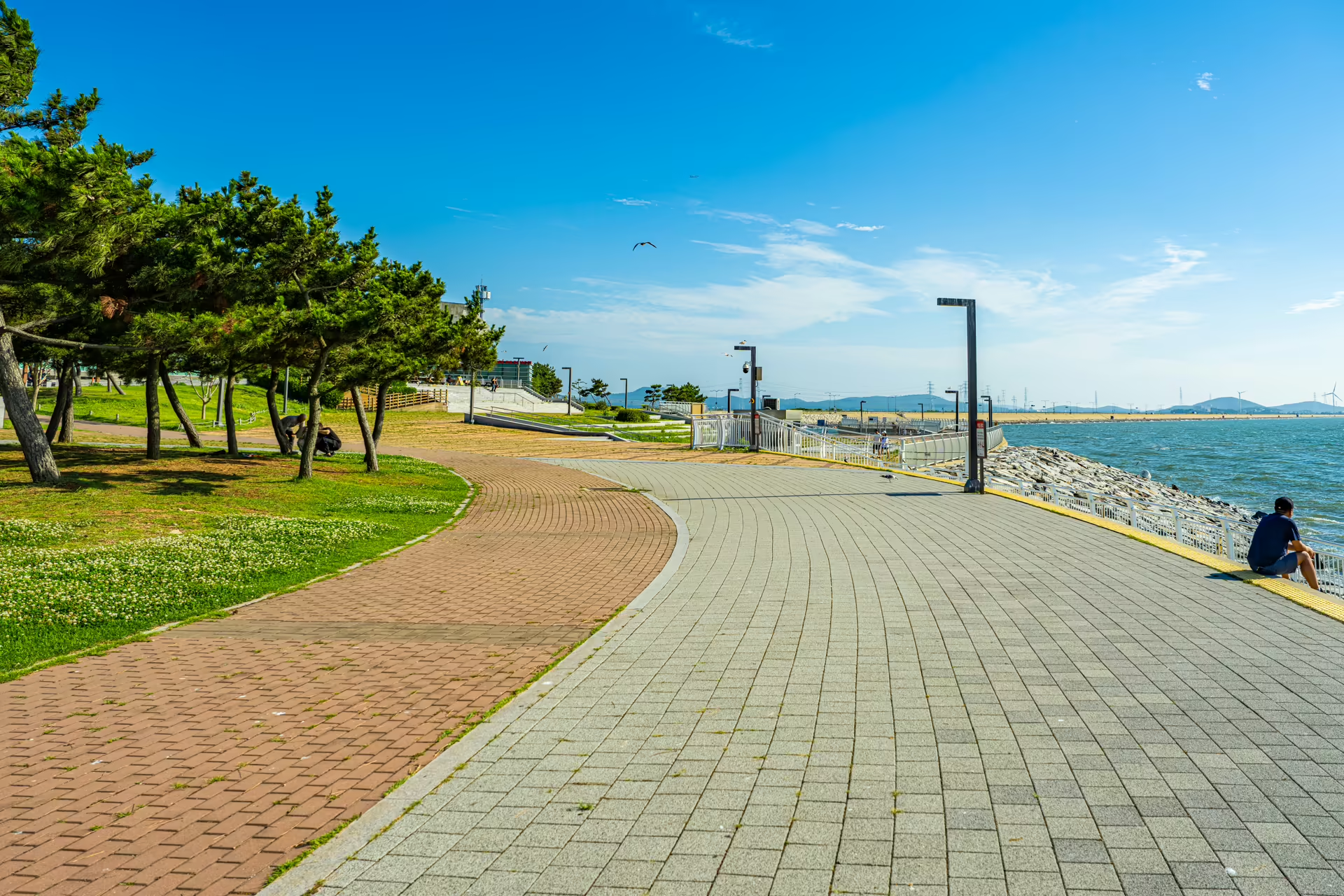
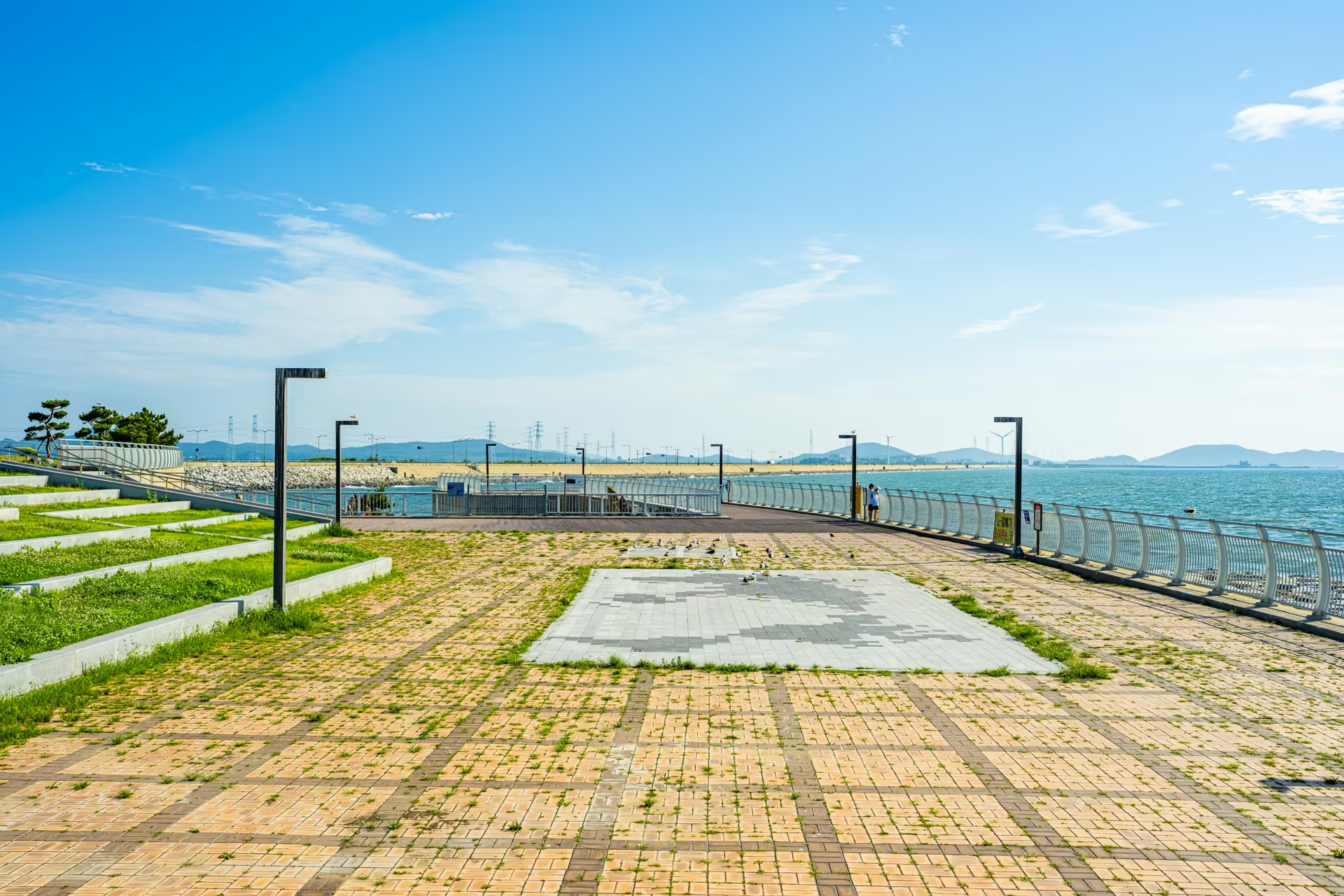
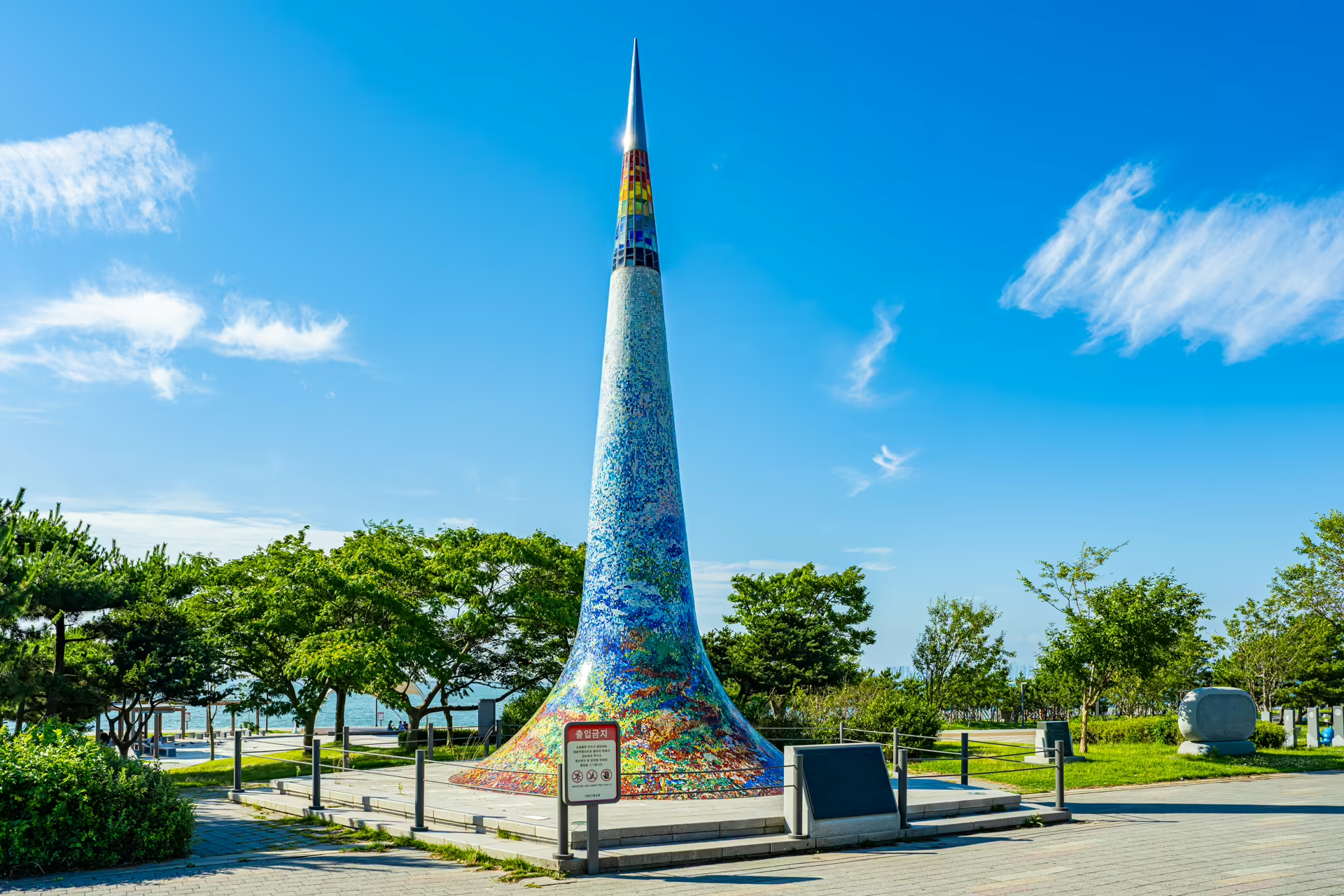
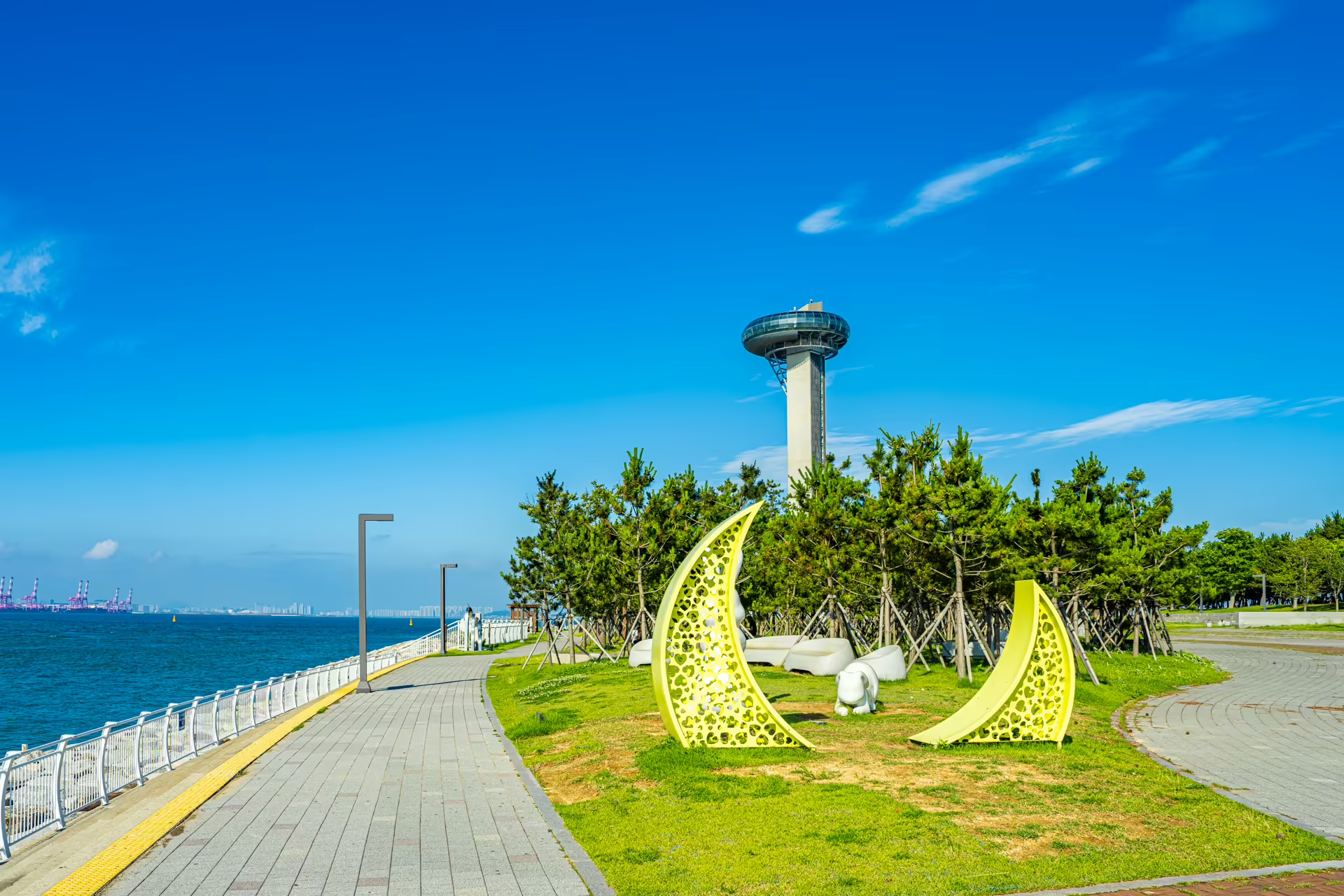
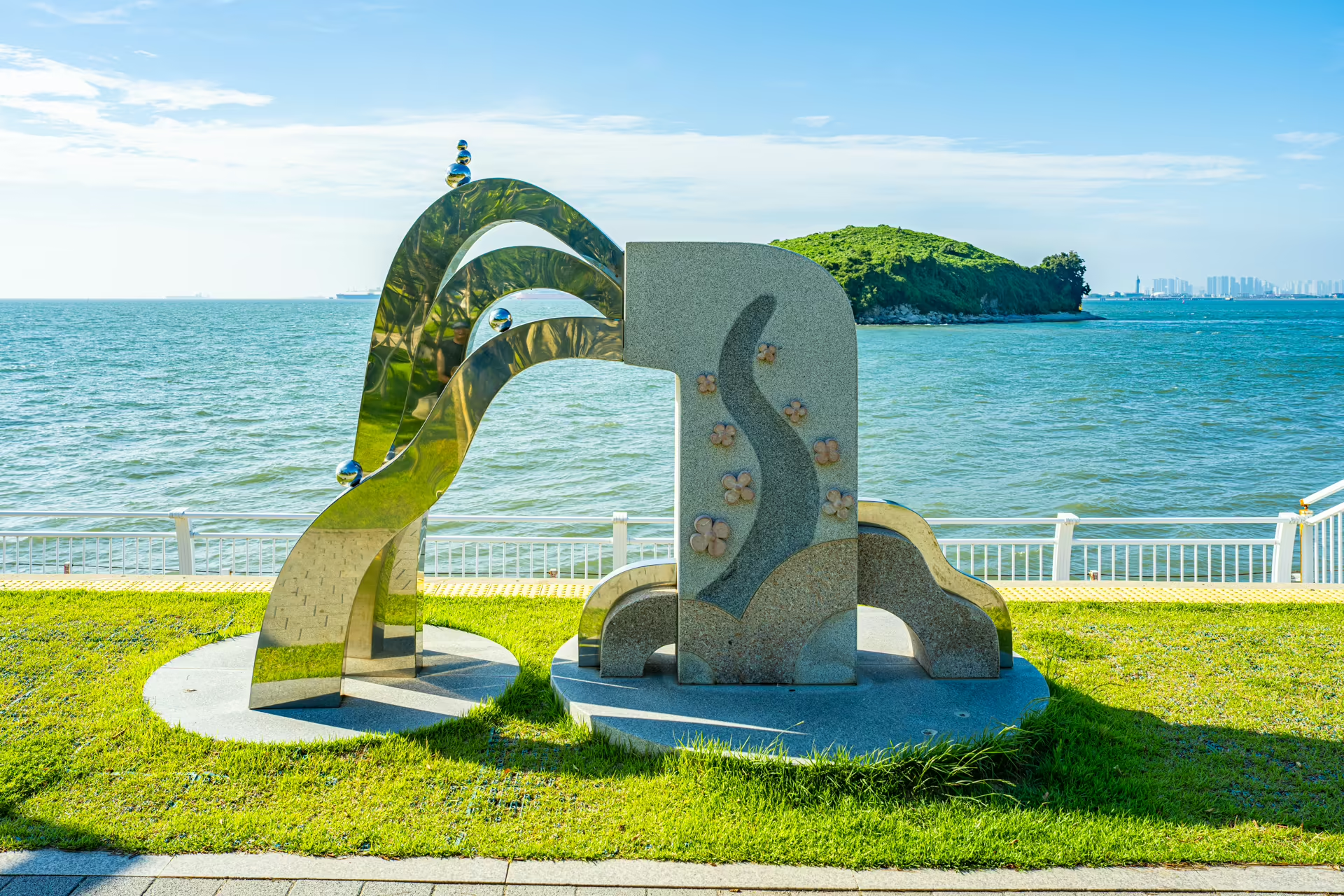
The park itself opened in May 2012 across 150,000 square meters, built on ground made from the spoil dug out during the power station’s construction — which is a neat piece of circularity when you’re standing on it. It is free, open, and threaded with the kind of public art that Korean waterfront projects do well: a tall mosaic-tiled obelisk as the centerpiece, abstract metalwork looking out at the sea, and a run of yellow crescents along the promenade that photograph absurdly well against a low sun.
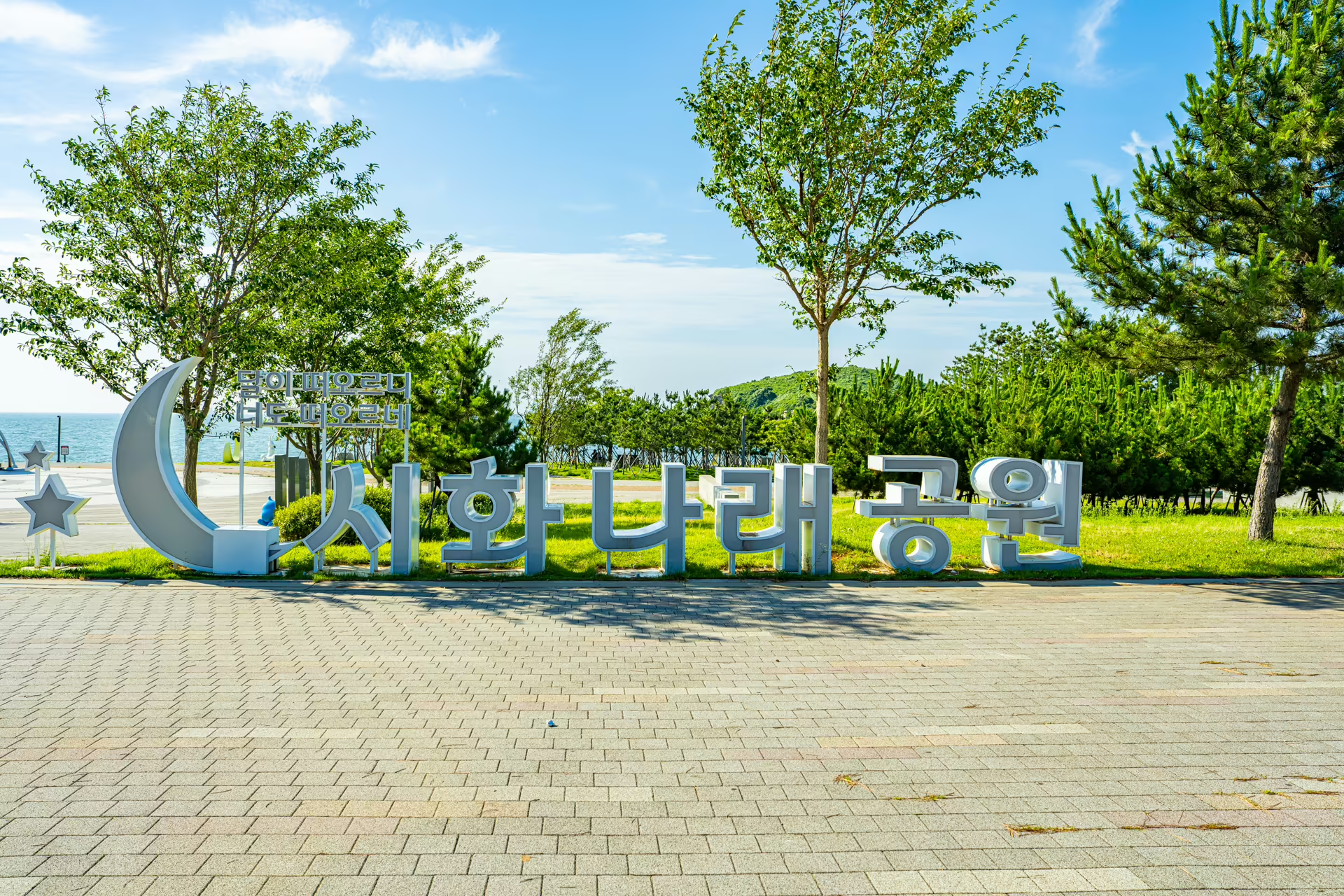
The Sihwa Narae rest area at the same site has a convenience store, a food court and a coffee shop, which makes this a viable lunch stop rather than a photo stop.
5. Building a Day Around It
Sihwa works better as a hinge than a destination. Oido is about twelve minutes east at the end of the seawall, with a red lighthouse and a seafood strip. Bangameori beach, the gateway to Daebudo, is eight minutes the other way. Push another thirty-five minutes south and you reach Tando Port, where a tidal causeway to Nuese Island opens twice a day beneath three wind turbines, and Jebudo, which has its own sea-parting road and a cable car for the days the tide doesn’t cooperate.
On Daebudo itself, the one indoor stop I’d send anyone to is Grand Coteau Winery, which makes an award-winning white a few minutes from the seawall and is a good answer to west-coast rain. If you’re coming from the Incheon side instead, the indoor garden café in Songdo sits roughly the same distance out of the city.
Who This Is Actually For
Anyone in Seoul who wants sea air without a three-hour drive: this is the closest genuine coastline to the capital that doesn’t feel like a suburb, and it costs nothing to walk.
People who like infrastructure: a world-record power station you can walk up to, with the lake it repaired on the other side of the wall. There are not many places where the environmental argument is this legible on the ground.
Photographers: come for the last ninety minutes of daylight, autumn through spring. West-facing, open horizon, and a tower that lights up after dark.
Anyone building a day around the exhibition: check the calendar first. Tuesday to Saturday only.
Families with small children: it’s flat, paved and free, but there’s no shade to speak of on the seaward side. In July that matters.
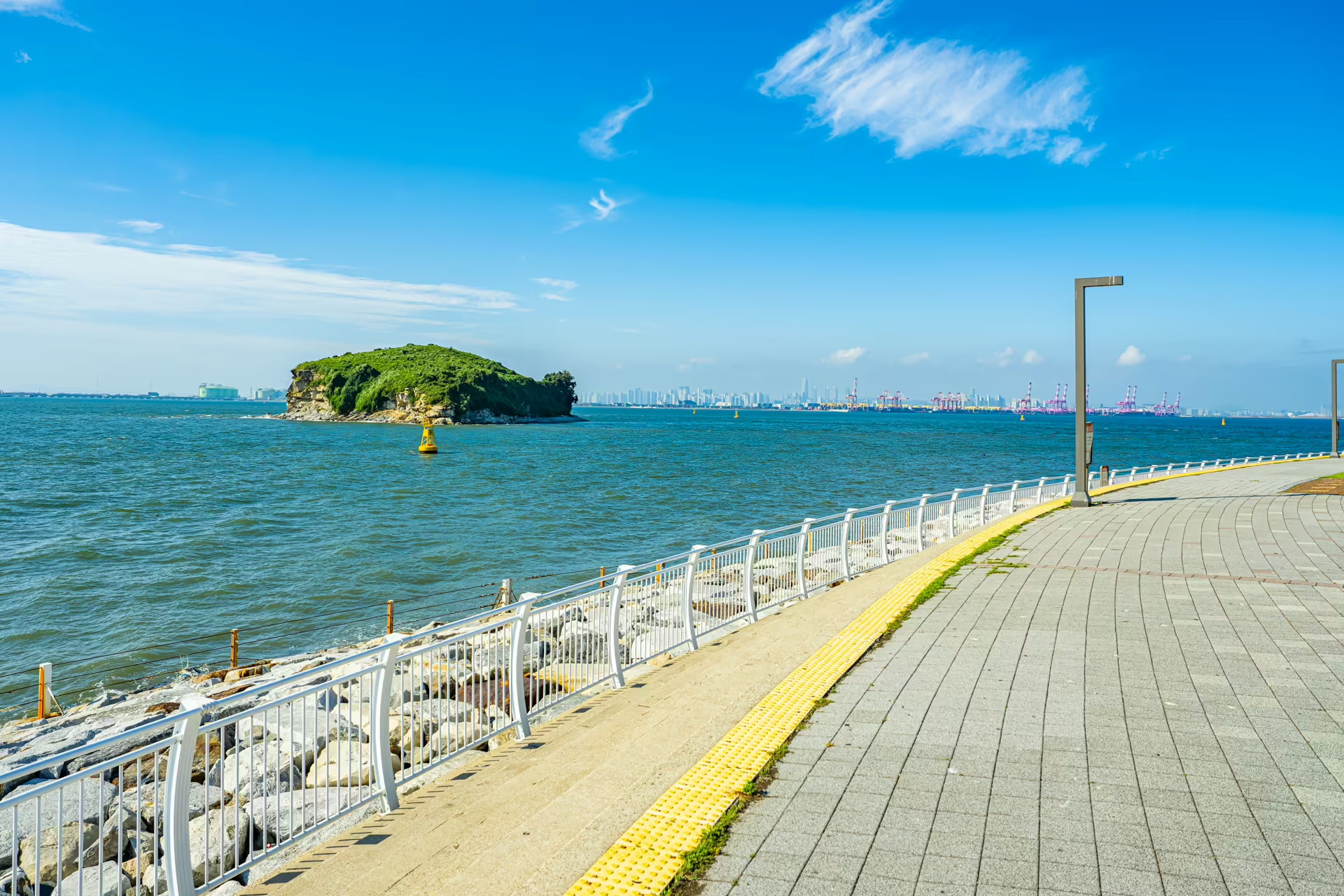
I stayed on the promenade until about seven: flat water, container cranes stacked up on the horizon, and a lake behind me that a generation ago people were writing off for good. Korea does not often admit a mistake this large in public. It’s worth an hour of your time to see what admitting it produced.
Practical Manual
| Item | Detail |
|---|---|
| Name | Sihwa Narae Tidal Power Park (시화나래 조력공원) |
| Address (English) | 1927 Daebuhwanggeum-ro, Danwon-gu, Ansan-si, Gyeonggi-do 15637 |
| Address (Korean) | 경기도 안산시 단원구 대부황금로 1927 |
| Park | Free, open ground. Opened May 2012 across 150,000 m² |
| Moon Observatory | 75 m tower, 10:00–20:00, last entry 19:30. Café on the viewing deck. Exterior media façade until about 23:00 |
| Culture Pavilion | Free. Tuesday–Saturday 10:00–17:00, closed Sunday and Monday, plus 1 Jan, Lunar New Year and Chuseok. Allow 40 minutes |
| Power station | 254 MW, 10 turbines, 8 sluices — the world’s largest tidal plant. Completed August 2011 |
| Parking | Free, 637 spaces plus 8 EV bays |
| Getting there | About 1 hour and 55 km from central Seoul. Ansan bus 123 stops at Sihwaho Tidal Power Plant, 3 min walk; the route serves Oido, Ansan, Choji and Jungang stations. First bus 04:10, last 22:00 |
| Nearby | Oido ~12 min, Bangameori beach ~8 min, Tando Port ~35 min, Jebudo ~35 min |
| Inquiries | Observatory 070-4114-0101 / Culture Pavilion 032-885-7530 |
Hours are as published at the time of reporting. The operator posts short-notice closures for maintenance and inspections fairly often, so check the notice board on its site the day before you drive out.
Navigation Tip: Use Naver Map with the Korean address above — Google Maps can’t route Korean roads properly — and keep Papago handy for menus and signage.