
Naju’s Closed Stations: A Country Halt, a River Port, and the Line That Made Them
I was standing on the platform at Nampyeong, photographing a station that hasn’t sold a ticket since 2014, when a freight train went through at speed about four meters from my elbow. That is the thing nobody tells you about this place. Nampyeong Station is closed. The railway is not.
Naju sits south of Gwangju on the Yeongsan River — both of them now inside the Jeonnam-Gwangju Special Metropolitan City, created in July 2026 when Jeollanam-do and Gwangju merged, so expect to see both the old and new names on maps for a while. It was once one of the great transport towns of the Korean southwest — a river port with an inland harbor, and then, from 1913, a railway junction. It has since lost both, and what’s left are two decommissioned stations that the city has kept rather than cleared. One is a national heritage building on a live track. The other is a park built around a steam locomotive. They are twenty-seven minutes apart by car and they make an unexpectedly good half-day.
Orientation: Getting to Naju
From Yongsan Station in Seoul, around twenty-two trains a day run to Naju, first at 05:48 and last at 21:18. KTX services do it in a little over two hours; slower ITX runs stretch past four, so check what you’re booking.
Once you’re there the geography is lopsided in a useful way. Yeongsanpo Railway Park is two kilometers from Naju Station — four minutes by taxi at about ₩4,500, or a half-hour walk. City buses stop right outside it. You could arrive by KTX and be photographing a steam engine twenty minutes later.
Nampyeong is the awkward one. It’s 16.9 kilometers out, roughly twenty-five minutes and ₩21,100 by taxi. There is a bus route — the 999 express followed by the number 22 village bus — that gets you there in about forty-six minutes for ₩1,450, but the 22 reportedly runs only about three times a day. Take the taxi, ask the driver to wait or arrange a pickup, or rent a car. Do not plan an afternoon around that village bus.
1. Nampyeong Station: Closed, Not Abandoned
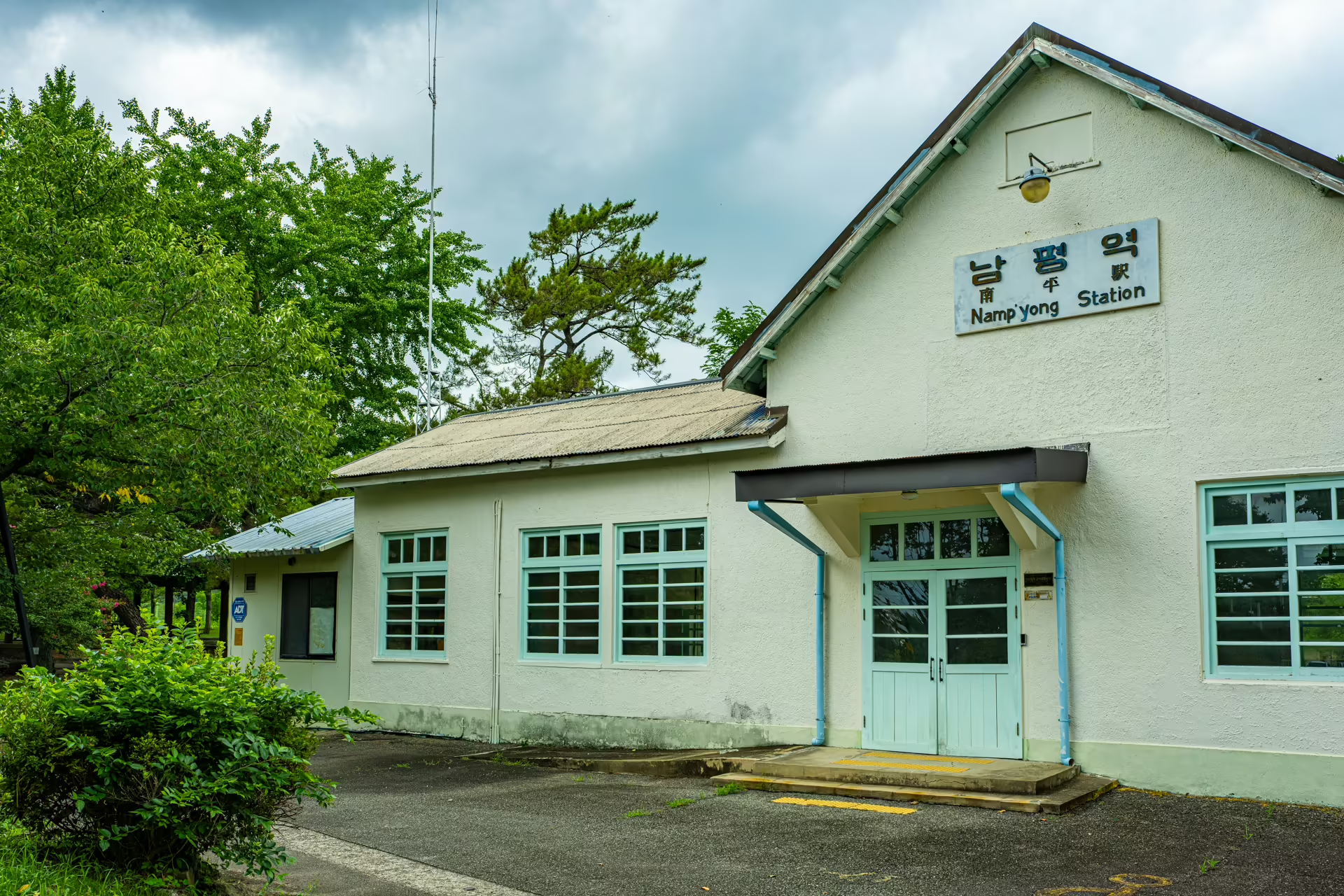
The line through Nampyeong opened on 25 December 1930. The building you see is not that old — the original burned in 1950, in the upheaval around the outbreak of the Korean War — and the present one was completed on 17 July 1956. It became a registered national heritage property in December 2006, and the designation is unusually generous: it covers not just the 90-square-meter building but the forecourt and 150 meters of track and platform on either side.
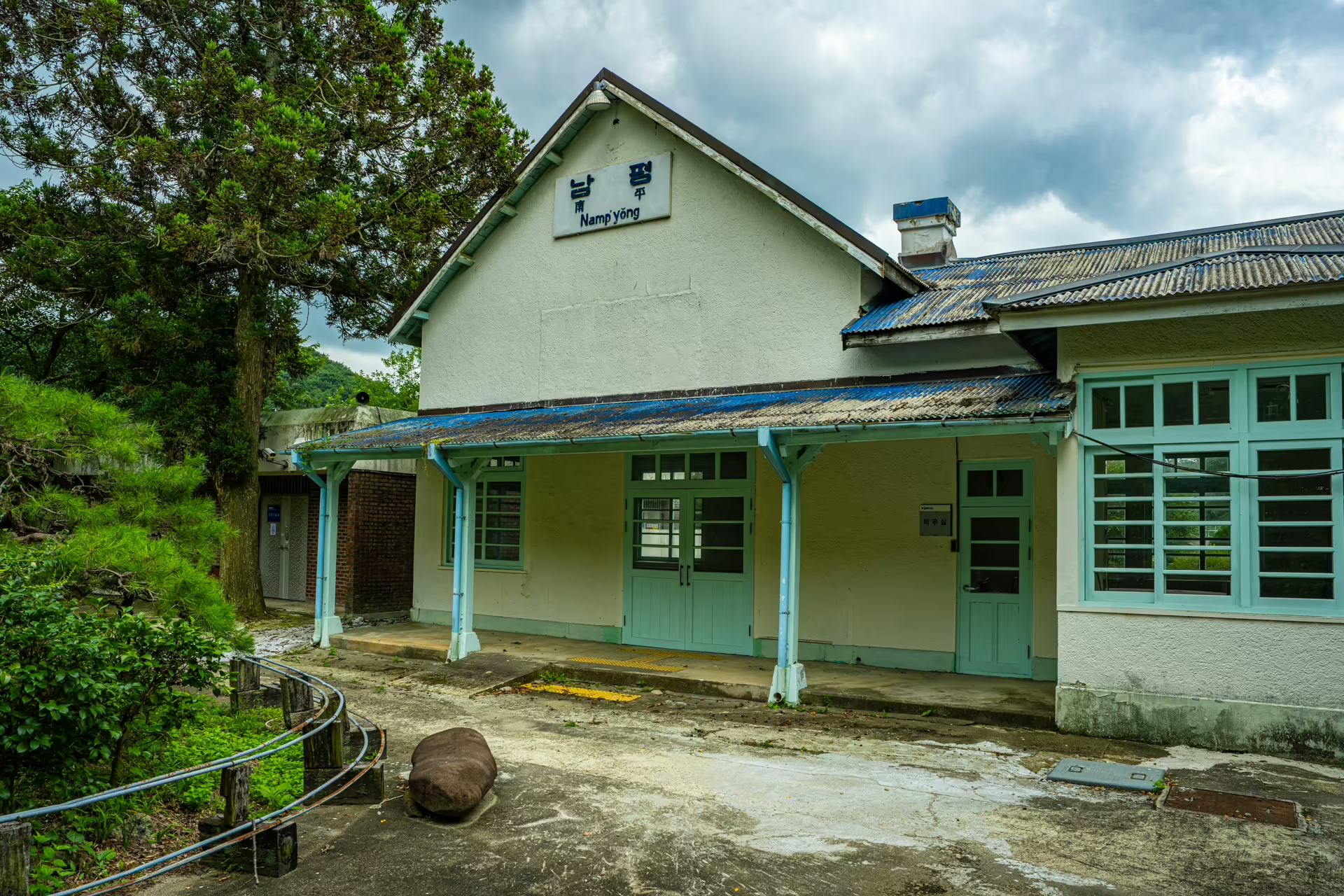
Architecturally it repays a slow walk around. The projecting ticket-office bay carries a hipped roof rather than the gable you’d expect; the waiting room has its own gable running across the building’s long axis; and a deep canopy runs the length of the front. The national rail agency’s own description of it is better than anything I’m going to write: a station wrapped in hundred-year-old cherry trees, with rose vines climbing the approach. A former stationmaster’s account adds squirrels wandering into the waiting room and woodpecker holes in the cherry trunk.
Now the correction that matters, because almost every write-up gets it wrong. Nampyeong is not an abandoned station. Passenger service ended on 5 October 2011 and, after a brief revival when a tourist train called here in 2013 and 2014, stopped for good on 1 June 2014. But the station was only downgraded to an unstaffed halt: the track is live, freight and through services use it, and it still functions as a passing point between Hyocheon and Hwasun. The rails inside the fence are off-limits for exactly that reason, and the fence is there for your benefit.
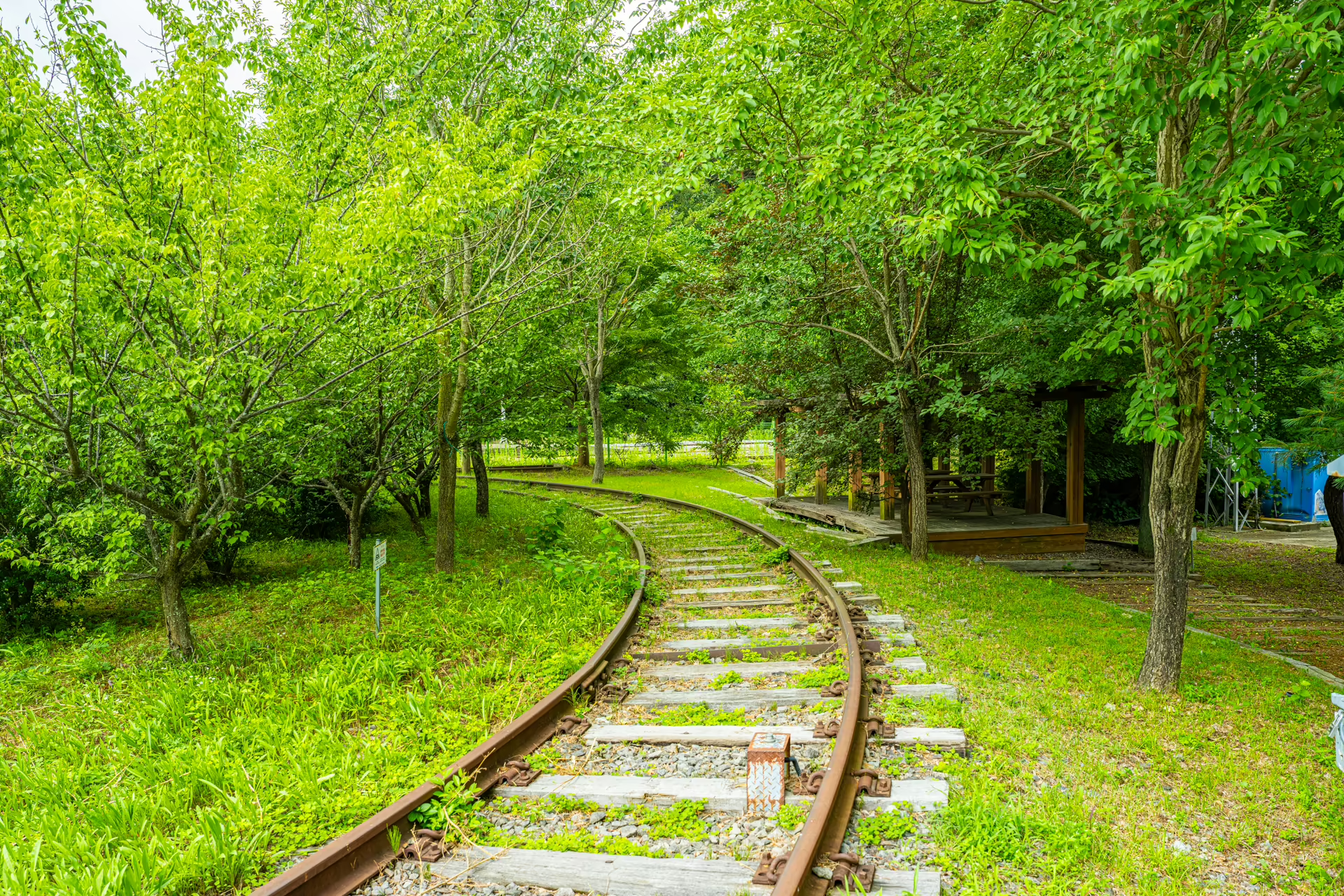
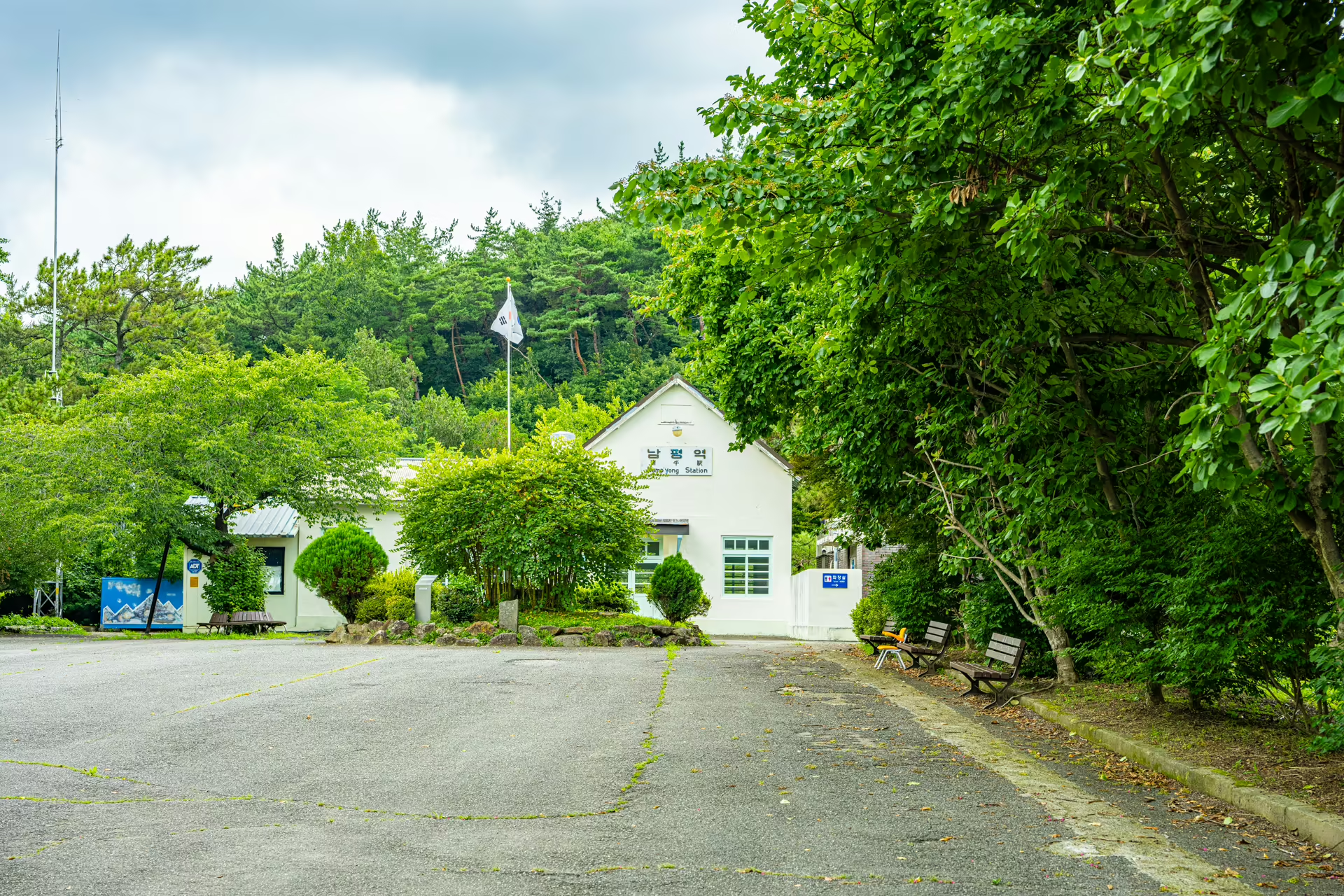
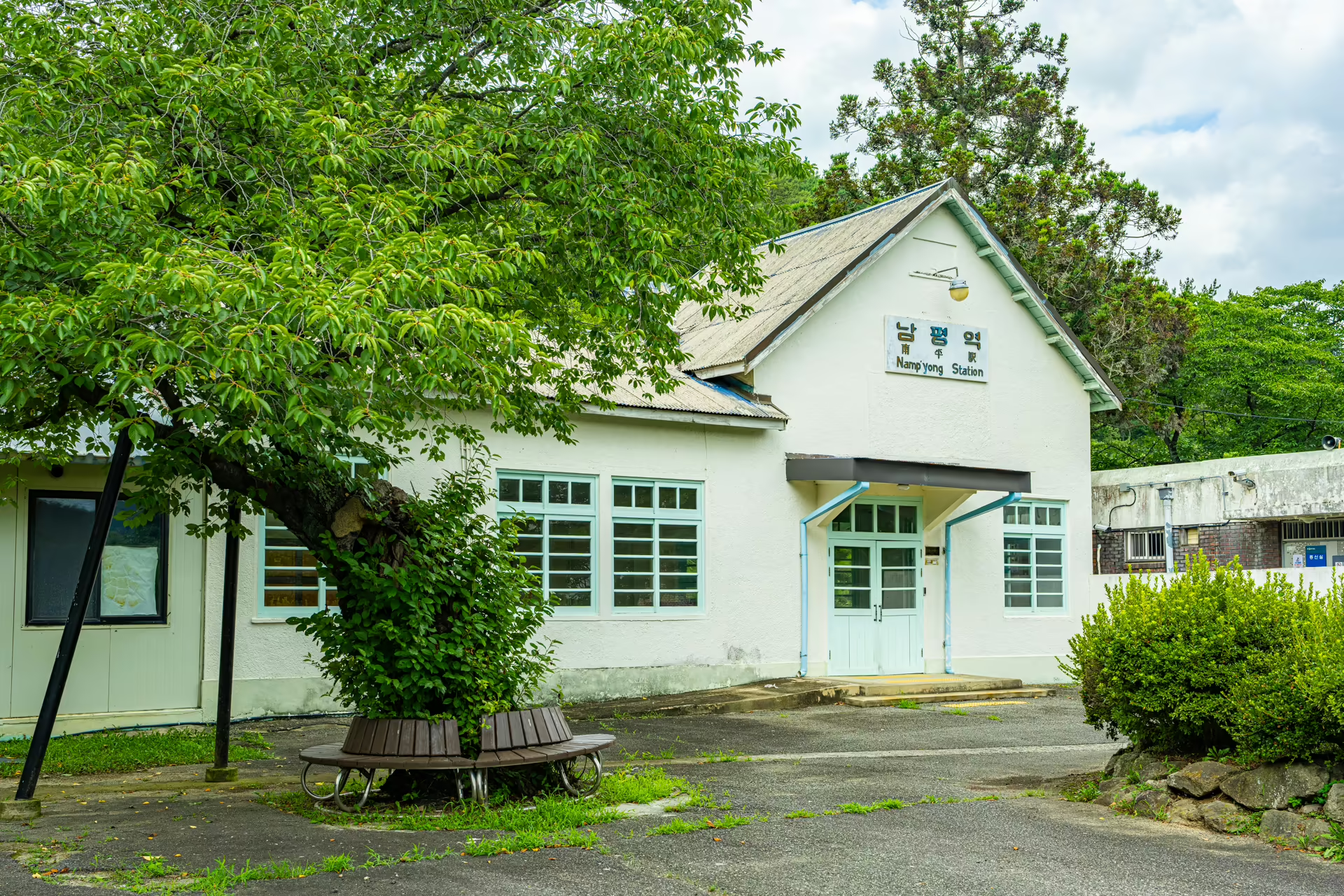
There’s also a deadline on this one. The Gyeongjeon Line between Suncheon and Gwangju Songjeong is being rebuilt on a new alignment through Naju’s Innovation City, and when that work completes — currently penciled in for the end of 2030 — Nampyeong Station is scheduled to be abolished. The building is heritage-listed and won’t be knocked down. But a listed station beside a working railway and a listed station beside a dead one are different objects, and the version that exists now has about four years left.
Two things nearby are worth the extra ten minutes: Nampyeong 507, a village primary school that opened in 1911, closed in 2007 and now runs as a café and gallery, and the ginkgo avenue on the road out, which is a November proposition rather than an April one. If disused rural buildings turned into something else is your kind of detour, the 1931 brewery still working on Ganghwa Island is the northern equivalent.
2. Yeongsanpo: The Station That Lost to a Straight Line
Yeongsanpo Station opened on 1 July 1913 with the Honam Line — the same day as the original Naju Station, 3.4 kilometers away. Two stations, one town, opened simultaneously, because the railway had to serve both the county seat and the river port.
For most of the twentieth century Yeongsanpo was the more important of the two. Every train stopped here, including the premium Saemaeul services, while old Naju Station took only what it was given. Then the Honam Line was straightened and double-tracked to carry high-speed trains, the new alignment ran between the two old stations, and both were replaced by a single new Naju Station at Songwol-dong.
The closing numbers are stark: 180,864 passengers in 2000, 99,090 in 2001, and zero in 2002. The station closed in July 2001 — you’ll find 2003 and 2004 in circulation, but the railway gazette notice is 2001 — and the building came down in March 2004.
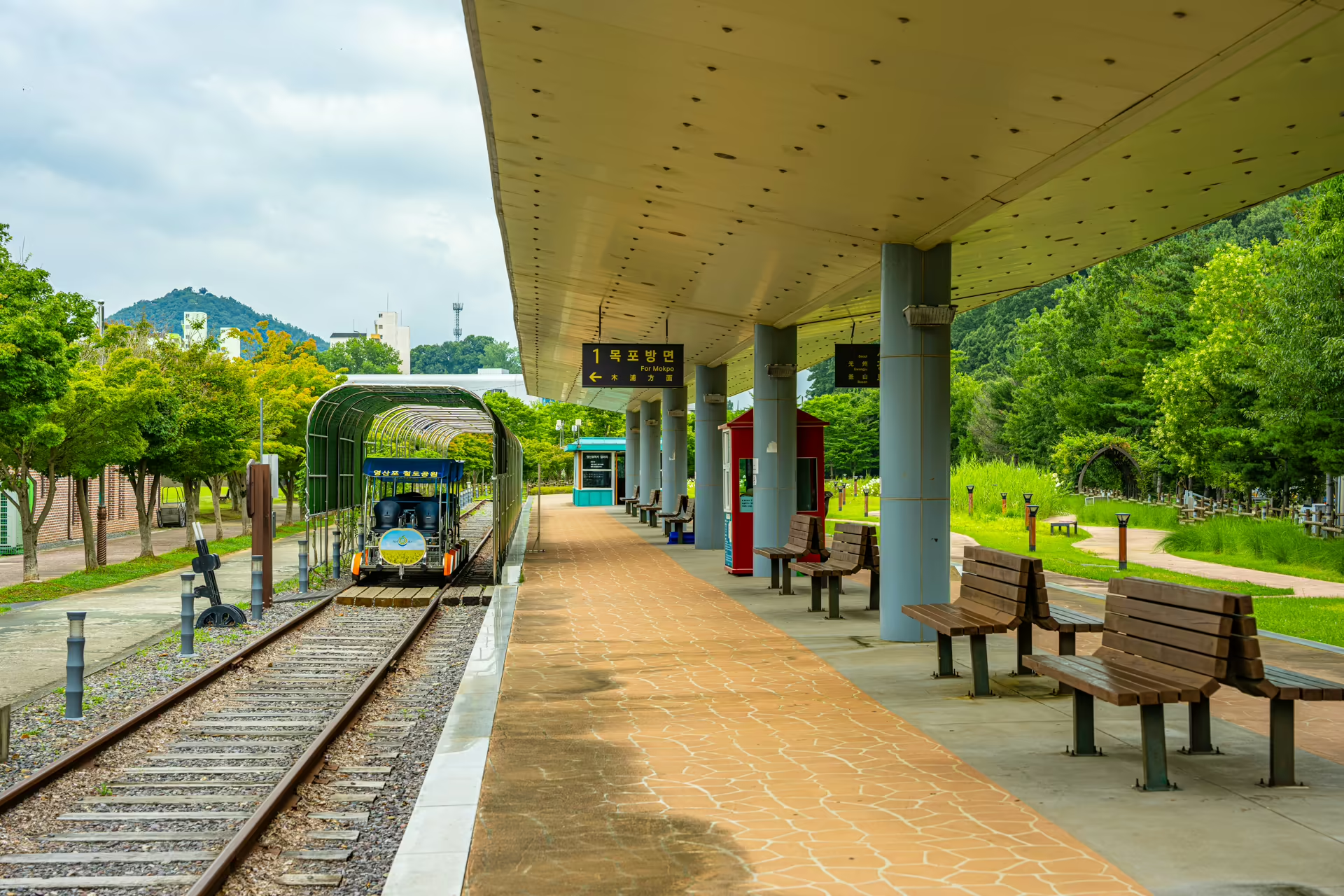
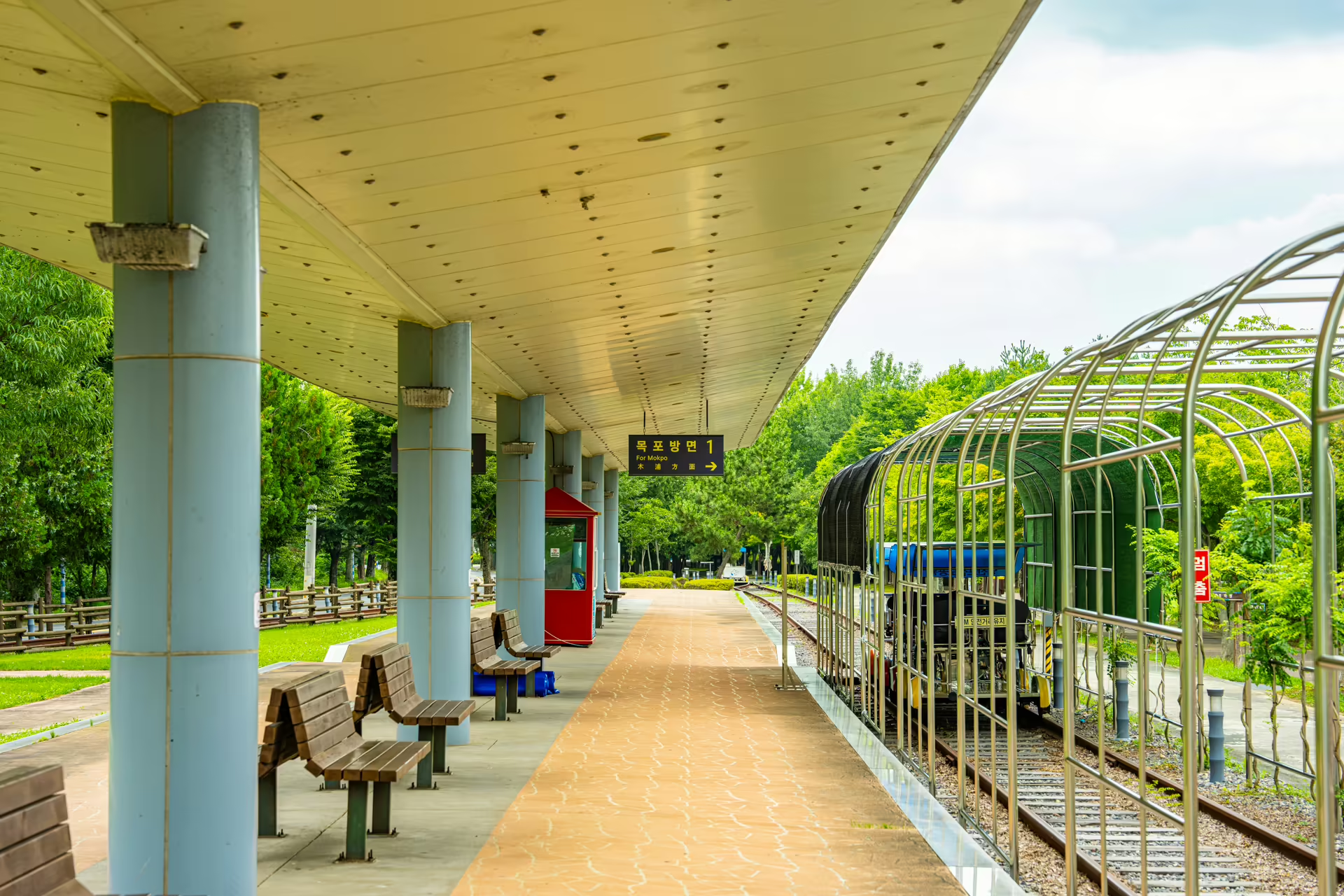
What stands there now is a reconstruction in the form of the 1984 station building, with a red-brick railway experience hall beside it. Inside are the small objects that make old railways legible: a typewriter, a single-line token, station uniforms, photographs of the town when the trains ran, and a recreated platform kiosk. There’s an indoor ride for small children that goes through a tunnel.
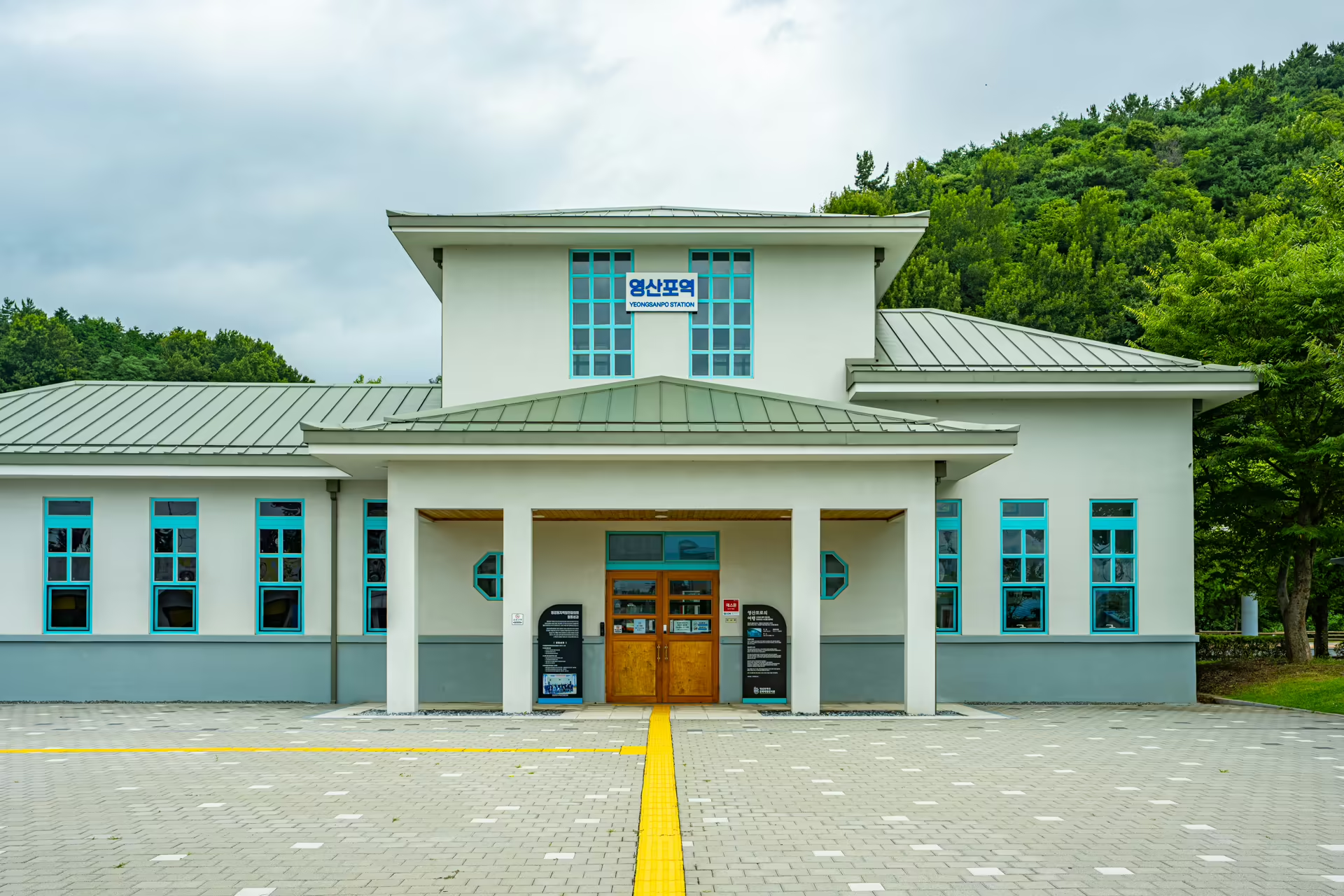
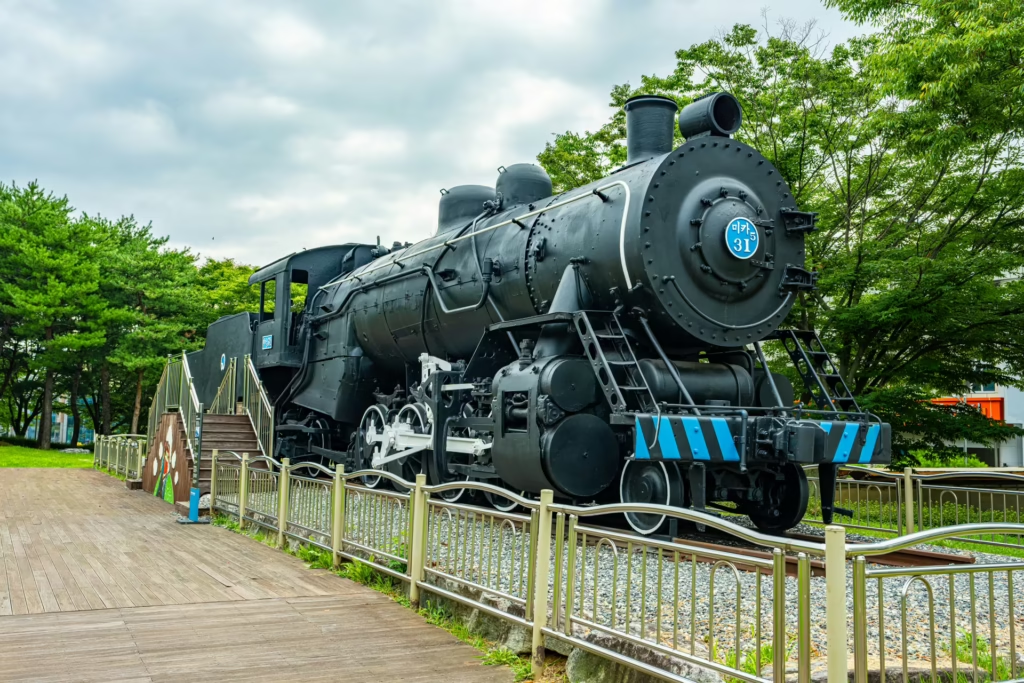
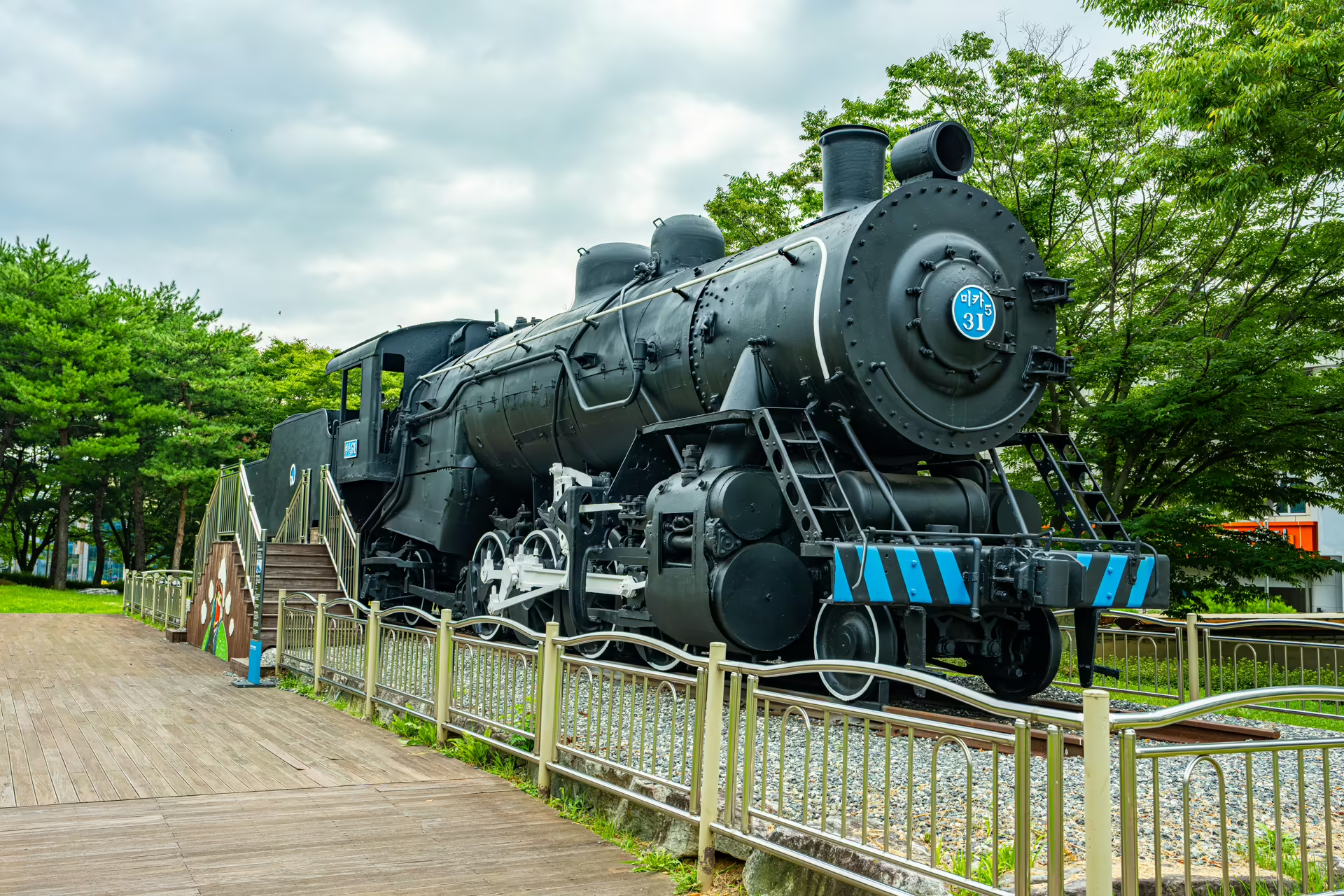
Outside, on a stub of the old track, sits the piece that earns the trip: a Mika-class steam locomotive, black and blue and enormous, which was the last engine to work this station. The track it stands on still carries a painted marker for the Mokpo direction, which is a small thing that undid me slightly.
3. The Rail Bikes and the Green Tunnel
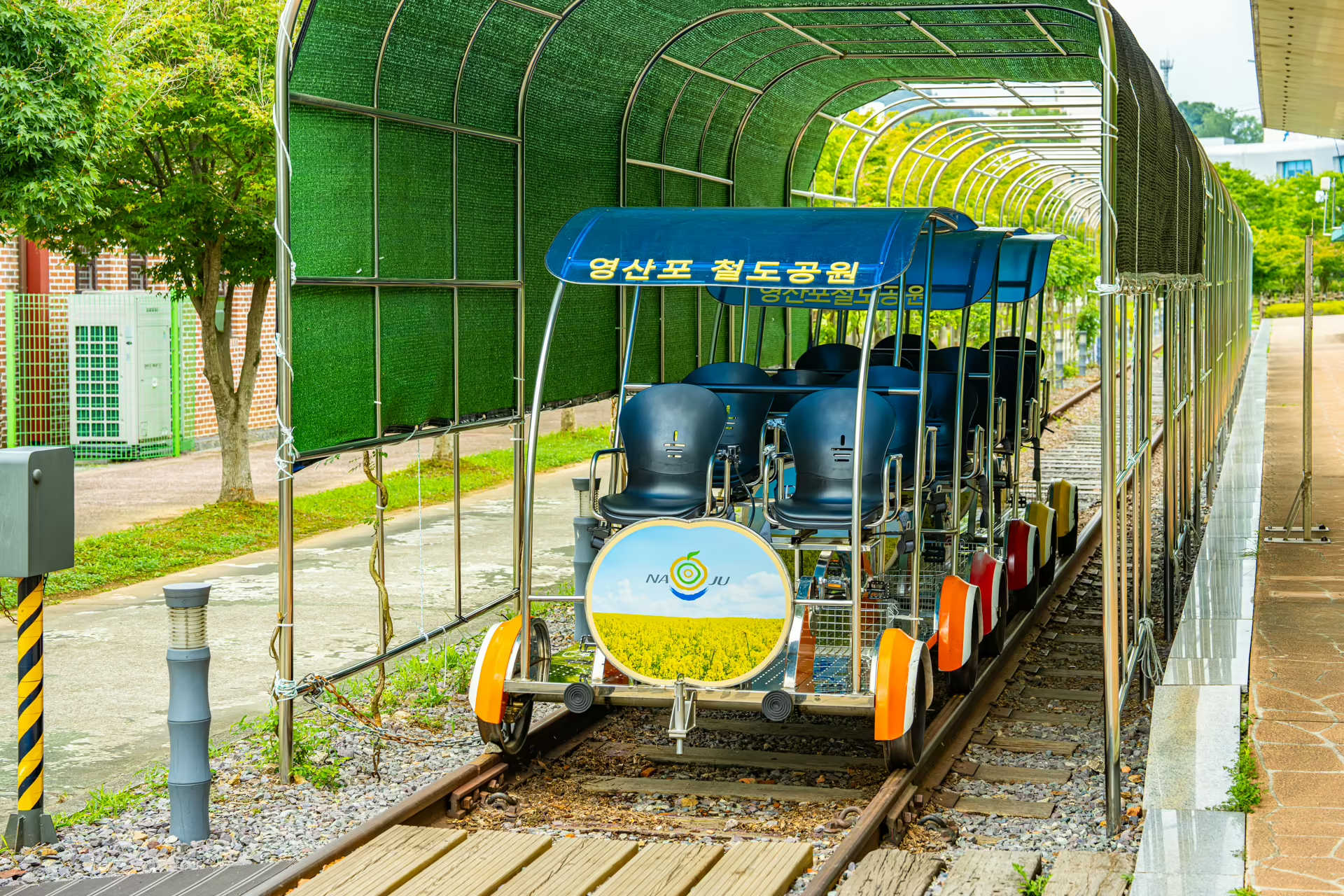
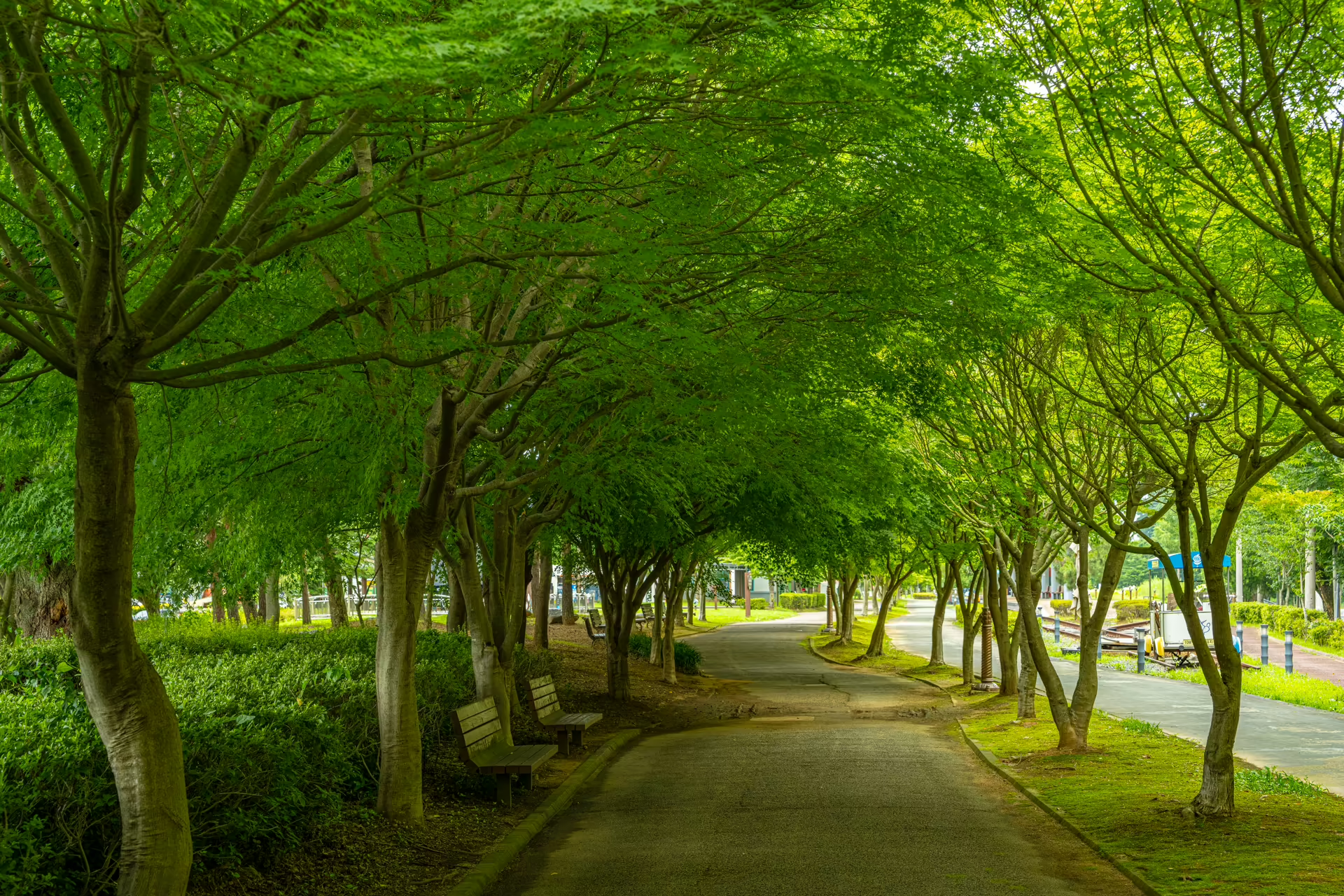
The park’s actual attraction, in the sense of the thing families come for, is a rail bike loop that runs out along the old trackbed and back under an arched green tunnel of trained vines. It’s a short circuit rather than a serious ride, and it’s aimed squarely at children.
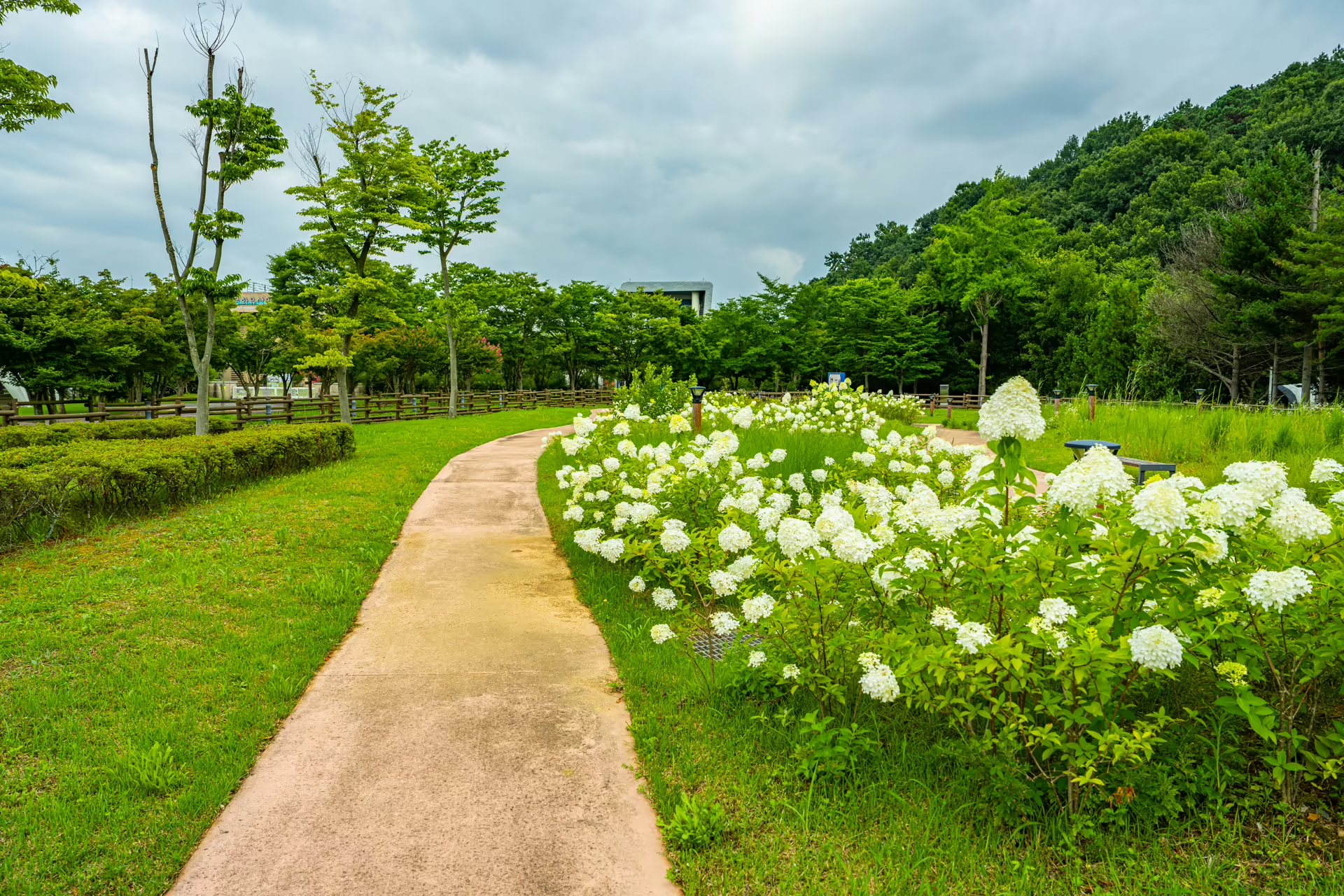
Operating details are worth pinning down because they trip people up: 10:00 to 17:00, closed Mondays, with local reporting describing three timed runs a day and suspension in rain, high wind or deep winter. The park itself is open all the time and free; the rail bike and the exhibition hall are the parts with a schedule. Exhibition hours are quoted differently across sources, so if that’s your reason for coming, ring the city tourism office first.
4. The Inland Lighthouse That Isn’t Quite a Lighthouse
Ten minutes from the park, on the riverbank, stands an eight-and-a-half-meter concrete tower that everybody in Naju calls the Yeongsanpo Lighthouse. Its official designation is drier and more accurate: the Yeongsanpo Self-Recording Water Gauge, a registered national heritage property since 2004, built in 1915.
It did two jobs. It measured the Yeongsan River’s water levels, which mattered because the river flooded most years. And somebody put a lamp on the roof, so boats coming upstream at night knew they had arrived. That makes it, by common agreement, the only lighthouse Korea ever built on an inland waterway — and the heritage citation notes you can still see the marks of the wooden formwork in the concrete.
The reason it existed at all is the reason Yeongsanpo existed. This was the head of navigation on a 48-kilometer waterway up from Mokpo, and it had been a shipping point since the Goryeo dynasty. In the Joseon period the granary here handled around 30,000 seok of tax grain a year for seventeen counties, moved by a fleet of 53 ships. Even the town’s name comes off the water: refugees from an island near Heuksando resettled here after pirate raids, and brought the name Yeongsan with them.
All of that ended around 1980, when the Yeongsan River estuary barrage cut off the tidal flow and the port stopped being a port. The lighthouse is what’s left of it, standing on a bank where a tourist sailing boat now runs for visitors.
5. The Skate Street
And then there’s the food, which is the most famous thing in Yeongsanpo and the most divisive thing in Korean cuisine.
Hongeo — fermented skate — is eaten across the southwest, but Yeongsanpo is where it comes from, and the reason is the boats. Skate caught in the waters off Heuksando took days, sometimes the better part of a fortnight, to reach the head of navigation here. There was no refrigeration. It fermented on the way, and somebody discovered that the result was better than the alternative. The practice is documented as far back as a 1530 geographical treatise, and appears again in Jeong Yak-jeon’s early-nineteenth-century catalog of marine life.
Around thirty specialist restaurants operate on the street today, the city markets it as a six-hundred-year tradition, and the classic order is hongeo samhap — aged skate, boiled pork belly and well-fermented kimchi, eaten together in one mouthful. Expect somewhere in the region of ₩25,000 to ₩30,000 a head, with whole-fish courses running far higher.
I’ll be straight with you: the ammonia hits the back of your nose before the fish reaches your tongue, and it is not a dish that eases you in. If you want to look at the street rather than eat on it, the Yeongsanpo History Gallery is about thirty meters away — a former colonial-era bank building the city bought in 2012 and opened as a free museum in 2015, closed Mondays.
6. The Third Station, and Why It Matters More Than Both
One more, because you’ll be within five kilometers of it and it’s the most significant railway building in the province.
The old Naju Station in Jungnim-dong — not the current KTX station, which is a twenty-first-century replacement three kilometers away — opened on the same day as Yeongsanpo in 1913 and is now provincially designated. On 30 October 1929, an altercation on the platform here — Japanese students harassing Korean schoolgirls, and Korean students intervening — set off what became the Gwangju Student Independence Movement: a nationwide protest that ultimately involved 154 schools and some 54,000 students. The building now houses a memorial hall, and the streets around it have been redeveloped as a modern-history quarter.
Three stations built by the same colonial railway administration, two of them opened on the same day in 1913 and the third seventeen years later. One became a national symbol of resistance, one became a park, and one is still standing beside a working line with a date on the horizon. That’s a better day out than “two old stations” suggests.
Who This Is Actually For
Railway people: obviously. A heritage-listed 1956 country station on a live freight line is not a common object anywhere in the world, and you have roughly four years to see it in that condition.
Anyone already going to Naju for the beef soup: Yeongsanpo Railway Park is four minutes from the station and ten from the gomtang street. There is no reason not to.
Families: Yeongsanpo, for the rail bikes and the indoor kids’ train — and check that it isn’t a Monday.
Photographers: Nampyeong in the first half of April for the cherry, or November for the ginkgo road nearby. The station itself photographs well in flat light because the building is white.
Adventurous eaters: the skate street, once, with someone who has done it before. If you’d rather ease into southwestern Korean food, a tea room in Gangjin is an hour south and considerably gentler on the sinuses.
Anyone without a car: Yeongsanpo is a four-minute taxi ride from the KTX station and needs no planning at all. Nampyeong needs a cab in both directions.
My last frame at Nampyeong was of the empty forecourt with the cherry trees over it, taken about a minute after a container train went through without slowing down. Nobody was there. Nobody has needed to be there for twelve years. The trains keep coming anyway, which is either the saddest thing about the place or the best.
Practical Manual
| Item | Detail |
|---|---|
| Former Nampyeong Station | 313 Dongchon-ro, Nampyeong-eup, Naju-si, Jeonnam-Gwangju (전남광주통합특별시 나주시 남평읍 동촌로 313). Registered national heritage since 2006. Free, open ground, parking on site. Do not enter the track area — the line is in use |
| Yeongsanpo Railway Park | 174-1 Samyeong-dong, Naju-si (전남광주통합특별시 나주시 삼영동 174-1). Free, open year-round, free parking |
| Rail bike | 10:00–17:00, closed Mondays. Suspended in rain, high wind and deep winter |
| Yeongsanpo Water Gauge | Yeongsan-dong, Naju-si. Registered national heritage since 2004, built 1915. Korea’s only inland lighthouse. Free, outdoors |
| Skate street | Around 30 restaurants near Yeongsan-gil. Hongeo samhap roughly ₩25,000–30,000 per person; whole-fish courses considerably more |
| History Gallery | 17 Yeongsan 3-gil. Free, closed Mondays. Hours are quoted inconsistently — call 061-331-1755 |
| Old Naju Station | 20 Jungnim-gil. Student Independence Movement Memorial Hall, provincially designated since 2000 |
| Distances | Naju Station to Yeongsanpo 2.0 km (4 min). Naju Station to Nampyeong 16.9 km (25 min, ~₩21,100 by taxi). Nampyeong to Yeongsanpo 18.7 km (27 min) |
| Getting there | Yongsan to Naju, ~22 trains a day, 05:48–21:18. KTX just over 2 hours; slower services up to 4 |
| Best months | Early April for the cherry at Nampyeong; May for the Yeongsanpo skate and beef festival; November for the ginkgo road and the metasequoia avenue at the provincial forest institute |
| Inquiries | Naju City tourism 061-339-8725 / heritage division 061-339-8615 |
Hours and prices are as published at the time of reporting. The rail bike schedule and the exhibition hall hours are the two most likely to have moved — call the city tourism office before you build a day around either.
Navigation Tip: Use Naver Map with the Korean addresses above — Google Maps can’t route Korean roads properly — and keep Papago handy for the exhibition captions, which are Korean-only.