
Joyang Bangjik: What Happens When a Mill Town Loses Its Mills
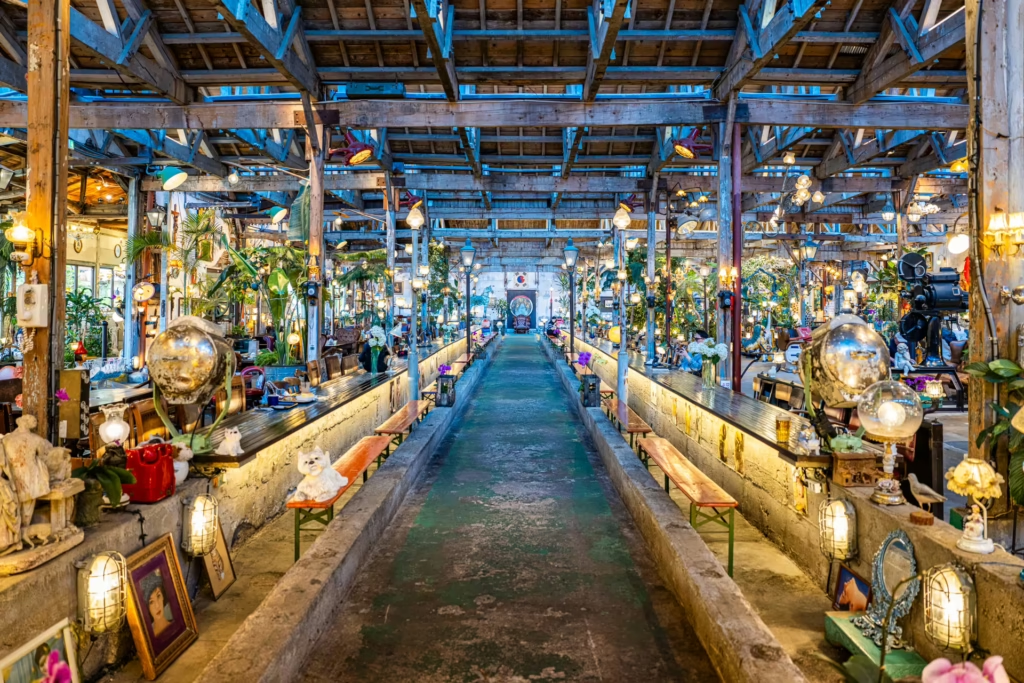
You come in off a narrow lane of old houses, pay for a coffee, and walk into a room the size of an aircraft hangar with water running down the middle of it.
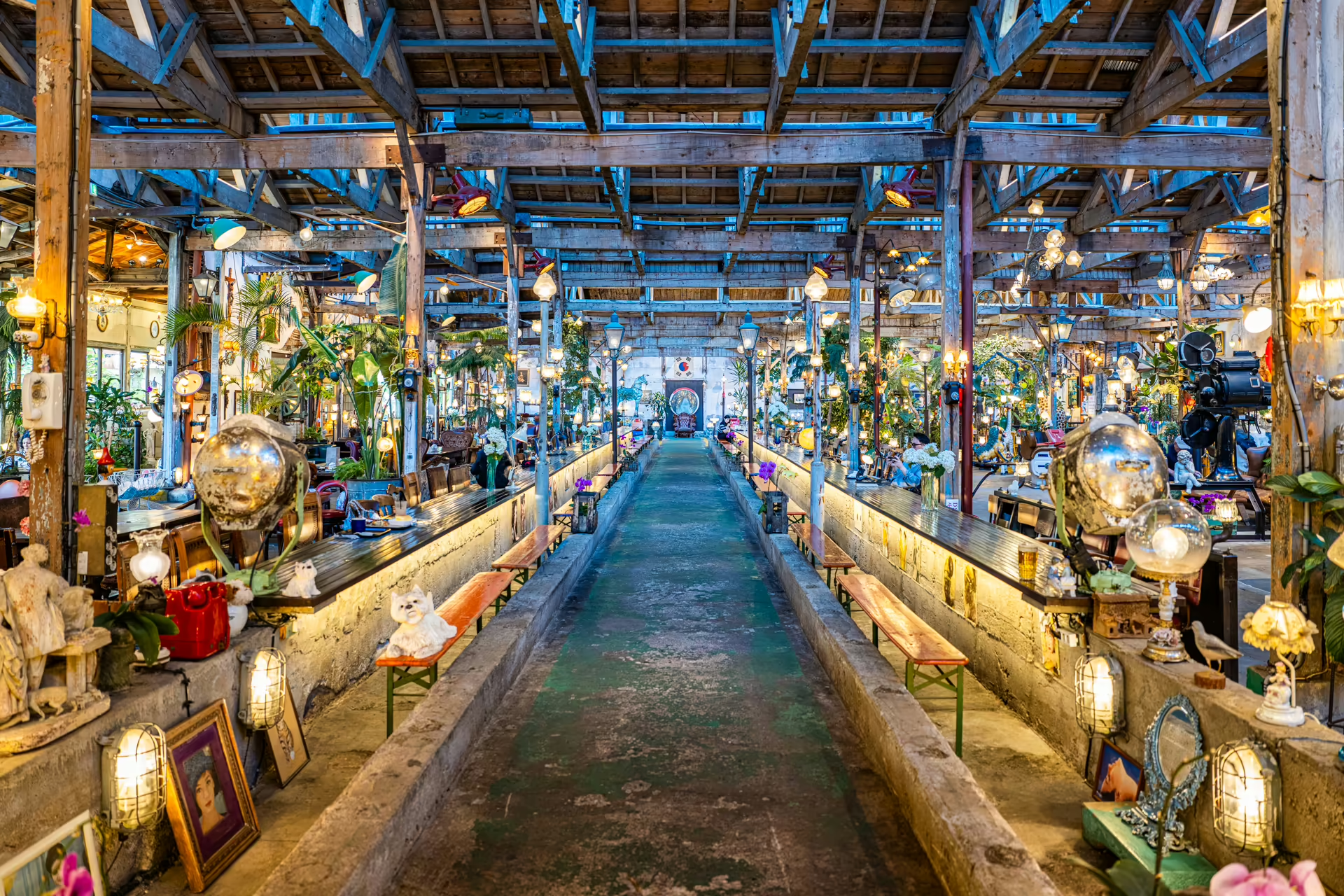
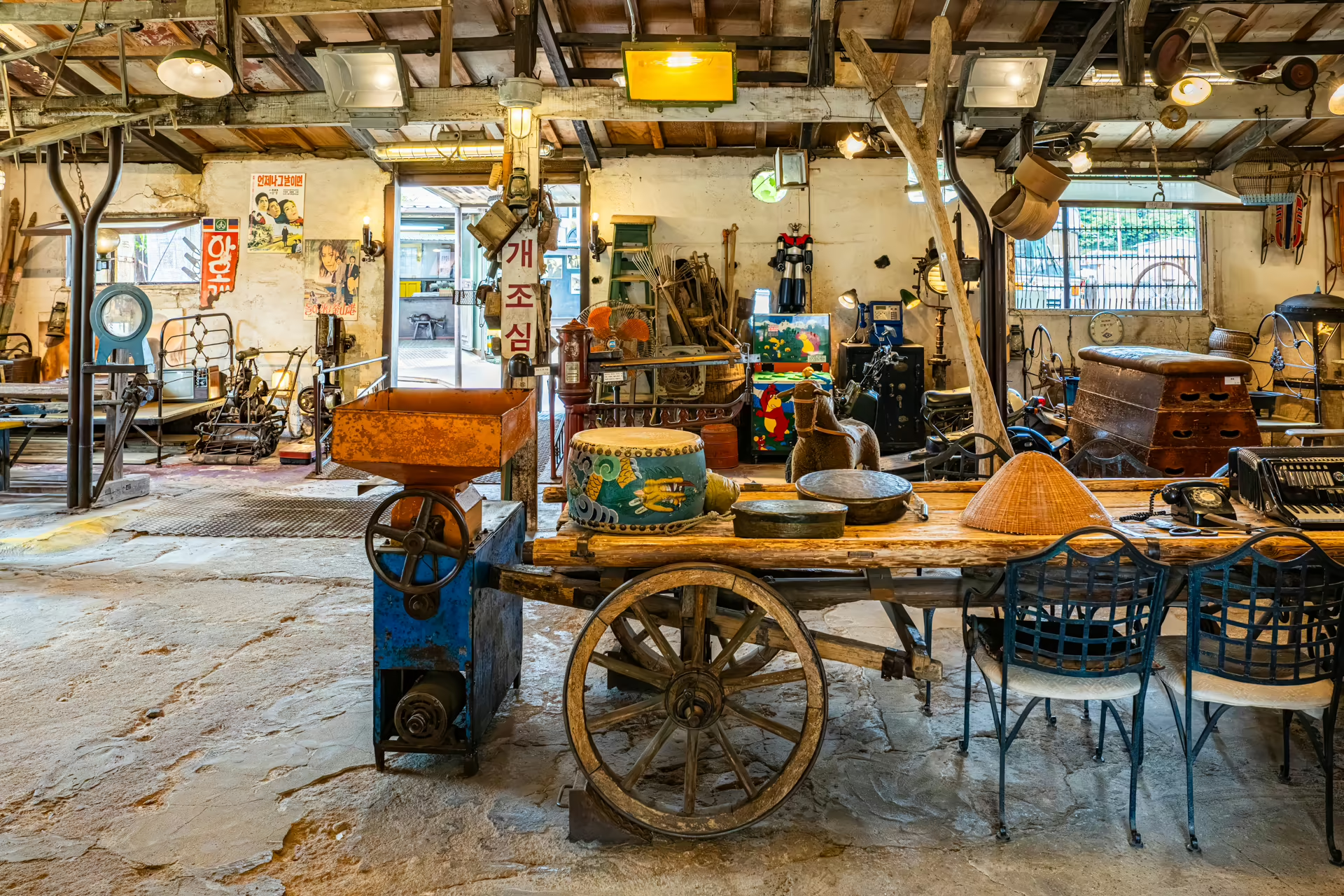
The long channel table at Joyang Bangjik stands exactly where the looms stood. That is not a design conceit imposed on the building; it is the building’s own floor plan, kept. Above it the original roof trusses are still bolted together, and someone has knocked windows into every facet of the pitched roof so the whole hall is lit from above without a single fixture doing the work. Around the edges, several thousand collected objects — lamps, mirrors, radios, a carousel horse, a Coca-Cola cabinet, an English door with nowhere to go — are arranged with a logic that shouldn’t hold together and does.
It is the most photographed cafe on Ganghwa Island, and it is also the largest surviving building of an industry that once employed four thousand people within walking distance of this door.
Orientation: Finding Joyang Bangjik
Joyang Bangjik is in Ganghwa town itself, in the old Sinmun-ri quarter, about 1.5 kilometers from the bus terminal — walkable in twenty minutes, or a very short taxi. That makes it the one major stop on this island you can reach without a car, which matters, because most of Ganghwa’s good things are scattered across farmland.
From Seoul, bus 3000 runs from Sinchon to Ganghwa terminal for about ₩3,000, every fifteen to thirty minutes, taking roughly two hours twenty. If you’re driving, the cafe has its own small free parking lot that fills by late morning at weekends; the Sinmun-ri public parking lot across the road is a minute’s walk and free on Sundays and holidays.
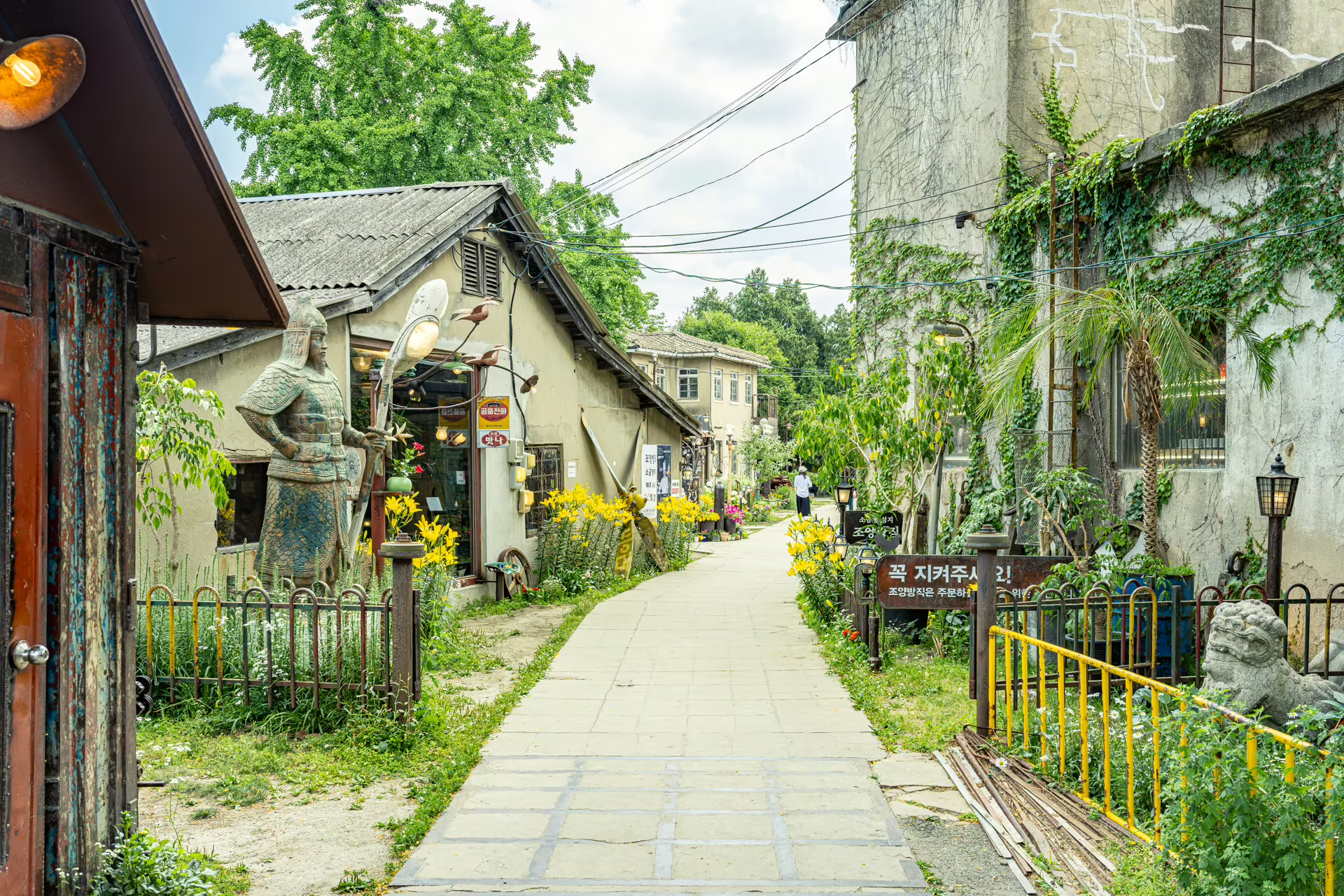
The approach is half the pleasure. You walk in past single-story houses with vines over the walls, and the mill announces itself only when the lane opens out.
1. The Mill: 1933 to 1958
Joyang Bangjik was founded in 1933 by two brothers from a landowning Ganghwa family, Hong Jae-muk and Hong Jae-yong, using Korean capital during the Japanese colonial period — a detail that matters locally, because most industrial ventures of that decade did not. Four years later, in 1937, they put up the mill you are standing in: some 700 pyeong of two-story building in Sinmun-ri, with around fifty looms weaving and dyeing rayon and hemp cloth.
Here is the fact that tells you what this meant to the island: Ganghwa got mains electricity and telephone lines because the mill needed them. The factory arrived first and the infrastructure followed it.
It did not last. Ownership changed hands in 1942, and the business closed in 1958 — the pioneer being, as often happens, the first to fail. The building went on to serve as a pickled-radish factory and then a salted-seafood works before being abandoned altogether. By the 2010s it was a ruin with trees coming through it, well enough known as a ruin that a television drama shot here in 2013.
2. The Industry Around It
Joyang was the opening act, not the whole show, and the scale of what followed is the thing most visitors leave without knowing.
After 1933 came Pyeonghwa Textiles, Simdo Textiles, Ihwa Textiles and dozens more. Simdo alone employed around 1,200 people. By the 1970s there were something like sixty textile factories on Ganghwa, with more than four thousand workers in Ganghwa town alone — on an island whose entire population today is under seventy thousand. Korean accounts of the period put Ganghwa alongside Daegu, then the center of the national textile industry.
Then synthetic fiber happened. Production consolidated around Daegu through the mid-to-late 1970s, and Ganghwa’s mills closed one after another. What survives is about ten small workshops still weaving sochang — a plain 23-count cotton gauze that Korean households used for nappies before disposables, and now buy as tea towels and swaddling cloth out of nostalgia.
If that history interests you, the Sochang Experience Center is a ten-minute walk from here in a 1956 mill building, and it is free. There’s also a surviving factory chimney from Simdo Textiles standing in a public park in the middle of town. Ganghwa has not made much of this heritage — but it is all within a square kilometer, and Joyang Bangjik is the way in.
3. The 2018 Reopening, and the Man Who Collected All This
The site was bought in 2017 by Lee Yong-cheol, who ran a vintage shop in Seoul, and reopened about a year later as a cafe. He also gave it a second name — Sinmun-ri Art Museum — which is either a joke or a statement of intent, and after an hour inside I lean toward the second.
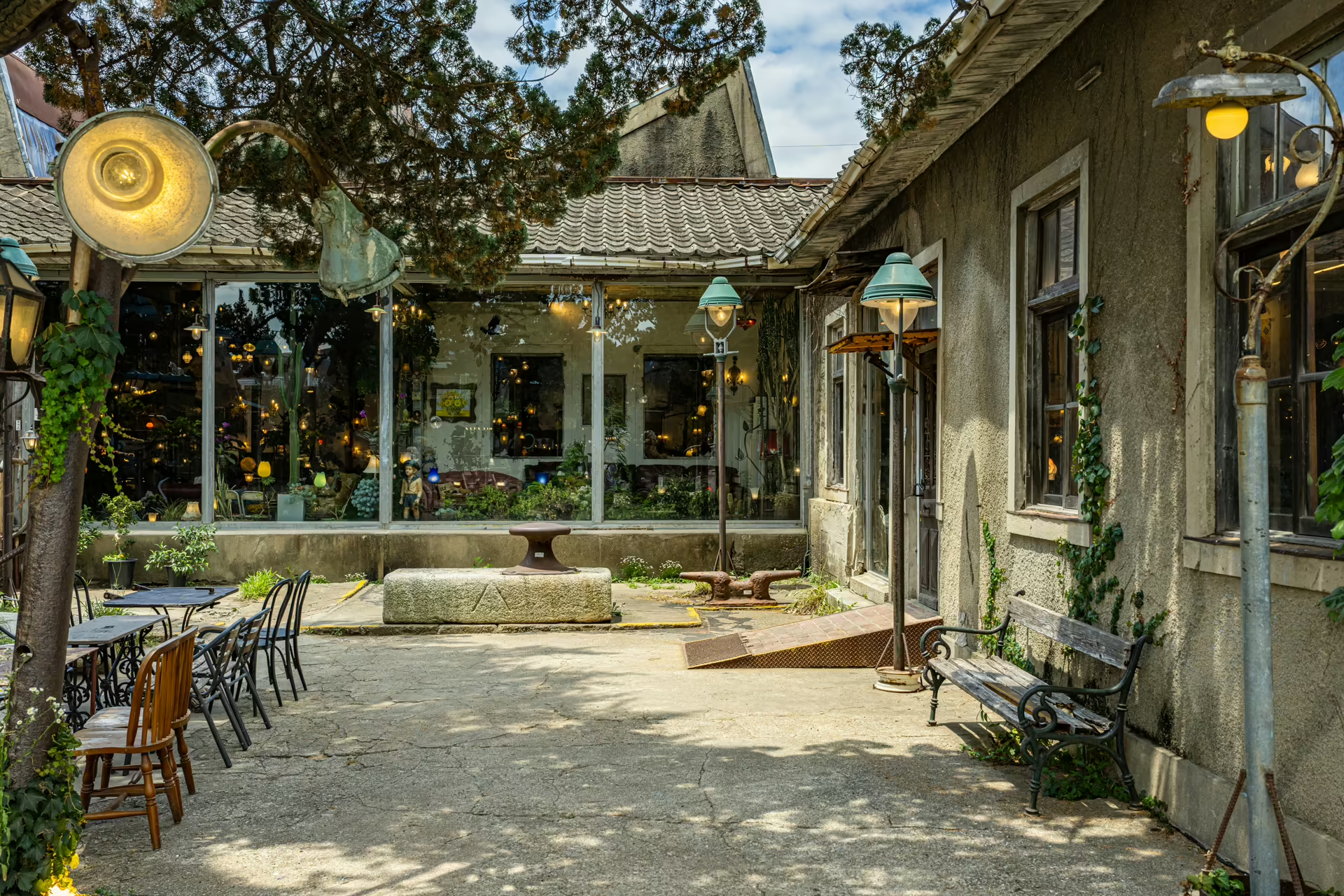
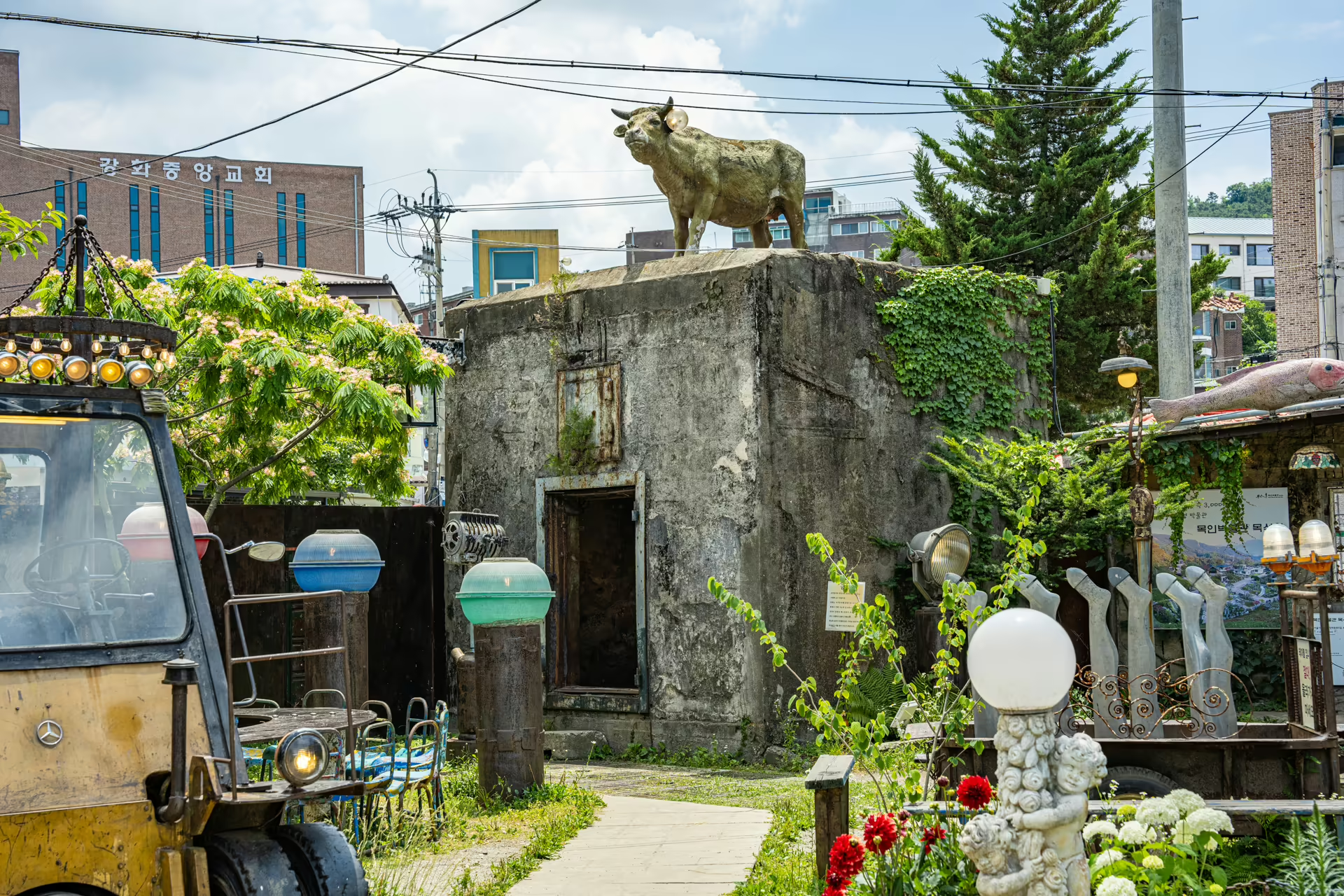
The restoration decision that makes the place work is a negative one: the shell was not tidied up. Around 990 square meters of factory floor and structure were kept as found, and everything added is movable. Concrete stayed raw, render stayed patchy, and the collection was moved in around it.
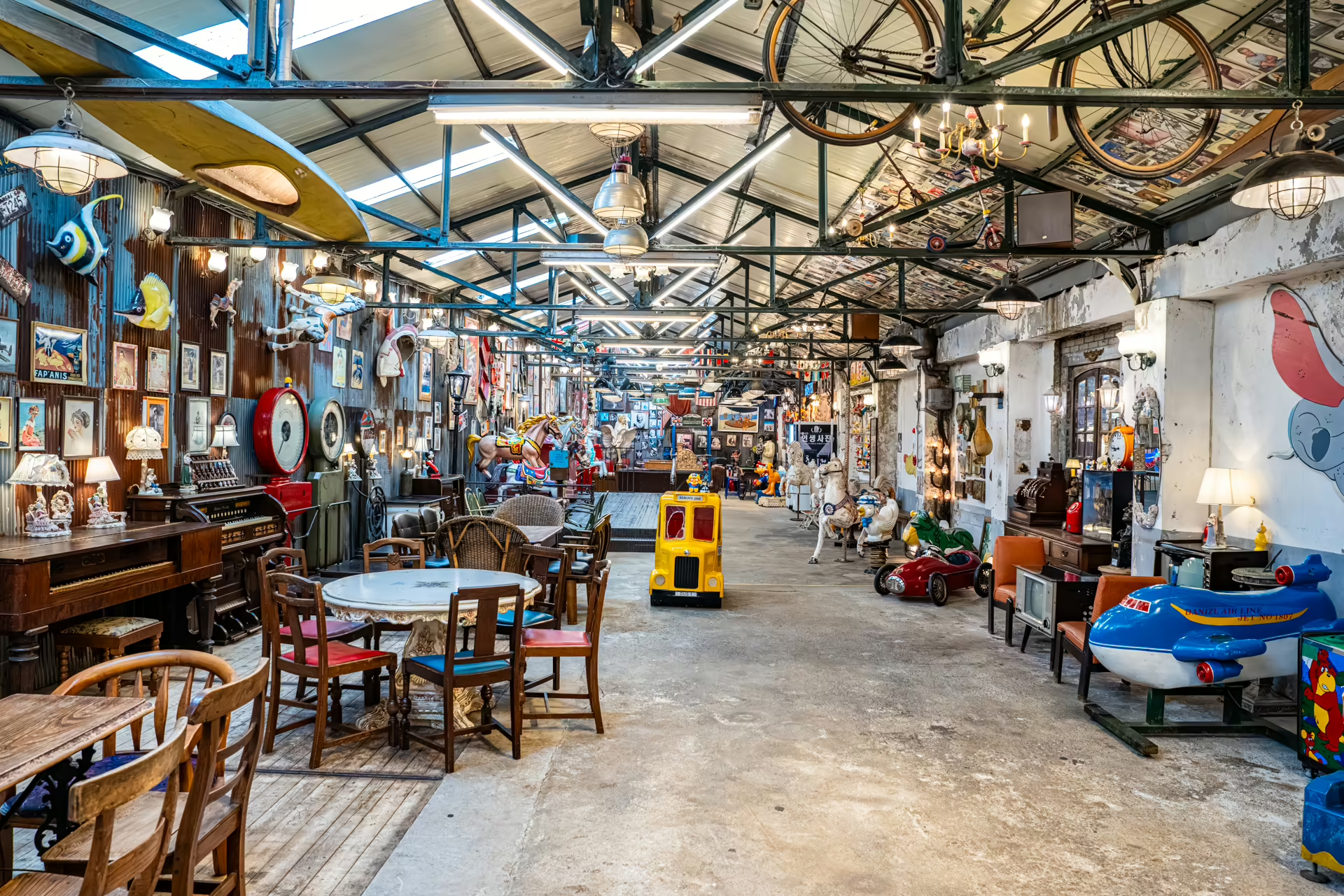
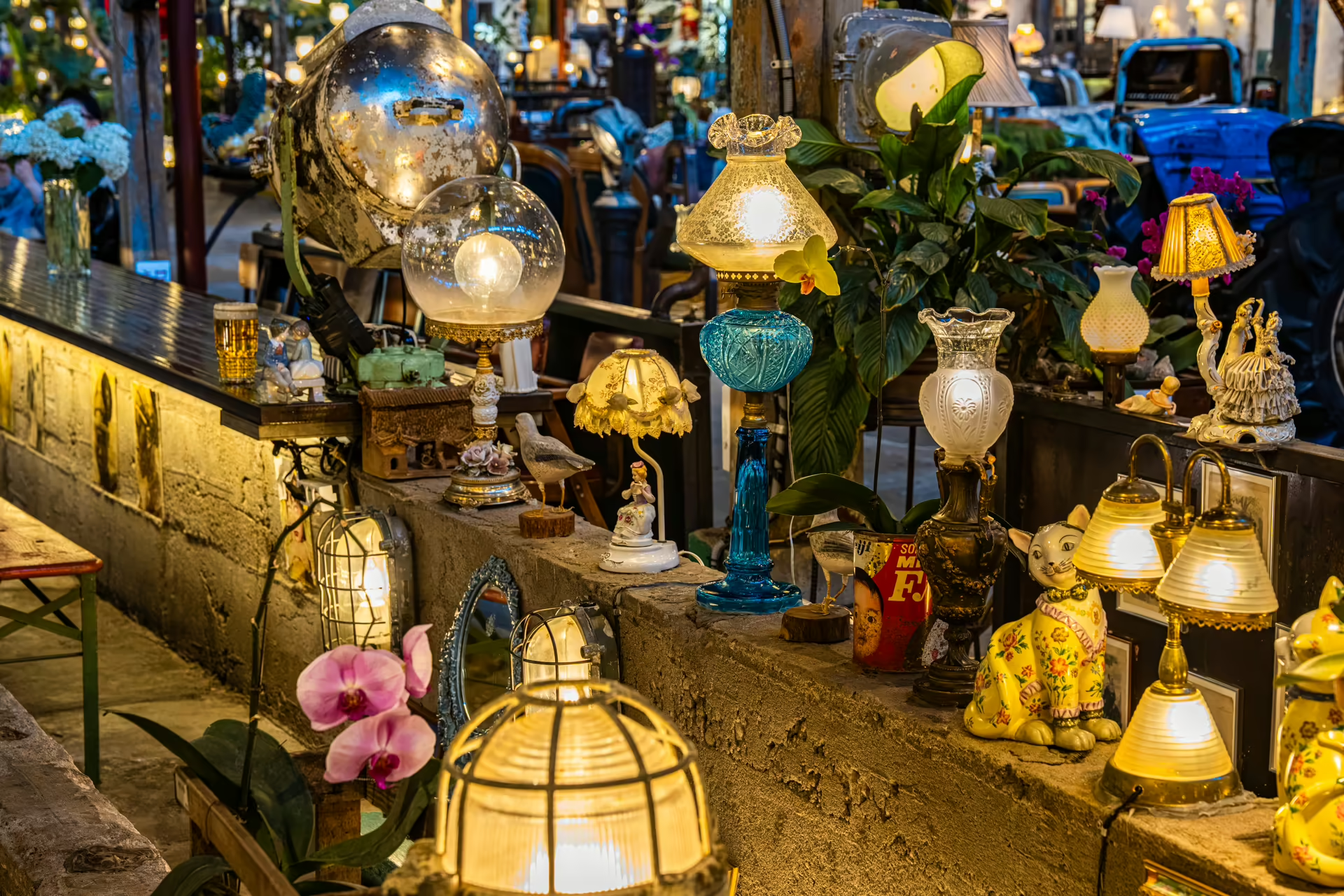
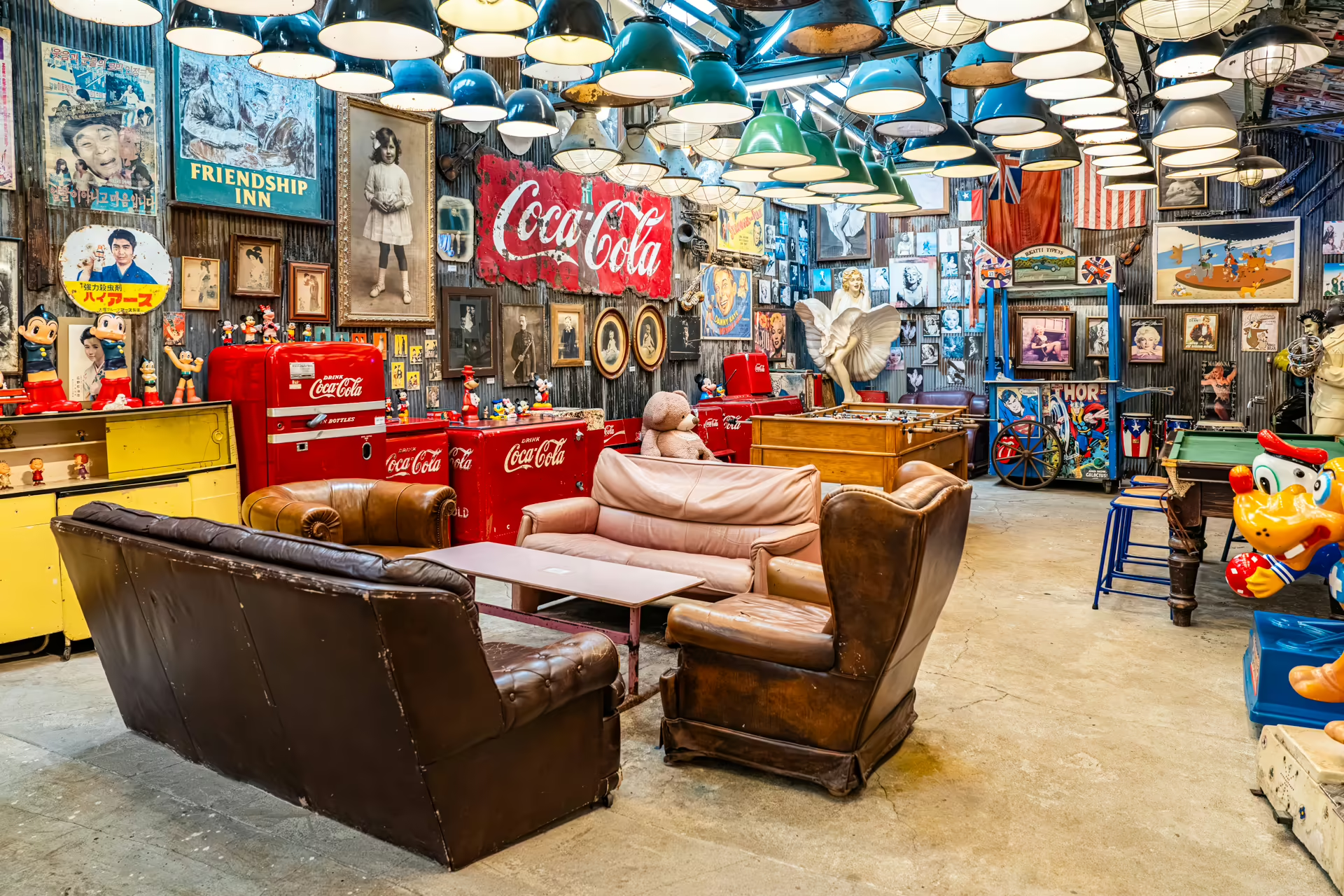
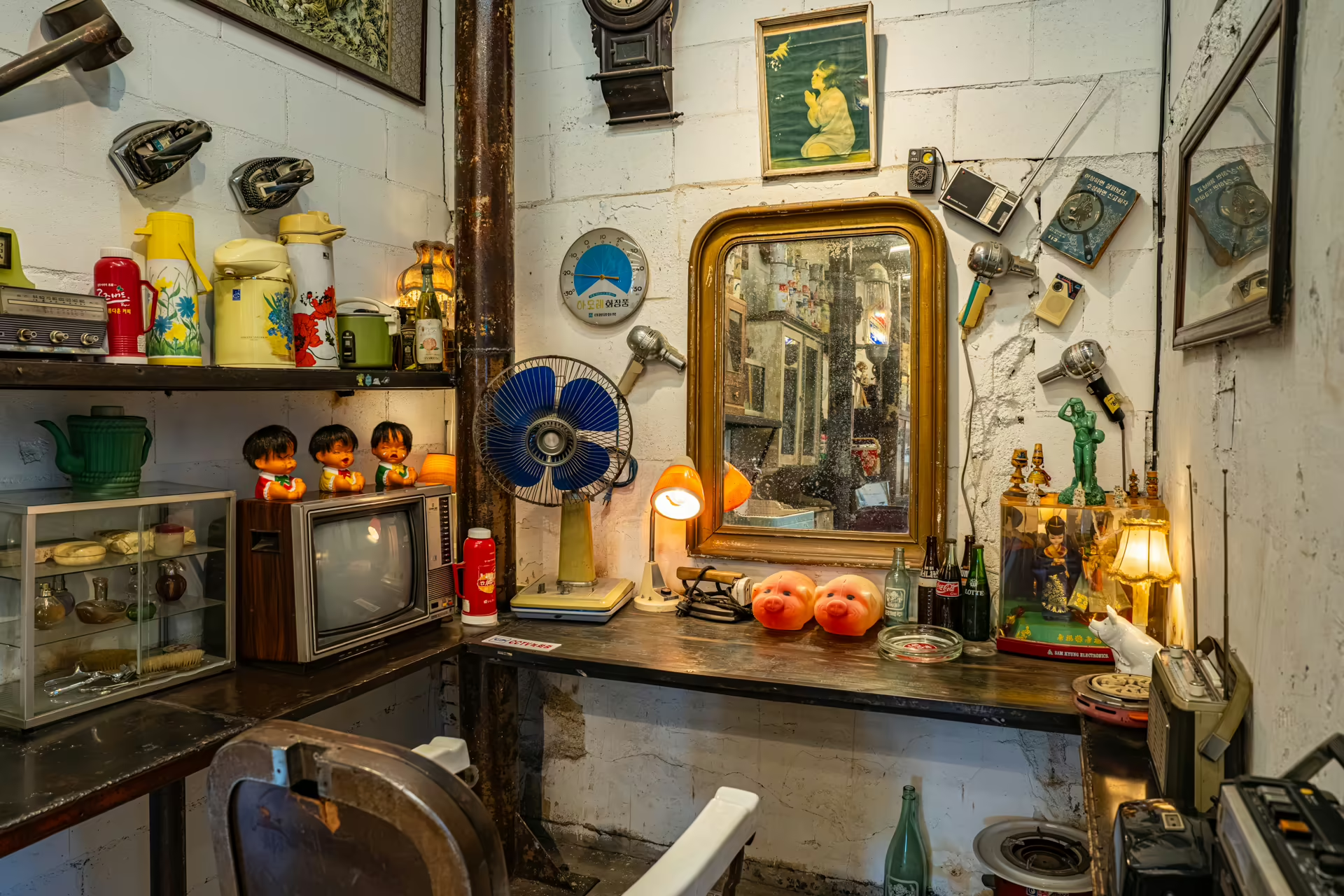
And what a collection. Brass lamps and glass globes on scaffold shelving. A wall of mirrors, fans and valve radios. A shed’s worth of agricultural iron in the yard. A leather three-piece suite under a Coca-Cola sign. Furniture from mid-century Europe next to a Korean handcart next to something that appears to have come off a colonial verandah in East Africa. Nothing matches, nothing is hidden, and after a while you stop asking why a given object is where it is — which is precisely the effect a good junk shop has, scaled up by a factor of fifty.
4. What It Costs, and Where to Sit
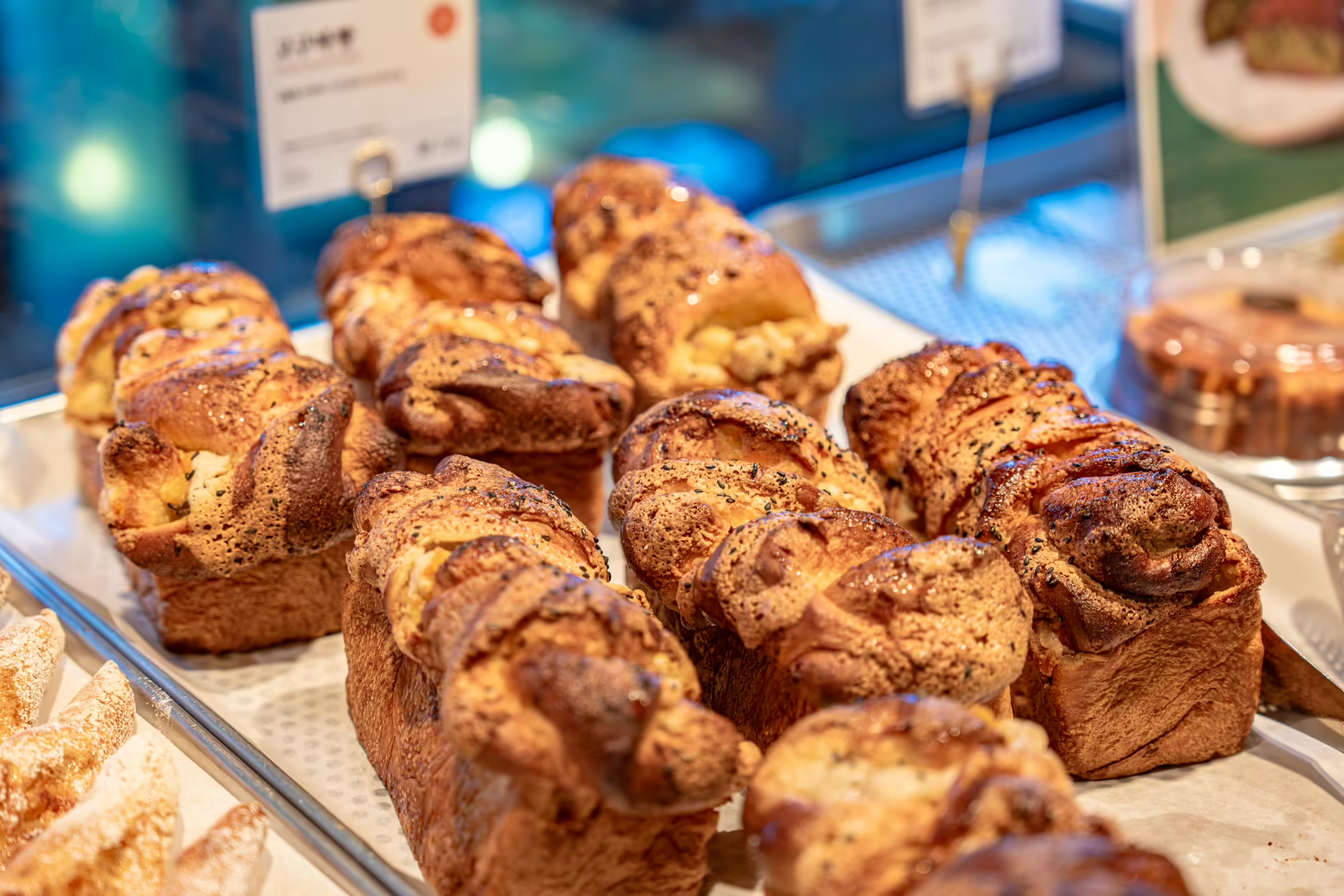
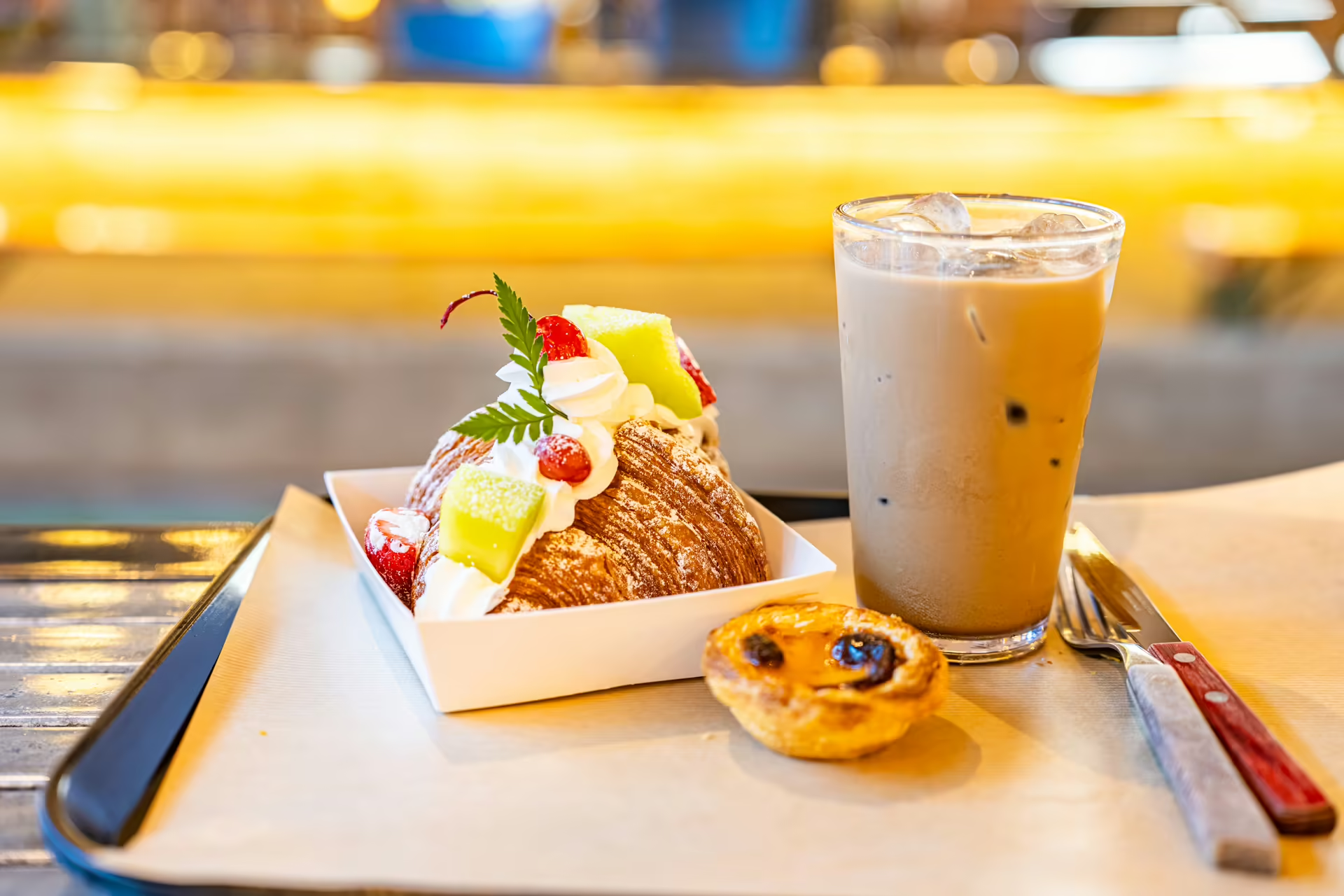
An Americano runs ₩7,000 and a latte ₩7,500 at the time of reporting, with flavored lattes and teas at ₩8,000 to ₩8,500. There is a separate bakery counter — salt bread, cannelé, mocha buns, red bean buns — billed separately from drinks, so expect two queues at busy times. Reckon on about ₩16,000 a head if you have a coffee and something to eat.
There is a one-drink-per-person minimum, stated by the county’s own tourism listing, and visitors who don’t order may be charged a small entry fee instead. Which is fair enough: a great many people come here to photograph rather than to drink.
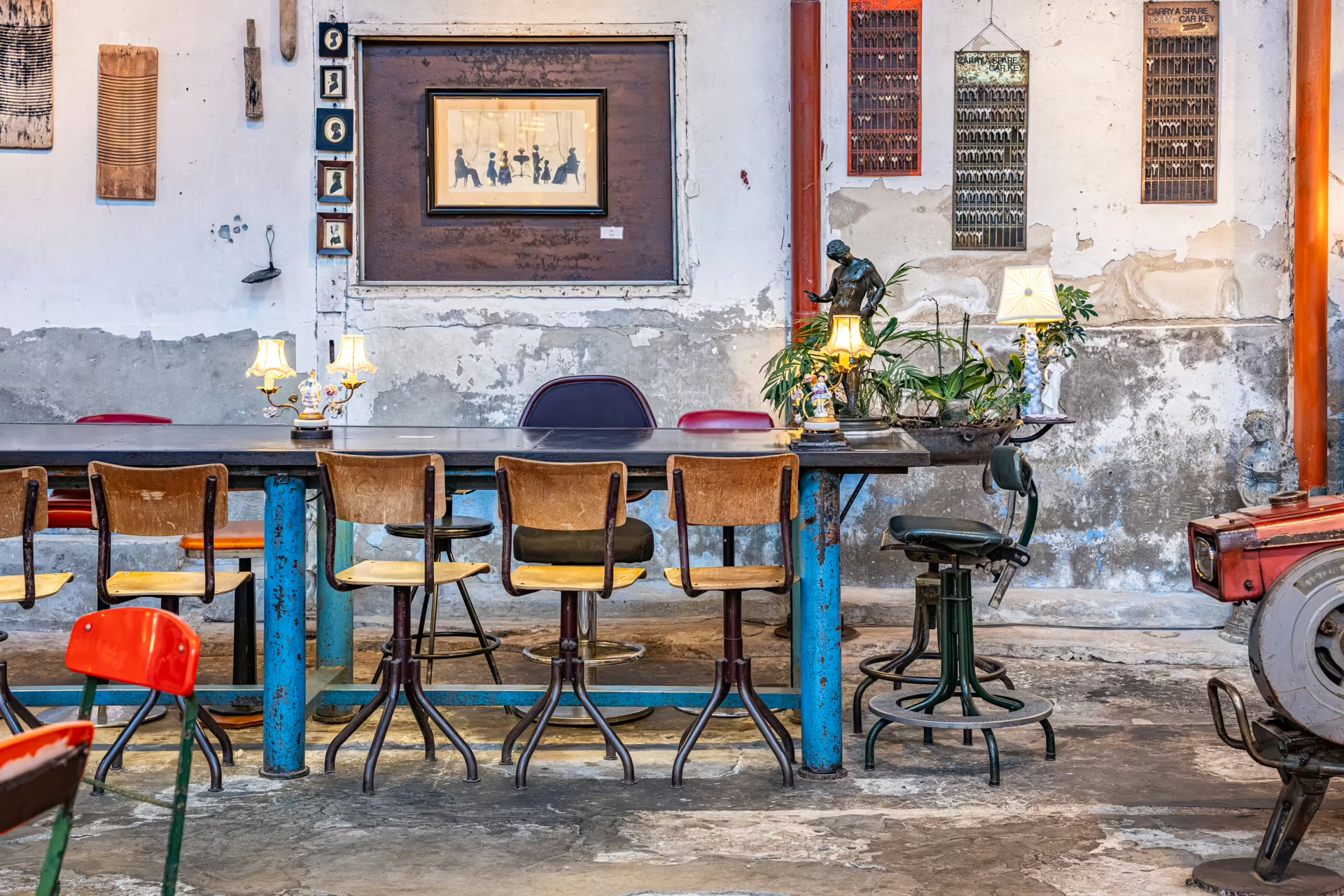
On seating — the water table down the middle is the shot everyone wants and the least comfortable place to sit for an hour. The long blue communal table has better light. The sofas are the prize and are gone by noon at weekends. If it’s warm, the courtyard and the outdoor yard are quieter than anything indoors, and the yard is where the ruin is least tidied.
The floor is flat and wide throughout, so pushchairs and wheelchairs move easily — a genuine rarity in Korean heritage conversions. Dogs are allowed on the outdoor terrace. It opens every day, until 20:00 on weekdays and 21:00 at weekends, with last orders forty minutes before.
Who This Is Actually For
Anyone who likes industrial buildings: this is one of the best adaptive reuses in Korea, and it works because the owner had the confidence to leave the shell alone. Come on a weekday morning and you can have the hall nearly to yourself.
Photographers: late morning, when the roof lights are doing the most and the crowd hasn’t arrived. Every corner is styled; the difficulty is restraint rather than finding a frame.
Day-trippers without a car: the single easiest good thing on Ganghwa to reach. Bus from Sinchon, twenty-minute walk from the terminal, done. Pair it with the Sochang Experience Center and you have a half-day on foot.
People who want a quiet coffee: not on a Saturday afternoon. It is enormous and it still gets full, and the queue for a table is real.
Anyone building a full island day: put this in the middle. The history museum and the dolmen are twenty minutes north and explain everything you’re looking at; the 1931 makgeolli brewery is a similar act of preservation done at a tenth of the scale, and better for it.
What stays with me is the water. Someone looked at a line of empty concrete where fifty looms used to run, and instead of filling it with tables or leaving it as a scar, put a channel of moving water down the length of it. Sixty years of nothing, and now the one part of the building that never stops.
Practical Manual
| Item | Detail |
|---|---|
| Name | Joyang Bangjik (조양방직), also signed as Sinmun-ri Art Museum |
| Address (English) | 12 Hyangnamu-gil 5beon-gil, Ganghwa-eup, Ganghwa-gun, Incheon |
| Address (Korean) | 인천광역시 강화군 강화읍 향나무길5번길 12 |
| Hours | Weekdays 11:00–20:00 (last order 19:20); weekends and holidays 11:00–21:00 (last order 20:20) |
| Closed | Open year-round |
| Prices | Americano ₩7,000, latte ₩7,500, flavored drinks ₩8,000–8,500. Bakery billed separately. About ₩16,000 a head in practice |
| Minimum | One drink per person. Non-ordering visitors may be charged a small admission instead |
| History | Company founded 1933; Sinmun-ri mill built 1937 with about 50 looms; closed 1958. Later a pickle and then a seafood works; bought 2017 and reopened as a cafe in 2018 |
| Size | Over 990 m² of original factory floor and structure retained |
| Parking | Small free parking lot on site, fills at weekends. Sinmun-ri public parking lot one minute away — ₩600 per 30 min, free at night and on Sundays and holidays |
| Access | Step-free main entrance, flat floors throughout. Dogs on the outdoor terrace only |
| Getting there | 1.5 km from Ganghwa bus terminal, about 20 minutes on foot. Bus 3000 from Sinchon in Seoul to the terminal, roughly ₩3,000 and about 2 hr 20 min |
| Nearby | Sochang Experience Center (free, closed Mondays) and the surviving Simdo Textiles chimney, both within a 10-minute walk |
| Inquiries | 032-933-2192 |
Prices and hours are as published at the time of reporting. One note on the record: the county’s own page gives the closure as the 1990s, but every other source — and the mill’s own history — puts it at 1958, which is the date used here.
Navigation Tip: Use Naver Map with the Korean address above — Google Maps can’t route Korean roads properly — and keep Papago handy for the menu board, which is Korean-only.