
A Hadong Itinerary That Uses Both Halves of the County
Hadong runs long and narrow from the shoulders of Jirisan down to the South Sea, and its attractions sort themselves into two clusters that most travelers never combine. Upriver: the tea fields of Hwagae, the Pyeongsari plain from the novel Toji, and the slow world of the Seomjin valley. Downcoast: the highest seaside mountain on the south coast with a cable car up it, a fishing village selling jeoneo off its own boats, and the strait where Admiral Yi Sun-sin fought his last battle.
The two clusters sit forty minutes apart by car, and this Hadong itinerary is built to use both — one day per personality, one night in the middle at a tea farm, meals chosen for the season. It is the route I drove in early August. It assumes a car; I address the carless honestly near the end.
Day 1: The Tea Valley
Morning — a booked basket at Dosim Dawon
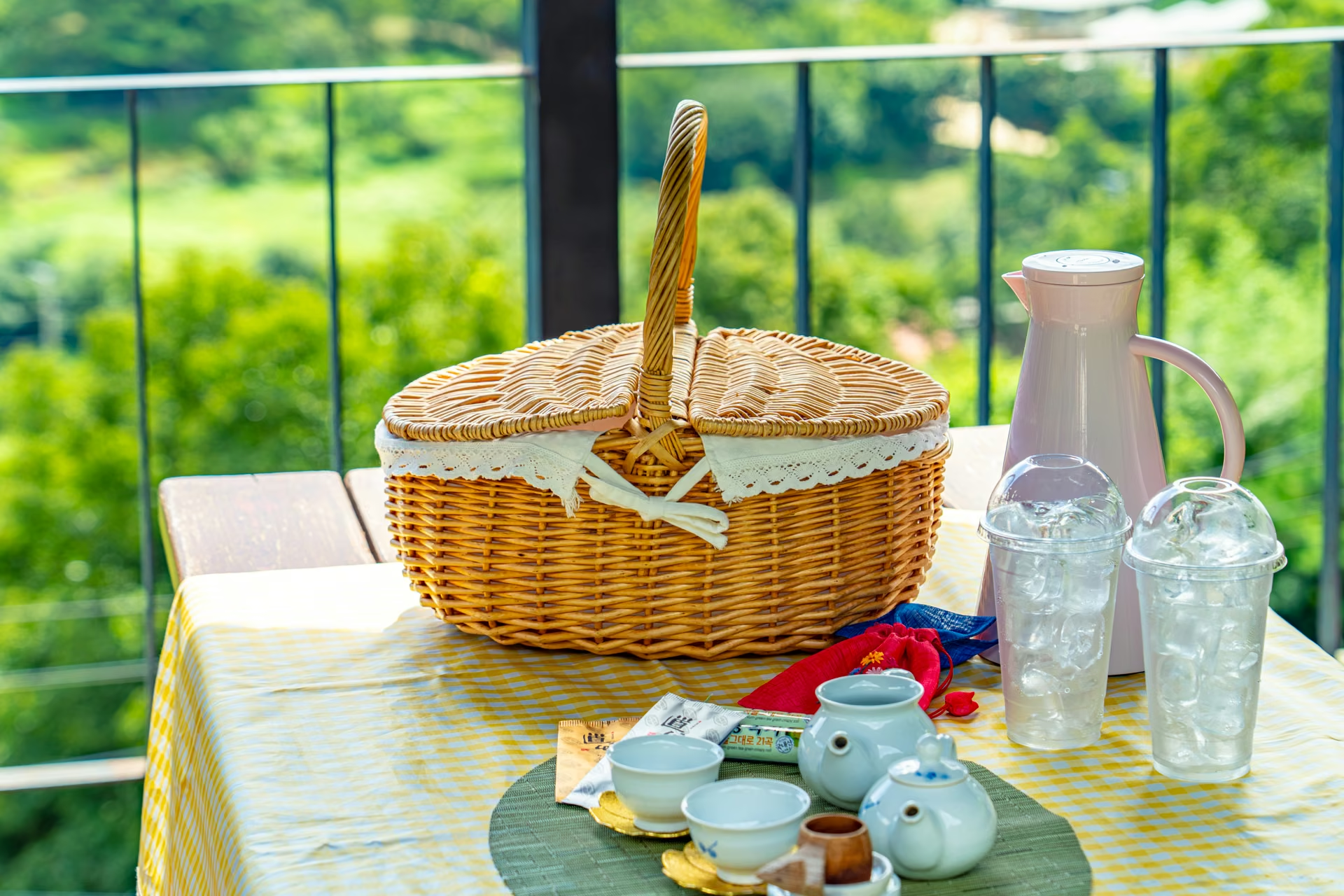
Make one reservation before this trip, and make it this one. Dosim Dawon, a seventh-generation farm in the Hwagae valley, rents out hillside pavilions with a wicker basket of their own teas, hot water, cold brew and sweets — about an hour of sitting above the tea fields where Korean tea cultivation began in 828 CE. Book by phone or Papago-composed text (010-8526-0070), aim for a 10:00 slot before the heat builds, and if your legs are willing, walk a stretch of the 2.7km Thousand-Year Tea Field Trail first. In August the pavilion’s shade and the iced tea carry the hour.
Lunch — jaecheop-guk on the Seomjin
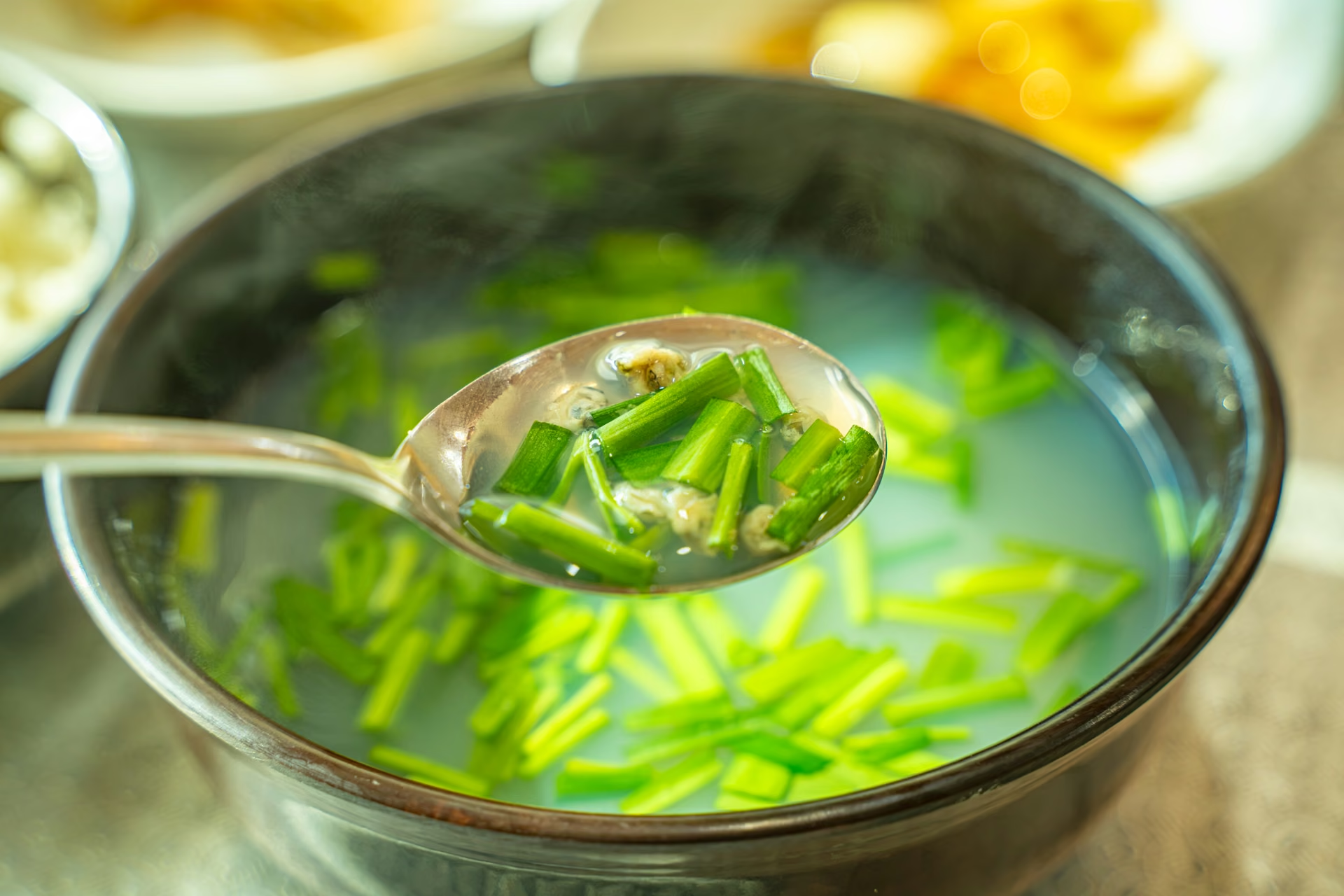
Driving down the valley road along the Seomjin, you pass a string of restaurants built on one dish: jaecheop-guk, a clear soup of tiny marsh clams raked from this river, finished with chives and nothing else worth mentioning. It looks like dishwater and tastes like restoration — briny, sweet, and reputed by every Korean grandmother to repair a liver. The stretch between Hwagae and Hadong-eup has the densest choice; the well-known houses charge around ₩10,000 a bowl with a full spread of sides, at the time of reporting. Order the basic guk, not the set, unless you skipped breakfast.
Afternoon — Dongjeong Lake, late and slow
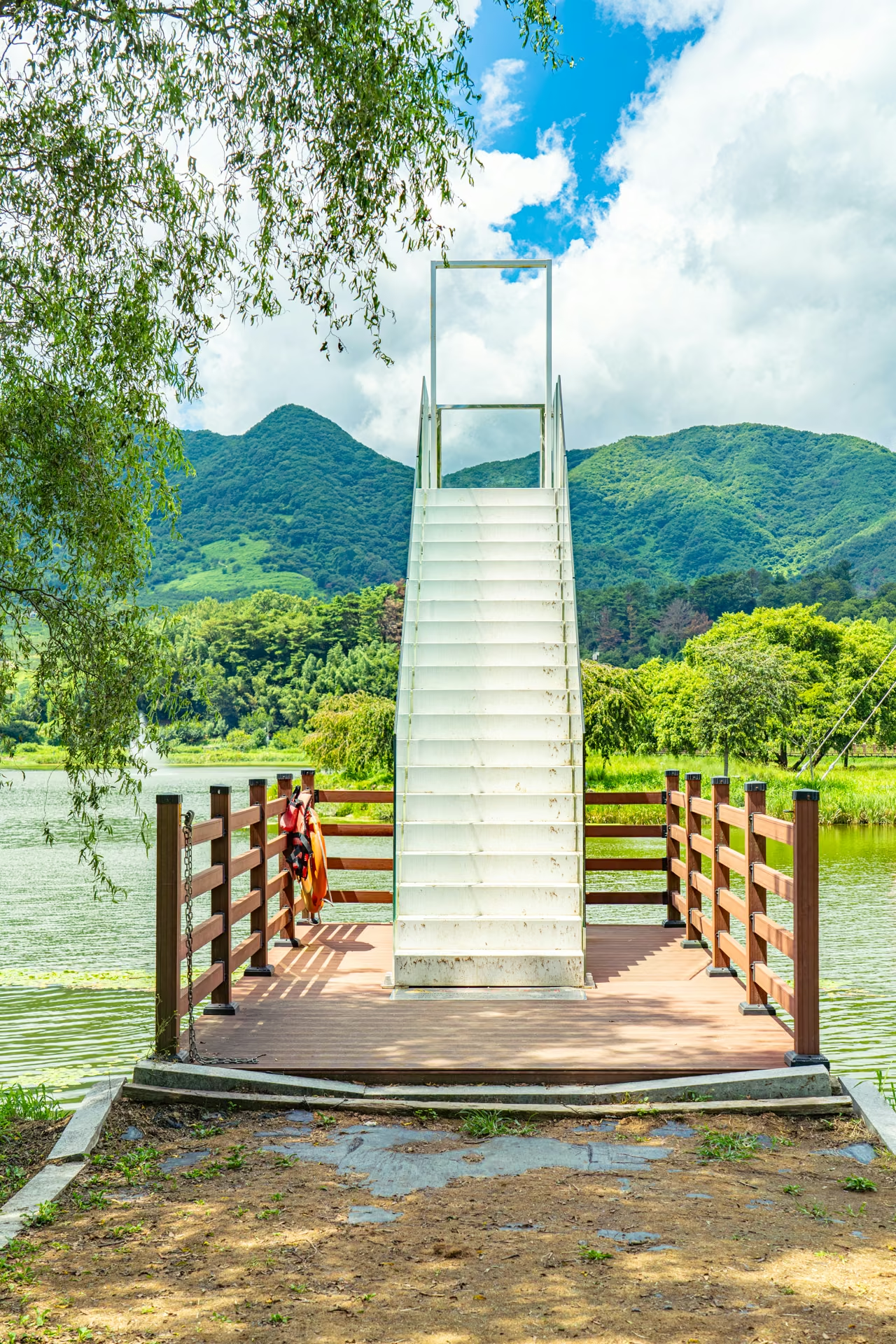
Save Dongjeong Lake for after four o’clock, when the heat backs off and the light starts working in your favor. The lake — a free, always-open wetland garden in the middle of the Pyeongsari rice plain, and since May 2026 an official provincial garden — takes half an hour to loop: heart-shaped suspension bridge, the white Stairway to Heaven, a beached wooden ferry boat under the willows. Toji readers should add the Choi Champan House film set on the hillside above. Everyone else can stand on the bridge, look at green rice running to blue mountains, and understand why the novel needed twenty-five years.
Night — sleep at a tea farm
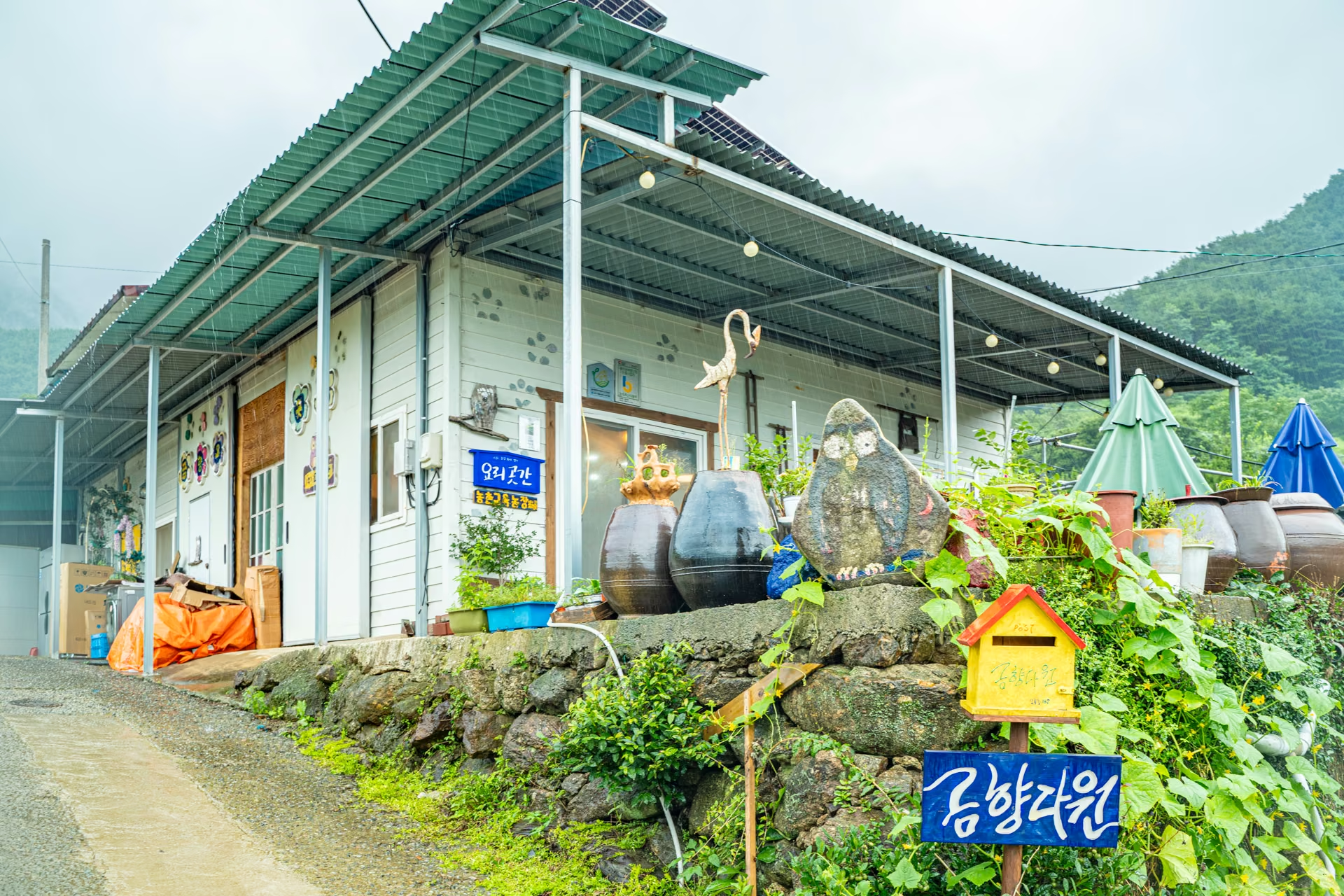
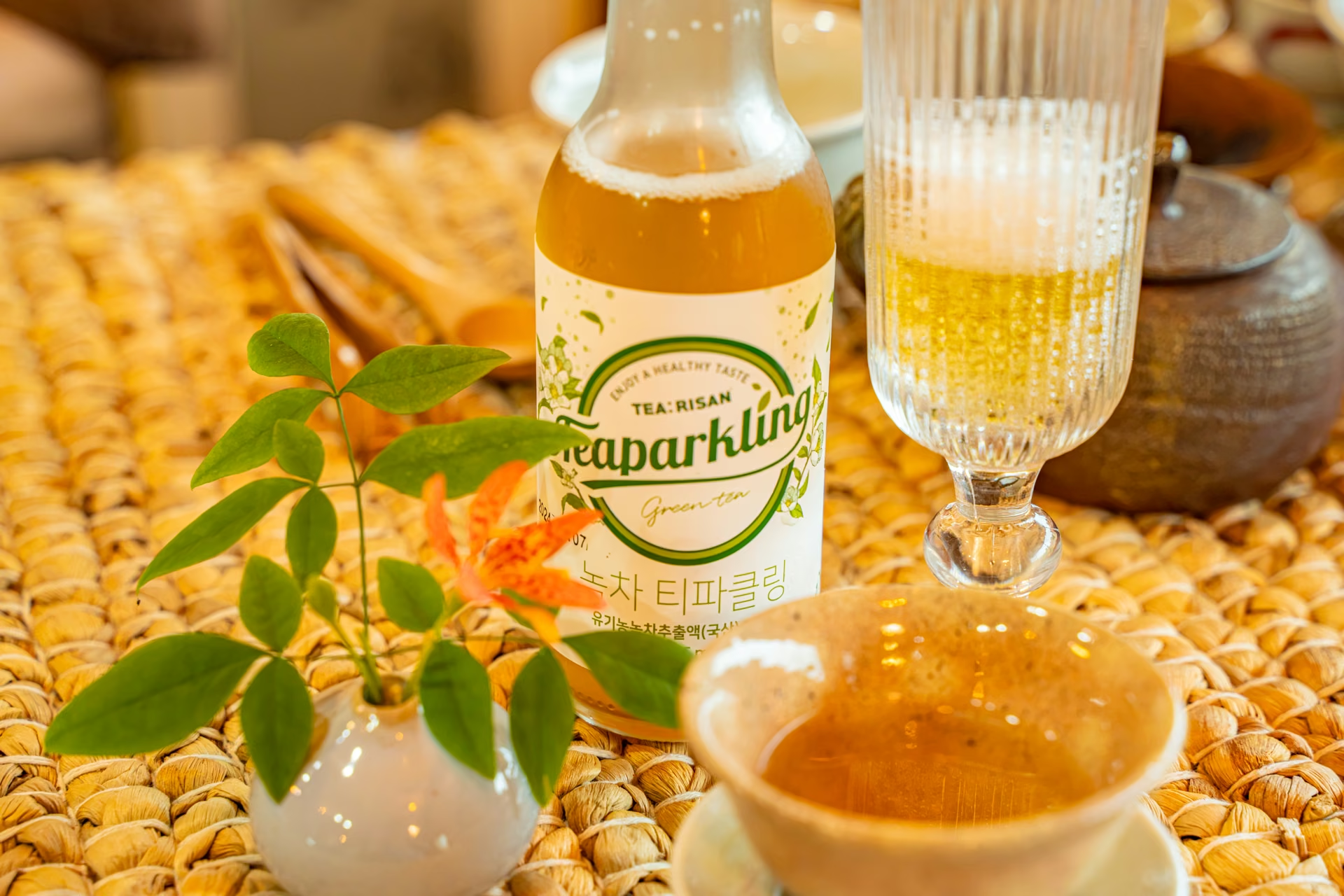
Here is the move that makes this itinerary different from a day trip done twice. Geumhyang Dawon, a family tea farm deep in the Akyang valley, runs a small farm stay in renovated ondol rooms — and for overnight guests, a tea omakase: the farmer pouring her own green, black and fermented teas in sequence, with sweets, and with the kind of commentary you cannot buy in a cafe. Their sparkling tea, served cold in a stemmed glass, is the single best thing I drank in Hadong in August. Booking is by phone (010-2687-0365, Korean — a Papago-composed text works), breakfast is from the farm, and the night is as quiet as any I can remember paying for.
Day 2: The Coast
Morning — up Geumo Mountain before the crowds
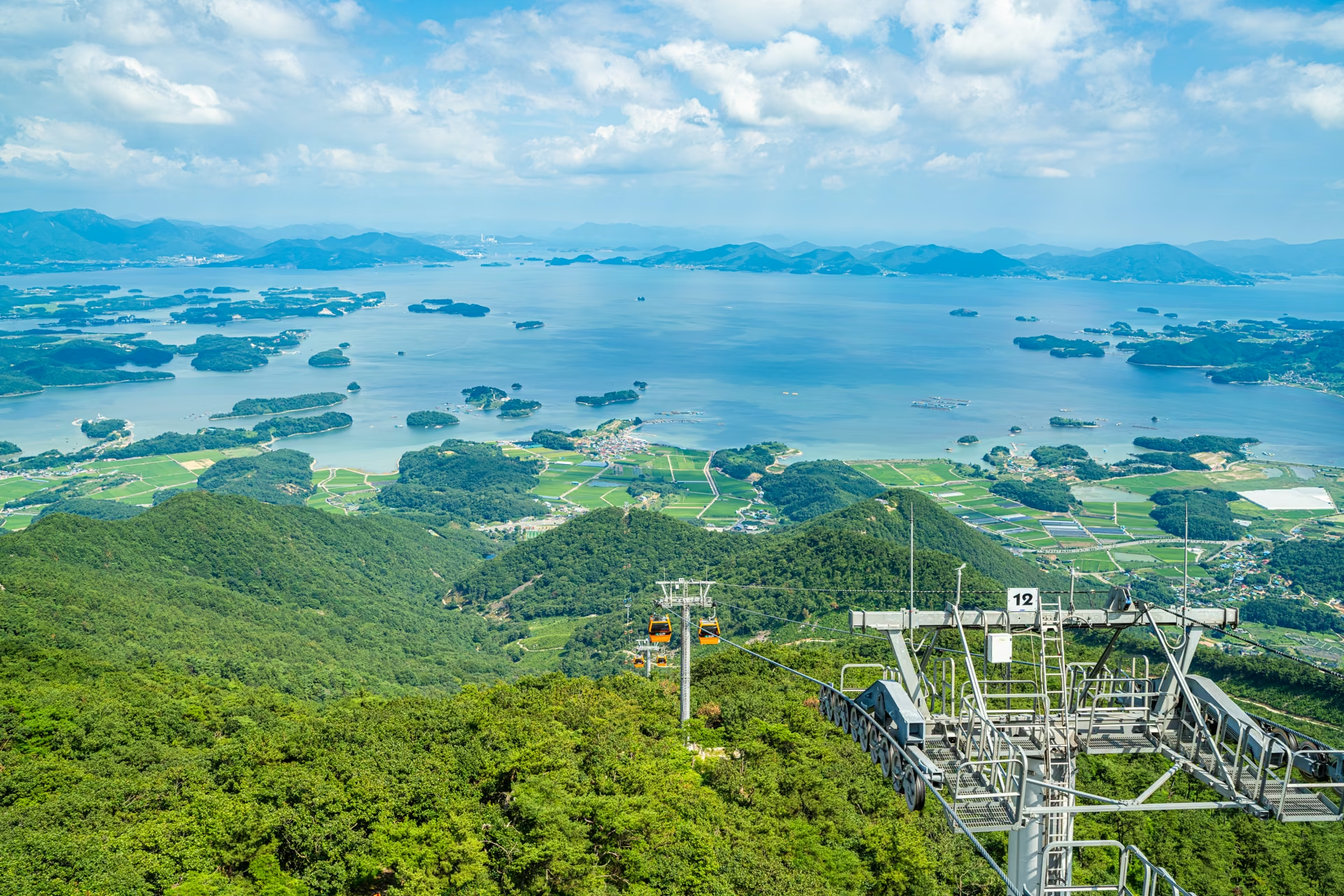
Leave the valley by 8:30; the drive from Akyang to the coast takes about 40 minutes. The Hadong cable car opens at 09:30 on weekdays and 09:00 on weekends (official site, Korean), and the first hour is the best hour: short queues, cool air, and morning light on the islands of Hallyeosudo. Spring for the crystal-floor cabin (₩27,000 round trip against ₩20,000 standard), and at the top, walk the 1.2km Haemaji Park loop that most riders skip. Budget two and a half hours door to door.
Lunch — a burger in a rice warehouse
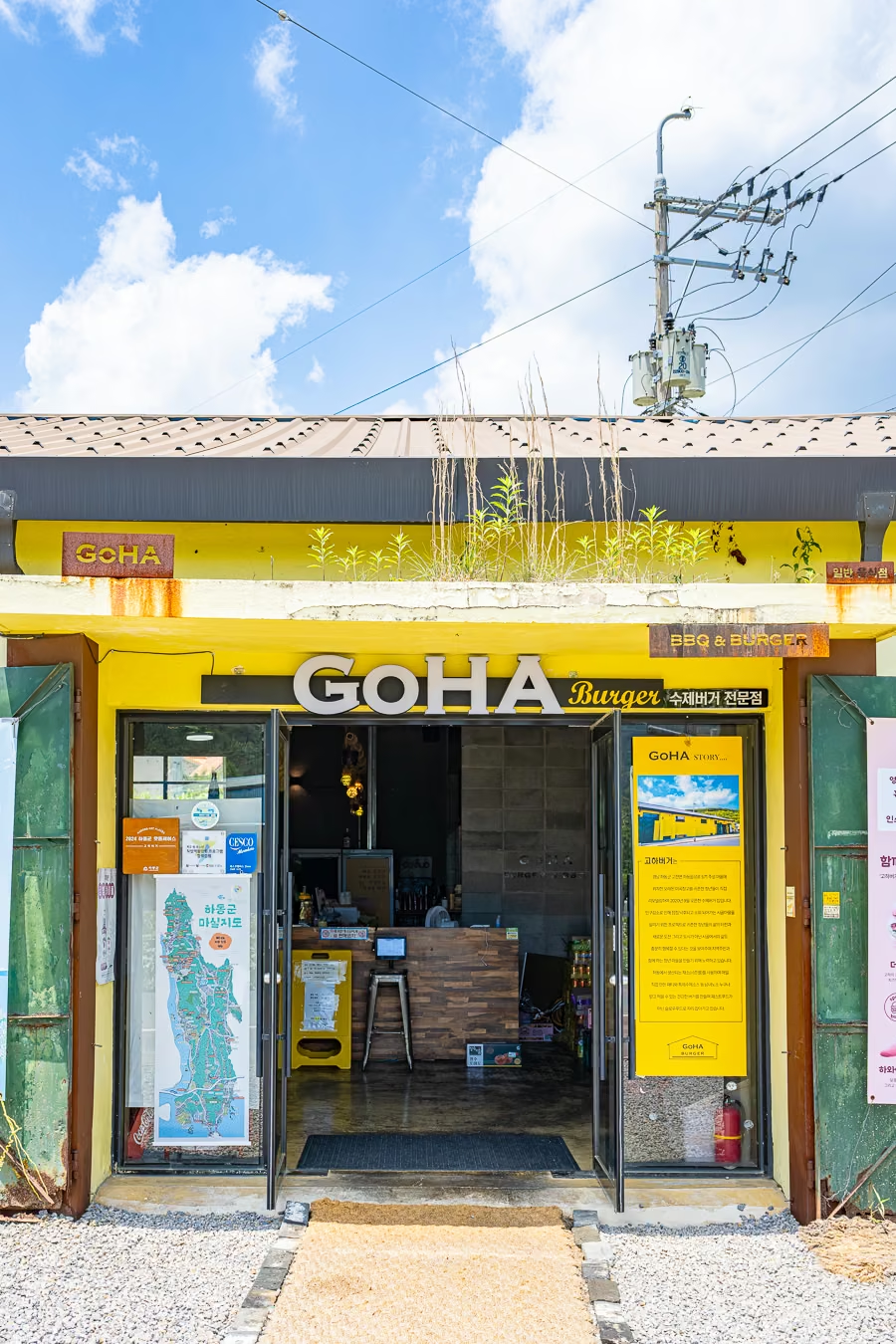
Twenty minutes inland, in a farming village under the 1417 Hadongeupseong fortress, seven urban transplants turned a rice warehouse into Goha Burger — hand-ground patties, Hadong-grown vegetables, cheeseburgers from ₩8,500. It is the best lunch for this route on merit, not novelty, but two cautions: it closes at 18:00, and its midweek rest day wobbles between Tuesday and Wednesday depending on whom you ask, so confirm that morning. If the door is dark, Jingyo’s eateries are ten minutes on.
Afternoon — Sulsang Port, fish at village prices
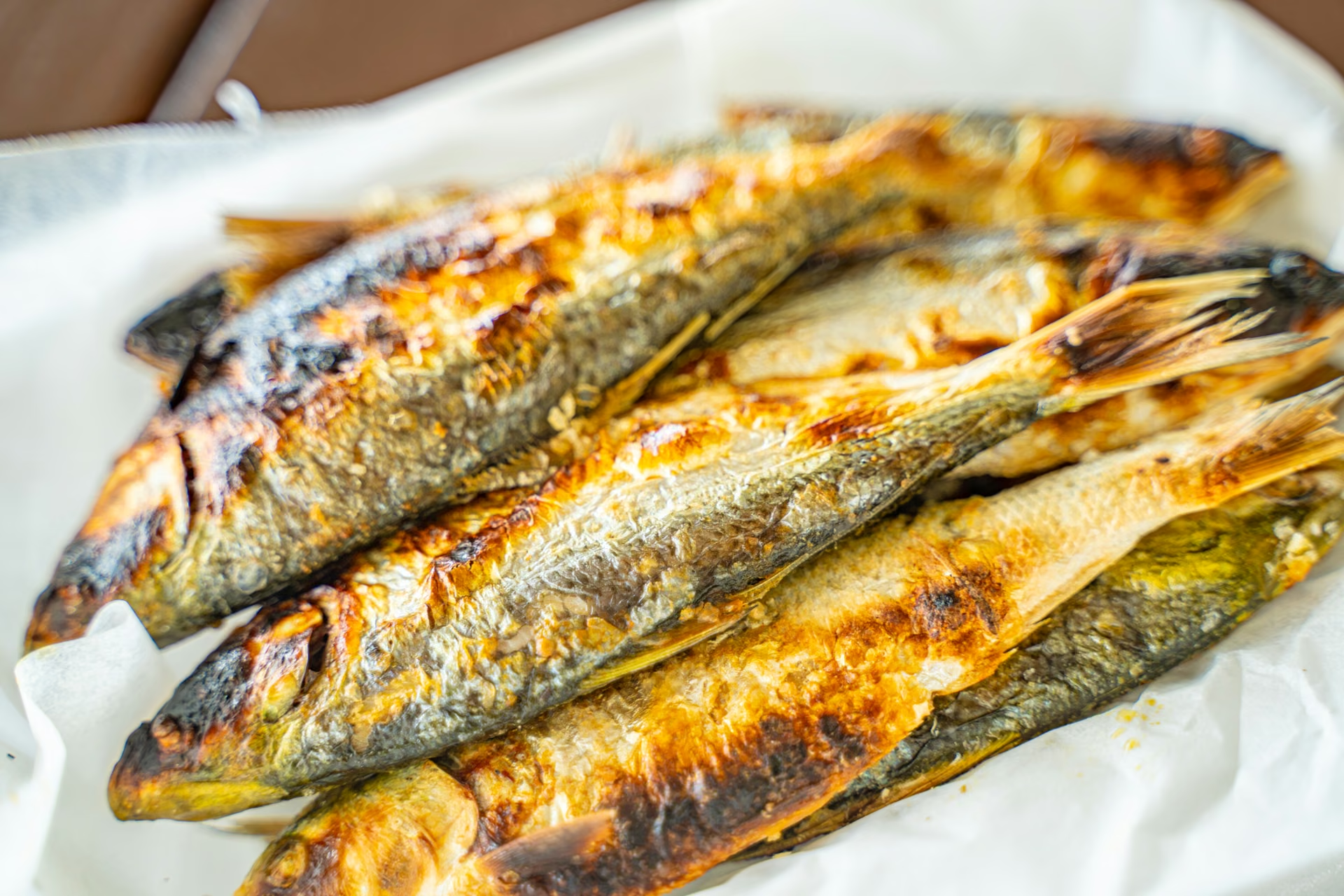
Back on the coast, Sulsang Port runs its village-owned jeoneo sale hall daily through October 31 — fish off the residents’ own boats, cleaned on the spot, priced by the day’s catch. In August, order it half raw, half grilled, and eat at the plastic tables like everyone else. Walk it off on the shoreline boardwalk and up at the white observatory that the blogs compare to Santorini; the comparison is generous, the view is not.
Sunset — Noryang, where two bridges hold the strait
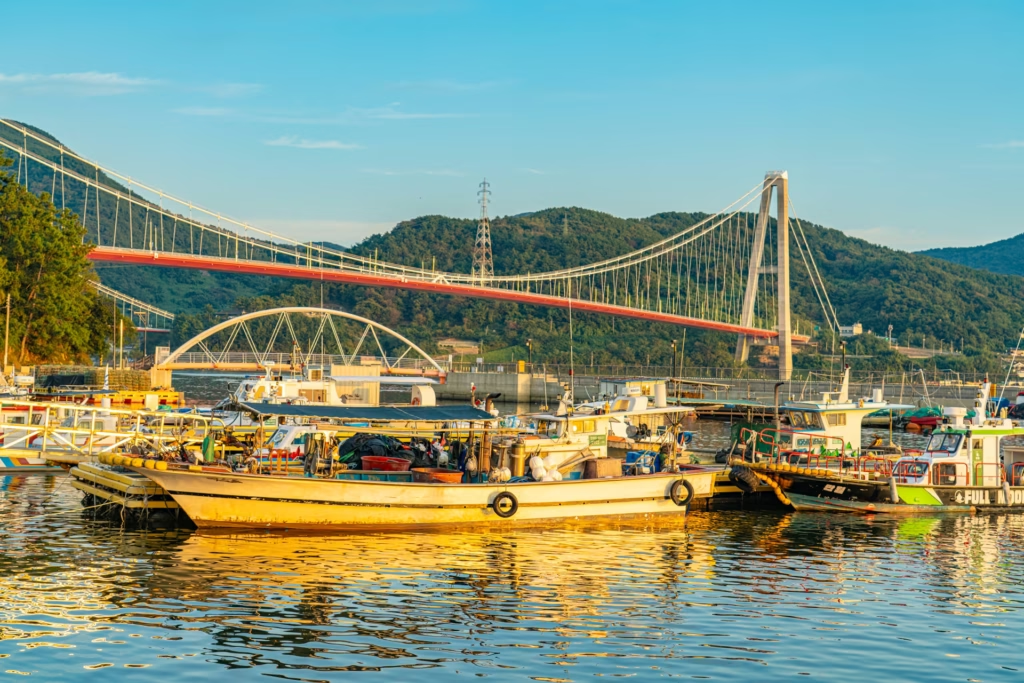
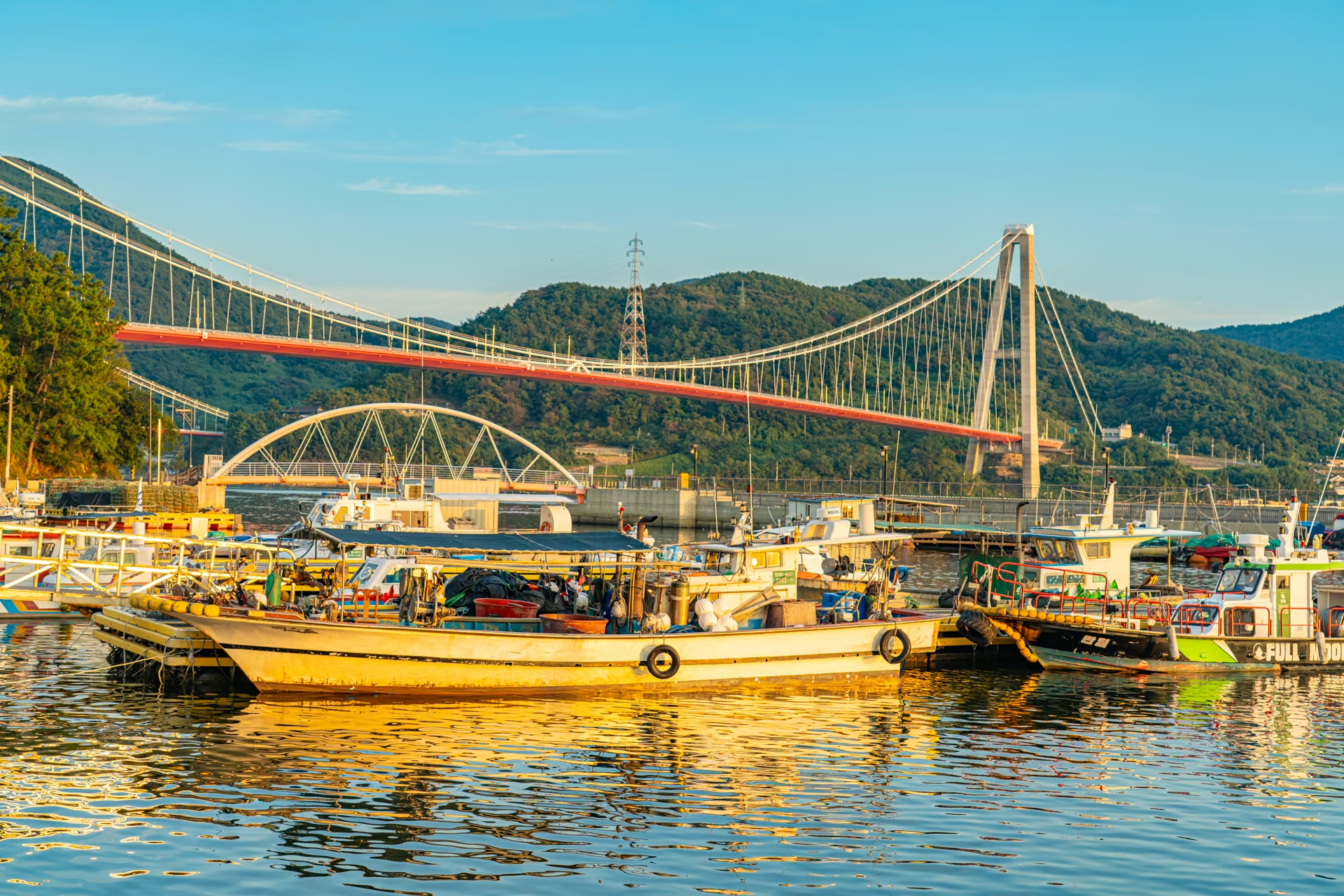
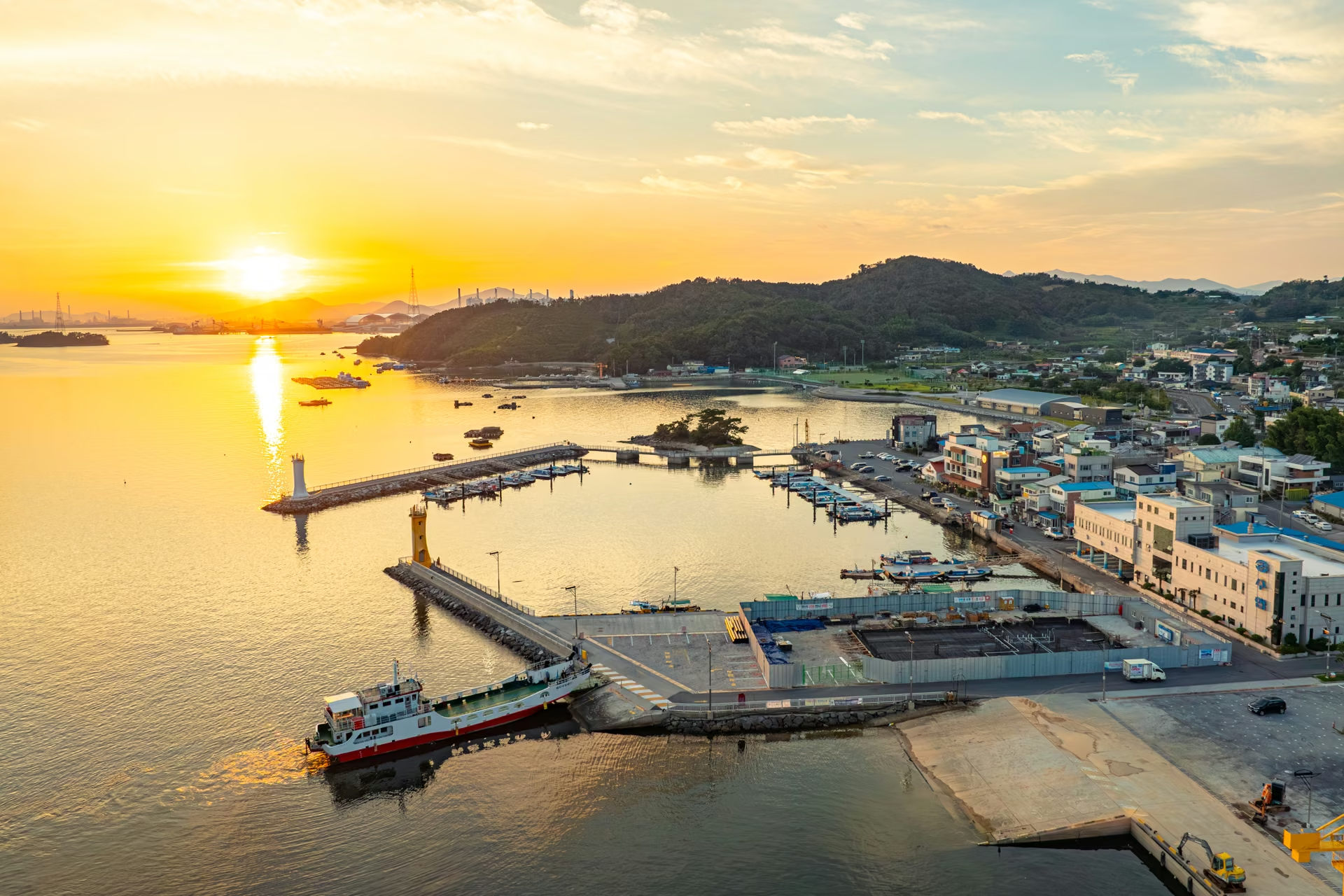
End ten minutes down the coast at Noryang Port, the old ferry landing facing Namhae Island. Two bridges cross the narrow strait here, built 45 years apart: the red-pyloned Namhae Bridge of 1973, Korea’s oldest suspension bridge, and the 2018 Noryang Bridge with its inclined V-towers. At sunset the light comes up the channel and sets both against an orange sky, with the fishing fleet in the foreground doing its best impression of a postcard. These are the waters of the 1598 Battle of Noryang, where Yi Sun-sin died winning the war’s last engagement — a fact that has a way of quieting a viewpoint. The old Namhae-gak rest house across the bridge, a 1970s landmark, stood closed at the time of reporting, so stay on the Hadong shore and let the bridges do the talking.
Timing, Cuts and the No-Car Question
Drive times, all approximate: Hwagae to Akyang 15 minutes; Akyang to the cable car 40; cable car to Goha Burger 20; Goha to Sulsang 15; Sulsang to Noryang 10. Nothing on Day 2 is more than half an hour from anything else, which is what makes the day feel generous rather than rushed.
Two notes for the hot months. First, heat strategy is baked into the ordering above — booked shade in the morning, driving through the worst of midday, water and grilled fish in the late afternoon — and it collapses if you flip the days, because the cable car queue at 2 p.m. in August is a punishment no view repays. Second, this is typhoon season on the south coast: a passing system will close the cable car and the zipline outright and turn the tea lanes unpleasant, so if the forecast shows one, swap the days or push the trip — every fixed element here reopens the moment the weather clears. Budget-wise, the whole route runs modest: the big-ticket item is the cable car, the farm stay costs less than a business hotel, and two days of eating this well for the price of one Seoul tasting-menu course remains the south coast’s best-kept accounting secret.
Running late? Cut in this order: the fortress walk first, the observatory second, the tea trail third. Do not cut the basket hour or the sunset — they are the route’s two fixed anchors, one booked, one astronomical. If jeoneo bones alarm you, swap Sulsang’s tables for takeout and eat at Noryang with the view.
Without a car, this exact loop simply does not work; county buses connect the dots too loosely. The honest carless version: intercity bus from Seoul Nambu to Jingyo (about four and a half hours), taxi to the cable car, taxi on to Sulsang, and back — a full and satisfying day using Day 2’s southern half only. The tea valley by transit is its own slower trip, best done via Hadong Terminal and the Hwagae bus, with the Simni road and a jaecheop lunch as the spine.
With a third day in hand, the natural extension is across the water: the Namhae Bridge at Noryang is a door, and Namhae Island behind it repays a full day of coastal driving — terraced hillside villages, German-settler history, and beaches that stay uncrowded even in August. Alternatively, hold the extra day for the tea valley and do what Day 1’s schedule could not: the full 2.7km tea trail, Hwagae Market, and the temple at Ssanggyesa, where the stone monument to Korea’s first tea planting makes the appropriate final stamp on a Hadong passport.
Practical Manual: The Route at a Glance
| Day 1 | Dosim Dawon tea basket (book: 010-8526-0070) → jaecheop-guk lunch on the Seomjin → Dongjeong Lake after 16:00 → overnight at Geumhyang Dawon (book: 010-2687-0365) |
| Day 2 | Hadong cable car at opening → Goha Burger lunch (confirm rest day: 010-7348-0555) → Sulsang Port jeoneo hall (daily to Oct 31) → Noryang Port sunset |
| Key addresses (KR) | 도심다원 화개면 신촌도심길 43-22 · 동정호 악양면 평사리 305-2 · 금향다원 악양면 신흥길 167 · 하동케이블카 금남면 경충로 461-7 · 고하버거 고전면 하동읍성로 571 · 술상항 진교면 술상길 163 · 노량항 금남면 노량리 |
| Budget marker | Tea basket ~₩20,000/2 · jaecheop-guk ~₩10,000 · cable car ₩20,000–27,000 · burger ₩8,500+ · jeoneo by the day’s catch (all at time of reporting) |
| Season note | This routing is tuned for July–October, while the jeoneo hall operates; hydrangeas at Dongjeong peak late June–mid July |
| From Seoul | ~4 hrs by car to either cluster; intercity buses to Hadong or Jingyo terminals (~4.5 hrs) |
| Navigation Tip | Google Maps does not give driving directions in Korea. Use Naver Map for all routing and Papago for booking texts — both farm stays and the tea basket answer Korean-language messages fastest. |
All prices and hours reflect the time of reporting; the small family businesses on this route change details seasonally and without notice.
The Individual Guides
- Hadong Cable Car: 849m up, the whole South Sea below
- Sulsang Port: buy jeoneo from the village that catches it
- Dosim Dawon: a tea picnic where Korean tea began
- Dongjeong Lake: Hadong’s new provincial garden, free entry
- Goha Burger: hand-made burgers in a rice warehouse
- Hadong’s Simni cherry blossom road, honestly reviewed