
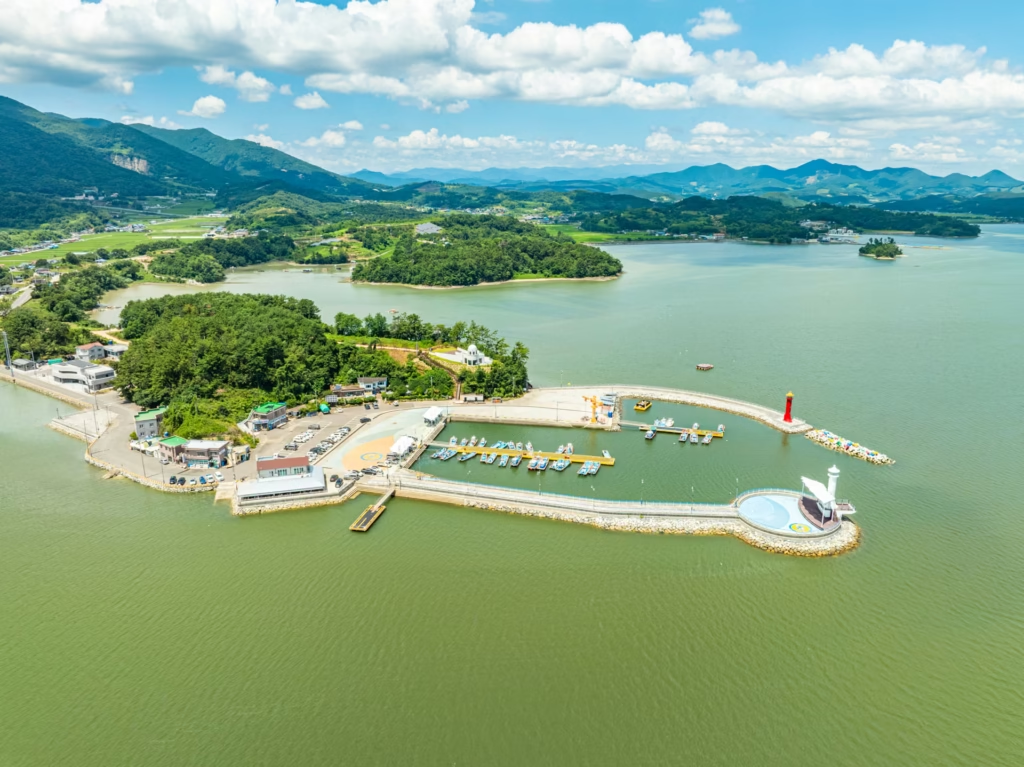
Sulsang Port, Where the Fish Skips the Middleman
There is a Korean proverb that gets recited every autumn, as reliably as the leaves turning: the smell of grilling jeoneo will bring back even the daughter-in-law who ran away from home. Jeoneo — gizzard shad in English, a name that has sold precisely zero fish to anyone — is a small, oily, silver thing that most of the year nobody thinks about, and then for a few months it becomes a national obsession.
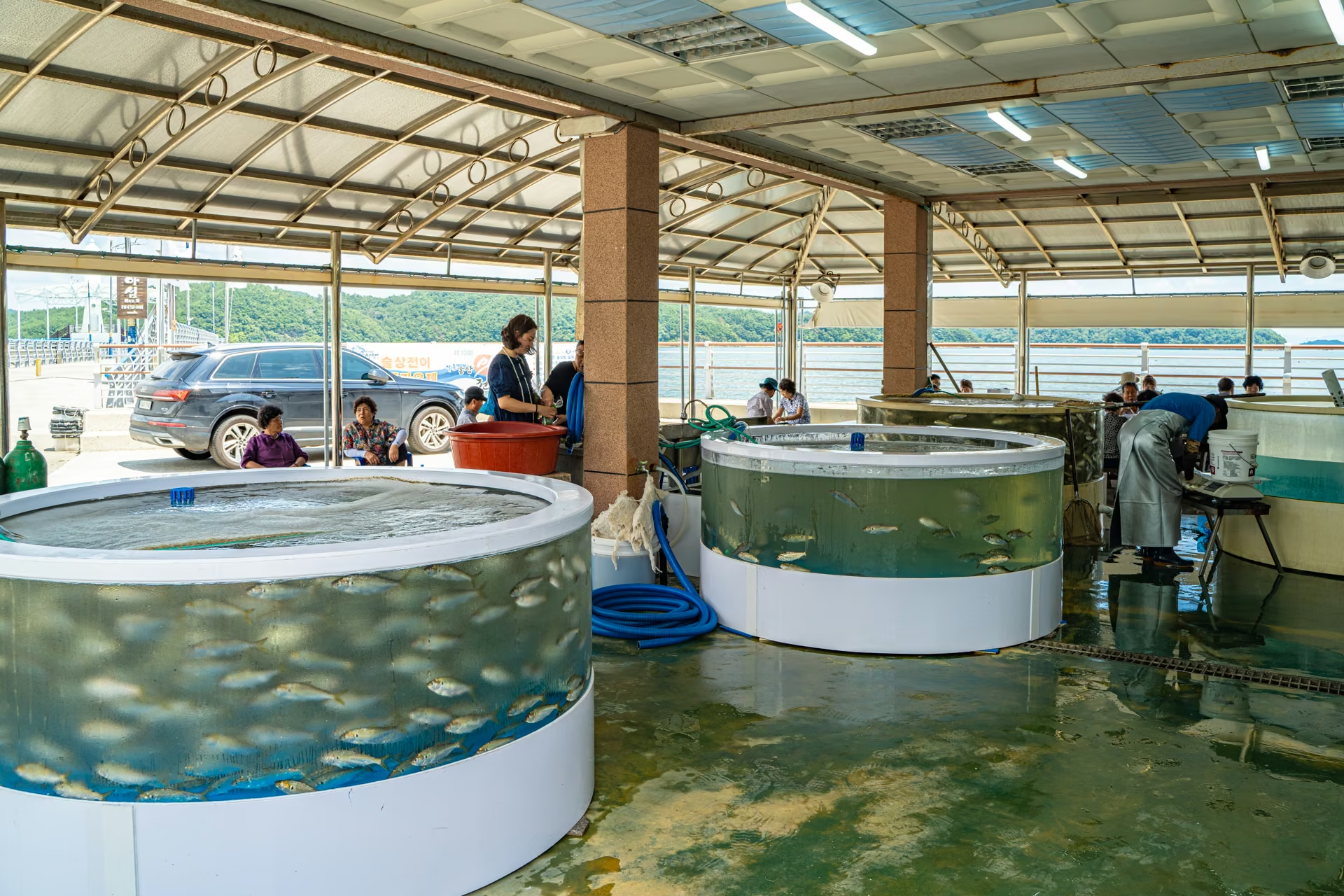
Most people eat it in a city restaurant at a city markup. The alternative is to go where it comes ashore. Sulsang Port is a village of a few dozen roofs on Hadong’s short stretch of coastline, ten minutes down the road from the Hadong cable car, and the residents run their own sale hall on the harbor: fish off their own boats, cleaned in front of you, priced by whatever the sea provided that morning.
Getting There
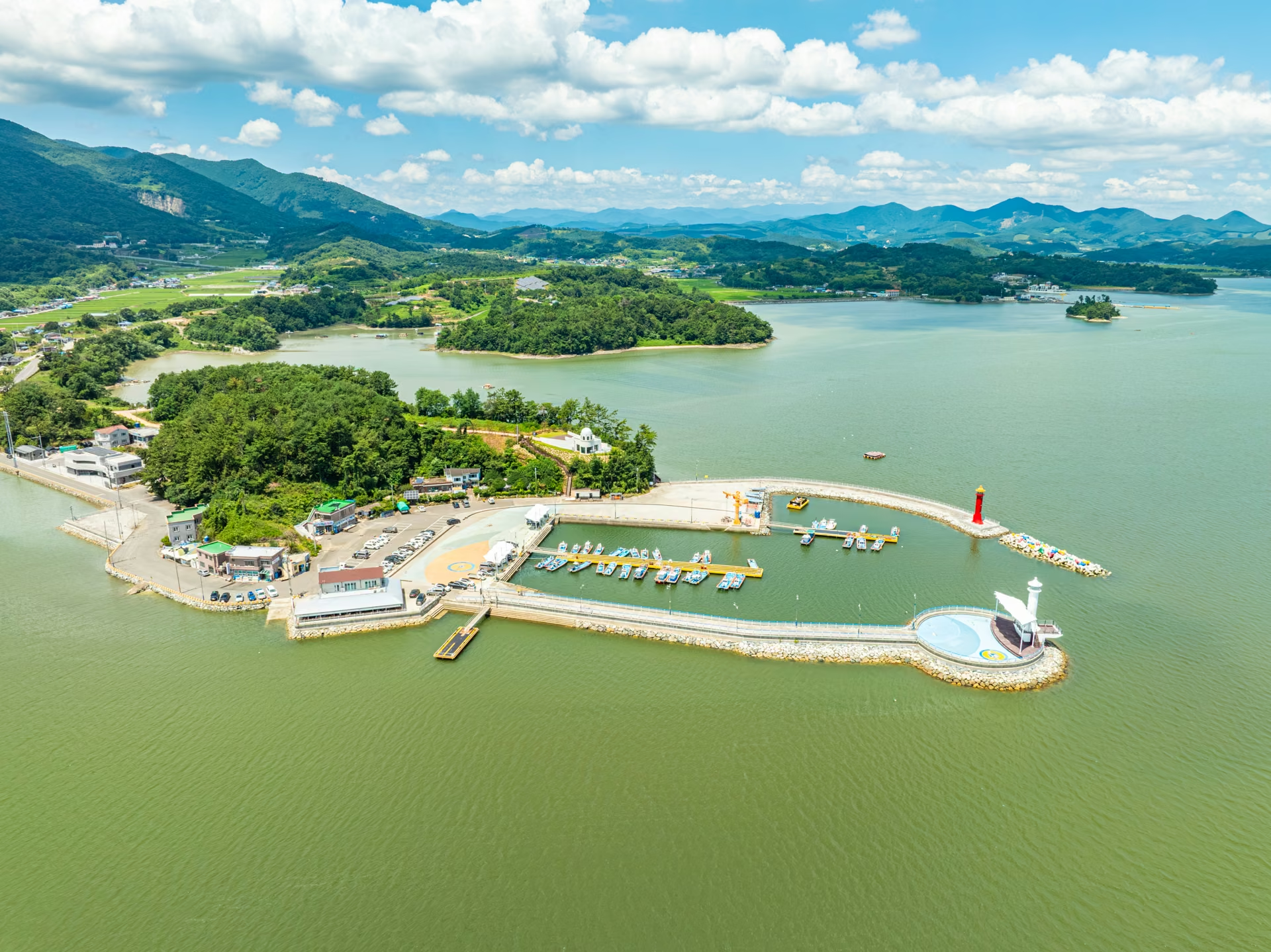
Sulsang sits in Jingyo-myeon, on the coastal road between Jingyo and the cable car station in Geumnam-myeon. By car it is about four hours from Seoul, two from Busan, and — this is the practical point — a ten-minute hop from the cable car, which is why the two belong on the same day’s plan. Without a car, take an intercity bus from Seoul Nambu Terminal to Jingyo Terminal and a short taxi from there. There is no meaningful local bus service to the village itself.
The Jeoneo System, Explained
Jeoneo fishing here follows a fixed calendar. A closed season protects the fish through early summer; the boats go back out in mid-July, and the village opens its sale hall for the season. In 2026 the residents held their annual good-catch ceremony on July 16 and opened the hall the next day, with operations running daily from 09:00 to 18:00 through the end of October — no closing days, though the county notes the schedule can shift with the catch. If you are reading this in August, the season is at full throttle.
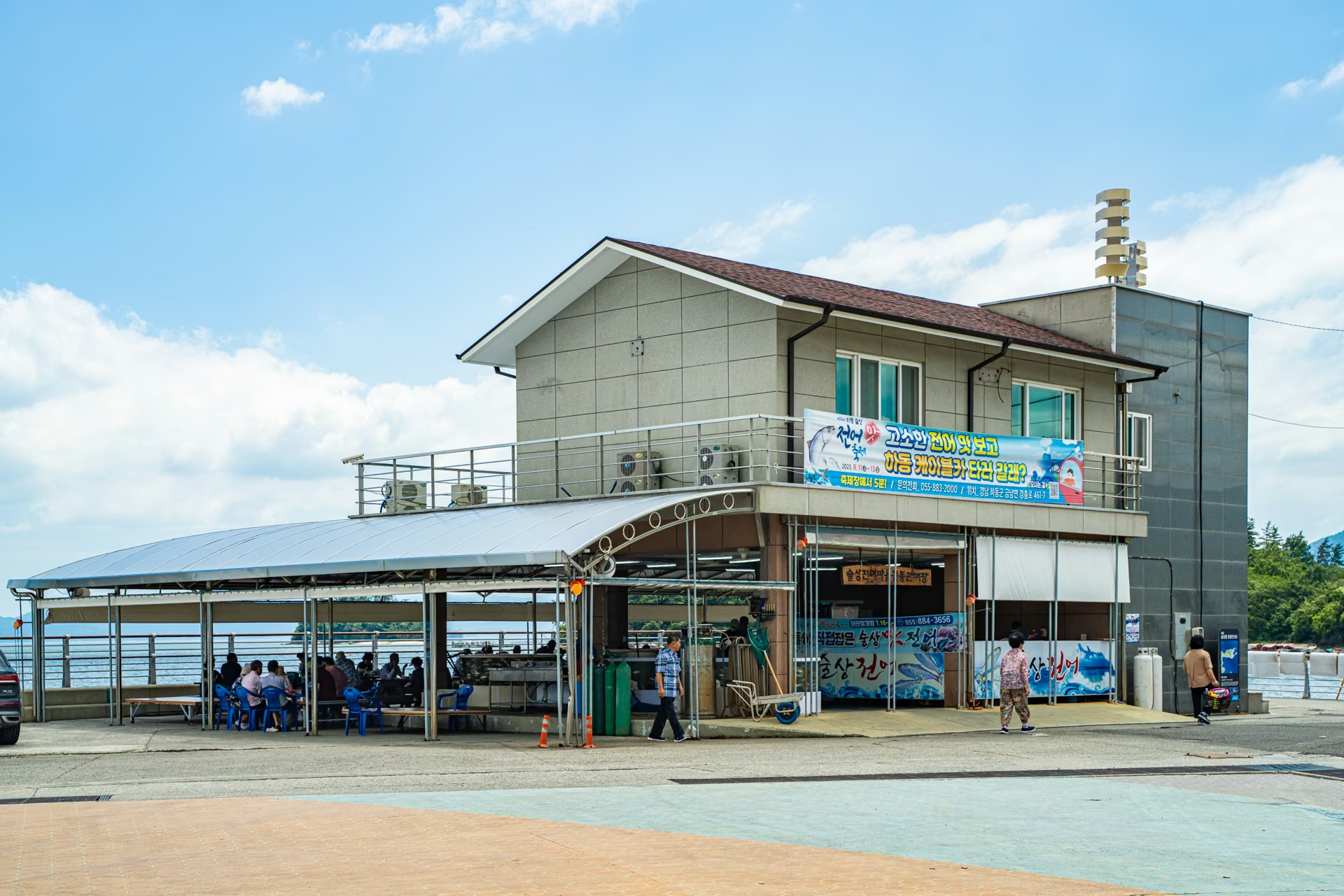
The system inside is simple. Tanks of live jeoneo line the hall; you point, they weigh, and someone’s mother or uncle cleans your fish on the spot. Prices move daily with the catch — there is no printed menu, and no need for one — but they run noticeably below what a raw-fish (hoe) restaurant in a city would charge, because you are buying at the first link in the chain. Takeout is no problem. If you want to eat like a local, buy vegetables, ssam leaves and sauces from the small shop next door and build your own spread.
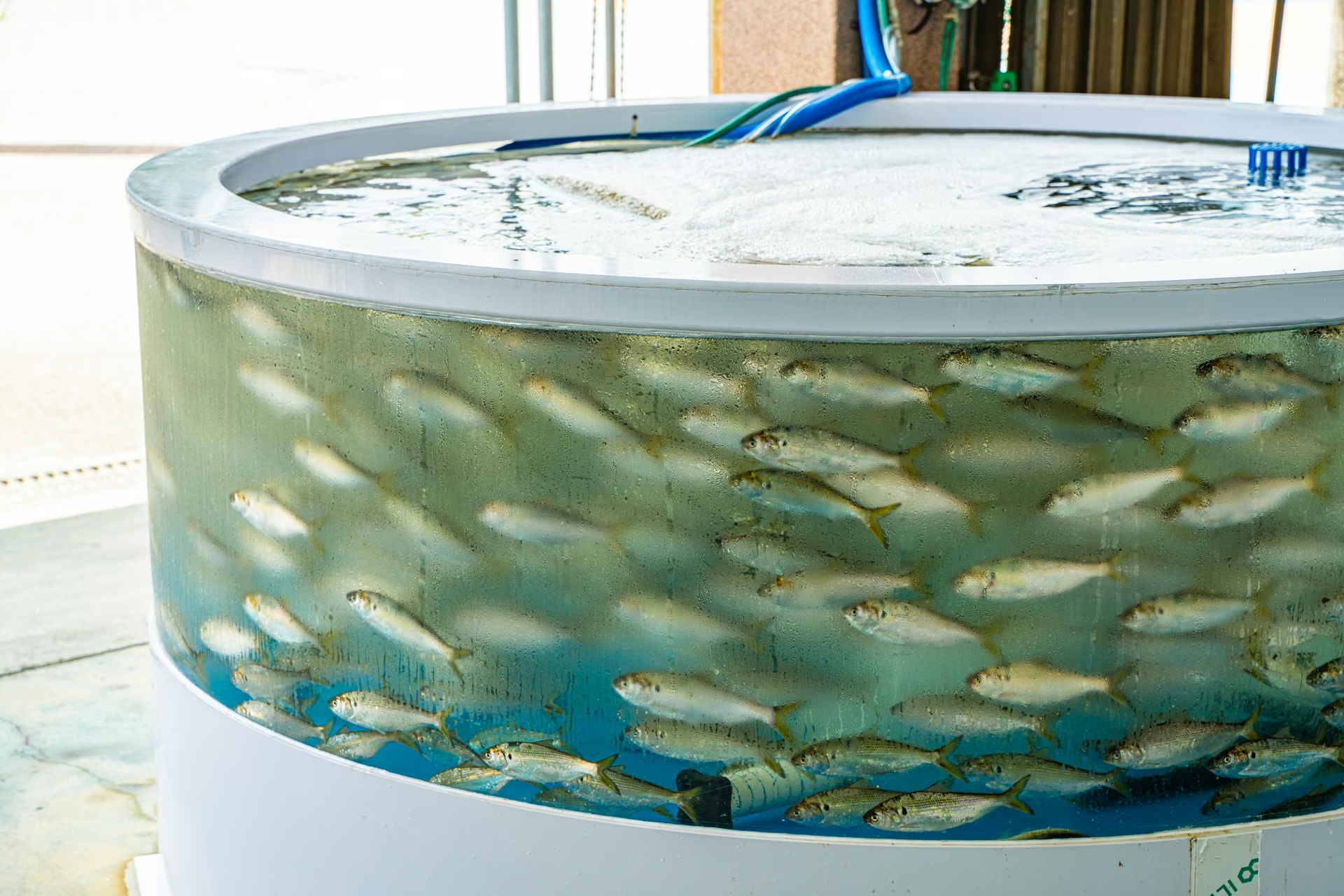
Raw in Summer, Grilled in Autumn
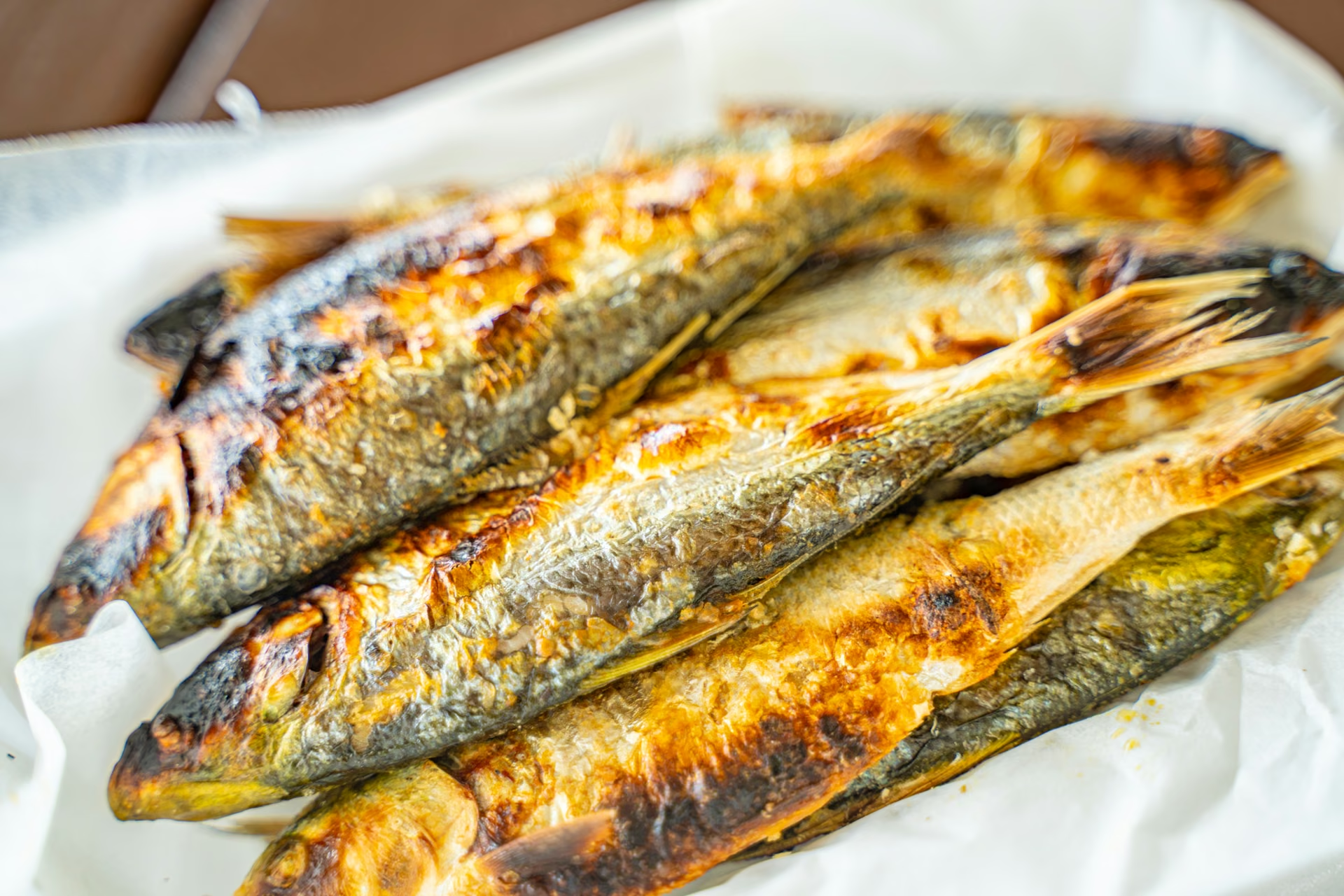
Here is the knowledge the villagers hand out for free. Jeoneo changes character across its season. In summer the bones are still soft, so the fish is best eaten raw — sliced whole, bones in, with a chewy texture and a clean fattiness that pairs with ssamjang and a leaf of perilla. By autumn the fish has loaded up on fat — locals will tell you three times the fat of an ordinary fish, a claim I pass along without a laboratory — and the fish moves to the grill, where that oil renders out and produces the aroma responsible for the daughter-in-law proverb.
In August you stand at the pivot: order half your fish raw and half grilled, and taste the season change at one plastic table. The grilled version arrives blistered and unadorned, and you eat it with your hands, working around the bones, which is not elegant and not supposed to be.
The fish carries a second proverb, less exported than the daughter-in-law one: a jeoneo’s head holds a sack of sesame. The praise is for the nutty, toasted depth concentrated in the part most foreigners push aside — so when your grilled order arrives, eat the heads, crisped right through, and understand what the sack refers to. It also explains the autumn economics. Every September, city restaurants across Korea chalk jeoneo onto their boards at prices that climb with the hype, coastal towns from here to the west coast stage festivals around it, and for six weeks the country behaves as if no other fish exists. The village hall stands outside that cycle: same tanks, same scales, same daily arithmetic between boat and buyer.
Practicalities: the hall sells by weight, and a modest order feeds two people generously once the banchan from next door joins the table. If you are taking fish home, say so — packing for the road is routine here, and a cooler in the trunk is worth planning if your drive is long. Summer weekends get busy at lunch; a weekday visit or a mid-afternoon one buys you the hall at conversational volume.
The Village That Got a Makeover
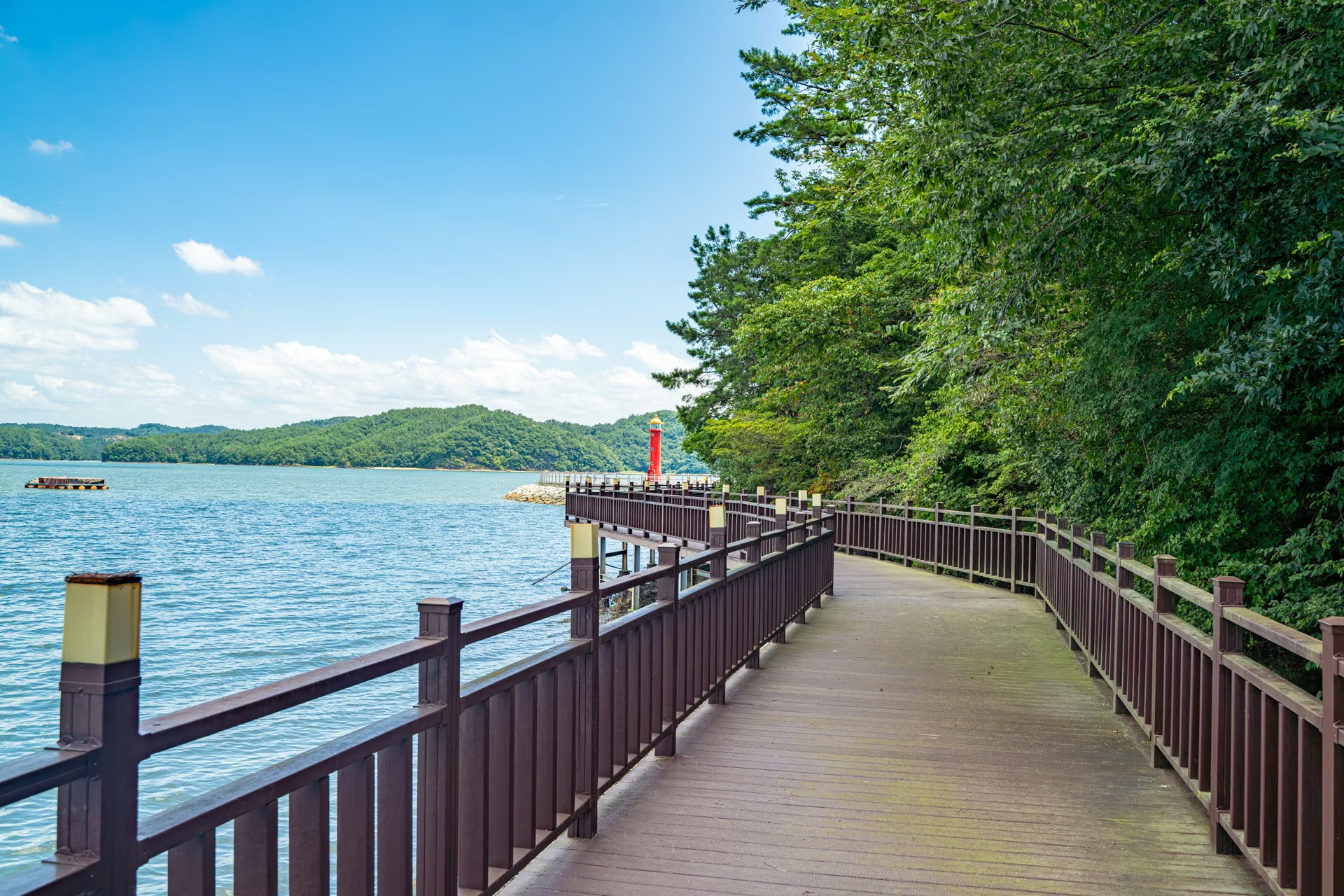
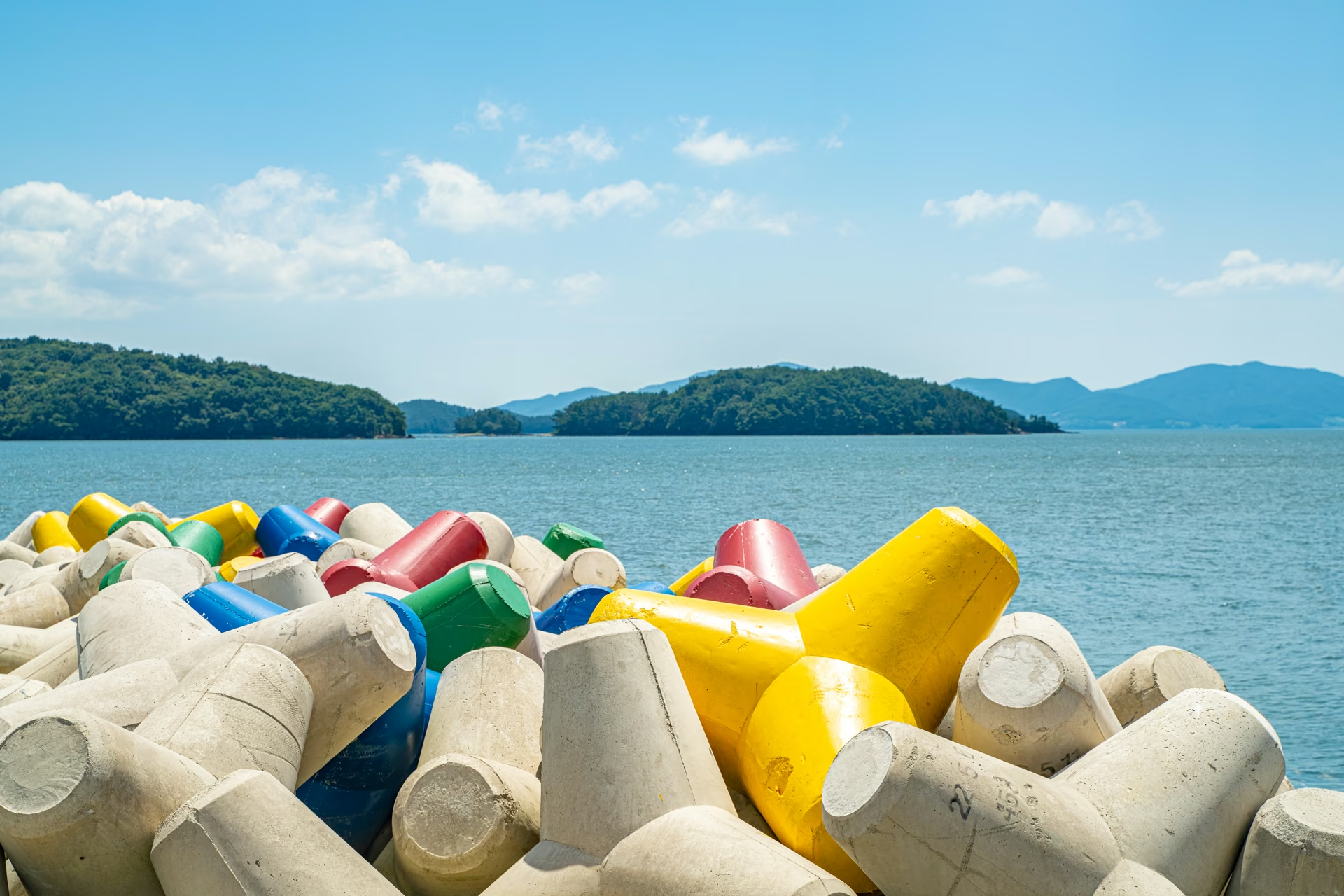
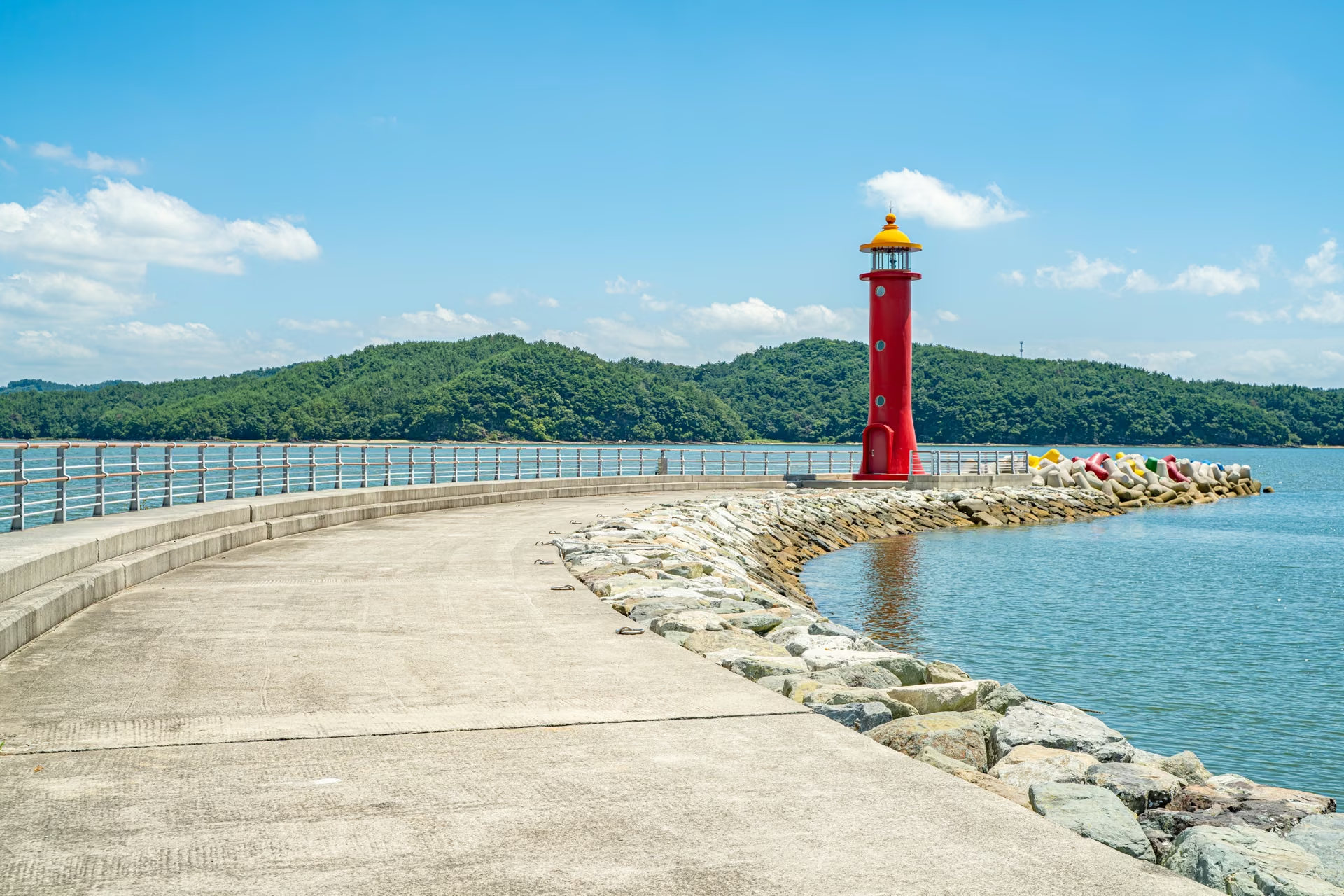
Sulsang was one of the harbors renovated under Korea’s Fishing Village New Deal program — a national scheme that poured design money into three hundred small ports on the theory that fishing villages could earn from visitors what they were losing from fish. Results vary wildly around the coast; plenty of harbors got a mural, a slogan and little else. Sulsang’s money was spent with more taste than these schemes usually manage. A boardwalk runs along the shore under a natural awning of cliffside trees, ending at a bird observatory — the port hosts migratory birds in winter. The breakwater carries a small red lighthouse, and the tetrapods stacked beside it have been painted in pastels, which sounds twee and photographs beautifully.
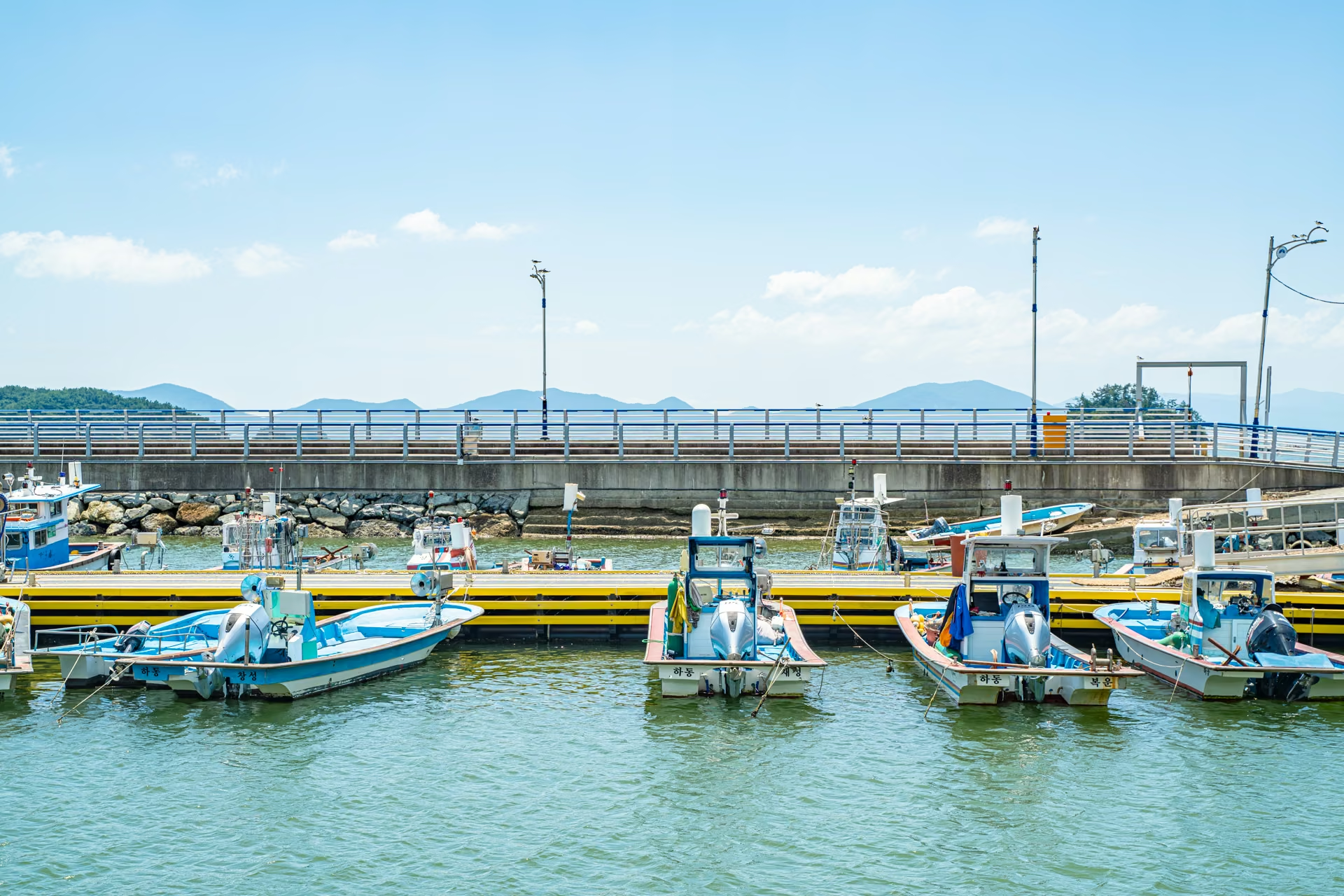
Give the walk twenty minutes even if fish is your only agenda. The pontoon landing — the floating pier that rises and falls with the tide — is the working heart of the harbor and the best vantage for the boats coming in; the cliffside stretch of boardwalk stays shaded through the afternoon; and in winter, when the sale hall is shut, the observatory decks fill with a different clientele entirely, as migratory birds settle into the water the jeoneo vacated. A village this size having a second season at all is its own small achievement.
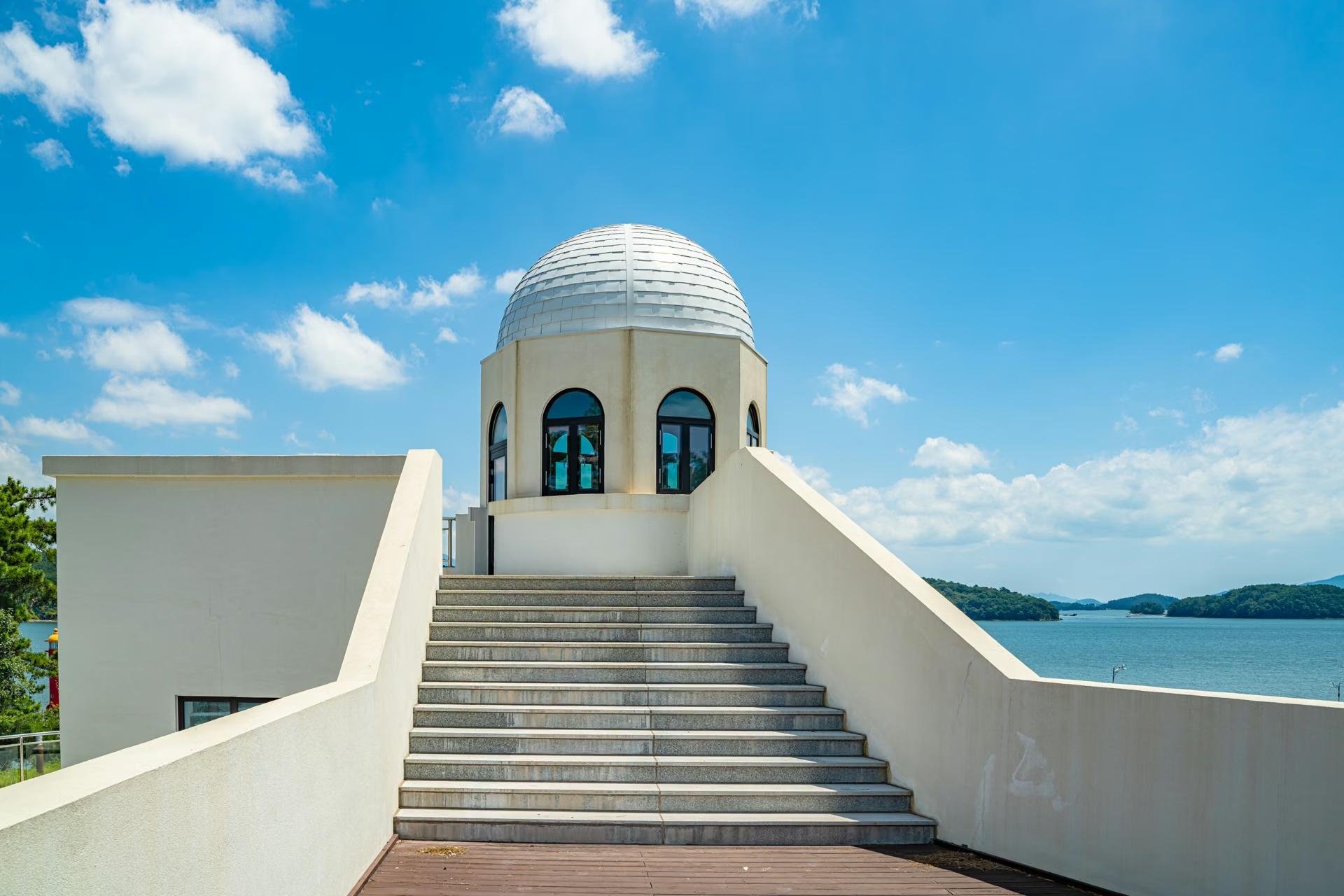
The centerpiece is the observatory on the hill above the harbor: a white dome-and-staircase structure that every Korean blog compares to Santorini. I will not pretend the comparison survives close inspection — Santorini has fewer fish tanks — but as a place to stand, it earns its keep. From the top, the view runs across the port and out to the islands of the South Sea, with Namhae to one side and Sacheon to the other, and the white walls do that trick of making the water look bluer than it has any right to be.
About That Name
One detail for Korean learners. The village is Sulsang-maeul, and the first syllable, sul, happens to be the everyday word for alcohol — a sulsang is, in ordinary speech, a table set for drinking. The name’s actual origin is older and duller, as place names usually are, but it is hard to think of a settlement better suited to its accidental meaning: the village’s entire public offering is fresh fish that demands a bottle of soju beside it. Koreans notice the pun immediately. Now you will too.
Who This Is Actually For
This is for eaters — specifically the kind who consider “cleaned in front of you by the person who caught it” a stronger recommendation than any interior design. It is for travelers pairing the cable car up Geumo Mountain with a seafood lunch that costs less than the ride. And it is for photographers who like working harbors: lighthouse, tetrapods, boardwalk and dome, all within a ten-minute stroll.
It is a poor fit outside the season — from November to mid-July the sale hall is shut and the village returns to being a quiet dot on the coast road — and for anyone squeamish about bones, because jeoneo is a bony fish and no amount of knife work changes that. Vegetarians have no business here at all, though the walk is still pretty.
When I left, a couple from Jinju was loading a styrofoam box of raw-sliced jeoneo into their trunk with the care usually reserved for wedding gifts. The husband explained, unprompted, that his mother-in-law had demanded it. Some fish come with their own folklore; this one comes with errands.
Practical Manual: Sulsang Port
| Address (EN) | 163 Sulsang-gil, Jingyo-myeon, Hadong-gun, Gyeongsangnam-do (Sulsang Sharing Center) |
| Address (KR) | 경남 하동군 진교면 술상길 163 (술상나눔센터) |
| Jeoneo season | Mid-July to late October; 2026 sale hall runs daily 09:00–18:00 through October 31 (subject to catch) |
| Prices | Set daily by the catch; below city restaurant rates. Cash and cards both accepted; takeout available |
| How to eat | Raw (hoe) in summer while bones are soft; grilled in autumn; sides available from the adjacent shop |
| Also here | White observatory, shoreline boardwalk, winter bird observatory, lighthouse breakwater — all free |
| From the cable car | About 10 minutes by car along the coast road |
| From Seoul | ~4 hrs by car; or bus to Jingyo Terminal (~4.5 hrs), then a short taxi |
| Navigation Tip | Google Maps does not give driving directions in Korea. Use Naver Map and search 술상항 or 술상전어판매장. Papago handles the sale hall’s spoken-Korean-only ordering better than gestures. |
Season dates and operations reflect 2026 reporting and depend on the catch. The county announces each year’s schedule in early July.