
The Kingdom That Lost Its Name Twice
I did not plan to spend two hours in Gyeongsan Museum. Gyeongsan is the kind of place you drive through on the way to somewhere with a better reputation — a city of about 260,000 pressed against the eastern edge of Daegu, best known for having a dozen or so university campuses and a subway line that arrives from somebody else’s city. I stopped because the museum was free and it was open. I left thinking about a child’s gold earrings.
Here is the short version, and it is the reason this small municipal collection is worth an hour of anybody’s Korea itinerary. Before Silla became the kingdom that unified the peninsula, this valley belonged to a polity called Apdok. Almost nobody outside Korean archaeology has heard of it. Its royal cemetery sits on a low ridge directly across from a university campus, and in 1982 grave robbers got to it first.
Orientation: Getting to Gyeongsan Museum
From Seoul, take the KTX to Dongdaegu — under two hours on the fast services. After that, nothing puts you at the door. Daegu Metro Line 2 runs out to Imdang and Yeungnam University stations, both roughly three kilometers away, which is a taxi ride rather than a walk. City buses 100 and 399 stop at the museum itself; 990, Namsan 1, Namsan 2 and Yongseong 1 stop at Mirae University–City Museum, a short walk away.
Driving is easier, and there is parking on site. From central Daegu, budget around half an hour. If you are already using Daegu as a base — and Seomun Market is reason enough to — this is a straightforward morning out and back.
The Looting That Started Everything
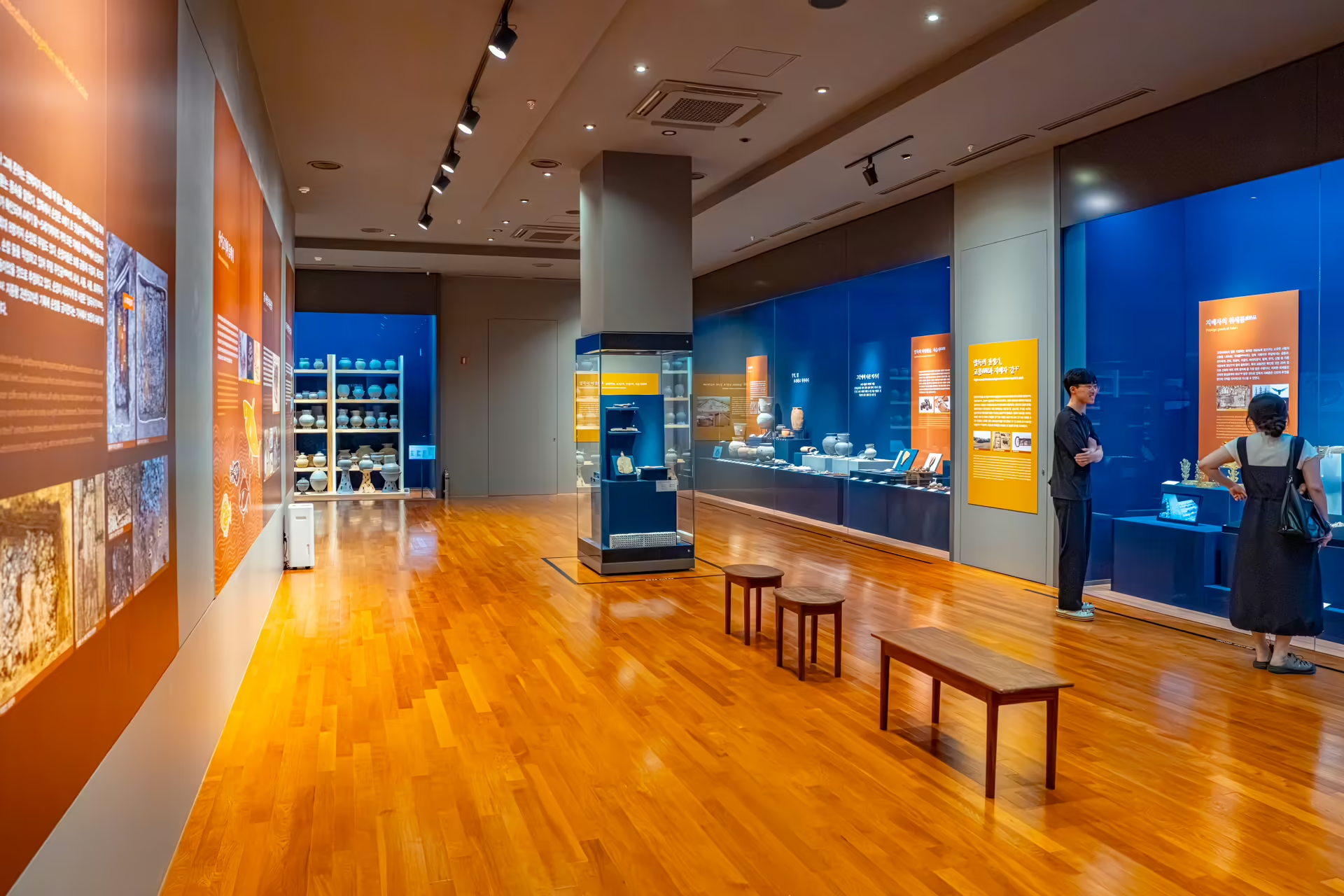
In early 1982, thieves broke into Tomb 2 at Imdang-dong. What came out — pure gold earrings, a silver belt, comma-shaped jade beads, a ring-pommel sword — was intercepted before it left the country. That interception is the founding event of everything in this building. Yeungnam University’s museum ran an emergency excavation from July to December that year, with no budget allocated for it, because nobody had planned for the possibility that the hill behind campus was a royal necropolis.
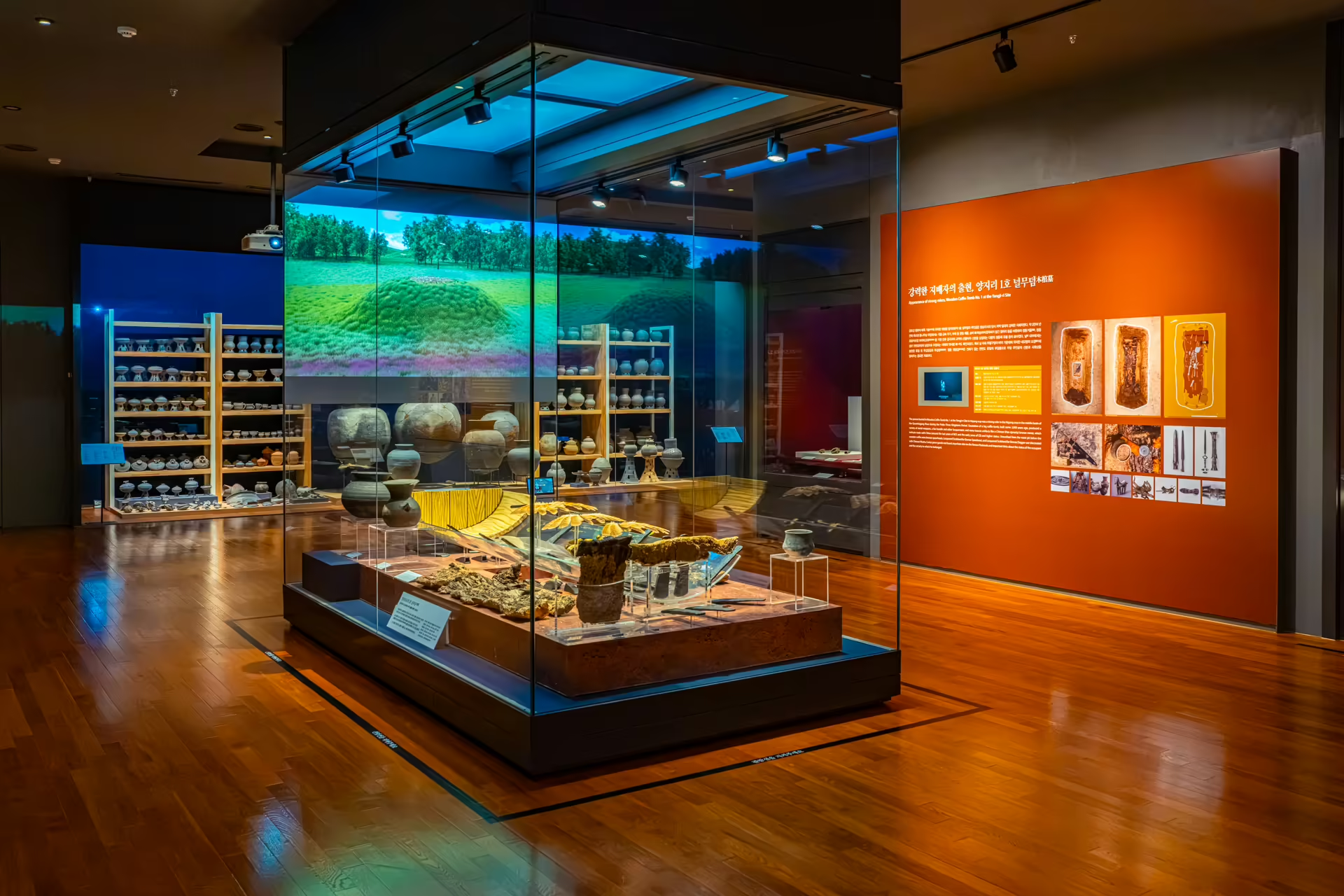
It was. The Imdang-dong tombs were declared a Historic Site in 1983 and the Joyeong-dong tombs in 1989; the two were re-designated in 2011 as a single combined property, with more ground added in 2016 and 2018. Excavation has never really stopped. When a housing development moved in during the late 1980s, whole ridgelines were dug ahead of the bulldozers. Roughly two thousand objects came out of the ground.
What Rock Preserves
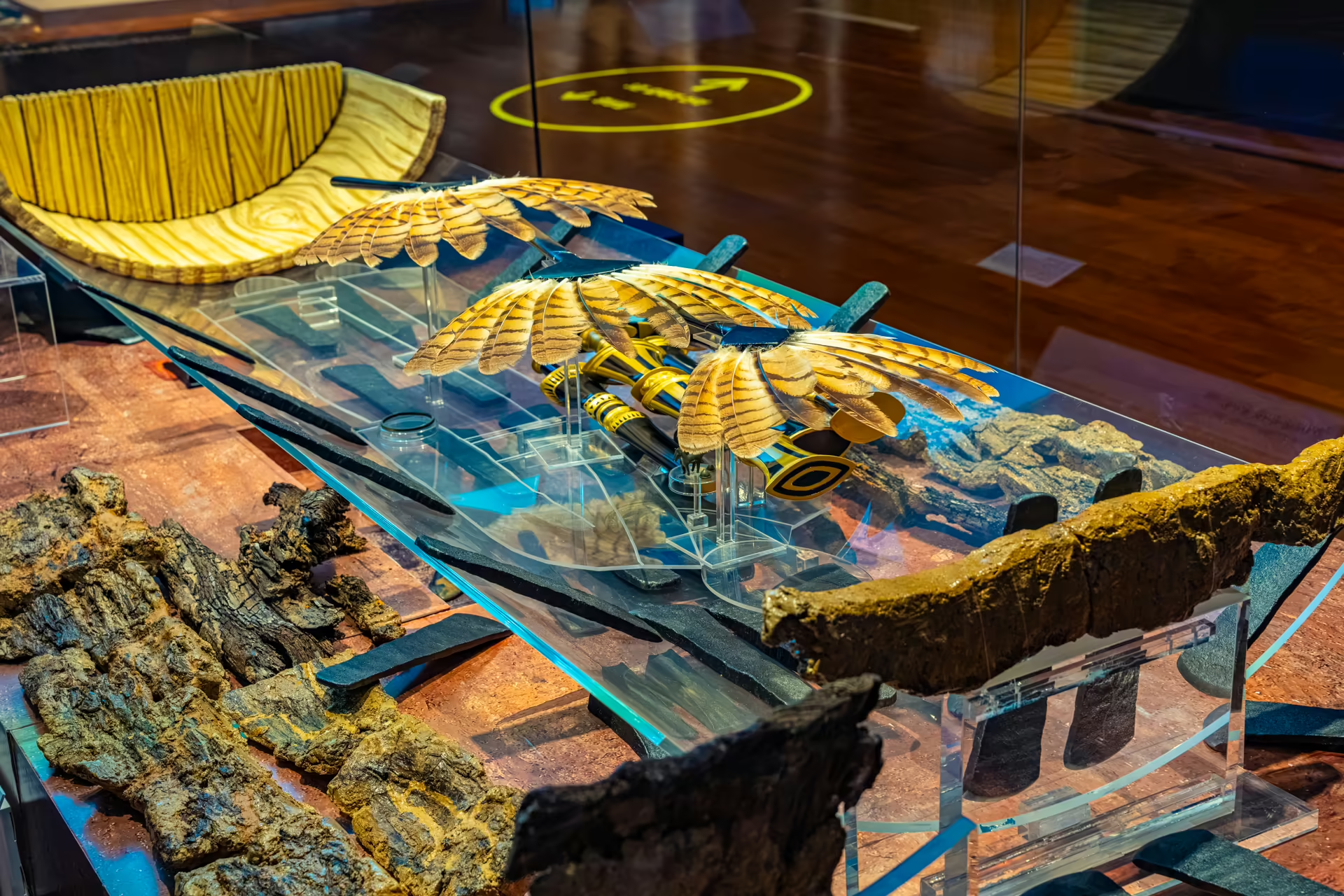
The Imdang tombs were cut into bedrock, and that detail changes what the museum can tell you. Bone survives in rock-cut chambers in a way it usually does not in Korean soil. Human remains here are complete enough that researchers have been able to study kinship among the people buried together — and to confirm, directly rather than by inference, that some of them did not choose to be there.
Tomb 1A was excavated in 2016 and 2017 and had never been robbed. The principal occupant lay with a silver belt at his waist, thin gold hoop earrings, a gilt-bronze cap and its ornament, and a ring-pommel sword. At his feet was a child wearing gold earrings. In the side chamber lay another adult wearing gilt-bronze earrings. The museum gives the practice its own section, and it does not soften it.
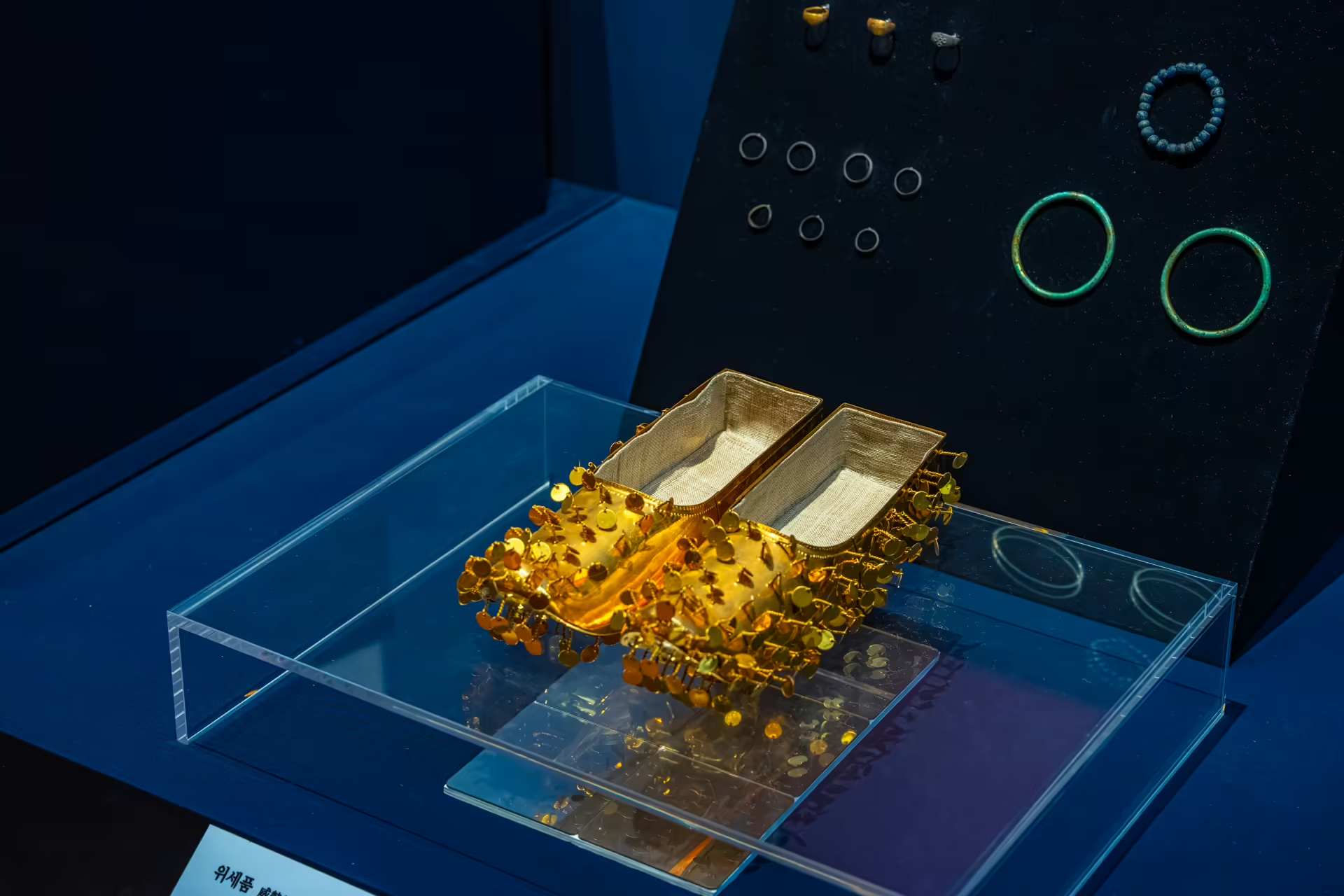
Shoes like these announce that the person below outranked everyone standing above the grave. Which leaves the question the gallery never answers out loud: on whose authority?
Two Hundred Years of Being Almost Independent
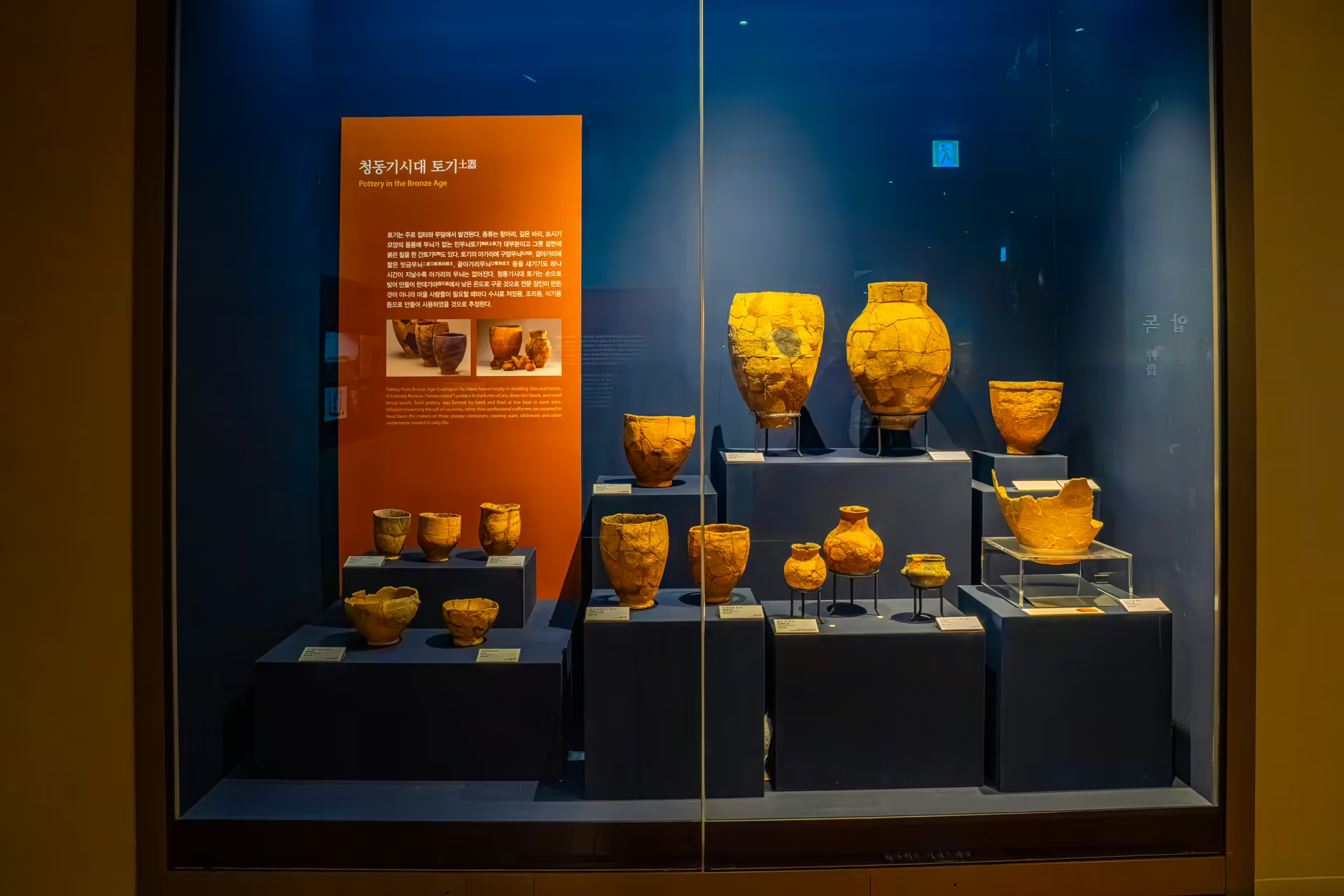
The written record and the buried record disagree, and the museum lets them.
The Samguk Sagi reports that in the twenty-third year of King Pasa — 102 CE — the ruler of Apdok surrendered to Silla. Another passage in the same chronicle, backed by a later geographical treatise, says Silla destroyed Apdok under a different king entirely and installed a garrison. A rebellion in 146 was put down and the population forcibly resettled south.
The ground tells a slower story. The museum’s own account puts Apdok’s absorption into Silla around the fourth century, and then makes the more interesting point: for roughly two centuries afterward, before Silla sent salaried officials to run the place, the local elite kept their autonomy. They were subjects on paper and rulers in practice. The gold in these cases is what that arrangement looked like — Silla-style regalia worn by people Silla had not yet gotten around to replacing. If you have already walked the royal mounds at Gyeongju, this is the provincial version of the same story, and it is the half nobody tells.
The name went before the power did. Apdok became Apdok-gun, then Amnyang-ju, then in 757 it was renamed Jangsan — jang meaning roe deer, a plain descriptive word for a valley full of them. In 940 the character was swapped for a prettier homophone. And in 1310 the whole thing was thrown out and replaced with Gyeongsan, because the old name shared a sound with the personal name of King Chungseon, and you did not use a king’s name for a county. The city you are standing in is called what it is called because of a naming taboo seven hundred years ago.
The Jar With Three Faces
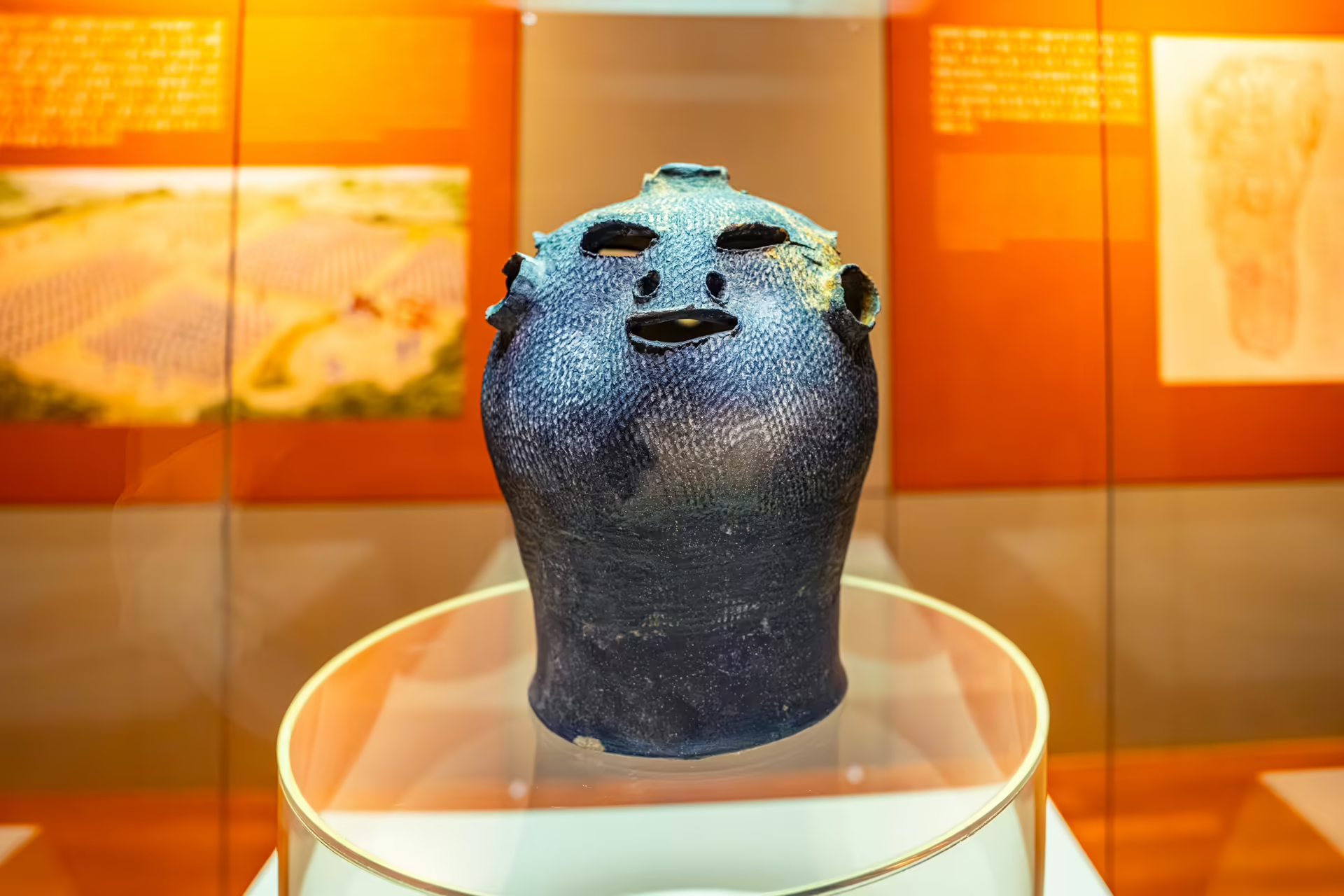
This is the object people now come for, and it was found by accident in November 2019 during road construction for an industrial park in Wachon-myeon, north of the city.
It is 28.1 centimeters tall, shaped like a small jar turned upside down, and it carries three faces pierced through the clay wall. Other Korean sites have produced pots with a face on them. Nobody has found another with three. It is generally read as ritual equipment, which is archaeology’s honest way of saying we know it mattered and we do not know exactly how.
What lay underneath it matters more to historians. A wooden tablet, 74.2 centimeters long, written on five faces — some accounts say six — carrying somewhere between ninety and a hundred characters. Among them: valley, dry field, wet field, embankment, and the two units Korea used to measure taxable land. The character for wet field is a Korean invention, not a Chinese import. The document appears to be a sixth-century Silla land register, which pushes the accounting vocabulary of the Korean state several centuries earlier than the textbooks had it.
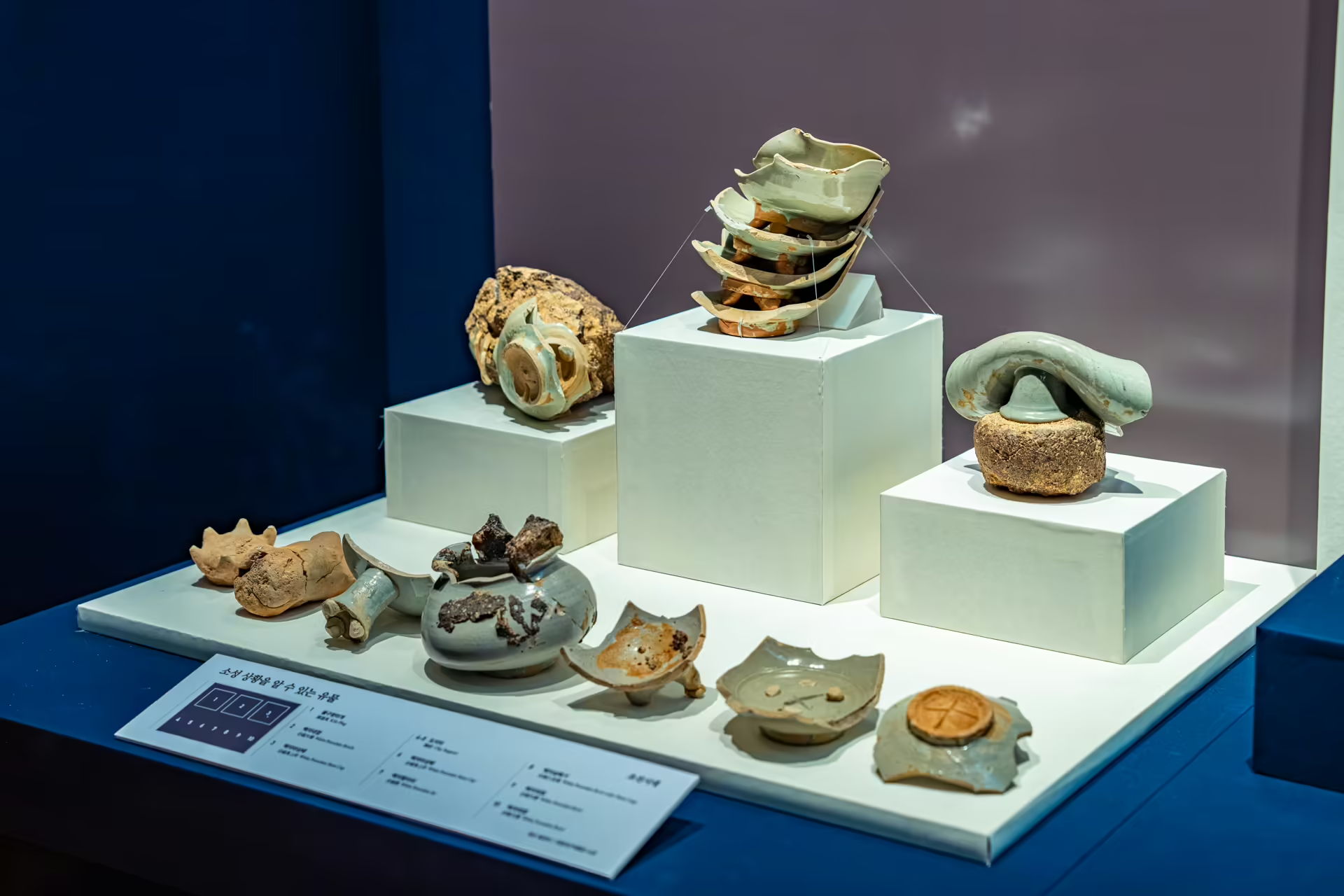
The Sowol-ri material — 417 objects — was formally transferred to Gyeongsan in July 2024, and the museum ran a special exhibition on it from November 2024 to May 2025. The tablet itself was out for only the opening week; what you generally see is a replica alongside the infrared imaging. The face jar was in the case when I visited, and there is a permanent Sowol-ri section in the first-floor gallery. If it is the one thing you are coming for, call ahead on 053-804-7314. Objects rotate.
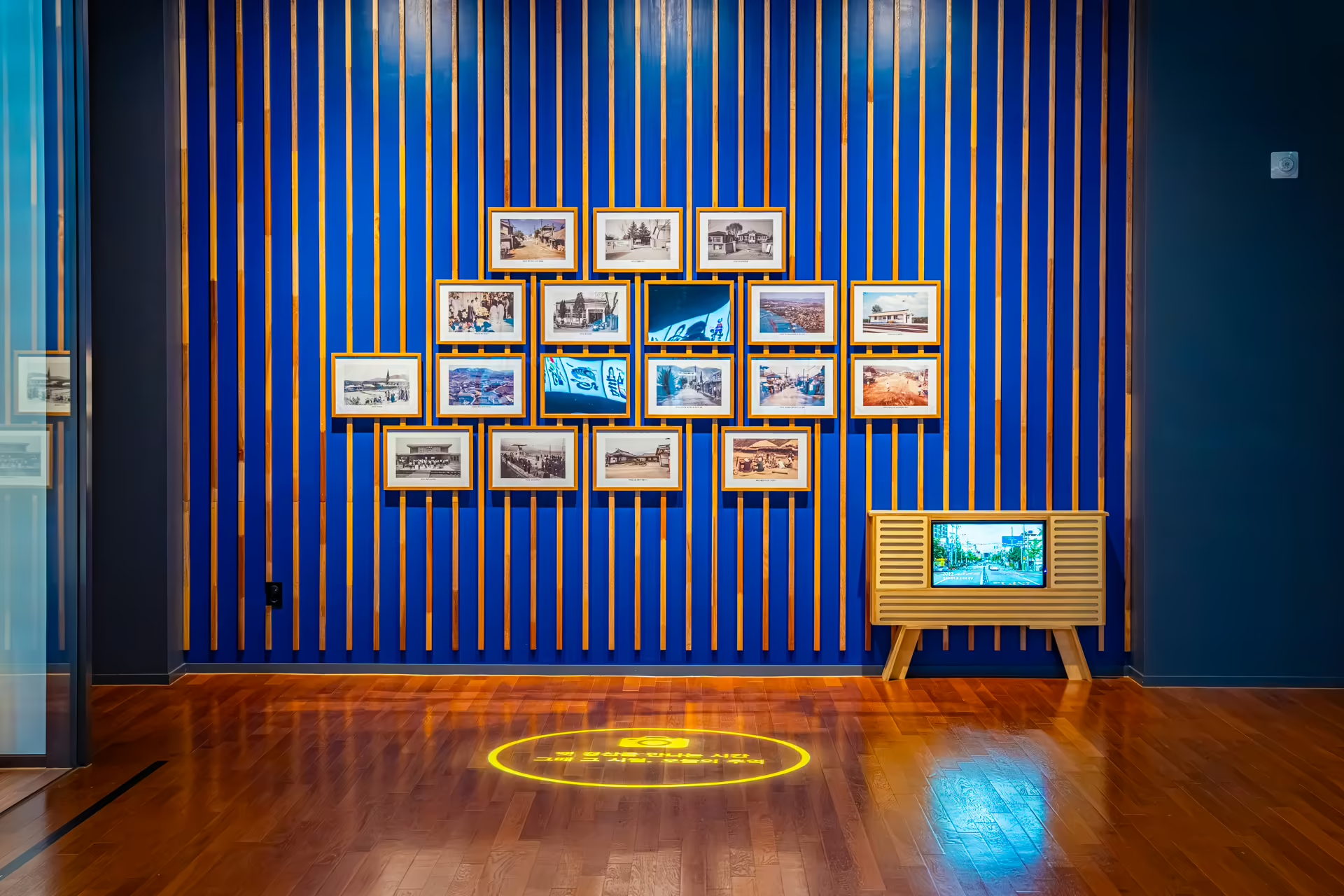
The second floor moves through Goryeo, Joseon and the twentieth century, and it is a more conventional local-history gallery. It is also where Gyeongsan stops being a lost kingdom and starts being a normal Korean county town. If you like that register of museum, Busan’s modern history museum does the same job on a bigger canvas.
The Tomb That Has Moved House Twice
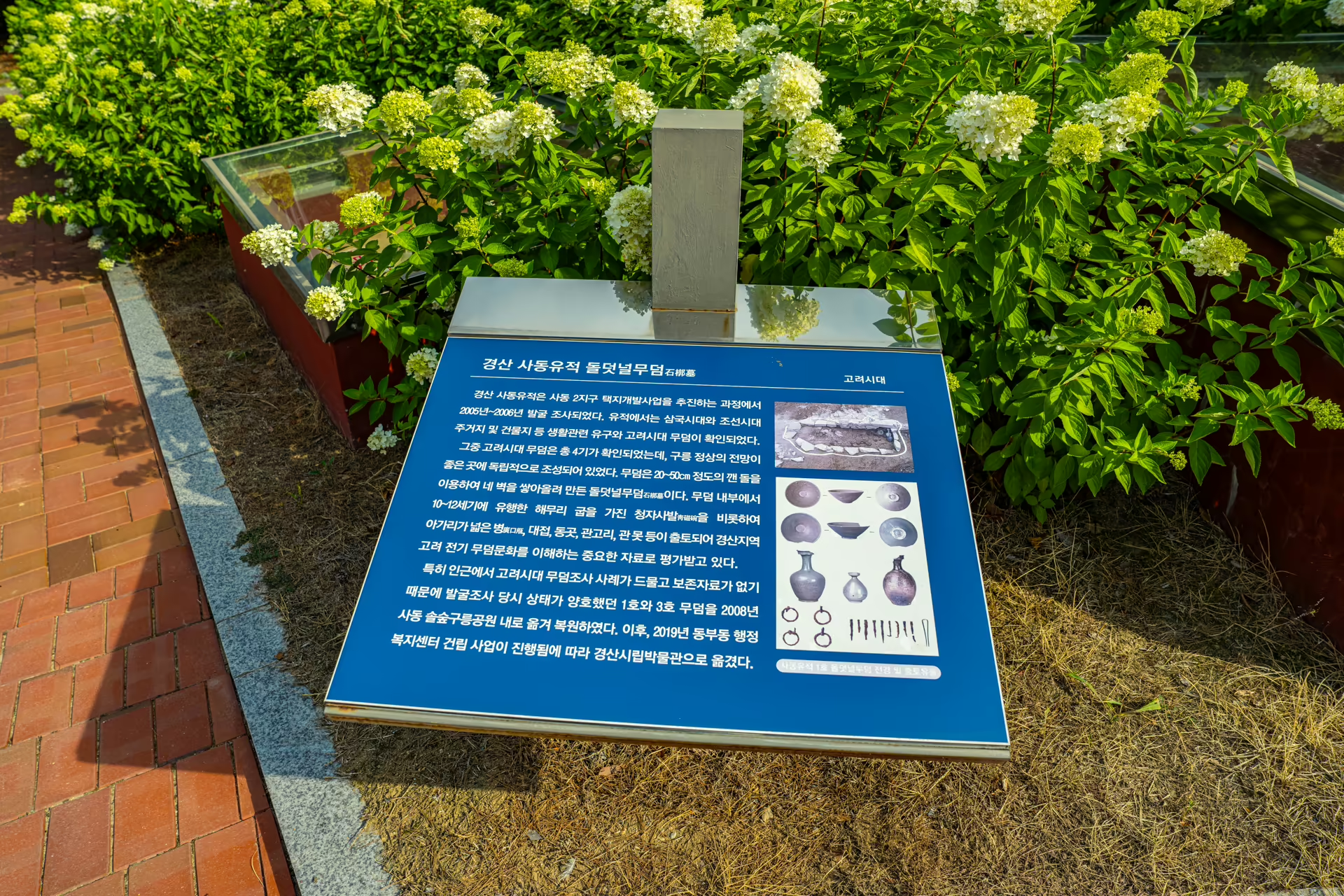
Go back outside and find the blue panel near the hydrangeas, because the story on it is better than the object it describes.
In 2005 and 2006, a housing development in Sa-dong — the museum’s own neighborhood — turned up four Goryeo-period burials on a ridge with a good view. They are stone-lined tombs, walls built up from broken slabs twenty to fifty centimeters across. Inside were celadon bowls with the sun-halo foot that was fashionable between the tenth and twelfth centuries, wide-mouthed bottles, hairpins, coffin rings and coffin nails.
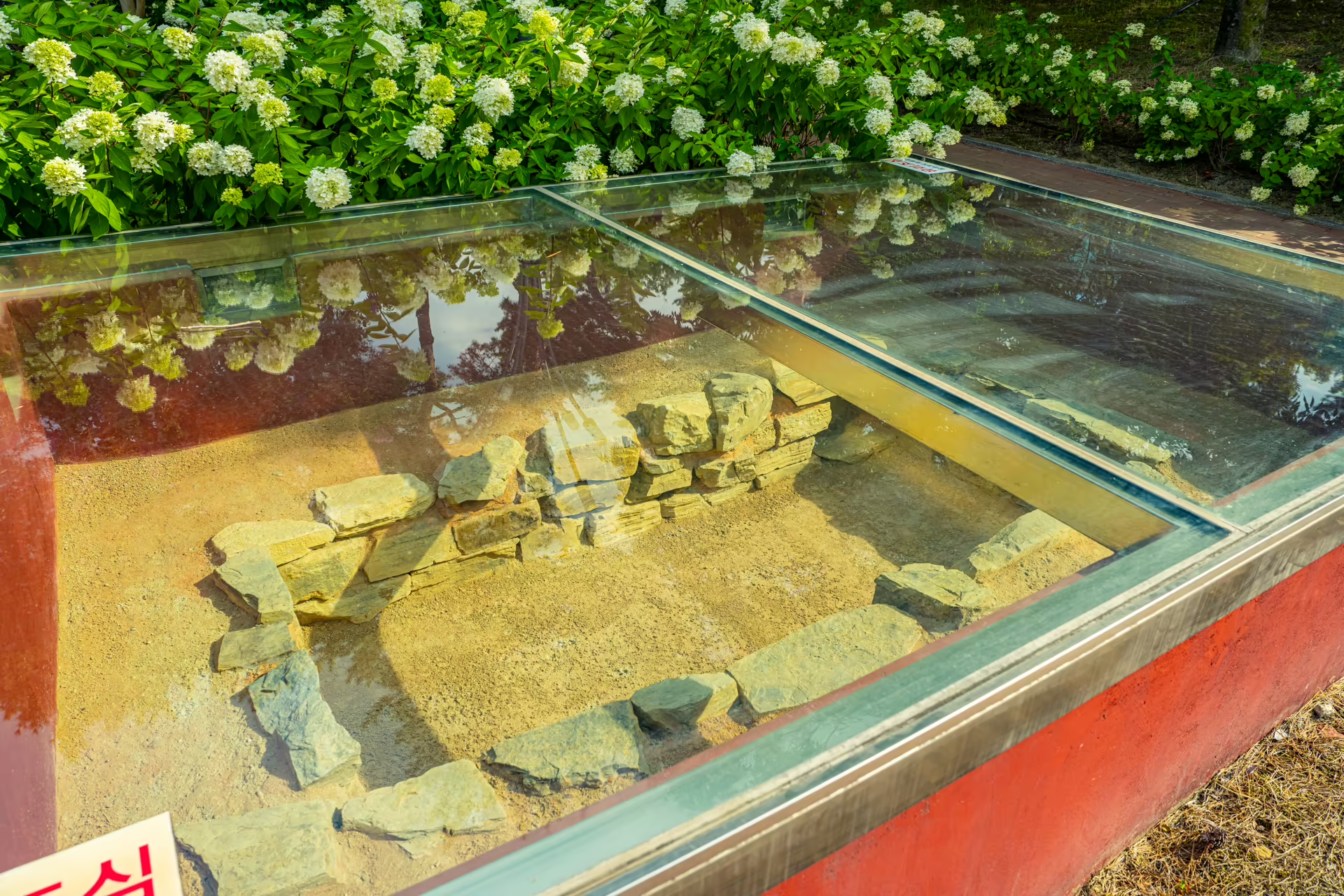
Goryeo tombs are rare around here, so tombs 1 and 3 — the two in decent condition — were lifted and rebuilt in a nearby neighborhood park in 2008. Then in 2019 the city built a community welfare center on that spot, and the tombs moved again, to the museum lawn. There is something very Korean about that, and I mean it affectionately.
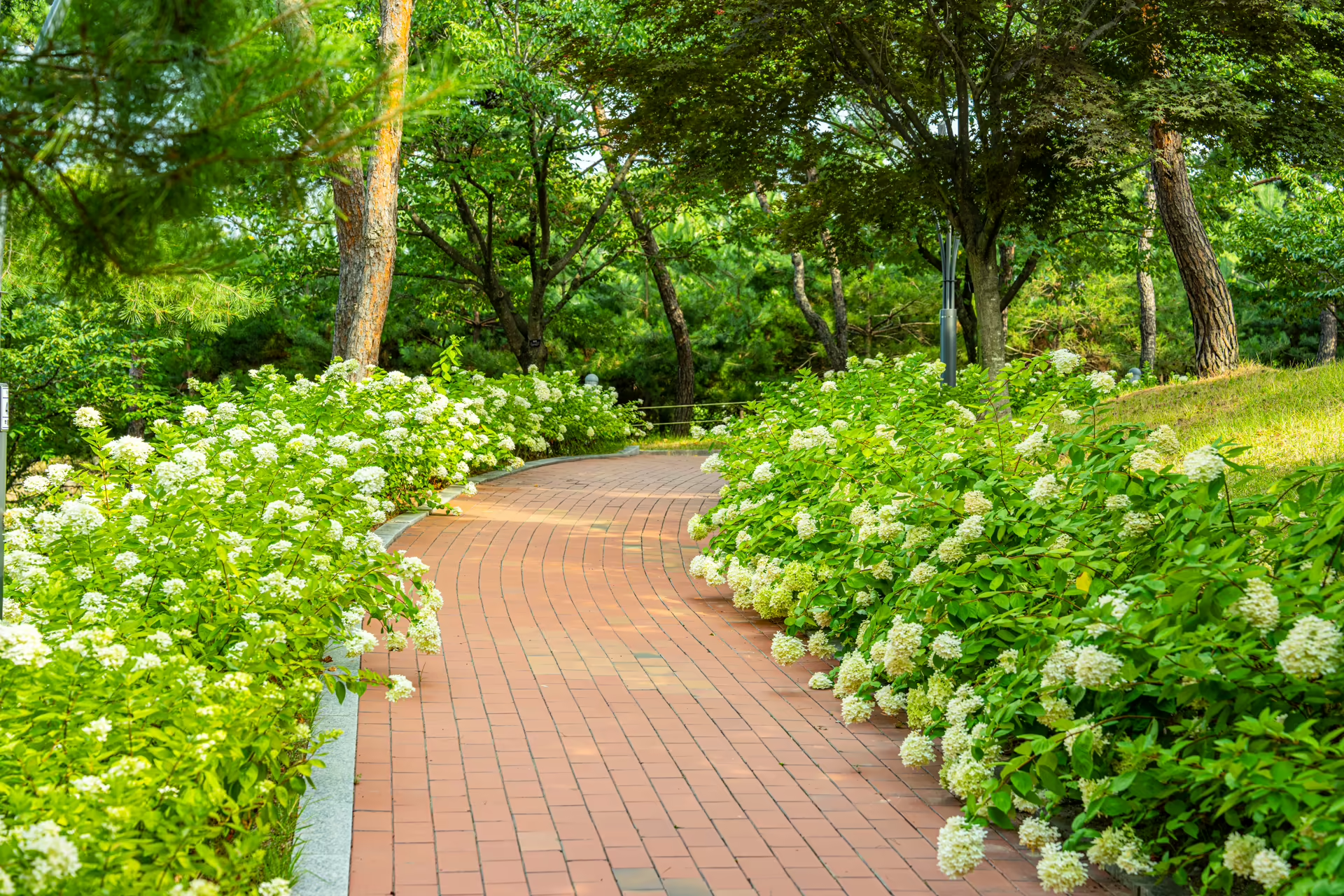
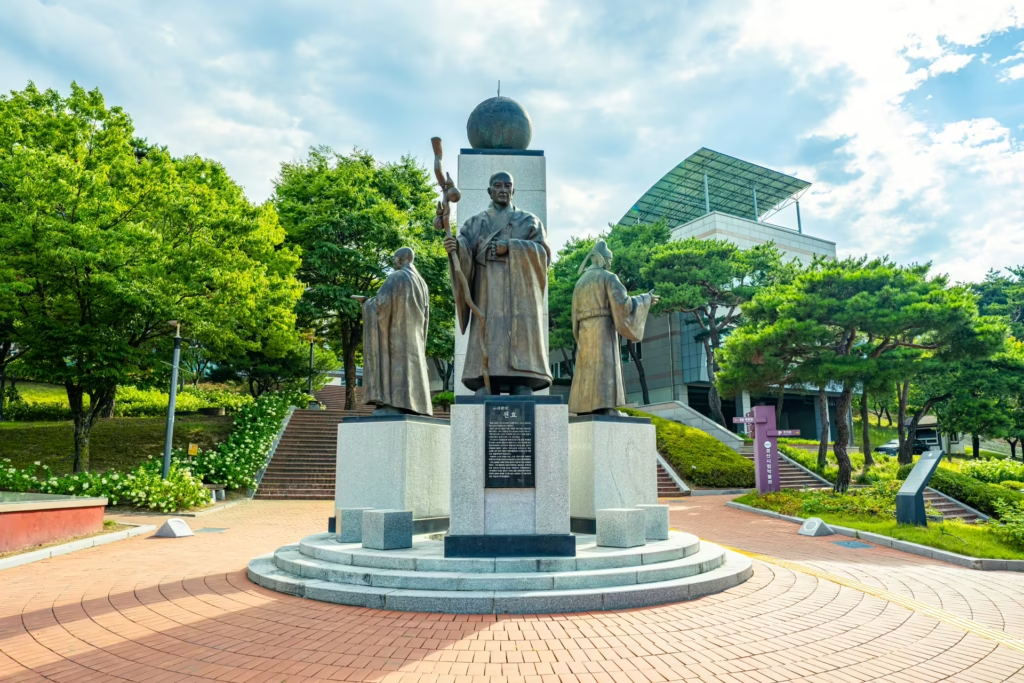
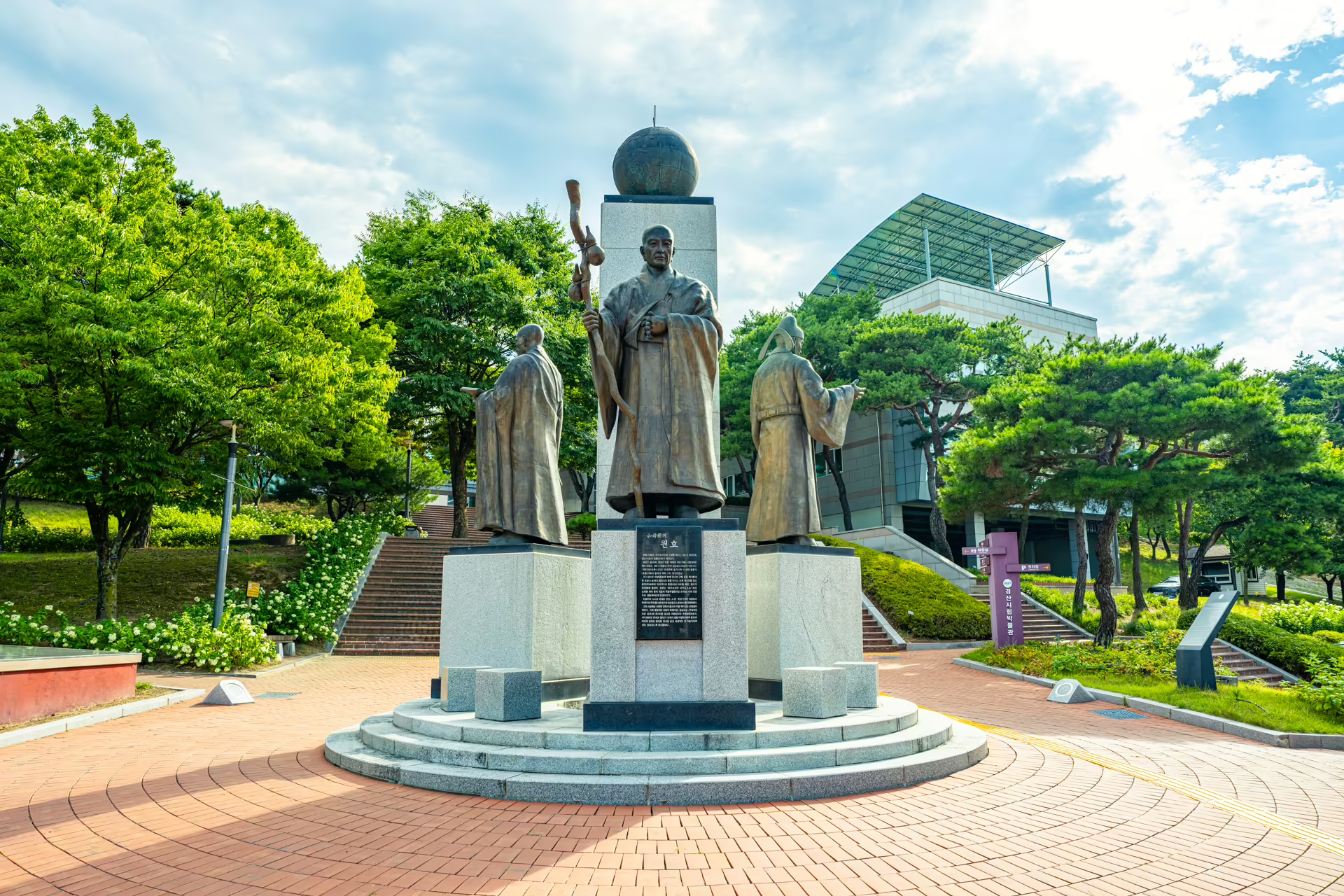
The rest of the garden is worth ten minutes. A Joseon stone Buddha, a Goryeo three-story pagoda, a row of monks’ reliquary stupas, civil-official figures, and a line of merit stelae gathered from around the county — the things that get left behind when a temple closes or a road widens. At the entrance stands the bronze group you passed on the way in: Wonhyo, the monk whose writing shaped Korean Buddhism; his son Seolchong, credited with systematizing how Korean was written using Chinese characters; and Iryeon, who compiled the Samguk Yusa. The city has built an entire park around the three of them a few kilometers south.
Who This Is Actually For
With only three days in Korea, this does not make the cut. It is a second- or third-trip stop — for people who have done Gyeongju and want to know what the provinces looked like from underneath, or who are staying in Daegu with a free morning, or who have kids who will remember a jar with three faces long after they have forgotten a dynasty. It is free, it is air-conditioned, and it takes an hour unless you read every panel, in which case it takes two.
Two things nearby, if you have a car. The Imdang Heritage Exhibition Hall opened in May 2025 about three kilometers away, built directly beside the tumuli. It reconstructs two Apdok tombs at full size so you can walk inside one, devotes a gallery to the human and animal remains, and puts an observation deck on the roof so you can read the burial mounds in the landscape. It drew a hundred thousand visitors in its first year. Confirm hours and admission before you go — it is new enough that the published information is still catching up. And Bangokji Reservoir, a willow-fringed farm pond that Korean photographers get up at dawn for, is about twenty minutes southeast.
The label under the child’s earrings does not soften anything. It gives the size, the material and the position in the tomb — at the feet of the man in the main chamber — and then stops. No municipal museum is obliged to be that plain about what it is holding. This one is, and it costs nothing to walk in.
Practical Manual
| Name | Gyeongsan Museum (경산시립박물관) |
| Address | 46 Bangmulgwan-ro, Gyeongsan-si, Gyeongsangbuk-do 경상북도 경산시 박물관로 46 |
| Phone | 053-804-7314 |
| Hours | 09:00–18:00, last admission 17:00 |
| Closed | Mondays, January 1, and Seollal and Chuseok themselves |
| Admission | Free |
| Galleries | 1F Ancient Culture (Apdok, the Imdang tombs, Sowol-ri); 2F Historical Culture; special exhibition hall; children’s hands-on room (online reservation required); outdoor stone collection |
| Guided tours | 10:00–17:00, excluding 12:00–13:00. Groups of ten or more book online; solo visitors can ask at the first-floor desk |
| By train | KTX Seoul → Dongdaegu, then Daegu Metro Line 2 to Imdang or Yeungnam University. About 3 km from there — take a taxi or a bus |
| By bus | 100 and 399 → City Museum stop. 990, Namsan 1, Namsan 2, Yongseong 1 → Mirae University–City Museum stop |
| By car | About 30 minutes from central Daegu. Parking on site, step-free main entrance, elevator, wheelchairs available, nursing room |
| Website | gbgs.go.kr/museum |
Navigation Tip: Google Maps does not give driving directions in Korea. Download Naver Map or KakaoMap before you travel and search the Korean name — 경산시립박물관. For the exhibition panels, Papago handles Korean museum labels better than most general translation apps; use the camera mode.
Hours, closures and exhibition contents were correct at the time of reporting. Special exhibitions rotate and individual objects come off display; call the museum if one specific artifact is the reason for your trip.