
150 Meters of Willow
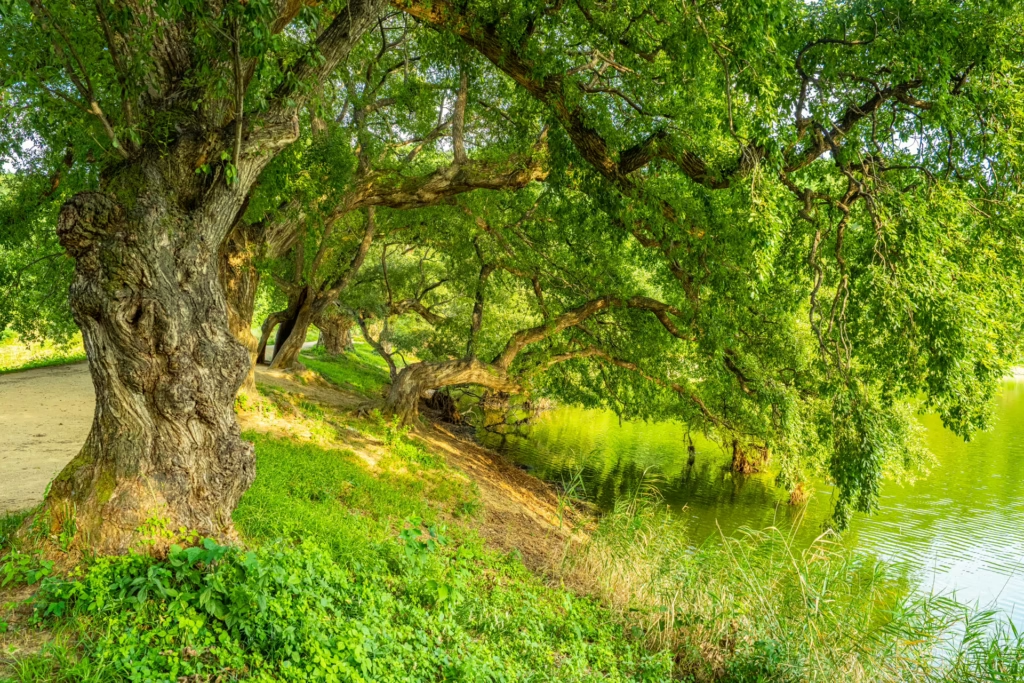
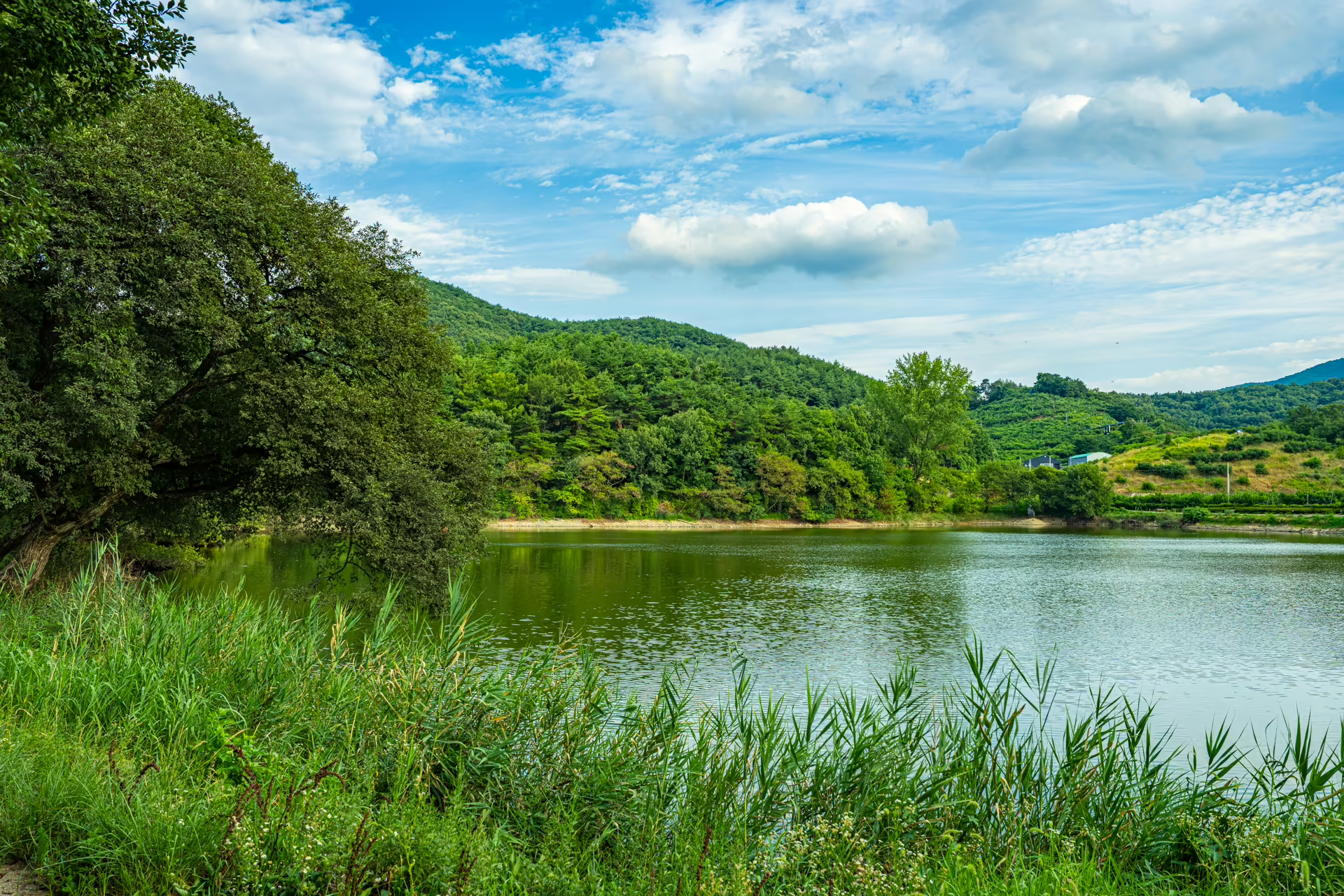
The famous part of Bangokji Reservoir is shorter than a city block. I want to say that first, because every photograph you have seen of this pond was taken from roughly the same stretch of dirt embankment on the northeast side, and if you arrive expecting a landscape you will drive past it. What is here is a bank of old willows leaning out over still water, about twenty of them, along roughly 150 meters. That is the whole attraction. It is also, on the right morning, one of the most photographed 150 meters in Gyeongsangbuk-do.
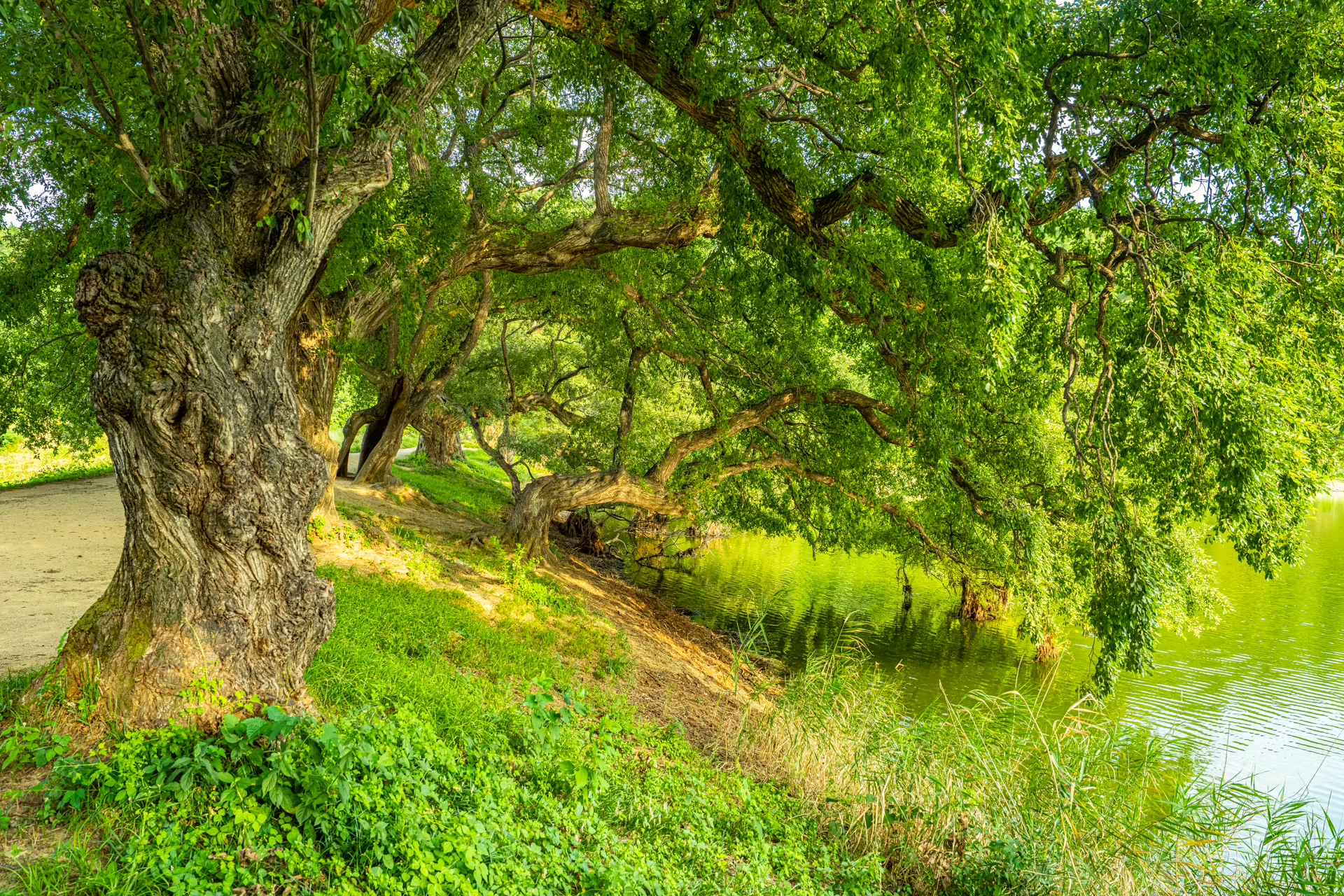
Korean photographers call it the second Jusanji, after the flooded willow pond up in Cheongsong that ended up in a Kim Ki-duk film — the Korea Tourism Organization page for Jusanji will give you the comparison. It is a generous comparison and everybody here knows it. Jusanji sits inside a national park and drops eight meters; Bangokji is shallower, flatter, and entirely undramatic in the middle of the day. It is also free, permanently open, and twenty minutes from a city with a subway, which Jusanji is not.
Getting to Bangokji Reservoir Without a Car
From Seoul, KTX to Dongdaegu, then onward to Gyeongsan — the Daegyeong commuter line opened in December 2024 and made that leg easier. From Gyeongsan the pond is out in Namsan-myeon, and this is where a rental car stops being a convenience and starts being the plan.
Public transport works, technically. Seven services a day reach Bangok-ri, and three of them are bus 399 running straight through from Gyeongsan with no change at all — including the first, around 07:05, which is exactly the one a photographer wants. The other four require a transfer at Jain onto the Namsan 2 township bus. Most advice online mentions only the transfer, which sends you hunting for a bus that has not started running yet. The times I found were posted in 2022, so confirm at the stop. A taxi from Gyeongsan runs somewhere around 12,000 won; from Jain it is closer to 8,000.
Nobody Agrees How Old This Place Is
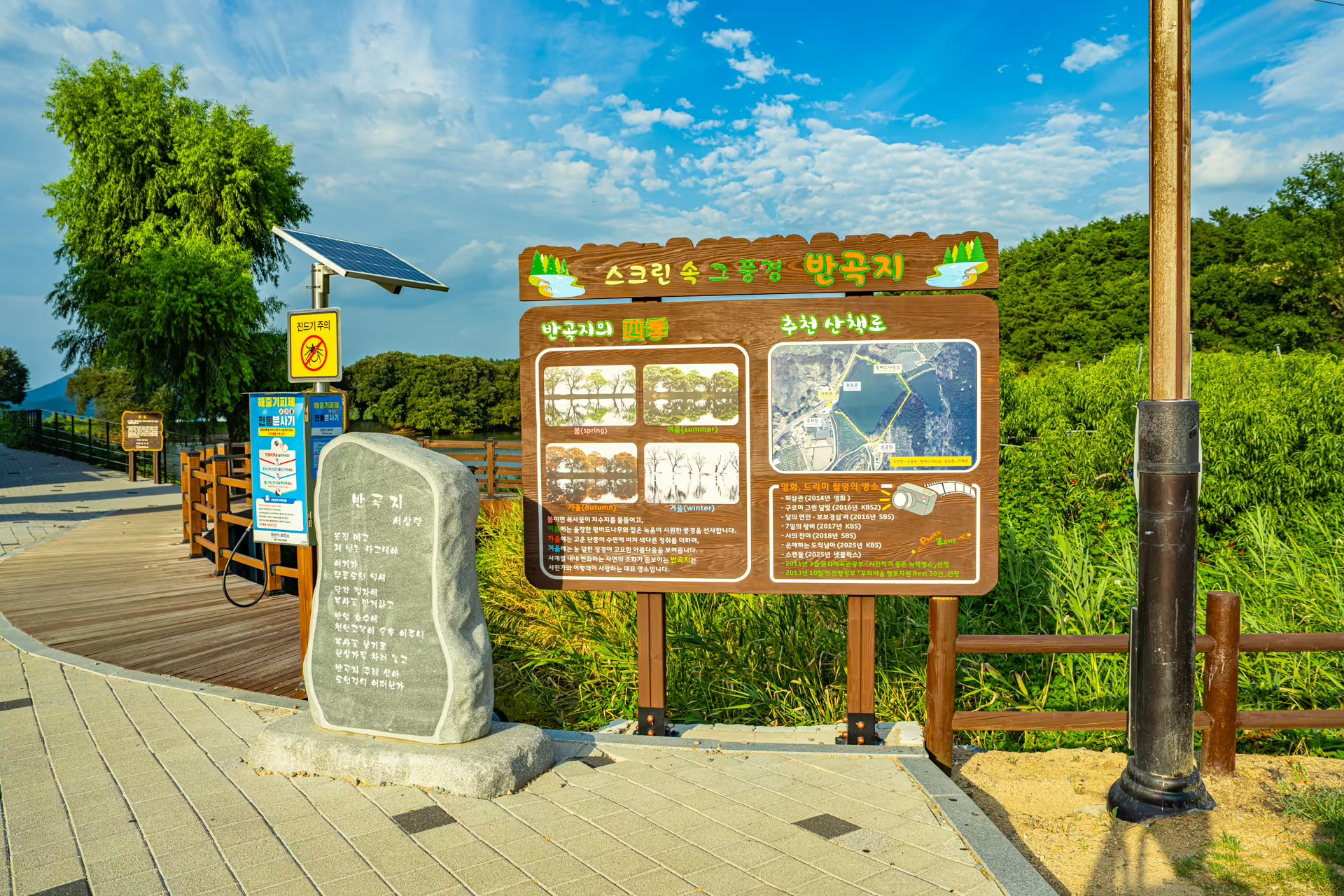
The city’s reservoir register says 1903. That is the number on the interpretive panel, in the tourism database, and in every press release Gyeongsan has issued.
In late 2023, Kim Yak-su — a former university professor who now heads a local heritage group — argued in the regional journal Gyeongsan Munhak that the figure is wrong, not fabricated but misread. He points to the Yeojidoseo, an eighteenth-century provincial gazetteer, which lists a Bangok embankment in the old Jain county: fifteen li south of the county office, 1,085 ja around, fifteen ja deep. Converting at roughly 30 centimeters to the ja, that is a pond about 329 meters in circumference and four and a half meters deep, on this exact spot, already in existence under King Yeongjo. His reading is that 1903 records a reinforcement and enlargement of the dam rather than the digging of a new pond, and that the name shuffled around afterward — the old pond was renamed Oeban-ji, a newer one became Sin-oeban-ji, and only in the 2000s did the name Bangokji come back into general use.
As far as I can tell the city has not adopted the revision, so both numbers are in circulation and you will meet them both. The willows have the same problem. Gyeongsan’s own 2026 material describes them as over 120 years old, which lines up neatly with a 1903 planting. Tourism copy and a 2023 architecture journal put them at two to three hundred. Take your pick; nobody has published a core sample.
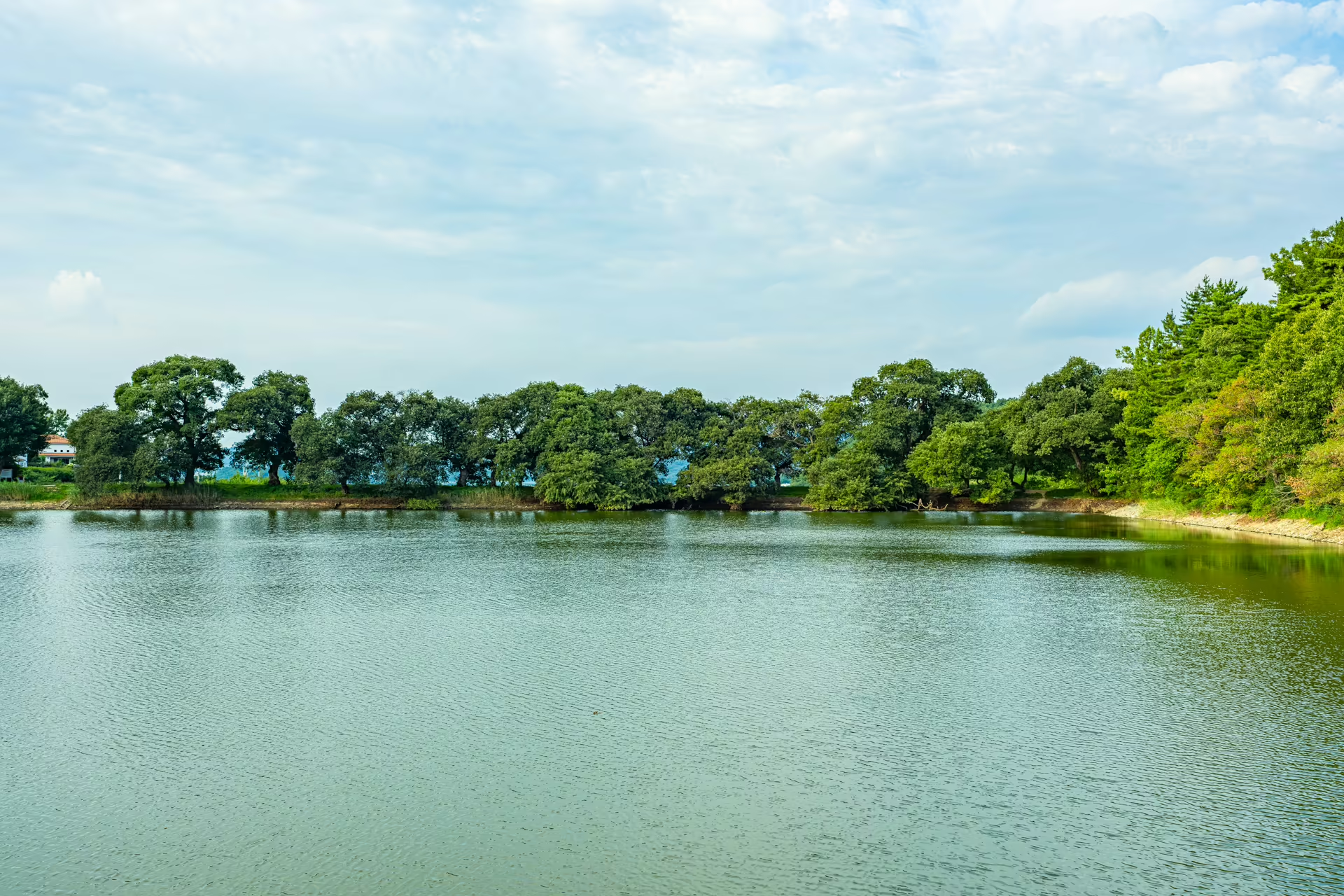
What is not in dispute is the function. This is farm infrastructure — a 79-hectare catchment, about 39,300 cubic meters of water, an earth dam six meters high and 139 meters long, built to irrigate rice. The beauty is a byproduct, as it usually is with the good ones.
The Loop, and How Long It Actually Takes
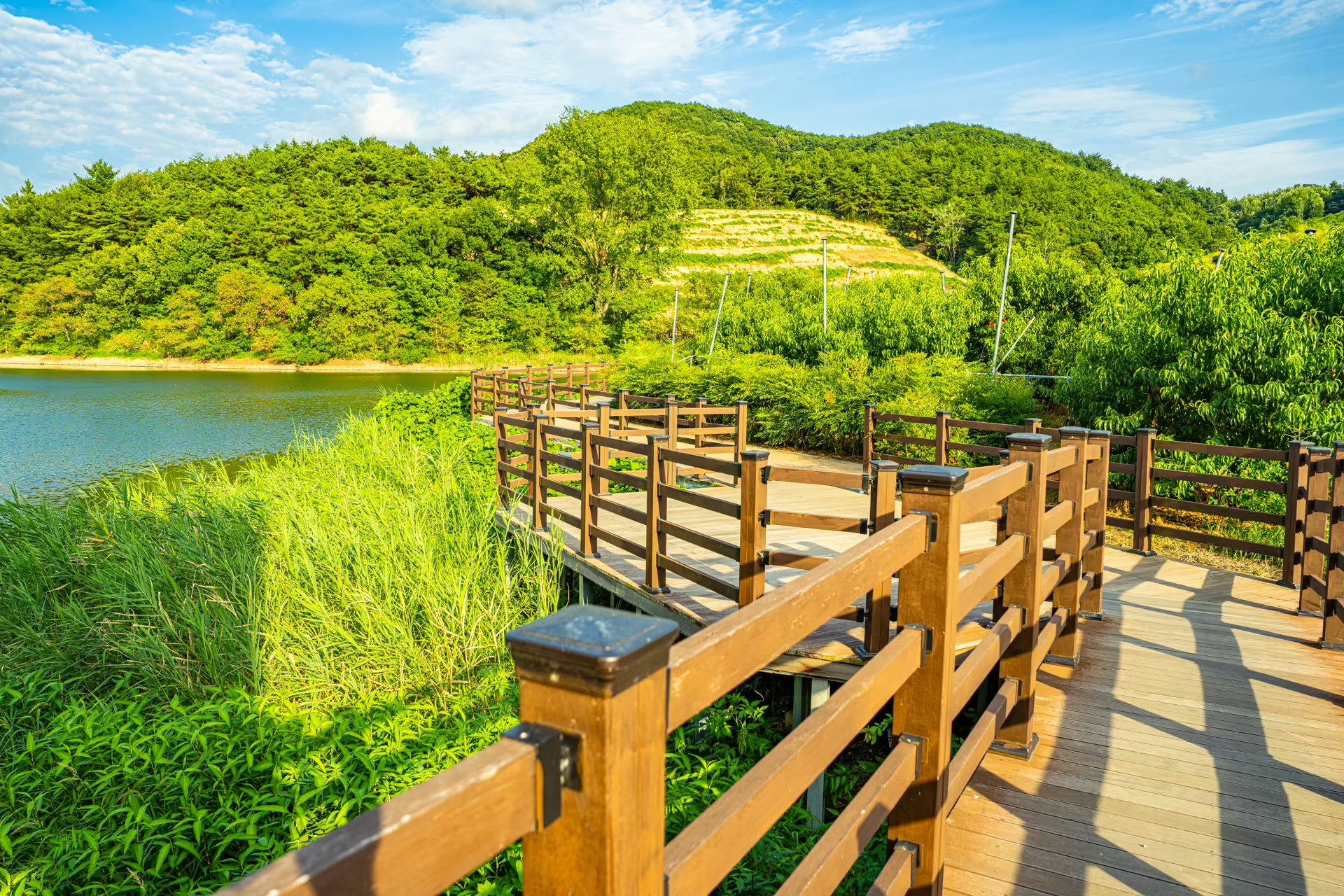
The circuit is a little over a kilometer and splits into two characters. The far side is a wooden boardwalk, lifted over the reed beds, easy underfoot. The near side is the old dam crest — packed earth, unpaved, running directly beneath the willows.
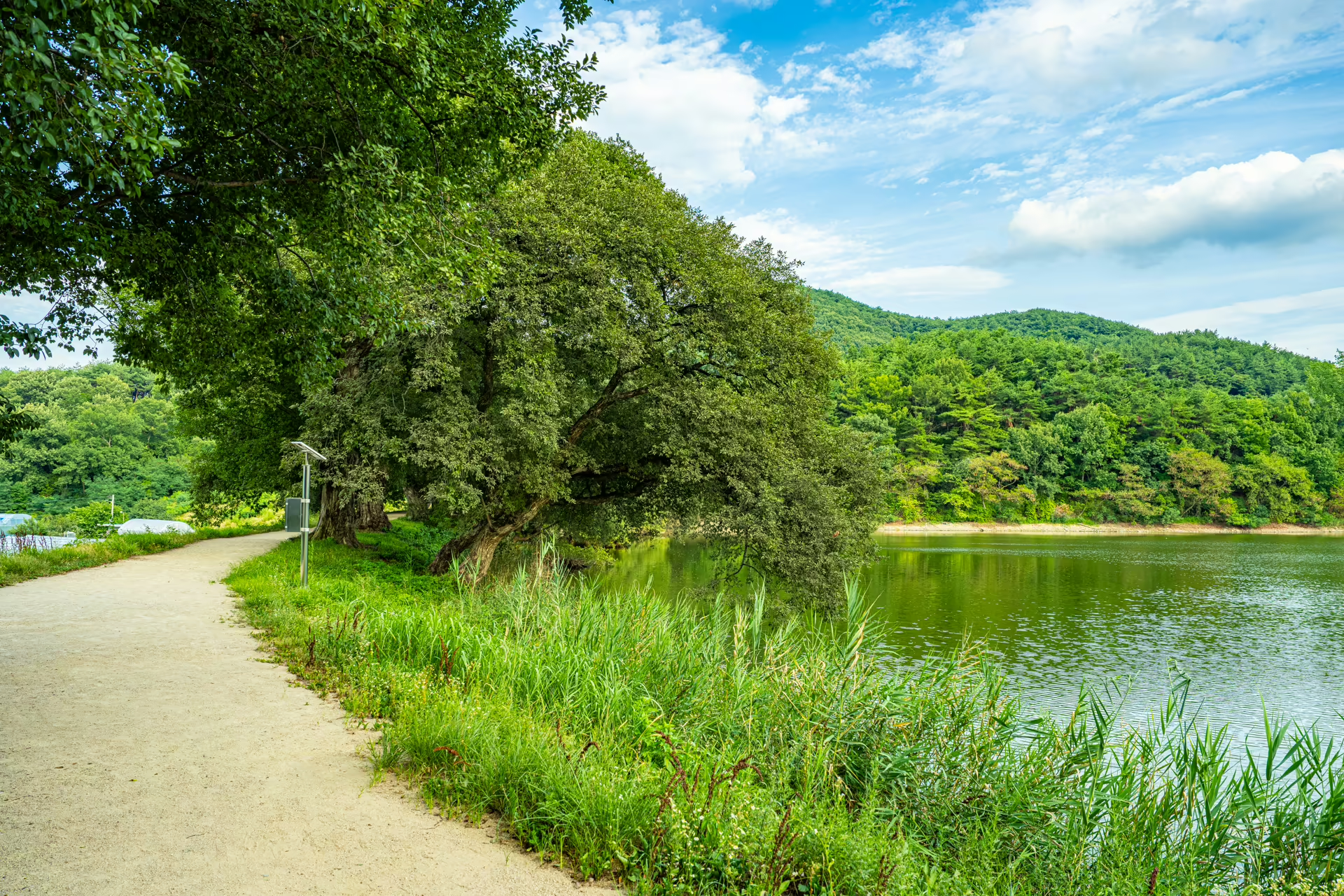
Fast walking gets you around in twenty minutes. With a camera, budget an hour, because the reflections change every few meters and you will keep stopping. There are no stairs and no steep sections; a stroller handles it, though there is nowhere here to rent one. Note that the octagonal pavilion that used to give the only elevated angle on the water came down in 2024, replaced by a single-story multipurpose center at the south entrance — the building the café is in.
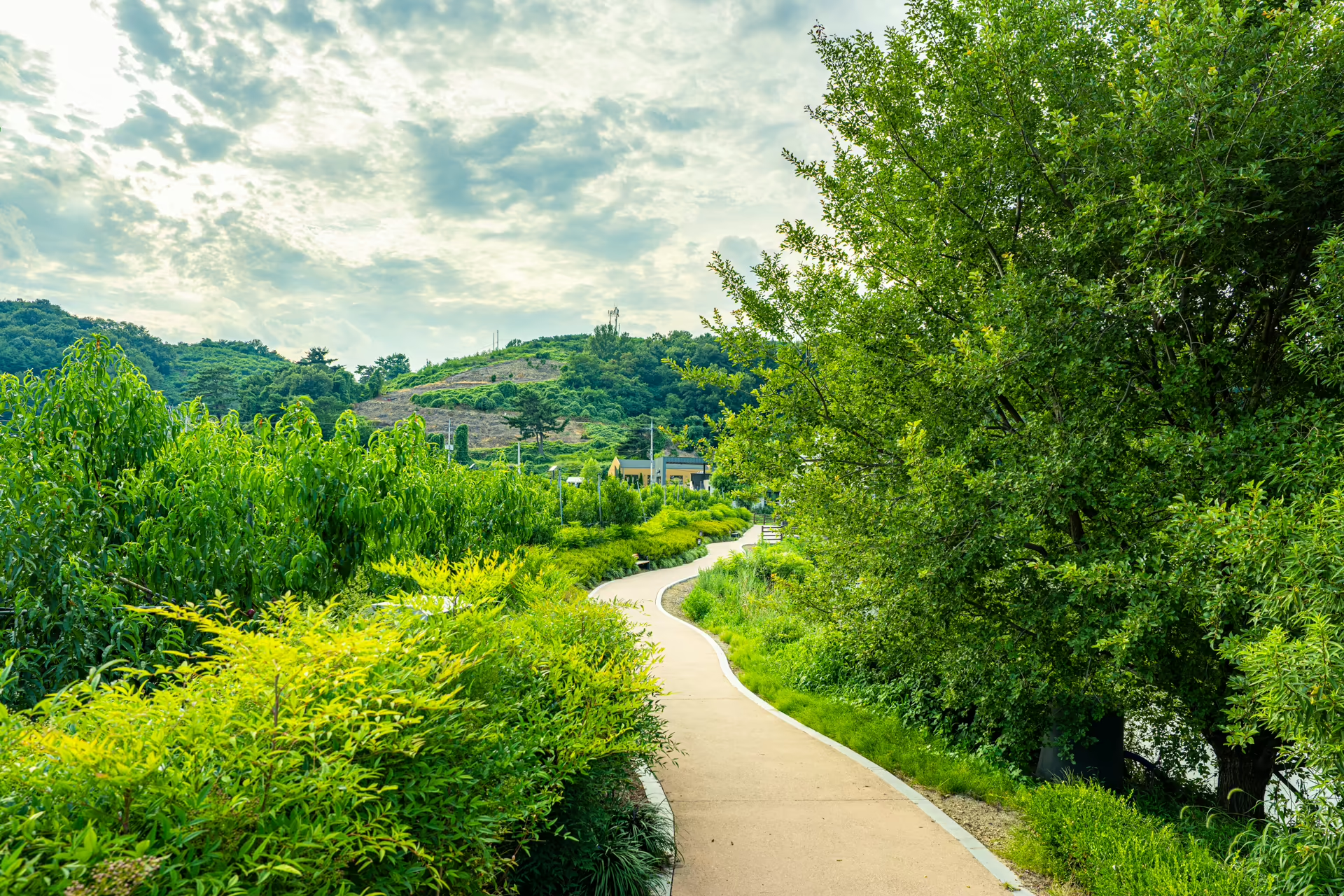
Facilities have improved a lot and older articles have not caught up. There is a parking lot at the entrance, public restrooms, an EV charging point, and the café in that new building. If you read somewhere that Bangokji is a bare-bones spot where you should bring your own snacks, that advice predates the 2024 rebuild.
When to Come
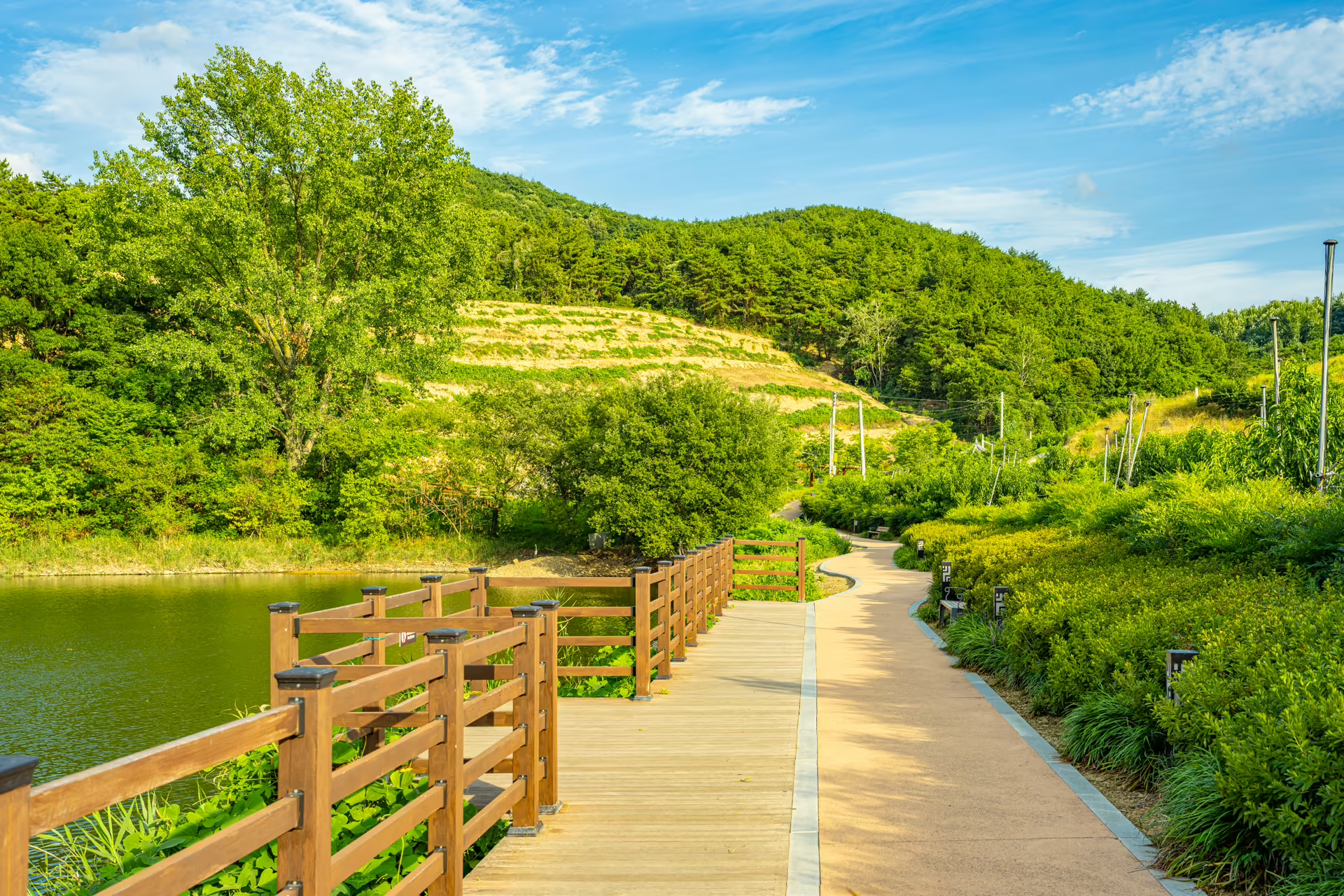
Gyeongsangbuk-do was Korea’s apple belt, and as the climate warmed the apple line moved north. The slopes that ring this pond are peach now — which is why for about two weeks a year the far bank turns pink while the willows are still that raw, almost yellow-green of new leaf. Pink against acid green, doubled in the water. That is the picture everybody wants.
The bloom is usually early to mid April, and it is drifting earlier: Gyeongsan scheduled its tenth Peach Blossom Walk for March 28 in 2026, which tells you how the growers are reading their own trees now. Watch the forecast rather than the calendar, and expect company — the embankment gets genuinely crowded in that window. If you are building a spring trip around blossom, the Gwangyang plum blossoms open a couple of weeks earlier and the Hadong cherry tunnel a little later, so the three can be strung together inside two weeks if the weather cooperates.
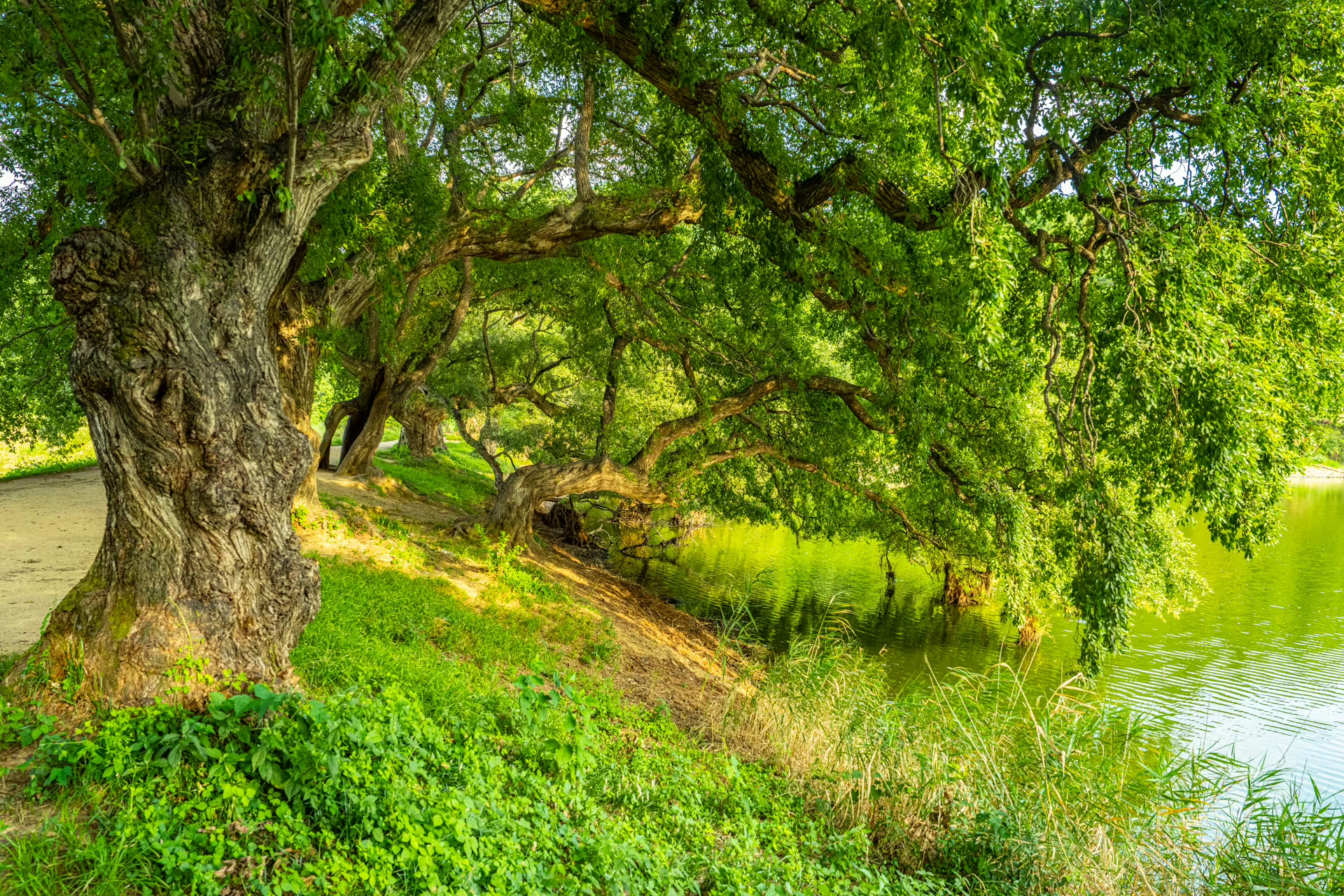
The rest of the year is quieter and, I would argue, better for walking if not for photographs. The reflections are heavier in summer, the reed beds are full, and you can have the loop more or less to yourself on a weekday morning.
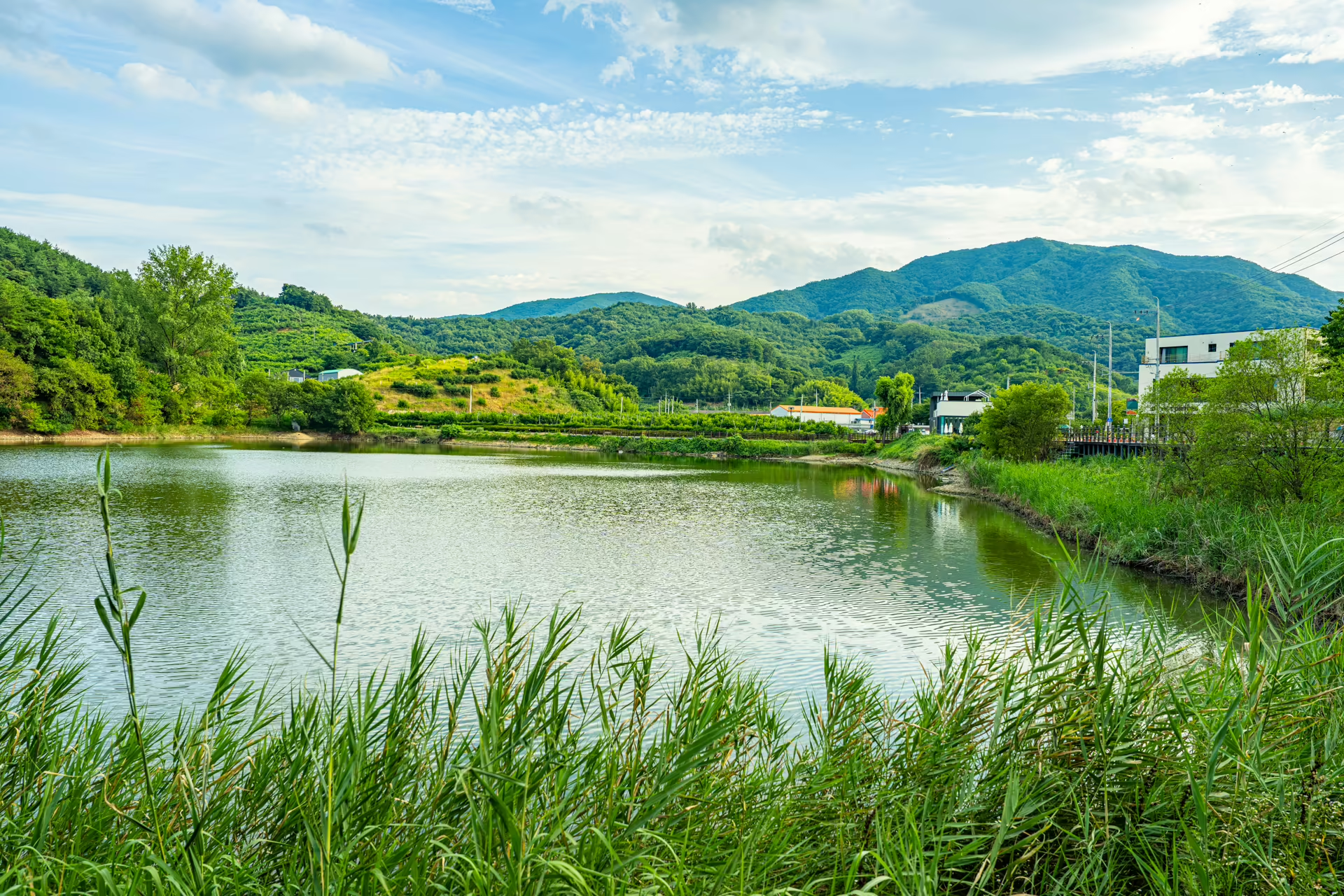
That mist is not a permanent feature. It forms when the day-to-night temperature swing is wide, which in practice means spring and autumn mornings rather than midsummer. If you are making a special trip for it, go at first light in April or October and accept that you may drive home with nothing.
You Have Probably Already Seen It
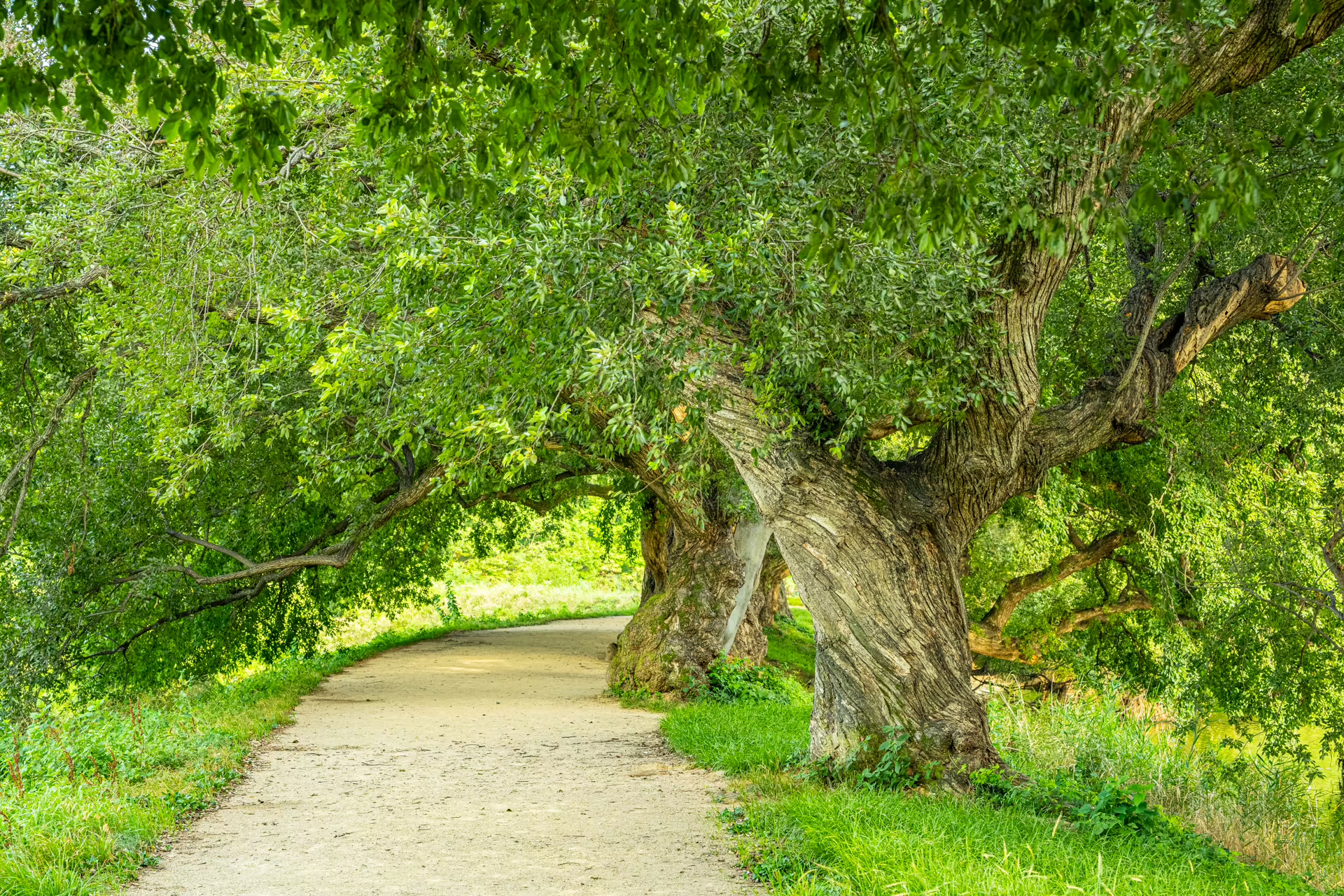
Bangokji has been a location scout’s shortcut for over a decade. Ha Jung-woo shot part of Chronicle of a Blood Merchant — the 2015 film he directed and starred in — here. Since then the pond has turned up in Moonlight Drawn by Clouds and Scarlet Heart: Ryeo in 2016, The Hymn of Death in 2018, Lovers of the Red Sky in 2021 and Bloody Heart in 2022. Local listings credit several more, including two 2012 dramas, but I could not verify those beyond tourism copy, so treat that list as longer than the confirmed one.
The reason is obvious once you are standing on the dam: point a camera along the willow line and nothing modern has been built on the far bank. That is not the same as protection, though. When the city spent two billion won turning the site into an ecological park and put the multipurpose center up at the south entrance in 2024, local photographers said publicly that it broke the thing that made the place worth filming, and a city official conceded the point. Go and judge for yourself which side you land on.
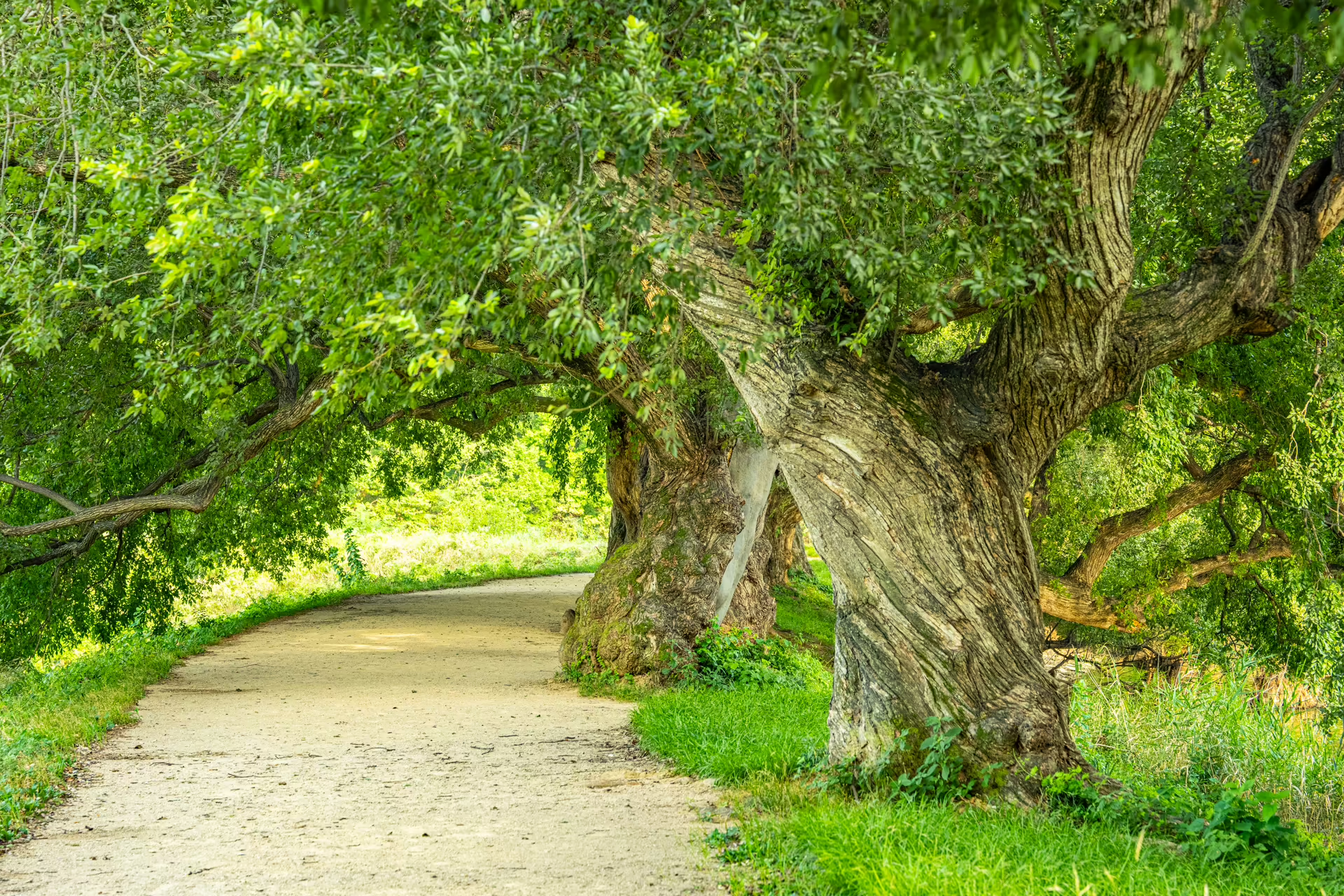
The official recognition came earlier than the dramas. The Ministry of Culture, Sports and Tourism named Bangokji a green destination for photography in 2011, and in 2013 the Ministry of Security and Public Administration put it on a national list of the best thirty local heritage assets. Neither of those is a household phrase, but together they explain why a farm pond has a boardwalk, a visitor building and a paved lot.
Who This Is Actually For
This one needs a car, or a very deliberately planned morning. Decide that before anything else, because there is nothing to do here except walk a kilometer and look at trees, and two hours of bus connections for that is a poor trade.
It is for photographers, and specifically for photographers willing to be somewhere at six in the morning. It is for anyone driving between Daegu and the Gyeongju side who wants a stop that is not a temple or a tourist street. And it is for people traveling with a parent or a small child who need half an hour of flat walking with a restroom and a coffee at the end.
If you are making the trip, build a half day around it. Gyeongsan Museum is about twenty minutes northwest, free, and holds the gold from a kingdom that used to run this valley. Samseonghyeon Historical Culture Park is roughly four kilometers away, laid out around the three sages Gyeongsan claims — Wonhyo, Seolchong and Iryeon — with a museum, gardens and a year-round rail slide that kids will find first. Jain Gyejeongsup, a rare surviving lowland grove of zelkova and fringe trees, is about six kilometers away and hosts the Jain Dano festival. Sangdae hot spring is 1.7 kilometers off, though the building is showing its age. And the Seongsan-ro stretch between Bangok-ri and Jogok-ri runs about a kilometer and a half through solid peach orchard in April — lovely to drive, but there is no sidewalk, so do not walk it.
The willows were planted to hold a dam together, and they are still doing it. The valves still open in June, the rice below still needs the water, and the photographers are, strictly speaking, in the way. Nobody in Namsan-myeon seems to mind.
Practical Manual
| Name | Bangokji Reservoir (반곡지) |
| Address | 246 Bangok-ri, Namsan-myeon, Gyeongsan-si, Gyeongsangbuk-do 경상북도 경산시 남산면 반곡리 246 |
| Phone | 053-810-5363 (Gyeongsan City culture and tourism division) |
| Hours | Open at all times, no closing day |
| Admission | Free |
| The loop | Just over 1 km. Boardwalk on the far side, packed-earth dam crest under the willows on the near side. Twenty minutes brisk, about an hour with a camera. Flat throughout |
| Facilities | Parking lot, public restrooms, EV charging point, café and multipurpose center at the south entrance (built 2024, replacing the old octagonal pavilion) |
| Best timing | Peach blossom early to mid April, earlier in warm years; willow tunnel and heavy reflections June to September; dawn mist on wide-temperature-swing mornings in spring and autumn |
| By train and bus | KTX Seoul → Dongdaegu → Gyeongsan. From Gyeongsan Station or Gyeongsan Market, bus 399 or 990 to Jain. Seven services a day cover the Jain–Bangok-ri leg: four as the Namsan 2 township bus, three as the 399 running straight through with no transfer (including the first, around 07:05). Times posted in 2022 — confirm at the Jain stop |
| By taxi | About 12,000 won from Gyeongsan, about 8,000 won from Jain, at the time of reporting |
| By car | Enter 반곡지 or the address above. Roughly 20 minutes from central Gyeongsan |
| Nearby | Gyeongsan Museum about 20 minutes northwest; Samseonghyeon Historical Culture Park about 4 km; Jain Gyejeongsup about 6 km; Sangdae hot spring 1.7 km |
Navigation Tip: Google Maps will not route you by car inside Korea. Install Naver Map or KakaoMap before the trip and search the Korean name — 반곡지. Gyeongsan’s township bus routes, Namsan 2 among them, do not always appear in English-language apps, so search those in Korean too. Papago handles the interpretive panels at the entrance.
Timetables, fares and facilities were correct at the time of reporting. The final bus leg is infrequent and festival dates move each year; check with Gyeongsan City before building a schedule around either.