
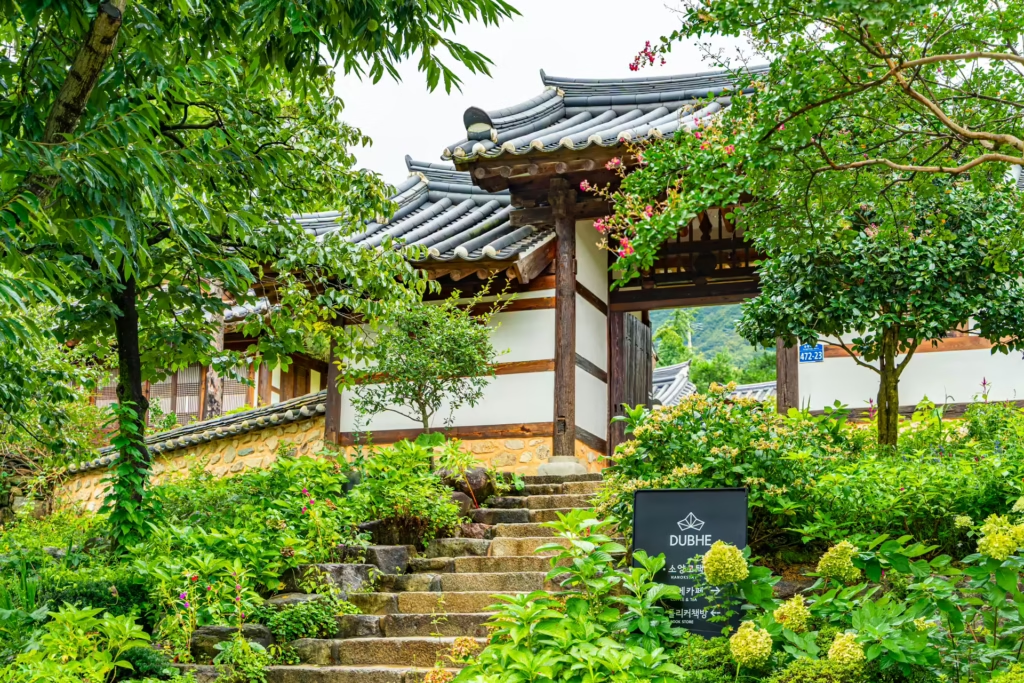
Oseong Hanok Village: Where Condemned Houses Get a Second Life
Most hanok villages in Korea grew in place over centuries. Oseong Hanok Village did something stranger: it assembled itself. The houses here were born elsewhere — Gochang, Muan, Jinju, Jeongeup — and were facing demolition when they were taken apart beam by beam, trucked to a mountain valley in Wanju, and rebuilt. Traditional Korean architecture uses no nails, so a hanok can be dismantled and reassembled like furniture, if you know what you are doing. The people behind this village knew what they were doing.
This manual contains affiliate links. If you book through them, I earn a small commission at no extra cost to you. This keeps my EV charged and allows me to provide unfiltered, field-tested travel insights.
I have been to Oseong Hanok Village (official KTO page here) in several seasons now, most recently on a weekday in high summer, when the only sound in the lanes was cicadas. That quiet is deceptive. This tiny village — two dozen or so hanok in a valley pinched between Jongnamsan and Seobangsan mountains — made the Korea Tourism Organization’s list of the country’s top 100 destinations for 2025–2026 and now draws roughly 700,000 visitors a year. BTS shot their 2019 Summer Package photobook here. A hit 2026 MBC drama, The Grand Prince’s Wife of the 21st Century, used its houses as a lead character’s home. The cameras found this place before most Koreans did.
Getting There: The Honest Version
Oseong Hanok Village sits in Soyang-myeon, Wanju County, about 30 to 40 minutes by car from Jeonju. From Seoul, take the KTX from Yongsan to Jeonju Station (about 1 hour 45 minutes, 32,900 won at the time of reporting) or an express bus from Central City Terminal (around 2 hours 40 minutes, 15,000–28,600 won depending on class). From Jeonju the practical answer is a taxi — expect somewhere around 15,000–20,000 won from Jeonju Station — or a rental car. A city bus (810 or 820) does connect to a transfer at Soyang Small Library, where village bus 82-1 continues to the Oseong Pungnyu School stop, but the little bus runs infrequently. If your itinerary includes the temple and waterfall up the same road, drive.
A Village Built by Its Neighbors
The village story starts in 2012, when residents of this valley — today about 50 households — decided to remake their community around traditional architecture. Some renovated their own homes. Some built new hanok. And some went shopping for old houses on death row in other provinces. The result is a settlement of somewhere between 20 and 25 hanok (counts vary by source, and the village keeps evolving) that manages to feel coherent without feeling like a theme park. People actually live here. Laundry dries in courtyards. The name Oseong, if you are curious, welds together one syllable each from two older hamlet names, Odo-ri and Oeseong-ri.
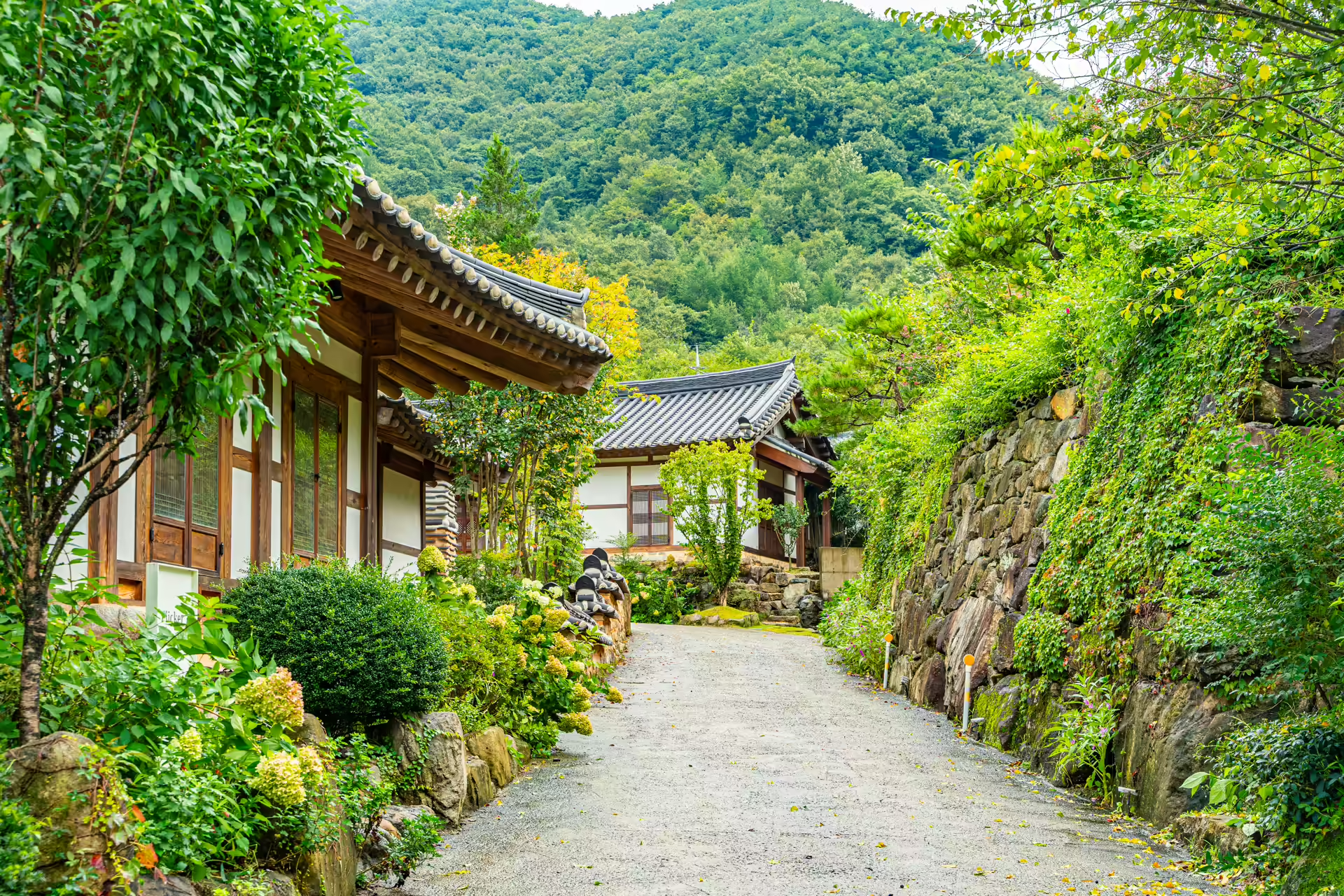
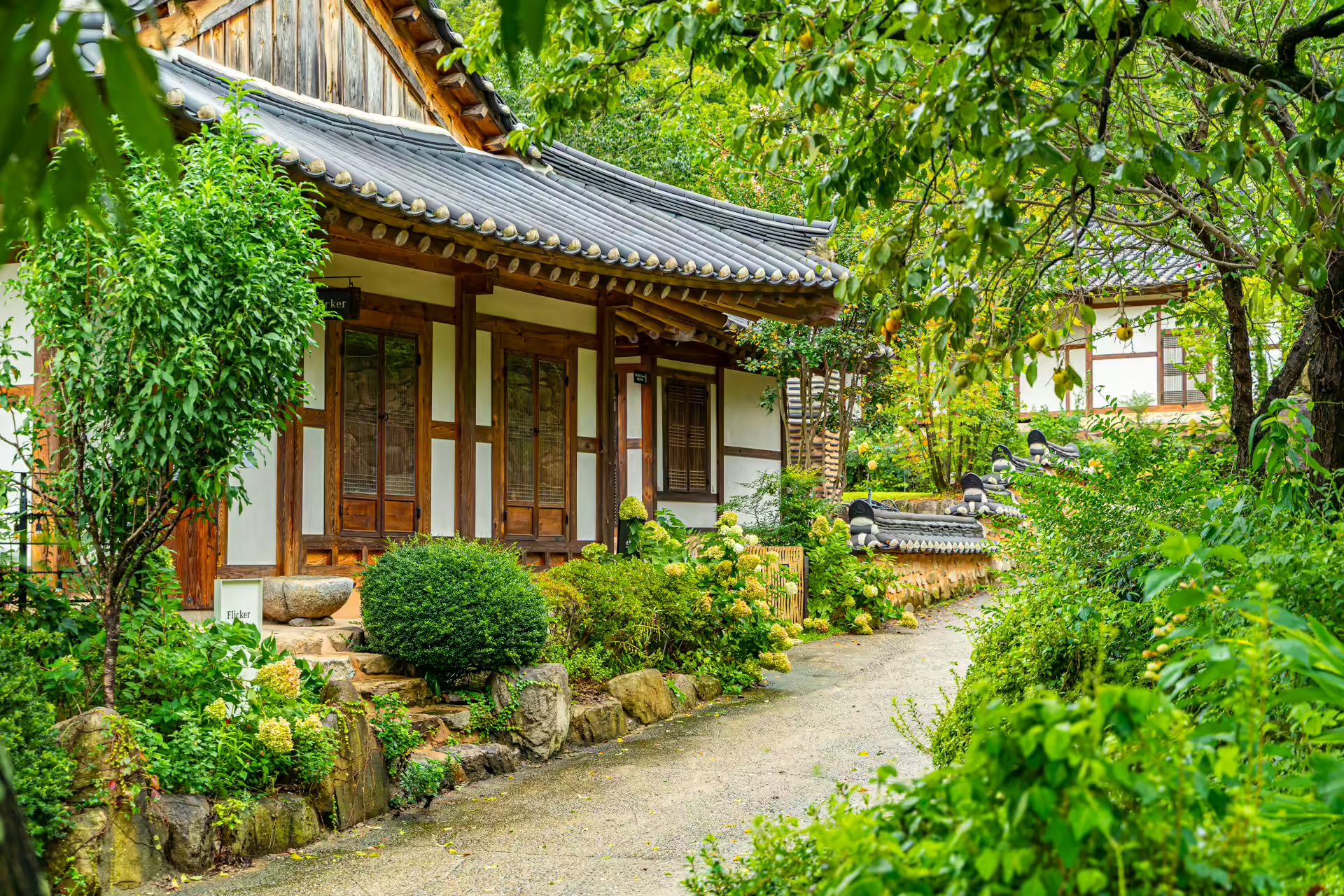
Read the nameplates as you walk. One house is called Nogunjae — “the place where green clouds drift past.” Another, Sodamwon, promises a modest life. A pair of sisters who paint traditional Korean art keep a house here. The lanes reward slow walking, and early morning is the best hour: fog comes off Oseongje, the reservoir at the village entrance, and pools around the tiled roofs.
That reservoir has a celebrity. A lone pine tree on the waterline appeared in the BTS Summer Package shoot and has been called the BTS pine ever since; fans still make the trip, some in organized groups from Japan. The embankment beside it is the one spot where water, mountains, and hanok roofs fit in a single frame.
Soyang Gotaek: The Rescued Houses You Can Sleep In
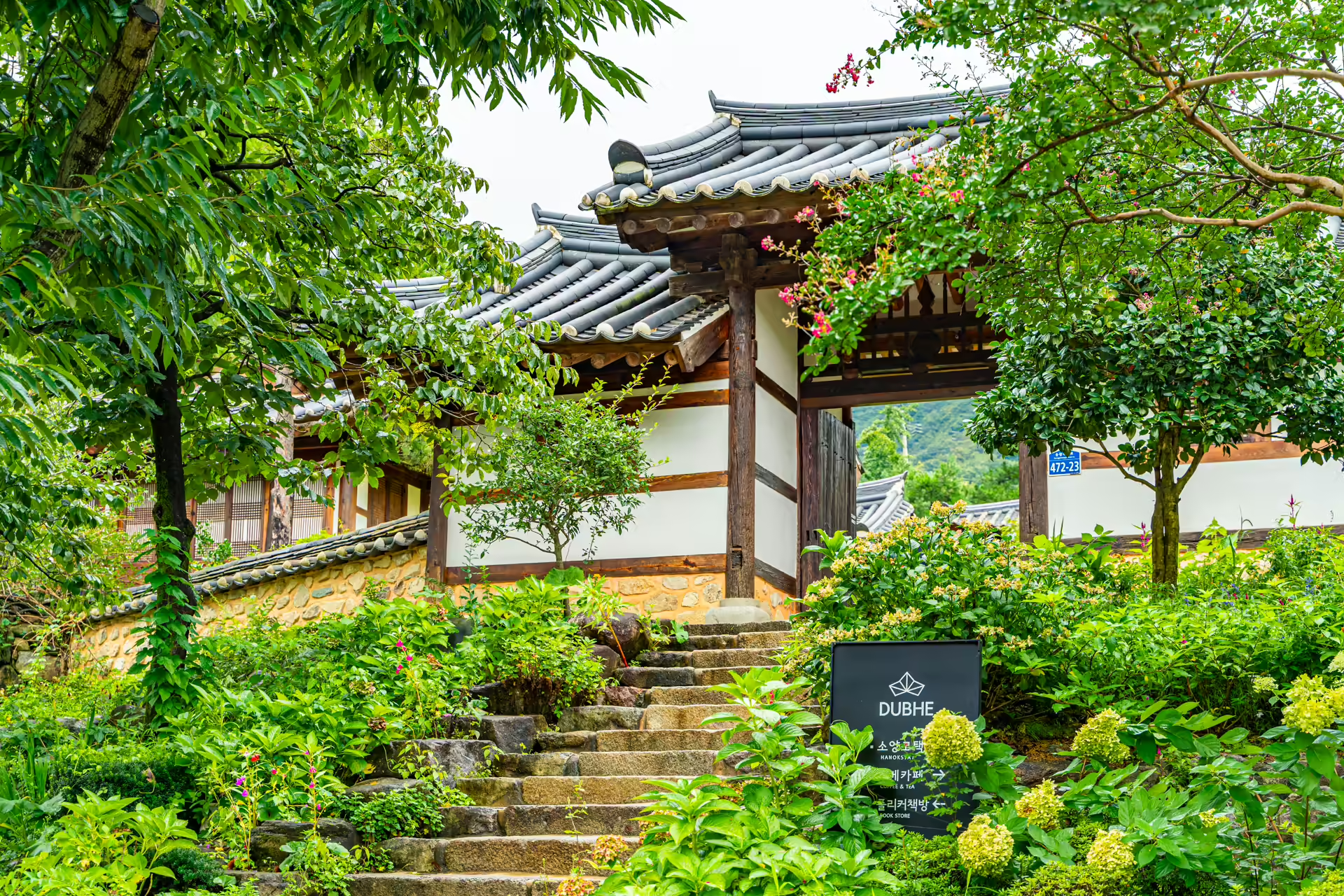
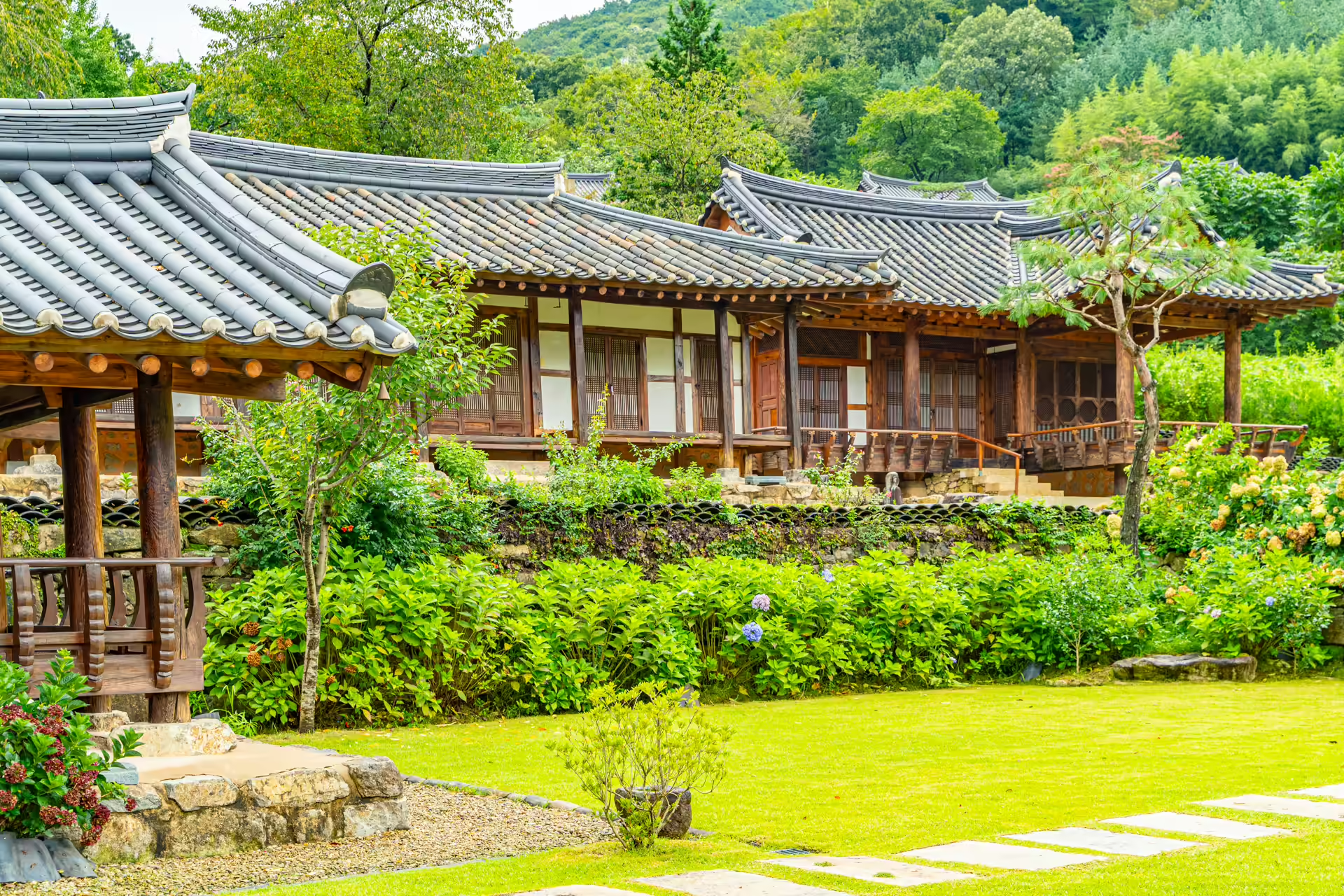
The village’s flagship stay is Soyang Gotaek. Its buildings — three old houses of roughly 180 years, by most accounts — were condemned structures in Gochang and Muan before being relocated here and restored by artisans trained in heritage carpentry. The restoration philosophy runs opposite to its famous neighbor Awon up the hill: where Awon pairs its hanok with raw concrete, Soyang Gotaek keeps things resolutely traditional, down to the curve of the eaves and the emptiness of the gardens.
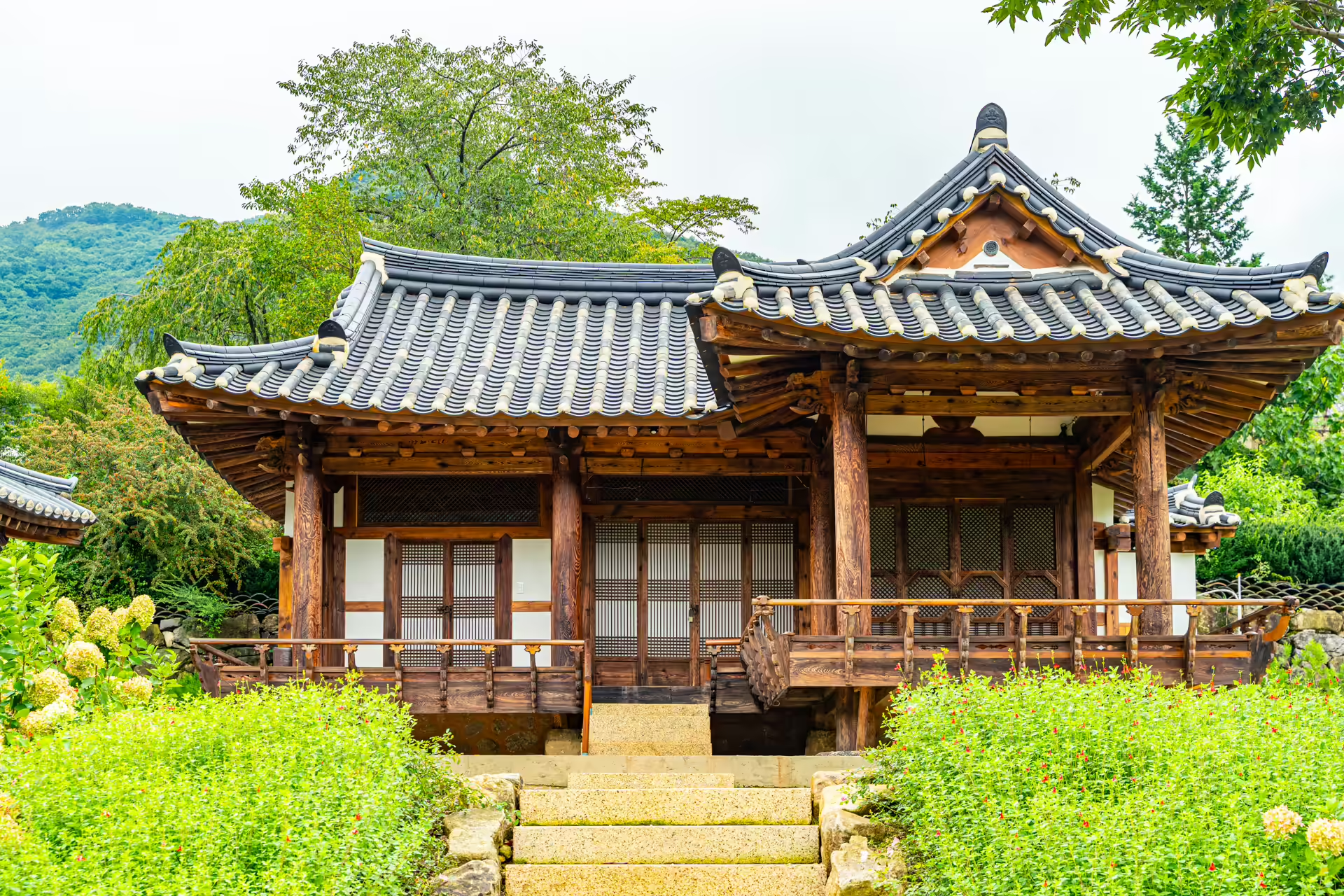
Six guest hanok share the grounds, from single-party rooms to a detached house for four. Rates ran roughly 260,000 to 750,000 won a night depending on the room and season at the time of reporting — this is the splurge tier of Korean village lodging, priced like a boutique hotel. Breakfast and welcome tea are included; cooking is not allowed, which keeps the smell of grilled meat out of 180-year-old timber. Booking runs through Naver’s reservation system, and the drama has not helped availability: Yeoilru, the pavilion room that played the heroine’s house, books out well ahead.
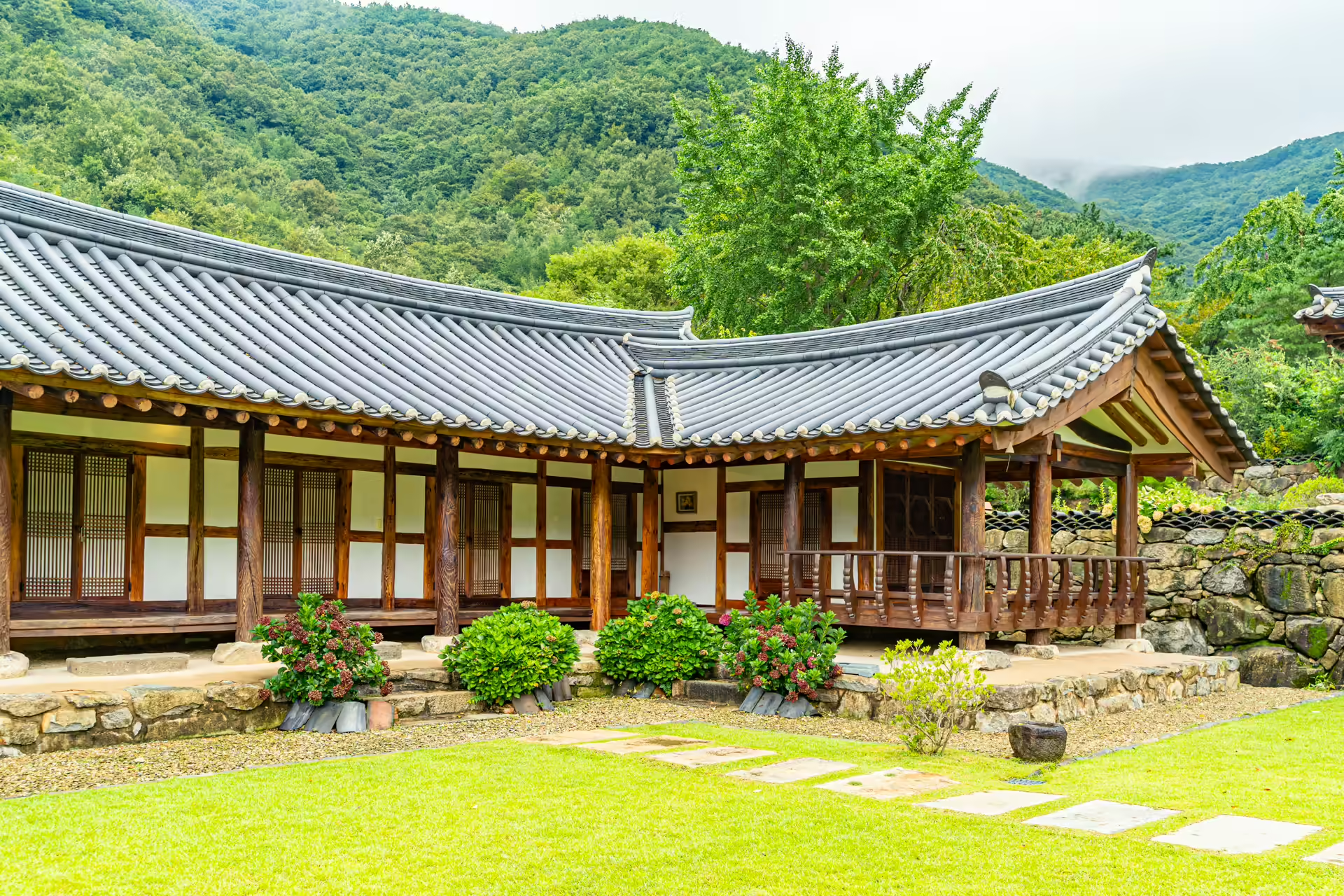
If those rates read like a typo, the village itself runs communal hanok stays at a fraction of the price — two-person rooms from about 100,000 won on weekdays, four-person rooms from about 150,000 won, booked by phone through the village office. I have slept in one: the room was simple, the valley silence was identical, and in the morning the same fog rolled over my roof tiles as over the expensive ones. For a comparable heritage-stay experience further south, see my night at Ssangsanjae in Gurye.
Dube Cafe and a Bookshop You Must Book
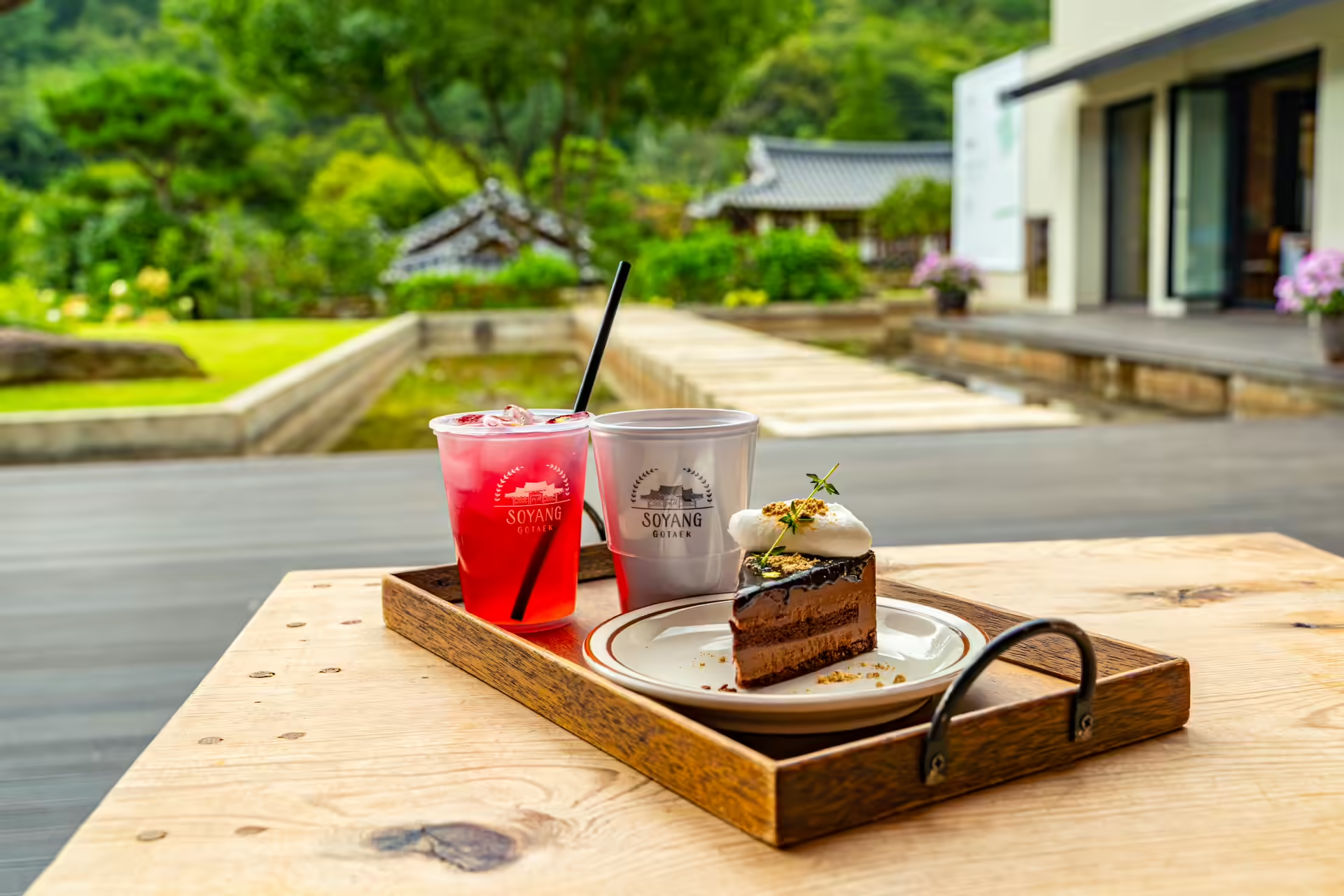
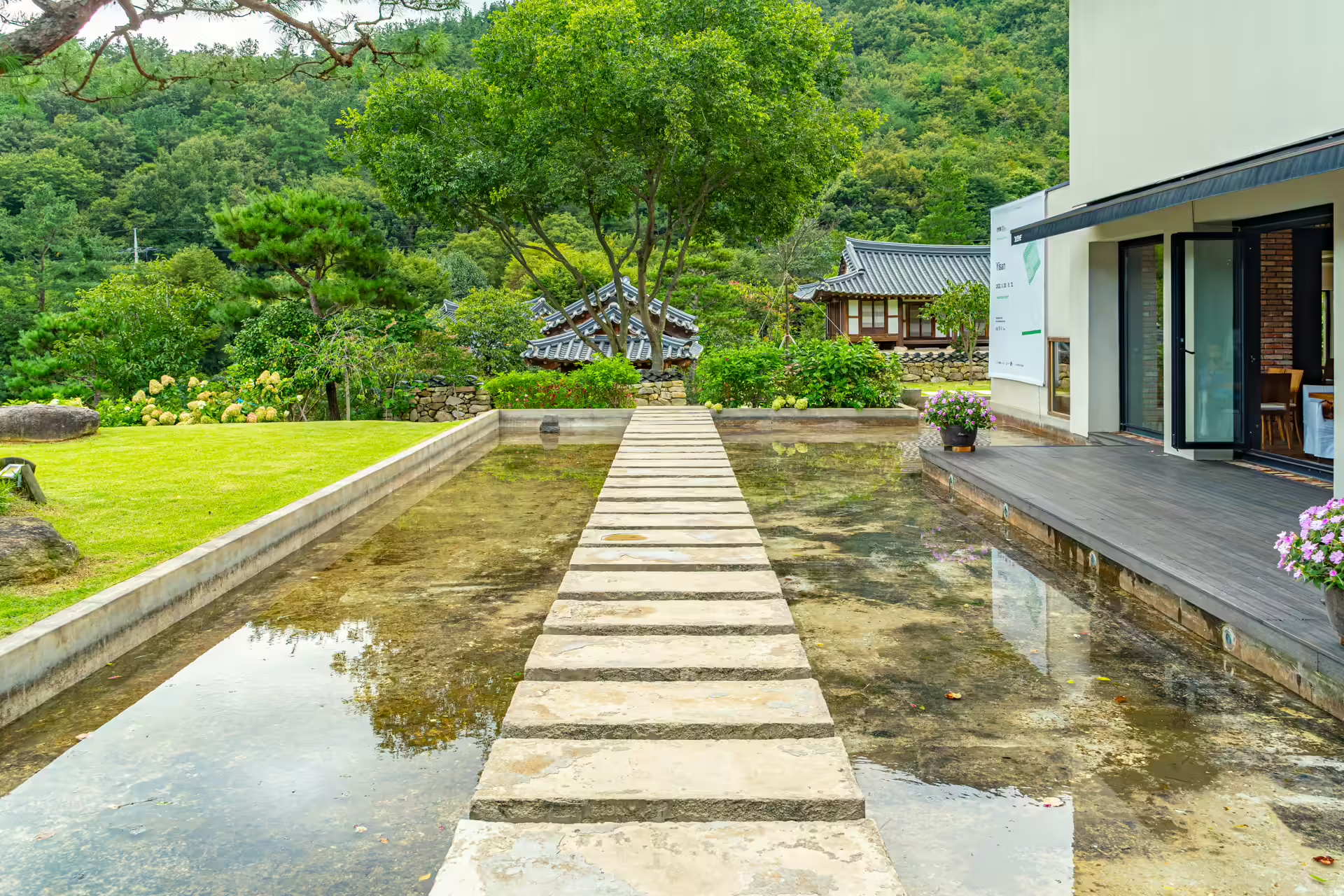
Soyang Gotaek runs two side venues that non-guests can visit, and they are the village’s real social engines. Dube Cafe occupies a modern hall with a full-width window aimed at Jongnamsan; on humid days you can watch cloud shear off the ridgeline from a leather chair while a tube amplifier plays jazz. The signature drink is the Dube misut-penner (9,000 won), a cap of vanilla cream over misutgaru, the Korean roasted ten-grain powder — imagine a nuttier, grainier einspänner. Hydrangeas take over the garden in summer, maples in autumn. Hours were 10:00–18:00 daily when I checked, but confirm on Naver Map before a special trip.
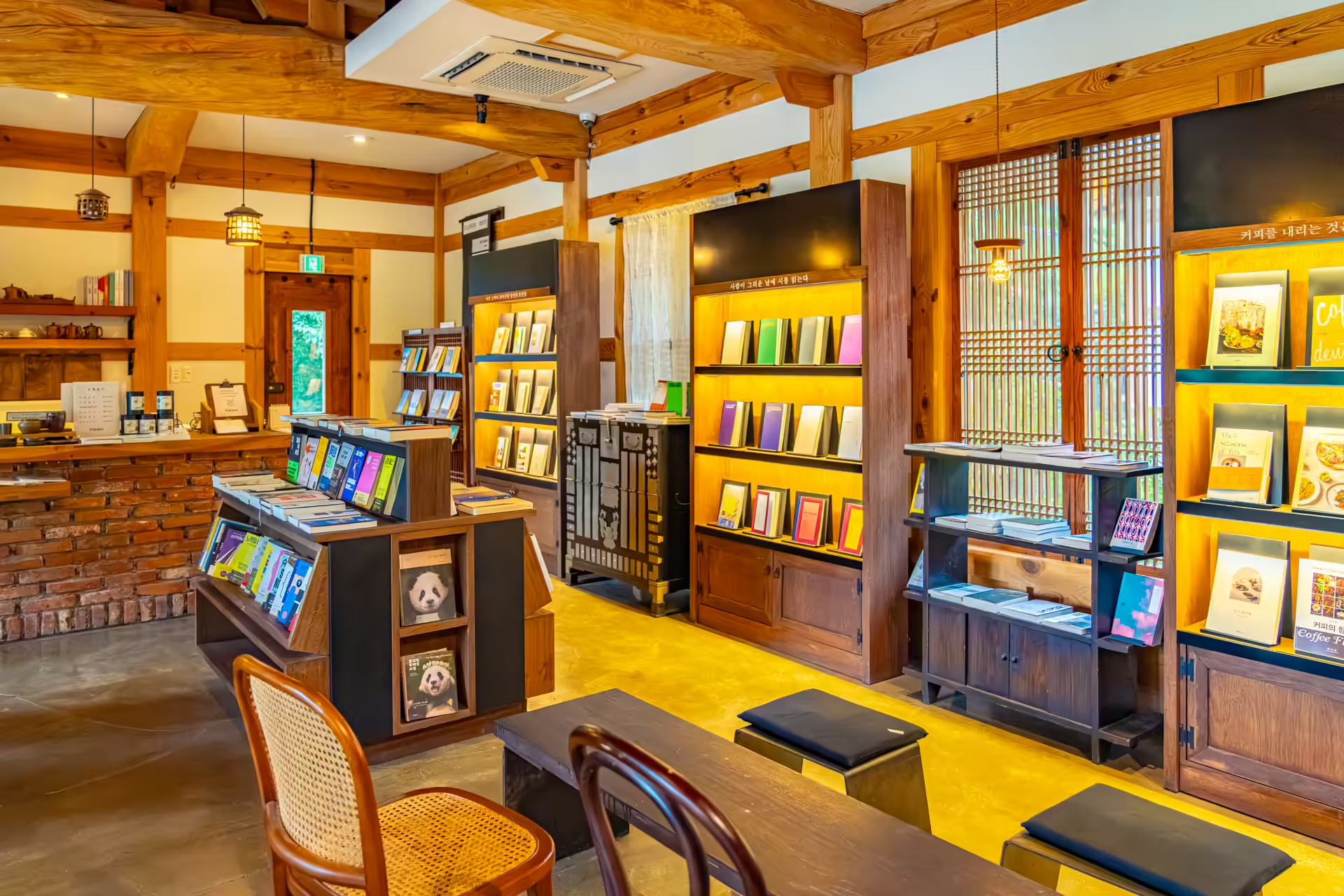
A few steps away is Flicker, Wanju County’s first independent bookshop, and it operates on a rule I have not seen anywhere else in Korea: you must reserve your visit by the previous day. The point is crowd control in reverse — the shop caps visitors so that the people inside can actually browse poetry and essays in hanok-grade quiet. Entry was 10,000 won with a drink included, and it hosts book talks and late-night reading events. Call ahead (063-246-6222); walk-ins get turned away politely. If reservation-only browsing sounds precious, my visit to the free-range secondhand bookshop Gukjawajugeok on Ganghwado makes a good philosophical counterpoint.
The Village Programs Worth Your Morning
Two resident-run programs turn a photo stop into an actual visit. The first is a guided walk through the culture-ecology forest behind the village, led by a county tourism interpreter — book ahead through the village office. Mine began with the guide picking a fallen pine needle off the path and counting its bundle: three needles means an imported pitch pine, two means a native red pine. The hour that followed covered six species of oak on one mountainside, a charcoal kiln site from the days when this valley survived on charcoal and hanji paper-making, and a planted birch grove where the guide talks climate with school groups. It is the rare village walk that treats visitors like adults.
The second is the tea ceremony at the village hall (15,000 won for 90 minutes when I visited), which starts with residents helping you into a hanbok and proceeds at the speed of cooling water. You warm the cups, discard the water, cool freshly boiled water in a sugu bowl, and learn — around the third cup — that the entire discipline is a lesson in waiting. Green tea steeped too hot turns bitter; so, the implication goes, do people. There are cheaper ways to spend 90 minutes in Korea and very few calmer ones.
Who This Is Actually For
Couples and design-minded travelers who want the hanok-stay experience with real historical bones, at either budget tier. K-drama and BTS pilgrims, obviously — this is one of the few filming locations where you can sleep on set. It also suits anyone building a slow two-day loop out of Jeonju that continues up the road to Songgwangsa temple and Wibong Falls. It is not for travelers who need nightlife, restaurants beyond a couple of village options, or anything resembling a schedule after 6 pm: when the day-trippers leave, the village goes profoundly dark and quiet, and that is the product. Guests who want a hotel-style room with a rooftop bar should look at my stay at Hotel Uldolsori in Haenam instead.
On my last evening I sat on the reservoir embankment while the light went orange behind the BTS pine. A grandmother walked past pushing a cart of garlic stalks, entirely uninterested in the most photographed tree in Jeonbuk. Somewhere behind me, in a house that had once been condemned in another province, a floor was being heated for tonight’s guests. The houses moved here to keep working. They are working.
Search hanok stays and hotels in Wanju on Agoda →
Practical Manual
| Item | Details |
|---|---|
| Name | Oseong Hanok Village (오성한옥마을) |
| Address | 73 Odo-gil, Soyang-myeon, Wanju-gun, Jeonbuk (전북 완주군 소양면 오도길 73) |
| Soyang Gotaek | 472-23 Songgwangsuman-ro (송광수만로 472-23) · rooms approx. 260,000–750,000 won · English site · 063-243-5222 |
| Village hanok stay | From approx. 100,000 won (2-person, weekday) · phone booking 063-243-1022 |
| Dube Cafe | 10:00–18:00 daily (last order 17:30, at the time of reporting) |
| Flicker Bookshop | 13:00–17:00 · reserve by the previous day · 063-246-6222 |
| Programs | Forest walk (book ahead) · tea ceremony 15,000 won / 90 min · village office 063-243-1022 |
| Getting there | Taxi or car from Jeonju (30–40 min). Bus: Jeonju city bus 810/820 → transfer at Soyang Small Library → village bus 82-1 → Oseong Pungnyu School stop (infrequent) |
Navigation Tip: Korean addresses work best in Naver Map or Kakao Map — Google Maps struggles with driving directions in Korea. Search “오성한옥마을” or paste the Korean address above. For signs and menus, the Papago app translates Korean more accurately than Google Translate.