
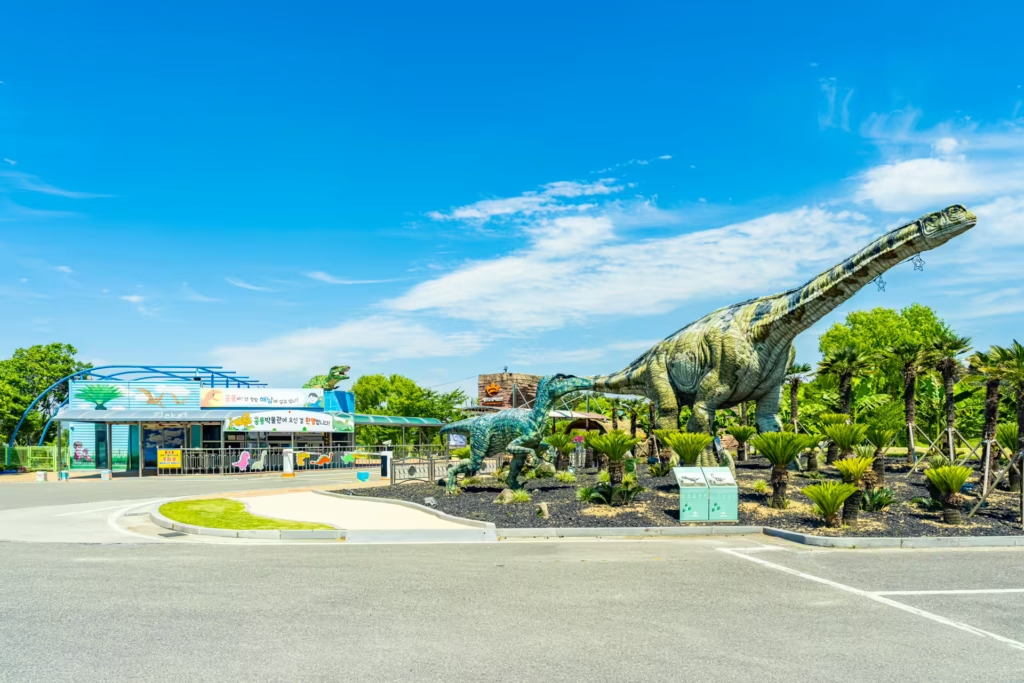
The Museum That Was Built Where the Dinosaurs Actually Walked
Most dinosaur museums work by import. Bones arrive in crates from Mongolia or Montana, get assembled under track lighting, and stand in a city that no dinosaur ever saw. The Haenam Dinosaur Museum inverted the formula: the fossils were already here, pressed into the rock of a former lakeshore, so the county built the museum on top of them and left every footprint exactly where it was made 83 million years ago.
I visited this summer while reporting in Haenam, and the part worth the long drive is not the exhibit halls. The best gallery here has no gift shop and no replicas — just a boardwalk over bare rock, and the rock is covered in tracks.
Getting There
Haenam occupies the far southwestern corner of the peninsula, in what is now the Jeonnam-Gwangju Special Metropolitan City, created in July 2026 when Jeollanam-do and Gwangju merged. There is no fast way here, and I would plan around that fact rather than against it. By rail, take the KTX or SRT to Mokpo (roughly two and a half hours from Seoul) and drive the last 40 to 50 minutes; by bus, the express from Seoul to Haenam Terminal runs four and a half hours or more. A rental car is the honest answer. The museum sits in Hwangsan-myeon, about 20 minutes northwest of Haenam-eup, the county town, and pairs naturally with the Uldolmok strait area another 20 minutes on. Once you accept the distance, Haenam gives you a full weekend of material — this museum, the land’s-end coast, and some of the least crowded attractions in southern Korea. If you plan to stay the night, the strait area by Usuyeong now has the county’s newest beds — more on that in a separate manual.
Uhangri: 1,266 Footprints and a World First
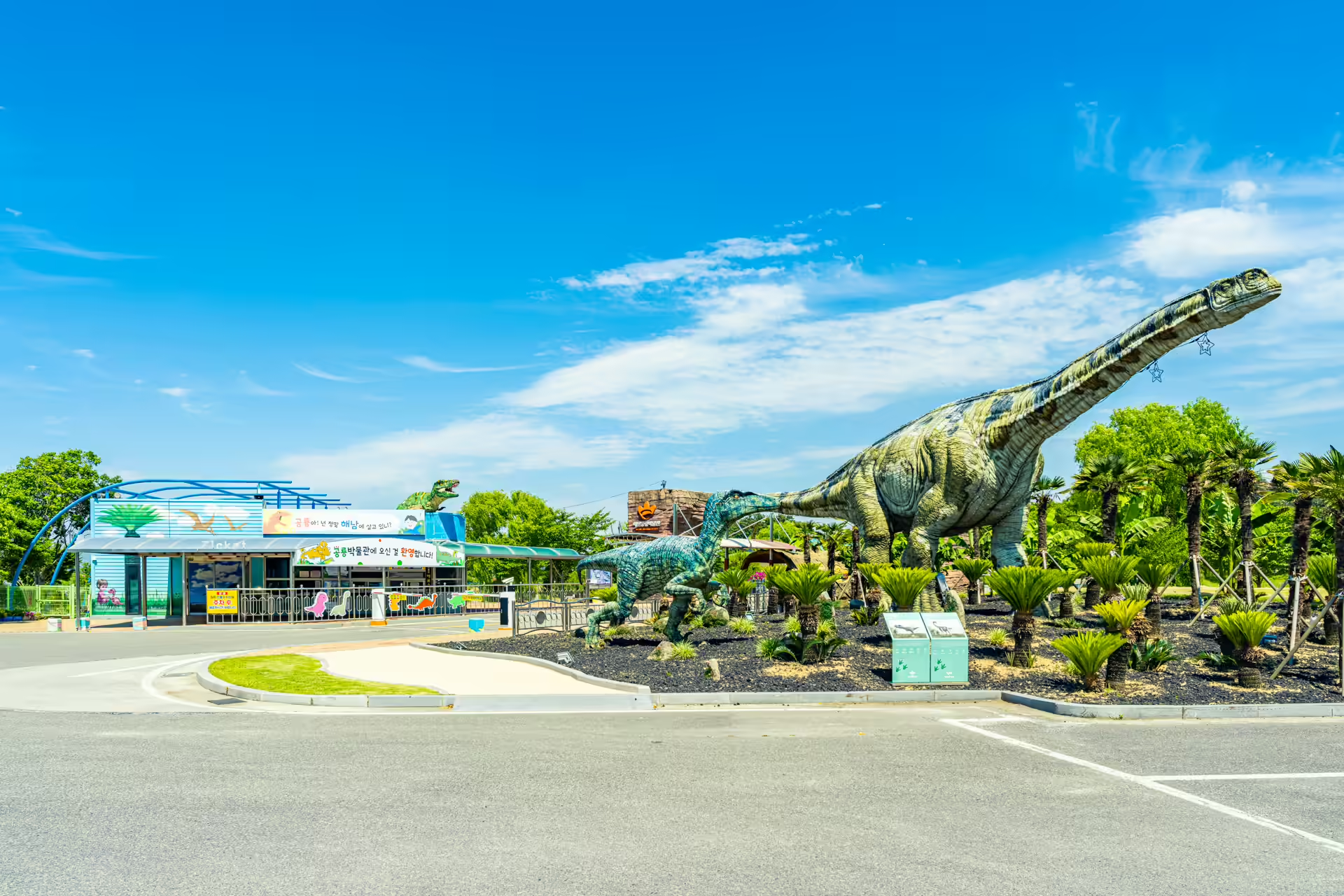
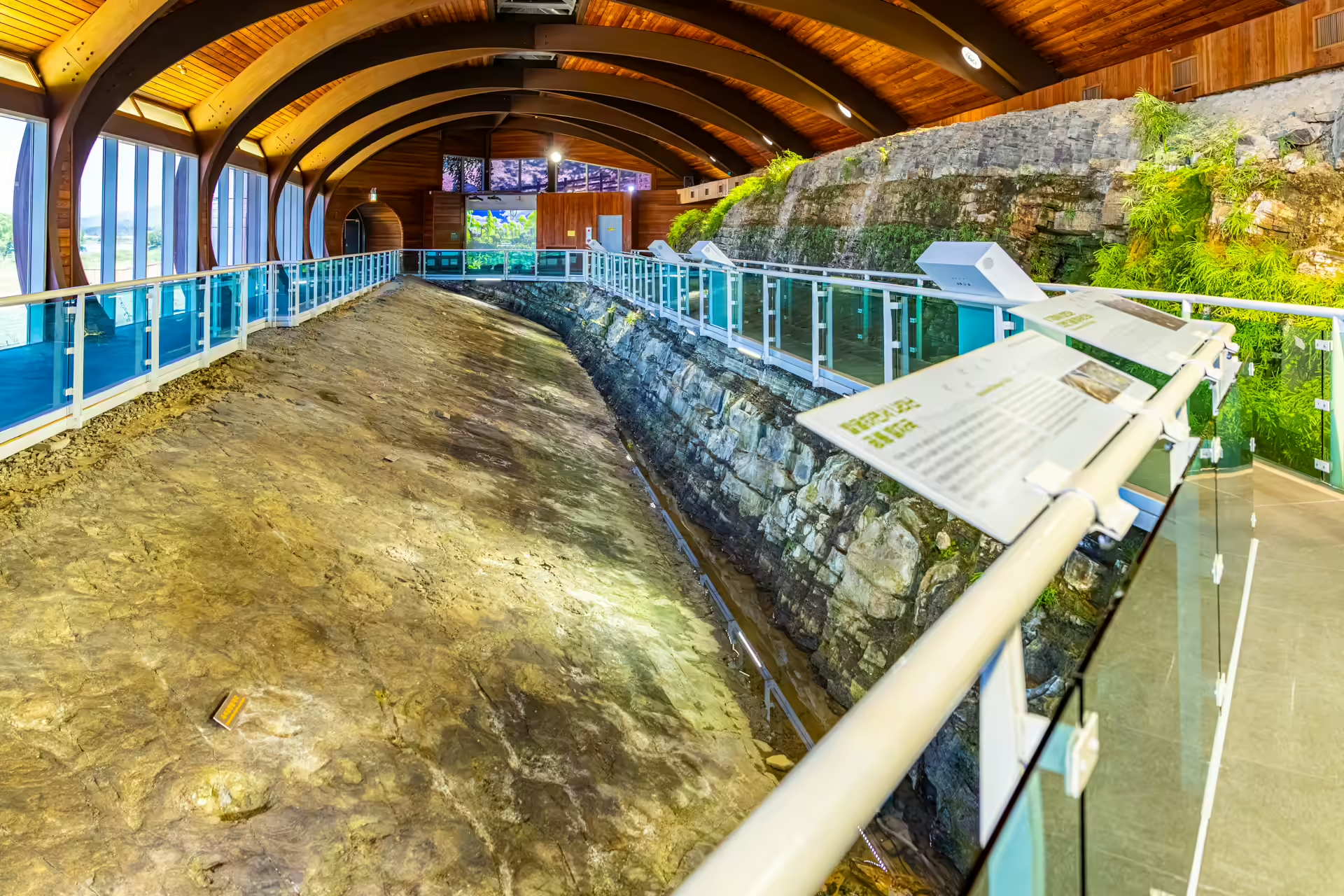
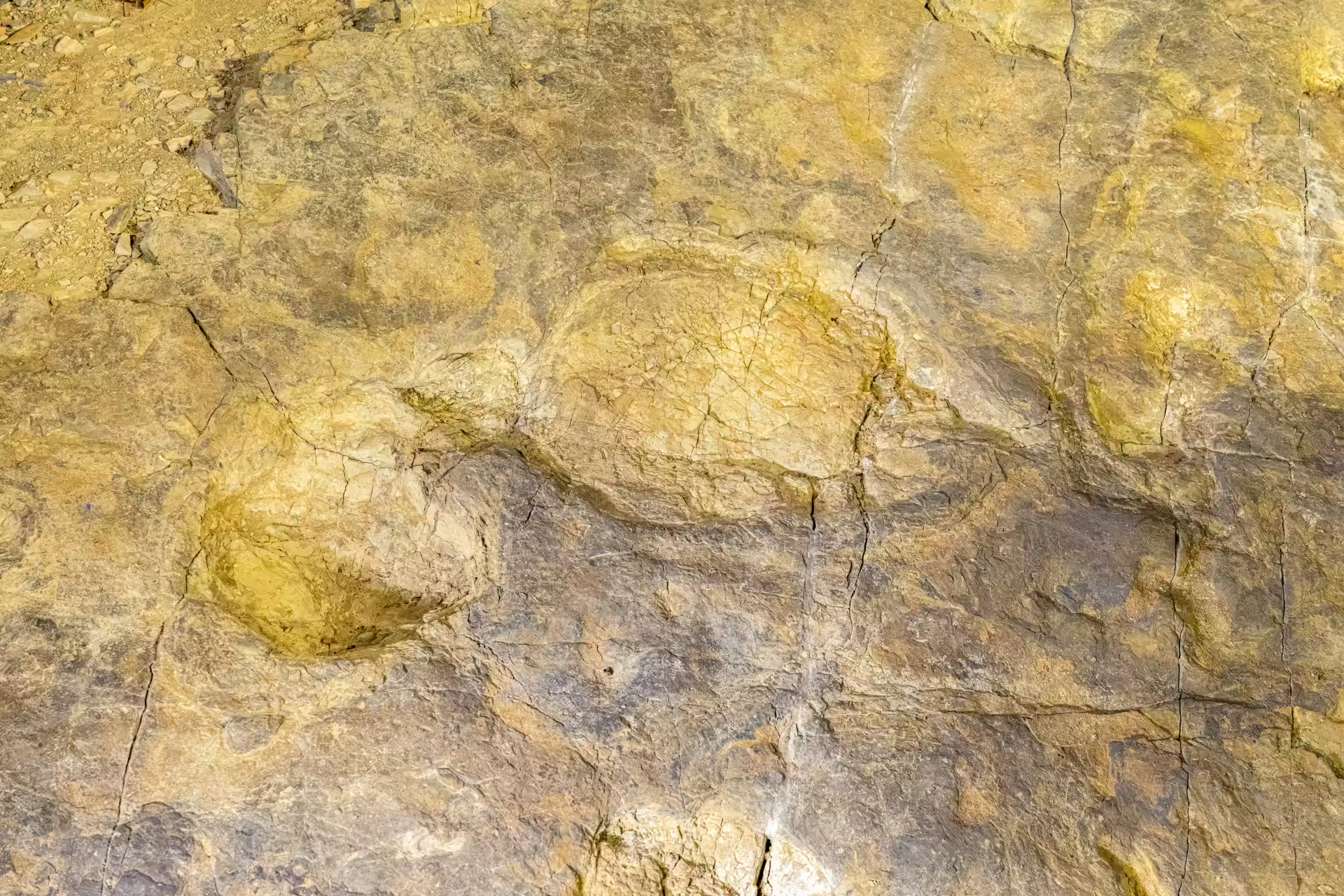
The site is called Uhangri. In the Late Cretaceous this was the muddy edge of a shallow lake, and the traffic along it was heavy: surveys have confirmed 823 dinosaur footprints and 443 pterosaur footprints, plus the tracks of web-footed birds. That combination is the scientific headline. Uhangri was the first site in the world where dinosaur, pterosaur, and bird tracks were confirmed together in the same strata — the first physical proof that all three shared one shoreline at one time.
The bird tracks carry their own superlative. When they were identified, the webbed prints predated what was then the world’s oldest known example — from far younger American rock — by roughly 40 million years. In other words, a quiet county in the far southwest rewrote a line in the global textbook on when web-footed birds appeared. The site was designated a Natural Monument in 1998 and sits on Korea’s tentative list for UNESCO World Heritage, and once you have walked it, neither designation feels like provincial boosterism.
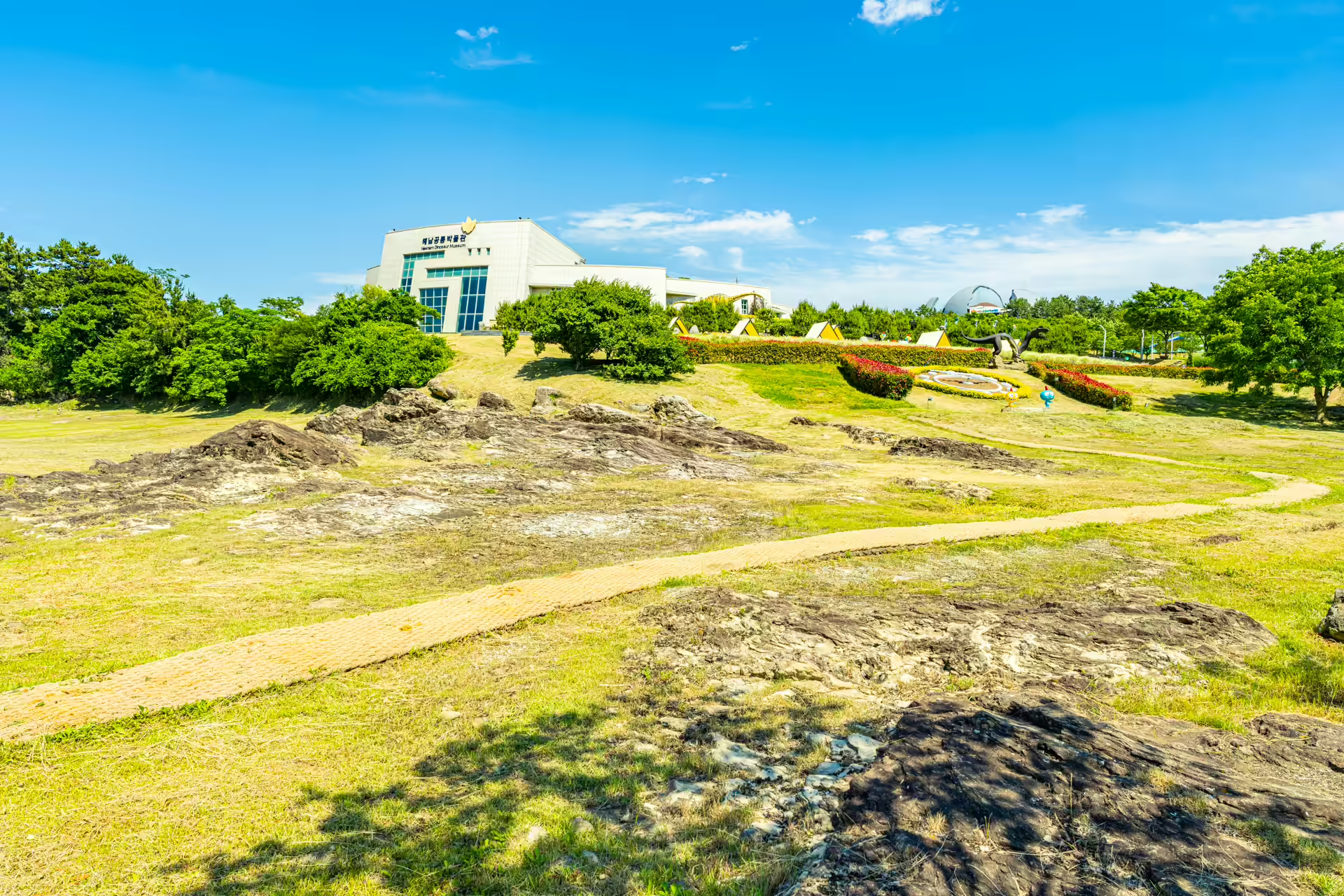
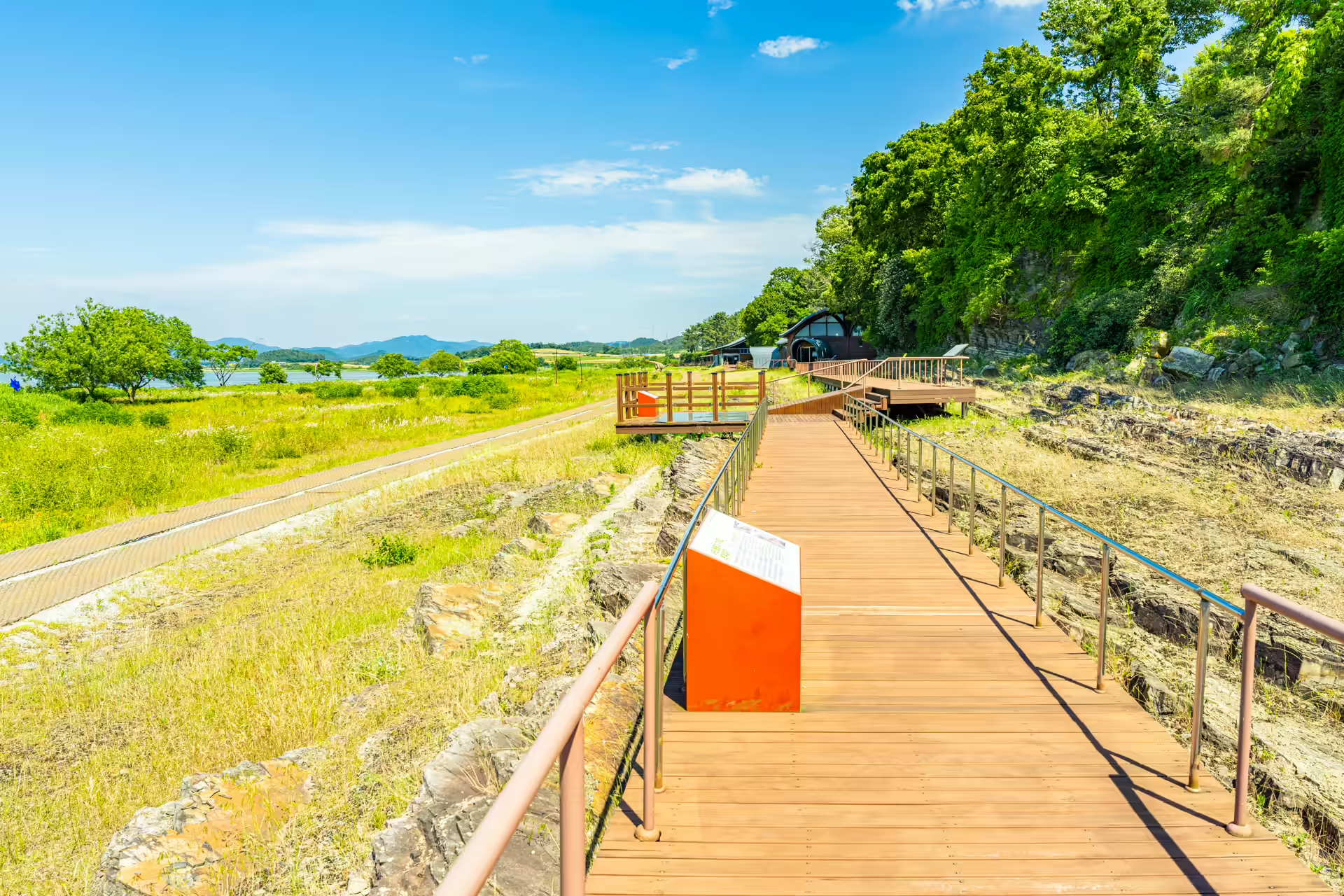
Because the tracks stay where they were found, the county built protection halls directly over the richest slabs — not one hall but several, strung along the old shoreline and linked by boardwalk. You finish the main building and then walk the site itself, ducking into one shelter after another to look down through the railings at rock that still holds the pressure of individual footsteps. The prints are bigger and crisper than I expected, and the effect is different in kind from any mounted skeleton. A skeleton says an animal like this existed. A footprint says one stood here.
Inside: a Real Allosaurus and a Giant Named Jobaria
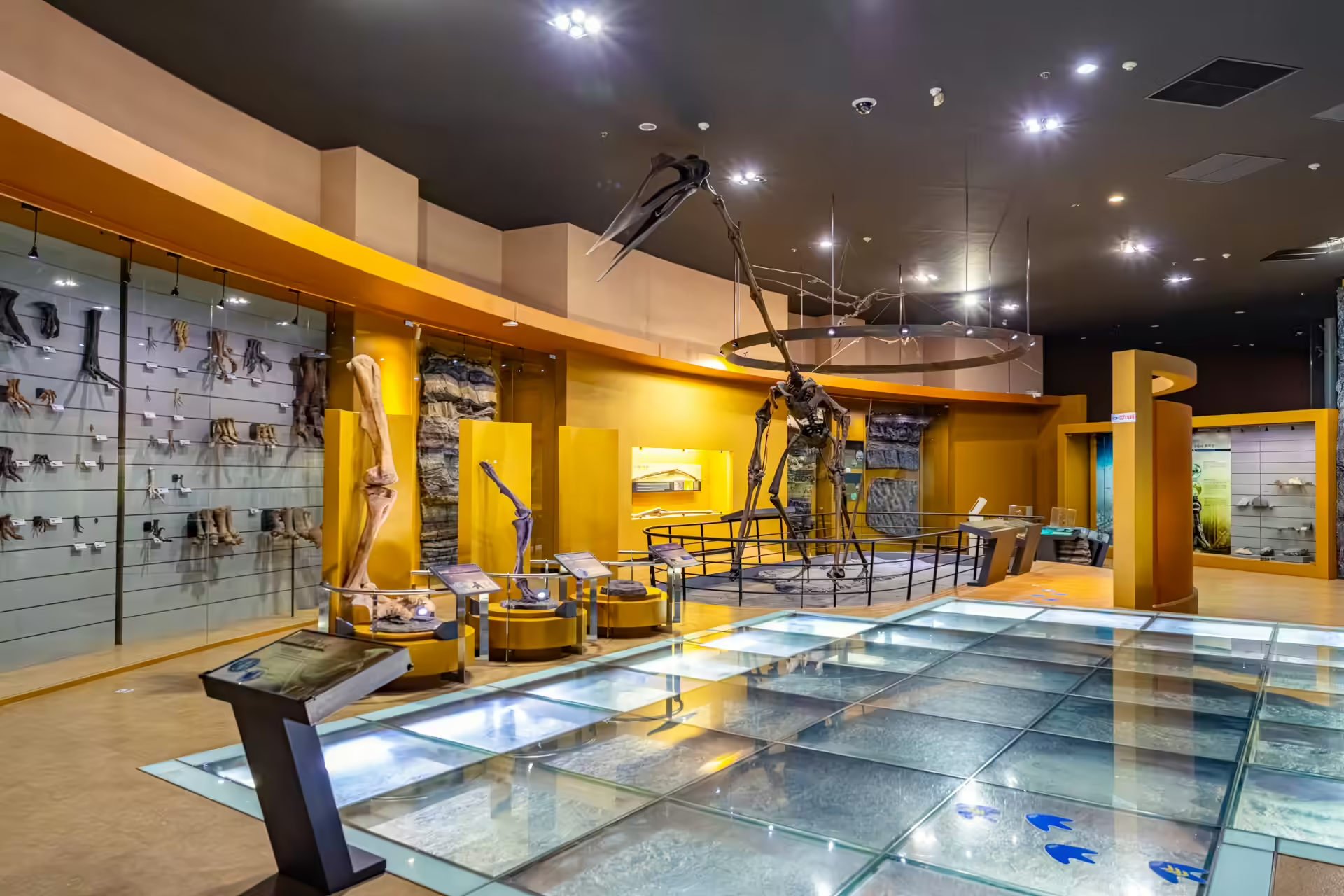
The main building opened in 2007 and now draws around 200,000 visitors a year — billed as the largest dedicated dinosaur museum in Korea. Its pride is an Allosaurus that is not a cast. The museum presents it as the first genuine Allosaurus fossil displayed in Asia and the only one in Korea: actual Jurassic bone, close enough to study the texture. That label matters more than it sounds. Most of the dinosaurs you have ever seen in a museum were plaster and resin. This one is not, and the difference does something to your attention.
The supporting cast holds up. The Mesozoic diorama hall stages a full-size animatronic Tyrannosaurus attacking an Edmontosaurus, to the loud approval of every child in the building. The giant-dinosaur hall belongs to Jobaria, a long-necked sauropod excavated in Niger; the museum counts itself only the third place in the world to display this skeleton. There is a marine reptile hall — presented as Korea’s first — and a gallery tracing how one dinosaur lineage survived into the present as birds, which lands especially well a hundred meters from fossilized bird tracks. Start in the Uhangri room by the entrance, where a diorama reconstructs the ancient lakeshore; it turns the outdoor protection halls from a scenic walk into a legible story.
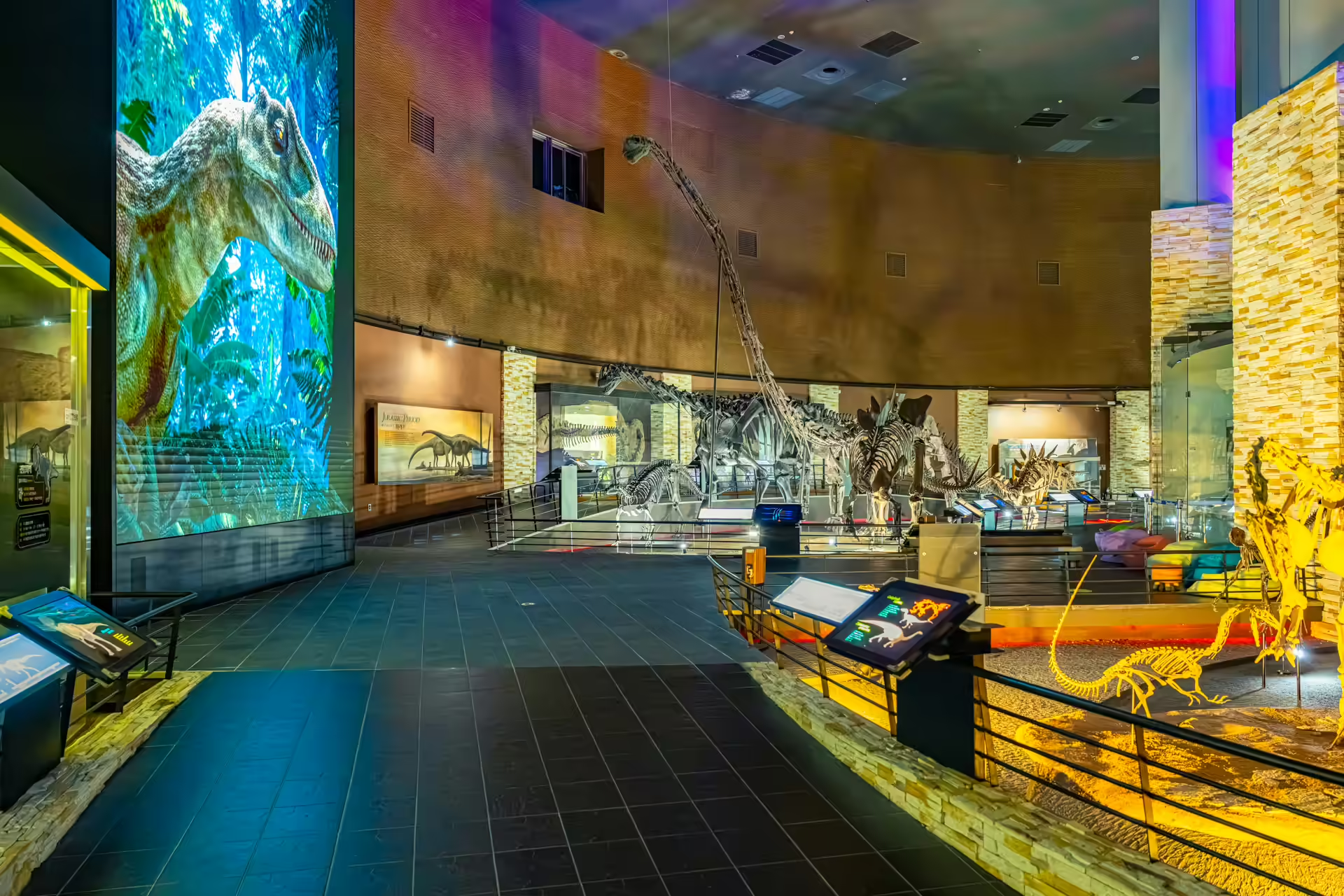
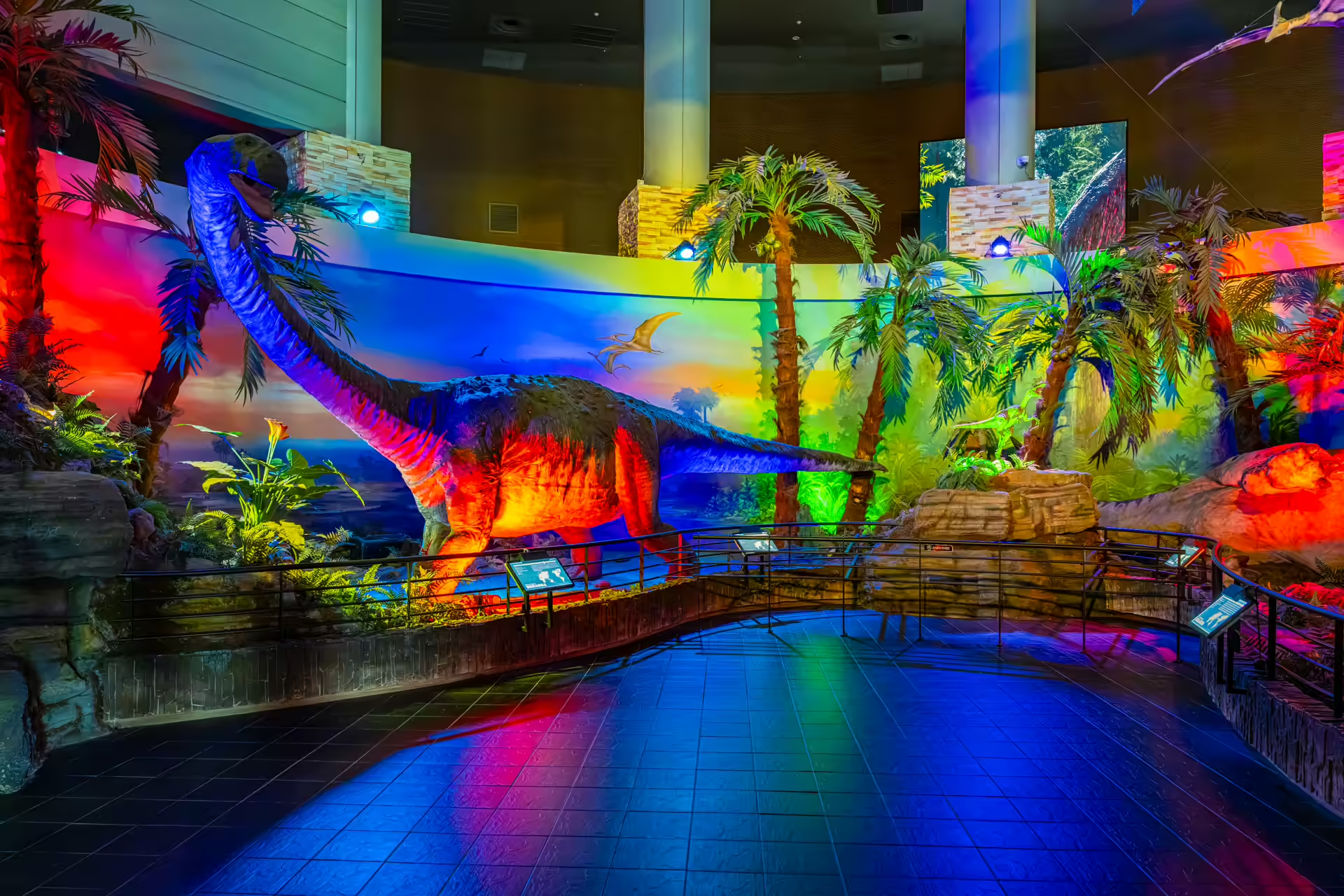
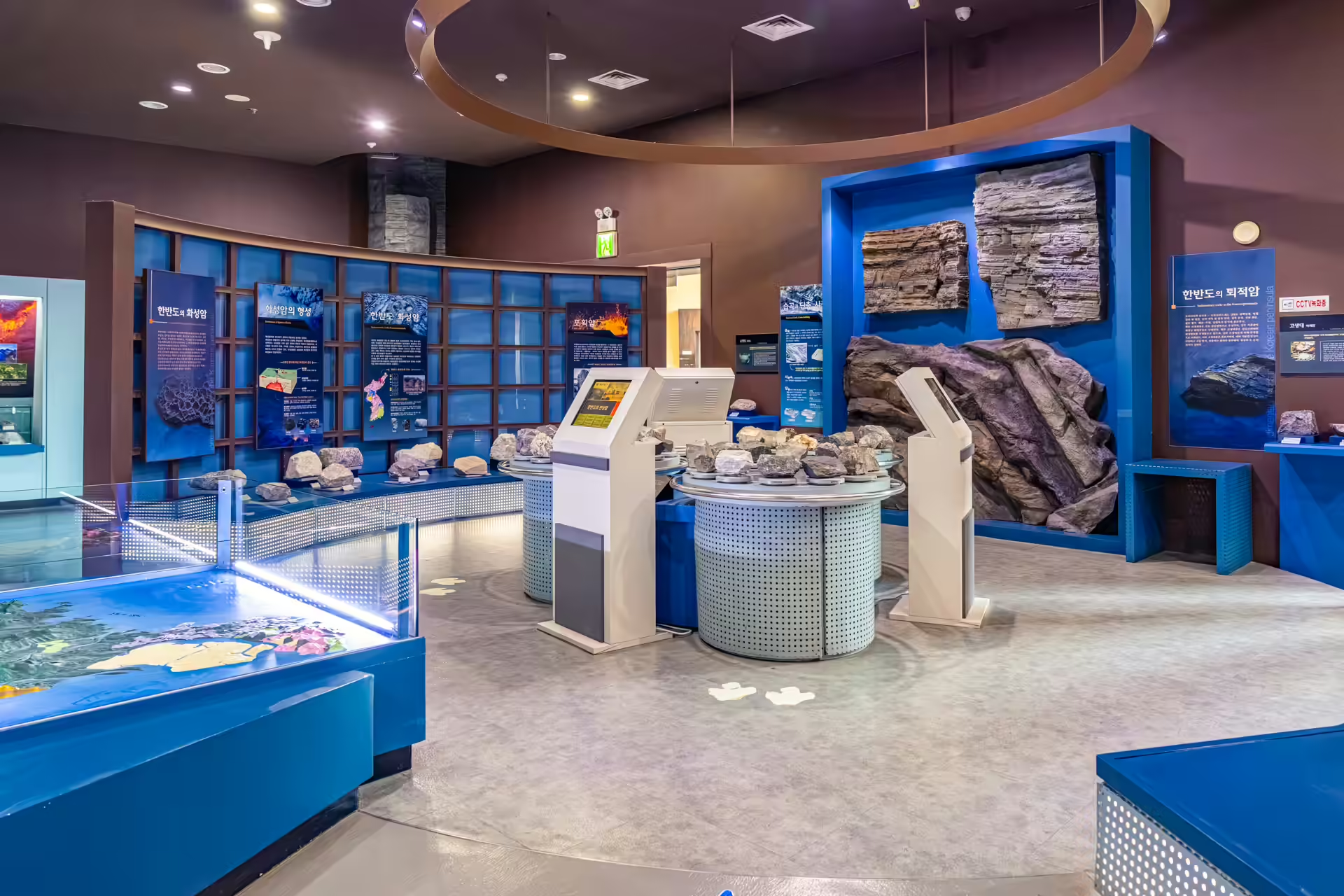
A 4D theater runs a 15-minute dinosaur film six times a day — 10 and 11 in the morning, then on the hour from 1 to 4 in the afternoon. Tickets are 3,000 won on top of admission, sold at a kiosk beside the information desk, and children three and under cannot ride. Worth it with kids; skippable without.
The Outdoor Park, and What Summer Adds
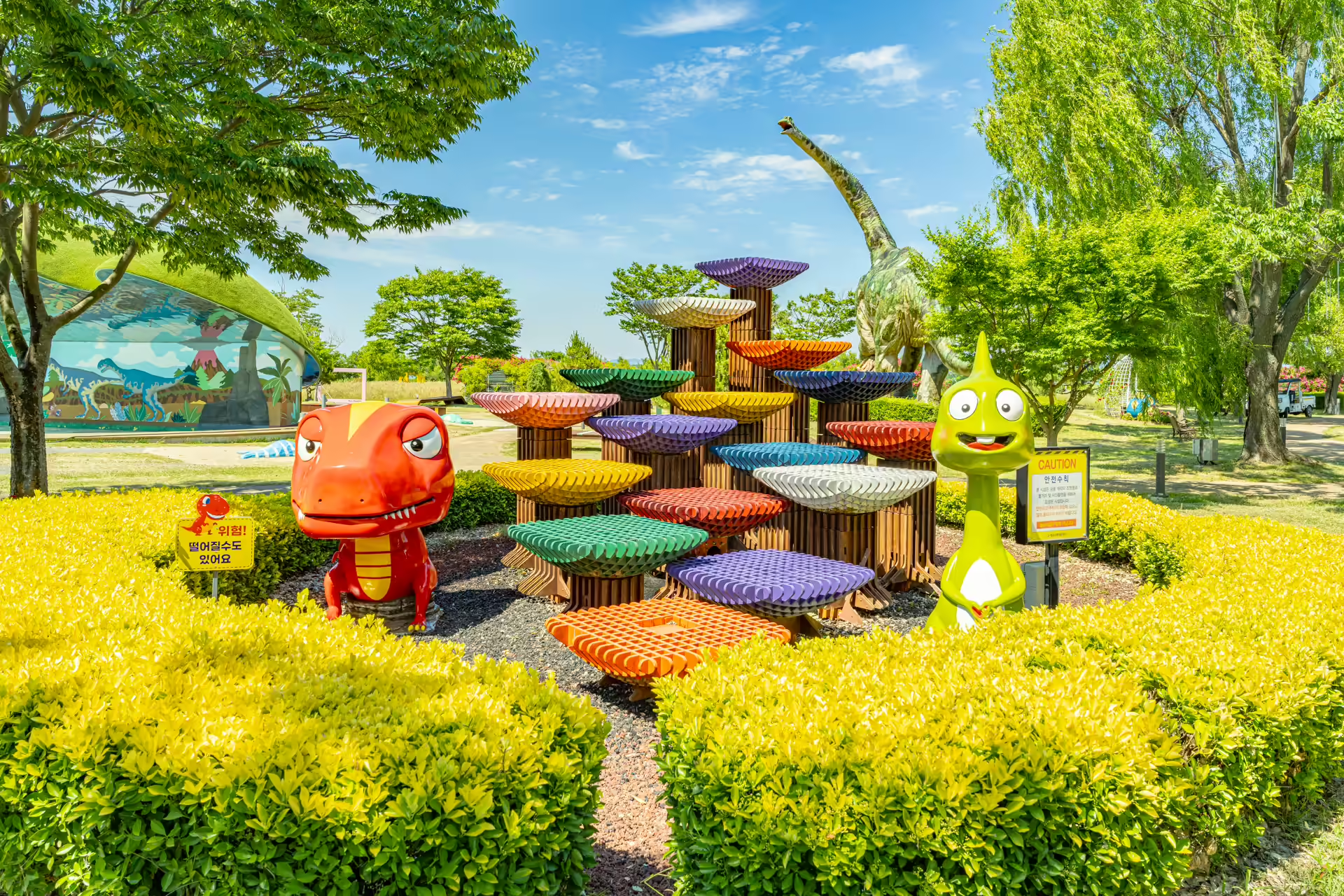
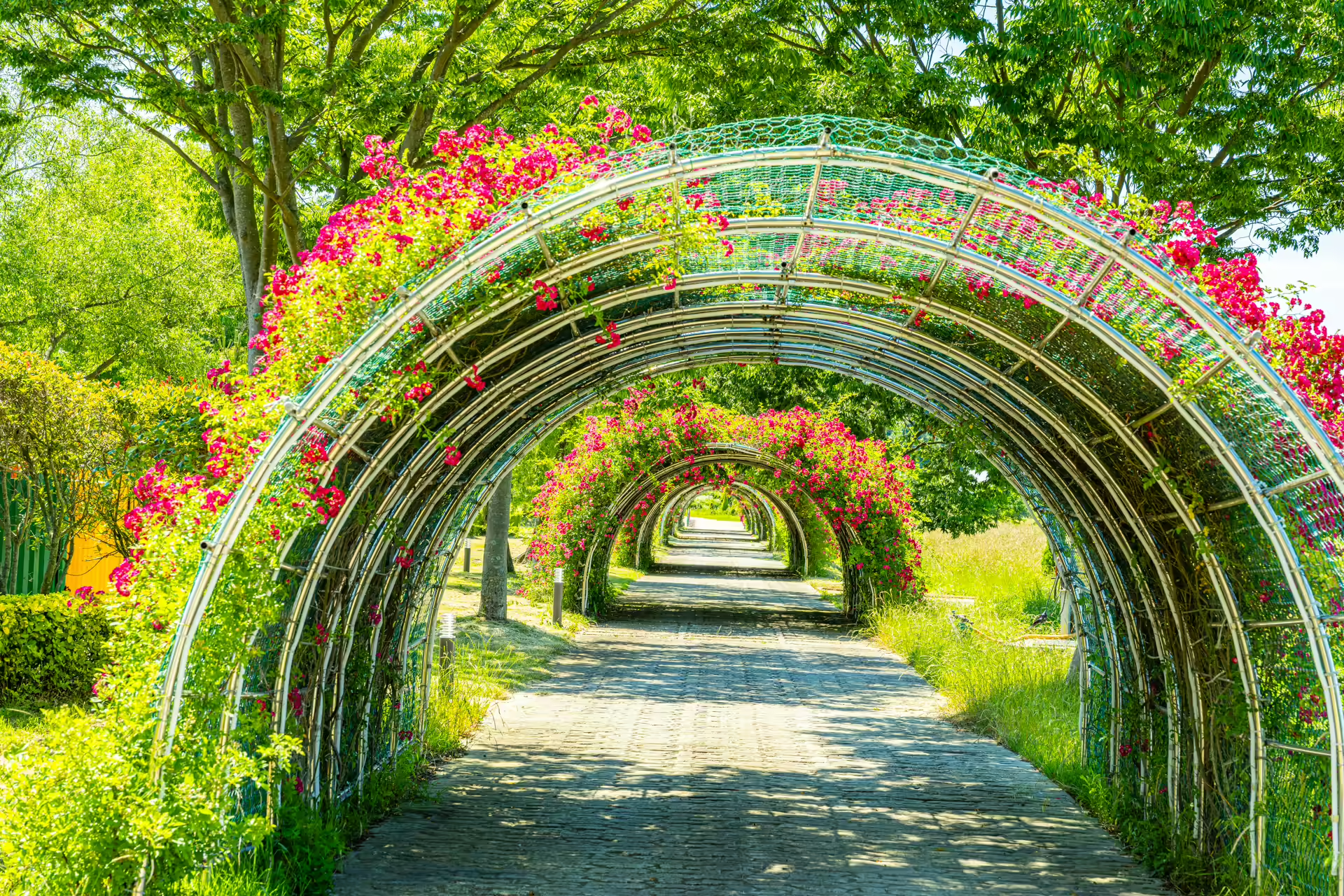
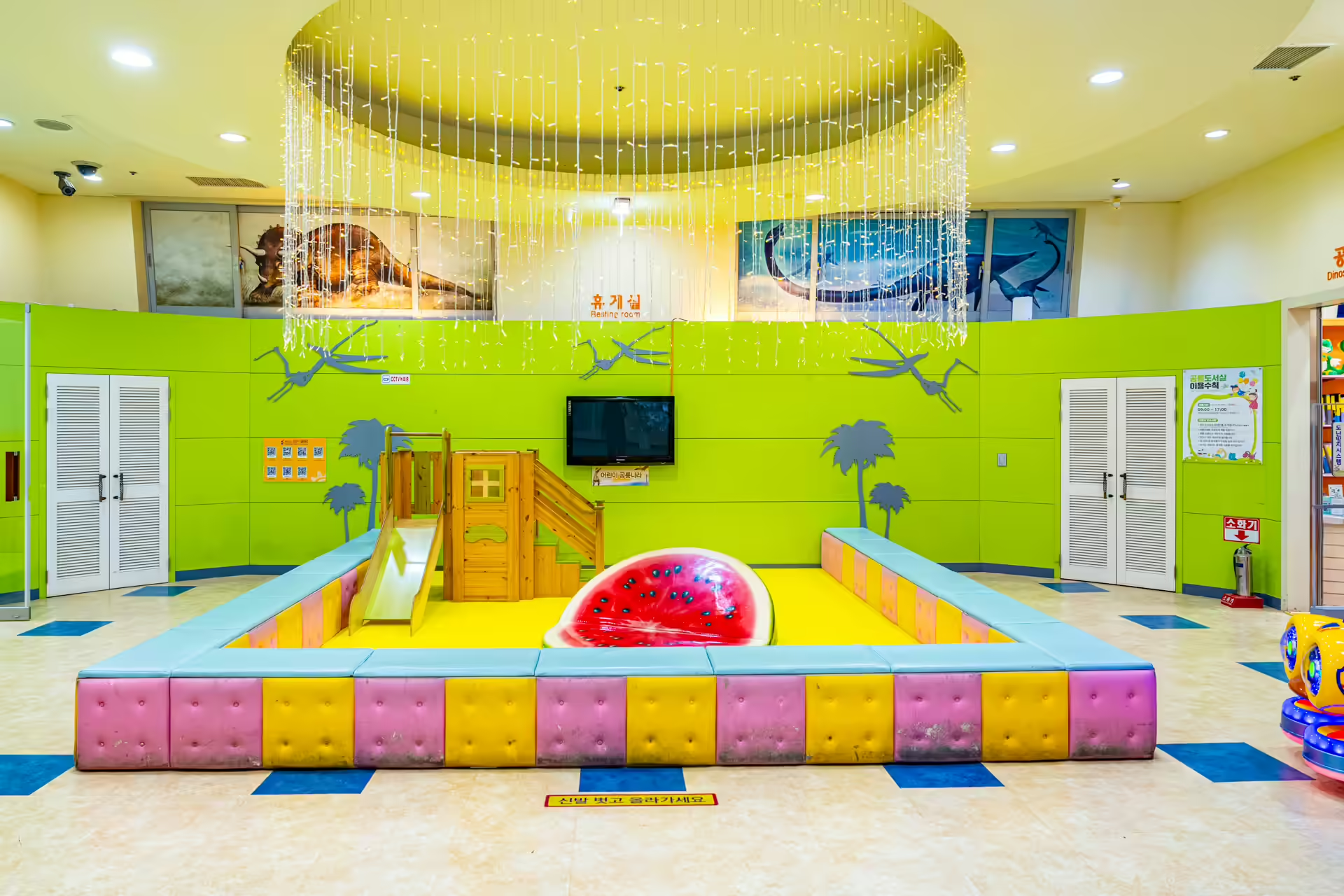
Outside, a dinosaur park spreads moving models and playground equipment across the lawns, and an indoor kids’ zone handles the youngest visitors. The grounds are genuinely large — lotus pond, flower tunnel, shaded rest areas along the embankment — and that size cuts both ways. In mild weather the walk between the main building, the protection halls, and the park is the best part of the visit. In August heat it is a commitment. A shuttle circulates, but covering everything ultimately means walking, so in summer go early, and expect small children to fade before the site does.
Each summer the museum also opens a children’s water play area in front of the main building — two slides, a splash structure, a fountain floor, free for museum visitors aged 3 to 13. This year’s season ended in late August, so treat it as planning intel for a future summer rather than a promise for your visit: swimsuits, swim caps, and water shoes are required, and sandals are turned away at the gate. There are showers, an indoor rest room for waiting parents, and shade shelters nearby.
The Half-Price Trick: Getting Your Money Back in Dinosaur Currency
Admission is modest to begin with — 5,000 won for adults, 4,000 for teens, 3,000 for children, free under age five and over 64. Then Haenam does something I have not seen at any other Korean museum: it hands paying visitors 50% of their admission back in Haenam Love Gift Certificates, the county’s local currency, calculated on each payment and skipped only when the refund would fall under 1,000 won. The certificates spend like cash at shops and restaurants across the county, at the time of reporting.
Read that as a nudge with excellent manners. The county is betting that if it hands you dinosaur money, you will stay for dinner — and for a family of four, the refund adds up to a real contribution toward one. One more note for anyone stringing Haenam into a longer stay: the new hotel over by the Uldolmok strait, twenty minutes west, currently offers its guests free entry to this museum — a pairing I will cover separately.
Who This Is Actually For
Families first, obviously: this is the rare attraction that a six-year-old and a geology-minded adult rate equally highly, for different halls. But I would push back on filing it as a kids’ stop. The in-situ footprint beds are a legitimate paleontological site with a world-first discovery to their name, and adults traveling without children can skip the animatronics, spend their time in the protection halls, and leave satisfied. Skip it only if museum fatigue is real for you and the southwest coast’s beaches are the actual goal.
It also slots cleanly into a southern loop. Naju’s abandoned railway line and its river-town food street sit on the way down from Gwangju — I walked that stretch in my Naju railway heritage guide — and the valley of a thousand improvised Buddhas at Unjusa, one of the strangest temple sites in the country, is within day-trip range too (my Unjusa field guide). Haenam rewards the traveler who treats the deep southwest as a destination instead of a drive-through.
Hours are 9 to 6 with entry closing an hour early, and the museum rests on Mondays for most of the year — though in July and August it opens daily, stretching to 7 p.m. on summer weekends and holidays. Confirm the current schedule on the official page before making the long drive.
And keep the certificates handy when you leave: they spend at ordinary shops and restaurants across the county, which means the museum has effectively arranged for dinosaurs to subsidize your dinner in Haenam-eup. Somewhere in the county office, the person who designed that program deserves a raise.
Practical Manual: Haenam Dinosaur Museum
| Name | Haenam Dinosaur Museum / Uhangri Dinosaur Fossil Site (해남공룡박물관·우항리 공룡화석지) |
| Address | 234 Gongnyongbangmulgwan-gil, Hwangsan-myeon, Haenam-gun, Jeonnam-Gwangju Special Metropolitan City (전남 해남군 황산면 공룡박물관길 234) |
| Hours | 9:00 a.m.–6:00 p.m. (entry until 5:00 p.m.); closed Mondays, except July–August when it opens daily (weekends/holidays until 7:00 p.m. in those months) |
| Admission | Adults 5,000 won / teens 4,000 won / children 3,000 won; free under 5 and over 64 (at the time of reporting) |
| Refund | 50% of paid admission returned in Haenam Love Gift Certificates, spendable in the county (skipped if under 1,000 won) |
| 4D theater | 15 min, 6 showings daily, 3,000 won extra, no children 3 and under |
| Getting there | KTX/SRT to Mokpo then approx. 45 min by car; or express bus Seoul–Haenam (4.5+ hrs) and taxi approx. 20 min; free parking |
| Time needed | Half a day; more with children |
| Official site | uhangridinopia.haenam.go.kr (Korean) |
Navigation Tip: Google Maps is unreliable for driving directions in Korea. Use Naver Map and search “해남공룡박물관.” For signs and menus, Papago out-translates Google Translate in Korean.