
The 3,000-Won Ticket That Covers Half of Gangneung’s History
Admission to Ojukheon House costs 3,000 won, so if you pay with a 5,000-won bill, you are handing over a portrait of the man who was born about a hundred meters past the ticket window — in a small room you will be standing in front of ten minutes later. Nobody at the gate points this out, because in Gangneung it is simply not news.
Ojukheon House is the kind of place guidebooks file under “historic site” and travelers file under “maybe later.” I want to argue against the maybe. Behind one gate you get a 15th-century house, the birthplace of two people on Korean currency, a 600-year-old plum tree, and four indoor exhibition halls — all on a single 3,000-won ticket that keeps working as a discount coupon across town after you leave. For half a day in Gangneung, I have not found better arithmetic.
Getting There
Gangneung sits on the east coast, about two hours from Seoul Station on the KTX Gangneung Line. From Gangneung Station, city buses 202-1 and 202-2 stop near the Ojukheon entrance in roughly 15 minutes; a taxi does it in about ten. If you are driving the coastal route, parking at the site is free. The complex sits northwest of downtown, close enough to Gyeongpo Lake that the two combine naturally into one unhurried afternoon.
A House Named After a Man Nobody Remembers
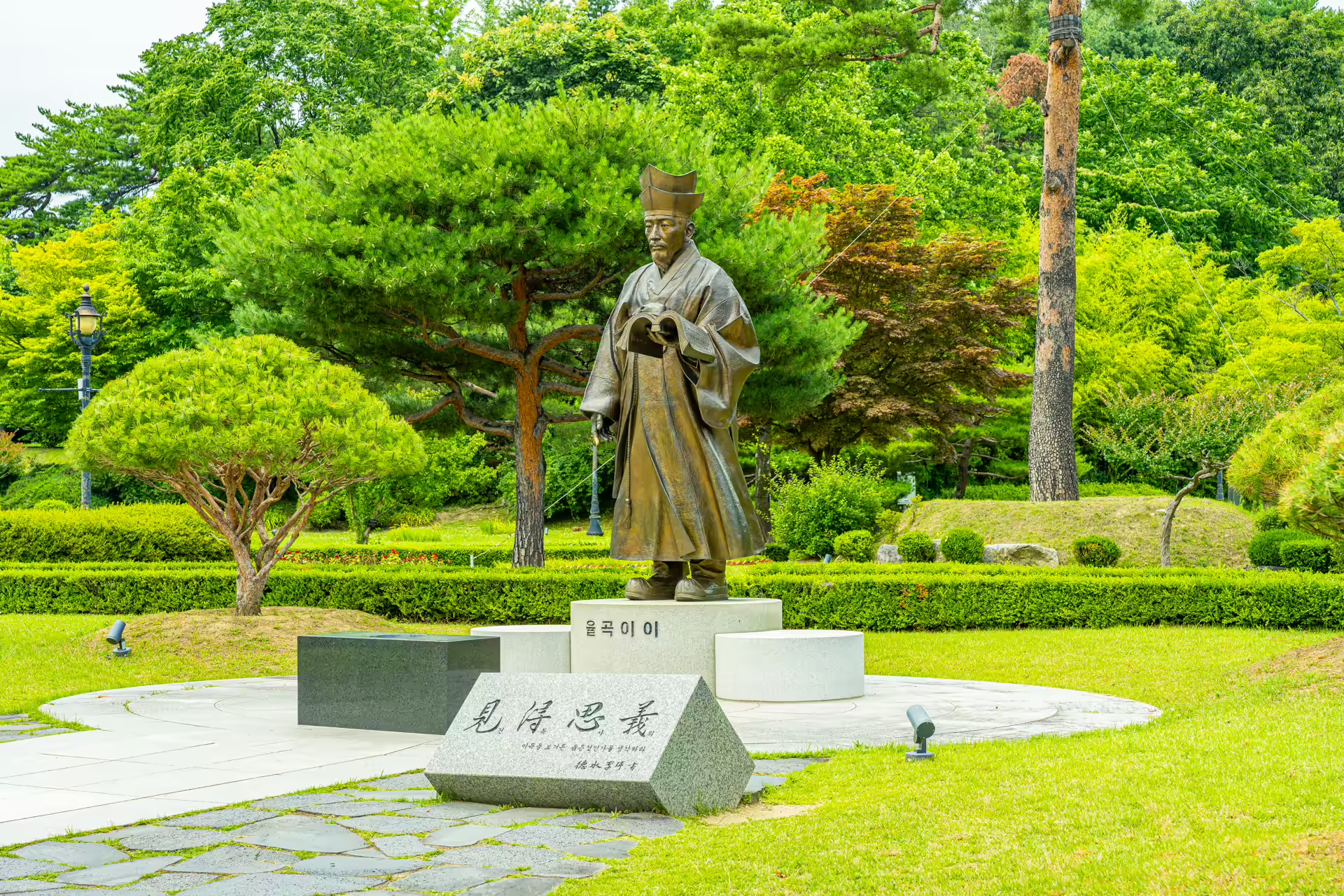
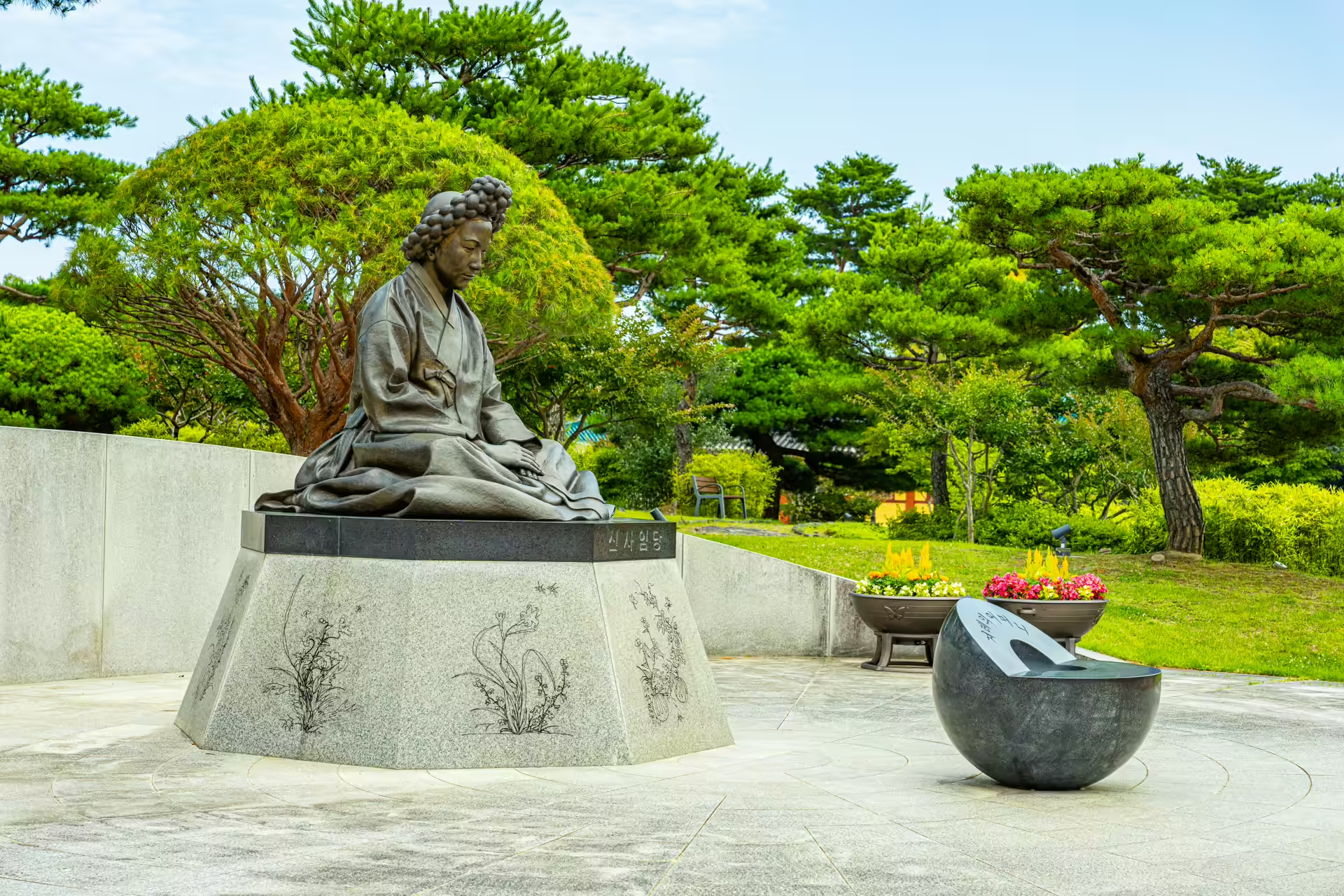
Here is the origin story that most visitors walk past. Ojukheon was never named for its famous residents. Shin Saimdang — the artist on the 50,000-won bill — was born here in 1504. Her son Yulgok Yi I — the Confucian scholar on the 5,000-won bill — was born here in 1536. Yet the house carries neither of their names.
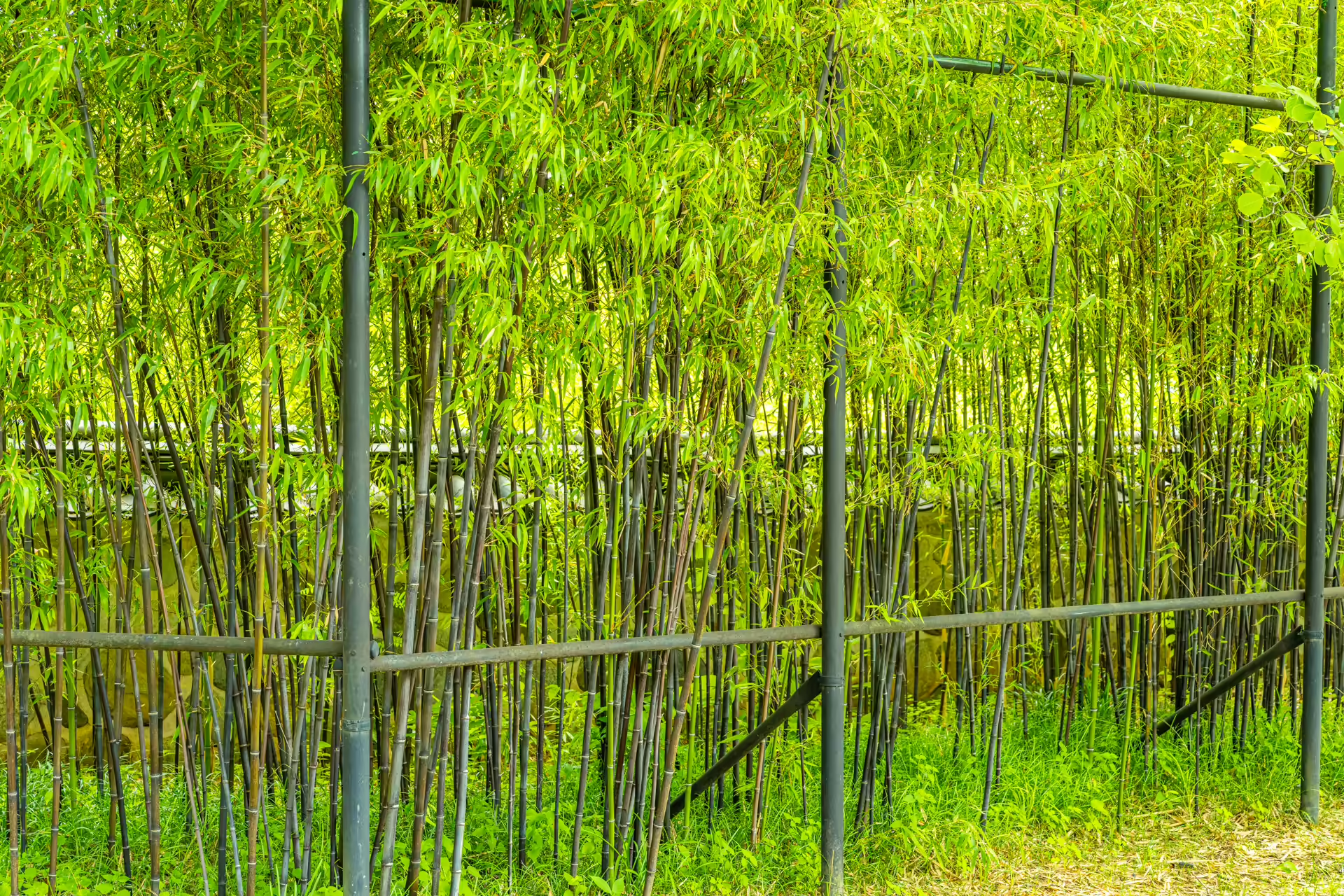
Instead, the property passed by inheritance to a relative named Gwon Cheo-gyun, on the condition that he look after the family graves. Gwon looked at the black bamboo growing thick around the house and took “Ojukheon” — black bamboo pavilion — as his own pen name. The pen name stuck to the building, outlived the man, and became one of the most recognized place names in Korea. The bamboo is still there, planted in dense stands along the walls, and its stalks really are black, a deep charcoal that reads almost purple in the summer light.
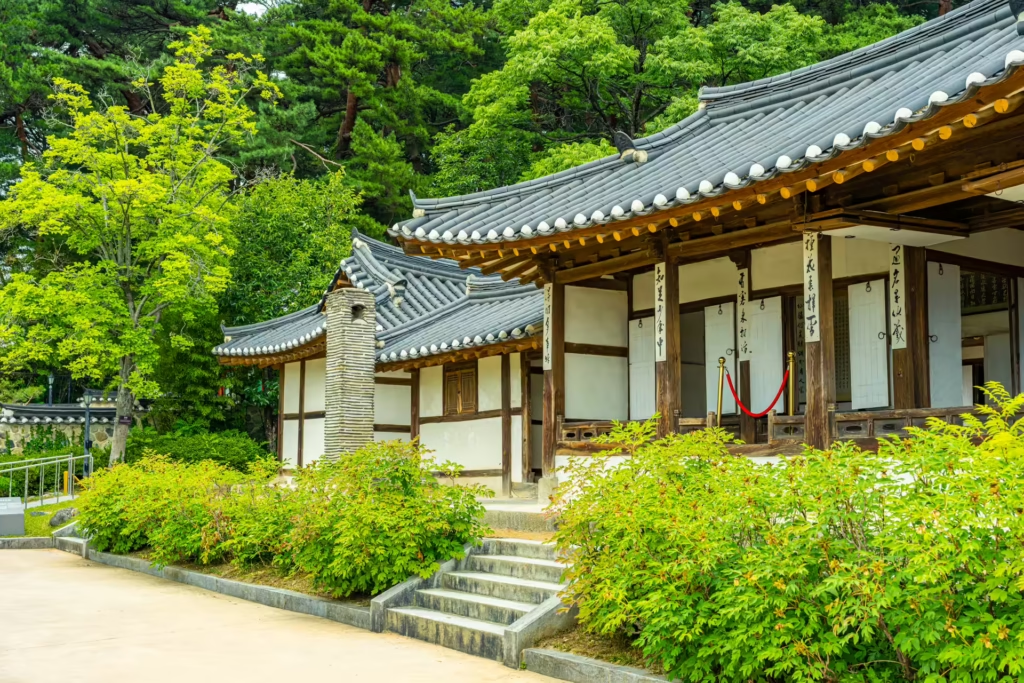
The house itself dates to around 1400, which makes it one of the oldest surviving residential wooden buildings in Korea. It earned Treasure status in 1963, and not for its size — the main hall is a modest three bays wide. Architects prize it because its bracket joinery sits halfway between two historical styles, a snapshot of Korean carpentry mid-evolution. You do not need to care about brackets to enjoy the building, but it explains why scholars treat this small house with such reverence.
Through Jagyeongmun Gate: the Courtyard, the Shrine, and a 600-Year-Old Plum
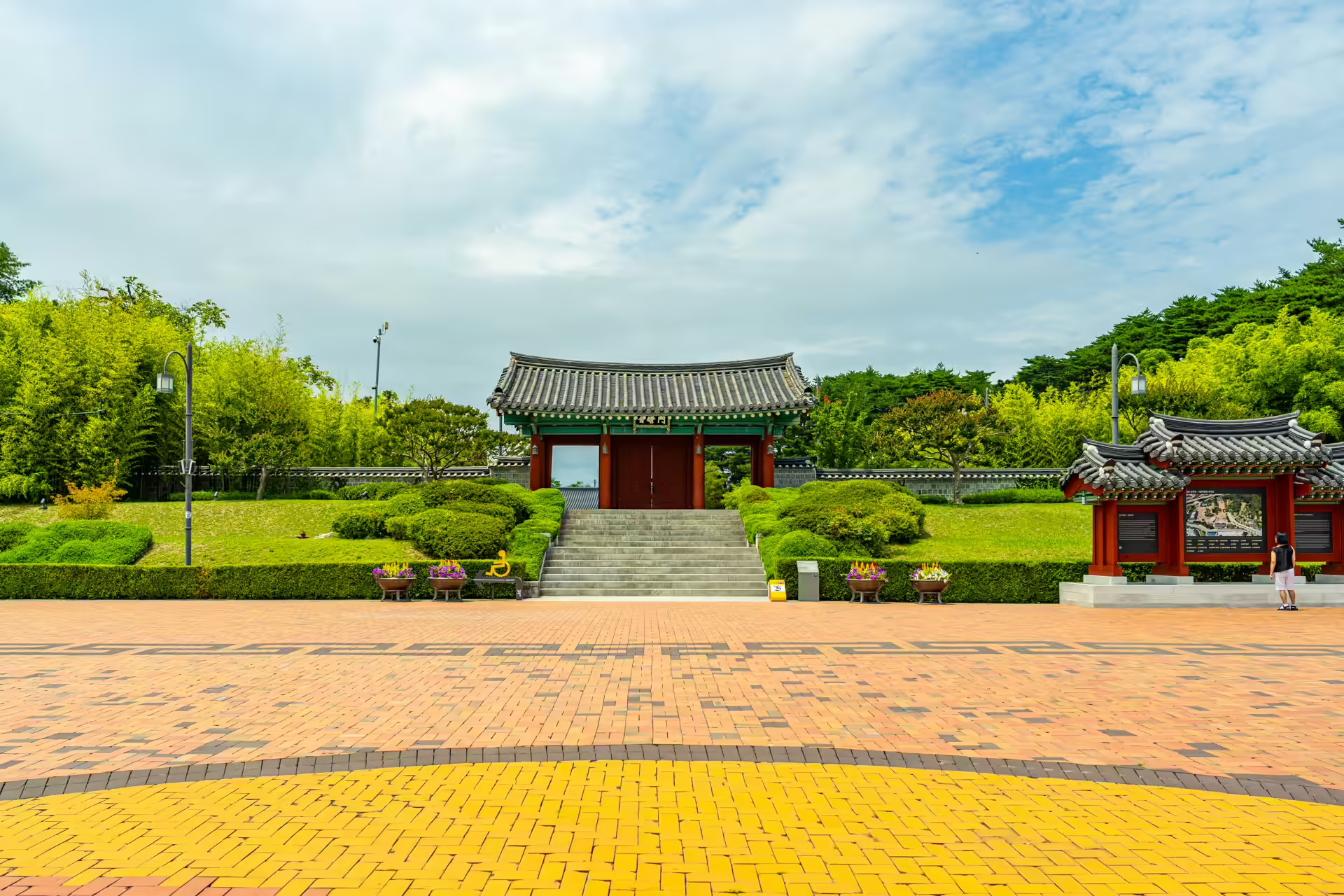
Past the ticket booth, the order of things matters. First comes the statue of Yulgok, then a flower bed, then the inner gate. Do not skip the flower bed. It is planted with cucumbers, watermelons, eggplants, and cockscombs — the precise plants that appear in Shin Saimdang’s most famous painting series, “Chochungdo” (Grass and Insects). You will meet the original artwork indoors later, so this garden works as a preview: the plants first, the paintings after. Walk past it without looking and the connection never fires.
The inner gate is called Jagyeongmun, named after an essay Yulgok wrote at age twenty — a list of rules for keeping himself honest, including speaking less and staying disciplined when alone. A gate named after a self-improvement memo written by a twenty-year-old is, I think, a very Korean kind of monument.
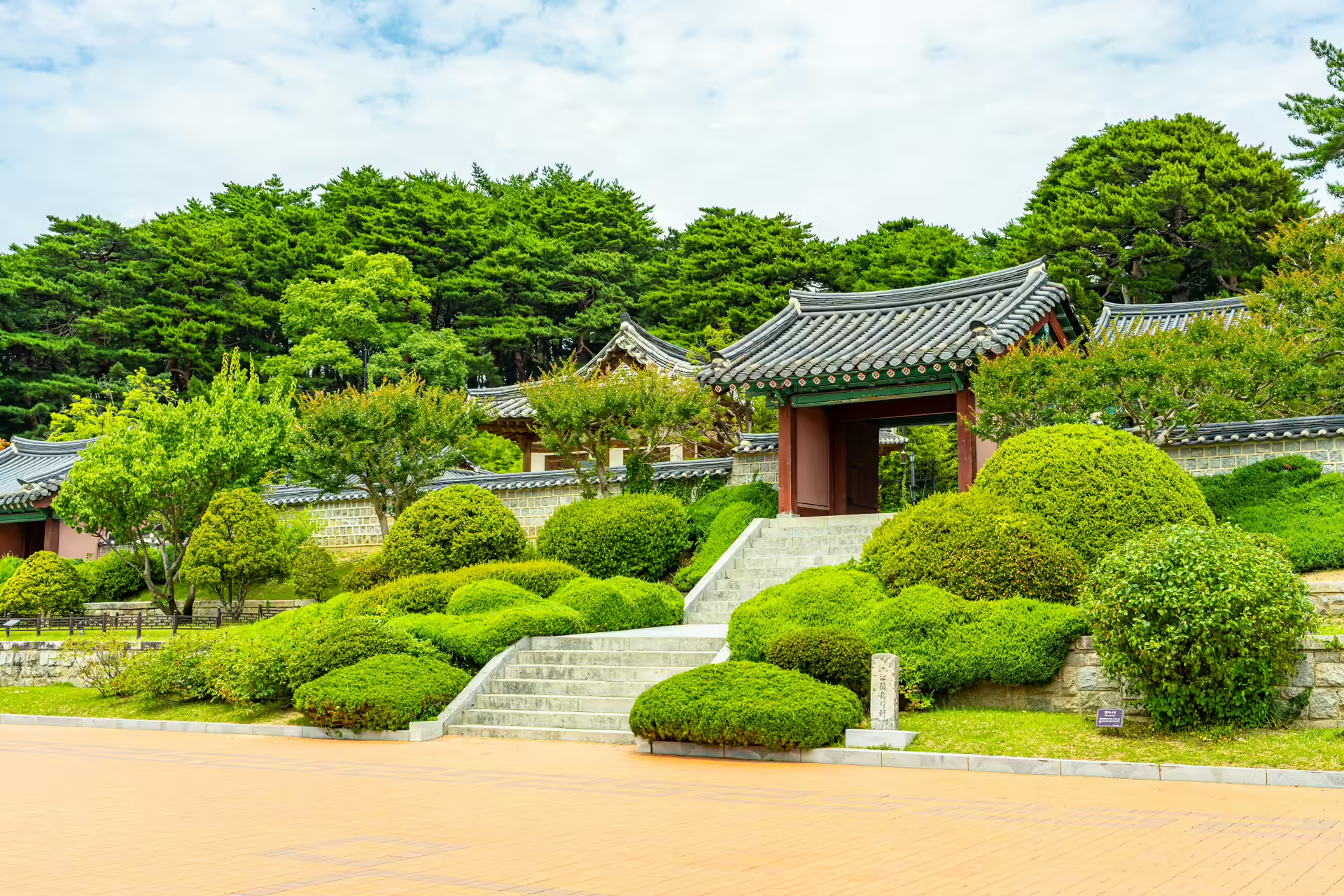
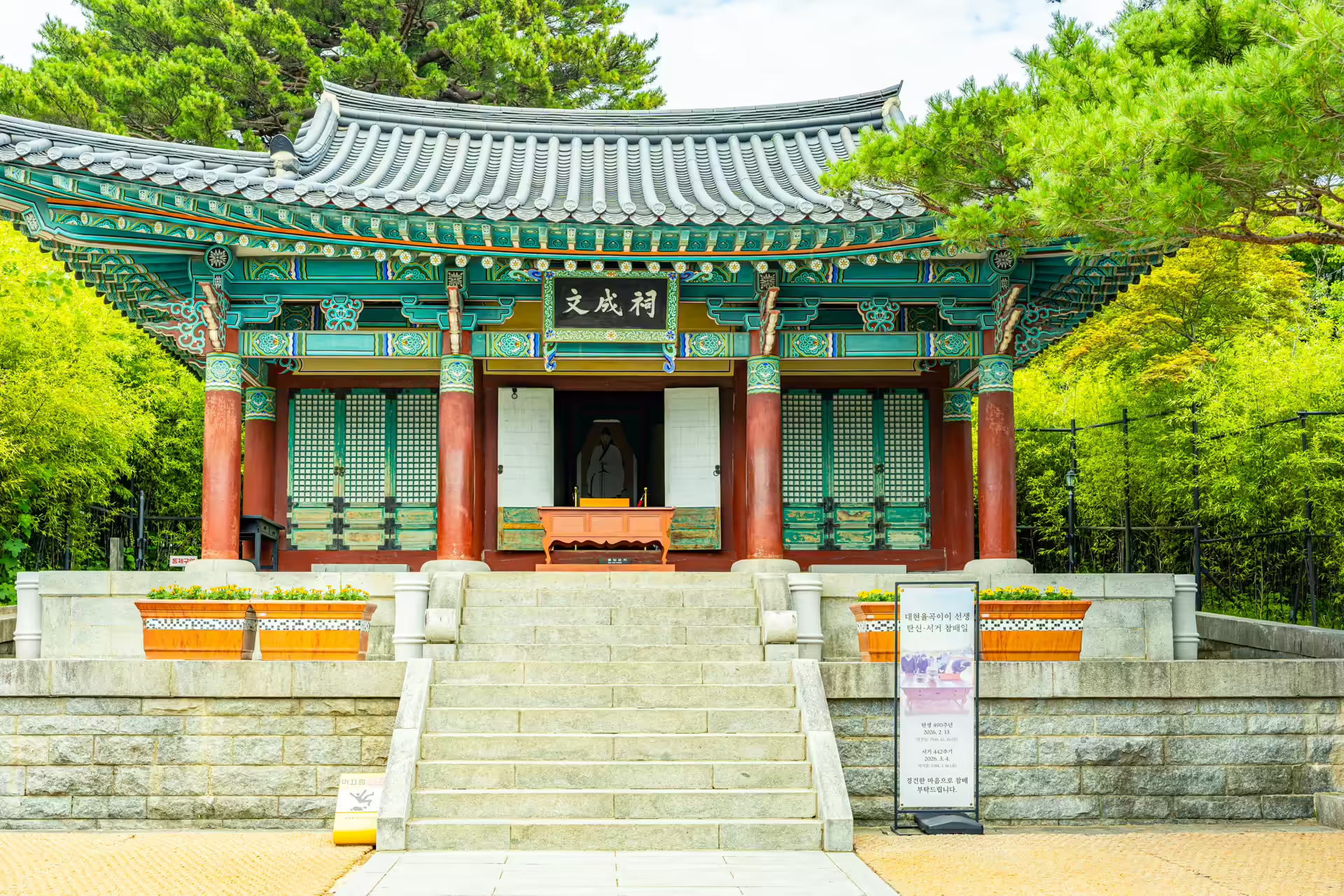
Beyond the gate and up a short flight of stairs stands Munseongsa, the shrine holding Yulgok’s official portrait. “Munseong” is the posthumous title a king granted him in 1624; the portrait inside was designated the standard image of Yulgok in 1975 — the same face engraved on the 5,000-won bill.
In the courtyard to one side grows a plum tree with its own name and its own government designation: Yulgongmae, a Natural Monument estimated at roughly 600 years old, planted around the time the house went up. The story goes that Saimdang and Yulgok both tended it. It blooms in late March, so my August visit caught only leaves — the crape myrtle beside the shrine handles the summer shift instead, flowering exactly when the plum has nothing to say.
Mongnyongsil: the Room on the Back of Your Banknote
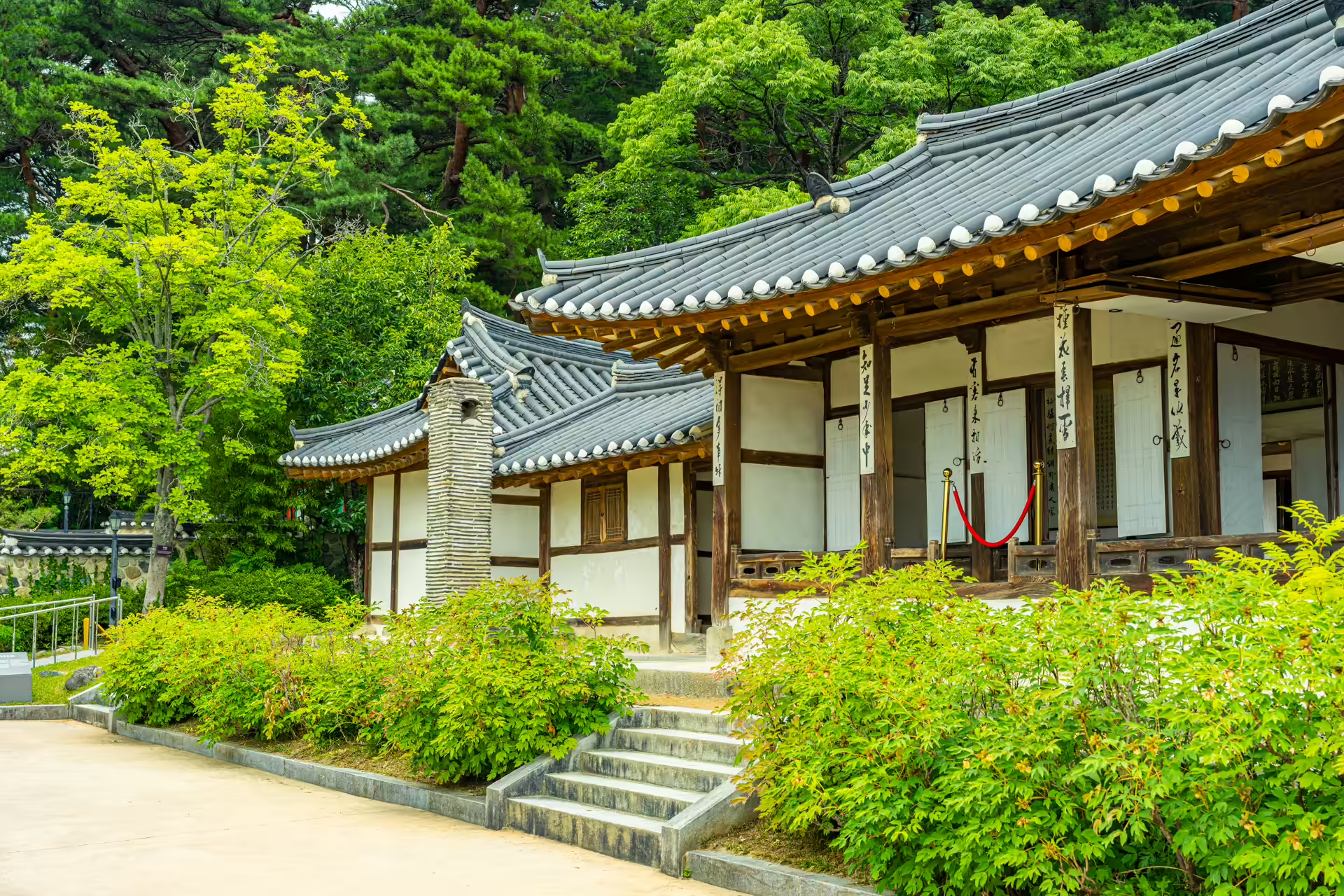
The room where Yulgok was born is called Mongnyongsil — “dragon dream room,” after the dream his mother had before his birth. Shin Saimdang’s portrait hangs inside. It is small and plain, and that plainness is the point: the most consequential scholar of Joseon Korea started in one ordinary room of a provincial house.
Now the banknote game, which I recommend playing on site. Take out a 5,000-won bill. Behind Yulgok’s portrait on the front, there is a tiled house flanked by bamboo — that is this building and this bamboo. Flip the bill: watermelons and cockscombs fill the back, lifted straight from his mother’s Chochungdo paintings. Son on the front, mother on the back, in your wallet all along. Then note that Saimdang herself fronts the 50,000-won bill, making Korea one of the very few countries with a mother and son on separate banknotes — both of them born behind the same gate you just paid 3,000 won to enter.
One more building deserves a minute: Eojegak, a small pavilion built in 1788 on royal orders. King Jeongjo heard that Ojukheon kept Yulgok’s handwritten book and his inkstone. He had both sent to the palace, read the book, wrote a preface into it, carved his own composition onto the inkstone, and returned them — then ordered a building constructed to house the two objects. A whole structure for one book and one inkstone. Both are now displayed in the memorial hall, inkstone inscription and all.
Four Halls, One Ticket
This is where Ojukheon quietly beats its reputation. The compound’s indoor section holds four exhibition spaces, and the 3,000-won gate ticket covers all of them.
Yulgok Memorial Hall keeps the family treasures, and the room that stops people is the one with Saimdang’s ten-panel Chochungdo folding screen — eight painted panels plus two of commentary, each pairing one plant with an insect or two. Cucumber and grasshopper. Watermelon and katydid. Eggplant and mantis. These are the plants from the entrance garden, completing the loop. The hall also shows work by her daughter Yi Mae-chang and her son Yi U — three artists out of one household, hanging side by side.
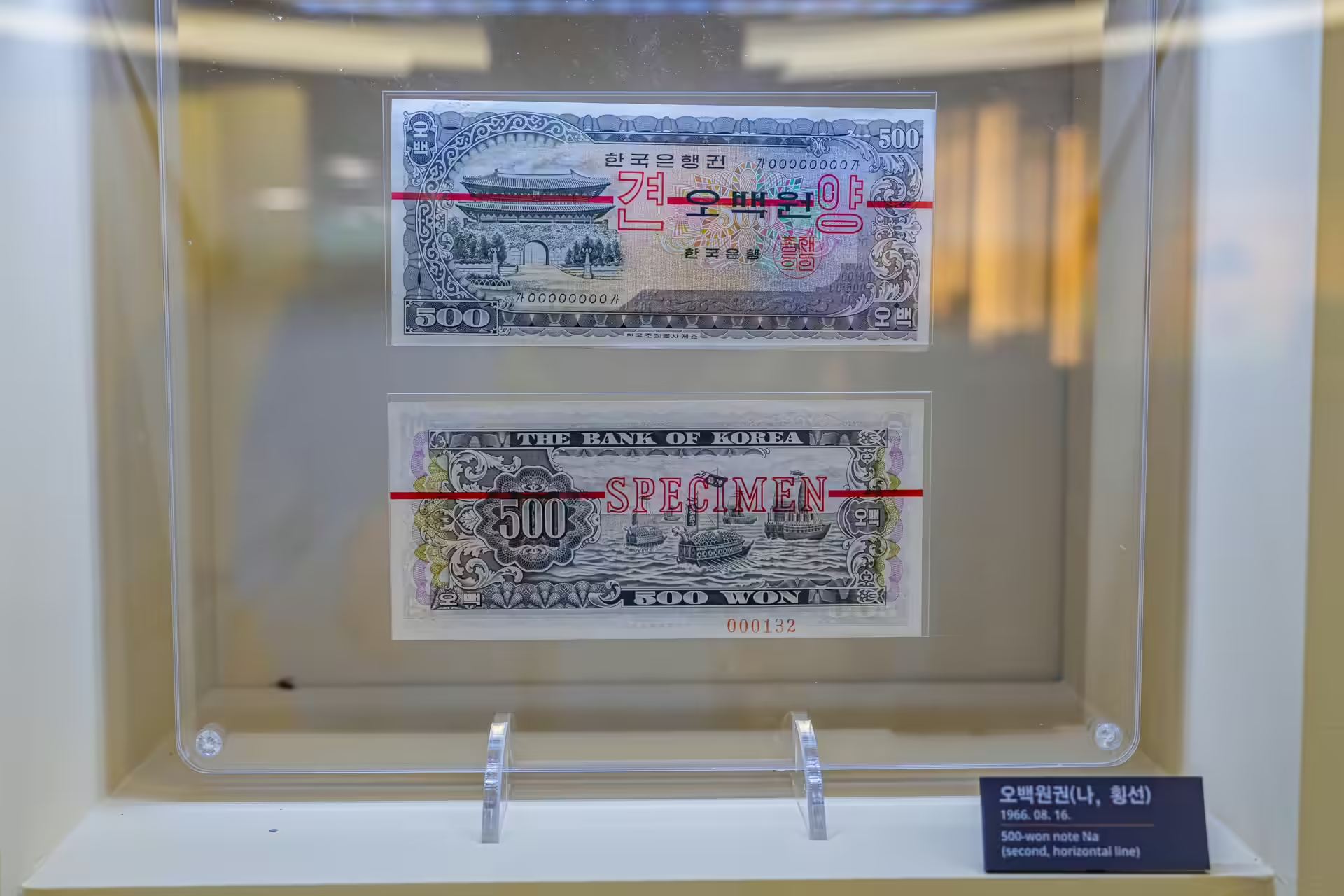
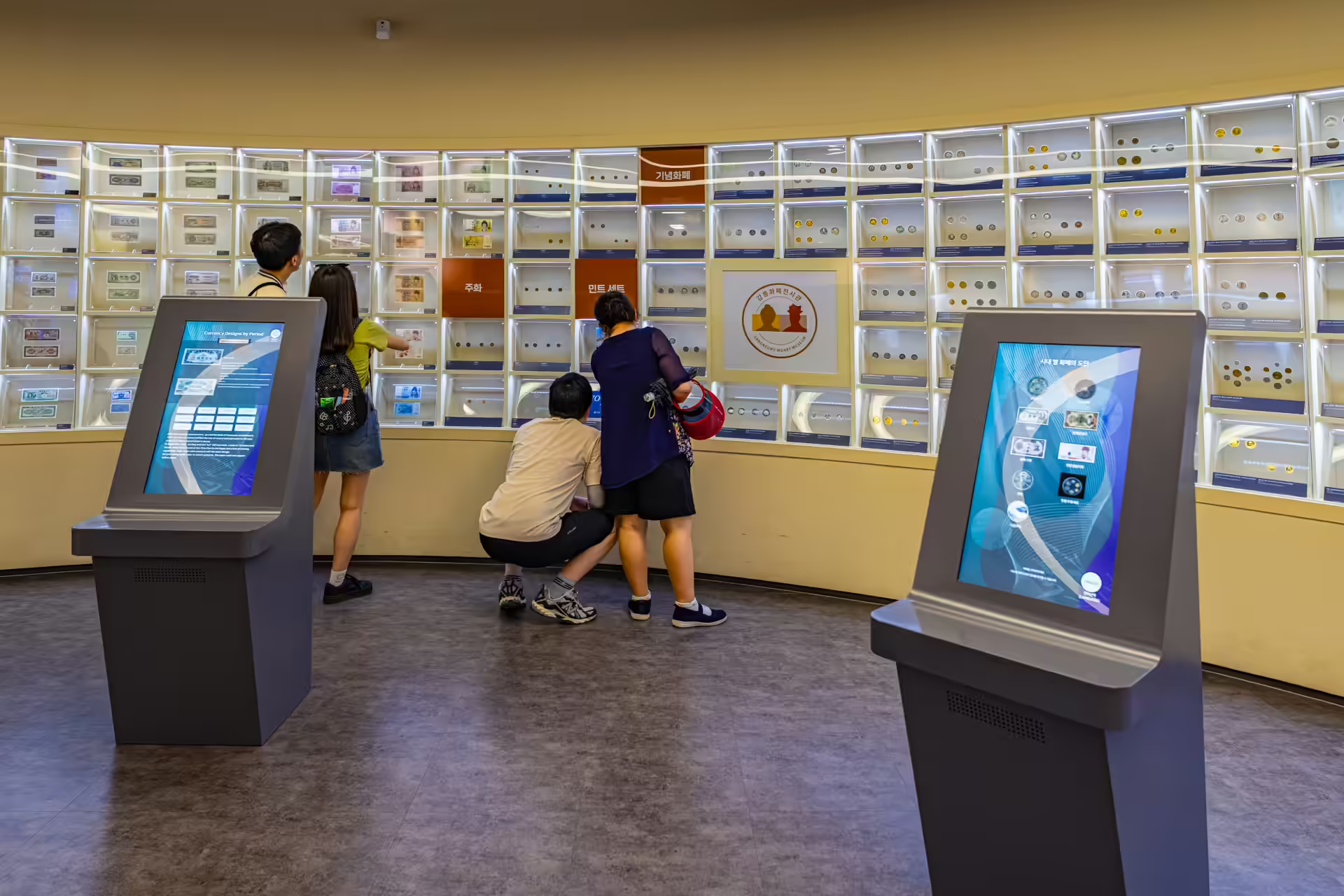
The Gangneung Currency Exhibition Hall opened in 2023 in a renovated building, and its existence makes perfect sense once you remember whose faces anchor the national currency. The collection runs from spade-shaped and knife-shaped money used in China nearly three millennia ago — versions of which have been excavated on the Korean peninsula — through Joseon-era coinage and colonial banknotes to the present. The hands-on corners are the draw for families: design-your-own-banknote stations, a coin press, and a machine that drops your face into a banknote layout. If you travel with children, budget more time here than anywhere else on the grounds.
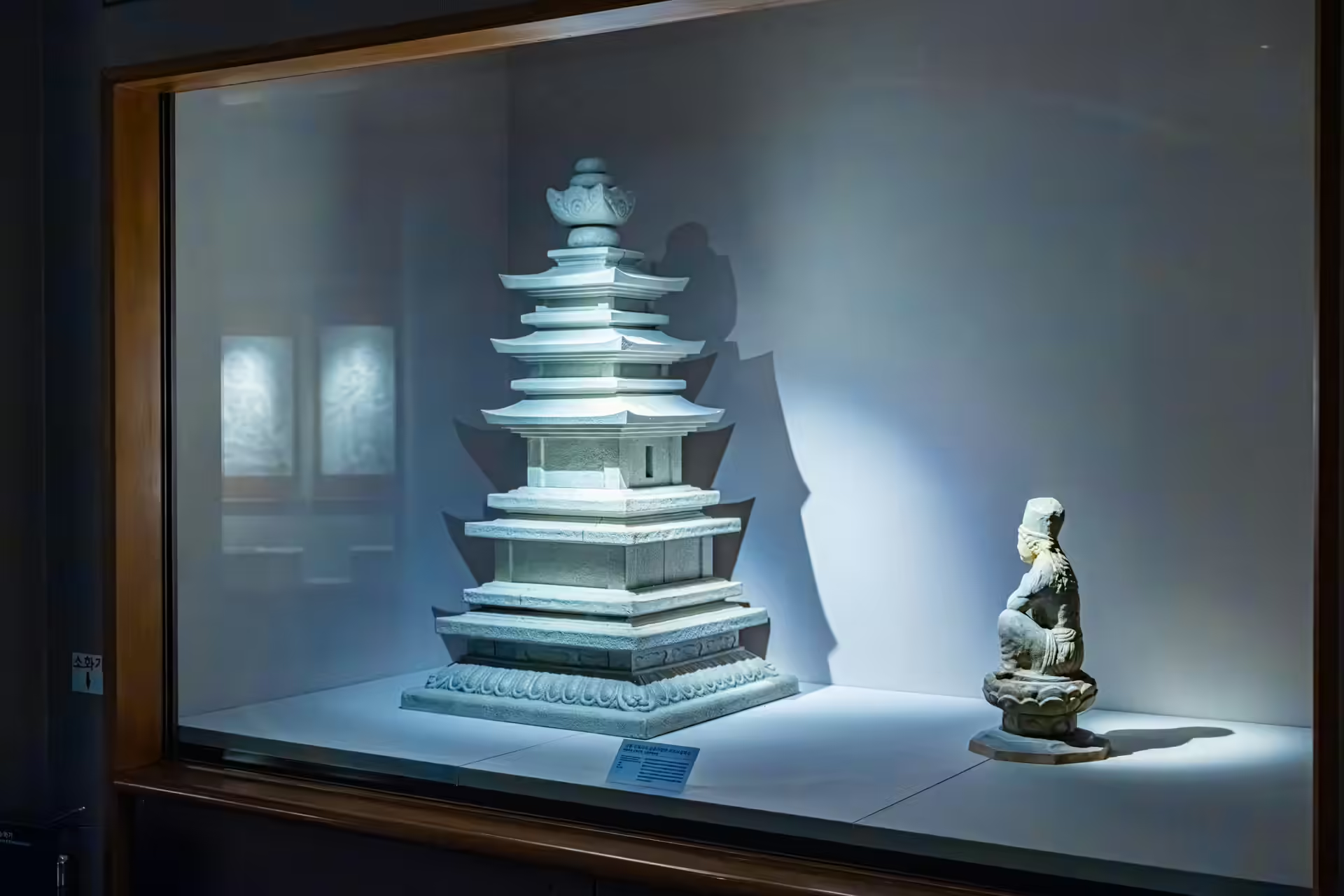
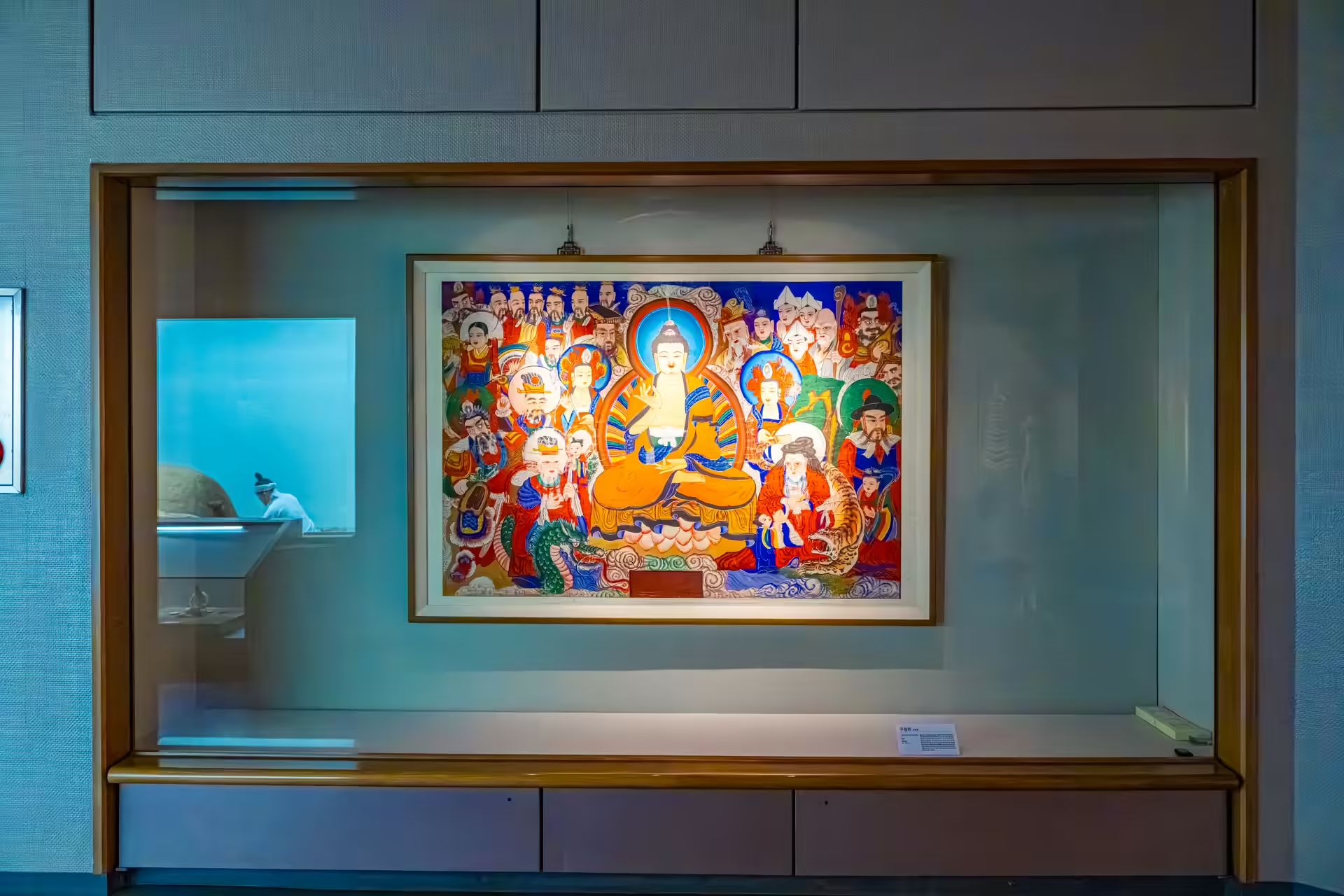
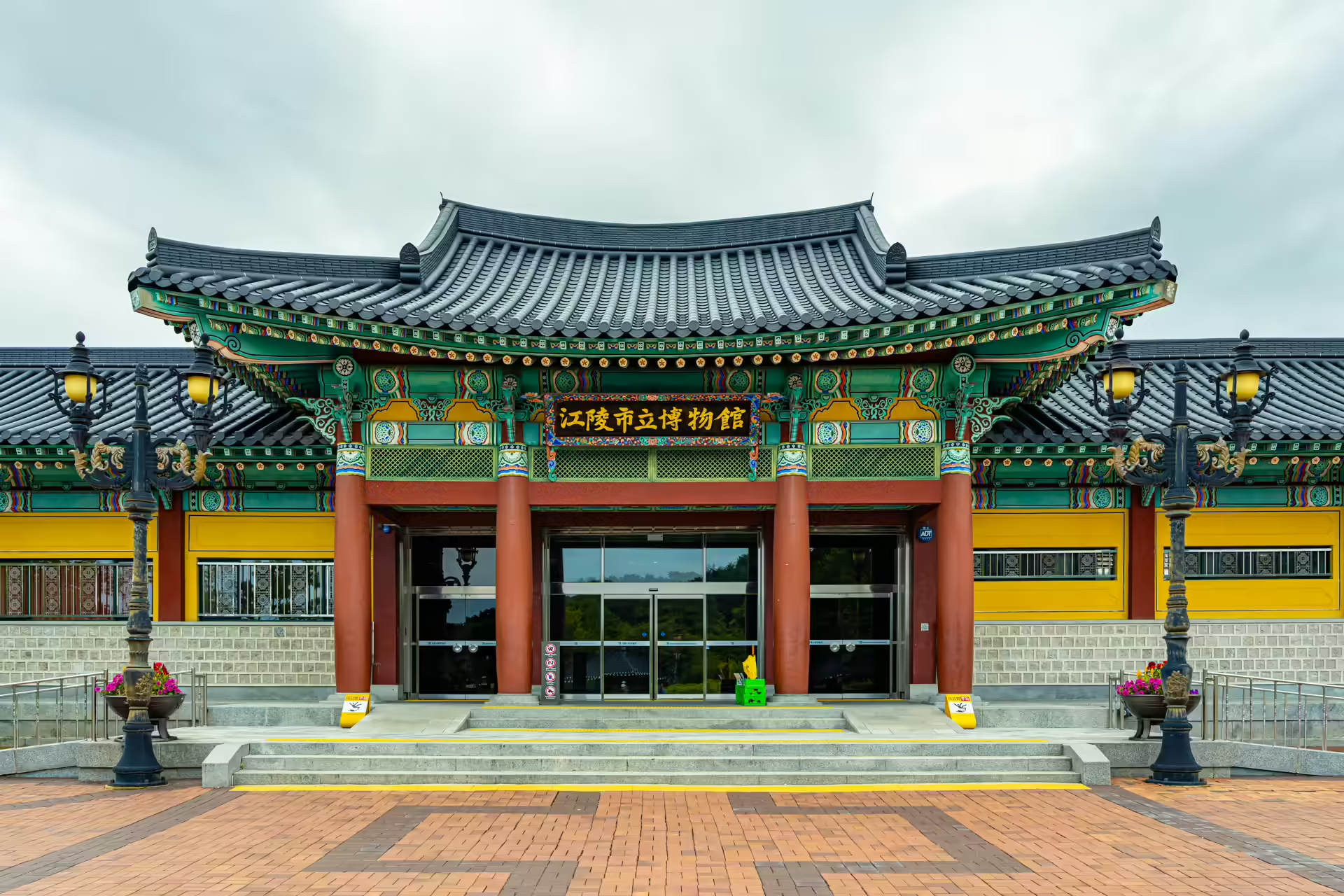
The Gangneung Municipal Museum, sharing the grounds, compresses the region’s entire timeline into one loop: Paleolithic tools, a full-scale reconstructed Iron Age pit house, and a Buddhist gallery gathering pieces from the temple sites scattered around the city. The marble seated bodhisattva from the Hansongsa temple site is a designated Treasure; its sibling statue from the same site ranks higher still — a National Treasure, kept in Chuncheon. Further on, a scale model of the old Gangneung government compound shows how the walled administrative town once fit together; its actual front gate, Imyeonggwan Samun, first raised in 936, still stands downtown ten minutes away by car and makes far more sense after you have seen the model. The loop ends with the Gangneung Danoje Festival, the city’s UNESCO-listed shamanic festival.
The fourth space, a character education hall themed on Yulgok’s teachings, is the skippable one unless you read Korean — but it costs nothing extra to peek.
Who This Is Actually For
Ojukheon rewards three kinds of travelers. History-minded visitors get one of Korea’s oldest houses plus a genuinely good regional museum. Families get the currency hall’s hands-on floor, where the exhibits survive enthusiastic handling. And anyone caught in Gangneung on a rainy or brutally hot day gets four indoor halls disguised as an outdoor heritage site.
Skip it if your Gangneung is strictly beaches and coffee streets — the compound asks for two to three unhurried hours, and rushing it defeats the point. Sequence matters too: walk the outdoor grounds first and save the indoor halls for later, because ticket sales end at 5 p.m. and the gardens close with the gate. In peak summer, reverse it and hide indoors through the early afternoon heat.
One practical trick before you leave: keep the ticket. Shown at partner attractions the same day, it unlocks discounts around town — free entry to the Daegwallyeong Museum, and cuts at Haslla Art World (17,000 won down to 10,000), the Gyeongpo Aquarium, and others at the time of my visit. If Ojukheon is on your list at all, make it the first stop of the day and let the stub pay for the rest. Where to base yourself for all this: I have covered a Gangneung beachfront stay in detail in my Shilla Monogram beachfront guide, and there is more indoor Gangneung in the immersive art museum manual.
Run the numbers once more on the way out. Three thousand won bought the house, the shrine, the plum tree, and four exhibition halls, and the stub in your pocket keeps its discount powers for the rest of the day. As far as I know, it is the only museum ticket in Korea whose guarantors are printed on the money you paid with.
Practical Manual: Ojukheon House and Municipal Museum
| Name | Ojukheon House & Gangneung Municipal Museum (강릉 오죽헌·시립박물관) |
| Address | 24 Yulgok-ro 3139beon-gil, Gangneung, Gangwon Province (강원특별자치도 강릉시 율곡로3139번길 24) |
| Hours | 9:00 a.m.–6:00 p.m., ticket sales end 5:00 p.m., open year-round |
| Admission | Adults 3,000 won / teens 2,000 won / children 1,000 won (at the time of reporting); covers the house and all four indoor halls — Yulgok Memorial Hall, Currency Exhibition Hall, Municipal Museum, and the character education hall |
| Discounts | Same-day ticket stub earns free or reduced entry at partner attractions around Gangneung (Daegwallyeong Museum free, Haslla Art World 10,000 won, and others) |
| Getting there | KTX Seoul–Gangneung approx. 2 hours; then bus 202-1/202-2 (approx. 15 min) or taxi (approx. 10 min) from Gangneung Station; free parking |
| Time needed | 2–3 hours |
| More info | Visit Korea: Ojukheon House |
Navigation Tip: Google Maps is unreliable for walking and driving directions in Korea. Download Naver Map and search “오죽헌” or “Ojukheon.” For menus and signs, Papago translates Korean more accurately than Google Translate.