
The Oldest Temple in Korea Sits Inside a Fortress Wall — and Entry Is Free
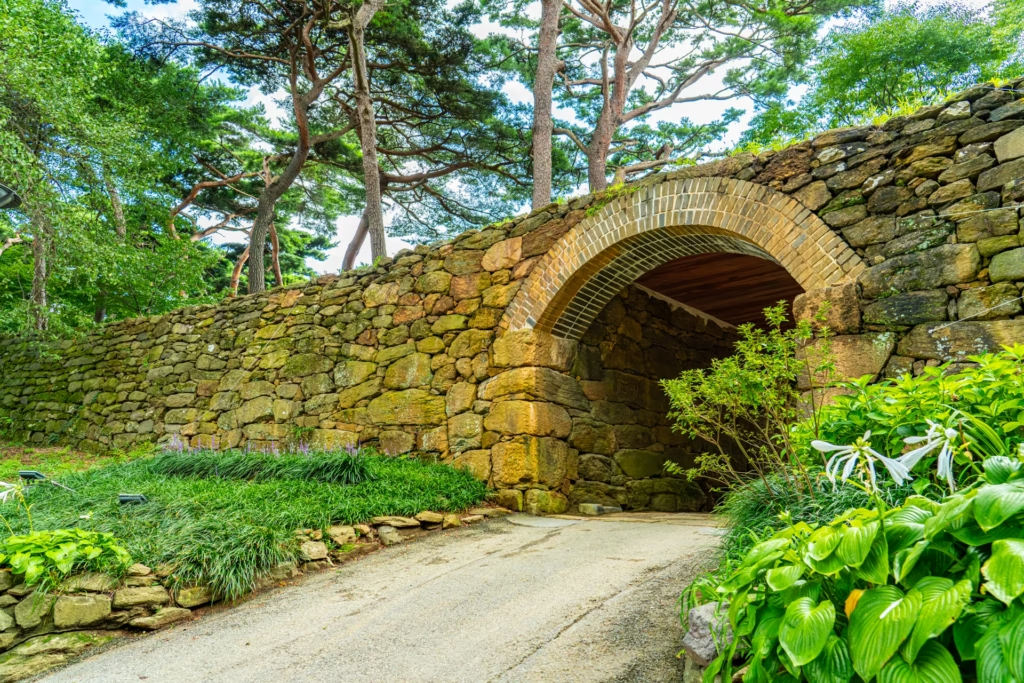
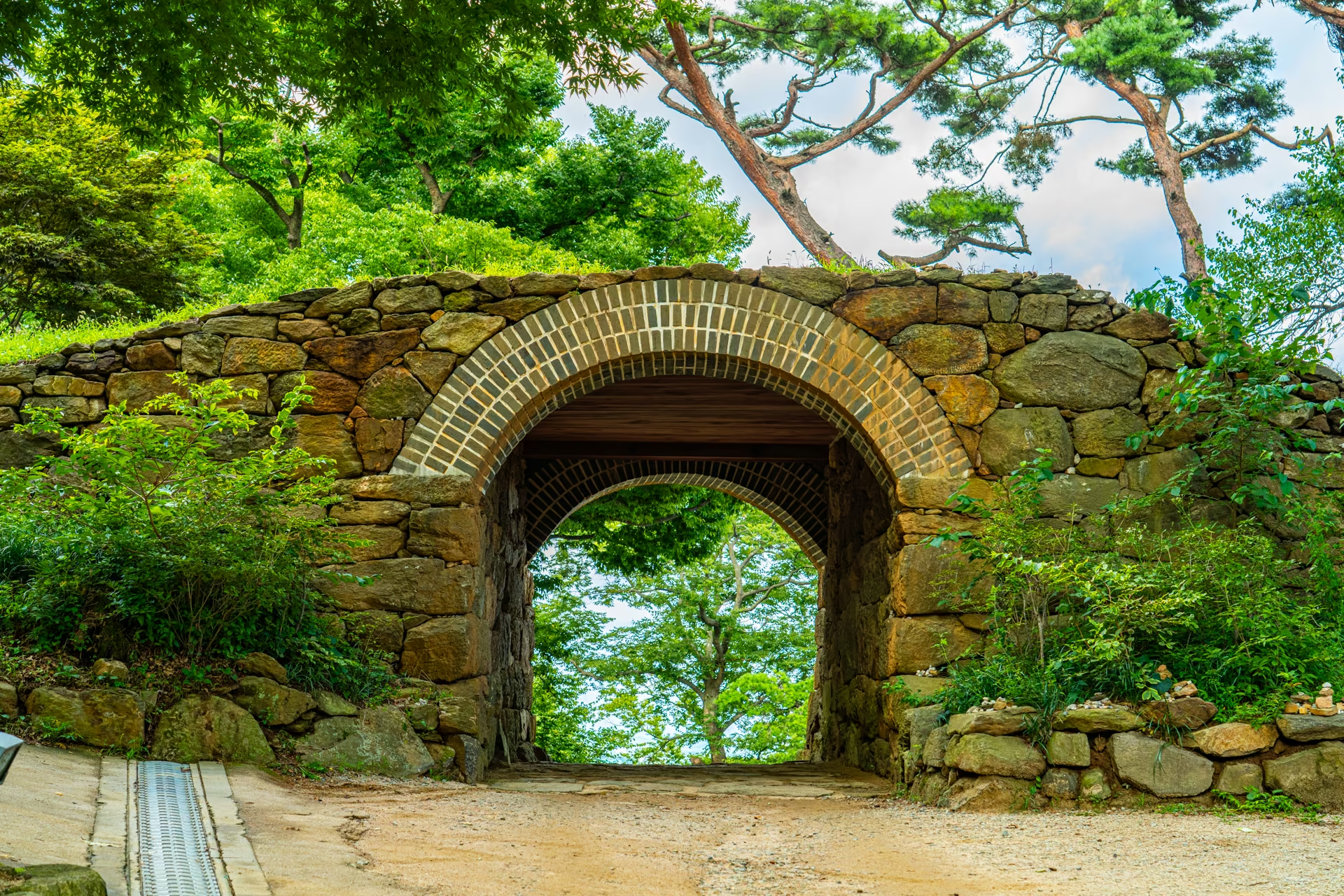
There is no iljumun at Jeondeungsa Temple. No ceremonial gate, no long pillared approach, none of the architectural throat-clearing that usually tells you a Korean temple is about to begin. Instead you walk through a low arched hole in a stone rampart, duck slightly, and come out the other side into pine forest. The wall is a fortress. The temple lives inside it. I have been to a lot of Korean temples and I still have not found another one that introduces itself this way.
Jeondeungsa is billed as the oldest surviving temple in Korea, founded in 381 CE by the monk Ado during the reign of King Sosurim of Goguryeo. Historians argue about that date — the location was contested territory at the time — so treat the claim the way the temple itself does, as an inherited tradition rather than a settled fact. What is not in dispute is the density of what stands here now: two Treasure-listed halls, a Treasure-listed bell cast in 1097, a rebuilt royal archive that once held the Annals of the Joseon Dynasty, a battlefield where Korea beat a European army, and a contemporary art gallery buried under the courtyard.
Admission has been free since 4 May 2023, when the national cultural heritage viewing fee was waived. You still pay for parking.
Getting to Jeondeungsa Temple from Seoul
Ganghwa Island is connected to the mainland by two bridges, so no ferry is involved and no advance planning is required. Driving from central Seoul takes roughly 90 minutes on a good day, crossing at either Ganghwa Bridge in the north or Choji Bridge in the south. Choji Bridge is the one you want for this temple — Jeondeungsa is about five minutes past it.
Without a car, the standard route is bus 3000 from Sinchon Station to Ganghwa Bus Terminal, then a local county bus toward Onsu-ri. Be realistic about the timing. Schedules quote around an hour for the Sinchon leg; on a Friday evening or a summer weekend it can stretch to two or more, and the route was split in mid-2024, so confirm you are boarding the Incheon 3000 to Ganghwa Terminal rather than the Gimpo 3000-1, which terminates at Wolgot. Add 30 to 40 minutes for the connection and the walk.
My honest recommendation: rent a car, or come as part of a day that includes other stops. Ganghwa rewards a car more than almost anywhere within an hour of Seoul, because the island’s best things are scattered across farmland with thin bus coverage. A century-old makgeolli brewery in Gilsang-myeon sits a few minutes from the temple, which makes an obvious pairing.
Two entrances serve the site. The East Gate is the first thing you meet coming from the Jeondeungsa intersection. The South Gate, 500 metres further along, is the only one with a gate tower — Jonghaeru — and the more atmospheric arrival. Parking is ₩3,000 for a small car and ₩8,000 for a large one, payable by card, and the lots run 09:00 to 17:30.
Samnangseong: A Fortress With a Founding Myth
The mountain is called Jeongjoksan, which means “cauldron leg mountain” — three peaks arranged like an upturned pot. The wall that follows its ridge is Samnangseong, Historic Site No. 130, roughly 2.3 kilometres of rough-cut stone with ten or so angled sections and projecting bastions that let defenders hit attackers from the side. Tradition credits its construction to the three sons of Dangun, the mythical founder of Korea, which is why it carries the name it does. In practical terms it began as an earthen wall and was reinforced in stone across the Goryeo and Joseon periods.
It earned its keep in 1866. During the French campaign against Korea, General Yang Heon-su crossed the Ganghwa Strait from Gimpo with a small force, occupied this fortress, and beat the French decisively from inside it — the first Korean victory over a Western military power, won by terrain and ambush against superior firearms. Monks from Jeondeungsa and local militia fought alongside the regulars. The victory monument stands just inside the East Gate, erected in 1873 while Yang was still alive.
Daeungbojeon and the Woman Holding Up the Roof
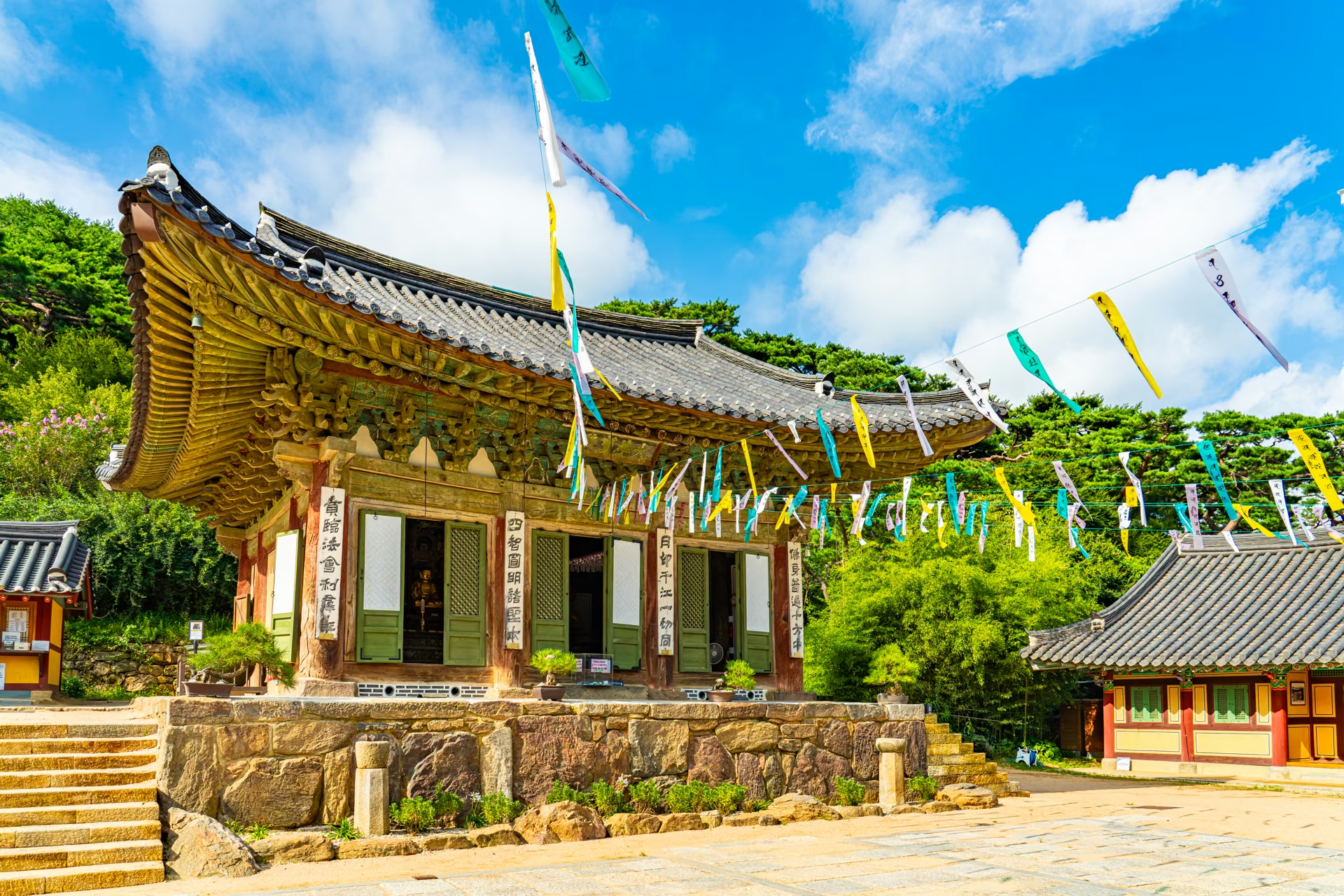
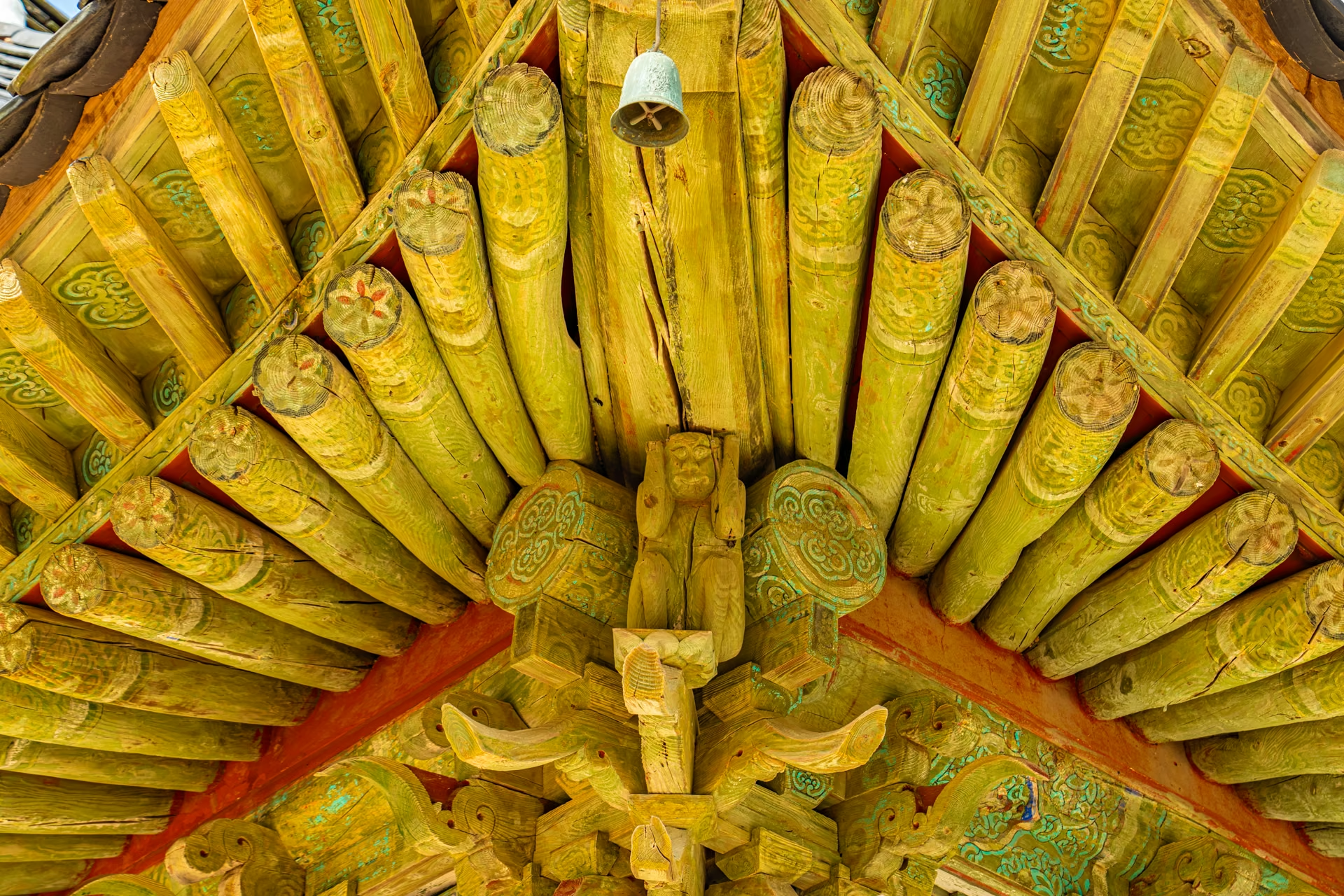
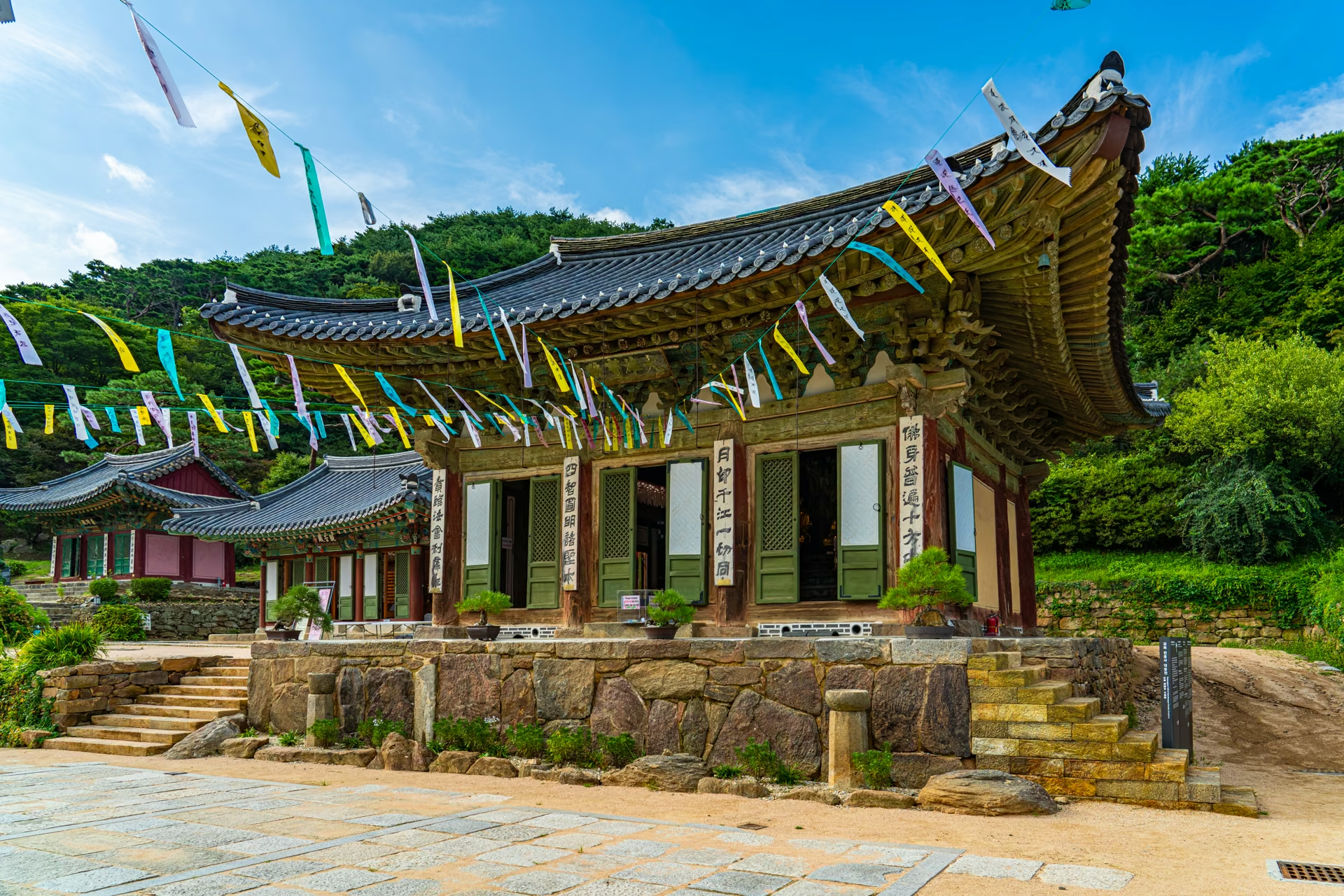
The main hall is small — three bays by three bays — and that smallness is the point. Treasure No. 178 is regarded as one of the finest mid-Joseon buildings in the country not because of scale but because of the carving. The canopy above the altar is dense with dragons whose heads push out from four corners, lotus and peony worked in relief around the ceiling, and, oddly, fish carved overhead so the space reads like an underwater palace. A rack of nine bells once hung from a small dragon frame with a cord running down to the altar; pulling it set all nine ringing at once.
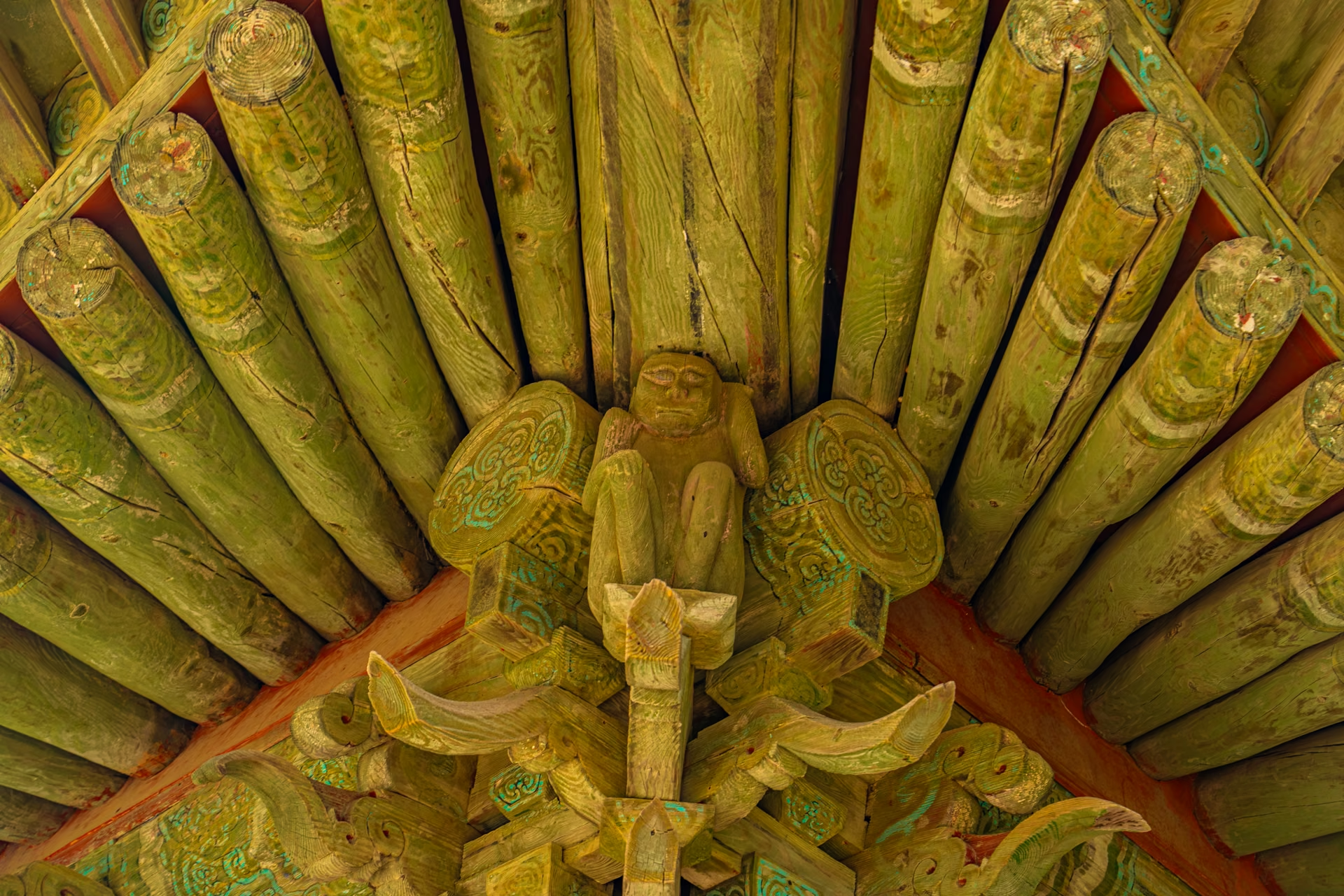
Look up at the four roof corners on the outside and you will find the temple’s most famous carving: four small human figures, apparently naked, straining under the weight of the eaves. The story attached to them is that the master carpenter rebuilding the hall in 1621 gave his savings to a woman who ran a tavern below the temple, and she left with the money. He carved her into the corners so she would hold up the roof forever in penance. A competing reading says the figures satirise Princess Jeguk of Yuan, who humiliated the Korean queen consort connected to this temple. Neither version is documented. Both are told on-site with total conviction.
The queen in question also gave the temple its name. It was originally Jinjongsa. When Queen Jeonghwa, consort of King Chungnyeol, donated a jade lamp along with a set of Buddhist scriptures in the Goryeo period, the temple was renamed Jeondeungsa — 傳燈, “the transmission of the lamp.”
Yaksajeon, the Bell, and the Rest of the Count
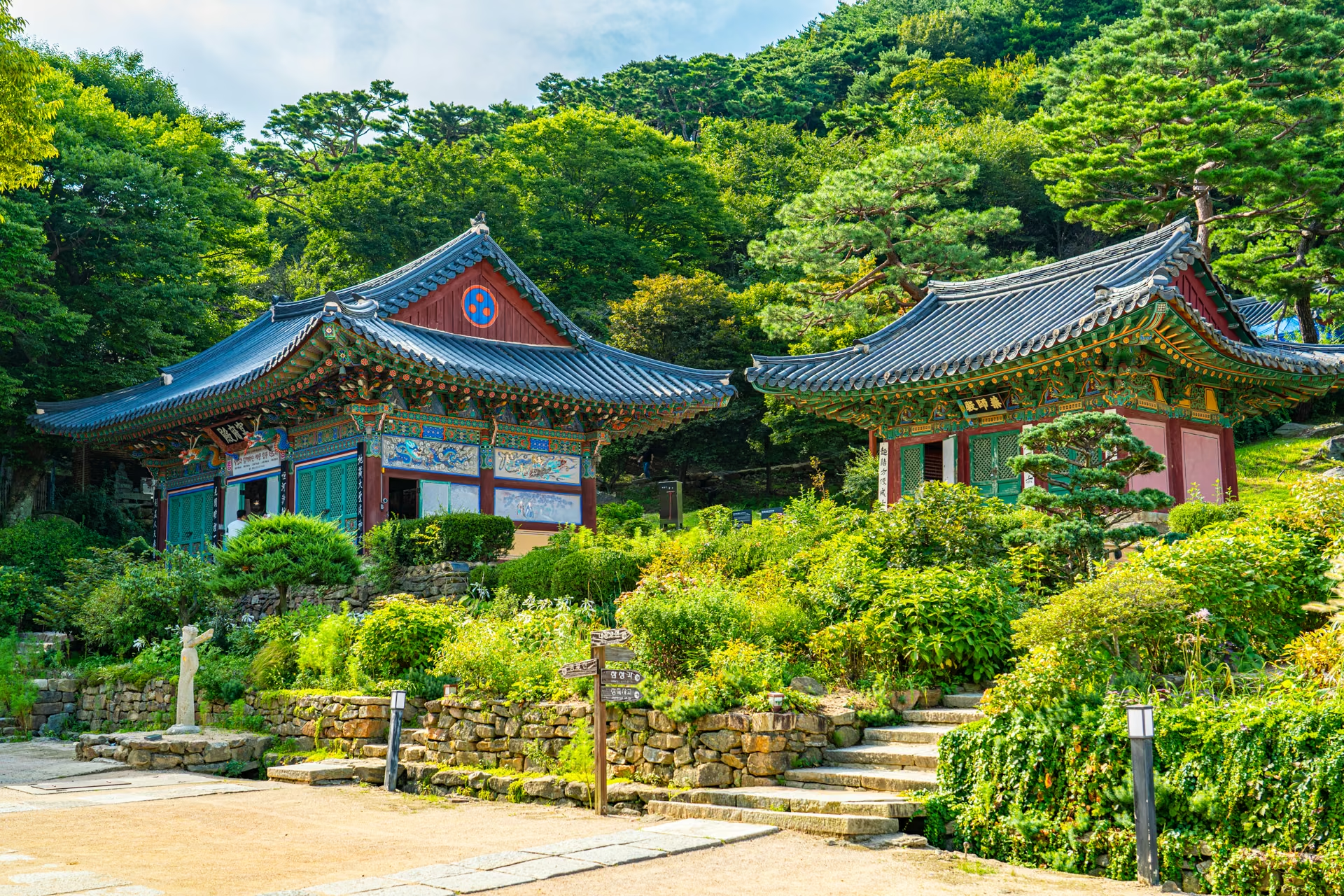
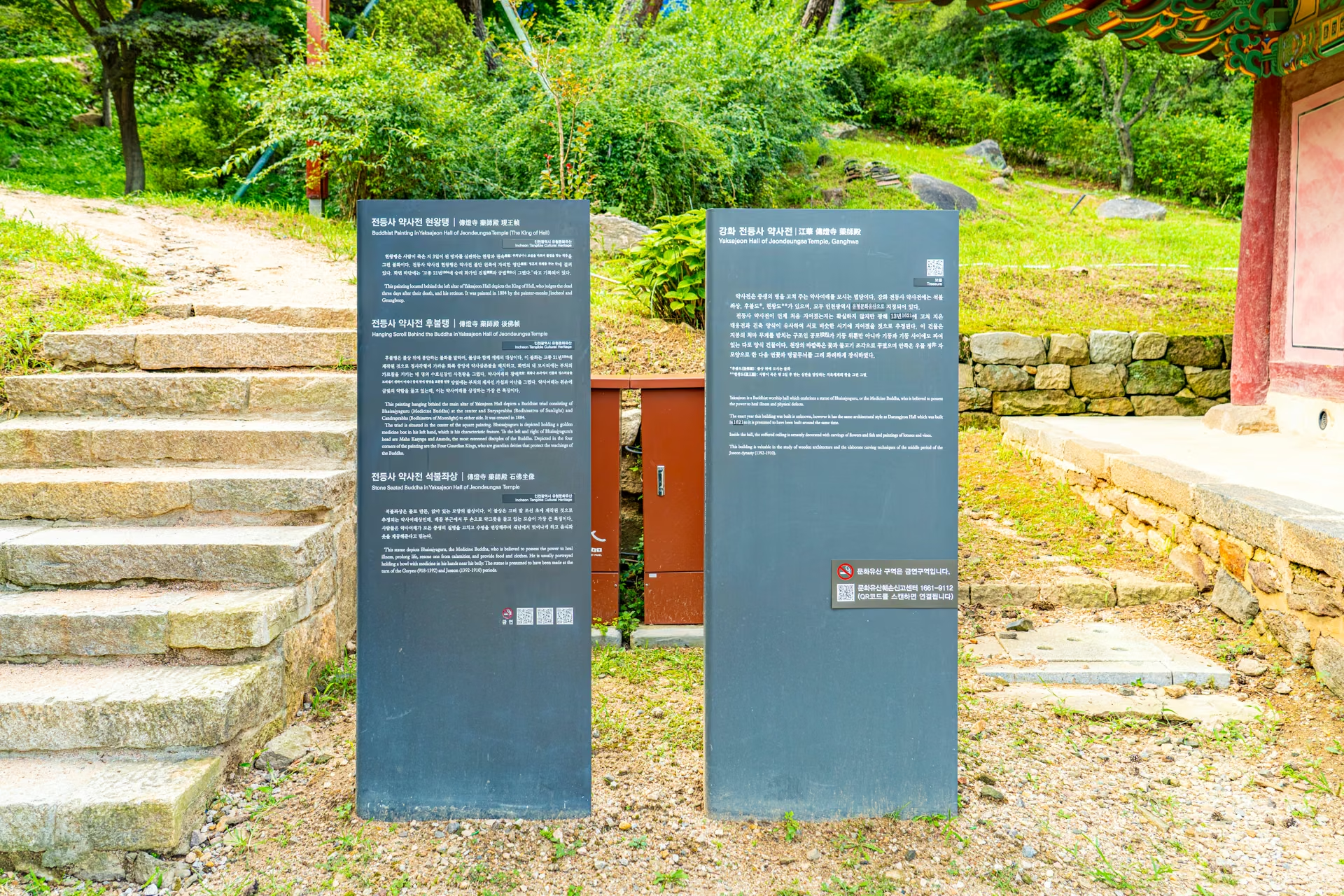
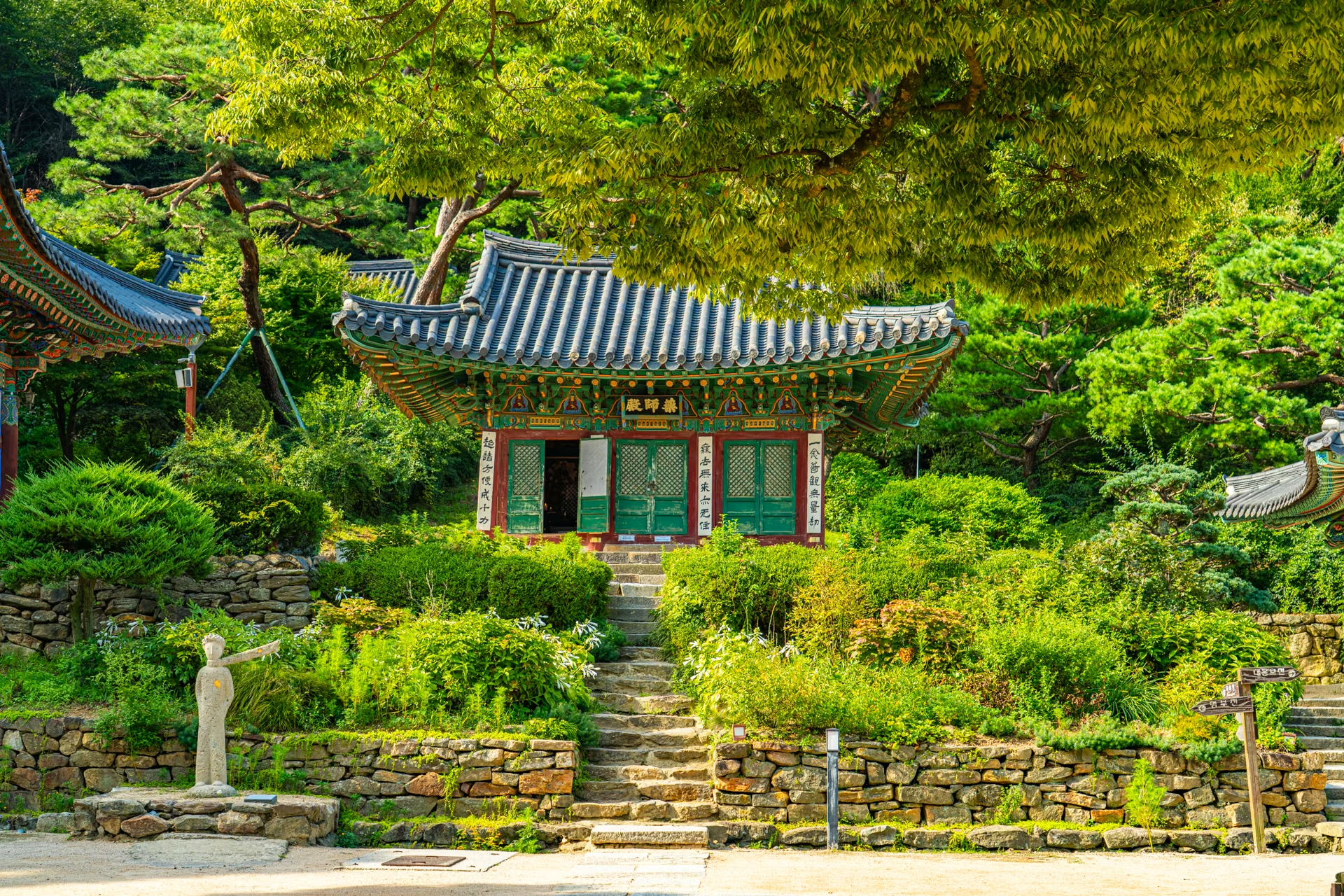
West of Daeungbojeon stands Yaksajeon, Treasure No. 179, built in nearly the same style and housing a stone Medicine Buddha carved in the late Goryeo or early Joseon period and regilded in recent decades. Its exact founding date is unknown; the only surviving record concerns a roof repair.
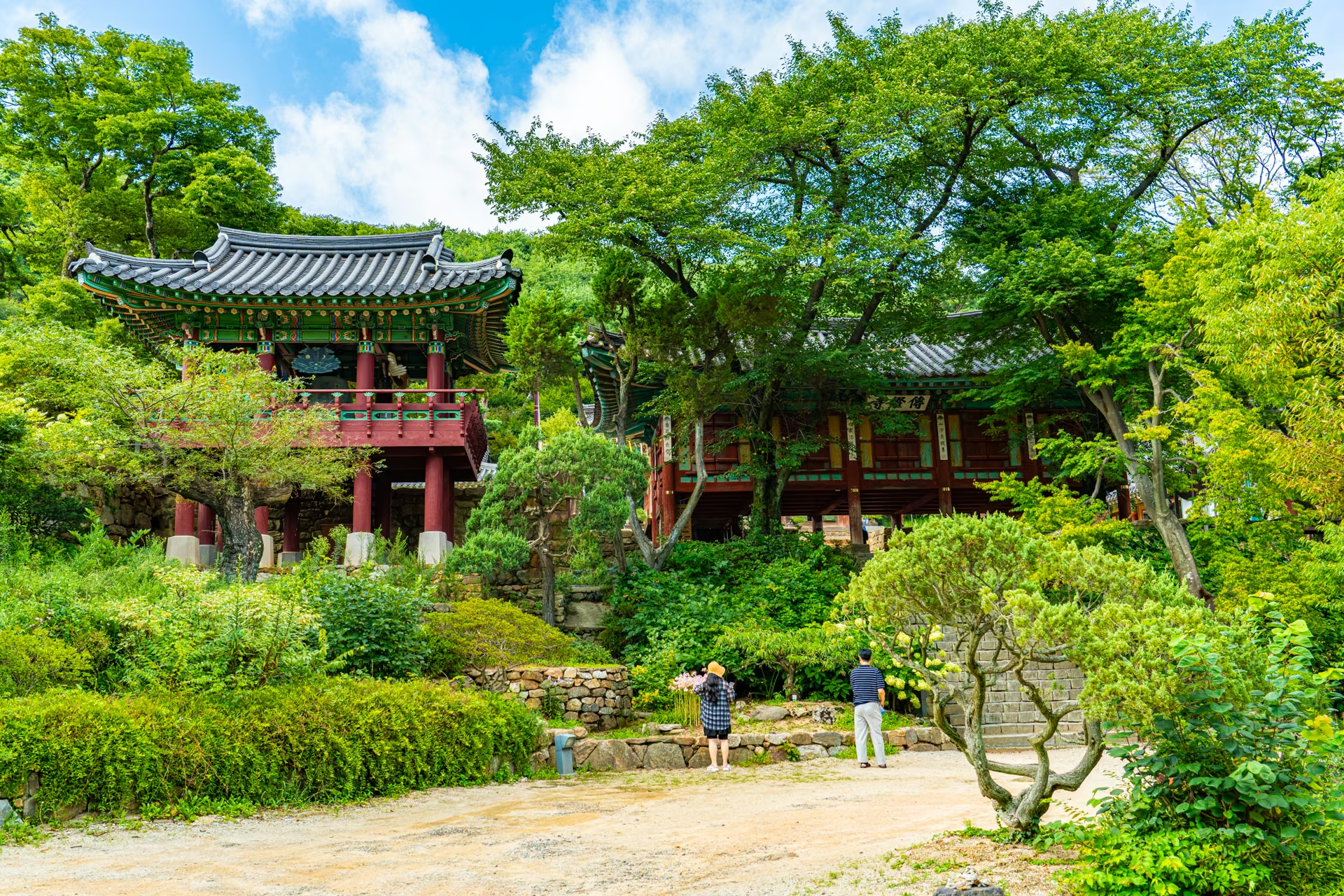
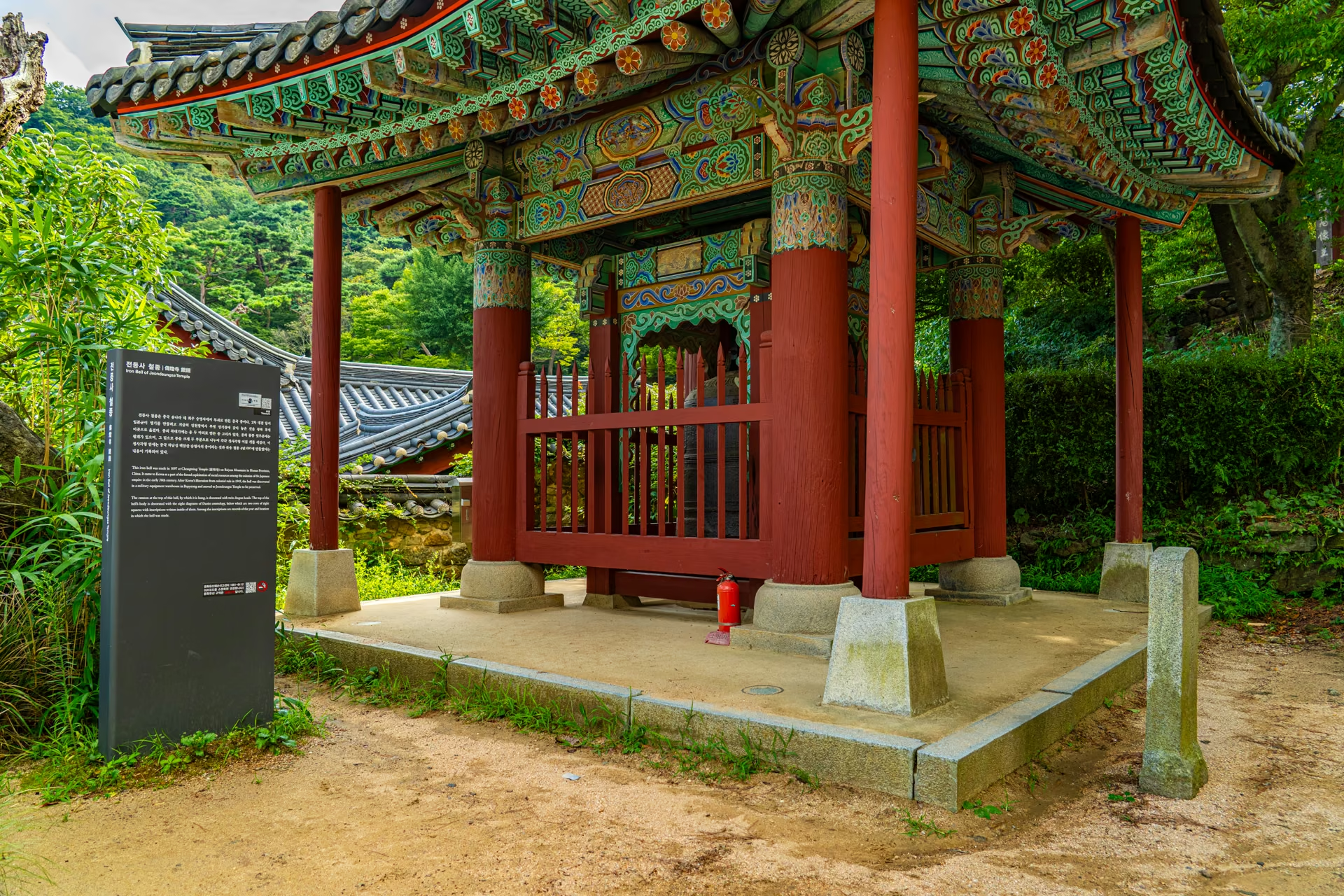
The temple keeps two bells in two separate pavilions. One is Treasure No. 393, cast in 1097 in Northern Song China, 1.64 metres tall with a base roughly a metre across — a Chinese bell that ended up on a Korean island, which is a story in itself. It moved to the pavilion in front of Myeongbujeon in 2004. The working bell, the one struck at morning and evening services, hangs in the pavilion beside Daejoru.
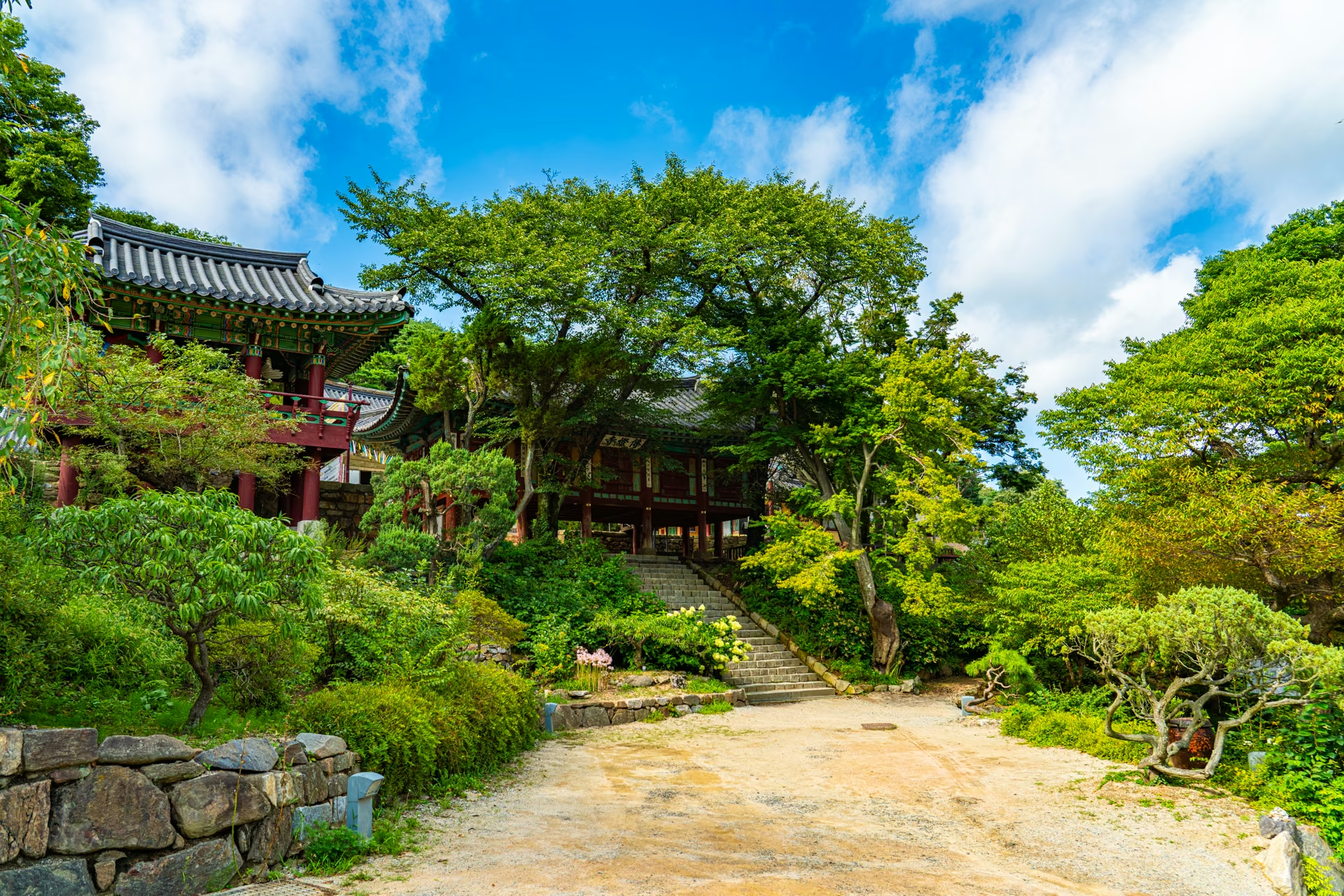
Daejoru is the two-storey building you pass under to reach the courtyard, rebuilt in 1932 and listed as Incheon Cultural Heritage Material No. 7. There is a design detail here worth knowing before you walk through: the sightline from Daejoru to the Buddha in the main hall rises at about 25 degrees, an angle chosen so that you look up at the figure from a posture of respect. It also holds a collection of old plaques, including one written by King Yeongjo when he visited in 1726 and another by the calligrapher Kim Jeong-hui.
Jeongjoksan Sago: Where the Joseon Annals Survived
Behind the temple stands a plain wooden building that carries more historical weight than anything else on the site. Joseon kept the Annals of its dynasty in multiple archives spread across the country as insurance against fire and invasion. The Imjin War of the 1590s destroyed three of the four; only the Jeonju copy survived, and it spent the following decades being moved for safekeeping — to Inwang Mountain, then Myohyangsan, then Manisan here on Ganghwa in 1628, and finally to Jeongjoksan in 1660, where Jeondeungsa’s abbot was made its official guardian.
The building fell into ruin and by around 1931 only the foundation stones and steps remained. It was rebuilt in 1999. The Jeongjoksan copy of the Annals itself — 1,187 volumes — now lives at Seoul National University’s Kyujanggak Institute. The Annals were designated National Treasure No. 151 in 1973 and inscribed on UNESCO’s Memory of the World register in 1997. Standing in front of the empty rebuilt shell is a strange experience: the thing it protected outlived it, and left.
Museoljeon: A Contemporary Art Gallery Under the Courtyard
This is the part most visitors walk straight past, and it is the most surprising thing at Jeondeungsa. Needing space it could not build above ground without wrecking the historic layout, the temple went underground. Museoljeon is a dharma hall and cultural complex beneath the courtyard, and everything inside it was commissioned new from working contemporary artists — a first for a Korean temple at this scale.
The five Buddha and bodhisattva figures are cast bronze finished in white, proportioned to modern bodies rather than classical canon: the central Shakyamuni deliberately monumental in the manner of Seokguram, the attendant bodhisattvas approachable, described by the temple itself as looking like the neighbours next door. The rear wall behind the main figure is a true fresco, painted in the Western technique by the artist Oh Won-bae — reportedly the only fresco Buddhist mural in the country. The ceiling carries hundreds of purple lanterns arranged as a continuous pattern. Near the entrance, Seoun Gallery shows contemporary work from the temple’s own collection.
If a Buddhist institution commissioning living artists interests you, the same instinct shows up on a plate at Balwoo Gongyang in Seoul, where monastic cooking is served as a Michelin-listed tasting course.
Junglimdawon: The Tea House That Justifies a Slow Afternoon
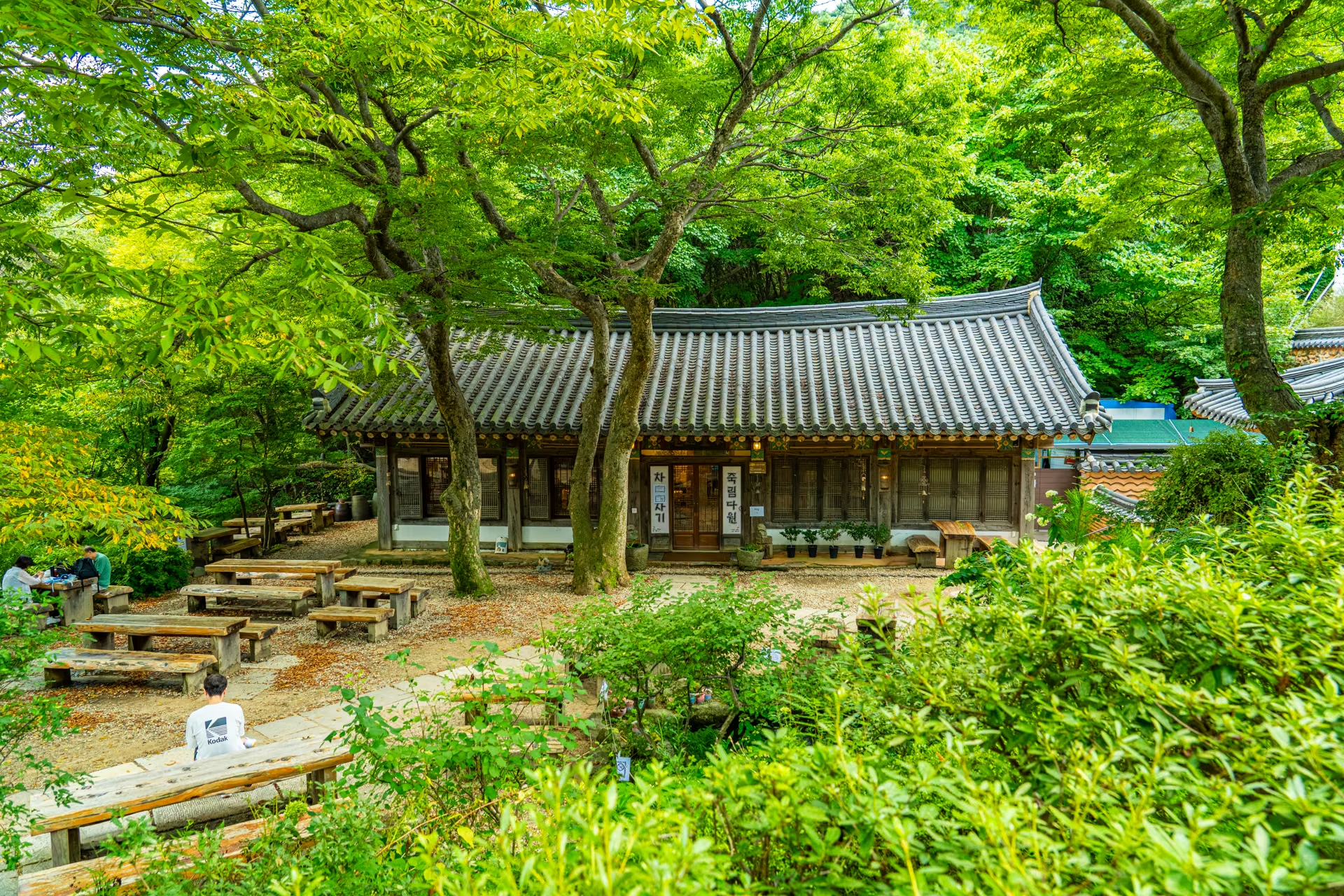
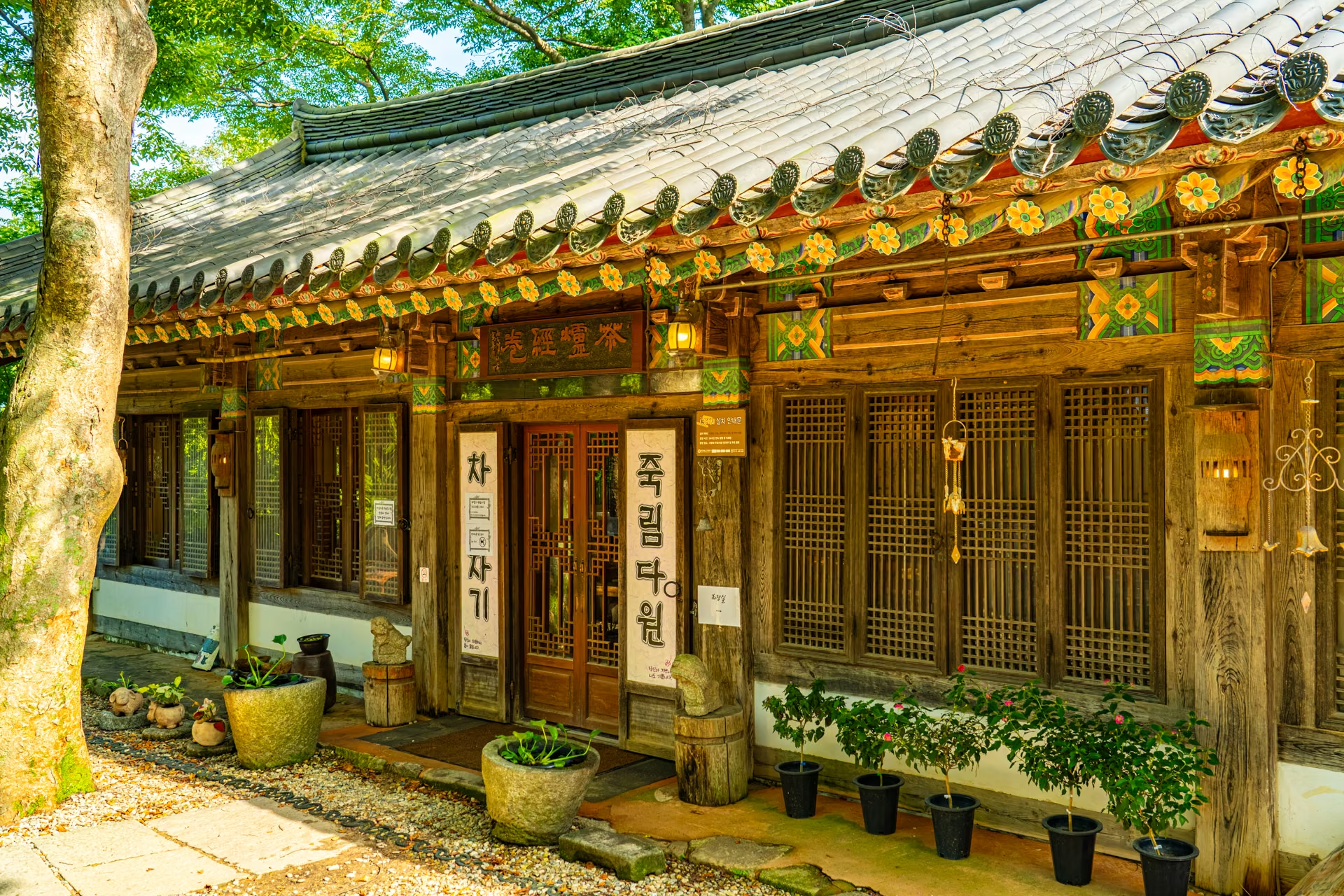
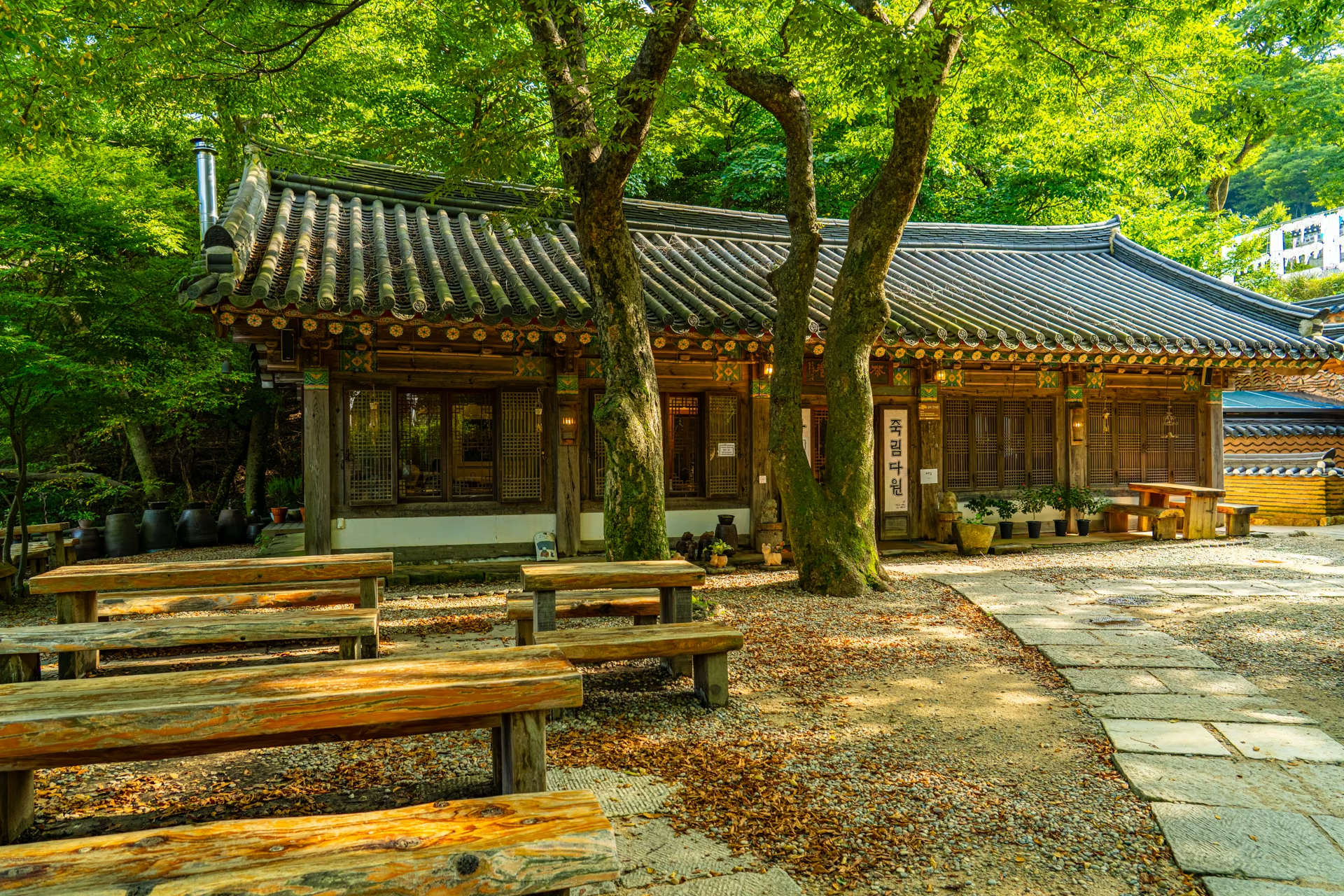
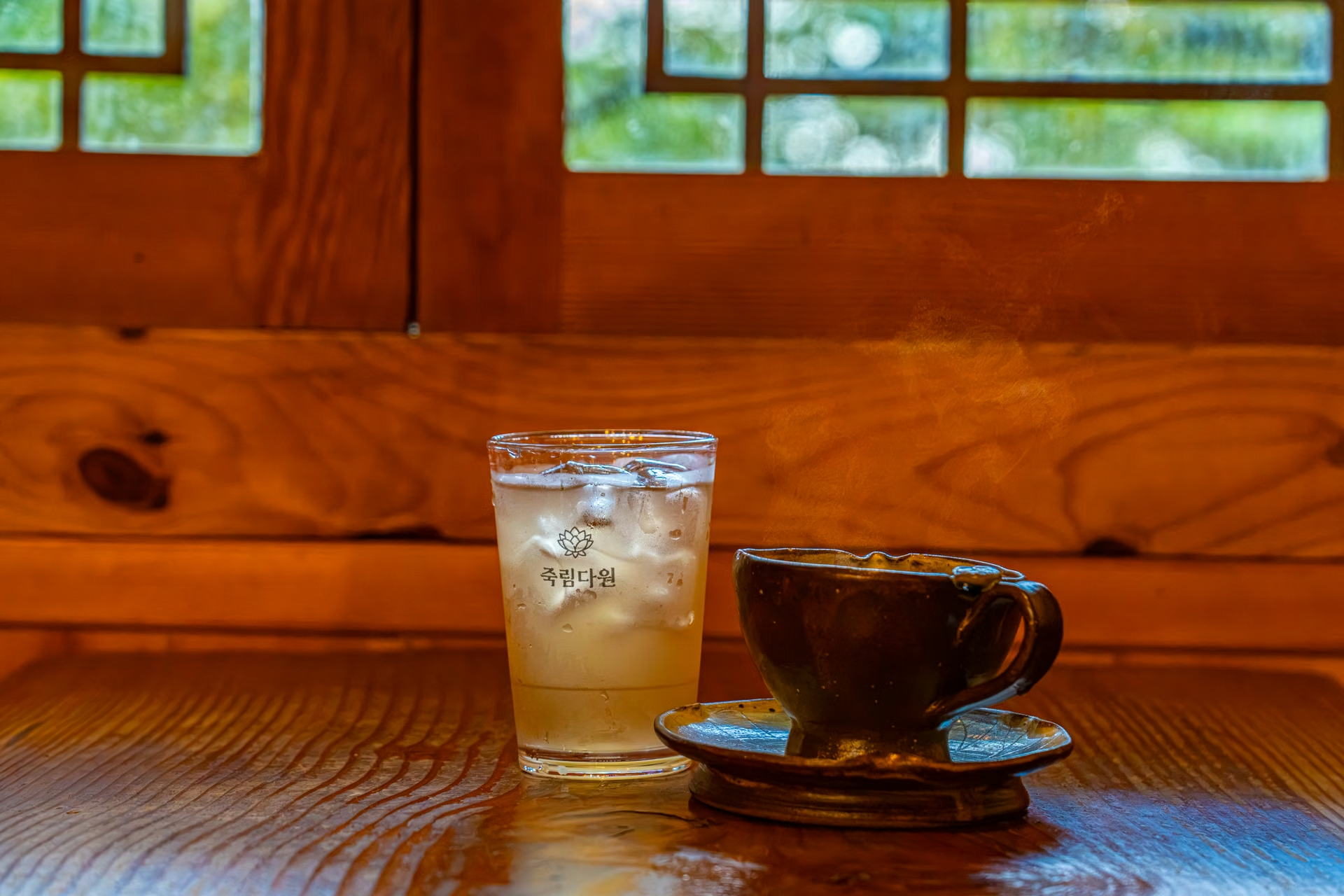
Do not skip this. Junglimdawon is a traditional tea house inside the temple grounds, sitting beside a small pond with windows that fill completely with green in summer. The menu shifts with the season — jujube tea, omija, ginger-lemon, watermelon juice and patbingsu in the warm months; jujube and ssanghwa-tang in winter — and the thing to order alongside is yeonkkulppang, a small lotus honey bun. Coffee is available if you want it.
It opens year-round, 08:30 to 18:30 in summer and 09:00 to 17:30 in winter — which in the warm months means it is pouring tea half an hour before the temple’s own visitor hours begin. Arriving at opening and taking tea before the coach groups appear is the single best piece of timing advice I can give for this site. For a sense of how far this tradition can be pushed, compare it with a seventh-generation tea house in Gangjin at the other end of the country.
Templestay, Guided Walks, and the Ginkgo Trees
Jeondeungsa runs a templestay programme covering the 4 a.m. dawn service, seated meditation, barugongyang formal monastic dining, tea ceremony, temple tour and communal work. Booking goes through the national templestay portal; the temple’s own office handles enquiries. Given that this is the closest major temple to Seoul, it is an unusually low-friction introduction to the format for international visitors.
Ganghwa County also posts free cultural guides at the temple, six sessions a day at 10:00, 11:00, 13:00, 14:00, 15:00 and 16:00, meeting at the zelkova tree in front of Daeungbojeon. Commentary is in Korean, so bring a translation app or a Korean-speaking friend — but even without the language, following a guide will show you carvings you would otherwise walk past.
One last thing to look for. Two large ginkgo trees stand on the grounds, and the story goes that the Joseon court once demanded twenty sacks of ginkgo nuts as tribute from trees that produced barely ten. The temple has kept the grievance alive for centuries, which tells you something about how long institutional memory runs here.
Who This Is Actually For
This is for the traveller who has done Gyeongbokgung and Bukchon and wants something with the same historical weight but a fraction of the crowd, reachable and returnable inside a single day from Seoul. It is for anyone whose Korea itinerary lost a day to rain or a cancelled plan, because the temple costs nothing and the tea house is indoors. It is for architecture and heritage people, who will find more Treasure-listed material per hectare here than at almost any comparable site near the capital. And it is for photographers, because the combination of fortress wall, pine forest and small-scale Joseon carpentry is unusual.
It is a poor fit if you need English signage and English tours, if you are travelling without a car on a tight schedule, or if you want a temple that feels remote — Ganghwa is a weekend destination for Seoul, and Saturday afternoons show it.
My own last memory of the place is not a Treasure at all. It is the walk back down through the arched fortress gate in late afternoon, the temperature dropping a few degrees as the pines close over the path, and the odd realisation that a 1,600-year-old temple had just cost me exactly ₩3,000 in parking.
Practical Manual: Jeondeungsa Temple
| Address (EN) | 37-41 Jeondeungsa-ro, Gilsang-myeon, Ganghwa-gun, Incheon |
| Address (KR) | 인천광역시 강화군 길상면 전등사로 37-41 |
| Phone | 032-937-0125 (temple office) · 032-937-0152 (templestay) |
| Hours | 09:00–17:30, open year-round |
| Admission | Free (waived since 4 May 2023) |
| Parking | ₩3,000 small vehicle · ₩8,000 large · card accepted · 09:00–17:30 |
| Tea house | Junglimdawon, 08:30–18:30 summer / 09:00–17:30 winter, 032-937-7791 |
| Free guided tours | 10:00, 11:00, 13:00, 14:00, 15:00, 16:00 · Korean language · meet at the zelkova tree |
| Pets | Permitted on a leash with a signed waiver |
| From Seoul | ~90 min by car via Choji Bridge · or bus 3000 Sinchon → Ganghwa Terminal, then local bus toward Onsu-ri |
| Navigation Tip | Google Maps does not do driving directions in Korea. Use Naver Map and search 전등사. Paste the Korean address into Papago if you need to show a taxi driver. |
Fees and opening hours were verified at the time of writing. Temple schedules shift around Buddha’s Birthday, Lunar New Year and Chuseok — check before a long drive.