
Table of Contents
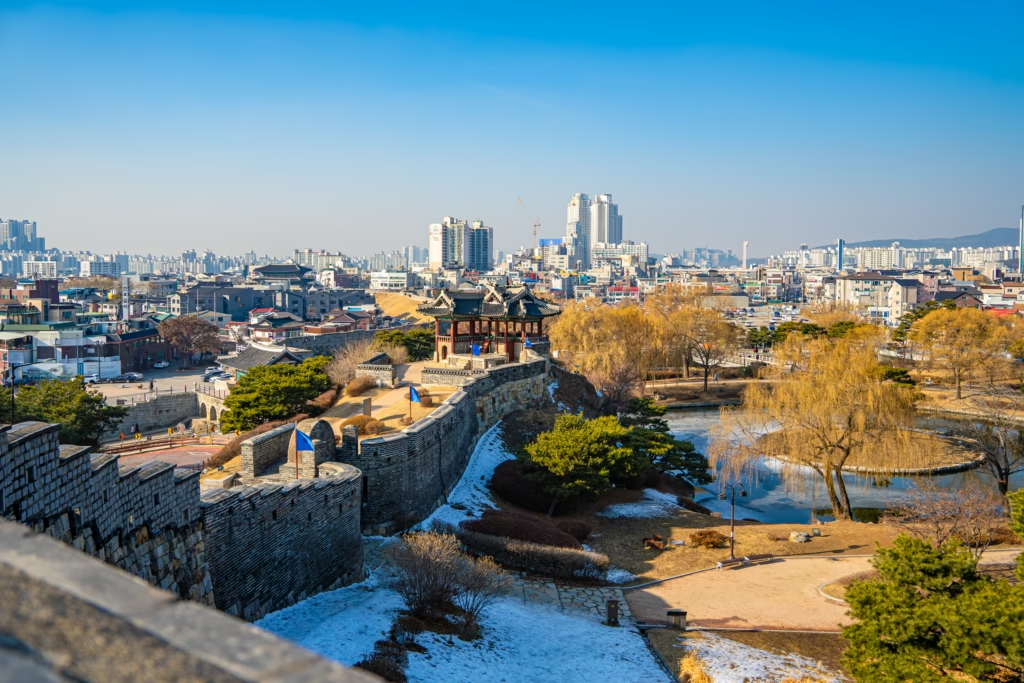
If your K-drama watchlist includes Lovely Runner, Our Beloved Summer, or Extraordinary Attorney Woo, you’ve already seen Suwon Haenggung-dong without knowing it. This historic neighborhood has quietly become Korea’s most filmed district—earning the official title of “Korea’s Best Tourism Destination” in 2024 from the Korea Tourism Organization.
What makes Suwon Haenggung-dong so compelling for travelers? UNESCO World Heritage protection froze this district in time, creating exactly the atmospheric backdrops that K-drama directors crave. The result is a neighborhood where 18th-century fortress walls frame Instagram-worthy cafes, and the alley where your favorite characters walked is an actual place you can visit.
Here’s your practical guide to exploring Suwon Haenggung-dong—from drama filming spots to fortress night views and the best local eats.
Haengridangil: The Heart of Suwon Haenggung-dong
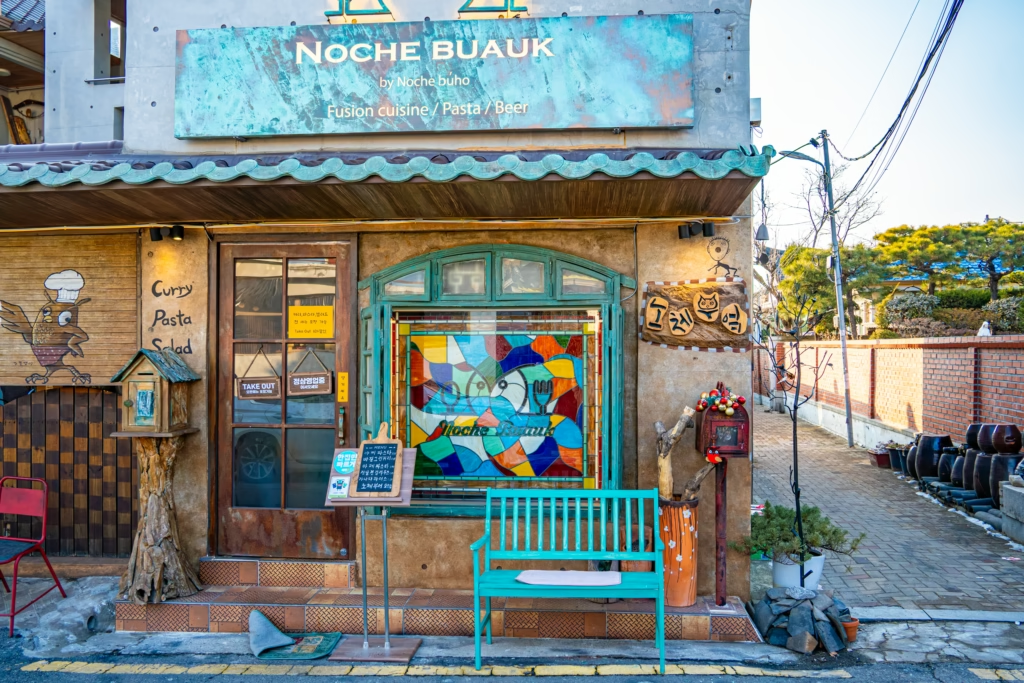
The main commercial strip of Suwon Haenggung-dong goes by “Haengridangil,” a playful nod to Seoul’s trendy Gyeongnidan-gil. Running approximately 600 meters from Hwaseomun Gate to Hwahongmun Gate along Hwaseomun-ro, this street and its branching alleys form the neighborhood’s vibrant core.
What makes Suwon Haenggung-dong travel distinctive is the unique building stock. Development restrictions around the UNESCO site prevented new construction, forcing entrepreneurs to convert old residential homes into trendy cafes and boutiques. A former two-story residence becomes a specialty roastery. A corner shop that once sold household goods now displays handmade ceramics. The architectural constraints became creative opportunities that define the Suwon Haenggung-dong aesthetic.
The street draws a younger crowd—vintage shops, instant photo booths, craft workshops, and specialty dessert cafes line the route. For photography in Suwon Haenggung-dong, late afternoon light works best when the low sun catches the mix of hanok rooflines and repurposed residential buildings.
The King’s Alley Walking Routes
Branching off the main Haengridangil strip, you’ll find signed walking routes called “The King’s Alley” (행궁동 왕의 골목). These three interconnected paths trace locations associated with King Jeongjo, who built Hwaseong Fortress in the 1790s: routes he walked during royal processions, spots where he reportedly conversed with commoners, and hilltops he climbed to inspect construction progress.
The routes pass through a colorful mural village near the Administrative Welfare Center. This community art project, initiated by alternative art space “Noon” and maintained by local organizations like “Haenggung Somsi,” transformed aging residential blocks into an outdoor gallery—now one of the most photographed corners in Suwon Haenggung-dong.
For drama fans, this area delivers: key scenes from Lovely Runner were filmed along these Suwon Haenggung-dong alleys. The mural-covered streets, the neighborhood’s small-scale architecture, and the pizza shop where Go-gyeom (Choi Woo-shik) waited for Kim Movie (Park Bo-young) in Netflix’s Melo Movie—all discoverable within a 15-minute walk.
Cafe Monted: Where Lovely Runner Comes to Life
The most-searched location among international K-drama fans visiting Suwon Haenggung-dong is Cafe Monted, which served as Sol’s house in Lovely Runner. Located along The King’s Alley route, this cafe occupies a converted residential building that production designers chose for its authentic neighborhood character.
The conversion preserved the original house’s feel—the front yard and second-floor interior retain early-2000s Korean residential details that transport visitors back in time. The production’s iconic yellow umbrella remains on display for photo opportunities. Drama pilgrimage aside, Monted has earned a local reputation for its salt bread: crispy-outside, soft-inside baguette-style rolls with variations including red bean butter and bacon-scallion cream cheese.
Photography note: The cafe’s exterior and surrounding alley photograph well in morning light. Interior shots work best from the second floor, where window seats overlook the narrow Suwon Haenggung-dong streets below. For tips on capturing winter light and golden hour photography, check our seasonal shooting guide.
Hwaseong Fortress: A History That Defies Time
Understanding Suwon Haenggung-dong requires understanding the structure that defines it. Hwaseong Fortress, inscribed as a UNESCO World Heritage Site in 1997, wraps 5.74 kilometers of defensive walls around the neighborhood.
King Jeongjo commissioned this fortress city in the 1790s as part of a larger project honoring his father, Crown Prince Sado. The original structures suffered damage during the Japanese colonial period and the Korean War, but meticulous reconstruction using Hwaseong Seongyeok Uigwe—a detailed construction record from the original build—earned UNESCO recognition. The documentation was so precise that the rebuilt fortress qualified for World Heritage status despite being a reconstruction.
For those interested in the broader history of this region, the fortress’s legacy of resistance and resilience pairs perfectly with the Hwaseong Independence Movement Memorial, located just a short drive from Suwon Haenggung-dong. The memorial documents local resistance efforts during the Japanese occupation—a powerful complement to your historical exploration.
The complete wall circuit is open to walkers. The full loop takes 2-3 hours at a moderate pace, but partial sections work well for those with limited time. The fortress isn’t just historical infrastructure—it’s punctuated with parks, viewpoints, and architectural highlights that make walking the Suwon Haenggung-dong perimeter genuinely enjoyable.
Hwaseong Haenggung Palace
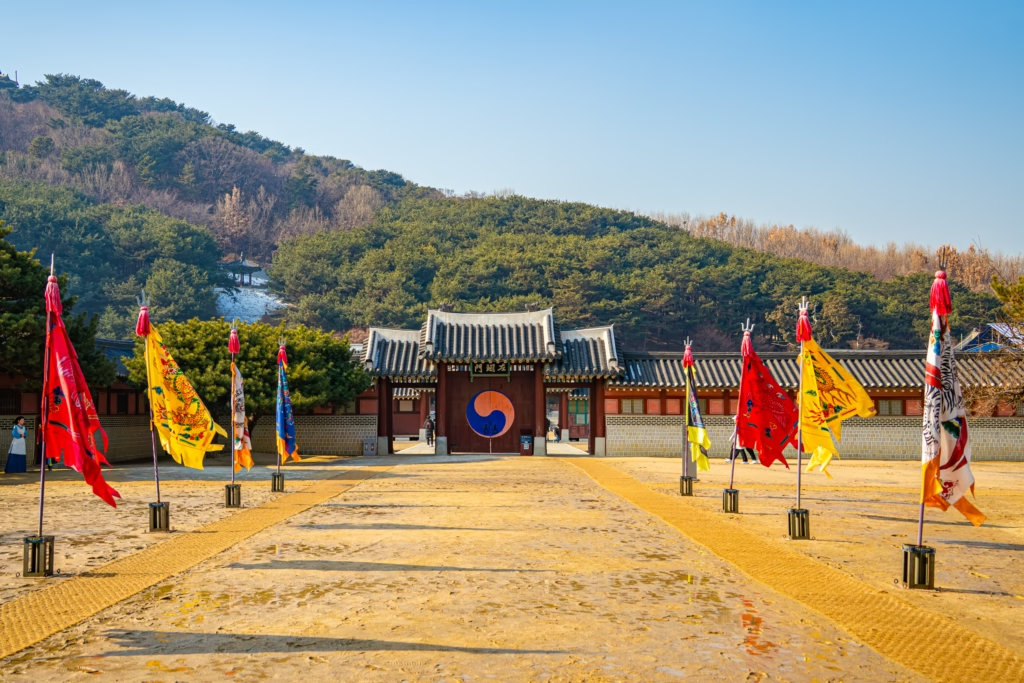
At the center of Suwon Haenggung-dong sits Hwaseong Haenggung, the temporary palace used when King Jeongjo visited from Seoul. Though it functioned primarily as a regional government office, its role as a royal residence demanded palace-scale construction. This is the closest you’ll get to experiencing Joseon palace architecture outside Seoul.
The site gained early K-drama fame as a Dae Jang Geum filming location—signage throughout the complex notes relevant scenes from that 2003 series, which remains popular with older Korean and international audiences.
Practical tip: Start your Suwon Haenggung-dong exploration here. The palace sits at the geographic center of the walled area, making it a logical hub for walks in any direction.
Hwahongmun Gate: The Seven-Arched Water Gate
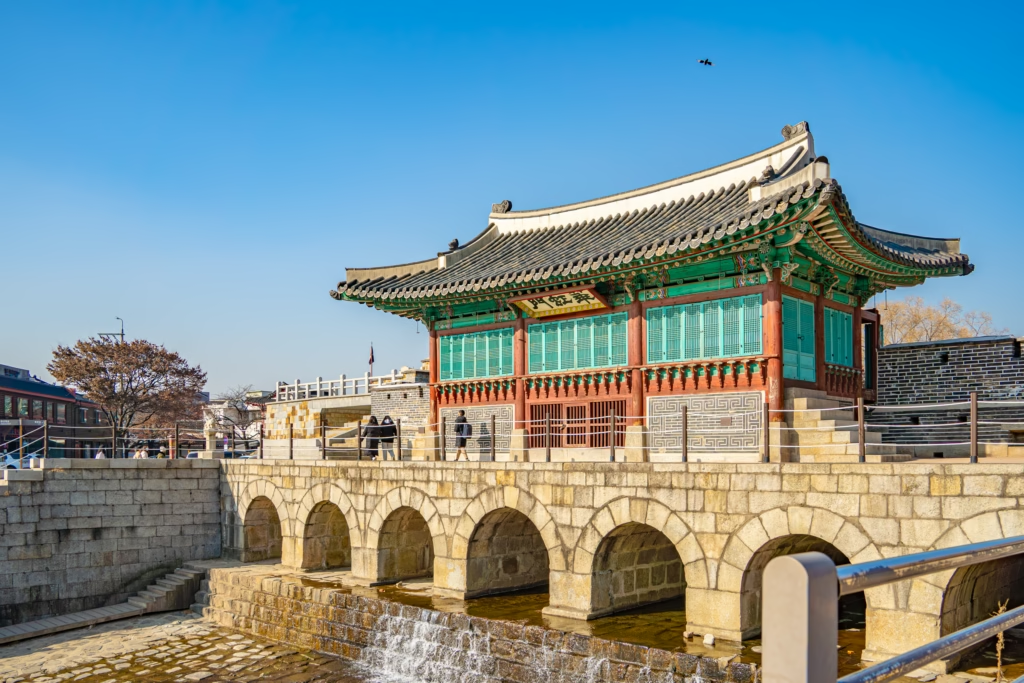
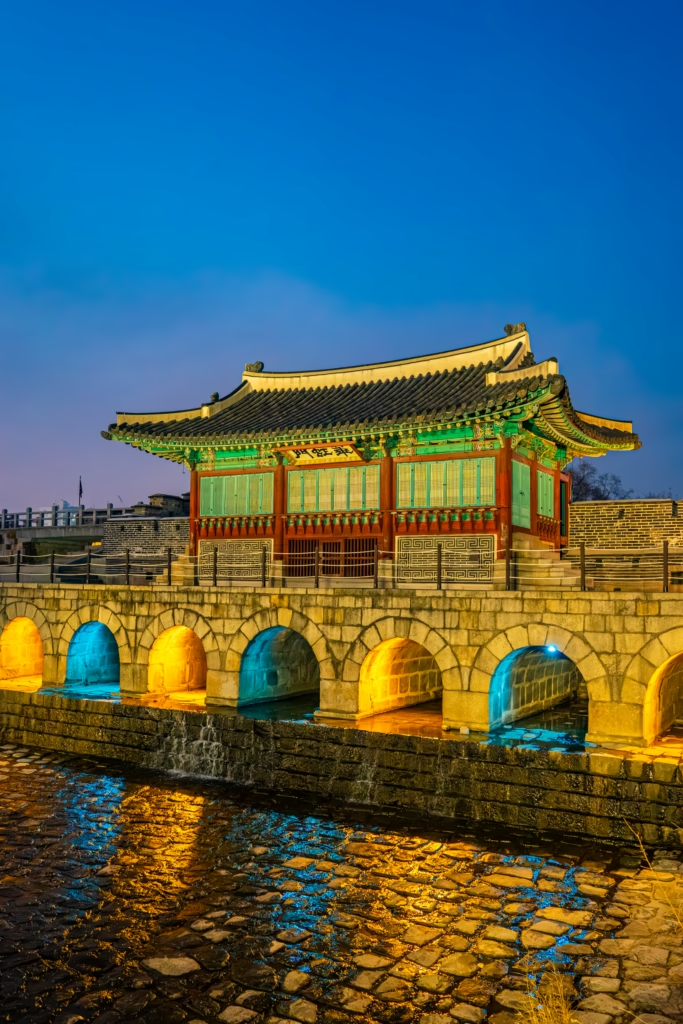
Where Suwoncheon Stream passes through the northern fortress wall, Hwahongmun creates one of the most photogenic scenes in Suwon Haenggung-dong. Seven arched openings allow the stream to flow beneath the gate pavilion, creating a distinctive silhouette unlike typical fortress architecture.
When water levels rise, the cascade through multiple arches becomes dramatic—historic residents called this phenomenon “Hwahonggwanchang” and ranked it among Suwon’s eight scenic views. Stepping stones south of the gate let you cross to stream level for frontal photographs of this landmark.
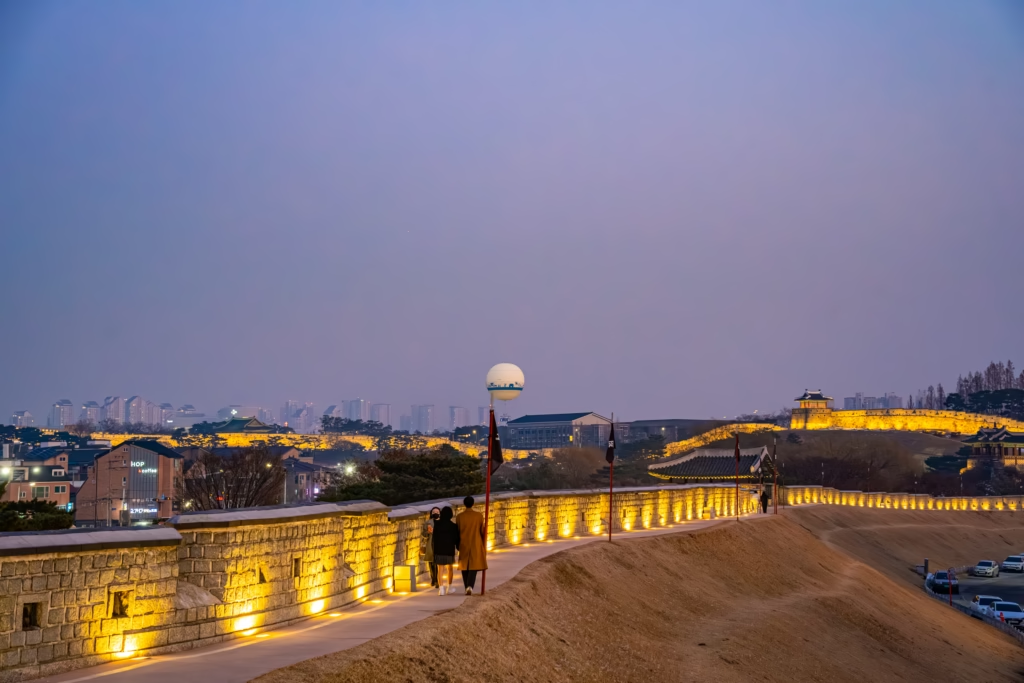
Night photography: The gate’s illumination makes it a strong after-dark subject. The reflection in Suwoncheon Stream doubles the visual impact—one of the top night photography spots in Suwon Haenggung-dong.
Banghwasuruyujeong Pavilion
Adjacent to Hwahongmun, this pavilion perches on Yongdu Rock above a small pond called Yongyeon. Originally built as a defensive lookout with artillery capability, its unusual multi-purpose design resulted in distinctive architecture. While all of Hwaseong Fortress holds Historic Site designation, Banghwasuruyujeong earned separate status as a National Treasure.
The combination of the illuminated pavilion, fortress wall, weeping willows around Yongyeon pond, and Suwoncheon Stream creates what many consider the finest evening view in Suwon Haenggung-dong. Local residents have used this spot for picnics for generations. If you enjoy scenic walks with coastal botanical diversity, consider pairing your fortress exploration with a day trip to Korea’s southern islands.
Suwon Haenggung-dong Food Scene: From Royal Ribs to Fried Chicken
Suwon Haenggung-dong sits within a broader culinary zone that predates the current cafe boom by decades. The city’s signature dish—wang galbi (king-sized beef short ribs)—traces back over 70 years to establishments like Hwachunok. The “big three” galbi restaurants (Gabojeong, Bon Suwon Galbi, Shin Ra Galbi) continue serving salt-grilled ribs that draw diners from across the country.
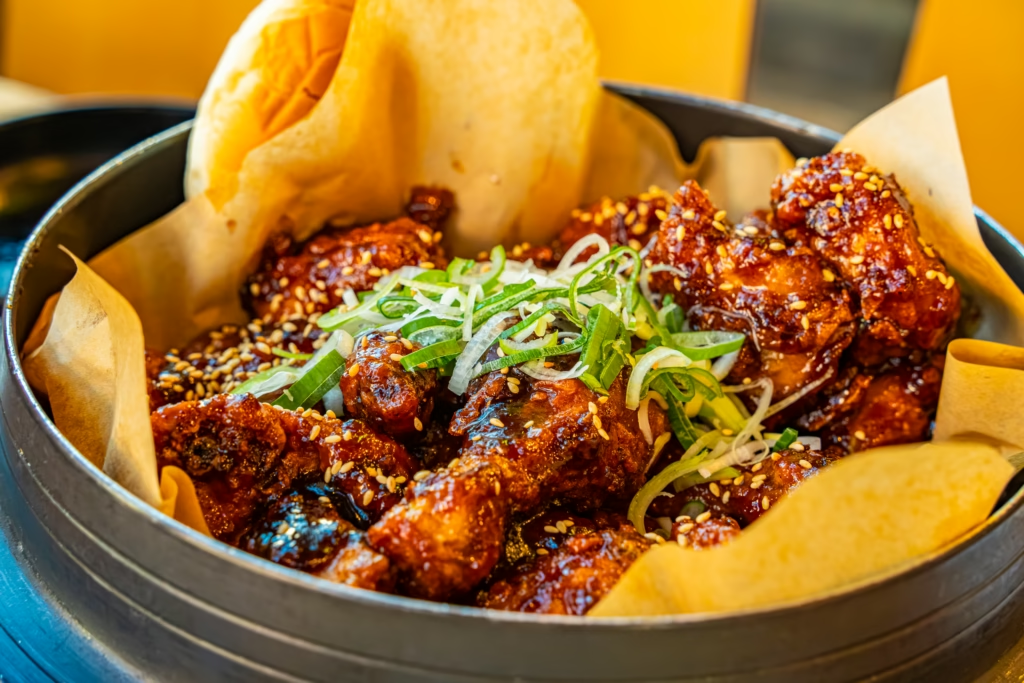
Closer to the fortress, Suwon Chicken Street keeps an older tradition alive: whole chickens fried in cast-iron cauldrons rather than modern fryers. Anchor tenants like Maehyang Chicken have operated since the 1970s. The street gained renewed attention after the film Extreme Job featured Suwon-style chicken, spawning imitators like Nammun Chicken that now draw long weekend lines. It’s a 10-minute walk from central Suwon Haenggung-dong.
Within Haengridangil itself, the cafe scene emphasizes variety over any single specialty. Atmospheric spaces, specialty roasters, dessert-focused concepts—the density of options invites comparison shopping based on personal taste. For those interested in Korean temple cuisine as a contrast to the street food scene, our Dujingak Vegan Temple Food guide offers an alternative culinary experience within an hour of Suwon.
Whether you’re chasing K-drama filming spots or simply seeking authentic Korean flavors, Suwon Haenggung-dong delivers a rare combination of cultural depth and contemporary appeal.
The Travel Manual: Suwon Haenggung-dong
| Category | Details |
|---|---|
| Location | Paldal-gu, Suwon-si, Gyeonggi-do (approximately 30km south of Seoul) |
| Getting There | Subway: Suwon Station (Line 1) → Bus 11, 13, 36 to Hwaseong Haenggung (15 min) / Alternatively, exit at Suwon Stn. and take a 25-min taxi |
| Hwaseong Haenggung Hours | 09:00–18:00 (last entry 17:30), open year-round |
| Admission | Adults ₩1,500 / Teens & Military ₩1,000 / Children ₩700 |
| Hwaseong Museum Hours | 09:00–18:00 (last entry 17:00), closed Mondays |
| Best Time to Visit | Late afternoon through evening for fortress wall walks and night photography |
| Suggested Duration | Half-day minimum; full day recommended for palace, fortress walk, and Haengridangil cafes |
| Budget Estimate | 30,000–50,000 per person (admission, cafe, meal) |
Pingback: Grand Coteau Winery Daebudo: 7 Reasons This Hidden Korean Winery Deserves a Day Trip from Seoul - THE Travel Manual
Pingback: Authentic Korea Souvenirs: 6 Hidden Shops in Mukho Harbor (Donghae Travel Guide) - THE Travel Manual