
Table of Contents
The Weight of History at Jeam-ri
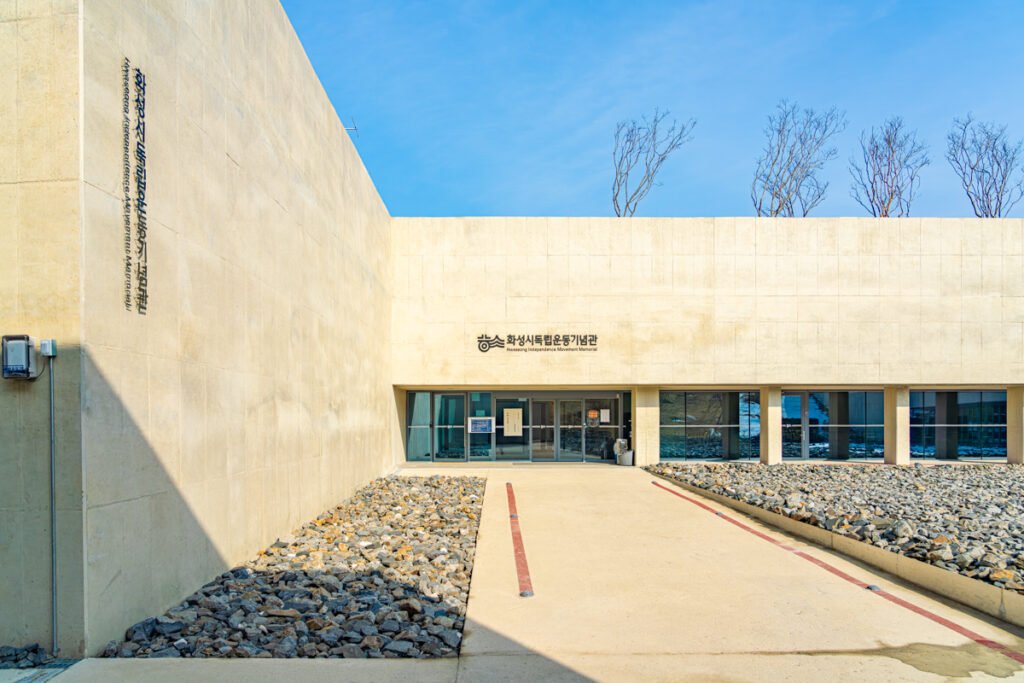
The Hwaseong Independence Movement Memorial stands on ground that witnessed one of the most brutal episodes of Korea’s colonial period. Located in Jeam-ri, Hyangnam-eup, Hwaseong City, this memorial marks the exact site where Japanese soldiers massacred village residents in April 1919—a direct retaliation against the March 1st Independence Movement spreading through Gyeonggi Province.
Opened in 2024, the Hwaseong Independence Movement Memorial expanded the former Jeam-ri March 1st Movement Martyrs Memorial into a comprehensive exhibition space. For travelers seeking to understand Korea beyond temple stays and K-pop, this site offers an unflinching look at the nation’s struggle for sovereignty.
What Happened at Jeam-ri: The Historical Context
Following the nationwide March 1st Movement demonstrations, resistance spread rapidly through market towns across Hwaseong. Local residents organized large-scale protests centered around the region’s five-day markets (oiljang).
The Japanese military response was swift and merciless. On April 15, 1919, soldiers gathered adult male villagers into the local church under false pretenses. They then opened fire and set the building ablaze. The Jeam-ri Massacre claimed 23 lives and became a symbol of colonial brutality that resonated internationally.
What distinguishes the Hwaseong Independence Movement Memorial from other Korean independence sites is its extensive documentation. Local community efforts preserved interrogation records, arrest documents, and firsthand testimonies from survivors and descendants of independence activists.
Inside the Hwaseong Independence Movement Memorial: What You’ll See
Regional Independence Movement Exhibits
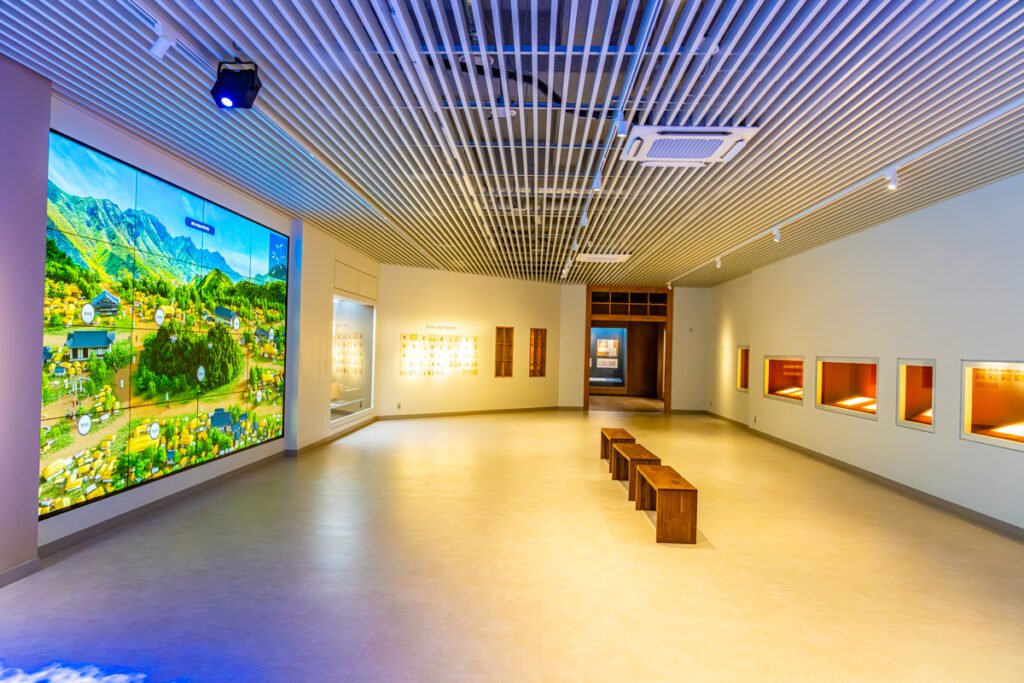
The main exhibition hall organizes Hwaseong’s resistance history by district. Rather than presenting a single narrative, the memorial maps the interconnected web of protests, righteous army (uibyeong) activities, and civilian resistance across the region.
Each zone within the Hwaseong Independence Movement Memorial features interactive displays, archival photographs, and personal artifacts donated by local families who protected these items for over a century.
Preserved Records at the Hwaseong Independence Movement Memorial
The memorial’s archival collection includes:
- Japanese colonial police interrogation transcripts
- Arrest warrants and court documents
- Recorded testimonies from massacre survivors
- Oral histories from independence activists’ descendants
These materials transform abstract historical events into individual human experiences—names, ages, occupations, and final words preserved across generations.
The Schofield Monument
In the outdoor exhibition area of the Hwaseong Independence Movement Memorial stands a bronze statue of Dr. Frank W. Schofield, known to Koreans by his adopted name Seokho-pil (석호필). This British-Canadian missionary and professor documented the Jeam-ri Massacre and reported it to international media, bringing global attention to Japanese colonial atrocities.
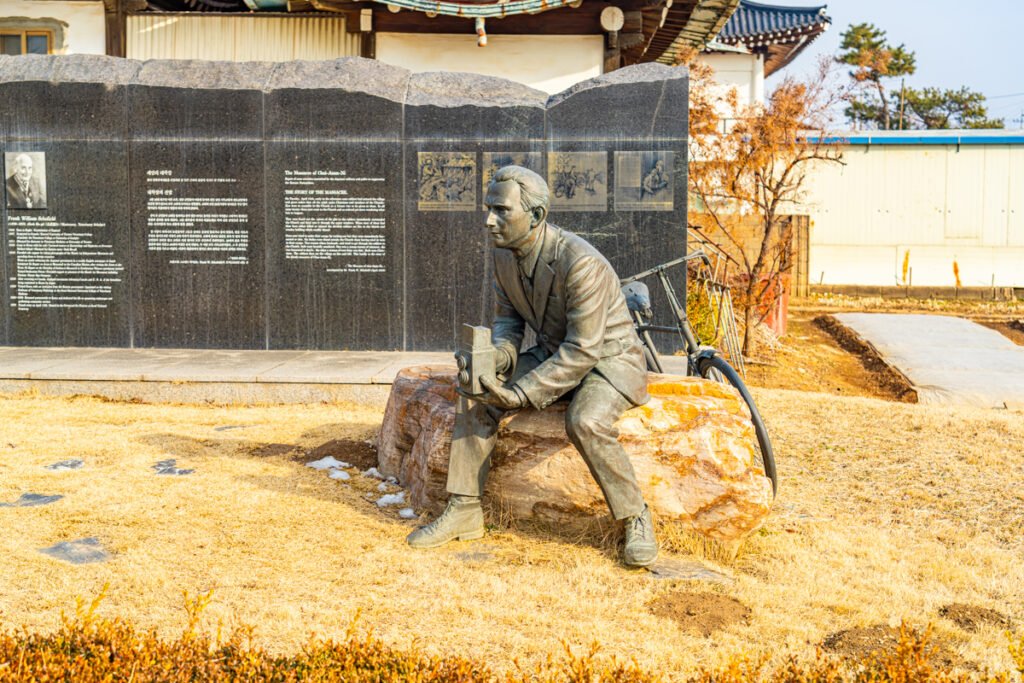
Schofield’s connection to Korean independence ran deep. After liberation, the South Korean government awarded him the Order of Merit for National Foundation. Upon his death in 1970, he was interred at Seoul National Cemetery’s Patriot Section—one of very few foreigners to receive this honor.
Why the Hwaseong Independence Movement Memorial Matters Today
1. Authentic Site-Specific History
Unlike reconstructed heritage sites, this memorial occupies the actual location of historical events. The church reconstruction stands where the original burned. The landscape remains largely unchanged from 1919.
2. Community-Preserved Documentation
The depth of archival material at the Hwaseong Independence Movement Memorial rivals major national institutions. Local families protected these documents through decades of political upheaval, Japanese colonial suppression, and the Korean War.
3. International Perspective
Schofield’s presence in the narrative adds crucial context—Korea’s independence movement was never isolated. International witnesses, journalists, and missionaries played significant roles in documenting and publicizing colonial oppression.
4. Accessible from Seoul
At roughly 90 minutes from central Seoul, the memorial makes a feasible day trip. Combined with other Hwaseong attractions like the UNESCO-listed Suwon Hwaseong Fortress, it offers a complete historical circuit.
5. Recent Renovation
The 2024 expansion brought modern exhibition design, improved accessibility, and enhanced interpretive materials. English-language information is available throughout the Hwaseong Independence Movement Memorial.
Photography Tips for the Hwaseong Independence Movement Memorial
When photographing the Hwaseong Independence Movement Memorial interior, expect museum-standard lighting conditions. The documentary photograph displays and archival materials benefit from a fast prime lens.
Camera Settings (Sony a7R4 or equivalent):
- Interior exhibits: ISO 1600-3200, f/2.8, 1/60s
- Outdoor monuments: ISO 100-400, f/8, 1/250s
- Flash photography prohibited indoors
The Schofield statue photographs best during late afternoon when soft light reduces harsh shadows on the bronze surface.
Combining Your Visit: Hwaseong Historical Circuit
The Hwaseong region contains multiple sites connected to Korea’s independence history. Consider pairing your visit to the Hwaseong Independence Movement Memorial with:
- Suwon Hwaseong Fortress – UNESCO World Heritage Site, 30 minutes north
- Jemulpo (Incheon) Open Port Area – Early modern treaty port history
For those exploring Korea’s independence movement heritage more broadly, our guides to Seodaemun Prison History Hall and Cheonan Independence Hall provide additional context on related destinations nationwide.
The Travel Manual: Practical Information
| Category | Details |
|---|---|
| Official Name | Hwaseong Independence Movement Memorial (화성시독립운동기념관) |
| Location | Jeam-ri, Hyangnam-eup, Hwaseong-si, Gyeonggi-do |
| Hours | 09:00–18:00 (Closed Mondays, Jan 1, Lunar New Year, Chuseok) |
| Admission | Free |
| Time Needed | 1.5–2 hours |
| Transport from Seoul | Bus from Suwon Station (approx. 40 min) or taxi from Hyangnam Station |
| Parking | Free on-site parking available |
| Accessibility | Wheelchair accessible; elevators available |
| Photography | Permitted (no flash indoors); outdoor areas unrestricted |
| Budget | ₩0 admission + ₩15,000–30,000 transport (round trip from Seoul) |
External Resource: Gyeonggi Cultural Foundation – Independence Heritage
Final Thoughts
The Hwaseong Independence Movement Memorial doesn’t romanticize history. It presents documented facts—names of the dead, words of survivors, actions of both oppressors and resisters. For international travelers, this approach offers something increasingly rare: history told without theatrical embellishment.
This manual for the Hwaseong Independence Movement Memorial ensures you arrive informed. Standing in Jeam-ri, you’re not visiting a recreation—you’re standing where it happened. That distinction matters.
Pingback: Inje Winter Travel: 5 Hidden Spots for Voluntary Isolation in Korea's Snowy Mountains - THE Travel Manual
Pingback: Independence Hall of Korea: 6 Powerful Exhibitions That Define a Nation's Fight for Freedom - THE Travel Manual
Pingback: Cha-deokbun Yeongjongdo: 7 Reasons This Modern Korean Tea Sanctuary Captivates Travelers - THE Travel Manual
Pingback: Tongdosa Temple Guide: 9 Stunning Reasons to Visit Korea's Most Sacred Buddhist Site - THE Travel Manual
Pingback: Hoesudaok Jeju: 7 Reasons This Hidden Tea House Is Korea's Most Extraordinary Tea Experience - THE Travel Manual