
Imnan Bukcheon Battlefield: Sangju’s Morning of June 4, 1592
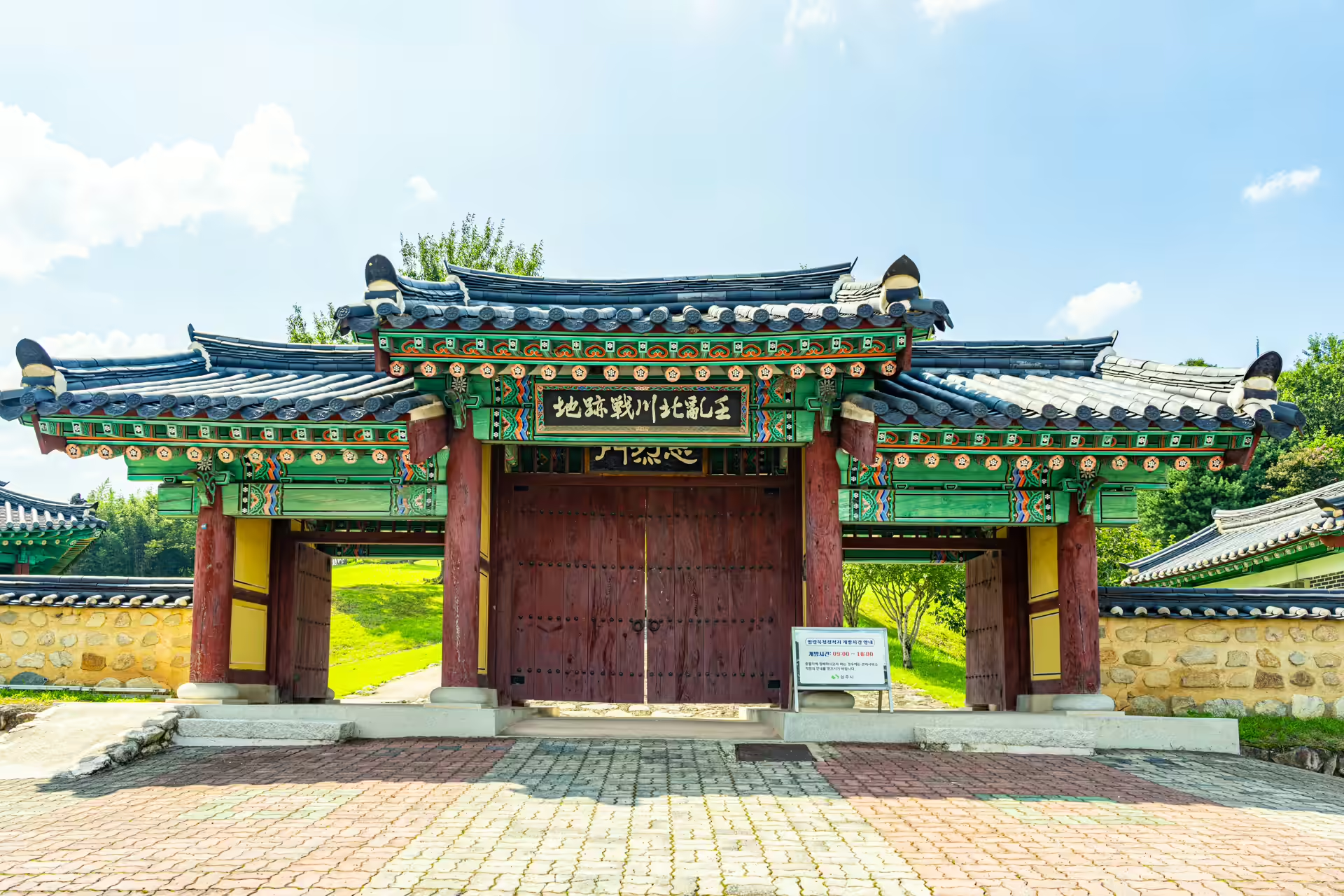
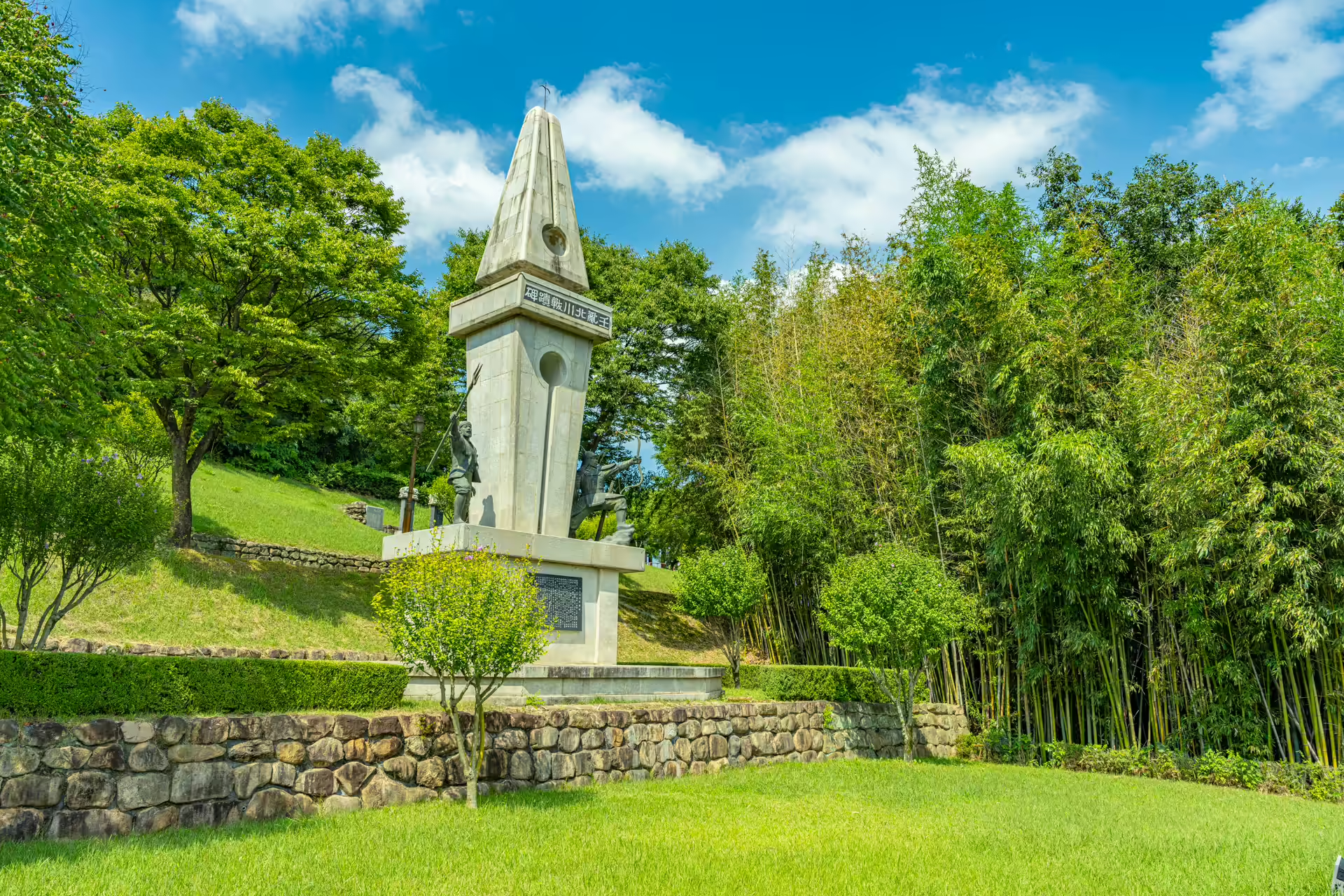
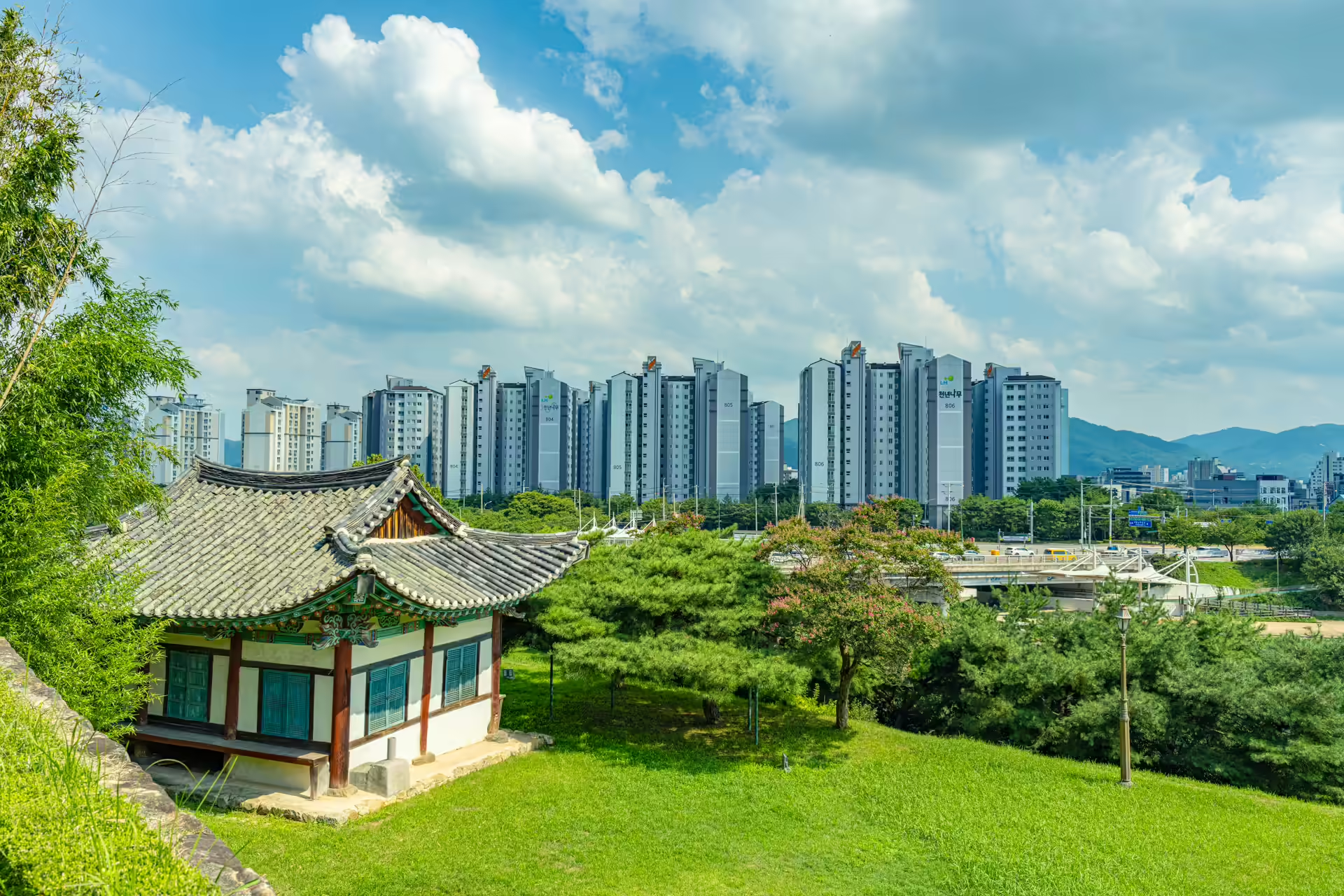
Every Korean city has a park with a shrine in it. Sangju’s is different, because the ground itself is the exhibit. On the north bank of the Bukcheon stream, on a slope that now looks across the water at apartment towers, a hastily assembled Joseon army of roughly 800 to 900 men — most of them farmers recruited the night before — met the vanguard of the Japanese invasion of 1592 and was wiped out in a single morning. Imnan Bukcheon Battlefield (임란북천전적지) is the memorial park built on that slope: a shrine to the dead, a white monument above the stream, and three of the finest old buildings in Sangju, moved here from around the city so the battlefield would have something worth walking through. Entry costs nothing, and on the weekday I visited I had some 33,000 square meters of lawn and pine almost to myself.
I came for the buildings, frankly — Sangsangwan, the old state guesthouse, is one of the largest surviving gaeksa in the country. I stayed for the story, which once you know it changes how the lawn looks. This is not a heritage park in the usual sense of pretty pavilions and an information board. It is a killing ground with landscaping, and Sangju has been honest about that.
Orientation: Getting to Sangju and to the Slope
Sangju sits in the northwest corner of Gyeongsangbuk-do, roughly halfway between Seoul and Daegu on the old inland road to the Mungyeong Saejae pass — which is exactly why an army marched through it in 1592. From Seoul, express buses leave Seoul Express Bus Terminal about 14 times a day and take around two and a half hours (14,400 won standard, 21,100 won premium at the time of reporting); Dong Seoul Terminal runs a similar service about 20 times a day. There is no direct train: Sangju Station is on the little Gyeongbuk Line with five Mugunghwa services a day, so rail travelers change at Gimcheon. From Daegu the bus is quicker, at under an hour and a half from Dongdaegu.
The battlefield park is on Gyeongsang-daero on the north side of the Bukcheon, a short taxi ride from Sangju’s bus terminal; the stream separates the site from the downtown grid. A car makes the day easier if you plan to continue to the Nakdong River sights east of town, which I recommend below. Sangju’s city buses became free in 2025, but only for residents with a city card; visitors still pay.
The Battle: How 800 Farmers Ended Up Facing Some 17,000 Soldiers
The Japanese landed at Busan on the 13th day of the fourth lunar month of 1592, and the Joseon court sent a general named Yi Il south to stop them. He reached Sangju on the 23rd with about 60 officers and archers. The magistrate had fled. What he found instead was the assistant magistrate, Gwon Gil, and the town’s chief clerk, Bak Geol, holding an empty walled town. They opened the grain stores, sent word through the countryside, and by the next day had gathered 800 or so men, the majority of them farmers who had never held a weapon. Sources put the total at 800 to 900; the Japanese First Division under Konishi Yukinaga, approaching from the south, numbered somewhere between 17,000 and 18,000 depending on which count you trust.
What happened on the morning of the 25th (June 4 by the modern calendar) reads like a lesson in how not to run a scouting operation. A man from Gaeryeong had come in the day before to warn that the Japanese were close; Yi Il jailed him for spreading panic, and had him executed. So when soldiers drilling on the north bank spotted movement in the woods across the stream on the 25th, nobody dared to report it. Smoke rose from the direction of the town. An officer named Bak Jeong-ho rode out to look and was shot from an ambush under the Bukcheon bridge. The Japanese then attacked in force, a second column under So Yoshitoshi swung around behind the Korean position, and the encirclement was complete. Yi Il escaped on horseback and rode north to join General Sin Rip at Chungju, where a much larger Joseon army was destroyed three days later. Nearly everyone he had left behind at Sangju was dead.
The men who did not run are the ones the shrine is for. Three young court officials attached to the expedition — Yun Seom, Yi Gyeong-ryu and Bak Ho — died on the field. So did Gwon Gil and Bak Geol, the two local officers who had raised the army, along with Kim Jong-mu, a post-station official who had brought his couriers and their horses, and two militia leaders, Kim Jun-sin and Kim Il. Historians describe this as the first pitched battle in which the Joseon central army met the main Japanese force; it was not the first land fight of the war — Busan and Dongnae had already fallen — but it was the first time the court’s own troops stood in the road. Afterward, King Seonjo exempted the whole of Sangju from labor service, a royal favor the city still mentions on its signboards.
Chungnyeolsa: Nine Tablets on the Hill
The shrine, Chungnyeolsa, occupies the highest point of the park at the top of a broad stone stairway, behind an outer and an inner gate. It holds nine memorial tablets: the eight named men above and a ninth for the unnamed dead — the farmers who make up most of the count. The present buildings date from a restoration program that began in 1990, when the site was laid out as a memorial park after being designated a Gyeongsangbuk-do Monument in 1988; an older Chungnyeolsa had stood in Sangju since 1698, and the modern shrine takes up its name and its purpose.
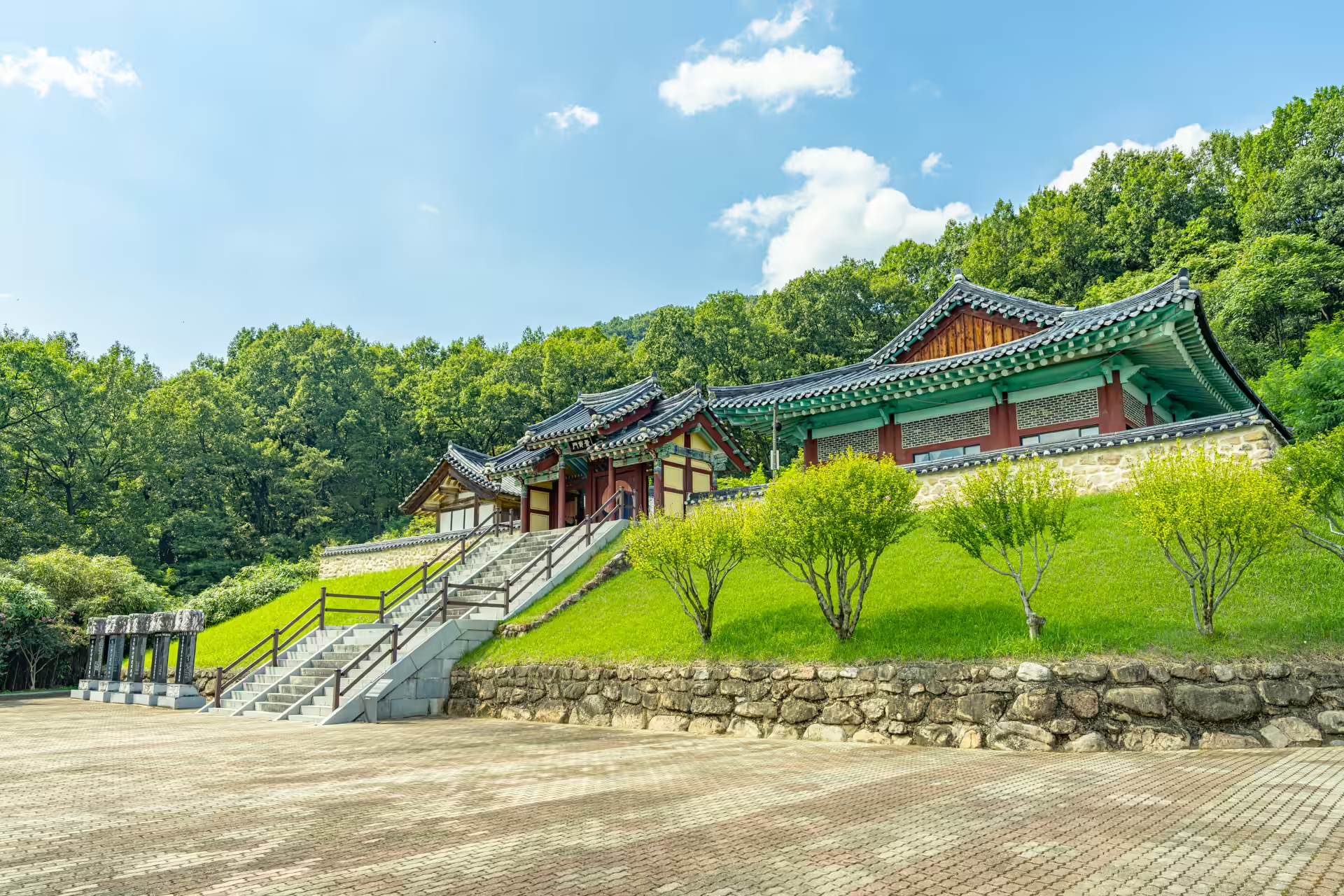
Every year on June 4 the city holds a memorial rite here — in 2026 it was the 434th anniversary, with about 300 people attending, a large turnout for a weekday morning in a city of well under 100,000. The rite is a formal Confucian offering, incense and bows in the old order, worth watching from the courtyard if your dates line up. On other days the shrine gate may be closed; the courtyards and stairs are always open, and the view back down over the Bukcheon toward the city is the point.
Beside the shrine, a small pavilion protects two stelae: a replica of the tablet listing the loyal dead, and the 1612 memorial stone for Gwon Gil composed by a local scholar twenty years after the battle. Neither has an English panel.
Sangsangwan: The Guesthouse That Kept Moving
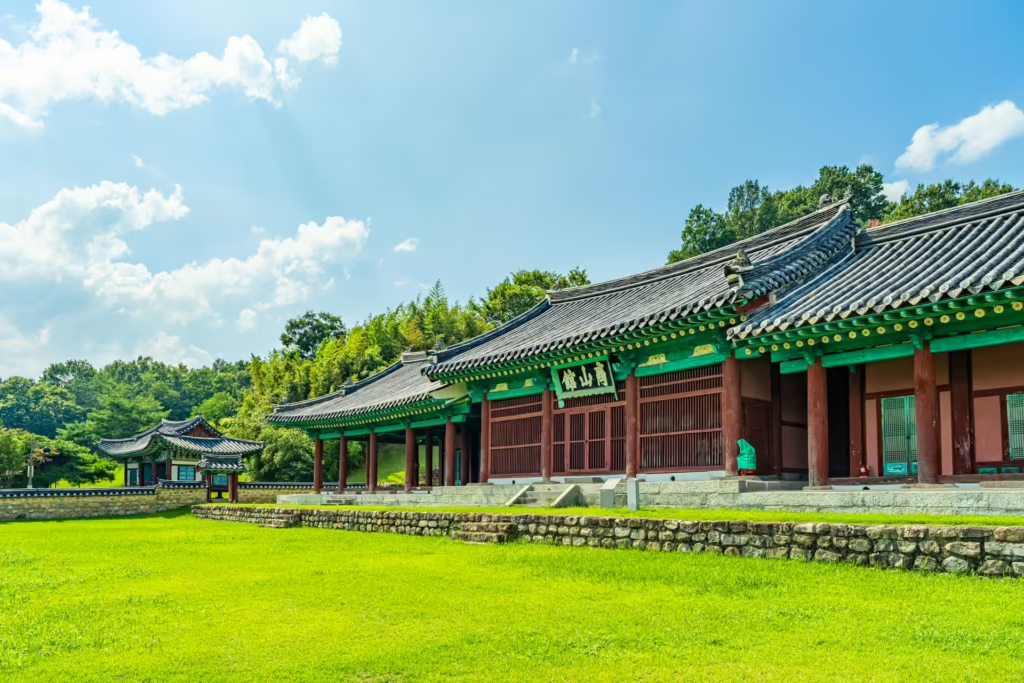
Walk back down and the mood changes. Along the lower terrace stands Sangsangwan, the guesthouse of the old Sangju magistracy and the largest single structure in the park — a central hall of three bays flanked by an east wing of seven bays and a west wing of four, so that the whole colonnade runs a long red line across the lawn. A gaeksa was an official building found in every Joseon county seat, and its purpose was as much ritual as hospitality: the central hall housed a tablet representing the king, and on the first and fifteenth of every lunar month the magistrate led his officials in a bow toward Seoul, the ceremony called manggwollye. Visiting royal envoys slept in the wings.
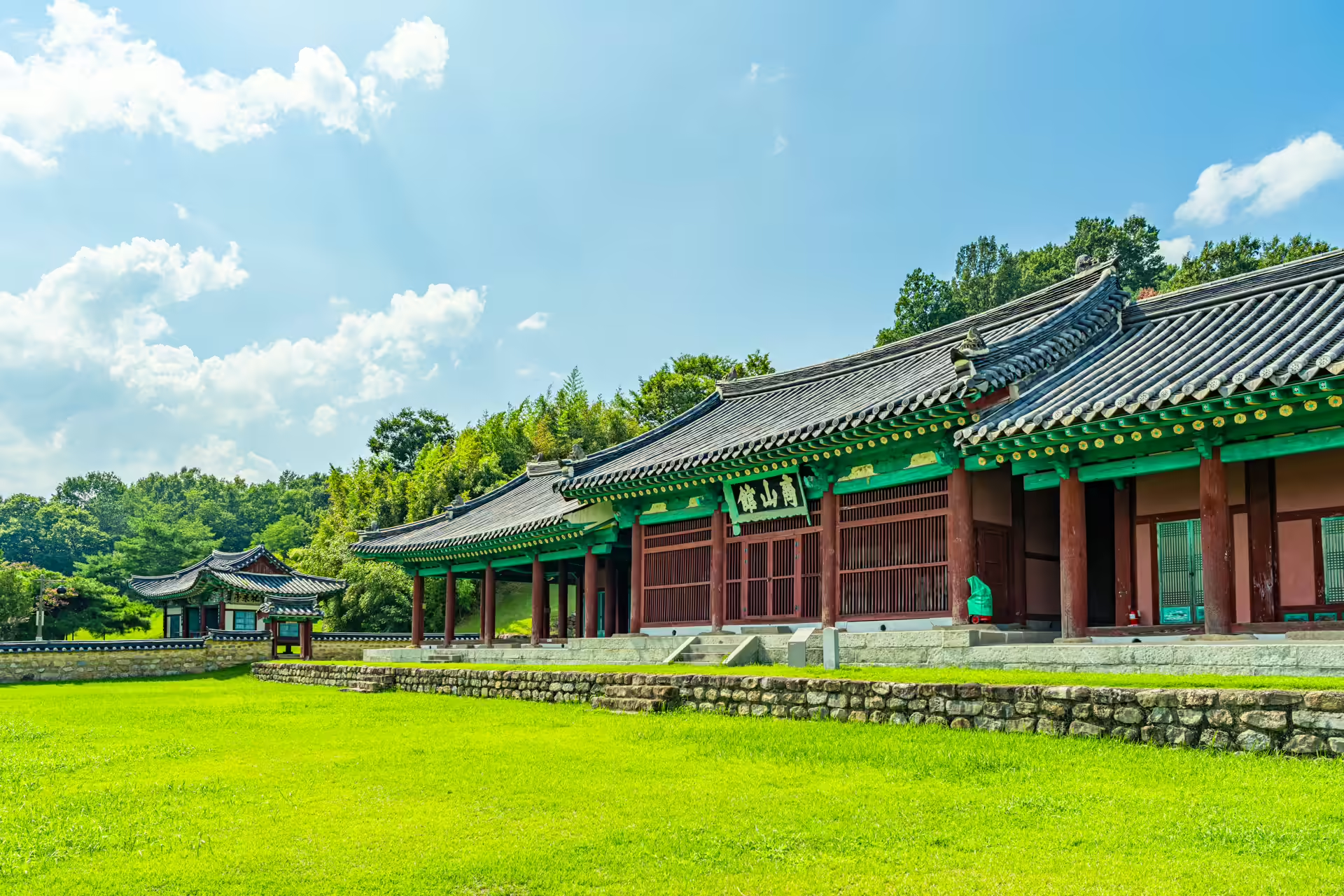
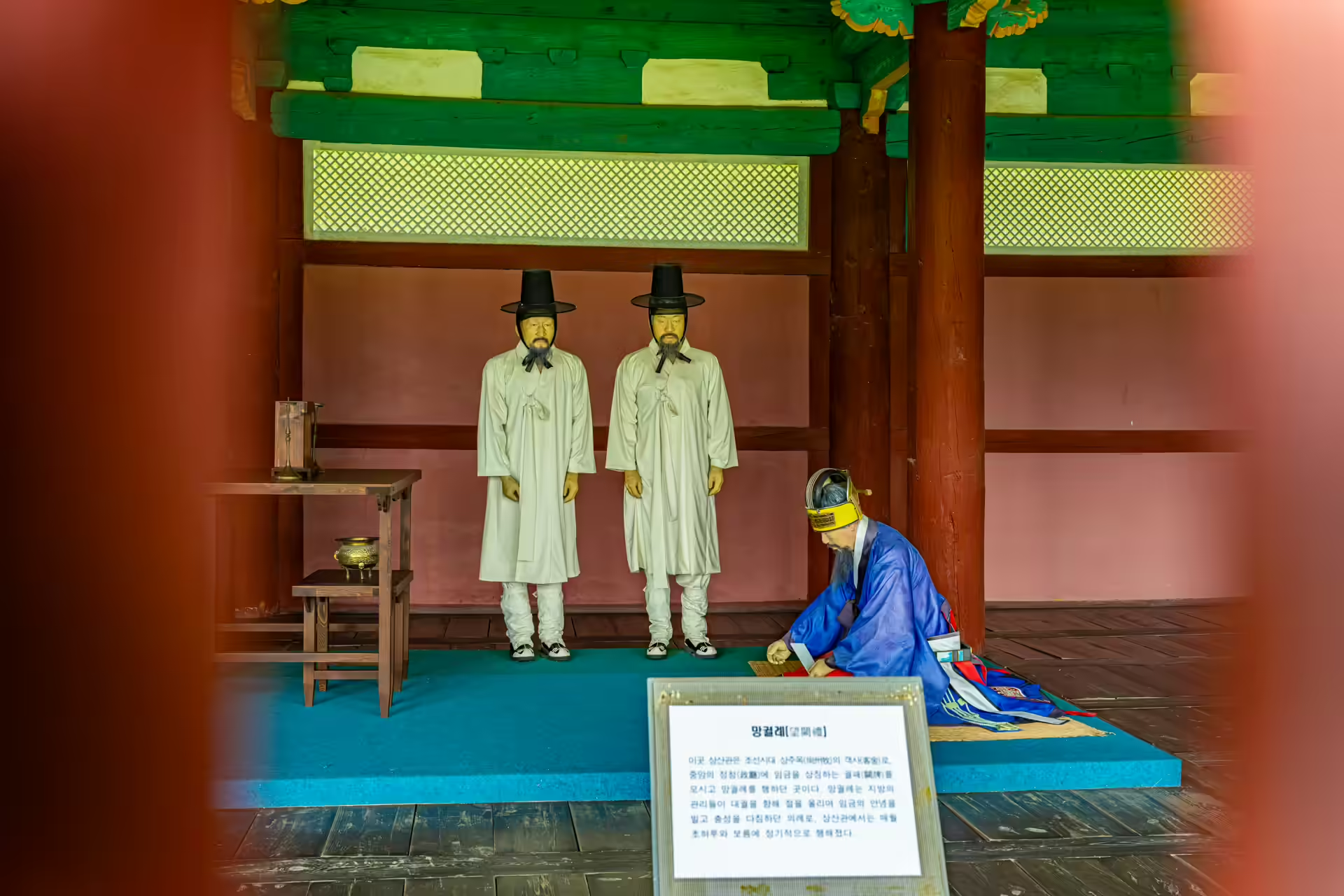
The building’s biography is the biography of Sangju. Records mention a guesthouse here before 1196, and the present structure descends from a rebuilding in the seventeenth century after the original burned in the 1592 invasion — the same one commemorated up the hill. It was rebuilt again after a second fire, repaired in 1845, and then, when the Joseon administration collapsed, turned into classrooms: first for a primary school in 1907, then, after a move in 1921, for a girls’ middle school. The city moved it a final time in 1991 to anchor the new memorial park. The dragon-head ornaments on the roof ridge belong to a building that has been taken apart and reassembled at least twice and spent much of the twentieth century smelling of chalk.
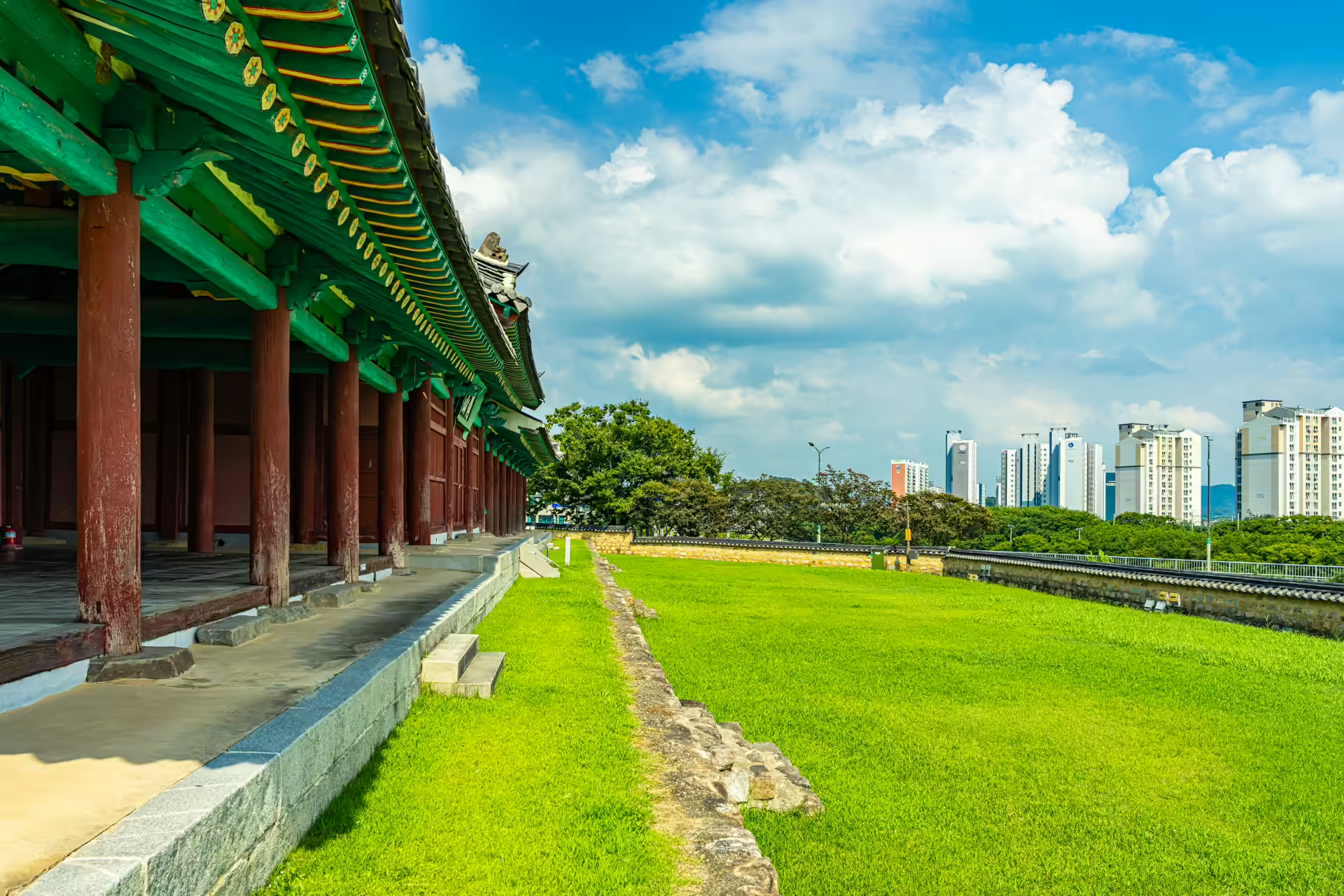
The doors of the central hall were open when I visited, and inside is the display in the photograph above: two officials in white and the magistrate in blue, bowing before the royal tablet. A modest diorama, but it explains what the building was for, which few relocated gaeksa in Korea bother to do.
Chimcheonjeong and Taepyeongnu: Two Rescued Pavilions
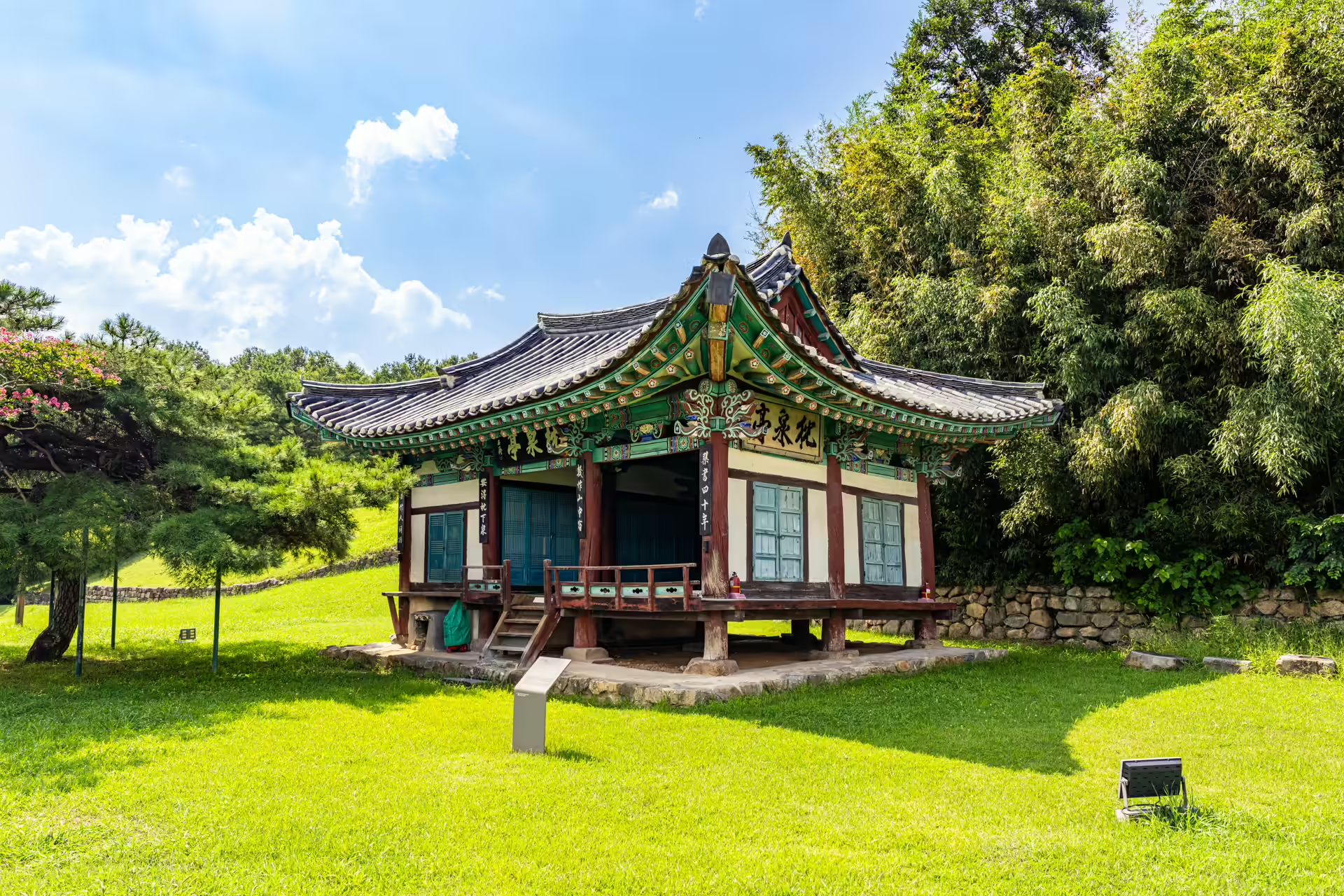
The park’s two other old buildings arrived by different roads, both of them casualties of the demolition of Sangju’s walled town. Chimcheonjeong, the smaller of the two, began in 1577 as a magistrate’s garden pavilion outside the south gate, under the name Yeondang, “lotus hall.” It burned in 1592 like everything else, was rebuilt in 1612, and was renamed twice by later magistrates before the town walls came down in 1914 — at which point a group of local families bought the pavilion with their own money and re-erected it here under its present name. It now stands on a stone platform above the Bukcheon, a low-slung, four-square building that is prettier in late afternoon than any of its neighbors.
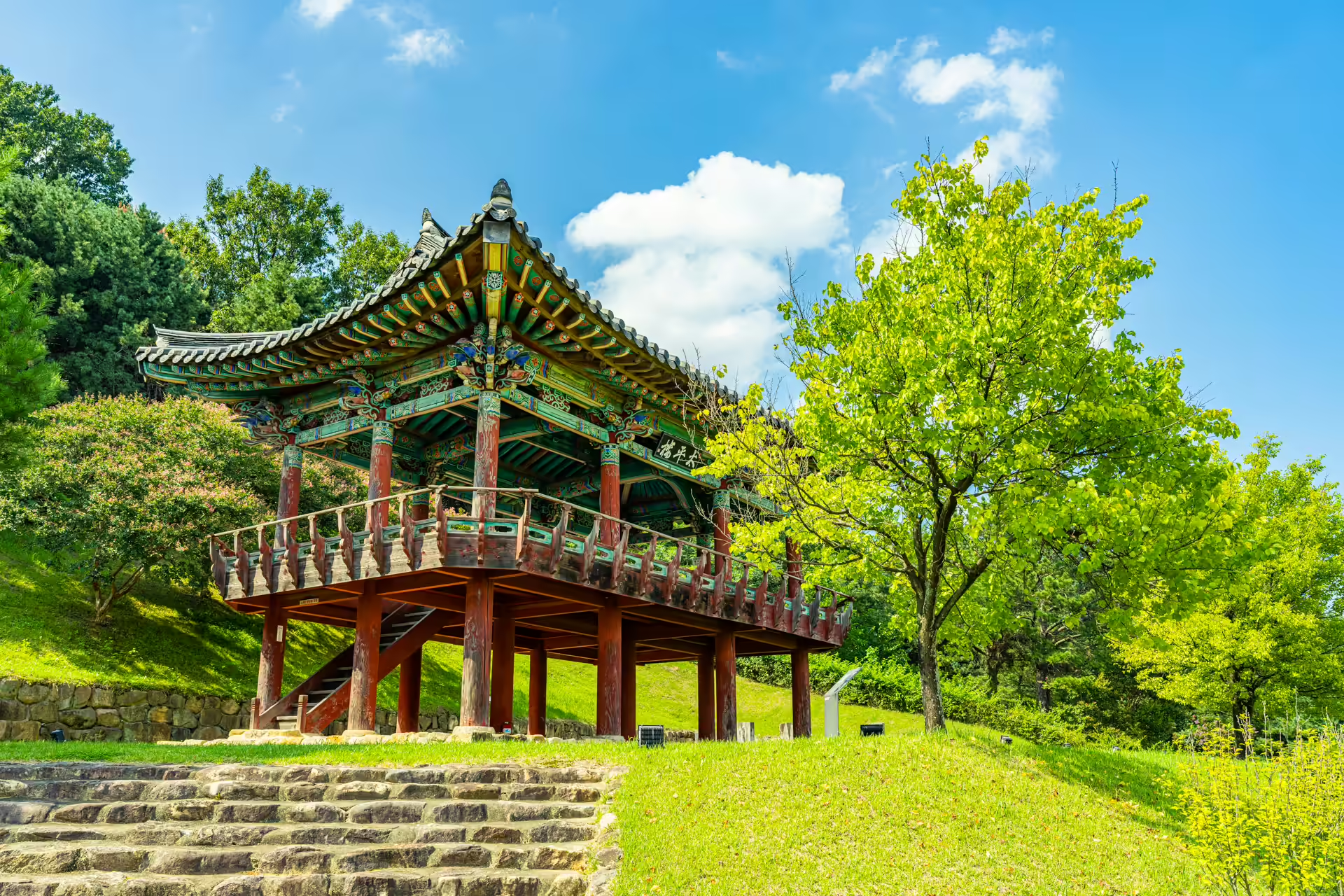
Taepyeongnu, at the lower end of the park, is the grandest thing here and the least explained. It is a two-story gate pavilion that once stood in line with the magistrate’s main hall as the ceremonial entrance to the county office; the site’s board credits a magistrate named Jeong Dong-gyo with building it in 1808, though I could not confirm that date elsewhere. After the walled town was cleared it spent decades at the Confucian academy before being moved to the battlefield in 1992. The upper floor is open on all sides, and when the stair is open, from up there the whole layout of the park — shrine above, guesthouse across, stream below — makes sense in a way it does not from the ground.
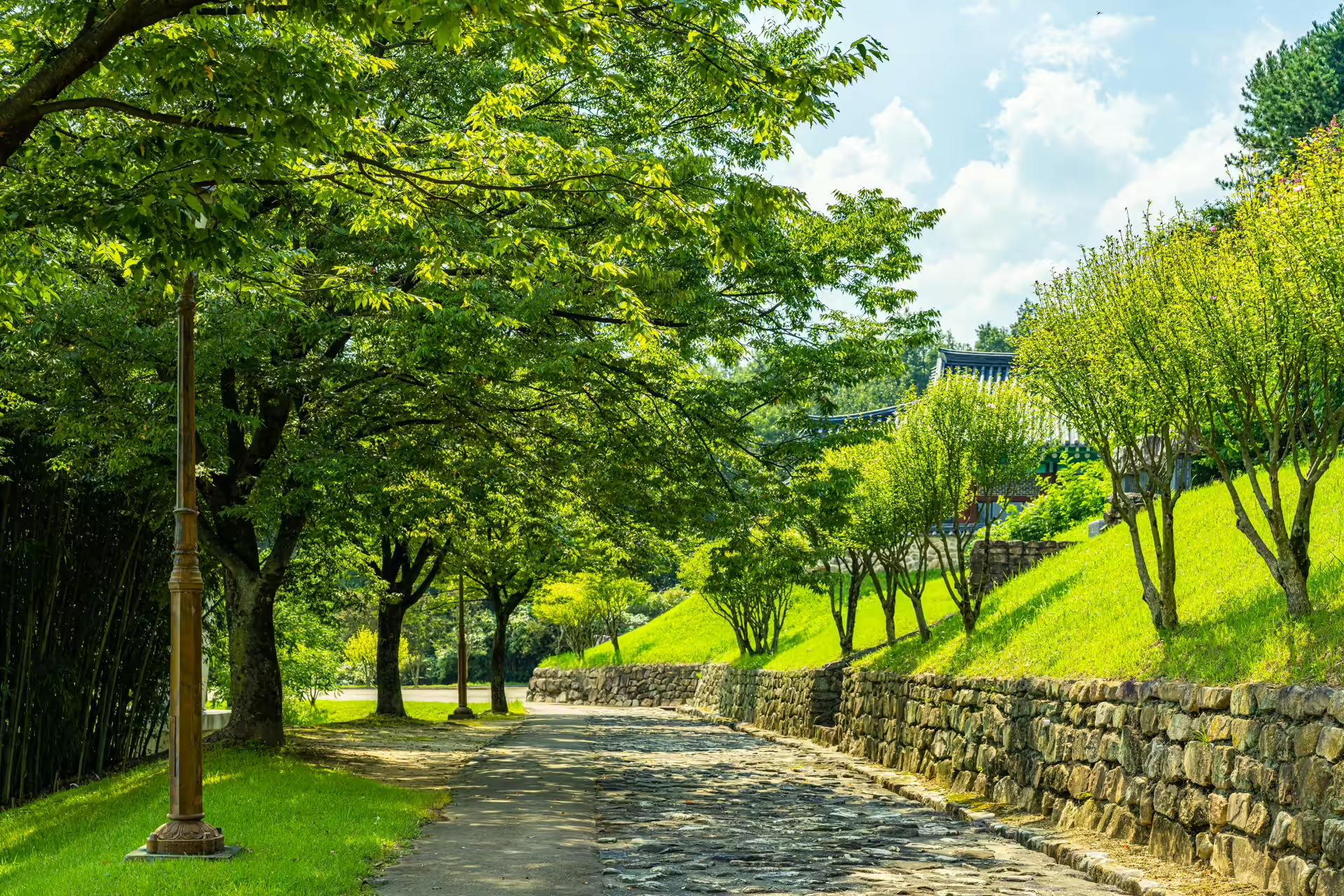
Between the buildings the park is pine, bamboo and mown grass, threaded by a shaded footpath that follows a low stone wall along the eastern edge. Allow an hour if you read the boards, ninety minutes if you climb everything and sit for a while. There is no cafe and no shop; bring water in summer.
What to Pair It With in Sangju
Sangju is a small city with a lot of Nakdong River, and the natural second half of the day is the cluster of sights on the river’s big bend east of town, about twenty minutes’ drive: Gyeongcheonseom, a flower island reached by footbridge; Gyeongcheondae, the cliff-top viewpoint above it; the Sangju Bicycle Museum, in a town that reportedly owns more bicycles per head than any other in Korea; and the Nakdong River History Museum with its 4D theater. I covered the island and the history museum in my Uiseong and Sangju family weekend; since June 2026 the city has also run a free electric shuttle around the Gyeongcheondae area.
Eat beef. Sangju’s hanu has its own regional brand, and the cooperative’s restaurant on the edge of town does the butcher-counter model: buy the cut, pay a table charge, grill it yourself. Between late autumn and January the other thing to eat is dried persimmon — Sangju’s traditional gotgam farming is a nationally listed agricultural heritage, and the persimmon festival in late January fills the old provincial-office park downtown.
For a Gyeongsangbuk-do history circuit, the obvious companion is Gyeongsan Museum, about an hour and a half southeast, for the Silla-era kingdom of Apdok; at the other end of the country, Ganghwa’s history museum handles Korea’s other great run of invasions. Sangju’s battlefield is the smallest and least polished of the three, and the only one where the events took place under your feet.
Who This Is Actually For
Readers of Korean history, above all: if you have read about the Imjin War and want to stand where the court’s army first met the invasion, this is the place, with no admission desk between you and it. Architecture people get three relocated Joseon civic buildings on one lawn, including a guesthouse you can walk through. Families with a car get a quiet, flat, free hour on the way to the river sights. It is not for anyone expecting a museum: I found no exhibition hall open to the public, and the English signage stops at the gate. Come with the story already in your head, which is what this article is for.
The building I liked most was not the grand one. It was Chimcheonjeong, the small pavilion bought back from the wreckers in 1914 by people whose names are not on any tablet. The men on the hill are remembered for dying here. The ones who paid to move a garden pavilion across town, so that the battlefield would have something old and beautiful standing on it, get a line on a board. Both seem to me like the same instinct, three hundred years apart.
Practical Manual
| Item | Details |
|---|---|
| Name | Imnan Bukcheon Battlefield (상주 임란북천전적지) · also signed “Imran Bukcheon Historic Site” |
| Address | 3123 Gyeongsang-daero, Sangju-si, Gyeongsangbuk-do (경북 상주시 경상대로 3123, 만산동 699) |
| Hours / fees | Grounds open daily, free entry · city brochures list 09:00–18:00 for the buildings; shrine gate may be closed outside rites · office 054-533-2210 |
| Status | Gyeongsangbuk-do Monument (designated 1988) · Sangsangwan: Gyeongsangbuk-do Tangible Cultural Heritage (1982) |
| Annual rite | Memorial rite at Chungnyeolsa every June 4 (the battle date in the modern calendar) |
| Time needed | 60–90 minutes · no cafe or shop on site |
| Getting there | Express bus Seoul–Sangju ~2.5 h (about 14 daily) or Dong Seoul–Sangju (about 20 daily) · Dongdaegu–Sangju under 1.5 h · short taxi ride from Sangju terminal · no direct train from Seoul |
| Nearby | Gyeongcheonseom island, Sangju Bicycle Museum, Nakdong River History Museum — about 20 min by car east of town |
| More info | Korea Heritage Service listing (Korean) · Sangju Encyclopedia of Local Culture (Korean) |
Navigation Tip: Search “임란북천전적지” in Naver Map or Kakao Map; there is a lot by the main gate off Gyeongsang-daero. Papago’s camera mode reads the Korean information boards, which is the only interpretation you will get on site.