
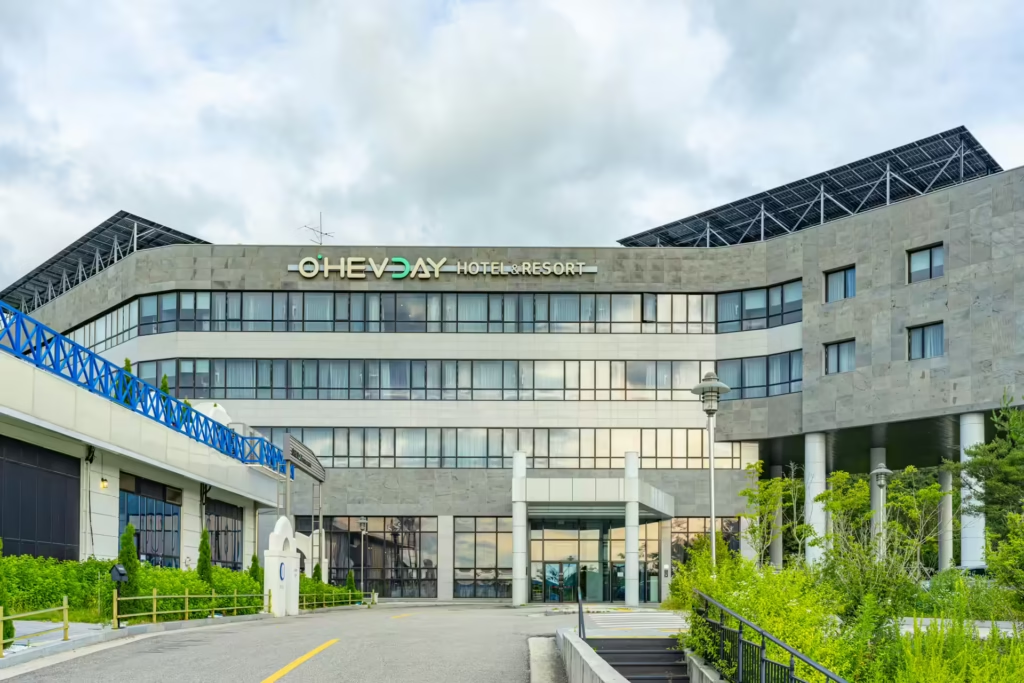
Hotel Ohevday: Sleeping at 500 Meters in the Herb Valley
Altitude is the amenity nobody lists. Hotel Ohevday sits at roughly 500 meters above sea level in Unbong, a highland plateau on the shoulder of Jirisan in Namwon — and in a Korean summer, those 500 meters are worth more than any rooftop bar. When the lowland cities are stewing at 34 degrees, evenings up here ask for a long sleeve. The hotel knows exactly what it is selling: a clean, quiet, modern block of rooms in the middle of a government-planted herb valley, where the night goes quiet enough that you notice the quiet itself.
This manual contains affiliate links. If you book through them, I earn a small commission at no extra cost to you. This keeps my EV charged and allows me to provide unfiltered, field-tested travel insights.
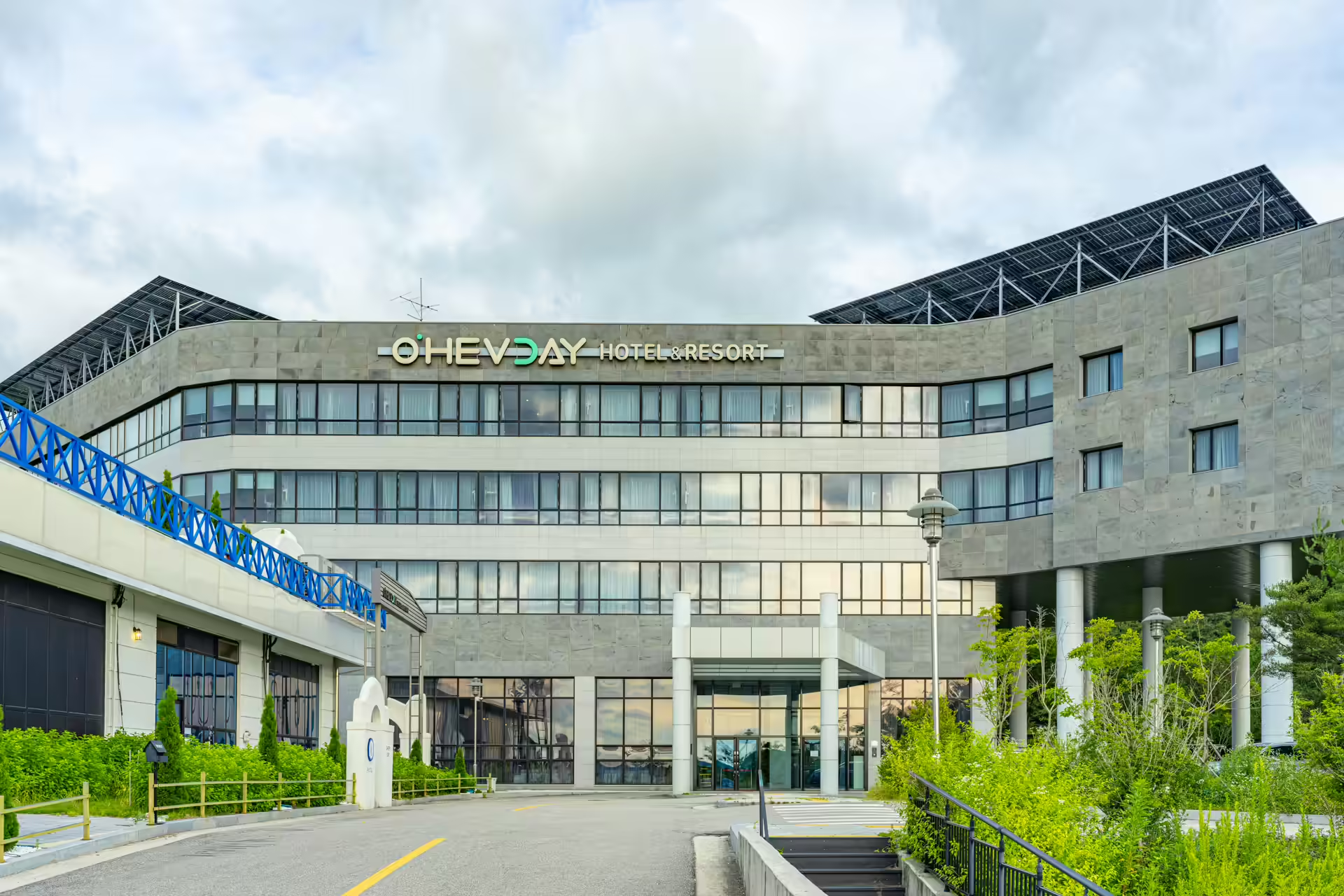
Built new and opened in May 2020 as the anchor of Namwon’s Jirisan Herb Valley complex (and reportedly given a refresh in spring 2025), Ohevday — the signage styles it O’HEVDAY Hotel & Resort — is that uncommon thing in rural Jeolla: an actual hotel, some seventy-odd rooms, rather than a pension with ambitions. I spent a midsummer night here while reporting on the pansori villages of Unbong, and it gives this plateau the one thing its trailheads and singing-master shrines never had: a real bed at altitude.
Getting There
Namwon is on the KTX line — about two hours from Seoul’s Yongsan Station — but the hotel is not in Namwon city. It sits 17 kilometers east in Unbong-eup, up a winding climb, which translates to a 25-minute drive from Namwon Station and no meaningful public-transport alternative. Rent a car in Namwon or drive from home; a taxi from the station works for arrival but leaves you stranded for dinner runs. Guests without wheels consistently list this as the one real drawback, and they are right. The upside is that the drive itself — up onto the plateau where Jirisan’s ridgelines start stacking — is the best introduction to the area you could ask for.
Spa Tubs at Altitude
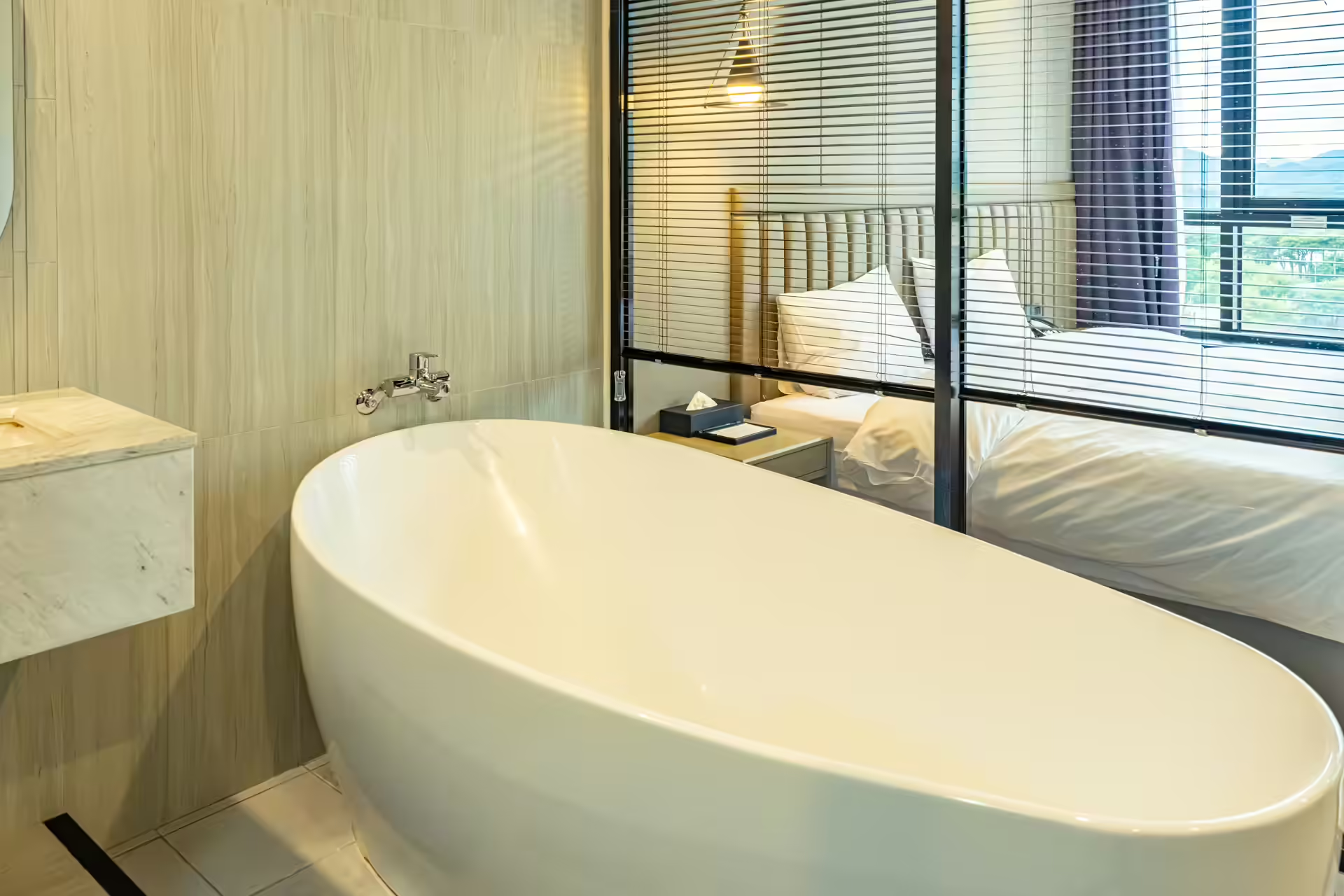
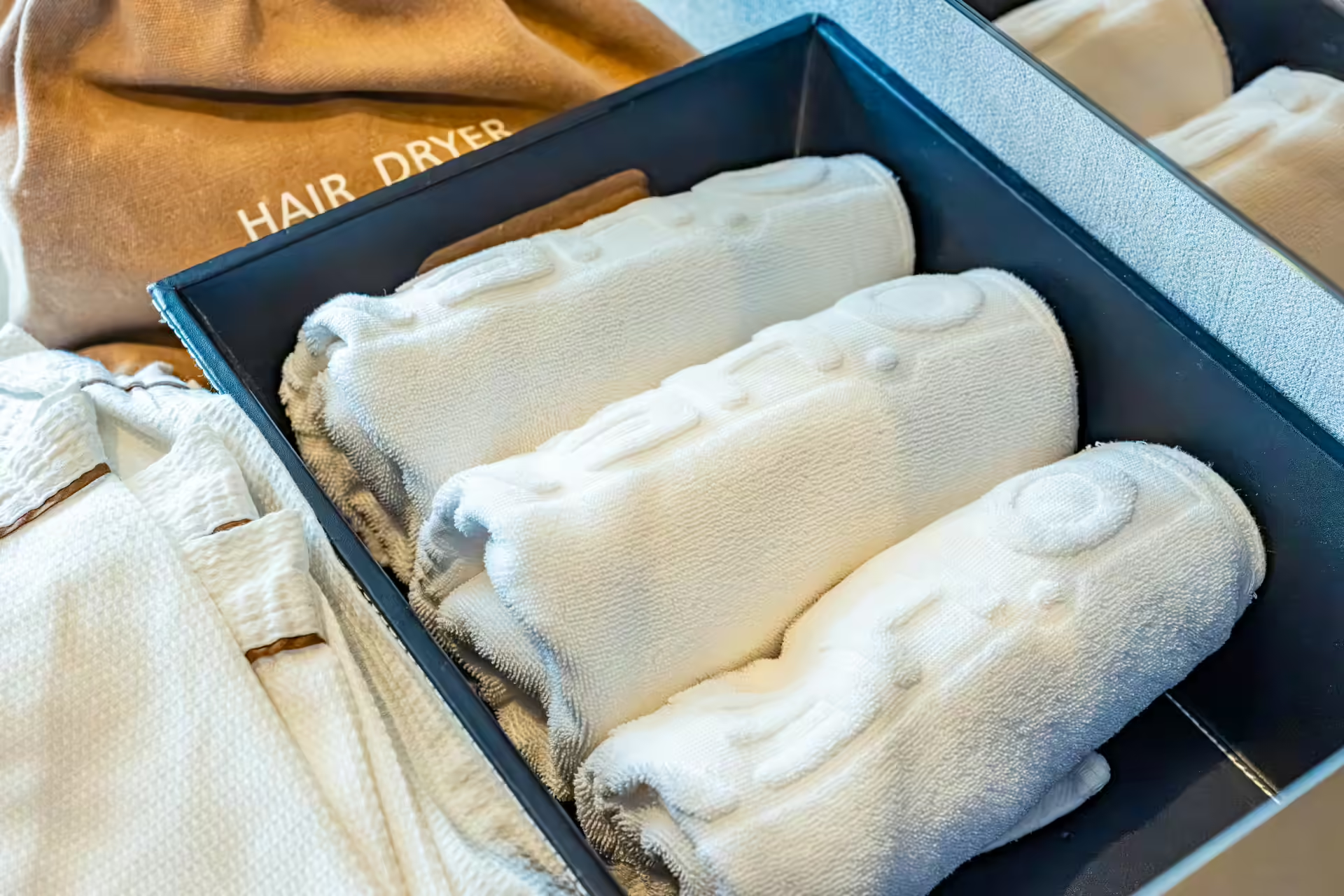
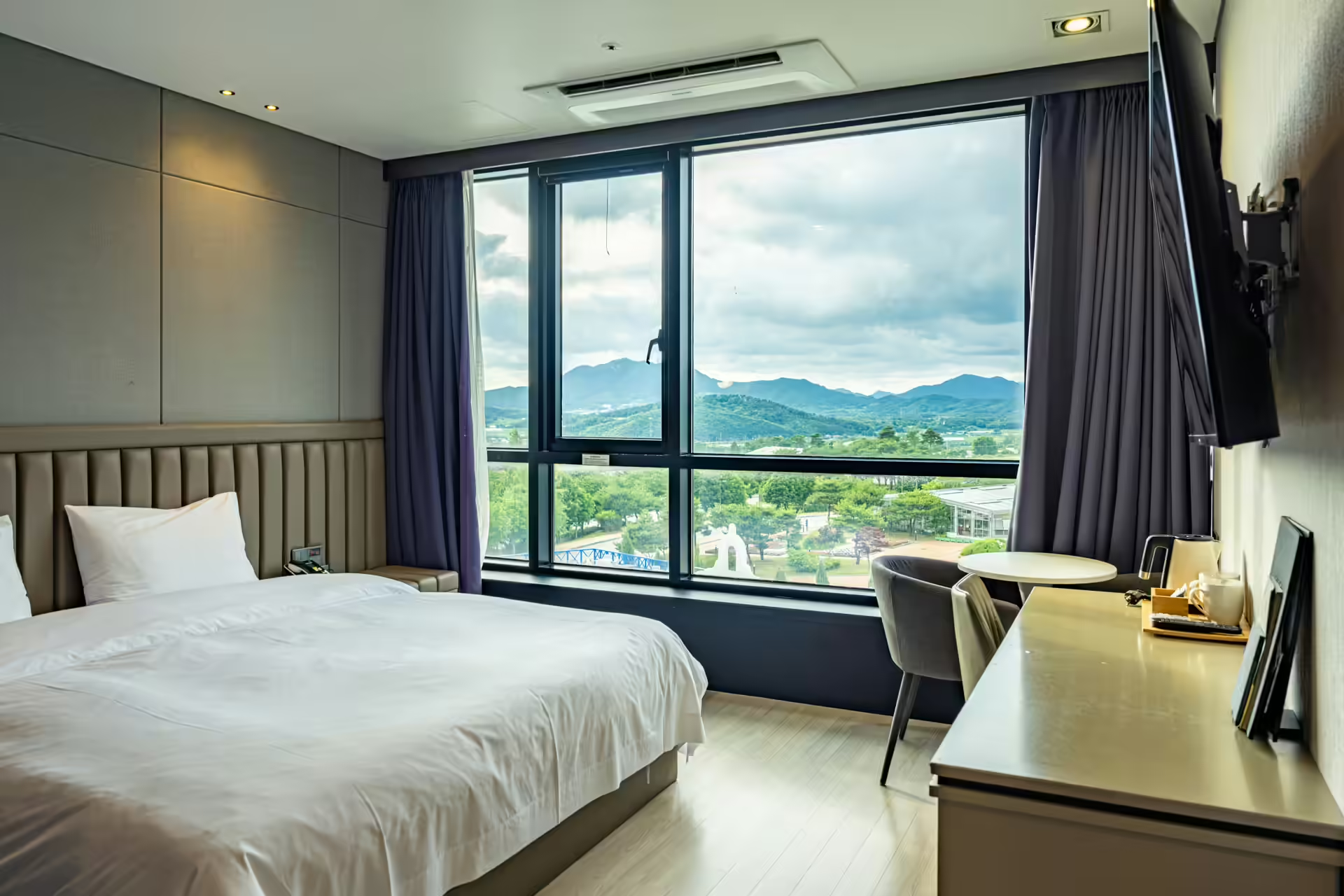
Rooms run from doubles and twins up through family rooms and suites, all in the pale, unfussy register of recent Korean hotel design — padded headboards, wide windows, blackout curtains that actually black out. The windows are the real furniture: most frames hold a layered view of ridgelines that turns blue at dusk. The rooms to chase are the spa types, which park a freestanding oval tub beside the bed with the mountain view for company. A bath at altitude with the window cracked open, cool air coming over the rim — that is the house specialty, and it costs a fraction of what the same arrangement runs in Gapyeong’s couple-pension belt.
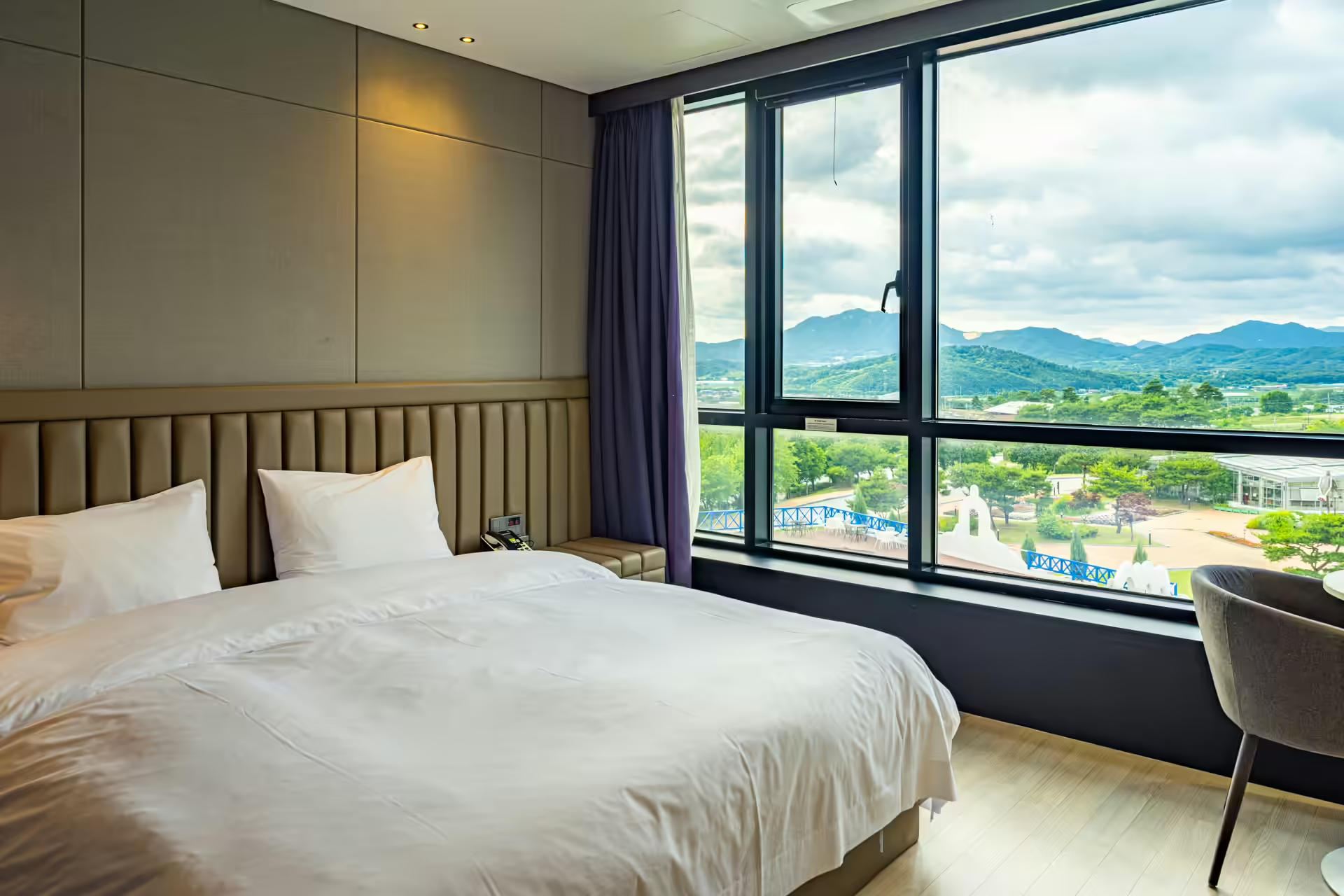
Practicalities: check-in 15:00, check-out 11:00, and — worth knowing — the front desk is staffed from 07:00 to 22:00 with after-hours handled remotely, standard for a rural property this size. Rates are the pleasant surprise, reported from around the 80,000-won mark on quiet nights. Reviews on the international platforms average around 9 out of 10, with cleanliness and staff friendliness carrying the score and “bring a car” carrying the caveats.
What 10,000 Won Buys at Breakfast (and Where to Swim)
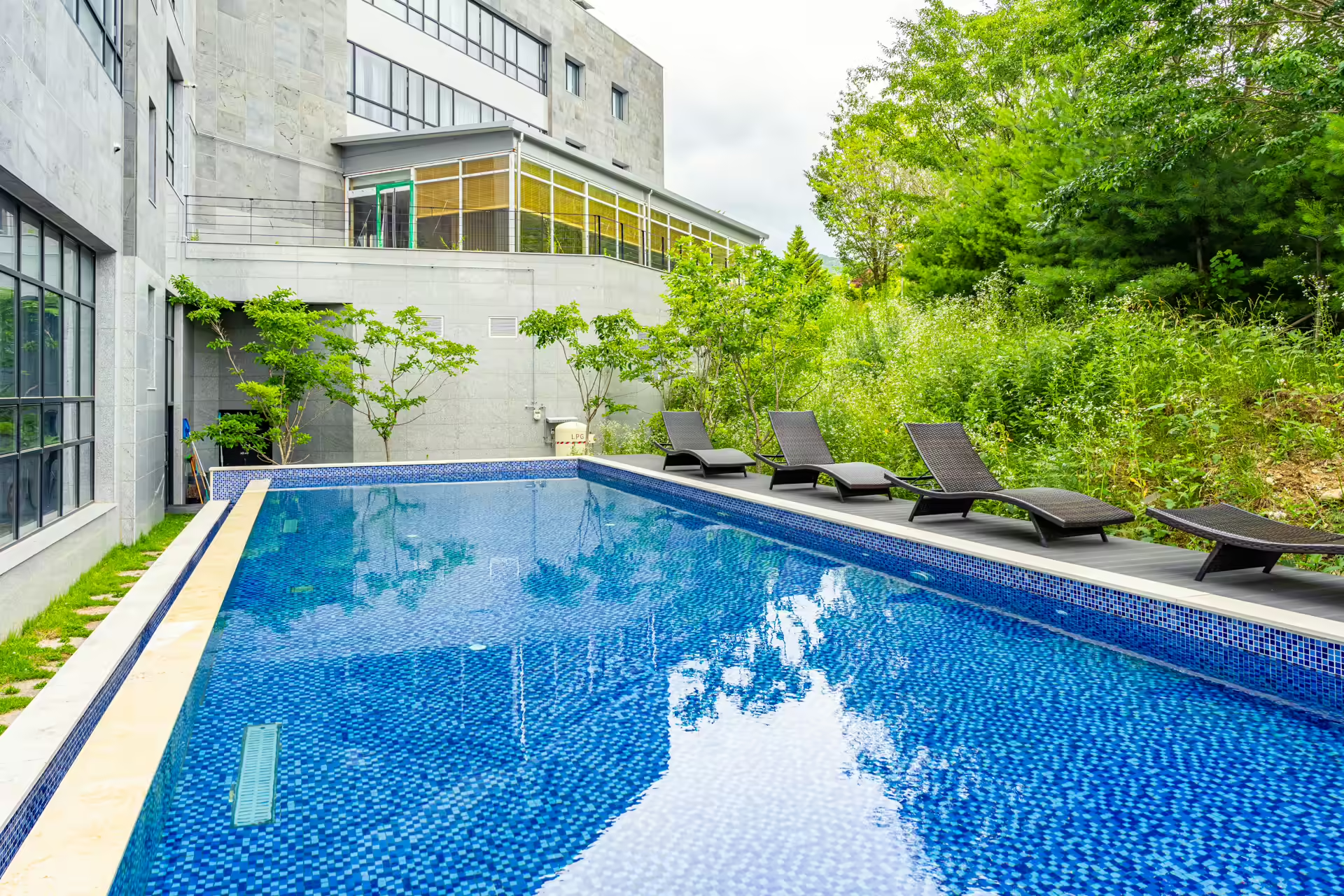
The seasonal outdoor pool is the summer headline: a compact blue rectangle tucked between the building and the hillside greenery, open in the warm months for guests. It is a plunge-and-lounge pool rather than a lap facility, and on a plateau evening the water goes cold-bath brisk — exactly the temperature a place selling relief from the lowlands ought to serve. Sun loungers line the hillside edge, and midweek you may well have the entire rectangle to yourself.
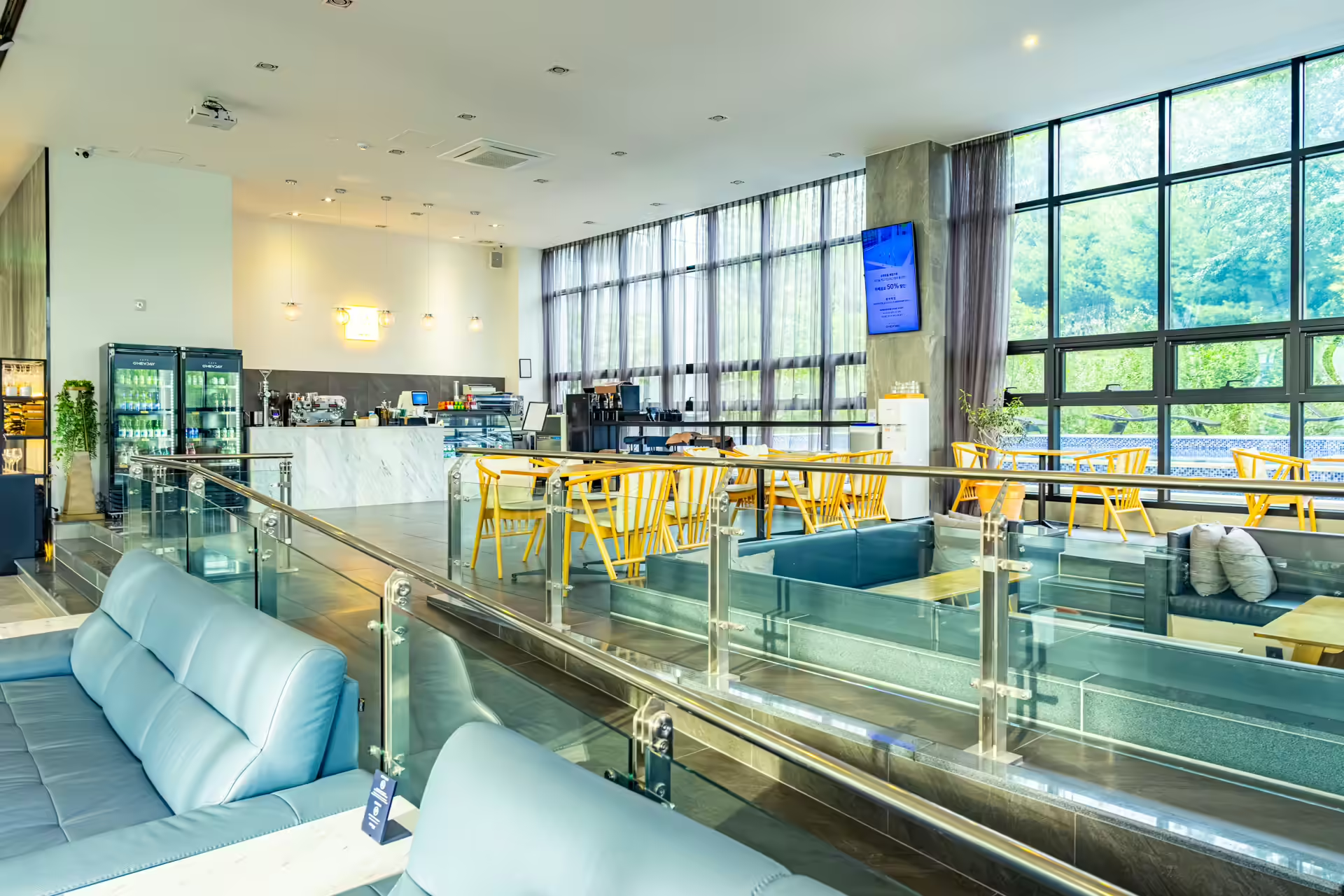
The double-height lobby lounge handles everything else: coffee through the day, and a reservation-based breakfast that costs 10,000 won — a small buffet spread that guests describe as simple and priced accordingly. (Operating days have varied by season; reserve when you check in rather than assuming.) On some weekend evenings the second floor runs a small pocha — a casual Korean drinking table — and there are barbecue setups outside for groups. Beyond that, the plateau provides: Unbong is black-pork country, and the barbecue restaurants down the road are where dinner should happen. Stock up before you climb, though — there is no convenience store in walking distance, a fact first-time guests discover at 10 p.m.
Out the Door: Azaleas, Pansori, and an Old Battlefield
The hotel’s location looks remote on a map and generous on the ground. It sits inside the Jirisan Herb Valley, a landscaped complex of herb gardens and greenhouses that makes for an easy stroll straight from the lobby — lavender and herb beds in season, a foot-traffic-only loop, and the kind of pre-breakfast walk that hotels in cities charge spa prices to imitate. Morning is the plateau’s showpiece hour — the morning I woke here, fog pooled in the valley seams below while the ridgelines floated clear above it, and the herb gardens had their smell turned up before the sun burned it off. Looming directly behind is Baraebong, the peak whose royal-azalea slopes stage one of Korea’s great flower spectacles from late April into May — the hotel is the closest proper lodging to the trailhead, which makes it the obvious azalea-season base (book far ahead for those weeks). Section 2 of the Jirisan Dulle-gil, the gentlest stretch of the mountain’s circuit trail, passes through the same countryside.
The cultural neighbor is the reason I was in Unbong at all: this plateau is the birthplace of dongpyeonje, the powerful eastern school of pansori — Korea’s epic sung storytelling, inscribed by UNESCO. A few minutes down the road in Bijeon village stand the restored birth-homes of Song Heung-rok, the “king of singers” who forged the style, and the great 20th-century diva Park Cho-wol, alongside the Sacred Site of Korean Music (Gugak-ui Seongji), the region’s shrine-museum to the tradition, where a hands-on exhibit lets you thump the drums and pluck a gayageum yourself (free, closed Mondays). Next door, almost casually, is the Hwangsan Battlefield monument site, where Yi Seong-gye — the future founding king of Joseon — crushed a Japanese pirate army in 1380. Sound and history share a parking lot. For the Jirisan temple-and-garden circuit further west, my Gurye write-ups on Ssangsanjae and Cheoneunsa Temple pair naturally with a night up here.
The pansori stop deserves more than a drive-past, and I say that as someone who arrived skeptical. The folk-music center’s exhibit hall opens with the working possessions of the old masters — a singer’s worn makeup kit, a wristwatch, cassette tapes of voices recorded before anyone imagined streaming — and ends in a room where the instruments are laid out to be played, not admired. A docent talked me through the cosmology (the zither speaks for heaven, the drum for earth) while I made an honest mess of a janggu rhythm. Outside, in the birth-home courtyard, stone sculptures encode the music itself: a round form for jinyangjo, the glacial 24-beat rhythm Song Heung-rok mastered, square blocks for the folk melodies he folded into it. Why here, of all places? The village was once a post-road stop on the way to Seoul, flush with inns and travelers, and a local patron ran a singing hall that drew talent — the 19th-century equivalent of a residency program. In recent autumns the same street has hosted a street festival of pansori and mask dance.
Dinner logistics, since the plateau makes you plan: Unbong’s black-pork houses cluster along the main road a few minutes downhill, serving the local Berkshire-cross barbecue that justifies the region’s reputation — go before 8 p.m., as rural kitchens close on rural schedules. The village enterprises nearby press their own perilla and sesame oil and cure black-pork hams, if you like your souvenirs edible.
Who This Is Actually For
Hikers and flower-season travelers wanting the closest real bed to Baraebong; road-trippers doing the Jirisan circuit who would rather sleep in mountain air than in Namwon city; couples chasing the spa-tub-with-a-view formula at non-resort prices; and workshop groups, who the hotel courts with its convention room. It is the wrong hotel for anyone without a car, for travelers who measure evenings in restaurants and bars within walking distance, or for those who need 24-hour front-desk service as a matter of principle. Namwon city’s sights — Gwanghallu Garden and the Chunhyang lore — are a 25-minute drive, so treat this as a mountain base, not a city hotel.
What you are buying, in the end, is the plateau itself: cool nights, ridgelines out the window, pansori’s birthplace down the road, and a tub positioned to take it all in. At around 80,000 won on a weeknight, that is one of the quieter bargains in Jeolla.

Search available rooms at Hotel Ohevday →
Practical Manual
| Item | Details |
|---|---|
| Name | Hotel Ohevday (오헤브데이호텔 · styled O’HEVDAY Hotel & Resort) |
| Address | 193 Baraebong-gil, Unbong-eup, Namwon-si, Jeonbuk (전북특별자치도 남원시 운봉읍 바래봉길 193) |
| Rooms | ~70-odd rooms · doubles to family suites · spa-tub room types available |
| Check-in / out | 15:00 / 11:00 · front desk staffed 07:00–22:00 · no pets · free parking and Wi-Fi |
| Facilities | Seasonal outdoor pool (guests) · lobby cafe-lounge · breakfast 10,000 won by reservation · weekend pocha · barbecue sets · convention room · rooftop |
| Rates | From around 80,000 won midweek (varies by season; azalea season books out early) |
| Nearby | Jirisan Herb Valley on-site · Baraebong azalea trail (late Apr–May) · dongpyeonje pansori sites and Hwangsan monument ~5 min · Jirisan Dulle-gil section 2 |
| Getting there | KTX Yongsan–Namwon ~2 h, then 25 min by car/taxi (17 km) · a car is essentially required |
| More info | English listing with reviews |
Navigation Tip: Search “오헤브데이호텔” in Naver Map or Kakao Map; Google Maps struggles with the plateau roads. Papago will handle the black-pork menus down the hill.