
The Other Songgwangsa: Wanju’s Flatland Temple of Treasures
Korea has two important temples named Songgwangsa, and the famous one is not this one. The celebrated Songgwangsa in Suncheon is one of the Three Jewel temples of Korean Buddhism, a monastery the guidebooks canonized long ago. The Songgwangsa in Wanju, Jeonbuk — same Chinese characters, same romanization, a couple of hours’ drive north — gets confused with it, overshadowed by it, and skipped because of it. That suits the visitors it does get just fine. What they keep to themselves is a flatland temple with five state-designated Treasures, clay guardian kings the size of delivery trucks, and the only cross-shaped bell pavilion to survive from the Joseon dynasty.
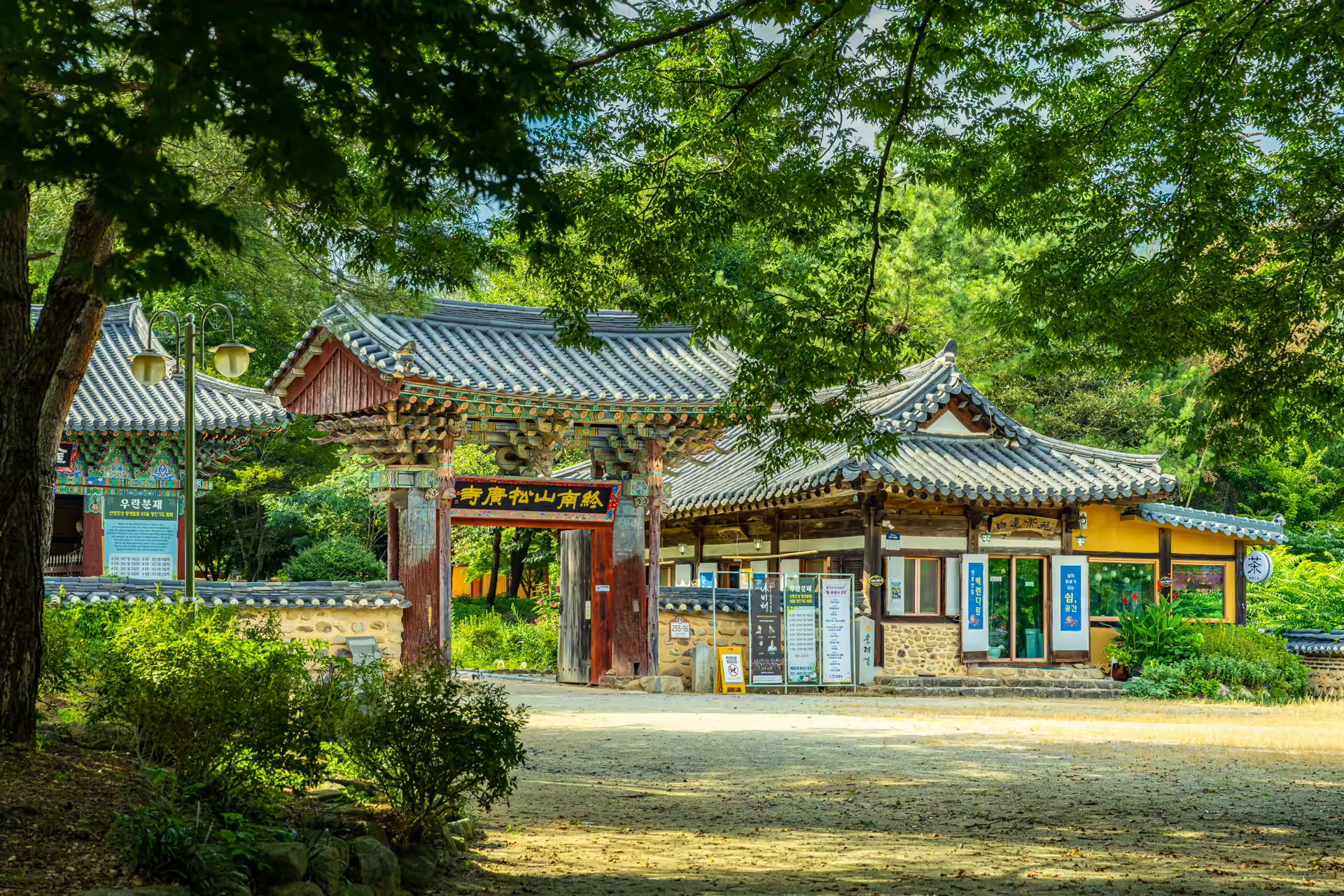
The temple traditions say a Silla monk founded it in 867; what stands today is substantially the product of a major 1622–1636 reconstruction. Its location is the quietly radical part. Korean temples climb mountainsides, guarding their treasures behind switchbacks and calf pain. Songgwangsa sits on level farmland at the foot of Jongnamsan, five minutes’ drive from Oseong Hanok Village, which makes it one of the few major temples in the country a wheelchair, a stroller, or a tired grandparent can cross end to end without a single stair-climb of consequence.
Orientation
Songgwangsa Temple Wanju is 25–30 minutes by car from Jeonju on the same valley road as Oseong Hanok Village and Wibong Falls — the three stack naturally into one half-day. From Seoul, KTX to Jeonju (about 1 hour 45 minutes from Yongsan), then drive or taxi; the local bus up this valley runs only a handful of times daily. Admission was free at the time of reporting, and parking too. Spring visitors get a bonus approach: the two-kilometer country lane to the temple runs under a tunnel of mature cherry trees around early April.
Four Guardians of Clay
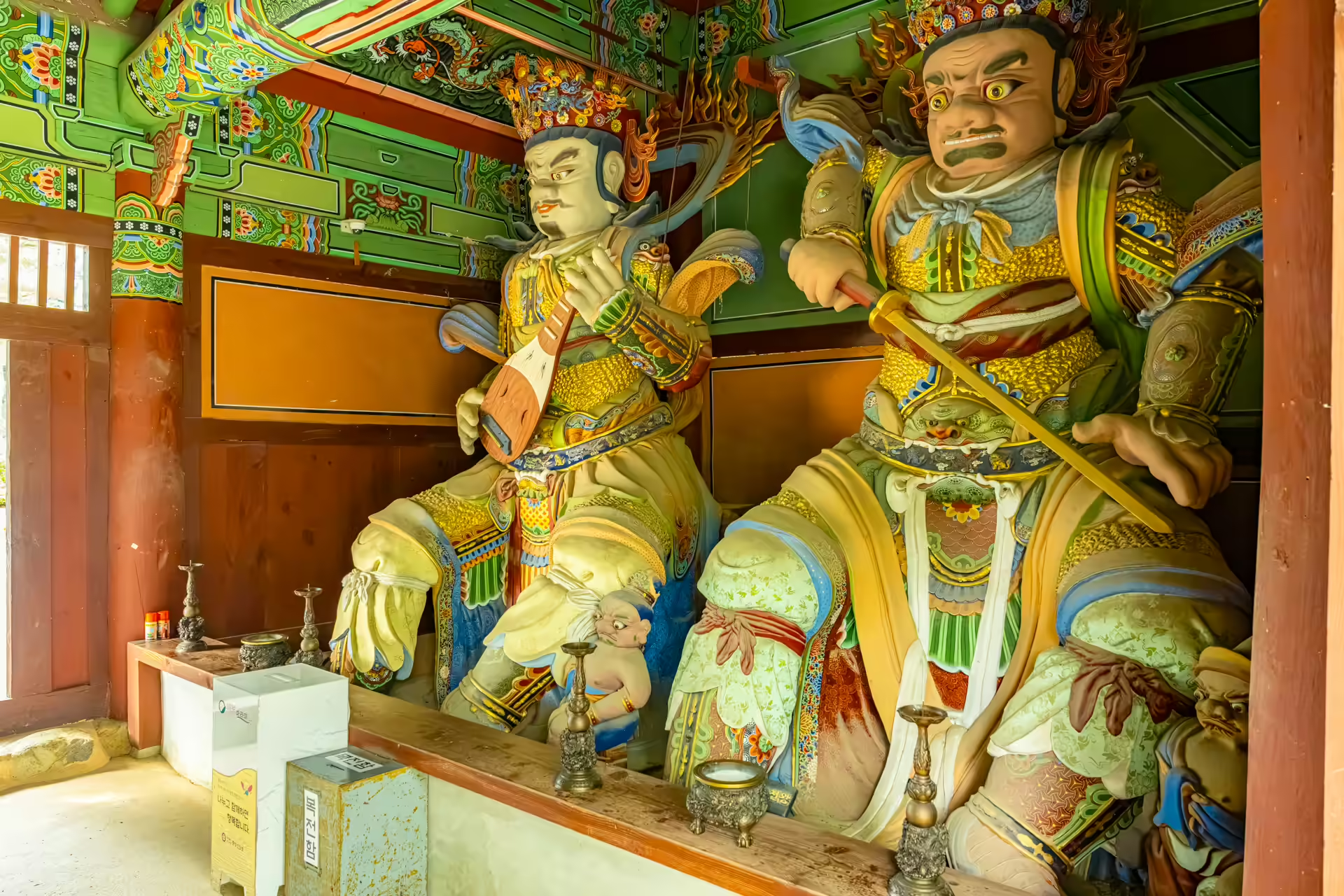
Pass the gates and the first Treasure meets you at eye level — or rather, well above it. The Cheonwangmun pavilion houses four sojo (clay-sculpted) Guardian Kings from the 17th century, among the largest of their kind in Korea. Most temple guardians glower down from a polite remove; these fill their hall so completely that you thread between their pedestals, close enough to count the scales on the dragon one strangles and the demons crushed flat under their feet. Paint survives in improbable saturation: mineral greens, oranges, blues. They are a designated Treasure in their own right, and unlike bronze or stone guardians, these are essentially giant unfired earthenware — which makes four centuries of survival its own small miracle.
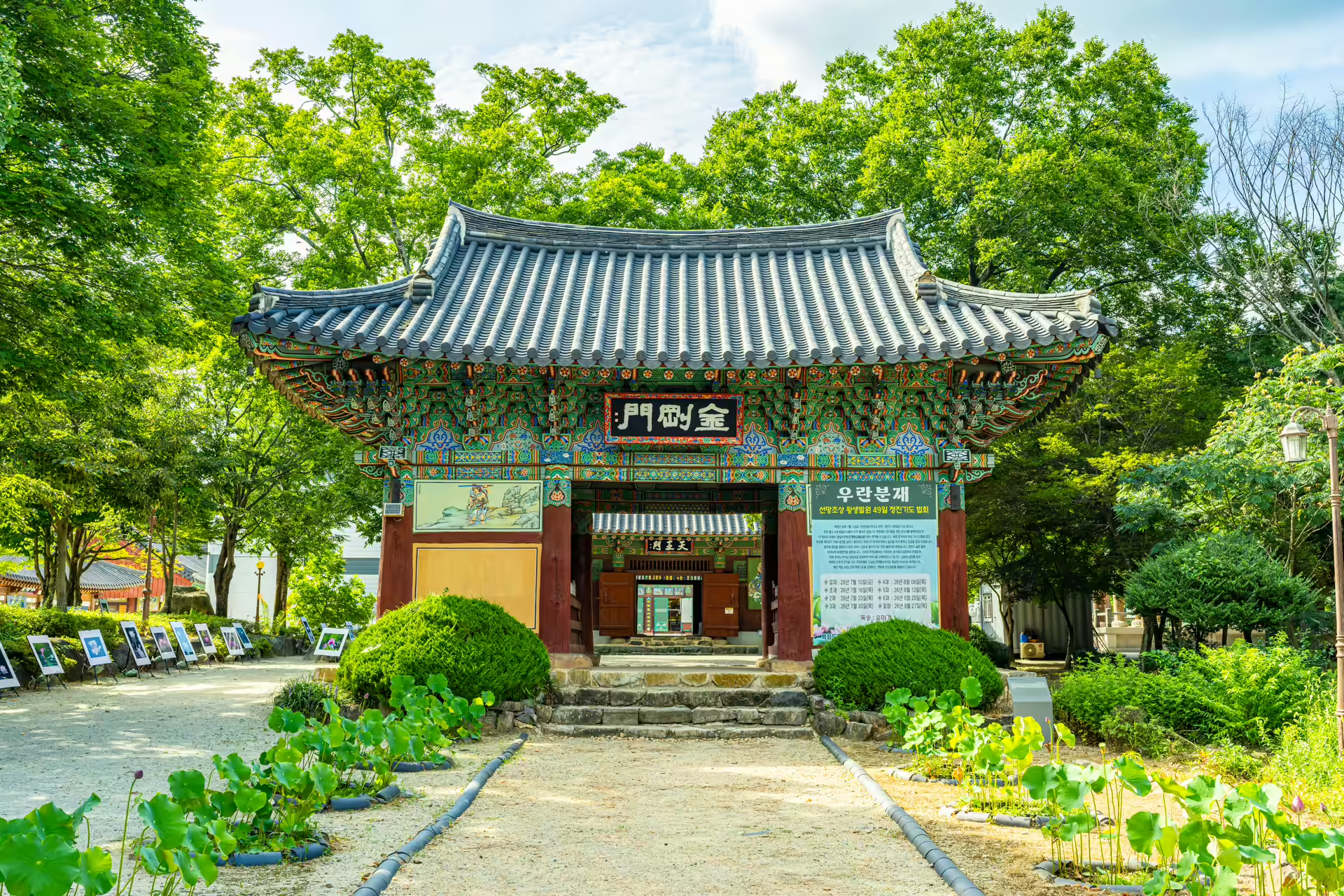
The approach itself deserves a slower walk than most visitors give it. The gate sequence runs Iljumun (the one-pillar gate), then Geumgangmun with a lotus pond spreading in front of it — in mid-to-late summer the pond blooms, and the guardians’ hall floats behind a screen of pink and green. Because the ground never rises, the gates line up on a single axis; stand at the first and you can see clean through to the courtyard, a telescoped view mountain temples physically cannot offer.
Buddhas Built for Two Hostage Princes
The main hall, Daeungjeon — a Treasure itself — holds the temple’s emotional core: three seated clay Buddhas completed in 1641, each figure roughly five meters of gilded earth. The date matters. Five years earlier, the Qing invasion of 1636 had ended with Korea’s surrender and the king’s two sons, Crown Prince Sohyeon and Prince Bongnim, carried off to Manchuria as hostages. The dedication records found inside these statues state their purpose plainly: they were built as a prayer for the safe return of the two princes and the long life of the humiliated king. The princes eventually did come home. The statues stayed, and the prayer is still legible in their scale — a defeated dynasty making the biggest Buddhas it could afford.
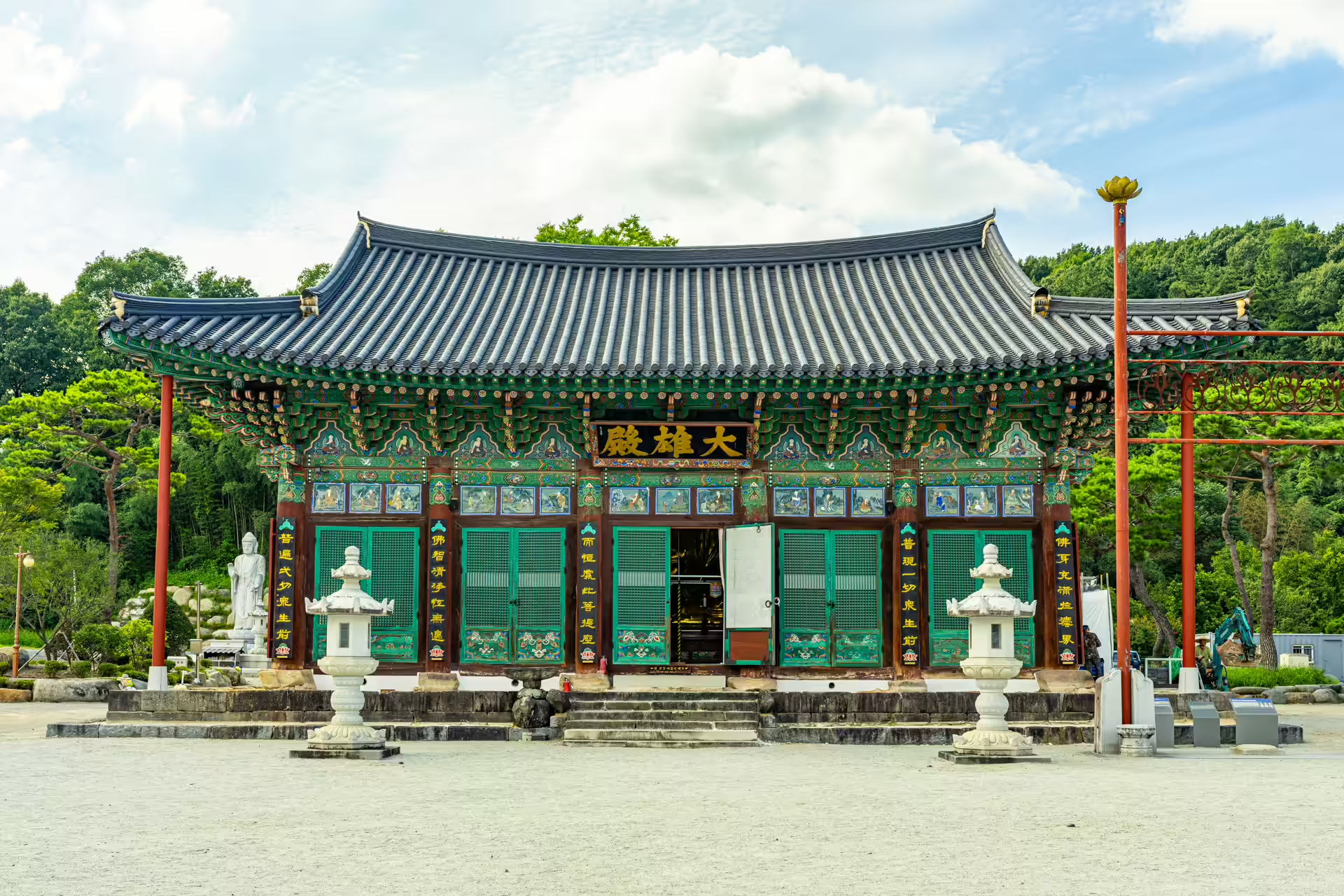
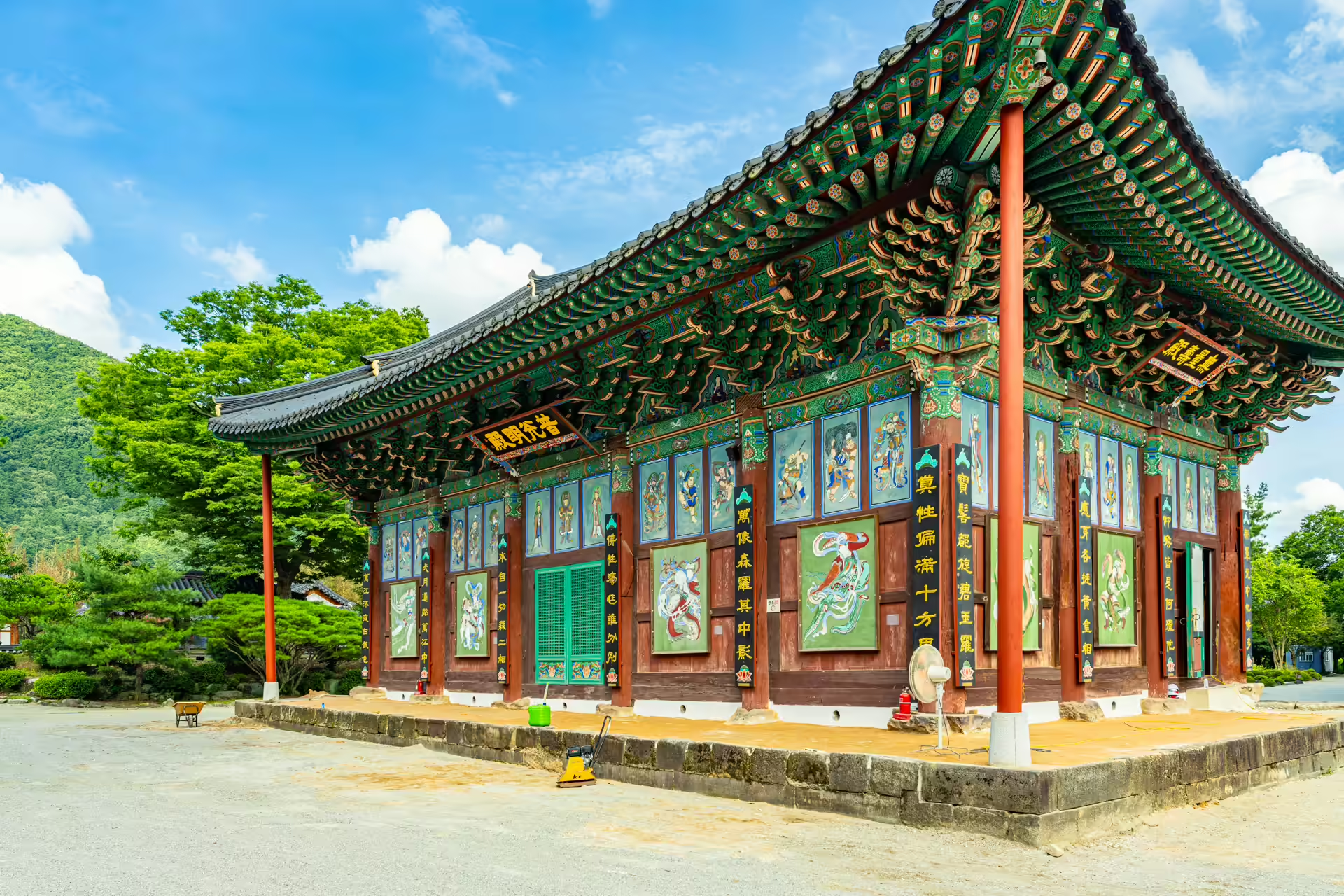
The princes’ afterlives give the statues a bitter frame worth knowing as you stand there. Crown Prince Sohyeon returned from eight years in Qing custody in 1645 having grown curious about the outside world his captors showed him — and died within months of coming home, under circumstances Korean historians have argued about ever since. His younger brother Bongnim took the throne as King Hyojong and spent his reign planning a northern revenge campaign that never launched. The prayer inside these Buddhas was answered, in other words, and then history made a dark joke of the answer. Few temple artifacts in Korea carry a story this specific, this datable, and this sad.
Local lore adds a stranger postscript: the main Buddha is said to sweat in times of national crisis, a legend trotted out during the IMF crash and other emergencies, and the monks keep the anecdotes with a straight face. Take it as folklore delivered where folklore lives.
The Cross-Shaped Bell Pavilion
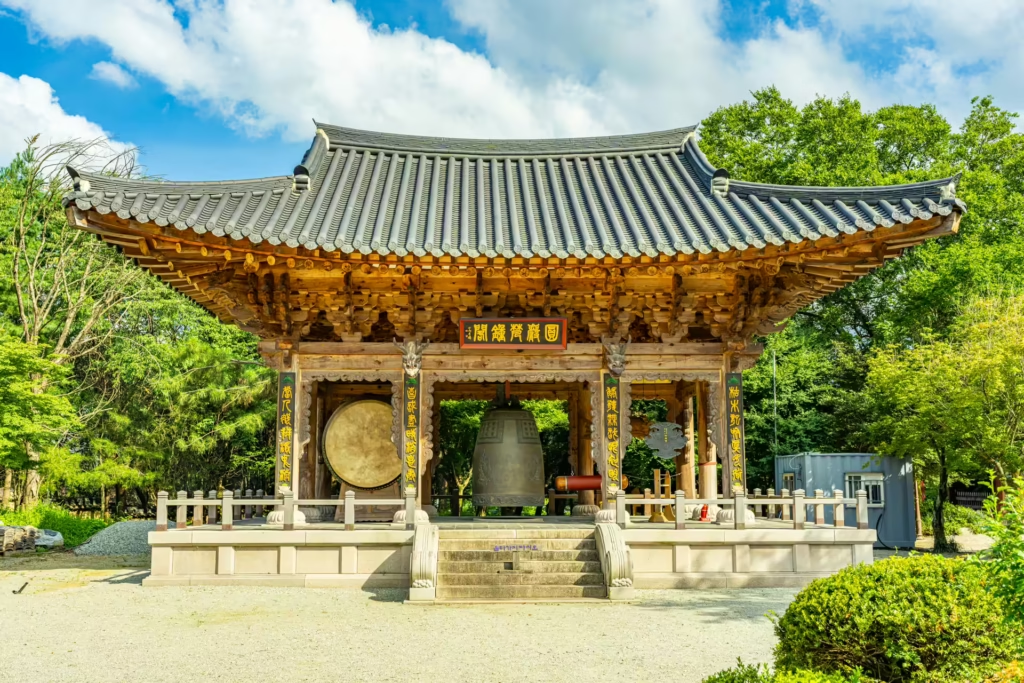
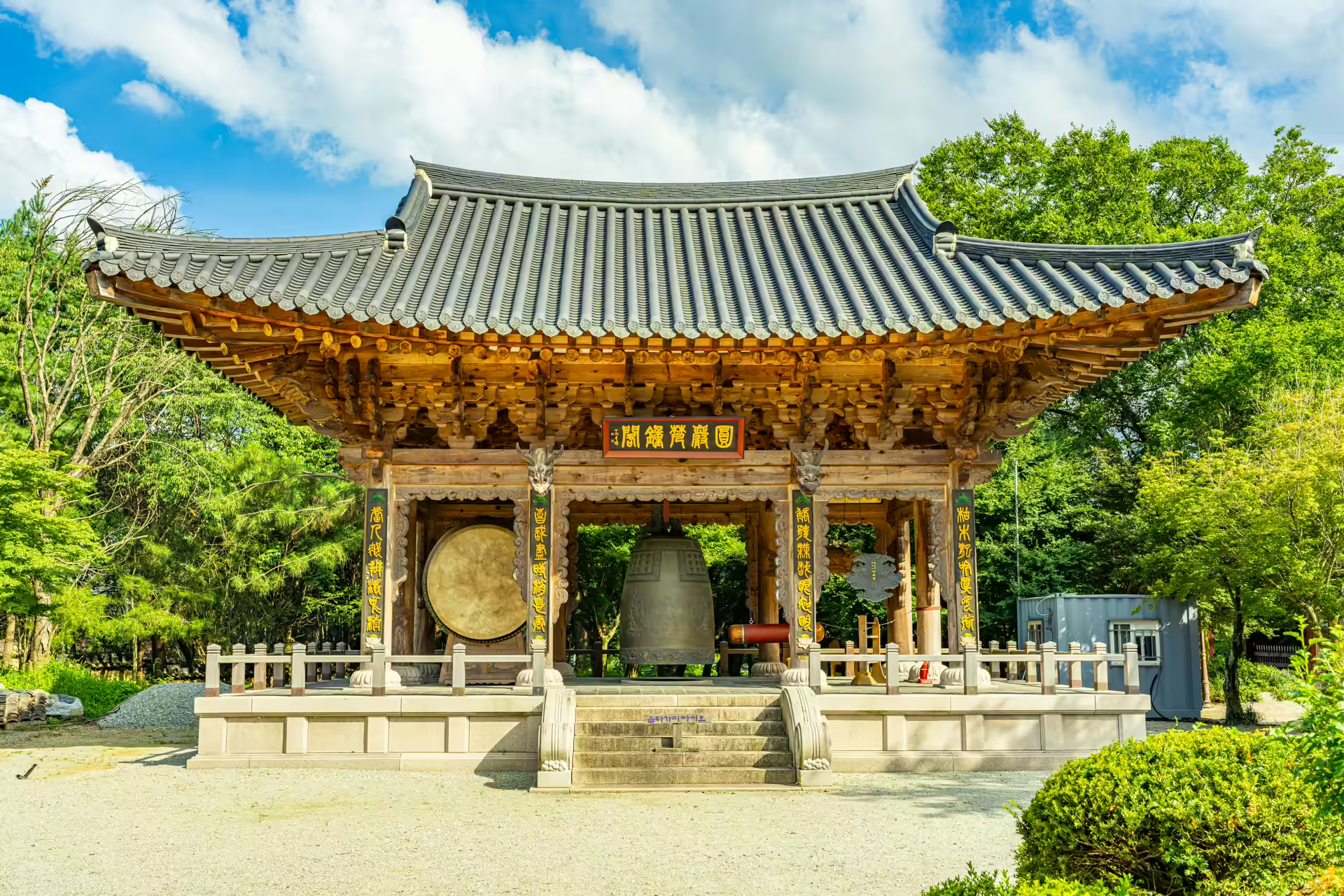
The building that justifies the detour on its own stands in the open courtyard: a two-story bell pavilion laid out in the plan of a plus sign — four gabled wings projecting from a central bay, a bronze bell of 1716 hanging in the middle with drum and cloud-gong flanking it. Architectural historians know it as the only cross-shaped pavilion surviving from the Joseon era, and it earns the singularity honestly: from any diagonal, the roof planes stack and interlock like folded paper. It is the kind of structure you circle three times without deciding on the best side. (The temple’s Treasure count keeps growing, incidentally — a wooden Buddha triad and clay arhats in the Nahanjeon hall were added to the list in 2021, bringing the total to five.)
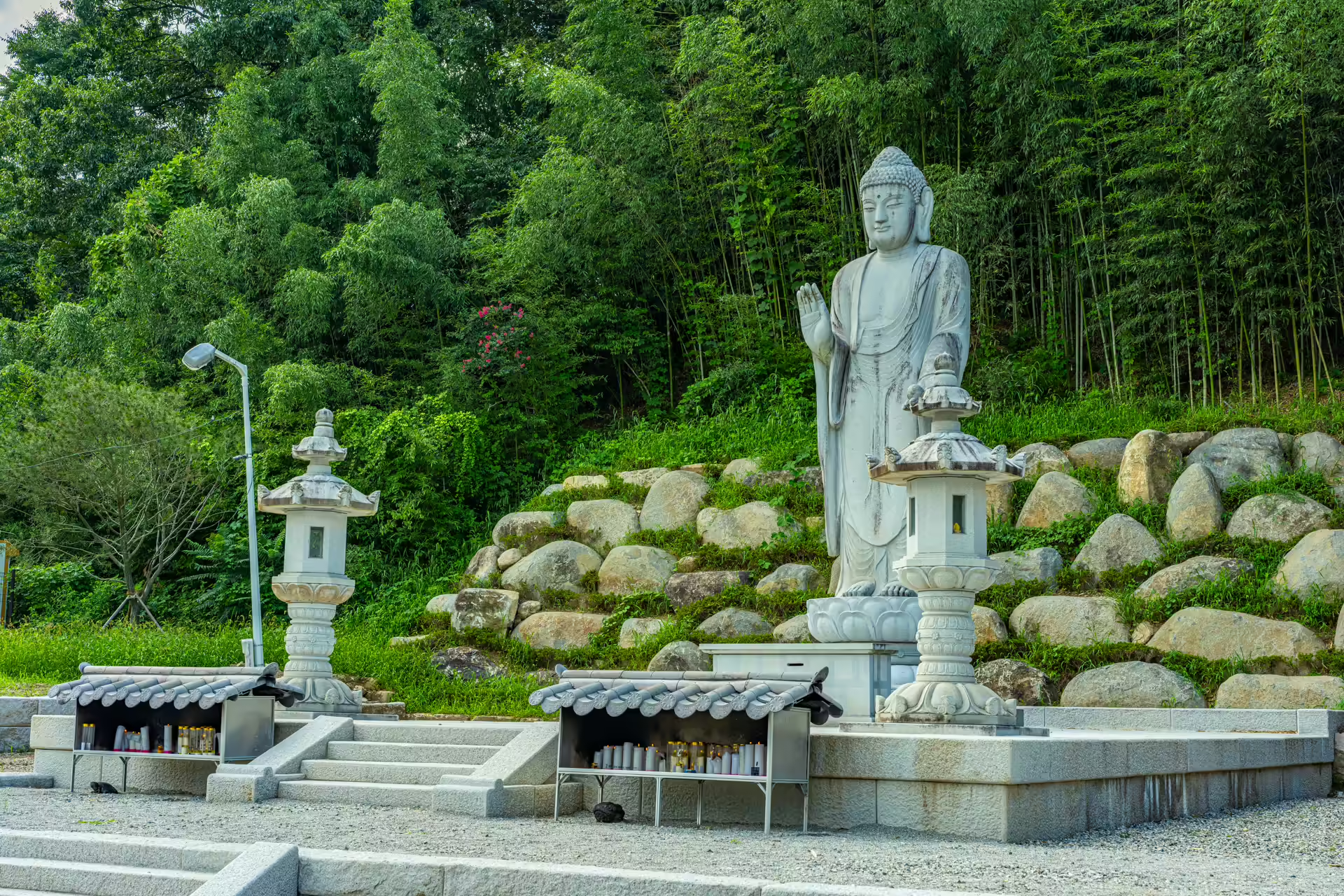
Beyond the architecture, wander loosely. The compound scatters worship halls, a lotus pond by the front gate, white stone Buddhas against a bamboo screen, and a resident cat or two across its flat acreage. The flatness, incidentally, is not laziness but doctrine of a sort: Songgwangsa was laid out as a rare pyeongji garam — a plains temple — planted among the fields it once served rather than withdrawn above them, and the easy relationship with the surrounding farmland still shows at the edges, where temple gravel simply becomes village road. If you have visited Jeondeungsa on Ganghwado, you know the pleasure of a temple that rewards aimlessness; this is the Jeolla edition, minus the fortress walls and most of the crowds.
Templestay and the Paper Connection
Songgwangsa runs a templestay program (day visits and overnight rest-style stays; the English booking portal spells it “Songkwangsa” — a blessing in disguise, since it distinguishes the temple from its Suncheon namesake in searches). Rest-style stays are the low-commitment kind: you keep temple hours loosely, join the dawn bell if you wake for it, and otherwise read, walk, and eat vegetarian meals in a guest room a courtyard away from three of the country’s larger Buddhas. Overnight guests get the compound at the hours it is best — bell at dawn, fog on the flat fields — and guests staying at the hanok village up the road sometimes drop in for the day program between check-outs, a pairing the geography practically arranges for you.
The temple also seeded this valley’s signature craft. Local tradition holds that Songgwangsa’s monks taught paper-making to the surrounding villages, and hanji — Korean mulberry paper — became the area’s livelihood for generations; households grew paper-mulberry in their yards, and the trade only faded in living memory. It reframes the whole valley on the drive out: the hanok village, the paper history, the temple that taught it, all one economy of patient hands. The village end of that story is in my Oseong Hanok Village guide, where a forest interpreter shows you the old charcoal kilns and mulberry patches to prove it.
Who This Is Actually For
Temple enthusiasts who have done the famous circuit and want a heavyweight collection without the pilgrimage crowds — five Treasures on flat ground is an anomaly in Korea. History travelers will get the most from the hostage-princes backstory, and architecture people should come purely for the bell pavilion. The flat layout makes this genuinely the best major-temple option in the region for wheelchair users, strollers, and anyone with bad knees. Skip it if temples have started blurring together for you and only a dramatic mountain setting will reset the palate — for that, Cheoneunsa outside Gurye, with its pavilion over a stream, is the better prescription.
The pitch, stripped of temple-brochure language, is this: five state Treasures, a one-of-a-kind building, a story with real dates and real princes, zero admission, zero stairs, and a parking lot you can actually park in. Put it first on a Wanju morning, before the hanok village wakes up, and you will have covered the valley’s densest hour of history before your first coffee. The other Songgwangsa can keep the fame; this one has the better ratio.
Practical Manual
| Item | Details |
|---|---|
| Name | Songgwangsa Temple, Wanju (완주 송광사) — not Suncheon’s Songgwangsa |
| Address | 255-16 Songgwangsuman-ro, Soyang-myeon, Wanju-gun, Jeonbuk (전북 완주군 소양면 송광수만로 255-16) |
| Hours | Grounds open daylight hours, year-round |
| Admission | Free at the time of reporting · parking free · temple office 063-243-8091 |
| Templestay | Day and overnight programs · 063-241-8090 · English portal |
| Treasures | Daeungjeon hall · cross-shaped bell pavilion · clay Guardian Kings · 1641 clay Buddha triad · Nahanjeon statuary (added 2021) |
| Season note | Cherry-blossom tunnel on the approach road, roughly early April |
| Getting there | 25–30 min by car from Jeonju; combine with Oseong Hanok Village (5 min) and Wibong Falls (10 min) |
Navigation Tip: Search “완주 송광사” in Naver Map or Kakao Map — including “완주” keeps you off the road to Suncheon. Papago beats Google Translate for the hall signboards.