
Six Stops and One Tide Table
I have planned trips around train timetables, museum closing days, and once, regrettably, a parade. Seosan was the first place I planned around the moon. The best thing this city on Korea’s west coast owns is a tidal flat that only exists for a few hours at a time, so a proper Seosan day trip starts with the tide table and fills in everything else around it. Conveniently, “everything else” here is very good: a walled town from the early Joseon dynasty, two old temples with completely different personalities, a hanok estate you may recognize from a K-drama, and the childhood home of a fifteen-year-old girl who married a sixty-six-year-old king.
This guide covers what each stop actually is and what it costs. If you want the hour-by-hour logistics of stringing them together, that deserves its own article; this one is about deciding which of the six deserve your daylight.
Getting to Seosan, and Getting Around
Seosan sits in Chungcheongnam-do, about 130 kilometers southwest of the capital. Express buses leave Seoul’s Central City Terminal for Seosan throughout the day and take just under two hours. By car it is a similar story: the Seohaean Expressway to Seosan IC, roughly two hours from the city center outside of rush hour.
Here is the honest part: once you arrive, you want a car. The six stops below are scattered across five different townships, typically twenty to thirty minutes apart, and the local buses that connect them run on schedules best described as contemplative. Rent a car in Seoul or take the bus down and rely on local taxis — both work, but budget for the taxis.
1. Haemieupseong Fortress: A Walled Town With Its Walls Still On
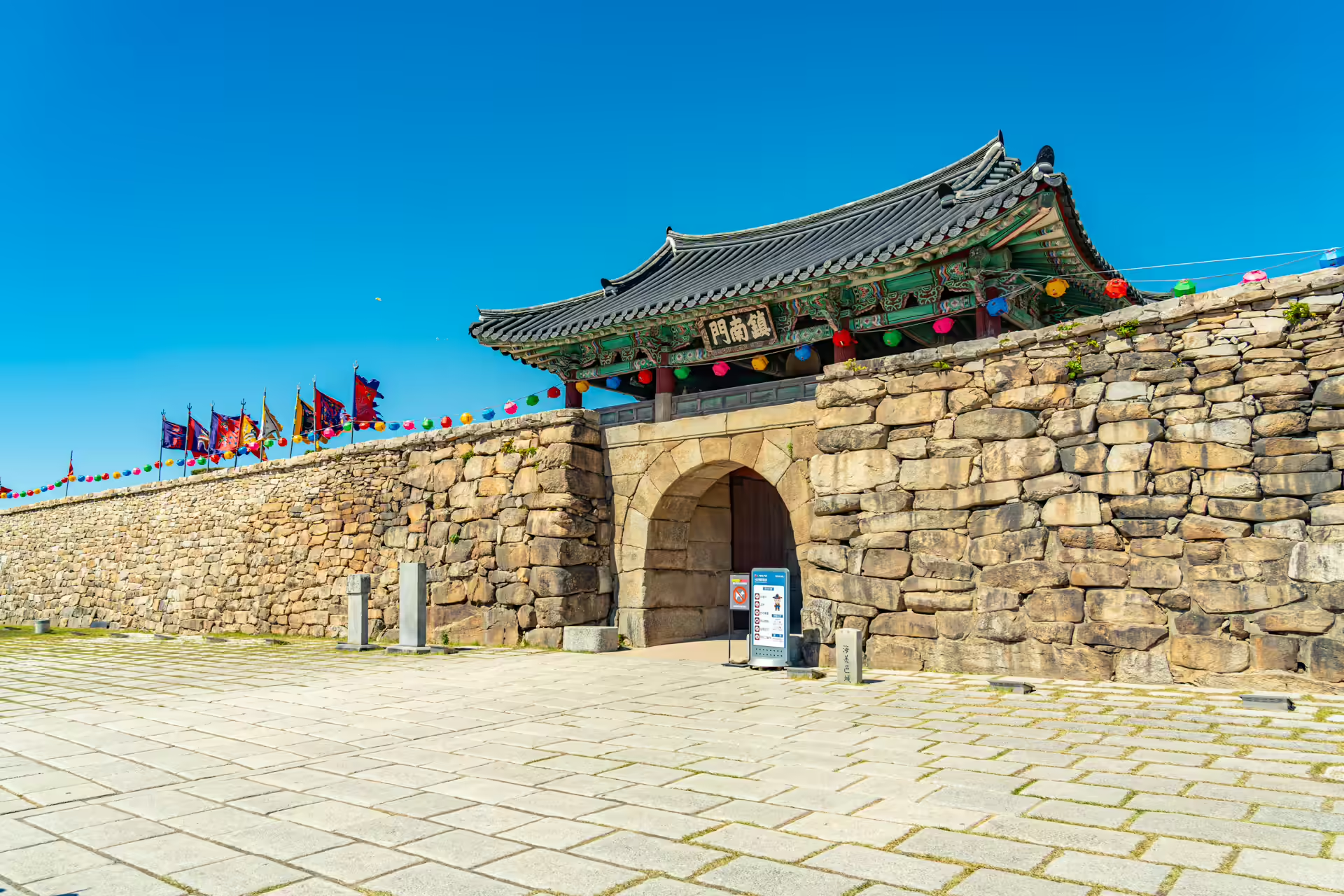
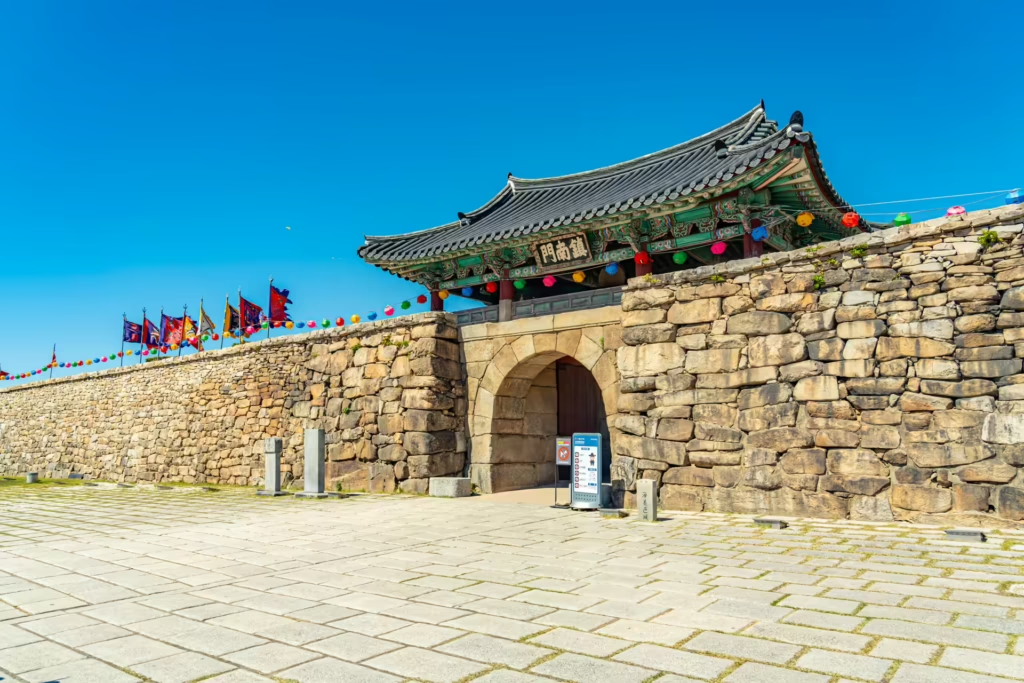
Most Korean county towns were once walled. Almost none of them still are, which is what makes Haemieupseong worth your first hour. The stone circuit here was completed in 1421 and has kept its shape for six centuries, enclosing a broad lawn of a town center with a restored magistrate’s office, a guesthouse, a prison yard, and — the part nobody expects — a pine forest climbing the hill at the back, with a pavilion at the top where I recommend lying down for ten minutes and calling it cultural research.
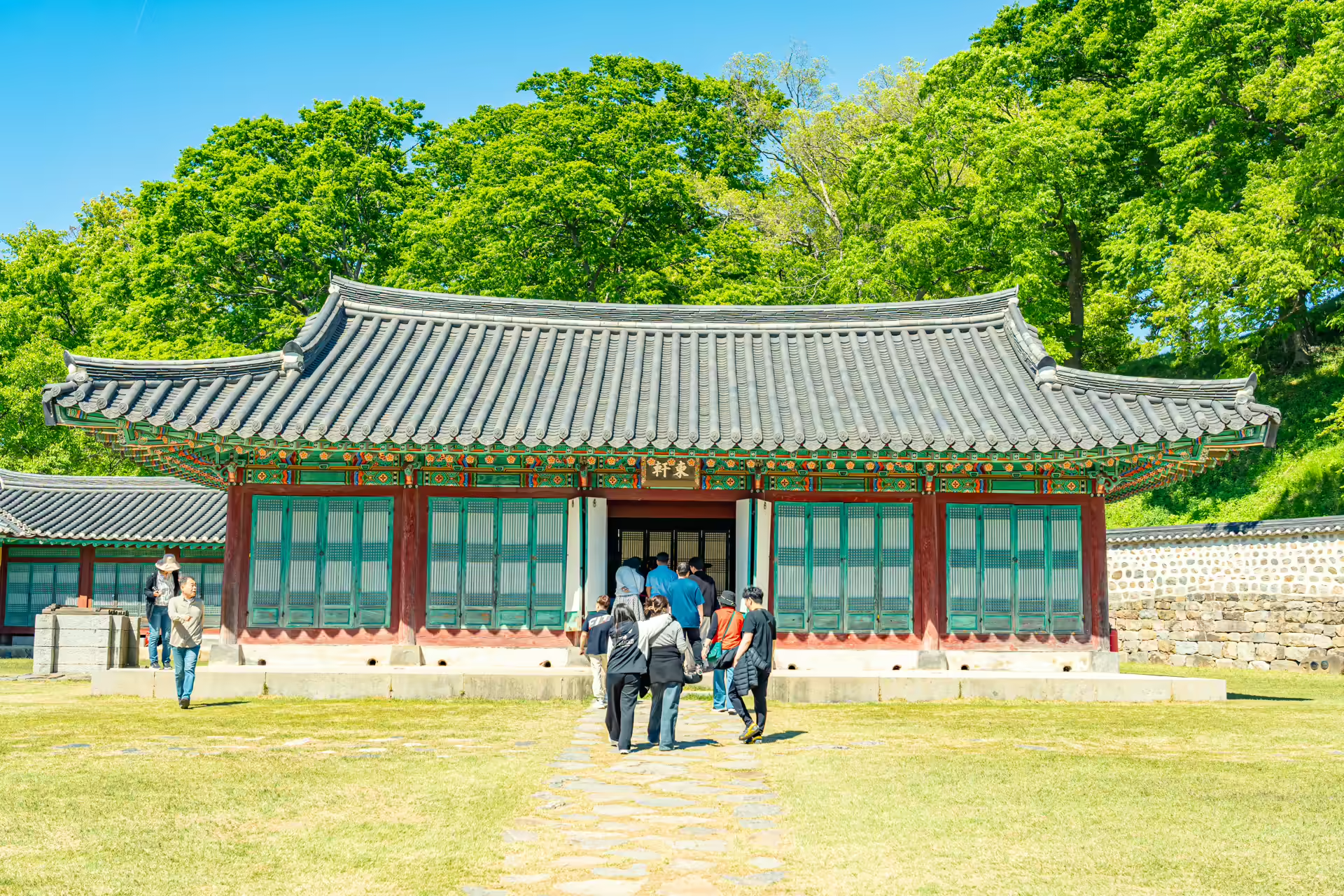
The fortress began as a military headquarters for defending this stretch of coast, and its later history turned dark: in 1866 it was a site of the persecution that killed over a thousand Korean Catholics, and the grounds are now an international pilgrimage destination. Pope Francis visited in August 2014 to close the Asian Youth Day gathering held here. The site wears both identities at once — families flying kites on the same grass where the history happened — and somehow neither cancels the other out.
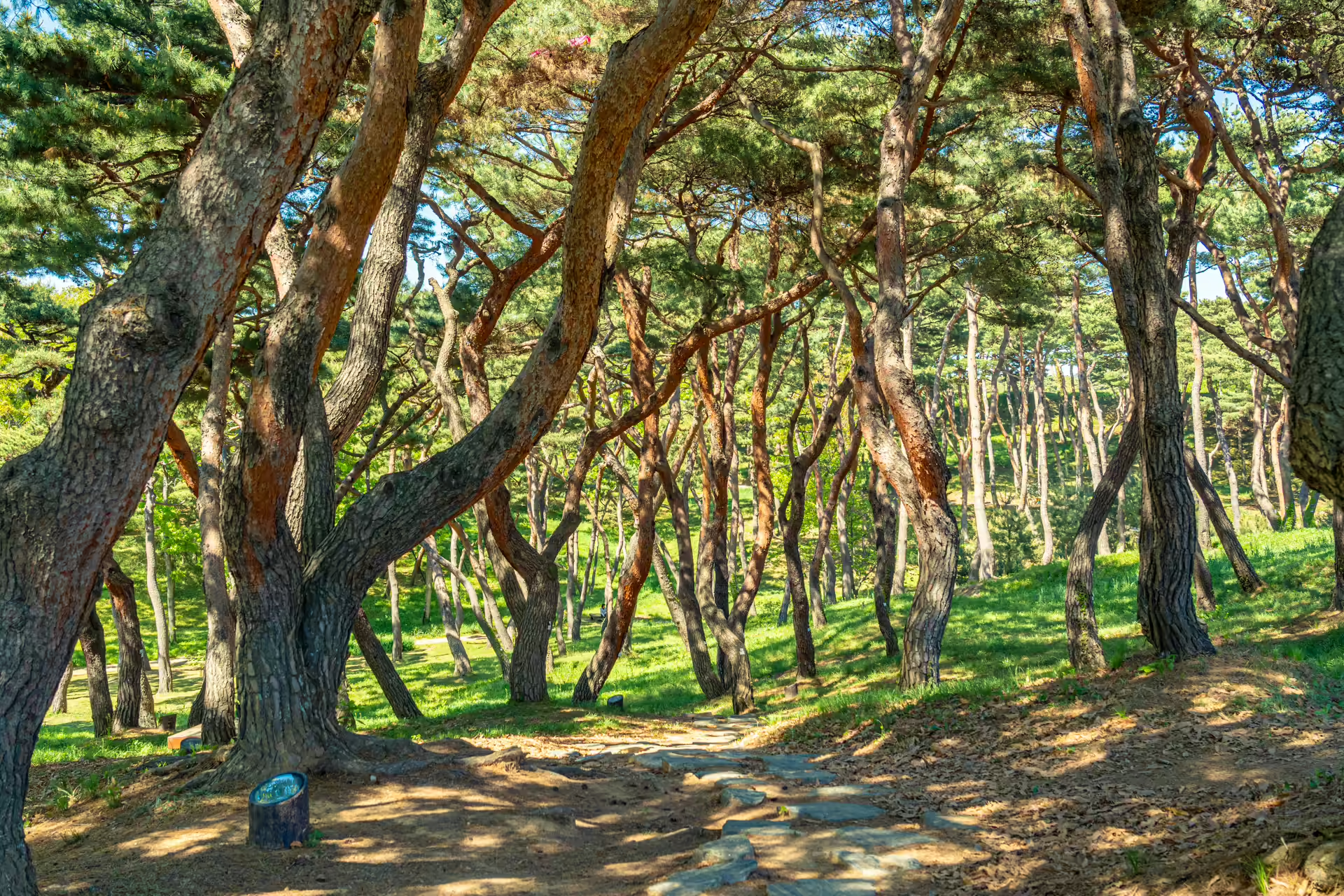
Entry is free, parking is free, and the gates open absurdly early — 5 a.m. in the warm months. If you are the sunrise-walk type, this is your venue.
2. Gaesimsa Temple: Crooked Pillars on a Baekje Foundation
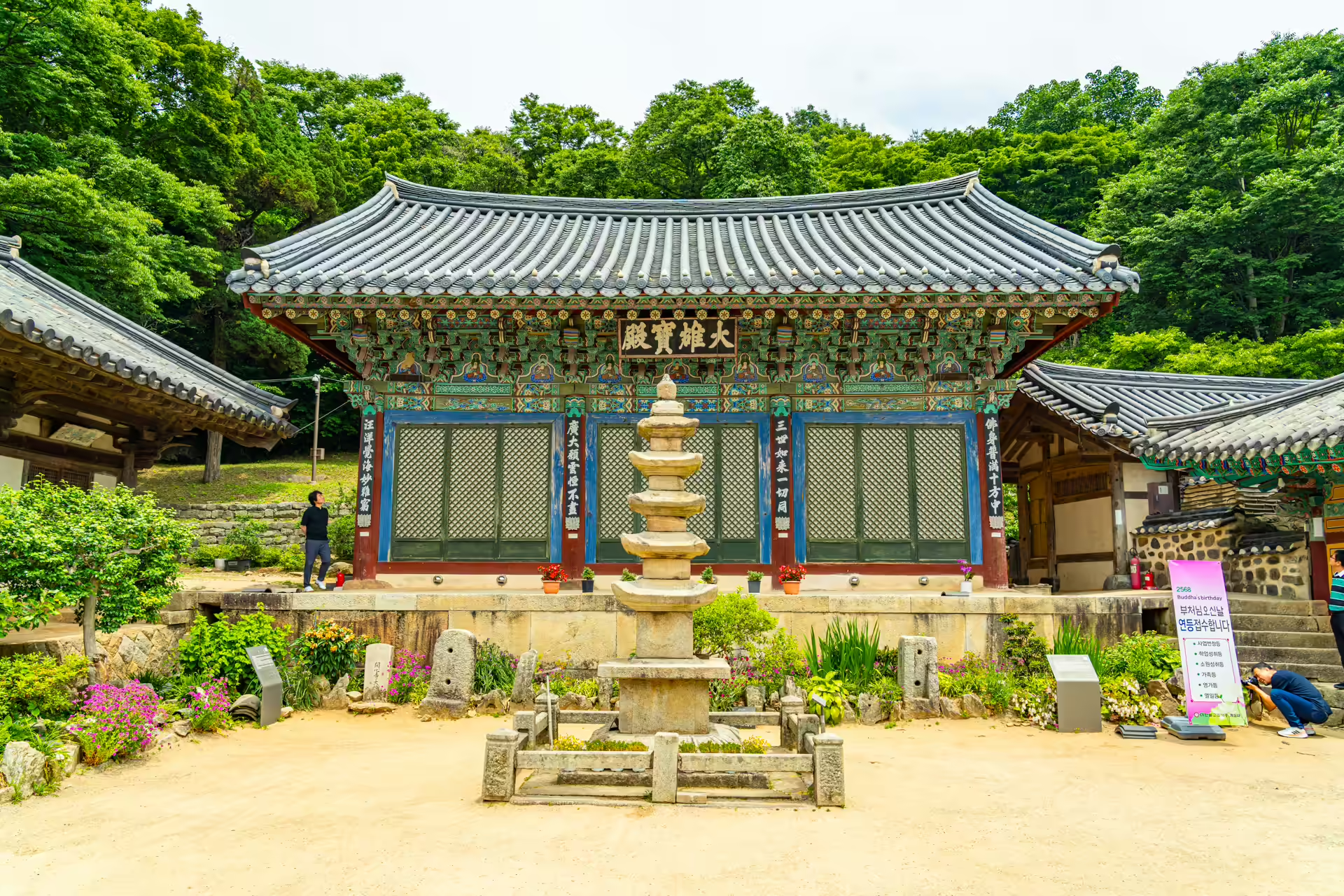
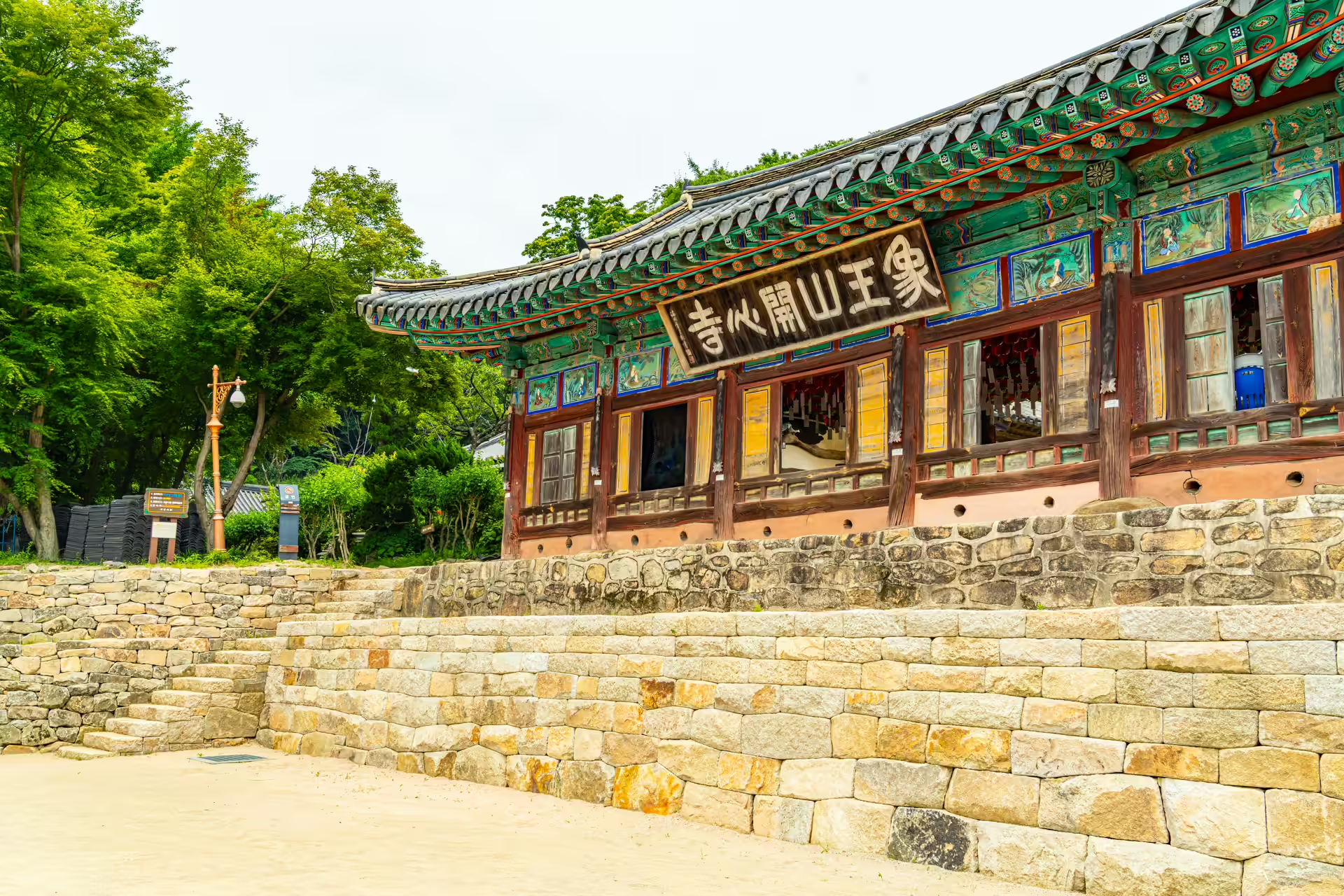
Gaesimsa — the name means something like “the temple that opens the mind” — is said to have been founded in 654, in the last days of the Baekje kingdom, and counts as one of the four great temples of Chungcheongnam-do. The main hall, a designated Treasure, sits on a stone platform attributed to the Baekje era with a Joseon-dynasty building on top: two kingdoms stacked in one structure, roughly eight centuries apart.
What I actually love here is less official. The pillars of Simgeomdang, the hall beside the main courtyard, were cut from trees that grew crooked and were installed crooked, bark-line curves and all. Whoever built it decided the timber knew best. The approach is equally casual: a log bridge crosses the rectangular lotus pond in front of the temple, and in late April the grounds produce their famous party trick — cherry blossoms with a greenish tint, billed as the only green-blossomed cherry academically recorded in Korea, blooming a couple of weeks after the rest of the country’s petals have already fallen.
Entry and parking are free here too. If free-entry temples are becoming your travel theme, Jeondeungsa on Ganghwa Island makes a good northern counterpart — older foundation legend, similar refusal to charge you for it.
3. Yugibang House: A 1919 Estate, With or Without the Daffodils
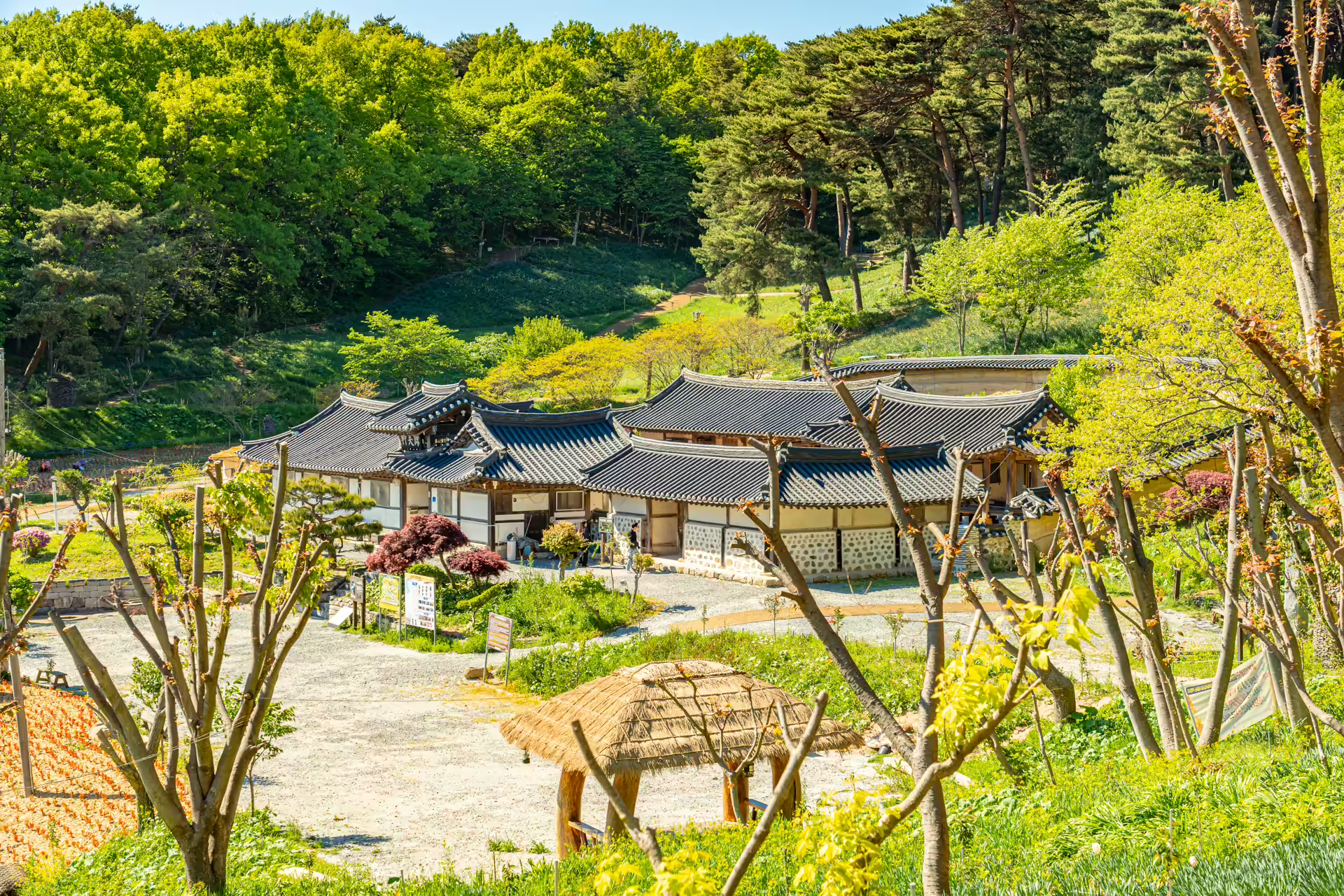
Yugibang House is a gentry hanok built in 1919, designated as folk cultural heritage of Chungcheongnam-do, and nationally famous for exactly six weeks a year: in March and April the hillside around it turns solid yellow with daffodils, and the crowds arrive by the busload. Korean drama viewers may also recognize it — it played the residence of a royal court minister in the 2018 series Mr. Sunshine.
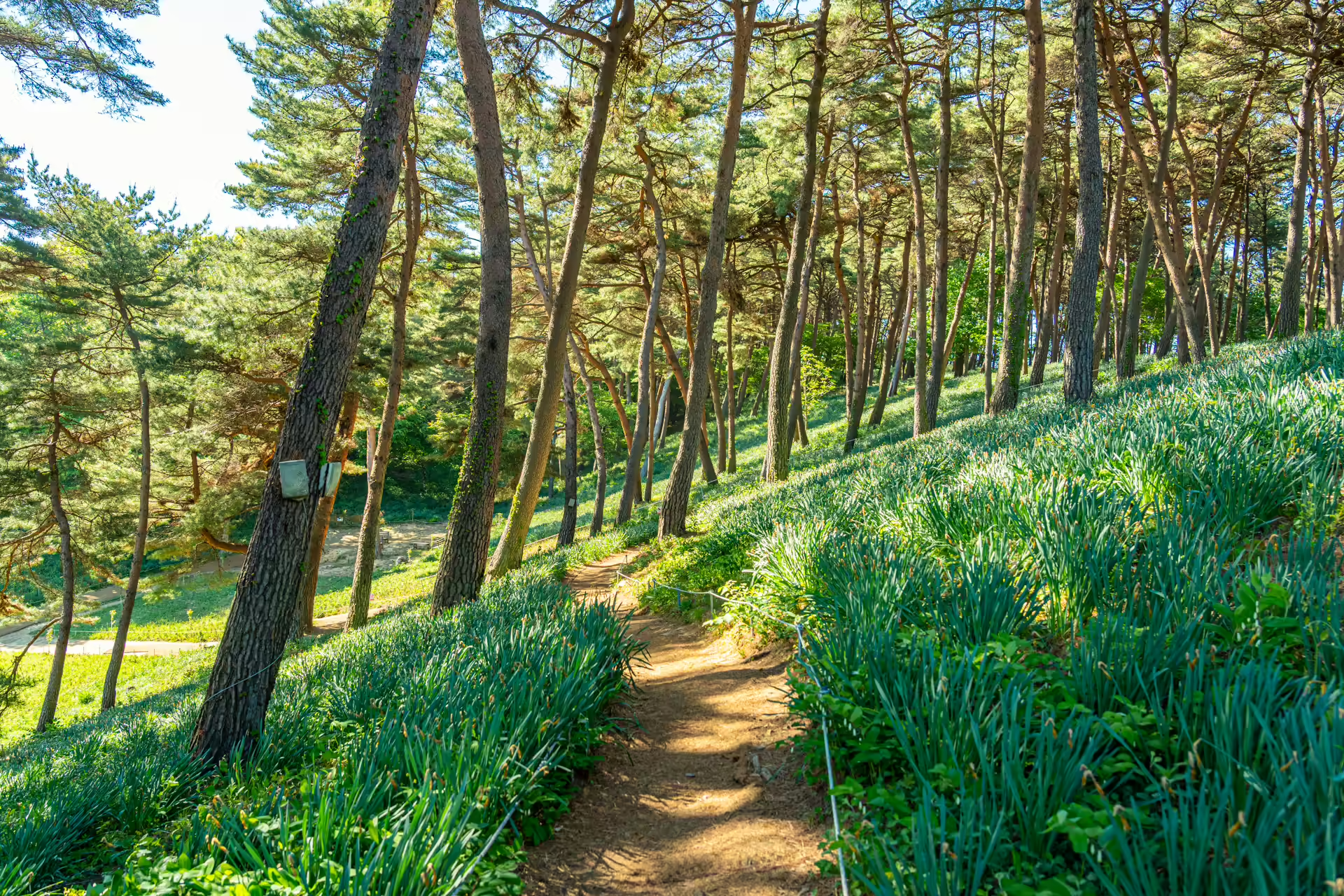
I visited after the daffodils had finished, which I would argue is the better deal. The flowers are gone but so are the buses, and what remains is the house itself: buildings arranged around a courtyard in the squared-off plan typical of the region’s old estates, an open wooden maru floor you can sit on, and a pine forest trail on the ridge behind the house where the daffodil leaves lie green under the trees, quietly rehearsing for next spring.
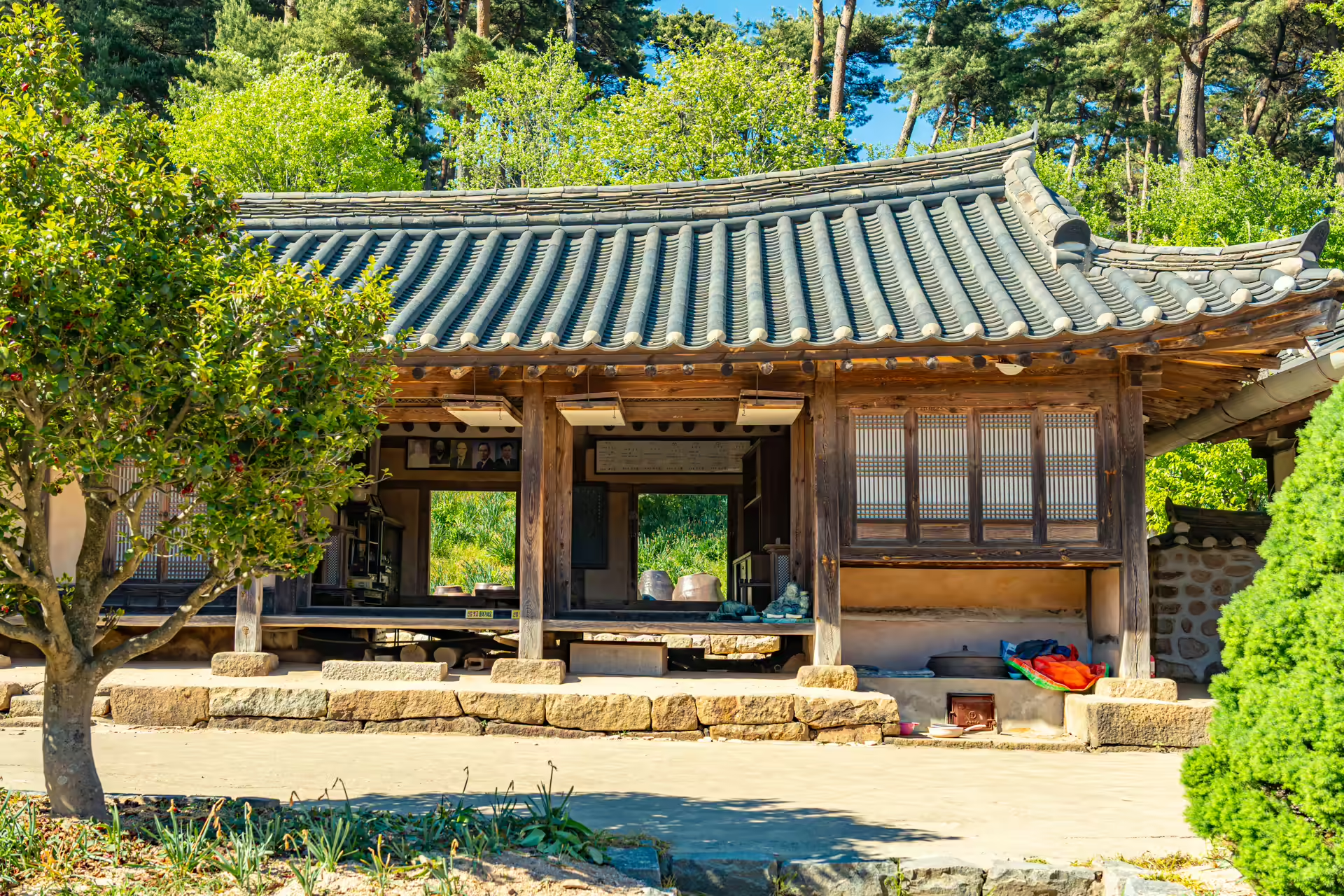
The house opens 08:00 to 18:00 daily. Admission follows a posted rate card: 8,000 won for adults on weekdays, 9,000 won on weekends and holidays, 7,000–8,000 won for ages 3 to 18, and free under 36 months, with a thousand or two shaved off for residents of Chungcheong and nearby regions. That makes it one of only two stops on this list that charge at all — the clam flats being the other — and the only one where the ticket keeps a century-old private estate standing.
4. The Birthplace of Queen Jeongsun: Where a Fifteen-Year-Old Left for the Palace
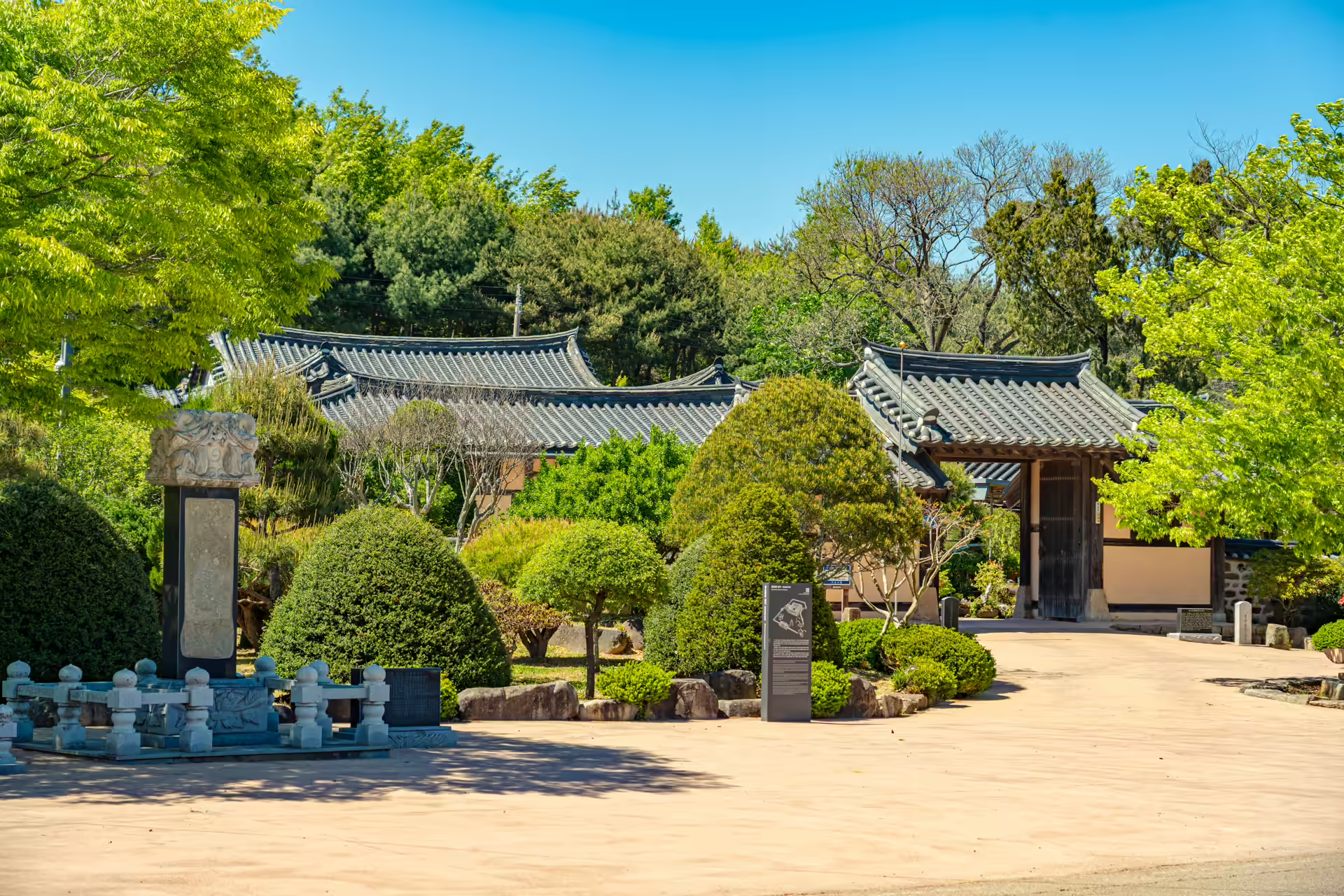
In 1759, King Yeongjo — then sixty-six years old — needed a new queen, and the selection process landed on a fifteen-year-old girl from a scholarly family in Seosan. She left this house, became Queen Jeongsun, outlived the king by decades, and ended up one of the more politically consequential women of the late Joseon era. The house she grew up in still stands in Eumam-myeon: sarangchae and anchae facing each other around an inner courtyard in a squared plan that is rare for this region, with a zelkova tree out front that is roughly three hundred years old, meaning it was already substantial when she was a child underneath it.
Two practical notes. First, it is free, nominally open 09:00 to 18:00. Second — and this is the charming part — it is still a private home. Descendants of the household live here, and you may look around only when the gate is open. If it is shut, that is not a closure notice; it is somebody’s afternoon. The etiquette is to treat the visit as entering an occupied house, because it is one.
5. Buseoksa Temple: A Sea View and an International Court Case
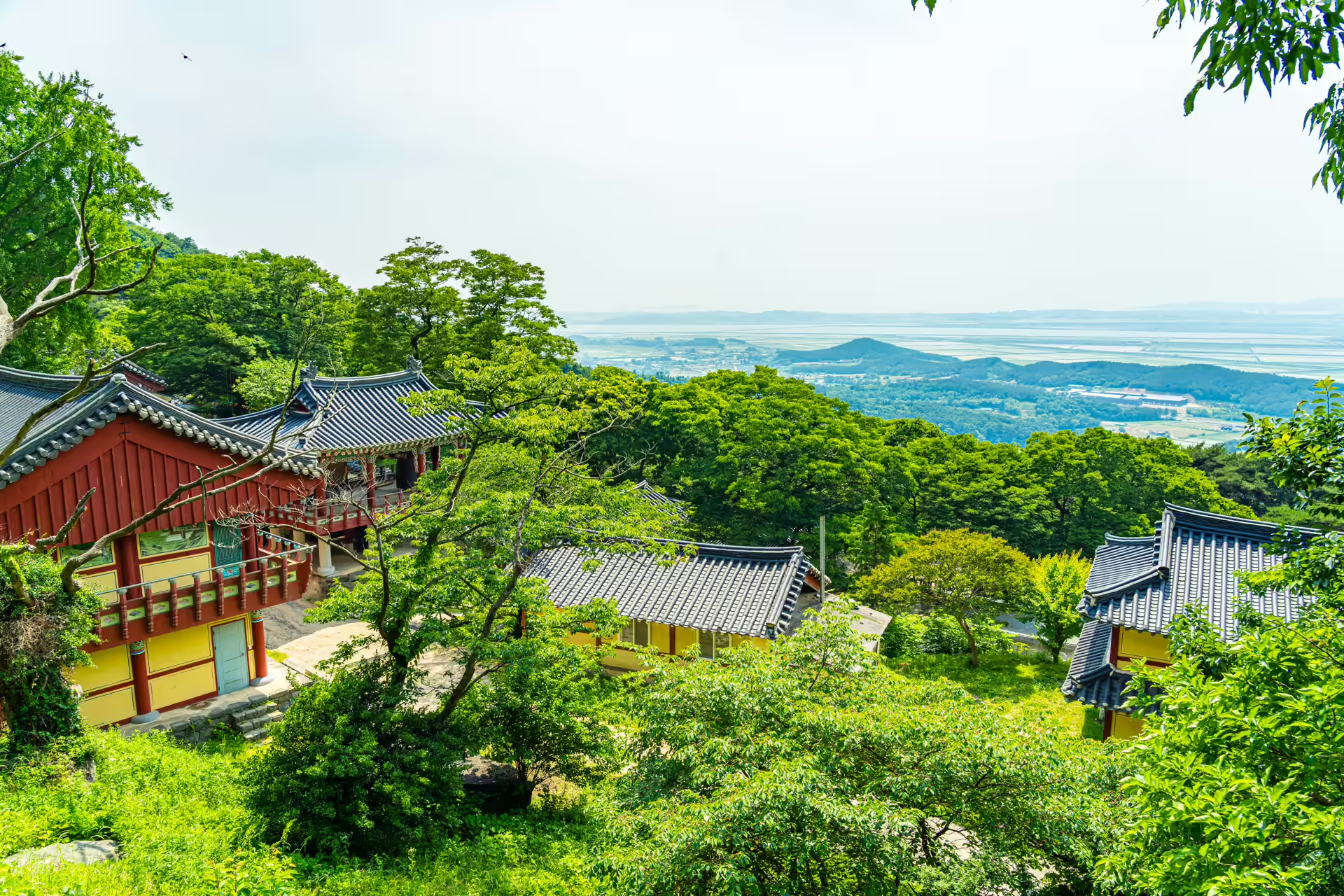
Korea has two temples named Buseoksa, and the famous one is in Yeongju. Seosan’s version, halfway up Dobisan Mountain, is said to date to 677 and comes with its own founding legend: a woman named Seonmyo, in love with the founding monk Uisang, floated a great rock into the air to scare off the locals obstructing his construction project. Affection expresses itself differently in legends.
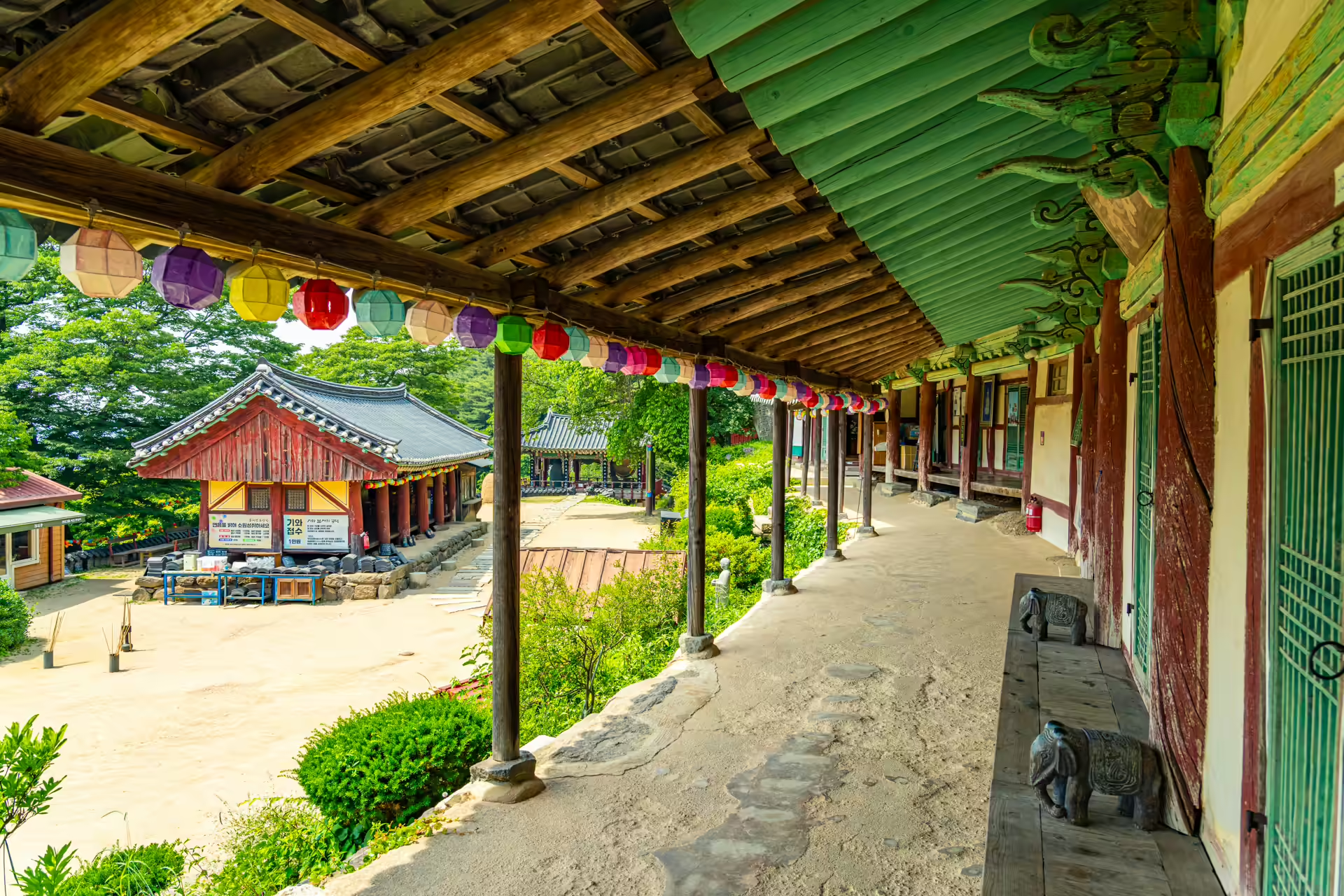
The temple is small, quiet, and arranged along the mountainside rather than flattened into it, with a Joseon-era wooden Amitabha statue in the main hall and a pavilion view that runs over the temple roofs, across the plains, and out to the West Sea. Behind the halls, a path continues to a meditation grotto and a modern rock-carved Buddha.
Buseoksa also spent the last decade in the news for reasons no temple would choose. A gilt-bronze bodhisattva statue made here in 1330 — and, the monks maintain, looted by pirates in the late fourteenth century — surfaced in 2012 when Korean thieves stole it from the Japanese temple on Tsushima Island that had kept it for centuries. A dozen years of litigation followed, and in 2023 Korea’s Supreme Court ruled the statue belonged to the Japanese temple. After a hundred-day farewell viewing at Buseoksa, it went back to Tsushima in May 2025. The story is worth knowing before you visit; the emptiness where a six-century grudge used to sit is its own kind of exhibit.
6. Jungni Fishing Village: The Reason You Checked the Tide Table
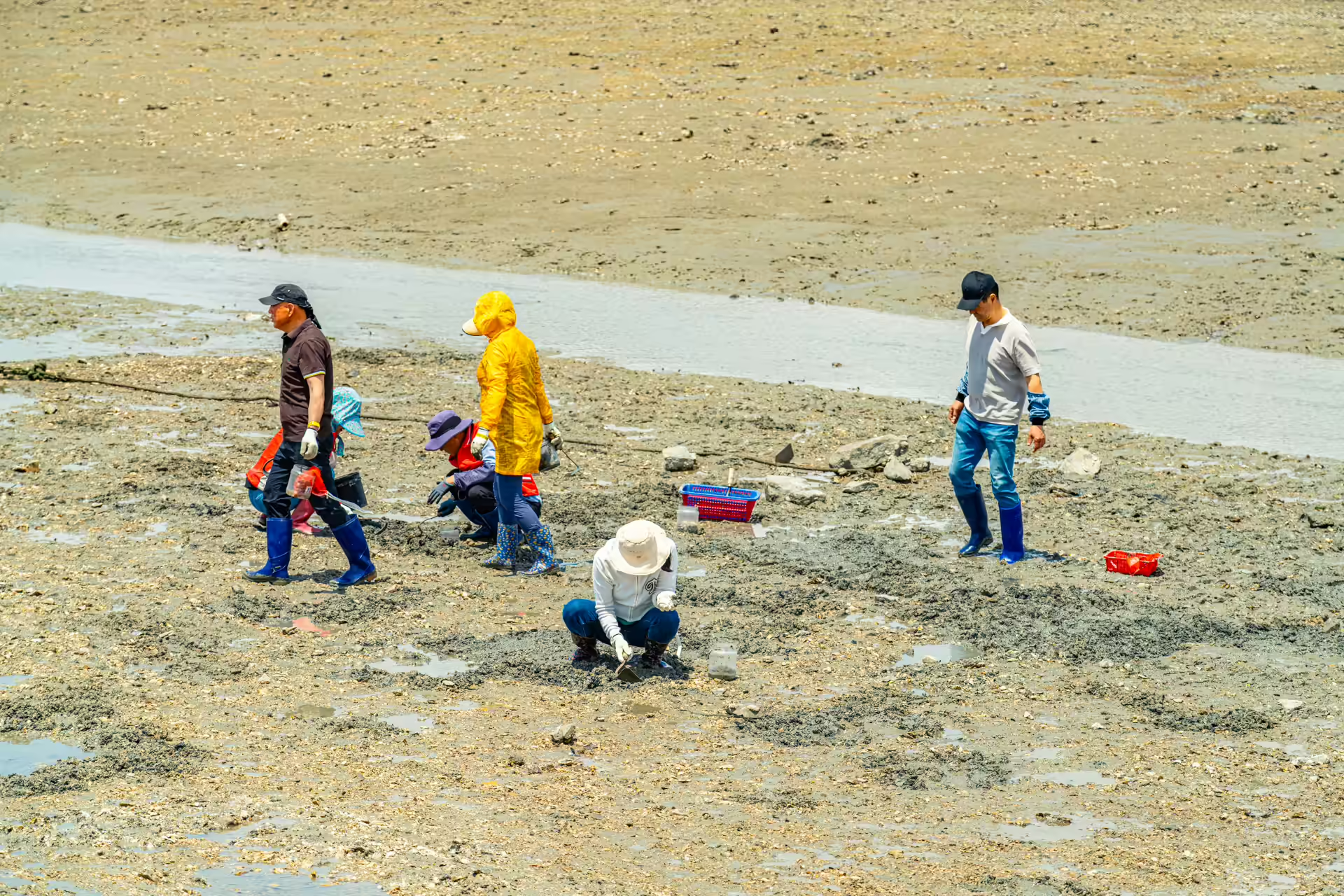
And here is the stop the moon controls. On Garorim Bay — the jar-shaped inlet between Seosan and Taean that holds one of Korea’s largest tidal flats — the residents of Jungwang-ri run a village program where anyone with 10,000 won and a hoe can spend low tide digging their own two-kilogram bag of Manila clams, from March through November. There is a tractor-pulled tin-can train to the flats, a seaweed the village puts into chocolate and noodles, and a rainbow-colored octopus statue whose explanation I will save.
It is easily the most fun I had in Seosan, and it needs more space than a listicle entry allows — the fees, the tide-table rule, where to wash your haul, and the two side trips worth adding. I have written the full guide separately: Clam Digging in Korea: Jungni Village on Garorim Bay. If you take one thing from this section, take this: check the village’s tide chart before you fix your schedule, because the mud flat does not negotiate.
Who This Is Actually For
This day trip suits travelers who like their sightseeing mixed — a fortress, two temples, a lived-in hanok, and mud under the fingernails, all in one loop — and anyone burned out on itineraries where every stop charges 15,000 won, because four of these six cost nothing at all. Families do well here: the fortress lawn and the clam flats are two of the most child-proof attractions in the province.
It suits nobody without wheels. If your Korea trip is trains-and-subways only, Seosan will punish the assumption; come by bus, but budget for taxis between stops. And if you want every stop at its photogenic peak, note the calendar conflict — the daffodils and green cherry blossoms bloom in spring, while the mud flat is at its family-season best in the warm months. You cannot collect them all in one visit, which I suspect is how Seosan retains repeat customers.
I left Seosan with mud still on one shoe and the tide table still open on my phone. Six stops; the flat is the one that will bring me back.
Practical Manual: Seosan Day Trip
| Haemieupseong Fortress | 143 Nammun 2-ro, Haemi-myeon, Seosan (충남 서산시 해미면 남문2로 143) · Free, parking free · Mar–Oct 05:00–21:00, Nov–Feb 06:00–19:00, no closing days |
| Gaesimsa Temple | 321-86 Gaesimsa-ro, Unsan-myeon, Seosan (충남 서산시 운산면 개심사로 321-86) · Free entry and parking |
| Yugibang House | 72-10 Imunan-gil, Unsan-myeon, Seosan (충남 서산시 운산면 이문안길 72-10) · Daily 08:00–18:00 · Adults ₩8,000 weekdays / ₩9,000 weekends; ages 3–18 ₩7,000–8,000; under 36 months free |
| Queen Jeongsun Birthplace | 39 Handari-gil, Eumam-myeon, Seosan (충남 서산시 음암면 한다리길 39) · Free, 09:00–18:00 · Private residence: enter only when the gate is open |
| Buseoksa Temple | 243 Buseoksa-gil, Buseok-myeon, Seosan (충남 서산시 부석면 부석사길 243) · Free |
| Jungni Fishing Village | 66 Eoreumdeul 2-gil, Jigok-myeon, Seosan (충남 서산시 지곡면 어름들2길 66) · Clam digging Mar–Nov, ₩10,000 (see full guide) · +82-41-665-9498 |
| From Seoul | Express bus from Central City Terminal, about 1 hr 50 min; by car ~2 hrs via Seohaean Expressway, Seosan IC |
| Navigation Tip | Google Maps does not give driving directions in Korea. Use Naver Map and search the Korean names above. Papago covers the rest — outside the fortress, English signage thins out fast. |
Fees and hours reflect reporting as of August 2026. Spring flower-season crowds and prices are their own weather system — check ahead if you visit in March or April.