
Dosim Dawon and the Oldest Tea Address in Korea
Korean tea has an exact birthplace, and it is not a marketing invention. The Samguk Sagi, the twelfth-century history of the Three Kingdoms, records that in 828 CE an envoy named Kim Dae-ryeom returned from Tang China with tea seeds, and that the king ordered them planted on the warm southern slopes of Jirisan. The valley in question is Hwagae, in Hadong — and the tea never left. Twelve hundred years later the same slopes are still covered in tea, much of it growing half-wild out of rock and gravel, and in 2017 the FAO listed Hadong’s traditional tea agriculture as a Globally Important Agricultural Heritage System.
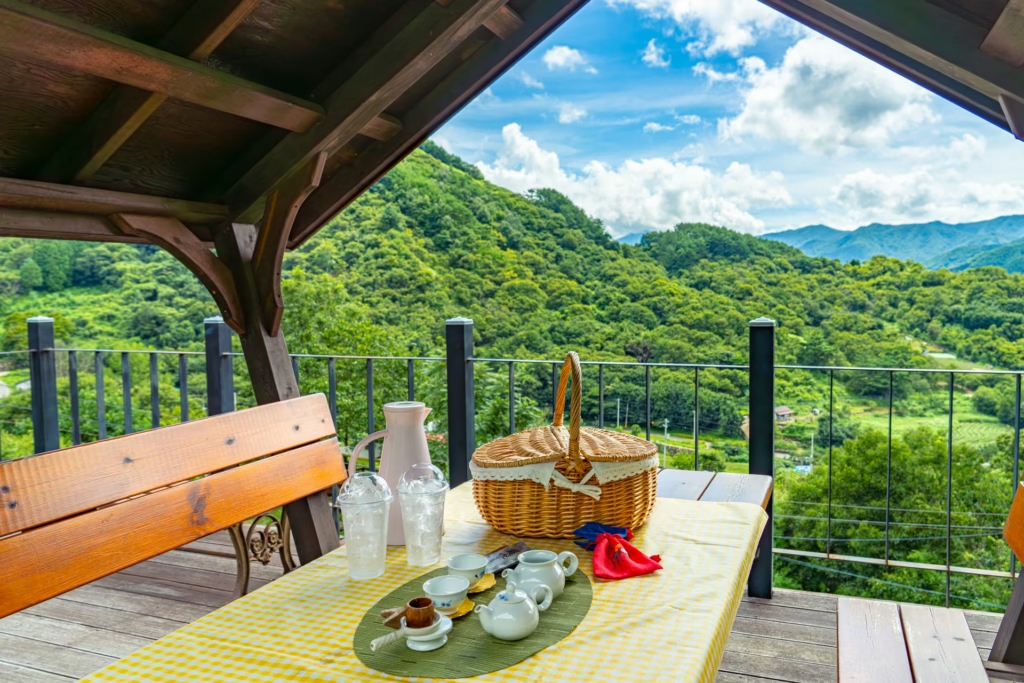
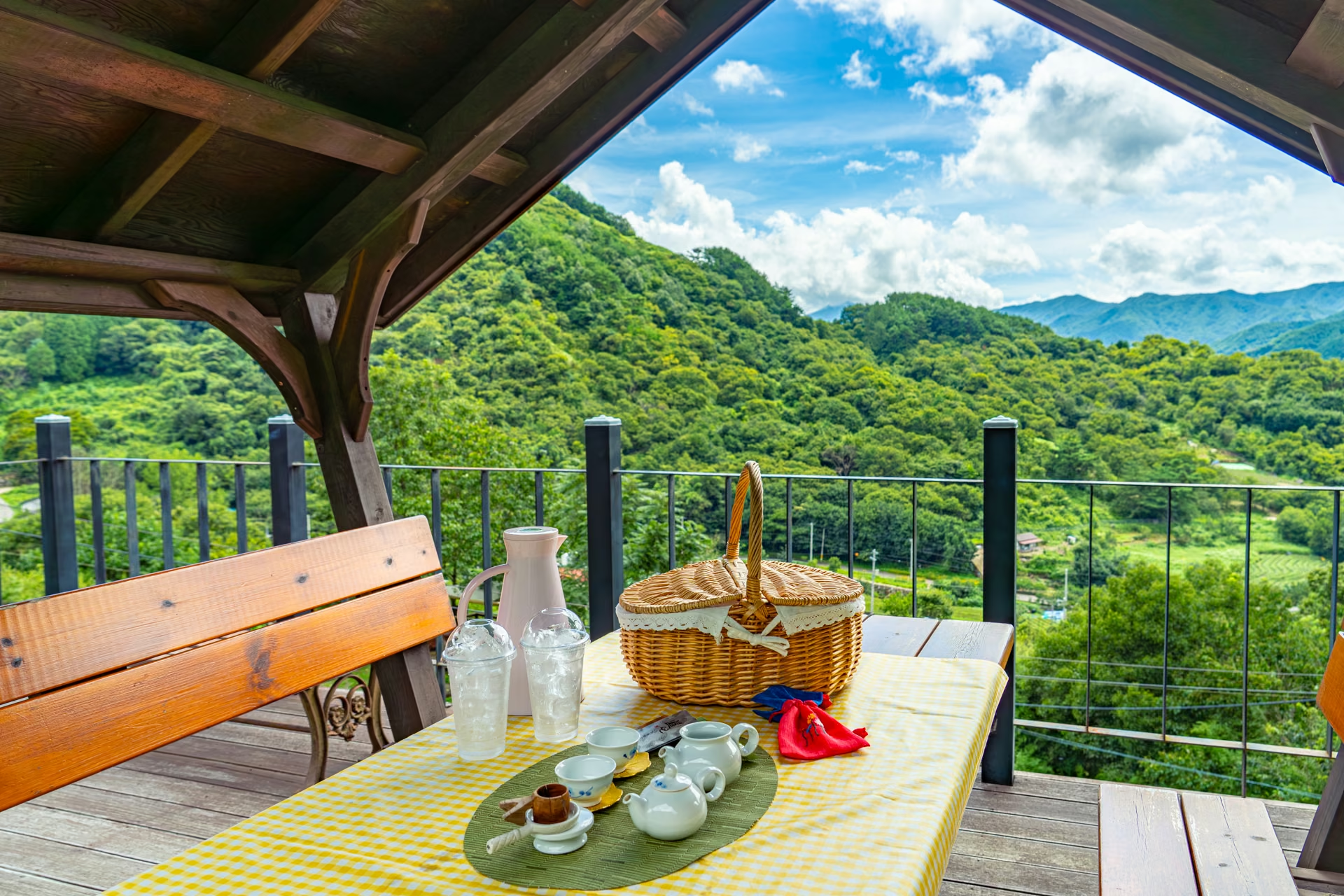
Dosim Dawon farms the steep heart of this valley, and the same family has been doing it for seven generations. They grow only the native tea that seeded itself here — no imported cultivars — and finish their leaves the old way, roasted by hand in iron kettles at around 350 degrees Celsius. You can buy their tea, obviously. But the reason to come in person is simpler: they will hand you a wicker basket and let you drink it in a pavilion perched over the tea fields, with the whole green amphitheater of Hwagae below your feet.
Getting There
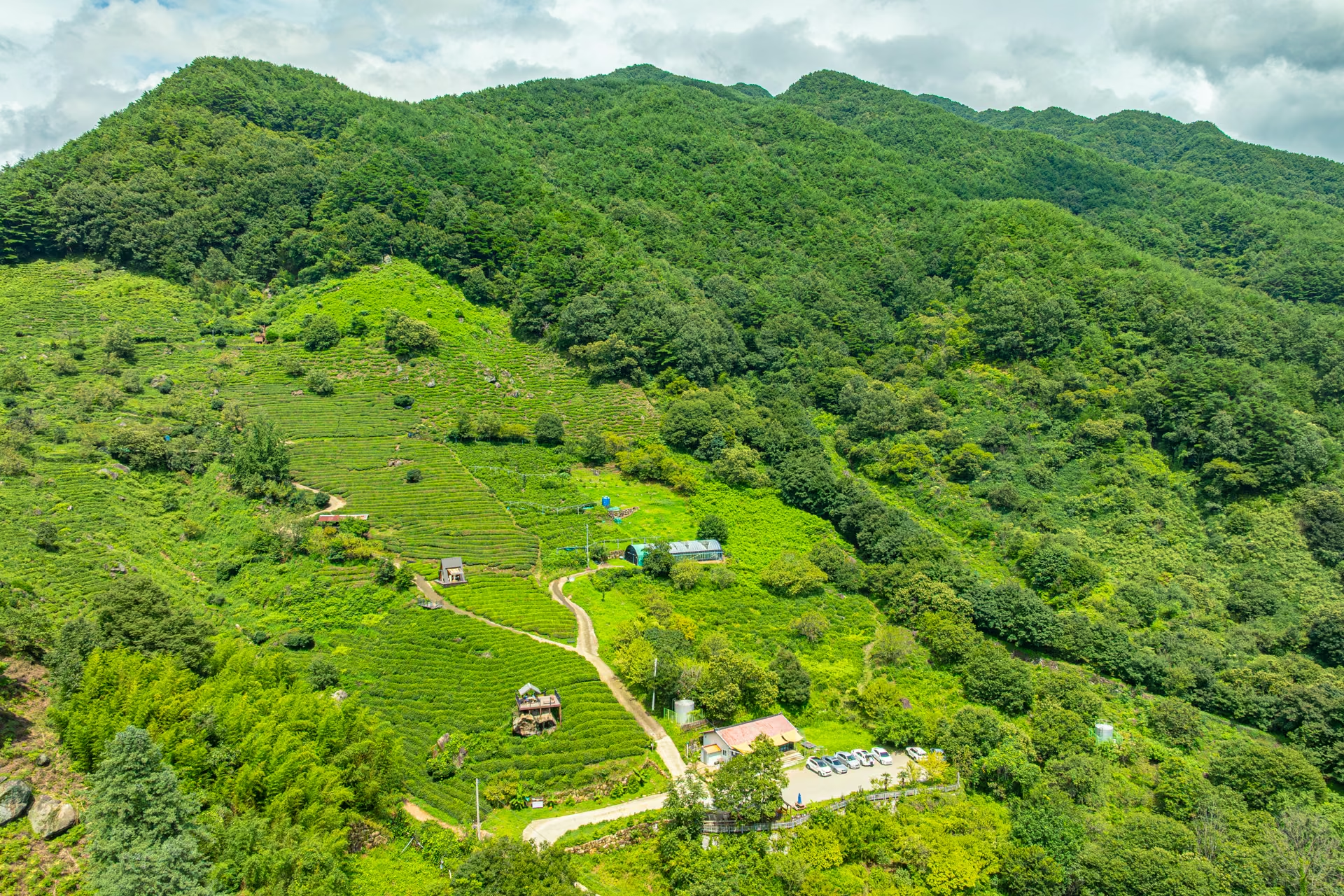
Dosim Dawon sits above Jeonggeum-ri in Hwagae-myeon, up a narrow concrete lane that will test your nerve and your side mirrors. From the Hwagae market junction — the one every visitor passes on the way to the Simni cherry blossom road — it is under ten minutes by car. From Seoul, count on four hours; the sane approach is to build it into a Hadong day rather than treat it as a destination on its own.
Without a car: intercity bus to Hadong Terminal, then the Hwagae-bound county bus, then a taxi from Hwagae for the last climb. It works, but check return times obsessively.
Arrival sets the tone. The lane ends at a farmhouse compound where drying racks, tea sacks and the family’s actual laundry share space with the visitor parking, and someone — usually whichever generation is nearest the door — points you toward your pavilion. There is no reception desk, no signage system, no gift shop funnel. The commercial layer here is one basket deep, and everything else is a farm going about its August: pruning, weeding, and keeping an eye on the sky. If that sounds underwhelming, this is not your stop; if it sounds like the whole reason to come, it is.
Why Hadong Tea Looks Nothing Like the Postcards
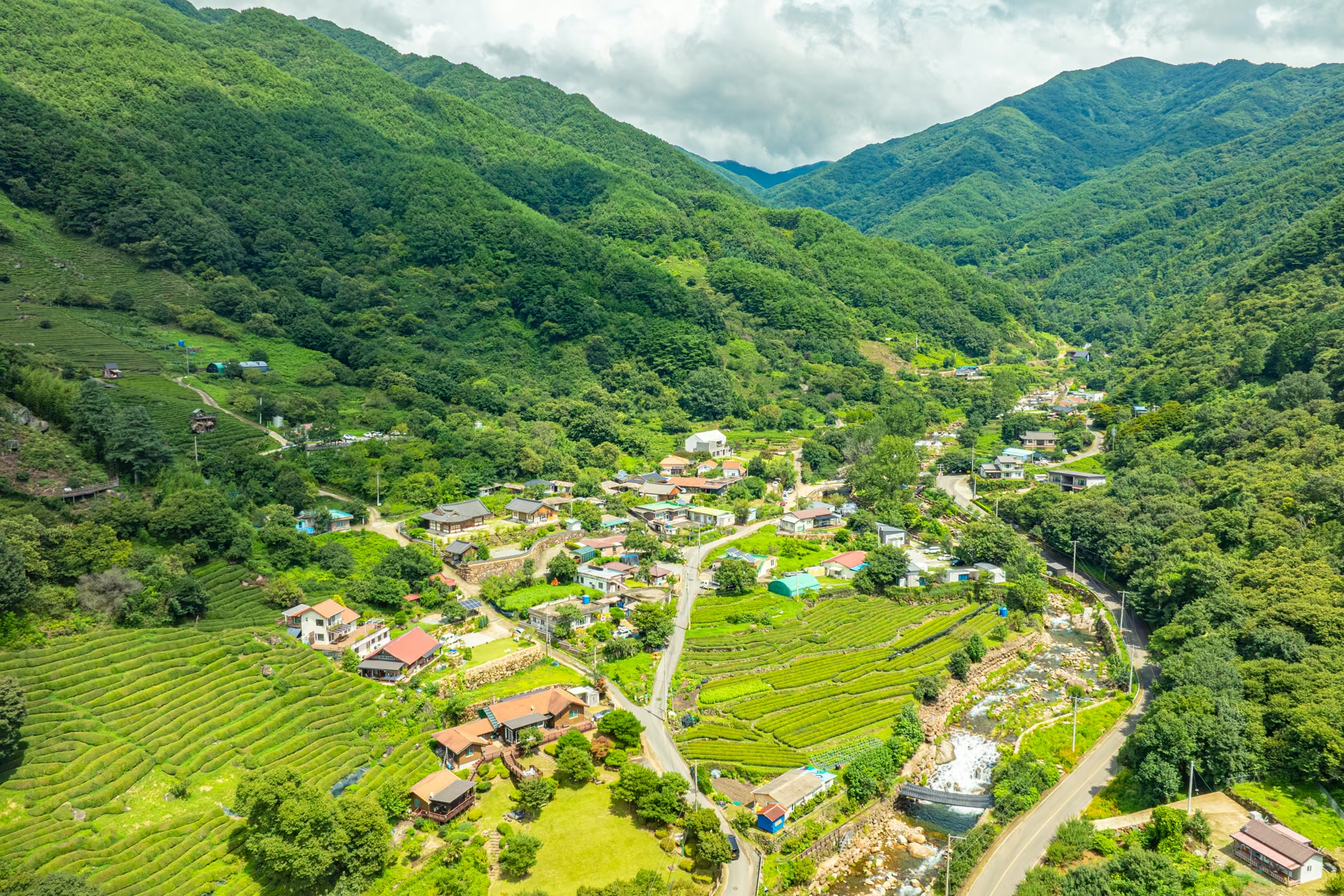
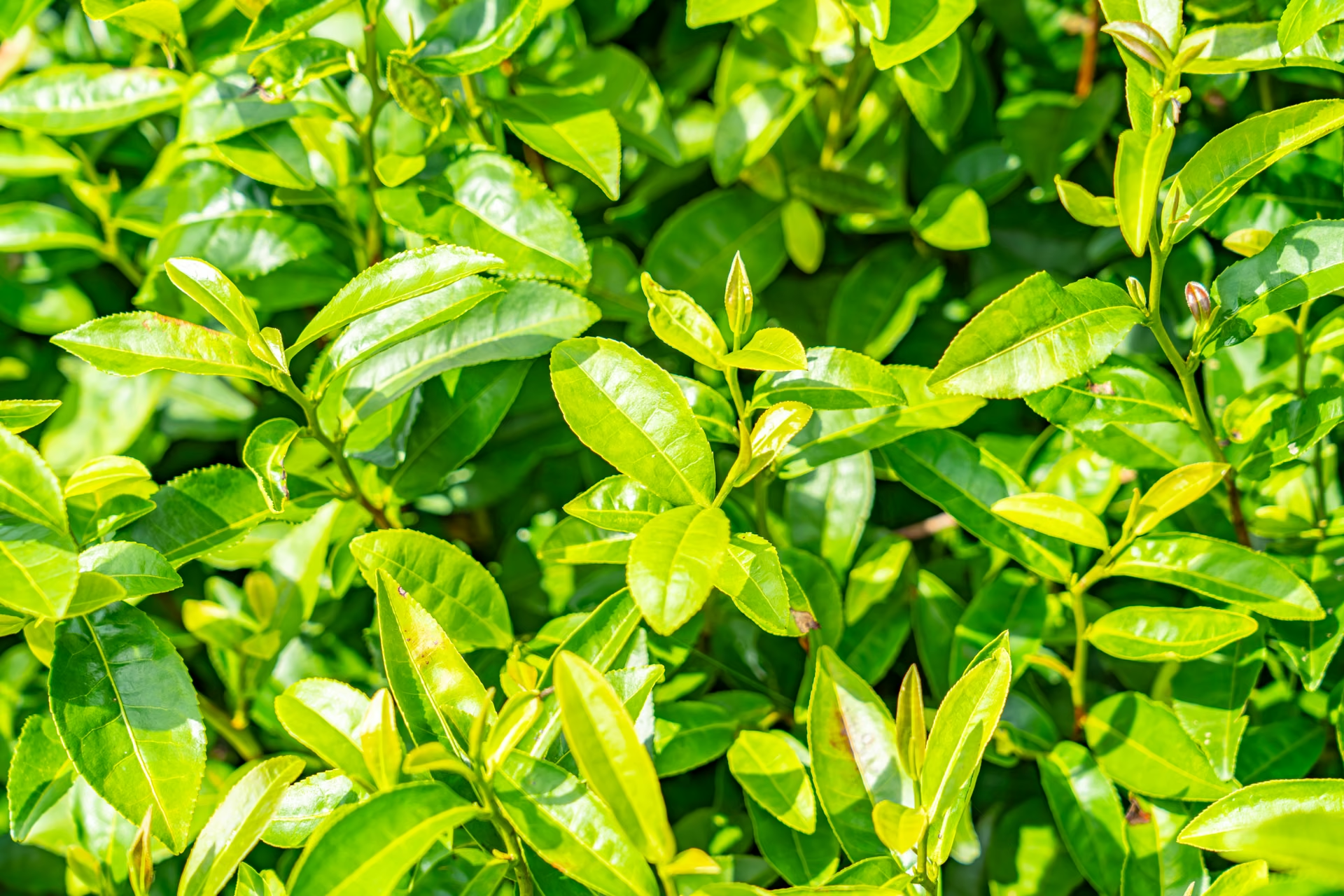
If your mental image of a Korean tea field comes from Boseong — those combed, corduroy hillsides — recalibrate before you arrive. Hadong’s tea does not grow in ornamental rows. It grows where it wants: wedged between boulders, spilling down forty-degree slopes, interrupted by bamboo and persimmon trees. Fog rolls up the valley off the Seomjin River and moderates the sun; the soil is coarse and gravelly; days are hot and nights are cool. Tea people compare the terroir to Darjeeling, and whatever you think of such comparisons, the leaves that survive here come out aromatic and stubborn.
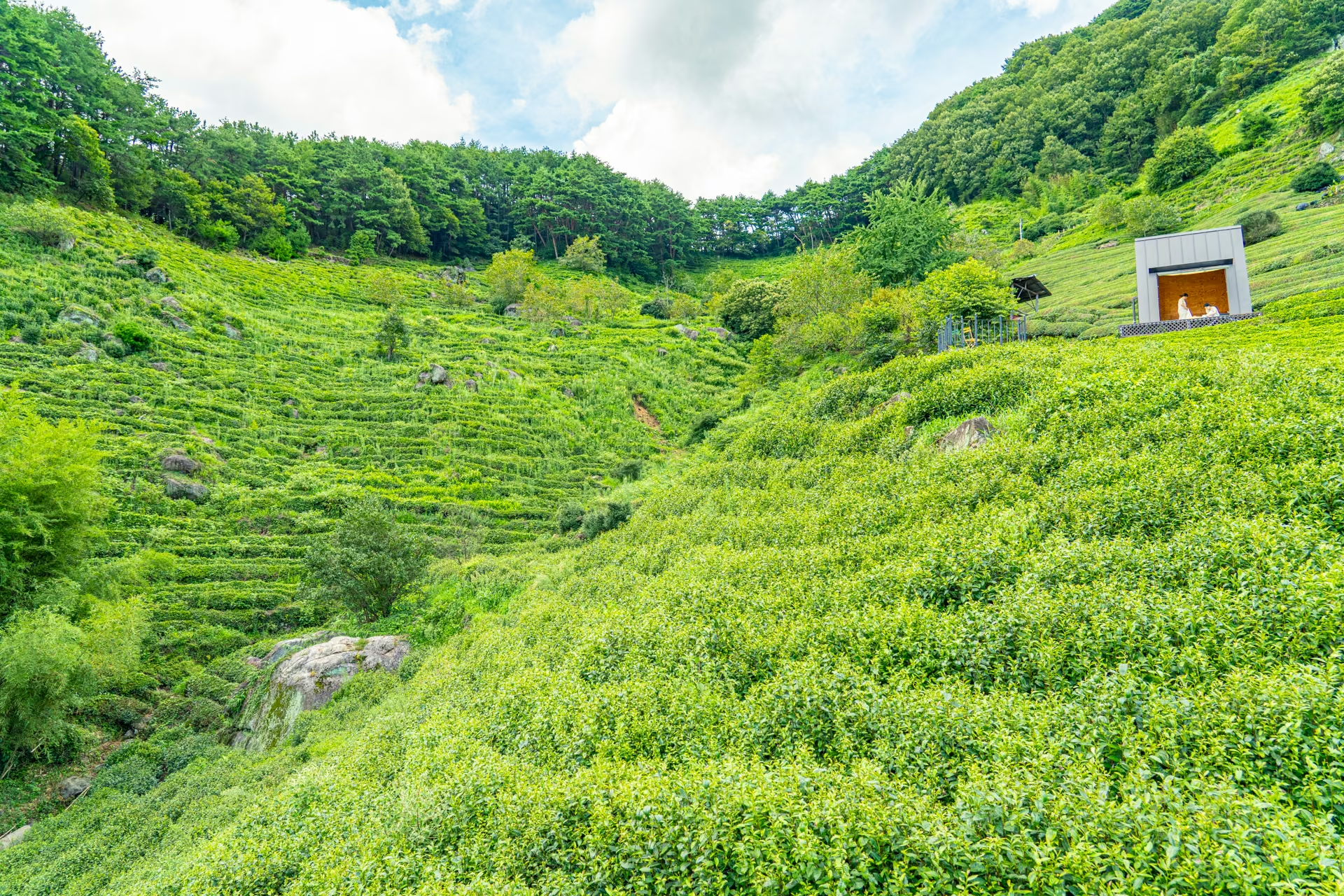
The farm’s own slopes make the point vividly. Standing at the pavilion, you look down on tea bushes growing out of what appears to be a rockslide, which is roughly what it is. Nobody irrigates this. Nobody could.
The Tea Basket: How It Works
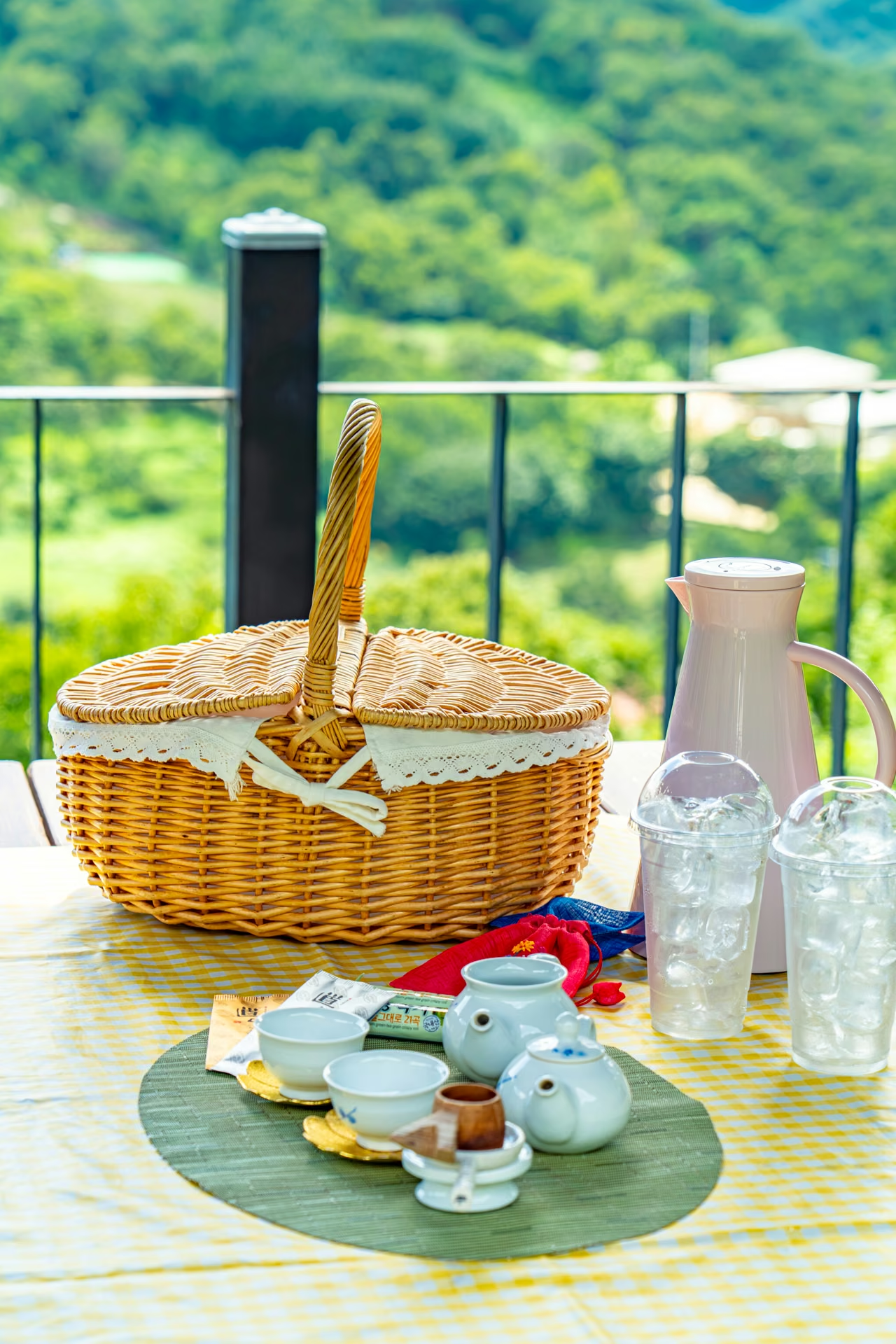
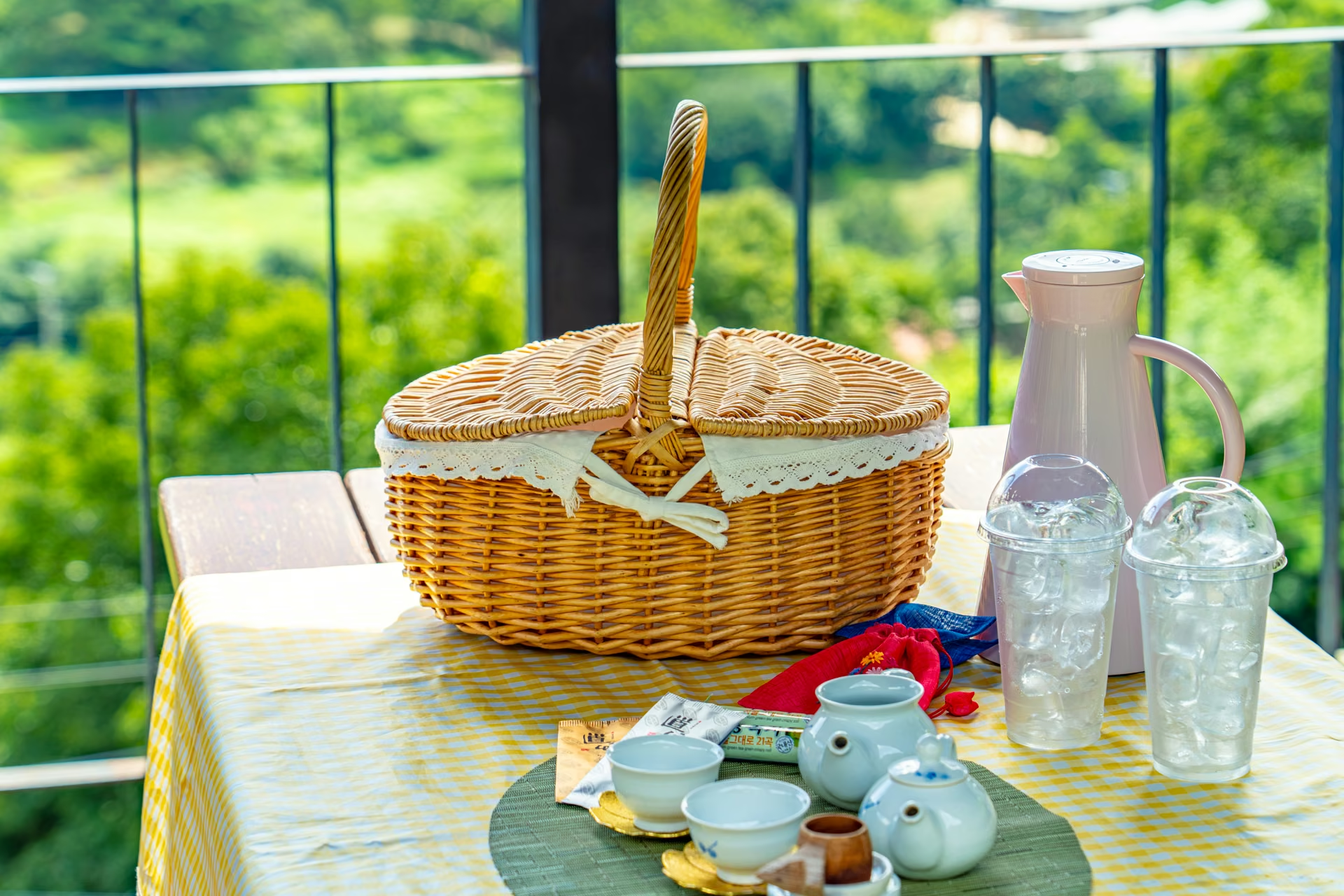
The farm’s signature offering is the cha-baguni — the tea basket set. Reserve ahead by phone, and on arrival you receive a wicker basket packed with a teapot and cups, the farm’s green and black teas, a thermos of hot water, a few sweets, and a mat. One of the thatched-roof pavilions among the tea fields is yours for about an hour: no staff hovering, no cafe playlist, just you, the kettle and the valley.
A note on pricing: when the program last appeared in print a few years back it ran ₩20,000 for two, and current reviews suggest it remains modest, but this is a farmhouse operation — confirm the price when you book, and book you must, because baskets are limited and the pavilions more so. The reservation number is 010-8526-0070, Korean only. If that is a wall, have your accommodation call, or send a short Papago-composed text with your date, headcount and name; rural Korean businesses answer texts more reliably than foreign-accented calls.
Brewing advice, as dispensed on-site: water off the boil, cooled a minute; short first steep; drink the second steep with attention, because that is where this tea balances. The farm’s black tea, charcoal-finished, survives full boiling water and forgiving treatment, which makes it the better companion for the inattentive picnicker.
If you shop before leaving — and the farm sells what it grows — the spring hierarchy is worth knowing. Ujeon, picked before the Gogu rains of late April, is the scarce first flush, delicate and priced like it; sejak follows, fuller and friendlier to beginners’ brewing; and the charcoal-finished black tea mentioned above is the sleeper of the lineup, honeyed and sturdy, the one I would carry home for people who claim not to like green tea. Vacuum-sealed packets travel well, and a bag of leaves picked from a slope you have just sat above beats any airport souvenir on narrative alone.
The Thousand-Year Tree and the Trail That Connects Everything
The village around Dosim Dawon held, until recently, Korea’s oldest verified tea tree — a gnarled specimen over four meters tall, certified at roughly a thousand years old, which put its germination within two centuries of the original 828 planting. It died in the brutal cold snap of winter 2011, an event reported in the national press with the tone usually reserved for elder statesmen. Fifteen successor trees, estimated at one hundred to five hundred years old, now stand designated around the site, carrying the lineage forward.
You can walk all of this. The Cheonnyeon Chabatgil — the Thousand-Year Tea Field Trail — runs about 2.7 kilometers from the official tea origin monument through the Sinchon tea fields, past the successor trees and Dosim Dawon, ending at the Jeonggeum tea fields, whose hilltop pavilion serves the single best free view of the Hwagae tea country. Ninety minutes covers it at a dawdle. In August, walk it before your basket hour, not after; the trail is exposed in stretches, and you will want the tea waiting at the end.
Fifteen minutes below, where the valley meets the Seomjin, sits Hwagae Market — the storied five-day market that for generations traded tea, medicinal herbs and river fish at the meeting point of two provinces. The far bank belongs to Gurye, now part of the Jeonnam-Gwangju Special Metropolitan City created in July 2026 when Jeollanam-do and Gwangju merged, and the market’s whole identity rests on straddling that line: Gyeongsang accents on one side of the aisle, Jeolla on the other. It runs touristy these days — more souvenir tea than serious tea — but as a place to buy snacks, eat a bowl of noodles and watch the valley’s commerce, it caps a tea morning neatly.
Who This Is Actually For
Come if you want Korean tea culture as an experience rather than a shopping category — the hour in the pavilion delivers more understanding than any museum placard. The private format suits couples and small groups best, which is who it was designed for. It pairs with the Hadong cable car for a mountain-and-valley day that covers both of the county’s personalities, and if you are here in spring, the Simni road below is twenty minutes away. If your Hadong day continues south, Goha Burger’s hand-made patties in a converted rice warehouse make the lunch stop.
It is a poor fit for anyone allergic to reservations or reliant on English service — this is a working farm, not a hospitality brand. Wheelchair users and anyone unsteady on slopes should know the terrain is steep everywhere, including between parking and pavilion. And coffee people should simply surrender for the afternoon; there is none for miles, and that is as it should be up here.
On the drive down I stopped at the successor trees. They look unremarkable — fifteen tea bushes of varying sizes behind a low fence, the kind of thing you would pass without a glance. Twelve hundred years of continuous cultivation, and the whole enterprise still rests on a handful of plants quietly photosynthesizing on a hillside. Some heritage sites need velvet ropes. This one needs winter to stay mild.
Practical Manual: Dosim Dawon
| Address (EN) | 43-22 Sinchondosim-gil, Hwagae-myeon, Hadong-gun, Gyeongsangnam-do |
| Address (KR) | 경남 하동군 화개면 신촌도심길 43-22 |
| Tea basket | Reservation required, by phone: 010-8526-0070 (Korean). Around ₩20,000 for two at last report — confirm when booking |
| Hours | Roughly 10:00–18:00; farmhouse operation, call ahead |
| The trail | Cheonnyeon Chabatgil, ~2.7km / 1–1.5 hrs: tea origin monument → Sinchon fields → successor trees → Dosim Dawon → Jeonggeum fields |
| Heritage | First tea planting in Korea, 828 CE; FAO Globally Important Agricultural Heritage System (2017) |
| From Seoul | ~4 hrs by car. Transit: bus to Hadong Terminal → county bus to Hwagae → taxi up the valley |
| Navigation Tip | Google Maps does not give driving directions in Korea. Use Naver Map and search 도심다원. Book by text composed in Papago if you do not speak Korean. |
Prices and hours reflect the time of reporting. This is a family farm; everything is subject to the season and the family.