
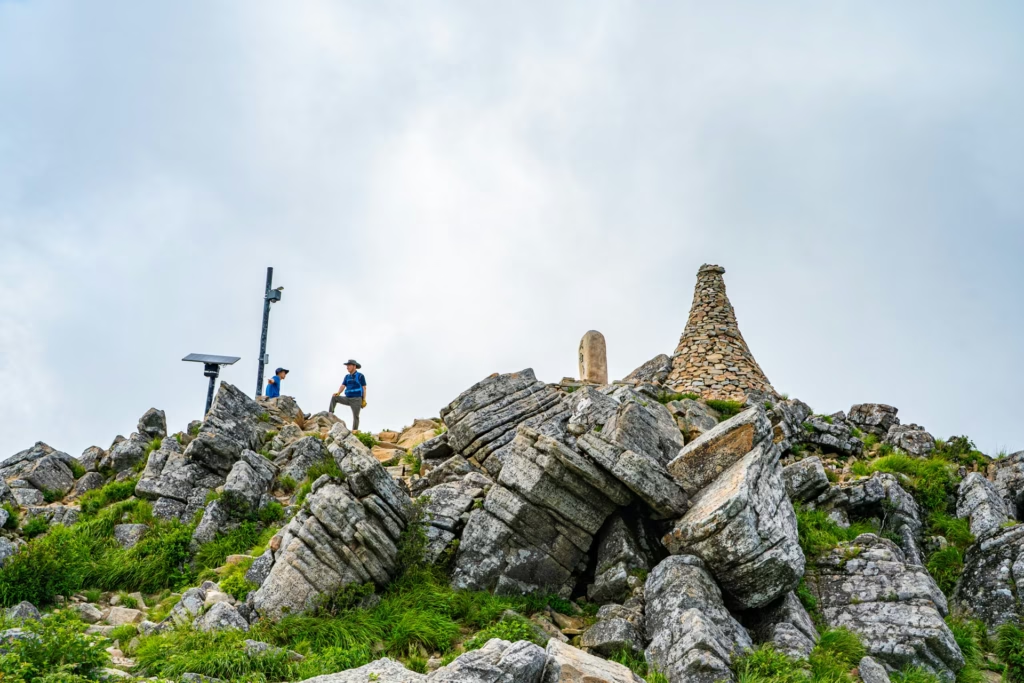
Taebaek, Korea: A High-Altitude Summer Escape Where the Milky Way Still Shows Up
The evening news had been running its annual tropical-night tally — city after city logging nights that never dip below 25°C — while I was climbing the switchbacks into Taebaek with the windows down. By the time I parked, I was digging through the trunk for a long-sleeve shirt. In July.
Taebaek is the highest city in South Korea, sitting on the Baekdudaegan ridge at an average elevation of 902 meters. Air cools by about one degree for every hundred meters you climb, and this town collects the full benefit: summer daytime averages hover around 22°C, and the local weather station reportedly hasn’t recorded a single tropical night in the past decade.
The cool air is only half the story. Taebaek’s other asset appears after dark. With little light pollution and a sky that starts 900 meters closer than yours does, this is billed as one of the best Milky Way viewing spots in the country — astro photographers drive hours for it. The plan below is a two-day loop: highland stops by day, stars by night.
Where Taebaek Sits — and How to Get There
Taebaek occupies the far southeastern corner of Gangwon Province, wedged against the Gyeongsangbuk-do border. From Seoul, intercity buses leave Dong Seoul Terminal (Gangbyeon Station, Line 2) roughly every 30–50 minutes and take about 3 hours 10 minutes. The rail option is the Mugunghwa from Cheongnyangni Station — around 3 hours 40 minutes through some of the best mountain scenery on the network, for about ₩15,200.
Here’s the honest part: you can reach downtown Taebaek without a car, but you cannot do this itinerary without one. The stargazing spots sit on mountain roads with no bus service after dark, and the daytime stops are scattered across the valley. Rent a car in Seoul or pick one up locally. If you’re already building a Gangwon road trip, Taebaek pairs naturally with Yeongwol, one county to the west, or the coast at Mukho Harbor in Donghae. And if Gangwon draws you back in the cold months, our Inje winter travel guide covers the snow country to the north.
1. Hwangji Pond — Where the Nakdong River Begins, Downtown
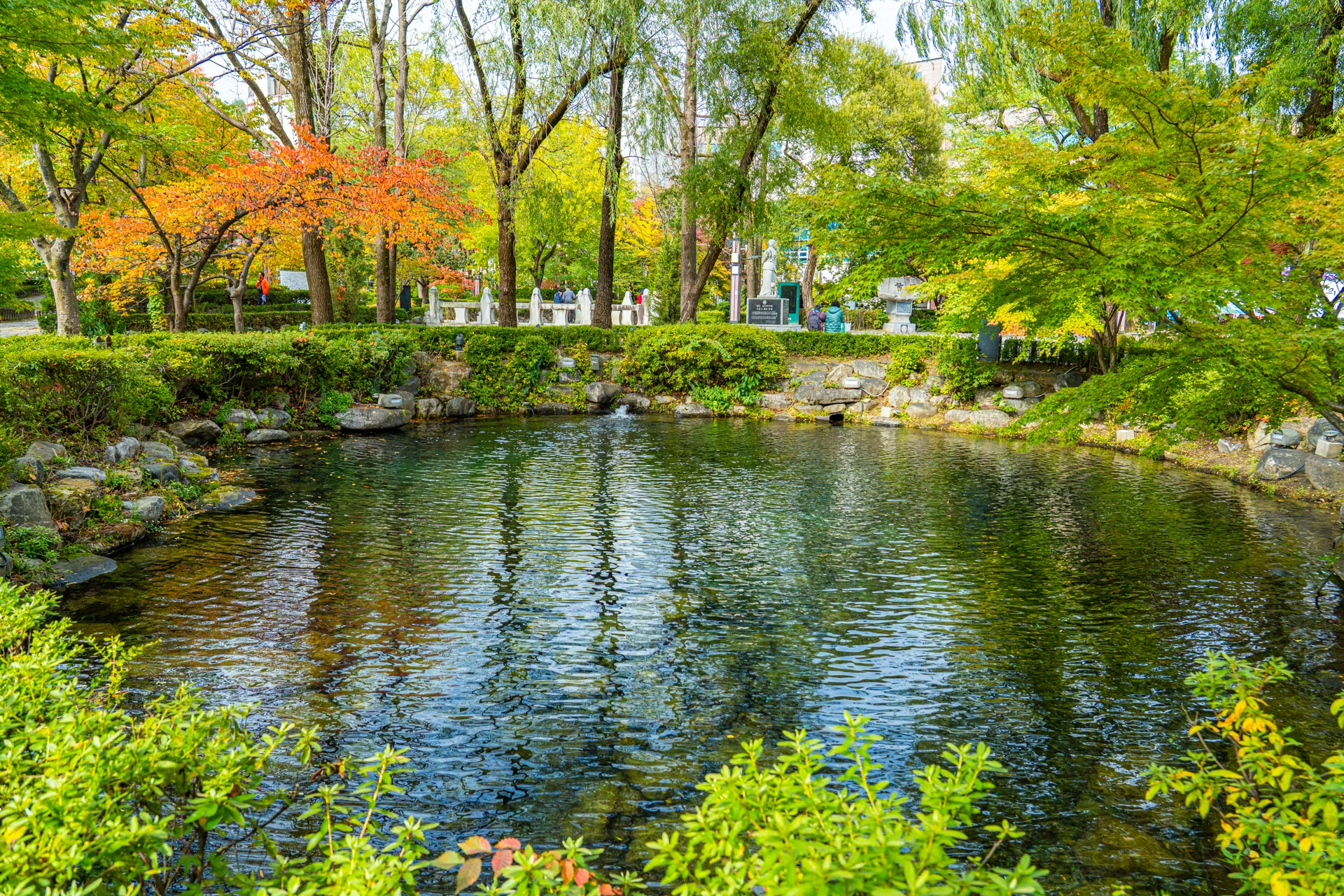
Start in the middle of town. Between shopfronts and a road, a pond barely 100 meters around is the official source of the Nakdong River — the 510-kilometer waterway that crosses the entire Gyeongsang region before reaching the sea at Busan. Around 5,000 tons of water rise from the bottom of Hwangji Pond every day. Stand still at the railing and you can watch faint ripples where the spring pushes up from below.
The surrounding park doubles as a neighborhood hangout, and an information board tells the local legend: a miserly rich man’s house swallowed overnight, a pond left in its place. What makes it stranger is that Taebaek holds a second river source — Geomnyongso, a spring on Geumdaebong Peak, is where the Han River begins. One small mountain city feeds both of the peninsula’s great rivers. Entry is free and the pond never closes.
2. Mongtorang Goat Farm — An Alpine Pasture Above the City
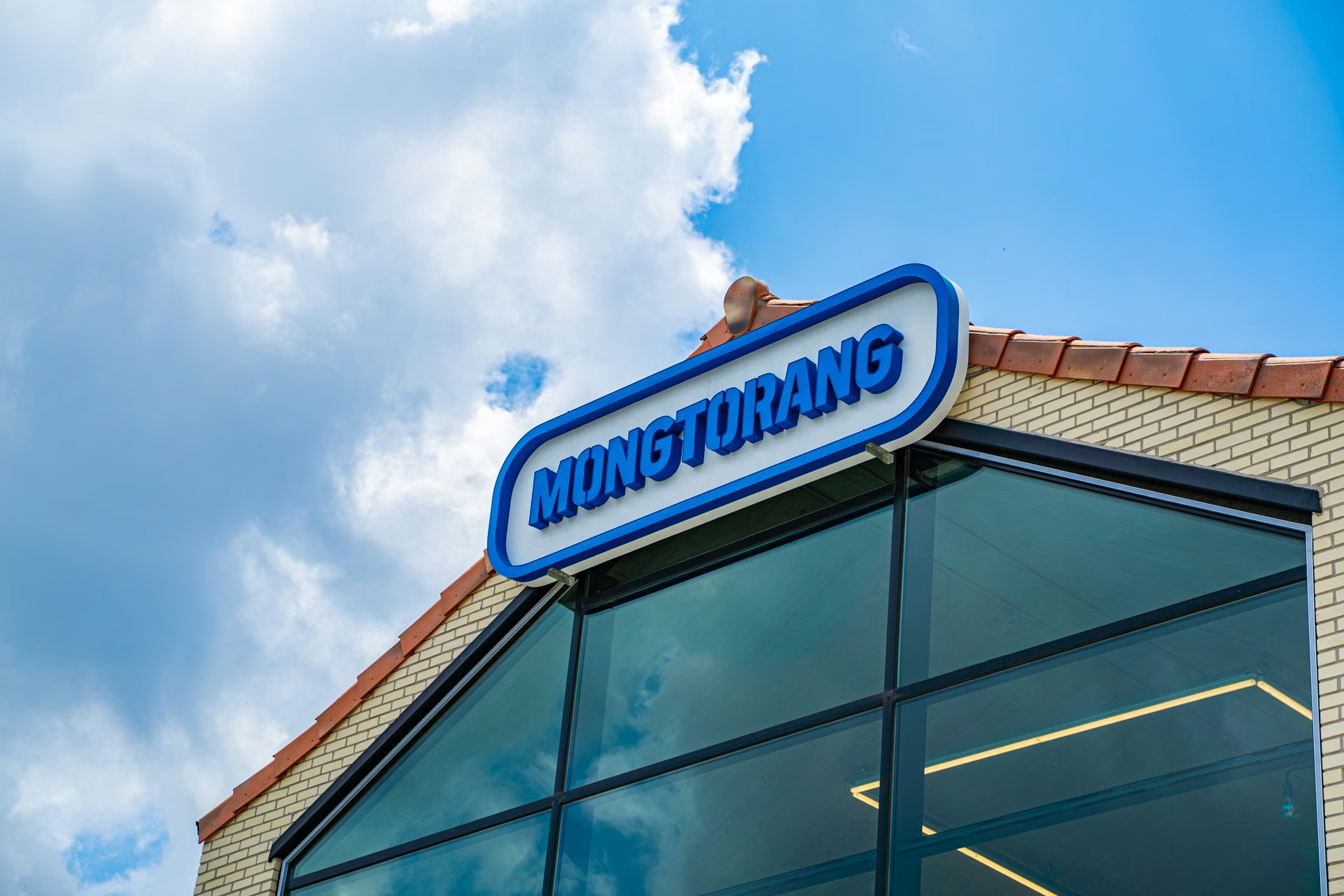
Ten minutes out of downtown, the road tilts upward and opens onto grazing slopes. Mongtorang Goat Farm runs dairy goats across a hillside at around 800 meters, with ranges of the Baekdudaegan stacked in layers behind — the kind of scene Korean visitors keep comparing to the Alps, and the comparison isn’t unreasonable.
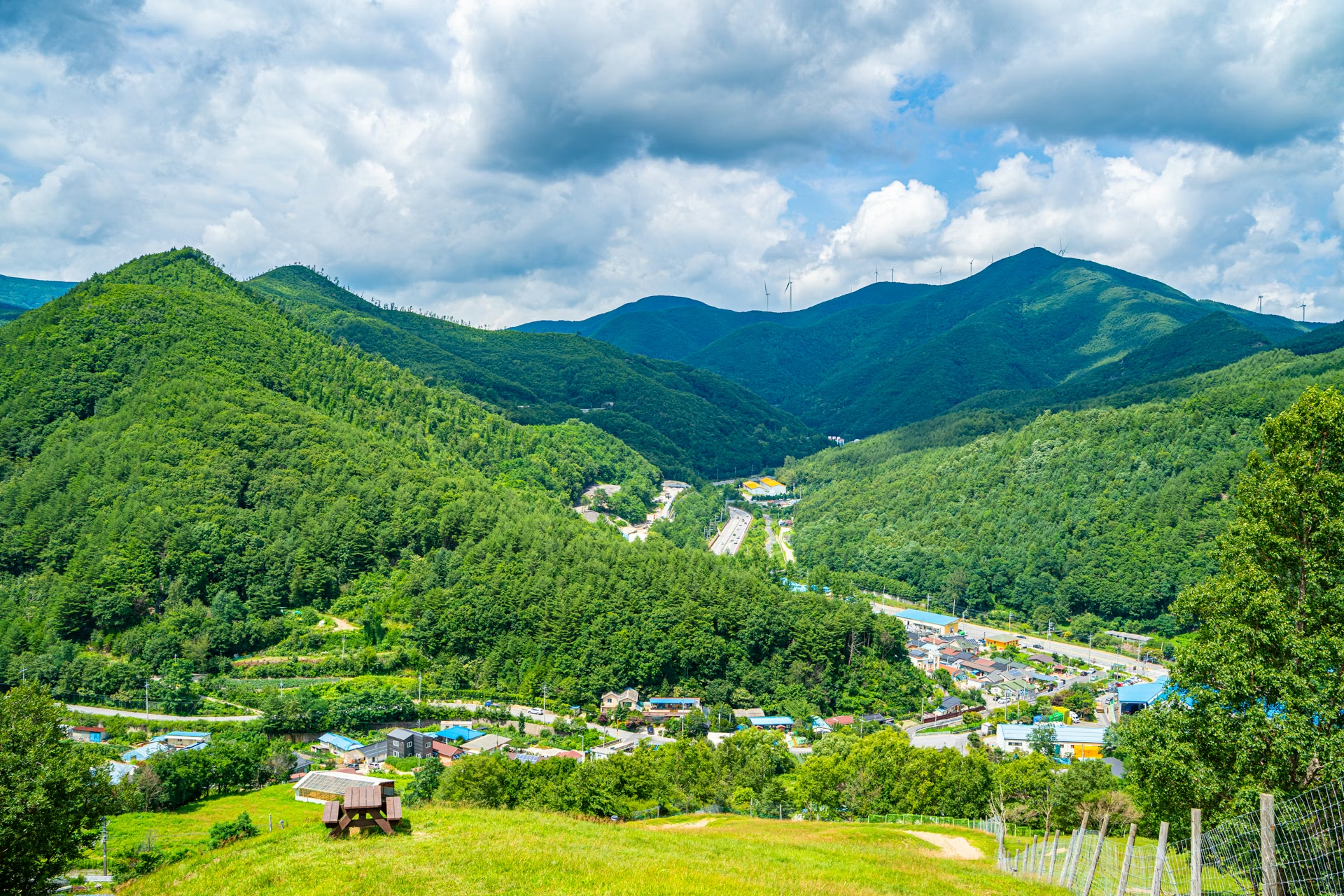
The farm cafe serves drinks made with its own goat milk, and the terrace looks straight down the valley to the city. Admission to the pasture area was ₩5,000 at the time of writing, with feeding experiences extra — an easy add-on if you’re traveling with kids. A cold glass of goat milk in a chilly highland wind in July sums up this city better than any statistic. If farm animals at elevation are your family’s thing, the alpaca forest in Pyeongchang makes a natural companion stop elsewhere in Gangwon.
3. Hambaeksan Mountain — A 1,573m Summit You Can Reach in 30 Minutes
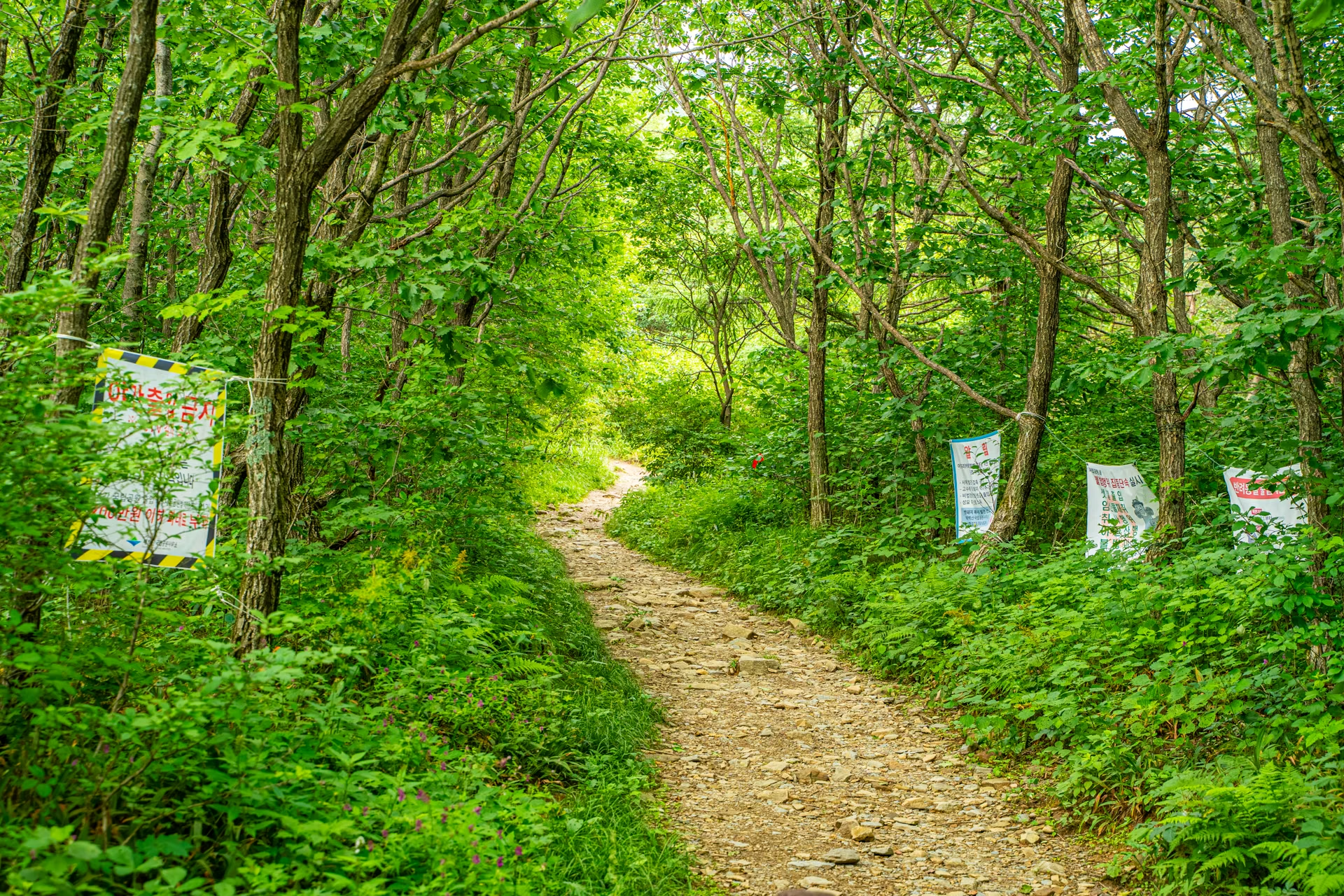
Do this one while the sun is high — the national park system enforces designated entry hours, and access is restricted from late afternoon. Hambaeksan is the sixth-highest mountain in South Korea at 1,572.9 meters, and it comes with a rare cheat: a paved mountain road climbs most of the way up, leaving a rocky trail of only 30-odd minutes to the summit. Sneakers minimum; the footing is loose stone.
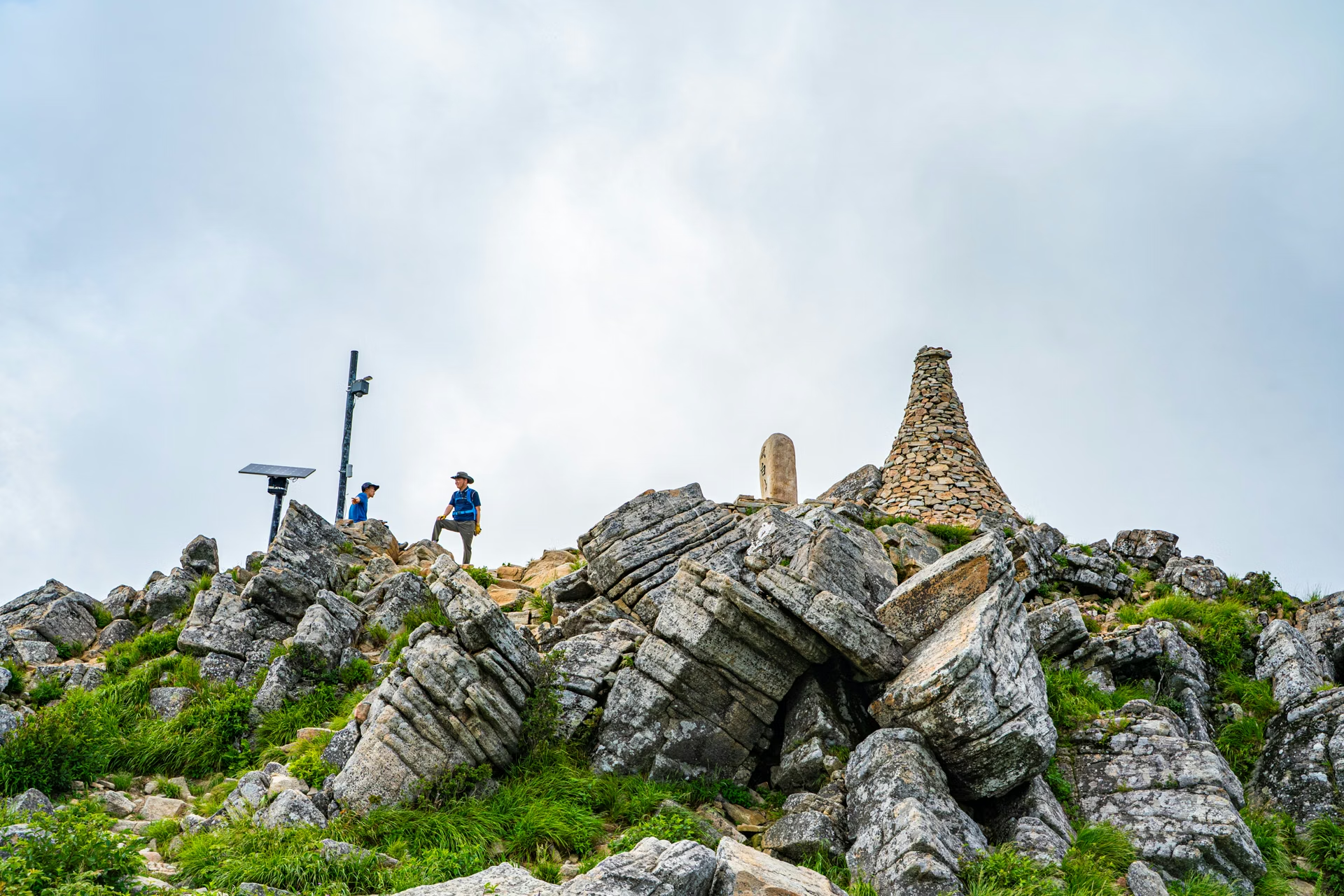
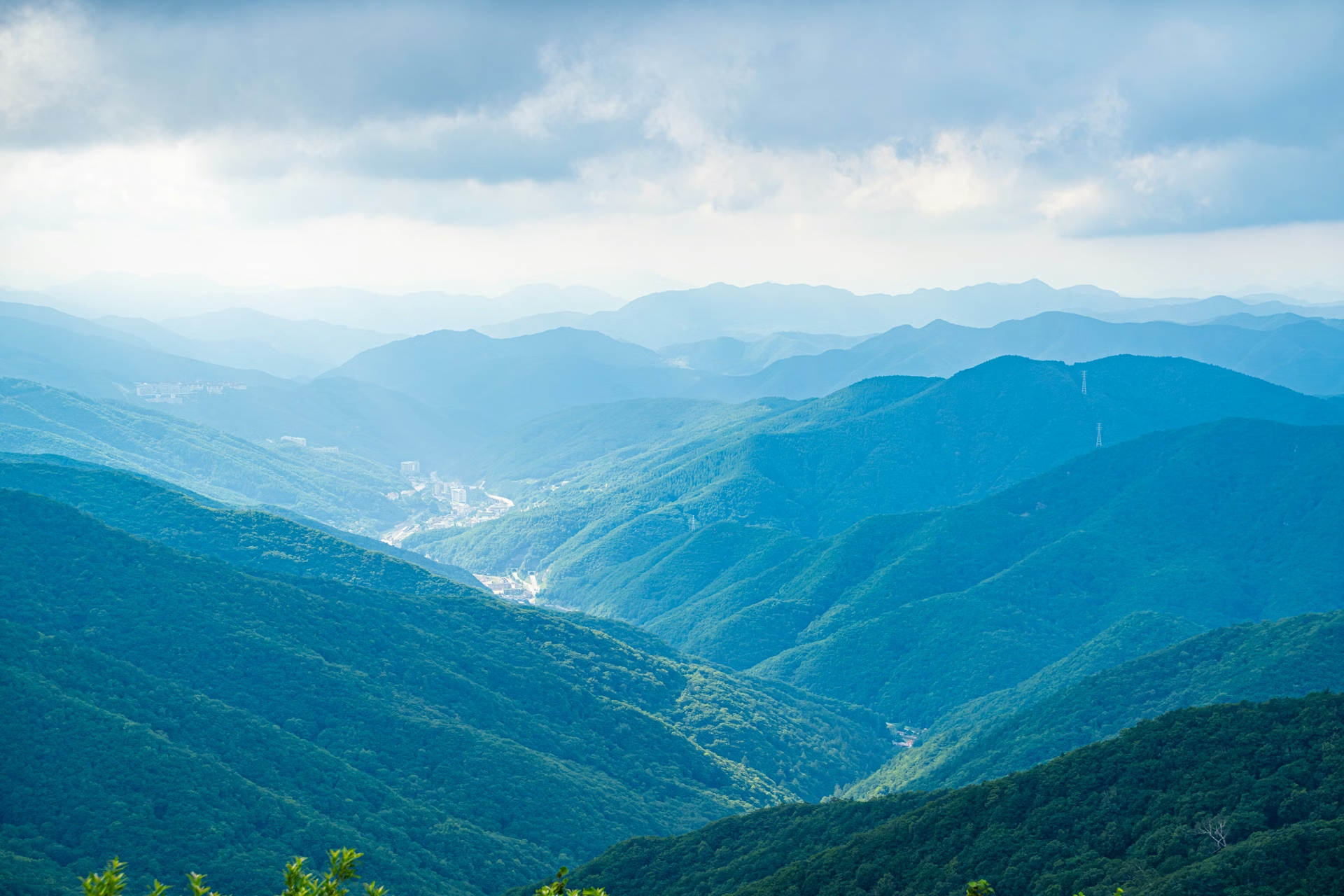
From the top, the Baekdudaegan ridge rolls away like a swell — wave after wave of blue-grey peaks to the horizon. The wind at this height is cold enough to dry your shirt before you’ve finished your water.
4. Manhangjae Pass — Korea’s Highest Paved Road, Wildflowers Included
If the hike isn’t happening — bad knees, small kids, pure laziness, all valid — you can still collect the altitude. Manhangjae, on Hambaeksan’s shoulder, crests at 1,330 meters and ranks among the highest points in Korea crossed by a paved road. You drive to the top. That’s the whole assignment.
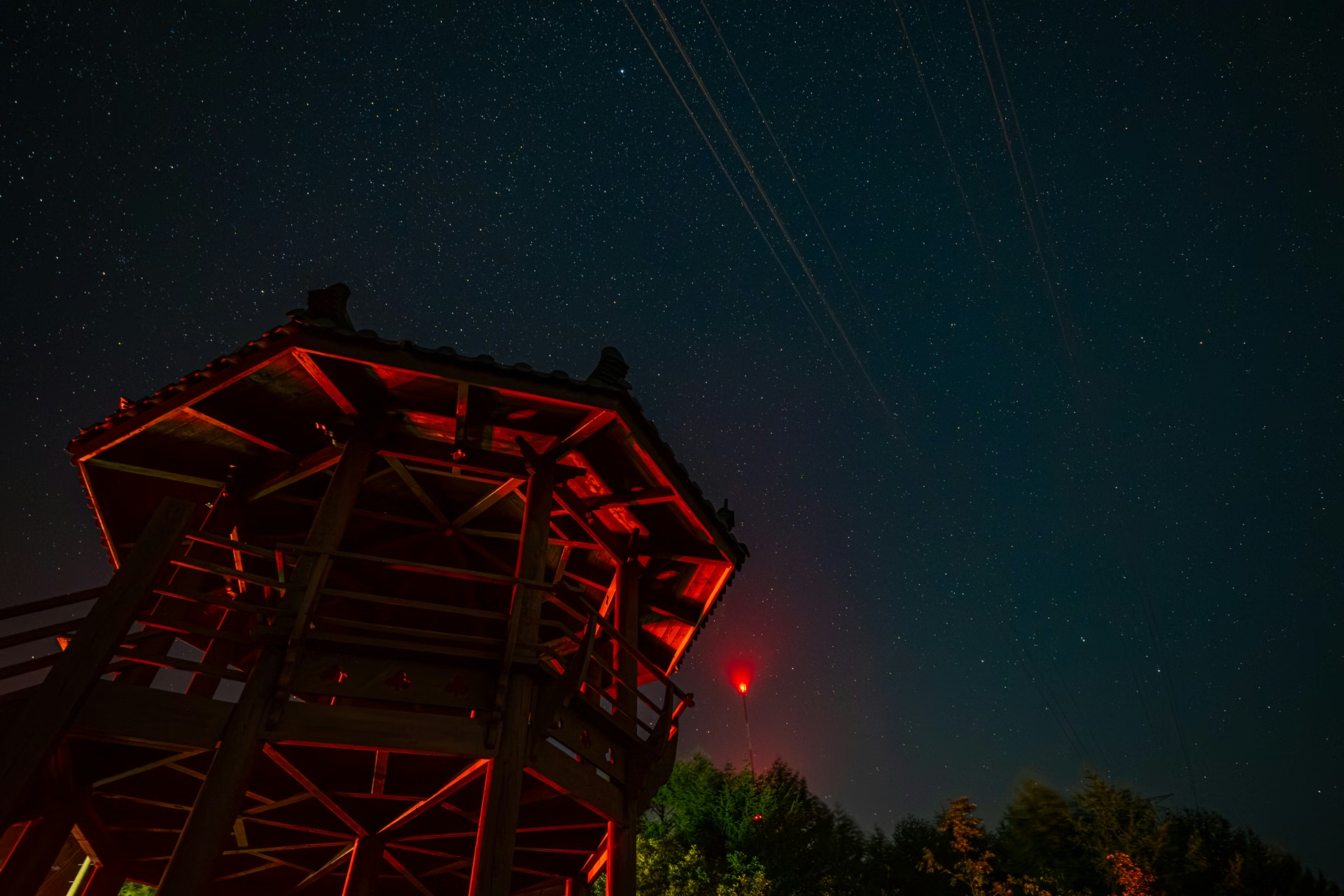
In summer the pass turns into an informal botanical garden, with wildflower colonies massed around the ridge. Park in the lot at the top, walk five minutes in any direction, and the highland air does the rest.
5. Gumunso — A River That Drilled Through a Mountain 500 Million Years in the Making
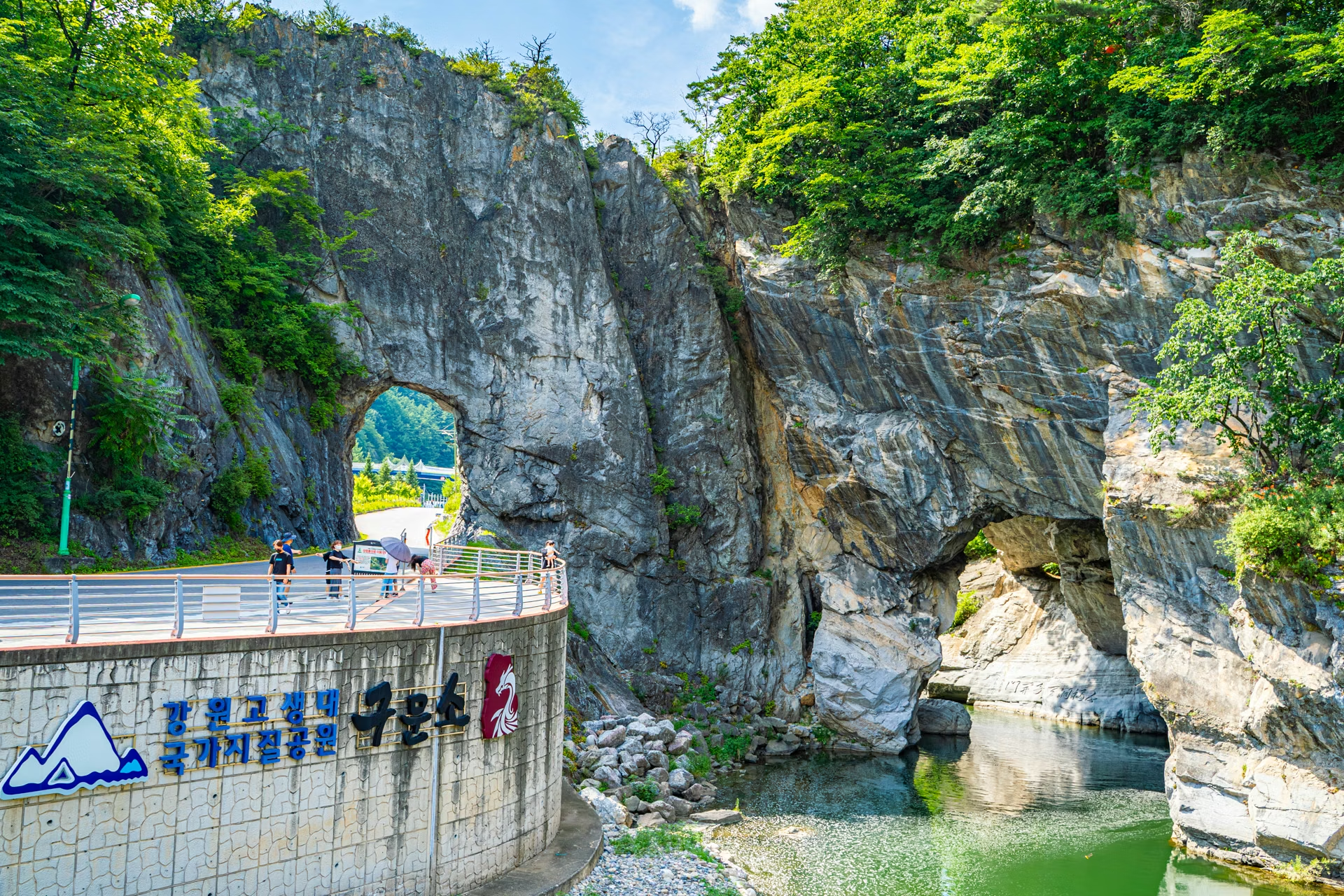
South of town, the road passes through a scene that looks engineered but isn’t. Gumunso is a hole punched clean through a limestone spur by the force of the river — strata laid down in a Paleozoic sea roughly 500 million years ago, then sliced open by water. Fossils of marine creatures from that vanished ocean are still visible in the rock faces.
It’s designated a Natural Monument and forms part of the Gangwon Paleozoic Geopark. Even at the height of summer, the shaded cliff walls and moving water keep the air here noticeably cool. Viewing is free, and it’s an easy 15-minute stop on the way to the Tongni area.
6. Tongni Tantan Park & Aurora Park — Coal Mines Turned Playground
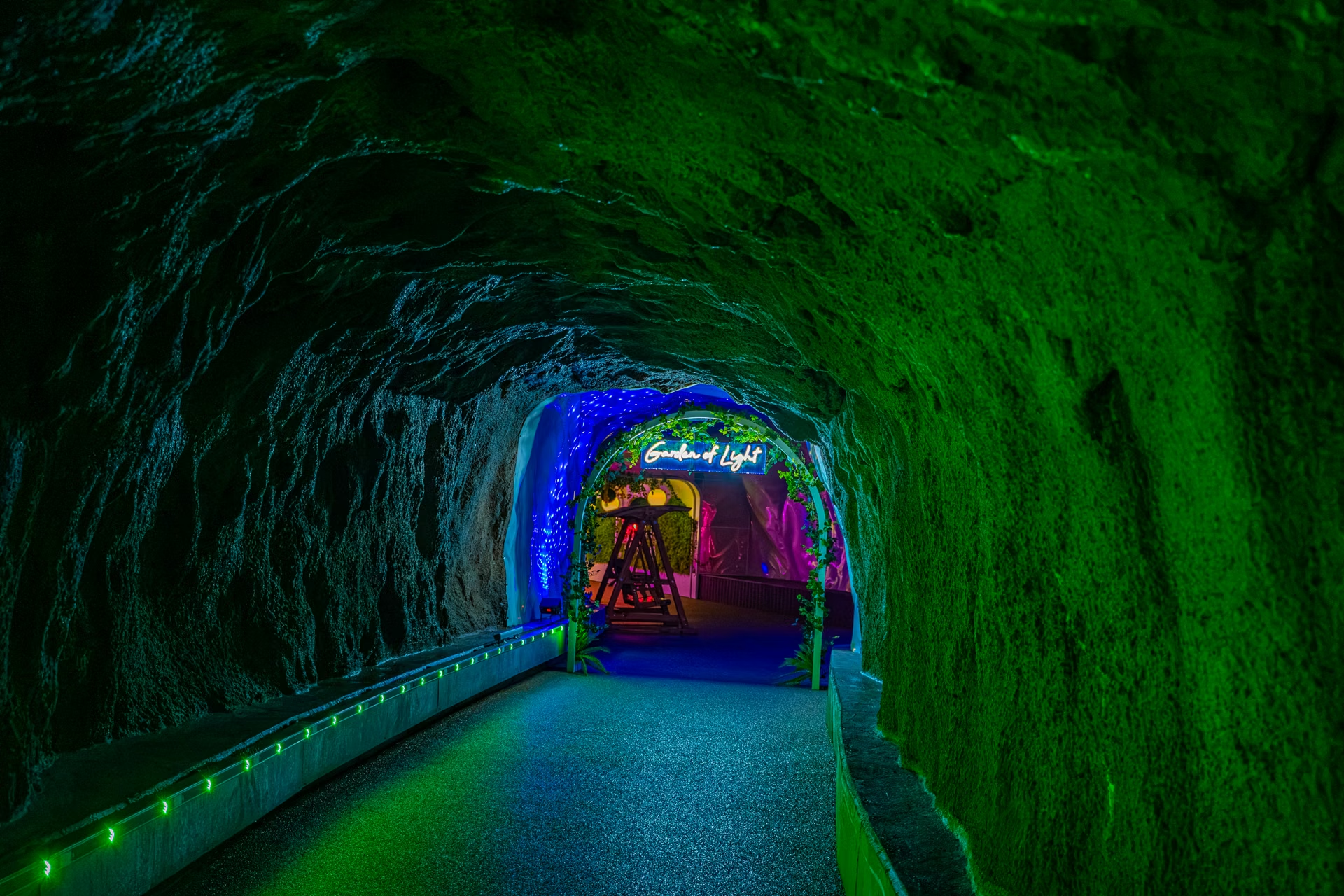
Taebaek was once the biggest coal-mining city in the country, and the Tongni district is where that history gets its second act. Tantan Park runs media-art exhibitions inside actual decommissioned mine tunnels — projection walls where coal cars used to roll — plus a forest path linking the two tunnel mouths.
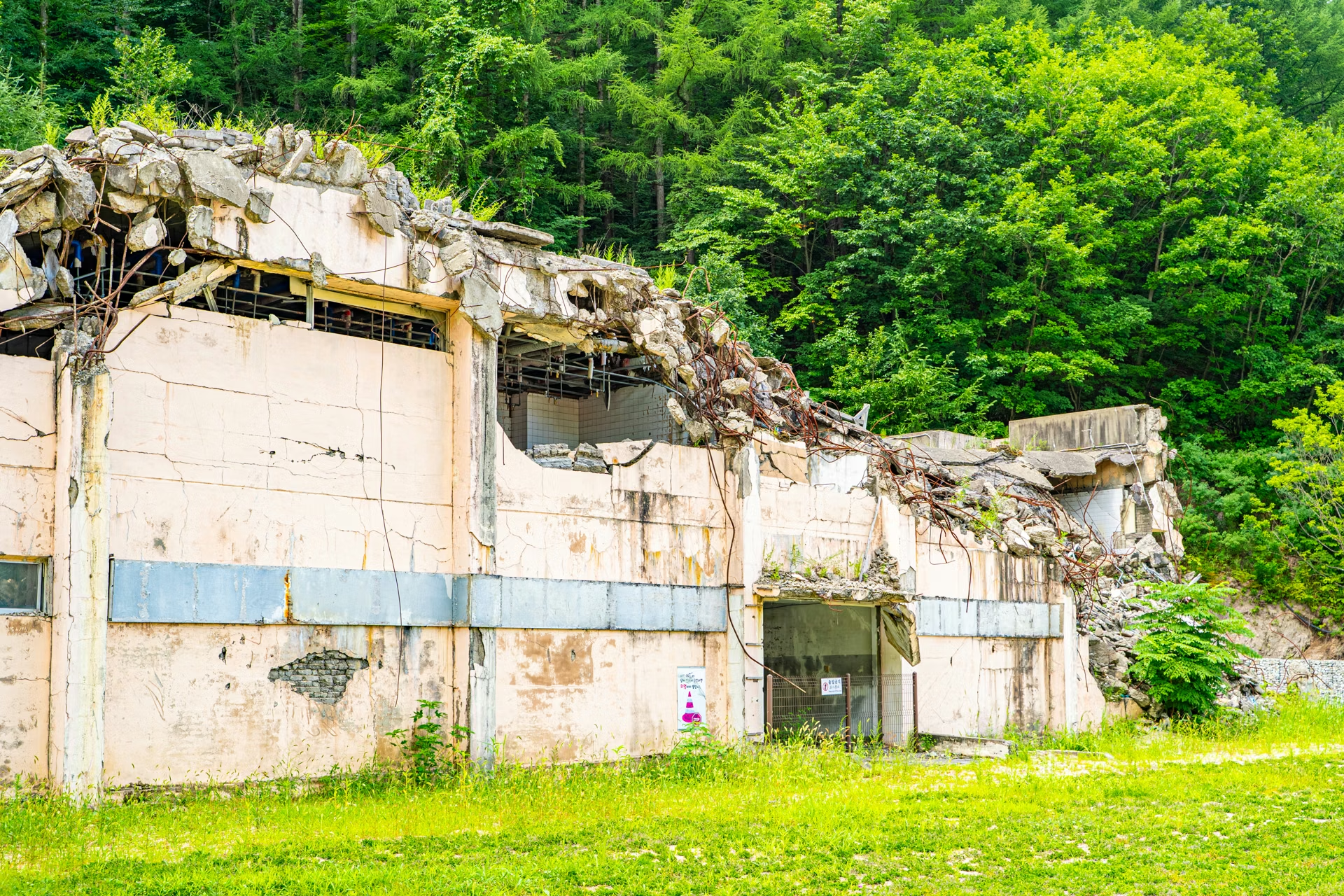
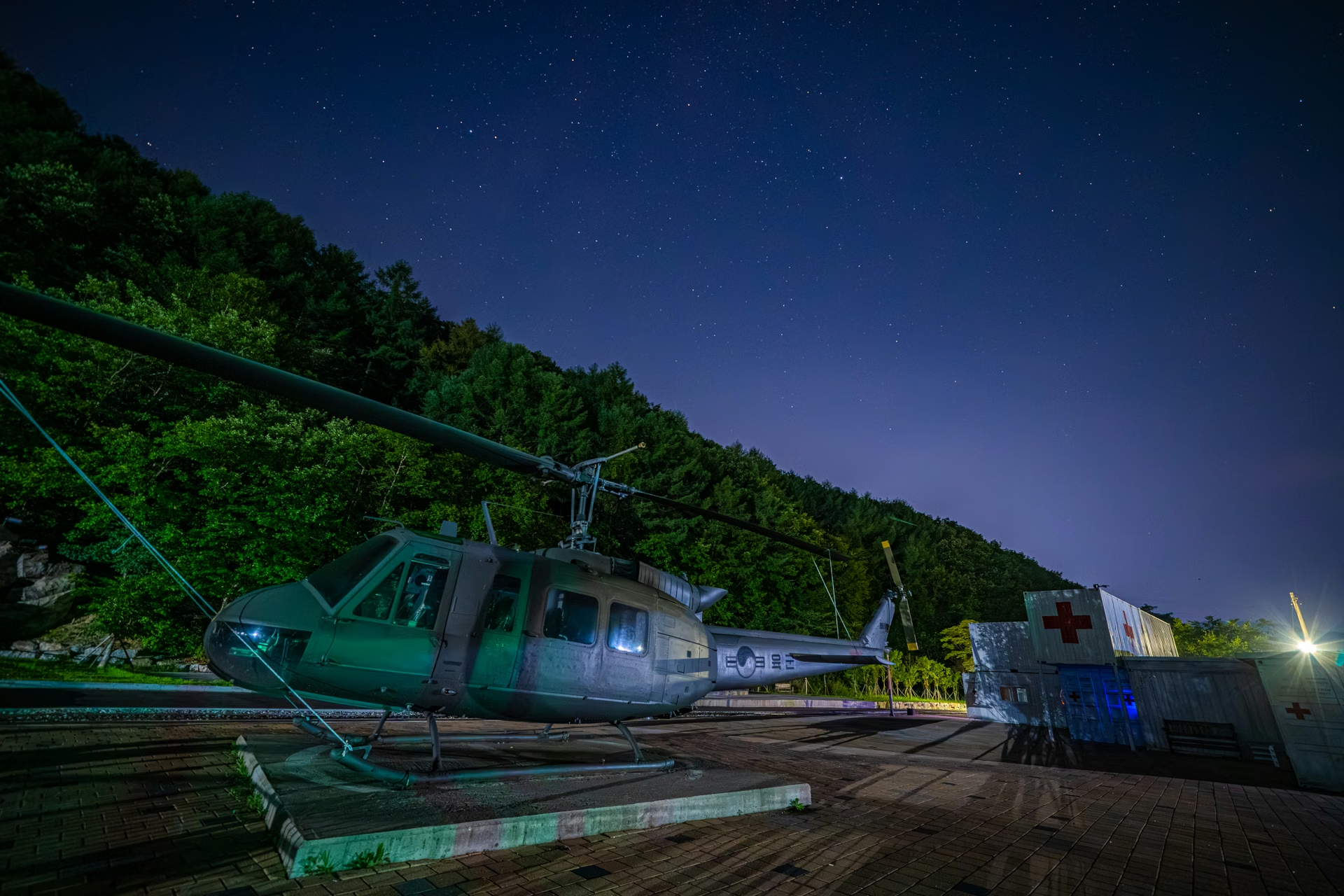
K-drama fans get a bonus: the set of Descendants of the Sun was relocated here, military helicopter and vehicles included, so you can walk through scenes from the show. Listed admission is ₩9,000 for adults with the park closed on Mondays — though it was reportedly running free of charge on a temporary basis when I checked, so confirm current pricing before you go. Current notices and event dates are posted on the Taebaek city tourism site.
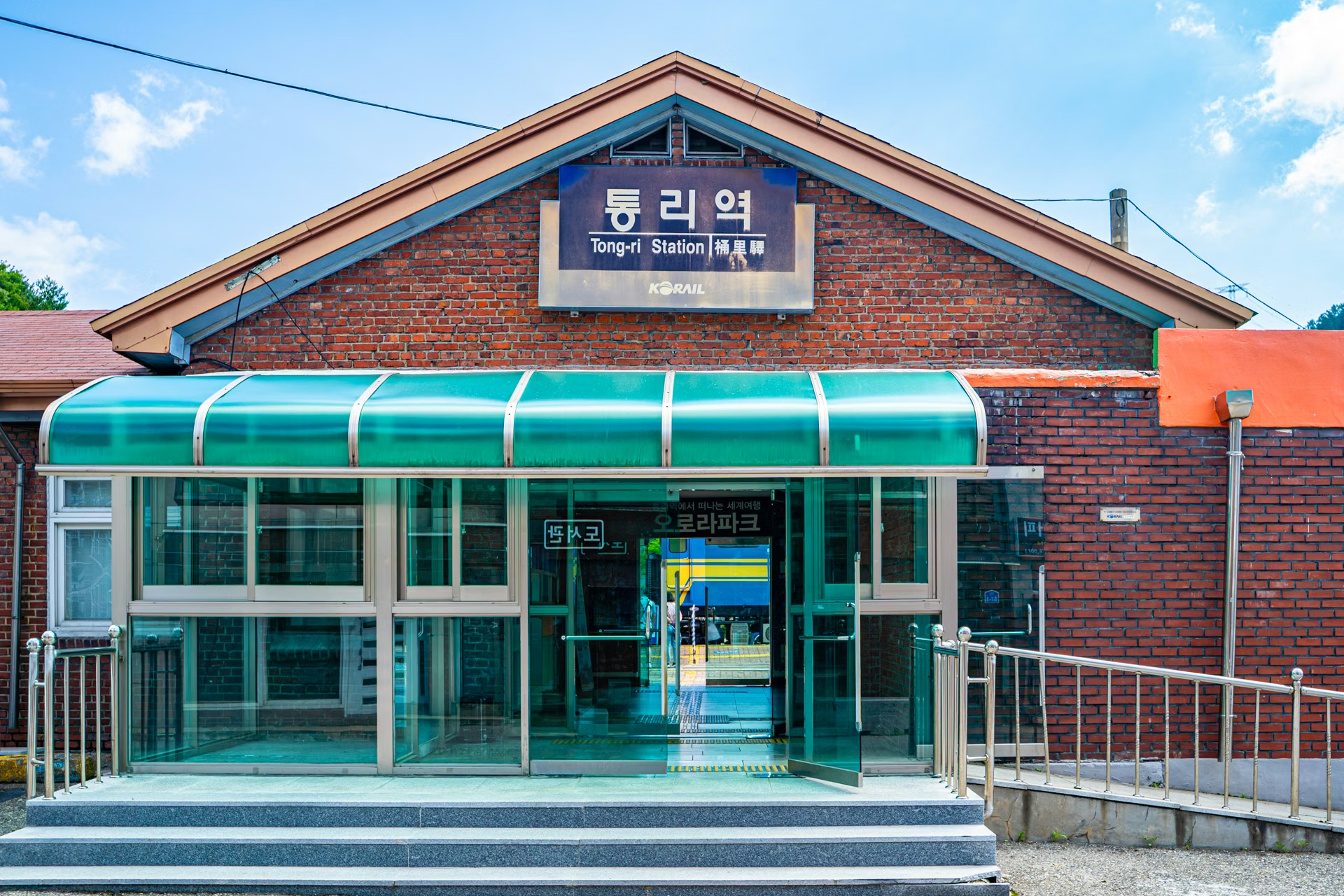
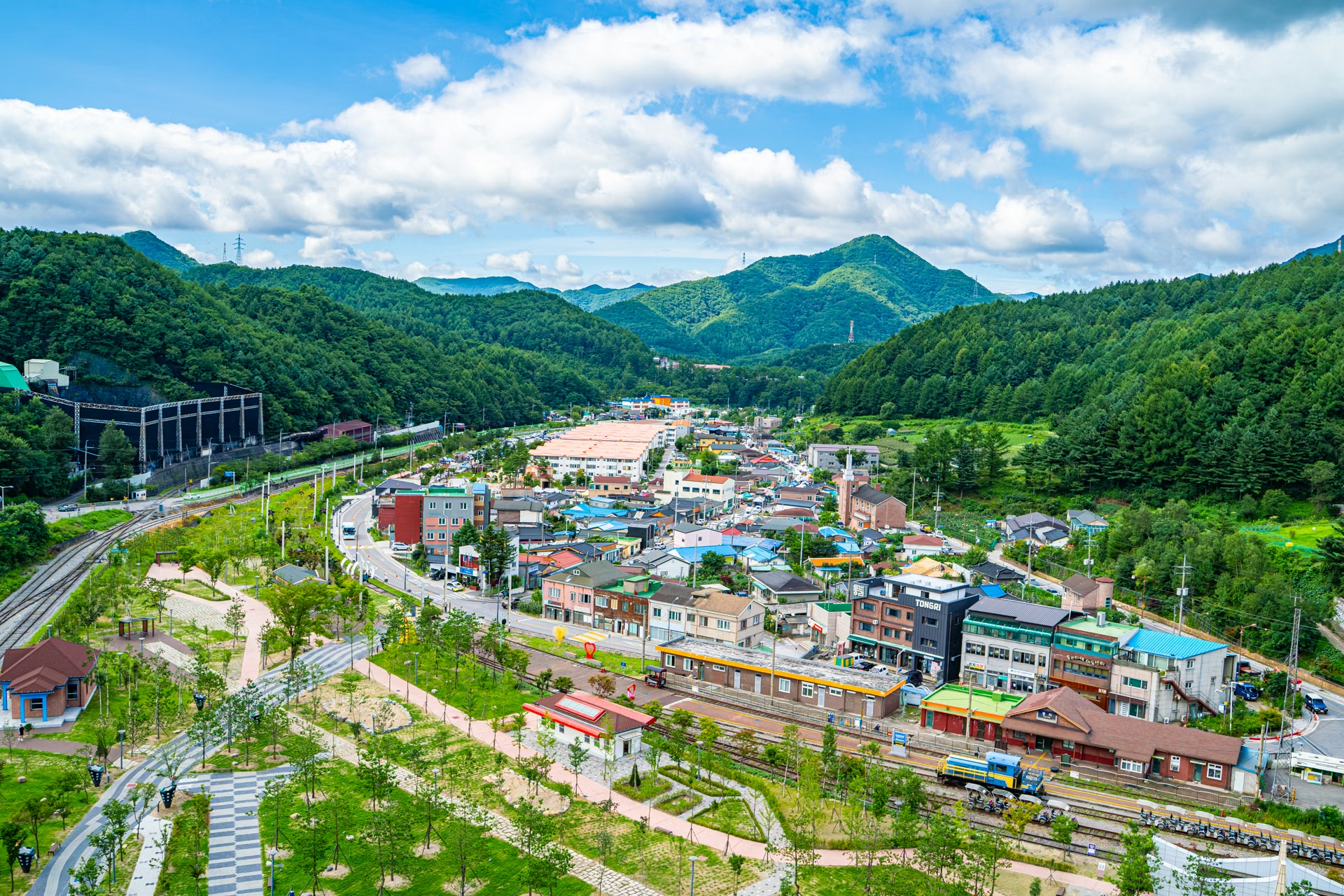
Next door, Aurora Park was built on the bones of the closed Tongni railway station, themed around high-altitude train stations of the world, with an observation deck overlooking the basin. The two parks sell a combined ticket. Don’t rush off after closing time — this neighborhood is exactly where you want to be when it gets dark.
7. The Main Event: Milky Way Hunting After 10 P.M.
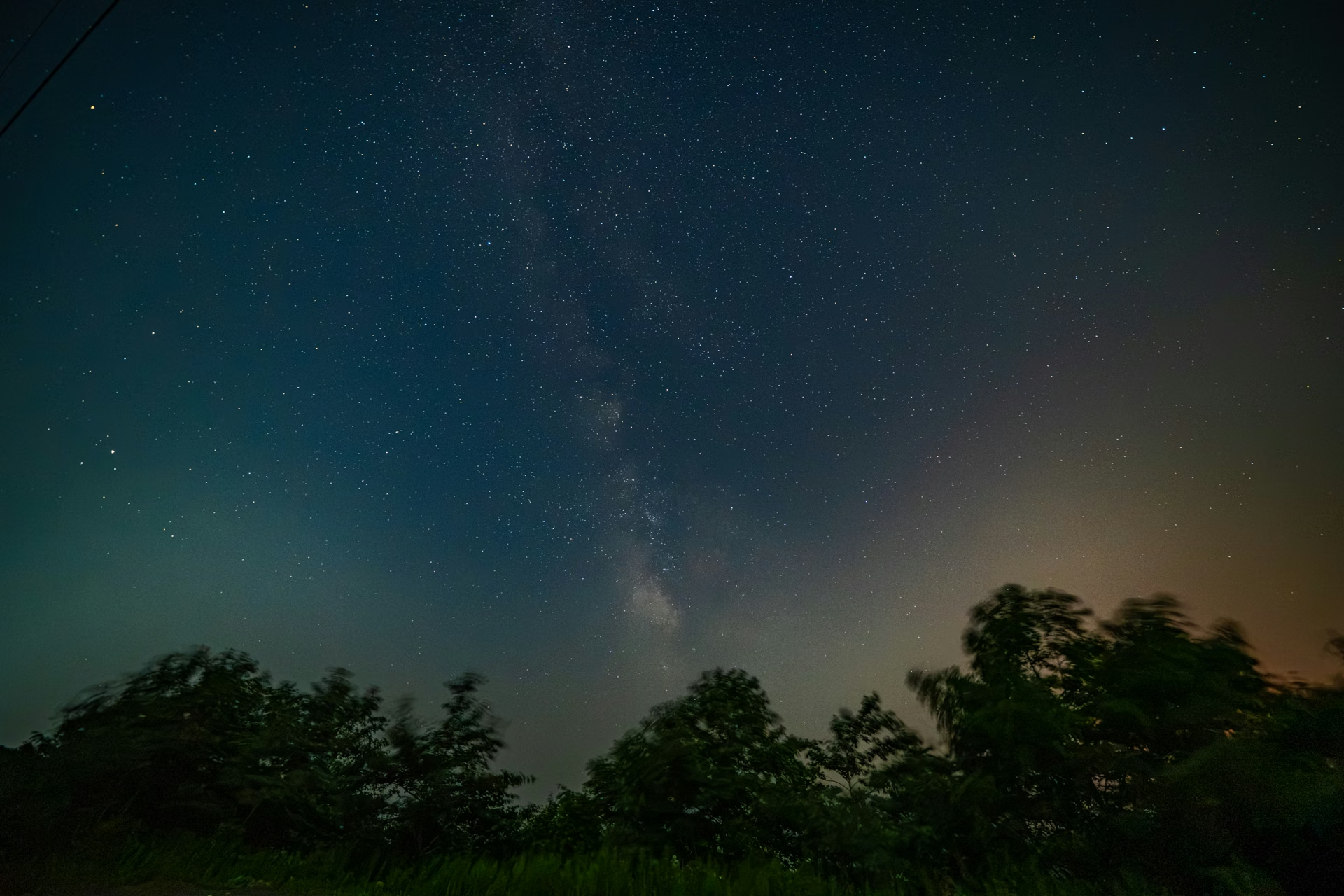
Darkness is the entire game in astrophotography, and Taebaek deals it out better than almost anywhere in the country. The best-known target is the high section of the road ringing Hambaeksan’s upper slopes — locals call it the Hambaeksan Milky Way Road. The mountain blocks the glow from downtown, there are no streetlights, and on a clear moonless night the Milky Way is visible to the naked eye.
Want a foreground for your photos? Aurora Park switches its lights off around 10 p.m. — a deliberate courtesy to stargazers. Shoot upward from beneath the park’s whale sculpture and you can frame the whale swimming through the galaxy. A third option, Danggol Plaza at the entrance to Taebaeksan National Park, offers a wide-open sky and enough flat ground for a mat — you’ll likely find local families already camped out with cold drinks.
The technique is simple. Pick a night near the new moon. Kill every light at the site — headlights, phone screens, all of it — and give your eyes twenty minutes to adapt; the stars multiply as they do. A smartphone on a small tripod will capture the Milky Way in manual mode: shutter around 15 seconds, ISO 1600–3200. And pack a jacket. At this altitude, a July night will find every gap in your clothing.
Who This Is Actually For
Taebaek rewards travelers running from the heat: anyone whose sleep has been wrecked by a week of tropical nights, families who want farm animals and drama sets by day and a blanket of stars by night, and photographers chasing the Milky Way without a flight to Mongolia. It also suits slow-route drivers linking Gangwon’s interior to the east coast. Skip it if you need nightlife, international dining, or a resort pool — this is a small mountain city, and after 9 p.m. the main entertainment is directly overhead. You’ll want a rental car, a light jacket in your daypack, and ideally a travel date within a few days of the new moon.
One Last Image
Mine ended on a mat at Danggol Plaza, some time past midnight, listening to a family argue cheerfully about which smudge of light was a satellite. The air read 17 degrees. Somewhere below, the rest of the country was sweating through another 25-degree night with the AC running. Up here, the source of two rivers was murmuring in the dark, and the Milky Way was out — casual, enormous, taking its time crossing the sky. This summer, the fix for the heat isn’t a colder room. It’s 900 meters of altitude.
The Practical Manual
| Spot | Address | Notes |
|---|---|---|
| Hwangji Pond | 25-4 Hwangji-dong, Taebaek-si, Gangwon-do 강원특별자치도 태백시 황지동 25-4 | Free, open 24/7, downtown; source of the Nakdong River |
| Mongtorang Goat Farm | 27-2 Hyoja 1-gil, Taebaek-si, Gangwon-do 강원특별자치도 태백시 효자1길 27-2 | Admission ₩5,000; feeding extra; hours vary by season — check ahead |
| Hambaeksan / Manhangjae Pass | Hambaeksan-ro, Gohan-eup, Jeongseon-gun, Gangwon-do 강원특별자치도 정선군 고한읍 함백산로 (만항재) | ~30-min rocky trail to the 1,573m summit; park entry-time limits apply — go before mid-afternoon |
| Gumunso | 11 Dongtaebaek-ro, Taebaek-si, Gangwon-do 강원특별자치도 태백시 동태백로 11 | Free; Natural Monument; 15-minute stop |
| Tongni Tantan Park | 116-44 Tonggol-gil, Taebaek-si, Gangwon-do 강원특별자치도 태백시 통골길 116-44 | Closed Mondays; adult ₩9,000 (temporary free entry reported — confirm); combo ticket with Aurora Park |
| Aurora Park | 72 Tongni-gil, Taebaek-si, Gangwon-do 강원특별자치도 태백시 통리길 72 | Former Tongni Station; lights off around 10 p.m. for stargazing |
| Danggol Plaza | Danggol area, Taebaeksan National Park entrance, Sodo-dong, Taebaek-si 강원특별자치도 태백시 소도동 태백산국립공원 당골지구 | Open sky, flat ground; popular local stargazing spot |
Getting there: Intercity bus from Dong Seoul Terminal, every 30–50 minutes, about 3h 10m. Or the Mugunghwa train from Cheongnyangni Station, about 3h 40m (~₩15,200). A rental car is required for the night viewing spots — allow extra time on dark mountain roads.
Navigation Tip: Google Maps barely functions for driving directions in Korea. Download Naver Map, switch it to English, and paste in the Korean addresses above. Papago handles any menu or signboard you can’t read. Questions? Reach me at contact@thetravelmanual.com.