
Transparency Note: This guide contains affiliate links. If you make a purchase, I may earn a commission at no extra cost to you — allowing me to keep providing expert, gear-tested travel insights.
Table of Contents
If you found this page after watching The King’s Warden — you are not alone. The Korean historical drama crossed 10 million tickets in 31 days, and search traffic for its real-world locations has been climbing steadily since. This guide covers exactly that: The King’s Warden filming locations and the eight most worthwhile sites surrounding them, for visitors who are planning their first trip to Korea.
A quick note for first-time visitors planning a trip to Yeongwol: Yeongwol County sits in Gangwon Province, roughly 215 km southeast of Seoul — about two and a half hours by car. It is not on most standard Korea itineraries, which tend to cluster around Seoul, Busan, and Jeju. The film changed that. Cheongnyeongpo — the reed-bordered river peninsula where the film’s exiled boy-king Danjong was held — is where most visitors go first. It is worth the trip. But it is only one of nine sites covered here, and the surrounding county offers a full one to two-day itinerary that most visitors do not expect.
This guide covers eight stops beyond Cheongnyeongpo: a royal tomb linked directly to the film’s central historical events, an immersive folk-art media hall, a river-bend terrain certified as a National Scenic Site, a sculpture park built from demolition salvage, a public observatory with some of Korea’s darkest skies, an award-winning village winery, a Paleozoic limestone cave, and a reconstructed 1970s coal-mining town. Practical information — addresses, hours, admission, navigation — is at the bottom of each section and in the reference table at the end.
Where Was The King’s Warden Filmed? A First-Time Visitor’s Orientation
The film is set during the reign of King Danjong (r. 1452–1455), the sixth ruler of the Joseon dynasty, who was deposed at age 13 by his uncle and eventually exiled to a remote county called Yeongwol. The story of the man who guards him — and the bond that forms between them — takes place largely within this exile landscape.
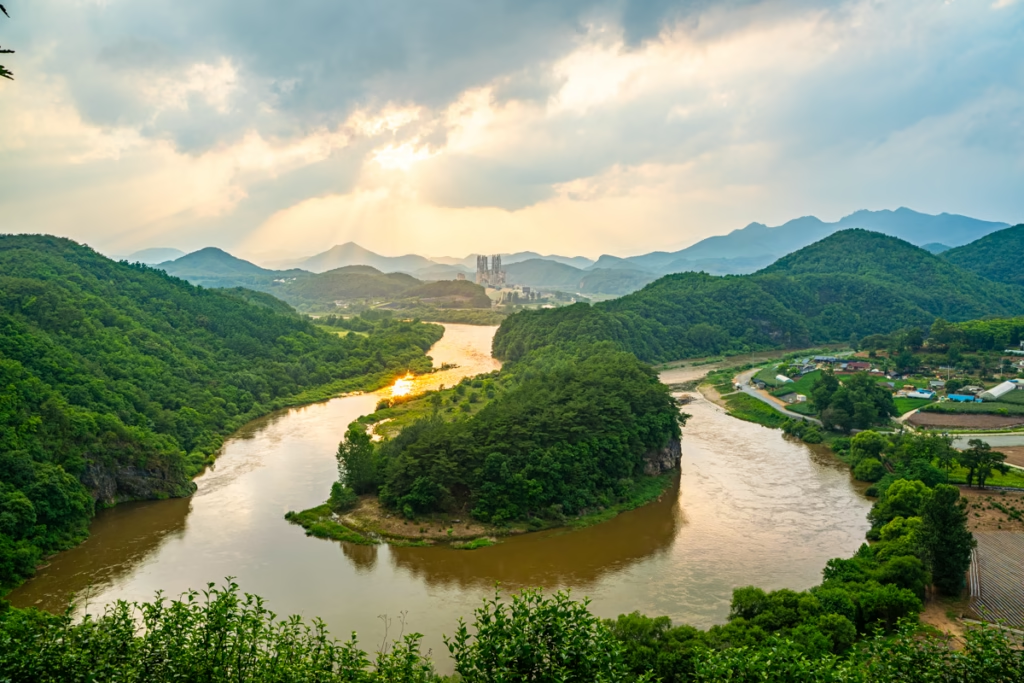
The primary filming location is Cheongnyeongpo (청령포), a narrow peninsula formed where the Seogang River nearly doubles back on itself, leaving a sliver of land accessible only by boat. In the film, this isolation is literal — Danjong could not leave without crossing the water, which was prohibited. In practice today, visitors reach Cheongnyeongpo by a short ferry ride from a dock in Yeongwol-eup, a few minutes from the town center. The site is managed separately from the sites in this guide and is not covered in detail here — this page focuses on The King’s Warden filming locations and adjacent sites across the wider county.
The second key historical site tied directly to the film is Jangneung Royal Tomb — the actual burial place of Danjong, and the starting point for the itinerary below. Unlike Cheongnyeongpo, which draws large weekend crowds, Jangneung is consistently quieter and takes less than two hours to visit properly.
Getting to Yeongwol from Seoul
Yeongwol sits roughly 215 km southeast of Seoul. By car via the Yeongdong and Jungbu Inland Expressways, the drive takes 2 hours 20 minutes to 2 hours 50 minutes depending on traffic. By public transit, take the KTX or ITX-Cheongchun from Cheongnyangni Station to Wonju Station, then transfer to an intercity bus to Yeongwol Bus Terminal — total journey around 3 hours. Most of the eight sites below require either a rental car or taxi, as local bus connections between them are infrequent. A one-day car rental from Wonju is a practical option.
For first-time visitors to Korea: Google Maps has limited functionality in South Korea due to mapping data regulations. Use Naver Map (네이버 지도) or Kakao Map instead — both have English-language interfaces and accurate real-time navigation. Every site in this guide includes a Korean-language search term for both apps. Once in Yeongwol, distances between sites range from 5 km (Jangneung to the Tourism Center) to 25 km (town center to Gossi Cave). Plan a loose loop rather than backtracking.
1. Jangneung Royal Tomb — The King’s Warden Filming Locations, Site Two
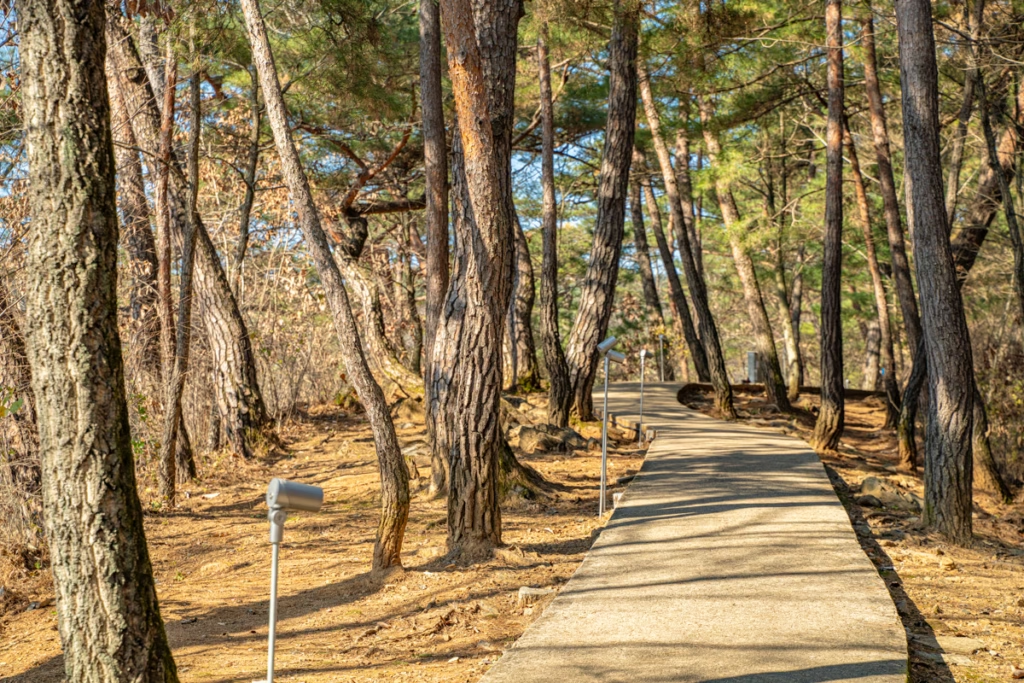
After Cheongnyeongpo, Jangneung is the natural second stop for anyone following The King’s Warden filming locations. This is the burial site of King Danjong (r. 1452–1455), the boy-king deposed by his uncle Sejo and exiled to Yeongwol at age 16. He died here in 1457 under disputed circumstances — and for decades, collecting or burying his remains was a capital offense.
It was Eom Heung-do, the local county administrator, who secretly gathered the king’s body and gave him a proper burial at personal risk to his life. That act — central to the film’s emotional arc — is why this tomb exists today. The site was not formally recognized as a royal tomb until 1698, under King Sukjong, more than 240 years after Danjong’s death. For anyone following the film’s historical trail in sequence, this is where the story ends — and where the history becomes most tangible.
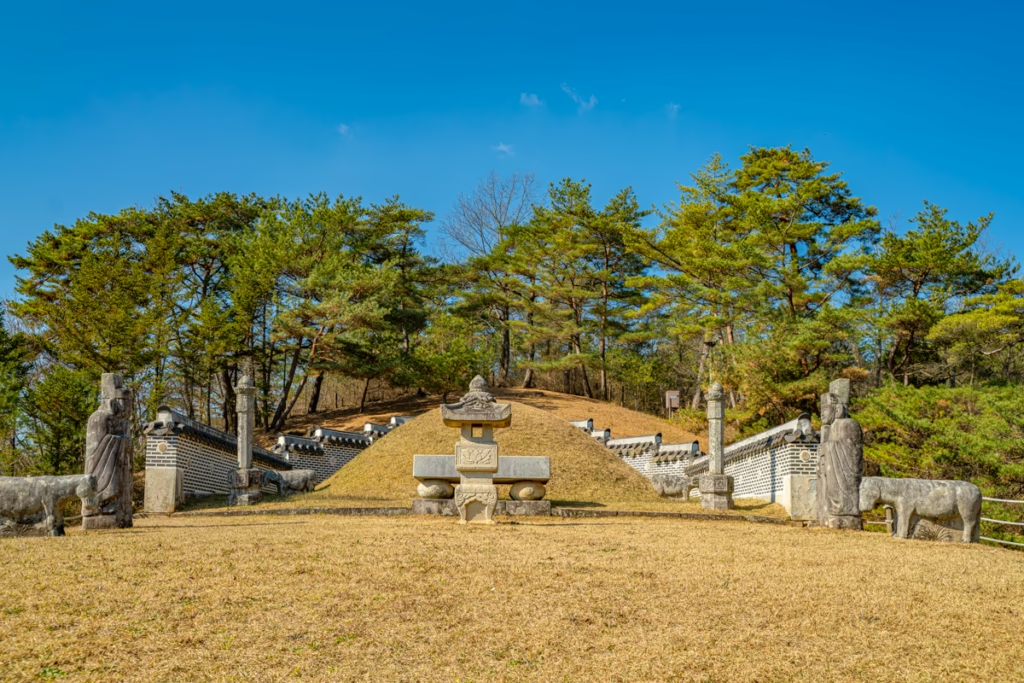
The tomb itself is modest by royal standards. The grounds are compact, the stone figures restrained. Walk through the Danjong History Museum at the entrance first — it traces the Gyeyujeongnan coup, the exile, and the long process of posthumous rehabilitation. Then follow the pine-needle path up to the burial mound. The contrast between the political violence described in the museum and the quiet of the forest path is the whole experience. It is the most historically grounded stop on this itinerary.
✈️ Travel Manual Tip: Jangneung is closed on Mondays. If your trip falls on a Monday, reverse the itinerary and start with the Korean Peninsula viewpoint or Gossi Cave instead.
📌 Trip Details
- Address: 190 Danjong-ro, Yeongwol-eup, Yeongwol-gun (단종로 190) — search 장릉 영월 on Naver Map or Kakao Map
- Hours: 09:00–18:00, closed Mondays
- Admission: Adults ₩2,000 / Teens & Military ₩1,500 / Children ₩1,000
- Parking: Free dedicated lot on-site
For visitors with a broader interest in Korea’s royal history and independence-era heritage sites, our guide to the Hwaseong Independence Movement Memorial covers another layer of that same complicated dynastic legacy.
2. Yeongwol Tourism Center — Immersive Folk Art Media Installation
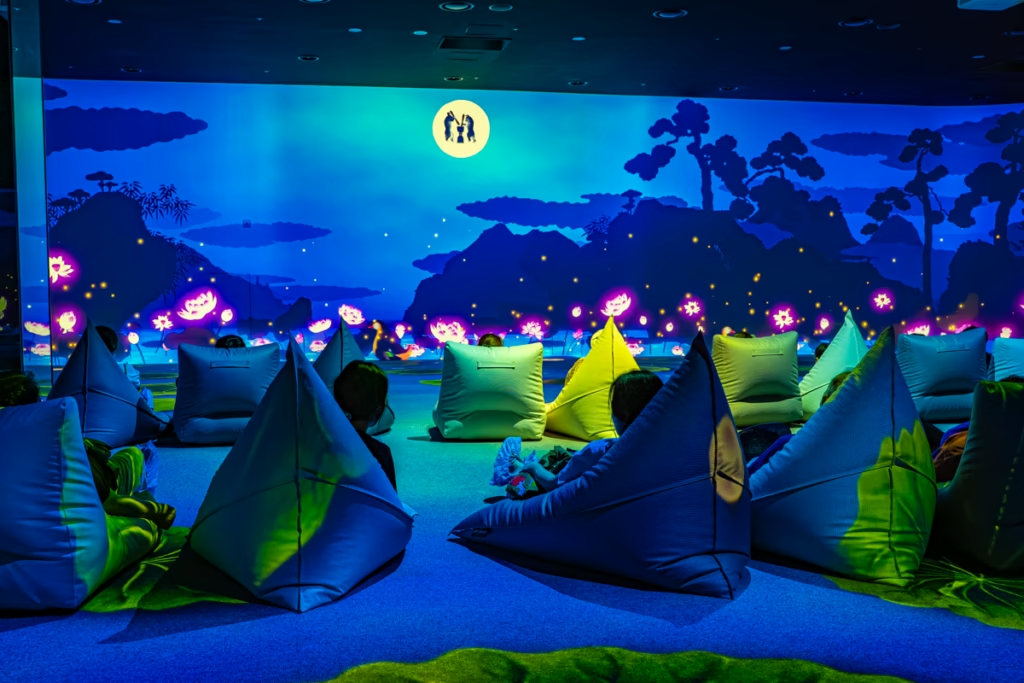
The name sounds administrative. It is not. Visitors who stray beyond the exile sites often stumble onto this space by accident — and stay longer than planned. Yeongwol Tourism Center (영월관광센터) was originally built as a visitor information hub for the region’s former coal-mining areas, but it now functions as a multi-room cultural complex anchored by a permanent immersive media art exhibition based on Korean minhwa — traditional folk painting.
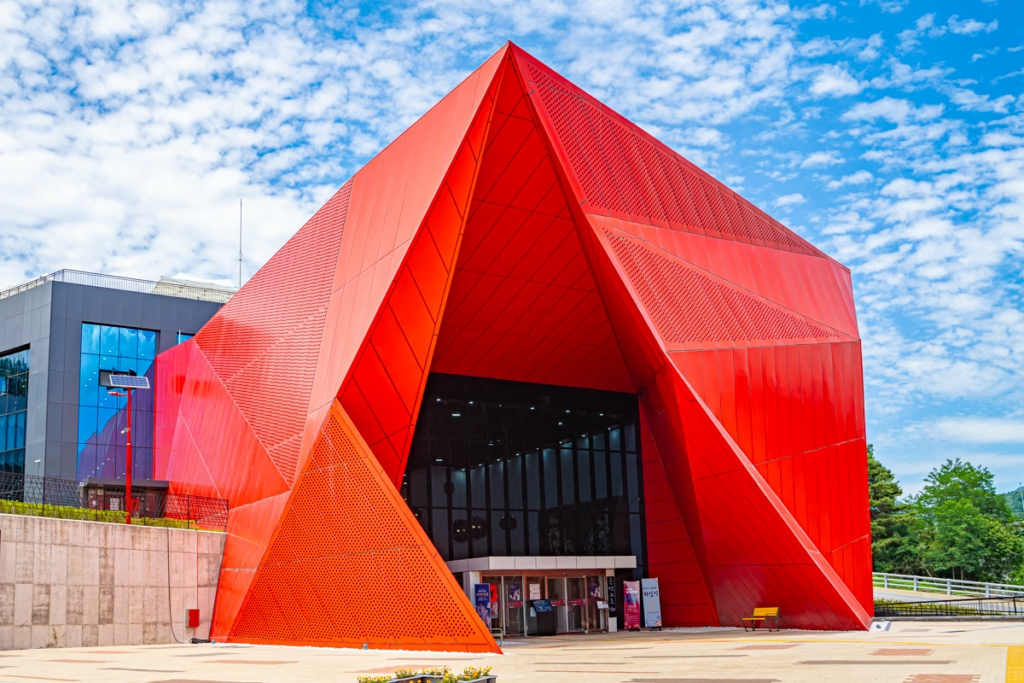
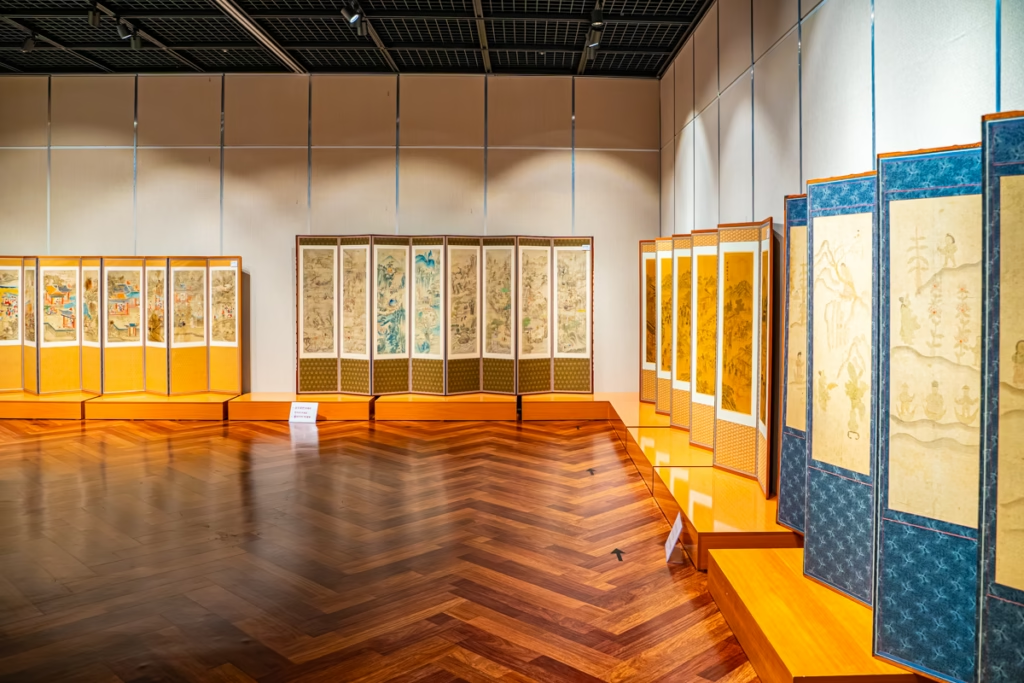
Expect floor-to-ceiling projection of tigers smoking pipes, moon rabbits at their pestle, and figures from classic Korean folklore rendered in moving color across every surface. The second and third exhibition halls extend the experience with physical artwork using the same visual vocabulary. Budget 60–90 minutes for the full circuit. It is the most unexpected stop on the broader The King’s Warden visitor itinerary — not a filming location itself, but within walking distance of Cheongnyeongpo and consistently surprises first-time visitors.
📌 Trip Details
- Address: 126-3 Cheongnyeongpo-ro, Yeongwol-eup (청령포로 126-3) — search 영월관광센터
- Hours: 09:00–18:00, closed Mondays (Café: 10:30–19:30)
- Admission: Adults ₩10,000 / Yeongwol residents ₩7,000 / Children ₩5,000
3. Korean Peninsula Terrain Viewpoint — National Scenic Site No. 75
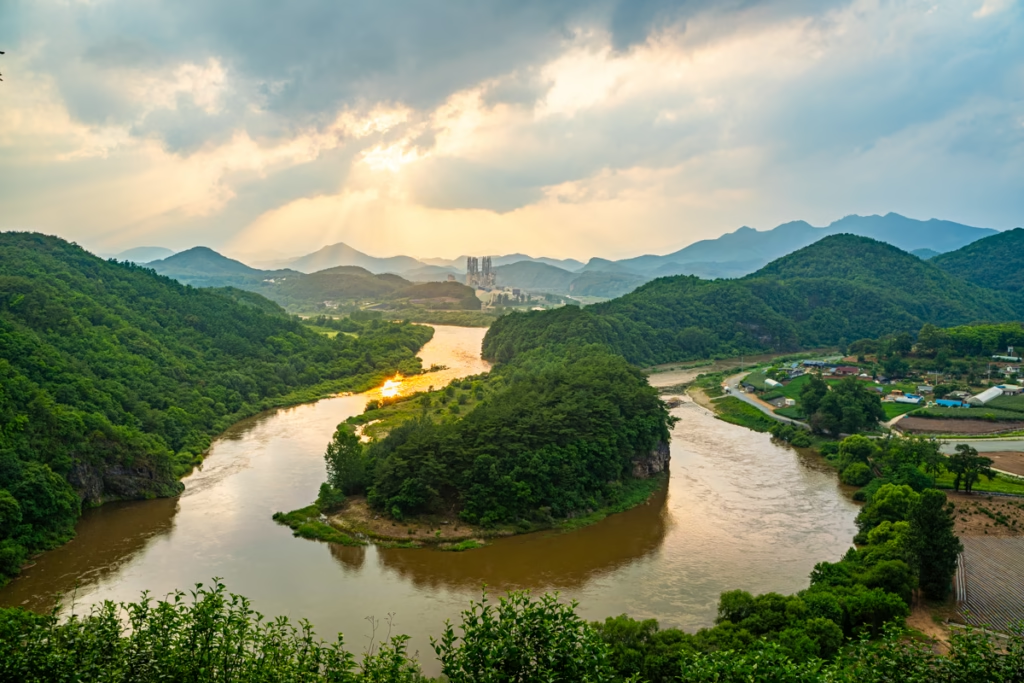
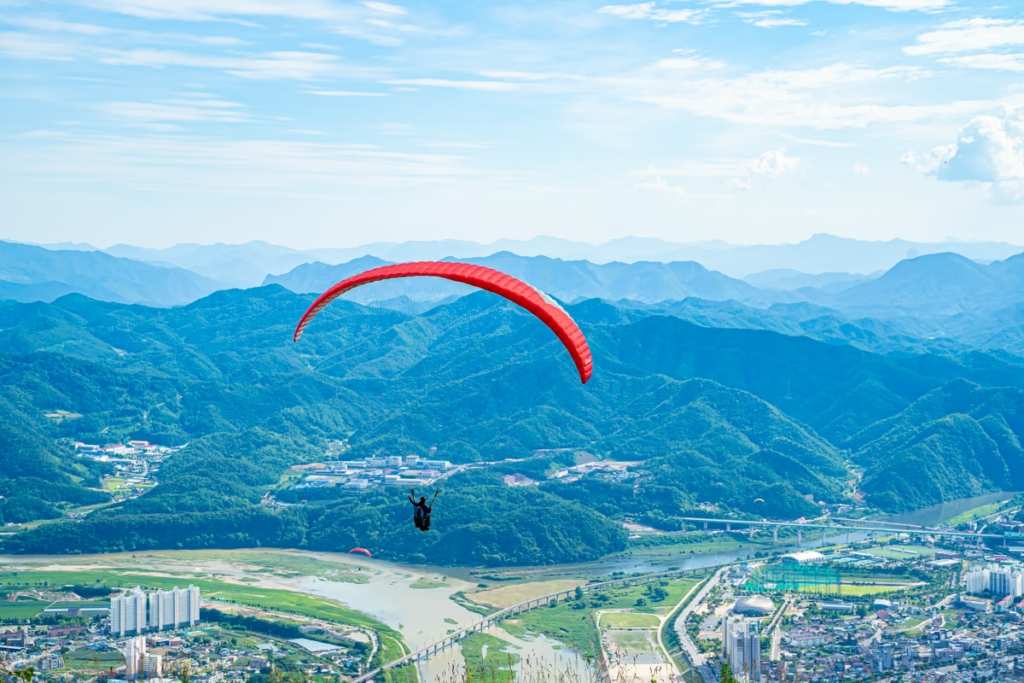
The Pyeongchang River (Seogang), fed by water from Taegi Mountain, loops around Seonam Village in a near-complete bend. Viewed from the observation deck above, the resulting landform — steep forested cliffs to the east, flat agricultural lowland to the west — replicates the outline of the Korean Peninsula with unusual accuracy. The government recognized it as National Scenic Site No. 75. It is a natural counterpoint to the exile sites — the historical stops are somber and interior; this viewpoint is open, outdoor, and completely different in register.
From the viewpoint parking lot, a boardwalk trail climbs for about 20 minutes through oak and pine to the platform. No significant elevation gain, but the path is uneven in places — proper footwear is recommended. When visiting The King’s Warden filming locations, Gossi Cave and this viewpoint offer the clearest counterpoint to the claustrophobic drama of the exile sites — wide sky, open water, and scale. After descending, the Hanban-do Raft Village (한반도뗏목마을) below runs traditional log raft rides along roughly 1 km of river with a local commentary. The experience is run by village residents, not a commercial operator.
✈️ Travel Manual Tip: Weekend morning queues for the raft ride can stretch to 45 minutes. Arrive before 10:00 or plan to visit on a weekday. The raft operates March through November only.
📌 Trip Details
- Viewpoint Parking: 555 Hanban-do-ro, Hanban-do-myeon (한반도로 555) — ₩2,000 per vehicle
- Raft Village: 70 Seonam-gil, Hanban-do-myeon (선암길 70) — search 한반도뗏목마을
- Raft Hours: 09:00–17:30, March–November
- Raft Fare: Adults ₩8,000 / Children ₩6,000
4. Yeongwol Y Park — Sculpture Park Built from Salvage
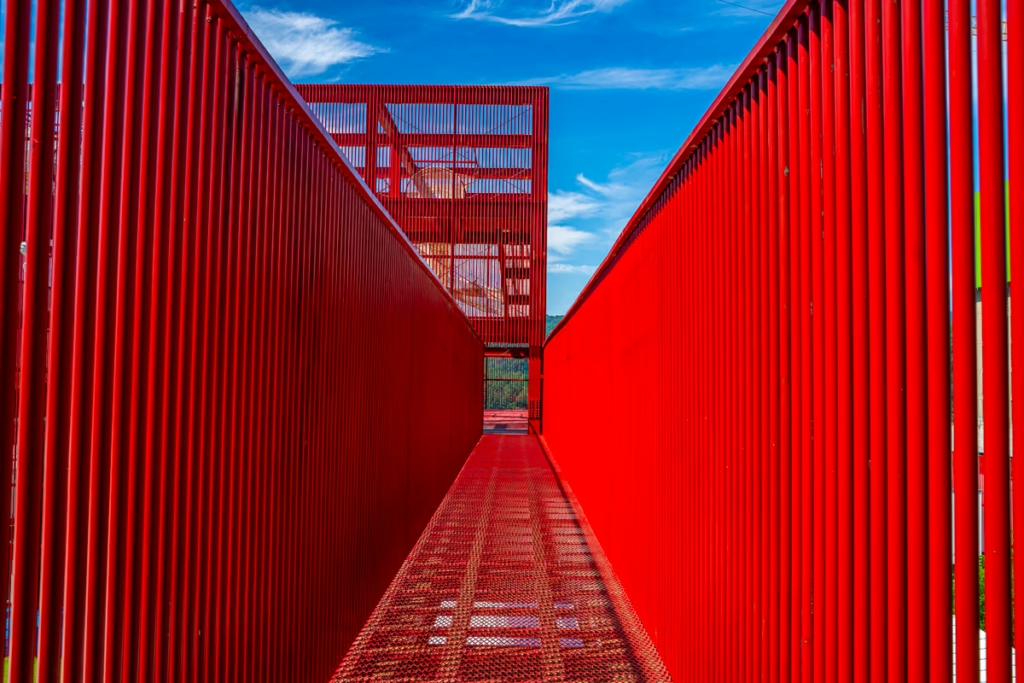
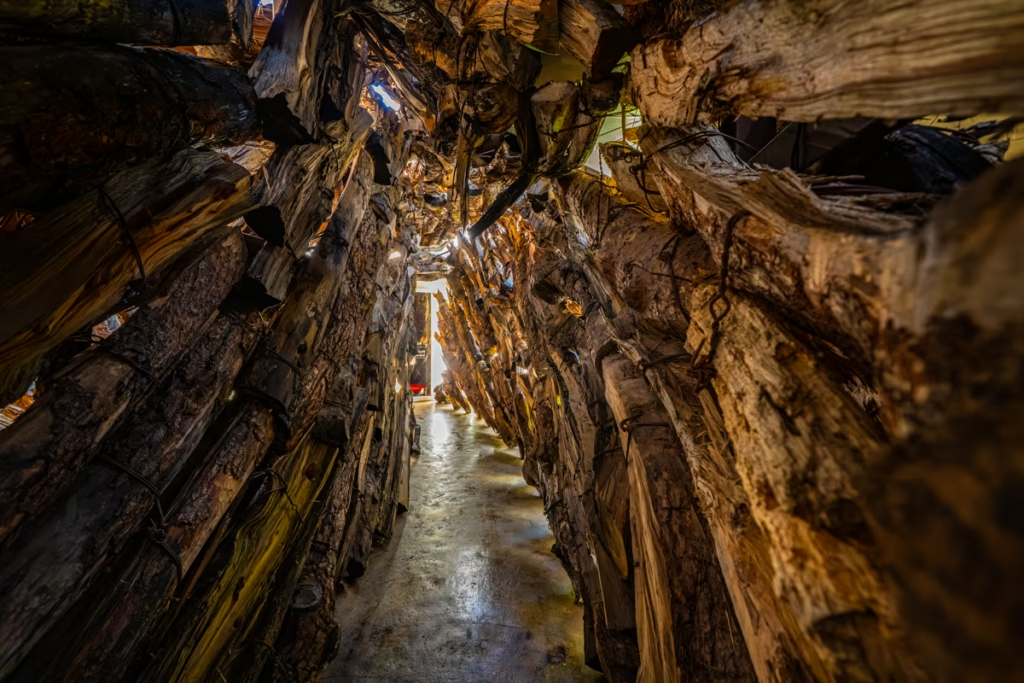
Yeongwol Y Park (젊은달와이파크) has no connection to the Joseon-era exile story, but it occupies the same county and offers a deliberate change of pace. The former site of a liquor museum, redesigned by spatial designer Choi Ok-yeong into a ten-zone contemporary art complex, its defining feature is that almost every major work is made from reclaimed or demolished materials.
The signature piece is Bulgeun Daenamu — “Red Bamboo” — a cluster of salvaged steel pipes welded together and painted red, rising several meters against the hillside. Nearby, Mokseong (“Wood Planet”) stacks deconstructed timber into a dense, layered mass. The site reads less as a gallery and more as a long walk through outdoor installations, with ten distinct sections spread across the terrain. Dogs are permitted if carried. It is the most photogenic stop for visitors who came to Korea after watching The King’s Warden and are looking for something outside the historical circuit.
📌 Trip Details
- Address: 1467-9 Songhak-Jucheon-ro, Jucheon-myeon (송학주천로 1467-9) — search 젊은달와이파크
- Hours: 10:00–18:00, open year-round (last ticket 17:00)
- Admission: Adults & Teens ₩15,000 / Children ₩10,000
- Note: Dogs allowed if carried throughout visit
5. Byeolmaro Observatory — Best Public Stargazing in Korea
Byeolmaro Observatory (별마로천문대) sits at 799.8 m elevation on the summit of Bongnae Mountain, about 20 minutes by car from Yeongwol town center along a winding mountain road. For visitors building an itinerary around The King’s Warden filming locations, the observatory adds a dimension that has nothing to do with Joseon history — on a clear night, the 800mm primary telescope resolves Saturn’s rings without difficulty. Yeongwol averages 160–190 clear observation nights per year — one of the highest figures for any public facility in the country — a result of its inland location, low humidity, and limited light pollution.
The observatory operates on a 100% advance reservation system. Book through the official site at yao.or.kr before your trip. The program includes a domed planetarium show covering seasonal constellations, followed by outdoor and indoor telescope observation sessions. The third-floor Café 799 terrace offers a daytime view across the entire Yeongwol basin. For visitors building a two-day Korea itinerary around Yeongwol, the observatory is the strongest reason to stay overnight in town rather than attempting a same-day return to Seoul.
If you are returning to the capital and want another perspective on Korea’s nightscape, check out our guide to the N Seoul Tower winter hike for sunset and blue hour photography.
✈️ Travel Manual Tip: Operating hours changed in February 2026. Confirm the current schedule at yao.or.kr before building your itinerary around an evening visit. Session times fill quickly on weekends during clear-weather forecasts.
📌 Trip Details
- Address: 397 Cheonmundae-gil, Yeongwol-eup (천문대길 397) — search 별마로천문대
- Hours: 14:00–23:00, closed Mondays (verify at yao.or.kr)
- Admission: Adults ₩7,000 / Teens & Military ₩6,000 / Children ₩5,000 / Seniors ₩3,500
- Reservation: Required — book at yao.or.kr
6. Yemil Wine Village — Limestone Valley Winemaking
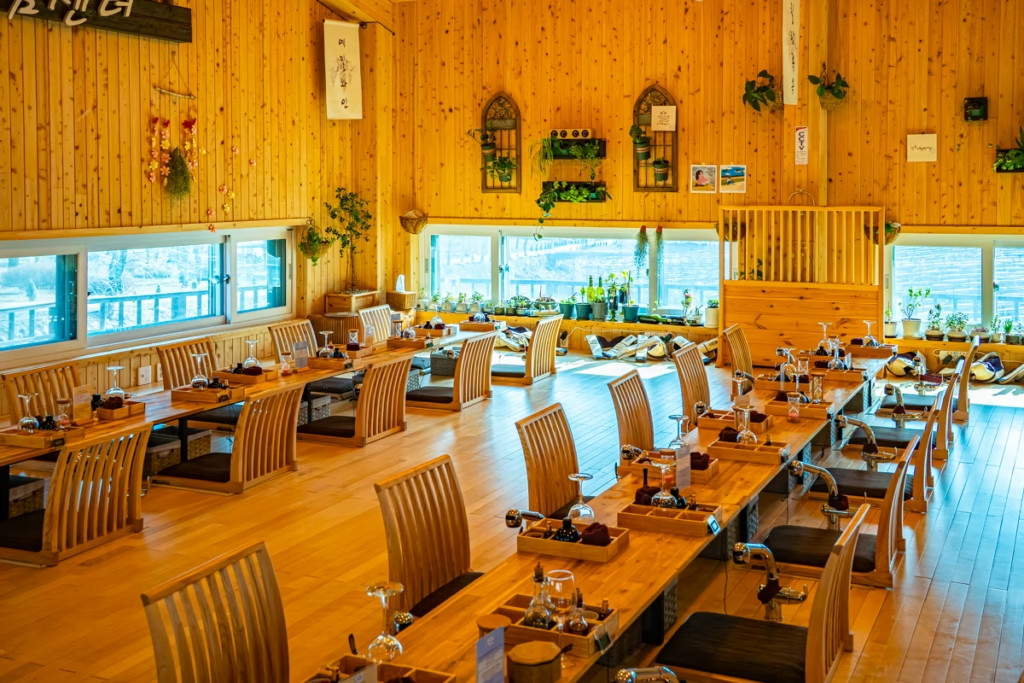
Yemil Wine Village (예밀와인마을) sits deep in the Gimsat-gat Valley — a narrow limestone gorge in the southwestern corner of Yeongwol County. It requires a deliberate detour from the historical sites clustered near town, but the drive through the valley is half the reason to come. The large diurnal temperature swings and free-draining calcareous soil stress the grape vines in a way that concentrates sugar and flavor. Village residents press five wines from this fruit: a red dry, red sweet, rosé, white, and a premium dry blended with wild grapes (meoru). The red dry won the Grand Prize at the 2019 Korean Liquor Awards in the wine category.
The Yemil Wine Healing Center (예밀와인힐링센터) handles tastings and sales. A foot-bath program using warm water and red wine runs alongside regular hours — ₩15,000 per person, reservation recommended. Next door, Bread Memil (브레드메밀) operates Thursday through Sunday (09:00–16:30) and bakes with domestic wheat and seasonal Gangwon ingredients. The combination of cave and wine village makes the southwestern corner of the county the most compact half-day loop for visitors extending beyond the historical core.
Traveling the rural southwest of Korea? Our guide to the Gangjin Baegun Chasil tea house covers a similarly off-the-beaten-path agricultural experience further south.
📌 Trip Details
- Address: 229-3 Yemichon-gil, Gimsat-gat-myeon (예밀촌길 229-3) — search 예밀와인힐링센터
- Hours: 10:00–18:00, closed Mondays
- Foot Bath: ₩15,000 per person — advance booking recommended
7. Gossi Cave — Paleozoic Limestone Cave with Wartime History
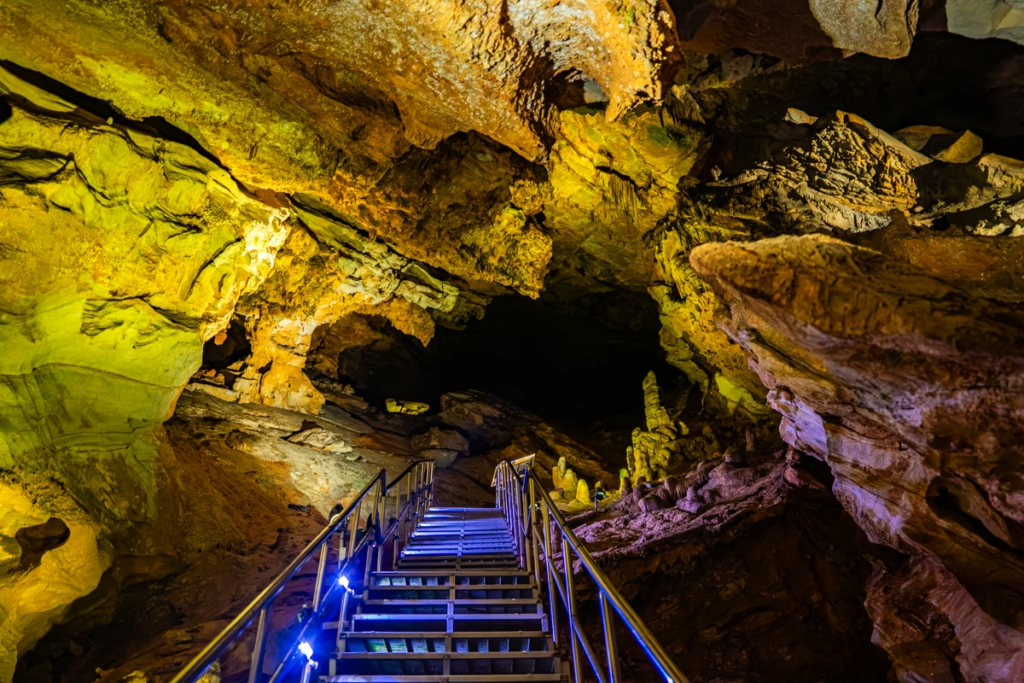
When visiting The King’s Warden filming locations, Gossi Cave offers a completely different geological perspective. Gossi Cave (고씨굴) is a natural limestone cave formed during the Paleozoic era — hundreds of millions of years in the making — and was inhabited, briefly and under difficult circumstances, by the Goh family clan during the Japanese invasion of 1592. The cave provided enough interior space for an extended family to shelter, eat, and sleep through the conflict.
The guided circuit runs through chambers of varying scale: open galleries large enough to stand upright and walk freely, then low passages requiring a pronounced crouch, then back to vaulted rooms with floor-to-ceiling stalactites and columns. The full tour takes 60–80 minutes. Temperature inside holds around 12–15°C year-round — bring a light layer regardless of the season outside. Gossi Cave is the oldest geological feature on this itinerary and the most physically engaging stop for visitors who have otherwise spent the day at Joseon-era exile sites. The adjacent Yeongwol Cave Ecology Center (영월동굴생태관) documents the cave’s formation and its internal ecosystem.
✈️ Travel Manual Tip: Gossi Cave is located in Gimsat-gat-myeon, the same southwestern corner of the county as Yemil Wine Village. Combine both into a single half-day loop rather than making separate trips.
📌 Trip Details
- Address: 1117 Yeongwol-dong-ro, Gimsat-gat-myeon (영월동로 1117) — search 고씨굴
- Hours: 09:00–18:00, last entry 17:00
- Admission: Adults ₩4,000 / Teens & Military ₩3,000 / Children ₩2,000 / Seniors ₩1,000
- Ecology Center: 506-22 Jinbyeol-ri — 09:00–18:00, closed Mondays — Adults ₩3,000 / Students ₩2,000
8. Gangwon Coal Mine Culture Village — A 1970s Mining Town, Reconstructed
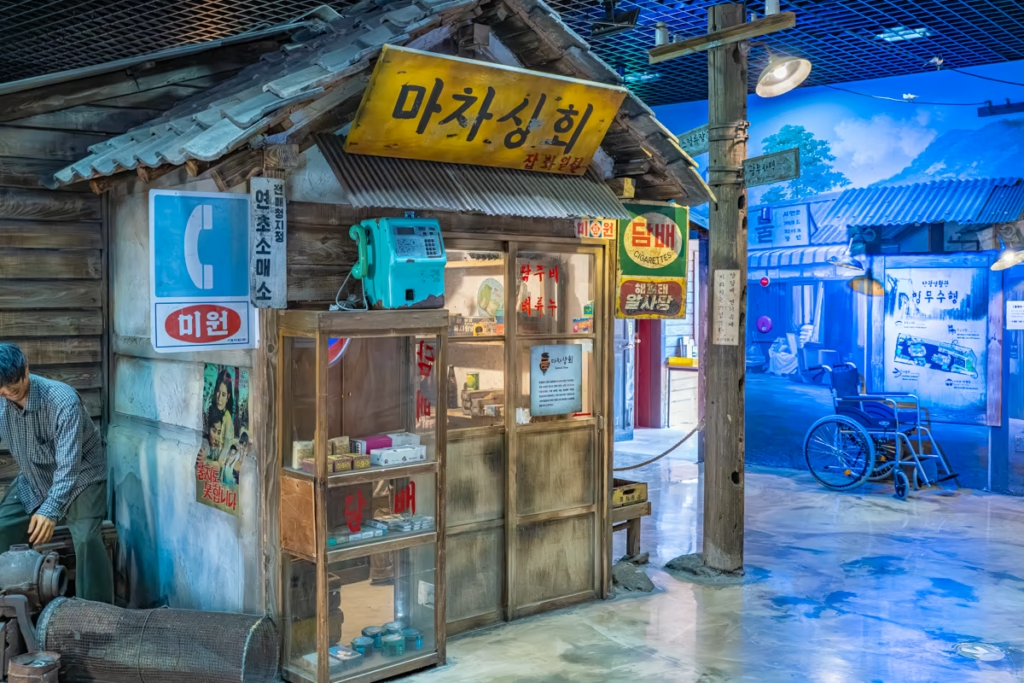
The village of Macha-ri in Buk-myeon was a prosperous coal-mining settlement through the 1960s and 70s — an era when Gangwon Province powered Korea’s industrialization. For visitors who have spent the morning at the Joseon-era exile sites, this space offers a jarring but illuminating jump forward by five centuries. The Gangwon Coal Mine Culture Village (강원특별자치도탄광문화촌) preserves that period in a format that falls somewhere between open-air museum and living history exhibit.
The main draw is a full-scale replica of Macha-ri Street circa 1970–80: storefronts, signage, interiors, and props from the period. A separate 4D experience hall, and a mock mine shaft entrance with period equipment and worker exhibits, round out the site. The combination works on two levels simultaneously — genuinely nostalgic for Korean visitors who lived through the era, and a coherent historical document for those who didn’t. It anchors the industrial chapter of this itinerary and pairs well with the Joseon-era historical sites on the other side of town.
Note on logistics: This site is in Buk-myeon, the northern district of Yeongwol County — in the opposite direction from Gossi Cave, the wine village, and the peninsula viewpoint. Either begin or end your day here, rather than building it into a loop with the other sites.
📌 Trip Details
- Address: 351 Bamjae-ro, Buk-myeon (밤재로 351) — search 탄광문화촌 영월
- Hours: 10:00–18:00, closed Mondays (if Monday is a public holiday, closed Tuesday instead)
- Admission: Adults ₩2,000 / Teens & Military ₩1,400 / Children ₩1,000
Where to Eat: Ilmi Dak-gangjeong (닭강정) at Seobu Market
End the day back in town at Ilmi Dak-gangjeong (일미닭강정), a fried chicken glazed in a sweet-spicy house sauce, operating from a stall inside Seobu Market (서부시장). The vendor is a government-certified Baengnyeon Gage (“hundred-year shop”), which means it has survived multiple generations of ownership with consistent standards. It has been featured on several national food programs and uses only domestic chicken thigh meat.
The chicken holds its crunch well after cooling — it travels. Buy a portion to take on the road if you’re heading back to Seoul the same day. Arrive before noon. Afternoon visits frequently end in sold-out disappointment — a recurring note from visitors working through a tight day-trip schedule.
📌 Trip Details
- Address: 15 Seobu-sijang-gil, Yeongwol-eup (서부시장길 15) — search 일미닭강정 영월
- Hours: 09:30–20:00 (last order 19:00; closes early when sold out)
- Parking: Seobu Market public lot
Where to Stay in Yeongwol
Most accommodation sits in or just outside Yeongwol-eup, the county seat. Options range from budget guesthouses near the bus terminal to mid-range pension-style lodging along the river. For first-time visitors to Korea: accommodation in small Gangwon county towns runs significantly cheaper than Seoul — expect ₩50,000–₩100,000 per night for a clean, well-located room. If Byeolmaro Observatory is on your itinerary, staying overnight makes the evening schedule far more manageable than timing a return to Wonju. This guide defaults to a one-night recommendation for most visitors combining The King’s Warden filming locations with the rest of the county.→ Browse Yeongwol hotels and guesthouses on Agoda
Combining Yeongwol with a broader southern loop? Our Geoje spring travel guide covers early-season blooms and coastal landscapes.
Practical Information — The King’s Warden Filming Locations & Yeongwol at a Glance
| Category | Details |
|---|---|
| Jangneung Royal Tomb | 190 Danjong-ro / 09:00–18:00 / Closed Mon / Adults ₩2,000 / Free parking |
| Yeongwol Tourism Center | 126-3 Cheongnyeongpo-ro / 09:00–18:00 / Closed Mon / Adults ₩10,000 |
| Korean Peninsula Viewpoint | 555 Hanban-do-ro / Parking ₩2,000 / Raft: Mar–Nov 09:00–17:30 / Adults ₩8,000 |
| Yeongwol Y Park | 1467-9 Songhak-Jucheon-ro / 10:00–18:00 / Year-round / Adults ₩15,000 |
| Byeolmaro Observatory | 397 Cheonmundae-gil / 14:00–23:00 / Closed Mon / Adults ₩7,000 / Reservation required: yao.or.kr |
| Yemil Wine Village | 229-3 Yemichon-gil / 10:00–18:00 / Closed Mon / Foot bath ₩15,000 |
| Gossi Cave | 1117 Yeongwol-dong-ro / 09:00–18:00 / Last entry 17:00 / Adults ₩4,000 |
| Coal Mine Culture Village | 351 Bamjae-ro, Buk-myeon / 10:00–18:00 / Closed Mon / Adults ₩2,000 |
| Ilmi Dak-gangjeong | 15 Seobu-sijang-gil / 09:30–20:00 / Sells out early / No reservation |
| Distance from Seoul | ~215 km / 2h 20m–2h 50m by car / ~3h by train + bus |
| Recommended Stay | 1 night minimum; 2 nights if including Gossi Cave, Wine Village, and Observatory |
| Transport | Car strongly recommended; KTX/ITX to Wonju then intercity bus to Yeongwol |
| Navigation | Google Maps unreliable in Korea — use Naver Map (네이버 지도) or Kakao Map |
| Best Season | Spring (April–May) and autumn (October) for foliage; summer for raft and cave; winter for stargazing |