
Table of Contents
Transparency Note: This guide contains affiliate links. If you make a purchase, I may earn a commission at no extra cost to you—allowing me to keep providing expert, gear-tested travel insights.
Every spring, Jeju Island — South Korea’s subtropical volcanic island about a 1-hour flight south of Seoul — turns into a rolling canvas of bright yellow. Jeju canola flowers (called yuchae-kkot, 유채꽃) blanket nearly every open field from late March through mid-April, and the island’s most famous viewpoints fill up fast.
If you’ve seen the photos from Seongsan Ilchulbong or Hallim Park and thought “that looks packed,” you’re right. Those popular Jeju canola flowers spots draw dense crowds that make it almost impossible to get a clean photograph — or a quiet moment.
This guide covers three lesser-known locations where the flowers are just as vivid but the foot traffic drops off dramatically. Each one pairs canola blooms with a backdrop you won’t find at the mainstream fields: centuries-old stone walls, volcanic sea cliffs, and a vast agricultural plain that stretches to the horizon.
1. Seongeup Folk Village — Canola Flowers Against Jeju’s Ancient Stone Walls
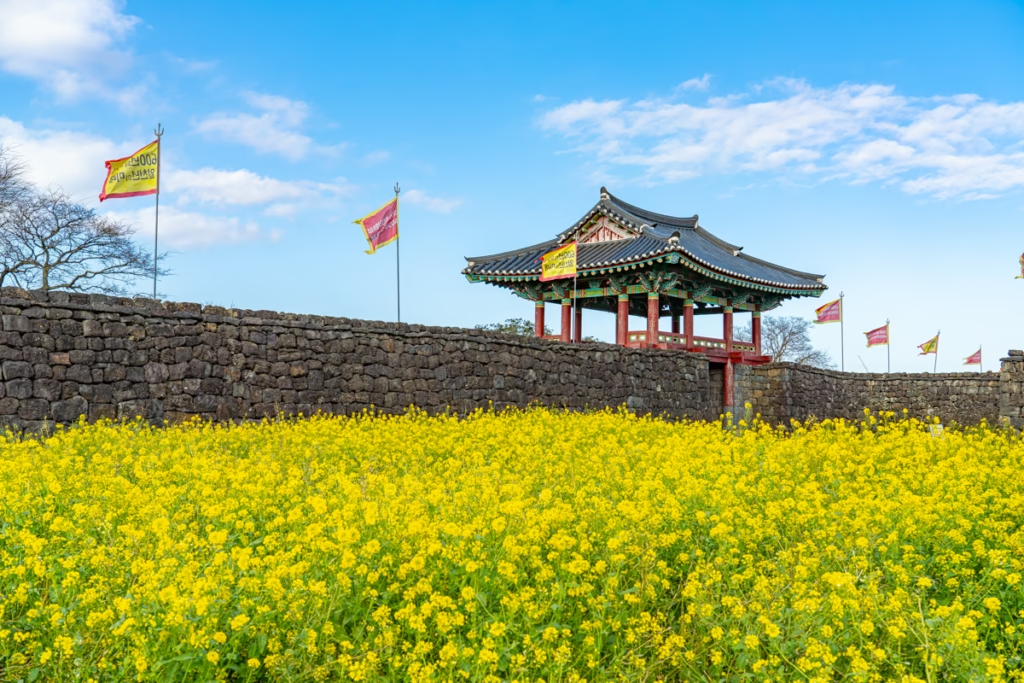
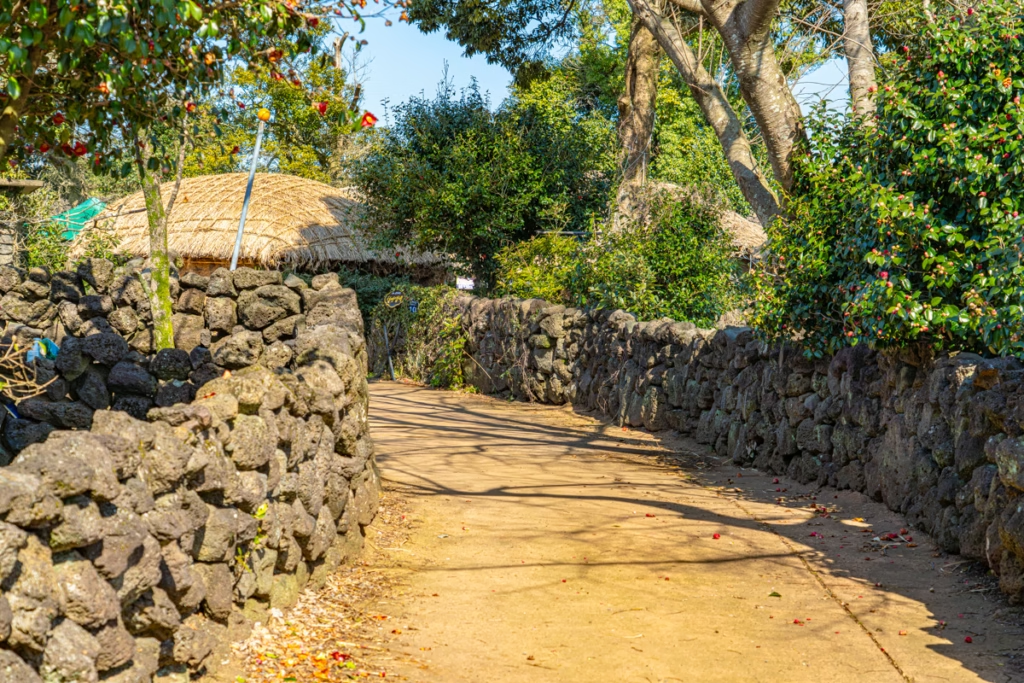
Most visitors associate canola fields with ocean views or the slopes of Hallasan. Seongeup Folk Village (성읍민속마을) offers something entirely different: a living, inhabited heritage village where rough-stacked basalt walls and rounded thatched roofs create an unmistakably Jeju backdrop for the spring blooms.
The village sits in the mid-mountain area of eastern Jeju, about a 40-minute drive from Jeju City. Unlike reconstructed theme parks, Seongeup is a real community — residents still live here — which means the Jeju canola flowers growing along the narrow stone lanes feel incidental rather than staged.
Why It Works
- Visual contrast: The near-black volcanic stone against bright yellow petals is a combination you won’t replicate anywhere else on the island. It reads as distinctly “old Jeju” in photographs.
- Low foot traffic: Tour buses stop briefly at the village entrance, but few visitors venture into the back lanes where the best flower-and-wall compositions sit.
- Free admission: No entrance fee. The village is open year-round.
Practical Tips
- Best time to visit: Weekday mornings before 10 AM. The light hits the east-facing walls at a low angle, and most tour groups arrive after lunch.
- Getting there: Drive or take Bus 710 from Jeju Intercity Bus Terminal (약 50 min). Search “성읍민속마을” on Naver Map or Kakao Map.
- Photography note: A moderate wide-angle (24–35 mm) works best to capture both the flowers and the thatched rooftops in a single frame without distortion.
If you’re planning to explore eastern Jeju for the day, Seongeup pairs well with a visit to Seongsan Ilchulbong (15 min drive) — but come here first, before the crowds push you back toward the tourist circuit.
The preserved architecture here offers a window into Jeju’s pre-modern daily life. If Korea’s deeper history interests you, the Hwaseong Independence Movement Memorial — a recently renovated museum built on the exact site of the 1919 Jeam-ri Massacre, just 90 minutes from Seoul — provides another powerful encounter with Korean heritage that no reconstructed village can replicate.
📍 Nearby accommodation: Staying in the Seongsan or Pyoseon area keeps you close to this part of the island. Search hotels near Seongsan on Agoda for the best rates in the area.
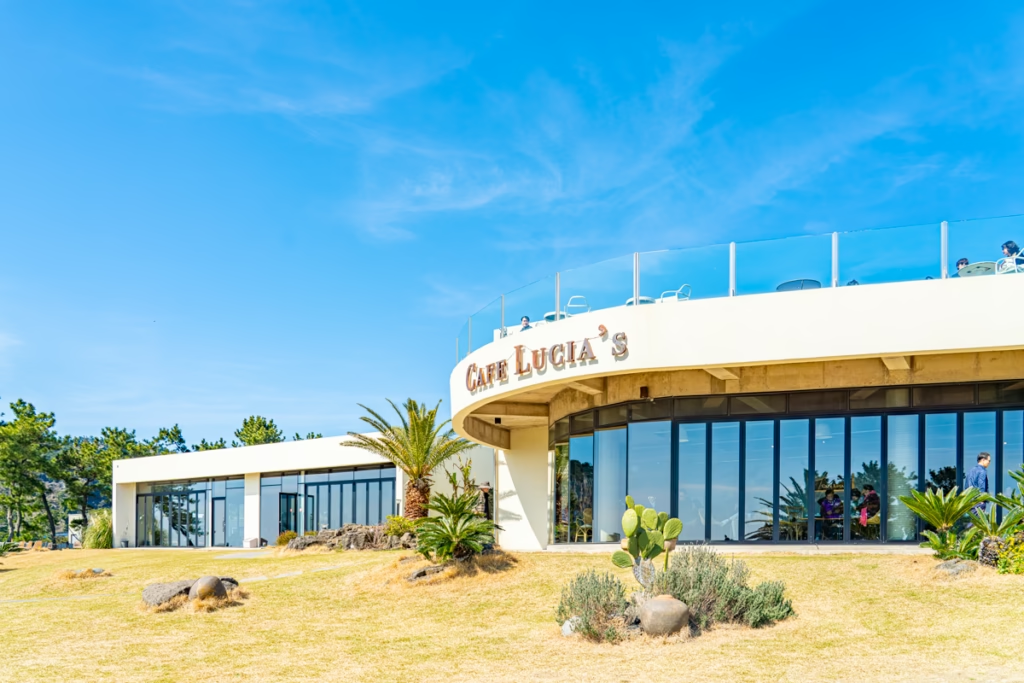
2. Cafe Lucia’s at Baksugijjeong Cliff — Sea Cliffs Meet Spring Blooms
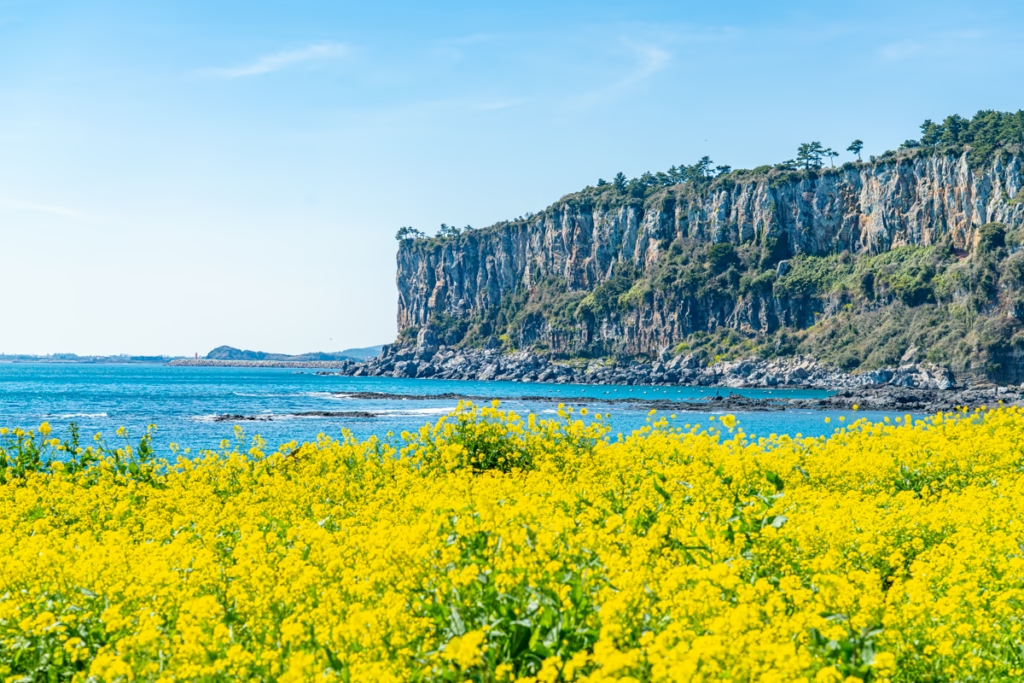
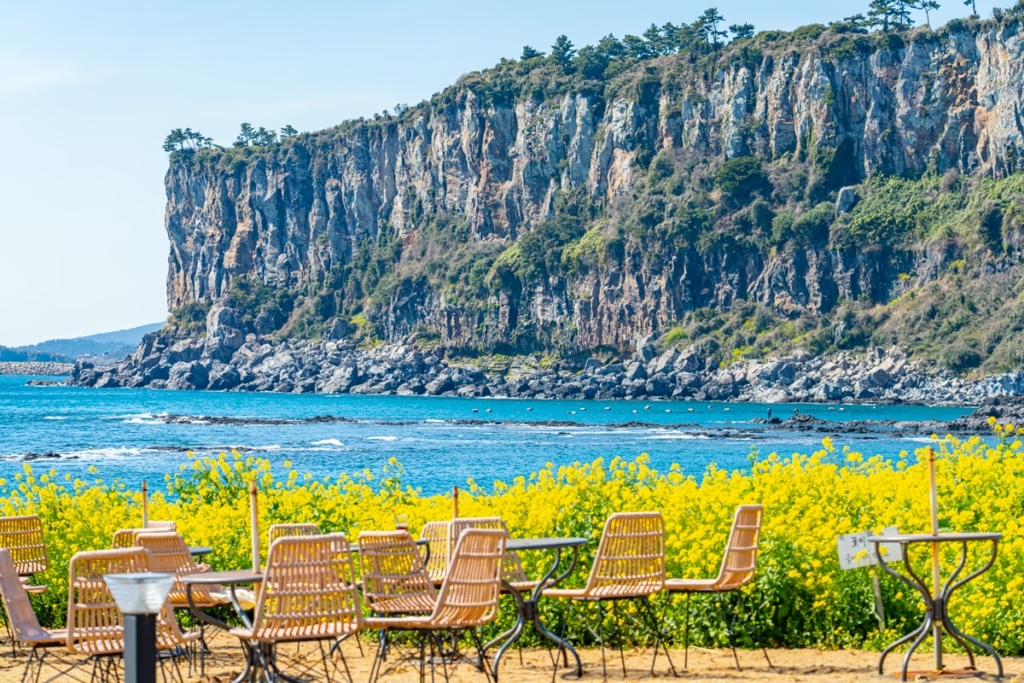
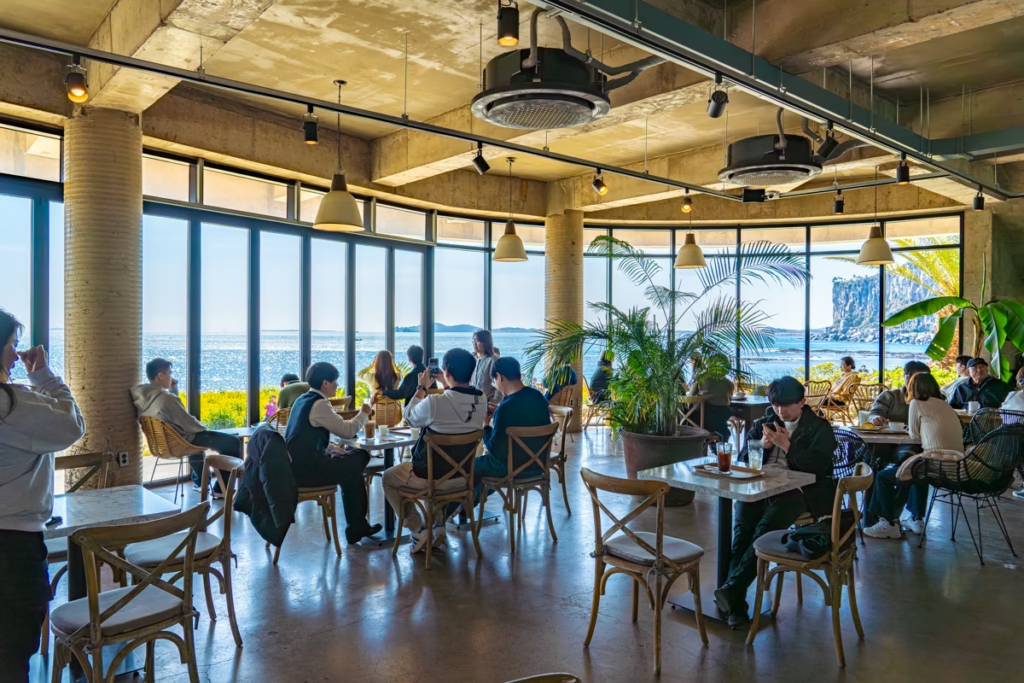
You don’t need to pay an entrance fee or hike a muddy trail to find Jeju canola flowers worth photographing. At Cafe Lucia’s Main Branch (카페루시아 본점), the front garden does the work for you — and the backdrop is a sheer volcanic cliff called Baksugijjeong (박수기정) that drops straight into the sea.
The cafe is located in Daepyeong-ri (대평리) on Jeju’s southwest coast, roughly a 40-minute drive from Jeju City or 30 minutes from Jungmun Tourist Complex.
Why It Works
- Dramatic scale: The columnar-jointed cliff wall rises like a curtain behind the canola field. The contrast between raw volcanic geology and delicate spring flowers is visually striking without any exaggeration needed.
- Built-in comfort: You’re at a cafe. Order a coffee, sit on the terrace, and look at the flowers. No hiking boots or sunscreen strategy required.
- Unique composition: This is one of the rare spots where you can frame cliff, ocean, and canola in a single shot — a combination the famous fields simply can’t offer.
Practical Tips
- Best time to visit: Late afternoon. The sun moves behind you and lights the cliff face warmly. Weekdays are noticeably quieter.
- Getting there: Driving is easiest. Search “카페루시아 본점” on Naver Map. Limited public transit to this area — a rental car or taxi is recommended.
- Cost: No entrance fee for the garden area. Coffee runs ₩6,000–8,000 (approximately USD $4.50–6).
- Photography note: Bring a polarizing filter if you have one. The cliff face and ocean both produce glare in afternoon light, and the filter deepens the flower colors significantly.
This southwest corner of Jeju is less developed than the north or east coasts, which means fewer crowds overall. If you’re driving the coastal road, the nearby Jungmun Daepo Columnar Joints (중문대포주상절리) are worth a 10-minute detour.
🏨 Where to stay: The Jungmun area has the island’s densest cluster of resort hotels. Compare Jungmun resort hotels on Agoda — many include breakfast and ocean-view rooms.
3. Seongsan Canola Flower Cultivation Complex — The Field That Doesn’t End
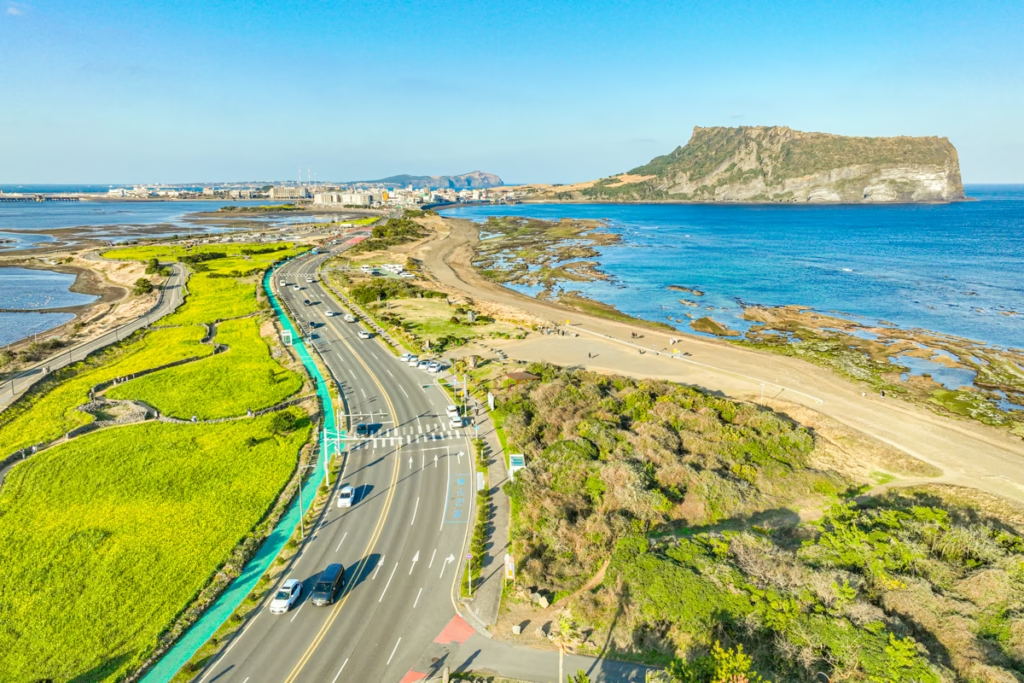
While tourists cluster around Gwangchigi Beach and the narrow flower strips near Seongsan Ilchulbong, a short drive inland reveals the largest Jeju canola flowers field most visitors never hear about. The Seongsan Canola Flower Cultivation Complex (성산유채꽃재배단지) is exactly what the name suggests — an agricultural production zone, not a manicured photo spot.
The complex is located about 5 minutes by car inland from Seongsan Ilchulbong, in the flatlands south of the peak. It’s the kind of place that doesn’t show up on most English-language guides because there’s no ticket booth, no parking attendant, and no Instagram-ready signage.
Why It Works
- Sheer scale: The cultivated area covers a wide stretch of open farmland. Unlike curated flower parks, there are no artificial structures breaking the horizon line — it’s just flowers, sky, and the distant outline of Hallasan on a clear day.
- Room to breathe: The field is large enough that even on weekends, visitors spread out naturally. You can walk for several minutes without another person entering your frame.
- Authentic agricultural landscape: This is a working farm, not a theme attraction. The rows aren’t perfectly trimmed, the paths are unpaved, and that’s precisely what gives the place its character.
Practical Tips
- Best time to visit: Early April tends to be peak bloom here. Morning visits (before 11 AM) give you the best light and the fewest people.
- Getting there: A car is essential. Search “성산유채꽃재배단지” on Naver Map. Parking is informal — look for spaces along the roadside near the fields.
- What to wear: The paths are dirt and gravel. Skip the white sneakers. Flat, closed-toe shoes work best.
- Photography note: Use a telephoto (85–200 mm) to compress the depth of the flower rows and stack layers of yellow. A low angle emphasizing the flowers against the sky is more effective than shooting from standing height.
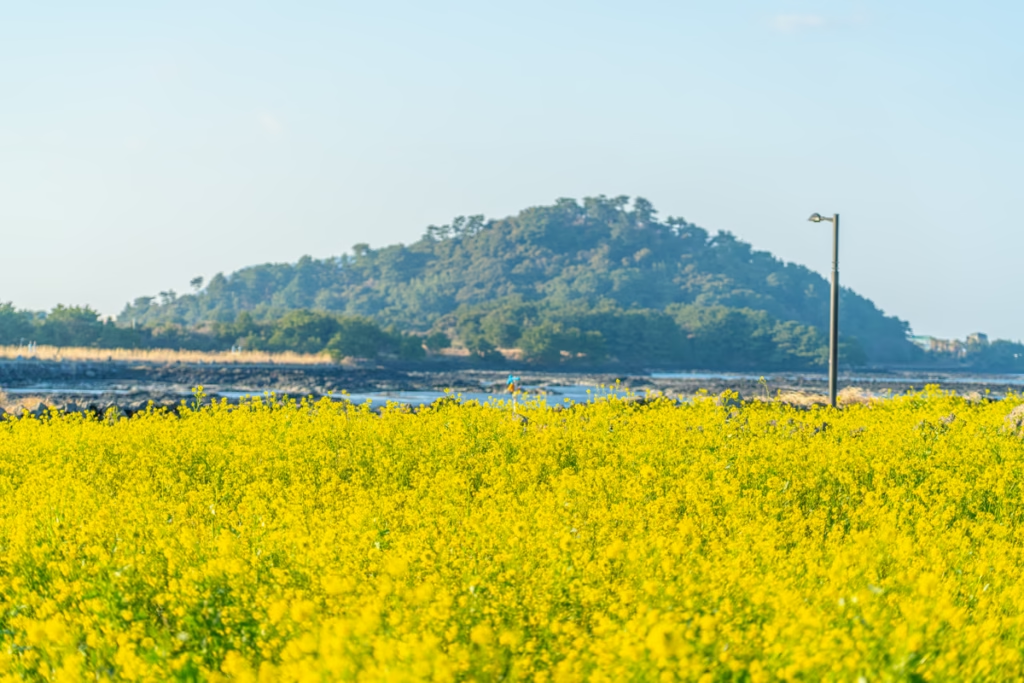
After visiting the fields, you’re only minutes from Seongsan Ilchulbong itself — consider doing the sunrise peak hike first thing in the morning, then heading to the canola complex before it gets warm.
🎟️ Combine experiences: Browse Seongsan-area activities on Klook — guided hikes, boat tours, and multi-stop day trips often include transportation, which solves the rental car question if you’re not driving.
When Do the Canola Flowers Bloom? Timing Your Jeju Visit
Canola flower season on Jeju typically runs from late March to mid-April, though the exact window shifts by a week or two each year depending on winter temperatures. Southern coastal areas tend to bloom first, with inland and higher-elevation Jeju canola flowers arriving about a week later.
A few timing notes:
- Late March: Early blooms appear along the southern coast. Fields may be 50–70% open.
- First two weeks of April: Peak bloom island-wide. This is the window to aim for.
- Late April: Flowers begin to fade, especially in warmer low-elevation areas. Some fields may already be turned over for the next crop.
Weather tip: Jeju spring days average 12–17°C (54–63°F) but wind chill near the coast drops that noticeably. A packable windbreaker is more useful than a heavy jacket.
Getting Around Jeju: Transport Tips for Flower Chasers
All three of these hidden Jeju canola flowers spots sit slightly off Jeju’s primary bus routes. Here’s the realistic breakdown:
- Rental car: The most practical option. International licenses are accepted (with an IDP). Rates start around ₩30,000–50,000/day (USD $22–37). Book through Klook for Jeju car rentals — they often bundle insurance.
- Taxi: Usable for one or two locations but expensive for a full day. Budget ₩15,000–25,000 per trip from major areas.
- Bus + walking: Feasible for Seongeup Folk Village (Bus 710). The other two spots require significant walking from the nearest stop.
Navigation note: Google Maps has limited functionality in South Korea. Download Naver Map or Kakao Map — both offer English interfaces and far more accurate routing for Jeju’s smaller roads.
Quick Reference: All 3 Hidden Spots at a Glance
| Category | Seongeup Folk Village | Cafe Lucia’s / Baksugijjeong | Seongsan Canola Complex |
|---|---|---|---|
| Address | 성읍민속마을, Pyoseon-myeon, Seogwipo | 카페루시아 본점, Daepyeong-ri, Andeok-myeon, Seogwipo | 성산유채꽃재배단지, Seongsan-eup, Seogwipo |
| Hours | Open 24 hrs (outdoor village) | Cafe: 10:00–19:00 (varies seasonally) | Open access (farmland, daylight hours) |
| Cost | Free | Free garden access; coffee ₩6,000–8,000 | Free |
| Transport | Bus 710 from Jeju City (~50 min) or car | Car or taxi recommended | Car essential |
| Recommended Stay | 45–60 minutes | 60–90 minutes (with coffee break) | 30–45 minutes |
| Best For | Heritage + flower photography | Cliff scenery + relaxed cafe visit | Wide-open field panoramas |
| Naver Map Search | 성읍민속마을 | 카페루시아 본점 | 성산유채꽃재배단지 |
Final Word: Chasing Quieter Blooms on Jeju
The famous Jeju canola flowers fields exist for a reason — they’re beautiful, accessible, and well-promoted. But the island is large enough (roughly the size of Maui) that stepping just a few kilometers off the tourist trail reveals equally vivid blooms with a fraction of the crowd.
Whether you’re drawn to the quiet heritage lanes of Seongeup, the dramatic geology at Baksugijjeong, or the unbroken expanse of the Seongsan cultivation fields, each spot offers something the popular viewpoints can’t: space to actually enjoy the flowers.
And if you’re building a broader spring Korea itinerary beyond Jeju canola flowers, consider pairing this trip with Geoje Island — located off Korea’s southern mainland coast, it blooms with daffodils and camellias even earlier than Jeju, offering a distinctly different early-spring landscape.
Pack a windbreaker, download Naver Map, and give yourself the freedom to wander. These hidden Jeju canola flowers will be waiting.