Table of Contents
Transparency Note: This guide contains affiliate links. If you make a purchase, I may earn a commission at no extra cost to you—allowing me to keep providing expert, gear-tested travel insights.
Some temples in Korea impress with sheer visual drama—cliff-edge pavilions, towering golden Buddhas, neon lantern canopies. Tongdosa Temple is not that kind of place. It earns its status through what it contains, or more precisely, through what its main hall deliberately leaves empty. If you only visit one temple in southeastern Korea, this Tongdosa Temple guide will explain why it should be this one.
Tongdosa Temple (통도사) in Yangsan, South Gyeongsang Province, is the highest-ranking of Korea’s Three Jewel Temples (Sambo Sachal). As the Bulgbo Sachal—the Buddha Jewel Temple—it claims to enshrine actual relics (sari, 사리) of the historical Shakyamuni Buddha, brought to the Korean peninsula by the monk Jajang in 646 CE. That single claim shapes everything about this place: the architecture, the rituals, even the peculiar emptiness of its most important building.
This Tongdosa Temple guide covers the practical and the structural—what to see across its three courtyards, why the main hall has no Buddha statue, when to time your visit for the 370-year-old red plum blossoms, and how to navigate a complex that holds over 30 buildings without feeling lost.
Why Tongdosa Ranks Above All Other Korean Temples
Korea’s Three Jewel Temples each safeguard one of Buddhism’s core treasures. Haeinsa in Hapcheon holds the Tripitaka Koreana woodblocks (Dharma Jewel). Songgwangsa in Suncheon has produced the most National Master monks (Sangha Jewel). Tongdosa holds relics of the Buddha himself—the Buddha Jewel—placing it at the theological apex of Korean Buddhism.
Founded in 646 CE by Master Jajang (자장율사), who returned from Tang Dynasty China with what were believed to be the Buddha’s robe, alms bowl, and bone relics, Tongdosa was designed as a reliquary from the start. The temple’s full name, Tongdosa (通度寺), is interpreted multiple ways, but the most commonly cited meaning is “a temple that leads all beings to enlightenment”—a name that reflects the ambition embedded in its founding.
The compound today spans a vast area with over 30 structures, 19 hermitages scattered in the surrounding mountains, and a museum housing over 30,000 cultural artifacts. No other single-temple Tongdosa Temple guide entry can be adequately compressed into a quick afternoon. Plan for at least two to three hours if you want to move through the grounds with any depth.
The Three Courtyards: How to Navigate the Complex
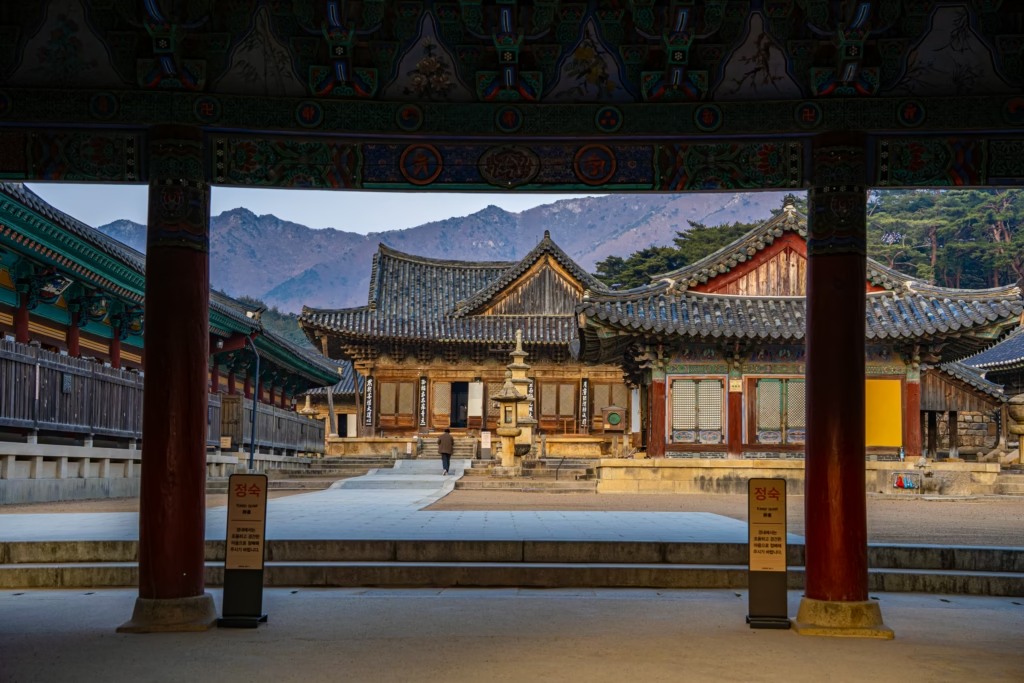
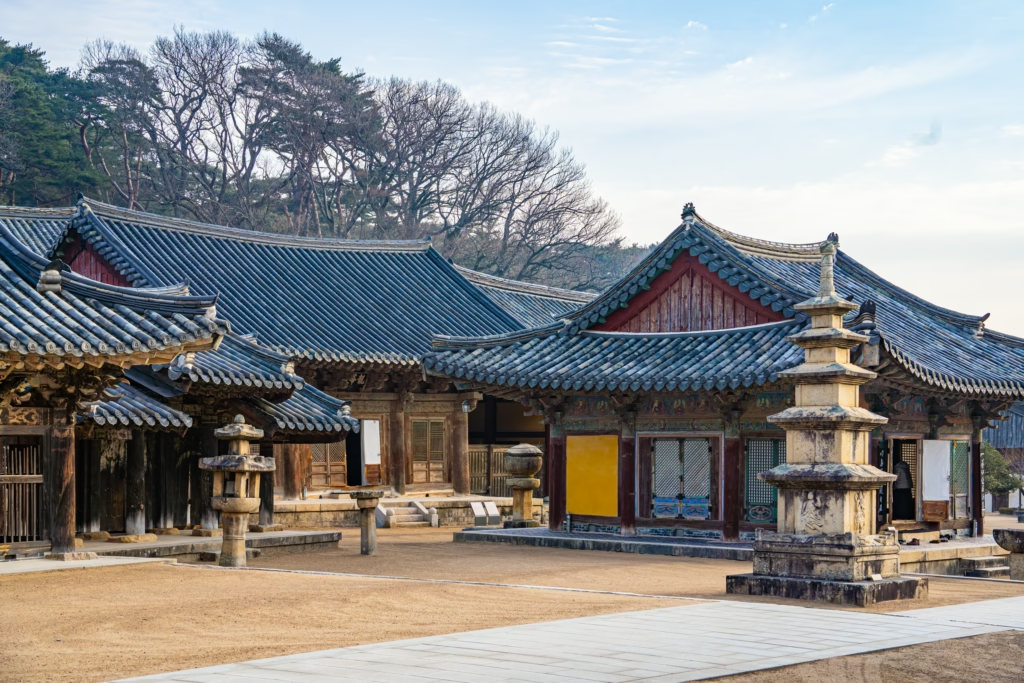
One of the most useful things any Tongdosa Temple guide can offer is a clear map of the three-courtyard layout. Tongdosa is organized into Lower, Middle, and Upper zones—each progressively more sacred. Understanding this before you arrive saves time and ensures you don’t accidentally skip the most important sections.
Lower Courtyard (Haro Jeon, 하로전)
This is where most visitors enter after walking the pine-lined path. The Lower Courtyard houses the more publicly accessible halls, including Yeongsanjeon (영산전) and several smaller shrine buildings. The atmosphere here is relatively relaxed, with monks and visitors moving freely. It functions as an introduction—architecturally simpler, spiritually preparatory.
Middle Courtyard (Jungno Jeon, 중로전)
The Middle Courtyard steps up in both elevation and significance. Daebanggwangjeon (대방광전) anchors this section—a large, imposing hall that serves as a secondary worship space. The scale of the buildings increases noticeably here, and the foot traffic thins as casual visitors often turn back after the Lower Courtyard.
Upper Courtyard (Sangno Jeon, 상로전) — The Heart of Tongdosa
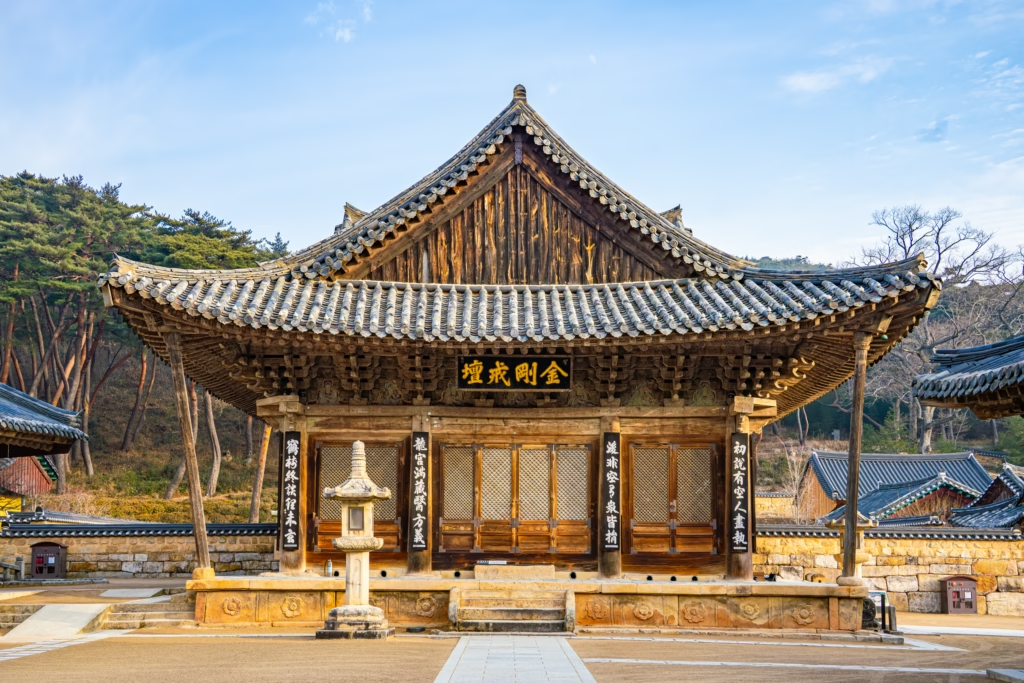
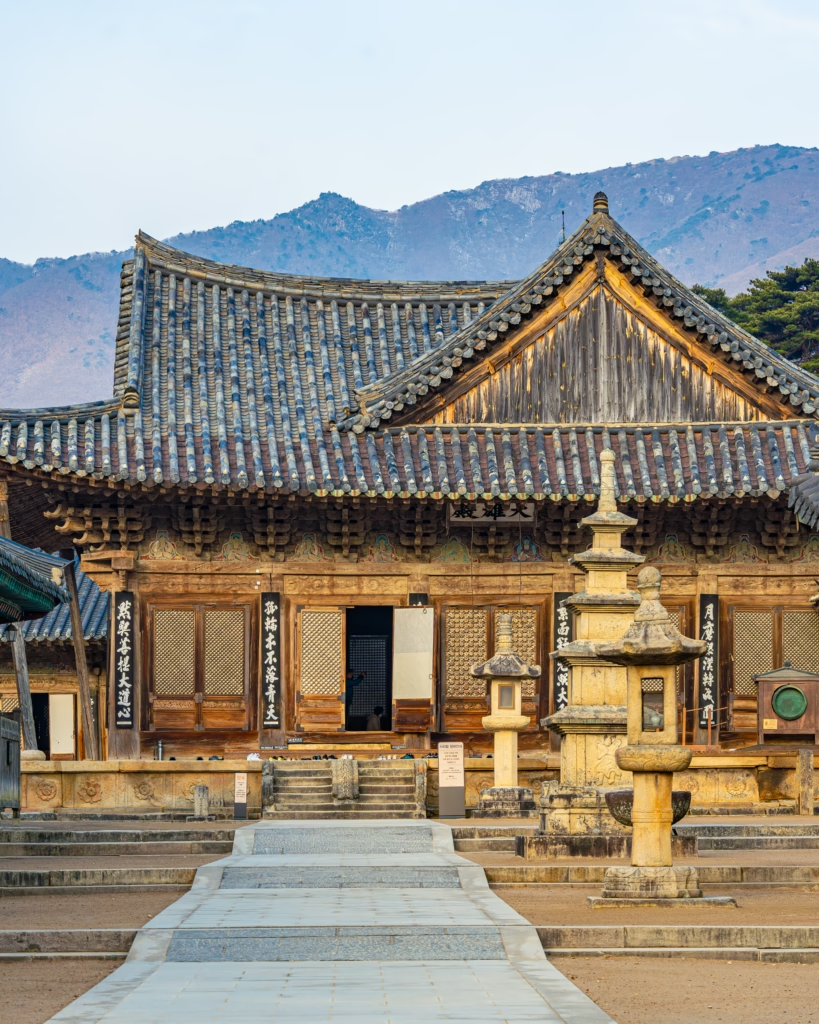
Everything at Tongdosa leads here. The Upper Courtyard contains Daeungjeon (대웅전), the main hall, and behind it the Geumgang Gyedan (금강계단)—the Diamond Ordination Platform where the Buddha’s relics are enshrined. This is the spiritual core, and the reason the temple exists.
The progression from Lower to Upper mirrors the Buddhist journey from worldly engagement to spiritual focus. Walk it in order. Rushing directly to Daeungjeon strips the experience of its intended accumulation.
The Empty Hall: Daeungjeon and the Diamond Ordination Platform
Here is the detail that separates Tongdosa from every other major Korean temple: its Daeungjeon Hall contains no Buddha statue. This is the centerpiece of any thorough Tongdosa Temple guide, and the single fact most visitors don’t know before arriving.
Walk into the Daeungjeon of Bulguksa, Beopjusa, or virtually any other significant Korean temple, and you’ll face a gilt Buddha image. At Tongdosa, the interior is conspicuously bare. Instead, a window on the rear wall of the hall frames a view outward—toward the Geumgang Gyedan, the Diamond Ordination Platform, a raised stone structure believed to contain the Buddha’s actual relics sealed within.
The theological logic is clean: why create a representation when the real thing is here? The hall becomes a frame for the relic platform behind it, not a container for an image. Visitors bow toward the window, not toward a statue.
The Geumgang Gyedan itself is a bell-shaped stone stupa (budo) sitting atop a tiered platform, surrounded by carved stone railings. It was designated Korean National Treasure No. 290 and remains the focal point of monastic ordination ceremonies held at Tongdosa to this day. For travelers seeking to understand Korea’s profound historical and spiritual heritage alongside its religious sites, the Hwaseong Independence Movement Memorial offers a complementary, site-specific experience.
Mupunghansongno: The Pine Path That Sets the Tone
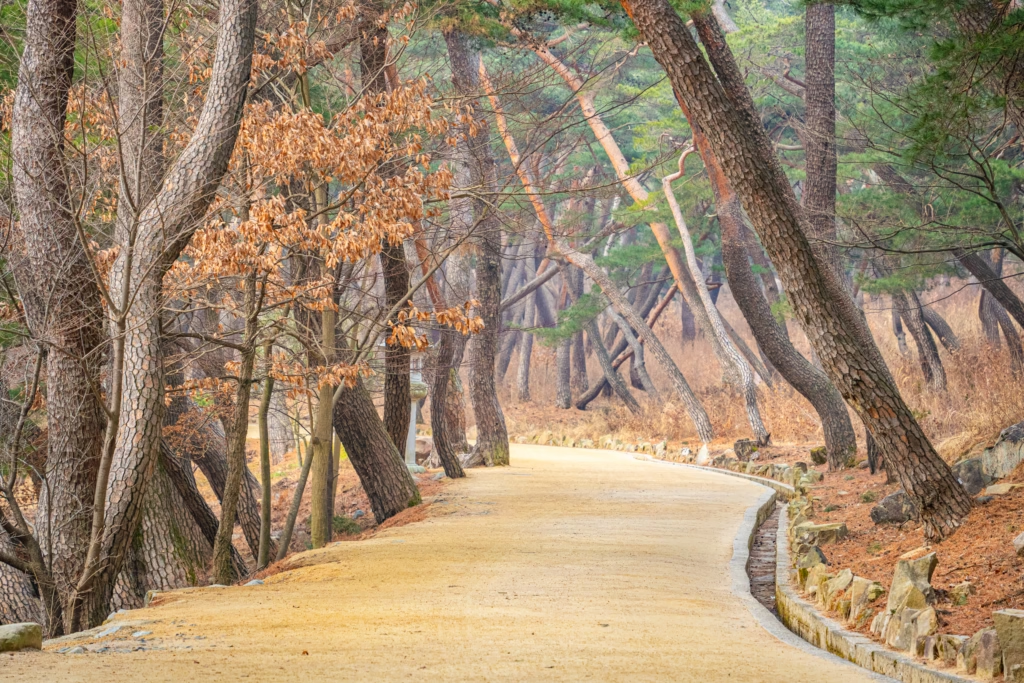
Before you see a single temple building, Tongdosa makes you walk. The Mupunghansongno (無風寒松路)—literally “Windless Cold Pine Path”—stretches roughly one kilometer from the parking area to the temple entrance, lined with towering centuries-old pine trees.
This isn’t filler. Korean Buddhist temple architecture traditionally uses approach paths to transition visitors mentally from the secular to the sacred. The Mupunghansongno is one of the finest examples in the country. The canopy blocks most direct sunlight, the air drops a few degrees, and road noise fades within the first hundred meters.
For photography, the path works best in early morning when shafts of light cut diagonally through the pine trunks. A wide-angle lens (16–35mm on the Sony a7R4) captures the tunnel effect; a telephoto compresses the rows of trees into layered depth. The high resolution of the a7R4’s 61MP sensor lets you crop aggressively from the wide shot while retaining sharp detail in the bark and needle textures.
The walk takes about 15 minutes at a relaxed pace. Don’t skip it by driving to the inner lot—even if parking is available closer in, any solid Tongdosa Temple guide will tell you the path is a deliberate part of the experience.
The Jajangmae: Tongdosa’s 370-Year-Old Red Plum Blossoms
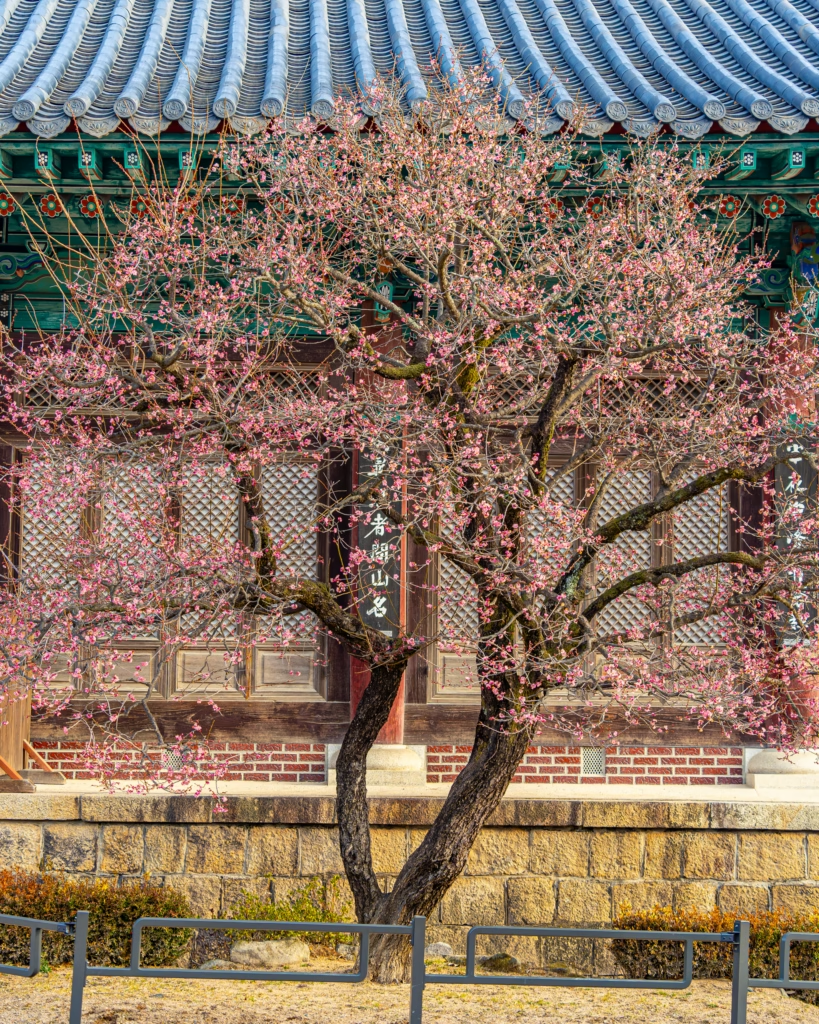
If you visit Tongdosa in February, you’ll encounter the Jajangmae (자장매)—a 370-year-old red plum tree named after the temple’s founder, Master Jajang. It stands in the courtyard in front of Yeonggak Hall (影閣), to the right, before the path to Daeungjeon.
The Jajangmae is a hongmae (홍매화), a red plum variety with flowers significantly deeper in color and stronger in fragrance than standard white or pink plum blossoms. Three centuries of growth have intensified both qualities. On a still morning, the scent pools in the courtyard noticeably. If you’re drawn to early spring blooms like the Jajangmae, our Geoje Spring Travel Guide covers the island’s iconic daffodil terraces at Gonggonji—another strong pairing for a southeastern Korea flower itinerary.
2026 Bloom Status
As of early February 2026, the tree has reached approximately 30–50% bloom, with buds cracking since late January. Full bloom is expected between mid-February (around the 15th) and late February, weather permitting. This year coincides with the 30th anniversary of Yangsan’s city designation and the Year of Visit Yangsan, with supplementary media art events around the temple grounds adding to the seasonal atmosphere.
Best Shots of the Jajangmae
Three compositions stand out for this part of our Tongdosa Temple guide. First, frame the blossoms through the traditional wooden lattice (changsal) of Yeonggak Hall for a distinctly Korean layered effect. Second, use the dark grey roof tiles as a backdrop—the color contrast between crimson petals and weathered grey tile reads powerfully even at thumbnail size. Third, shoot the gnarled trunk itself as a portrait subject; 370 years of growth have produced a sculptural form that carries visual weight even without flowers.
Timing note: Arrive before 9:00 AM. Low-angle morning light passes through the petals and produces a translucent red that vanishes under midday sun. Weekend mornings after 11:00 become extremely crowded during peak bloom.
Tongdosa Seongbo Museum: 30,000 Artifacts Off the Main Path
Most visitors miss the Tongdosa Seongbo Museum (통도사 성보박물관), located a short walk from the main temple complex. It houses over 30,000 Buddhist artifacts—paintings, scriptures, ceremonial objects, and historical records spanning the temple’s 1,400-year history.
The collection includes several nationally designated treasures and offers context that makes the temple buildings far more legible on a return visit. This Tongdosa Temple guide recommends the museum specifically for repeat visitors or anyone with a deeper interest in Korean Buddhist art—the explanatory panels contextualize the hierarchies and symbolism in Buddhist paintings that are otherwise opaque to non-specialists.
Admission is separate from the temple itself. Allow 40–60 minutes.
Klook.comWhen to Visit: A Seasonal Tongdosa Temple Guide
Tongdosa is a year-round destination, but the experience shifts meaningfully with the seasons. Matching your visit to the right season is one of the most impactful decisions in planning around this guide to Tongdosa Temple.
February (Red Plum Blossoms): The Jajangmae blooms. Crowds spike on weekends but weekday mornings remain manageable. Cold but clear skies are common—good for photography, hard on ungloved hands.
April–May (Spring): Cherry blossoms line the surrounding roads, and the temple grounds turn lush. This is the most conventionally pretty season and also the busiest.
Summer (Monsoon Season): Rain amplifies the mossy greens of the stone walls and pathways. Far fewer visitors. The pine path becomes atmospheric in mist. Humidity is significant.
Autumn (Late October–November): The mountains surrounding Tongdosa produce solid fall foliage, though not at the level of Naejangsan or Seoraksan. The reduced crowds make this an underrated window.
Winter (December–January): Snow-dusted temple roofs against grey skies. The coldest and emptiest period, suited to visitors who prefer solitude over spectacle. Winter at Tongdosa offers a quiet intensity similar to the N Seoul Tower Winter Hike, where the cold air clears the landscape for sharp, earned perspectives.
Practical Manual: Tongdosa Temple Visit Essentials
| Category | Details | Notes |
|---|---|---|
| Location | Tongdosa Temple, Yangsan, Gyeongsangnam-do | UNESCO Tentative List |
| Address | 108 Tongdosa-ro, Habuk-myeon, Yangsan-si | Korean: 경남 양산시 하북면 통도사로 108 |
| Hours | 08:30 – 17:30 | Dawn prayer: entry from 04:00 |
| Admission | Free | Cultural property fee abolished since 2023 |
| Parking | Compact: ₩3,000 / Standard: ₩6,000 | Card payment accepted; arrives before 11 AM weekends |
| Crowd Peak | Weekends 11:00 AM+ during Feb bloom | Weekday mornings ideal |
| From Seoul | KTX to Ulsan Station → Bus 13 to Tongdosa | ~2.5 hrs total |
| From Busan | Bus 1253 from Busan Station | ~1 hr 20 min |
| Minimum Time | 2–3 hours (temple only) | Add 1 hr for Seongbo Museum |
| Clothing | Layered; temple valley runs 3–5°C cooler | Especially Feb mornings |
| Recommended Stay | [Find Hotels near Tongdosa on Agoda] | [Book Yangsan Stays on Booking.com] |
| Recommended Activity | [Tongdosa Temple Cultural Tour on Klook] | Half-day guided experience |
The Travel Manual Summary
Tongdosa Temple doesn’t compete on visual spectacle the way Bulguksa or Haeinsa might. Its power is structural and theological—a 1,400-year-old compound built around the absence of an image, designed to direct attention toward relics you’ll never actually see. The empty Daeungjeon, the Diamond Ordination Platform behind it, the three-courtyard progression from secular to sacred—these are the elements that make this Tongdosa Temple guide worth bookmarking for any serious Korea itinerary.
The Jajangmae red plum blossoms in February add a seasonal draw, and the Seongbo Museum deepens the historical context. But even without those, the pine-path approach alone—15 minutes of enforced deceleration before you see a single building—sets this apart from temple visits that start in a parking lot and end at a gift shop.
Give it a full morning. Walk the path. Stand in the empty hall. The point will become clear.