
Transparency Note: This manual contains affiliate links. If you book through them, I earn a small commission at no extra cost to you. This keeps my EV charged and allows me to provide unfiltered, field-tested travel insights.
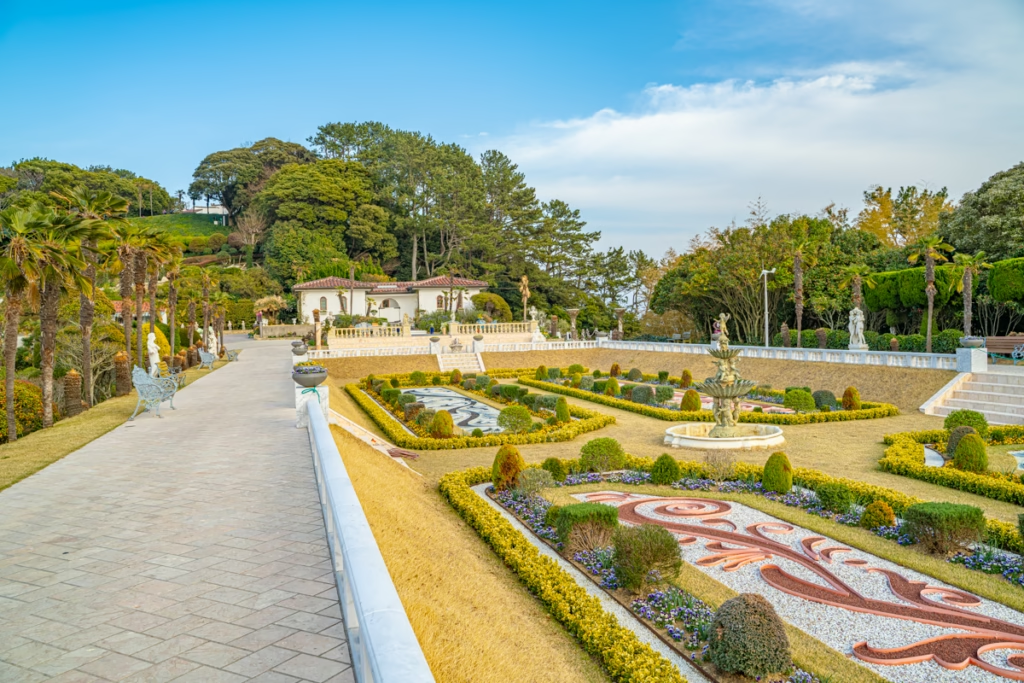
Geoje Island sits roughly two and a half hours from Seoul — KTX to Busan, then a 90-minute drive across the bridge. Most visitors come for the shipyards and the raw southern coastline. I came for Oedo Botania, a former barren rock where a couple spent 30 years hauling soil and planting trees by hand, then opened it to the public in 1995 as one of Korea’s strangest and most singular gardens.
I left with a bruised ego, a full memory card, and a very specific list of things I’d do differently.
Oedo Botania, Geoje Island: The Ferry Garden That Punishes the Unprepared
Most foreign visitors board from Gujora Port (구조라항) — it’s the closest departure point, has a large free car park, and feeds you into the scenic Haegumgang course before docking at Oedo Botania itself.
What I noticed immediately, and what nobody had warned me about, is that the timetable boards at Gujora are written entirely in Korean, and the ticketing counters aren’t reliably staffed with English speakers. The fix is simple but requires advance prep: buy your ferry ticket online before you leave for the port. Most operators offer 5–10% discounts for pre-booking, and having a screenshot on your phone removes the confusion at the counter entirely. Wi-Fi at the dock is unreliable, so don’t count on booking it there.
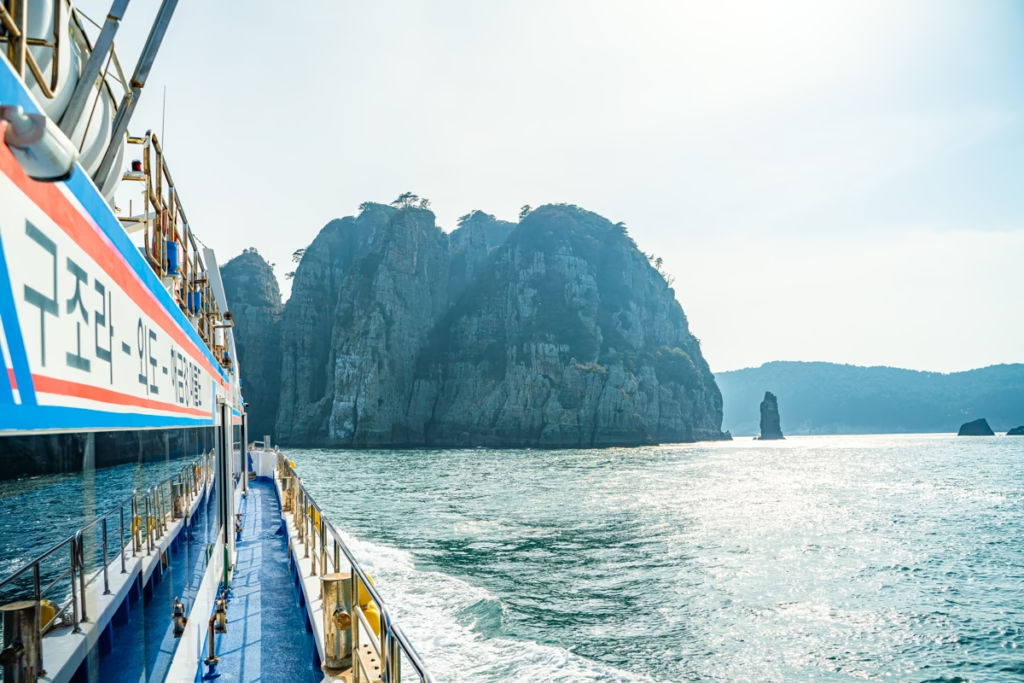
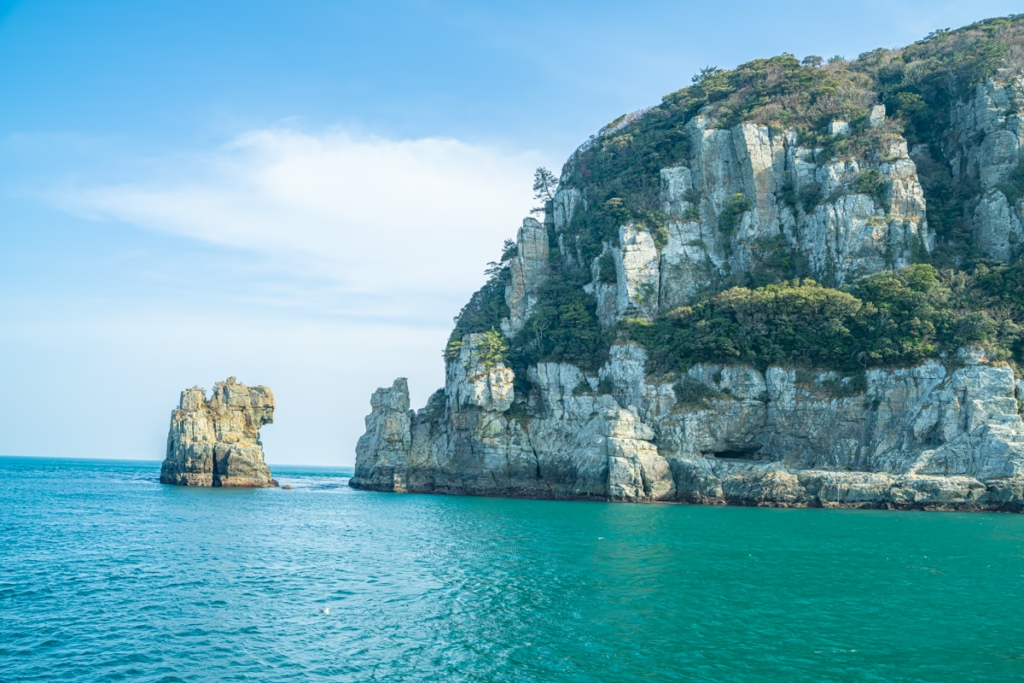
Here’s what the route actually looks like now: nearly all current departures run the Haegumgang two-stop course, which adds a 20-minute loop past dramatic sea cliffs before setting you down at Oedo Botania. If your previous reading led you to believe this was a straight 10-minute hop from shore, adjust your mental schedule accordingly.
Getting here without a car is possible but stressful. Buses 62, 63, and 64 connect Geoje Gohyeon Bus Terminal to the Gujora stop in about 50 minutes — but gaps between services can stretch to 40 minutes or longer. If you miscalculate and miss the connection, you miss the ferry. Budget ₩20,000 for a taxi from Gohyeon and save the mental energy for the island itself.
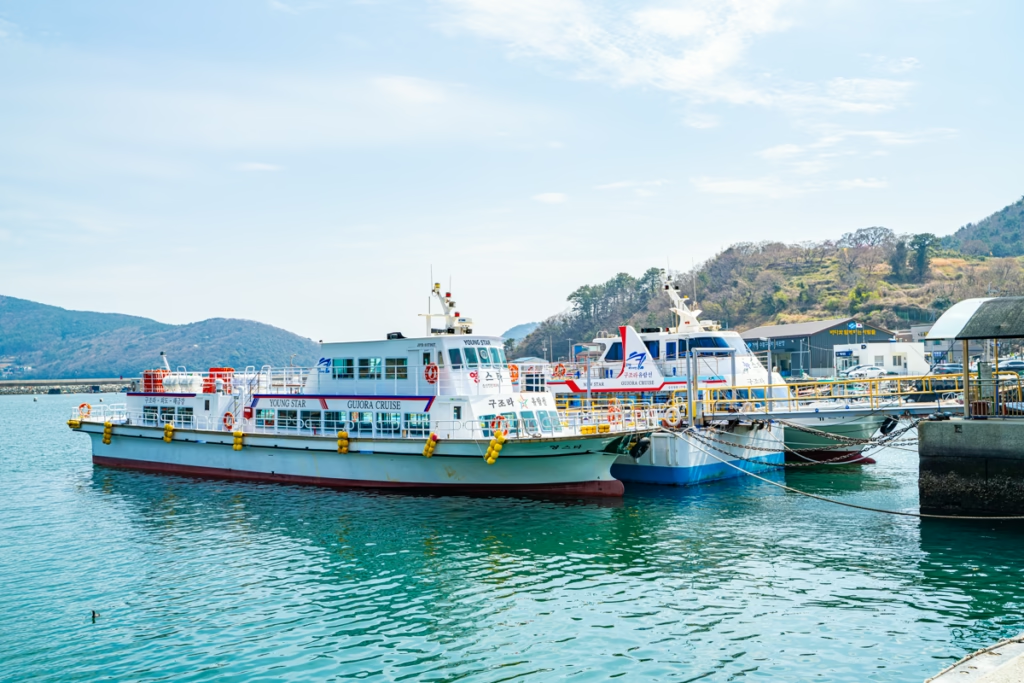
What the Ferry Ride Actually Feels Like
Every photo I’d seen of this crossing looked like a glass-flat bay and relaxed passengers holding iced coffee. The reality — at least on the Haegumgang section — is that the boat pushes into more exposed water, and even a modest swell turns the outer leg into something that clears the upper deck fast.
I’d taken my seat topside with my camera out, ready for a gentle scenic cruise. What caught me off guard was the lateral roll the moment we cleared the bay mouth — enough that I braced against the railing and my lens cap slid across the seat. I’ve done a lot of island crossings in Korea. This one earns its seasickness reputation honestly.
Take motion sickness medication at least 30 minutes before boarding, not on the dock as you’re about to step on. If you’re sensitive, position yourself on the lower enclosed deck near the centre of the vessel and fix your eyes on the horizon rather than your phone. The full Haegumgang loop plus transit runs approximately 40–50 minutes each way.
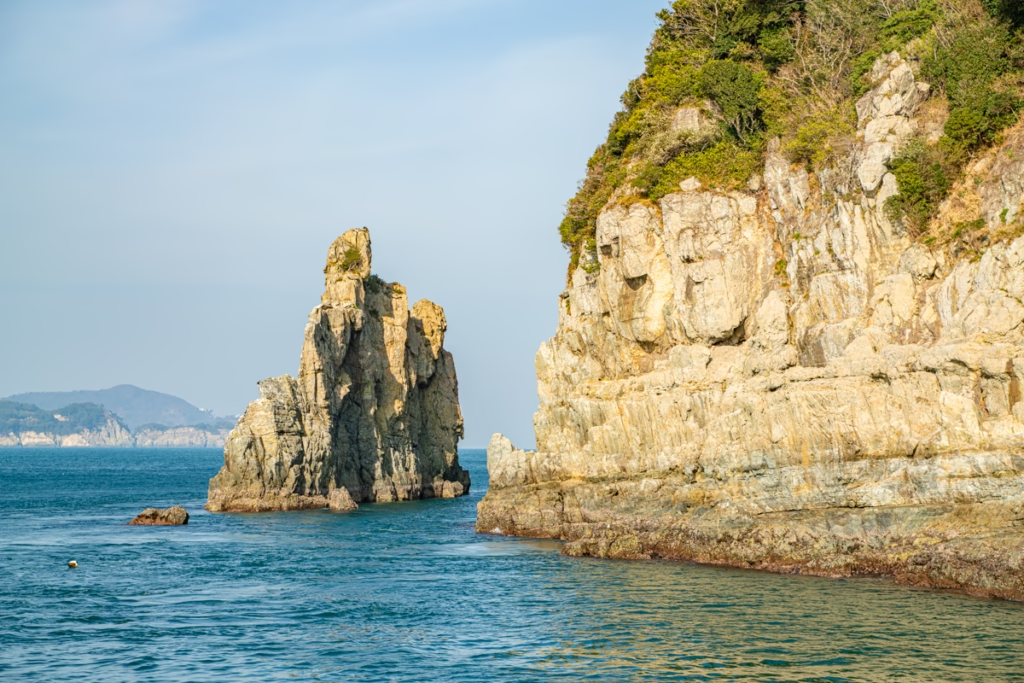
That said, Haegumgang is legitimately worth the outer exposure. The Lion Rock (사자바위, Saja Bawi) sea stack reads completely differently depending on conditions — I shot it twice, and the morning version with low haze burning off the water and kelp beds visible just below the surface was more interesting than the clear-sky afternoon version.
Two Hours on the Island: Where to Go First (And Fast)
The moment you step off the dock at Oedo Botania, a clock starts. You have exactly two hours before your ferry leaves — and it will leave without you.
Every review I’d read before my first visit said something like “two hours is plenty to see everything.” It isn’t. Not if you want to actually photograph, sit for five minutes at a viewpoint, and do anything other than power-walk the main path. After three visits, I’ve settled on an order that works, barely.
Start at Venus Garden — While Your Legs Are Fresh
Go straight up to Venus Garden the moment you clear the dock gate. The Roman colonnade shot — framing the emerald water between two stone pillars — needs morning light, and you’ll lose it fast once the upper terrace fills with tour groups off the same ferry. My first instinct was wrong: I stopped to shoot the entrance courtyard for twelve minutes and spent the rest of the visit moving too fast to frame anything properly.
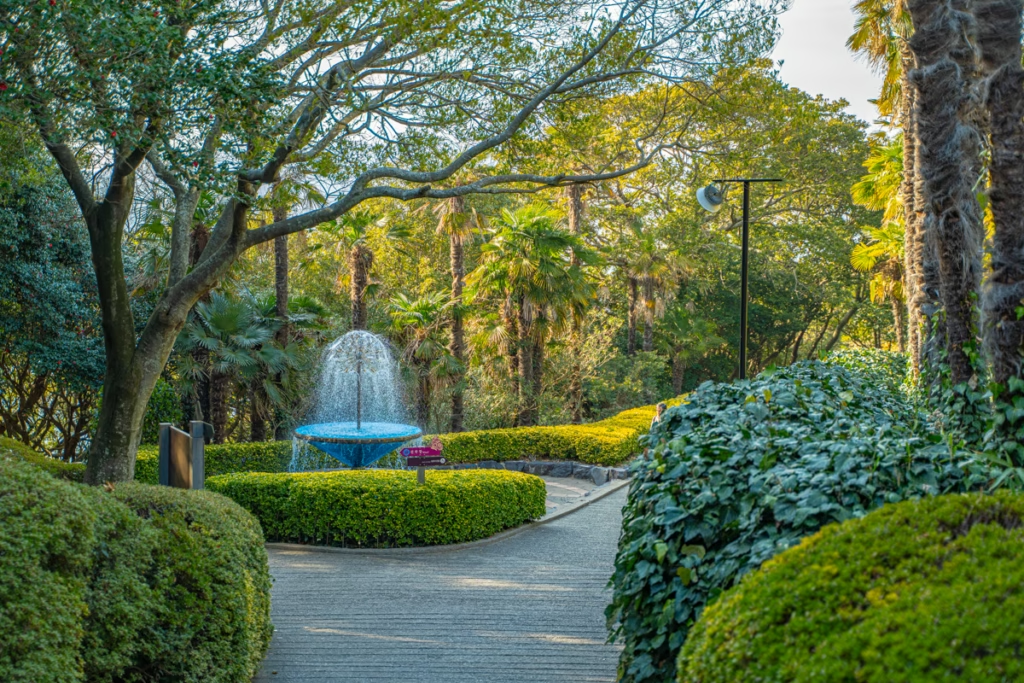
The opening ascent from the dock is steeper than any trail photo suggests. It runs uphill for about 15 minutes at a grade that’ll have sweat soaking through your shirt before the garden even begins. On a humid August morning, I almost turned back — not from the heat itself, but from realising how much my camera bag weighed at that angle. Wear proper shoes. I watched someone attempt this in white platform sandals, and every step looked like a calculated risk.
Strollers and wheelchairs can technically enter, but the incline demands significant physical assistance from another adult and considerable patience.
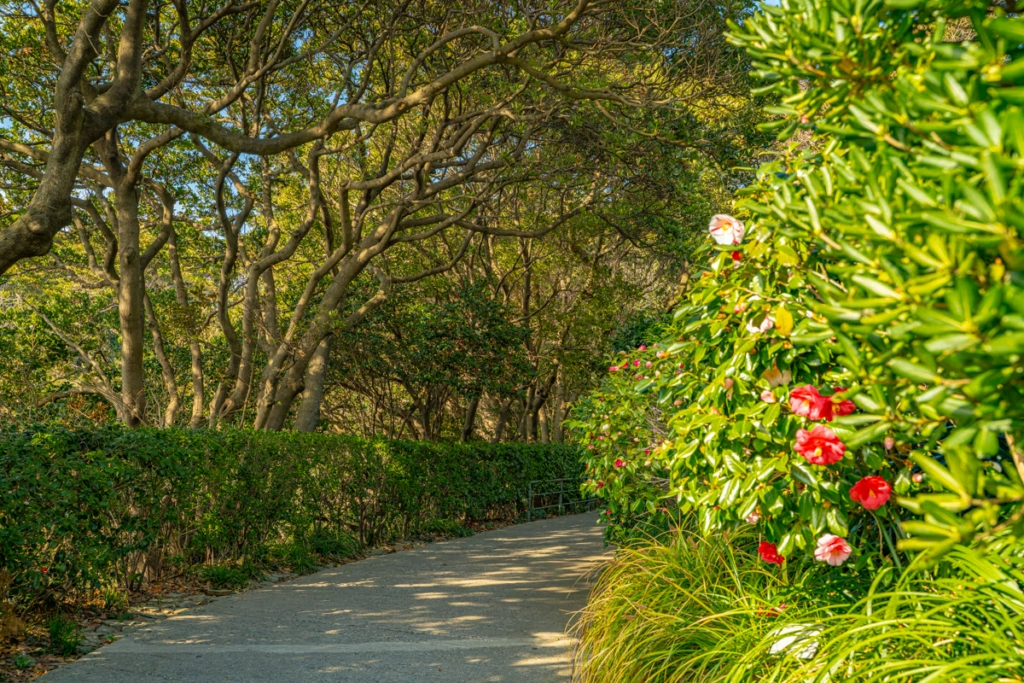
The Stairway to Heaven Symmetry Shot
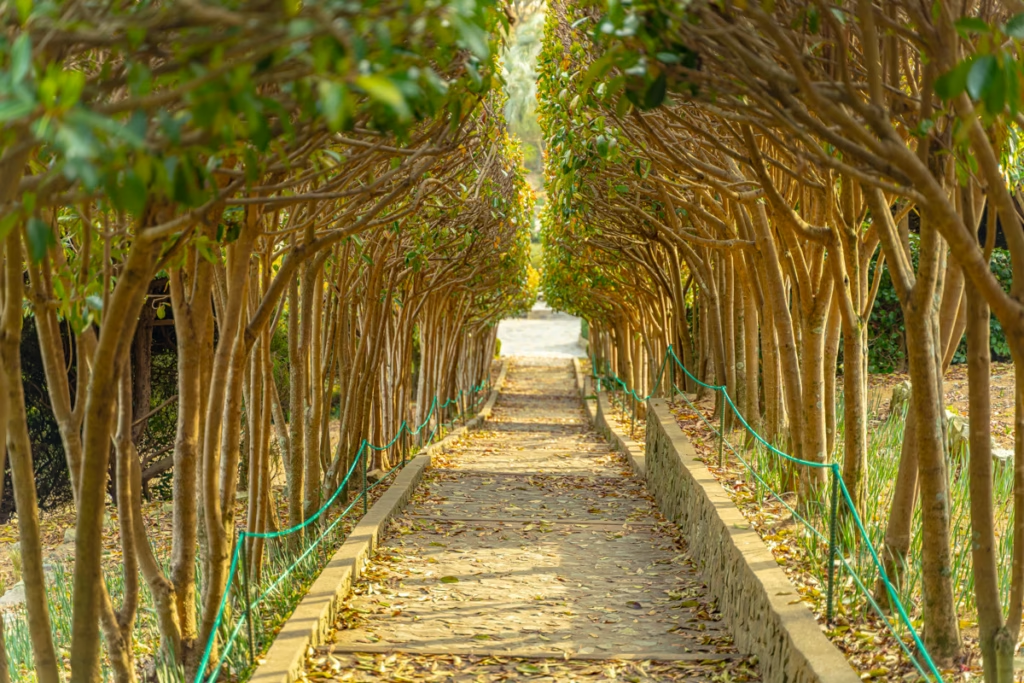
Move directly from Venus Garden to the cypress avenue. The symmetry here is the most-photographed composition on the island, and for good reason: tall Italian cypress trees line both sides of a narrow stone path, converging toward a bright sky at the far end. The shot works best with a single figure placed at the midpoint — it gives the trees scale and breaks the geometry in a way that reads as deliberate rather than accidental.
Do not stop at the hillside cafe on the way up. Save it for the descent only if you’re running ahead of pace.
Panoramic Observatory: Save It for Last
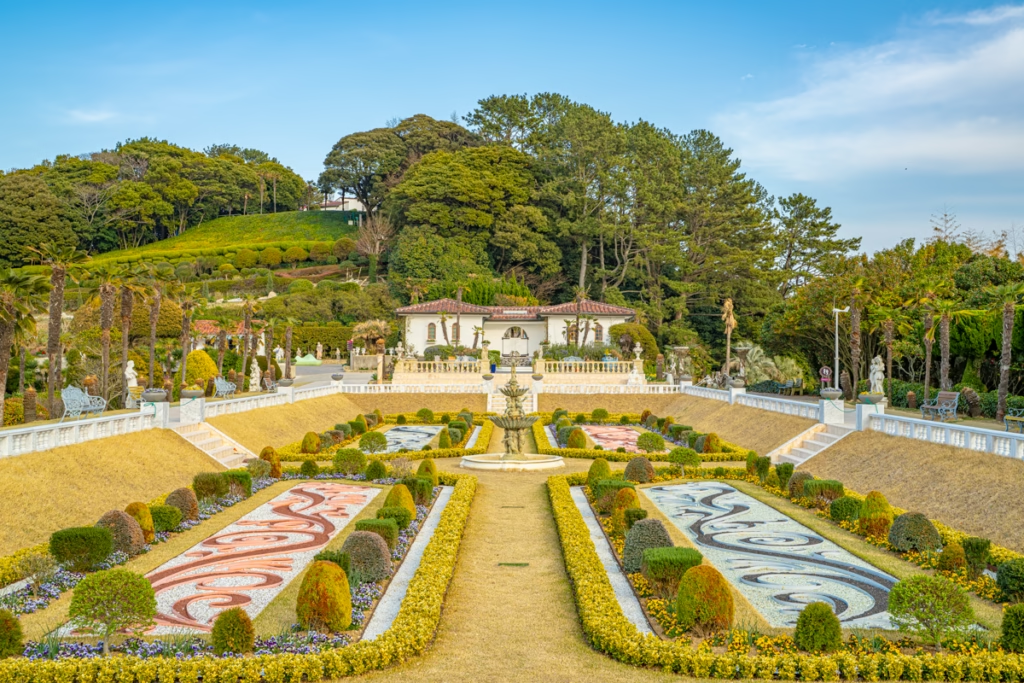
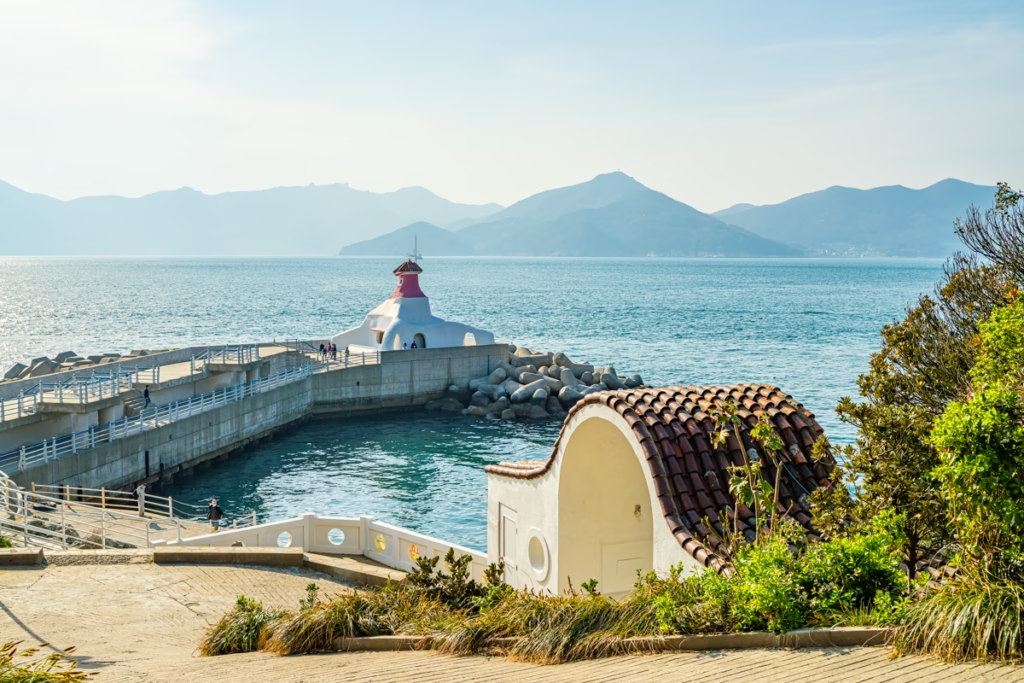
The observatory gives you a downward view of the entire garden’s terraces, the red lighthouse, and open sea in a single frame — essentially the aerial-perspective shot that appears in every brochure. Save this for the final ten minutes before descent. The light improves as the morning progresses, and you’ll have a cleaner sense of what you’ve already photographed, which sharpens your compositional choices at the top.
What the Island Sells You (and What to Bring Instead)
Outside food is banned past the dock gate — sealed water bottles only. The internal cafe and vending machines are priced to reflect the monopoly: expect ₩4,000–5,000 for a canned coffee. Stock up at a convenience store in Gujora before boarding. The thing no one mentions is that the vending machines run out of cold drinks during peak season weekends — I watched three people in a row tap the screen and get the sold-out notification on a mid-October Saturday.
The Costs Add Up Faster Than You Think
One of the most consistent complaints in recent visitor reviews — and it’s a fair one — is a sense of double-billing. The ferry fare and the Oedo Botania entrance fee are entirely separate transactions, and at current 2026 pricing, one adult will spend a minimum of ₩33,000 before buying a single drink: roughly ₩22,000–23,000 for the round-trip ferry (weekend rate, Haegumgang course) plus ₩11,000 for the entrance ticket.
The thing no one mentions is that this number climbs fast the moment you have kids. Two adults and two elementary-aged children runs close to ₩90,000 before setting foot on the island, which lands with some force when you factor in the two-hour hard stop.
If you’re visiting from Busan without a rental car, a pre-packaged day tour cuts through the logistics and usually comes in cheaper than assembling ferry tickets, transfers, and accommodation separately.
For accommodation, the Sono Calm Geoje (소노캄 거제) resort sits within five kilometres of the port and is the clear pick for families — it has an ocean-view waterpark and books out weeks in advance during peak foliage season (late October to early November). Check current availability at Sono Calm Geoje on Agoda — if your dates fall within six weeks of autumn season, move fast.
Where to Eat in Gujora Before or After the Ferry
The blocks immediately around Gujora Port punch well above their size for food. These three are worth building extra time into your schedule to visit. If you have an hour to spare before the ferry, the bamboo trail up to Gujora Fortress starts a short walk from the same parking lot.
충청도횟집 (Chungcheongdo Hoetjib) sits directly across from the terminal and has been operating for over 50 years. The raw seafood platter is the order — thick slabs of daily catch served with fermented soybean paste, sesame oil, and a series of small banchans that appear to regenerate every time the kitchen notices they’re running low. I’ve eaten here twice and left both times in the particular kind of full that makes the ferry railing feel very comfortable on the ride back.
쌤김밥 (Ssaem Gimbap) specialises in tot gimbap (톳김밥) — rice rolls packed with local sea mustard, which has a dense, almost mineral-forward brininess that doesn’t translate well in description but makes complete sense the moment you eat it. The place has been on television, and the Saturday queue reflects that. The workaround is the takeaway window on the side — order there, eat on the dock wall, skip the 30-minute table wait.
The thing no one mentions about 예이제게장백반 구조라점 (Yeijegejangebaekban Gujora) is that the refill policy applies to the banchan alongside the soy-marinated and spicy crab — not just the crab itself. The 볼락구이 (bolak gui, grilled rockfish) is worth adding as a separate order. There’s no English signage; bring Papago or screenshot the name above for the server and point.
If you’re spending a second day on Geoje before heading north, the wild camellia forest at Gongoji (공곶이) is a 40-minute drive along the eastern coast and rewards an early start — details in the Geoje spring coastal guide.
For a longer southern circuit, this coastline pairs naturally with the winter plum blossom season at Tongdosa Temple — a 90-minute drive north puts you at the temple gates in time for the February bloom before heading back toward Busan.
Practical Manual
| Category | Details |
|---|---|
| Exact Address | 17, Oedo-gil, Irun-myeon, Geoje-si, Gyeongsangnam-do / 경상남도 거제시 일운면 외도길 17 |
| Naver / Kakao Map | 외도보타니아 |
| Ferry Departure Port | Gujora Port (구조라항), Geoje-si |
| Ferry Fare (2026) | ₩22,000 weekday / ₩23,000 weekend (Haegumgang course, round trip) — buy online to save 5–10% |
| Island Entrance Fee | ₩11,000 adults / ₩8,000 teens / ₩5,000 children (24mo–elementary) |
| Total Per Adult | ₩33,000 minimum (ferry + entrance) |
| Opening Hours | Summer 08:00–19:00 / Winter 08:30–17:00 (last entry 90 min before close) |
| Closed | No fixed rest day — automatic closure during high-wave advisories |
| Time on Island | Exactly 2 hours (return ferry is mandatory, non-negotiable) |
| Total Trip Duration | ~3 hours including Haegumgang loop, transit, and boarding time |
| Best Time to Visit | Late April–May (azalea season) or late October (foliage) — avoid midsummer heat and humidity |
| Transportation | Car to Gujora Port (large free lot) strongly recommended |
| Bus Option | Routes 62, 63, 64 from Geoje Gohyeon Terminal → Gujora stop (~50 min; irregular schedule) |
| Taxi from Gohyeon | ~₩20,000 one-way — significantly more reliable than bus timing |
| From Seoul | KTX to Busan (~2h 10m) + drive to Gujora (~90 min) |
| From Busan | ~60–80 min by car via Geoje Bridge |
| Outside Food | Not permitted past the dock gate. Sealed water bottles only. |
| Phone | 055-681-4541 |
| Website | www.oedobotania.com |
| Nearby Accommodation | Sono Calm Geoje (소노캄 거제) — ocean-view waterpark, books fast in peak season |