
Table of Contents
A Monument Built by the People
The Independence Hall of Korea stands in Cheonan, South Chungnam Province, as the country’s most comprehensive memorial dedicated to the Korean independence movement. Opened on August 15, 1987—Korea’s Liberation Day—this institution was funded entirely through donations from ordinary citizens across the nation. That origin story alone tells you something about what this place means to Koreans.
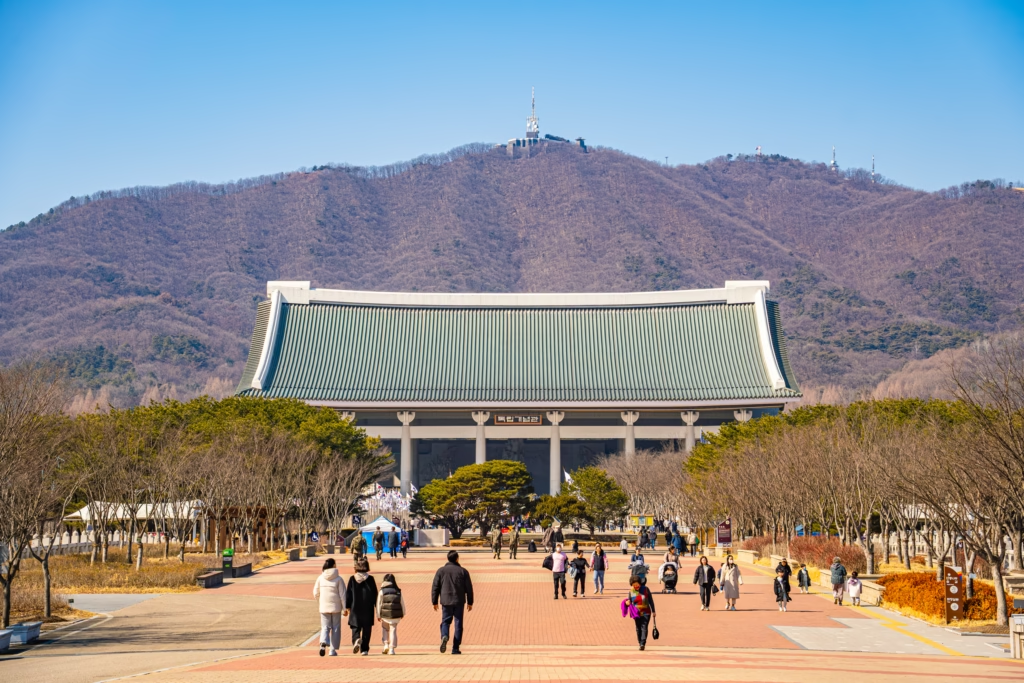
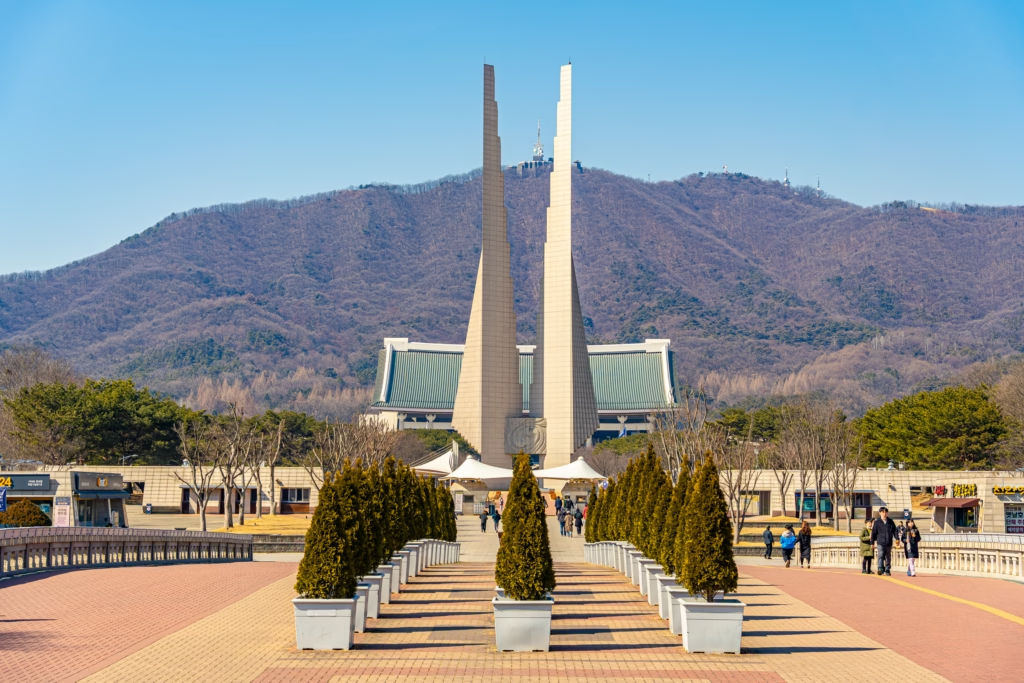
Walking through the main entrance, you’re immediately confronted with scale. A vast plaza stretches before you, anchored by the Tower of the Nation (겨레의 탑) and the Grand Hall of the Nation (겨레의 집). The architecture is deliberately symbolic, encompassing the full arc of resistance from Japanese colonial rule through liberation. This isn’t a museum that whispers. It declares.
For travelers interested in understanding Korea beyond its K-pop surface, the Independence Hall of Korea offers an unflinching look at the historical trauma and resilience that shaped modern Korean identity.
What to Expect: The Six Permanent Exhibition Halls
The Independence Hall of Korea organizes its narrative across six permanent exhibition halls, each building upon the last to create a comprehensive historical journey. Budget at least two hours to absorb the full scope of what’s presented here.
Exhibition Hall 1: Roots of the Nation
The journey begins with Korean civilization’s origins. Ancient artifacts and historical records establish the peninsula’s cultural identity long before foreign interference. This contextual foundation proves essential for understanding what was at stake during the colonial period.
Exhibition Hall 2: The Loss of Sovereignty
Here, the narrative shifts to the late 19th and early 20th centuries. The hall documents how imperial Japan systematically dismantled Korean sovereignty through forced treaties, political manipulation, and military pressure. Displays include original documents, photographs, and recreated scenes that convey the desperation of a nation losing control of its destiny.
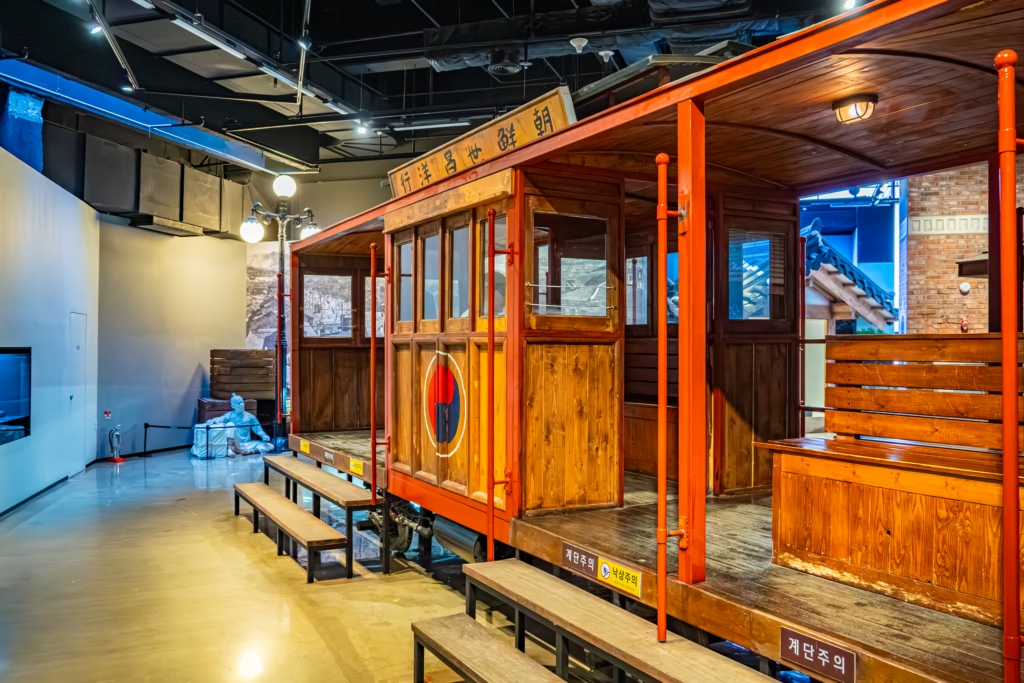
Exhibition Hall 3: Cry of the Nation at the Independence Hall of Korea
This is the emotional core of the entire Independence Hall of Korea experience. Dedicated to the March 1st Movement of 1919, the hall brings to life the moment when millions of Koreans simultaneously declared independence through peaceful protest. Life-sized dioramas recreate street demonstrations, while audio installations echo the independence declaration that rang across the peninsula.
The hall also profiles the righteous army volunteers (의병) and independence activists who risked everything. Names, faces, and personal stories transform statistics into human sacrifice. If you visit only one section, make it this one.
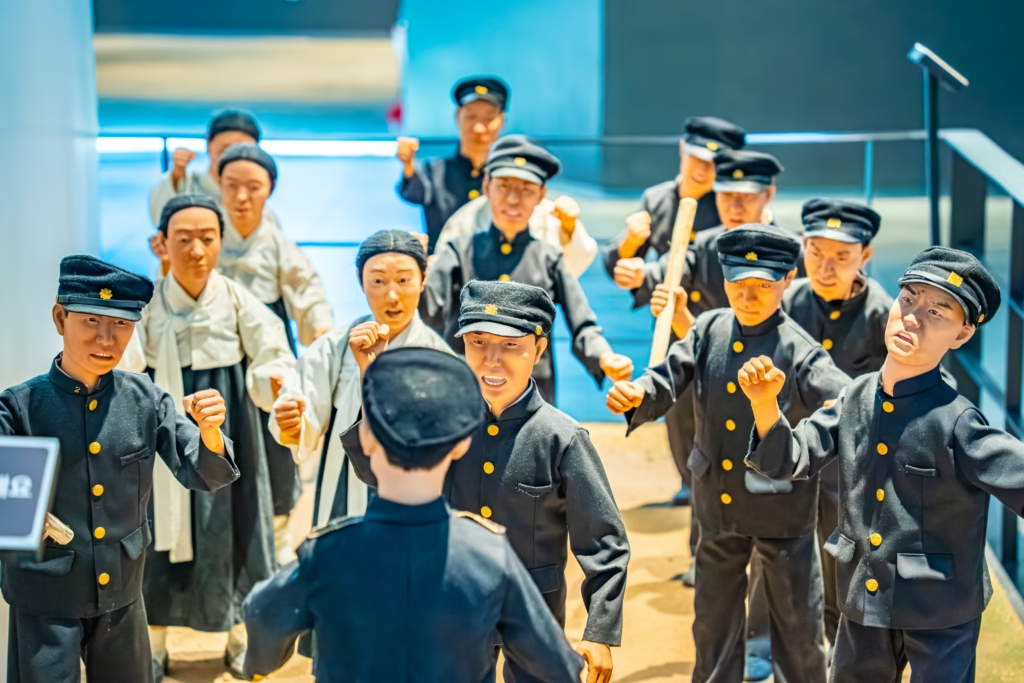
Exhibition Halls 4-5: Armed Resistance
The upper halls document the organized military resistance that followed. From guerrilla operations in Manchuria to the Korean Liberation Army’s campaigns, these exhibitions detail the armed struggle that continued until 1945. Original weapons, military uniforms, and strategic maps provide tangible connections to these conflicts.
Exhibition Hall 6: Liberation and Beyond
The final hall addresses the immediate post-liberation period and the ongoing significance of remembrance. Interactive displays encourage reflection on what independence means for contemporary Korea.
Photography Notes for the Independence Hall of Korea
The exterior architecture offers strong compositional opportunities, particularly the Grand Hall of the Nation with its traditional Korean roofline scaled to monumental proportions. Early morning light (7:00-9:00 AM) creates dramatic shadows across the plaza, ideal for capturing the monument’s commanding presence.
Recommended shot: The Tower of the Nation framed against the Grand Hall, shot with a wide-angle lens from the central pathway. A Sony a7R4 with a 16-35mm f/2.8 at 24mm, ISO 100, f/8 captures the full architectural scope while maintaining edge-to-edge sharpness.
Export settings for web: When processing images from the Independence Hall of Korea, export as AVIF format at 2560px long edge, 10-bit depth, quality 68. This preserves the subtle gradations in sky and traditional roof curves while keeping file sizes under 1MB.
Interior photography is permitted in most areas without flash. The diorama halls benefit from higher ISO settings (1600-3200) to capture ambient lighting without motion blur.
Connecting Your Visit: Related Historical Sites
The Independence Hall of Korea gains additional meaning when combined with other sites documenting Korea’s independence movement. Consider building a thematic itinerary:
Seoul: Seodaemun Prison History Hall offers a complementary perspective, documenting the detention, torture, and execution of independence activists within the prison walls where many met their end.
Gyeonggi Province: The Hwaseong 3.1 Independence Movement Memorial provides regional context, showing how the March 1st protests spread beyond Seoul into surrounding communities.
For travelers seeking a deeper connection to Korean heritage, pairing historical sites with cultural experiences like traditional temple cuisine creates a more holistic understanding of what Koreans fought to preserve.
Why This Matters for International Visitors
Western travelers often arrive in Korea with limited knowledge of the Japanese colonial period (1910-1945). The Independence Hall of Korea provides crucial historical context that explains much about contemporary Korean society—from the complicated Korea-Japan relationship to the deep-seated nationalism visible in everyday life.
This isn’t comfortable tourism. The exhibits document forced labor, cultural suppression, and systematic violence. But engaging with this history creates a more meaningful understanding of the country you’re visiting.
The Independence Hall of Korea official website provides updated exhibition information and special event schedules.
The Travel Manual
| Category | Details |
|---|---|
| Location | 230 Samnam-ro, Dongnam-gu, Cheonan-si, South Chungnam Province |
| Hours | March-October: 9:30 AM – 6:00 PM / November-February: 9:30 AM – 5:00 PM (Closed Mondays) |
| Admission | Free |
| Getting There | KTX to Cheonan-Asan Station (50 min from Seoul), then bus #400 to Independence Hall (30 min) |
| Alternative Transit | Direct intercity bus from Seoul Nambu Terminal to Cheonan, then local bus or taxi (₩15,000) |
| Time Required | 2-3 hours (exhibitions only) / 4-5 hours (full grounds including outdoor monuments) |
| Budget Estimate | ₩15,000-25,000 per person (transportation from Seoul, meals) |
| Best Season | Spring (cherry blossoms on grounds) or autumn (comfortable walking weather) |
| Accessibility | Wheelchair accessible with elevator access to all exhibition halls |
| Audio Guide | Available in English, Japanese, Chinese (₩1,000 rental fee) |
| On-Site Facilities | Cafeteria, gift shop, rest areas, free shuttle within grounds |
Final Thoughts
The Independence Hall of Korea doesn’t exist to entertain. It exists to remember—and to ensure that remembrance extends beyond Korean borders. For travelers willing to engage with difficult history, this institution offers one of the most significant educational experiences available in Korea.
The fact that ordinary citizens funded its construction through voluntary donations speaks to something essential about Korean collective memory. This is a nation that chose to build a monument to its own suffering and resistance, not through government mandate, but through popular will.
That’s worth understanding. And the Independence Hall of Korea is where that understanding begins.