
Table of Contents
Introduction: Where Confucian Scholars Became Revolutionary Warriors
The Gyeongsangbuk-do Independence Movement Memorial Hall in Andong reveals a chapter of Korean history that few international visitors encounter. While Seoul’s Seodaemun Prison History Hall commemorates the suffering of imprisoned activists, this Andong memorial tells the origin story—how Confucian scholars transformed their intellectual tradition into armed resistance against Japanese colonization.
Andong, a city renowned for preserving Korea’s Confucian heritage, produced some of the independence movement’s most determined fighters. The Gyeongsangbuk-do Independence Movement Memorial Hall, expanded and remodeled from the former Andong Independence Movement Memorial Hall, documents how the region’s yangban (scholar-gentry) class mobilized the earliest organized resistance: the Righteous Army (의병, Uibyeong) movement that began here in 1894.
This memorial offers something unique among Korea’s independence sites: the ideological foundation that drove ordinary scholars to take up arms against a modern military power.
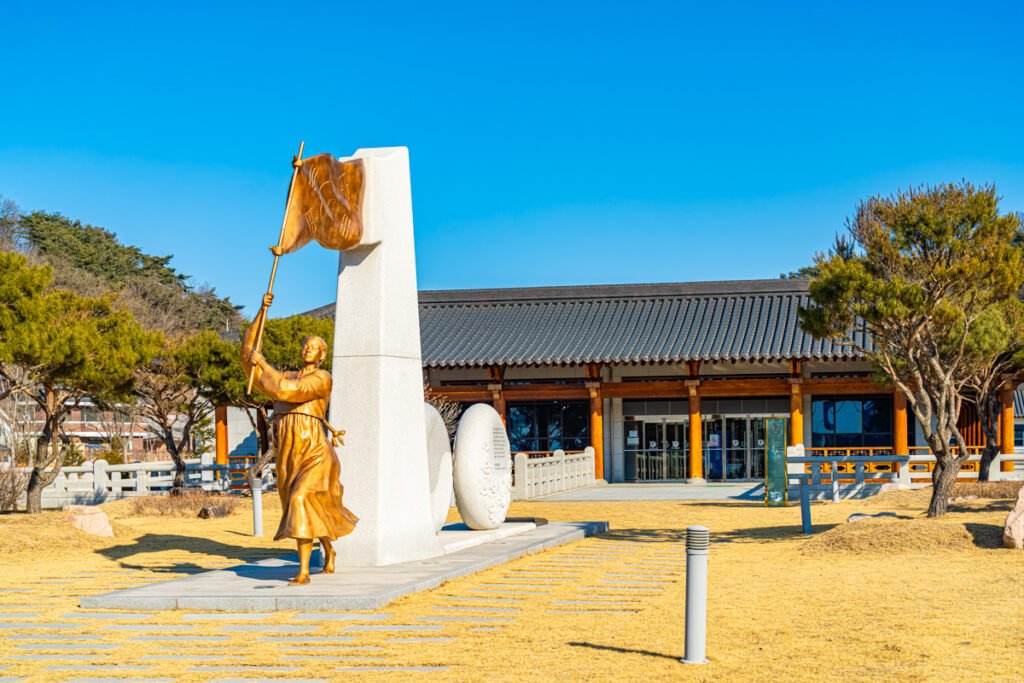
1. The Gapo Righteous Army (1894): Where Korean Resistance Began
The Gyeongsangbuk-do Independence Movement Memorial Hall positions the 1894 Gapo Righteous Army uprising as the starting point of organized anti-Japanese resistance in the Gyeongsang region.
Historical Context
When Japan began asserting control over Korea in the 1890s, Andong’s Confucian scholars faced an existential threat—not merely political, but cultural. The Japanese modernization agenda directly challenged the Neo-Confucian social order that had defined Korean society for five centuries.
The Scholarly Response
Unlike spontaneous peasant uprisings, the Gapo Righteous Army was organized by educated leaders who framed resistance as a moral obligation. The memorial’s exhibitions trace how Confucian concepts of loyalty (충, chung) and righteousness (의, ui) were reinterpreted as justification for armed rebellion.
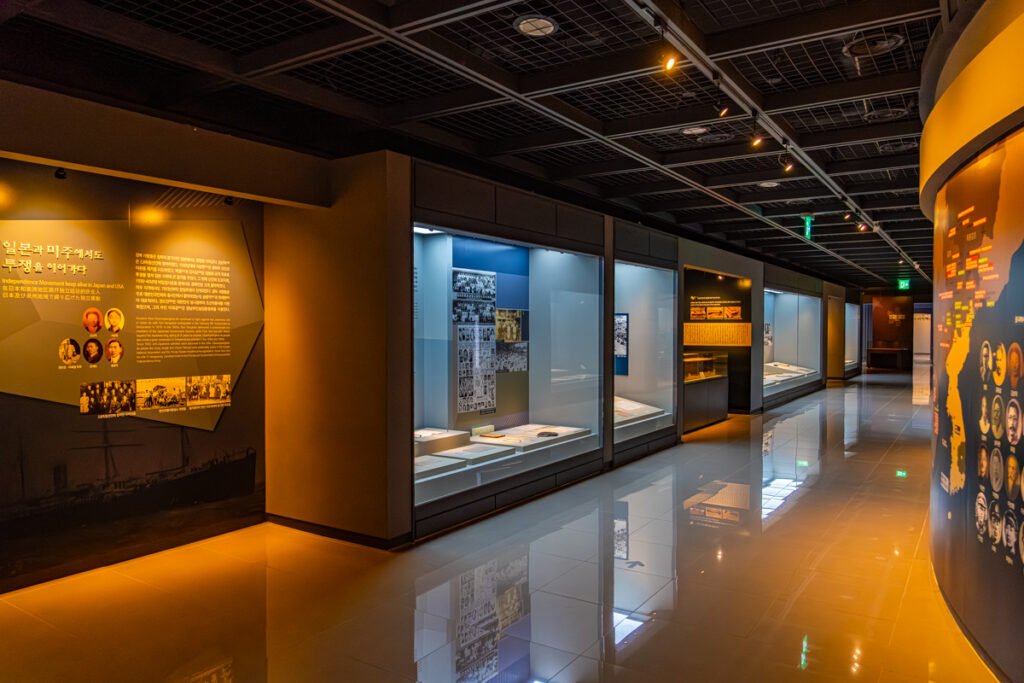
2. The Eulmi Righteous Army (1895): Rage Transformed Into Action
The assassination of Empress Myeongseong in October 1895, followed by the forced haircut decree (단발령, Danballyeong), ignited fury throughout Andong’s scholarly community.
Why Hair Mattered
For Confucian scholars, the topknot wasn’t merely fashion—it represented filial piety, as hair was considered a gift from one’s parents. The Japanese-imposed decree requiring Western-style haircuts was perceived as an assault on fundamental values.
Escalation of Resistance
The Gyeongsangbuk-do Independence Movement Memorial Hall documents how the Eulmi Righteous Army expanded far beyond the 1894 uprising:
- Broader participation: Ordinary citizens joined alongside scholars
- Financial support: Andong residents contributed personal savings to fund operations
- Regional coordination: Networks formed across Gyeongsang Province
The scale of resistance reportedly overwhelmed Japanese administrative capacity in the region, forcing increasingly harsh countermeasures.
3. The National Debt Repayment Movement (1907): Economic Warfare
One of the most distinctive exhibitions at the Gyeongsangbuk-do Independence Movement Memorial Hall covers the National Debt Repayment Movement (국채보상운동)—an attempt to prevent colonization through collective financial action.
The Concept
By 1907, Korea owed Japan approximately 13 million won in loans—debt that Japan was using as leverage to justify increased control. The movement proposed a radical solution: if ordinary Koreans could collectively repay this debt, Japan would lose its economic justification for intervention.
Daegu Origins, National Spread
Though the movement began in Daegu, it spread rapidly through the Gyeongsang region and eventually nationwide. The memorial displays original documents, newspaper articles, and donation records showing:
- Women selling jewelry and hair ornaments
- Men giving up tobacco and alcohol to save money
- Students contributing their allowances
The movement ultimately failed to prevent colonization, but it demonstrated unprecedented national solidarity.
4. The Manchurian Connection: Tracing the Independence Army’s Roots
The Gyeongsangbuk-do Independence Movement Memorial Hall provides crucial context for understanding Korea’s overseas independence movement.
From Righteous Army to Independence Army
As Japanese control tightened after 1910, many Righteous Army veterans and their descendants relocated to Manchuria. The memorial traces this transition:
- 1910s: Establishment of Korean communities in southern Manchuria
- 1920s: Formation of organized independence army units
- 1930s-40s: Continued armed resistance until liberation
Why This Matters
Visitors familiar with famous independence army battles—such as the Battle of Cheongsanri (1920)—can trace the ideological and organizational roots back to the Gyeongsang region. The Confucian-educated leaders who organized the Righteous Armies in the 1890s established the frameworks that independence armies would use decades later in Manchuria.
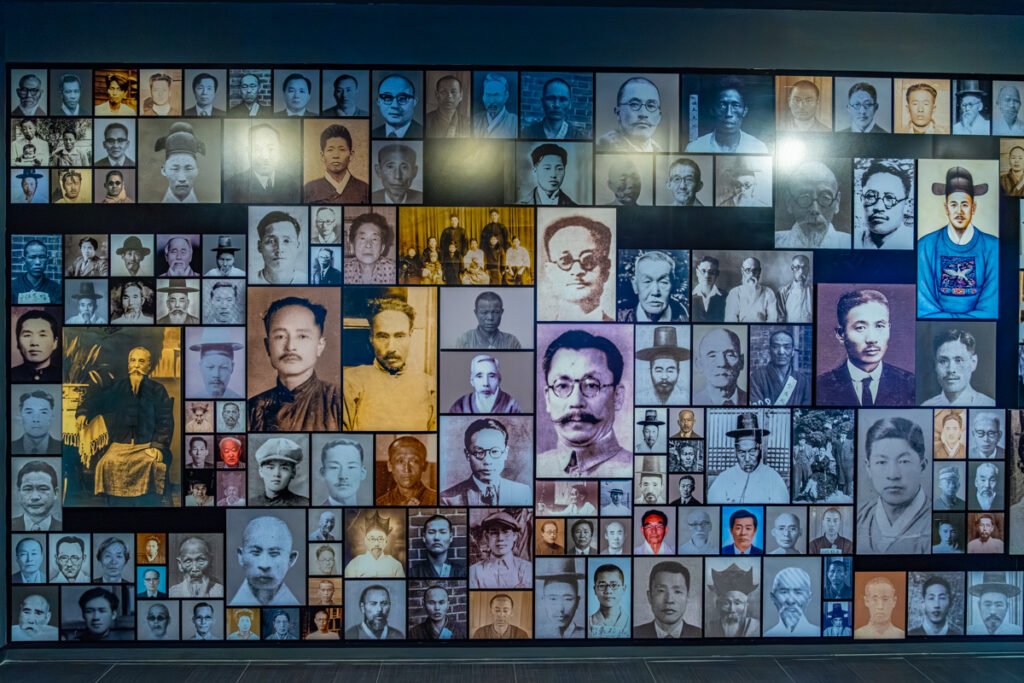
5. The Confucian Foundation: Understanding the “Why”
What distinguishes the Gyeongsangbuk-do Independence Movement Memorial Hall from other independence sites is its focus on intellectual history.
Beyond Dates and Battles
The memorial dedicates significant space to explaining the philosophical framework that motivated resistance:
- Neo-Confucian ethics: How concepts of loyalty and righteousness mandated action
- Historical consciousness: The scholars’ understanding of their role in Korean history
- Educational networks: How seowon (Confucian academies) became organizing centers
The Andong Context
Andong’s unusually dense concentration of yangban families and Confucian institutions made it fertile ground for organized resistance. The memorial explains how existing social networks—built around study groups and ancestral rites—were repurposed for revolutionary activity.
6. Museum Layout and Visitor Experience at Gyeongsangbuk-do Independence Movement Memorial Hall
Exhibition Structure
| Floor/Section | Content |
|---|---|
| Introduction Hall | Overview of Gyeongsang region’s role in independence movement |
| Righteous Army Hall | Gapo and Eulmi uprisings, weapons, personal artifacts |
| National Movements Hall | Debt Repayment Movement, March 1st Movement participation |
| Overseas Resistance Hall | Manchurian independence army activities |
| Memorial Hall | Profiles of regional independence activists |
Time Required
- Quick visit: 1-1.5 hours (main exhibitions only)
- Comprehensive visit: 2-3 hours (including all multimedia presentations)
Photography Considerations
Interior lighting varies significantly between sections. The Righteous Army Hall features dramatic spotlighting on artifacts, while document-heavy sections use flatter illumination.
Recommended settings: ISO 1600-3200, aperture f/2.8-4.0 for artifact close-ups. A 35mm or 50mm equivalent lens works well for most interior shots.
Alt Text: "Interior exhibition space showing Righteous Army weapons and uniforms at Gyeongsangbuk-do Independence Movement Memorial Hall, captured with Sony a7R4 at ISO 3200 f/2.8"
7. Combining With Andong’s Heritage Sites
The Gyeongsangbuk-do Independence Movement Memorial Hall gains additional meaning when paired with Andong’s UNESCO-recognized Confucian heritage sites.
Recommended Itinerary
| Time | Site | Connection |
|---|---|---|
| 9:00 AM | Dosan Seowon | Confucian academy that educated independence leaders |
| 11:30 AM | Byeongsan Seowon | UNESCO heritage, scholarly tradition context |
| 1:00 PM | Lunch in Andong (heotjesabap recommended) | |
| 2:30 PM | Gyeongsangbuk-do Independence Movement Memorial Hall | |
| 5:00 PM | Hahoe Folk Village | Traditional yangban lifestyle |
This sequence helps visitors understand how Andong’s Confucian educational infrastructure produced the independence movement’s intellectual leaders.
For detailed information on Andong’s Confucian academies, UNESCO’s Seowon page provides historical background.
The Travel Manual: Practical Information
| Category | Details |
|---|---|
| Address | 89 Taesa-gil, Imha-myeon, Andong-si, Gyeongsangbuk-do |
| Opening Hours | 9:00 AM – 6:00 PM (Last entry 5:00 PM) |
| Closed | Mondays, January 1, Lunar New Year, Chuseok |
| Admission | Free |
| Time Required | 2-3 hours recommended |
| Official Website | 815gb.or.kr |
| Photography | Allowed (no flash) |
Getting There
From Seoul:
- KTX: Seoul Station → Andong Station (2 hours 10 minutes, ₩35,000)
- Bus: Dong Seoul Terminal → Andong Bus Terminal (2 hours 40 minutes, ₩18,000)
From Andong Station/Bus Terminal:
- Taxi to memorial: approximately 25 minutes, ₩15,000-20,000
- Limited bus service available—confirm schedules locally
Budget Estimate (Full Day in Andong)
| Item | Cost |
|---|---|
| Seoul-Andong round trip (KTX) | ₩70,000 |
| Local transportation | ₩40,000 |
| Memorial admission | Free |
| Dosan Seowon admission | ₩1,000 |
| Hahoe Village admission | ₩5,000 |
| Meals | ₩25,000 |
| Total | ₩141,000 |
Conclusion: The Intellectual Roots of Korean Independence
The Gyeongsangbuk-do Independence Movement Memorial Hall offers what Seoul’s more famous sites cannot: the “why” behind the independence movement. Here, visitors discover how five centuries of Confucian education created a class of scholars who considered resistance not merely practical but morally obligatory.
For travelers who have visited Seodaemun Prison and witnessed where independence activists suffered, Andong’s memorial completes the picture by showing where those activists’ convictions originated. The journey from these quiet Gyeongsang valleys to the prison cells of Seoul—and eventually to the battlefields of Manchuria—represents one of modern Asia’s most compelling stories of ideological commitment transformed into action.
The Gyeongsangbuk-do Independence Movement Memorial Hall deserves a place on any serious itinerary exploring Korean history beyond the surface.
Pingback: Menge Village Andong: 6 Stunning Reasons to Cross a River for Korea's Best Wheat Soju - THE Travel Manual