
Table of Contents
Transparency Note: This guide contains affiliate links. If you make a purchase, I may earn a commission at no extra cost to you—allowing me to keep providing expert, gear-tested travel insights.
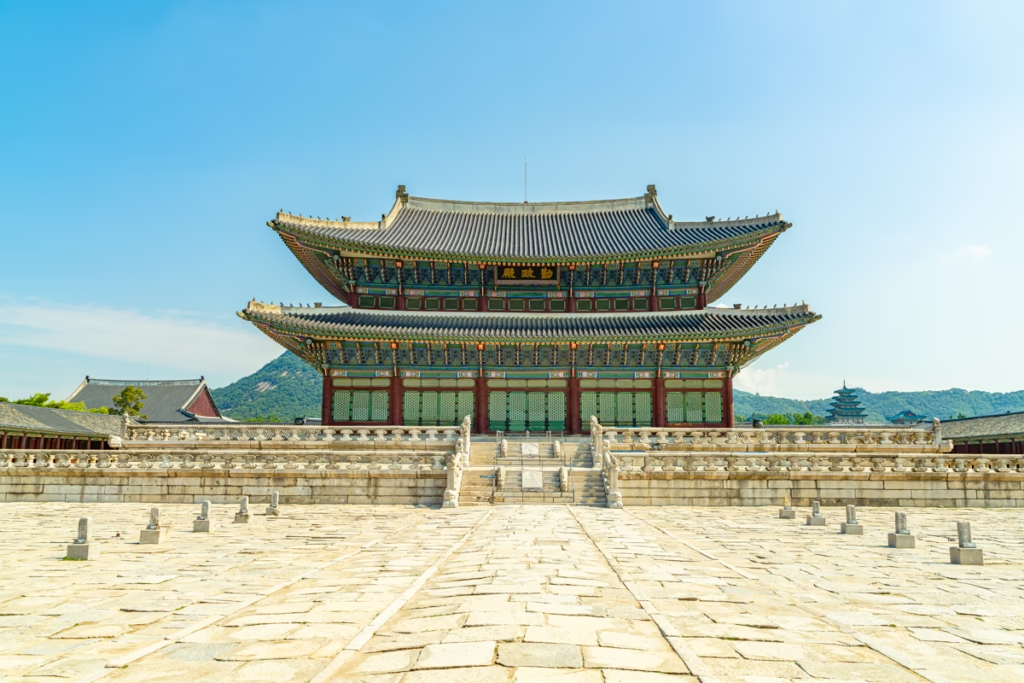
If you’re visiting Seoul for the first time, Gyeongbokgung Palace is likely already on your list. It should be. Built in 1395 as the main royal residence of the Joseon Dynasty (1392–1910), it remains the largest and most symbolically important of Korea’s five grand palaces.
But here’s the thing most travel sites won’t tell you: how you visit matters as much as whether you visit. Show up on the wrong day, at the wrong hour, without the right information, and you’ll walk away with little more than a few blurry photos and sore feet.
This guide covers the practical details—free entry tricks, ceremony schedules, what to skip, and where to stand for the best shots—so you can make the most of your time at a place that genuinely deserves it.
Why This Is Seoul’s One Must-Visit Palace
Seoul has five major Joseon-era palaces, and it’s a fair question to ask whether you really need to visit all of them. The short answer: no. But if you only visit one, Gyeongbokgung Palace is the one.
Gyeongbokgung is not just the biggest—it’s also the most historically significant. It was the first palace built after the founding of the Joseon Dynasty and served as the political heart of the kingdom for centuries. The scale is immediately apparent: over 300 buildings once stood within these walls.
What makes it particularly worth visiting as a foreigner is the concentration of experiences in one site: royal architecture, a lake pavilion that rivals any postcard from Kyoto, a live guard ceremony, and two national museums—all within walking distance of each other.
7 Things You Should Know Before Visiting Gyeongbokgung Palace
1. It’s Closed Every Tuesday
This catches more visitors than you’d think. Gyeongbokgung is closed every Tuesday for regular maintenance. The only exception: if Tuesday falls on a public holiday, the palace opens that day and closes on the next non-holiday weekday instead.
Double-check before building your itinerary around a Tuesday palace visit. All other Seoul palaces follow a similar weekday closure system (Changdeokgung closes on Mondays, for example), so plan accordingly.
2. Wear Hanbok and Get In Free
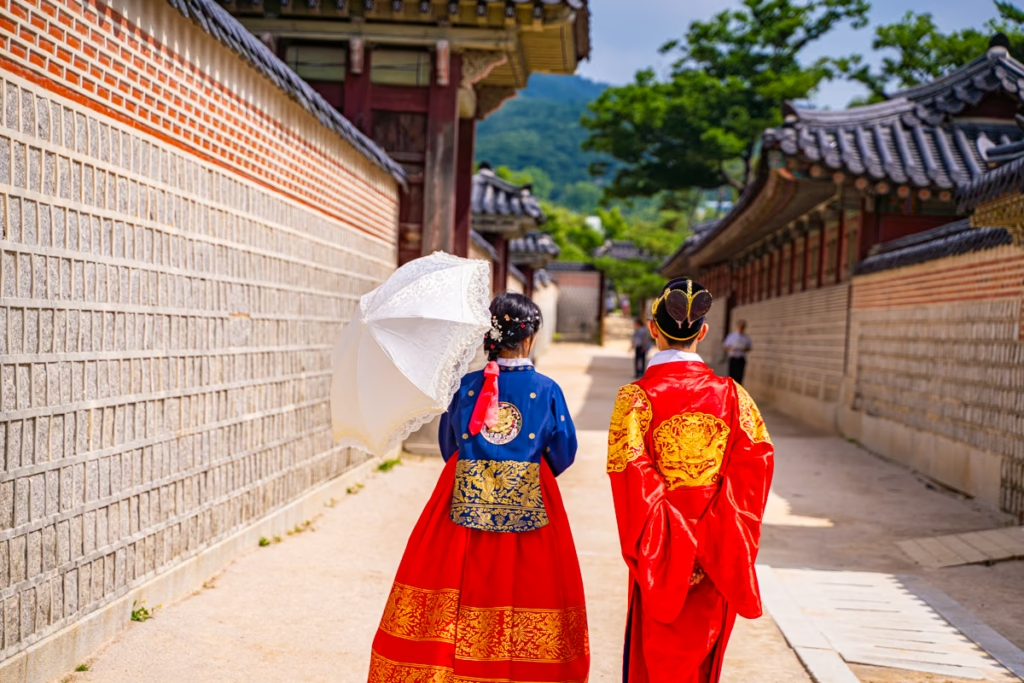
This is not a gimmick—it’s official policy. If you wear hanbok (traditional Korean clothing), your ₩3,000 admission fee (~$2.20 USD) is completely waived. The rule applies to all visitors regardless of nationality.
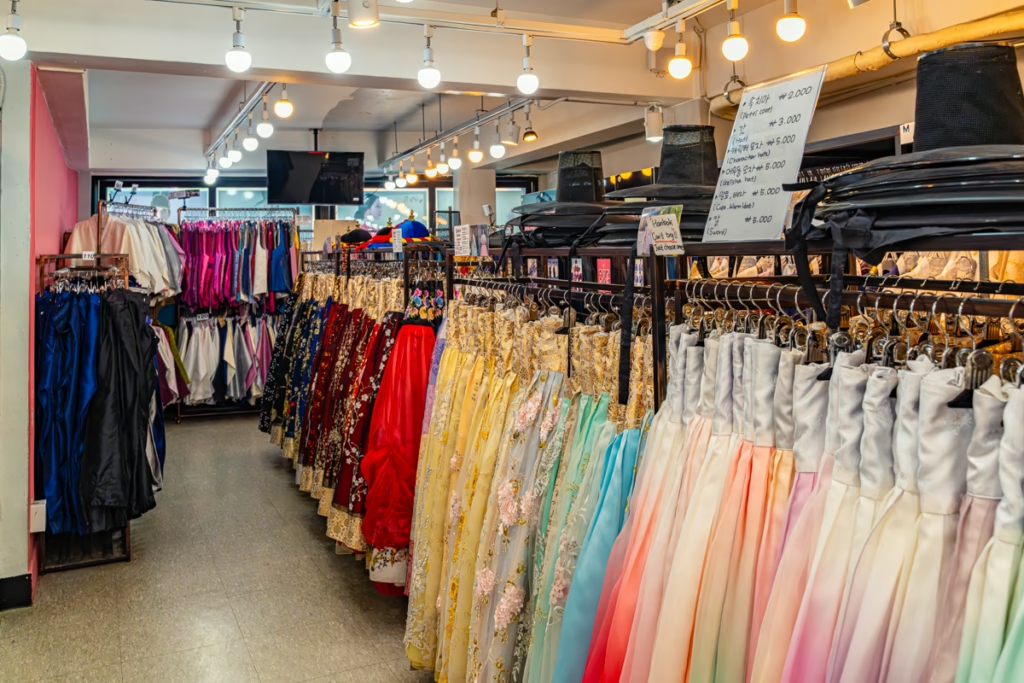
Dozens of hanbok rental shops line the streets around the palace, particularly near Exit 4 of Anguk Station. Typical rental prices:
- Basic hanbok rental: ₩15,000–₩20,000 for 2 hours
- Premium/seasonal sets: ₩25,000–₩40,000 for 2–4 hours
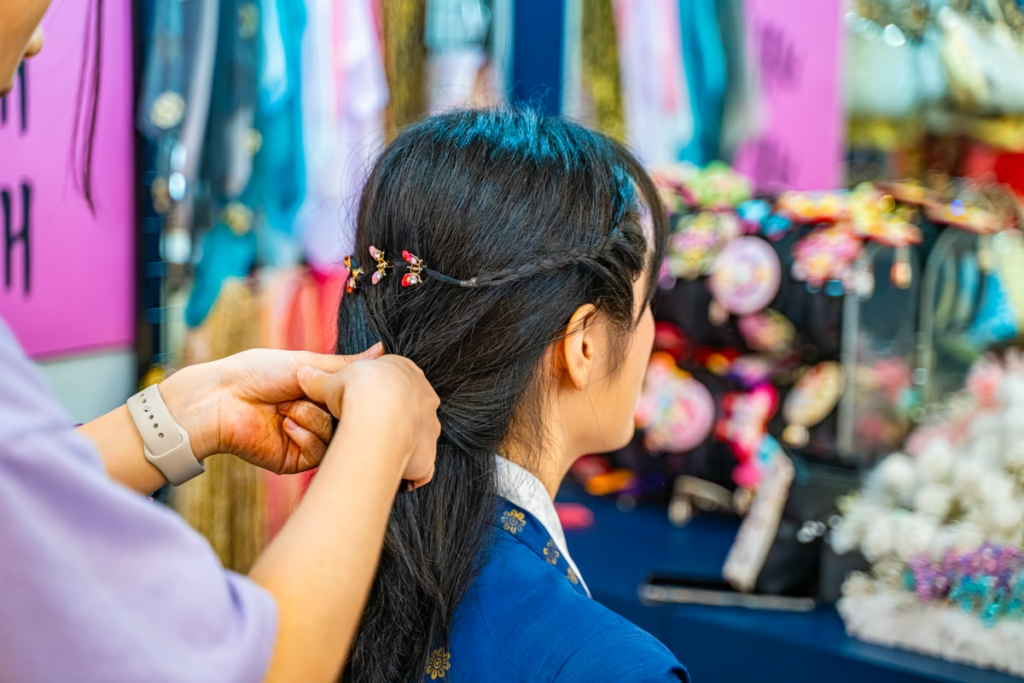
- Hair styling add-on: ₩5,000–₩10,000
The math works out: even at the cheapest rental, you’re mostly paying for the experience and photos rather than saving on the ₩3,000 ticket. But walking through the palace grounds in full traditional dress is genuinely one of those travel moments that delivers on the hype.
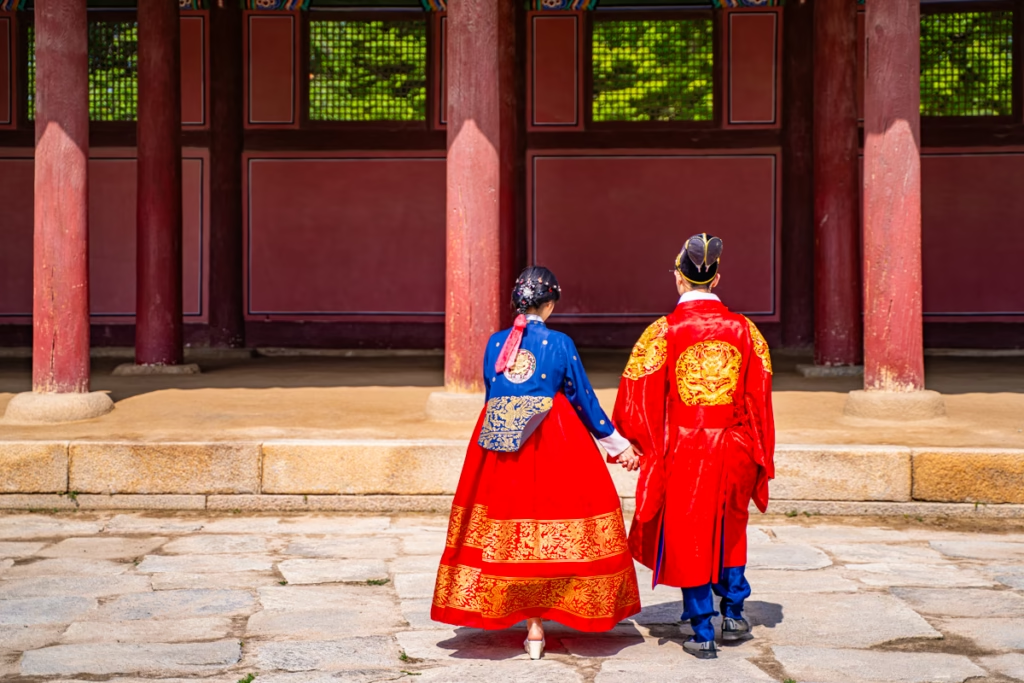
Take it a step further: Several premium rental shops offer royal court costume sets—the elaborate robes and headpieces once reserved for Joseon kings (gonryongpo) and queens (wonsam). These aren’t the standard hanbok you’ll see most visitors wearing. They’re heavier, more ornate, and unmistakably regal.
Wearing a royal set through the palace turns a sightseeing visit into something closer to a period roleplay. Walk through Geunjeongjeon’s courtyard in a king’s crimson robe or pose on the stone steps where actual queens once stood—the setting does most of the work for you. It’s theatrical, yes, but the palace was literally built for these clothes. The photos come out remarkably well.
- Royal costume rental: ₩40,000–₩70,000 for 2–3 hours (includes accessories and basic styling)
- Couple king & queen set: ₩80,000–₩120,000 at most shops, often with a professional photo session add-on
Practical note: Royal hanbok is significantly bulkier than standard sets. Expect slower walking and plan for fewer stops during your visit. The best rental shops will explain how to manage the layers and which spots inside the palace work best for royal-style photos.
🔗 Book hanbok rental + palace tour in advance: Reserve through Klook to lock in a discounted rate and skip the walk-in queue.
3. Catch the Royal Guard Ceremony—but Arrive Early
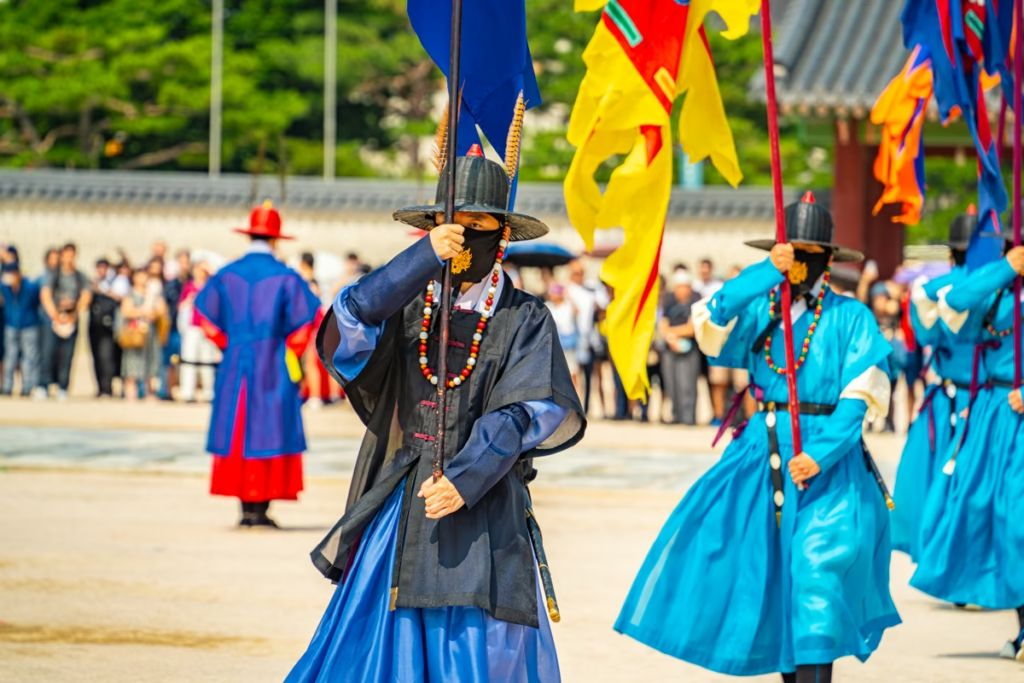
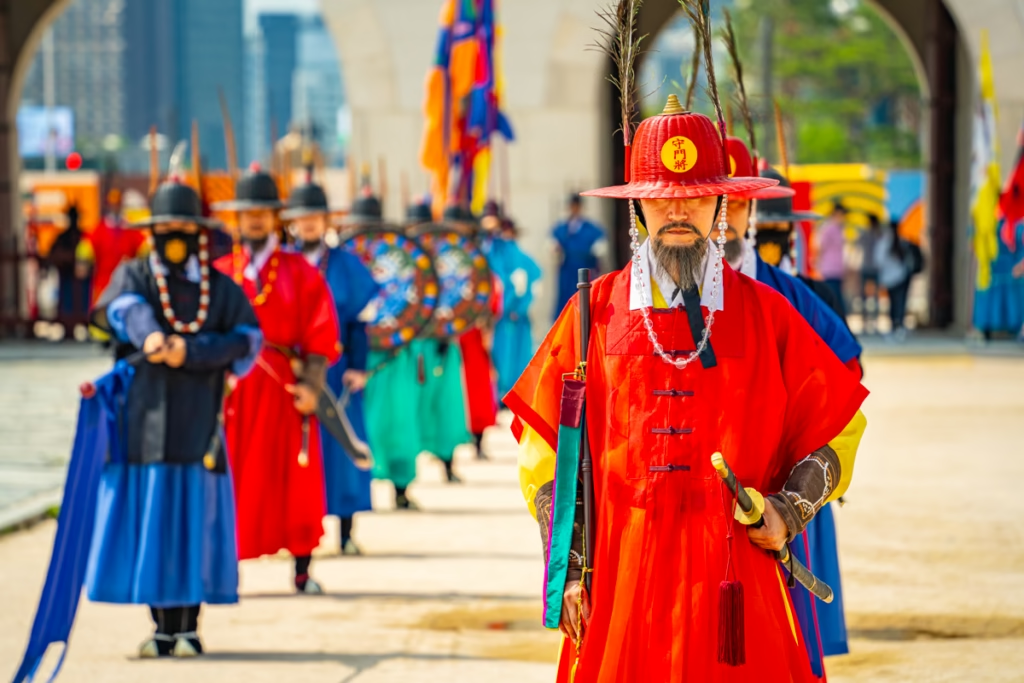
The Royal Guard Changing Ceremony (수문장 교대의식) is a faithfully reconstructed reenactment of the Joseon-era palace guard rotation. It runs daily at 10:00 AM and 2:00 PM, lasting about 20 minutes, in the open plaza between Gwanghwamun Gate and Heungnyemun Gate.
It’s well-produced—traditional instruments, elaborate costumes, precision formations—and it’s completely free to watch. The catch: the viewing area fills up fast, especially on weekends.
Tip: Arrive at least 15 minutes early and position yourself on the left side (facing the gate) for the best unobstructed sightline. After the ceremony, you can take photos with the guards—they’ll stay in position for a few minutes.
4. The Free Guided Tour Is Better Than Any Audioguide
Gyeongbokgung Palace offers free guided tours in English, Chinese, and Japanese. English tours typically run at 11:00 AM, 1:30 PM, and 3:30 PM—check the schedule at the information desk just past the main entrance, as times shift seasonally.
The 60–90 minute guided walk covers ground you’d otherwise walk right past without understanding. The guides are well-trained and answer questions. This is the single best way to visit if it’s your first time.
Alternatively, audioguides are available for rent at ₩3,000, but they can’t compete with a live guide’s context and storytelling.
5. Know the Hours—They Change by Season
The palace opens at 9:00 AM year-round, but closing time depends on the season:
- March–May & September–October: closes at 6:00 PM
- June–August: closes at 6:30 PM
- November–February: closes at 5:00 PM
Last entry is always 1 hour before closing. Plan to spend at least 1.5–2 hours if you want to see the major sites without rushing.
6. Age-Based Discounts for Foreigners
Standard adult admission is ₩3,000. Foreign visitors aged 18 and under or 65 and over enter free—bring your passport as proof. This applies to all nationalities.
If you’re planning to visit multiple palaces and the Jongmyo Royal Shrine, the Integrated Palace Ticket (₩10,000) covers all five palaces and the shrine for 3 months—a solid deal if you’re spending more than a few days in Seoul.
7. Download Naver Map, Not Google Maps
This applies to your entire Korea trip, not just Gyeongbokgung Palace. Google Maps has severely limited functionality in South Korea due to government mapping data restrictions. Walking directions, transit details, and even basic location data are often inaccurate or missing.
Download Naver Map or Kakao Map instead. Both have English interfaces and provide accurate subway directions, walking routes, and bus schedules. Search for: 경복궁 (Gyeongbokgung) or simply “Gyeongbokgung Palace.”
The 4 Must-See Spots Inside the Palace Grounds
Geunjeongjeon (근정전) — The Throne Hall of Gyeongbokgung Palace
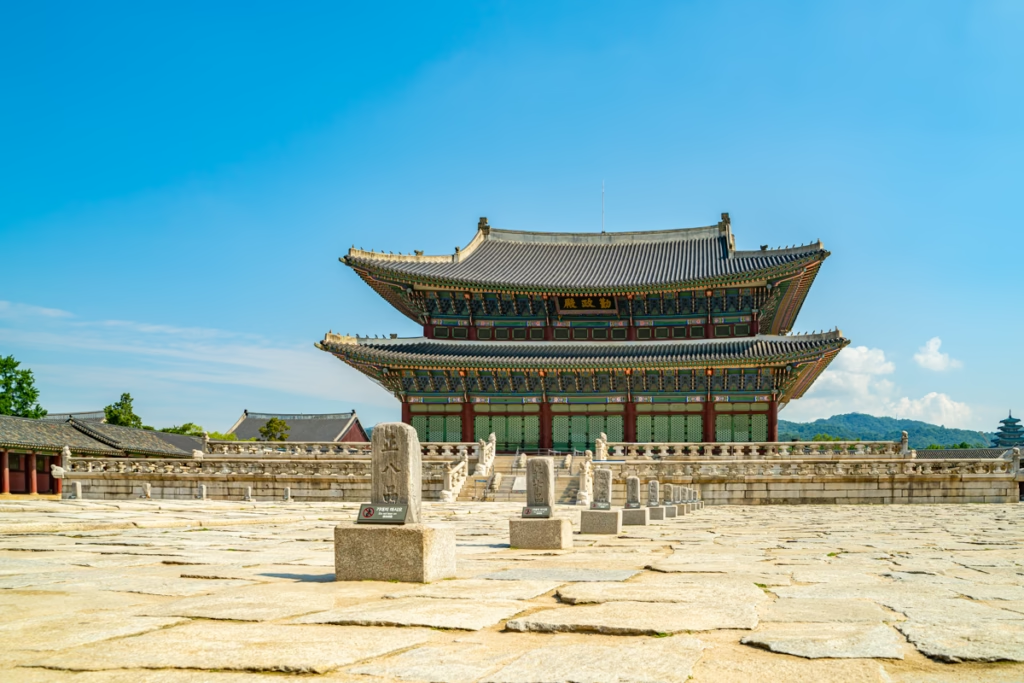
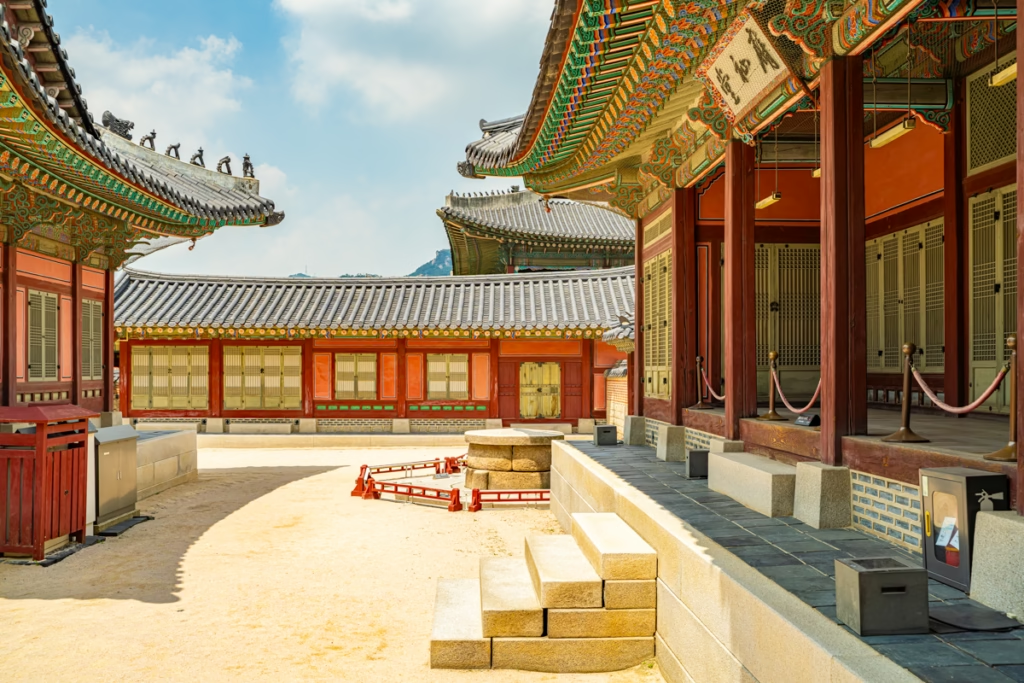
This is the centerpiece. Geunjeongjeon is where coronations, state ceremonies, and diplomatic receptions took place. The two-tier stone platform elevates the hall above the vast courtyard, lined with rank stones (품계석)—markers that designated where officials of each rank stood during court assemblies.
Look up at the ceiling inside: the double-dragon motif on the coffered wooden ceiling is some of the finest dancheong (traditional polychrome painting) you’ll find in Korea.
📷 File Name: geunjeongjeon-interior-ceiling.avif | Alt Text: Ornate dancheong painted ceiling inside Geunjeongjeon throne hall at Gyeongbokgung Palace
Gyeonghoeru (경회루) — The Banquet Pavilion on the Lake
Gyeonghoeru is the image you’ve probably already seen on every Korea tourism brochure. A two-story wooden pavilion sitting over a large artificial lake, originally used for royal banquets and entertaining foreign envoys.
The real draw: the reflection. On still mornings, the pavilion mirrors perfectly on the lake’s surface. For the best shot, visit before 10:00 AM when foot traffic is light and the water is calm. The northwest corner of the lake offers the most symmetrical composition.
From April to October, limited interior tours of Gyeonghoeru are available by reservation only through the Cultural Heritage Administration website.
Hyangwonjeong (향원정) — The Garden Pavilion
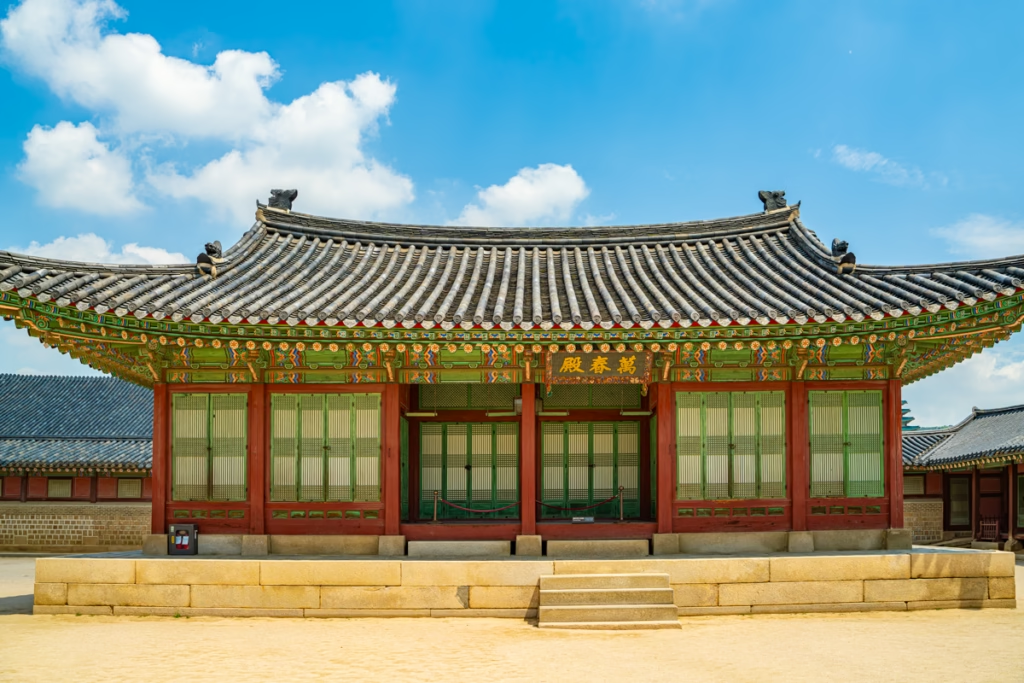
Tucked in the northern rear garden, Hyangwonjeong is smaller and more intimate than Gyeonghoeru. A hexagonal pavilion on a tiny island, connected by a gracefully arched wooden bridge—this was the private retreat of the royal family.
Where Gyeonghoeru impresses with scale, Hyangwonjeong works through subtlety. It’s particularly photogenic in autumn when the surrounding trees turn, and in winter after a light snowfall.
Most tour groups skip this area, so it’s a good spot to catch your breath.
Gwanghwamun (광화문) — The Main Gate
Gwanghwamun is more than an entrance—it’s a symbol. Stand in front of it and you’ll see modern Seoul stretching out behind you: the wide boulevard of Sejong-daero, the statue of King Sejong, and glass-and-steel office towers framing the sky.
Then turn around and walk through the gate into a 600-year-old palace complex backed by Bugaksan mountain. This single frame—old and new, compressed into one sightline—is what makes Seoul unlike any other capital city.
The gate itself was destroyed during the Japanese colonial period, displaced during the Korean War, and finally restored to its original position in 2010. It carries history in its bones.
Best Time to Visit Gyeongbokgung Palace
Gyeongbokgung Palace is photogenic year-round, but each season offers a different character:
- Spring (April): Cherry blossoms frame the courtyards. Peak crowds, but peak beauty. If you’re chasing early spring blooms beyond Seoul, Geoje Island on the southern coast sees flowers weeks before the capital.
- Autumn (October–November): Arguably the best time. Warm light, colored foliage, comfortable temperatures. Also busy.
- Winter (December–February): Dramatically fewer tourists. Snow-covered rooftops photograph well against grey skies. Dress warm—Seoul winters are serious (regularly below -10°C). If you’re visiting in winter, consider pairing your palace day with a sunset hike to N Seoul Tower for a completely different perspective on the city after dark.
- Summer (July–August): Hot and humid. If you must visit in summer, go early morning or late afternoon.
Best time of day: Arrive at 9:00 AM when the gates open. The first 30–60 minutes offer the thinnest crowds and the best light for photography—especially at Gyeonghoeru.
If you’re planning a trip to Seoul, browse Seoul hotels on Agoda for accommodations near the palace district. Staying in the Jongno or Anguk area puts you within walking distance.
How to Get There
Gyeongbokgung Palace sits in central Seoul, and the subway system makes it straightforward to reach.
Option 1: Subway Line 3 — Gyeongbokgung Station (경복궁역)
Take Exit 5. You’ll emerge directly at the palace wall—this is the most convenient route. Follow signs toward the ticket booth.
Option 2: Subway Line 5 — Gwanghwamun Station (광화문역)
Take Exit 2. Walk north along Gwanghwamun Plaza for about 10 minutes to reach the main gate. This route is slightly longer but gives you the full approach view—Gwanghwamun Gate framed by Bugaksan mountain ahead of you.
From Major Seoul Hubs
- From Seoul Station: Subway Line 1 → transfer at Jongno 3-ga → Line 3 to Gyeongbokgung Station. About 20 minutes.
- From Myeongdong: Subway Line 4 → transfer at Chungmuro → Line 3 to Gyeongbokgung Station. About 20 minutes.
- From Incheon Airport: AREX to Seoul Station, then subway as above. Total ~80 minutes.
Nearby Attractions Worth Combining
Gyeongbokgung Palace sits in a culturally dense part of Seoul. You can easily build a full day around the area without backtracking.
- National Museum of Korea & National Folk Museum: Both are located inside the palace grounds. The Folk Museum is especially worth visiting for a visual crash course in Korean daily life across centuries.
- Bukchon Hanok Village (북촌한옥마을): A 10-minute walk east of the palace. A residential neighborhood of traditional Korean houses (hanok) set on hilly alleyways. Go early—by midday it’s overrun.
- Insadong (인사동): A 5-minute walk south. Tea houses, traditional craft shops, and galleries. Good for picking up Korean souvenirs that aren’t mass-produced.
- Cheongwadae (청와대, Former Presidential Office): Opened to the public in 2022 after decades as the off-limits presidential compound. A 15-minute walk north from the palace rear gate.
- Day trip — Hwaseong Independence Trail: If the Joseon dynasty history at Gyeongbokgung sparks your curiosity about Korea’s modern struggles, the independence movement memorials in Hwaseong (about 1 hour south of Seoul by train) offer a powerful deep dive into the early 20th-century resistance. A worthwhile half-day addition for history-focused travelers.
🔗 Explore Seoul day tours that include Gyeongbokgung: Browse guided options on Klook
Where to Stay Near the Palace District
For first-time visitors to Gyeongbokgung Palace, staying in the Jongno or Anguk area is ideal. It puts the palace, Bukchon, and Insadong within walking distance, and you’re on Subway Lines 1, 3, and 5 for easy access to the rest of Seoul.
- Budget: Guesthouses and hostels around Anguk Station start around ₩30,000–₩50,000/night.
- Mid-range: Boutique hotels in Insadong area, ₩80,000–₩150,000/night.
- Upscale: The Four Seasons Seoul is a 5-minute drive from the palace—one of the few luxury hotels with a direct sightline to the palace walls.
🔗 Search Jongno-area hotels on Agoda
Photography Tips for the Palace Grounds
Gyeongbokgung Palace is one of the most photographed heritage sites in Korea—but getting beyond the standard tourist snapshot takes a bit of planning.
- Golden hour: The palace faces south. Morning light (9:00–10:30 AM) illuminates the main buildings beautifully. Late afternoon creates warm side-lighting on Gyeonghoeru.
- Best reflection shot: Gyeonghoeru, northwest corner of the lake, before 10 AM on a windless day.
- Avoid midday: Harsh overhead light flattens the elaborate roof details and dancheong painting. The 11 AM–2 PM window is best spent indoors at the museums.
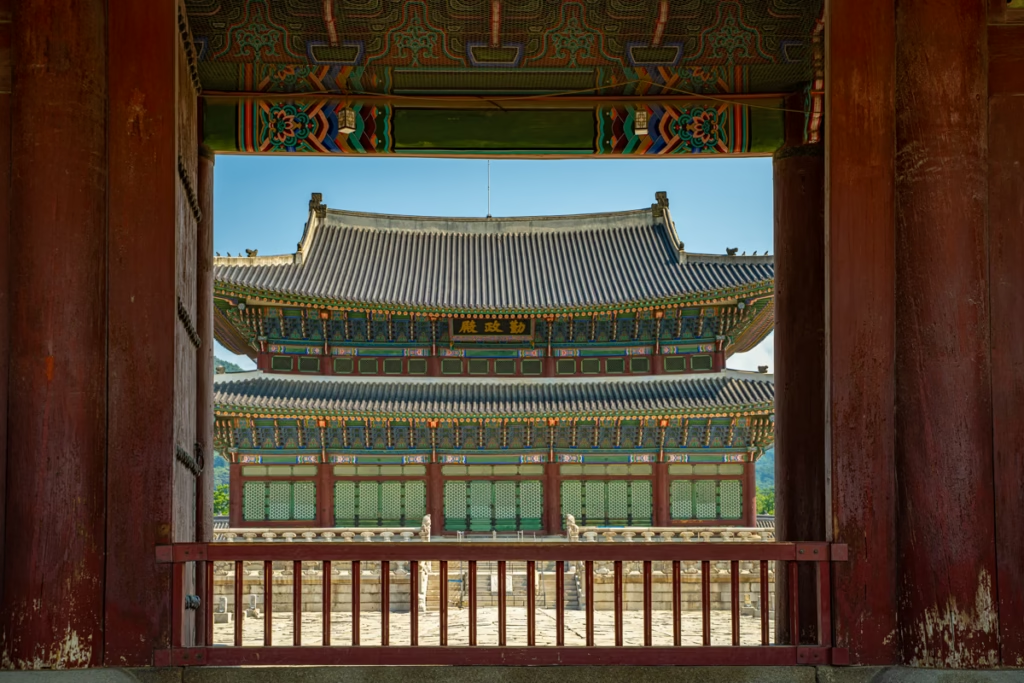
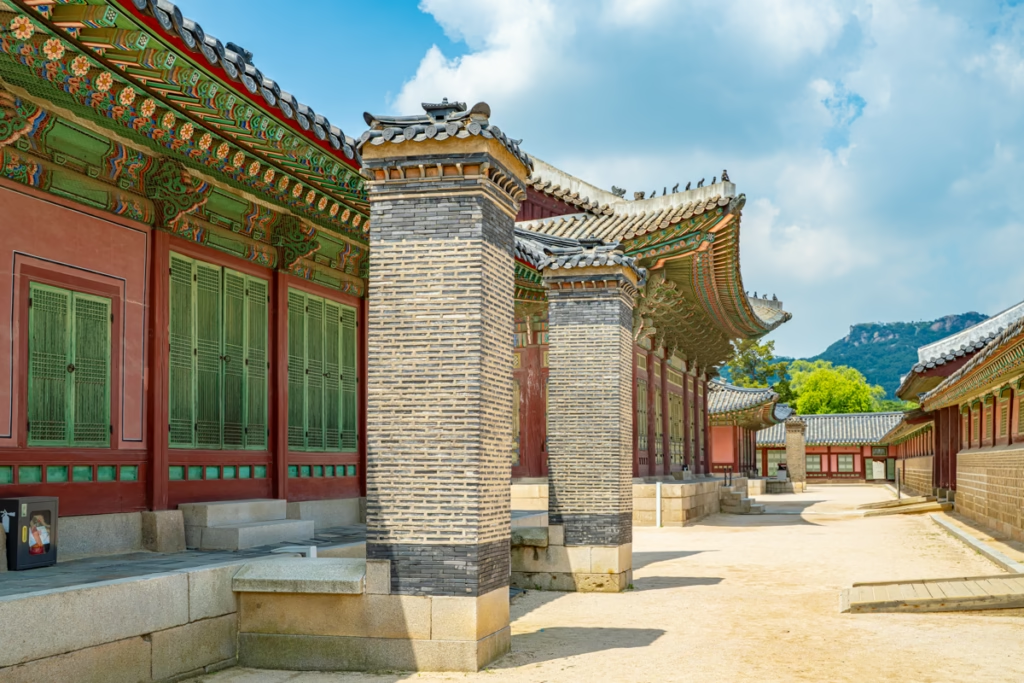
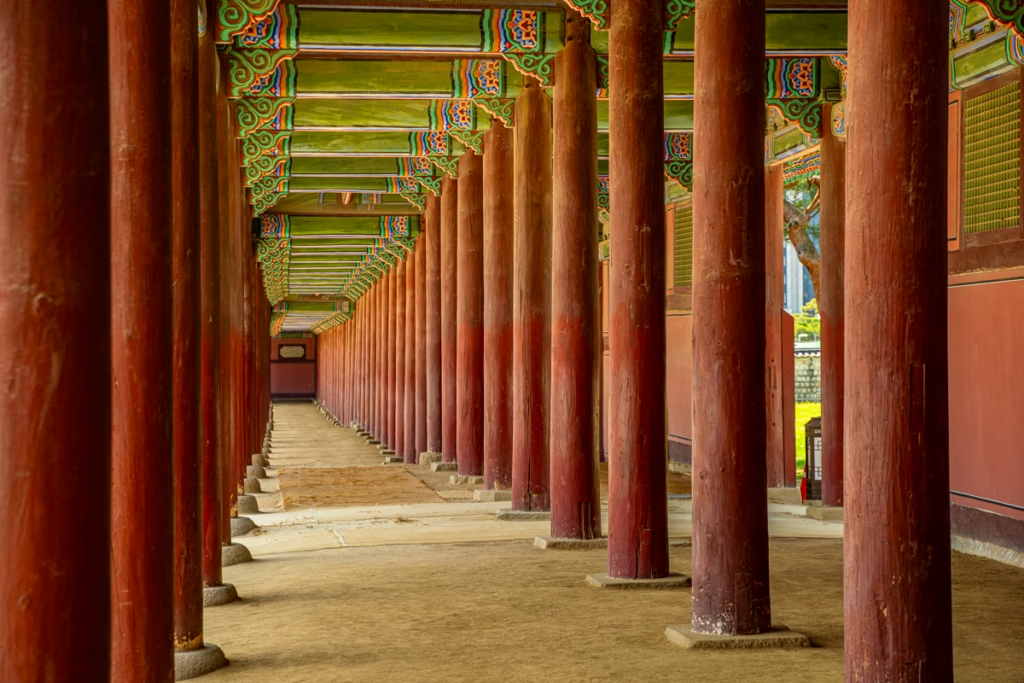
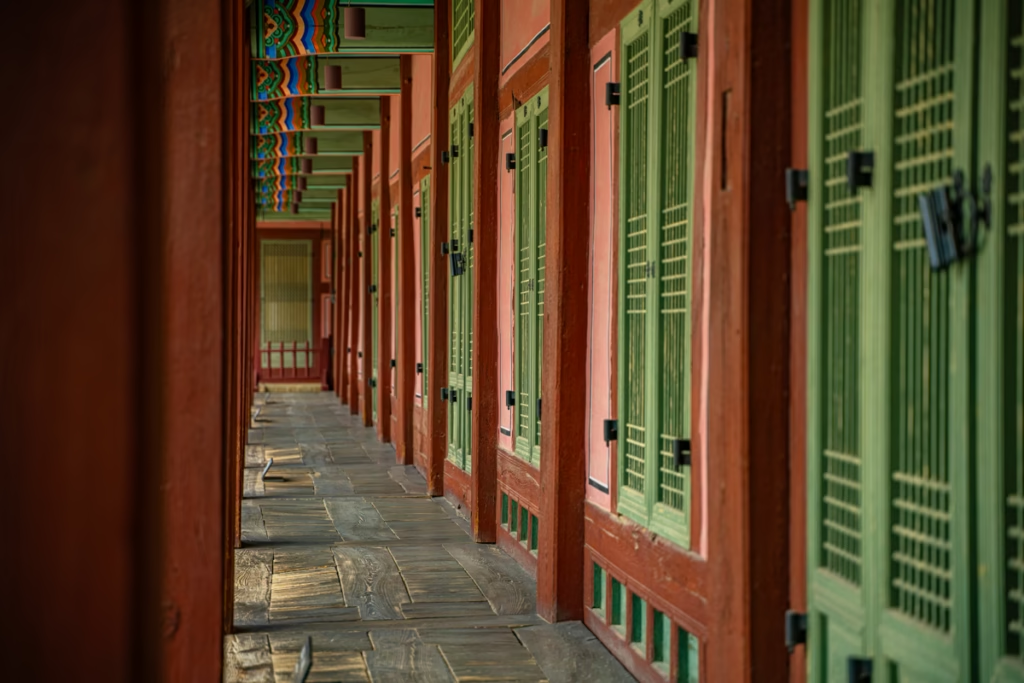
- Composition tip: Use the long corridors and repeating column patterns as natural leading lines. The view through Heungnyemun toward Geunjeongjeon creates strong depth.
- Tripod policy: Tripods are generally allowed but may be restricted during busy periods or special events. Monopods and handheld stabilizers are fine.
Quick Reference: Gyeongbokgung Palace Visitor Information
| Category | Details |
|---|---|
| Address | 161 Sajik-ro, Jongno-gu, Seoul (서울 종로구 사직로 161) Search: 경복궁 on Naver Map / Kakao Map |
| Hours | 9:00 AM – 5:00 PM (Nov–Feb) / 6:00 PM (Mar–May, Sep–Oct) / 6:30 PM (Jun–Aug) Last entry 1 hour before closing |
| Closed | Every Tuesday (unless Tuesday is a public holiday) |
| Cost | ₩3,000 adults (~$2.20 USD) / Free with hanbok / Free for ages ≤18 and ≥65 (passport required) |
| Transport | Subway Line 3 Gyeongbokgung Station Exit 5 (direct) or Line 5 Gwanghwamun Station Exit 2 (10-min walk) |
| Guard Ceremony | Daily 10:00 AM & 2:00 PM (~20 min), Gwanghwamun–Heungnyemun plaza |
| Free Guided Tours | English: typically 11:00 AM, 1:30 PM, 3:30 PM (check on-site for seasonal changes) |
| Recommended Stay | 1.5–2 hours (palace only) / 3–4 hours (with museums and nearby Bukchon) |
| Official Website | royalpalace.go.kr |
Final Thoughts
Gyeongbokgung Palace isn’t a hidden gem—it’s one of the most visited sites in Korea, and it’s popular for the right reasons. The architecture is striking, the history runs deep, and on a clear day with Bugaksan mountain as the backdrop, it’s genuinely one of the most visually compelling urban heritage sites in East Asia.
The key to a great visit is timing and preparation. Go early, go on the right day, take the free guided tour, and don’t rush it. This isn’t a checkbox attraction—it’s a place that rewards attention.