
Korea’s spring flower season officially starts in late March, when cherry blossoms flood social media. But the country’s most significant early-spring event happens two weeks earlier—and it takes place not in Seoul or Busan, but in a small farming village in South Jeolla Province.
If you’re still watching bare branches from Seoul’s Namsan—the same mountain that rewards a N Seoul Tower winter hike with sharp, crowd-free views—the Seomjin River valley is already weeks ahead of the capital. Spring arrives in Korea’s south first, and it announces itself through plum blossoms.
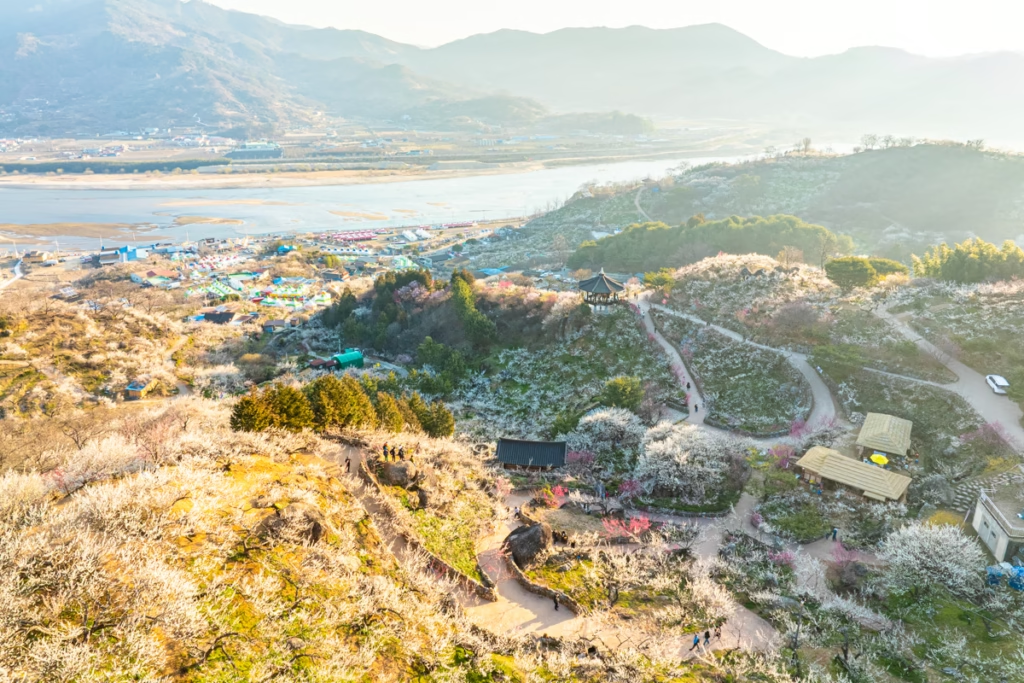
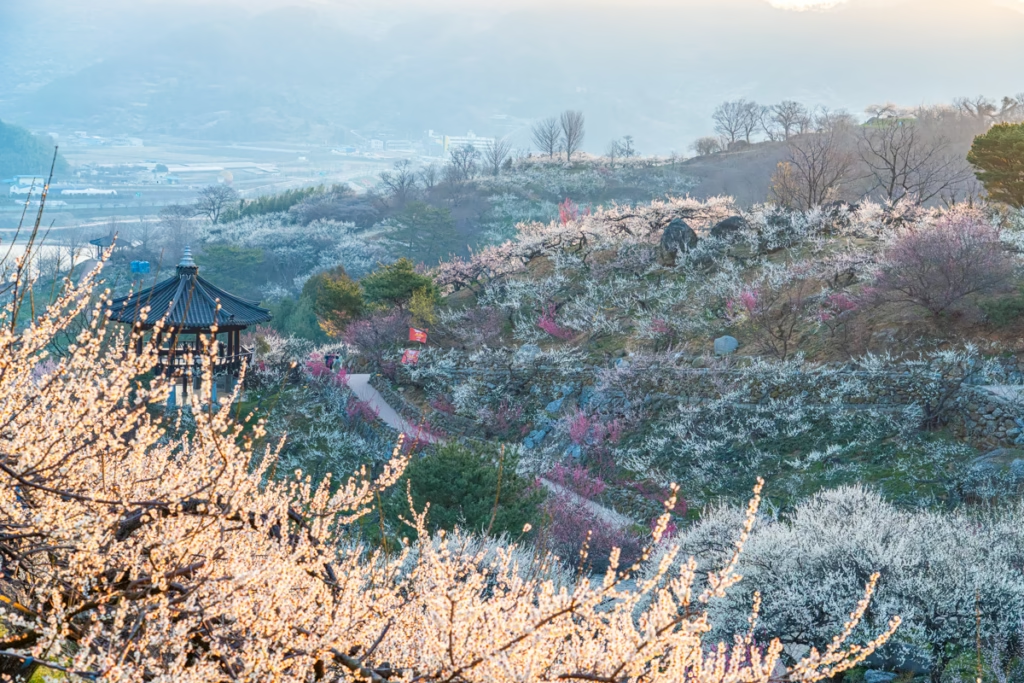
The Gwangyang Maehwa Festival runs from March 13 to 22, 2026, on the slopes above the Seomjin River in Gwangyang City. More than a million visitors make the trip each year to see Cheonmaesil Farm’s 100,000 plum trees in bloom—a spectacle that unfolds over 198,000 square meters of terraced hillside, with 2,000 traditional earthenware jars arranged below the orchard as a counterpoint to all that white blossom.
As of March 6, 2026, the bloom rate stands at 40–50%. Full bloom is expected around the festival’s opening weekend.
Where Is Gwangyang, and How Do You Get There?
Gwangyang sits in South Jeolla Province (전라남도), on the southern tip of the Korean peninsula. The Maehwa Village (매화마을) is in Daap-myeon, along the north bank of the Seomjin River—the natural boundary between South Jeolla and South Gyeongsang Provinces.
For international visitors, the most practical routes are:
- From Seoul: KTX from Seoul Station to Suncheon Station (~2 hrs 30 min, ₩50,000–60,000), then intercity bus or taxi to Gwangyang (~30 min). Alternatively, KTX to Gwangju-Songjeong Station, then bus to Gwangyang (~1 hr).
- From Busan: Intercity bus or drive, approximately 1 hr 30 min via Expressway 10.
- By car from Seoul: Approximately 3.5–4 hours via Honam Expressway, exit Gwangyang IC.
Note that Google Maps navigation is unreliable in Korea. Use Naver Map (네이버 지도) or Kakao Map (카카오맵) and search for “매화마을” (Maehwa Village) or “청매실농원” (Cheonmaesil Farm).
Gwangyang Maehwa Festival 2026: Key Details at a Glance
- Dates: March 13 (Fri) – March 22 (Sun), 2026
- Location: Maehwa Village, Daap-myeon, Gwangyang-si, Jeollanam-do
- Operating Hours: 07:00–17:00 (confirm with official channels closer to date)
- Admission: Adults ₩6,000 / Teens (7–18) ₩5,000 — fully refunded as Gwangyang local vouchers
- Free Entry: Children under 6, seniors 65+, residents of Gwangyang under 19, people with disabilities, veterans (ID required)
- Bloom forecast: Peak bloom expected March 13–17
- Official site: Check the Gwangyang Maehwa Festival website for real-time bloom photos and updates
The Admission System: How the ₩6,000 Ticket Actually Works
The entry fee structure is designed to circulate money within the local economy rather than fund the event organizers. Every won paid at the gate comes back to you as a Gwangyang Sarang voucher (광양사랑상품권)—usable at official vendor stalls inside the festival grounds and at registered businesses in Daap-myeon.
A few practical notes:
- Unofficial street vendors and unlicensed food stalls do not accept Gwangyang vouchers. Stick to marked festival booths.
- There is more than enough to spend the vouchers on—food, experiences, and produce stalls are plentiful.
- Bring some cash alongside your card; smaller vendors may not have card readers.
Looking for accommodation near the festival? Gwangyang has a small selection of guesthouses, but most visitors base themselves in the nearby city of Suncheon, which offers a wider range of hotels.
Browse hotels near Gwangyang Maehwa Festival on Agoda →
Parking and the Free Shuttle: How to Actually Arrive Without Stress
During the Gwangyang Maehwa Festival, private vehicles cannot enter the festival grounds. All visitors park at designated lots outside the village and take shuttle buses in. On weekend mornings after 9:00 AM, approach roads fill up quickly—early arrival or a weekday visit is the single most effective strategy for avoiding crowds.
Parking Options
- Dunchi Parking Lot (둔치주차장): The largest lot, capacity approximately 2,200 vehicles, free of charge. This is the recommended option for most visitors.
- Dosa and Seomjin Parking Lots: Paid on weekends. Smaller capacity than Dunchi.
Free Shuttle Buses (A & B Routes)
- Route A (Dunchi ↔ Festival): Daily operation. Dunchi departures from 06:00–17:30 (18:00 on weekends); festival departures from 06:10–18:00 (19:00 on weekends).
- Route B (Sodunchi ↔ Festival): Weekends only. Sodunchi departures from 07:00–18:30; festival departures from 07:10–19:00.
Paid City Shuttle (Reservation Required)
For visitors without a car, a dedicated city shuttle runs on the four main weekend days: March 14, 15, 21, and 22.
- Route: Gwangyang Bus Terminal → Tourist Information Center → Gwangyang Seafood Distribution Center → Maehwa Festival grounds
- Fare: ₩5,000 per person, round trip
- Reservations: March 9–15 via the MY광양 app (advance booking required)
Travel Manual Tip: The MY광양 app is in Korean only. If you’re using a foreign phone number to register, the SMS verification step may not work. Consider booking through a Korean travel agency or having your hotel concierge assist with the city shuttle reservation.
The Gwangyang Maehwa Festival’s 4 Walking Routes
The festival grounds have four official walking routes, each covering different sections of the village. They’re designed as loops or one-way paths connecting the main stage area to Cheonmaesil Farm (청매실농원), the historic orchard at the heart of the event.
- 사랑으로 (Love Route): 0.6 km, ~30 min. Main stage → Maehwa Culture Hall → Cheonmaesil Farm. The most straightforward route.
- 낭만으로 (Romance Route): 0.45 km, ~20 min. Main stage → Mural Street → Cheonmaesil Farm. Shortest option; good for limited time.
- 소망으로 (Wish Route): 0.6 km, ~25 min. Main stage → Maehwa Restaurant → Mural Street → Cheonmaesil Farm. Passes the best food vendors en route.
- 추억으로 (Memory Route): 1.4 km, ~40 min. Main stage → Film location → Observation deck → Bamboo grove → Cheonmaesil Farm. The longest route and the most rewarding one photographically.
For photography, the Memory Route is the clear choice. The observation deck (전망대) offers a wide compositional angle: Seomjin River foreground, Jirisan mountain range as backdrop, plum orchard filling the middle distance. Morning light between 7:00 and 9:30 AM keeps the scene soft and avoids harsh midday contrast. Shot with Sony a7R4 at f/5.6–8, ISO 100, 70mm for compression on the river bend.
Book a Gwangyang Maehwa Festival day tour from Busan or Seoul on Klook →
What to Eat at the Festival (and How to Use Your Vouchers)
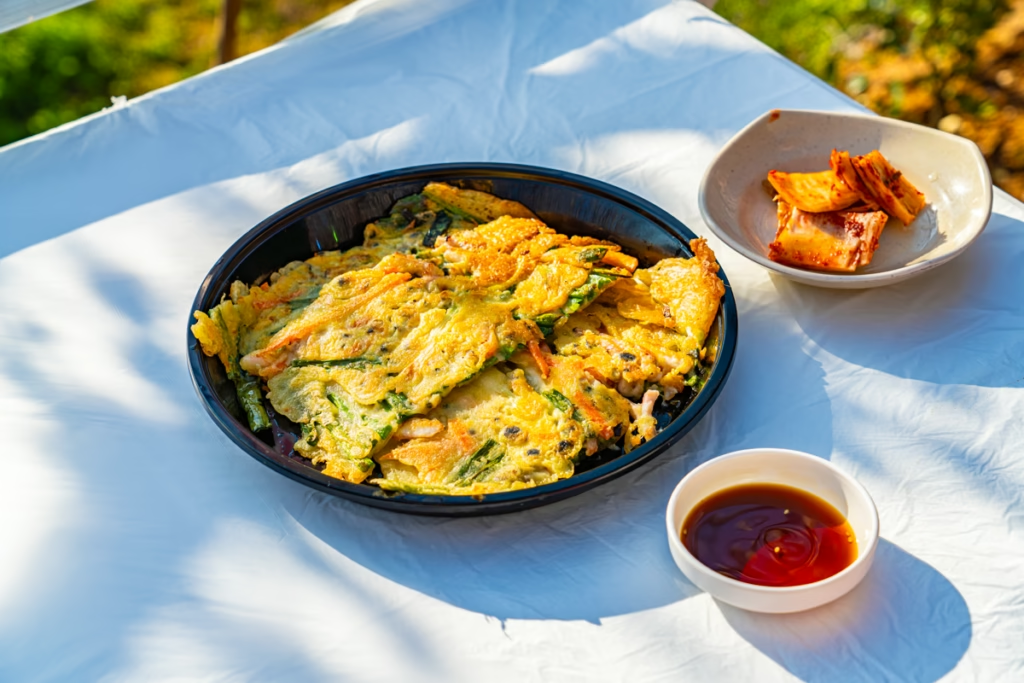
The refunded vouchers are most satisfying when spent on food. Gwangyang has a regional food identity strong enough to warrant its own visit—the festival just concentrates it in one place. Peak hours for food stalls are 11:30 AM to 1:30 PM. Arrive early, do a full circuit first, then return to eat.
Savory
- Gwangyang Bulgogi Bento (광양 도시락): Local-style thin beef with rice, in plum or bulgogi flavor.
- Gwangyang Bulgogi Gimbap: A tighter, denser roll using the same beef.
- Gwangyang Plum Hanwoo Burger (광양매실한우버거): Korean beef with maesil (plum) seasoning.
- Gim Gukbap (김국밥): Seaweed rice soup, a regional staple.
Drinks and Desserts
- Maesil Highball (매실 하이볼): Green plum liqueur highball. Seasonally appropriate and locally sourced.
- Maehwa-rowa (매화로와): Plum blossom pie.
- Soon-i Bunsik (순이분식): Maesil hotteok (plum-filled sweet pancake).
- Pyeongbeomti (평범티): Maehwa madeleine and a maesil-filled Dubai-style salt bread.
- Maedori Candy Floss (매돌이 솜사탕).
If you spend over ₩50,000 in receipts, keep them for the Golden Plum Blossom Prize Draw—first prize is actual gold bullion (approximate value ₩3.33 million).
Festival Programs and Events
The Gwangyang Maehwa Festival includes structured programs beyond walking the orchard:
- Maehwa Culture Hall (매화문화관): Minhwa folk painting exhibitions, media art installations, and hands-on craft experiences. Open daily.
- Stamp Rally (스탬프 투어): 10:00–16:00. Check in at the main operations center before starting.
- Seomjin River Boat Ride (섬진강 뱃길 체험): 10:00–15:00. Each ride runs approximately 15 minutes. Good for a river-level perspective on the blossom slopes.
- Maehwa Scent Therapy / Plum Healing Session: ₩6,000 per session.
- Spring Reading Garden “Secret Garden”: Open 09:00–18:00 daily.
The opening ceremony takes place on March 13 at 14:00. Weekend evenings include busking performances and Gwangyang City Arts Ensemble concerts. On weekdays, a visitor participation performance stage runs daily at 14:00.
About Cheonmaesil Farm: The History Behind the Blossoms
The orchard at the center of the Gwangyang Maehwa Festival is not a recent creation. Cheonmaesil Farm (청매실농원) has been producing green plums since 1931, making it one of the oldest continuously operating plum orchards in Korea.
The farm’s current character owes much to Hong Ssang-ri, the second-generation farmer who expanded the orchard and introduced the signature arrangement of 2,000 traditional earthenware jars (장독대) among the trees. The visual contrast between the pale blossoms and the dark-glazed ceramic vessels has become the festival’s defining image.
The plum trees here are cheong-maesil varieties—the same green plums used to make maesil-cheong (plum syrup), maesil-ju (plum wine), and the fermented plum condiments sold throughout South Korea’s restaurants. If you’ve eaten Korean food anywhere, you’ve almost certainly tasted Gwangyang’s agricultural output.
For comparison, plum blossom viewing in Korea can begin as early as late January at temple sites like Tongdosa Temple’s 370-year-old Jajangmae—a single ancient red plum tree in Yangsan, North Gyeongsang Province. The Gwangyang Maehwa Festival represents the opposite end of the spectrum: scale over singularity, a full orchard in bloom rather than one storied specimen.
Day Trip Extensions: What to See Near Gwangyang
Gwangyang rewards a full day. If you have time after the festival, two destinations in particular are worth combining.
Hadong Hwagae Market — Cross the Seomjin River into South Gyeongsang
The Seomjin River separates Gwangyang (South Jeolla) from Hadong (South Gyeongsang). A single bridge connects them. Hwagae Market (화개장터) sits on the Hadong side, roughly a 15-minute drive from the festival grounds.
The market’s historical reputation as a crossroads trade center has faded, but its food stalls remain active. Look for Seomjin River jaecheop (freshwater clams), mountain greens from the Jirisan foothills, and dried medicinal herbs. Weekend busking in the central square keeps the atmosphere lively. Note that Hwagae’s own cherry blossom season peaks several weeks after the plum blossoms—if you’re planning a return visit, late March to early April is worth considering.
- Address: Tapri, Hwagae-myeon, Hadong-gun, Gyeongsangnam-do
- Naver/Kakao Map: Search “화개장터 (Hwagae Jangteo)”
Jeonnam Art Museum — Gwangyang’s Unexpected Cultural Landmark
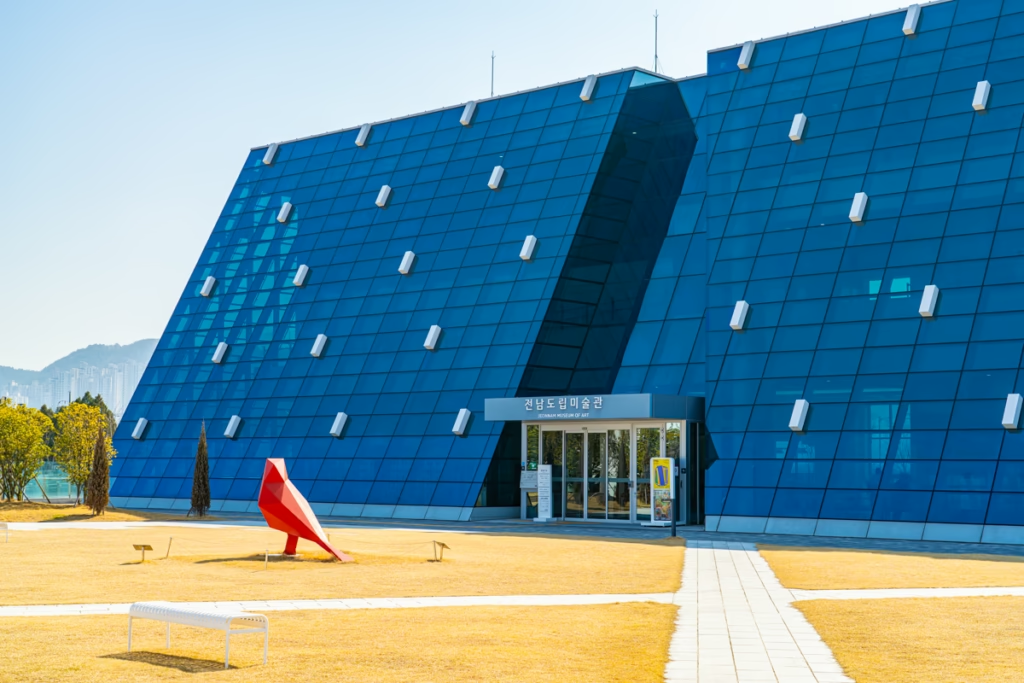
The Jeonnam Art Museum (전남도립미술관) opened on the grounds of the old Gwangyang railway station, and its architecture alone justifies a detour. The building’s intersecting diagonal lines and angular facades read as a structure designed to be photographed from multiple angles—which is appropriate for a museum.
Unlike many provincial Korean art museums that rotate permanent collections with minimal programming, Jeonnam Art Museum runs ambitious temporary exhibitions covering regional emerging artists through to internationally recognized works. The outdoor Gwangyang Art Warehouse (광양예술창고) area incorporates archival photographs of the old station and surrounding district—and reportedly includes a hidden Banksy work somewhere on the premises.
For travelers who find that cultural and historical depth shapes how they move through a country, Korea’s southern provinces reward that instinct. The Hwaseong Independence Movement Memorial in Gyeonggi Province covers one of the most consequential sites of Korea’s 1919 resistance movement—a different kind of depth, but the same underlying impulse to understand a place beyond its surface.
- Address: 660 Sungwang-ro, Gwangyang-eup, Gwangyang-si, Jeollanam-do
- Hours: 10:00–18:00, closed Mondays
- Admission: Varies by exhibition. Standard adult ₩1,000, children/teens/military/artists ₩700.
- Naver/Kakao Map: Search “전남도립미술관 (Jeonnam Art Museum)”
Ongnyongsa Camellia Forest — Gwangyang’s Quieter Spring Discovery
Less known than the festival grounds, the Ongnyongsa Camellia Forest (옥룡사지 동백나무숲) sits inland in Okryong-myeon, about 30 minutes from the festival by car. Ten thousand camellia trees surround the ruins of an ancient Buddhist temple, with a small walking path cutting through the grove.
The forest is not naturally occurring—it was planted by monks over a thousand years ago, and maintained after the temple itself burned down. The camellias typically begin blooming in mid-March, making the timing compatible with a same-day visit during the Gwangyang Maehwa Festival. The adjacent Unamsa Temple (운암사) is worth a brief stop.
If this kind of quieter, historically-rooted natural site appeals to you, early spring in Korea rewards that instinct across the southern provinces. The Geoje spring travel guide covers five similarly off-the-radar destinations with early-season blooms along Korea’s southern coast.
- Address: 8 Baekgye 1-gil, Okryong-myeon, Gwangyang-si, Jeollanam-do
- Naver/Kakao Map: Search “옥룡사지 동백나무숲 (Ongnyongsa Camellia Forest)”
📷 File Name: ongnyongsa-camellia-forest-temple-ruins-spring.avif
Alt Text: Camellia trees in bloom at Ongnyongsa temple ruins Gwangyang, 1000-year-old forest path in early spring
Find hotels in Suncheon (closest city base) on Agoda →
Planning Your Visit: Practical Tips
- Best day to visit: Weekdays in the first half of the Gwangyang Maehwa Festival (March 13–18) when bloom is at or near peak and crowds are thinner than weekends.
- Arrive early: The festival opens at 07:00. Arriving before 09:00 gives you the best light and the least competition for space near Cheonmaesil Farm’s earthenware jar arrangements.
- Weather: Mid-March in South Jeolla can still be cold in the morning (4–8°C at dawn, rising to 12–16°C by midday). Dress in layers; the shuttle ride from the parking lot is outdoors.
- Bloom volatility: A sudden warm spell can accelerate bloom; a cold snap can delay it. Check the official festival website for bloom photos the day before you travel.
- Language: Festival staff and most food vendors speak Korean only. Translation apps (Papago, Google Translate camera mode) are useful. Menus at food stalls are typically picture-based.
Travel Manual Tip: The MY광양 app and most festival information channels are in Korean only. For the most current bloom conditions, search “광양매화축제 개화현황” on YouTube or Instagram—festival visitors post daily video updates that require no language skills to interpret.
If the Gwangyang Maehwa Festival opens your interest in Korea’s traditional food culture built around plum products, the fermented and distilled traditions run deep across the southern provinces. For a contrasting perspective on how local agricultural produce shapes regional identity, the Menge Village Andong guide follows a similar logic in North Gyeongsang Province—where wheat soju becomes the lens through which a remote farming community is understood.
Practical Information
| Category | Details |
|---|---|
| Festival Name | Gwangyang Maehwa Festival (광양매화축제) |
| Address | 55 Jimak 1-gil, Daap-myeon, Gwangyang-si, Jeollanam-do (전남 광양시 다압면 지막1길 55) |
| Naver/Kakao Search | 매화마을 or 청매실농원 |
| Festival Dates | March 13–22, 2026 |
| Hours | 07:00–17:00 (confirm via official site) |
| Admission | Adults ₩6,000 / Teens ₩5,000 (fully refunded as local vouchers) |
| Free Entry | Under 6, 65+, Gwangyang residents under 19, persons with disabilities, veterans |
| Parking (Free) | Dunchi Lot (둔치주차장), ~2,200 spaces |
| Shuttle (Free) | Routes A & B from Dunchi/Sodunchi lots, daily |
| City Shuttle (Paid) | ₩5,000 round trip; weekends Mar 14, 15, 21, 22; MY광양 app reservation |
| Nearest Major City | Suncheon (~30 min); Seoul (~3.5–4 hrs) |
| Inquiries | Gwangyang Maehwa Festival Committee: 061-797-2721 |
| Recommended Stay | Hotels near Gwangyang on Agoda · Suncheon hotels on Agoda |
| Recommended Activity | Gwangyang day tour on Klook |