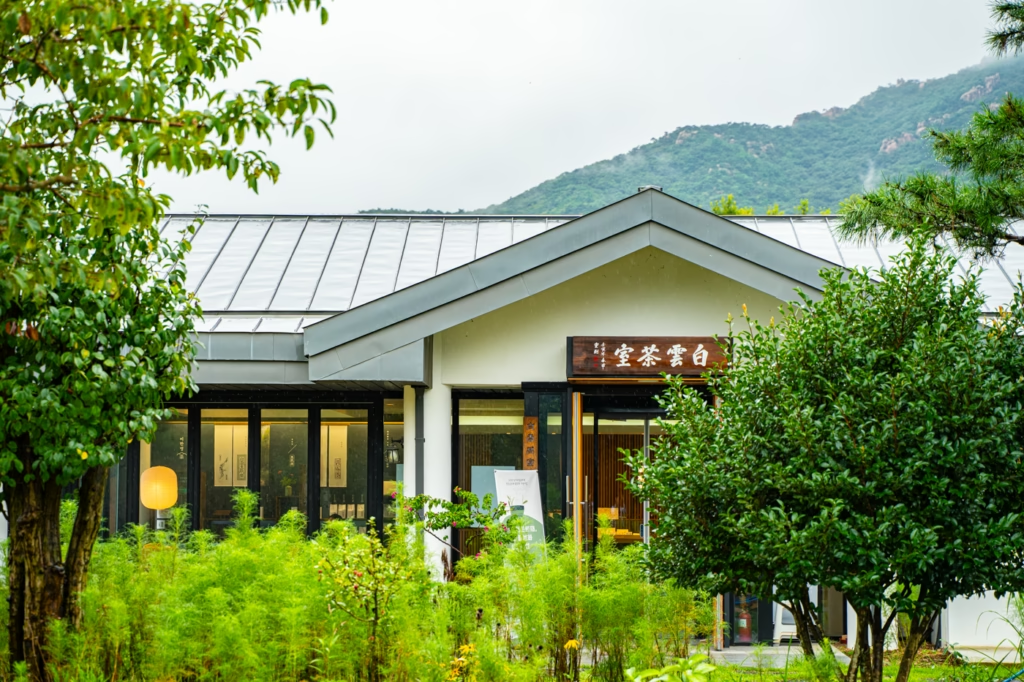
Inside a seventh-generation tea room beneath Wolchulsan Mountain—where Korea’s first branded tea was born out of resistance, not commerce
Transparency Note: This guide contains affiliate links. If you make a purchase, I may earn a commission at no extra cost to you—allowing me to keep providing expert, gear-tested travel insights.
Why This Gangjin Tea House Deserves a Dedicated Trip
South Korea has no shortage of tea rooms. Seoul alone has hundreds. Most serve imported leaves in renovated hanok buildings and call it tradition.
Baegun Chasil (백운차실) in Gangjin, South Jeolla Province—roughly 4 hours south of Seoul by KTX and bus—operates on a different premise entirely. The tea served here comes from wild tea fields cultivated by the same family for over seven generations. The building sits on the actual birthplace of the family patriarch who created Korea’s first registered tea brand. And the story behind that brand involves not marketing strategy, but colonial resistance.
For travelers interested in Korean tea culture that goes beyond aesthetic cafe-hopping, this Gangjin tea house is the real thing. If you’re planning a broader exploration of the area, our Gangjin Korea cultural sites guide covers four essential destinations including Dasan Chodang and the Minhwa Museum.
Check Best Rates for Gangjin Accommodation on Agoda
The 200-Year Story Behind Every Cup at Baegun Chasil
The origin of this Gangjin tea house traces back to the early 1800s and a relationship between a Joseon-era scholar and his youngest student.
Jeong Yakyong (丁若鏞)—better known by his pen name Dasan—was exiled to Gangjin in 1801 for practicing Catholicism. During his 18-year exile, he became deeply immersed in tea culture through his friendship with a Buddhist monk at nearby Baengnyeonsa Temple. Before Dasan eventually returned to his home near Seoul, he and his students formed the Dasangye (茶信契): a covenant to exchange letters and tea annually.
Lee Si-heon (이시헌), Dasan’s youngest disciple, honored this promise for life. After Dasan’s death, Lee continued sending tea to the Jeong family. His descendants carried on the practice for over a century—a chain of devotion that is difficult to find a parallel for in any tea tradition worldwide.
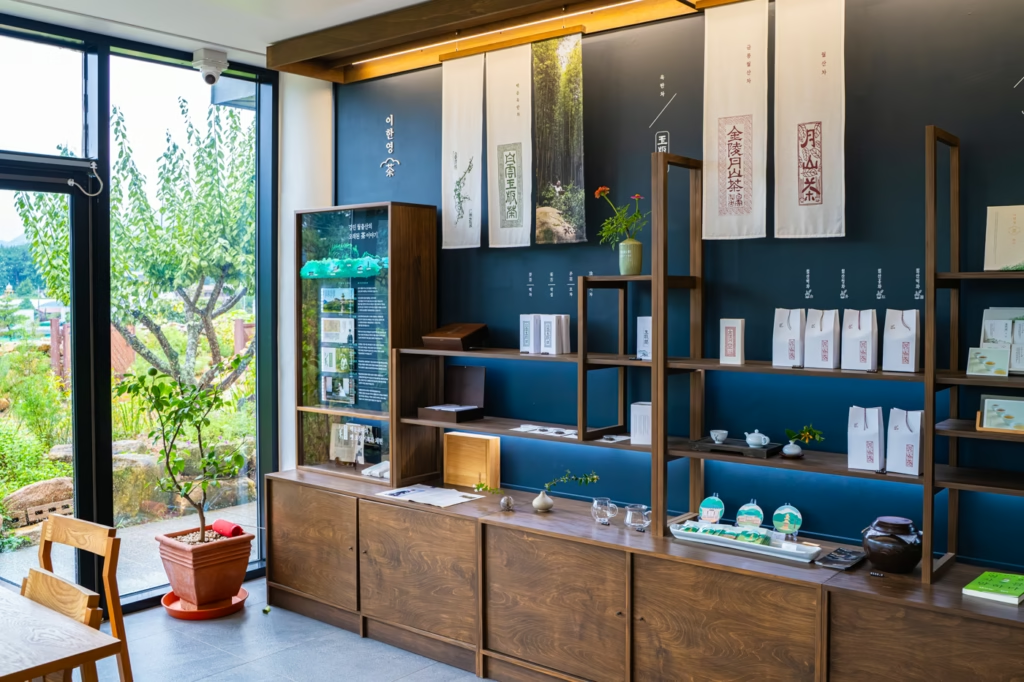
Korea’s First Tea Brand: Born from Resistance
Generations later, descendant Lee Han-young (이한영) witnessed something that changed the family’s trajectory. During the Japanese colonial period, tea grown on Korean soil was being repackaged and sold as Japanese product. Lee’s response was to create Baegun Okpancha (白雲玉版茶)—Korea’s first officially registered tea brand.
The brand’s stamp design contained hidden symbolism:
- Front: The brand name “Baegun Okpancha” in traditional characters
- Back: A floral pattern concealing the outline of the Korean Peninsula—an expression of grief over lost sovereignty and hope for independence
- Inscription: “Baegun ilji Gangnam chunsin” (白雲一枝 江南春信)—”A branch of Baegun brings news of spring from the south,” a poetic metaphor for the liberation Lee longed to see
Today, Lee Han-young’s great-granddaughter, Director Lee Hyun-jeong, continues the family legacy at this Gangjin tea house. She harvests wild tea leaves from the same Wolchulsan mountainside and produces both loose-leaf and traditional tteokcha (떡차, pressed cake tea) using methods passed down through seven generations.
For a deeper understanding of Korea’s resistance during the colonial period, explore our guide to the Hwaseong Independence Movement Memorial—a site 90 minutes south of Seoul that preserves the memory of the 1919 Jeam-ri massacre with the same unflinching honesty that Lee Han-young’s tea stamp carried in its hidden symbolism.
Spaces and How to Visit: Café vs. Private Hanok Tea Room
Baegun Chasil operates two distinct spaces. Understanding the difference before you arrive will determine the quality of your experience.
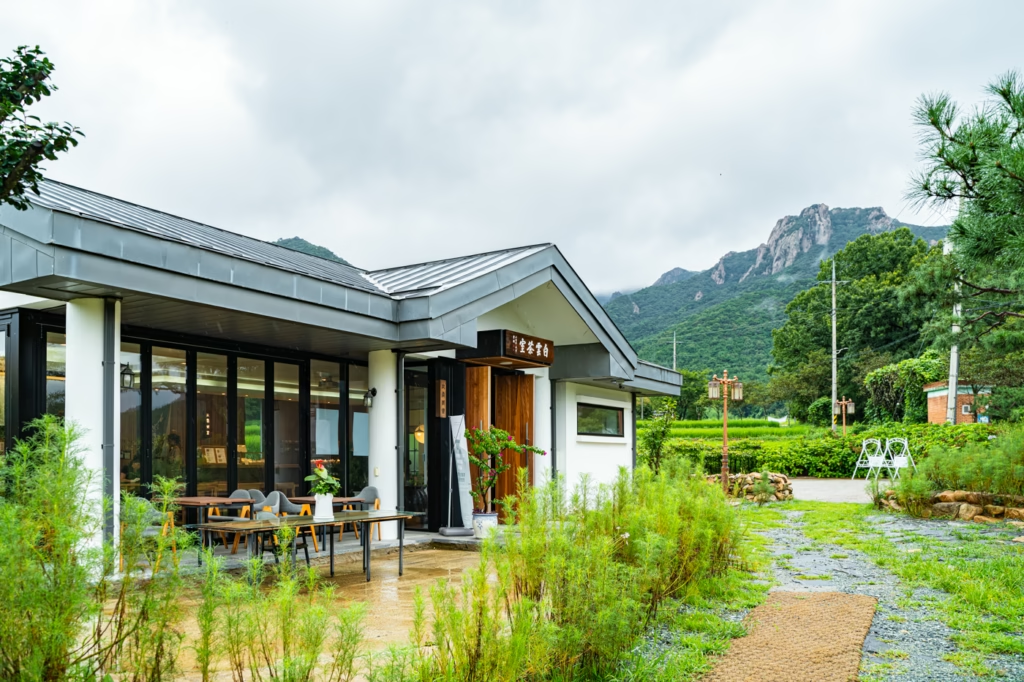
Option 1: Baegun Chasil Main Café (Walk-In)
- Reservations: Not required. Walk in during business hours.
- Atmosphere: Clean, modern interior with large windows framing the surrounding greenery.
- Best for: Solo travelers, casual visitors, or anyone short on time.
Option 2: Lee Han-young Birthplace Tea Rooms (Reservation Required)
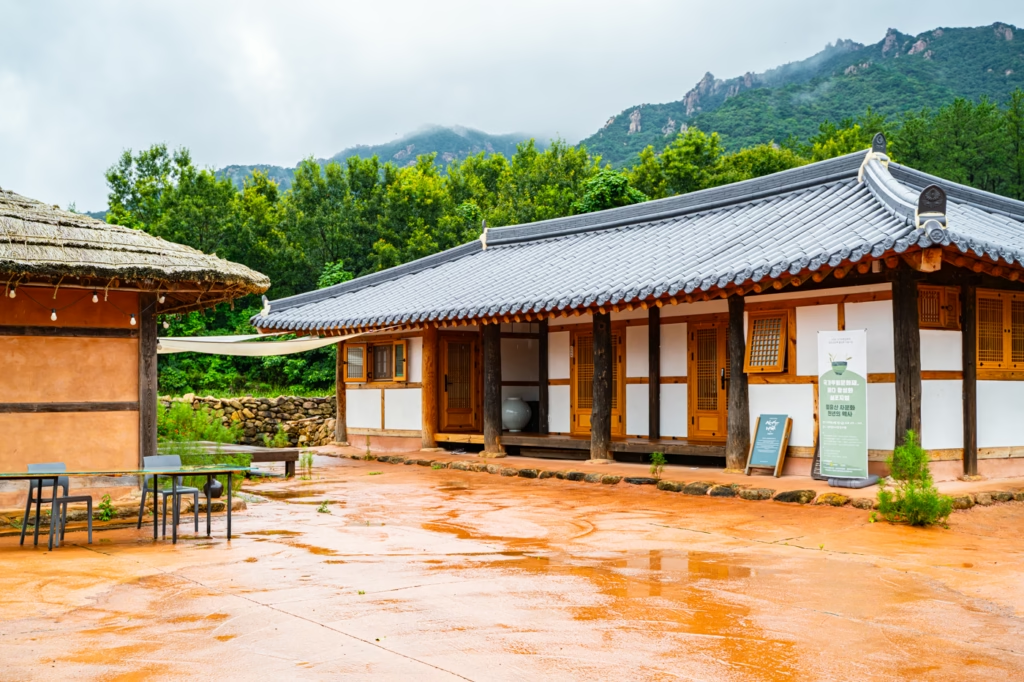
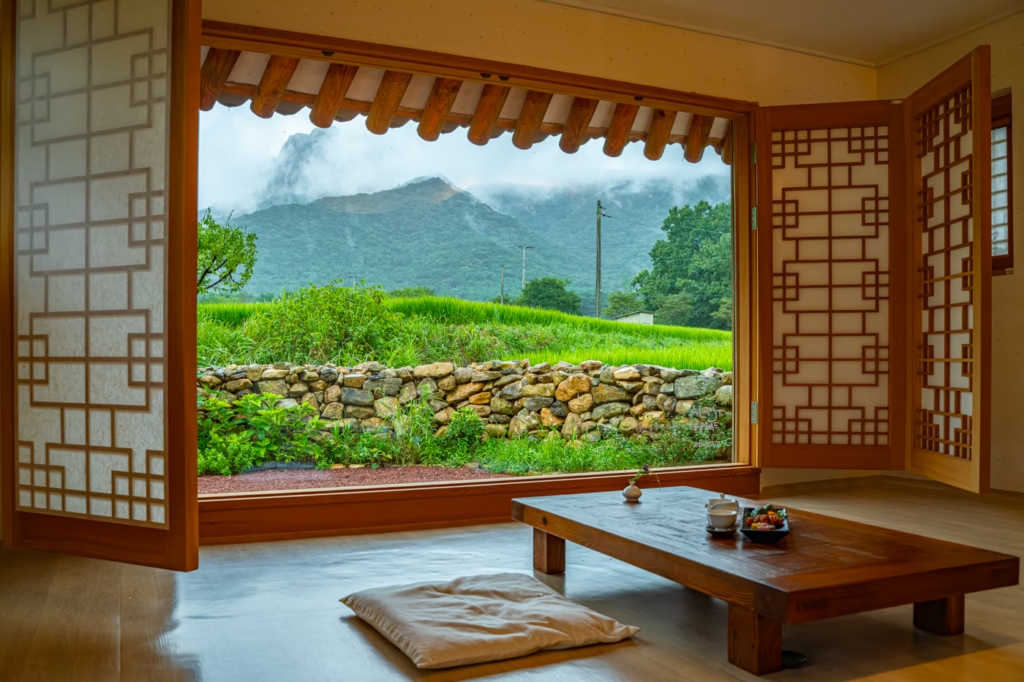
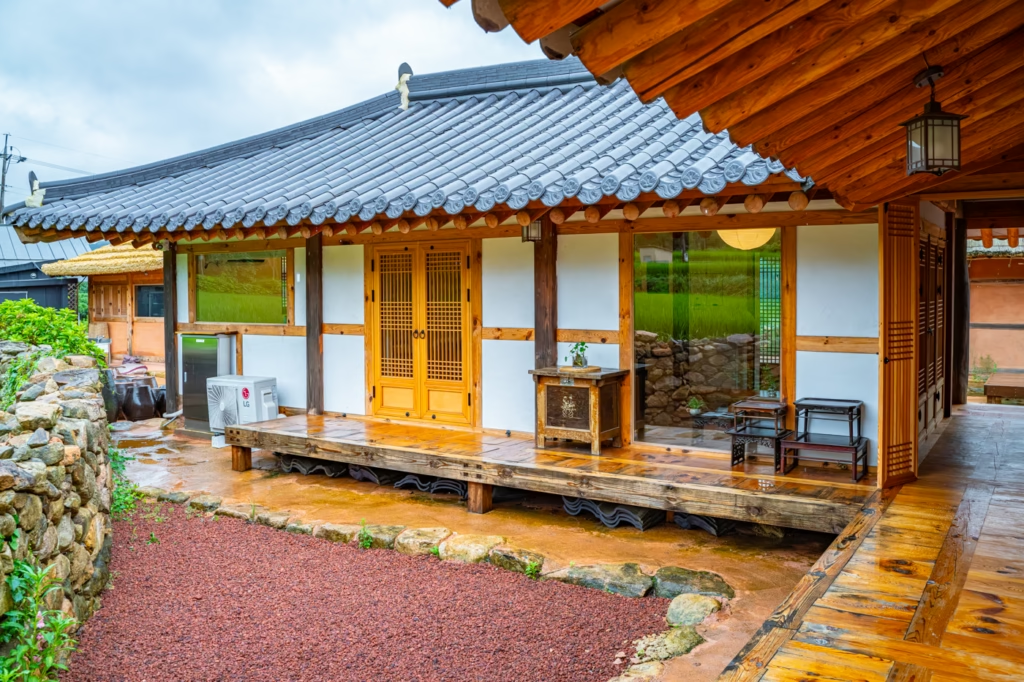
This is the experience worth planning your trip around. Three private rooms inside the restored hanok birthplace of Lee Han-young offer something the main café cannot: a traditional Korean tea ceremony with Wolchulsan Mountain as your backdrop.
- Baegun-sil (백운실): The signature room. Wolchulsan’s jagged peaks fill the window frame like a landscape painting. Base 2-person hansangcharim (한상차림, full tea table setting) included.
- Lee Han-young-sil (이한영실) / Okpan-sil (옥판실): Additional private rooms with similar hanok atmosphere.
Booking details:
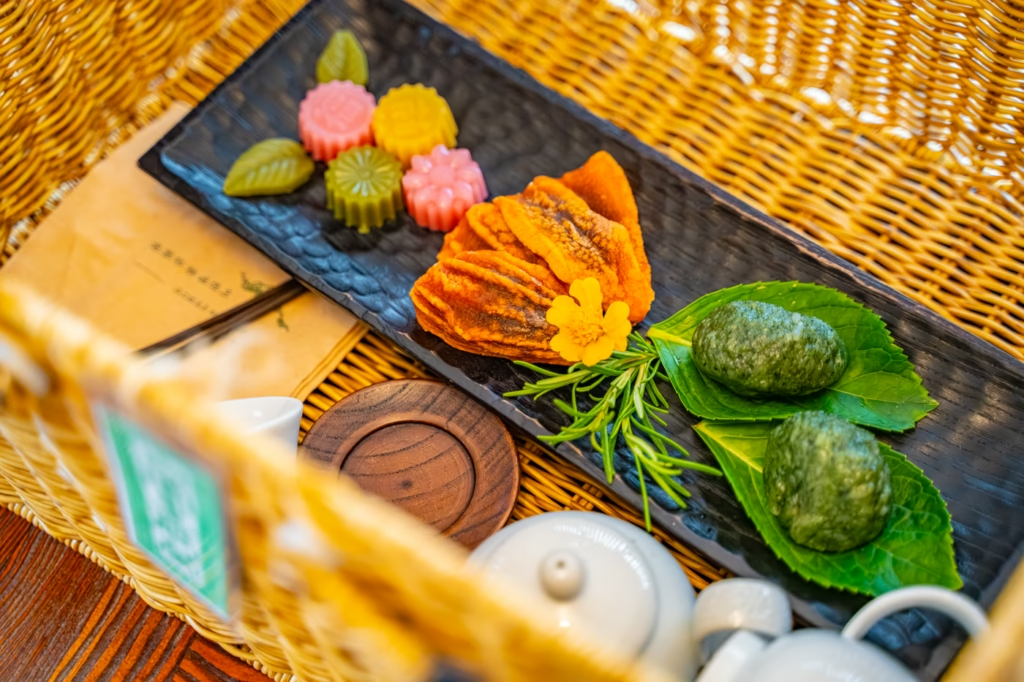
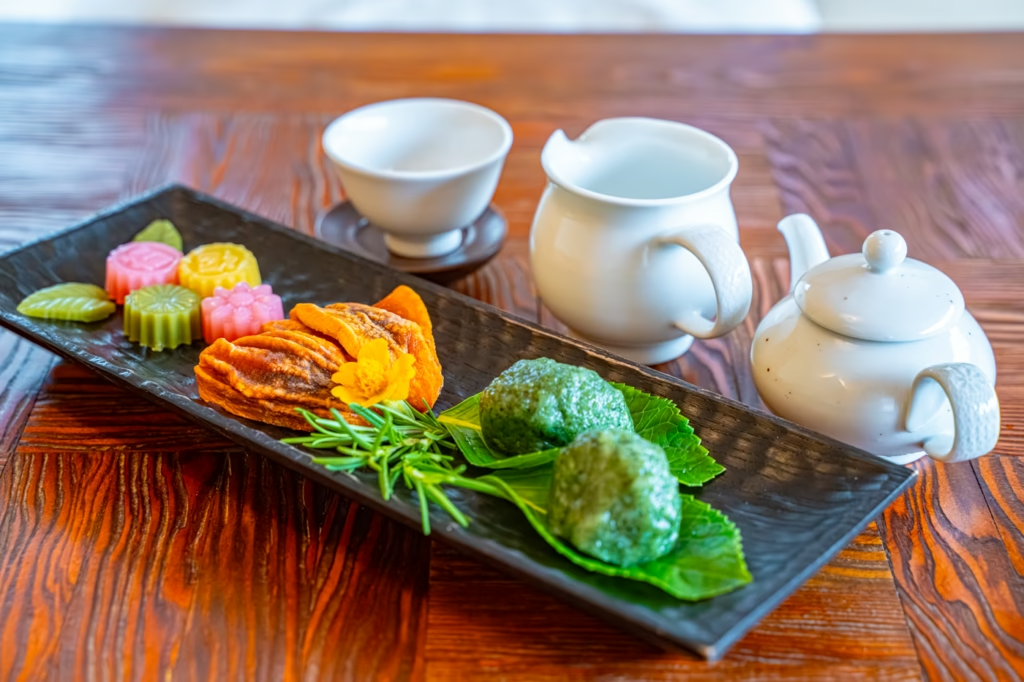
- Base service for 2 guests includes a full tea preparation and a plate of handmade confections (수제 양갱, 약과)
- Maximum 6 guests per room. Additional guests beyond 2 must order individual drinks at the main café counter.
- Session duration: 1 hour 20 minutes
- Reserve via Naver Booking or by phone at 0507-1345-4995 (same-day reservations require a phone call)
Book Nearby Accommodation in Gangjin on Agoda
Gangjin Tea House Menu: What to Order at Baegun Chasil
Every tea on the menu is produced from wild tea leaves harvested on the slopes of Wolchulsan Mountain. This is not sourced commodity tea—it is estate-grown, single-origin product with direct lineage to the Baegun Okpancha tradition.
Signature Teas
- Kkotpineun Wolsan Tteokcha with Geumjanhwa (꽃피는 월산떡차 with 금잔화) — ₩8,000
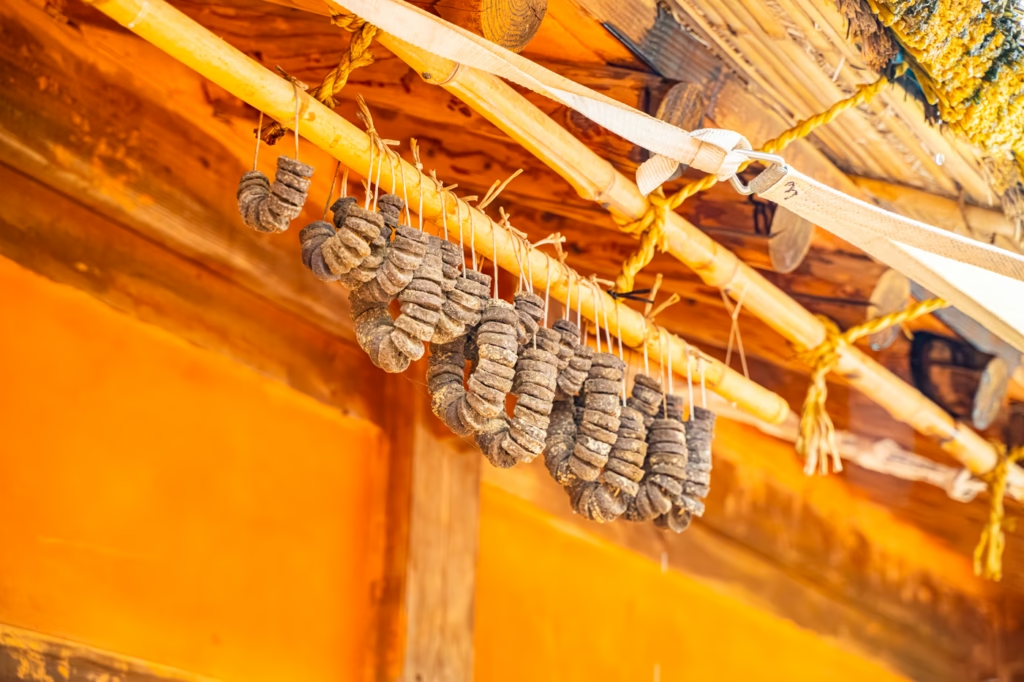
A pressed fermented tea blended with dried calendula flowers grown in the tea house’s own garden. Earthy, warming, and aromatic. The tteokcha format—small coin-shaped pressed cakes—is the same style Dasan himself drank over 200 years ago. - Geummokseo Hongcha (금목서홍차) — ₩8,000
Black tea infused with osmanthus (sweet olive) blossoms. Available only two months per year during the autumn osmanthus bloom. Floral sweetness layered over a full-bodied red tea base.
Premium Teas
- Wolsan Hongcha (월산홍차) — ₩8,000
Single-origin black tea from young Wolchulsan leaves. Floral nose with a naturally sweet finish. Pairs well with the confections served during the hanok tea session. - Baegun Okpancha Jakseol (백운옥판차 작설) — ₩15,000
The house’s most premium offering. Made from il-a il-yeop (一芽一葉)—a single bud and one leaf, hand-picked in early spring. Clean, refreshing, with a gentle sweetness that lingers. This is the tea that carries the Baegun Okpancha name. If you are chasing early spring experiences in southern Korea, consider pairing your tea journey with the early blooms detailed in our Essential Geoje Spring Travel Guide. - Baegun Okpancha Mocha (백운옥판차 모차) — ₩10,000
Made from il-a i-yeop (一芽二葉)—one bud and two leaves. More herbaceous and floral than the Jakseol, with a grassy freshness that appeals to green tea enthusiasts.
For travelers exploring Korea’s broader tea and mindful dining traditions, our guide to Balwoo Gongyang Seoul’s Michelin-starred temple food covers another dimension of Korean contemplative cuisine—plant-based dishes designed for Buddhist monastics, served in private rooms in central Seoul.
Wolsan Tteokcha CLASS: Hands-On Tea Ceremony and Meditation
For visitors who want to move beyond tasting into making, Baegun Chasil offers a structured workshop that combines tea production, tasting, and meditation.
Program sequence:
- Welcome tea: Lotus leaf jasmine tea
- Baegun Chasil storytelling session (history of the tea house and family)
- Hands-on tteokcha making — shaping pressed tea cakes by hand
- Tasting your own tteokcha
- Guided tea brewing practice
- Tea meditation session
- Take home your completed tea as a gift
The class is closed on Mondays and Tuesdays. This is a sensory-driven experience—touching raw tea leaves, inhaling their fragrance, and sitting in deliberate silence. For digital detox seekers, this Gangjin tea house workshop is one of the more genuine “slow travel” experiences available in South Korea.
Klook.comTips for International Visitors at Baegun Chasil
Gangjin is gaining attention among wellness-focused international travelers, but the infrastructure for non-Korean speakers remains limited. Plan ahead.
Booking Without Naver
The hanok tea room reservation system runs through Naver Booking, which requires a Korean phone number and is entirely in Korean. Your practical options:
- Ask your hotel concierge or guesthouse host to make the reservation on your behalf
- Have a Korean-speaking friend call 0507-1345-4995 to book
- For same-day availability, a phone call is mandatory regardless
Navigation Note
Google Maps has limited functionality in South Korea. Use Naver Map or Kakao Map instead. Search for “백운차실” (Korean) or “Baegun Chasil” (English) to find the exact location.
Address for GPS/map apps: 전남 강진군 성전면 백운로 107 (107 Baegun-ro, Seongjeon-myeon, Gangjin-gun, Jeollanam-do)
The Korean Tea Ceremony Experience for Non-Korean Speakers
Language barriers matter less than you might expect. The hanok tea room experience is largely visual and tactile: you sit on the warm ondol-heated floor, receive traditional tea implements (dagi, 茶器), and brew tea yourself under gentle guidance. The coin-shaped tteokcha alone generates enough visual curiosity to carry the experience across any language gap.
Nearby Attractions: Building a Half-Day Cultural Itinerary
Baegun Chasil sits at the foot of Wolchulsan Mountain in Seongjeon-myeon. Three nearby sites pair naturally with a Gangjin tea house visit to create a complete half-day cultural itinerary.
Gangjin Dalbit Hanok Village (강진 달빛한옥마을)
Distance: 10-minute walk (~700m) from Baegun Chasil
A cluster of traditional hanok buildings where you can stroll, photograph traditional Korean architecture, and absorb the quiet rural atmosphere. No entrance fee. Best visited before or after your tea session while the light is still good.
Baegundong Wonrim (백운동 원림)
Ranked among the top three traditional gardens in the Honam region (호남 3대 정원). A hidden forest garden where streams, centuries-old trees, and carefully placed stone elements create a meditative landscape. This is Korean garden design at its most restrained and powerful.
Seollok Dawon Gangjin (설록다원 강진 — Wolchulsan Wild Tea Fields)
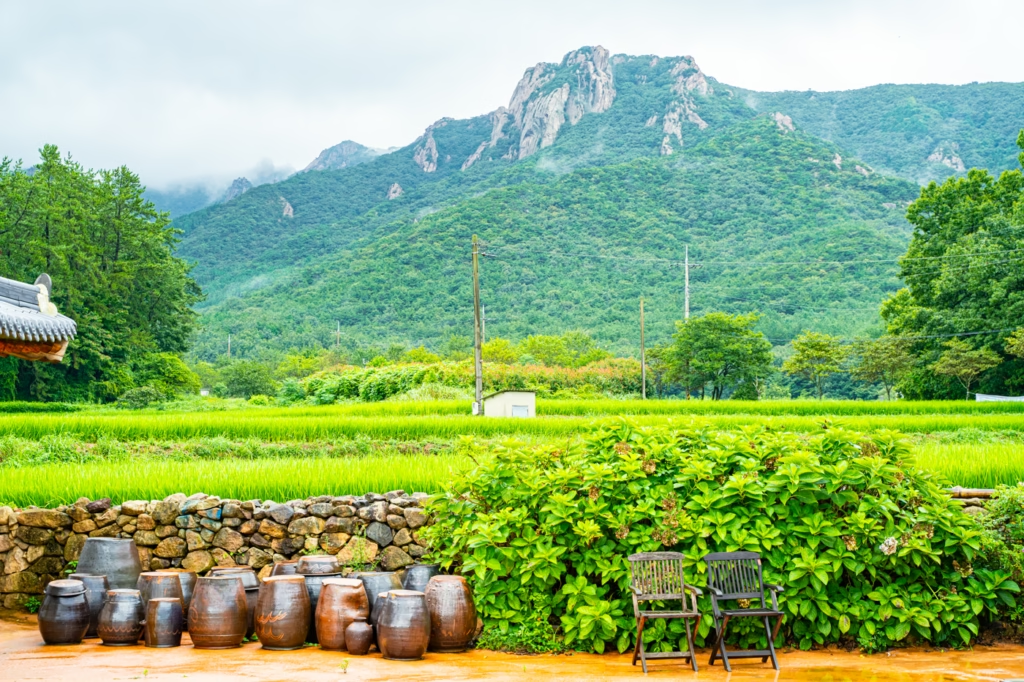
Expansive wild tea plantations stretching across the lower slopes of Wolchulsan, with the mountain’s distinctive rocky peaks rising behind. The contrast between orderly green tea rows and jagged granite formations makes this one of the most photogenic landscapes in South Jeolla Province.
📷 File Name: wolchulsan-wild-tea-field-panorama.avif
Alt Text: Panoramic view of Wolchulsan wild tea fields with rocky mountain peaks in background near Baegun Chasil Gangjin captured on Sony a7R4 AVIF 2560px 10-bit
For travelers drawn to Korea’s tea culture beyond Gangjin, our guide to Cha-deokbun on Yeongjongdo covers a modern reinterpretation of traditional Korean tea with ocean views near Incheon Airport—a compelling contrast to the centuries-old tradition at Baegun Chasil.
Getting to Gangjin from Seoul and Major Cities
Gangjin sits in the southwestern corner of the Korean Peninsula. It requires commitment to reach, but the journey itself is part of the appeal—this is not a destination overrun by day-trippers.
- From Seoul: KTX to Mokpo Station (approximately 2.5 hours) → Intercity bus to Gangjin (approximately 50 minutes). Total: ~3.5 hours.
- From Gwangju: Intercity bus from U-Square Terminal to Gangjin (approximately 1.5 hours).
- By car: Baegun Chasil has a dedicated parking lot. If renting a car, this is the most flexible option for combining multiple Gangjin sites in one day.
The Gangjin tea house is located in Seongjeon-myeon, a rural sub-district roughly 15 minutes by car from central Gangjin town.
📷 File Name: gangjin-countryside-road-wolchulsan.avif
Alt Text: Rural countryside road leading toward Wolchulsan Mountain in Gangjin South Jeolla Province captured on Sony a7R4 AVIF 2560px 10-bit
Baegun Chasil Gangjin: Practical Information Summary
| Category | Details |
|---|---|
| Address | 107 Baegun-ro, Seongjeon-myeon, Gangjin-gun, Jeollanam-do (전남 강진군 성전면 백운로 107) |
| Naver/Kakao Map Search | 백운차실 or 이한영 차 문화원 |
| Phone | 0507-1345-4995 |
| Hours | 10:30 – 18:30 (Closed every Monday). Some Mondays may be open—check announcements or call ahead. |
| Cost | Café drinks ₩8,000–₩15,000 / Hanok tea room hansangcharim pricing varies (2-person base) |
| Transport | KTX Seoul → Mokpo (2.5 hrs) + Bus to Gangjin (50 min). Dedicated parking available. |
| Tteokcha CLASS | Available Wed–Sun. Includes welcome tea, hands-on tea making, meditation, and take-home tea gift. |
| Amenities | Free parking, Wi-Fi, separate restrooms, takeout available |
| Recommended Stay | Half-day minimum for tea house + one nearby site. Full day recommended if combining with Dalbit Hanok Village, Baegundong Wonrim, and Wolchulsan tea fields. |
| Official Website | 1st-tea.kr · Instagram: @okpancha |
| Nearby Accommodation | Check Best Rates for Gangjin Hotels on Agoda |
Final Thought
Baegun Chasil is not trying to sell you an experience. This Gangjin tea house is simply continuing something that started over 200 years ago when a young student promised his exiled teacher he would keep sending tea. The seventh generation is now behind the counter, harvesting the same mountain’s leaves, pressing the same style of tteokcha, and pouring it in the same house where the family story began.
That kind of continuity doesn’t require marketing. It just requires showing up, sitting down, and drinking the tea.
This post is part of The Travel Manual’s Korea Tea & Wellness Series—expert-level guides to the tea rooms, temples, and mindful experiences that define slow travel in Korea.