Table of Contents
Inside the converted harbor warehouse where Cup of Excellence winners rotate daily and a 2019 World Barista Championship trophy sits behind the counter
Transparency Note: This guide contains affiliate links. If you make a purchase, I may earn a commission at no extra cost to you—allowing me to keep providing expert, gear-tested travel insights.
Why This Busan Specialty Coffee Roastery Belongs on Every Coffee Lover’s Busan Itinerary
Momos Coffee Yeongdo is not a cafe. It is a working coffee factory that happens to serve the public. Located on the Bongnae-dong wharf in Busan’s Yeongdo district, this 1,800-square-meter roastery and coffee bar occupies a converted shipping warehouse where the entire lifecycle of specialty coffee—from green bean storage through roasting, packaging, and extraction—plays out behind glass walls while you drink.
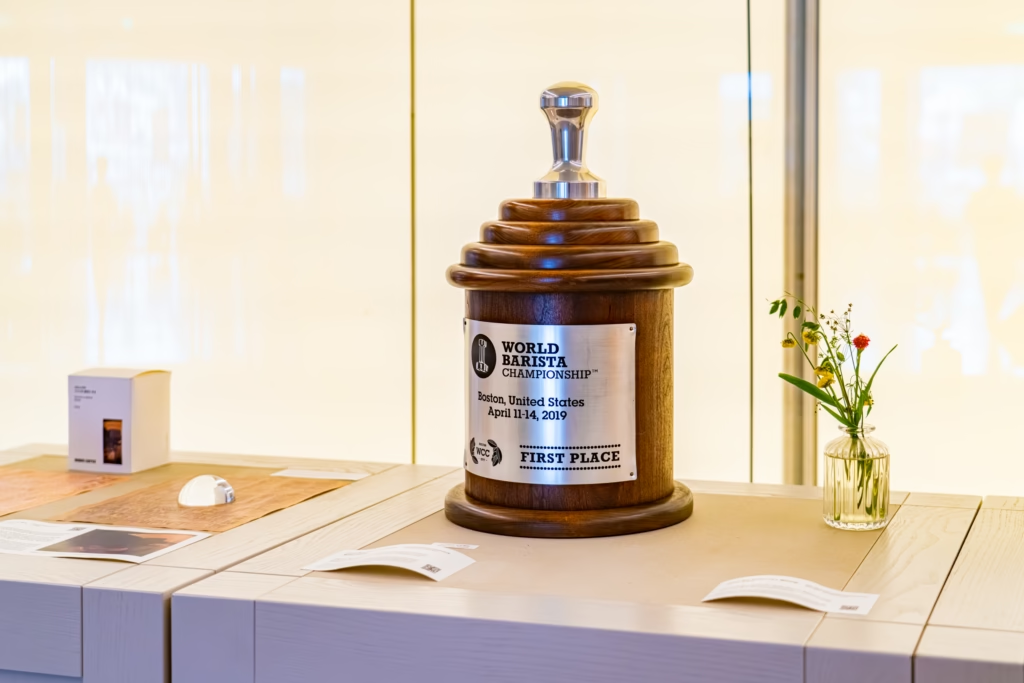
The credentials are not decorative. In 2019, co-founder Jeon Joo-yeon became the first Korean to win the World Barista Championship. Two years later, colleague Joo Kyung-ha took the World Cup Tasters Championship. Both trophies are displayed inside the Momos Coffee Yeongdo facility, quiet proof that this harbor-side operation competes at the highest level of global coffee culture.
Founded in 2007 as a four-pyeong (roughly 13 square meters) takeout shop near Busan’s Oncheonjang Station, Momos has grown into a multi-location specialty coffee brand. The Yeongdo branch opened in 2021 as the company’s production headquarters and flagship experience space. A third location in Haeundae followed in May 2024. But it is the Yeongdo roastery—with its industrial scale, harbor views, and daily hand drip rotation—that defines what Momos Coffee stands for.
The Architecture: Old Timber Trusses Meet Industrial Coffee Production
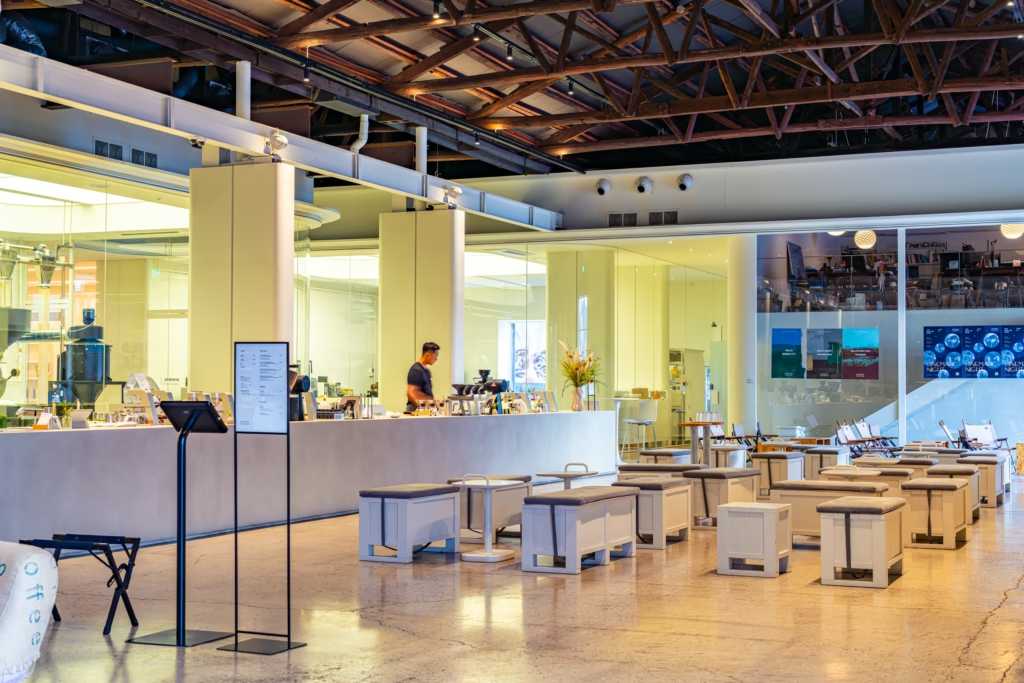
The first thing you notice at the roastery is not the coffee. It is the ceiling. Massive wooden trusses from the building’s former life as a shipping warehouse have been preserved intact, stretching across the open interior like the ribcage of an inverted hull. These are not decorative beams installed for atmosphere—they are structural remnants of Yeongdo’s maritime industrial past, left exposed as an architectural statement about continuity.
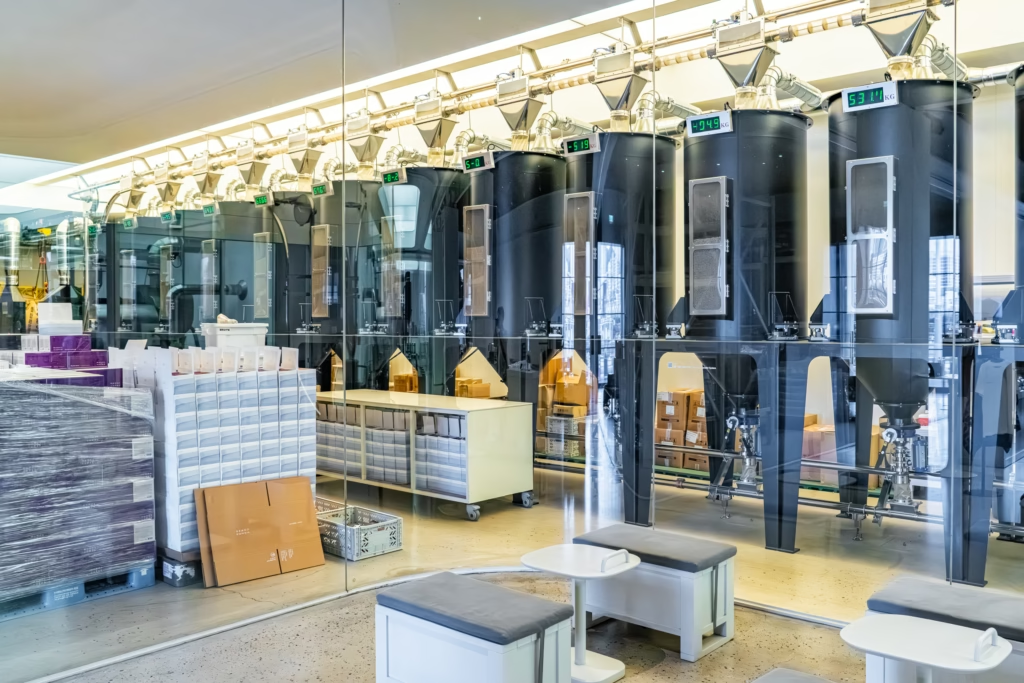
Below this heritage framework, the space operates with the precision of a modern production facility. One side of the building houses the customer-facing coffee bar, furnished minimally to maintain the warehouse’s sense of volume. The opposite side, visible through floor-to-ceiling glass partitions, contains the operational core: towering black silos for green bean storage, automated transfer pipes, industrial roasting machines, and a packaging line.
The design philosophy at Momos Coffee Yeongdo is transparency. Nothing is hidden behind walls or relegated to a back room. When the roasters fire up, you watch. When beans travel through pneumatic tubes from silo to roaster, you see the system in motion. This is coffee production as live performance—and it transforms a simple espresso order into something more contextual.
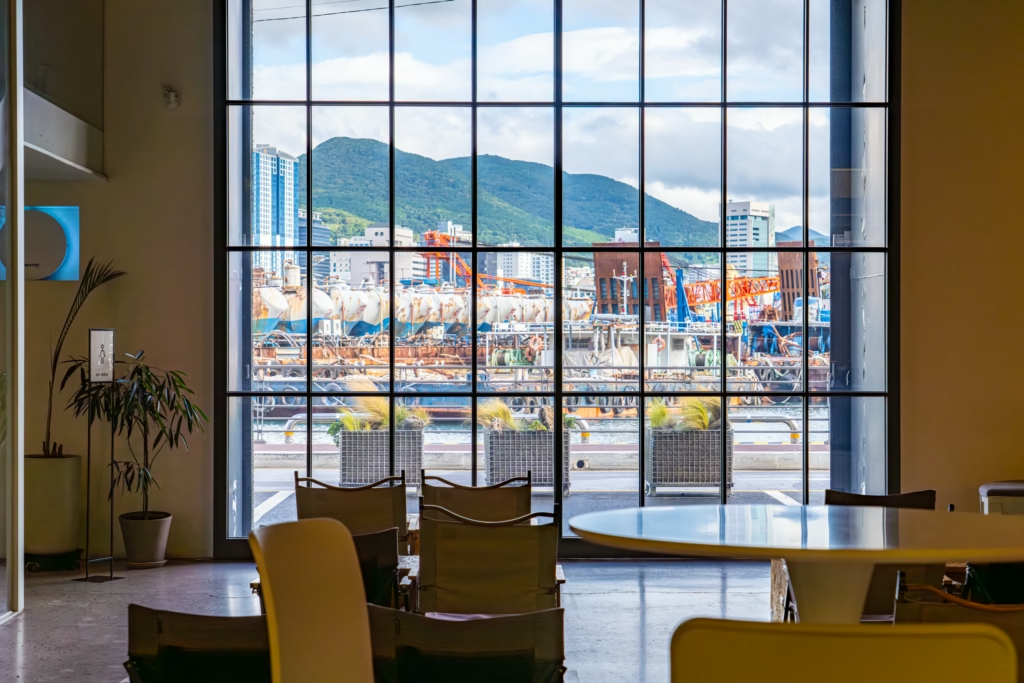
The panoramic windows on the harbor side of Momos Coffee Yeongdo complete the picture. Through the glass, the working port unfolds—docked ships, container cranes, the flat gray-blue of the Yeongdo waterfront. This is the most authentically Busan view any cafe in the city can claim. No curated skyline, no beach sunset. Just the port doing what ports do.
The Daily Hand Drip: Why Momos Coffee Yeongdo Changes Everything Each Morning
This is the core experience, and the reason serious coffee travelers prioritize this roastery above all other Busan cafes. Momos Coffee Yeongdo operates a rotating “Weekly Hand Drip” program where the featured pour-over bean changes every single day.
The key distinction is quality tier. These are not standard single-origin offerings. A typical weekly lineup at the Yeongdo roastery includes Cup of Excellence award winners—beans that placed second in Honduras or third in El Salvador in their respective competition years, meaning they were officially judged as the finest coffee produced in that country during that harvest. Alongside COE lots, the rotation features Geisha varietals and experimental processing methods such as anaerobic (oxygen-free) fermentation and honey processing.
For context: in most specialty cafes worldwide, encountering a single COE-winning bean on the menu is notable. At Momos Coffee Yeongdo, you might find three or four rotating through the same week.
Each hand drip order at Momos Coffee Yeongdo arrives with an information card detailing the bean’s origin, processing method, and tasting notes. This small gesture matters for international visitors who may be unfamiliar with Korean specialty coffee conventions—the card functions as both education and quality assurance. Whether you detect the promised notes of stone fruit and jasmine is secondary; knowing that someone curated this specific bean for this specific day communicates intentionality.
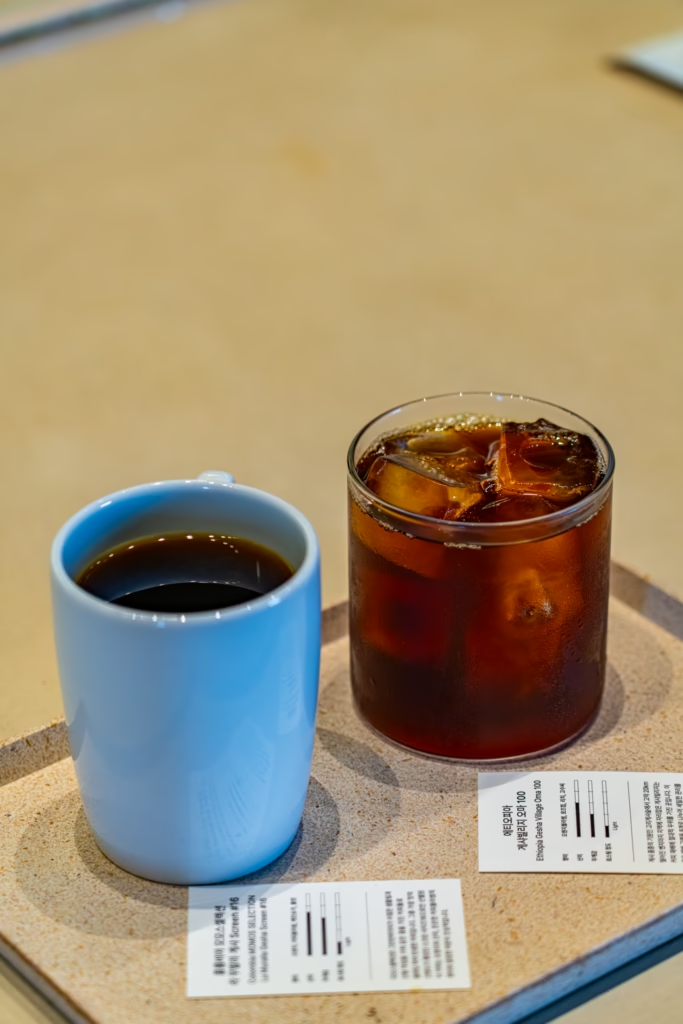
Practical tip: The weekly hand drip schedule at the Yeongdo branch is published on the brand’s Naver Place page. Check before visiting to identify which day features the bean profile you prefer. If you favor bright, fruit-forward cups, look for washed Ethiopian or Kenyan lots. For sweeter, heavier body, target the honey-processed Central Americans.
Klook.comBeyond the Hand Drip: Espresso Menu and Signature Drinks
The hand drip program draws the specialty crowd, but the espresso-based menu at Momos Coffee Yeongdo deserves equal attention.
The standard lineup covers espresso, Americano (₩6,000), and milk-based drinks (₩6,000–₩8,000 range). Four house blends—Esschocolat, Fruity Bonbon, Busan, and Mucho Berry—provide distinct flavor profiles ranging from chocolate-forward to bright and acidic. Seasonal blends rotate alongside these permanent offerings.
The signature worth seeking is Momos Candy, an espresso drink exclusive to the Momos Coffee Yeongdo location. It pairs a shot of espresso with milk and house-made flavored sugar cubes—varieties include orange and Earl Grey—that dissolve slowly into the drink, creating a shifting flavor experience from first sip to last.
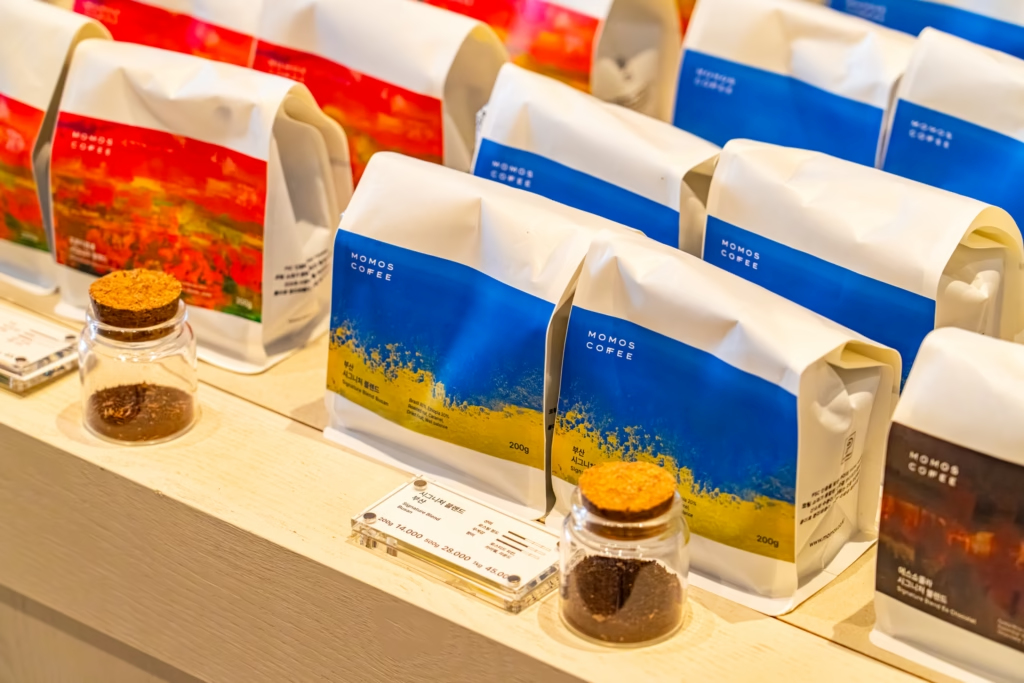
For visitors uncertain about which blend suits them, the Yeongdo roastery offers a practical solution: small glass jars filled with ground samples of each blend are available for smelling at the counter. This sensory preview costs nothing and takes thirty seconds, but it prevents the common frustration of ordering blind.
Pastries are intentionally limited. An olive oil cheese terrine and galette bretonne represent the food side—sufficient to accompany a coffee, but clearly secondary to the main attraction. The RTD (ready-to-drink) canned cold brew from Momos Coffee Yeongdo is also available for takeaway, useful if you are heading to the nearby ferry terminal or Busan Station.
The Docent Tour: Inside the Factory Floor
Coffee enthusiasts visiting Momos Coffee Yeongdo should not leave without booking the docent guided tour. This advance-reservation program takes visitors behind the glass walls and into the production spaces that are otherwise off-limits.
The tour covers the green bean warehouse, where massive silos store raw coffee from sourcing partners around the world. It moves through the roasting area, where industrial machines process beans in batches calibrated to each origin’s optimal profile. Guides explain the journey from cherry to cup in practical terms—not the romanticized version, but the mechanical, logistical reality of producing specialty coffee at scale.
What makes the docent tour at Momos Coffee Yeongdo different from factory visits at other roasteries is context. You are standing in the workspace of a World Barista Championship-winning operation. The standards governing how beans are selected, stored, roasted, and extracted here directly reflect the precision that earned a global title. The docent tour communicates this through tangible detail rather than marketing language.
Reservation method: Book through Naver Place under “도슨트 가이드” (Docent Guide). Advance reservation is mandatory. English-language support may be limited—consider using Naver Papago translation app during the tour.
The Trophy Case and the Goods Section: World-Class Credentials, Tangible Souvenirs
Near the entrance of Momos Coffee Yeongdo, a display case holds the 2019 World Barista Championship trophy—the one Jeon Joo-yeon brought home as Korea’s first-ever winner. It sits modestly alongside other accolades, requiring no dramatic lighting or velvet ropes. The trophy functions as a quiet credential: this building, this team, this coffee has been validated at the highest competitive tier the industry recognizes.
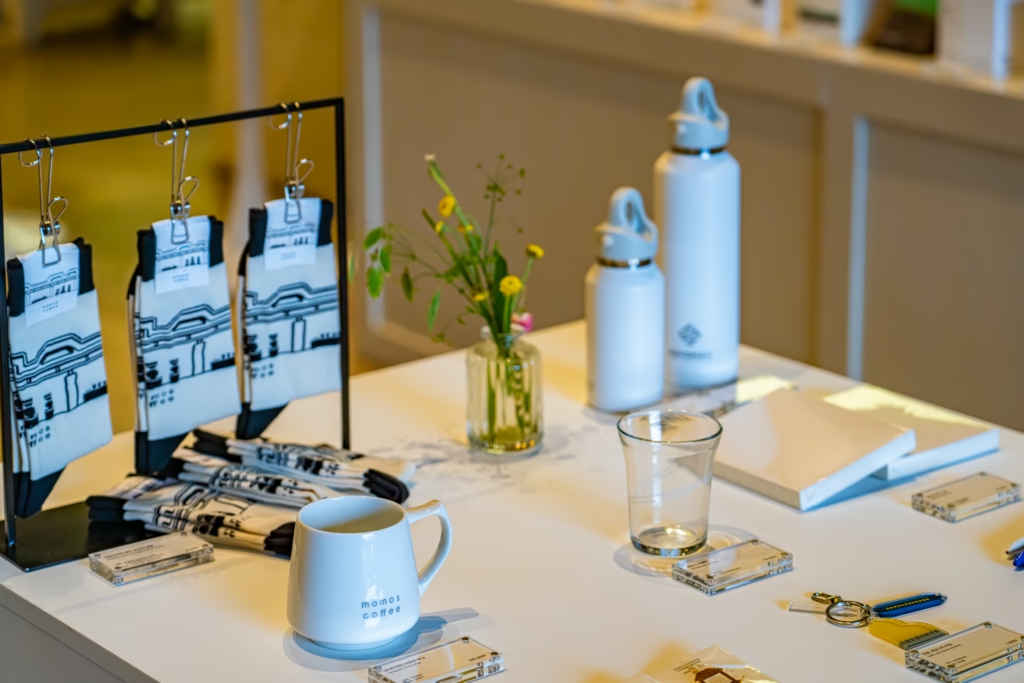
The adjacent retail section at Momos Coffee Yeongdo extends the brand into daily life. Beyond the expected offerings of whole beans and drip bags, Momos sells branded goods including socks, enamel badges, tumblers, and tote bags. The merchandise leans functional rather than decorative—items designed to be used, not shelved. The design sensibility is restrained, consistent with the roastery’s overall aesthetic: clean lines, muted colors, the Momos logo applied with enough subtlety that you could wear these items without becoming a walking billboard.
For travelers exploring Korea’s artisanal craft culture, the Momos goods section provides a counterpoint to what you might find at destinations like the Mukho local shops in Donghae’s harbor district—where handmade fishing village souvenirs carry a different kind of provenance. Both approaches share a common thread: objects that carry genuine connection to place.
Photographer’s Notes: Capturing Momos Coffee Yeongdo
The visual opportunities at Momos Coffee Yeongdo reward patience and an eye for industrial aesthetics.
The ceiling shot is mandatory. Position yourself beneath the wooden trusses and shoot upward with a wide-angle lens (16–24mm equivalent). The contrast between weathered timber and stainless-steel coffee equipment creates a tension between eras that defines this space. On the Sony a7R4, f/8 at ISO 400 with natural light from the harbor windows delivers clean detail across both the warm wood grain and the cool metal surfaces. Just as with our N Seoul Tower Winter Hike Guide, capturing high-contrast scenes here requires careful exposure management to preserve detail in both shadow and highlight zones.
The factory-through-glass composition works best when the roasting machines are active. Shoot through the glass partition at a slight angle to minimize reflections—a circular polarizer helps. The black silos and transfer pipes against the clean white interior create strong graphic lines.
The harbor window shot peaks during late afternoon when the western light rakes across the water and illuminates the docked vessels. This is the “most Busan” frame in the building—coffee cup in foreground, working port beyond. Shallow depth of field (f/2.8) on a 50mm or 85mm lens isolates the drink against the industrial maritime backdrop.
If you are building a broader portfolio of Korean craft culture photography, the visual language here—industrial heritage repurposed for artisanal production—connects thematically with locations like Geumpung Brewery on Ganghwa Island, where a 1931 wooden building houses a century-old makgeolli operation. Both spaces demonstrate how Korea’s best artisanal producers are choosing atmosphere over sterility.
Practical Information Table
| Category | Details |
|---|---|
| Address | 160 Bongnaenaru-ro, Yeongdo-gu, Busan (부산 영도구 봉래나루로 160) |
| Hours | 09:00–18:00 daily (closed Lunar New Year and Chuseok) |
| Price Range | Americano ₩4,000–₩5,000 / Hand drip ₩6,000–₩15,000 / Filter ₩6,000–₩15,000 |
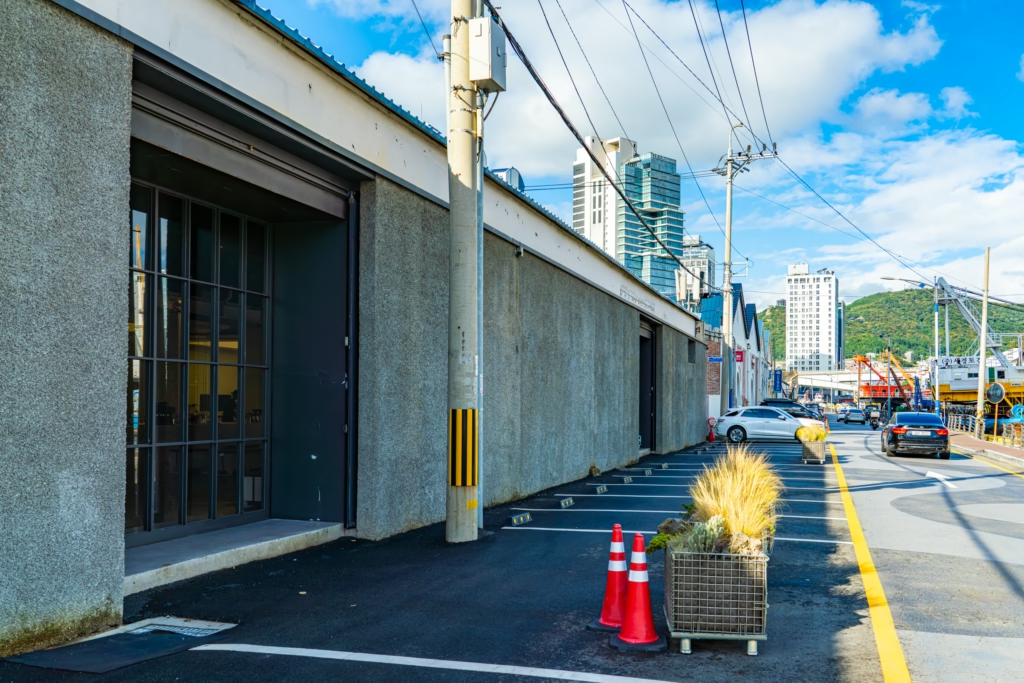
| Parking | Limited street-side public parking directly in front. Overflow: Blueport 2021 Public Parking (블루포트 2021 공영주차장), 100m from venue |
| Nearest Transit | Busan Station (Line 1) — 10 min by taxi. Busan International Ferry Terminal — 5 min by taxi |
| Reservations | Walk-in for coffee. Docent tour requires advance booking via Naver Place |
| Language | Limited English. Naver Papago translation app recommended |
| Payment | Cash and credit cards accepted |
| What to Bring | Check weekly hand drip schedule on Naver Place or Instagram before visiting |
| Recommended Stay & Activity | [Hotels near Yeongdo on Agoda] · [Busan Cultural Tour on Klook] |
Why Momos Coffee Yeongdo Matters for the Busan Specialty Coffee Scene
Busan handles approximately 93% of Korea’s coffee imports through its port facilities. The city has produced three world coffee champions. This is not a coincidence—it is infrastructure meeting talent. Momos Coffee Yeongdo sits at the intersection of both, physically occupying the harbor through which much of Korea’s green coffee arrives while operating at the quality standard its championship-winning team established.
For international travelers, Momos Coffee Yeongdo solves a common problem: finding world-class specialty coffee in Korea outside of Seoul. The Yeongdo location is particularly strategic—sitting near both Busan Station and the International Ferry Terminal, it works as either the first stop after arriving in Busan or the last visit before departing. You can taste a COE-winning hand drip, tour a championship-level production facility, and pick up properly roasted beans for home—all within a single visit that requires no more than 90 minutes.
If you are extending your Busan itinerary beyond coffee, the Visit Busan official tourism site provides comprehensive English-language guides to the Yeongdo district, including nearby attractions such as Huinnyeoul Culture Village and the Yeongdo Bridge. For travelers planning a broader southern itinerary, this roastery serves as the perfect starting point before heading to Geoje Island for its spring coastal trails.
The world’s best specialty coffee is no longer confined to Melbourne, Tokyo, or Scandinavia. It is being roasted in a harbor warehouse in Yeongdo, served daily in cups that change with the week’s curation, inside a building where you can see every stage of the process from the seat where you drink it. That is what Momos Coffee Yeongdo delivers—not a cafe experience, but a coffee factory visit that happens to serve exceptional drinks.