
Table of Contents
Inside the high-rise Haeundae studio where small groups learn bibimbap from an English-speaking chef—and why this is the single best food activity you can book in Busan
Transparency Note: This guide contains affiliate links. If you make a purchase, I may earn a commission at no extra cost to you—allowing me to keep providing expert, gear-tested travel insights.
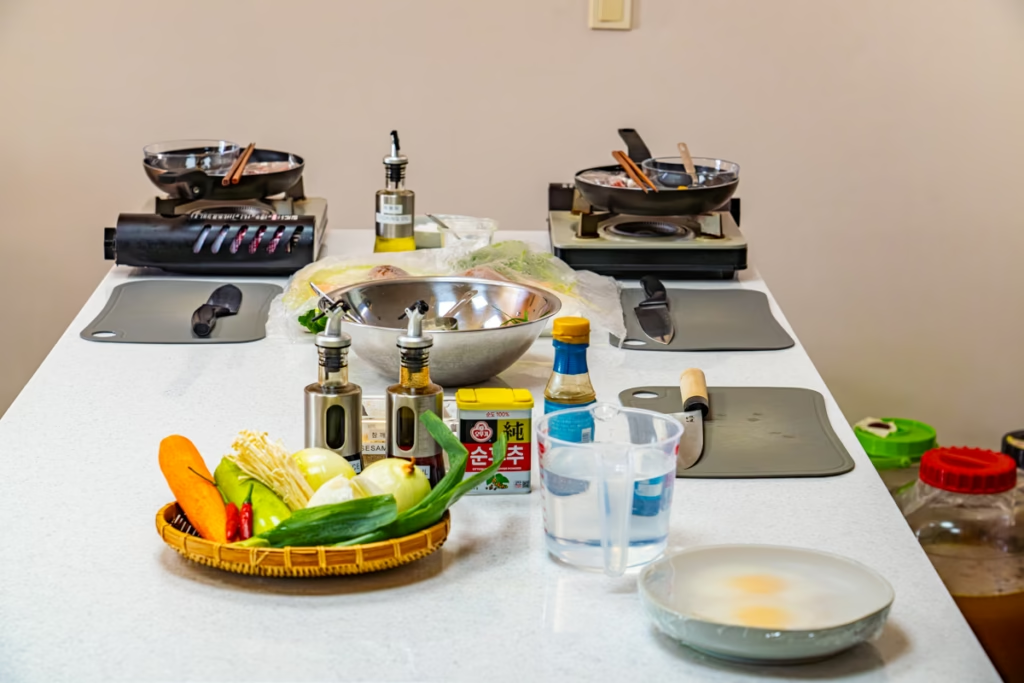
Why a Busan Cooking Class Belongs on Your Itinerary
Most visitors to Busan eat well. They work through the obligatory list—milmyeon at Halmae Milmyeon, dwaeji gukbap at a stall near Seomyeon, maybe raw fish at Jagalchi Market. But eating at someone is different from cooking with someone. A Busan cooking class closes that gap—and Bapsang, a small-group program in Haeundae’s Marine City, does it from a high-rise overlooking the ocean.
The class runs inside a residential high-rise in Marine City, Haeundae—about a 13-minute walk from Dongbaek Station (Line 2, Exit 1). You step out of an elevator on an upper floor, and the first thing that registers is not the kitchen setup but the Gwangandaegyo Bridge framed in the window behind it. The studio doubles as an ocean-view apartment. This is not a commercial kitchen; it is someone’s carefully designed space for a Busan cooking class.
For international travelers specifically, a Busan cooking class solves a problem that restaurant visits cannot: understanding why Korean food tastes the way it does. The sauces, the layering, the fermentation logic—these are things you can only absorb with your hands in the ingredients.
What Happens During a Busan Cooking Class at Bapsang
The class runs approximately 2.5 to 3 hours and accommodates a maximum of 6 to 9 guests per session. It is intimate by design. Here is the full sequence:
1. Welcome and Traditional Apron Fitting
You arrive and receive a welcome drink. Chef Min then provides a traditional Korean cooking apron—modeled after what royal court cooks once wore. It makes for a good photo. More importantly, it signals that this is not a casual kitchen hangout; the class treats the cooking process with a degree of ceremony.
2. Sauce Introduction and Tasting
Before touching any ingredients, you taste the foundational Korean sauces: ganjang (soy sauce), gochujang (red pepper paste), and doenjang (fermented soybean paste). Chef Min explains how each is made, what role fermentation plays, and why these three condiments define virtually every Korean dish you have ever eaten. This segment alone justifies the class for anyone who has wondered why Korean food has that particular depth of flavor. These same fermentation traditions run deep in Korea’s agricultural heartland—our guide to Menge Village in Andong shows how a single-estate distillery transforms locally grown wheat into award-winning soju using techniques documented over 500 years ago.
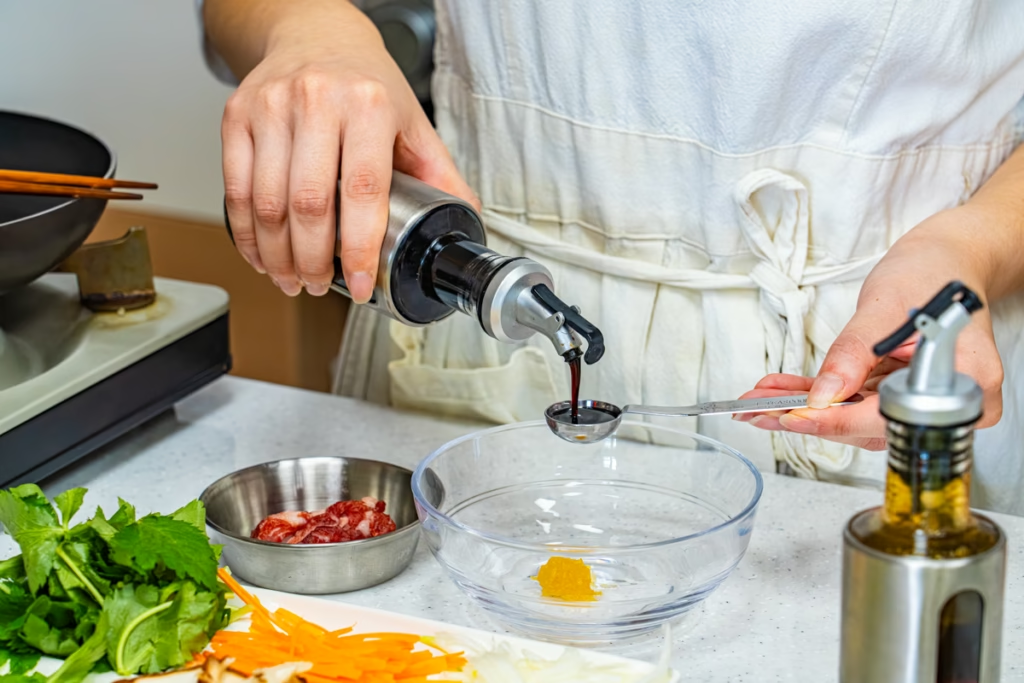
3. Cooking: Bibimbap Set (3–4 Dishes)
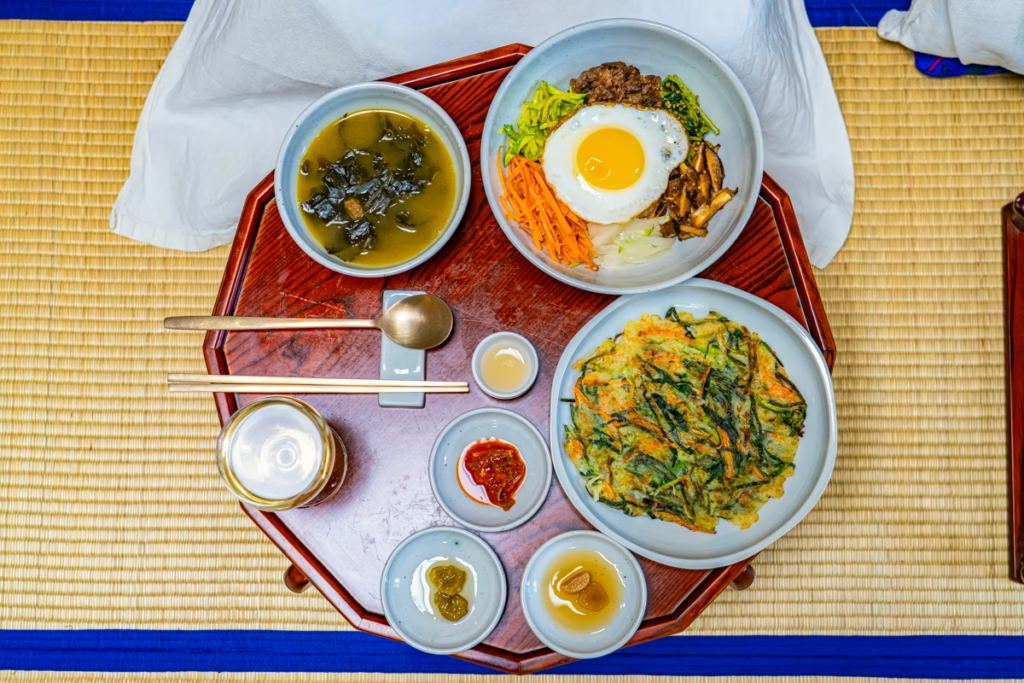
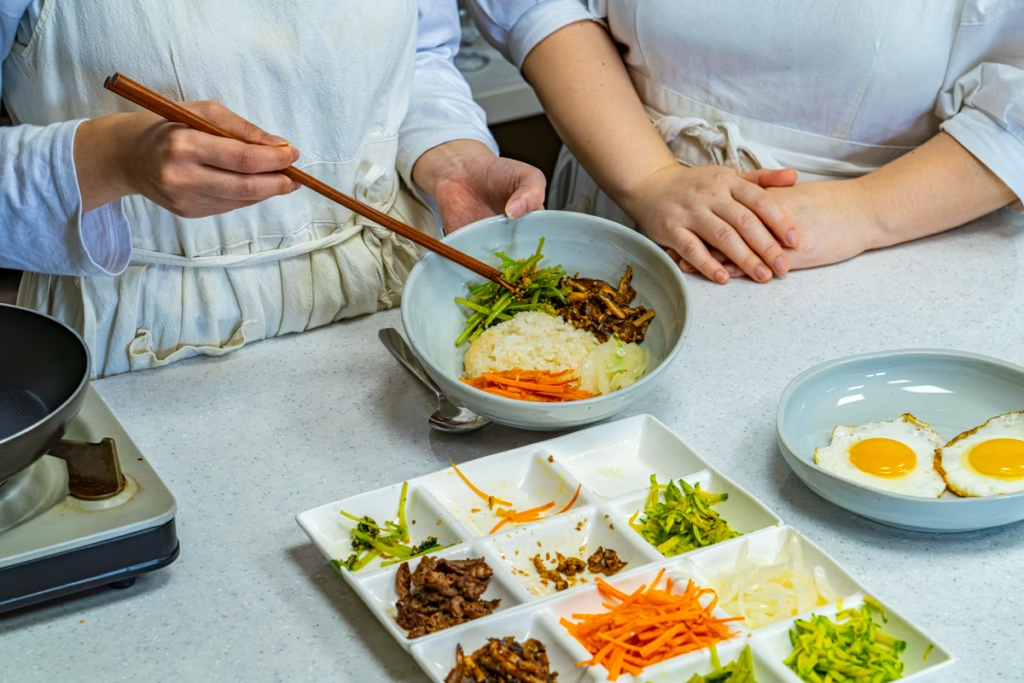
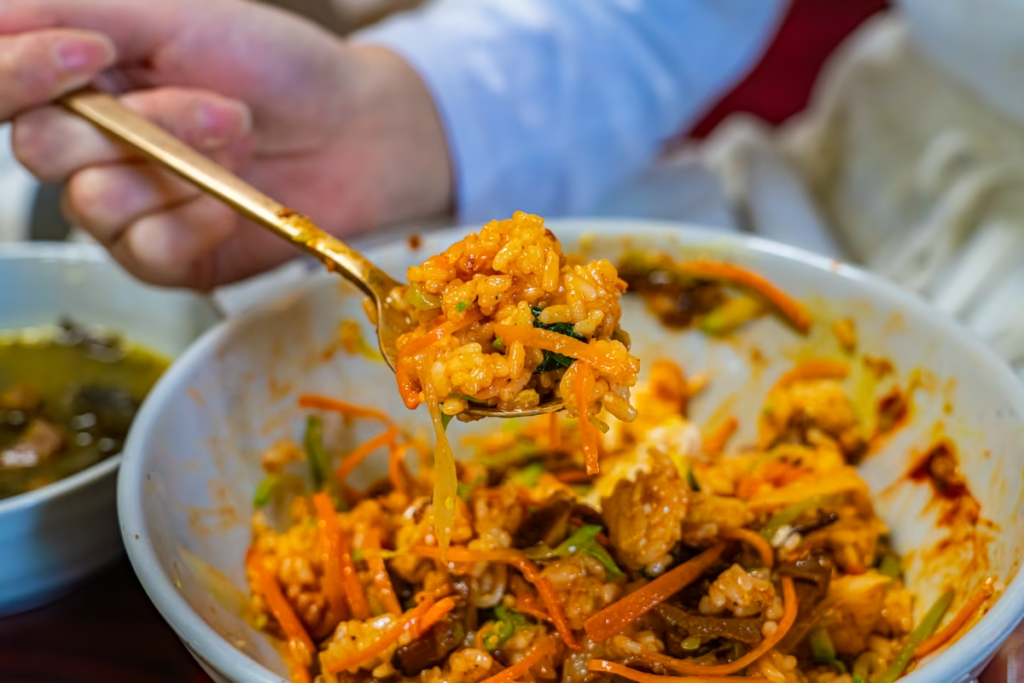
The standard menu centers on a bibimbap set—the dish most universally appreciated by foreign visitors and the one that best demonstrates the Korean principle of balancing colors, textures, and flavors in a single bowl. The full lineup typically includes:
- Bibimbap — mixed rice with seasonal vegetables, egg, and gochujang
- Miyeokguk or Kongnamulguk — seaweed soup or bean sprout soup
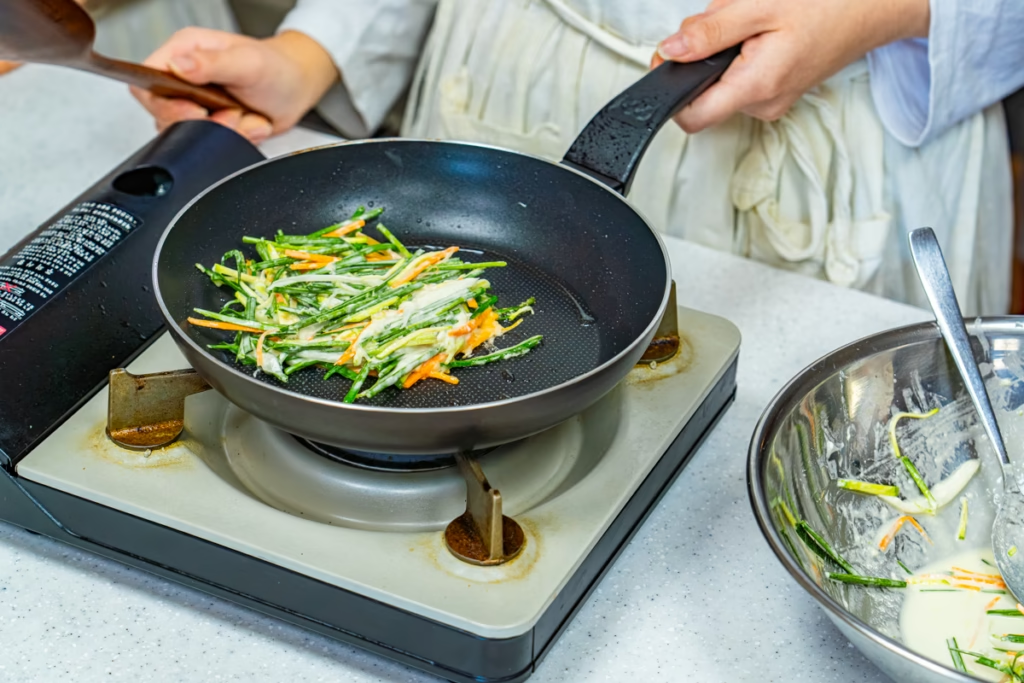
- Pajeon or Buchujeon — green onion pancake or chive pancake
Chef Min demonstrates each step, then you replicate it at your own station. The instructions are clear and unhurried. The emphasis is on technique—how to properly julienne vegetables, the correct oil temperature for pajeon, why you add sesame oil after removing the pan from heat.
If your interest in Korean culinary traditions extends beyond cooking into the deeper philosophy of Korean food, our guide to Balwoo Gongyang, Seoul’s Michelin-starred temple food restaurant, explores how Buddhist dietary principles shaped the flavors you encounter in dishes like bibimbap.
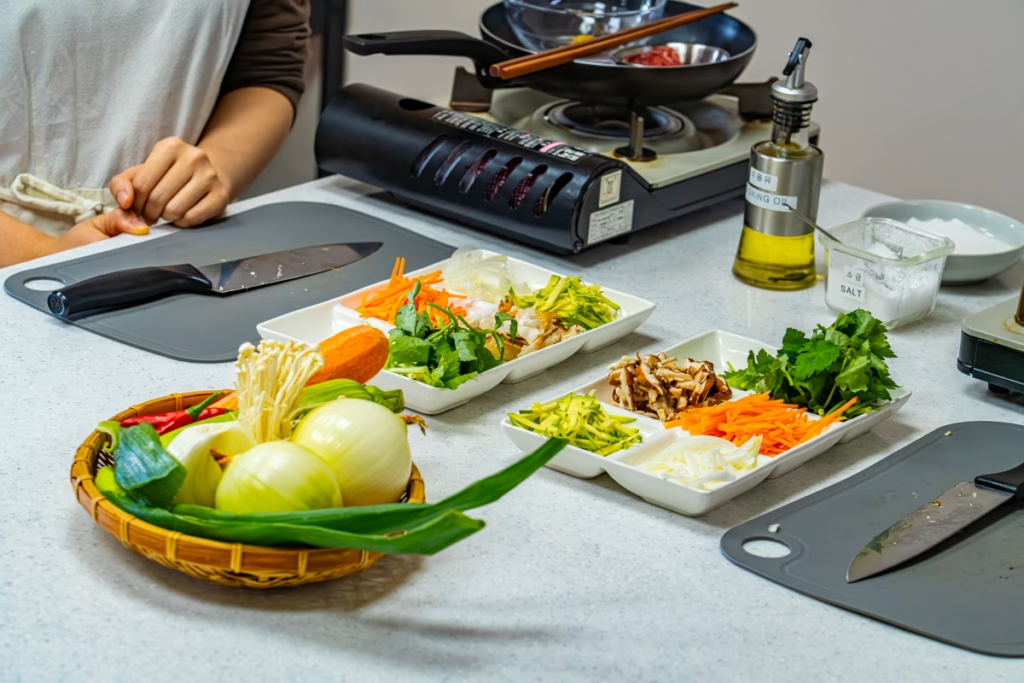
4. Bapsang Dining: Floor-Seated Traditional Meal
Here is where Bapsang distinguishes itself from almost every other Busan cooking class in Korea. Once the food is ready, you do not simply eat at a counter. You arrange everything on a soban (소반)—a traditional single-person Korean dining tray—and sit on the floor to eat.
This is the “bapsang” (밥상) experience the class is named after: a fully set Korean meal table as it would have appeared in a traditional household. The word literally means “rice table,” and the ritual of setting it—soup on the right, rice on the left, banchan arranged by color—is itself a cultural lesson.
Practical note: If floor seating is uncomfortable, standard tables and chairs are available. The class accommodates both without making it awkward.
5. Tea, Dessert, and Certificate Ceremony
The session closes with Korean traditional tea and a light dessert. You receive:
- A printed English-language recipe for everything you cooked
- A certificate of completion
- A small surprise souvenir
The recipe card is genuinely useful—specific enough to recreate the dishes at home, with ingredient substitutions noted for items that may be difficult to find outside Korea.
Chef Min: Why This Cooking Class Instructor Matters
Your Busan cooking class experience is only as good as the person running it. Chef Min (민 셰프) has extensive international experience and speaks fluent English—not functional English, not textbook English, but the kind of conversational fluency that allows for humor, cultural tangents, and the sort of off-script explanations that transform a recipe walkthrough into a cultural exchange.
This matters more than it might seem. In many Korean cooking classes marketed to foreigners, the language barrier creates a polite but shallow experience. At Bapsang, Min explains why Koreans eat miyeokguk on birthdays, what the arrangement of dishes on a bapsang communicates about respect, and how the fermentation timeline of doenjang connects to Korea’s agricultural calendar. The cooking is the vehicle. The culture is the content.
Dietary Accommodations: Vegan, Vegetarian, and Allergy-Friendly
One advantage of this Busan cooking class is its dietary flexibility. Request modifications at the time of booking, and the kitchen will prepare accordingly. Bapsang supports:
- Vegan — animal products fully substituted
- Vegetarian — egg and dairy retained, meat removed
- Specific allergies — ingredients swapped on a case-by-case basis
This is not a token accommodation. Korean cuisine is built on fermented soybean and vegetable foundations, so the vegan version of bibimbap is not a compromise—it is, arguably, the dish in its most traditional form. For travelers exploring plant-based Korean dining more broadly, our guide to Dujingak’s vegan jjajangmyeon near Haeinsa Temple covers how Buddhist dietary law created an entire parallel cuisine.
Who Should Book This (and Who Should Not)
This particular Busan cooking class works well for a wide range of travelers. Book if you are:
- A first-time Korea visitor wanting a structured cultural introduction beyond sightseeing
- Traveling with children (ages 5 and up are welcome—the hands-on format keeps younger participants engaged)
- A solo traveler looking for a social group experience without the forced awkwardness of a pub crawl
- Interested in the logic of Korean cooking, not just the recipes
Skip if you are:
- Looking for advanced Korean culinary technique (this is introductory-level by design)
- Uncomfortable with small-group settings (maximum 6–9 people, and interaction is part of the format)
How to Get There: Marine City, Haeundae
This Busan cooking class is held in Hanil Ordeu Tower (한일오르듀), a residential building in Marine City—Haeundae’s waterfront high-rise district.
From Dongbaek Station (동백역, Line 2):
- Take Exit 1
- Walk south toward the Marine City towers — approximately 13 minutes on foot
By taxi:
- From Haeundae Beach: ~5 minutes
- From Busan Station (부산역): ~30 minutes
- From Gimhae Airport (김해공항): ~50 minutes
Navigation tip: Google Maps has limited functionality in Korea. Search for “코리아쿠킹클래스 밥상” or “한일오르듀” on Naver Map or Kakao Map for accurate directions. Both apps offer English interfaces.
📷 File Name: marine-city-haeundae-tower-exterior.avif
Alt Text: Marine City residential towers in Haeundae Busan where Bapsang Korean cooking class studio is located
If you are planning your Haeundae visit around this class, consider pairing it with a morning at Momos Coffee Yeongdo, Busan’s world-champion specialty roastery, which is a 20-minute taxi ride from Marine City and opens at 9:00 AM—giving you time for a championship-level hand drip before your 10:00 AM cooking session.
Practical Information Table
| Category | Details |
|---|---|
| Official Name | Korean Cooking Class Bapsang in Busan (코리아쿠킹클래스 밥상 인 부산) |
| Address | 37 Marine City 3-ro, Haeundae-gu, Busan (부산광역시 해운대구 마린시티3로 37, 한일오르듀) |
| Naver Map Search | 코리아쿠킹클래스 밥상 |
| Hours | Daily, class starts at 10:00 AM (or 10:30 AM). Advance booking required. |
| Duration | Approx. 2.5–3 hours |
| Group Size | Maximum 6–9 guests per session |
| Cost | Approx. $70–$80 USD per adult (≈ ₩77,000 KRW, varies by booking platform) |
| Age Requirement | Ages 5 and up |
| Language | Fully English-speaking instructor |
| Dietary Options | Vegan, vegetarian, and allergy accommodations available (request at booking) |
| Transport | Dongbaek Station (Line 2, Exit 1) — 13 min walk |
| What You Receive | English recipe card, certificate of completion, surprise souvenir gift |
| Recommended Booking | Book Busan Cooking Class on Klook |
| Recommended Stay | Check Haeundae Hotels on Agoda |
Where to Stay Near Marine City
Haeundae’s Marine City district has the highest concentration of upscale accommodation in Busan. Staying within walking distance of the cooking class eliminates transit logistics entirely.
- Budget: Guesthouses near Haeundae Beach (~₩40,000–60,000/night) — 10-minute walk to Marine City
- Mid-range: Business hotels along Haeundae-haebyeon-ro (~₩80,000–150,000/night) — direct beach access
- Upscale: The high-rise hotels in Marine City itself (~₩200,000+/night) — same neighborhood as the class
→ Check Best Rates for Haeundae Hotels on Agoda
Final Verdict: Is Bapsang Worth $70–$80?
At $70–$80 per person, Bapsang sits in the mid-range for Korean cooking classes marketed to international visitors. What separates this Busan cooking class from cheaper alternatives is the combination of three things that rarely coexist: a genuinely fluent English-speaking instructor, a physical space that enhances the experience (the ocean view is not a gimmick—it contextualizes the class within Busan itself), and the bapsang floor-dining ritual that no other cooking class in the city includes.
You leave with food in your stomach, a recipe you can actually use, a certificate, and—more usefully—an understanding of how Korean cuisine is structured at the foundational level. The sauces, the fermentation, the table-setting logic: these are things that will change how you eat for the rest of your trip.
For families with children over 5, this is one of the few structured cultural activities in Busan that keeps all age groups engaged simultaneously. For solo travelers, the small-group format creates natural conversation without forced socialization. For couples, the Haeundae ocean-view setting speaks for itself. And for travelers extending beyond Busan, pairing this class with a coastal drive to Geoje Island’s spring destinations creates a southern Korea itinerary that balances culinary depth with natural scenery.
This post is part of The Travel Manual’s Korea Culinary Series—expert-level guides to the restaurants, markets, and food traditions that define Korean dining beyond the surface.