
Table of Contents
A practical manual for the Jogye Order’s flagship fine dining institution—where 1,700 years of Buddhist culinary tradition meets private room service in the heart of Jongno
Transparency Note: This guide contains affiliate links. If you make a purchase, I may earn a commission at no extra cost to you—allowing me to keep providing expert, gear-tested travel insights.
Why Balwoo Gongyang Seoul Matters for Serious Food Travelers
Balwoo Gongyang Seoul is not a vegan restaurant that happens to serve temple food. It is a temple food institution that happens to qualify as vegan. That distinction matters. Operated directly by the Jogye Order of Korean Buddhism—the country’s largest Buddhist denomination—this restaurant translates 1,700 years of monastic culinary discipline into a multi-course fine dining format. Between 2017 and 2019, the Michelin Guide Seoul awarded it one star for three consecutive years, making it one of the few entirely plant-based restaurants in Asia to hold that recognition.
The restaurant occupies the fifth floor of the Templestay Information Center at 56 Ujeongguk-ro, Jongno-gu—a building managed by the Jogye Order that also serves as the administrative hub for Korea’s temple stay programs. This location is deliberate. The restaurant sits within walking distance of Jogyesa Temple, Insadong’s traditional craft galleries, and Gwanghwamun Square, placing it at the intersection of Korean Buddhism’s institutional heart and Seoul’s most historically dense neighborhood.
What separates this restaurant from Seoul’s growing number of plant-based dining options is authority. The chefs here are not interpreting temple cuisine from cookbooks. They are practitioners trained within the monastic tradition, working with ingredients and methods passed down through generations of Buddhist monasteries. Every dish follows the strict exclusion of oshinchae (오신채)—the five pungent vegetables (garlic, green onions, chives, wild rocambole, and leeks) forbidden in Buddhist dietary practice—alongside the complete absence of meat, seafood, and artificial seasonings.
For travelers who explored our Dujingak vegan temple food guide near Haeinsa Temple in rural Hapcheon, this restaurant represents the urban, fine-dining counterpart to that countryside experience. Same philosophical foundation, different execution entirely.
Understanding the Course System: Buddhist Practice on a Plate
The menu is structured around four courses, each named after a stage of Buddhist spiritual practice. This is not decorative branding—the progression from lighter preparations to more complex compositions mirrors the meditative journey from initial discipline to deeper realization.
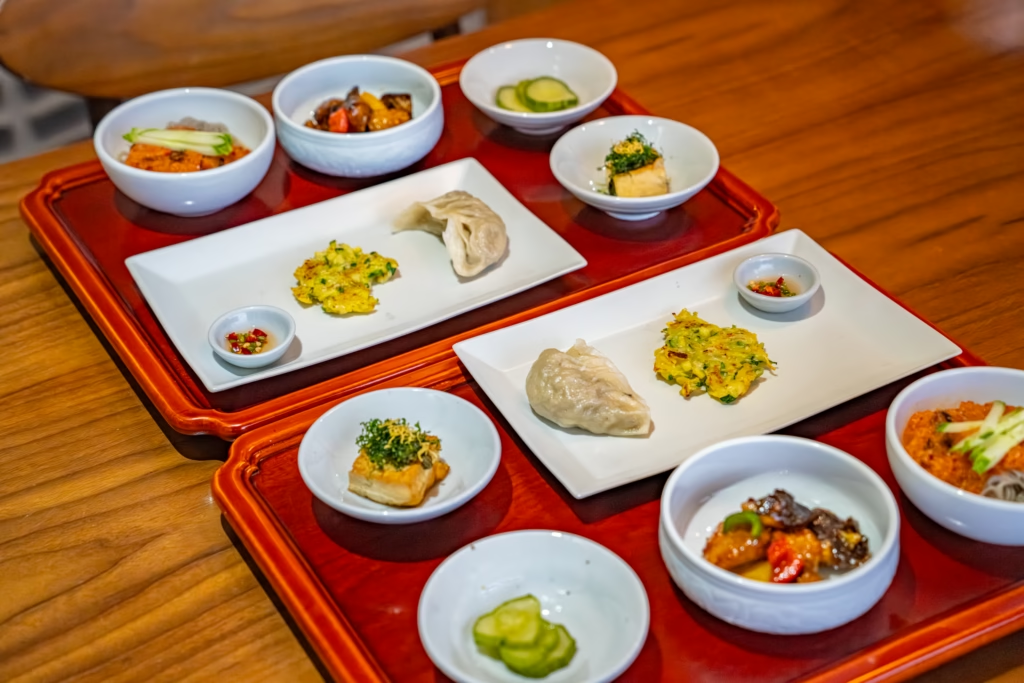
Course SEON (선식) — ₩36,000
Named after seon (선), meaning the joy of meditation. This is the entry-level experience, available only during weekday lunch service. It provides a focused introduction to temple food philosophy without the full ceremonial progression. For first-time visitors testing the waters, this course offers genuine temple cuisine at a price point comparable to a standard Seoul fine dining appetizer set.
Course WON (원식) — ₩50,000
Won (원) represents right aspiration. This mid-range course expands the ingredient palette and adds complexity to each dish. It strikes the balance most visitors are looking for: enough courses to understand the culinary tradition, enough variety to keep each plate distinct.
Course MAEUM (마음식) — ₩70,000
Maeum (마음) translates to mastering one’s own mind. At this level, seasonal ingredients receive more elaborate preparations, and the plating begins to reflect the aesthetic intentionality that earned the restaurant its Michelin recognition. This is the course most food journalists and dedicated culinary travelers select.
Course HEE (희식) — ₩120,000
Hee (희) signifies the joy of realizing truth. This is the pinnacle experience—advance reservation required, no walk-ins accepted. The kitchen commits its finest seasonal ingredients and most labor-intensive techniques to this course. If you are making a single visit and want the full expression of what Korean temple cuisine can achieve at its highest level, this is the one to book.
The Meal Progression
Regardless of which course you select, every meal follows a structured sequence rooted in monastic dining tradition:
Suljeoksim (술적심) — A palate-moistening opener. Then Juksang (죽상) — Porridge course. Followed by Sangmi (상미) — Primary savory dishes. Then Dammi (담미) — Lighter, subtler flavors. Seungso (승소) — Noodle or grain preparations. Yumi (유미) — The main rice course, often featuring lotus leaf rice. Finally, Ipgasim (입가심) — Dessert and palate cleanser.
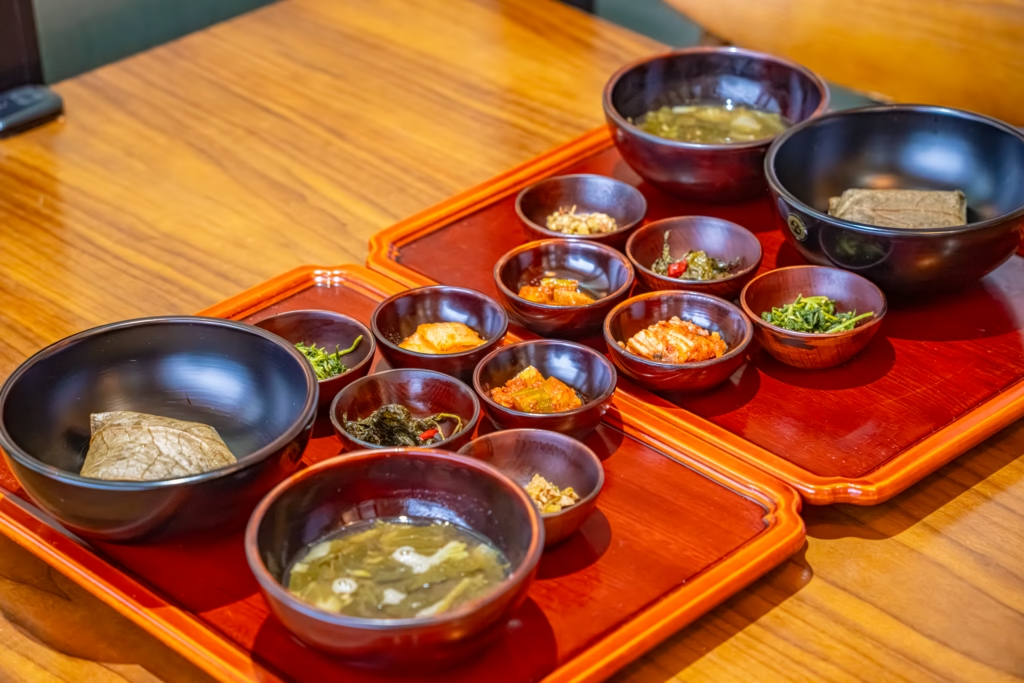
This sequence is not arbitrary. In Korean monastic tradition, balwoo gongyang (발우공양) refers to the formal practice of eating from wooden bowls in a specific order—a meditation exercise in itself. The restaurant’s name directly references this practice, and while the service format has been adapted for civilian diners, the philosophical structure remains intact.
If you are fascinated by Korea’s seasonal botanical diversity—which heavily influences what appears on these plates—explore our Geoje spring travel guide to see where the country’s earliest blooms and coastal ingredients thrive, weeks ahead of the mainland.
The Private Room Experience: Why Balwoo Gongyang Seoul Works for Special Occasions
One detail that distinguishes this restaurant from most Seoul establishments at this price point: every table is set within a private dining room. This is not a partitioned space or a curtained-off section. These are enclosed rooms that offer genuine privacy—a feature that has made the restaurant a trusted choice for Korean business entertaining, family milestone events like sanggyeonrye (상견례, the formal meeting between families before a wedding), and diplomatic dining.
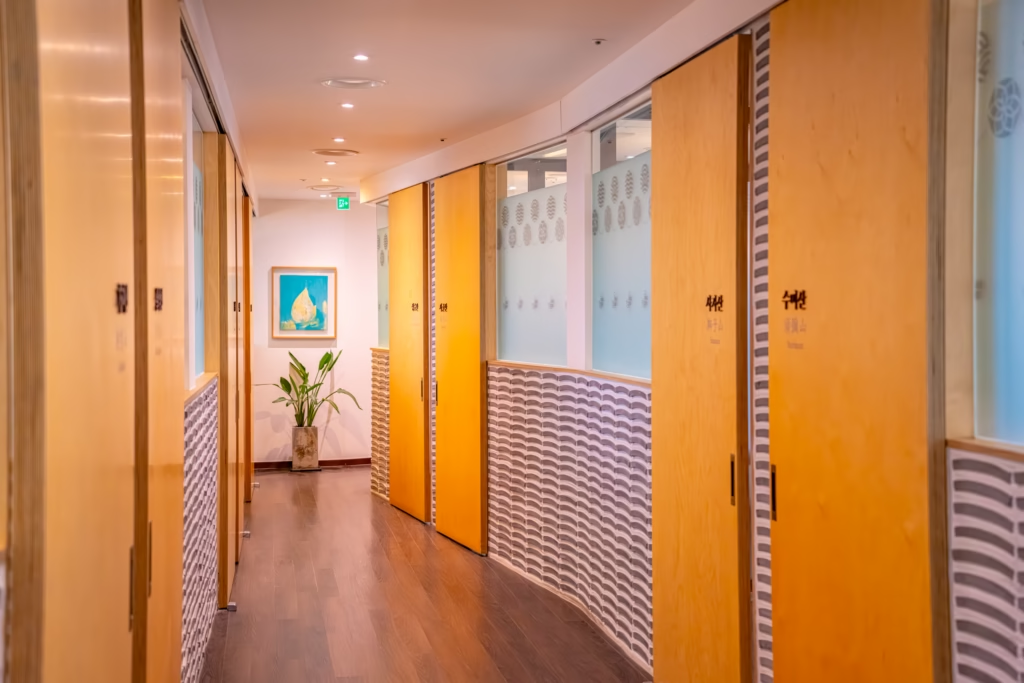
For international travelers, this translates to an unhurried dining experience. There is no background noise from adjacent tables. No need to modulate your conversation. The private rooms create the conditions that temple food was designed for—attentive, undistracted eating.
What to Know About the No-Alcohol Policy and Corkage
The restaurant does not serve alcohol. As a restaurant operated by the Jogye Order, this follows Buddhist precepts regarding intoxicants. However, the restaurant has adapted to contemporary dining customs by offering a corkage service: bring your own wine or other beverages for ₩20,000 (for a party of 2 to 4 guests).
This is a practical compromise worth noting. If you are hosting a business dinner or celebration where wine pairing matters to your guests, call ahead to confirm the corkage arrangement. The kitchen staff can suggest which courses pair well with lighter wines—the lotus leaf rice course, for instance, complements dry whites and light-bodied rosés better than heavy reds.
Beyond the Main Menu: Catering and Bento Options
The restaurant extends its temple food expertise beyond the dining room. Through advance consultation, the restaurant prepares custom temple food buffet catering for events and temple food bento boxes (dosirak) for travelers, meetings, or personal occasions. These services require direct inquiry—contact the restaurant to discuss group size, dietary needs, and logistics.
This flexibility makes the restaurant more than a single-visit destination. If you are organizing a conference in Seoul, hosting a private gathering, or simply want to bring the temple food experience to a different setting, the catering option provides institutional-quality temple cuisine in a portable format.
Photography Notes for the Temple Food Courses
The private dining rooms present both advantages and challenges for food photography. On the positive side, you control the environment completely—no strangers walking through your background, no competing light sources. The rooms typically feature warm, diffused overhead lighting supplemented by natural light from windows where available.
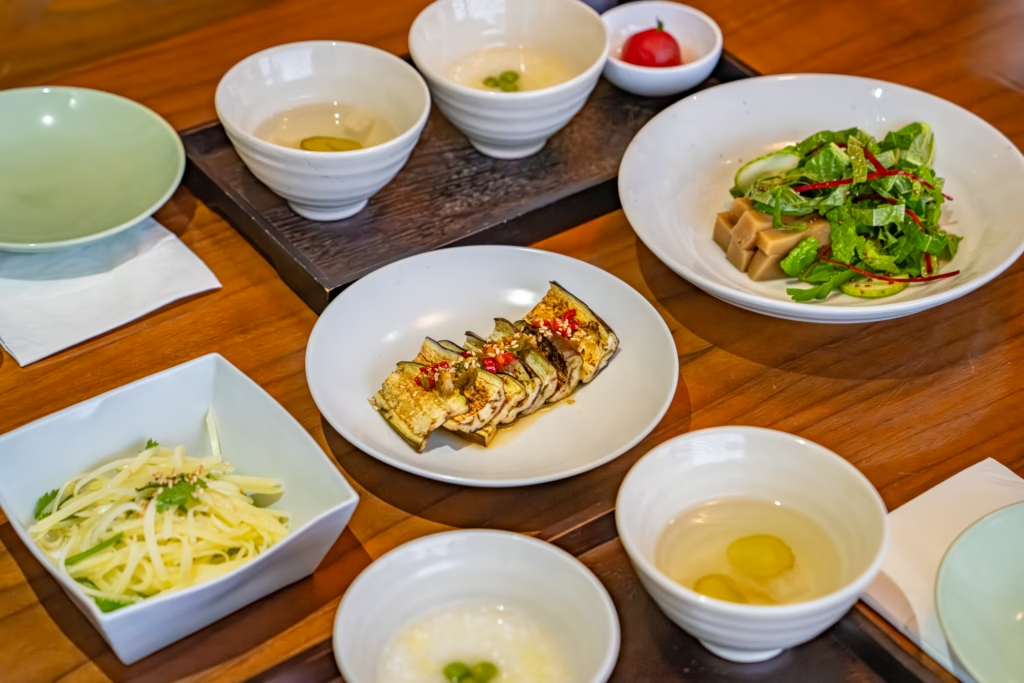
Shooting notes (Sony a7R4): The multi-dish courses work best as overhead flat-lay compositions at 24-35mm, capturing the full spread on the table. Individual dish detail shots at 50-90mm macro, f/2.8-4.0, ISO 400-1000. The lacquerware and ceramic vessels used here are handcrafted and photograph with significant depth—side-angle shots at 45 degrees reveal the texture of both vessel and food that overhead angles miss. For the lotus leaf rice unwrapping moment, shoot at burst mode—the steam release creates a 2-3 second window of visual interest.
Export specifications: AVIF format, 2560px long edge, 10-bit depth, quality 68.
Combining Balwoo Gongyang Seoul with a Jongno Cultural Walk
The Templestay Information Center where the restaurant is located sits within one of Seoul’s most walkable cultural corridors. A practical half-day itinerary around your meal:
Pre-meal option: Walk from Anguk Station (Seoul Metro Line 3, Exit 6) through Insadong’s traditional tea houses and craft shops. The 10-minute walk to the restaurant passes through streets that have functioned as Seoul’s cultural marketplace since the Joseon Dynasty.
Post-meal option: Jogyesa Temple, the headquarters of the Jogye Order, is a 5-minute walk south. The temple grounds are open to the public and provide a contemplative counterpoint to the meal you just finished—especially meaningful if you want to see the living Buddhist community that sustains the culinary tradition you experienced at the table.
After a meditative dinner, consider experiencing how the city transforms at night. A 30-minute walk up Namsan Mountain turns a tourist landmark into a genuine Seoul moment. Our N Seoul Tower winter hike guide covers the best viewing positions and trail conditions.
For travelers seeking to understand Korea beyond its central palaces, diving into the nation’s modern history is a compelling next step. The Hwaseong Independence Movement Memorial—about 90 minutes from central Seoul—provides an unflinching look at a chapter most guidebooks skip entirely.
For travelers building a broader Seoul food itinerary, our Myeongdong Kyoja kalguksu guide covers a completely different Seoul institution just two subway stops away—the contrast between monastic precision and populist noodle-house energy makes both experiences richer.
Klook.comPractical Manual: Balwoo Gongyang Seoul at a Glance
| Category | Details |
|---|---|
| Korean Name | 발우공양 (鉢盂供養) |
| Address | 5F, Templestay Information Center, 56 Ujeongguk-ro, Jongno-gu, Seoul (서울 종로구 우정국로 56 템플스테이 통합정보센터 5층) |
| Nearest Subway | Anguk Station (Line 3, Exit 6) — 10 min walk; Jonggak Station (Line 1, Exit 2) — 8 min walk |
| Hours | Mon–Sat 11:30–21:00 (Break Time 15:00–18:00, Last Order 19:40) |
| Closed | Every Sunday |
| Course Prices | SEON ₩36,000 (weekday lunch only) · WON ₩50,000 · MAEUM ₩70,000 · HEE ₩120,000 (reservation required) |
| Alcohol | Not served. Corkage ₩20,000 (2–4 guests) — BYOB welcome |
| Dietary Notes | Fully plant-based. No meat, seafood, eggs, or oshinchae. Confirm specific allergen needs when booking |
| Reservations | Strongly recommended, especially for dinner and Course HEE |
| Parking | Building parking available (inquire at entrance) |
| Special Services | Temple food buffet catering · Temple food bento boxes · Advance consultation required |
| Recognition | Michelin 1 Star (2017, 2018, 2019) · Operated by the Jogye Order of Korean Buddhism |
| Official Info | Korean Buddhism Templestay |
| Recommended Stay | [Check Best Rates for Hotels near Insadong-Jongno on Agoda] |
Summary: Is Balwoo Gongyang Seoul Worth the Visit?
Balwoo Gongyang Seoul occupies a unique position in Korea’s dining landscape. It is simultaneously a fine dining restaurant, a cultural institution, and a living expression of Buddhist philosophy. The price point—₩36,000 to ₩120,000 per person—sits below what comparable Michelin-recognized restaurants in Seoul charge for tasting menus, yet the experience extends beyond what most restaurants at any price point can offer: a private room, a structured meditation-inspired meal progression, and food prepared by practitioners of a 1,700-year-old culinary tradition.
This is not the restaurant for travelers looking for bold, punchy Korean flavors or the excitement of a bustling Seoul dining room. The experience rewards patience and attention. The flavors are deliberate, clean, and occasionally subtle to the point of demanding concentration. For those accustomed to garlic-forward Korean cooking, the oshinchae-free approach will feel like a reset—which, philosophically, is exactly the point.
If you have visited Korea’s rural temple food destinations—the modest restaurants near Haeinsa’s monastic kitchens or countryside temple stays—Balwoo Gongyang Seoul shows what that same tradition looks like when given the resources, space, and refinement of a dedicated fine dining kitchen. Both experiences are valid. Both are necessary to understand the full spectrum of Korean Buddhist cuisine. But only one requires a reservation and a private room in central Seoul.
This post is part of The Travel Manual’s Korea Culinary Series—expert-level guides to the restaurants, markets, and food traditions that define Korean dining beyond the surface.