
Uiseong Korea, the Two-Day Version: Plum Jam, an Ice Valley, and a River Island
July is the month that tests my loyalty to this job. The heat sits on the highway like a wet blanket, and every famous beach from Gangneung to Busan is elbow-to-elbow. So this manual is about the opposite move: heading inland, into North Gyeongsang Province, where I found a valley whose ice gets thicker as the summer gets hotter, and a closed-down village elementary school where the sound of kids cannonballing into a pool has returned after twenty years of silence.
The route pairs Uiseong — a quiet garlic-farming county between Daegu and Andong — with neighboring Sangju, strung together along the Nakdong River. It works best as one overnight: an ice valley and a farm stay on day one, a flower island and a very good free museum on day two.
Orientation: Where This Is and Why You Need a Car
Uiseong sits roughly in the middle of North Gyeongsang Province, about two and a half to three hours from Seoul by expressway. There is a train station in Uiseong, but I’ll be straight with you: it won’t help. The four stops in this manual are scattered across two counties, forty to fifty minutes apart, with no usable bus connections between them. This is a rental car itinerary, full stop — the same deal as my trips to Holly Garden in Bonghwa, another corner of Gyeongbuk that rewards anyone willing to drive.
The logical loop: arrive from Seoul or Daegu, cool off at Bingye Valley in eastern Uiseong, then cross the county to Mangyeongchon Village for the jam class, dinner, and the night. Next morning, drive 40 minutes north into Sangju for Gyeongcheonseom Island and the Nakdonggang History Museum, then head home. If you’re coming up from the south, Daegu is close enough that you could bolt this onto a Seomun Market street food evening without breaking a sweat. And if you would rather finish on the coast than double back toward Seoul, Yeongdeok lies due east of Uiseong on the East Sea, and I broke up the drive home at the PANAQ resort in Yeongdeok.
1. Mangyeongchon Village: The Farm Stay in a Former Elementary School
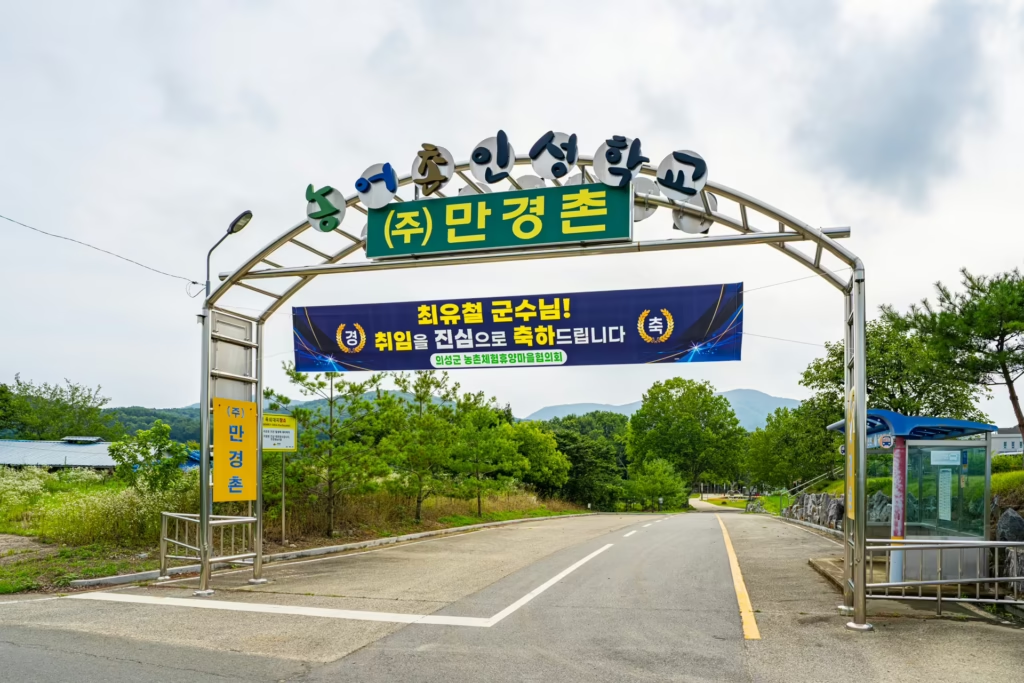
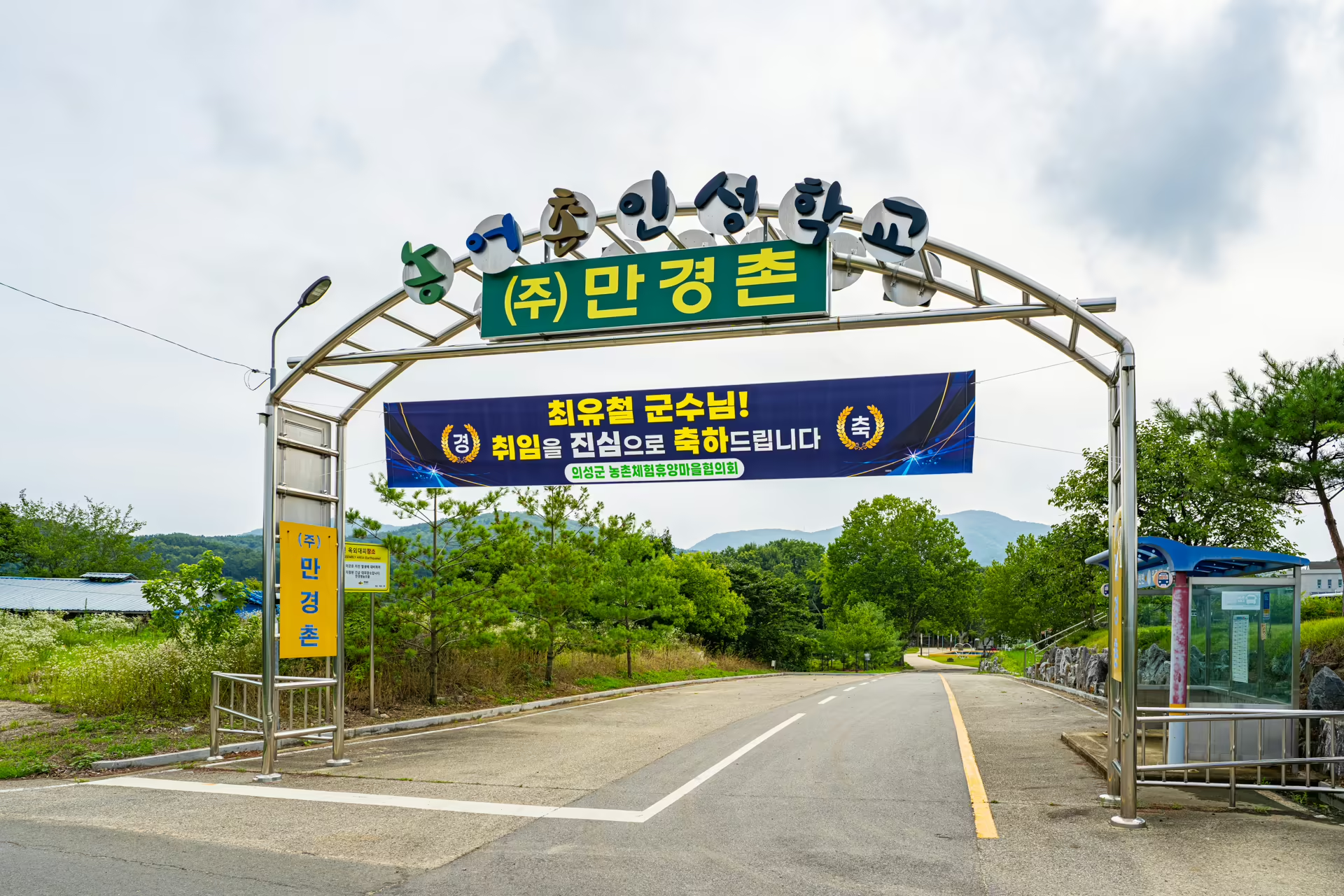
Mangyeongchon is the anchor of this whole trip. It occupies the grounds of Wijung Branch School, which opened in 1949, sent 1,884 graduates out into the world, and closed in 2006 when the children ran out — a story repeated in hundreds of rural Korean villages. Here, the villagers took the campus back. The old playground is now a futsal pitch and an outdoor swimming pool; the classrooms became guest rooms and a big communal hall.
This isn’t a random guesthouse, either. In 2022, Korea’s Ministry of Agriculture graded rural experience villages nationwide, and Mangyeongchon took first-grade marks in all three categories — lodging, food, and activities — earning a designation that translates roughly as “best-in-class village.” Having stayed at a fair number of farm stays that excel at exactly one of those three, I can tell you that sweep is rare.
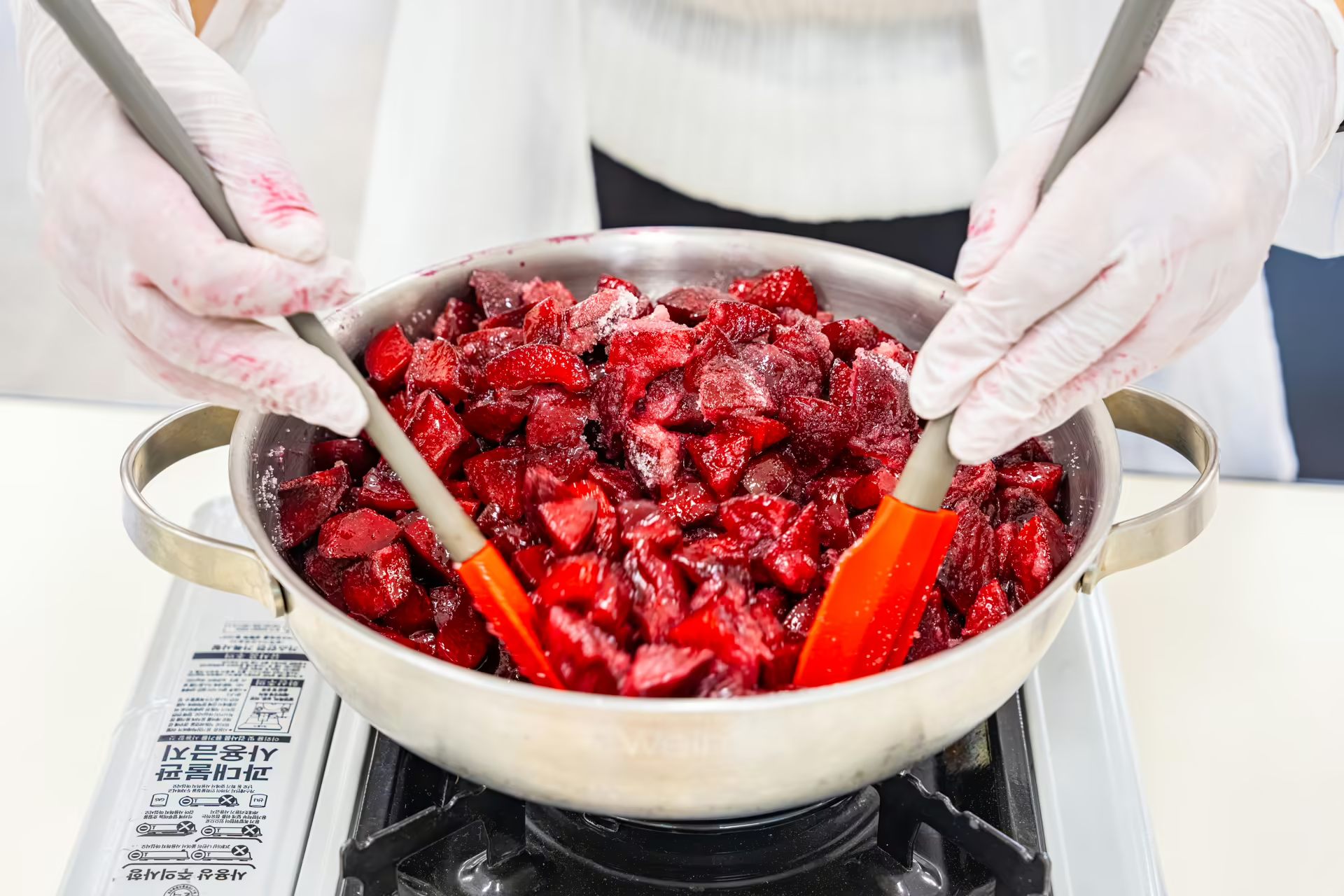
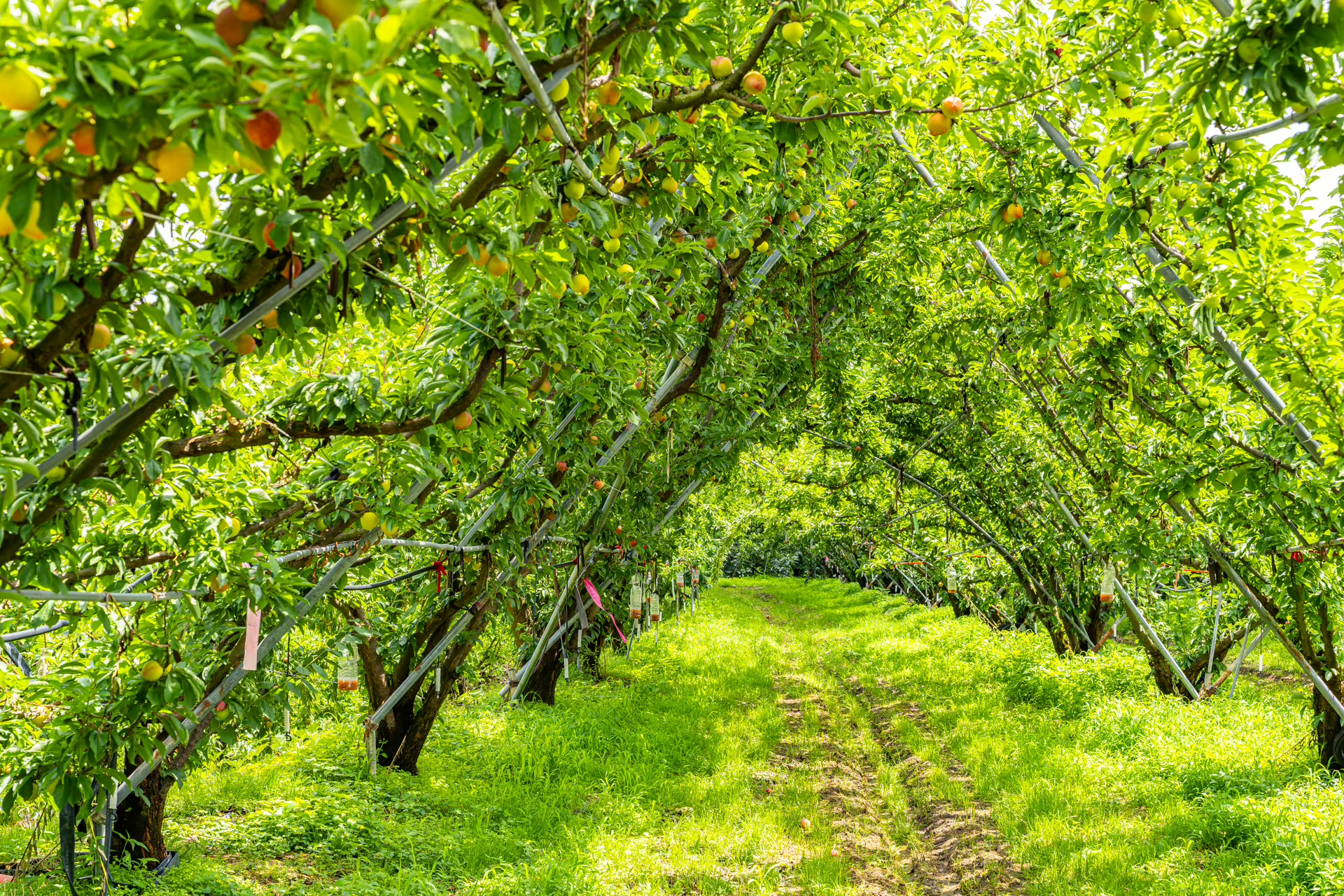
In summer, the headline activity is the plum jam class (₩20,000–30,000 depending on how big a jar you take home, running July through early September). The plums come from the orchard behind the village, where the harvest peaks between mid and late July — time it right and you can pick your own fruit before you cook it. The class itself is simple and satisfying: pit and chop the plums, toss them with sugar, then stand over the pot stirring until it turns glossy and thick. If the red-fleshed “blood plum” variety is in season, the jam comes out a deep raspberry crimson. Forty-five minutes later you’re holding a still-warm jar of July.
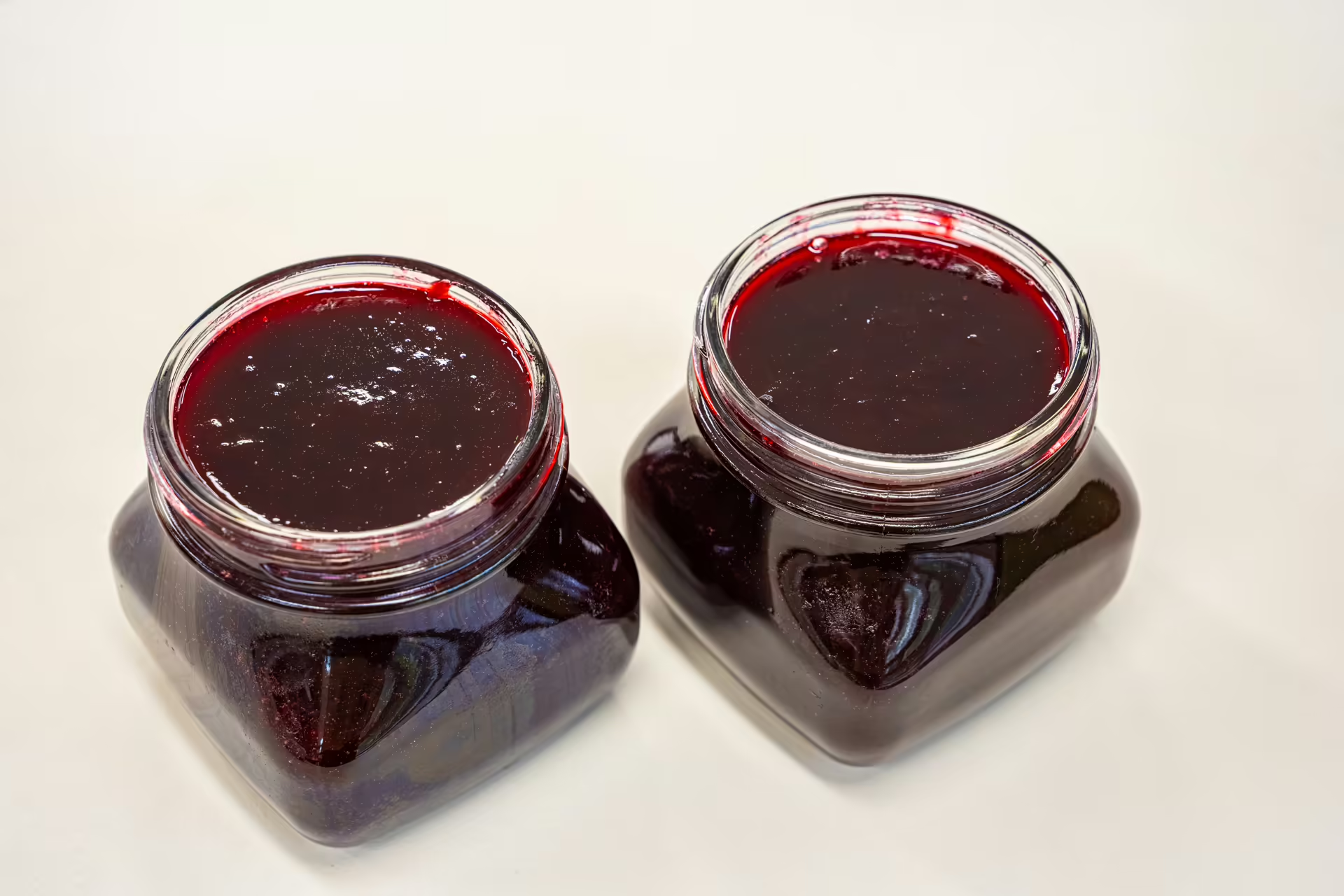
The other class is pure Uiseong: black garlic in honey (₩30,000–50,000, year-round). Uiseong is Korea’s most famous garlic county, and aged black garlic loses all its bite, turning sweet-sour and chewy like dried fruit. You spend a peaceful half hour dropping cloves into a jar with chopsticks and drizzling honey over them — the result is a tonic Koreans stir into hot water. Kids can handle both classes easily; both need advance booking.
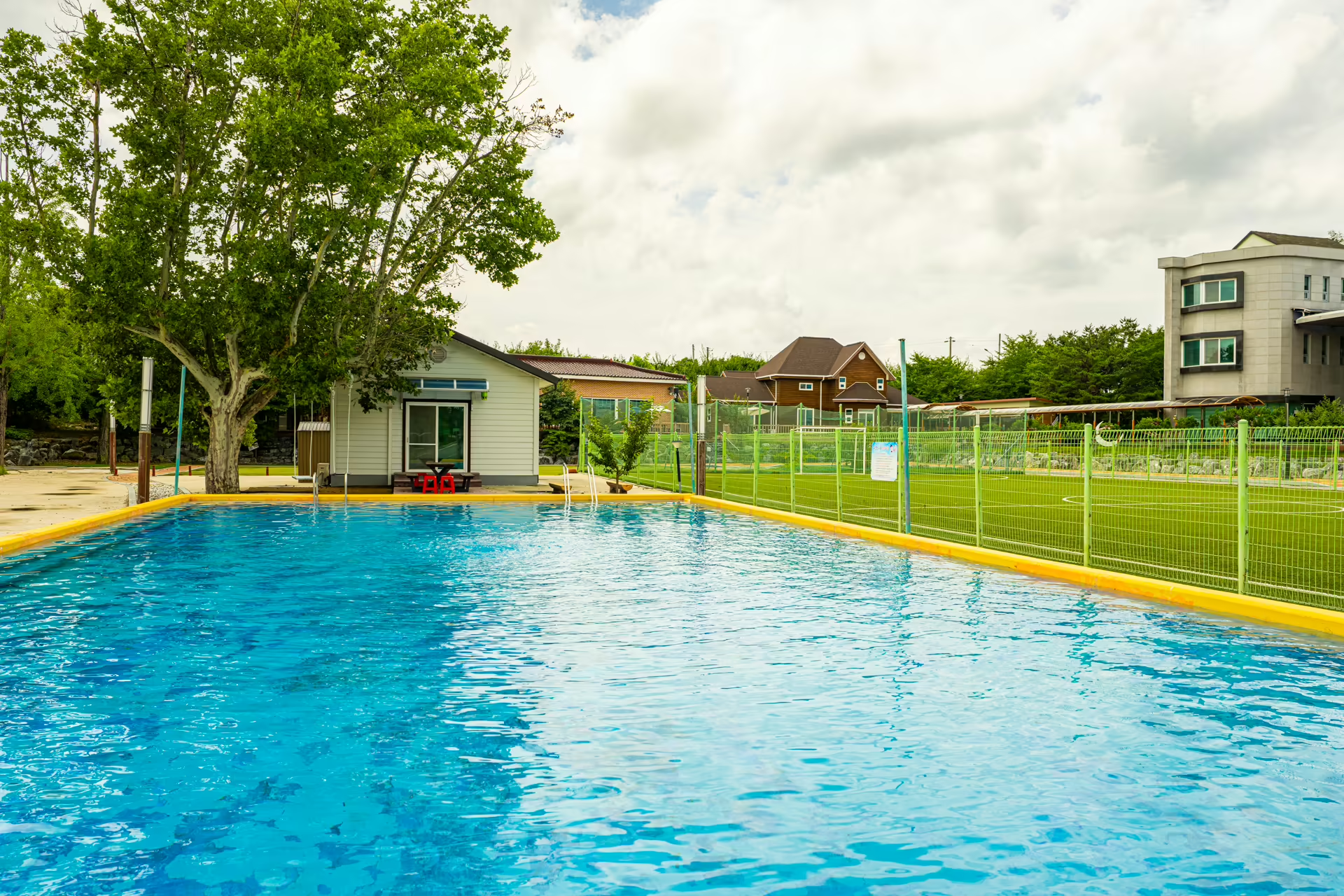
Stay the night. The pool — filled specifically on days when overnight guests are in, July and August — is for staying guests only, and evenings here are the point: a buffet dinner of seasonal village cooking at Jayeon Bapsang, the restaurant run by the village women’s association, then lying on the lawn where the flagpole used to stand, watching actual stars. Rooms spread across more than ten buildings, from four-person rooms at ₩90,000 on weekdays; July–August peak rates run higher, and school-vacation weekends book out early.
One honest caveat: booking is by phone, in Korean (054-862-8868). If you don’t speak Korean, this is the same barrier I described at the reservation-only Hongcheon forest cafe — ask your hotel concierge to call, or recruit a Korean-speaking friend. It’s worth the favor.
2. Bingye Valley: The Valley Where Ice Forms in August
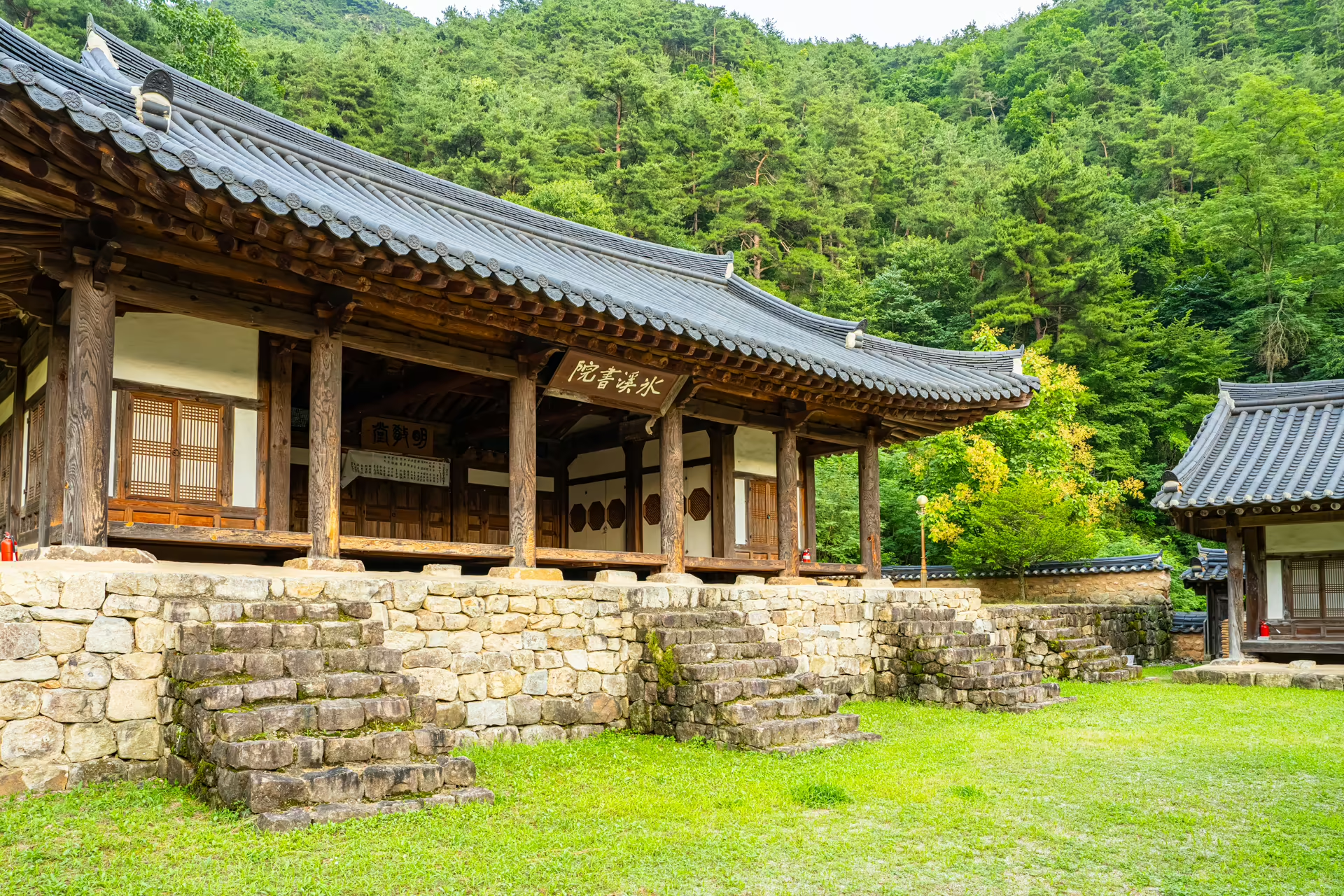
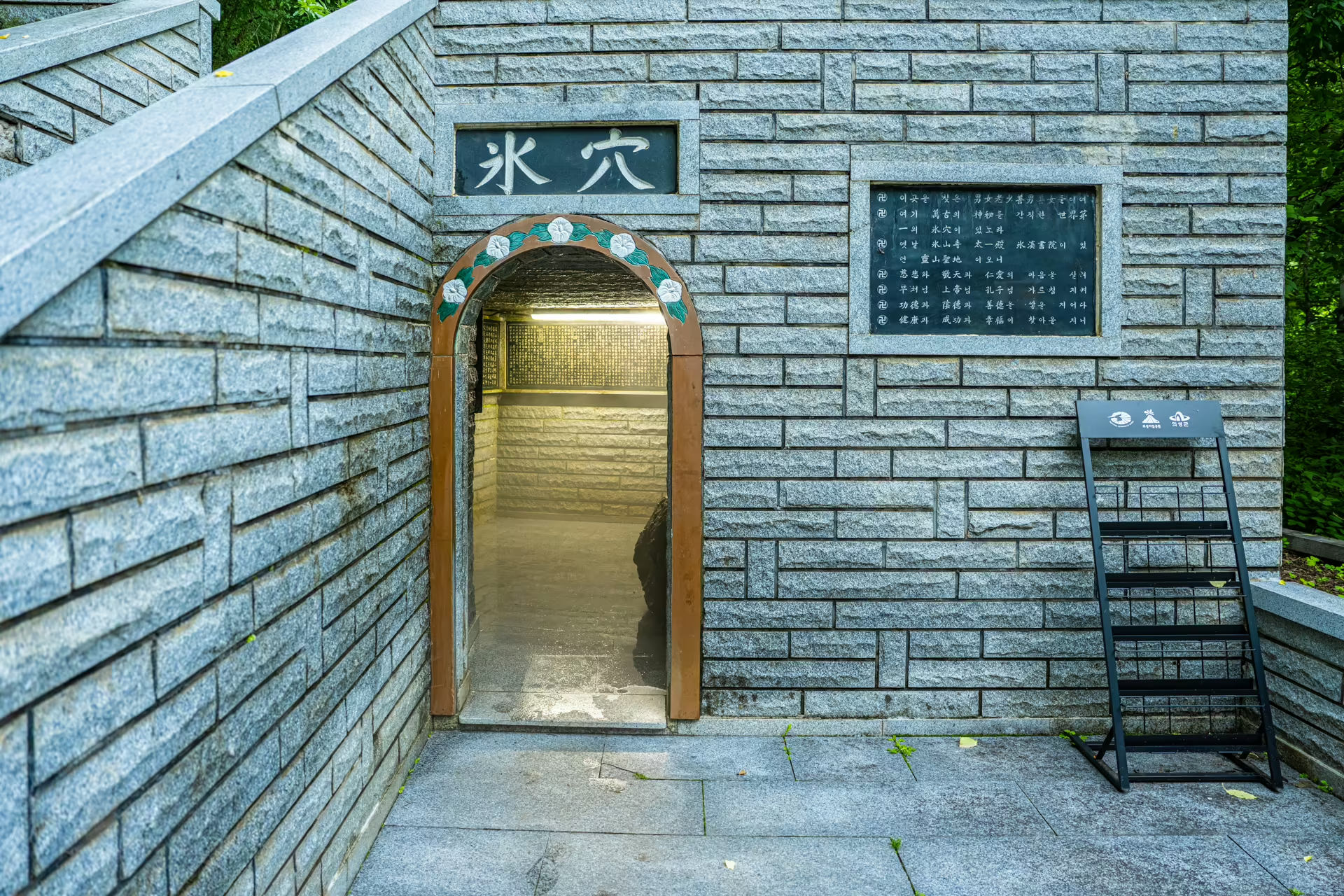
Bingye Valley, in Uiseong’s mountainous east, is the county’s natural wonder: a gorge whose name literally means “ice stream.” Climb the wooden steps behind the hamlet and you reach two openings in a rock slope — the binghyeol (ice hollow) and punghyeol (wind hollow). Stand in front of either and cold air pours over you, a full-body chill that no air conditioner reproduces. The air inside the ice hollow averages just below freezing year-round — more than 10°C colder than outside — and ice reportedly persists from early March to early October, billed as the longest stretch anywhere in Korea.
The paradox was famous enough to make a 15th-century royal geography, which recorded that the ice here forms in early summer and hardens as the heat peaks. The mechanism is a massive talus slope — a pile of broken rock that inhales winter cold and exhales it all summer. For a few decades after 1908 the hollows even served as cold storage for silkworm eggs. Korea has a knack for these micro-legends attached to specific rocks and gorges; this one you can feel on your skin.
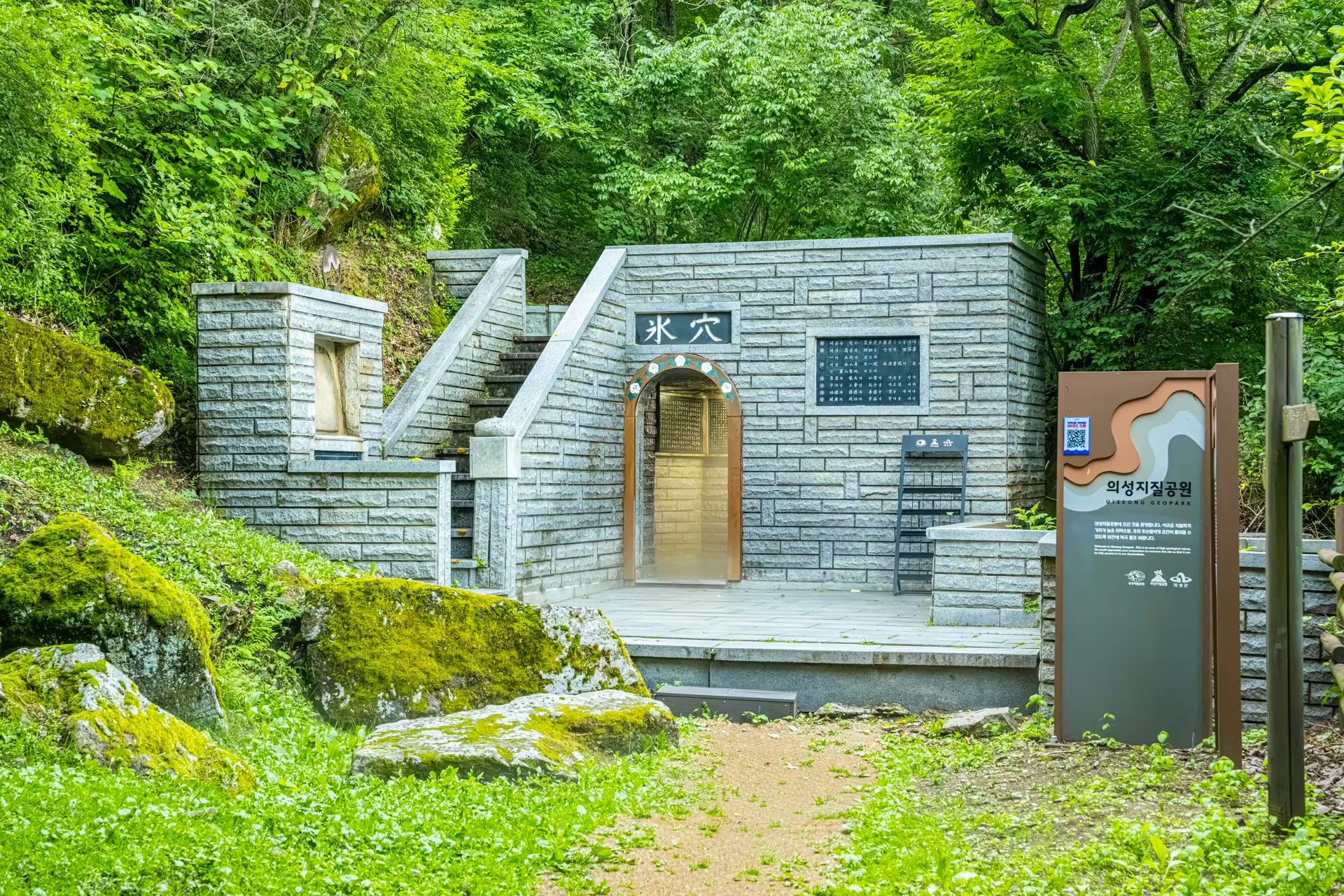
Give yourself an hour to wander: the valley claims eight classic scenic spots, and the standout is the Bingsansa temple site pagoda — a Treasure-designated five-story tower built of stone dressed to look like brick. A small Confucian academy, Bingye Seowon, guards the valley entrance. In July and August a swimming area opens along the stream and a campground with caravans operates, so families in no hurry could flip this itinerary and base here instead. Entry is free and the valley never closes. Seasonal openings for the swimming area and campground are announced through Uiseong County’s official site.
3. Gyeongcheonseom Island: A Flower Island in the Nakdong River
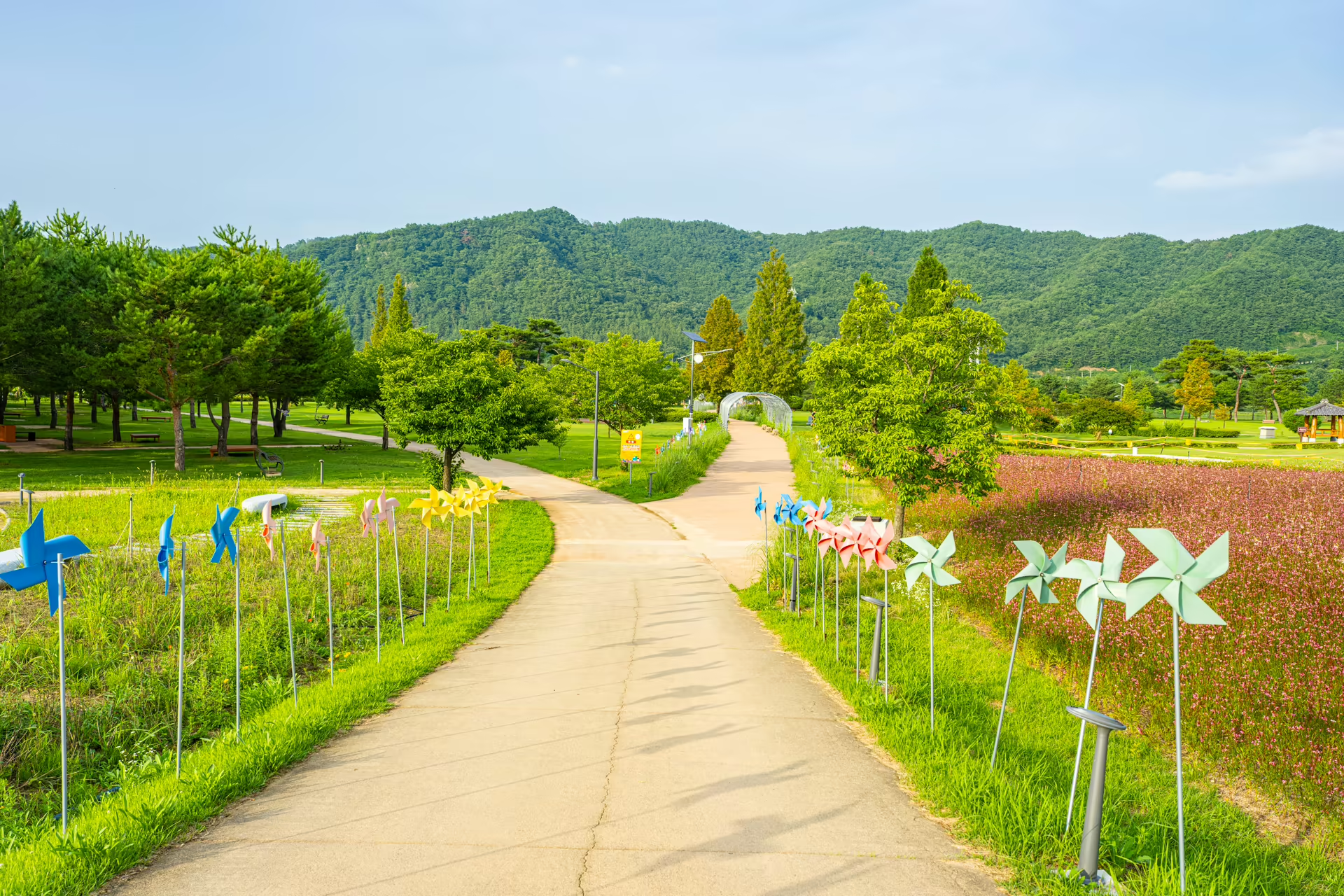
Day two starts forty minutes north in Sangju, where the Nakdong River widens above a weir and holds a genuine island in its middle. Gyeongcheonseom was once a sandbar that migrating birds favored — locals called it duck island — and it has since been landscaped into a roughly 200,000-square-meter park that changes wardrobe by season: canola in spring, cosmos and buckwheat in autumn, and in summer a hillside of mugunghwa (rose of Sharon, Korea’s national flower) lined with tall red cannas.
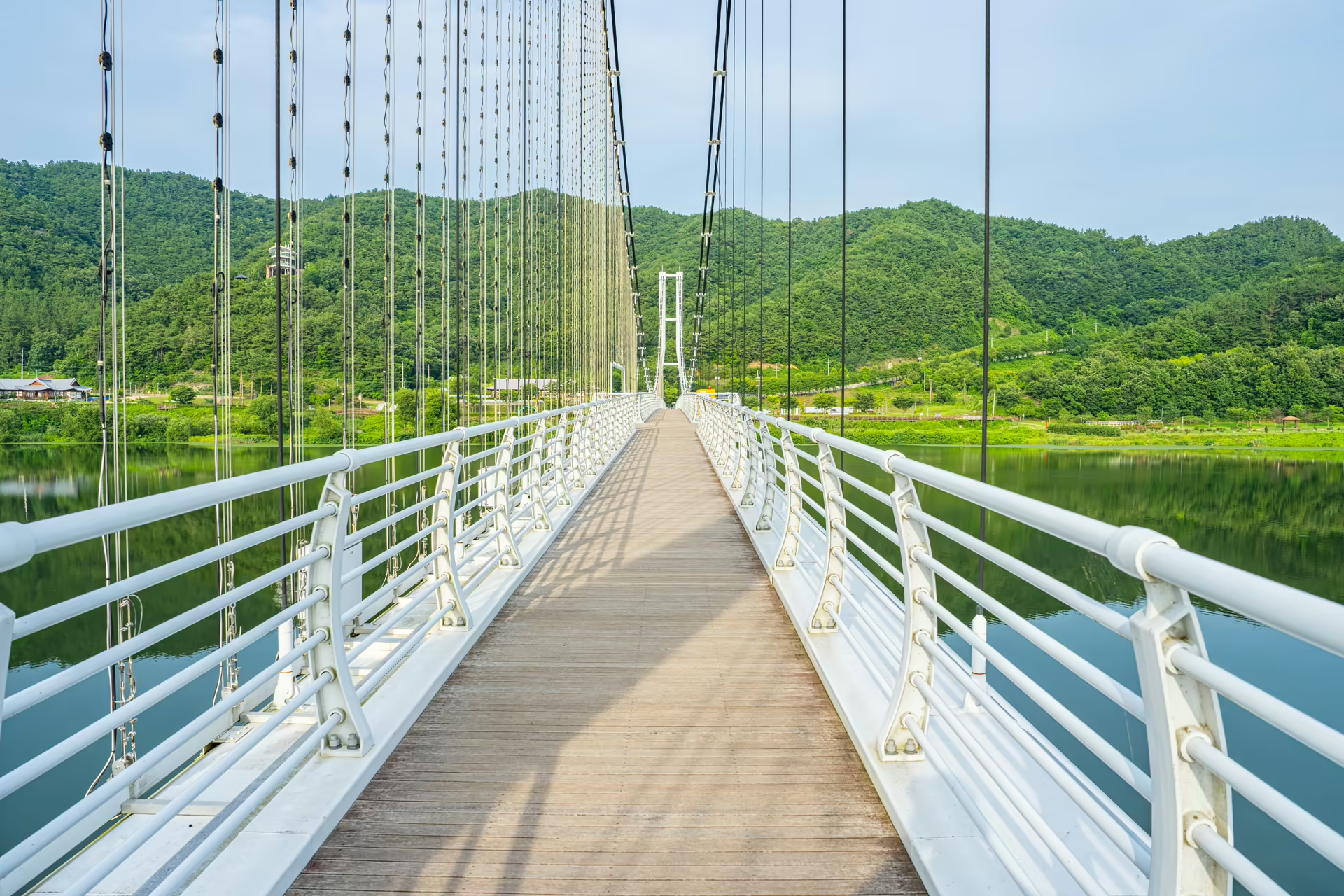
Two footbridges reach the island. I’d cross from the Donam side on Beomwolgyo — the bridge stages occasional musical fountain shows, and the river breeze on the open span is the closest thing to natural air conditioning this side of Bingye Valley. On the same bank stands Donam Seowon, a handsome Confucian academy, and a riverside auto campground if you’re traveling that way. The island is free, open around the clock, and an easy 60–90 minute stroll with kids.
4. Nakdonggang History Museum: The Free Indoor Finale
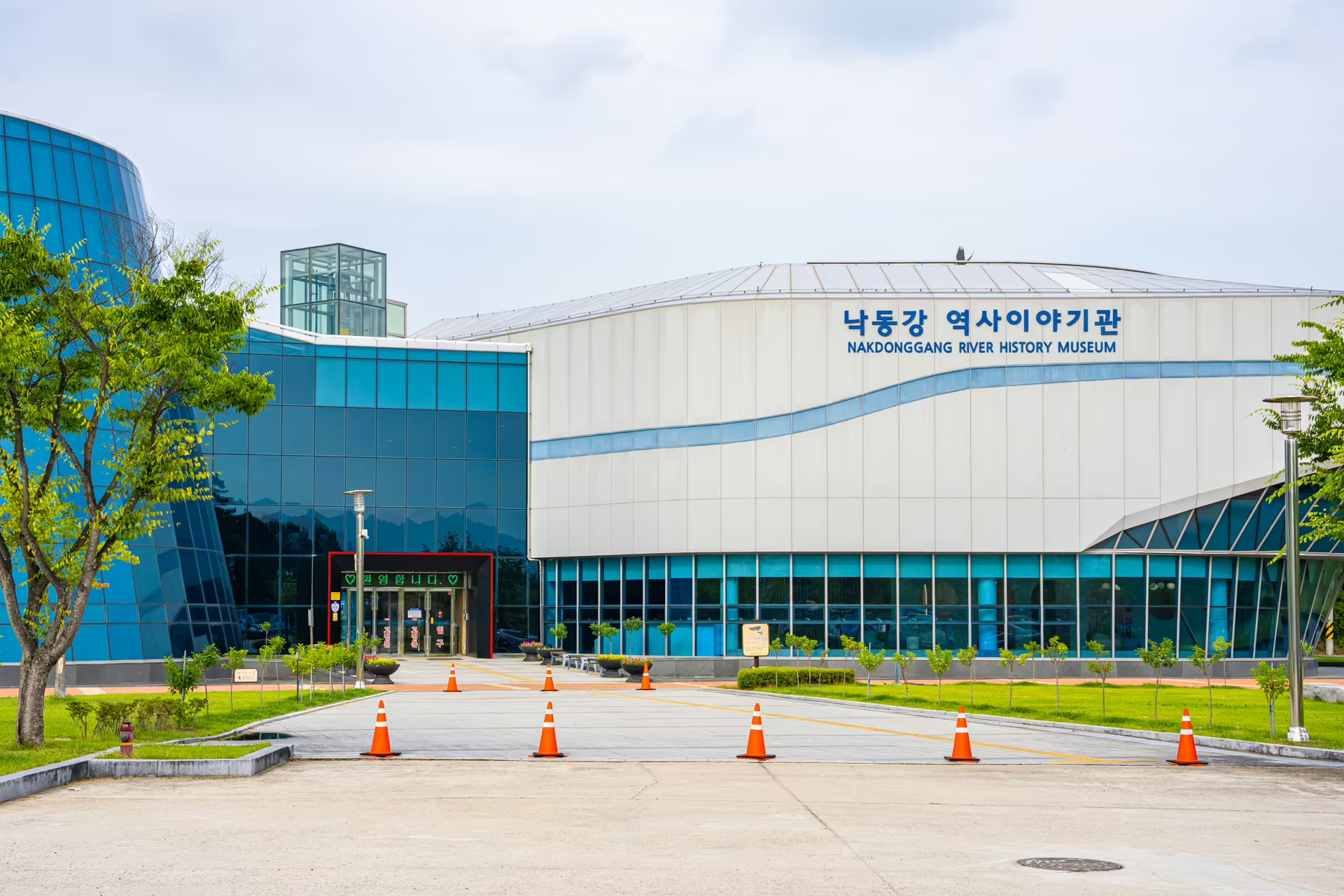
Here’s a piece of trivia even most Koreans miss: the Nakdong River — the 500-kilometer artery of southeastern Korea — is named after this exact spot. The name means “east of Sangnak,” Sangju’s old name, because it’s here that the mountain streams from Taebaek finally gather into something that deserves to be called a river. The riverbank below held Nakdong Naru, one of the busiest ferry crossings on the whole waterway, where Joseon-era scholars crossed on their way to the state examinations in Seoul, and where gentlemen threw moonlit poetry parties on boats — 51 of them made it into the written record between 1196 and 1862.
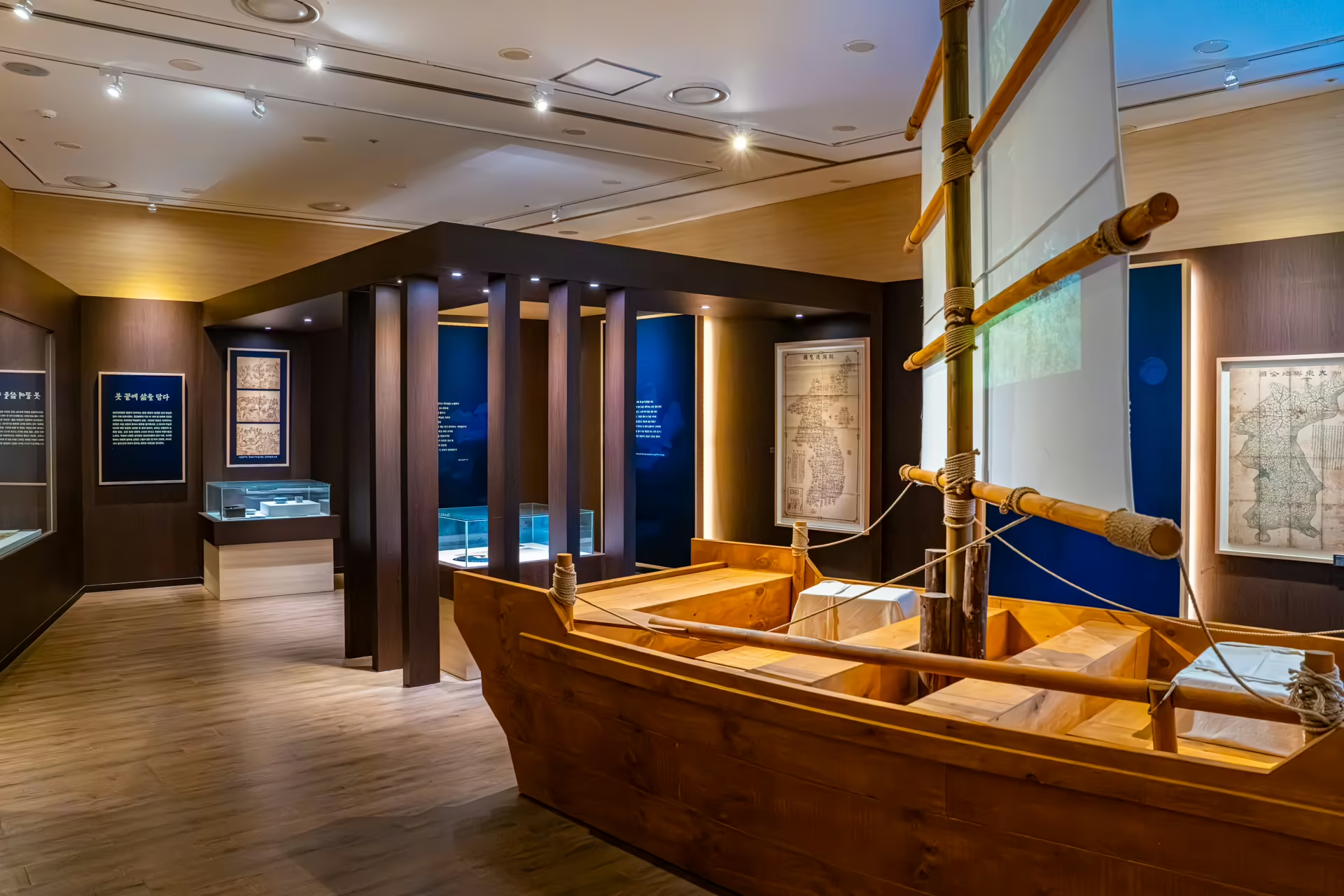
The museum that tells this story is free, and generously so: free parking, a 4D theater (screenings run on a fixed schedule, so check the timetable the moment you arrive), a children’s hall, and a rowing simulator where kids can pull the oars of a virtual ferry. This year the lobby was refitted as a camping-style lounge, joined by screen sports — soccer, archery, shooting, from ₩4,000 for three games — and a photo booth, which makes the museum a legitimately easy two-to-three-hour escape from the afternoon sun. Closed Mondays; open 09:30–17:00.
Who This Is Actually For
Families with kids roughly aged four to twelve — the jam class, the pool, and the museum’s play halls hit that window dead center. It also suits travelers who’ve done Seoul and Busan and want to see the rural Korea that Koreans themselves grew up in, converted schoolhouse and all. Skip it if you won’t drive in Korea, if you need hotel-grade bedding and English-speaking front desks, or if your idea of summer travel requires a beach. And in winter, swap the plum jam for the year-round black garlic class and check ahead — the pool and the flowers are strictly seasonal performers.
Here’s the image I’ll leave you with: a jar of blood-plum jam, still faintly warm, riding in the passenger-seat cupholder as you cross the Nakdong River bridge out of Sangju — a souvenir with a shelf life measured in months and a provenance you can describe down to the tree.
The Practical Manual
| Spot | Address | Hours / Season | Cost |
|---|---|---|---|
| Mangyeongchon Village 054-862-8868 |
182-10 Gudan-gil, Danmil-myeon, Uiseong-gun 경북 의성군 단밀면 구단길 182-10 |
Plum jam class Jul–early Sep; black garlic class year-round; pool Jul–Aug (overnight guests) | Jam ₩20,000–30,000 · Garlic ₩30,000–50,000 · Rooms from ₩90,000 (weekday) |
| Bingye Valley | 103 Binggyegyegok-gil, Chunsan-myeon, Uiseong-gun 경북 의성군 춘산면 빙계계곡길 103 |
Always open; swimming area & campground Jul–Aug | Free |
| Gyeongcheonseom Island 054-531-1996 |
968-1 Osang-ri, Jungdong-myeon, Sangju-si 경북 상주시 중동면 오상리 968-1 |
Always open | Free |
| Nakdonggang History Museum 054-532-6380 |
116 Nakdong 1-gil, Nakdong-myeon, Sangju-si 경북 상주시 낙동면 낙동1길 116 |
09:30–17:00 · Closed Mon (next weekday if Mon is a holiday), Jan 1, Lunar New Year & Chuseok | Free (screen sports from ₩4,000 · photo booth ₩2,000) |
Navigation Tip: Google Maps barely functions for driving directions in Korea. Download Naver Map, paste the Korean addresses above, and keep Papago handy for the phone-booking hurdle at Mangyeongchon. Both are free.