
Transparency Note: This manual contains affiliate links to Klook and Agoda. If you book through them, I earn a small commission at no extra cost to you. This keeps my EV charged and allows me to provide unfiltered, field-tested travel insights.
I had this Gangneung immersive art museum filed away as a rain contingency — the place you default to when the weather kills your outdoor plan and someone in the group needs a screen-lit consolation prize. That assumption lasted about four minutes past the entrance, which is roughly how long it took the Waterfall Infinite room to make me forget I was standing in a commercial building off a residential street in Chodang-dong.
The venue’s official name is Arte Museum Gangneung (아르떼뮤지엄 강릉), one of several branches across Korea. Gangneung sits roughly 2 hours east of Seoul by KTX to Gangneung Station, or about 2 hours 40 minutes by car via the Seoul–Yangyang Expressway. If you’re driving an EV — as I usually am — the route through Daegwallyeong is one of the more scenic expressway stretches in the country, though the elevation gain will shave about 12% off your range estimate, which matters more than you’d think on the return leg.
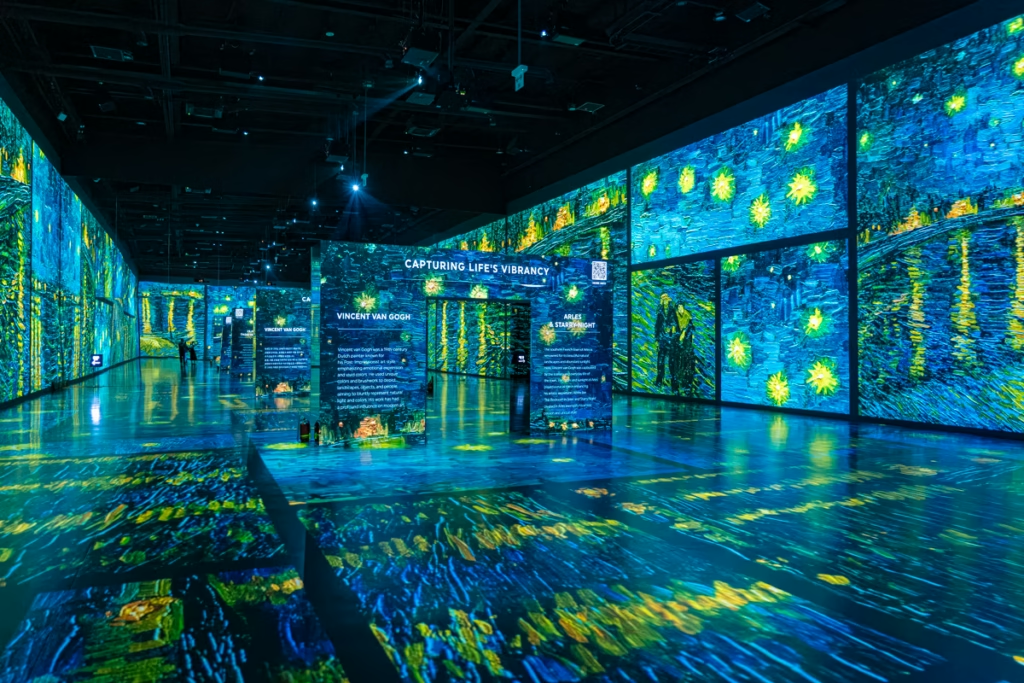
What separates this branch from the Arte Museum locations in Jeju, Yeosu, and Busan is the theme: Valley, drawn from Gangwon Province’s identity as the spine of the Baekdudaegan mountain range. The 13 exhibition spaces wrap that concept around cascading waterfalls, dense jungle projections, and a mirrored cave system that genuinely disorients. Through June 2026, a seasonal overlay — the Moon Rabbit special exhibition featuring a character called Dara — layers an additional narrative across the permanent installations.
Getting There: Gangneung Station to Chodang-dong
The museum address is 131 Nanseolheon-ro, Chodang-dong, Gangneung-si, Gangwon-do (강원특별자치도 강릉시 난설헌로 131). On Naver Maps, search 아르떼뮤지엄 강릉 — that’s the string that drops the pin correctly. Kakao Maps uses the same Korean name.
From Gangneung Station, the most reliable option is a taxi: ₩6,000–8,000, about 15 minutes depending on traffic. I noticed that the meter tends to run higher during weekend afternoons when Chodang-dong’s tofu village traffic backs up along the approach road — budget closer to ₩8,000 on Saturdays.
Bus 202-1 runs from both Gangneung Station and Gangneung Express Bus Terminal to the Heogyun-Heonanseolheon Memorial Park stop (허균·허난설헌기념공원), then it’s a 6-minute walk. The catch: the bus schedule is sparse enough that you’ll spend more time waiting than riding. I’d only recommend it if you’re already in the area and happen to see one approaching.
If you’re driving, the free parking lot has no gate or ticket system — just pull in. On weekdays, it’s generous. On weekends between 2:00 and 4:00 PM, expect it to be completely full. The overflow options are Heogyun-Heonanseolheon Memorial Park parking lot or the Gangneung Green City Experience Center (이젠) lot, both within a 5–10 minute walk.
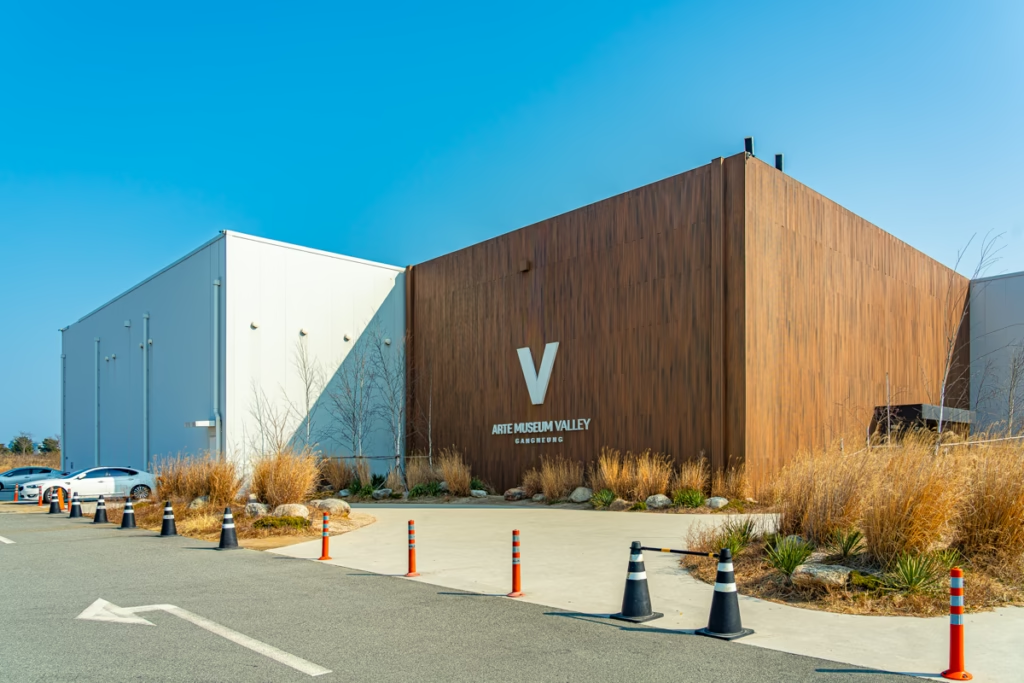
Tickets, Discounts, and the Package That Saves You a Trip to the Counter
Standard admission is ₩19,000 for adults, ₩15,000 for teenagers, and ₩12,000 for children. A reduced rate of ₩10,000 applies to younger children (born 2020–2022), seniors (born before 1962), people with disabilities, veterans, and active-duty conscripts. Infants under 36 months enter free, but you’ll need proof — a resident registration transcript or equivalent.
What caught me off guard was how aggressively the local discounts stack: Gangneung residents get 50% off, and Gangwon-do residents receive a ₩3,000 reduction. Groups of 20 or more save ₩2,000 per ticket. The friction here is real, though — all discounts require in-person purchase at the ticket counter with valid ID. Online pre-purchase locks you into full price with no discount applied and no refund path to the cheaper rate. If you qualify for any reduction, buy at the window.
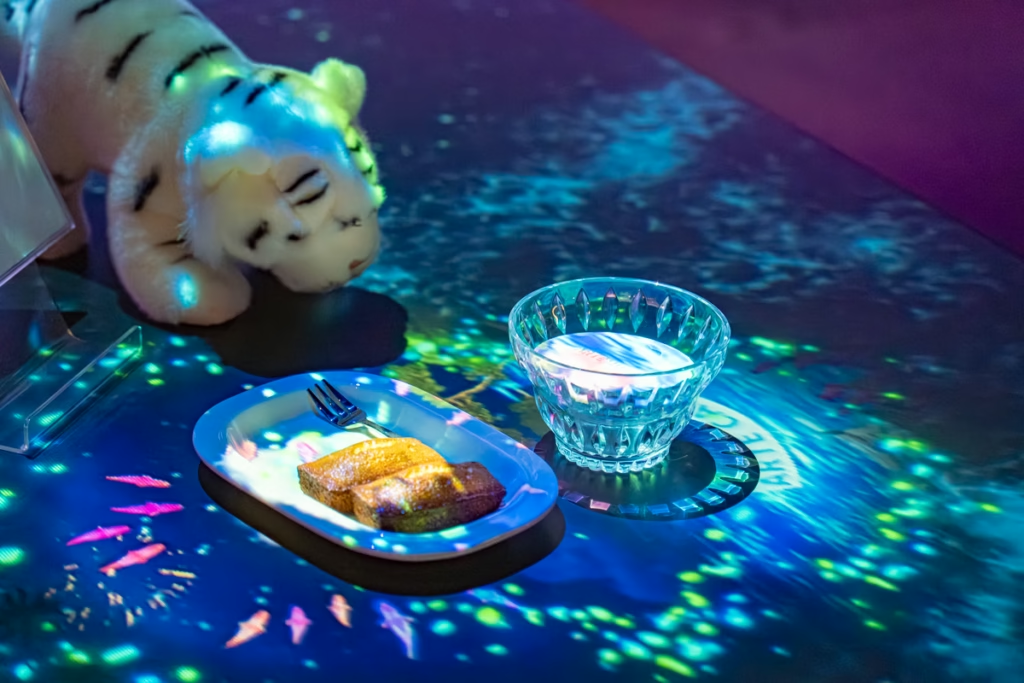
The Teabar Package bundles admission with a milk tea at the in-house Arte Cafe: ₩22,000 adult / ₩18,000 teen / ₩15,000 child / ₩13,000 reduced. It’s a marginal save over buying the drink separately, but the real value is skipping the cafe’s separate queue later. Three things to know: the package locks you into milk tea specifically (swap to another drink and you pay the difference at the counter), the cafe’s last entry is 19:30 so late arrivals may miss it entirely, and non-package holders in your group cannot enter the cafe with you.
If you don’t qualify for any local discount, buying online ahead of time removes the one friction point that does affect foreign visitors — the ticket counter queue on weekend afternoons, which I’ve seen stretch past 20 minutes during peak season. [Book Arte Museum Gangneung tickets on Klook →]
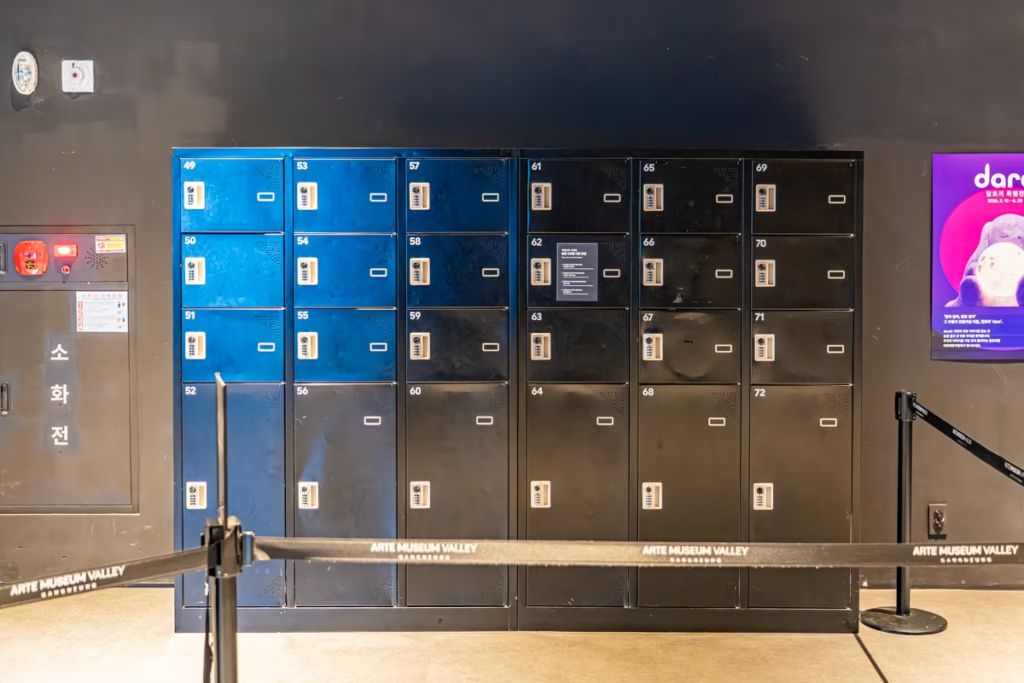
What the Valley Theme Actually Looks Like Inside
The thing no one mentions is how disorienting the first thirty seconds are. You step from a bright, modern lobby into near-total darkness, and your eyes need a full minute to adjust before the first installation — Flower — starts registering as anything more than moving color.
The current Flower rotation is Camellia (동백), and once your vision settles, it’s worth the wait. The room uses floor-to-ceiling mirrors to multiply a projected camellia bloom cycle into what feels like an infinite field. The scent in the room isn’t floral — it’s closer to warm cedar, which I assume is piped in — but the combination of that warmth with falling digital petals does something to the space that a flat screen never could.
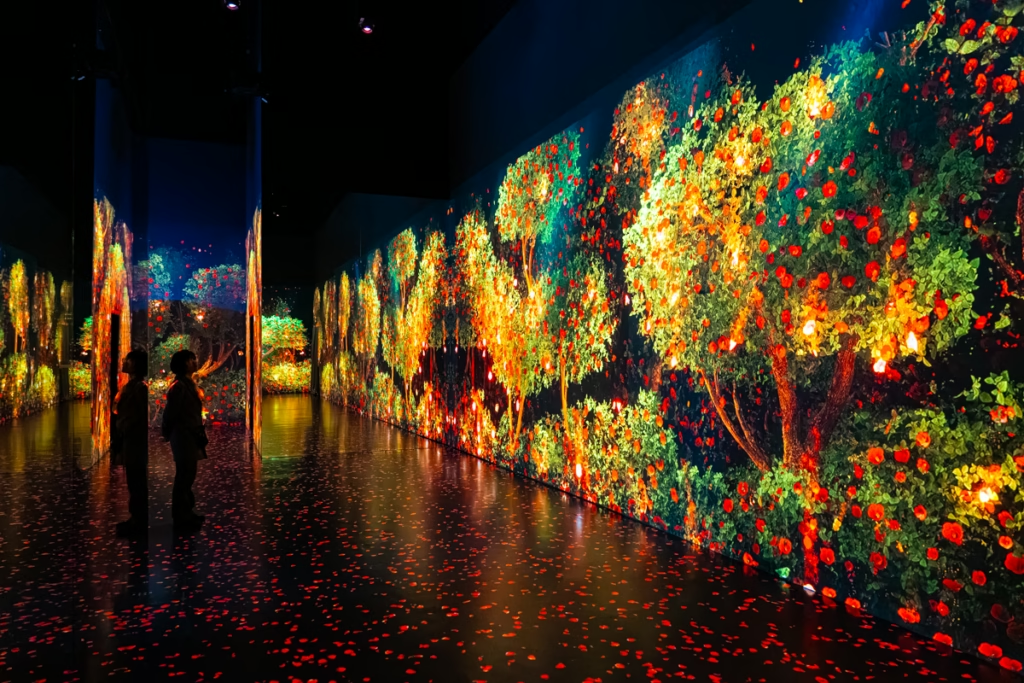
This Gangneung immersive art museum runs 13 exhibition spaces on a free-flow layout, meaning there’s no enforced route. Most visitors drift from the entrance toward Flower and then follow the crowd leftward. My first instinct was wrong — starting from the Garden end at the far back of the hall and working in reverse puts you ahead of the foot traffic in every room for the first 45 minutes.
Waterfall Infinite and the Mirror Floor Problem
This is the room that changed my opinion of the entire museum. The floor is mirrored, and the projected waterfalls pour from the walls and appear to cascade beneath your feet. The boundary between up and down genuinely dissolves. I’ve been here three times, and every time the vertigo catches me in the first ten seconds even though I know it’s coming.
Practical note: the mirrored floors in Waterfall, Star, and Cave mean no strollers or wheelchairs in those three zones. If you’re wearing a skirt, the entrance staff will offer a wrap skirt — take it, because the mirror angles are exactly what you’d expect. Loaner strollers and wheelchairs are available for the remaining non-mirror sections.
Wave Circle and Thunder
Wave Circle wraps you in a surround projection of cresting ocean waves — the scale feels threatening in a way that photographs completely fail to capture, because the ceiling projection removes your sense of spatial boundary. Thunder, next door, pairs a storm simulation with low-frequency bass that you feel in your chest. I’d skip Thunder if you’re sensitive to sudden loud sounds or bring a young child who startles easily — there’s no volume warning before it hits.
Jungle Glow, Star, and Live Sketchbook
Jungle Glow fills a room with bioluminescent tropical projections that shift color in response to movement. Star uses mirrors and pinpoint light to create a corridor that feels about ten times deeper than it actually is — vertigo risk here too. Live Sketchbook is the interactive room where you draw on provided tablets and watch your creation get pulled into the projected media art scene on the wall. If you’re traveling with kids, plan to lose 20–30 minutes here; they won’t leave willingly.
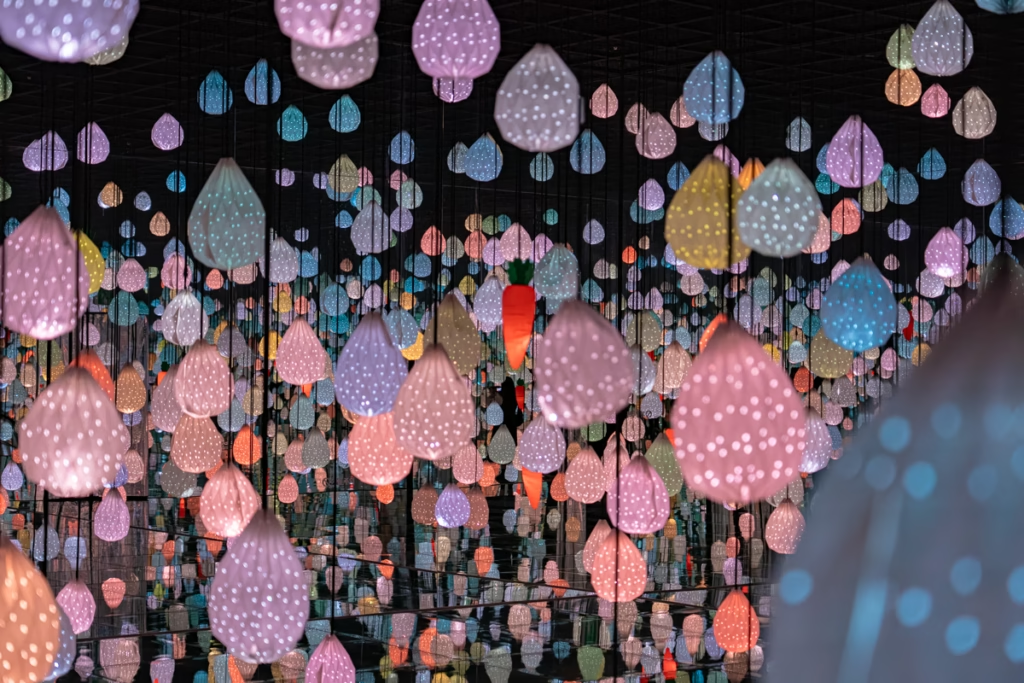
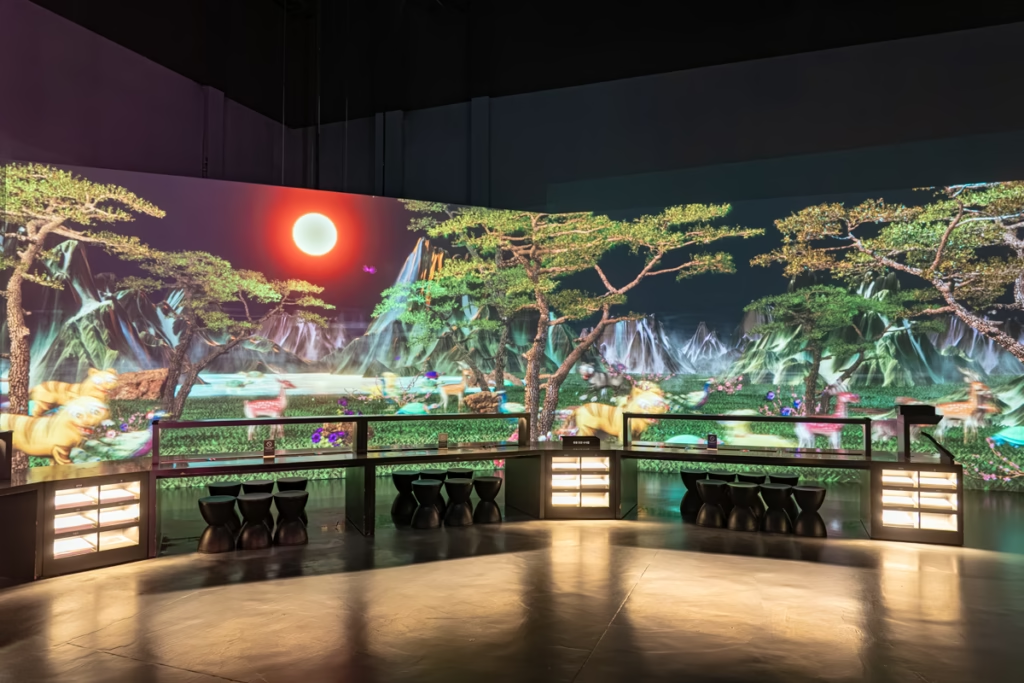
Garden: Where the Loop Ends
The final space, Garden, runs a looping media art show on all surfaces. The exit is tucked into the far corner of this room, diagonally opposite the entrance — so the natural flow of wandering through the show dumps you right at the door. I’d suggest sitting on the floor here for a full cycle of the projection loop before leaving. It runs about 8 minutes, and the transition sequences between scenes are the most visually complex work in the building.
Dara and the Moon Rabbit: The Seasonal Exhibition Running Through June 2026
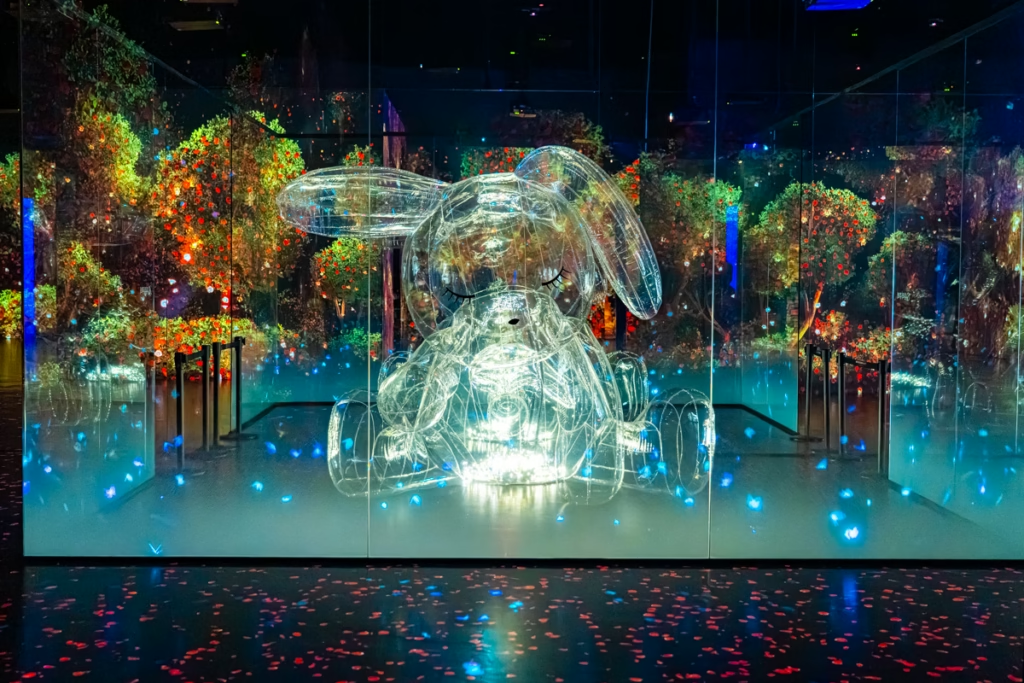
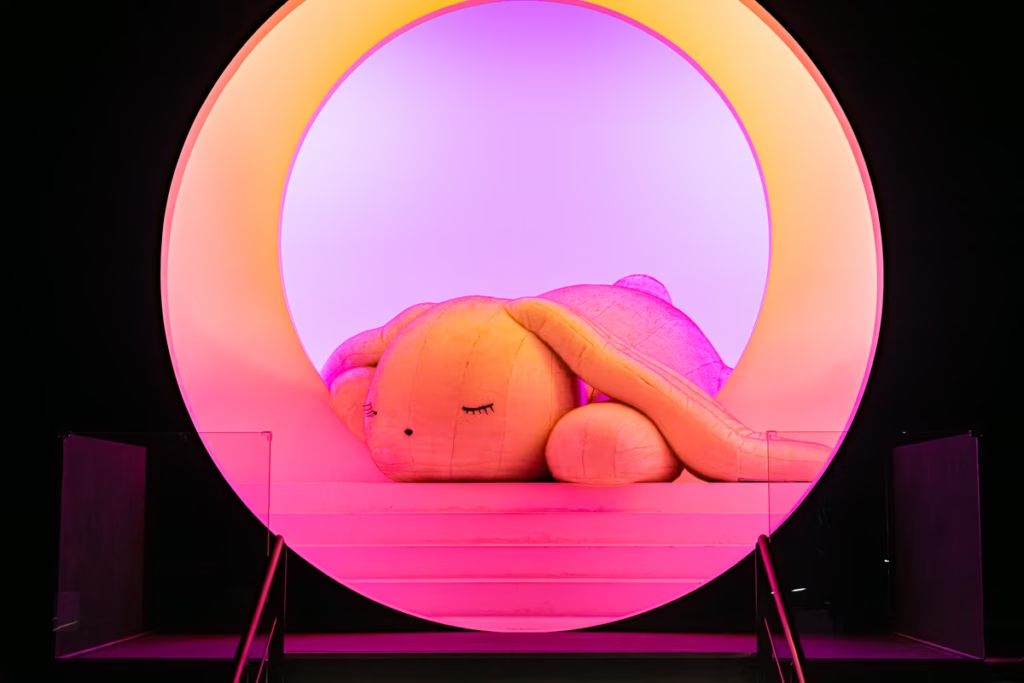
From February 13, 2026, all Arte Museum branches are running a Moon Rabbit special exhibition layered on top of the permanent installations. The character is Dara (다라) — named after the Korean lullaby line “달아 달아, 밝은 달아” (Moon, moon, bright moon). The backstory: Dara keeps its eyes closed to listen to nature’s stories, and its ears grew long from leaning in to hear human wishes. It’s a gentler mythology than you’d expect from a commercial IP, and the design leans more toward folk illustration than cartoon merchandise.
Inside the museum, Dara appears as large-scale sculptural installations positioned throughout the existing spaces, plus digital overlays woven into the permanent projection sequences. There’s a dedicated Dara room adjacent to Jungle Glow that concentrates the narrative into a single focused experience.
What the photos don’t show is how well the Moon Rabbit theme maps onto Gangneung specifically. The city has a centuries-old tradition called Gyeongpo’s Five Moons (경포 5달) — seeing the moon reflected simultaneously in the sky, the sea, the lake, a wine cup, and a lover’s eyes. Encountering a moon-themed character in a city that has built its identity around lunar reflections feels less like branding and more like someone actually thought about where they were putting it.
The exhibition runs through June 2026. No additional ticket cost — it’s included in standard admission.
Timing Your Visit: When the Rooms Are Actually Empty
The museum is open daily 10:00–20:00, last entry at 19:00, year-round with no closures. Average visit time is 1.5 to 2 hours for the exhibitions alone, or 2 to 2.5 hours if you include the Arte Cafe.
If you want the rooms to yourself — or close to it — the windows are weekday mornings right at 10:00 AM opening and weekday afternoons after 4:00 PM. Weekend and holiday crowds peak hard between 2:00 and 4:00 PM, and specific rooms (Waterfall Infinite, Wave Circle) develop genuine bottlenecks where you’re standing shoulder-to-shoulder waiting for people to finish their selfie rotation.
The free-flow layout is your weapon here. Since most visitors start at Flower near the entrance and drift sequentially, entering and immediately heading to Garden or Wave Circle at the far end gives you 30–45 minutes of relative emptiness before the crowd wave reaches you.
I’d skip the weekend entirely if your schedule allows it. The density changes the experience fundamentally — the rooms are designed to feel vast and solitary, and that illusion collapses with 40 people in it.
Before You Walk In: The Practical Checklist
There are no restrooms inside the exhibition halls. Use the facilities outside the ticket counter before entering, because re-entry is not allowed once you exit. A nursing room is available next to the restrooms.
Leave your heavy coat in the car if you’re visiting in winter. The exhibition space is a sealed dark room environment and heats up quickly with body traffic — especially during weekend peak hours when the lockers are full. I walked in wearing a padded jacket on my first visit and spent the first 20 minutes looking for somewhere to put it down, which is a terrible way to experience a room designed for immersion.
Bring a portable battery charger. You’ll shoot more photos here than you expect — dark environments with bright projections burn through phone batteries at roughly double the normal rate. Pets are not allowed (guide dogs excepted), and no food or drinks can be brought inside.
One thing that genuinely surprised me: how effective this Gangneung immersive art museum is as a rainy day fallback. The entire experience is indoors, the parking is covered enough to manage a dash, and it pairs seamlessly with a meal at the nearby tofu village — an afternoon that never requires an umbrella once you’re out of the car.
Building a Half-Day: Chodang-dong Tofu Village and Gyeongpo
The museum sits in Chodang-dong, and the neighborhood’s identity — outside of the exhibition halls — is Chodang Sundubu (초당순두부), a soft tofu made with seawater brine that’s been a Gangneung signature for generations. The tofu village is a 10–15 minute walk from the museum, with a dense cluster of restaurants along a single street.
The popular spots — Donghwa Garden (동화가든) and Toenmaru (툇마루) — pull waits of 1 to 2 hours on weekends. The workaround is simple and saves the entire afternoon: download CatchTable (캐치테이블) or a similar remote queuing app before entering the museum, register your spot in line, then walk the exhibition while your number climbs. By the time you exit, you’re usually within 15 minutes of being seated.
If you want the tofu without the wait, visit on a weekday or target less-known restaurants further down the same street — the quality gap is smaller than the wait-time gap suggests, and the ₩9,000 sundubu-jjigae set at any of them will be the best tofu meal you’ve had in Korea.
Gyeongpo Lake (경포호) is a short drive north and connects naturally if you’re building a longer afternoon. The lakeside walk is flat, well-paved, and excellent in the late afternoon light. For anyone assembling a broader Korean travel route, the coastal stretches south of here — places like Geoje’s offshore island gardens — offer a completely different palette, while the winter trails winding up to Seoul’s skyline show what the capital looks like from above the noise.
Every guesthouse within walking distance of Gyeongpo fills up during peak season weekends — summer beach crowds and autumn foliage visitors create the same booking pressure. If your visit falls on a weekend between June and November, reserving at least three weeks ahead is realistic. [Search available rooms near Gangneung Gyeongpo →] (Agoda link, rel="sponsored nofollow")
EV Charging Note for Electric Vehicle Drivers
The museum’s own parking lot has no EV chargers. The nearest public charger is at the Heogyun-Heonanseolheon Memorial Park lot, which has a Ministry of Environment station. On weekdays it’s usually available. On weekends, expect ICE vehicles occupying the charging bays or the charger itself to be out of service — both happened to me on separate visits.
My workaround: charge at one of the Gangneung downtown fast chargers (there’s a reliable 100kW station near the KTX station area) before driving to Chodang-dong, and plan to arrive with enough range for the return leg. The museum visit plus tofu lunch is about a 3-hour window — not long enough for a slow charge to matter, so front-loading the charge eliminates the variable entirely.
Practical Manual
| Category | Details |
|---|---|
| Exact Address | 131 Nanseolheon-ro, Chodang-dong, Gangneung-si, Gangwon-do (강원특별자치도 강릉시 난설헌로 131) |
| Naver / Kakao Map | 아르떼뮤지엄 강릉 |
| Best Time to Visit | Weekday mornings (10:00 AM opening) or weekday afternoons after 4:00 PM; avoid weekends 2–4 PM |
| Transportation | Taxi from Gangneung Station ₩6,000–8,000 (15 min); Bus 202-1 to 허균·허난설헌기념공원 (sparse schedule); free parking on site |
| Estimated Cost | Adult ₩19,000 / Teen ₩15,000 / Child ₩12,000; Teabar Package adds ₩3,000 for cafe milk tea |
| Recommended Stay | 1.5–2 hours (exhibition only); 2–2.5 hours with cafe; 3–4 hours with Chodang-dong tofu lunch |
| Contact | 1899-5008 (main) / 033-652-1234 (on-site) |
| Official Site | kr.artemuseum.com/GANGNEUNG |