
Table of Contents
Inside the “inland island” distillery where organic wheat becomes award-winning Jinmaek soju—and why the journey getting there is half the experience
Transparency Note: This guide contains affiliate links. If you make a purchase, I may earn a commission at no extra cost to you—allowing me to keep providing expert, gear-tested travel insights.
Why Menge Village Andong Deserves a Place on Your Korea Itinerary
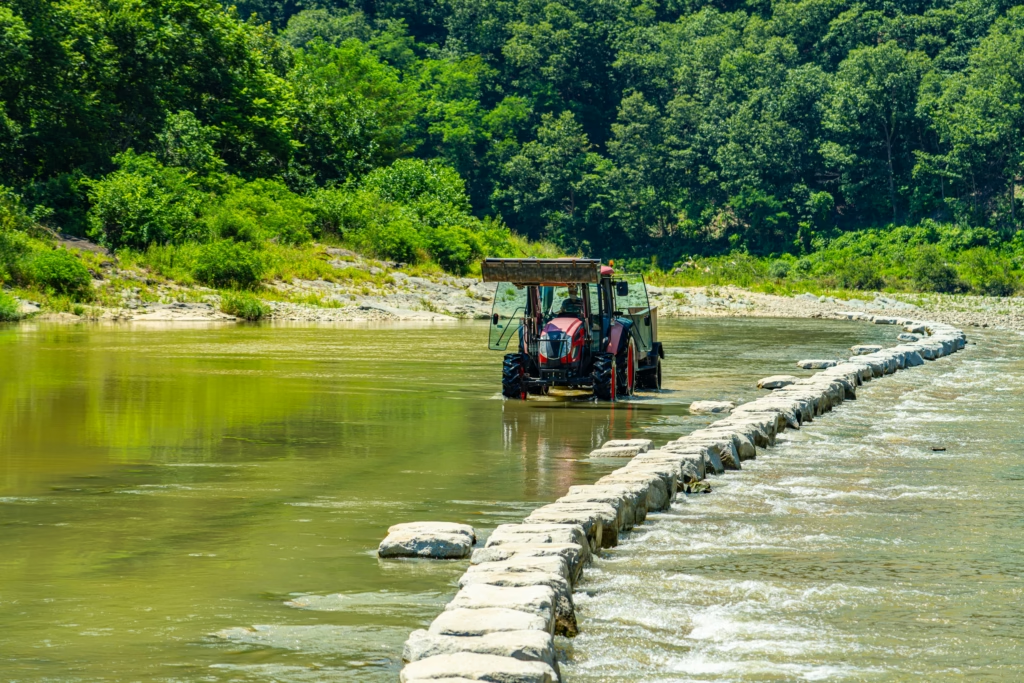
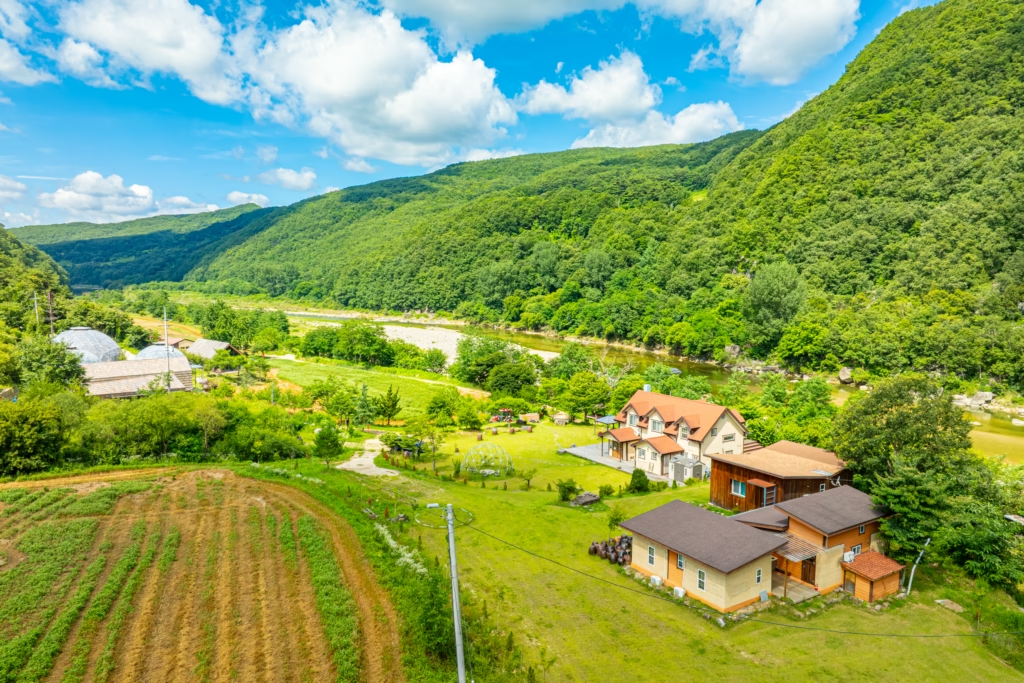
There is no bridge. No paved road crossing. To reach Menge Village in Andong, you board a large-wheeled tractor and drive straight through the Nakdong River. In a country where high-speed trains connect cities in under two hours, this level of inaccessibility feels almost theatrical—but it is entirely real. Menge Village Andong sits at the end of a deep valley along the Baekdudaegan mountain range, flanked by the Nakdong River on one side and the peaks surrounding Cheongnyangsan Mountain on the other. The result is a settlement that functions as a landlocked island, cut off from the outside world by geography rather than the sea.
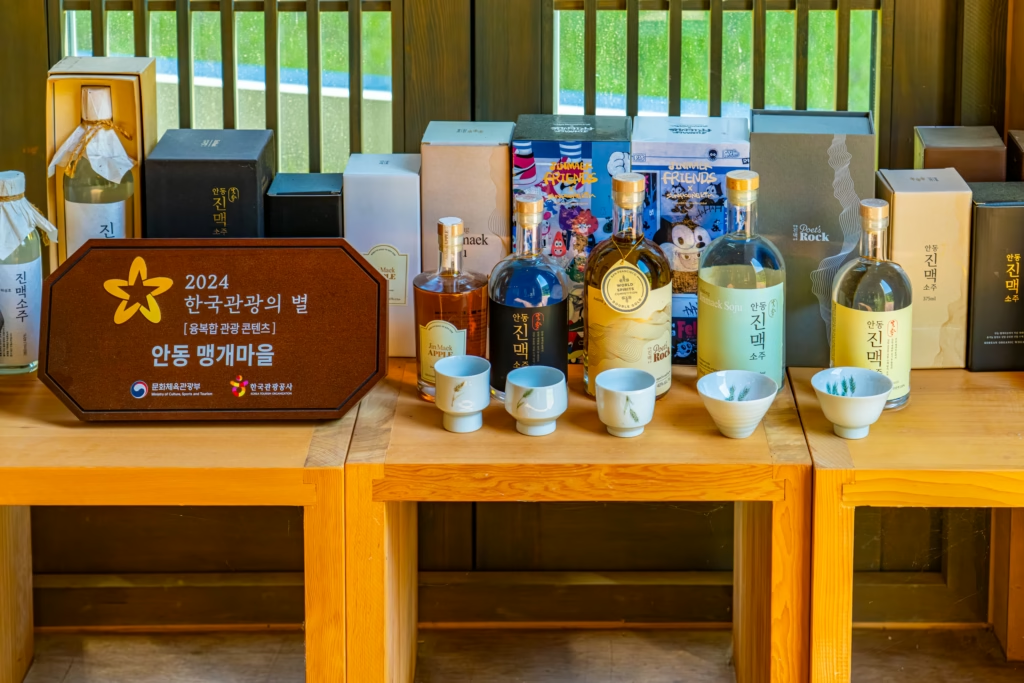
This isolation once nearly killed the village. By the early 1980s, only four or five households remained, and even they eventually left due to inadequate infrastructure. The land sat abandoned for roughly two decades until a couple—Kim Seonyeong and Park Sungho—relocated here around 2007 to farm wheat and buckwheat on the 25-acre estate. Their decision to turn organic wheat into traditional soju would transform Menge Village Andong from a forgotten hamlet into one of Korea’s most celebrated craft distillery destinations, earning the “Star of Korean Tourism” designation from the Ministry of Culture in 2024.
The Jinmaek Soju Story: From Forgotten Recipe to International Awards
The soju produced at Menge Village Andong is not the diluted, mass-produced variety found in green bottles at convenience stores. Andong Jinmaek Soju is a traditionally distilled wheat soju, and it carries a lineage that reaches back to the early Joseon Dynasty. The recipe originates from Suunjapbang (수운잡방), a culinary text written by the scholar Kim Yu in the 1540s—one of Korea’s earliest cookbooks, which documented wheat soju brewing methods used by aristocratic families in the Andong region.
Park Sungho, who holds a master’s degree in information technology from the Free University of Berlin and previously ran successful tech ventures, spent nearly eight years researching and restoring this recipe after arriving at Menge Village. The wheat is grown organically on the estate itself, harvested by hand, and fermented using traditional nuruk yeast before undergoing distillation. Production began in 2016, with the first bottles of Jinmaek soju reaching the market in 2019.
The recognition came swiftly. Jinmaek 53—the flagship 53% ABV expression—earned Double Gold at the San Francisco World Spirits Competition in 2021 and 2022. Jinmaek 40, the more approachable 40% ABV version, followed with its own SFWSC Double Gold medals in 2024 and 2025. The oak-aged expression, “Poet’s Rock,” also collected Double Gold at SFWSC 2022. Jinmaek soju is now exported to New York, San Francisco, London, Hong Kong, and Singapore, appearing on the menus of Michelin-starred restaurants including Joo Ok in New York and Sollip in London.
For context on how Andong’s Confucian scholarly heritage shaped everything from governance to gastronomy, our Gyeongsangbuk-do Independence Movement Memorial Hall guide traces the intellectual traditions that originated in this region. For a deeper look into how Korea’s regional resistance movements shaped its modern identity, see our guide on the Hwaseong Independence Movement Memorial.
The Distillery Tour: What to Expect at Menge Village Andong
Crossing the River by Tractor
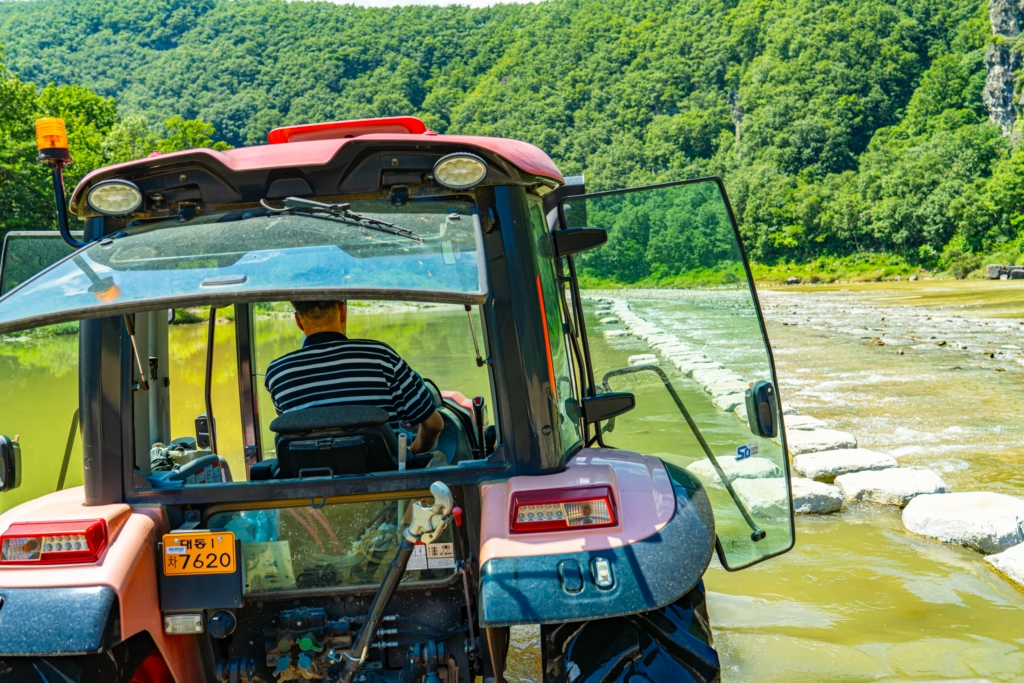
The Menge Village Andong distillery tour begins at a designated meeting point where a tractor arrives to collect visitors. The river crossing itself takes only minutes—the water is not deep—but the sensation of bouncing through river current on oversized tractor wheels, water splashing against the chassis, is genuinely unlike any distillery arrival you have experienced. It sets the tone immediately: this is not a polished corporate visitor center.
Estate Tour and History
Once across, the tour covers the village grounds and provides context for the landscape. Guides explain the connection between Menge Village and the Joseon-era philosopher Yi Hwang (Toegye), who frequently traveled this stretch of the Nakdong River between his academy, Dosan Seowon, and Cheongnyangsan Mountain. Yi Hwang wrote of this scenery: the rounded peaks, the murmuring water, the feeling of stepping into a painting. A hiking trail called the “Toegye Yedeon-gil” now traces the route he walked along the riverbank.
The tour then moves to the agricultural side—the wheat fields, the buckwheat plots that bloom white in September, and the cave-carved aging cellar tunneled into the mountainside, where soju matures in both traditional clay jars and imported American bourbon casks for up to three years.
Soju Tasting Session at the Menge Village Andong Distillery
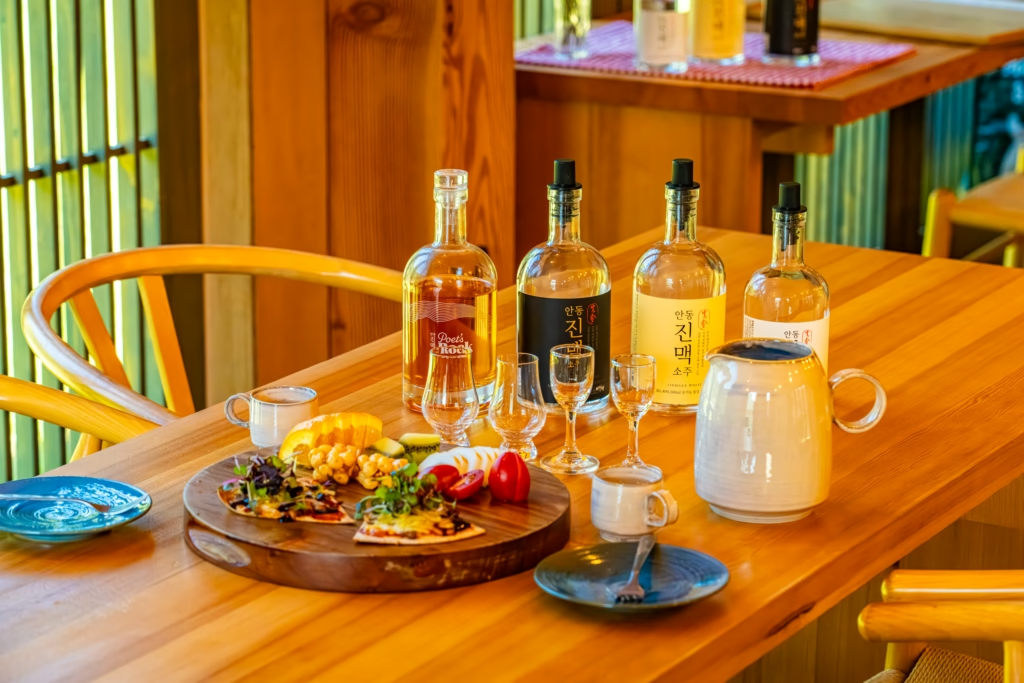
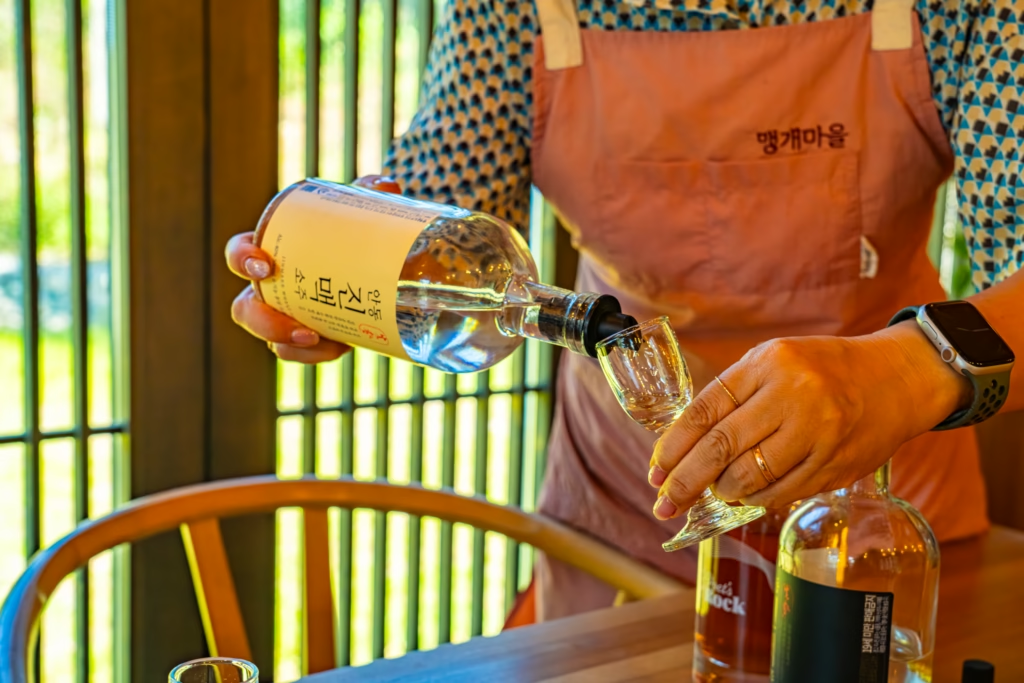
The tasting session is the tour’s centerpiece. Participants sample three to four expressions of Jinmaek soju, progressing through different proof levels. The clear, unaged versions—at 40% and 53% ABV—reveal surprisingly distinct character from the same wheat base. The 40-degree Jinmaek is the most commercially popular, with a clean, approachable profile. The 53-degree expression, the competition darling, carries more intensity with pronounced grain notes.
The oak-aged “Poet’s Rock” introduces an entirely different dimension. Aged in American bourbon barrels, it takes on amber color, vanilla undertones, and a smoothness that surprises visitors expecting the sharp burn of high-proof spirits. Discovering that the same organic wheat and traditional method can produce such varied flavor profiles tends to convert even casual drinkers into traditional soju enthusiasts.
Staying Overnight: The Menge Village Andong Farmstay Experience
Menge Village Andong operates a small number of lodges within the estate for overnight guests—deliberately limited to preserve the silence that defines this place. The inaccessibility that nearly destroyed the village has been reengineered into its greatest hospitality asset: a stay that no one can casually drop by to interrupt.
The soundscape after dark consists entirely of flowing water and birdsong. On clear nights, the absence of light pollution delivers a stargazing experience that requires zero effort—just step outside and look up. While the N Seoul Tower winter hike offers the best urban night views, Menge Village provides an unfiltered celestial experience. The valley’s enclosure by mountains blocks ambient light from surrounding areas, creating conditions that urban and suburban accommodations simply cannot replicate.
The Dinner Course: Regional Korean Cuisine Paired with Jinmaek Soju
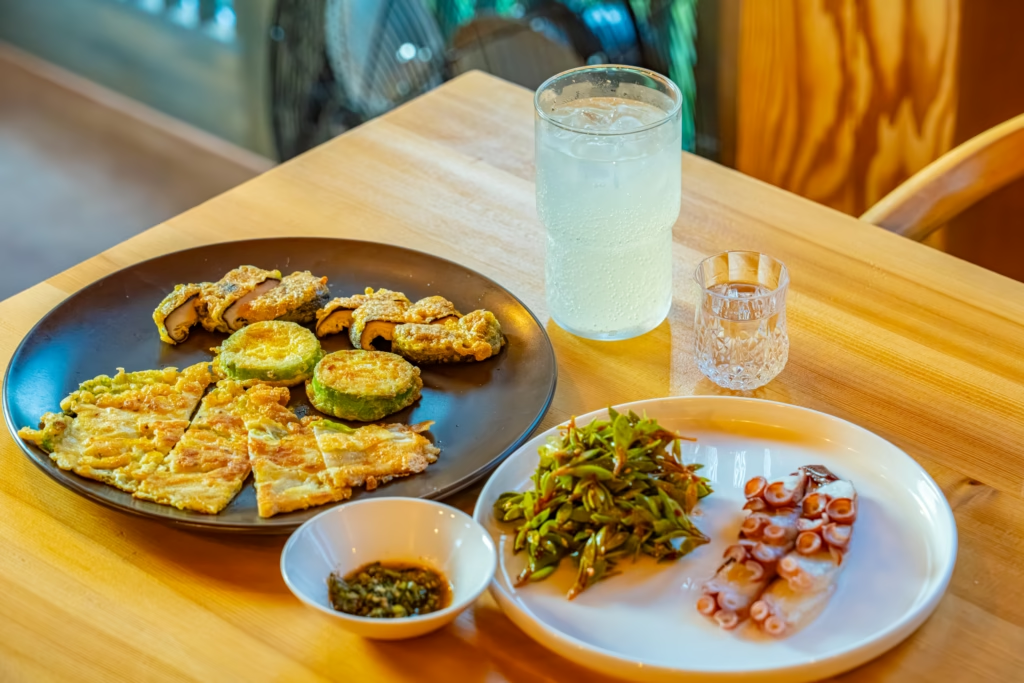
Overnight guests at Menge Village Andong can purchase a separate dinner service, presented as a multi-course Korean meal paired with Jinmaek soju. The menu draws from ingredients grown at Menge Village or sourced from surrounding farms. Expect namul banchan (seasoned vegetable side dishes), jangajji (fermented pickled vegetables), buckwheat muk (a jelly made from the village’s own buckwheat harvest), and foraged ingredients including shiitake mushrooms and stonecrop (돌나물) gathered within the estate.
The main courses reflect Andong’s culinary identity: Andong-style braised chicken (jjimdak), salt-cured mackerel (gan-godeungeo), and pork barbecue. The progression from delicate vegetable preparations to robust proteins, accompanied by soju at varying proof levels, creates a thoughtful pairing structure that highlights how traditional Korean drinking culture integrates food and spirits as a unified experience.
For another distinctive Korean culinary philosophy in a remote setting, our Dujingak Vegan Temple Food guide explores plant-based Buddhist cuisine near Haeinsa Temple—a compelling contrast to Menge Village’s grain-to-glass approach. This artisanal dedication to local ingredients mirrors the philosophy found in other regional gems like Cafe Yujabat in Geoje.
Photography Tips for Menge Village Andong
The Menge Village estate offers several strong compositions across different times of day.
The tractor river crossing is best captured from slightly downstream, where the Baekdudaegan peaks frame the background. Morning light between 8–10 AM renders the mountain ridgelines with the sharpest definition. Recommended settings on the Sony a7R4: f/8, ISO 200, 1/500s with a 24-70mm lens at the wider end to capture both the tractor and the landscape context.
The wheat fields (late spring through early summer) and buckwheat fields (September, when white flowers blanket the estate) provide two entirely different seasonal palettes. For the buckwheat blooms, golden hour light creates warm contrast against the white flowers—shoot at f/2.8–4.0 for selective focus on flower clusters with mountain bokeh.
The aging cellar offers dramatic interior possibilities. The tunnel carved into the mountainside features rows of oak barrels and traditional clay jars. Ambient lighting is minimal, so prepare for ISO 1600–3200 at f/2.8 to capture the atmosphere without losing barrel detail.
For the night sky, a tripod is essential. ISO 3200, f/1.8–2.8, 15-second exposure at 14mm or wider will capture the Milky Way above the mountain silhouette—conditions permitting.
The Travel Manual: Practical Information
| Category | Details |
|---|---|
| Official Name | Menge Village / Menge Craft Distillery (맹개마을 / 맹개술도가) |
| Address | 162-135 Gasong-gil, Dosan-myeon, Andong-si, Gyeongsangbuk-do |
| Contact | 054-841-1105 / contact@jinmaek.co |
| Official Website | jinmaek.co |
| Operating Hours | Mon, Wed–Fri 10:00–18:00 (Closed Tuesdays) |
| Tour Schedule | Weekends: 11:30 AM and 2:00 PM sessions (approx. 2.5 hours) |
| Tour Cost | ₩200,000–₩350,000 per person |
| Reservation | Required (via Naver booking or phone) |
| Age Restriction | Minors may join but cannot participate in tasting |
| Overnight Stay | Limited lodges available (inquire directly) |
| Dinner Service | Separate purchase for overnight guests |
| Best Seasons | Late spring (golden wheat fields), September (buckwheat blooms) |
| Nearby Attractions | Dosan Seowon, Cheongnyangsan Mountain, Nongam Jongtaek, Sunseong Cultural Complex |
Getting to Menge Village Andong
From Seoul: KTX from Seoul Station to Andong Station takes approximately 2 hours 10 minutes (₩35,000). Express bus from Dong Seoul Terminal to Andong Bus Terminal takes roughly 2 hours 40 minutes (₩18,000).
From Andong Station/Bus Terminal: Taxi to the designated meeting point near Menge Village takes approximately 30–40 minutes. There is no public bus service directly to the village. The tractor transfer across the river is included in the tour program.
Budget Estimate
| Item | Cost (KRW) |
|---|---|
| Seoul–Andong round trip (KTX) | ₩70,000 |
| Local taxi (round trip to meeting point) | ₩40,000–50,000 |
| Distillery tour with tasting | ₩20,000–35,000 |
| Overnight lodge (inquire for rates) | Varies |
| Dinner course | Inquire directly |
| Estimated day-trip total | ₩130,000–155,000 |
For information on nearby UNESCO World Heritage sites that pair well with a Menge Village visit, UNESCO’s Korean Seowon page provides context on Dosan Seowon and Byeongsan Seowon, both within driving distance.
Travelers exploring more of Andong’s heritage may also find our Gyeongsangbuk-do Independence Movement Memorial Hall guide useful for understanding the region’s deep historical significance.
The Travel Manual Summary: Is Menge Village Andong Worth the Journey?
Menge Village Andong is not convenient. It requires advance planning, a reservation, and the willingness to ride a tractor through a river. But that deliberate friction is precisely what makes it memorable. This is a distillery where the master distiller—a former tech entrepreneur with a Berlin engineering degree—grows the wheat, distills the soju, and hosts visitors on 25 acres of estate land that most people cannot access without his tractor.
The Jinmaek soju itself justifies the trip to Menge Village Andong: five Double Gold medals from the San Francisco World Spirits Competition, exports to Michelin-starred restaurants across three continents, and a restoration of a brewing tradition documented over 500 years ago. The overnight stay, the Korean dinner course, and the stargazing above the Baekdudaegan mountains are layers of experience that transform a distillery visit into something closer to a retreat.
Menge Village Andong proves that Korea’s most compelling travel experiences are increasingly found not in cities, but in the places that require effort to reach.