
Table of Contents
The stubborn winter chill has finally retreated from Korea’s southern coast. While cherry blossom forecasts may have arrived a few days late this year, the fresh spring air has already settled over Geoje Island. For travelers seeking Korea’s earliest spring scenery, this island off the southern tip of the peninsula delivers exactly what the Geoje spring travel season promises.
Why Geoje Island Deserves Your Spring Itinerary
Geoje spring travel offers something distinctly different from mainland destinations. The island’s microclimate, shaped by the surrounding sea, creates conditions where daffodils, camellias, and subtropical plants flourish weeks before their northern counterparts. Located within the Hallyeohaesang National Park zone, Geoje combines coastal beauty with botanical diversity that peaks during March and April.
This guide covers five essential stops for experiencing Geoje in spring—from terraced hillside gardens to bamboo forests and a yuzu-themed cafe hidden in a fishing village. If you’re also planning the classic boat trip, our Oedo Botania ferry guide covers that side of the island.
1. Gonggonji: Where Geoje Spring Travel Begins
Spring in Geoje is defined by daffodils. These yellow blooms typically emerge around mid-March, painting hillsides across the island. The story behind this floral abundance traces back to Gonggonji, a small cape on the island’s southeastern edge.
Gonggonji sits beyond Yegu Village, accessible only after crossing a forested ridge. For decades, a couple—Kang Myeong-sik and Ji Sang-ak—transformed this rocky terrain into terraced farmland. They cleared stones, split boulders, and shaped the hillside into 16,000㎡ of cultivated gardens planted with daffodils, palm trees, and camellias. Word spread quietly about twenty years ago, and Gonggonji became one of Geoje’s most celebrated spring destinations.
Two Routes to Gonggonji
The Forest Route: From Yegu Village, climb the steep hill and pass through a dense camellia forest. Then descend 333 stone steps to reach the daffodil fields. This path rewards effort—views of Hallyeohaesang National Park unfold from the hilltop, and the camellia grove feels almost primeval.
The Coastal Route: A gentler alternative follows the shoreline trail. The canopy here includes chestnut oaks, hornbeams, and chinquapin trees. Waves audible through the forest add a meditative quality to the walk. This path ends at a pebble beach directly in front of the daffodil terraces.
The official signage recommends entering via the camellia forest and returning along the coastal path—a sensible loop that covers both landscapes.
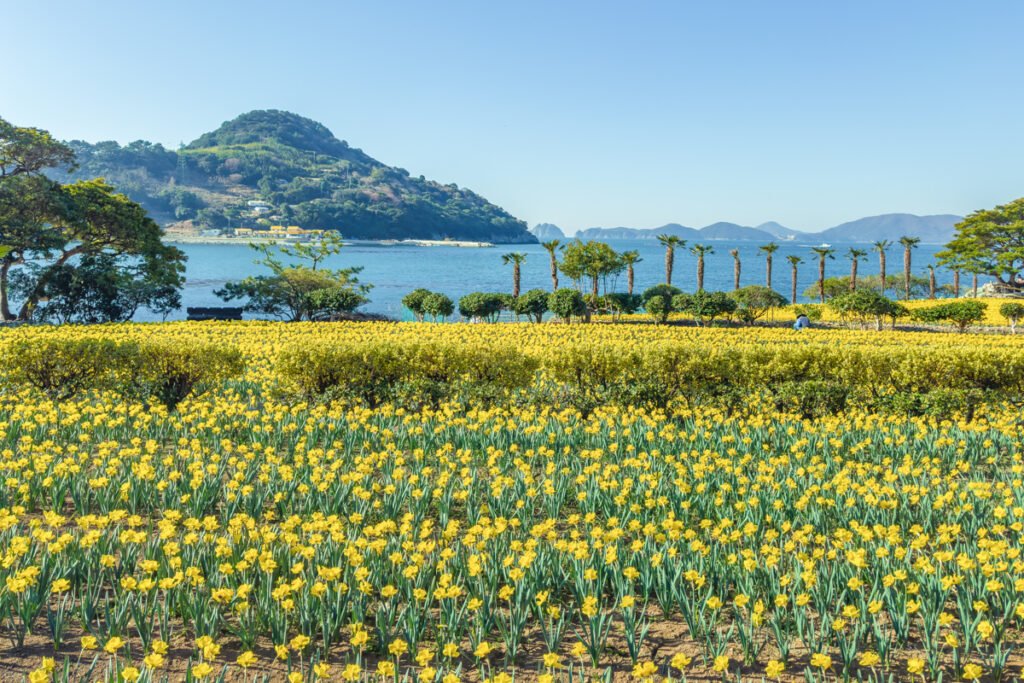
Once you reach the terraces, 16,000㎡ of daffodils spread before you like yellow waves. Palm trees punctuate the scene, and the blue waters of Hallyeohaesang National Park complete the backdrop. Pathways wind between the terraced plots, allowing visitors to wander at ground level with blooms at eye height.
The Ilun-myeon Community Council now hosts an annual Daffodil Festival here, with shuttle buses and event programming for visitors. Nearby in the same township, the Saetbaram trail up to Gujora Fortress adds a short bamboo-and-fortress walk to the itinerary.
Gonggonji Details
- Location: 87 Wahyeon-ri, Ilun-myeon, Geoje-si (no street address) / Parking at 250 Wahyeon-ro
- Access: Free, open year-round
- Best timing: Mid-March to early April for peak bloom
2. Norang Budeong: A Yellow Garden Above the Sea
Near the famous Windmill Hill (바람의 언덕), a hotdog shop that gained fame through TV appearances has created its own attraction. “Norang Budeong”—meaning “yellow garden”—sits on a gentle slope behind the Baram-ui Hotdog flagship store.
This open garden features yellow-painted rocks, benches, palm trees, and coastal photo zones designed to evoke a subtropical atmosphere. No fences, no admission fees, and open 365 days a year. The creators intended it as a rest stop where anyone can pause without feeling obligated to purchase anything.
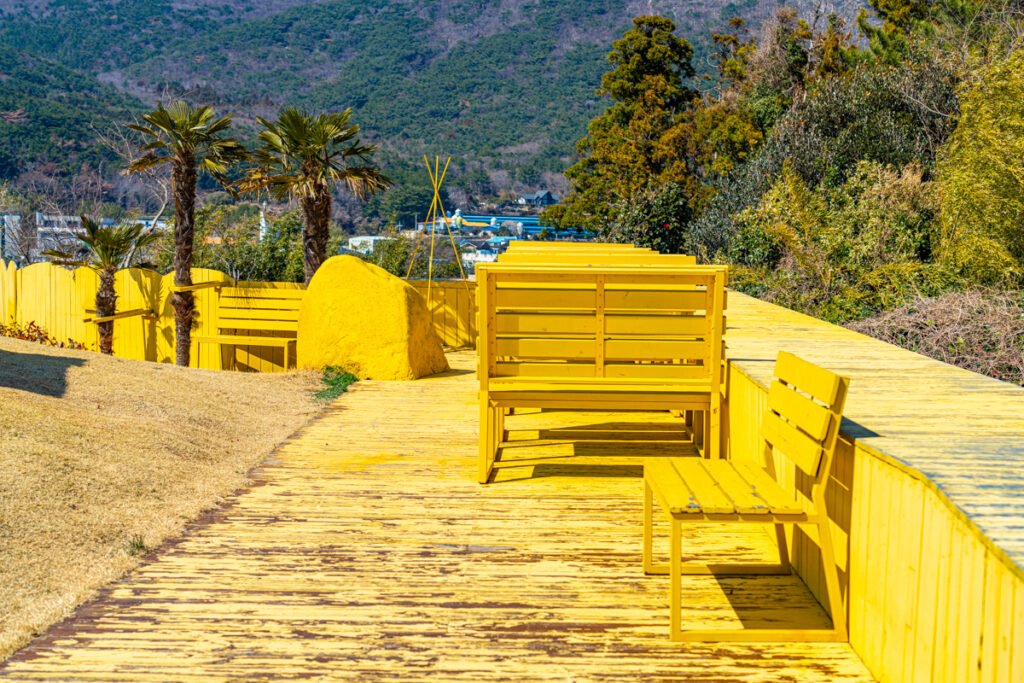
Still, the hotdogs here are worth trying. Grab a loaded hotdog and coffee, carry them up to one of the garden tables, and enjoy Geoje’s spring breeze with an open sea view. Across the road, the calm waters of Dapo Harbor—sheltered by breakwaters—add to the tranquil scene. A single yellow chair positioned at the end of a stone jetty has become one of Geoje’s most photographed spots.
Norang Budeong / Baram-ui Hotdog Details
- Address: 13 Dadae 5-gil, Nambu-myeon, Geoje-si
- Hours: 09:00–18:00 (last order 17:40)
- Garden access: Free, behind the main building
3. Supsori Park: Geoje’s Pastoral Spring Escape
On the southern slopes of Gyeryongsan Mountain, Supsori Park opened in 2018 as a community recreation space. It quickly earned the nickname “Geoje’s Sheep Ranch” for its pastoral meadows where around 20 sheep graze freely from spring through autumn.
The park occupies a hillside, so expect inclined paths from the entrance. A barrier-free trail zigzags upward for those who prefer a gentler ascent, winding through cypress groves ideal for forest bathing. Both paved and dirt walking paths are available.
Monorail Access
Since early 2024, a monorail connects the entrance to the upper park. The 1,017-meter track operates two 16-passenger cars at 15-minute intervals, with round trips taking approximately 25 minutes. For visitors with mobility concerns or those traveling with young children, this provides easy access to the main attractions.
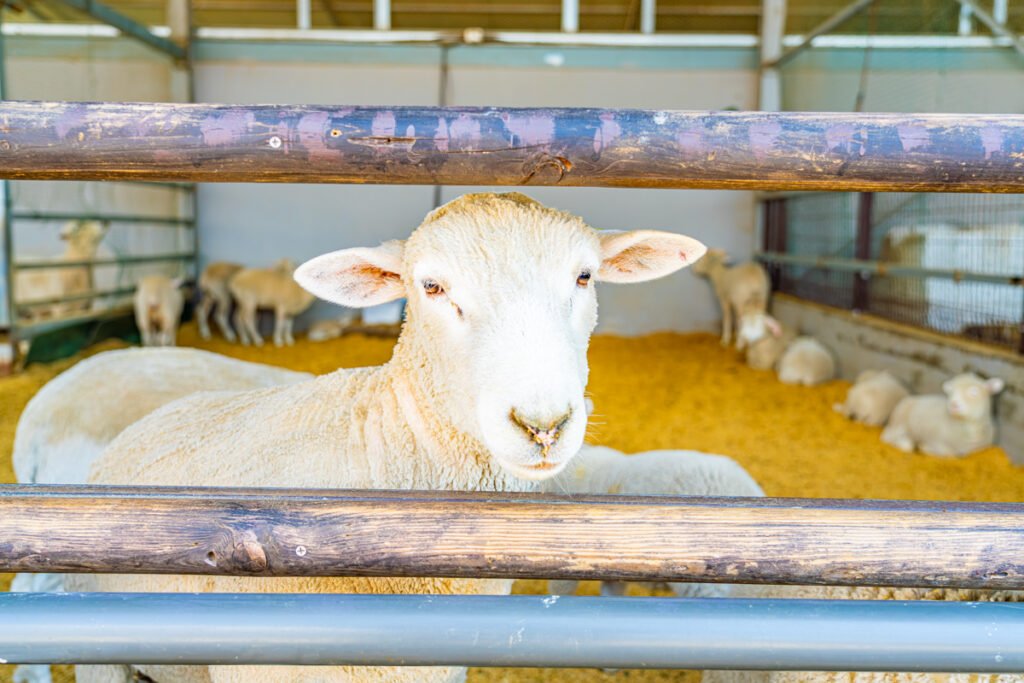
Beyond the cypress forest, open meadows, playgrounds, and the sheep pasture spread across the hillside. Wooden fences and winding trails give the area a distinctly pastoral character. The sheep—friendly and accustomed to visitors—can be fed as part of a paid experience (or free with monorail tickets for groups of two or more).
Seasonal flowers extend the park’s appeal: hydrangeas bloom in summer, and red spider lilies appear in autumn.
Supsori Park Details
- Address: 97-40 Seojeong 1-gil, Geoje-myeon, Geoje-si
- Hours: 09:00–18:00 (closed Mondays, Lunar New Year, Chuseok)
- Monorail: 09:30–18:00 (Mar–Oct) / 09:30–17:00 (Nov–Feb), closed 12:00–13:00
- Monorail fare: Adults ₩6,000 / Children ₩5,000
- Sheep feeding: ₩3,000 (free feed packet with 2+ monorail riders)
4. Maengjonguk Theme Park: Bamboo Forests of Geoje
Bamboo appears throughout Geoje, most of it a variety called maengjonguk (moso bamboo). This species arrived in 1926 when a Geoje resident named Shin Yong-woo brought three culms back from Japan. Fast-growing and versatile, moso bamboo now covers approximately 80% of Korea’s total bamboo cultivation—and most of it grows on Geoje.
Maengjonguk Theme Park celebrates this heritage across 100,000㎡ of dedicated parkland. Operated by a local agricultural cooperative, the park offers bamboo forest trails, craft workshops, dining facilities, and an adventure course called “Forest of Adventure.”
Walking the Bamboo Groves
From the entrance, a gently switchbacking trail climbs toward an observation deck at the park’s highest point. Along the way, bamboo furniture, photo zones, and a reflexology path made from bamboo sections invite visitors to slow down. The thick culms of moso bamboo—larger than most bamboo species—create a distinctive green corridor.
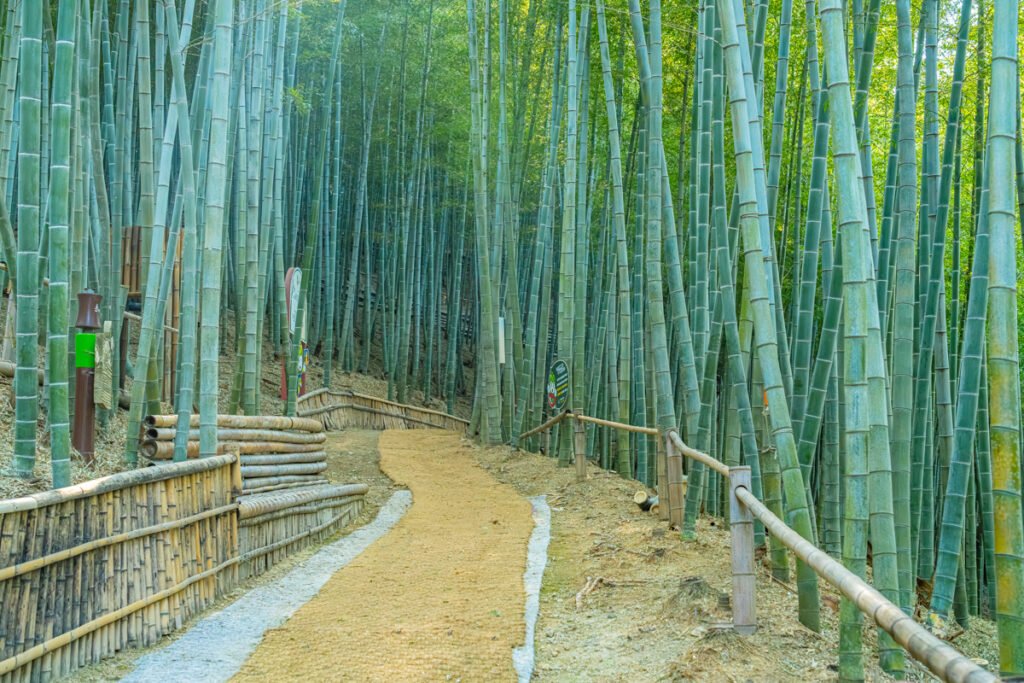
The observation deck rewards the climb. Views extend across the narrow strait to Chilcheon Island, with fishing boats gliding through and sunlight sparkling on the water. It’s a cinematic scene that justifies the effort.
Activities and Experiences
The “Forest of Adventure” program involves safety gear and navigating nets, ropes, and platforms strung between trees—suitable for all ages but weather-dependent (closed during rain or high winds; reservations required). Weekend craft workshops at the on-site studio offer bamboo woodworking experiences.
Maengjonguk Theme Park Details
- Address: 700 Geojebuk-ro, Hacheong-myeon, Geoje-si
- Hours: 09:00–17:30 (winter) / 09:00–18:00 (summer)
- Admission: Adults ₩4,000 / Teens ₩3,000 / Children ₩2,000
- Closed: Open year-round
- Adventure course: Reservation required / Craft workshops: Weekends only
5. Cafe Yujabat: A Geoje spring travel Hidden Gem
Tucked into a small harbor in Cheongok-ri, Sadeung-myeon, a yellow-painted cafe stands out against the muted tones of the fishing village. Cafe Yujabat occupies a renovated home that belongs to a woman who married into this village forty years ago. Despite its remote location—far from Geoje’s main tourist zones—weekend crowds fill this space regularly.
The appeal lies in thoughtful details. The owner and her three daughters transformed the backyard yuzu grove, designed the interior, and built the outdoor photo zones together. Yellow-painted furniture reinforces the yuzu theme. Vintage 1980s-style tables evoke a grandparental nostalgia. Even the cafe mascot came from a family design competition.
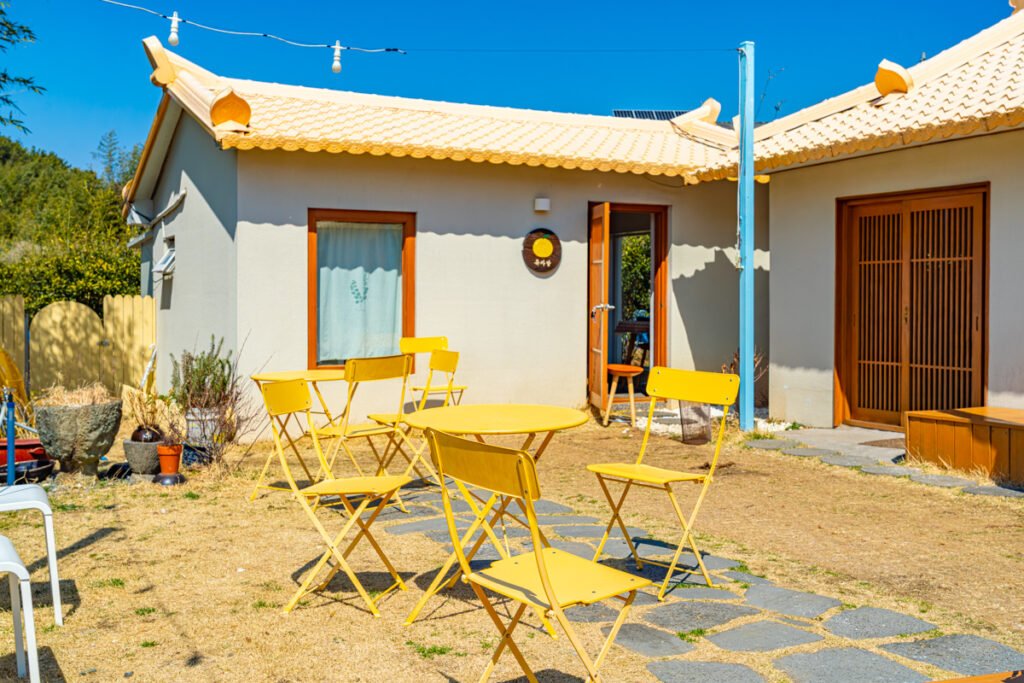
[Image: Yellow exterior of Cafe Yujabat in fishing village] Alt text: Cafe Yujabat yellow exterior fishing village Geoje spring travel hidden gem Sony a7R4
The menu features drinks and desserts made from yuzu grown on-site—five yuzu beverage variations alone. The owner’s decades of restaurant experience combines with a daughter’s Le Cordon Bleu pastry training. Seasonal fruit desserts rotate throughout the year. Small batches of homemade yuzu marmalade are sometimes available for purchase.
The backyard yuzu orchard is open to visitors, making this more than a cafe stop—it’s a brief immersion into Geoje’s agricultural landscape.
Cafe Yujabat Details
- Address: 38 Cheonggok 1-gil, Sadeung-myeon, Geoje-si
- Hours: 12:00–18:00 (closed Tuesdays and Wednesdays)
Planning Your Geoje Spring Travel Itinerary
Best Time to Visit
Mid-March through mid-April offers peak daffodil season at Gonggonji. Sheep are pasture-grazing at Supsori Park from April onwards. The bamboo forest remains green year-round but feels freshest in spring.
Transportation for Geoje Spring Travel
From Busan, express buses depart from Sasang Bus Terminal to Geoje’s Gohyeon terminal (approximately 1 hour 20 minutes). From Seoul, KTX to Jinju or Changwon, then transfer to intercity buses. Rental cars provide the most flexibility for covering multiple destinations.
For travelers planning a broader southern Korea itinerary, Geoje pairs well with nearby island destinations and connects to the wider Hallyeohaesang National Park region. The Korea National Park Service provides detailed information on protected coastal areas surrounding the island.
Practical Information Table
| Destination | Address | Hours | Cost | Notes |
|---|---|---|---|---|
| Gonggonji | 250 Wahyeon-ro, Ilun-myeon | Always open | Free | Peak bloom mid-March |
| Norang Budeong | 13 Dadae 5-gil, Nambu-myeon | 09:00–18:00 | Free | Behind Baram-ui Hotdog |
| Supsori Park | 97-40 Seojeong 1-gil, Geoje-myeon | 09:00–18:00 | Free (Monorail ₩5,000–6,000) | Closed Mondays |
| Maengjonguk Theme Park | 700 Geojebuk-ro, Hacheong-myeon | 09:00–17:30/18:00 | ₩2,000–4,000 | Open year-round |
| Cafe Yujabat | 38 Cheonggok 1-gil, Sadeung-myeon | 12:00–18:00 | Menu prices | Closed Tue/Wed |
The Travel Manual Summary
Geoje spring travel rewards visitors with early-season blooms and varied landscapes within a compact island. Gonggonji’s terraced daffodil fields offer the most iconic spring imagery; Supsori Park provides family-friendly pastoral scenery; Maengjonguk Theme Park delivers forest-bathing atmosphere with coastal views; and Cafe Yujabat adds a local, artisanal dimension to the itinerary. Each destination requires minimal time investment while delivering substantial visual and experiential returns.
Pingback: Gangjin Korea: 4 Essential Cultural Sites for a Meaningful South Jeolla Journey - THE Travel Manual
Pingback: Yangpyeong Ice Fishing Festival: 7 Best Winter Activities at Sumi Village - THE Travel Manual
Pingback: Inspire Entertainment Resort: 7 Essential Experiences at Korea's Newest Mega Entertainment Complex - THE Travel Manual