
Table of Contents
Introduction: When Teenagers Challenged an Empire
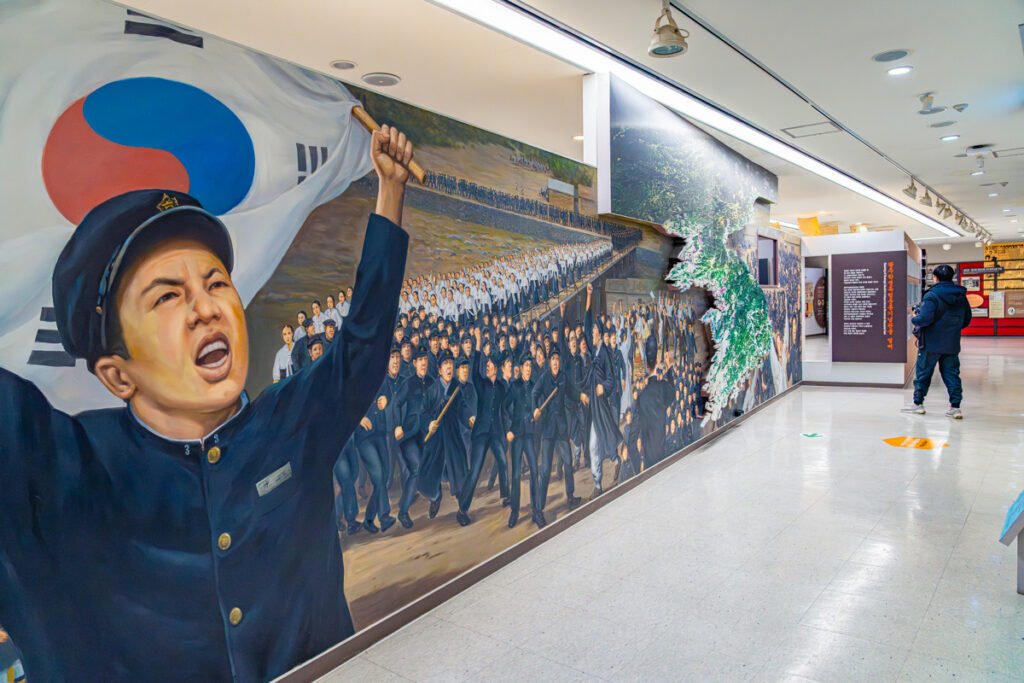
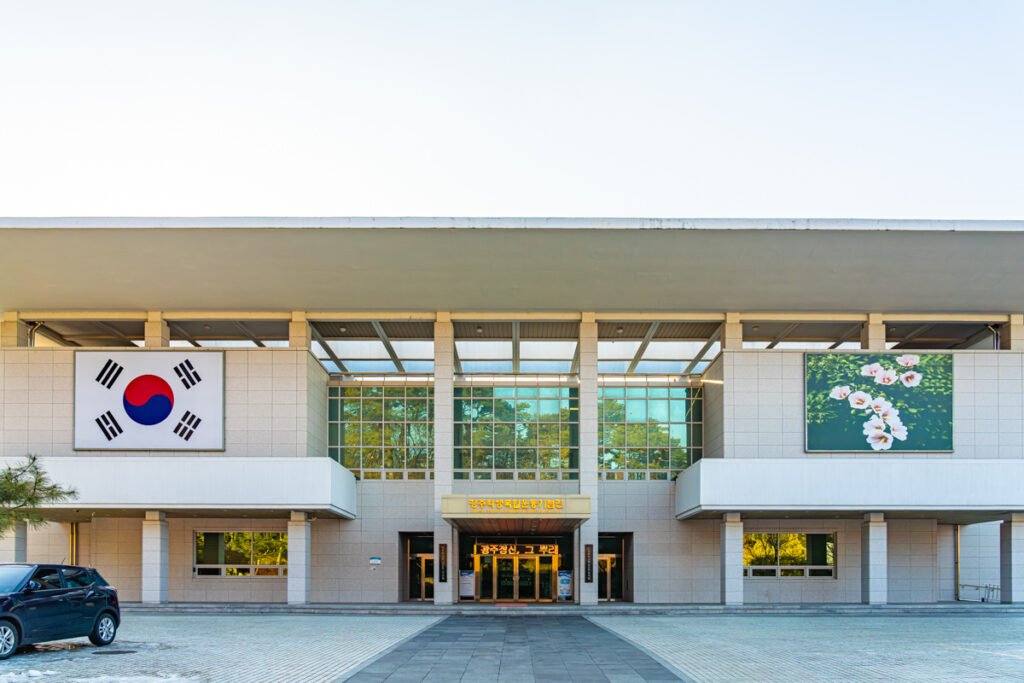
The Gwangju Student Independence Movement Memorial Hall preserves the legacy of November 3, 1929—the day Korean students transformed classroom frustration into nationwide rebellion. This wasn’t a spontaneous outburst. It was the culmination of years of tension between Korean students and Japanese colonial authorities, erupting into the largest student-led anti-Japanese protest since the March 1st Movement of 1919.
While Seodaemun Prison History Hall in Seoul shows where independence activists were imprisoned, and the Gyeongsangbuk-do Independence Movement Memorial Hall in Andong traces the scholarly origins of resistance, the Gwangju Student Independence Movement Memorial Hall tells a different story: how ordinary high school students organized themselves against colonial education policies designed to erase Korean identity.
The memorial houses original artifacts from 1929—handwritten resolutions, protest flyers, and Taegeukgi flags sewn by teenage hands. These objects transform abstract history into something tangible and immediate.
1. Historical Context: The “Cultural Rule” Deception (1920s)
Understanding the Gwangju Student Independence Movement Memorial Hall requires grasping the political climate that preceded November 1929.
After March 1st: A Shift in Strategy
The massive March 1st Movement of 1919 forced Japan to reconsider its approach. Brutal military suppression had failed to break Korean resistance—instead, it generated international criticism. Japan’s response was the so-called “Cultural Rule” (문화통치, Bunka Seiji):
- Relaxation of some harsh policies
- Limited permission for Korean-language newspapers
- Superficial gestures toward Korean autonomy
The Education Trap
Behind this softer facade, colonial education intensified its ideological mission. Japanese authorities expanded schools but filled them with curriculum designed to:
- Instill loyalty to the Japanese Emperor
- Diminish Korean historical consciousness
- Prepare Korean youth for subordinate roles in the colonial economy
Korean students recognized this contradiction. The “Cultural Rule” promised modernity while demanding cultural surrender.
2. The Spark: Accumulated Tensions Explode (November 3, 1929)
The Gwangju Student Independence Movement Memorial Hall documents the specific incidents that ignited the uprising.
Daily Humiliations
Throughout the 1920s, friction between Korean and Japanese students in Gwangju escalated:
- Japanese students received preferential treatment in shared facilities
- Korean students faced discrimination from Japanese teachers
- Physical confrontations occurred on streetcars and in public spaces
The Catalyst
On October 30, 1929, a confrontation on a train platform between Japanese male students harassing Korean female students triggered outrage. When Korean students defended their classmates, Japanese police intervened—arresting Koreans while releasing Japanese perpetrators.
November 3rd
The date wasn’t accidental. November 3rd was a Japanese national holiday (Meiji Emperor’s birthday), and Korean students chose it deliberately. They marched through Gwangju’s streets shouting:
- “조선 독립 만세” (Long live Korean independence)
- “식민지 노예 교육 철폐” (Abolish colonial slave education)
- “일제 타도” (Overthrow Japanese imperialism)
3. From Local Protest to National Movement
What began in Gwangju spread across the Korean peninsula within weeks. The Gwangju Student Independence Movement Memorial Hall traces this remarkable expansion.
The Numbers
| Phase | Timeline | Schools Involved | Students Participating |
|---|---|---|---|
| Gwangju | Nov 3-12, 1929 | 8 schools | ~2,000 students |
| Regional spread | Nov-Dec 1929 | 194 schools | ~54,000 students |
| National peak | Jan-Mar 1930 | 194+ schools | Estimated 54,000+ |
Why It Spread
Several factors enabled rapid expansion:
- Student networks: Connections between schools through sports competitions and cultural events
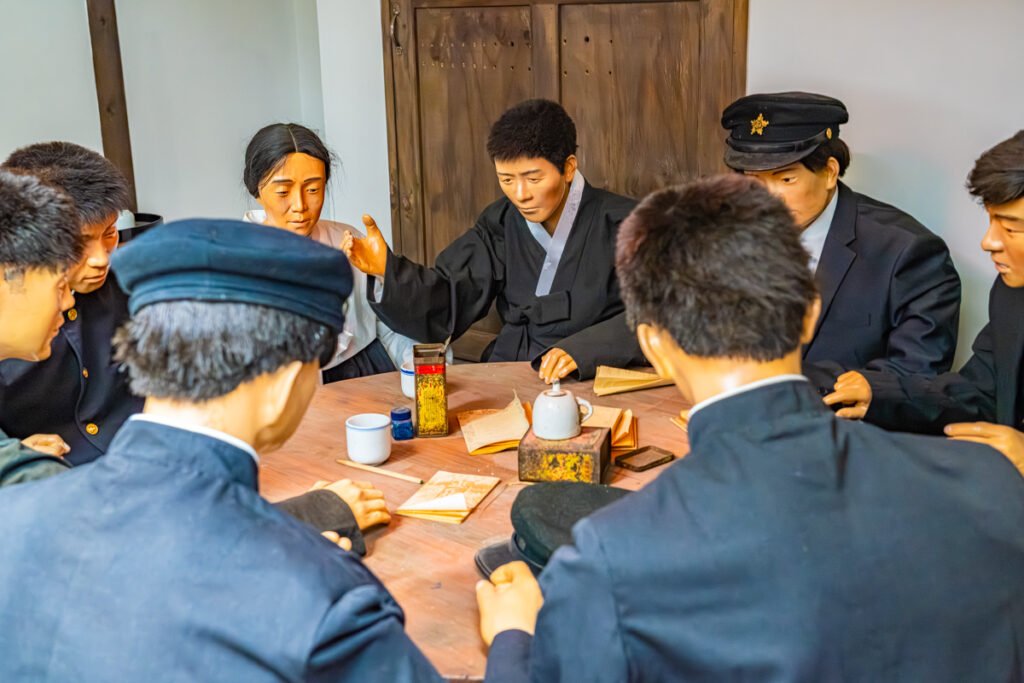
- Underground communication: Students used coded messages and trusted messengers
- Shared grievances: Colonial education policies affected Korean students everywhere
Japanese Response
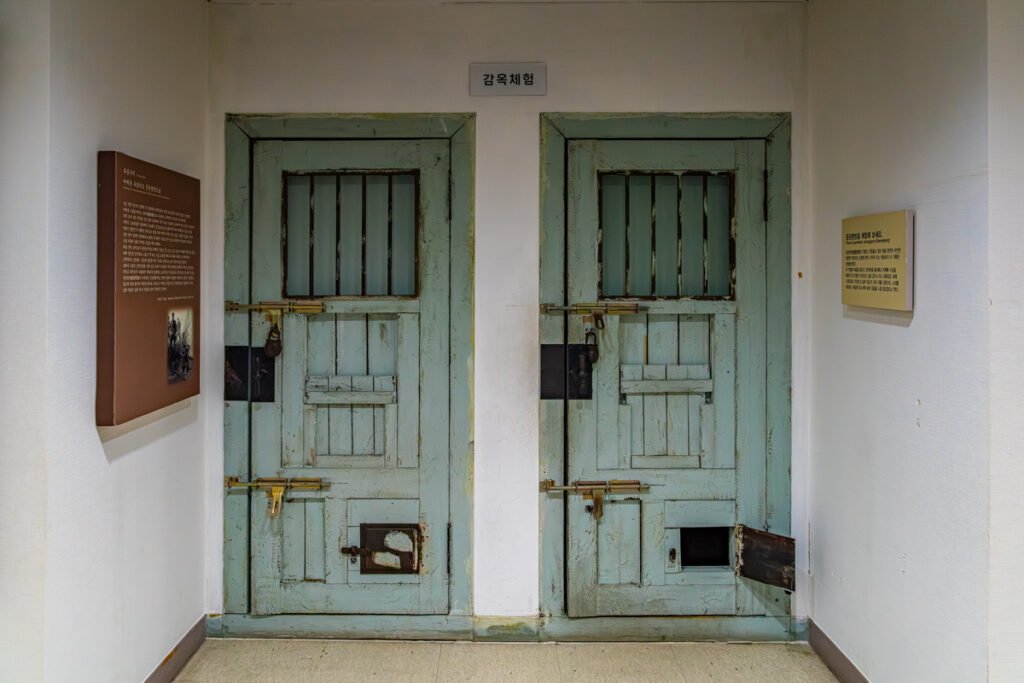
Authorities arrested approximately 1,642 students. Many received prison sentences; others were expelled and blacklisted from further education.
4. Inside the Gwangju Student Independence Movement Memorial Hall
First Floor: Memorial and Introduction
The central space of the Gwangju Student Independence Movement Memorial Hall is dedicated to remembrance. A solemn memorial honors students who died during the movement or suffered in its aftermath. This area sets an appropriately reflective tone before visitors engage with historical exhibits.
Surrounding the memorial, introductory displays provide:
- Timeline of events from October 30 to the nationwide spread
- Maps showing how protests expanded from Gwangju
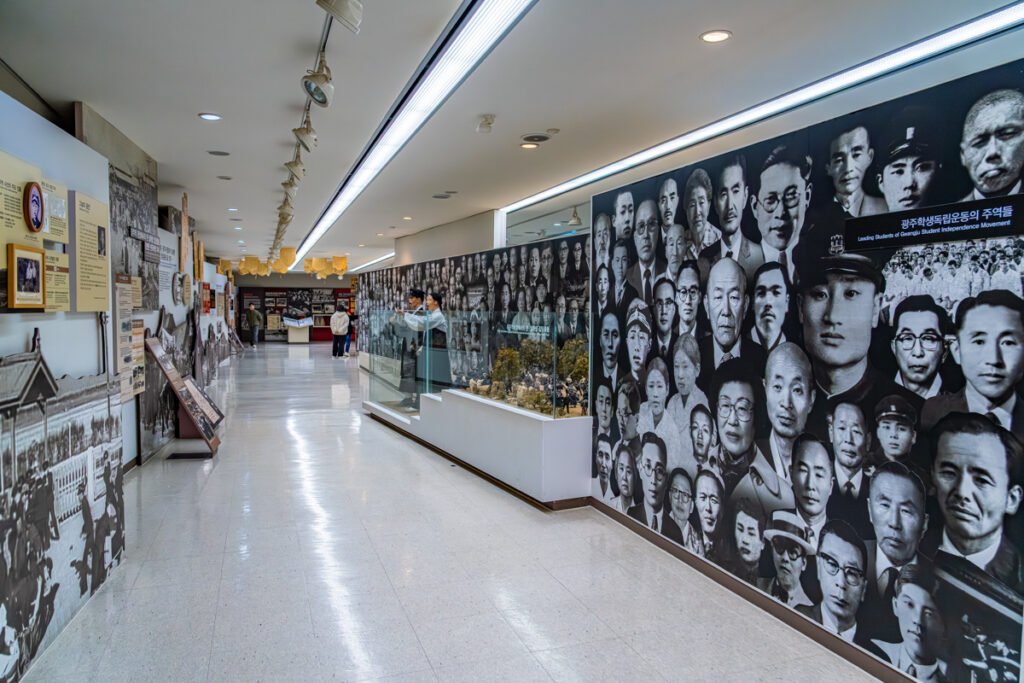
- Profiles of key organizing figures
Second Floor: Artifacts and Documents
The upper level houses the memorial’s most significant holdings:
Original Documents
- Handwritten resolutions drafted by student organizers
- Protest flyers produced on primitive printing equipment
- Letters smuggled between schools coordinating action
Physical Artifacts
- Taegeukgi flags sewn by students for the marches
- School uniforms from the period
- Personal items belonging to arrested students
Multimedia Presentations
- Recreated scenes of the November 3rd march
- Oral history recordings from survivors (Korean with English subtitles available)
5. The Students: Profiles in Courage
The Gwangju Student Independence Movement Memorial Hall personalizes history through detailed profiles of movement leaders.
Key Figures
Jang Jae-seong (장재성) A student at Gwangju High School who helped organize the initial protests. Arrested and imprisoned, he continued independence activities after release.
Park Jun-chae (박준채) Leader of the Gwangju student reading circle that provided ideological foundation for the movement. The reading groups discussed banned Korean history texts and independence philosophy.
Female Student Organizers The memorial dedicates significant attention to female participants, often overlooked in earlier historical accounts. Girls’ schools in Gwangju played crucial organizing roles, and the initial catalyst involved defending female students from harassment.
Why Their Youth Matters
Most participants were between 15 and 19 years old. The Gwangju Student Independence Movement Memorial Hall emphasizes this point: these weren’t seasoned activists but teenagers who chose principle over personal safety.
6. Connecting Gwangju’s Independence Legacy
The May 18th Connection
Visitors to Gwangju often combine the Student Independence Movement Memorial Hall with sites related to the May 18th Democratic Uprising of 1980. While separated by 51 years and addressing different historical contexts, both events share a common thread: Gwangju citizens—including students—risking their lives for justice.
Recommended Gwangju History Itinerary
| Time | Site | Significance |
|---|---|---|
| 9:00 AM | Gwangju Student Independence Movement Memorial Hall | 1929 colonial resistance |
| 11:30 AM | May 18th National Cemetery | 1980 democratic movement |
| 1:00 PM | Lunch in Dongmyeong-dong | |
| 2:30 PM | May 18th Memorial Park | Reflection and memorials |
| 4:30 PM | Asia Culture Center | Contemporary Gwangju |
This sequence traces Gwangju’s tradition of civic resistance across the 20th century.
For comprehensive information on the May 18th sites, the May 18 Memorial Foundation provides English-language resources.
The Travel Manual: Practical Information
| Category | Details |
|---|---|
| Address | 123 Jungheung-ro, Dong-gu, Gwangju |
| Nearest Station | Gwangju Station (KTX), then bus or taxi |
| Opening Hours | 9:00 AM – 6:00 PM |
| Closed | Mondays, January 1, Lunar New Year, Chuseok |
| Admission | Free |
| Time Required | 1.5-2 hours |
| Official Website | gsim.gen.go.kr |
| Photography | Allowed (no flash in document areas) |
Getting There
From Seoul:
- KTX: Seoul Station → Gwangju Songjeong Station (1 hour 50 minutes, ₩48,000)
- Bus: Central City Terminal → Gwangju Bus Terminal (3 hours 30 minutes, ₩23,000)
From Gwangju Songjeong Station:
- Metro Line 1 to Geumnamno 4-ga Station, then 10-minute walk
- Taxi: approximately 20 minutes, ₩12,000-15,000
Budget Estimate (Gwangju Day Trip from Seoul)
| Item | Cost |
|---|---|
| Seoul-Gwangju round trip (KTX) | ₩96,000 |
| Local transportation | ₩25,000 |
| Memorial Hall admission | Free |
| May 18th Cemetery admission | Free |
| Meals | ₩20,000 |
| Total | ₩141,000 |
Conclusion: Why the Gwangju Student Independence Movement Memorial Hall Matters
The Gwangju Student Independence Movement Memorial Hall preserves more than historical artifacts—it documents a moment when teenagers decided that their future was worth fighting for. The handwritten resolutions, the hand-sewn flags, the photographs of young faces: these remind visitors that independence movements aren’t abstract historical forces but collections of individual choices.
For travelers tracing Korea’s independence history, the Gwangju Student Independence Movement Memorial Hall fills a crucial gap. Seodaemun Prison shows the consequences of resistance; Andong’s memorial explains the philosophical foundations; Gwangju demonstrates that the movement belonged not only to scholars and established activists but to students who refused to accept colonial education’s erasure of their identity.
November 3, 1929 deserves to be remembered alongside March 1, 1919. The Gwangju Student Independence Movement Memorial Hall ensures it will be.