
Namsangol Hanok Village — A Practical Guide to Seoul’s Best-Kept Traditional Village
Transparency Note: This guide contains affiliate links. If you make a purchase, I may earn a commission at no extra cost to you — allowing me to keep providing expert, gear-tested travel insights.
Most first-time visitors to Seoul head straight to Bukchon or Gyeongbokgung for a taste of traditional Korea. Fair enough — but both come with trade-offs. Bukchon is a residential area where locals live, and Gyeongbokgung charges admission and draws massive crowds.
Namsangol Hanok Village solves both problems. It’s a purpose-built cultural park at the foot of Namsan mountain, entry is completely free, and the grounds are compact enough to explore in under two hours. Five restored Joseon-era houses, a traditional garden with N Seoul Tower framing the backdrop, and hands-on cultural programs — all a five-minute walk from a major subway station.
This guide covers everything you need to plan a visit: opening hours, how to get there, what to see, and how to make the most of your time.
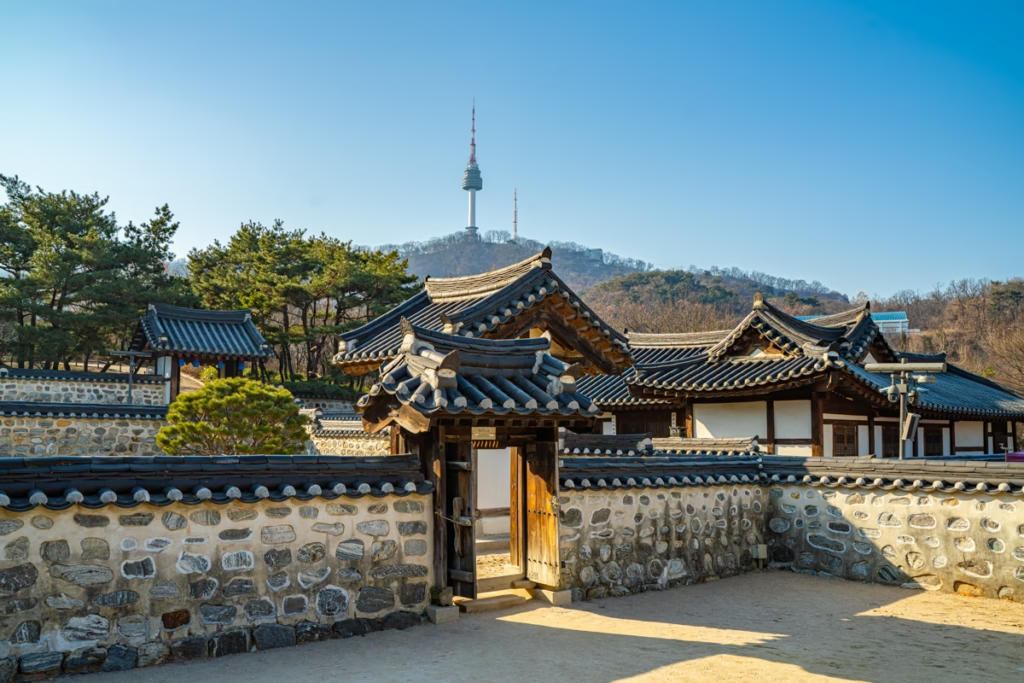
Table of Contents
What Is Namsangol Hanok Village?
Namsangol Hanok Village (남산골한옥마을) is an open-air cultural park in Jung-gu, central Seoul. The city government relocated five traditional Korean houses — called hanok — from various neighborhoods across Seoul and restored them here in the early 1990s.
Each house represents a different social class from the Joseon Dynasty (1392–1897). You’ll see everything from a modest commoner’s home to the grand residence of a high-ranking court architect. The idea is to show how different people lived under the same cultural framework — same building principles, vastly different scales.
Unlike Bukchon Hanok Village, where real residents go about their daily lives, Namsangol is designed specifically for visitors. That means you can walk into every room, sit on the wooden floors, and take photos without worrying about disturbing anyone.
5 Reasons This Traditional Village Is Worth Your Time
1. It’s Free — No Ticket, No Reservation
Entry to the village and all five hanok buildings is completely free. Some cultural experience programs charge a small fee (typically ₩3,000–₩10,000), but general admission costs nothing. For a city where palace tickets run ₩3,000–₩5,000 each, this is a genuine budget win.
2. Architectural Variety Across Social Classes
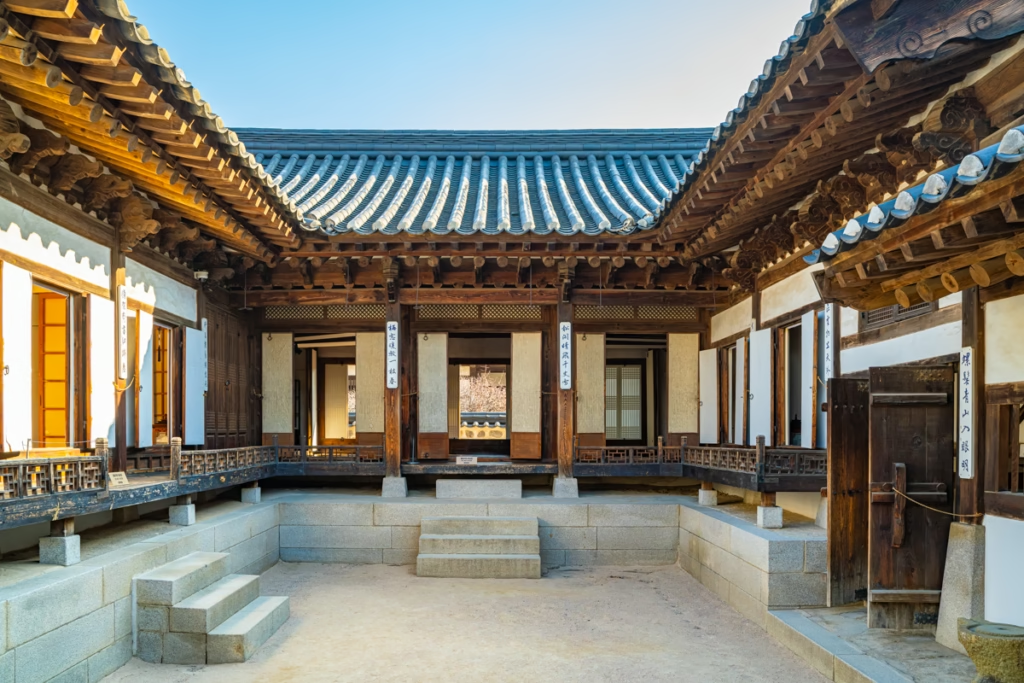
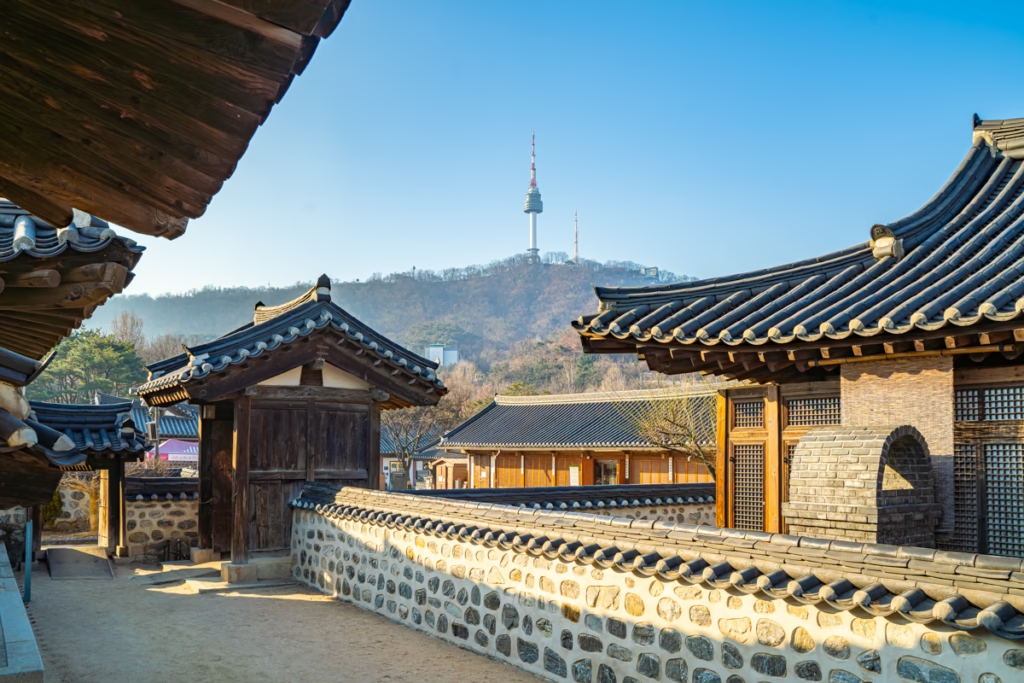
The five hanok houses aren’t copies of each other. They range from a small, one-courtyard commoner’s dwelling to the elaborate estate of Lee Seung-eop, a master carpenter who worked on royal palaces. Watch for these traditional features as you explore:
- Ondol (온돌): Korea’s signature underfloor radiant heating system, used for centuries before the concept caught on in the West.
- Maru (마루): Elevated wooden verandas designed for natural ventilation during hot, humid Korean summers.
- Giwa (기와): Curved clay roof tiles — the more elaborate the curve, the higher the owner’s status.
- Gendered spaces: Men’s quarters (sarangchae) and women’s quarters (anchae) were physically separated, reflecting Joseon-era Confucian social norms.
3. Traditional Garden With N Seoul Tower Views
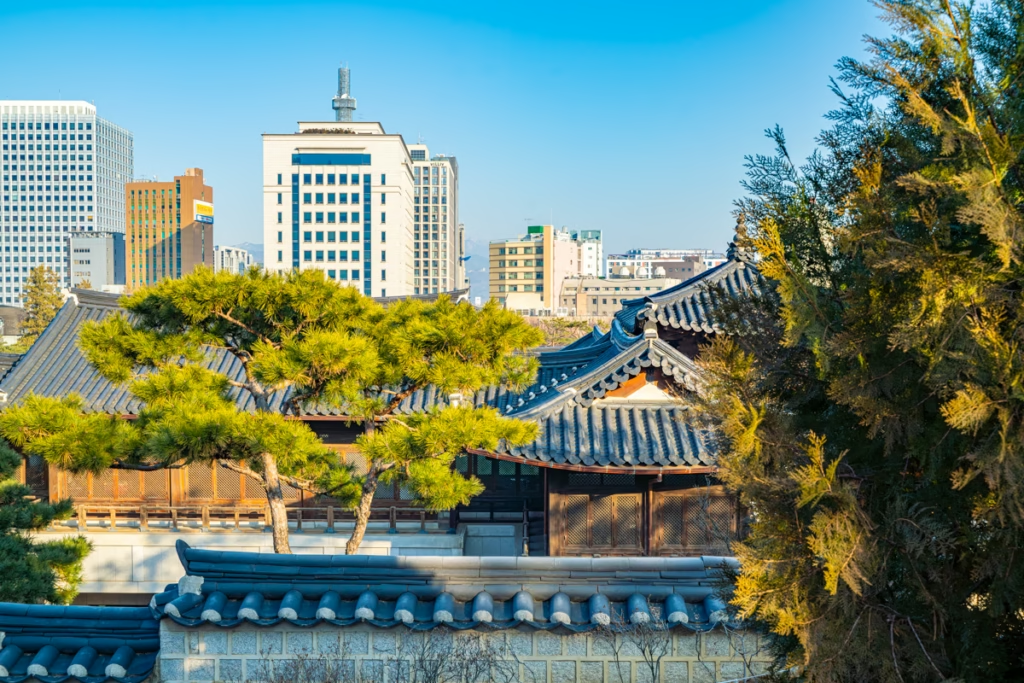
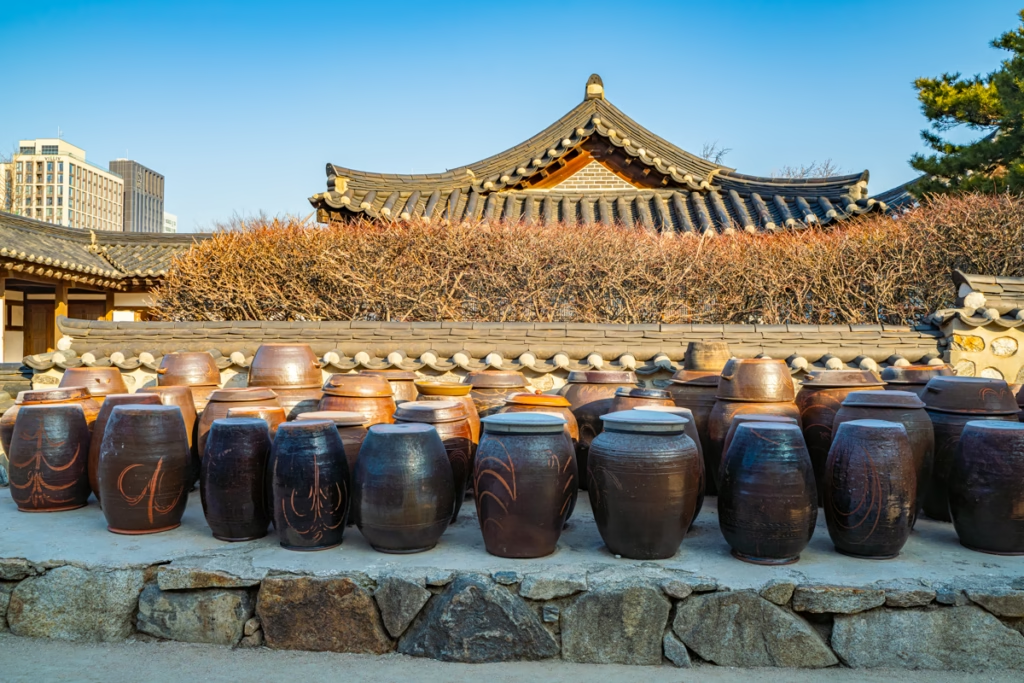
The grounds include a landscaped garden modeled on traditional Korean gardening principles — understated, asymmetric, and built around natural stone and flowing water. A small stream runs through the site, and a pavilion called Cheonugak (천우각) provides a shaded resting spot.
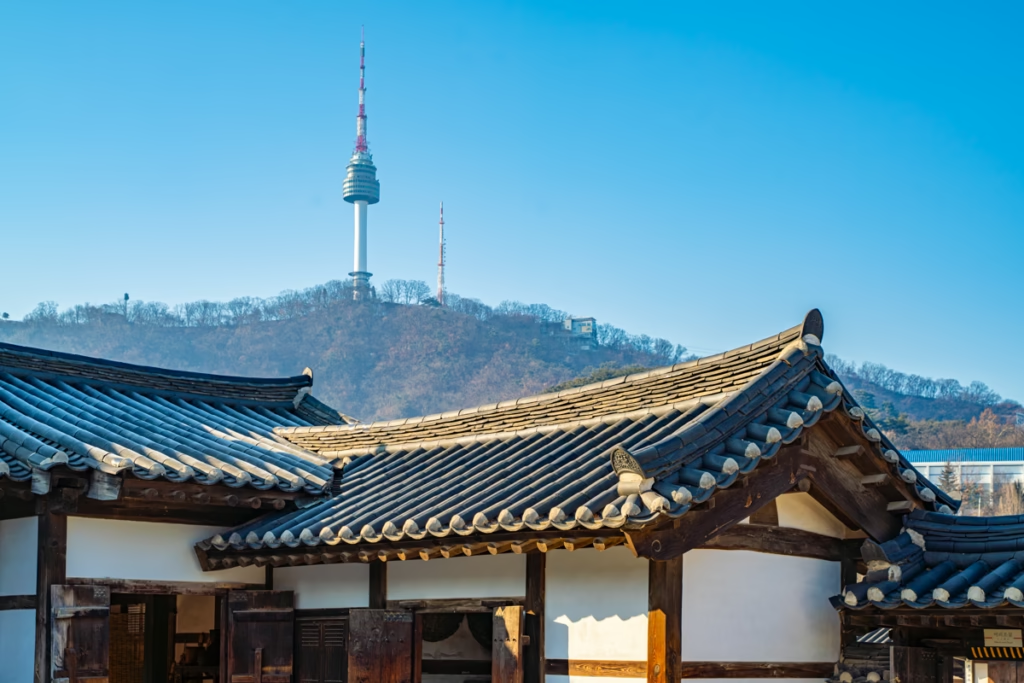
The real bonus: N Seoul Tower sits directly above the village on Namsan hill. From multiple points in the garden, you can frame traditional hanok rooflines against the tower — one of the more interesting traditional-meets-modern photo compositions available in Seoul.
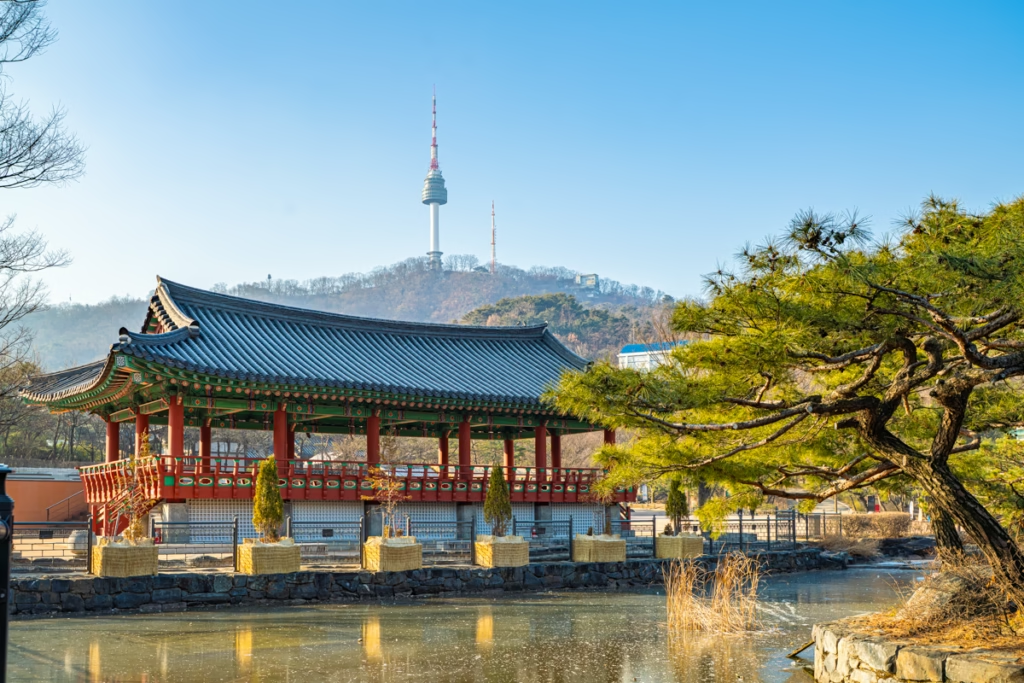
📷 File Name: garden-pavilion-n-seoul-tower.avif | Alt Text: Traditional Korean garden pavilion at Namsangol with N Seoul Tower visible on Namsan hill behind
4. Hands-On Cultural Programs
Namsangol runs rotating cultural experience programs that go beyond passive sightseeing. Availability varies by season, but common offerings include:
- Hanbok wearing (한복 체험): Rent a traditional Korean outfit and walk the grounds. This is a popular photo opportunity, especially among international visitors.
- Traditional games: Try tuho (arrow throwing), yutnori (a board game played with sticks), and neolttwigi (a seesaw-style game).
- Craft workshops: Depending on the schedule, options may include hanji (Korean paper) crafts, traditional knot-tying, and mask painting. Fees typically range from ₩3,000 to ₩10,000.
- Weekend performances: Traditional music, dance, and taekwondo demonstrations are frequently staged on weekends and public holidays.
Check the Seoul Metropolitan Government website or the information desk on-site for the current program schedule before your visit.
For a deeper dive into Korea’s modern history beyond the Joseon era, consider visiting the Hwaseong Independence Movement Memorial during your trip.
Looking for more structured cultural activities in Seoul? Browse Seoul cultural experiences on Klook for options like guided hanbok photoshoots, templestay programs, and traditional cooking classes — all bookable in English with free cancellation.
5. Seoul Millennium Time Capsule
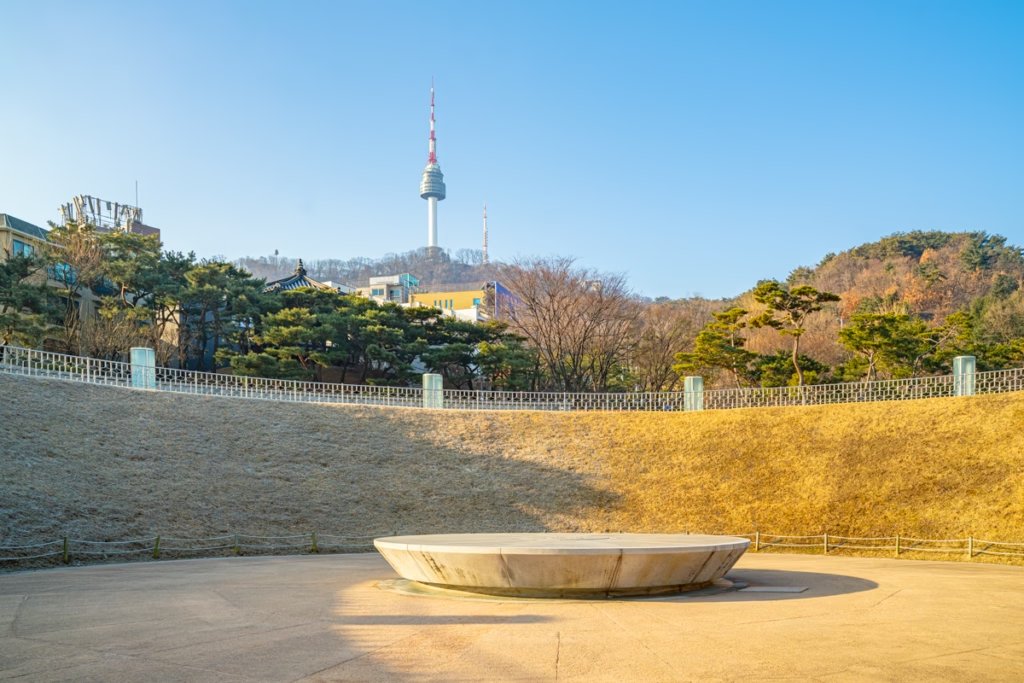
Near the village entrance, you’ll find the Seoul Millennium Time Capsule Square — a sunken circular plaza designed to resemble a meteorite crater. In 1994, the city sealed 600 everyday objects from Seoul life into a capsule and buried it beneath a large stone sphere.
The scheduled opening date: the year 2394, marking Seoul’s 1,000th anniversary as a capital. It’s a minor curiosity rather than a major attraction, but it adds a slightly surreal modern footnote to an otherwise historical site.
How to Get to Namsangol Hanok Village
The village sits in Jung-gu, one of Seoul’s most central districts — roughly halfway between Myeongdong and Dongdaemun.
By Subway (Recommended)
Take Line 3 or Line 4 to Chungmuro Station (충무로역). Exit through Gate 3 or Gate 4, then walk uphill for about five minutes. Signage in English is visible from the station exit.
By Bus
Several city bus routes stop near Chungmuro Station. The “Toegye-ro 34-gil” (퇴계로34길) stop is the closest. From there, it’s a short walk uphill.
Navigation Tip for Foreigners
Google Maps has limited functionality in South Korea. For accurate walking directions and real-time transit info, use Naver Map or Kakao Map instead. Search for “남산골한옥마을” or “Namsangol Hanok Village” — both apps support English interfaces.
Namsangol vs. Bukchon — Which Hanok Village Should You Visit?
Both villages offer traditional Korean architecture, but they serve different purposes and suit different types of visitors.
| Namsangol Hanok Village | Bukchon Hanok Village | |
|---|---|---|
| Admission | Free | Free (outdoor walking only) |
| Can you enter buildings? | Yes — all five hanok are open | No — most are private residences |
| Crowds | Moderate | Heavy, especially on weekends |
| Cultural programs | Yes — hanbok, games, crafts | Limited |
| Best for | Hands-on cultural experience | Scenic streetscape photography |
| Time needed | 1.5–2 hours | 1–2 hours |
Short answer: If you want to walk inside real hanok buildings and try cultural activities, go to Namsangol. If you want to photograph a hillside lined with traditional rooftops, go to Bukchon. If you have time, do both — they’re only about 20 minutes apart by subway.
Where to Stay Nearby
The village is located between two of Seoul’s most popular hotel districts: Myeongdong (10 minutes on foot) and Dongdaemun (one subway stop away). Staying in either neighborhood puts you within easy reach of the village plus shopping, street food, and other major attractions.
- Budget: Hostels and guesthouses around Chungmuro and Euljiro start from ₩30,000–₩50,000/night.
- Mid-range: Business hotels in Myeongdong typically run ₩80,000–₩150,000/night.
- Upscale: The area around Namsan has several four- and five-star properties with city views.
Search hotels near Myeongdong and Chungmuro on Agoda — rates are often lower than booking direct, and free cancellation is available on most listings.
Photography Tips for Your Visit
The village is compact, which means you can cover most compositions with a single versatile lens. Here are some practical notes from shooting with a Sony a7R4:
- Best light: Early morning (before 10:00 AM) and late afternoon (after 4:00 PM). Midday sun creates harsh shadows under the deep hanok eaves.
- Lens recommendation: A 24–70mm f/2.8 covers wide interior shots, architectural details, and garden compositions. If you only bring one lens, this is it.
- Key composition: From the garden pavilion, use a moderate focal length (35–50mm) to frame hanok rooflines with N Seoul Tower rising behind — the village’s signature shot.
- Settings note: Interiors are dim. Shoot at ISO 800–1600, f/4 or wider, with a shutter speed above 1/60s to avoid motion blur handheld.
- Image format: Shoot RAW for maximum flexibility in post. The contrast between dark wooden interiors and bright courtyards often exceeds the dynamic range of a single JPEG exposure.
Practical Information at a Glance
| Category | Details |
|---|---|
| Address | 28 Toegye-ro 34-gil, Jung-gu, Seoul (서울 중구 퇴계로34길 28) |
| Naver/Kakao Search | 남산골한옥마을 / Namsangol Hanok Village |
| Hours (Apr–Oct) | 09:00 – 21:00 |
| Hours (Nov–Mar) | 09:00 – 20:00 |
| Closed | Every Monday (if Monday is a public holiday, open Monday, closed Tuesday) |
| Cost | Free admission; some workshops ₩3,000–₩10,000 |
| Transport | Subway Line 3/4, Chungmuro Station (충무로역), Exit 3 or 4 → 5-min walk |
| Recommended Stay | 1.5 – 2 hours (add 30 min if joining a workshop) |
| English Signage | Yes — bilingual info boards throughout the site |
| Nearby Attractions | N Seoul Tower (20-min uphill walk), Myeongdong (10-min walk), Namsan Cable Car |
Is It Worth Visiting?
If you have two spare hours in central Seoul and any interest in Korean history or architecture, yes. Namsangol Hanok Village doesn’t try to compete with the grandeur of Gyeongbokgung or the streetscape charm of Bukchon. Instead, it offers something neither of those can: quiet, unhurried access to actual Joseon-era interiors, with free admission and minimal crowds.
Combine it with a walk up to N Seoul Tower afterward (the Namsan trail starts nearby), and you’ve got a half-day itinerary that covers traditional culture and one of the city’s best viewpoints — without spending a won on tickets.
Book Seoul activities and day tours on Klook to lock in English-language experiences at guaranteed prices.
Find the best hotel deals in Seoul on Agoda — compare rates across Myeongdong, Chungmuro, and Namsan area properties.