
Table of Contents
A contemplative escape through tea traditions, Joseon-era exile history, and Korea’s largest folk painting museum
The southern tip of the Korean Peninsula holds places that demand slowness. Gangjin Korea, a quiet county in South Jeolla Province, earned its reputation as the “number one destination for Namdo cultural exploration” according to Professor Yu Hong-jun, former head of the Cultural Heritage Administration. This wasn’t arbitrary praise—Gangjin Korea served as one of Joseon Dynasty’s most significant exile destinations, attracting scholars who left indelible marks on Korean intellectual history.
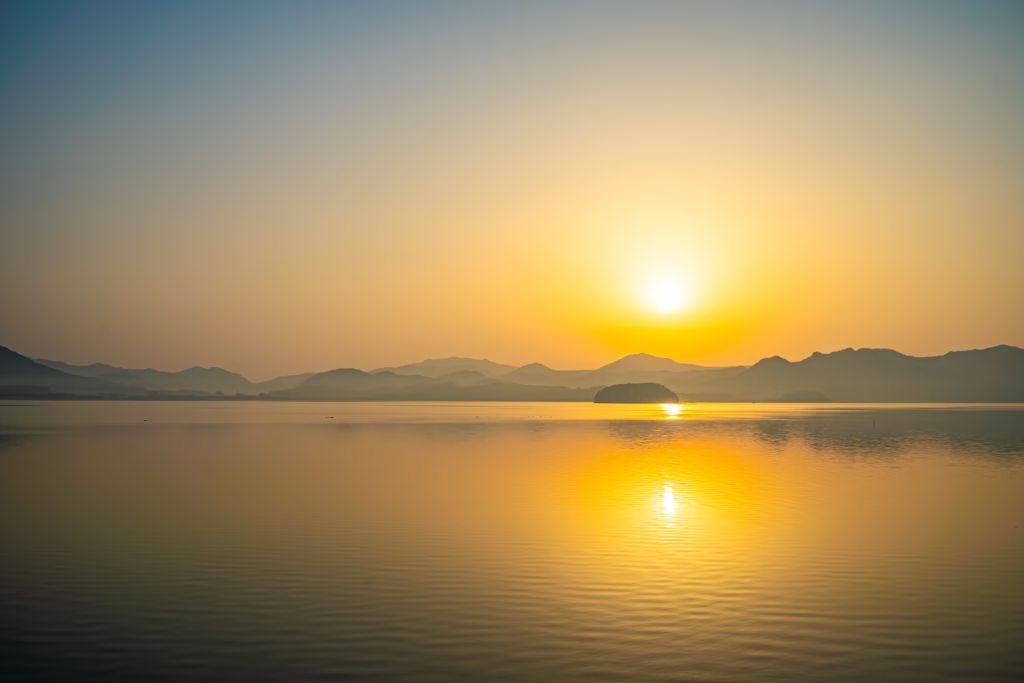
Today, Gangjin Korea offers something increasingly rare: unhurried encounters with tea culture, military heritage, and folk art traditions that shaped Korean identity. Four sites stand out for travelers seeking depth over spectacle.
Intellectual Legacy and Tea Culture in Gangjin Korea
The cultural identity of Gangjin Korea owes much to one man’s forced residence. Scholar Jeong Yakyong—known by his pen name Dasan—transformed personal tragedy into intellectual triumph during his 18-year exile here.
Dasan Chodang: Where Korea’s Greatest Scholar Found Purpose

Jeong Yakyong arrived in Gangjin Korea in 1801. His crime: practicing Catholicism. His sentence: 18 years of exile that would paradoxically become his most productive period.
The Dasan Chodang (茶山草堂), perched on the slopes of Mandeoksan Mountain near Baengnyeonsa Temple, served as his residence for approximately 11 of those years. Within these modest quarters, Jeong wrote his most influential works: Mongmin Simseo (treatise on governance), Gyeongse Yupyo (administrative reform proposals), and Heumheumsinseo (criminal justice commentary).
What strikes visitors today isn’t the building’s grandeur—it has none. The power lies in context. Camellia and nutmeg trees surround the structure. Through gaps in the forest canopy, Gangjin Bay reveals itself in fragments. This was Jeong’s view for over a decade as he wrote texts that would influence Korean governance philosophy for centuries.
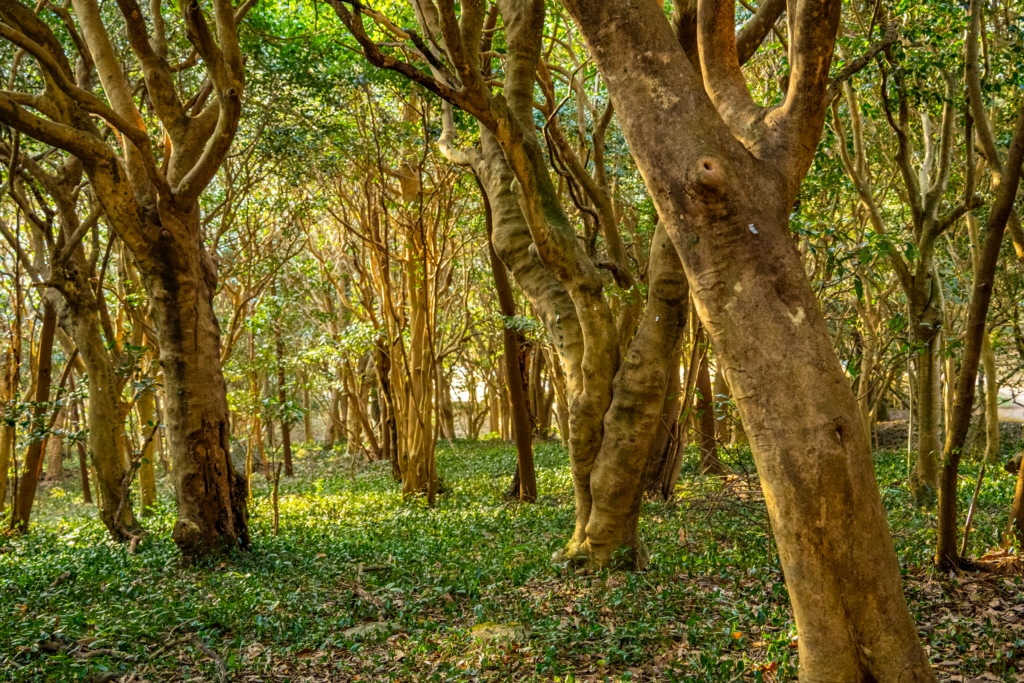
A forested trail connects Dasan Chodang to Baengnyeonsa Temple. Jeong maintained close friendship with the temple’s monk Hyejang, who introduced him to tea culture. The path they walked for intellectual exchange remains walkable today. During late winter and early spring, red camellias punctuate the trail—travelers who appreciate [vibrant camellia forests] will find this Gangjin Korea path equally rewarding for seasonal blooms.
Baegun Chasil: Seven Generations of Tea Tradition
The connection between Dasan and tea didn’t end with his exile from Gangjin Korea. After learning tea ceremony from Monk Hyejang, Jeong developed a lifelong appreciation that his students formalized into the Dasangye—a covenant to supply their teacher with tea annually.
Lee Si-heon, Dasan’s youngest disciple, kept this promise for life. Even after Jeong’s death, Lee continued sending tea to the Jeong family. His descendants maintained the tradition, cultivating tea fields that would span over a century.
Lee Han-young, a later descendant, created Baegun Okpancha (白雲玉版茶) in the early 20th century—Korea’s first branded tea. His motivation was resistance: Japanese colonial authorities were relabeling Korean tea as Japanese products. Lee’s response was to establish clear Korean provenance through branding.
Today, Baegun Chasil (白雲茶室) carries this Gangjin Korea legacy forward. The restored birthplace of Lee Han-young houses an independent tea room where visitors experience traditional Korean tea culture. The setting matters: seated in the warm ondol-heated room, you face Wolchulsan Mountain through the window. This is contemplative drinking, not casual caffeine consumption.
Baegun Chasil operates two spaces:
- Café area: Walk-in service for casual tea drinking
- Private tea room: Reservation-only, includes green tea and traditional dasik (tea confections)
All tea served comes from Baegun Okpancha production—the same lineage established over a century ago.
Practical Consideration: Reserve the private tea room at least one day in advance. Sessions last approximately 60-90 minutes. This pairs naturally with a morning visit to Dasan Chodang, creating a thematic half-day itinerary around Gangjin Korea’s tea culture legacy.
Military Heritage: Jeolla Byeongyeongseong Fortress
Gangjin Korea’s strategic importance extended beyond intellectual history. The Jeolla Byeongyeongseong (全羅兵營城) served as the military command center protecting Jeolla Province’s fertile plains from Japanese pirate incursions.
Originally located in Gwangju, the fortress relocated to Gangjin Korea in 1417 (17th year of King Taejong’s reign). The reasoning was defensive geometry: Gangjin Bay provided the likely landing point for raiders targeting the Naju Plain. By positioning the garrison here, Joseon forces could intercept invaders before they reached the agricultural heartland.
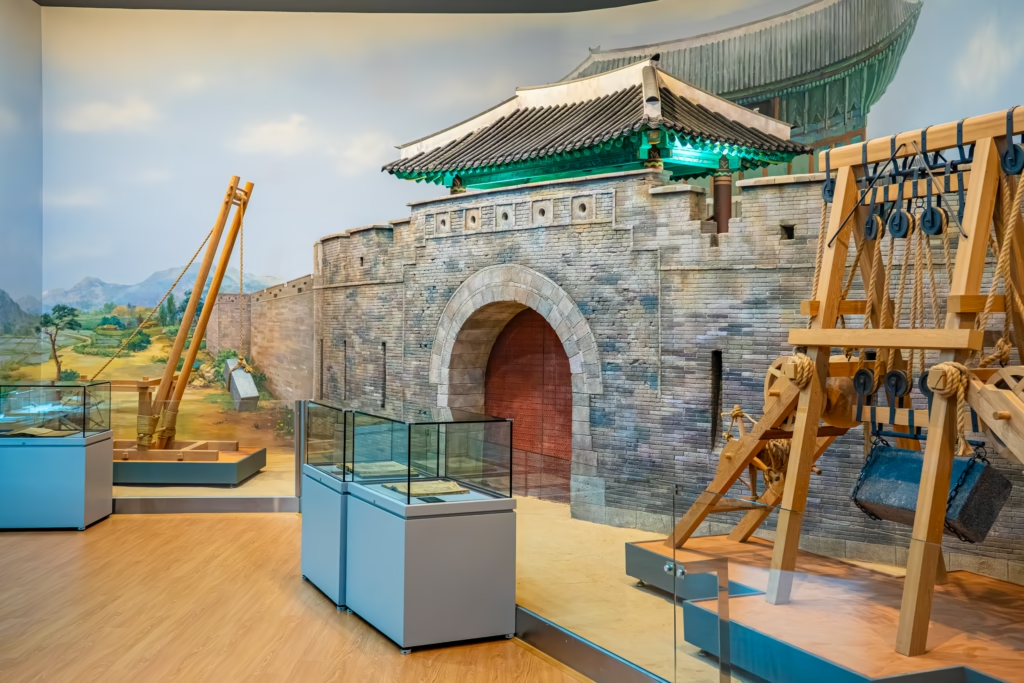
The fortress commanded military operations across southwestern Korea, including oversight of Jeju Island defenses. For nearly 500 years, this Gangjin Korea site was the regional army headquarters—a significant chapter in [Korea’s strategic military heritage].
The 1894 Donghak Peasant Revolution and subsequent Japanese colonial period destroyed most structures. Current restoration efforts have rebuilt sections of the fortress walls and gates. Archaeological excavations continue, revealing defensive features like hammageng (함마갱)—pit traps lined with bamboo spikes designed to impale attackers.
Adjacent to the fortress, the Jeolla Byeongyeongseong Hamel Memorial Hall contextualizes the site’s history. Exhibits cover fortress construction, village development, and the curious story of Hendrick Hamel—a Dutch sailor shipwrecked in Korea who spent 13 years in captivity, partly within this region. His subsequent account became Europe’s first detailed description of Korea.
Historical Context: Hamel’s 1668 publication, Journal of the Unfortunate Voyage of the Yacht Sperwer, described Korean society, governance, and daily life to a Western audience that had virtually no prior knowledge of the peninsula. The memorial acknowledges this unusual chapter in Gangjin Korea’s international connections.
Folk Art Traditions at Korea Minhwa Museum
Minhwa (民畫)—Korean folk painting—differs fundamentally from court art. These weren’t prestige commissions. Itinerant painters created them for common households, serving practical functions: room dividers, draft barriers, ceremonial decorations for weddings and funerals.
The subjects reflect this accessibility. Tigers paired with magpies (symbolizing good fortune), sun-moon-five-peaks compositions, fish and flowers representing prosperity—these images accompanied Koreans through life’s major transitions.
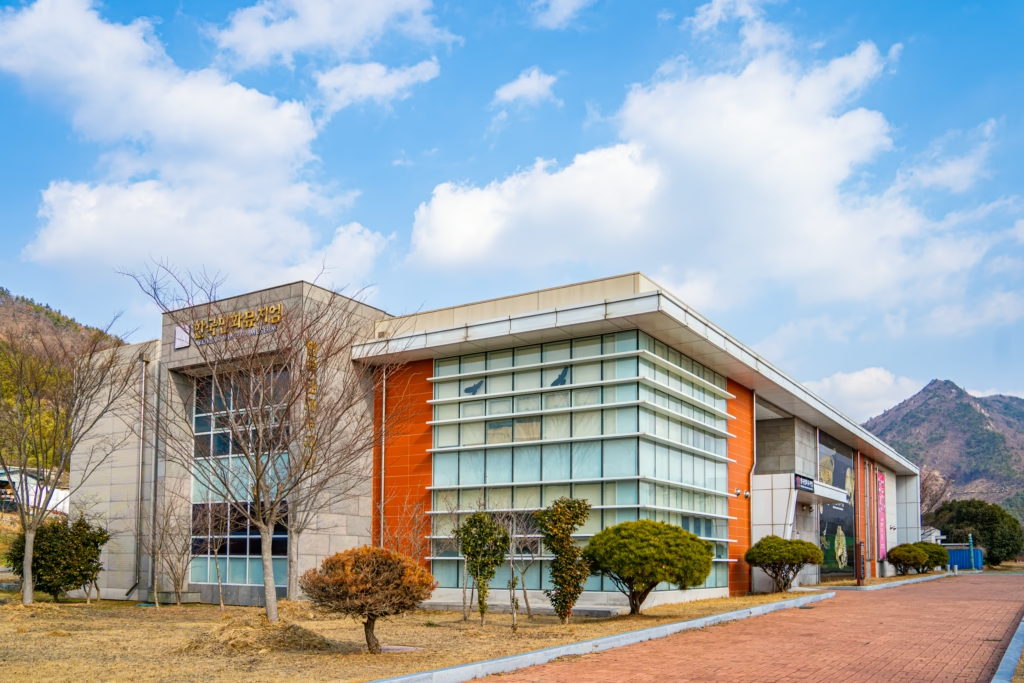
The Korea Minhwa Museum (한국민화뮤지엄) in Gangjin Korea houses the country’s largest permanent collection of these works, with approximately 200 traditional pieces on display. The museum bridges historical and contemporary practice, exhibiting both classic minhwa and modern reinterpretations by living artists who maintain traditional techniques while addressing current themes.
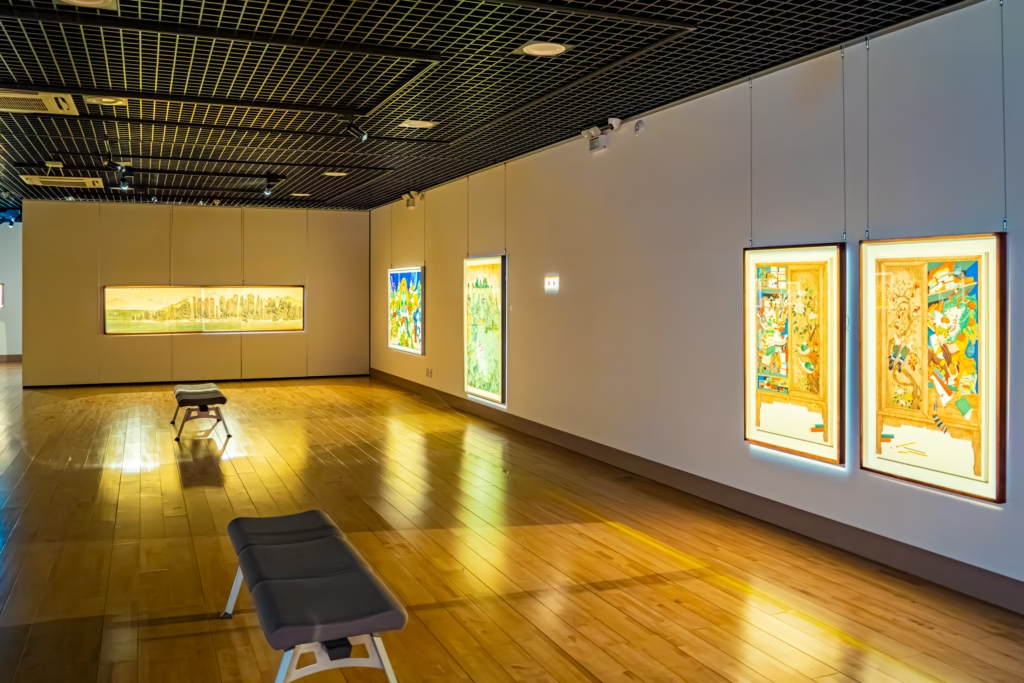
Hands-on programs allow visitors to create their own minhwa-inspired works. Staff guide participants through painting traditional motifs on fans and other objects. No prior artistic experience is necessary—the workshop structure accommodates beginners while offering deeper engagement for those with existing skills.
Why It Matters: Minhwa represents democratic visual culture. Unlike aristocratic portrait commissions or Buddhist temple paintings, these works belonged to ordinary families. The Gangjin Korea museum treats them with institutional seriousness while preserving their approachable character.
Planning Your Gangjin Korea Itinerary
The four sites create a coherent single-day circuit through Gangjin Korea, though spacing them across two days allows deeper engagement:
Morning: Dasan Chodang and the connecting trail to Baengnyeonsa Temple (2-3 hours) Midday: Baegun Chasil for tea and light refreshment (1-1.5 hours) Afternoon: Jeolla Byeongyeongseong and Hamel Memorial Hall (1.5-2 hours) Late Afternoon: Korea Minhwa Museum, including workshop participation (2-3 hours)
For those interested in Korean temple cuisine traditions, consider extending your South Jeolla journey to nearby destinations. Gangjin Korea’s tea traditions provide a natural thematic extension to mindful consumption rooted in Buddhist and Confucian practice.
The Travel Manual: Gangjin Korea Practical Information
| Category | Details |
|---|---|
| Location | Gangjin County, South Jeolla Province (전라남도 강진군) |
| Getting There from Seoul | KTX to Mokpo Station (2.5 hrs) → Bus to Gangjin Korea (50 min) |
| Getting There from Gwangju | Intercity bus from U-Square Terminal to Gangjin (1.5 hrs) |
| Best Season | Late winter–early spring (Feb–Apr) for camellia blooms; autumn for clear mountain views |
| Dasan Chodang | Open 9:00–18:00, Free admission |
| Baegun Chasil | Tea room reservation required, Café walk-in available |
| Jeolla Byeongyeongseong | Open access, Memorial Hall hours vary |
| Korea Minhwa Museum | Admission ~₩5,000, Workshop fees additional |
| Budget Estimate | ₩30,000–50,000/person (excluding accommodation and main meals) |
| Recommended Stay | 1–2 days for complete Gangjin Korea exploration |
External Resource: For official information on Wolchulsan National Park (visible from Baegun Chasil and forming the regional backdrop), visit Korea National Park Service.
Final Thought
Gangjin Korea doesn’t compete with Korea’s headline destinations. It offers something different: time to sit with tea, walk paths that scholars walked centuries ago, and encounter art made for homes rather than galleries. The reward is proportional to the patience you bring.
Pingback: Boryeong Winter Travel: 4 Hidden Gems for a Peaceful Rural Escape in Chungnam - THE Travel Manual