
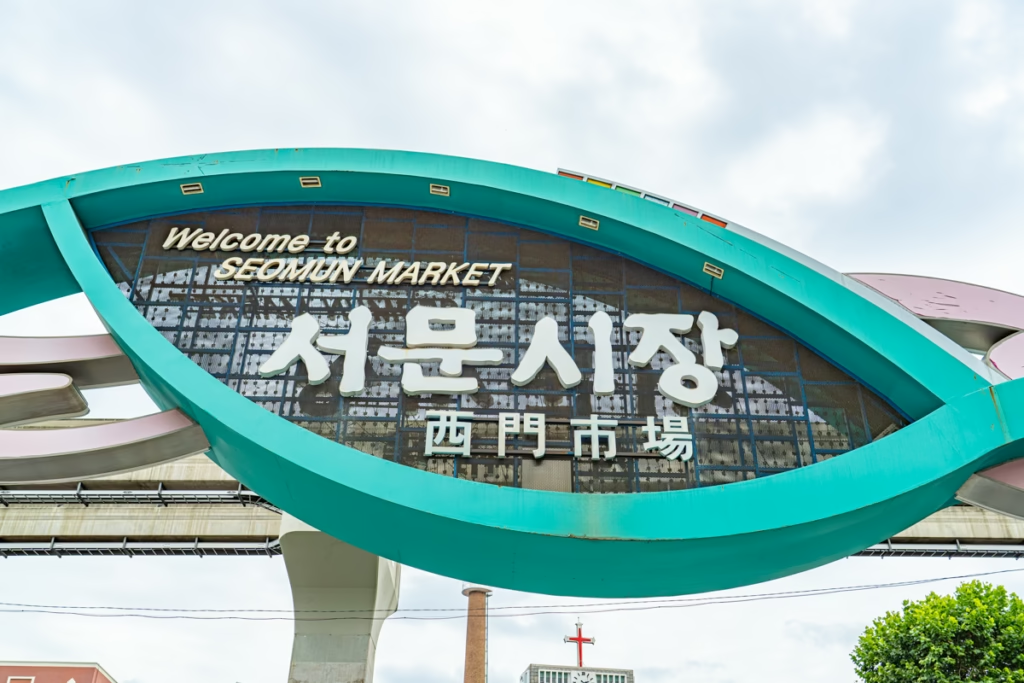
Korean travel writing often pairs Daegu Seomun Market alongside two other Joseon-era commercial giants — the markets of Pyongyang and Ganggyeong — as one of the three great trading centers of the late dynasty. The other two have not survived in any recognizable form. This one has, and on a Friday evening it will remind you of that fact at full volume and full oil temperature.
The market’s roots trace to a five-day rotating bazaar outside Daegu’s north gate, before trade shifted beyond the west gate in 1677 following the national rollout of the Daedong taxation system. Its current site — built on reclaimed land at Cheonwangdangji — received official public market status on September 28, 1922. Over a hundred years later, the smell of frying dumplings still drifts across the same block.
Getting to Daegu: KTX, Two Lines, and a Monorail You Didn’t See Coming
From Seoul Station, a KTX to Dongdaegu Station runs in roughly 1 hour 45 minutes. From there, board Daegu Subway Line 1 toward Seongdang and transfer at Myeongdeok Station (명덕역) to Line 3 — an elevated monorail that skims above the city’s rooftops rather than burrowing under them. Three stops later, you step off at Seomun Market Station (서문시장역).
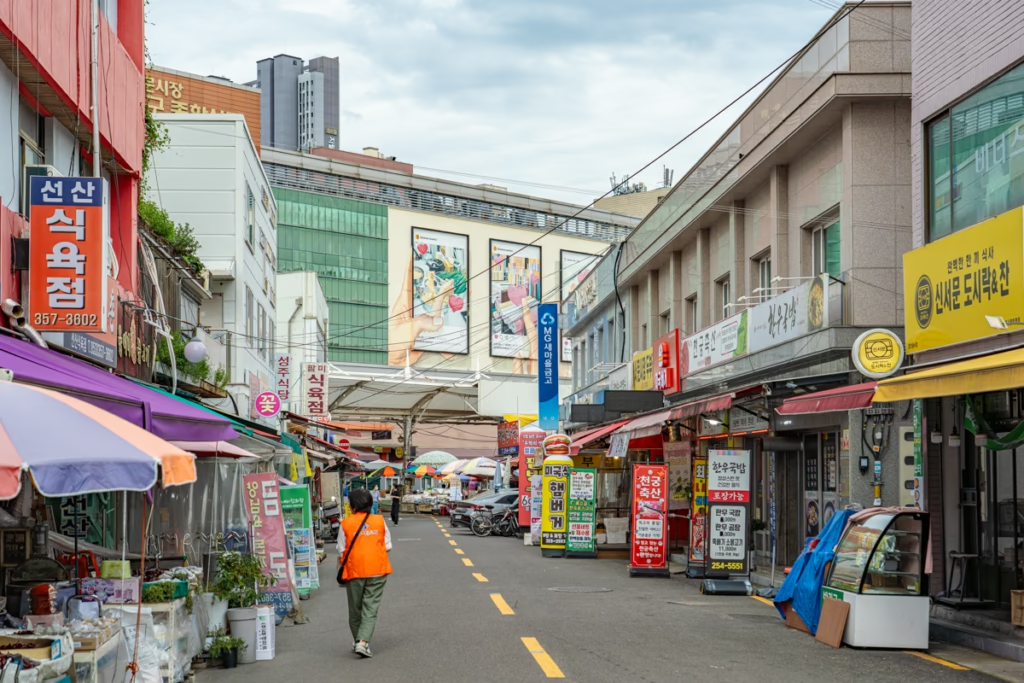
I noticed it the moment I came out of Exit 3: the market is right there. Not a ten-minute walk, not a confusing junction. One flight of stairs, and you’re already close enough to smell the fryers.
The friction is the schedule. Line 3 runs until around 11 pm on weekdays, slightly later on weekends — workable in theory, but tight if you’re aiming for the full night market, which runs until 11:30 pm on Fridays and Saturdays. Catching the last monorail means leaving before the best street food batches of the evening arrive. The cleaner solution: stay one night near the market and return to Seoul the following morning.
Guesthouses within walking distance fill up fast on weekend nights, especially during peak autumn foliage season. Booking at least two to three weeks out makes the difference between your first choice and whatever’s left. [Search available stays near Daegu →] (Booking.com link, rel="sponsored nofollow")
One more detail worth confirming before you travel: the market is closed on the 1st and 3rd Sundays of every month. It’s the kind of thing that isn’t obvious until you arrive at 10 am to find the main alleys shuttered and a single ajusshi rolling a cart toward a locked gate. Check the calendar.
What to Eat at Daegu Seomun Market
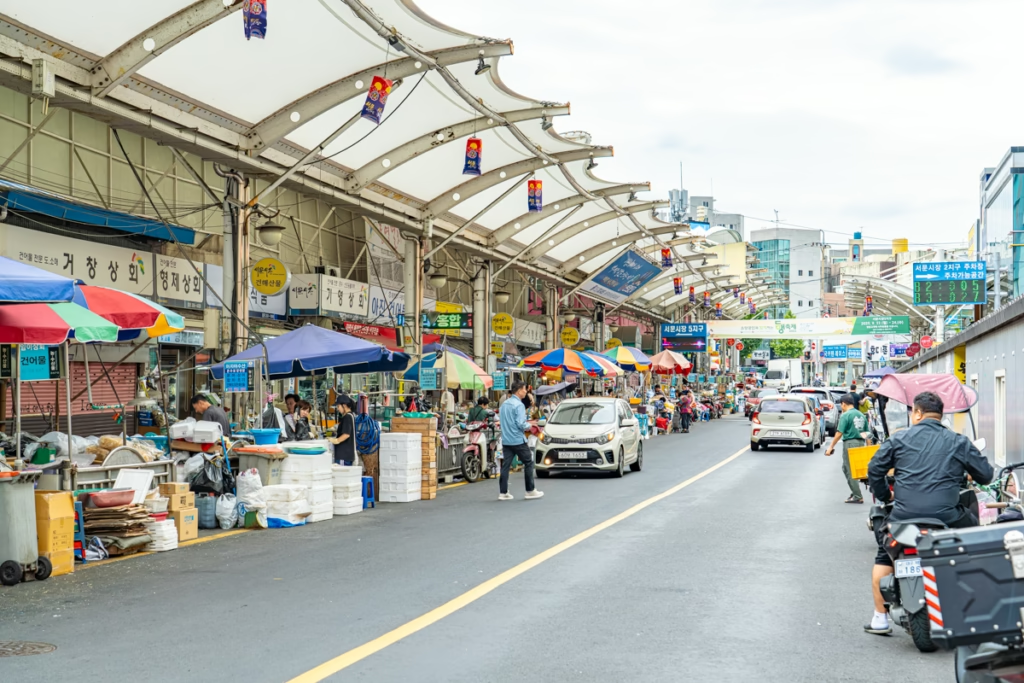
Daegu Seomun Market runs about 400 meters end to end, and at any given hour, roughly half of that distance is on fire in some form — griddle plates, boiling broth pots, deep fryers running at capacity. What follows is the order in which I’d work through it.
Napjak Mandu: Daegu’s Signature Flat Dumpling
Before the napjak mandu lands on the table, you assume it’ll be ordinary. A dumpling is a dumpling.
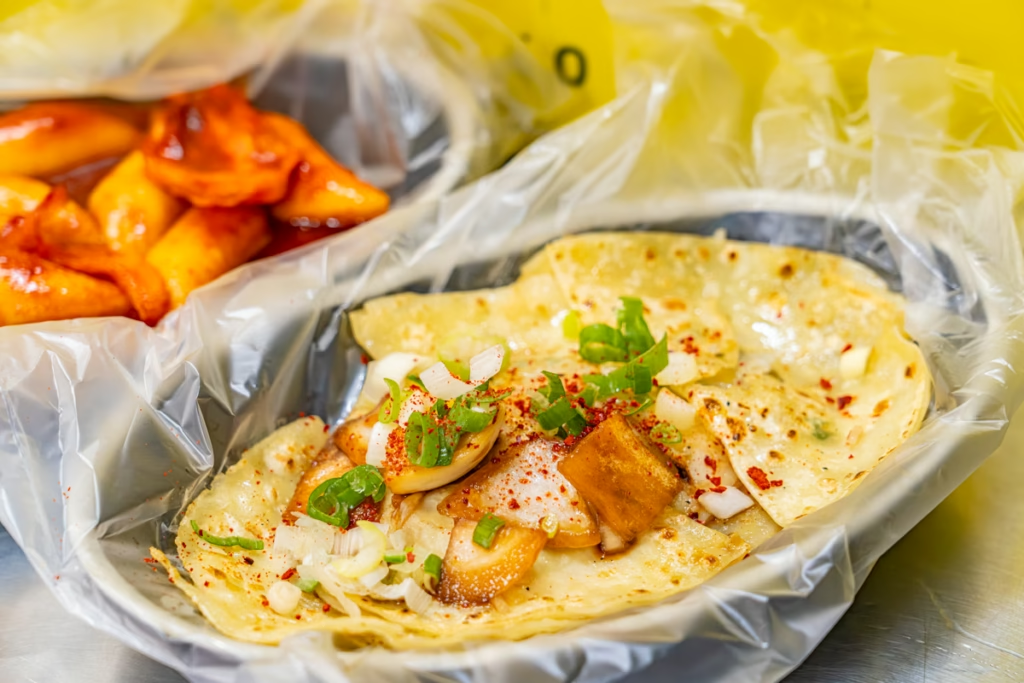
What caught me off guard was the texture — or more precisely, the violence of the contrast. The outside crackles like a thin cracker pulled straight from a dry griddle; the inside is barely-seasoned glass noodle and chive, soft and mild on their own. The real flavor comes from dipping. Each stall keeps a house-fermented chili sauce made to its own formula, and the color, heat level, and sweetness vary enough that two tables side by side are genuinely eating different meals.
The second option — dragging the dumpling through the tteokbokki broth simmering on the adjacent burner — is what regulars do. The sauce clings to the crisped edges and softens the center simultaneously. Two people will finish a plate without noticing.
The practical friction here is language. These stalls have no English signage, and pointing at the griddle only carries you so far. One Korean phrase worth committing to muscle memory: “납작만두 하나 주세요” (napjak mandu hana juseyo — “One order of flat dumplings, please”). Papago, installed in advance, handles everything after that.
The Noodle Alley: Steam, Broth, and a Side Dish Nobody Warned Me About
Every photo I’d seen of the noodle alley (국수 골목) made it look like a setup for tourists — thirty-odd identical stalls side by side, clearly positioned for easy comparison and easy content. A place that knows it’s being photographed.
My first instinct was wrong. On a Tuesday in late October, every stall was packed with retirees, market vendors eating their midday meal, and a group of construction workers sharing a plastic pitcher of barley tea. The woman running my stall had been doing this since before I was born and communicated primarily through the speed at which she put a bowl in front of me. I was the only foreigner in the room, and not a single person looked up.
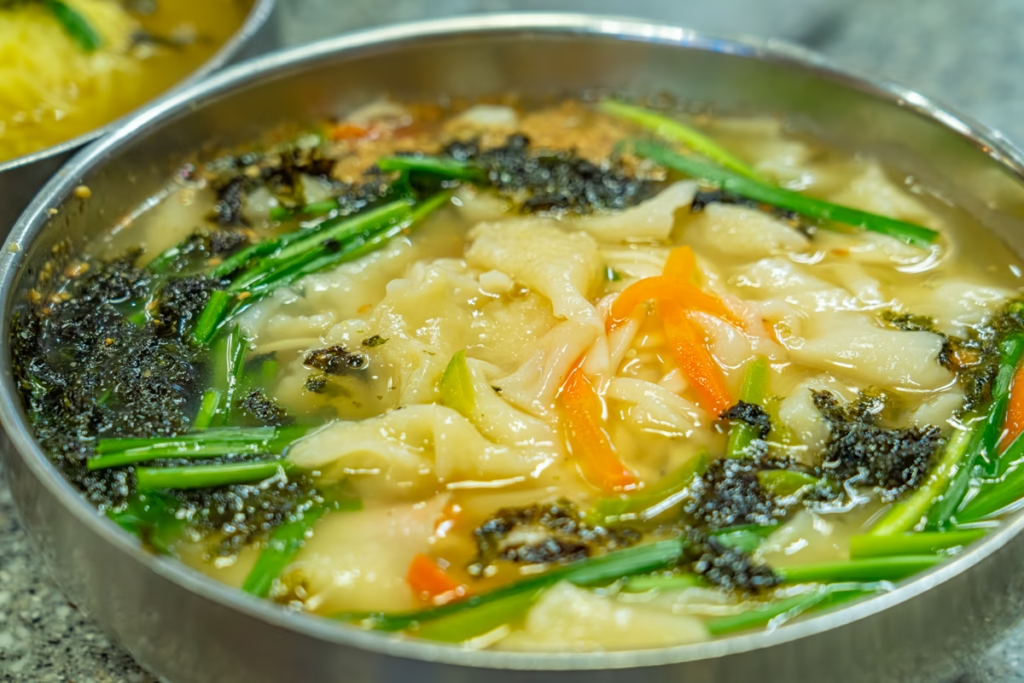
The default order here is kaljjebi (칼제비) — half hand-torn sujebi dumplings, half knife-cut noodles in a clean anchovy broth. The broth itself is quiet; the point is textural. The torn pieces are chewy and dense. The noodles slip. Together they do something neither does alone. A bowl runs around 7,000 KRW.
On every table sits a bowl of fresh oi-gochu (오이고추) — small Korean green peppers, crisp and lightly spiced. The first time I ordered here, I left them untouched and spent the meal wondering what was missing. Eating them between sips of broth resets the palate in a way that the noodles alone don’t ask for but clearly expect. The bowls are refilled without asking.
Most stalls here are cash only. A GS25 with an ATM sits roughly 200 meters south of the alley entrance on the main road. Pull cash before you sit down; the line moves fast and the ajummas are not inclined to pause it while you search your phone for your card.
Walking and Eating: The Street Snack Circuit
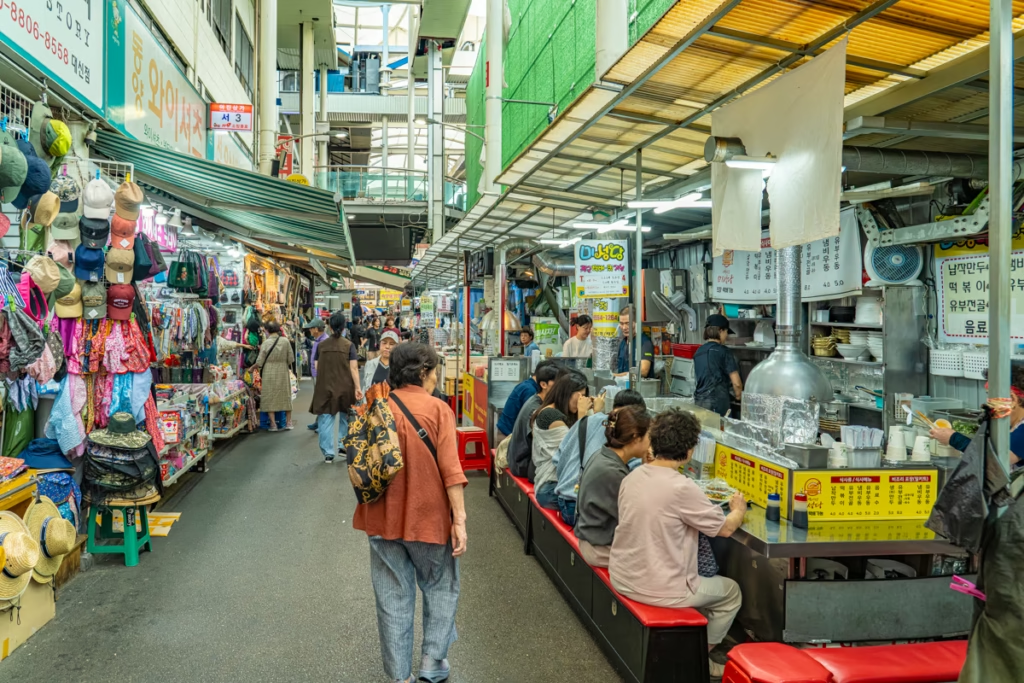
The unspoken rule of the snack circuit is to arrive hungry and pace yourself poorly anyway.
Ssiat hotteok (씨앗호떡) is a Busan import that’s found permanent ground here. The outside caramelizes against the griddle into something between bread crust and candy; inside, a mixture of sunflower seeds, pumpkin seeds, and brown sugar syrup pools and spills the moment you bite through. The burn is immediate, expected, and still underestimated. Price: around 2,000 KRW.
I noticed the peanut bread (땅콩빵) stalls run low by early afternoon on weekends — sometimes by 1 pm. These are small walnut-cake-style molds filled with crushed peanut paste rather than walnut: lighter in flavor, less sweet, better alongside coffee. If this is something you want, arrive before noon. The afternoon batches come out fresh, but the queue triples and the best of the morning run is already gone.
Fresh-pressed fruit juice (생과일주스) stalls appear at nearly every corner — whole fruit blended to order, roughly 3,000–5,000 KRW per cup. More concentrated and cheaper than anything available in the cafés on the surrounding blocks.
Jjim Galbi: Spiced Braised Ribs in an Aluminum Pot
If the dumplings and noodles are the market’s street-level introduction, jjim galbi is the sit-down argument that Daegu’s food culture is serious.
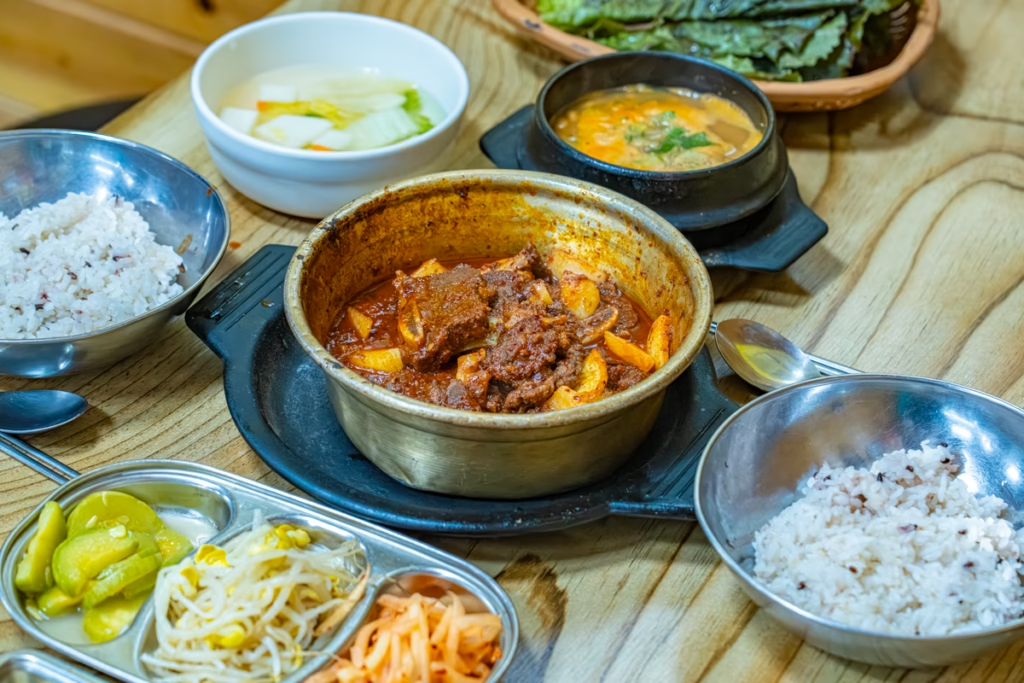
What the photos don’t show is the smell when a fresh pot arrives at the table: not the sweet soy glaze of the Seoul version, but something sharper — fermented dried chili, raw garlic, and a braising liquid that’s been reducing for longer than you know. The ribs arrive in a thin yanggeun naembi — the kind of aluminum camping pot that belonged to someone’s grandfather — and the meat slides off the bone without drama.
The order is simple: choose beef or pork, and indicate heat preference. For a first visit, “중간 맵기” (jungan maepgi — “medium spice”) lands somewhere between warming and genuinely challenging, which is exactly where Daegu cooking prefers to operate. The kitchen will adjust further on request. The real finish is the fried rice — after the ribs are finished, the server returns the pot to the burner with cooked rice and the remaining sauce. Leaving before this stage is the most common mistake first-timers make.
The jjim galbi street (찜갈비 골목) runs just south of the market’s main footprint. Google Maps will steer you toward a parking structure before giving up entirely. On Naver Maps, search 찜갈비 골목 in Korean — that drops a pin directly at the alley entrance. Kakao Maps resolves the same search string with equal accuracy. This is one of the clearest cases in Daegu for having Naver installed and set to Korean input before you arrive.
After Dark: The Weekend Night Market
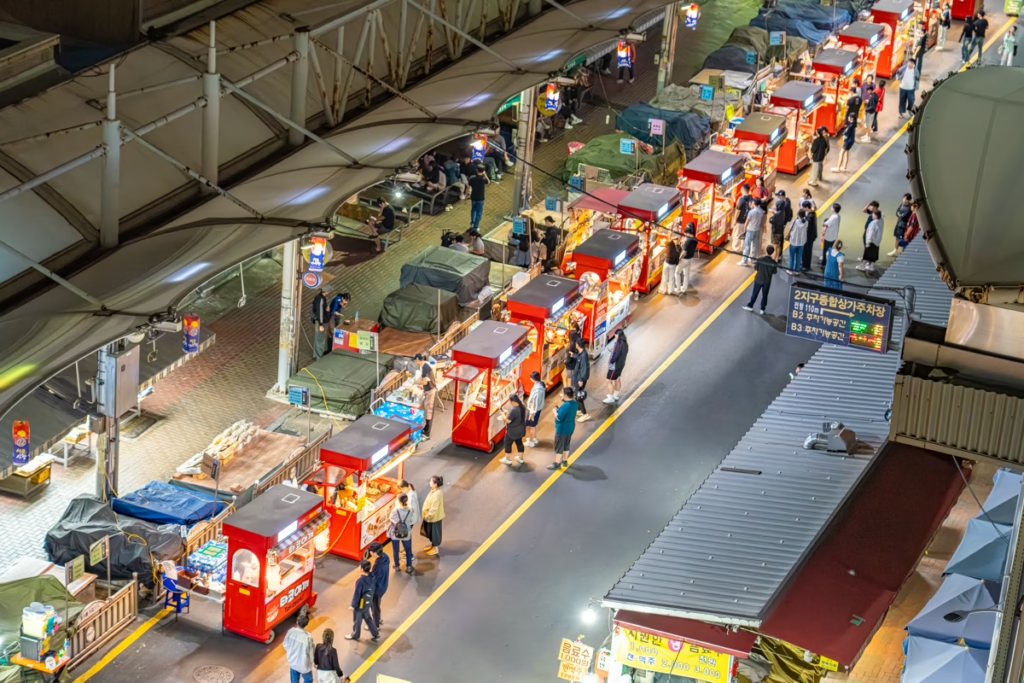
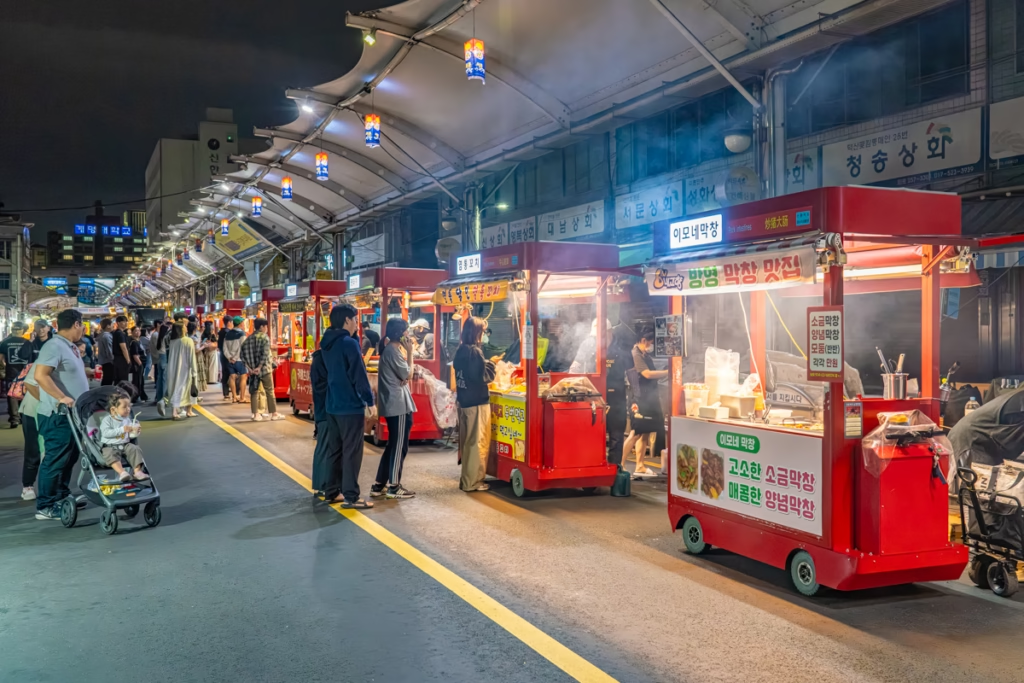
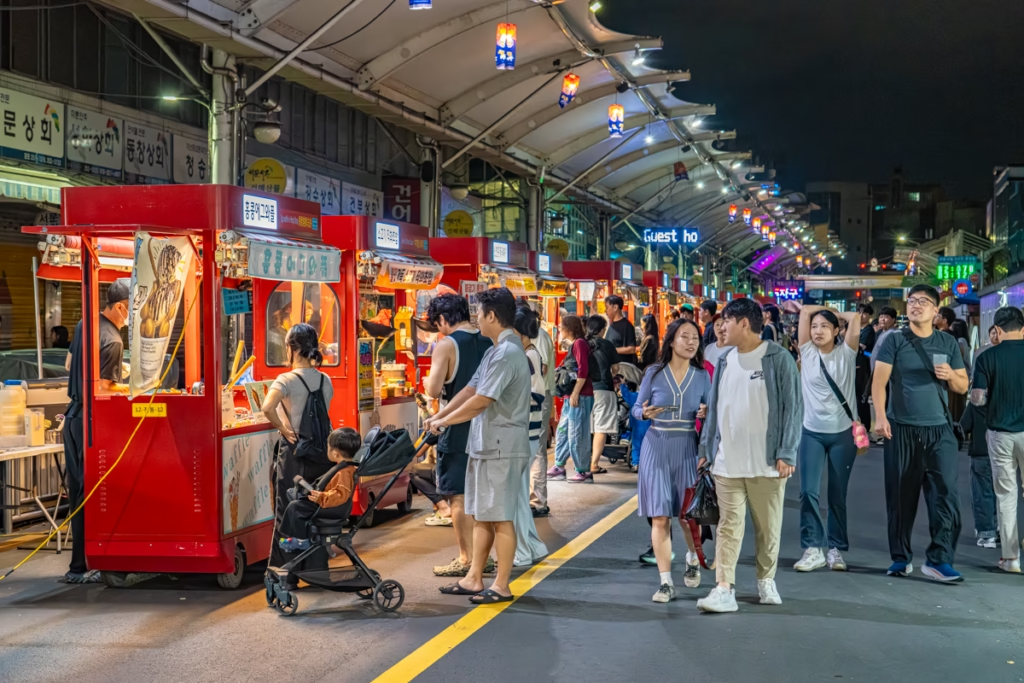
Every Friday, Saturday, and Sunday from 7 pm, the 350-meter central street shuts to traffic and a different version of the market takes over.
I’ve been here three times on Friday nights, and every time I’ve told myself I’m just going for a walk. Three stalls in, that position becomes untenable. The layout is built for grazing: thinly sliced cube steak seared on a flat-top, a portion of tteokbokki ladled from a red-orange vat, something at stall forty-three labeled “Vietnamese fusion” that resisted easy categorization but worked.
The strategy that actually functions: get a drink first, walk the full 350 meters without stopping, then work backward. The first-timer’s mistake — and the one I made — is committing at stall three with a full portion, then spending the rest of the evening carrying a container and wishing things had gone differently.
Blue hour arrives just after 7 pm here, and the twenty minutes when the sky is still cobalt and the stall string lights have already come on is the best window the market offers photographically — and gastronomically, before the density of the crowd makes decision-making harder.
Operating hours: Fri–Sat 19:00–23:30, Sun 19:00–22:00. Arriving at 7:15 pm beats the worst of the crowd. Arriving at 9 pm catches the freshest second-wave batches from vendors who restocked after the opening rush.
Accommodation near the market fills fast on Friday and Saturday nights in spring and autumn. If you’re planning around peak season, booking three weeks out is realistic rather than cautious — the same window applies whether you’re visiting for foliage or for the southern coastal spring scenery that draws visitors to this part of the country. [Search available accommodation near Seomun Market →]
Fabric, Household Goods, and the Art of the Ask
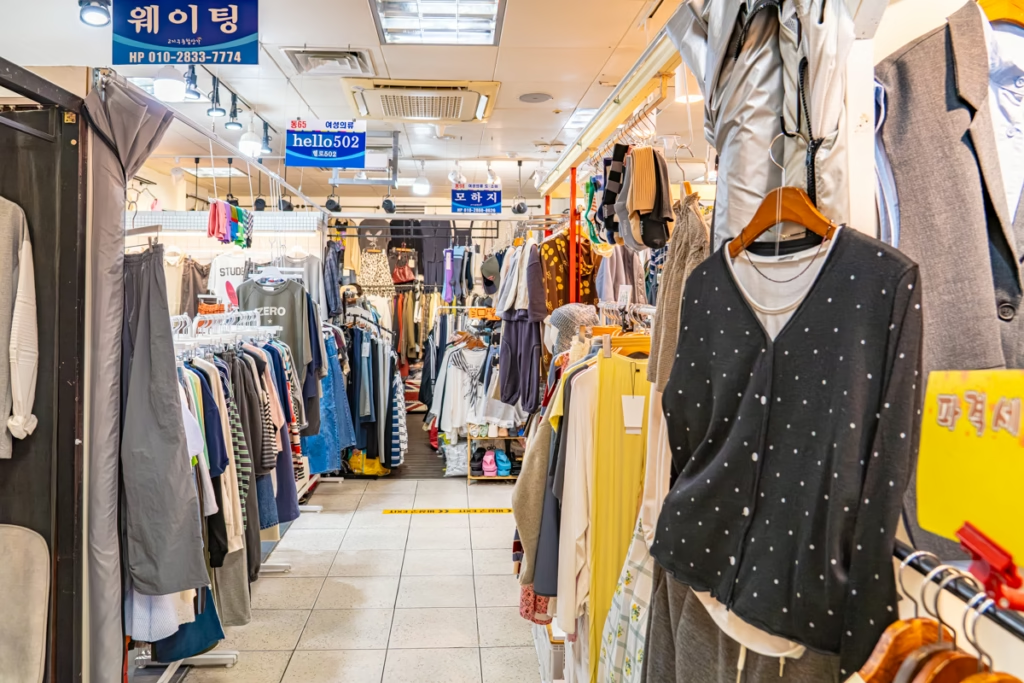
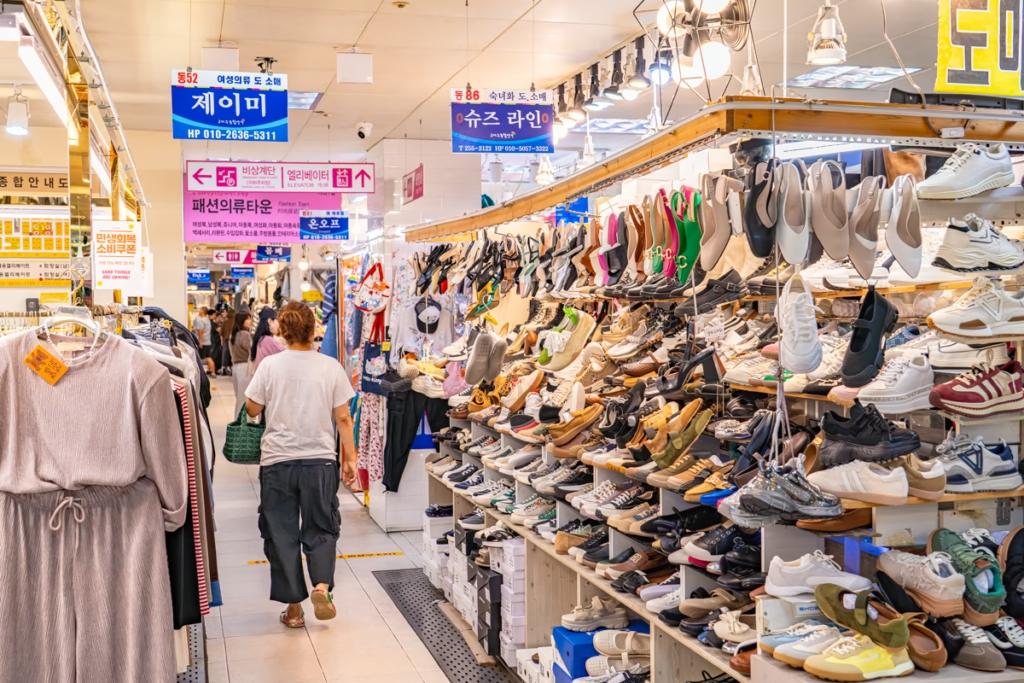
Daegu built its modern economic identity on the textile industry, and the market is where that history is still active and transactable.
Honestly, I almost turned back when I first walked into the fabric section — bolt after bolt of material stacked floor to ceiling with no visible pricing, no staff making eye contact, no obvious logic to the arrangement. What I eventually understood: the vendors here are accustomed to buyers who know what they want. Walking in with a specific request — a fabric type, a weight, a rough yardage — converts the transaction from intimidating to efficient within about thirty seconds.
Couples doing pre-wedding preparation often come specifically for hanbok fabric and household linen at a fraction of what the same materials cost in Seoul’s Insadong. Campers and hikers tend toward the kitchen goods and outdoor supply stalls clustered near the eastern end. Prices are negotiable, and a relaxed opening offer in any language is understood by vendors as a standard starting point rather than an insult.
On Naver Maps, search 서문시장 — it will drop a pin at the main Dalseong-ro entrance. Kakao Maps uses the same search string.
One Block East: Cheongna Hill, the Cathedral, and the Herb District
Cross the main road directly east of the market entrance and you’re standing at the base of Cheongna Hill (청라언덕).
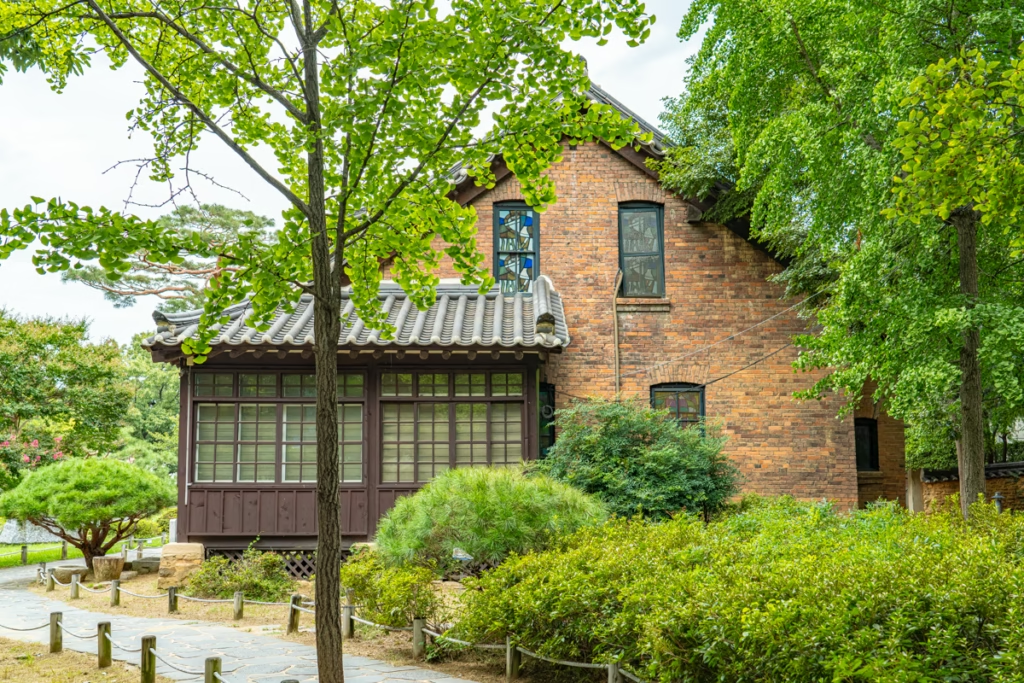
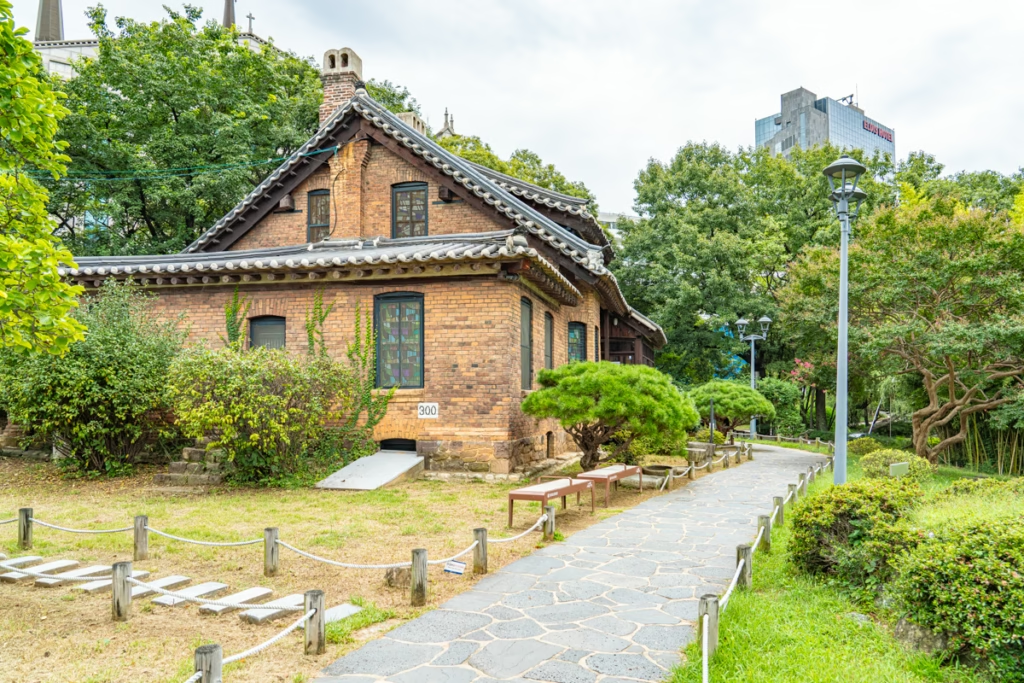
The thing no one mentions is that this isn’t simply a scenic detour — it’s where Daegu’s modern history compressed itself into a single ridge. In the late 19th century, American Protestant missionaries cleared this land, built a church, a hospital, and residential houses, and planted 72 apple trees brought from the United States. One direct descendant of those original trees still grows on the slope. Daegu’s association with apple cultivation begins here, on this specific hillside.
The missionary houses now function as small museums (temporarily closed for interior renovation at time of writing; exterior viewing remains fully accessible). The loop takes about 20 minutes at a relaxed pace. The brick facades and Western-style roof lines read strikingly against the surrounding residential streets — a composition that doesn’t need explanation to land.
Continuing east, the path becomes the Daegu March 1st Independence Movement Road — the preserved route where Daegu’s resistance to Japanese colonial rule took physical form in 1919. It’s a short stretch, but it changes the register of the walk entirely. For anyone who wants to follow that thread deeper, the architecture of colonial detention and Korean resistance is documented in close, uncomfortable detail in Seoul.
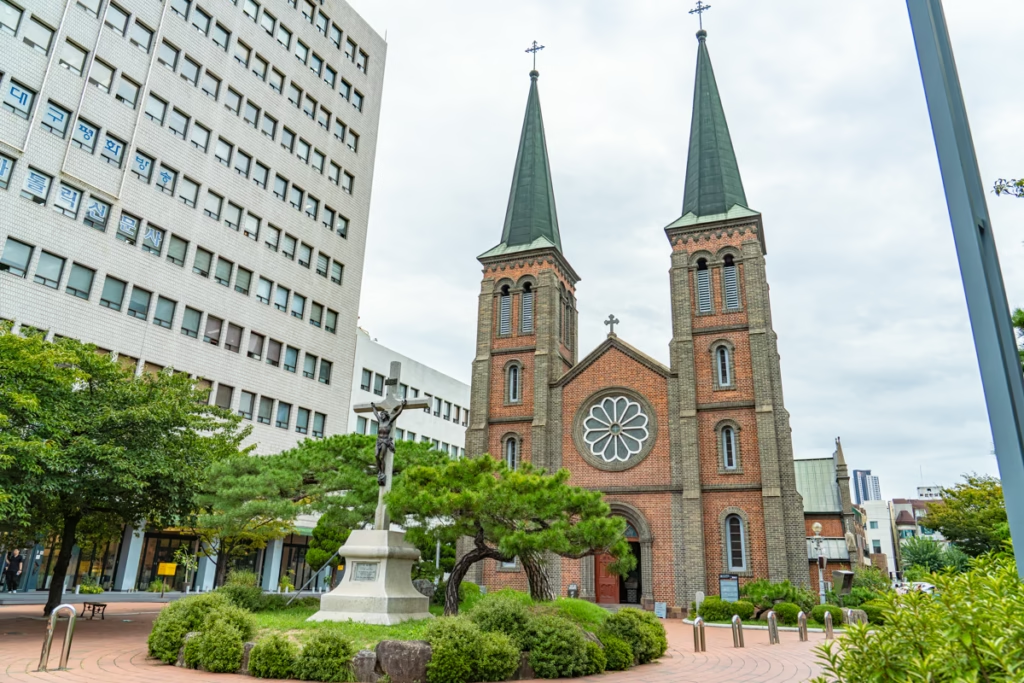
Gyesan Cathedral (계산성당), consecrated in 1903, sits at the eastern edge of the hill. It’s the oldest Gothic-style cathedral in the Yeongnam region, built in a mix of Romanesque and Gothic forms that arrived via French missionaries. The stone twin towers photograph with the most definition in morning light, before noon flattens the facade. By midday the stonework loses its shadow relief entirely — plan accordingly if this is a shot you want.
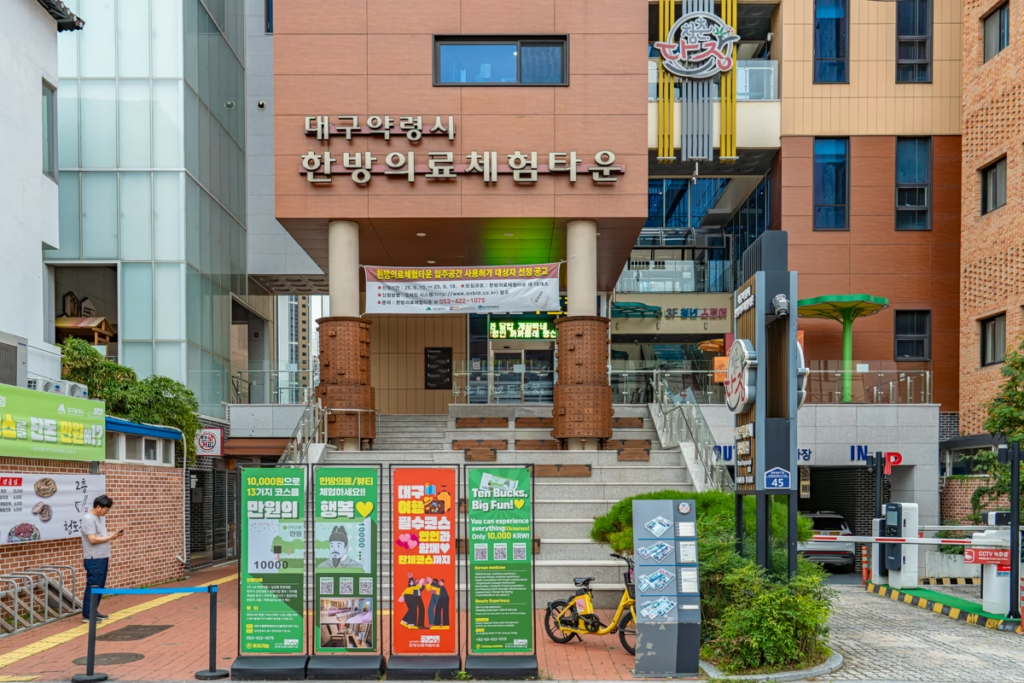
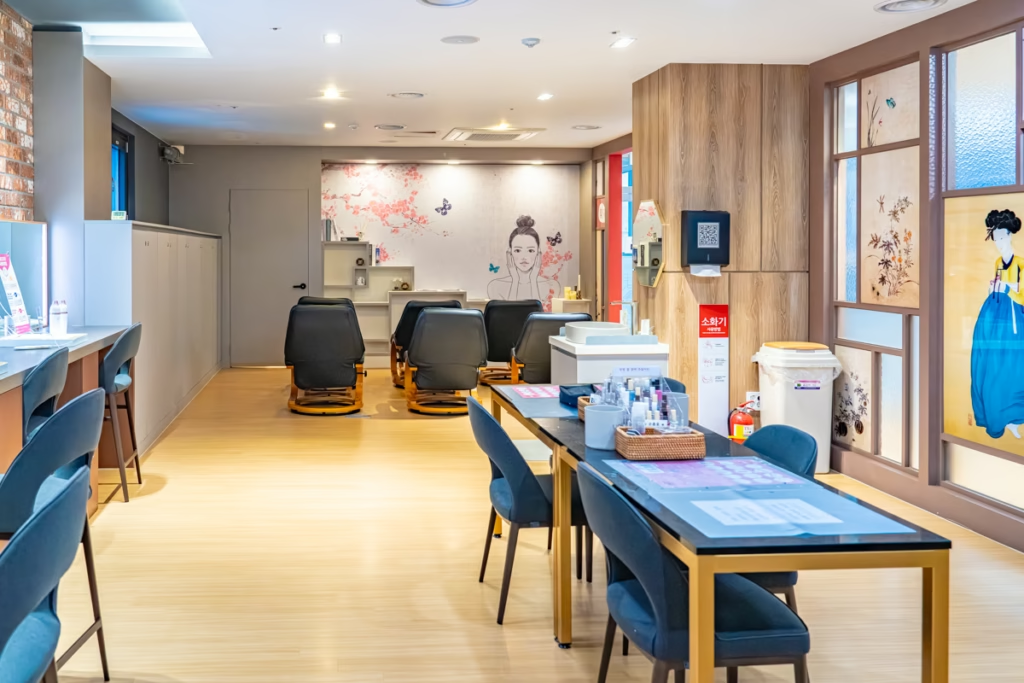
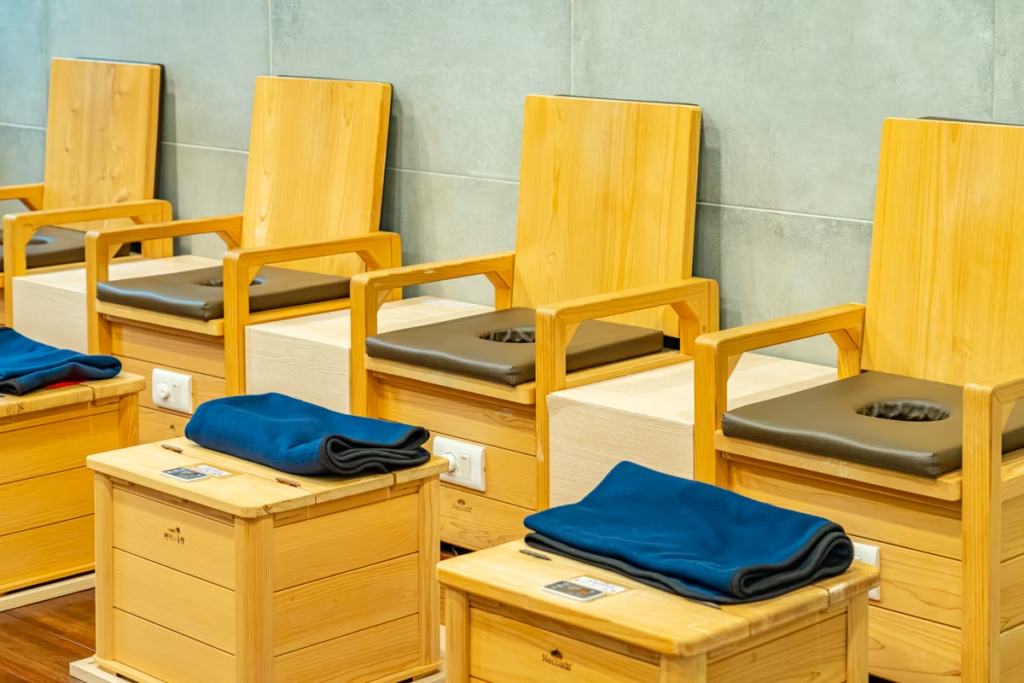
Walking further east brings you into Yangnyeongsi (약령시), Daegu’s traditional herbal medicine district. The dried roots, mushrooms, and bark piled outside each storefront produce a combined smell that is difficult to describe precisely: earthy, slightly medicinal, faintly sweet in a way that has nothing to do with food. Inside the Oriental Medicine Experience Town (한방의료체험타운), there’s a herb-infused foot bath (5,000 KRW), a body composition and skin age assessment, and on-site consultations with a licensed Korean medicine practitioner. It runs about 90 minutes at an easy pace and is one of the more genuinely restorative stops in this part of the city.
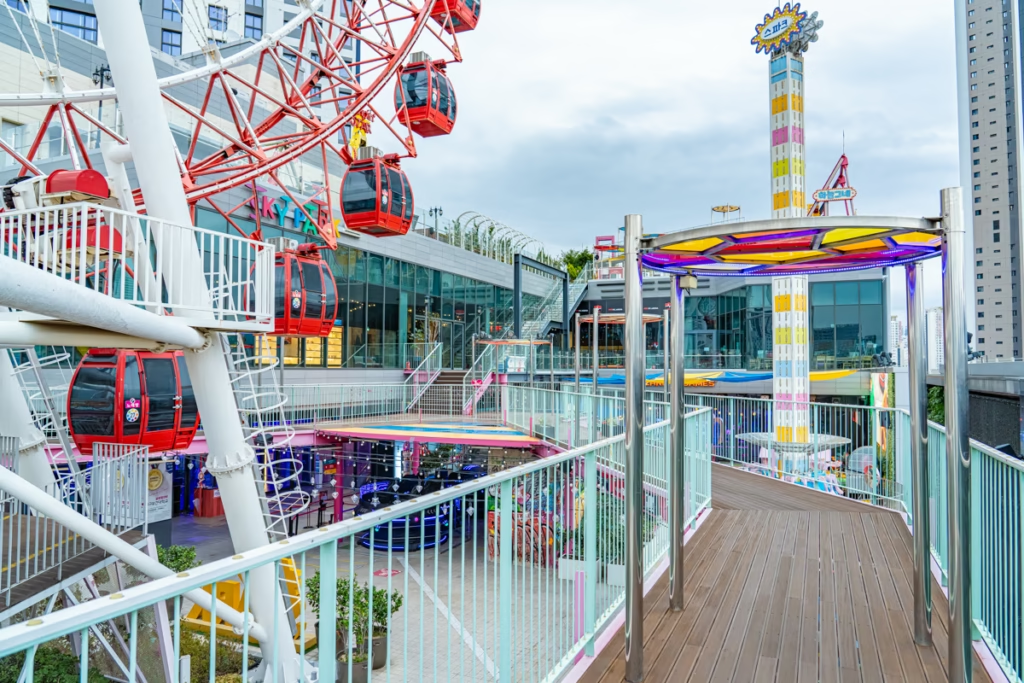
Dongseongno — Daegu’s main commercial corridor — is ten minutes on foot from here. For elevation, Sparx Land occupies the 7th through 9th floors of the Spark building on Dongseongno-gil: outdoor rides, a rooftop Ferris wheel (9,000 KRW), and karaoke equipment inside each gondola cabin. On weekends, the ticket counter queue forms early and backs up to the elevator lobby by midday. Booking in advance removes that problem entirely.
For the mountain-temple counterpoint to the market’s commercial intensity, the ancient compounds explored in this guide to Korea’s most contemplative mountain architecture make a natural overnight addition if your itinerary allows it.
Come on a Thursday or Friday to overlap the daytime market with the evening shift. Eat more than you planned. Leave room in your bag if you’re walking the fabric section.
The Daegu Seomun Market is not the cleaned-up version of itself that tourism brochures prefer. The floor gets slick near the fryers. The noodle alley is loud. The jjim galbi alley requires navigation that Google Maps will not provide. That friction, and what you find on the other side of it, is the point.
Practical Manual
| Category | Details |
|---|---|
| Exact Address | 50 Dalseong-ro, Jung-gu, Daegu / 대구 중구 달성로 50 |
| Naver / Kakao Map Search | 서문시장 |
| Market Hours | 09:00–18:00 (varies by stall) |
| Closed | 1st and 3rd Sundays of every month |
| Night Market Hours | Fri–Sat 19:00–23:30 / Sun 19:00–22:00 |
| Contact | 053-256-6341 |
| Getting There | KTX Seoul Station → Dongdaegu Station (~1h 45m) → Daegu Line 1 → Myeongdeok Station → Line 3 (monorail) → Seomun Market Station (Exit 3) |
| Estimated Cost | Napjak mandu ~4,000 KRW · Kaljjebi ~7,000 KRW · Ssiat hotteok ~2,000 KRW · Jjim galbi ~15,000–18,000 KRW per person |
| Nearby: Cheongna Hill | 청라언덕 / 달구벌대로 2029 — Free entry; museum interiors temporarily closed for renovation |
| Nearby: Gyesan Cathedral | 계산성당 / 서성로 10 — Tel. 053-254-2300 |
| Nearby: Oriental Medicine Town | 한방의료체험타운 / 중앙대로77길 45 — Tel. 053-422-1075 · Foot bath 5,000 KRW · Beauty experience 5,000 KRW |
| Nearby: Sparx Land | 스파크랜드 / 동성로6길 61 — Tel. 053-230-2010 · Ferris wheel 9,000 KRW · All-access pass 27,000 KRW · Mon–Fri 13:00–21:00 / Sat–Sun 11:30–22:00 |
| Recommended Stay | 3–5 hours (market only) · Full day with surrounding areas |