
Transparency Note: This manual contains affiliate links. If you book through them, I earn a small commission at no extra cost to you. This keeps my EV charged and allows me to provide unfiltered, field-tested travel insights.
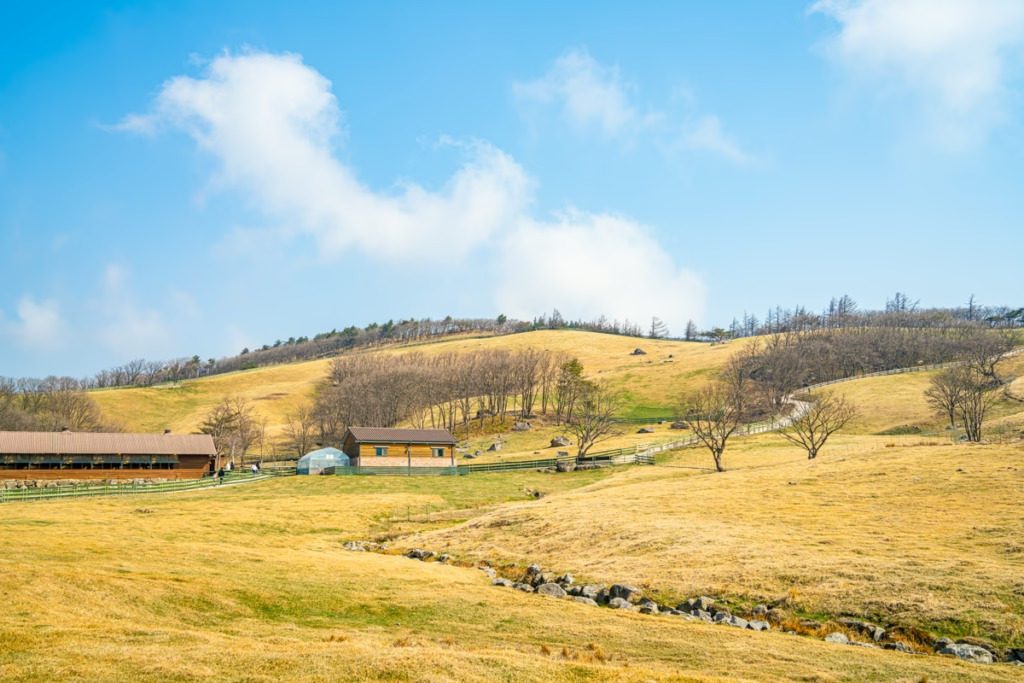
Most people hear “Pyeongchang” and think ski season or the 2018 Winter Olympics. Fair enough — this corner of Gangwon Province built its reputation in snow. But there’s a different version of Pyeongchang alpaca forest that runs in every season, sits at 900m on the flank of Balwangsan, and takes twelve minutes to reach by a mountain monorail that climbs gradients most people wouldn’t attempt on foot.
That place is Aniforé — short for Animal Forest — and it is, on balance, the strangest and most quietly satisfying day out I’ve done in the mountains of Korea.
Getting to Pyeongchang & Aniforé from Seoul or Busan
Pyeongchang sits in the Taebaek Mountain range in Gangwon Province. From Seoul, the drive via the Yeongdong Expressway (영동고속도로) runs to about 2 hours 30 minutes in clear traffic — the road is well-engineered and the final stretch along the ridge feels nothing like approaching a ski resort anywhere else. I’ve done it twice in the EV, and the fast charger at Munmak rest stop (350kW, 80% in 20 minutes) is a reliable mid-trip stop.
By KTX, Seoul Station to Jinbu (진부) station takes roughly 1 hour 40 minutes, with around 10 trains daily. From Jinbu, Mona Park Yongpyong runs a free shuttle bus departing at 11:00 and 15:00 — but it only takes resort guests or pre-registered visitors. If you’re not staying on property, a taxi from Jinbu covers the 16km to Mona Park in about 20 minutes, typically under ₩20,000. Worth confirming shuttle eligibility before you rely on it.
From Busan, the drive is roughly 3 hours northeast via the Gyeongbu and Jungang expressways. No direct rail connection that makes time sense.
What caught me off guard was the elevation change on approach. The Yeongdong Expressway climbs sharply through the Daegwallyeong Pass, and by the time you reach the Daegwallyeong IC exit, the air already feels several degrees cooler and noticeably drier than the lowlands below. In late autumn and early spring, that differential can be dramatic — the valley below green and the ridge above white.
The Monorail Ascent — and the Friction Nobody Warns You About
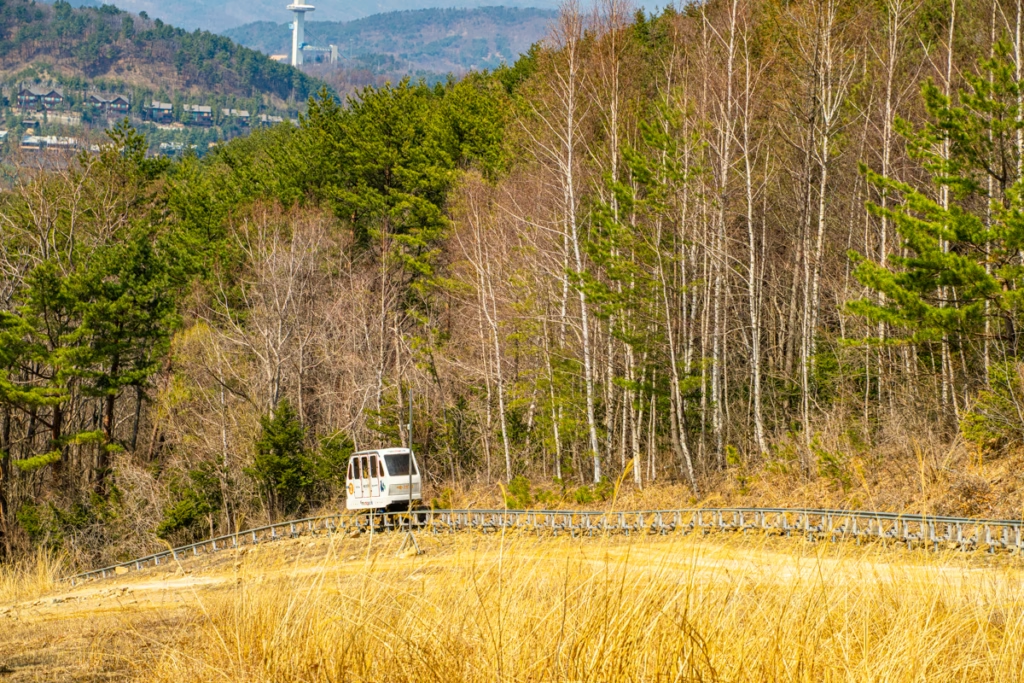
Aniforé sits at the 애니포레 더골드 (Aniforé the Gold) base area inside Mona Park Yongpyong. From the ticket window, you choose one of two approaches: hike the trail (roughly 30 minutes uphill on a route that overlaps the Balwangsan Eom Hong-gil trekking path, proper hiking boots required) or board the mountain monorail.
I’d skip the hike on a first visit unless you specifically came for altitude training. The monorail is the practical choice — 12 minutes of ascending a gradient that would otherwise take five times as long, and your legs arrive fresh for the actual forest walking.
Operating hours: Monorail 09:30–17:00, last ticket sold at 16:00. The site closes entirely on rainy days, which is the friction nobody puts in their blog posts. I showed up once at 09:45 on what looked like a partly cloudy day — the clouds came down hard from the ridge while I was buying coffee, and the monorail was suspended before I reached the ticket window. An hour’s drive for nothing.
The workaround: check the Mona Park Yongpyong official site the morning you go, specifically the real-time weather conditions page. Rain on the valley floor doesn’t necessarily mean rain at 900m — but it usually does. If there’s any cloud sitting on the ridge at 07:00, reschedule.
During ski season (roughly late November through early spring), Aniforé is also closed Thursdays. Outside ski season, it appears to operate daily weather permitting. Confirm before going.
Current ticket pricing (verify at yongpyong.co.kr before visiting — prices adjust seasonally):
- Monorail + admission (combined): Adult ₩18,000 / Child ₩15,000
- Admission only (hiking): Adult ₩7,000 / Child ₩6,000
- Mona Park resort guests: 20% discount — worth booking on-property if you’re making a weekend of it
Inside the Pyeongchang Alpaca Forest: Spruce, Sun Loungers & Real Silence
The German spruce grove — 독일가문비나무, Picea abies — was not planted for tourism. It exists because of history.
In the 1960s, the South Korean government cleared slash-and-burn farmers from the mid-mountain zone across the Daegwallyeong ridge, including 28 households on Balwangsan who had been working potato fields at this elevation. With the farmland abandoned, Yongpyong Resort staff planted spruce seedlings across the cleared ground. Sixty-plus years later, those seedlings are now over 1,800 trees, the tallest of them requiring you to crane your neck to find the canopy.
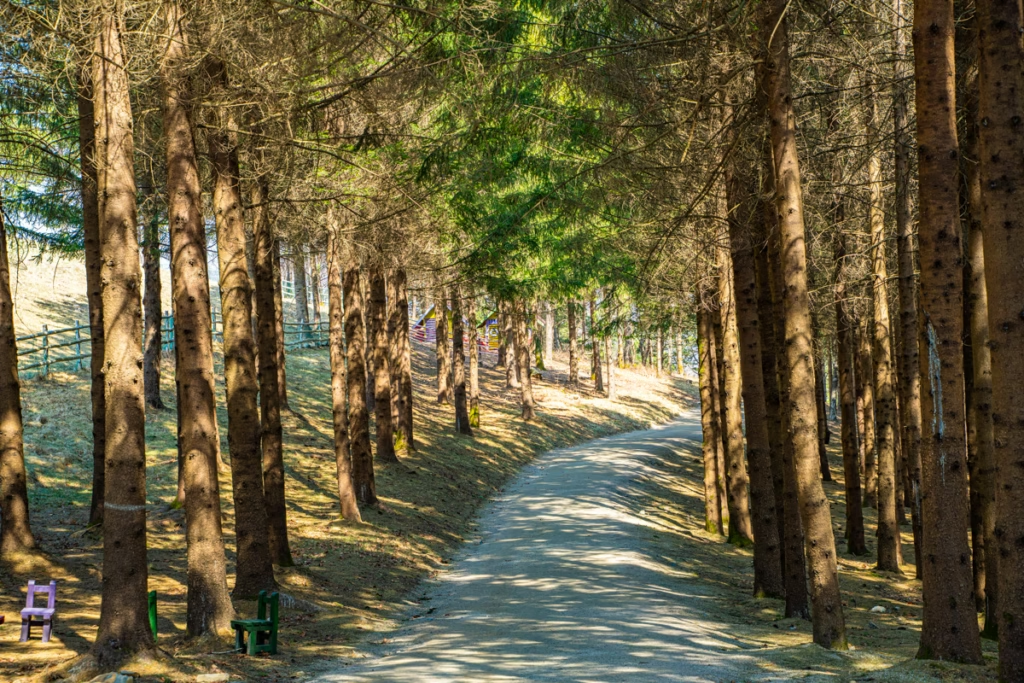
The path through the grove — called the 가문비치유숲 (Gaeumbi Healing Forest) — is a network of dirt trails connecting sun loungers, log benches, and a couple of photo installation areas. The resort has installed a tripod-mounted camera stand at one clearing specifically for self-portraits; if you’re travelling solo and want a shot that doesn’t look like a selfie, it’s actually worth using.
I noticed something I didn’t read anywhere before going: the light inside the grove is cold regardless of season. The trees are dense enough that even at noon in July, the forest floor runs twenty or more years of accumulated needle-fall deep, and the air underneath holds a damp, resinous chill. The smell — pine resin, decomposing needles, something vaguely mineral — is probably the most distinctive sensory element of the whole place. It’s the smell of a European forest transplanted to Korean mountains, and it’s genuinely disorienting in the best way. If the scenery feels oddly familiar, a Pyeongchang fir forest like this one appears among the Goblin filming locations I traced for the drama’s 10th anniversary.
The physical texture underfoot is equally notable: packed needles compressed into a surface that gives slightly with each step, quieter than any paved path. There are no signs asking you not to run, but somehow nobody does.
That quality of cold, directional light at altitude is something I’ve chased at a handful of Korean locations. The same low-angle winter sun that creates long shadows across the spruce floor here produces equally compelling conditions on Seoul’s higher ridgelines — different terrain, same principle.
Feeding the Alpacas — and the Part Nobody Mentions
The alpaca paddock sits at the deepest point of the grove, where the tree line breaks open onto a wide grass slope. The view from this clearing — south across a landscape of layered ridges — is the best on the property and worth the walk alone.
The feeding experience operates through vending machines positioned at the paddock fence. You select the appropriate feed for each animal (alpacas, sheep, goats, and rabbits are all present) and drop coins or tap your card. It’s not fancy, but the alpacas treat it as currency.
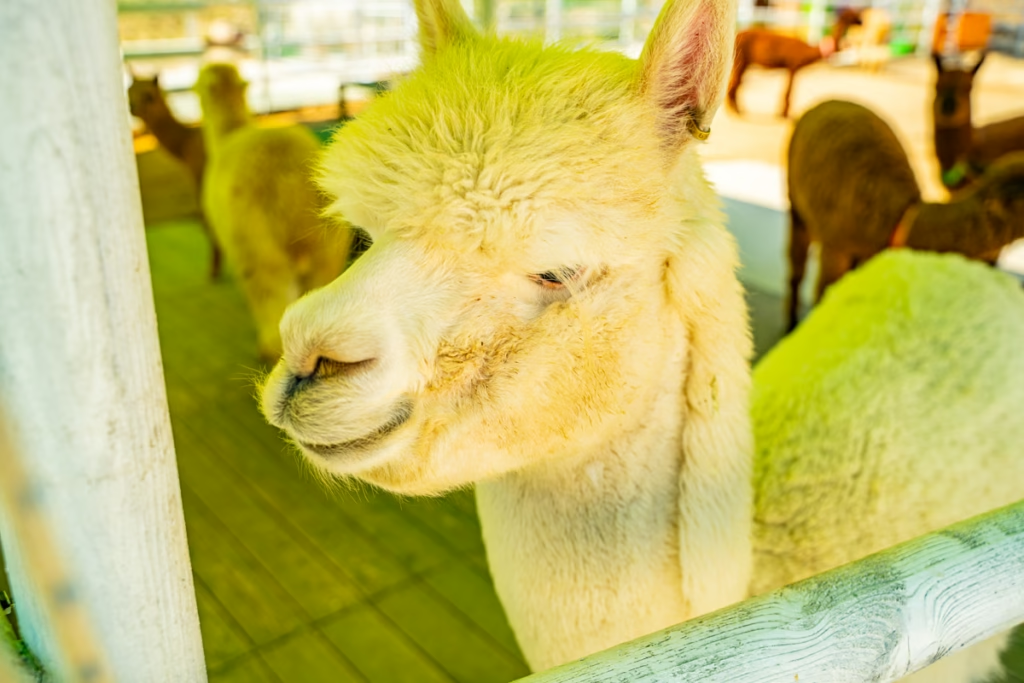
My first instinct was wrong — I assumed alpacas would be skittish or indifferent. The ones at Aniforé have clearly processed that humans equal food, and they press into the fence with a focused intensity that’s slightly unnerving up close. Their teeth are more visible than in any photo. The resort’s own guidance notes that even calm alpacas will spit when agitated: flat-eared, chin-raised posture is the warning, and a sharp step back is the correct response. I learned this the slow way.
The thing no one mentions is the alpacas’ fur texture in winter. In early March, the ones that hadn’t been shorn recently had coats that had partially felted from months of rain and snow — stiff on the surface, almost like a doormat at the front layer. Underneath that, still warm. It was an oddly compelling combination to touch.
The friction here is crowd timing. Weekend afternoons, the paddock fills with families, and the combination of excited children and food-motivated alpacas creates a compressed situation that isn’t ideal for photographs or calm interaction. Aim for weekday mornings at 09:30 when the monorail opens — you’ll have the paddock fence largely to yourself for the first 30–40 minutes.
Accommodation in the Daegwallyeong area fills quickly on long weekends, particularly in October and May. I’ve been caught without a booking on both occasions; it’s not a mistake worth repeating.
[Search available rooms near Pyeongchang Mona Park →]
Balwangsan Summit & the Sky Walk — Worth the Extra Cable Car?
Above Aniforé, the peak of Balwangsan (1,458m) is accessible via a separate 관광케이블카 (sightseeing cable car) — this is a distinct ticket from the monorail. The summit area is branded Summit Land and contains the 발왕산 기 스카이워크, a glass-floored observation deck, and the 천년주목숲길 (Millennium Yew Tree Forest Trail), a 3.2km circuit through a grove of ancient yew trees.
Honestly, I almost turned back when I saw the cable car queue on a clear Saturday in October — it stretched past the loading area and down the approach path. Two hours for a ride I’d estimated at fifteen minutes. The workaround: the lower section of the Eom Hong-gil trail connects Aniforé to the cable car mid-station and can trim the queue significantly. Ask at the ticket office if mid-station boarding is running that day; not all staff mention it unprompted.
The sky walk itself is a glass-bottomed platform cantilevered off the summit ridge over a 1,458m drop. Worth it if you’ve come specifically for the summit experience. The yew forest trail is quieter and, to my eye, more rewarding — the trees are gnarled and horizontal in a way that reads as genuinely old.
Cable car tickets are sold separately at the main Mona Park ticketing area. Check the official site for current pricing, as summit access is subject to seasonal changes.
Daegwallyeong Detour: Three Stops Worth Planning Around
Daegwallyeong Sheep Farm
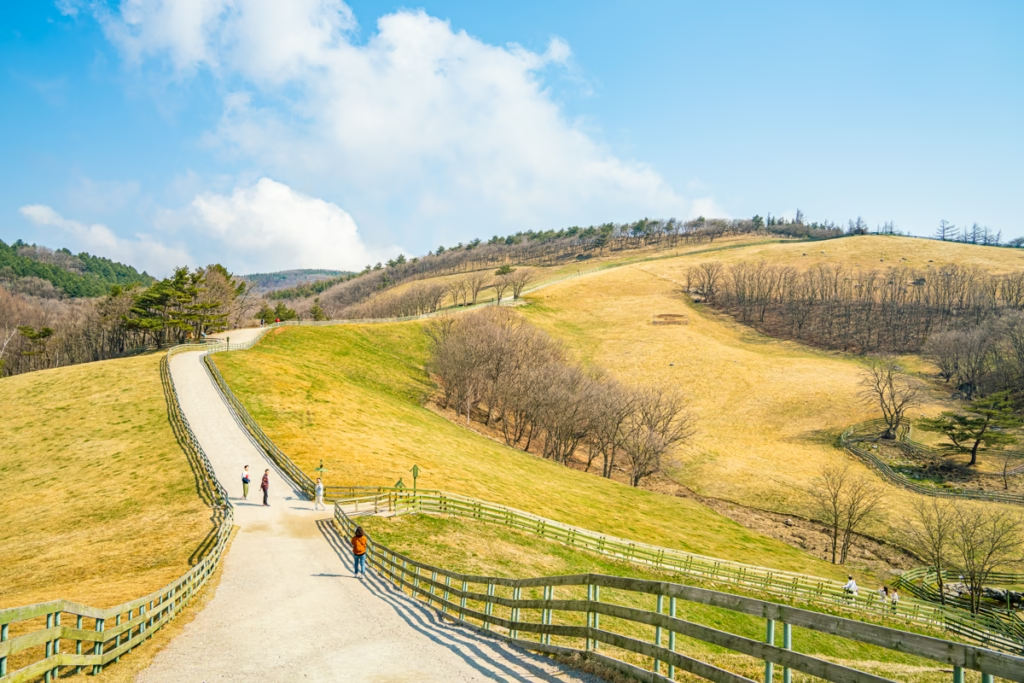
대관령양떼목장 (Daegwallyeong Sheep Farm) is roughly 10 minutes by car from Mona Park. Over 200,000 square metres of open grassland, a 1.3km walking circuit, and genuine free-range sheep from spring through autumn. The European pastoral aesthetic is not accidental — this section of the Taebaek ridge looks almost Scandinavian in overcast light. Photo points are marked throughout; the one at the back of the main pasture, looking south toward the valley, is the strongest.
What the photos don’t show is the wind. Daegwallyeong is one of the windiest locations in Korea year-round, and the sheep farm is entirely unprotected. Even in July I’ve needed a windproof layer up there. Plan accordingly.
Tirols Village & Vienna Doll Museum
티롤빌리지 (Tirols Village) adjacent to Alpensia Resort is a short drive away — an Austrian-themed commercial street built around the 2018 Olympics infrastructure. It reads as self-consciously theme-park-ish during peak summer, but the 비엔나인형박물관 (Vienna Doll Museum) inside is genuinely one of the stranger interiors in Korean tourism: thousands of dolls across multiple floors, collected over decades, covering everything from jointed porcelain to marionette rigs.
Where to Eat in Daegwallyeong
도암식당 (대관령면 대관령로, 033-336-5814) does ojamgui bulgogi (오삼불고기, squid and pork stir-fry on an iron plate) that reads as straight comfort food after a cold morning in the mountains. 남경식당 (대관령면 대관령마루길, 033-335-5891) is the local choice for kkwong mandu-guk — pheasant dumpling soup, specific to this area and worth ordering even if the translation sounds unusual. Both are cash-friendly but have card terminals; the word you need is 카드 돼요? (“Card okay?”).
Practical Manual
| Category | Details |
|---|---|
| Exact Address | 강원도 평창군 대관령면 용산리 49-1 / Yongsanri 49-1, Daegwallyeong-myeon, Pyeongchang-gun, Gangwon-do |
| Naver / Kakao Map | 모나파크 용평 애니포레 |
| Official Website | www.yongpyong.co.kr |
| Phone | 0507-1359-7166 (Anifore direct) / 033-335-5757 (Mona Park main) |
| Monorail Hours | 09:30–17:00 / Last ticket: 16:00 |
| Admission (Monorail + entry) | Adult ₩18,000 / Child ₩15,000 — verify current prices before visiting |
| Admission (hiking entry only) | Adult ₩7,000 / Child ₩6,000 |
| Discounts | Mona Park resort guests 20% / Under 24 months free |
| Closed | Rainy days (all seasons) / Thursdays during ski season |
| Pet Policy | Small dogs welcome; large breeds not permitted; carrier required on monorail |
| Best Time to Visit | Weekday mornings 09:30–11:00 year-round; late May–June (fresh spruce growth); October (autumn mist in grove) |
| From Seoul | ~2h 30min by car via Yeongdong Expressway; KTX ~1h 40min to Jinbu (진부) station + taxi ~20min (~₩20,000) |
| From Busan | ~3 hours by car via Gyeongbu + Jungang expressways |
| Shuttle Bus | Free from Jinbu station at 11:00 & 15:00 — Mona Park guests/registered visitors only; confirm eligibility before relying on it |
| Driving Directions | Yeongdong Expressway → Daegwallyeong IC → follow signs for Yongpyong Resort / Alpensia through 4 roundabouts → Mona Park Yongpyong |
| Parking | On-site at Mona Park — paid; confirm rates at entry |
| EV Charging | On-site chargers at Mona Park Yongpyong — confirm availability via Mona Park app or front desk; Munmak rest stop (350kW) reliable mid-route from Seoul |
| Cable Car (Summit) | Separate ticket — sold at Mona Park main ticketing; check yongpyong.co.kr for current pricing |
| Nearby | 대관령양떼목장 (~10 min) / 티롤빌리지·비엔나인형박물관 (~15 min) / 알펜시아 스키점프 센터 (~15 min) |
| Recommended Stay | Half day (Aniforé only) / Full day (add summit cable car + sheep farm) |
| Dining | 도암식당 (오삼불고기, 033-336-5814) / 남경식당 (꿩만두국, 033-335-5891) / 진태원 (탕수육, 033-335-5567) |
| Accommodation | Mona Park Yongpyong (on-site, 1588-0009) / Alpensia Resort (033-339-0000) / Jeonggangwon (033-333-1011) |