
Table of Contents
A practical guide to the working hanok pharmacy where cauldron-brewed Sipjeondaebo-cha and Ssanghwa-cha offer the kind of warmth that caffeine never could
Transparency Note: This guide contains affiliate links. If you make a purchase, I may earn a commission at no extra cost to you—allowing me to keep providing expert, gear-tested travel insights.
Why a Seoul Herbal Tea Experience Starts at a Real Pharmacy
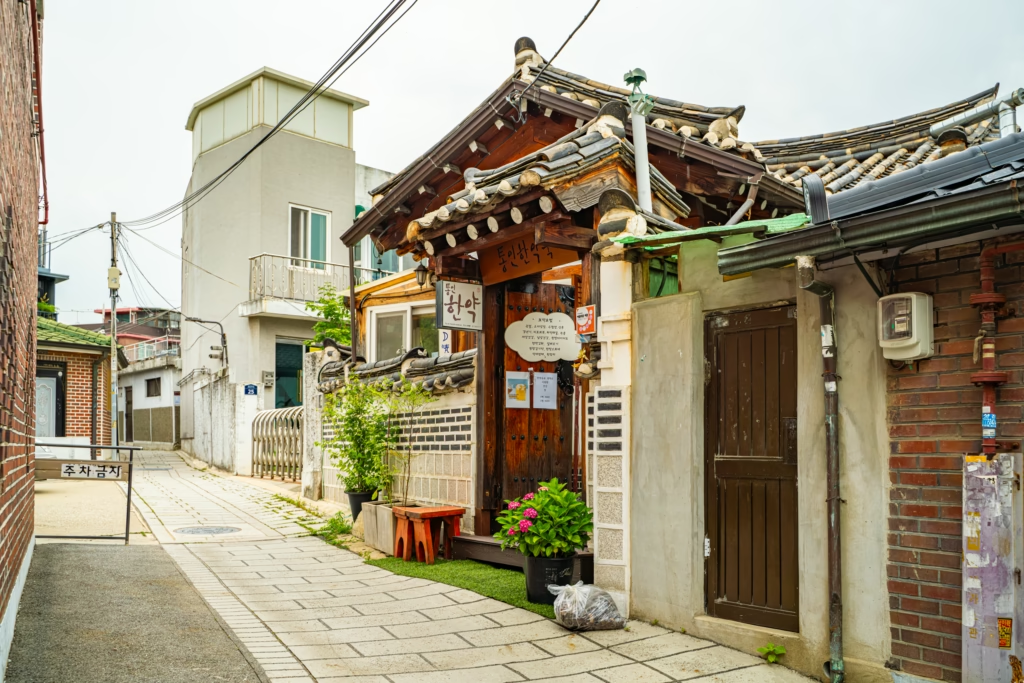
Most travelers in Seochon walk past Tongin Pharmacy without registering what it is. The signboard reads 통인한약국 in Korean—no English, no Instagram handle, no design-forward branding. The building sits on a quiet lane off Pirun-daero, a few minutes from Gyeongbokgung Palace, looking like exactly what it is: a neighborhood herbal medicine dispensary that has been operating in a hanok for decades.
This is the point. Tongin Pharmacy is not a cafe dressed in traditional costume. It is a functioning pharmacy with a small tea room (dasil, 茶室) built into its counter area, where the pharmacist brews medicinal herbal teas in a traditional iron cauldron and serves them to anyone who walks through the door. The consultation that follows—casual, unhurried, framed as ordinary conversation—is in fact a form of munjin (問診), the traditional diagnostic dialogue of Korean herbal medicine.
For travelers searching for an authentic Seoul herbal tea experience, this distinction matters. You are not consuming a product. You are participating in a practice that Korean neighborhoods relied on for generations before modern pharmacies replaced them.
1. The Cauldron That Refuses to Rush: Sipjeondaebo-cha and Ssanghwa-cha
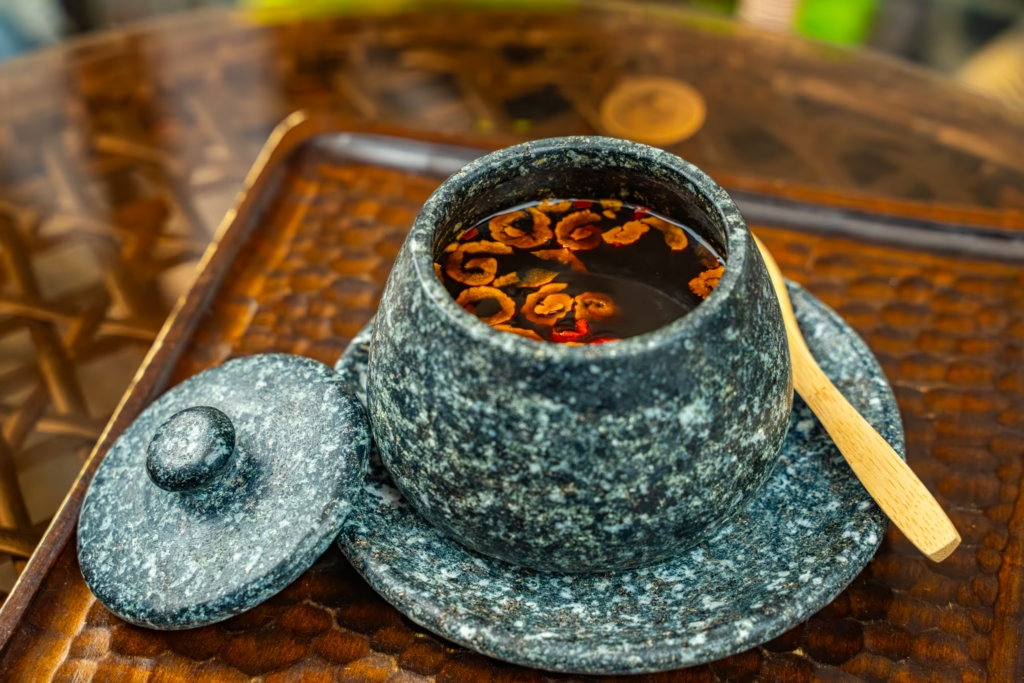
At the center of Tongin Pharmacy’s small space sits an oversized traditional iron cauldron (gamasot). This is not decorative. Every morning, natural ingredients go into this vessel and simmer for hours—not the quick extraction methods used by commercial tea shops, but the slow, low-heat approach that Korean herbal medicine has practiced for centuries.
Two signature preparations emerge from this process. Understanding the difference between them is essential to ordering the right authentic Seoul herbal tea for your condition.
Sipjeondaebo-cha: The Ten-Herb Restoration Tonic
Sipjeondaebo-cha (십전대보차) literally translates to “ten-perfection great tonic tea.” The recipe combines ten medicinal herbs traditionally prescribed for restoring depleted energy and improving circulation. The resulting brew is dark, earthy, and dense with flavor. It carries the kind of depth that only extended simmering can produce—comparable to how a bone broth develops complexity through time rather than technique. This is the preparation to request if you arrive at Tongin Pharmacy feeling run-down, jetlagged, or depleted from days of intensive sightseeing.
Ssanghwa-cha: Korea’s Classic Recovery Drink
Ssanghwa-cha (쌍화차) is Korea’s classic recovery drink, traditionally consumed during illness, cold weather, or periods of fatigue. The preparation at Tongin Pharmacy follows the same cauldron method, yielding a version considerably more potent than the bottled ssanghwa-cha available at convenience stores. If you are fighting a cold, recovering from a long flight, or simply need warmth on a raw winter day, this is the herbal tea to order.
Why the Cauldron Method Matters
Neither drink is subtle. Both carry the characteristic bittersweet, slightly medicinal quality of serious herbal preparations. If you have only experienced Korean tea through green tea or fruit infusions, this Seoul herbal tea will recalibrate your expectations entirely.
What distinguishes Tongin Pharmacy’s preparations from commercial versions is time. The bottled ssanghwa-cha sold at convenience stores across Seoul bears roughly the same relationship to the cauldron-brewed version here as instant coffee bears to a proper pour-over. The difference is not marketing—it is chemistry. Extended simmering extracts compounds that quick brewing leaves behind, producing a traditional herbal brew with noticeably deeper body and longer-lasting warmth.
Seasonality matters, too. The pharmacist adjusts preparation emphasis based on the calendar: warming, circulation-boosting teas during winter months; lighter, heat-clearing preparations during summer. This responsiveness to seasonal health needs reflects a core principle of Korean herbal medicine—that the body’s requirements shift with the environment, and so should its remedies. For travelers whose herbal tea experience at Tongin falls during the colder months and who want to chase Korea’s earliest spring warmth afterward, our Essential Geoje Spring Travel Guide covers a southern island where daffodils and cherry blossoms arrive weeks before the rest of the peninsula—typically mid-March through early April.
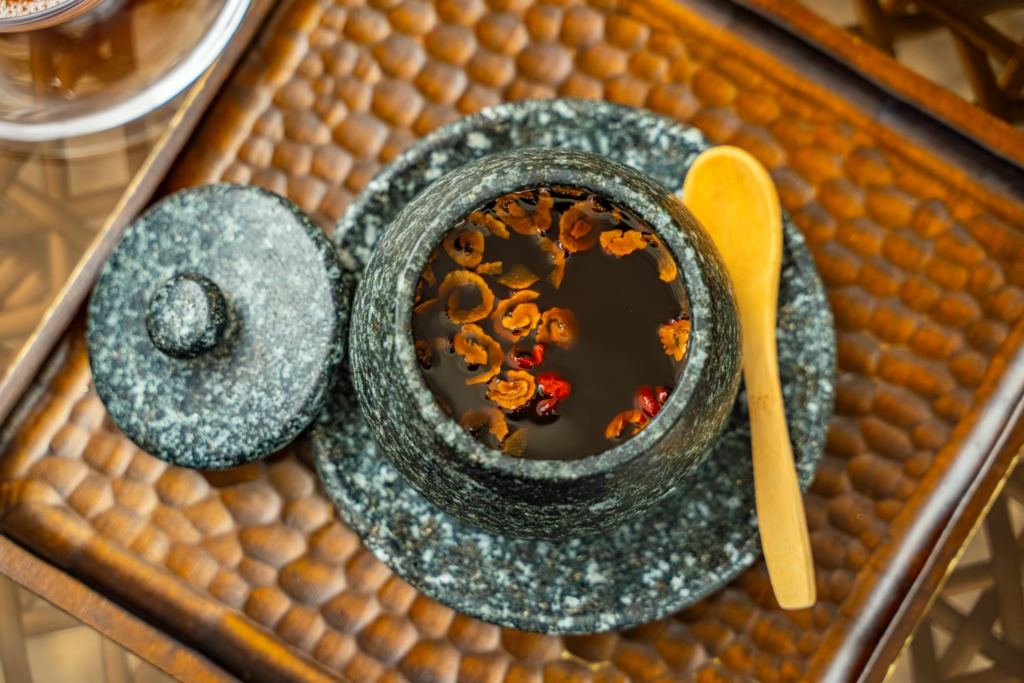
Photography Note: The steam rising from the cauldron creates compelling atmospheric shots, particularly against the dark wooden interior. Settings: f/2.8, 1/80s, ISO 800 on the Sony a7R4. Side lighting from the entrance door adds dimension. A 35mm or 50mm focal length captures both the cauldron and the surrounding pharmacy context without distortion.
2. The Philosophy Behind the Counter: Gan-i-bak-ryak (簡易薄略)
Tongin Pharmacy operates under a principle called gan-i-bak-ryak (간이박략, 簡易薄略), which translates roughly as: prescriptions kept simple, remedies made accessible, prices kept modest, procedures brief yet attentive. This four-character philosophy represents the old neighborhood pharmacy ideal—a place where healing was personal, affordable, and embedded in daily community life.
This matters for visitors because it shapes the entire experience. There is no menu board with prices prominently displayed. There is no rush to order and vacate. The pharmacist may ask what brings you in, how you are feeling, whether you have been sleeping well. These are not small talk questions. In the context of Korean herbal medicine, they constitute a preliminary health assessment.
The dasil (tea room) integrated into the pharmacy counter blurs the line between commerce and care. You sit at the counter, receive your herbal tea, and the conversation continues. The pharmacist may suggest a particular preparation based on what you have described. This seamless overlap between selling and healing is precisely what defined the old Korean hanyakbang (한약방)—the neighborhood herbal medicine shop that once existed in every district.
For international visitors accustomed to the transactional efficiency of modern cafes, this Seoul herbal tea experience requires patience and a willingness to slow down. The reward is access to a form of Korean wellness culture that is disappearing from urban life.
Consider the contrast. A standard Seoul cafe transaction—order, pay, receive, sit—takes under two minutes. At Tongin Pharmacy, the same process might take fifteen. But those fifteen minutes include a personal health assessment, a customized recommendation, and a preparation brewed specifically for the condition described. The value proposition is different. You are not paying for a beverage. You are paying for attention—the kind that has become scarce in a city that moves at Seoul’s pace.
3. The Hanok That Breathes Medicine: A Seoul Herbal Tea Space Like No Other
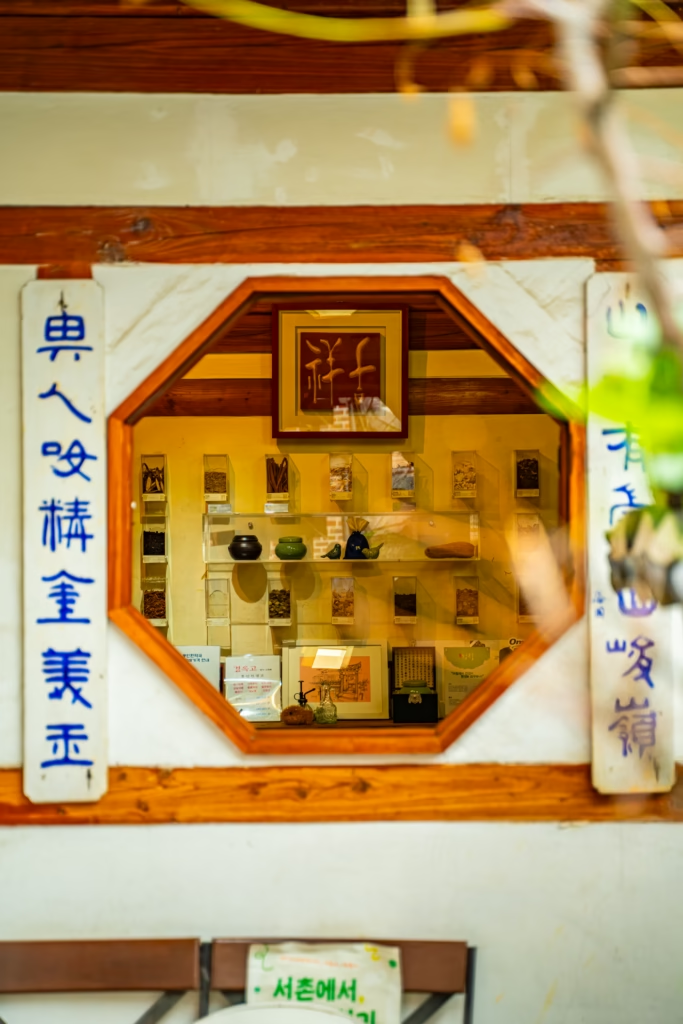
Seochon—the “western village” of Gyeongbokgung Palace—maintains a concentration of hanok buildings that neighboring Bukchon cannot match for authenticity of daily use. While Bukchon increasingly functions as a tourist attraction, Seochon’s hanok structures still serve as residences, workshops, and businesses. Tongin Pharmacy is one of these working hanok.
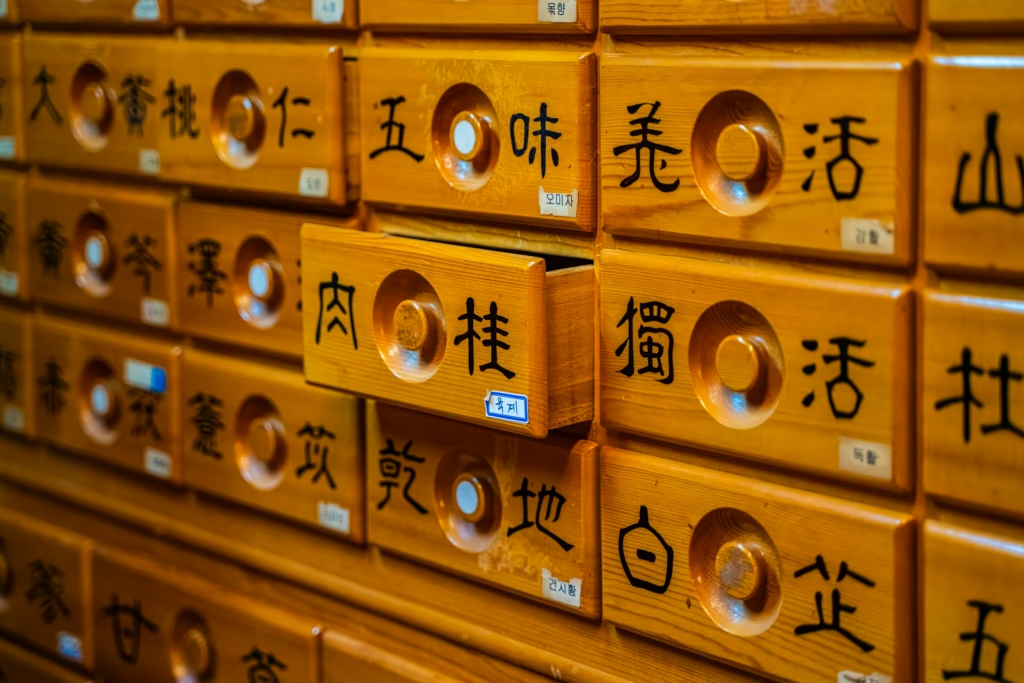
The moment you cross the threshold, the scent arrives before anything else. The bittersweet, warm, faintly woody aroma of dried medicinal herbs permeates every surface. Walls of wooden drawers—each labeled with the name of a specific herb—line the interior. The heated ondol floor radiates warmth upward. The low ceiling concentrates the fragrance into something almost tactile.
This sensory environment is inseparable from the Seoul herbal tea you drink here. The same herbs stored in those drawers contribute to the atmosphere you inhale while sipping. In Korean medicine, the concept of hyangi (향기, fragrance therapy) recognizes that breathing medicinal aromas produces its own therapeutic effect. The space itself becomes part of the treatment.
The hanok architecture amplifies this effect in ways that a modern building could not replicate. Natural materials—wood, clay, stone—breathe with humidity and temperature changes, regulating the interior environment organically. The ondol heating system, which warms the floor by channeling hot air beneath stone slabs, creates a rising current of warmth that carries herbal scents upward from the ground level. Sitting on the heated floor with a cup of herbal tea while winter air presses against the wooden window frames outside produces a specific quality of comfort that Korean culture calls “pogeunhada” (포근하다)—a snug, embracing warmth that reaches inward.
Seochon’s preservation as a living neighborhood—rather than a museum district—means Tongin Pharmacy exists within an authentic streetscape. Stepping out after your tea, you are immediately among local residents, neighborhood bakeries, and independent bookshops. The contrast with the commercial intensity of nearby Insadong or Gwanghwamun is significant. This quality of unperformed authenticity—spaces that function as themselves rather than as representations of themselves—is increasingly rare in Korean tourism. Travelers who value this distinction will find the same principle at work outside Seoul: our guide to the Hwaseong Independence Movement Memorial, located roughly 90 minutes south of the capital, covers another site where history is presented without dramatization or embellishment—a day trip that pairs naturally with a morning in Seochon.
4. What to Know Before Your Visit: Practical Details
Getting There
Tongin Pharmacy sits on Pirun-daero 6-gil in the Tongin-dong neighborhood of Seochon. The most practical approach is from Gyeongbokgung Station (Line 3), Exit 2. Walk west along Jahamun-ro for approximately five minutes, then turn left into the residential lanes south of Tongin Market. The pharmacy is on your right. Total walking time from the station: 8-10 minutes.
If you are already visiting Tongin Market—the famous traditional market where you assemble a dosirak lunch using brass coins—the pharmacy is a two-minute walk south.
Navigating the Language Gap
English signage is minimal. The pharmacist may have limited English, though younger staff occasionally assist. Practical preparation:
Show this phrase on your phone: “한방차 한 잔 주세요” (Hanbang-cha han jan juseyo) — “One cup of herbal tea, please.”
For specific orders: “십전대보차 주세요” (Sipjeondaebo-cha juseyo) or “쌍화차 주세요” (Ssanghwa-cha juseyo).
Naver Papago translation app works effectively for real-time conversation if questions arise about ingredients or health conditions.
What to Expect Price-Wise
Herbal tea prices at traditional pharmacies like Tongin are modest compared to commercial hanok cafes in the area—a meaningful distinction for travelers who want a genuine Seoul herbal tea experience without the premium pricing of tourist-oriented establishments. Expect to pay in the range of ₩5,000-₩8,000 per cup. Cash is recommended, though card payment may be available.
Cultural Etiquette
Remove shoes if directed to a floor-seating area. Speak at a moderate volume—this is a pharmacy, not a cafe, and other visitors may be consulting with the pharmacist about health matters. Photographing the interior is generally acceptable, but ask before photographing staff or other customers.
5. Building Your Seochon Wellness Day: Before and After the Seoul Herbal Tea
Tongin Pharmacy functions best as the centerpiece of a broader Seochon exploration—not as an isolated destination. The neighborhood’s compact geography means several complementary experiences fall within walking distance, and anchoring your day around a Seoul herbal tea pause at the pharmacy creates a natural rhythm of activity and rest.
Before your tea: Begin at Gyeongbokgung Palace (a 10-minute walk east), then enter Seochon through the residential lanes west of the palace wall. The transition from royal architecture to neighborhood scale is immediate and striking. Pass through Tongin Market for a coin-operated dosirak lunch, then continue south to the pharmacy.
After your tea: Walk north along Pirun-daero toward Inwangsan Mountain for Suseongdong Valley—a restored Joseon-era scenic spot where a small stream runs through exposed rock formations at the mountain’s base. The 15-minute walk from the pharmacy to the valley entrance provides a natural cooldown that extends the contemplative quality of the herbal tea experience.
For photographers, Seochon’s narrow alleys offer consistently strong compositions throughout the day. Morning light rakes across hanok rooftops from the east, creating long shadows and warm tones on tile and stone. Late afternoon produces backlit scenes along the westward-facing lanes. The Sony a7R4 at 24mm captures these environmental shots effectively at f/8, 1/250s, ISO 200.
Travelers building a deeper Seoul itinerary around traditional Korean wellness and food culture will find natural connections to other destinations we have covered. Our N Seoul Tower Winter Hike guide recommends skipping the cable car entirely in favor of a gentle 30-minute walk up Namsan Mountain—a route that rewards you with 360-degree panoramic views from the summit park without paying tower admission. The golden-hour light principles we apply there work identically to Seochon’s alley photography, and the two locations sit just 20 minutes apart, making a morning herbal tea ritual at Tongin followed by a Namsan sunset climb one of the city’s most satisfying half-day combinations. For those drawn to the meditative dimension of Korean food traditions, our Dujingak Vegan Temple Food guide explores how Buddhist monastic kitchens near Haeinsa Temple approach cooking as a form of mindfulness—a philosophy that resonates directly with what you will encounter at Tongin Pharmacy.
If your Seoul herbal tea experience at Tongin sparks a broader interest in Korea’s traditional tea culture, consider our Hoesudaok Jeju Tea House guide for a premium tea ceremony experience using organic Jeju-grown leaves, or our Cha-deokbun Yeongjongdo guide for a modern reinterpretation of Korean tea culture with panoramic ocean views near Incheon Airport.
For travelers exploring Korea’s tradition of healing through food—whether that means traditional Korean herbal tea at a working pharmacy, vegan noodles at a Buddhist temple restaurant, or fermented rice wine at a century-old brewery—the common thread is intention. Each preparation reflects a philosophy of care that predates modern convenience culture by centuries. Tongin Pharmacy, in its quiet, unremarkable way, preserves one of the most intimate expressions of that tradition.
Klook.comThe Travel Manual: Tongin Pharmacy Practical Guide
| Category | Details |
|---|---|
| Korean Name | 통인한약국 |
| Address | 29 Pirun-daero 6-gil, Jongno-gu, Seoul (종로구 필운대로6길 29, 통인동) |
| Hours | 09:00 – 19:00 |
| Closed | Every Sunday |
| Price Range | ₩5,000 – ₩8,000 per cup (estimated) |
| Nearest Station | Gyeongbokgung Station (Line 3), Exit 2 — 8-minute walk |
| Parking | No dedicated parking; use nearby public lots or Tongin Market parking |
| Language | Limited English; Naver Papago translation app recommended |
| Payment | Cash or Credit Card |
For official tourism information about Seoul’s Seochon neighborhood, visit Visit Seoul.
SEO Metadata
| Field | Content |
|---|---|
| Focus Keyword | Seoul herbal tea |
| URL Slug | seoul-herbal-tea-tongin-pharmacy-seochon |
| Meta Description | Seoul herbal tea at its most authentic: Tongin Pharmacy in Seochon brews traditional remedies in a cauldron inside a working hanok. Plan your wellness day. |
Hashtags: #SeoulHerbalTea, #SeochonSeoul, #TonginPharmacy, #KoreanTraditionalMedicine, #HanokCafe, #SeoulWellness, #TheTravelManual, #SonyA7R4, #Koreatravel