
Table of Contents
Transparency Note: This guide contains affiliate links. If you make a purchase, I may earn a commission at no extra cost to you—allowing me to keep providing expert, gear-tested travel insights.
Most Korean souvenirs end up in a drawer. Fridge magnets from Myeongdong. Generic K-pop merch wrapped in plastic. You bring them home out of obligation, not affection. The Mukho local shops in Donghae’s quiet harbor district operate on a different premise entirely: every item carries the salt air, the stray cats, the faded fishing village palette of this specific place. These are objects that remember where they came from.
Mukho sits 2.5 hours from Seoul by KTX — close enough for a weekend trip, remote enough that franchise culture hasn’t colonized the streets. No language skills required. The best Mukho local shops communicate through scent, texture, illustration, and color. Your suitcase is the only limit.
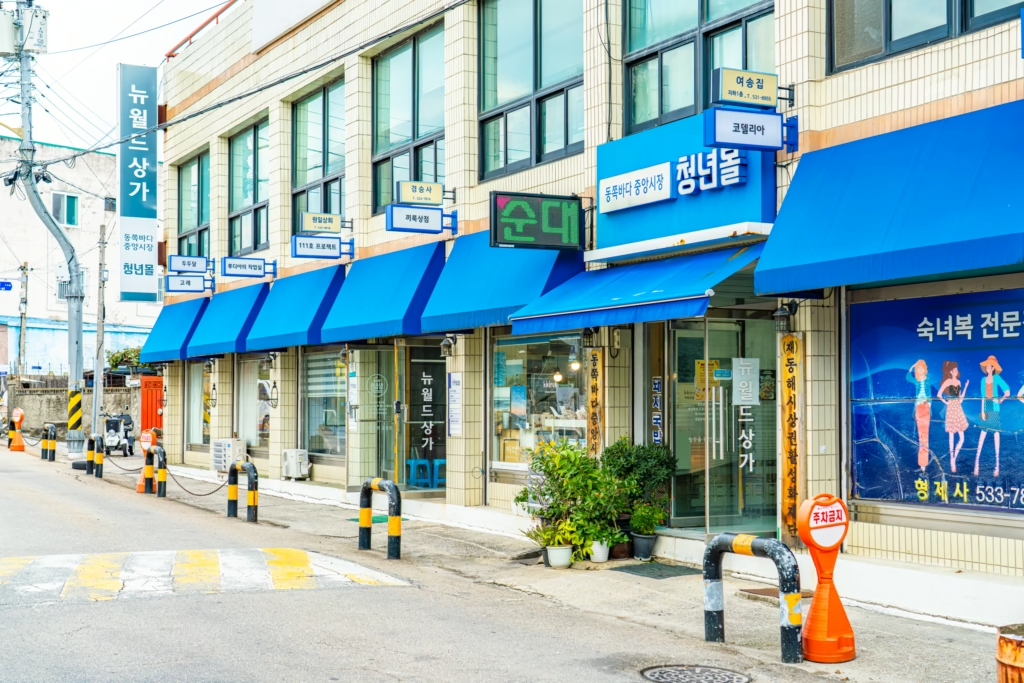
Mukho Local Shops for Scent Lovers: Banana Station
Start with your nose. Banana Station is a perfume studio and café that translates Mukho’s landscape into scent — a concept that sounds gimmicky until you actually smell the results. The signature fragrance line includes “Mukho Forest,” “Mukho Sea,” and “Harbor Memory,” each formulated by a local perfumer using ingredients tied to the town’s geography.
For Western travelers familiar with niche perfumery, this ranks among the most original independent stores in the harbor district — Korea’s answer to location-specific scent work, except the “location” is a fishing village, not a Parisian atelier. Diffusers and room sprays start around ₩20,000–₩35,000, making them practical gifts that won’t break your luggage weight allowance.
The café side serves standard espresso drinks. Grab a seat by the window, order a latte, and spend fifteen minutes test-spraying. The staff are accustomed to non-Korean-speaking visitors and will gesture you through the lineup.
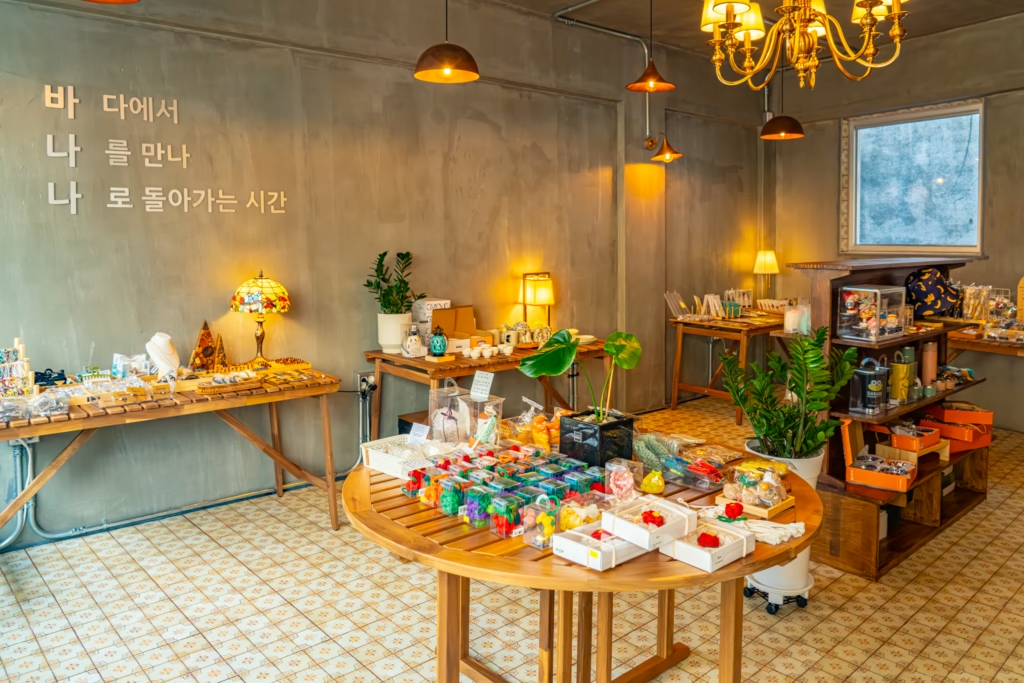
Photography Tip (Sony a7R4): The warm interior lighting pairs well with the cool-toned street visible through the shop window. Shoot at f/2.8, ISO 800, 1/60s with a 35mm lens. The contrast between amber bottles and blue harbor light outside creates a natural split-tone composition.
Janjanhage Travel Bookshop: The Quietest Stop in Town
Run by a travel writer, Janjanhage (잔잔하게, meaning “gently” or “calmly”) is the kind of bookshop that makes you want to cancel tomorrow’s itinerary. The space is barely larger than a studio apartment — wooden shelves, warm overhead lighting, and a window framing one of Mukho’s characteristically empty side streets.
The inventory leans toward independent Korean travel publications, photography books, and locally produced goods. You don’t need to read Korean to appreciate the visual weight of these items. Postcard sets featuring Mukho harbor illustrations, hand-drawn maps, and minimalist posters make excellent souvenirs precisely because they’re designed by people who actually live here.
Among all the Mukho local shops in this guide, Janjanhage serves the most specific function: it’s the place where you slow down. Amid the pace of a Korean travel itinerary — bullet trains, bus transfers, market crowds — this bookshop operates at walking speed.
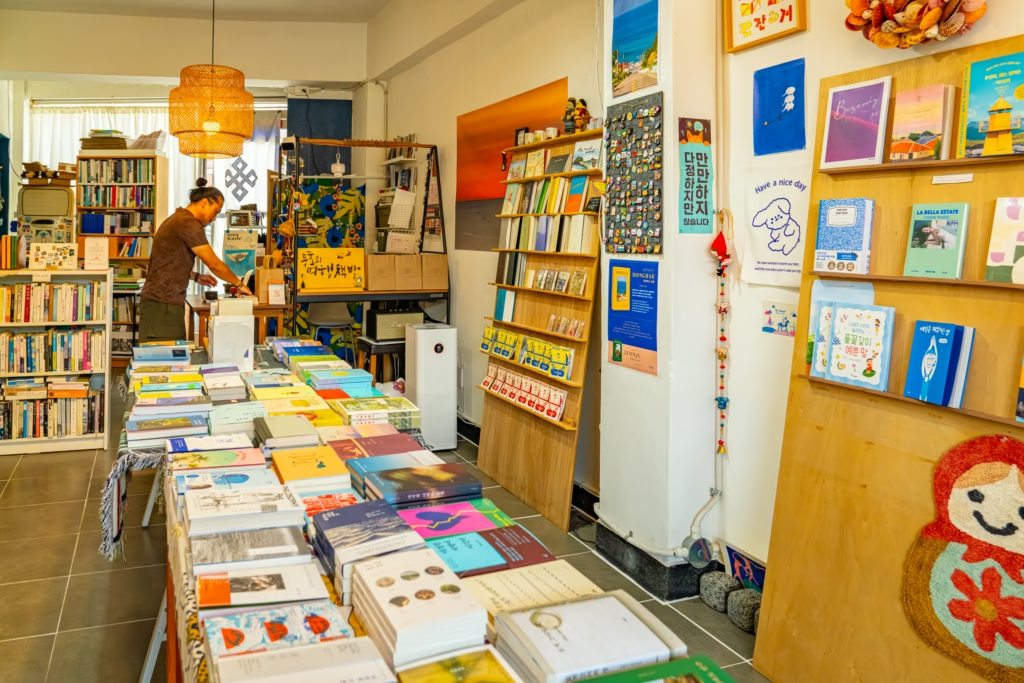
Photography Tip (Sony a7R4): Shoot through the storefront glass from outside for a reflection-layered composition. Use f/4, ISO 400, 1/125s. Include the alley wall texture and the warm interior glow for a frame-within-a-frame effect.
Myohan Donghae: Cats, Ocean, and Suitcase-Friendly Souvenirs
Cats and sea. Two universally understood concepts. Myohan Donghae (묘한동해) built its entire product line around this combination, drawing from Mukho’s actual stray cat population — a presence anyone who has walked Nongol Dam-gil’s hillside alleys will immediately recognize.
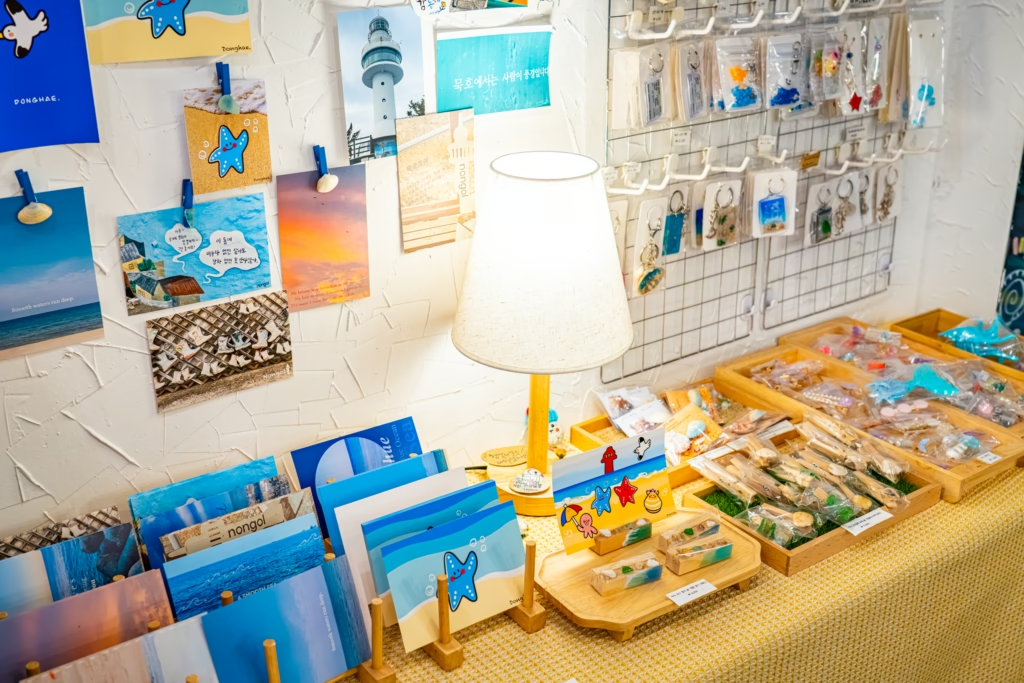
The result is an illustration-driven goods shop — one of the most visually striking Mukho local shops — where every item is compact, lightweight, and suitcase-compatible: fridge magnets, vinyl stickers, enamel pins, tote bags, and postcards featuring original cat-meets-ocean artwork. Prices hover between ₩3,000 and ₩15,000 for most items, putting this firmly in impulse-buy territory.
For travelers who’ve explored Suwon Haenggung-dong’s craft shops, Myohan Donghae operates on a similar model — local creator, hyper-specific theme, limited-run goods — but with a distinctly coastal identity. The cat illustrations aren’t generic kawaii imports; they reference actual Mukho street cats in actual Mukho settings.
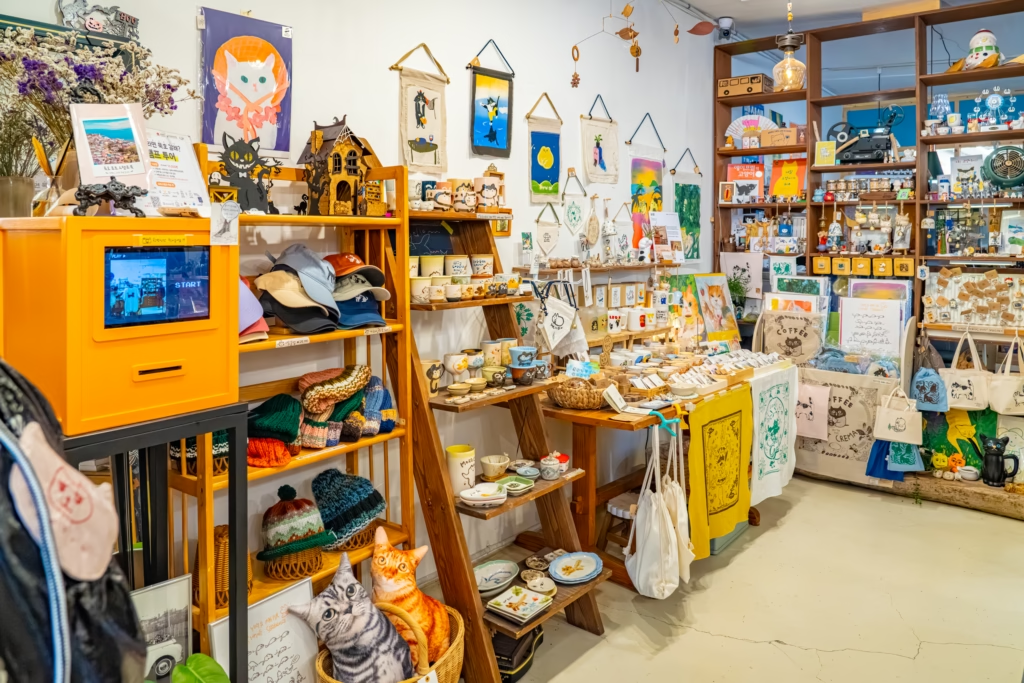
Photography Tip (Sony a7R4): Flat-lay the Authentic Korea Souvenirs on a wooden surface with natural window light. Shoot at f/5.6, ISO 200, 1/250s with a 50mm macro. The colorful illustrations against natural wood grain create clean product-style shots without any setup.
Pencil Museum: 3,000 Pencils and the Best Ocean View Café in Mukho
Call it quirky. Call it niche. The Pencil Museum houses over 3,000 pencils from around the world — vintage specimens, limited editions from defunct manufacturers, writing instruments owned by notable figures — arranged across multiple floors of exhibition space. It is, as far as anyone can confirm, Korea’s first and only pencil museum.
The real draw for most visitors, though, sits on the fourth floor. The rooftop café “Haedanghwa-ga Gopge Pin” (meaning “Where the Beach Rose Blooms Beautifully”) delivers a panoramic view over Mukho Port and the East Sea that ranks among the most photogenic café views on Korea’s entire east coast. This is an Instagrammable destination that actually earns the label.
For stationery enthusiasts — and Korean stationery enjoys serious international demand — the museum shop offers curated pencil sets and writing accessories that make this one of the Mukho local shops with genuine collector appeal. Entry costs ₩5,000 for adults.
This spot transforms a routine goods shop crawl into something more substantial: part cultural exhibition, part scenic overlook, part stationery shopping. Allocate at least 90 minutes.
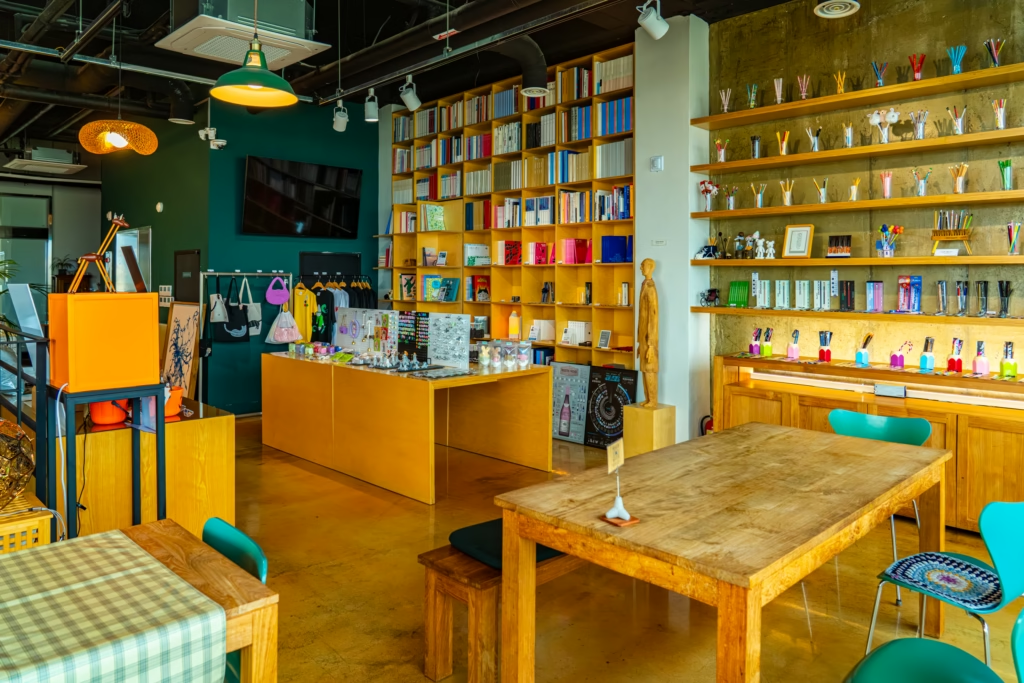
Photography Tip (Sony a7R4): For the café panorama, shoot at f/8, ISO 100, 1/500s with a 24mm wide-angle. Late afternoon light (around 4–5 PM) hits the harbor at a low angle, creating long shadows across the fishing boats below. Bracketed exposures recommended for the high dynamic range between bright ocean and shaded café interior.
Klook.comInside Dongjjokbada Jungang Market: Where Tradition Meets Maker Culture
The next two Mukho local shops sit inside Dongjjokbada Jungang Market (동쪽바다중앙시장) — Mukho’s working traditional market. This isn’t a tourist-oriented food court. Fish vendors, banchan sellers, and rice cake shops line narrow aisles where the primary clientele are neighborhood residents buying dinner ingredients. The atmosphere is raw, noisy, and exactly the kind of authentic Korean market experience international visitors consistently rank among their trip highlights. Beyond the modern markets, Korea’s regional five-day markets hold deep historical weight — but Dongjjokbada operates daily, making it far more accessible for travelers on tight schedules.
Within this setting, two creator-driven spaces have taken root. The contrast is the point: refined handmade Authentic Korea Souvenirs emerging from the clamor of a functioning fish market.
Bada Baran: Handmade K-Craft in a Renovated Quarantine Station
Bada Baran (바다바란) connects to Gallery Baran, a cultural space converted from Mukho’s former quarantine inspection station. The shop specializes in handmade Authentic Korea Souvenirs by Mukho-based artisans — fabric pouches, eco-bags, and accessories incorporating traditional Korean textures and color palettes.
These aren’t mass-produced trinkets. Each piece carries the hand of its maker, and the material choices reflect Korean craft traditions adapted for contemporary use. For travelers seeking what might be called “K-craft” — the tangible, artisanal counterpart to K-pop and K-drama — this is one of the harbor’s creative spaces where authentic Korean craftsmanship meets practical souvenir shopping.
The shop’s location inside the traditional market means you can combine serious souvenir shopping with the full market experience: grilled seafood stalls, raw fish centers, and the general sensory chaos of a working Korean market.
Project 111: Vinyl Records and Local Photography in a Youth Mall
Adjacent to the traditional market, Singsingsu Youth Mall (싱싱스) represents Korea’s urban regeneration model transplanted to a coastal fishing town. If you know Seoul’s Euljiro or Seongsu-dong — districts where young entrepreneurs colonized aging industrial buildings — Singsingsu follows the same playbook, just with ocean air instead of concrete dust.
Project 111 (111호프로젝트) anchors the youth mall’s creative identity. Vinyl records spin on vintage turntables while customers browse photography prints and goods depicting Mukho’s everyday life. The aesthetic is K-retro without the corporate polish: genuine nostalgia produced by people who grew up in these streets.
For millennial and Gen Z travelers who track down hip local scenes wherever they travel, Project 111 is the most culturally revealing of the Mukho local shops in this guide. The fact that it exists inside a declining traditional market — not a gentrified Seoul neighborhood — makes the discovery more rewarding.
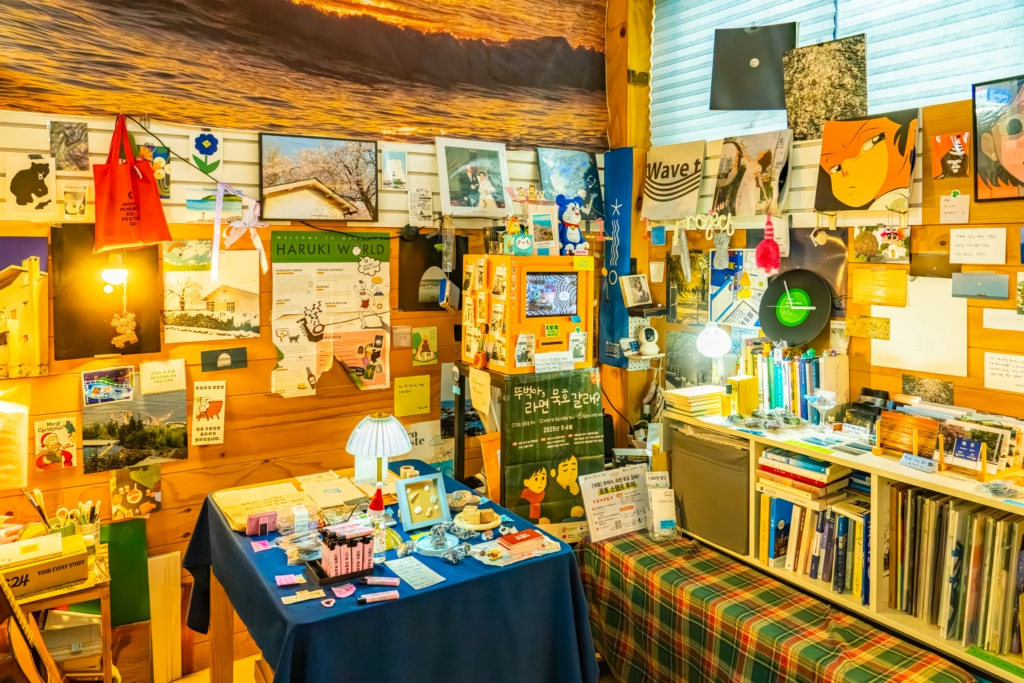
Photography Tip (Sony a7R4): The market interior is low-light. For the traditional market aisles, shoot at f/2.8, ISO 1600, 1/60s. For Project 111’s vinyl corner, bump ISO to 3200 and use the warm tungsten tones — don’t white-balance them out. The amber cast is part of the retro aesthetic.
The Walking Route: How to Visit All 6 Mukho Local Shops in One Afternoon
Mukho’s compact layout makes visiting all six stores a straightforward walking circuit. From Mukho Station, every shop in this guide falls within a 20-minute radius on foot. Here’s the recommended sequence:
Stop 1 → Banana Station (30 min) — Start with scent. The café doubles as a warm-up stop if you arrived on an early KTX.
Stop 2 → Janjanhage Travel Bookshop (20 min) — Browse independent publications. Pick up postcards.
Stop 3 → Myohan Donghae (15 min) — Quick stop for illustrated goods. Stickers and magnets pack flat.
Stop 4 → Pencil Museum (90 min) — Exhibition floors plus the rooftop café. This is your longest stop and your best photo opportunity.
Stop 5 → Dongjjokbada Jungang Market (60 min) — Enter the market for Bada Baran and Project 111. Grab grilled seafood or raw fish for a late lunch between shops.
Total time: approximately 3.5–4 hours at a comfortable pace.
For travelers continuing north along the east coast, the Shilla Monogram Gangneung offers a luxury base in nearby Gangneung. And if Mukho Port’s ferry terminal catches your eye, our Ulleungdo winter travel guide covers Korea’s most remote volcanic island — accessible directly from this harbor.
Why These Mukho Local Shops Matter: The Travel Manual Take
Mukho local shops aren’t selling products. They’re selling place. Each item in this guide — a diffuser that smells like the harbor breeze, a postcard drawn by someone who watches the fishing boats return every evening, a cat magnet inspired by the strays on Nongol Dam-gil — carries a specificity that mass-produced souvenirs cannot replicate.
Korea’s young creators are increasingly choosing small coastal towns over Seoul. The rent is cheaper, the material is richer, and the stories write themselves. You’ll find the same phenomenon in places like Geoje’s Cafe Yujabat, where a citrus orchard café thrives in a quiet fishing village. Mukho, with its coal mining past, its working fish market, and its stubborn resistance to franchise homogeneity, gives these makers exactly the raw material they need — and that’s why its Mukho local shops feel so different from anything in the capital.
What you carry home from these Mukho local shops isn’t decoration. It’s a piece of the East Sea — compressed into ink, fabric, glass, and graphite — that will remind you why you left the capital in the first place.
Practical Information: Mukho Local Shops Guide Essentials
| Category | Details |
|---|---|
| Location | Mukho-dong, Donghae-si, Gangwon-do, South Korea |
| Getting There | KTX from Seoul Station → Donghae Station (2h 30min), then taxi or local bus to Mukho |
| Walking Distance | All 6 shops within 20 min walk of Mukho Station |
| Time Needed | Half-day (3.5–4 hours for all shops) |
| Budget Estimate | ₩30,000–80,000 (souvenirs + café + Pencil Museum entry) |
| Pencil Museum | Adults ₩5,000 / 10:00–18:00 |
| Best Season | Spring (April–May) and Fall (Sept–Oct) for comfortable walking |
| Language | Limited English; shops are visually intuitive, no Korean needed for browsing |
| Official Tourism Info | Donghae City Tourism |
| Recommended Stay | [Hotels near Mukho on Agoda] |
| Recommended Activity | [East Coast Korea Day Tours on Klook] |