
Table of Contents
A no-nonsense guide to the Michelin Bib Gourmand kalguksu institution that has fed Myeongdong since 1966
Transparency Note: This guide contains affiliate links. If you make a purchase, I may earn a commission at no extra cost to you—allowing me to keep providing expert, gear-tested travel insights.
Why Myeongdong Kyoja Still Matters After Nearly 60 Years
Myeongdong Kyoja is the kind of restaurant that shouldn’t work in 2025. Four items on the menu. No alcohol. Tables crammed so close you’ll share elbow space with strangers. Service that prioritizes speed over pleasantries. And yet, every day—weekday or weekend—a line stretches from its entrance on Myeongdong 10-gil, filled with Korean office workers, tourists clutching Michelin guides, and elderly regulars who’ve been eating here since the restaurant was still called Myeongdong Kalguksu.
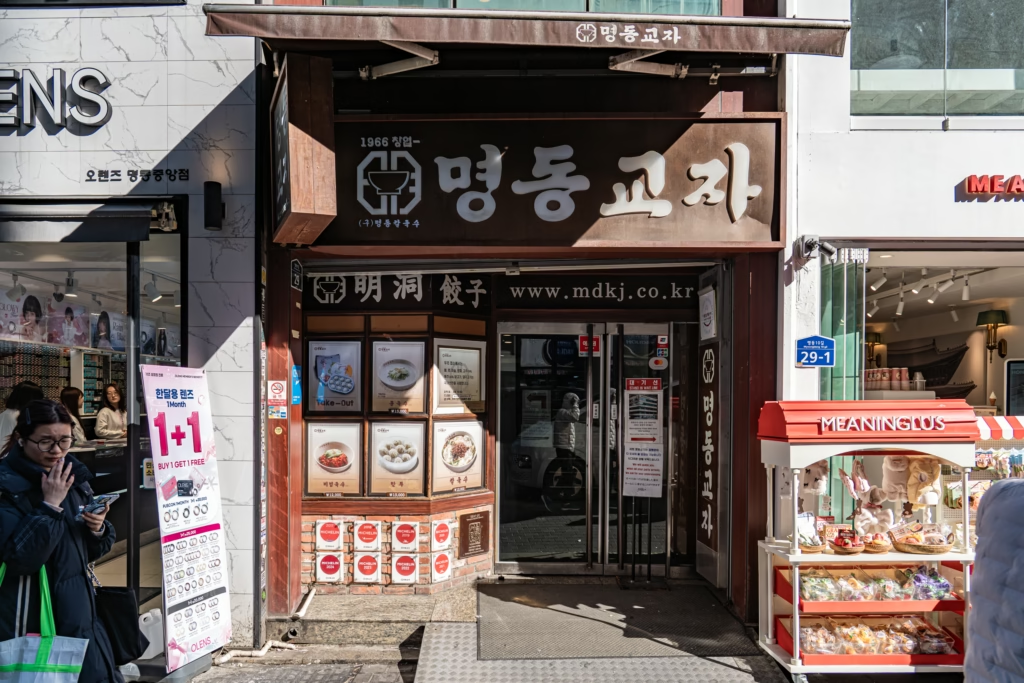
The explanation is simple: Myeongdong Kyoja does a few things extraordinarily well and refuses to dilute its focus. Founded in 1966 in Suha-dong, Jung-gu, this family-owned restaurant developed a chicken-broth kalguksu (knife-cut noodle soup) recipe that effectively defined what “Myeongdong-style kalguksu” means across Korea. So many imitators adopted the name “Myeongdong Kalguksu” that the original changed its name to Myeongdong Kyoja in 1978—”kyoja” meaning dumplings—to distinguish itself from cheaper copycats.
That distinction has been validated repeatedly. The restaurant has held a Michelin Bib Gourmand designation continuously since the Seoul guide launched in 2017, recognizing it for exceptional food at moderate prices. If you’re visiting Seoul and want to understand why Koreans take their noodle soup seriously, Myeongdong Kyoja is the starting point.
For those exploring Seoul’s food scene alongside its landmarks, a visit here pairs naturally with an afternoon [N Seoul Tower winter hike]—the restaurant sits at the base of Namsan Mountain, making it an ideal pre-hike or post-descent meal.
Klook.comThe Myeongdong Kyoja Menu: 4 Dishes, Zero Filler
The entire Myeongdong Kyoja menu fits on a single page, and that’s intentional. This restaurant built its reputation by perfecting a narrow range rather than chasing variety. Here’s what you’re choosing from.
Kalguksu (칼국수) — The Signature
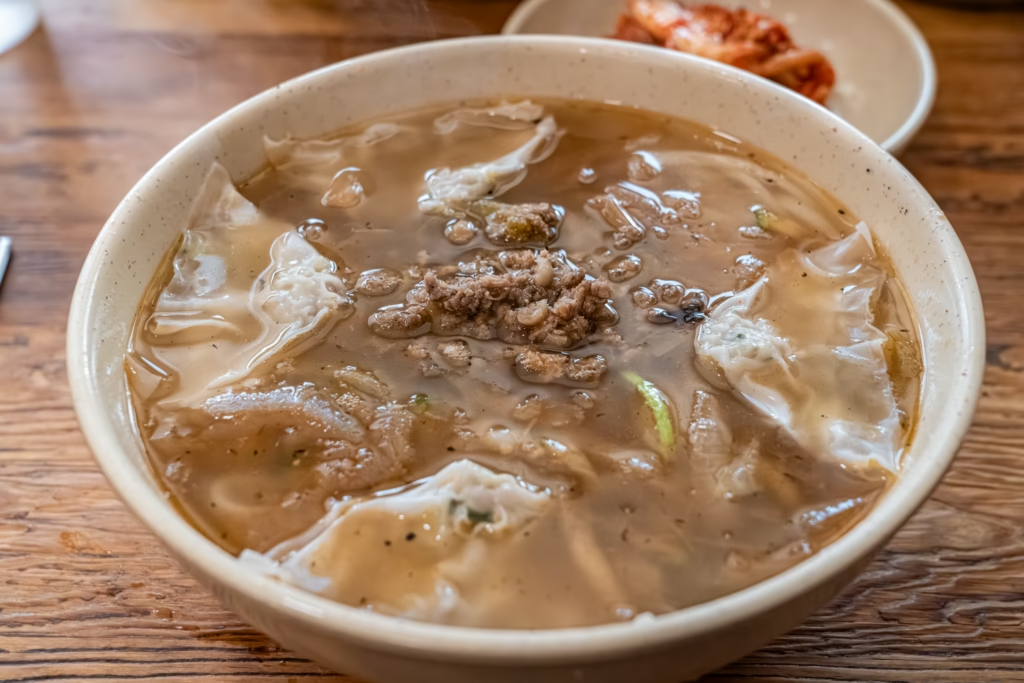
The dish that started everything. Myeongdong Kyoja’s kalguksu arrives in a large stainless-steel bowl: handmade wheat noodles submerged in a deep, slightly oily chicken broth, topped with stir-fried ground meat, four small crescent-shaped mandu, sliced zucchini, wood ear mushrooms, onions, and chives.
The broth is the critical element. It’s built from chicken bones simmered for extended hours, producing a richness that reads closer to a European-style consommé than the lighter anchovy broths found at market kalguksu stalls. The stir-fried meat topping adds a faint wok-charred flavor—almost like a hint of jjajang—that distinguishes this from any other kalguksu in Seoul. The noodles themselves are soft and slippery rather than chewy, which divides opinion. If you prefer firm bite in your noodles, this won’t convert you. But the broth-to-noodle integration is seamless.
One free noodle refill and one free rice addition are included per bowl. The local move: finish the noodles first, then add rice to the remaining broth and eat it as porridge. This alone makes the ₩11,000 price tag among the best deals in central Seoul.
Price: ₩12,000 (~$8 USD)
Mandu (만두) — The Co-Star
Ten steamed dumplings arrive on a metal plate. The wrappers are unusually thin—almost translucent—filled with a mixture of pork, chives, zucchini, and sesame oil. They’re closer in delicacy to xiaolongbao than to the thick-skinned mandu found at most Korean restaurants. A side of kalguksu broth comes with every mandu order, so even if you only order dumplings, you still get to taste the soup.
Pair these with the house kimchi and the soy dipping sauce. The kimchi deserves special mention: aged for a minimum of three years, loaded with garlic to a degree that borders on aggressive. It’s not subtle. It’s not meant to be.
Price: ₩13,000 (~$9.50 USD)
Bibimguksu (비빔국수) — The Sleeper Hit
Cold noodles tossed in a gochujang-based sauce with cucumber strips, dried radish, and ground beef. The noodles here are green chlorella-infused wheat noodles—chewier and springier than the kalguksu version. It arrives pre-mixed and chilled, which eliminates the awkward stirring phase common at other bibimguksu restaurants.
Fair warning: this is genuinely spicy. Not “Korean-restaurant-adjusted-for-tourists” spicy. The heat builds progressively and lingers. A side broth (similar to the kalguksu soup) comes with it to cleanse between bites.
Price: ₩12,000 (~$8 USD)
Kongguksu (콩국수) — Summer Only
Available roughly April through October, this seasonal dish features the same chlorella noodles served in a cold, rich soybean milk broth. It’s the lightest option on the menu—nutty, refreshing, and surprisingly filling. If you visit during summer months, this is worth trying alongside the kalguksu for contrast.
Price: ₩13,000 (~$9.50 USD)
How to Navigate the Myeongdong Kyoja Experience
The Queue and Seating System
Arrive expecting a wait during peak hours (11:30-13:00 and 17:30-19:00). The line at Myeongdong Kyoja moves faster than it looks—the restaurant occupies three floors and turns tables efficiently. Typical wait: 10-20 minutes during lunch, occasionally longer on weekends. Your entire party must be present before you’ll be seated.
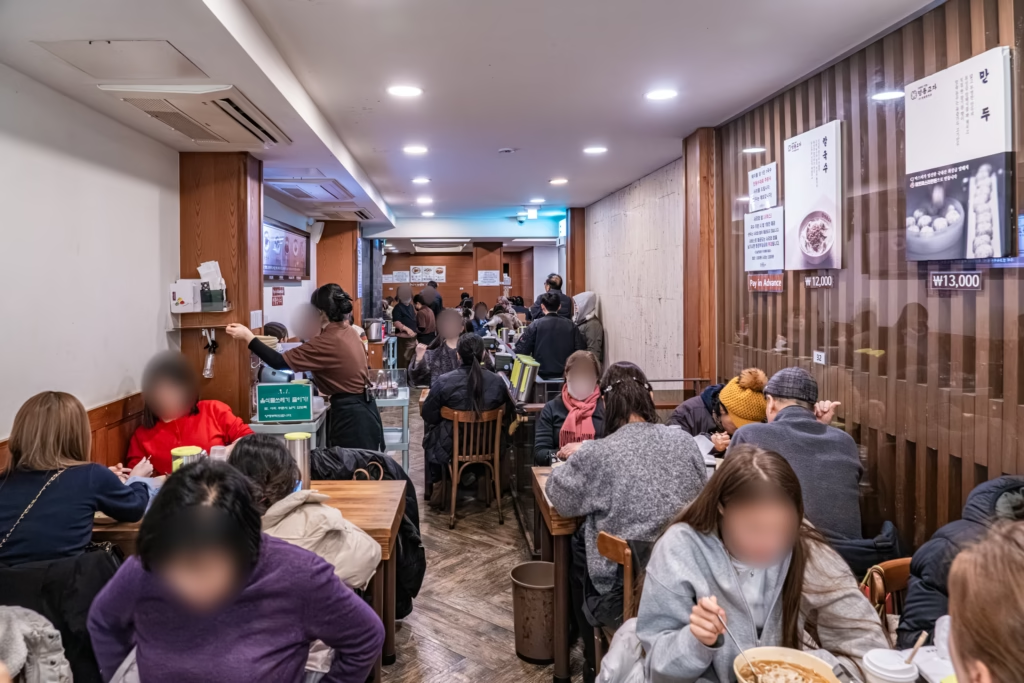
Timing strategy: Arrive at 10:30 (opening time) or between 14:00-16:00 for minimal wait. The restaurant closes at 21:00, with last orders around 20:30.
Ordering and Payment at Myeongdong Kyoja
The ordering system at Myeongdong Kyoja is prepayment-based. You’ll order and pay at the ground floor counter before being directed upstairs. Ordering machines display the four menu items with photos—language barrier is minimal. Card payment is accepted.
Food arrives remarkably fast. The mandu typically appears within 60 seconds of sitting down. The kalguksu follows within 3-5 minutes. This isn’t fast food cutting corners—it’s a kitchen that has optimized a narrow menu over nearly six decades.
The Kimchi Situation
Self-serve kimchi stations are located on each floor. Staff won’t point them out to you—you’re expected to find them yourself. The garlic-heavy aged kimchi is a signature element of the Myeongdong Kyoja experience, and many regulars consider it as essential as the noodles themselves. Approach with caution if you’re sensitive to raw garlic. A complimentary gum is provided with your receipt for a reason.
Solo Dining
Unlike some Korean restaurants that require minimum two-person orders, Myeongdong Kyoja welcomes solo diners. You’ll likely share a table with strangers. This is standard practice, not a sign of overcrowding.
Klook.comWhat Photographers Should Know
Myeongdong Kyoja isn’t a photogenic restaurant in the conventional sense. The lighting is harsh fluorescent, the tables are utilitarian, and the pace of service doesn’t encourage lengthy setups. But the food itself—particularly the kalguksu with its layered toppings and steaming broth—photographs well if you know what to prioritize.
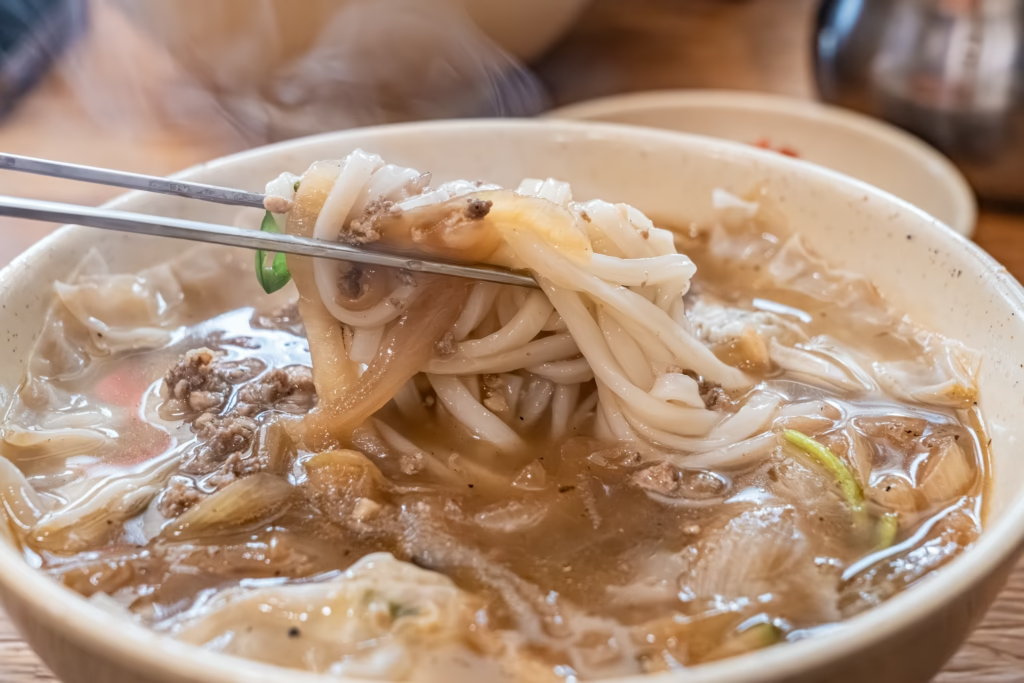
Shooting notes (Sony a7R4): The overhead shot of the kalguksu bowl works best at 35-50mm, f/4, ISO 800-1600 depending on your floor placement. Window seats on the upper floors offer the best natural light during daytime. The steam rising from the broth creates a natural atmospheric element—shoot within the first 30 seconds of arrival for maximum effect. For the mandu, side-angle shots at f/2.8 capture the translucent skin texture better than overhead compositions.
Export specifications: AVIF format, 2560px long edge, 10-bit depth, quality 68.
Myeongdong Kyoja vs. Other Kalguksu Options
Honest assessment: Myeongdong Kyoja is not unanimously considered Seoul’s “best” kalguksu. What it offers is consistency, accessibility, and a specific flavor profile (rich chicken broth with wok-charred meat) that differs meaningfully from the anchovy-based versions found at Namdaemun Market’s Kalguksu Alley or Gwangjang Market stalls. The comparison isn’t better or worse—it’s a different style entirely.
The Michelin Bib Gourmand recognition reflects the quality-to-price ratio in a premium shopping district, not necessarily supremacy over every neighborhood noodle shop. For travelers with limited time in Seoul, Myeongdong Kyoja offers a reliable, historically significant meal in a location you’re likely visiting anyway for shopping or transit connections. If you’re planning a broader Korean itinerary that reaches beyond the capital—say, chasing winter scenery on Korea’s remote eastern islands—our [Ulleungdo Winter Guide] covers a destination where the culinary contrast couldn’t be sharper.
For a completely different Korean culinary philosophy, our [Dujingak Vegan Temple Food] guide explores the meditative side of Korean cuisine—plant-based dishes designed for Buddhist monastics near Haeinsa Temple.
The Travel Manual: Myeongdong Kyoja Practical Guide
| Category | Details |
|---|---|
| Korean Name | 명동교자 본점 |
| Address | 29, Myeongdong 10-gil, Jung-gu, Seoul (서울 중구 명동10길 29) |
| Branch Location | 33-4, Myeongdong 2-ga, Jung-gu (same street, 130m further) |
| Nearest Metro | Myeongdong Station (Line 4), Exit 8 — 2-minute walk |
| Operating Hours | 10:30 – 21:00 daily (Last order 20:30) |
| Closed | Lunar New Year & Chuseok holidays |
| Price Range | ₩12,000 – ₩13,000 per dish (~$8.50 – $9.50 USD) |
| Payment | Cash and cards accepted |
| Average Meal Cost | ₩24,000 – ₩30,000 per person (kalguksu + mandu combo) |
| Wait Time | 10-20 min peak / 0-5 min off-peak |
| Solo Dining | Welcome (shared tables) |
| Languages | Korean primary; picture menu available; limited English |
| Phone | +82-2-776-5348 |
| Official Website | mdkj.co.kr |
Getting There:
From Myeongdong Station (Line 4), take Exit 8. Turn left onto Myeongdong 10-gil and walk straight approximately 150 meters. The main restaurant is on the right side. If the queue is long, the branch store is another 130 meters further on the left side of the same street—identical menu, often shorter wait.
Pro Tips:
- Order both kalguksu AND mandu for the full experience—they’re designed to complement each other
- Get the free rice refill added to leftover broth; this is how regulars finish the meal
- Visit the self-serve kimchi station immediately after sitting down
- The branch serves identical food with typically shorter wait times
- Avoid 12:00-13:00 on weekdays if possible—this is the office worker lunch rush
For official Seoul tourism information, visit Visit Seoul.
Myeongdong’s central location also makes it a convenient transit hub for day trips across Korea. Travelers building a broader southern Korea itinerary might consider our [Geoje spring travel guide] for a coastal escape that balances Seoul’s urban density with island tranquility.
The Travel Manual Summary
Myeongdong Kyoja earns its reputation through disciplined simplicity. Nearly six decades of serving four dishes means every component—the depth of the chicken broth, the translucent thinness of the mandu skin, the aggressive garlic punch of the aged kimchi—has been refined to a point where imitation is easy but replication is not. At ₩11,000 for a kalguksu that includes free refills in the middle of Seoul’s most commercial district, this Michelin Bib Gourmand restaurant remains one of the city’s most straightforward food recommendations.
Is it worth the queue? For first-time Seoul visitors, yes—this is a foundational Korean noodle experience in a convenient location. For returning visitors, the consistency alone justifies periodic returns. Just arrive with calibrated expectations: come for precision comfort food, not theatrical gastronomy. And bring breath mints.